Posted in Orenda, Random Things Tours

Black Hearts by Doug Johnstone

As all subscribers and Twitter followers must know by now, I am a huge fan of The Skelf series. I’m a Skelfaholic and I’m in a strange cycle of waiting for the next book to be published, devouring it overnight, then longing for the next one again. It’s even worse this time because I have it on good authority that this could be the penultimate book in the series. So one more book and no more Skelfing! I’m going to be like a weasel with a sore head when I have to go cold turkey. It has been wonderful to be back in Edinburgh with this family of three: part private investigators, part undertakers and all round incredible women. For those who haven’t met them yet, the Skelfs are three generations of women. Grandmother Dorothy is in her seventies, but is still active in both the investigative and the funeral parts of the business. In her spare time she still drums like a badass and has a lover almost twenty years her junior. Daughter Jenny is back home, living above the business and struggling with memories of psychopath ex- husband Craig. She’s drowning her pain with alcohol and sex.

Jenny’s daughter Hannah is now a PhD student, working in the astrophysics department, but still finding time to help out in the family business. She’s now married to girlfriend Indy, is feeling settled and might be slowly moving past what happened to her father. Each novel begins with a memorable opening scene and here we kick off with a fist fight at a funeral. The women are also brought diverse and unusual cases, both for funerals and their PI work. A gentleman approaches Dorothy after his wife’s funeral, to ask if they can help him deal with a nighttime visitor. He believes his wife’s spirit is punishing him and he has the bruises to prove it. Hannah is approached by Laura at university, the young woman claims to know her, but Hannah has absolutely no recollection of her. When Laura starts to turn up wherever Hannah goes, she starts to suspect mental health problems, but nothing dangerous. She stops being harmless the closer she gets to the family, especially when Hannah drops into the funeral parlour and finds Laura talking to Indy. Laura wants them to do her mother’s funeral, but Hannah thinks it’s unwise. How can she let this fragile girl down gently?

Aside from their cases Johnstone also picks up those storylines that weave throughout the novels. In the main we are drawn back to Craig, Jenny’s ex-husband and Hannah’s father, who is still haunting the family. Jenny is the most visibly affected by her interactions with Craig’s family, most notably his sister, who seems to have inherited his ability to manipulate and turn to violence to get what she wants. Will Craig ever leave them alone and will Jenny be able to tread the line between her own pain as his ex and Hannah’s pain as his daughter. Both tend to overlook the grief that Dorothy still feels at the loss of her own husband Jim, complicated now by her relationship with police detective Thomas. Indy’s grief is also overlooked a lot, especially since she’s just gone through disinterring her parents in order to give them the cremation in line with their faith. Hannah and Jenny bring the drama and it’s Jenny I was particularly worried about. She’s getting messy, day drinking and embarking on a highly controversial sexual relationship with the wrong person. She never wakes up feeling better, but in the moment she has to drown out the constant pictures in her head. It’s clearly PTSD and she’s in danger of drawing others into her drama, especially Archie who works for the funeral business. Can she rein her behaviour, when professional help seems doomed to failure at this point?

Aside from these incredible women, and the lovely Indy of course, the things I most love about these books is Doug Johnstone’s love for Edinburgh and the way he weaves incredible ideas, philosophy and physics into his novels. I’ve not been to Edinburgh since I was in my twenties, but the way he describes the city makes me want to go back. He doesn’t sugar coat the city either, there’s good and bad here, but as a whole these books are a poem to a place that’s in his soul. Dorothy muses on her home town a lot in this novel and considering she was born in America, this place is her heart’s homeland. She ponders on the people this city produces, including her husband and child, the history, and the architecture almost as if she’s taking stock. She concludes that she’s a person who always looks forward to where life’s going, but grief and loss are like the waves and there’s no telling when it will wash ashore again. Jenny tends to frequent the less salubrious areas of the city. She’s stuck. Her past has quite literally washed ashore and the problem with losing someone is you’re not the only one grieving and everyone grieves differently. She’s not mourning Craig as he truly was. She’s grieving the loss of all that hope; the hope they both had for the future on their wedding day and when Hannah was born. Similarly Craig’s mum and sister aren’t missing the Craig who committed all those terrible crimes. Violet misses the little boy she had and the life she wanted for him and his sister just misses her baby brother.

I loved the elements of Japanese spirituality and having read Messina’s novel The Phonebox at the Edge of the World, I loved the concept of the wind phone. I’ve always thought that a good way of letting go of the past, especially when you’re struggling emotionally, is to make a physical gesture or step in the direction you want to go. That might mean taking off a wedding ring when you’re getting divorced, or moving house to somewhere that isn’t filled with old memories. I found talking to my late husband in my head a bit strange and it only made me miss him more. So I wrote to him in my journal instead. To have a phonebox dedicated to speaking with those who have died seems a very effective way of keeping them in the present with you, but in a controlled and deliberate way. I was reminded of the Samuel Beckett quote:

“Memories are killing. So you must not think of certain things, of those that are dear to you, or rather you must think of them, for if you don’t there is the danger of finding them, in your mind, little by little.”

Hannah seems to be the person who’s most accepting of her losses. She always seems older than she is and with Indy alongside her she has all the support she needs. There’s so much wisdom in these two young women, honed from a combination of Indy’s spirituality, years of working with grieving families and Hannah’s physics knowledge, especially where it tries to explain the universe. The supermassive black holes that are thought to be at heart of every galaxy are mysterious. We know that they have a huge power that acts like a magnet, drawing in items from across the universe into the void. Each of the Skelf women have their own grief to bear, a black hole at the centre of their heart. Each must find their own way to remember a little, to prevent becoming overwhelmed by their memories. To prevent that black hole from drawing in every part of them. Only by reconciling this, can they live in the present moment and make plans for their altered future, a future I can’t wait to read about.

Meet the Author
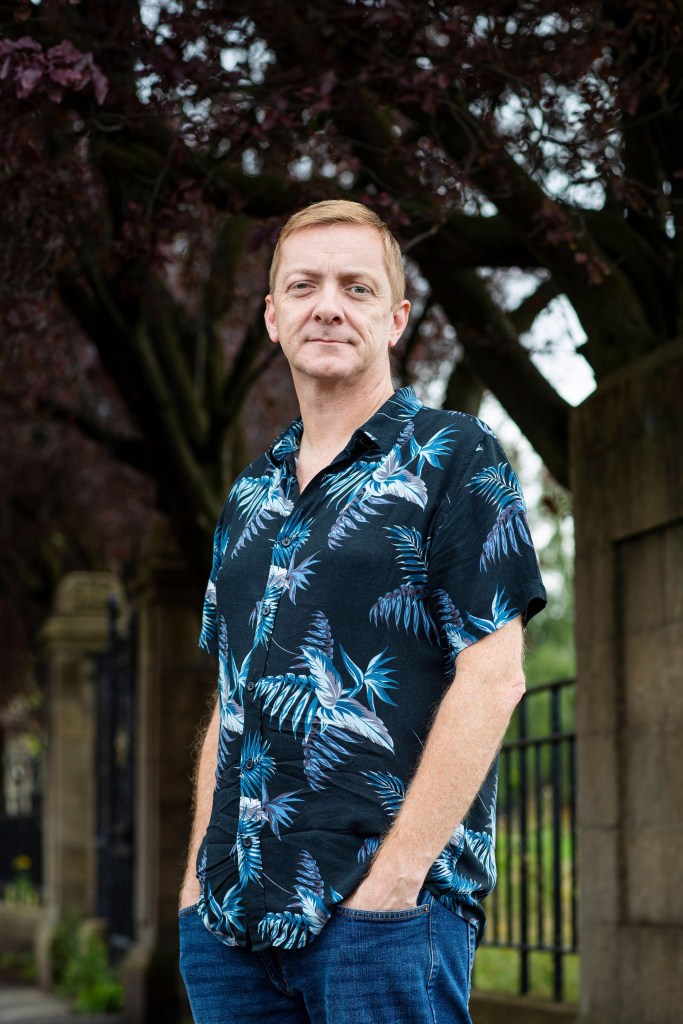
Doug Johnstone is the author of twelve novels, most recently The Great Silence, described as ‘A novel [that] underlines just how accomplished Johnstone has become’ by the Daily Mail. He has been shortlisted for the McIlvanney Prize for Scottish Crime Book of the Year three times, and the Capital Crime Best Independent Voice one; The Big Chill was longlisted for Theakston’s Old Peculier Crime Novel of the Year. He’s taught creative writing and been writer in residence at various institutions, and has been an arts journalist for twenty years. Doug is a songwriter and musician with five albums and three EPs released, and he plays drums for the Fun Lovin’ Crime Writers, a band of crime writers. He’s also player-manager of the Scotland Writers Football Club. He lives in Edinburgh.

Posted in Orenda, Random Things Tours

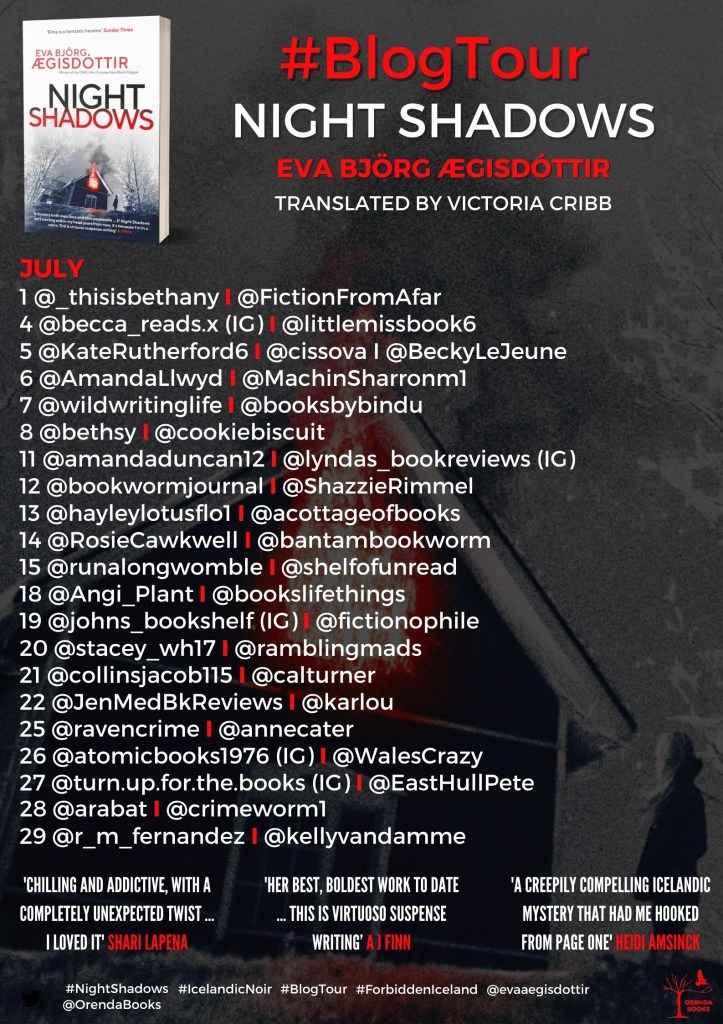
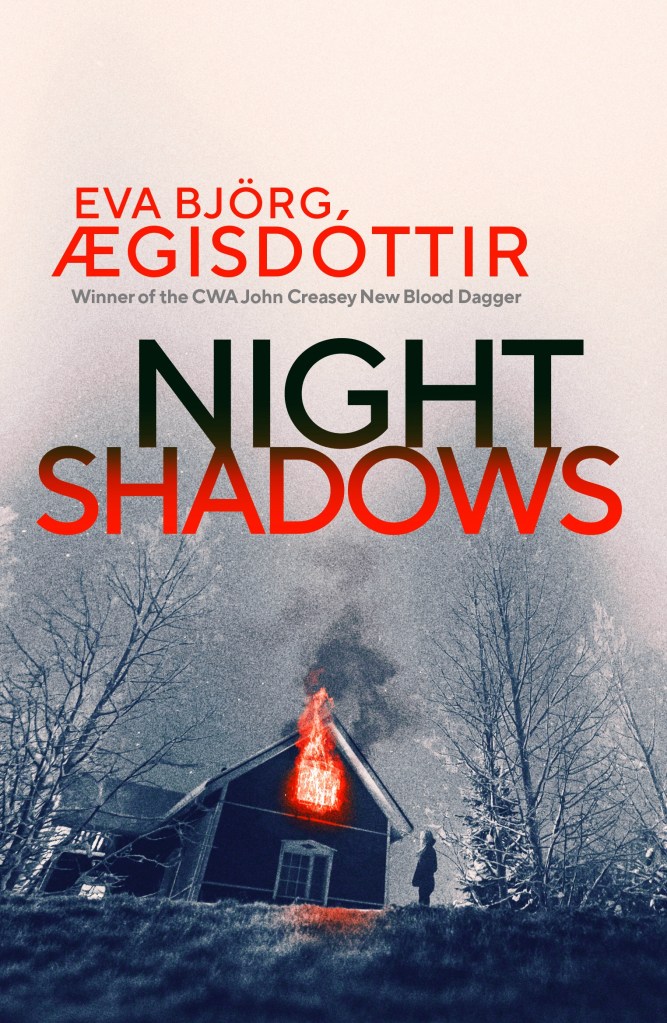
Night Shadows by Eva Björg, Aegisdóttir

The small community of Akranes is devastated when a young man dies in a mysterious house fire, and when Detective Elma and her colleagues from West Iceland CID discover the fire was arson, they become embroiled in an increasingly perplexing case involving multiple suspects. What’s more, the dead man’s final online search raises fears that they could be investigating not one murder, but two. A few months before the fire, a young Dutch woman takes a job as an au pair in Iceland, desperate to make a new life for herself after the death of her father. But the seemingly perfect family who employs her turns out to have problems of its own and she soon discovers she is running out of people to turn to. As the police begin to home in on the truth, Elma, already struggling to come to terms with a life-changing event, finds herself in mortal danger as it becomes clear that someone has secrets they’ll do anything to hide…

I devoured this crime novel in a day while ill in bed. I could barely look up from the book to talk to anyone, because I was so deeply embedded in the cold, bleak Icelandic landscape and the twists and turns of this fascinating story. Having read the previous novels in the Forbidden Iceland series, I was immediately at home with detective Elma and her partner Saever. The investigation starts with a fire in a neighbourhood of Akranes, a small town near Reykjavik. The neighbours hear the smoke alarm and come running to the house to check no one is home. The family are said to be away, but as the fire is put out a body is found in one of the bedrooms and turns out to be the teenage son, Marinó. Elma can’t understand why he is still on the bed, as if asleep. If the neighbours were woken by the fire why wasn’t this boy and why is his the room where the fire started? Soon they get their answers – he is full of sleeping tablets. It seems a party was held at the house that weekend, with a few of the neighbourhood’s teenagers attended. Elma needs to know what went on that night, who was there and where was Marinó when they left. The case becomes complicated when it becomes clear a young woman is missing. Lise was working as an au pair for one of the families living near the fire and was seen at the party. Lise was looking after the daughters of couple Laufey and Unnar, but had decided to leave and had packed everything before the party. She was ready to return to Holland the following morning. Laufey remembers seeing her bags packed that evening and when they were gone the next morning she assumed she’d left for an early flight. But Lise never reached Holland.

I enjoyed reading Elma’s voice in the first novel of this series so it was nice to pick up where we left off. Motherhood is a thread throughout the novel and it was almost as if Elma was learning exactly what being a mum entailed. She is close with her own family, despite sister Dagny getting on her nerves she realises the importance of having them around her and being there for her nieces. Within the teenagers who were present at the weekend party there is a young mother, who is trying everything to keep her relationship with the father going and overlooking a lot too. Laufney is the mum we follow most and she is almost coping as a single mum, with husband Unnar usually out and doing one thing that really infuriates me – referring to ‘babysitting’ his own children. Their own first child is a teenager, living in his own pad in the garage but still enjoying the comforts of home. Laufney is so proud of her son Andri who is soon moving to Sweden to play football at a professional level. Their two daughters are much younger. Klara is ten years old, quiet and slightly reserved, but very talented at drawing. In fact Elma finds her drawing so striking that she notices it pinned on the fridge. With the family in the main house, a girl is drawn up against the window, looking inside. Saever ccomments its like something from a horror film and he’s eerily prescient. It’s Anna the youngest daughter of the family who is sitting on the loo in the middle of the night and notices movement outside. A girl with long hair and a bulky coat is staring into the house. Anna knows it is Lise and shes not scared of Lise who was kind to her, but Lise is dead and dead people don’t come back. She goes to Klara for comfort and she reassures her, she knows she’s seen Lise because a few weeks ago she’d been been in the garden. In one of the scariest scenes Ive read in a while, the girl notices Klara and strides directly over to the window, peering in with both hands resting on the glass. I was sorry that I just happened to be reading that scene at three a.m.

The crime itself and Elma’s personal life is about loyalty and how far we’d go to keep those we love safe and for mothers that’s such a strong instinct. Elma finds these deep instincts at the forefront of her mind throughout, both personally and professionally. One of the biggest question marks I had is over Laufey and Unnar’s marriage. He is very easy to dislike thanks to his habits of sleeping with other women, even those that should be totally off limits. Yet I found myself more horrified by some of the things he did and said around his wife and children. Klara seemed to be on a diet and I was sure this was a result of Unnar’s comments to Anna about Laufey’s weight and how she didn’t want to become fat like Mum. He also makes it clear that he finds her too serious and no fun anymore. These little chips at someone’s confidence are abusive and I didn’t like that the same attitudes were being taught to the girls. I was becoming more and more uncomfortable about him and felt he could be the murderer, then kept looking at the younger generation and kids like Isak who is disrespectful to his girlfriend. It showed how these attitudes are still cross-generational. Could the murderer be one of these youngsters? CCTV showing a slight figure in a down coat near Marinó’s home led me down that path.

I loved how the book addressed Elma’s relationships and how she investigates. Even knowing she has a partner who will back her to the hilt, doesn’t stop her running away with a lead every now and then. As soon as she’s had a hunch, she has to act on it, and that doesn’t usually involve telling someone where she’s going or waiting for back up. This can lead her into danger, something that’s terrifying for those who love her and needs to change. Especially now that life is going to be significantly different. I’m already looking forward to the next chapter for this intelligent and perceptive detective.

Meet the Author

Born in Akranes in 1988, Eva moved to Trondheim, Norway to study her MSc in Globalisation when she was 25. After moving back home having completed her MSc, she knew it was time to start working on her novel. Eva has wanted to write books since she was 15 years old, having won a short story contest in Iceland. Eva worked as a stewardess to make ends meet while she wrote her first novel, The Creak on the Stairs. The book went on to win the CWA Debut Dagger, the Blackbird Award, was shortlisted (twice) for the Capital Crime Readers’ Awards, and became a number one bestseller in Iceland. The critically acclaimed Girls Who Lie (book two in the Forbidden Iceland series) soon followed, with Night Shadows (book three) following suit in July 2022. Eva lives with her husband and three children in Reykjavík.

Posted in Random Things Tours

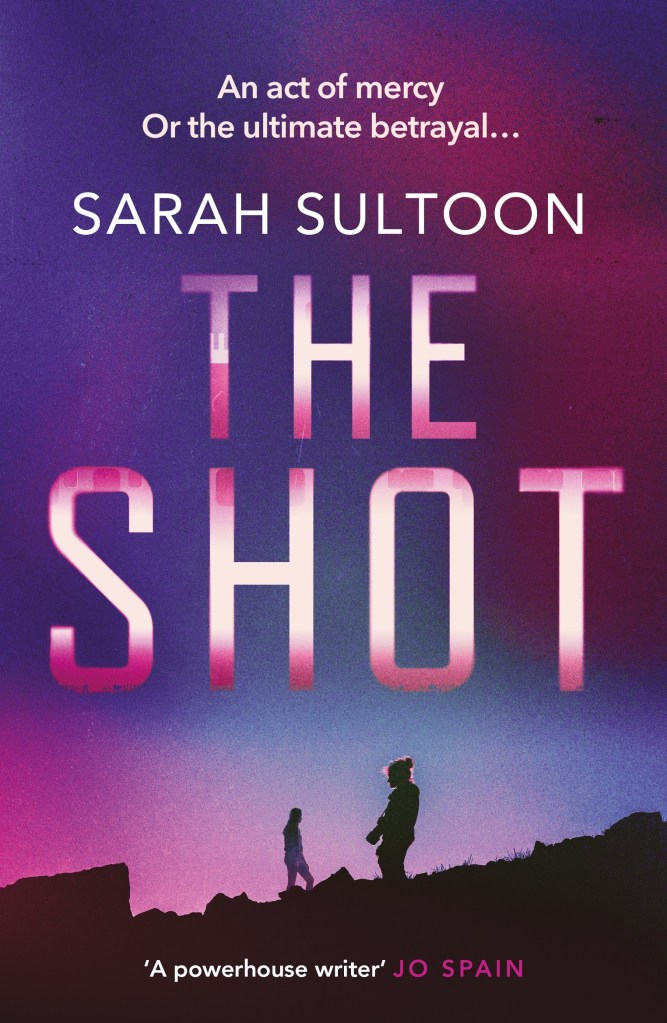
The Shot by Sarah Sultoon.

Samira is an up-and-coming TV journalist, working the nightshift at a major news channel and yearning for greater things. So when she’s offered a trip to the Middle East, with Kris, the station’s brilliant but impetuous star photographer, she leaps at the chance
In the field together, Sami and Kris feel invincible, shining a light into the darkest of corners … except the newsroom, and the rest of the world, doesn’t seem to care as much as they do. Until Kris takes the photograph. With a single image of young Sudanese mother, injured in a raid on her camp, Sami and the genocide in Darfur are catapulted into the limelight. But everything is not as it seems, and the shots taken by Kris reveal something deeper and much darker … something that puts not only their careers but their lives in mortal danger.
Sarah Sultoon brings all her experience as a CNN news executive to bear on this shocking, searingly authentic thriller, which asks immense questions about the world we live in. You’ll never look at a news report in the same way again…

Sarah Sultoon’s debut was a hard hitting belter of a novel so I was really looking forward this one, set in the world of war journalism -something that seems so pertinent right now as I watch Orla Guerrin and Jeremy Bowen on my TV screen, showing us the evidence of what can only be called war crimes in the Ukraine. Having read some of Janine di Giovanna’s writing about covering the genocide in Rwanda, Bosnia and now in Syria, I had a good idea of what the war correspondent’s life looks like. She describes lots of waiting around, mixed with personalities that are driven and easily bored. When you combine that with the things they’ve experienced it can be a potent mix, leading to abuse of drink or drugs in order to cope. It means being shipped off to one of the most dangerous places in the world at a moment’s notice, living on adrenaline and even the risk of being seriously injured, as happened to BBC Security Correspondent Frank Gardener. It’s the type of work that can become addictive, ruin relationships and damage health. I saw that dynamic being played out in Sultoon’s novel following hardened correspondent and star of the show Kris, and his producer Samira who is eager and new to the job.

Kris has something of the hero about him, always looking slightly battered and dishevelled, and ready to jump back into the fray before his injuries have healed from the last mission. He’s loud and full of machismo, but this is a surface layer. He does care about the people he’s reporting on and wants to express to the world everything he is seeing in conflict, but it also takes a toll. We see it as he returns home injured, he’s already desperate to get back out there and his mind is barely on his wife, or her concerns about their son and what he understands about his father’s job. Sami is ambitious, stuck on night shifts but lurking around the news room for that elusive shot at an overseas production role. She finds it when Kris saunters back in looking for trouble and there’s news that the American president is making a flying visit to Afghanistan. Kris is up for a quick trip and Sami is in the right place at the right time. He’s quickly impressed by how organised and well researched she is. Even before they reach Afghanistan, Sami is already thinking about the opportunities to land a big story and with Kris on board, she asks to be taken around an Afghan hospital. In the women’s hospital they find the hidden victims of the Taliban, women who have tried self-immolation as a way out of their restricted lives, but only succeeded in creating a world of agonising pain.

Sami and Kris are praised back at home and become a close team, although Sami does feel that no matter what they report, viewers are not waking up and taking notice. It’s all a journalist wants, ‘the shot’, the one that has impact worldwide and changes the way people think about a place, or a war. The one that has people approaching their MP and protesting for change. They find it covering the conflict in in Darfur, Sudan. A shot of a young mother, the victim of a devastating assault by the armed Arab militia the ‘Janjaweed’, one picture representing a dark, genocide lurking just under the surface of what we know. A way to refocus the eyes of the world on a truly terrible and largely forgotten war, crime. The author has a brilliant way of bringing us right into the moment, without long flowery descriptions, such as the way the sheer beauty of Afghanistan is described with its ring of snowy mountains round Kabul. This gives an eternal feel to the place, it is ancient and will stand here long after the war is over and everyone has returned home. In other scenes it’s something as simple as the clean clothing Kris puts on when he returns home; his cargo trousers and a fleece top, always the same. In barely any words it tells us Kris has a ‘uniform’ and that he’s never off duty and won’t be staying for very long. This isn’t an easy read. War is brutal and should be depicted that way. This really shines the spotlight on those supporting staff, the war correspondents are risking their lives of course, but so are their guides and interpreters. It really brought home to me the fear these men must have felt when America withdrew from Afghanistan suddenly and power was back in the hands of the Taliban. Those who’d worked with the foreign correspondents and without who’s help we wouldn’t have known the raw truth of the conflict, were abandoned and turned away from the airport in those chaotic last days for not having the right papers. I often wonder how many of them are alive now. This is urgent, brutal writing and the pace never lets up, giving us a taste of the adrenalin rush for the correspondents and the terrible fear that their families must live with at home. All of them are the emotional casualties of war.

Meet The Author

Sarah Sultoon is a journalist and writer, whose work as an international news executive
at CNN has taken her all over the world, from the seats of power in both Westminster and Washington to the frontlines of Iraq and Afghanistan. She has extensive experience in conflict zones, winning three Peabody awards for her work on the war in Syria, an Emmy for her contribution to the coverage of Europe’s migrant crisis in 2015, and a number of Royal Television Society gongs. As passionate about fiction as nonfiction, she recently completed a Masters of Studies in Creative Writing at the University of Cambridge, adding to an undergraduate language degree in French and Spanish, and Masters of Philosophy in History, Film and Television. When not reading or writing she can usually be found somewhere outside, either running, swimming or throwing a ball for her three children and dog while she imagines what might happen if… Her debut thriller The Source is currently in production with Lime Pictures, and was a Capital Crime Book Club pick and a number one bestseller on Kindle.

Published on 28th April 2022 by Orenda Books.

Posted in Random Things Tours

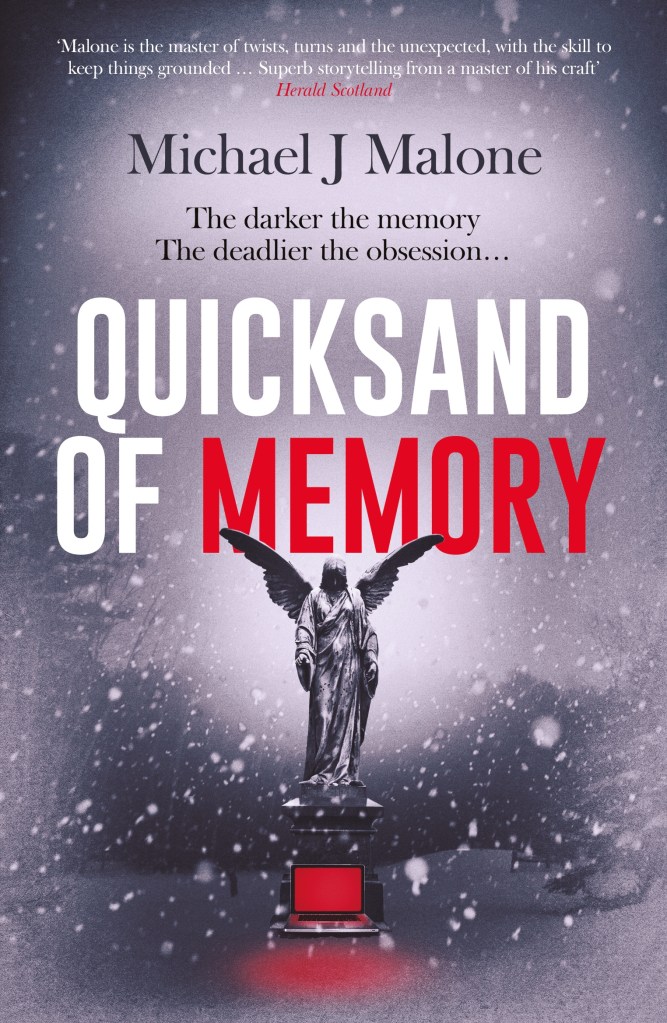
Quicksand of Memory by Michael J. Malone

Jenna is trying to rebuild her life after a series of disastrous relationships. Luke is struggling to provide a safe, loving home for his deceased partner’s young son, following a devastating tragedy. When Jenna and Luke meet and fall in love, they are certain they can achieve the stability and happiness they both desperately need.

And yet, someone is watching. Someone who has been scarred by past events. Someone who will stop at nothing to get revenge…

I was looking forward to this latest novel from Michael Malone, because he writes intelligent thrillers that unfold at their own pace. Some thrillers move so quickly I have to re-read the ending to work out what happened, but he never prioritises action or quick shocks over the story or development of character. This grounded and realistic way of letting the story unfold is what really works about his writing and I was eager to get started. Loss and the ways it affects generations of families is the central theme of this latest novel, where we meet Luke who has just lost his partner and become sole parent to his young stepson. Luke is trying to cope with his own grief while supporting his stepson and trying to establish his own counselling practice. However, there are other losses in Luke’s past, some of which he’d rather not revisit. He had terrible car accident as a young man which left his best friend dead. While we’re wondering about Luke’s version of the accident and exactly what was going on between him and his friend, he starts working with a new client. When she was a teenager, Jenna had a boyfriend who was killed. She still feels bad over where their relationship was when she lost him, because she had doubts about being with him and there were huge secrets she hadn’t shared with him. Jenna isn’t sure whether Luke is the counsellor for her and doesn’t book another appointment with him. Does Luke pursue his client and is his interest purely in helping her?

Grief has kept him away from the therapy room, but now Luke needs to prioritise creating a reasonable income for him and stepson to live on. He takes a client by the name of Jamie, but is Jamie who Luke thinks he is? From a counsellor’s perspective Luke doesn’t have great boundaries and the counsellor in me could see he was setting himself up for costly law suits or a hearing about his professional standards and fitness to practice. He sees Jenna after she was a patient and thinks they have a spark, but can he pursue feelings for her without repercussions? He also spends time with Jamie outside of sessions and even trusts him with his stepson incredibly quickly. Luke doesn’t allow time for a person’s character to reveal itself and instead depends on his own gut when making judgements about others, but that judgement seems impaired. He isn’t consulting with a supervisor and we don’t see him consulting his ethical framework. The three basic principles of counselling are empathy, unconditional positive regard and authenticity and while Luke certainly has skills in the first two areas, his authenticity is non-existent.

Luke has secrets. In fact he has a link to his clients that’s hidden and not just from the reader either. Luke isn’t being honest with himself about who he is and while counsellors shouldn’t tell clients their life story, his background should have been disclosed to his professional body. How can Luke expect a client to trust him, when he isn’t even honest with himself? He’s not being authentic in his own life and relationships. Jenna is looking forward to working on herself when she arrives at Luke’s garden counselling room, but something stops her from returning. It’s when they later form a friendship that Luke might have discussed his past, but he doesn’t. Luke does have some great counselling qualities and is an incredible stepfather, but its almost as if he feels these life changes have cancelled out everything that went before. His past unveils itself like a set of Russian dolls, each one looking finished, but with yet more revelations to come. What he ultimately learns is that by compartmentalising certain experiences and keeping secrets, he has even been kept from the full truth about his own actions and could have been saved from years of self-criticism and guilt.

Malone is brilliant at creating characters, with unexpected pasts and incredibly human flaws. I love that conflict his characters create within me about who I’m rooting for and why. Jamie’s sister Amanda feels incredibly vengeful, but there’s some empathy in me for the way she was changed forever by a series of losses when she was a child. Having lost her family she is buffeted about by the care system and further separated from her brother Jamie. Her entire energy is focused on revenge and she manages to pull Jamie into her machinations by triggering his guilt for getting an easier ride as a child. Jamie is torn between loyalty to his sister and anger at the people he’s been told are responsible and on the opposite side, his own more measured judgement on events and the people he meets on her quest for revenge. It’s clever how Malone links everyone in the book and carefully drip feeds information on them, allowing our opinion to twist and turn. There are sequences that are meandering, letting us find out piece by piece what happened in the past, or slowly revealing a character. Then there are gripping events that have your heart racing and the pages turning quicker so you can find out what happens next. Every single character is bogged down in the quicksand of the title, trying to shake free from those historic events that trigger disturbing memories. Only when they resolve these memories can they start to live in the present and they are all at a different point in their journeys. Counsellors believe that every client is capable of change and I like the way that this hope of resolution is woven into the book, even for those characters who think themselves irredeemable. This is another complex, gripping and emotionally intelligent work from Malone who is fast becoming one of my ‘go to’ writers.

Published 9th December 2021 Orenda Books

Michael Malone is a prize-winning poet and author who was born and brought up in the heart of Burns’ country. He has published over 200 poems in literary magazines throughout the UK, including New Writing Scotland, Poetry Scotland and Markings. Blood Tears, his bestselling debut novel won the Pitlochry Prize from the Scottish Association of Writers. His psychological thriller, A Suitable Lie, was a number-one bestseller, and the critically acclaimed House of Spines, After He Died, In the Absence of Miracles and A Song of Isolation soon followed suit. A former Regional Sales Manager (Faber & Faber) he has also worked as an IFA and a bookseller. Michael lives in Ayr.

Posted in Random Things Tours

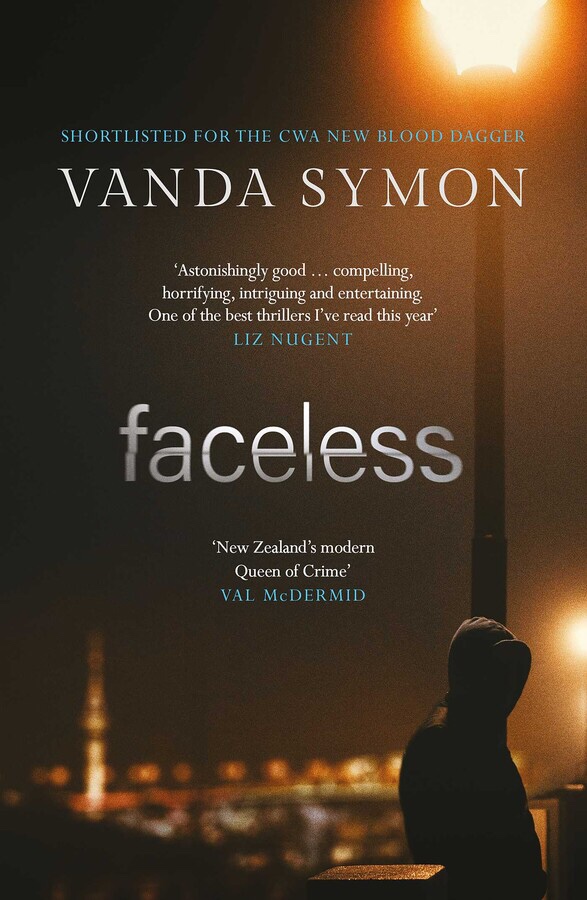
Faceless by Vanda Symon.

I devoured this fast paced novel set on the streets of Auckland and focused on a young street girl called Billy and a hardened homeless veteran called Max. Ever since Billy stumbled into the same doorway one cold night, she and Max have had a connection. He showed her how to use cardboard boxes to keep warm and where to find the best thrown out food. They have a pact to take care of each other and wherever they go in the day, they always make their way back to the same adjoining doorways at night. So, when Billy doesn’t appear one night, Max knows something is wrong. He needs to find her, but where to start in a city of this size and will anyone take him seriously?

Meanwhile, Billy has stumbled into the path of someone having a very bad day. Bradley is exhausted. Over-mortgaged, overworked and under appreciated, he is reaching the end of his tether. Having neglected his family all weekend to work, Bradley has been in the doghouse with his wife Angie. Yet it’s not enough for his boss who doesn’t seem to appreciate that five people used to do the same job Bradley is now doing alone. Bradley sees the prostitutes on their usual patch as he drives home, wondering idly what sort of man actually has the nerve to drive up and do it, to actually pay a woman to do what he wants. He wouldn’t have the nerve. Then he sees a young, tomboyish girl standing a little way from the others. She’s not a regular and he is less intimidated by her. So he picks her up and she directs him to an industrial area where no one will disturb them. He doesn’t know what impulse drives him to hit her, possibly the amusement in her eyes when he isn’t ready for her, but the feeling it gives him is better than anything he’s felt in a long time. There’s a rush of power and it’s intoxicating. So he takes her to an empty industrial unit he owns and using cable ties he makes sure she doesn’t escape. He might come back tomorrow.

Told from both Max, Billy and Bradley’s points of view in short chapters that prove rather addictive, the story unfolds of how both these people ended up on the streets and how an ordinary family man becomes a monster. I was constantly thinking ‘just one more chapter’ until I was half way through the story in my first sitting. I finished the book the next morning. The story is gritty. It doesn’t pull its punches when it comes to describing life living on the streets, or the realities of being kidnapped and left with nothing for your comfort. I could actually feel the cold, smell the mustiness of not showering for several weeks, and understand the shame of being left with no toilet facilities. It is vivid and because it’s a first person experience it’s very confronting in parts. I was so caught up in Max’s search for his friend, linked somehow to an old trauma and another young girl, and how desperate he becomes to have someone listen to him. So desperate that he has to overcome embarrassment and maybe even face whatever terrible experience has kept him running all this time. Billy is running too, but being alone and captive gives her ample time to explore what’s happened to her. Although it will take the police investigation to find out the full truth of Billy’s need to run. Through these two people we see just a couple of the reasons that people end up on the streets, but no matter why it’s a tough life that no one would choose unless they were desperate.

As for Bradley, he raises a lot of questions about the making of violent offenders, particularly those who commit crimes against women. Would anyone in Bradley’s position make the same choices he does? Or was there something latent in him, triggered by stress and what he saw as a girl from the streets looking down on him? He doesn’t fully understand the changes himself, all he knows is that the more he takes out his stresses and strains on Billy, the better he feels. He also seems to have regained his libido too, as he and Angie cavort like teenagers. He has just the right sort of happily married suburban man vibe to get away with what he’s done. I found myself rooting for Billy and whatever strength she could summon to survive just long enough for Max to find her. The visions of her grandmother are touching, providing context for Billy and an insight into her culture. Auckland is a strong presence in the novel too, from the rough, deserted areas where Billy creates her spray paint portraits of mythical women to the over-mortgaged suburbs where Bradley is lucky enough to live. We see the multi-cultural mix of kids hanging out in the park and the life of a suburban wife with their book club, exercise class lifestyle. It’s very clear that for most people in this life how you look and what you have defines you. Thankfully thats not the case for everyone and I loved Meredith, a snappy and intelligent detective who would rather wear heels than the regulation shoes. She looks beyond the surface and her investigative skills are the best, but she doesn’t have much to go on. Through her we get Max’s back story and her respect and trust in him doesn’t depend on his status – although she does insist on a shower. This book will keep you up at night to find out what happens to these characters. There isn’t a word wasted here and the pace is perfect. If you like your crime gritty, with great characterisation and empathy then this is for you. I loved it.

Meet The Author

Vanda Symon is a crime writer, TV presenter and radio host from Dunedin, New Zealand, and the chair of the Otago Southland branch of the New Zealand Society of Authors. The Sam Shephard series, which includes Overkill, The Ringmaster, Containment and Bound, hit number one on the New Zealand bestseller list, and has also been shortlisted for the Ngaio Marsh Award. Overkill was shortlisted for the CWA John Creasey (New Blood) Dagger.
Twitter @vandasymon, Instagram @vanda-symon, Facebook, @vandasymonauthor, http://www.vandasymon.com.

Posted in Publisher Proof, Random Things Tours

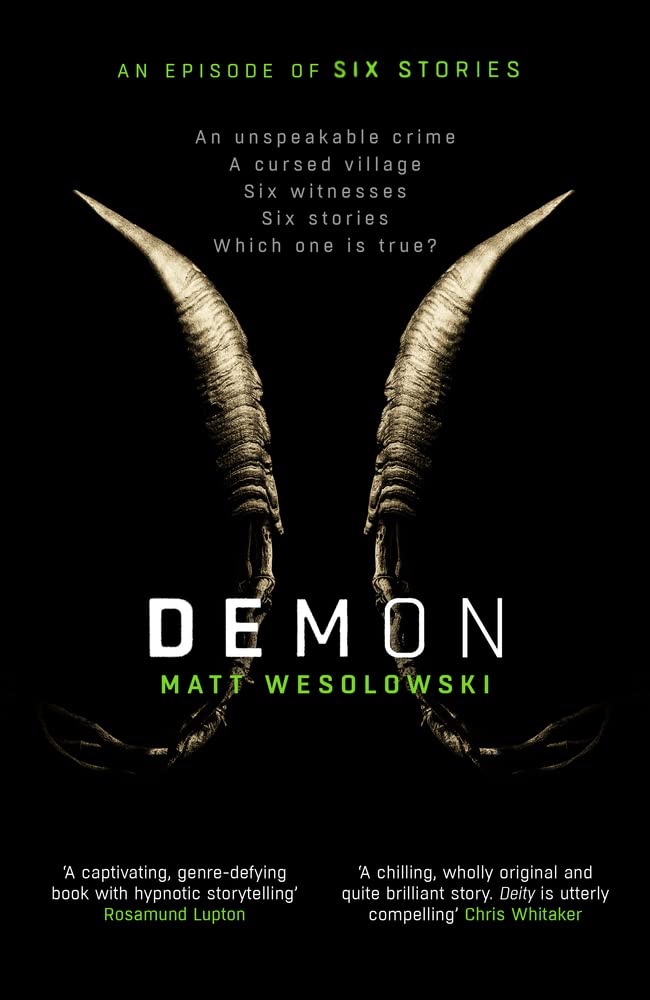
Demon by Matt Wesolowski

I was fascinated and blown away by this sixth novel in the author’s Six Stories series. As always the novel’s structure is based on a podcast format, where Scott King presents his investigation into a true crime case. Each podcast consists of six stories told by six people associated with the case, with additional emails, news reports and documents on the crime. This time King has chosen a highly emotive crime that reminded me of the James Bulger case. The novel takes us to the old mining village of Usslethwaite in Yorkshire, where a terrible crime was committed, one that shocked the world. In 1995 the murder of twelve year old Sidney Parsons, by two boys his own age, was front page news. The murderers were dubbed the ‘Demonic Duo’ by the press and as well as the usual speculation about both the boy’s upbringing and mental state, there was a whisper of something more sinister. The hills above Usslethwaite were reknowned as a place where witches congregated, all the way back to the 17th Century when witch-hunting was rife. Rumours of something dark and disturbing lurking in the caves near the crime scene had plagued the village for centuries, as well as more contemporary plagues of flies, animal deaths and a strange black shape seen nearby. Is there something supernatural and demonic about this crime? Or are they just hysterical excuses for a crime so savage no one can understand it? Now that the murderers have reached adulthood, they’re quite possibly rehabilitated and living somewhere in the U.K. Maybe now it’s time to hear the truth about what happened when Robbie and Danny formed a friendship and proceeded to commit this unspeakable crime.

I love the originality of this author’s work and his audacity in writing about subjects other writers might avoid. I was 20 years old when Robert Thompson and Jon Venables lured James Bulger away from his mother at a Liverpool shopping centre, then murdered him and left him on the train line in Walton. Everything I remember from that case also comes up in the course of King’s interviews about Usslethwaite. I remember being shocked by the murder, the age of Thompson and Venables, but also the savagery of the press and public towards the accused who were still children. Whilst the anger the crime aroused was understandable, I couldn’t understand grown men gathering outside a court to attack the prisoner transport. I kept wondering what their goal was. What would they do if they actually broke through to those boys? Even now, the mention of either boy, their incarceration or the new lives they now have kicks up a frenzy of controversy and rage. While Demon isn’t based on the Bulger case I did wonder if Wesolowski had it in mind, because he has managed to capture a lot of those conflicting feelings in this novel. Through his podcast guests we can look at different aspects of the Usslethwaite murder, and consider the differing perspectives on what happened. Although there is outrage that Scott King is even featuring this case, I can see that all he is trying to do is answer that universal question: Why? What drove these two boys to kill?

The psychological and paranormal aspects of the case are carefully intertwined here. Robbie is a newcomer to the village, fostered by a lovely, community minded couple who haven’t been able to have children. There is speculation on what Robbie went through before he was taken into care and whether he is the disruptive force behind the crime, with Danny simply taken along for the ride. However, Danny is quite a sad, lonely and disturbed little boy even before Robbie comes along. He found his mother when she had hung herself from the rafters of the barn. Rumours abound about his mother who was a herbalist and reiki healer – something rather frowned upon and misunderstood by some members of the village. In fact she was well regarded by her patients and it could be said that the suspicion was raised due to her occupation and how lucrative it seemed to be, more than anything she did. There were reports of her coming down from the caves with another person, scandalously naked. She was also thought to set fires and dance around them. However, to Danny she was the parent who brought warmth, love and softness to his life. Without her, he is left in the care of his father who is not a bad man, but is absorbed by work and struggles to show affection. Danny visits the caves to speak to his Mum, and thinks he might hear her, but in this dark place it’s hard to know who or what might reply.

The author is incredibly skilled at ratcheting up the tension, whether with more detail of the case or the next eerie happening. I often found myself reading yet another chapter so I could find out what was next. I found the paranormal elements clever, I wasn’t scared at first, but after a while the atmosphere built and I found myself uneasy. One night, my other half asked me to turn the bedside light off since it was late and I found myself unsure whether I wanted to carry on reading in the dark. The strange happenings in Robbie’s room at his foster home were very unsettling, from phantom footsteps to flies and a horrible smell that seems to permeate everything. There’s so much in this village that can’t be explained and is witnessed by lots of different people. Were these boys influenced by demons or was this a case of two very mixed up and lost boys doing something so terrible it would destroy the village, the victim’s family, and the rest of their lives. I loved the varied perspectives, especially those unexpected ones that took our understanding to another level. While never losing sight of the victim and his family’s loss, we get to explore the ideas of rehabilitation and how a perpetrator lives with their crime, especially ones so young. Can they ever make a life for themselves and get over the guilt? Or are they forever doomed to keep moving, constantly looking over their shoulder for fear of being exposed? I was fascinated with the question of whether a demon influenced these boys or whether we could call the boys demons. They are labelled monsters, but are they? Perhaps we just label them this way, because we can’t accept one human being could do this to another, let alone a child. This is another incredible read from this inventive and original author. I devoured it so quickly that I’m buying the whole series with this month’s book budget.

Meet The Author.

Matt Wesolowski is an author from Newcastle-Upon-Tyne in the UK. He is an English tutor for young people in care.

‘Six Stories’ was published by Orenda Books in the spring of 2016 with follow-up ‘Hydra’ published in the winter of 2017, ‘Changeling’ in 2018, ‘Beast’ in 2019 and ‘Deity’ in 2020.

‘Six Stories’ has been optioned by a major Hollywood studio and the third book in the series, ‘Changeling’ was longlisted for the Theakston Old Peculier Crime Novel of the Year, 2019 Amazon Publishing Readers’ Award for Best Thriller and Best Independent Voice.

‘Beast’ won the Amazon publishing award for Best Independent voice in 2020.

Posted in Random Things Tours

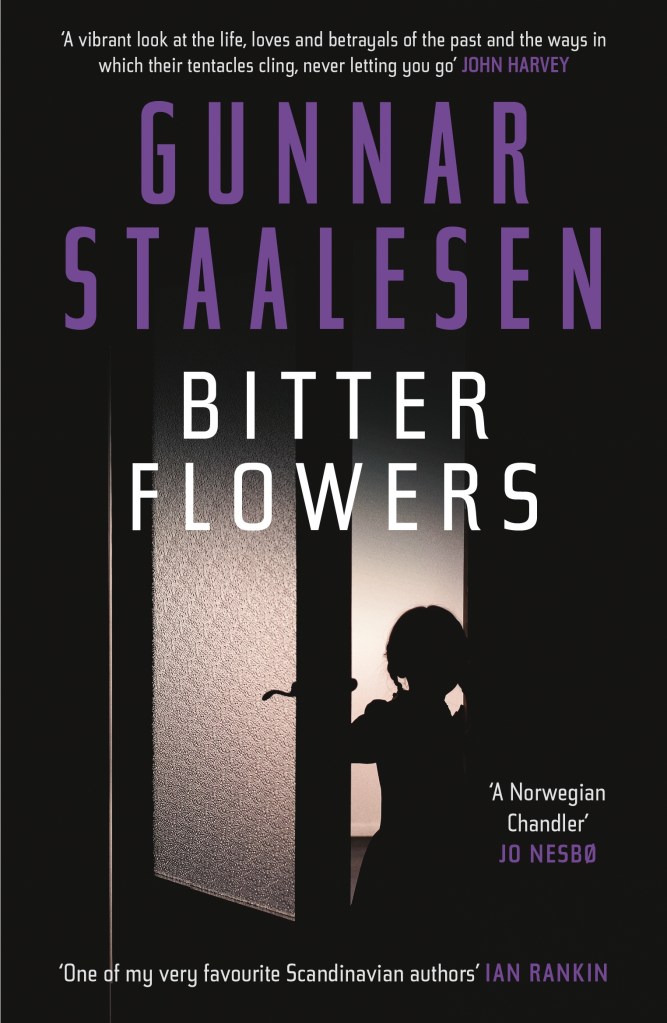
Bitter Flowers by Gunnar Staalesen

PI Varg Veum has returned to duty following a stint in rehab, but his new composure and resolution are soon threatened when a challenging assignment arrives on his desk. He is offered a job by his physical therapist Lisbeth, with whom he has built a friendship during treatment. She has a friend who needs a house sitter and she drives Varg out there to look around, only to find a man dead, floating in the elite swimming pool. As Varg leaps in to check for signs of life, Lisbeth goes missing. Most chillingly, Varg Veum is asked to investigate the ‘Camilla Case’: an eight-year-old cold case involving the disappearance of a little girl, who was never found. As the threads of these apparently unrelated crimes come together, against the backdrop of a series of shocking environmental crimes, Varg Veum faces the most challenging, traumatic investigation of his career.

This is one of those slow burn thrillers and we find Veum at a pivotal moment in his life, just out of rehab and fighting a reliance on Aquavit. Whilst not fully back to his investigative peak, Lisbeth’s idea of a simple house sitting would have suited him perfectly, with no pressure. The circumstances he then finds himself in are really not going to help his recovery, it’s enough to find himself embroiled in a murder investigation, but even worse, could he actually be a suspect? Instinct takes over though and Varg can’t help looking into the victim’s life, once he is identified as Tor Aslaksen. He is also very concerned about the disappearance of Lisbeth, as he battled to save the dead man’s life. Needless to say he faces some very awkward questions from Inspector Hamre about how he ended up there, alone in a strange house with a dead man. His digging reveals a connection to a case from some years before, that of a missing child. As if that wasn’t enough, when he looks into the victim’s employer, his company is under suspicion for environmental crimes, namely the alleged improper disposal of toxic waste. There are noisy protestors demonstrating on site and within the conflict there are two brothers, who were childhood friends of Aslaksen and stand on opposing sides of the demonstration. These strands seem so disparate, but the author cleverly threads them back to the murder victim with so much care, taking his time to unwind the truth. Yet, he also keeps a steady tension and occasionally surprises the reader as Varg’s curiosity takes him into dangerous and threatening places. is enough to heighten Veum’s interest. Nobody’s fool and uncompromisingly persistent, Veum is intrigued enough to take a closer look, thereby uncovering a connection to the unsolved disappearance of a seven-year-old girl nearly a decade earlier in the dead of night. Casting his net wider and following the threads back to their fruition, Veum tries to make sense of the past and it’s significance on current events, specifically the murder of Tor Aslaksen and all that follows.

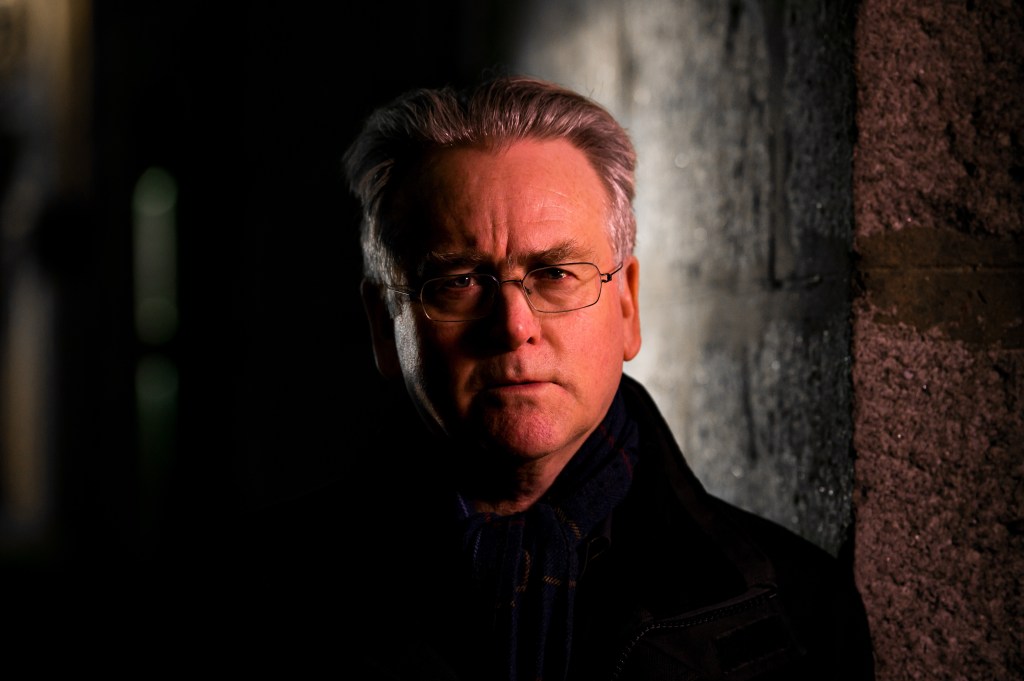
Gunnar Staalesen

I gradually started to bond with Varg, possibly due to the first person narrative; we’re with him all the way because we make discoveries at exactly the same time he does. His narrative can be abrupt at times, but always questioning and challenging those around him. As we experience his inner voice, unedited and raw, we can feel his struggles and the way his personal demons affect his life and his investigations. Yes, he has weaknesses, but his intelligence and determination are undimmed. I felt that, despite these struggles, I was safe with him as a narrator. I was firmly on his side throughout and didn’t doubt his innocence once. I didn’t work out the reasons for the murder, nor the tragic events which followed, but I did feel a constant sense of foreboding even from the first chapter. The author has a good grasp of human nature and how trauma affects people in very different ways. The psychology of addiction was also well observed and I enjoyed seeing Varg’s progress as he tries to recover while investigating a complex and emotional case. His developing relationship with Karen and friendship with Siv are handled with care and a gentleness I didn’t expect.

The case itself is emotive, allowing the reader to learn about Varg’s fragility, as he faces the horror of a child missing for eight years. By taking us back into Varg’s past, we can really see progression in his character; how did he get from there to his current stint in rehab? His previous career in child welfare has left him cynical, but he isn’t completely jaded yet. Everything he has experienced makes him more humane with an automatic reflex to fight for the underdog. I loved his underlying thirst for social justice too, something that could remain hidden from others, behind that calm and focused exterior. Staalesen provides the reader with a steady drip feed of Varg’s discoveries and this pace helps us understand the key characters better, especially where he becomes a nuisance by popping up to question certain people time and again. Even threats and constant police pressure can’t stop him from interfering and he is dogged in his determination to discover the truth. This is not a high octane thriller, but it’s more thorough and compelling because of that. Varg is not one of those showy, ‘on the edge’ investigators either, but the gradual opening up of his character allows us to trust him and truly know him. This felt like to me like a real PI might have worked back in the 1980’s, investing the time and noting the small details that crack a case. We never get the sense, as with other, flashier, P.I. characters, that he is more important than the case. There’s only a hint of fast action and real danger, but it has more impact and authenticity because of that restraint. This is complex, intelligent and authentic storytelling with a hero I enjoyed getting to know.

Posted in Random Things Tours

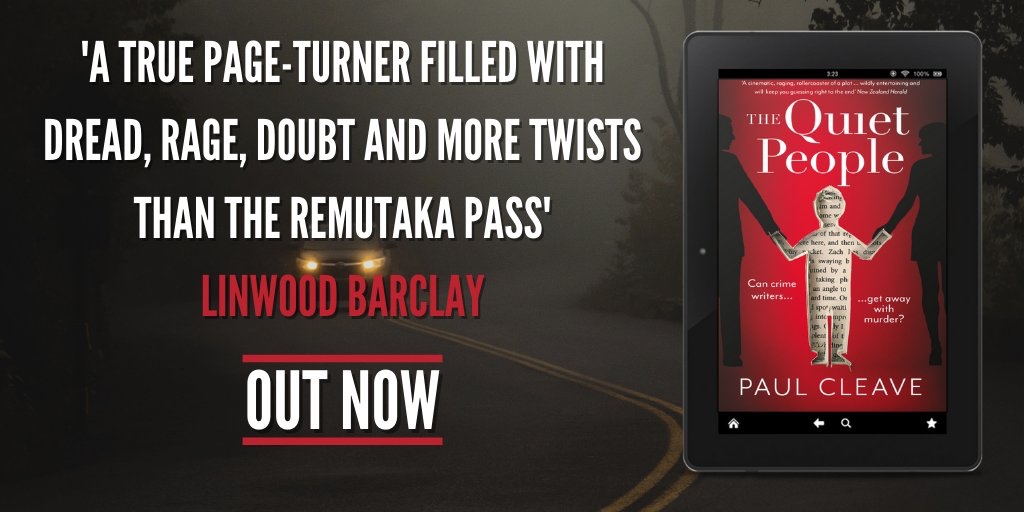
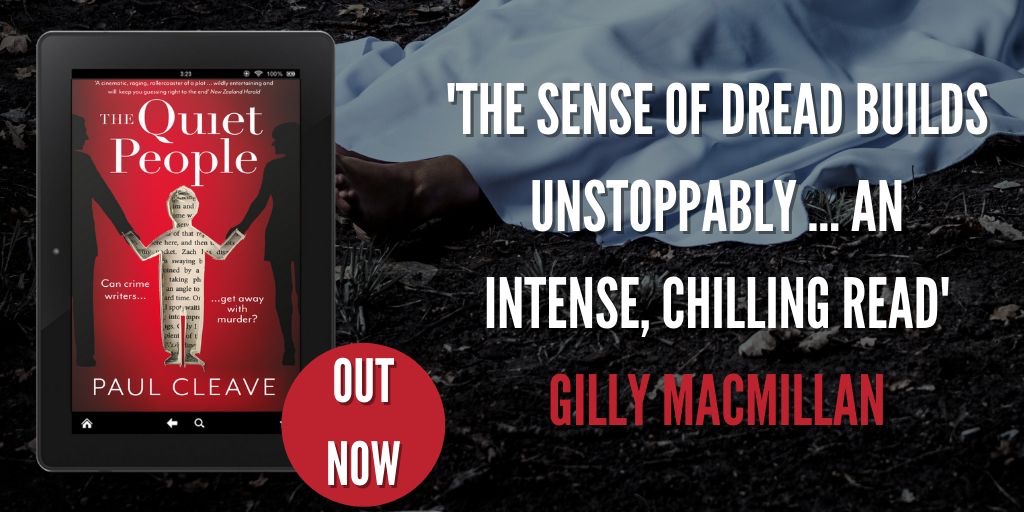
The Quiet People by Paul Cleave

Whenever I go to literature festival or author events through my local bookshop, people always ask where the writer gets their ideas from. In the case of crime writers we really want to know, because we’re thinking: is this what real life crime is like? Are there people who commit these terrible (and usually highly creative) crimes? How does the writer know this much about the crimes they depict? We want to know if they have ever been tempted to commit a crime and if anybody could commit the perfect crime, surely it’s people who’ve been writing and researching it for years? They know the pitfalls and have the forensic know-how to get away with it. So,could a crime writer commit the perfect crime? This is the corner that Cam and Lisa Murdoch find themselves in, when their son Zach goes missing one night. As a crime writing duo the two are well known, but live a quiet family life with their son in Christchurch, NZ. In a meltdown the night before, Zach has told his father he wants to run away and in an exasperated moment Cam tells him to go ahead. Could he really have climbed out of the window and gone? Cam and Lisa don’t think so, then when a footprint is found outside his bedroom window their fears are confirmed – this must be an abduction. Yet everyone knows, in child disappearances, the first suspects are always the parents. But will they be the last?

This is my first Paul Cleave novel, and I was drawn in by the premise. We read the story through the narration of Cam and one of the investigating officers DI Rebecca Kent. The chapters are short and alternate between the two perspectives, creating an interesting narrative where one moment I was on the Murdoch’s side and the next moment I could understand the police’s outlook. The first half of the book was really slow, with a drip feed of information. The second half was like a car with no brakes, careering towards an inevitable explosion. I thought DI Kent was a decent, honest officer, with great instincts and a lot of compassion for the Murdochs. I loved being inside her professional mindset, seeing how she kept a polite demeanour with suspects, while questioning or even disbelieving everything they’re telling her. The author shows how every action can have multiple interpretations. Early on in the book, when Zach is playing on a bouncy castle, Cam’s attention wanders for a moment and he can’t see his son anywhere. Frantically looking for him, he goes onto the bouncy castle looking for him, accidentally knocking a girl over in his hurry. He then grabs hold of another boy and tries to show him a picture of Zach on his phone, an actions that’s completely misinterpreted by the boy’s father. Is Cam just an anxious, frantic parent who isn’t thinking clearly or is he a deliberate abuser of children? It depends on who you are in the scenario. Kent keeps an open mind – suspect everyone, expect anything and don’t take one person’s word. She’s always calculating in her head, checking and balancing actions and behaviour.

Cam is an interesting character who goes through an enormous amount of change in the novel. We see how his son’s disappearance slowly alters his personality and he’s hard to root for. It’s as if he’s woken up inside one of his own books, fully experiencing what he might put one of his characters through. He depends on Lisa, his writing mate and wife, but are they going to be made stronger by this tragedy or does it have the power to tear them apart? They certainly have different temperaments, with Lisa being the calmer one, but I was fascinated to see how she would respond when Cam tells her about Zach’s threat to leave and his answer. The author creates such a tense atmosphere building both inside and outside their home. He depicts the frenzied attention around the case of a missing child, that reminded me of the public’s interest in the Madeleine McCann or the Shannon Matthew’s cases. It was horrible to see how the general public congregated outside the family’s homes, shouting for justice and piling pressure on the family and police alike. This chaos was so well depicted in the novel and ended up spawning one of the most explosive and memorable scenes.

This was a compulsive page turner, especially once you reach the half way point. The short, snappy chapters help with this, there’s always that temptation of just one more. There were also brilliant cliff hangers, places where it felt the book was about to end, but didn’t, and then took things in another direction entirely. I loathed the journalist Lockwood who starts out with a vendetta against the Murdochs for apparently stealing a book idea from him. Could he be taking the ultimate revenge? Could the Murdochs really be the villains after all? The truth, when it is finally laid bare, is a massive shock for the reader. I couldn’t have suspected and even DI Kent is completely taken by surprise. This is the sort of case that would never leave the investigating officer and I felt that so much about her would change from this point. I loved the way that Cleave showed the influence of the press and social media on cases that catch the public imagination. No one is innocent until proven guilty any more. Worryingly, it felt like there was no privacy either with devices like mobiles, spy cameras and our addiction to social media placing so much of our private sphere into the world. It also makes things more difficult for Cam and Lisa, who have been recorded at festivals and on TV for a number of years. It’s so easy to watch them and to discredit the couple with a well chosen statement taken totally out of context. It’s also scary to see the influence and tragic consequences that the media circus can have. Although, I did laugh at the pyramid of nuns and priests that turn up in the mob, it’s the image from the book that will stay with me. This was a fascinating thriller, with a complex investigation at it’s centre. Prepare for a twisty tale, full of red herrings and tiny clues, where you’ll struggle to trust anyone.

Meet The Author


Paul Cleave is currently dividing his time between his home city of Christchurch, New Zealand, where all of his novels are set, and Europe, where none of his novels are set. His eight novels have so far been translated into over a dozen languages and nearly 20 territories. He has won the Saint-Maur book festival’s crime novel of the year in France, has been shortlisted for the Ned Kelly award, the Edgar Award, the Barry Award, and has won the Ngaio Marsh award for NZ crime fiction three times.

Posted in Random Things Tours

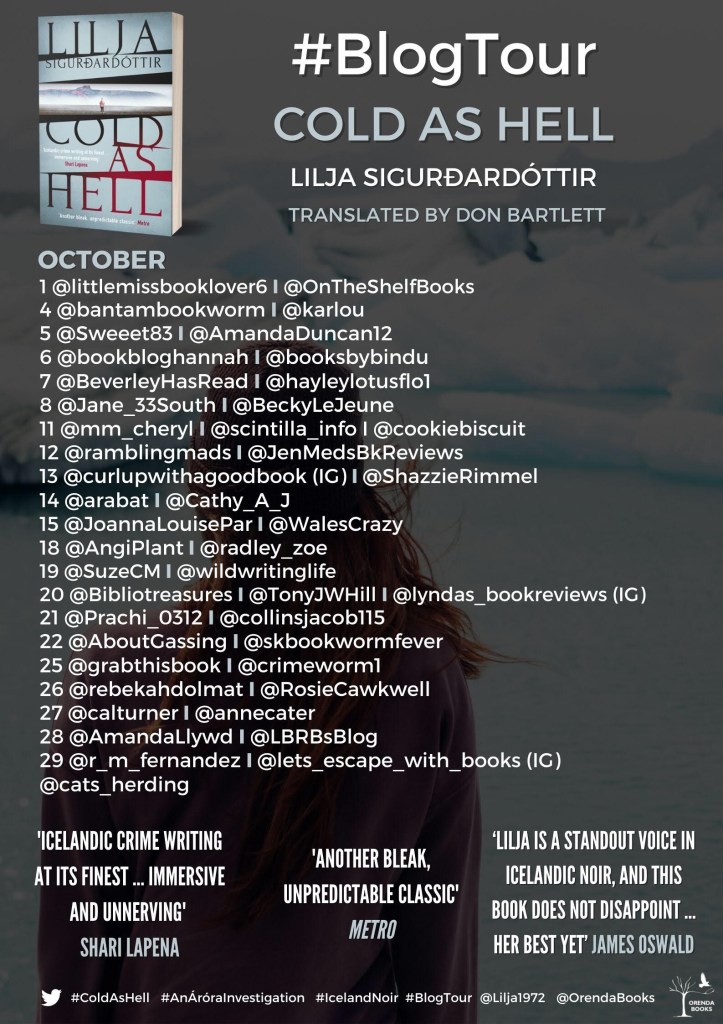
Cold as Hell by Lilja Sigurdardóttir.

‘Now I regret everything. I regret making Ísafold’s favourite Barbie doll do the splits and breaking it. I regret sneaking into her make-up and ruining her new eye-liner by experimenting with it. I regret the times I called her short-arse once I had grown taller than her. I regret losing the scarf that was a gift from her first boyfriend. I regret the time we had a row, and I called her a whore. I regret not calling her. I regret not getting the first flight to Iceland the last time she needed help.’

I’ve found myself reading more Scandi and Scottish Noir of late and Icelandic Noir has many of the same traits that draw me to the genres; intelligent and independent female protagonists, an unflinching look at death and loss, and the unapologetic darkness at the heart of the tale. I’ve had the pleasure of reading Lilja Sigurdardóttir before and this novel grabbed my attention very early on with it’s reluctant protagonist, quirky characters, and an almost lunar landscape lit up by twenty four hour daylight. Āróra is being pestered by her mother. She hasn’t heard from Āróra’s sister Īsafold for over two weeks now and she’s very worried. She wants Āróra to fly out to Iceland and find out what’s going on from Īsafold’s partner Björn and their family who are still based there. Āróra lives in the north east of England and rarely goes back to Iceland, despite being born there. She mainly travels there when Īsafold needs rescuing from Björn. The whole family have known for some time that she is suffering domestic violence, but despite several attempts to help and convince her to leave, Īsafold always returns to Björn. Āróra has given up trying to help her sister; you can’t help someone who doesn’t want to be helped. Even now she is reluctant to drop everything and intervene, but her mother is insistent and two weeks is a long time to be silent.

I enjoyed spending time in Āróra’s company and her narration is our main view of the story, although there are short chapters from the perspective of other characters that either add to our knowledge of Īsafold’s life, or contain a clue or twist in the tale. The two sisters have never had an easy relationship and Āróra sees herself as very different from her sister. She describes Īsafold as tiny, almost elfin, with long brown hair and a beauty that she feels is far removed from her own looks. Āróra feels almost giant-like in comparison to her sister, she has a strong body and is statuesque with lighter hair. There’s a sense of inferiority here, as Āróra weighs up her own looks, even if she is thought of as attractive by others she doesn’t see it herself. Other characters however, do describe her as beautiful like her sister and while she’s definitely taller and of a stronger build, many have known she is Īsafold’s sister as soon as they’ve seen her, including the neighbours at Īsafold’s building. In fact, she hasn’t been in Iceland long before attracting a man called Hákon at her hotel. As Āróra starts to question Īsafold’s neighbours about her disappearance she is disturbed to be told that Īsafold has flown to be with her family in the U.K; she never arrived, but did she even leave? Some neighbours have their own reasons for remaining hidden or cagey about Īsafold’s business, but one thing rings true in all their statements. Īsafold was in danger every day she chose to stay with Björn. Grimur in particular gave Īsafold a safe space to come when Björn had attacked her and he would patch her up while trying to talk her into leaving. It never worked.

The author cleverly sets us on edge with certain characters in subtle ways, such as a throwaway line that makes you stop and think or a behaviour that seems suspicious, like a literary double-take. This was a particular favourite:

‘He zipped his jacket up to the neck and walked away. There were only ten minutes before the bus was due. He had finished the walk around the city centre he had decided to take after the film was over. But seeing Björn with a new woman had wrecked any pleasure he might have had from his walk, and now he just wanted to go home and shave all over.’

He seems genuinely upset by Björn’s new girlfriend, who he stumbles on in a nearby restaurant. Everything written in this passage has a sense of real concern and introduces us to someone who must have cared for his friend a great deal. The end line though, is a stroke of genius, and tells us there is something very unusual or possibly disturbed about this character. Olga who lives opposite, hasn’t really noticed much, but she’s trying not to arouse suspicion as she has an asylum seeker living with her who might be denied leave to remain any day. She and Omar are like mother and son. He looks after her with more care than her own family and she trusts him. However, when he is told he can’t remain in Iceland there’s a sudden rage she’s never seen before. When she finds out he used the passport of a murdered man to enter the country she isn’t sure what to think. Olga has never felt scared of Omar but she does start to wonder what he might be capable of. At first my money was on Björn being the killer, then Grimur, and every time there was a new revelation I found myself questioning what I knew and shifting allegiance. In this way the author keeps the reader on their toes. I loved that the book was intelligent and didn’t give up information too easily.

The sense of place was well developed and had an almost alien quality to it that is so strange and adds atmosphere. First of all the reader is wrong footed with twenty four hour daylight, because it is Sumarsólstöður. This is the peak mid-summer solstice, in a whole summer of the midnight sun. Research seems to show that Icelanders actually benefit from this period, because they are outside longer each day. However, I felt the author used it very effectively to add to an eerily strange sense of place. We see Āróra’s Uncle Daniel, compulsively weeding round the edges of his driveway in the early hours of the morning when he can’t sleep. He’s trying to be quiet because he doesn’t want to wake the neighbours, and I felt a sense of loneliness in him being the only person awake. Yet there would also be something special about it, as if the sun had risen to create an extra day just for you. Along with other countries close to the Arctic Circle, there’s a magical aspect to this place where water shoots out of the ground and lava fields look like a barren moonscape. The author also sets the events of the book within recent history. Āróra is a financial investigator and happens upon some interesting accounting irregularities when researching one character. The banking crisis looms over this subplot where she has to decide whether to follow her investigative hunch or let it go and concentrate on her sister.

Most importantly and very moving, is the depiction of the relationship between two sisters. The sibling rivalries, the roles of eldest and youngest, and that push and pull between loving and resenting each other. Āróra has always felt second best to her sister, particularly in terms of their appearance. There are times when she feels obligated to check on Īsafold, rather than wanting to do it for herself. Āróra hates having the role of the sister who ‘rescues’ because she’s aware of how a drama triangle works. Īsafold is continuously putting herself in the role of victim and even though she’s been given nothing but positive encouragement and support from Āróra she can soon flip the switch and say she’s being pushed and persecuted into leaving. I actually wondered whether this behaviour had lead to her death? Had someone become so tired of helping, only to hear her being beaten again the following week, that they’d snapped? Yet Āróra reminisces about the last time Īsafold called her and she chose not to come. Would that have been the turning point? What if she’d said the right thing this time and her sister chose to return to England, safe and sound. In fearing her loss, Āróra stops seeing a problem and starts seeing her sister. The barrier between them melts away as she lists her regrets and acknowledges she hasn’t been the perfect sister either. But is it too late? This was a fascinating tale, from a clever author whose words can manipulate us into racing through the thrilling twists and turns, then stop us in our tracks with a moving tribute from one sister to another.

Published by Orenda Books and out now.

Meet The Author.


Icelandic crime-writer Lilja Sigurdardóttir was born in the town of Akranes in 1972 and raised in Mexico, Sweden, Spain and Iceland. An award-winning playwright, Lilja has written four crime novels, with Snare, the first in a series and Lilja’s English debut shortlisting for the CWA International Dagger and hitting bestseller lists worldwide. Trap soon followed suit, with the third in the trilogy Cage winning the Best Icelandic Crime Novel of the Year, and was a Guardian Book of the Year. Lilja’s standalone Betrayal, was shortlisted for the Glass Key Award for Best Nordic Crime Novel. The film rights have been bought by Palomar Pictures in California. Lilja is also an award-winning screenwriter in her native Iceland. She lives in Reykjavík with her partner.

Posted in Monthly Wrap Up

Books of the Month! August 2021.

This month’s reading has been less frenetic than the last two months. There are a couple of reasons for this: I consciously wanted to take on less blog tours; I was expecting to have a procedure on my spine this week. Then crashing into this came my father’s illness flaring up and I’m still supporting my husband who has been struggling with PTSD. There’s always a lot going on in life, but this was just too much. I couldn’t think clearly, so reading anything that I hadn’t chosen was a chore. So aside from books I’d already read and had scheduled, I decided to spend the rest of the month reading exactly what I wanted. I’ve enjoyed just browsing the (overstuffed) shelves and picking something out purely because it suited mood. After a literature degree and half way through an MA, I’ve learned to read things I’m not enjoying or find challenging, but this month life was challenging enough. I didn’t have my procedure in the end, but I know it will happen soon. Things have settled but I am continuing to choose blog tours carefully and instead get through my proofs and the NetGalley checklist for the next couple of months. These were my favourite reads for August.

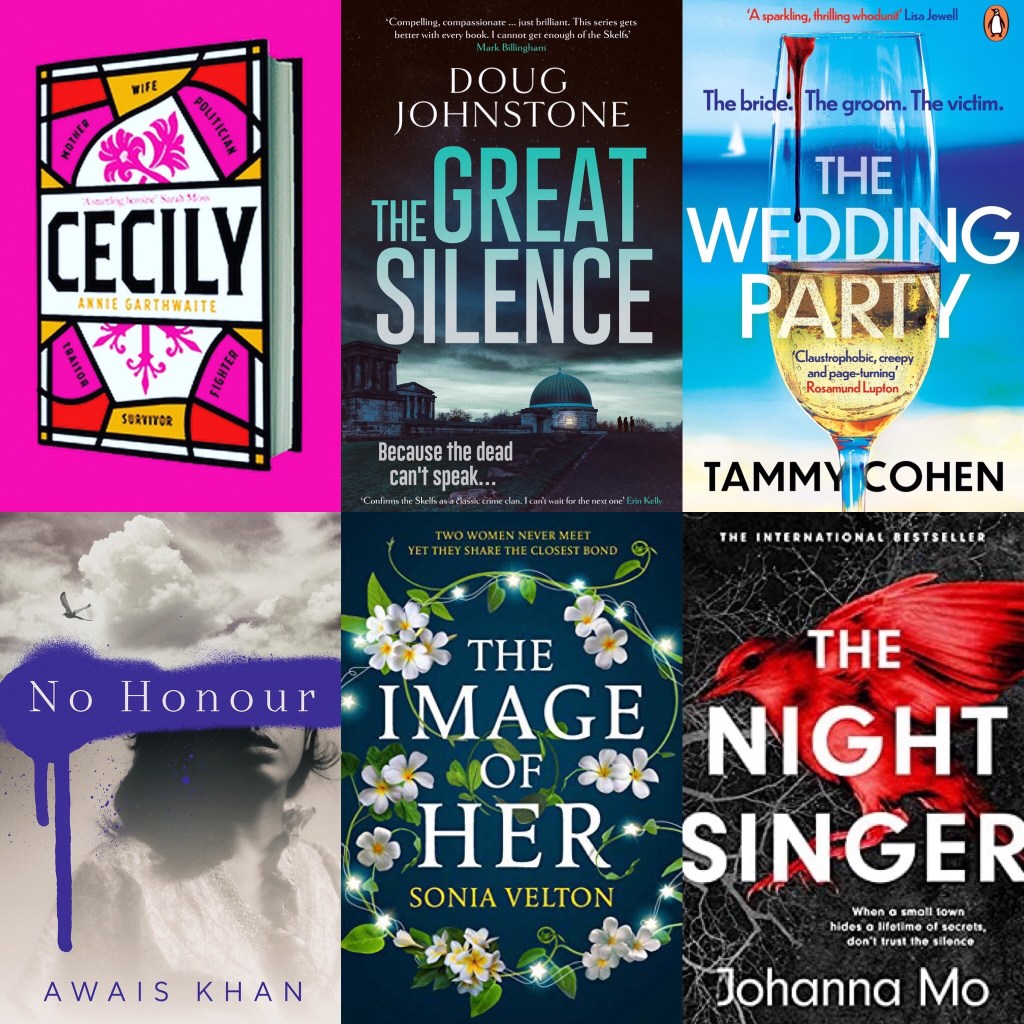
Cecily was a fascinating read about a woman I didn’t know well, but who turned out to be an ancestor of mine. Her grandmother was Katherine Swynford who was the mistress then the wife of John of Gaunt, Earl of Lancaster. She lived in Lincolnshire at Kettlethorpe Hall which is about seven miles from me. She’s now buried at Lincoln Cathedral with her eldest daughter Joan, who happens to be Cecily’s mother and my great-great-great (x infinity) grandmother too. It was fascinating to meet this strong, principled woman who has much more political sway than I imagined. Beginning with her front row seat at the execution of Joan of Arc, we see Cecily’s resolve in her determination to witness the event, to not look away. We then delve into the court of Henry VI and see the beginnings of the cousin’s war, with Cecily firmly on the white rose side of Yorkshire. She gives birth to two kings of England, lived to see her granddaughter marry Henry VII combining the houses of York and Lancaster, and was great-grandmother to Henry VIII. There is so much more to her story, this is just background, so if you love strong heroines and the intrigues of the Royal court this is the one for you.

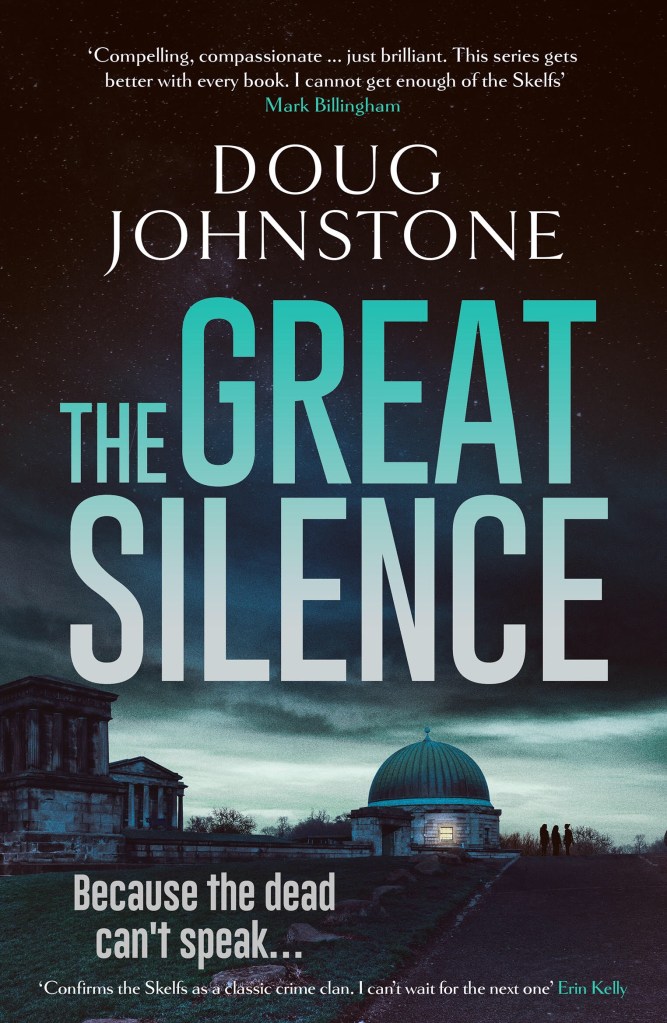
I’m sure regular readers are totally fed up of me banging on about how wonderful the Skelfs are, but I’m never going to stop. There are more feisty women here, in fact a whole family of them. Dorothy is the grandmother and she runs the family funeral business from her home in Edinburgh. Daughter Jenny also lives above the business, but she concentrates on the private investigation business. Granddaughter Hannah lives with her girlfriend Indy, and is just starting her PhD in the astrophysics department. The book starts with a curious find, when the Skelf’s dog fetches a human foot in the park! This sets Dorothy on a mission to find out where it came from and what had been chewing it. Hannah is investigating for her supervisor, because he’s had a reply to one of his messages sent into outer space. Aliens have never contacted us before – the Great Silence of the title – so why now and who could it be really? Finally, Jenny is investigating an elderly lady who appears to have an a Italian gigolo. Yet, her ex- husband Craig still looms large. Could he have escaped prison and gone into hiding somewhere close to home? Doug Johnstone is a magician who holds the threads of these stories and combines them in perfect harmony. His women are real and quirky – pensioner Dorothy teaches drumming, goes to clubs, has a younger lover and thinks nothing of stepping into danger when necessary. I love the calm, quiet Indy too. Gritty, feminist, philosophical and a great crime novel.

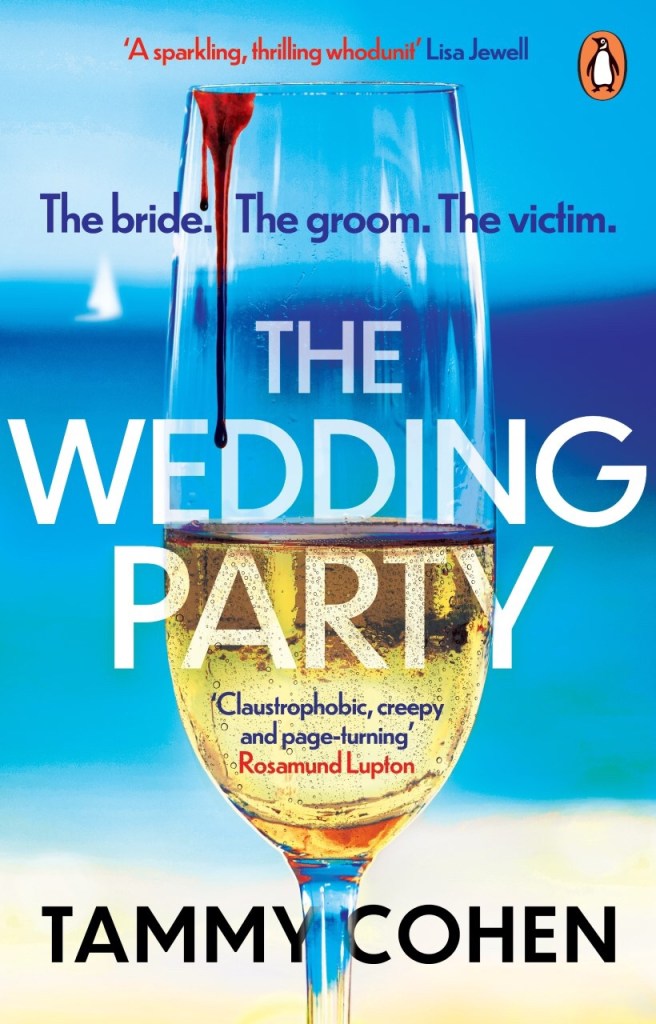
Tammy Cohen was a new author for me, so I was pleased to have the time to try her novel The Wedding Party. Lucy and Jade are getting married in Kefalonia, and thanks to her eye for detail everything is going to be perfect. It’s close family and friends only, so the only wild card should be her sister Jess who has never really played by anyone else’s rules. There are a couple of last minute hitches – Jess pulls a double whammy by wearing a psychedelic dress instead of the dusky pink they agreed for the matron of honour and brings a random stranger she met the day before. Jase’s mum could have caused another row by turning up in a white dress – ‘it’s called bone darling’. Lucy manages to overlook these setbacks, she’s more worried about the costs that have really added up alarmingly. Wedding planner Nina is asking for the next instalment, but she’s got her own problems involving money lenders. In-between the wedding weekend chapters, there are transcripts of police interviews so we know there’s an incident to come. The writer sets each character up so we can see their secrets, but which ones will be exposed? We also get to know a character through their therapy journal, with a terrible upbringing and so much trauma to process, what chaos will she bring to the wedding? More to the point, who is she? Also, who is the old lady they see washing her breasts in the airport toilets and why is she hanging around them in worryingly immodest swimwear? This is a great thriller, and is appallingly addictive. I read it in four hours straight one Sunday. It also left a lasting impression with regards to not judging others and being kind. This was like opening a big bar of chocolate in my house; dangerous, delicious and you know everyone will love it.

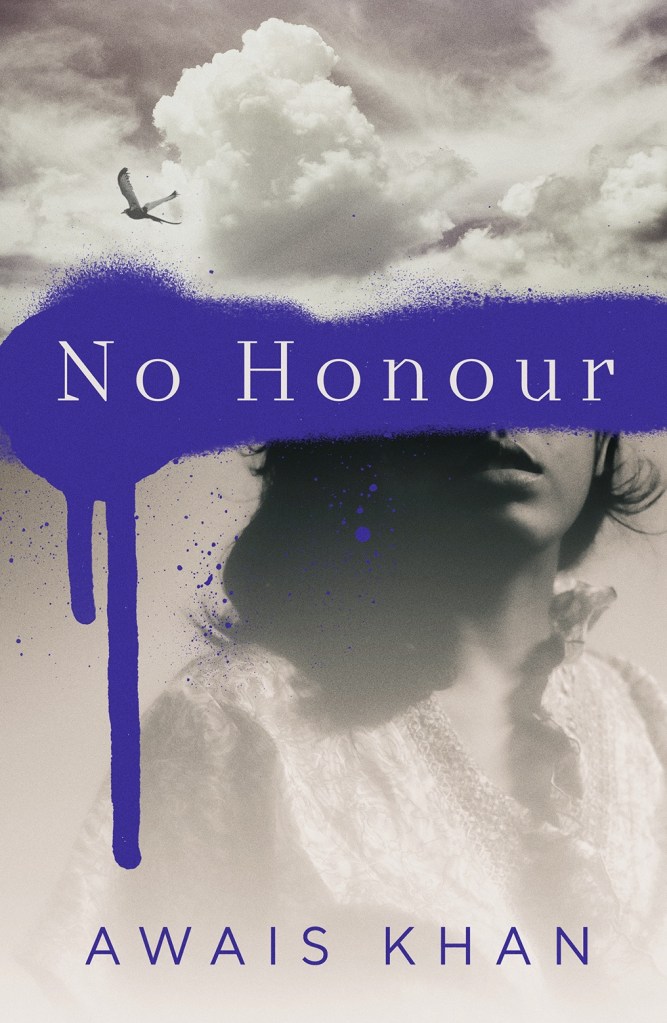
This is an incredible story of one girl’s fight to be who she is and make her own decisions about her life. Awais Khan has written a compelling story around the issue of honour killings in Pakistan. There are thought to be around 1000 of these killings every year in the country, and these are just the ones that the authorities get to know about. In an interview with EasternEye.com Khan said he’d chosen fiction to tell this story instead of non-fiction or journalism, because it has room for imagination, but also creativity and it’s his creation of this wonderful character Abida, that brings to life the real horror of how women can be treated in Pakistan. Through falling in love with her spirit and determination, we feel connected and emotional about what she goes through. Some scenes are tough to read, but they need to be. I will hold up my hand and say I didn’t fully understand the moral code that allows a man to feel honour at killing one of their own. However, in such a deeply patriarchal society a woman loses her honour through immodesty – dressing in a Western way, staying out late, meeting with a man, sexual activity before marriage, refusing an arranged marriage. A man’s honour is based on his masculinity and that means being the head of his house, but by ignoring an immodest woman in the family their honour is lost. What’s most moving though, is Abida’s father Jamil and his quest to find his daughter. That one man is willing to stand up for his daughter, rather than obey an outdated code of masculinity, means so much. Their relationship is like an oasis within what she goes through. Hard hitting, but ultimately very uplifting.
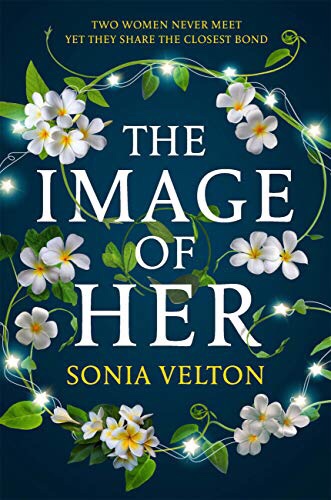
I’ve waited a little while to read this one, through lack of time and too many blog tours. It was a wonderful surprise with its depth of characterisation and psychological insight. Connie and Stella are strangers. They live thousands of miles apart, but two traumatic events bring the two of them together and they begin to talk. When they come together, it’s in a way nobody would expect. Connie lives in Dubai with her husband and children, struggling to get used to being an ex-pat, not working, and the social injustice she sees. Stella is sole carer for her mother, a smothering narcissist who is now struggling with dementia. As Stella recovers from her trauma she finds it hard to talk about it, but feels like she’s talking to Connie in her head, so it’s easier. I really enjoyed this exploration of identity and how we construct our ‘self’. The characters tell the story and I felt completely drawn into their world. I thought the author really explained what happens when there’s a gap between who we are and who we present to the world. Very different to her debut novel, but showed the author’s range and skill. Will linger long after you’ve read the final page.

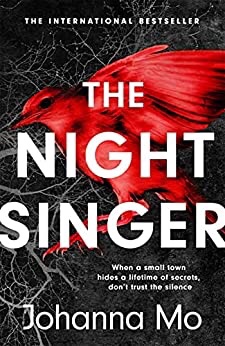
This was another novel I’d been wanting to read for a long time and in one of my favourite genres – Scandi Noir. This is the first in the author’s Island Murders trilogy, which is already a hit in the author’s native Sweden. We follow detective Hannah Duncker as she returns to her home town, a place where she’s renowned for being the murderer Lars Duncker’s daughter. Needless to say not everyone is happy to have her back in town. Her first case brings another blast from the past when she realises that the victim is the son of her best school friend Rebecka. It’s well known that Rebecka’s ex-husband Axel was violent towards her, so they need to talk to him, but he seems antagonised by the police and Hannah in particular. Could he have killed his own son? Told in dual timelines, we follow Hannah and the investigation as well as the 24 hours before Joel’s death, told entirely from his perspective. The reason I originally started to read and watch Scandi Noir, was because it depicted how violent crime affected the families and friends involved. Instead of an action-packed macho thriller, this book used a more feminine gaze, choosing to show the devastation caused emotionally instead. From Joel’s nuclear family and slowly tracking outwards to friends, teachers, neighbours we see all the victims of a murder. As each narrative came closer to revealing the answers, the tension started to build. I thought the story dealt with a very timely issue and all aspects of the case felt well resolved. However, when it came to Hanna’s own story, there were enough loose ends left to explore in more detail over the next couple of books. I would recommend this to all crime lovers, but particularly those who enjoy an intelligent, complex and emotional crime novel that focuses on the victims rather than fetishising the killer.

A Look Ahead to September

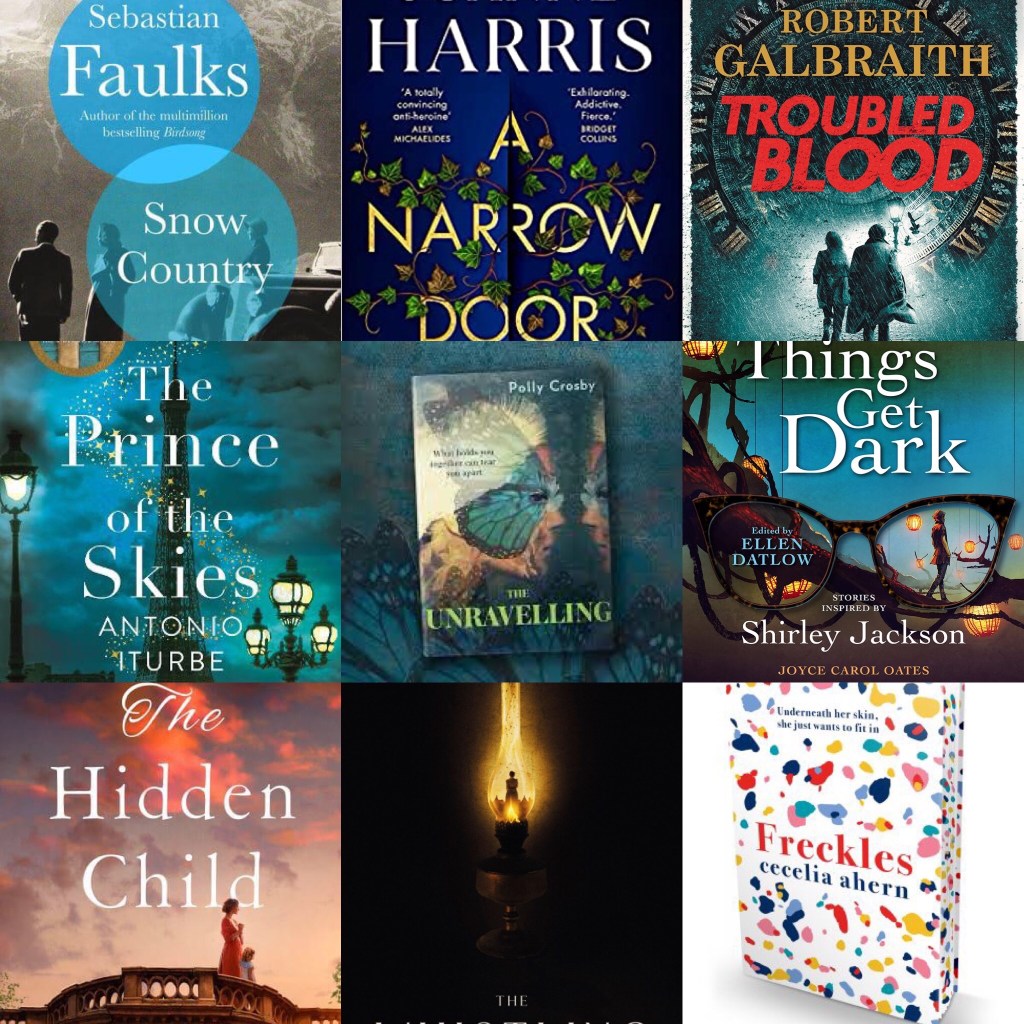
So, with less to read for blog tours I will be concentrating on proofs and NetGalley this coming month. Here are some of the books I’m hoping to read next month, some of which have a slightly autumnal feel and look forward to Halloween.

Happy Reading ❤️📚