Posted in Netgalley

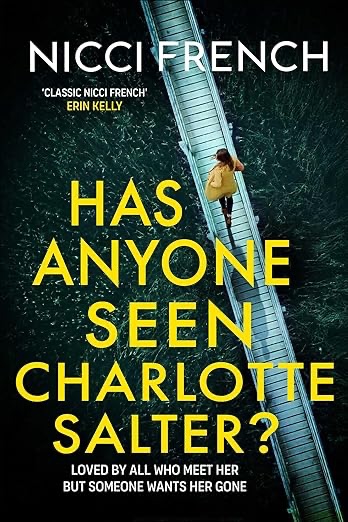
Has Anyone Seen Charlotte Salter? by Nicci French.

Charlotte and Alec Salter have four teenage children and live in the small village in East Anglia. We meet them on Alec’s 50th birthday where a big evening party is planned for most of the village as well as family. Yet at the beginning of the party there are no Salters present. Charlotte went for a walk and hasn’t returned. Alec did same, but they didn’t go together or in the same direction. Fourteen year old Etty is worried. The last of the Salters and yet to leave home she is starting to panic. She loves her mum, but if she is gone, for whatever reason, that means she has to spend two years at least in the company of her father. Just the two of them. Alone.

In the days that follow as the police investigate, there are rumours that Charlotte and family friend Duncan Ackerley were having an affair. Of course it was more widely known that Alec was seeing villager Mary Thorne, in fact his own daughter heard him on the phone to her from the other line the night of the party. When the Ackerleys invite the Salters for Christmas Day, only Lottie turns up at first, her brothers are late and Paul is probably giving it a swerve altogether. Yet Etty thinks it would be worse to sit at home, staring, worrying and jumping at every sound. As dinner time approaches, the Ackerley’s start to wonder where Duncan has got to. He’s been out for a walk, possibly down to the boat as there is a super high tide and he needs to move it. It’s Etty and Giles that start to look for him and he does try to shield her eyes as they come closer and see that Duncan is slumped in the water, dead. We move between the party night and the Christmas days that follow and twenty years later when all the Salters are once again in residence at the family home.

Everything about the house is dated and dilapidated, including their father Alec who is succumbing to dementia. Etty, ever the lawyer, is organising his move into a nursing home and the clearance of their parents possessions. For this job she has found a bright and organised woman called Bridget. She gathers the siblings and tells them that the easiest way is for them to put specific coloured post-its on their must have items, then she takes away the rest for sorting, selling and recycling. It’s emotional, especially since there are now only three of them. Their brother Paul never coped with life and the loss of their mother and sadly committed suicide on the anniversary of her disappearance. Meanwhile, now a TV personality, Morgan Ackerley is home to record a podcast on that Christmas, speculating on what happened to Charlotte and his father. This is going to stir up the village and make life difficult for both families. When a sudden event leads to yet another death, the police are called and a new detective looks at the old files as well as this new case. Are they linked in some way? Despite her boss seeming to warn against digging up what’s been long buried, this detective is determined to find out what happened to Charlotte Salter.

Seeing how much these families have changed over time is so interesting and I found myself wondering how different the Salters and Ackerleys might have been if this crime hadn’t happened. Etty melted my heart a little bit because she’s clearly so close to her mum and on the night of the party she’s the one who’s trying to raise the alarm because she knows something isn’t right. The boys are largely off doing their own thing and seem almost inured to the state of their parent’s marriage. The consensus is they’ve probably had a row, but Etty knows that despite a row, or their dad being on the phone to Mary Thorne at 2am the night before, there is no way that her mum wouldn’t turn up to his birthday party. She has always kept up appearances in that way. She even looks at her father and wonders whether he could have killed her. Her relationship with each parent couldn’t be more different, there’s a distance between Etty and her father both in the past and the present. In fact he doesn’t seem that invested in any of his children. Yet Etty can still imagine the smell of her mum’s perfume and what she would be wearing and I could imagine Charlotte hugging her daughter, her perfume just one of the many scents that signify home. With only the boys and her distant father left who will she go to for hugs? I could feel her panic as realises that after Christmas, the boys will go back to jobs and university and she will be left alone with their father for two years. I could also see the shadow of this huge loss in the adult Etty: an awkwardness about whether the family kiss to greet each other or not; keeping a lawyer’s professional manner at all times; doing all the organising and keeping busy so she can remain detached. She doesn’t cry, even when finding memories of their childhood. She holds herself stiffly, almost brittle and I wondered how much it would take for her to break.

There are many ghosts here. It’s not just Etty who was changed. They all feel the loss of their brother Paul deeply and he’s the empty chair at the table, even now. They tiptoe around each other, trying not to open old wounds but when a fire is started at Bridget’s home a new murder investigation is opened. Either the arsonist didn’t realise Bridget was at home, or didn’t care. Was their aim to kill the house clearer or was it to hide evidence that she’d unwittingly taken into her home alongside the Salter’s belongings? I found this mystery so intriguing that I couldn’t stop reading and I loved the psychological aspects of how these unsolved crimes had affected the families and the village as a whole. There were a couple of crucial points past and present where everyone I suspected seemed to be going for a walk alone – without even having a dog as an excuse! I was suspecting that Lottie’s husband wasn’t as advanced in dementia as she seemed, but couldn’t be sure. The reveals were satisfying, but it was the methods of concealment that really blew me away and I loved how thorough the investigating detective was. She wanted to be sure, whether or not it disturbed or upset some people and I loved that about her. Mainly I thought about how the author successfully showed the long term effects of a crime like this, even years on from the actual incident. These children were all changed forever and the villagers have lived under a fog of suspicion for years. Etty particularly left me thinking of all the events I’ve been able to enjoy with my mum over the last 50 years, that she and Charlotte had missed out on. Finding a balance between the real emotions that surround a crime and creating a page-turning mystery is difficult, but here I think the authors have really pulled it off.

Out 29th Feb in Hardback from Simon and Schuster

Meet the Author

Nicci French is the pseudonym of English husband-and-wife team Nicci Gerrard and Sean French, who write psychological thrillers together

Posted in Netgalley

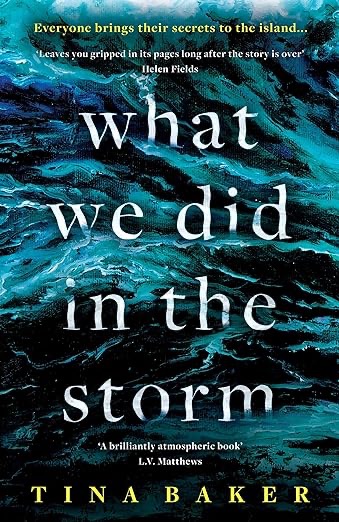
What We Did in the Storm by Tina Baker.

This is my first Tina Baker novel, although I’ve been aware of her others she’s been a new author I hadn’t managed to get on my TBR. Now I feel very stupid and sorry that I haven’t picked up one of her earlier thrillers because I enjoyed this one very much indeed. Tresco is a small island in the Scilly Isles that’s run almost like a club for the wealthy. Owned by ‘the family’ it’s main currency is tourism but often the same families own timeshares or block book the cottages, each named after a seabird, for the same times each year. Those that live there all year round are ‘the workers’ who look after the abbey gardens, work in the pub or the shop, or work directly as gamekeeper or groundsmen for the family estate. This creates a community where everyone knows everyone else, and each is very aware of their status in relation to each other. So when Kit, son of the very wealthy and regular cottage dweller Beatrice Wallace, starts a flirtation with Hannah the barmaid from The Old Ship tongues start wagging. There are many rumours about Hannah: that she’s been dallying with fellow worker Sam who is married with three boys; that she is easy with her favours, especially on poker nights with the boys; that she was spotted dancing naked by the full moon; that she’s possibly a witch. None of that bothers Kit, but as the young lovers become more than a quick fling it bothers other people. Kit’s mother is raging at her son’s choice of girlfriend, knowing the grief of a relationship with someone from a different class to you. She tries to push him towards her goddaughter Charlotte, who might be stupid enough to wear heels and off the shoulder tops on the island, but is at least in the same circles as the Wallace’s. Sam’s wife Christie should be ecstatic, but for some reason she isn’t, still fuming at Hannah any time she comes within an inch of her husband knowing that she has some sort of hold on him. Alison, Hannah’s boss, just wishes that Hannah would stop sleeping with the customers and causing drama in the pub. As a storm approaches and tensions are at their height, two women are attacked at a remote point on the island, but one woman is lost to the sea. But who?

The author uses different narrators throughout the story, which is difficult at first until you get to know each character and their place on Tresco. Interspersed with these voices is a separate narrative entitled ‘After the Storm’ that recounts the events of that day and what the speaker has seen. We don’t know who they are, but they seem to have been in the right place at the right time to have some of the answers, but not all. The rest of the narrative occurs in the lead up to the storm and we get to know all the residents, visitors and workers. Hannah and Kit aren’t the only ones potentially causing problems for the community. There’s John and Mary-Jane from Georgia in the USA, evangelical Christians who seem to have eyes only for each other. Why did they leave their hometown and families and what shameful secret does Mary-Jane impart to the island’s nurse? Thor works in the village shop, where a bottle of wine can cost as much as some of the worker’s weekly salary, but has a rather active internet life that would raise eyebrows. There’s quiet Maisie who cares for her mother’s needs 24/7 and seems devoted, but lays awake at night listening to her sleep apnoea machine helping her breath, just wishing she’d stop. There’s also a strange man who appears at bathroom windows wearing a balaclava and spying on unsuspecting ladies. Even Christie and Sam’s relationship isn’t what it seems, the long suffering wife whose husband drinks more than he should, neglects his family and strays when he can is the accepted narrative, but never assume that what you see is the truth. Beatrice is a horror though, although islanders are sympathetic when she loses her husband, she isn’t perhaps grieving as much as they would assume. She loves her son, but wants him to commit to something more than painting, sailing and cavorting with that barmaid in whichever cottage is free. None of these activities will make a living and although the family have money and he won’t be destitute she still wishes he had some direction.

I loved the way the author created these rigid boundaries between the different groups on the island and how it disrupts everything if they are broken. After the storm, Kit spends more time on the island painting and renting whatever cottage is free. He offers help where needed, even if it’s a shift in the pub or running errands for holiday makers. Yet he’s stuck in limbo. The workers don’t accept him, in fact they wish he’d bugger off and let someone who needs the money have a job. However, they do have to be careful because his mother is a rich timeshare owner and as such must be treated as a guest. As for him and Hannah, a quick bunk-up is overlooked but why did they have to fall in love? There are clever little faux pas that show someone up as an outsider, such as the plague of pink waterproof coats that islanders wouldn’t be seen dead in. Having come from a small village, I enjoyed the way gossip spread, usually via the pub, as one person tells someone else in confidence, then that person tells someone else in confidence, until it’s a chain of Chinese whispers with the truth lost somewhere in the telling. I also loved the incredible sense of place Tina has created, the crashing waves, exotic flora and incredible seabirds are romantic and enthralling to visitors, but islanders know this isn’t some sort of nature’s Disneyland. The wild weather and stormy seas can be lethal and only the workers know the endless maintenance it takes to keep the island to counteract the damage caused by the sea fret. They are stuck in a parasitic relationship, where they can’t do without the tourism but hate it at the same time. There are so many revelations and twists here I made sure I set aside enough time to finish it in one go and I’m glad I did. Right up until the end I was fairly sure what happened during the storm, but how wrong I was! I’m now going back to Tina’s other novels because I think I’ve just become a fan.

Published on 15th February from Viper.

Meet the Author

Tina Baker, the daughter of a window cleaner and fairground traveller, worked as a journalist and broadcaster for thirty years and is probably best known as a television critic for the BBC and GMTV. After so many hours watching soaps gave her a widescreen bum, she got off it and won Celebrity Fit Club. She now avoids writing-induced DVT by working as a Fitness Instructor.

Call Me Mummy is Tina’s first novel, inspired by her own unsuccessful attempts to become a mother. Despite the grief of that, she’s not stolen a child – so far. But she does rescue cats, whether they want to be rescued or not.

Posted in Publisher Proof

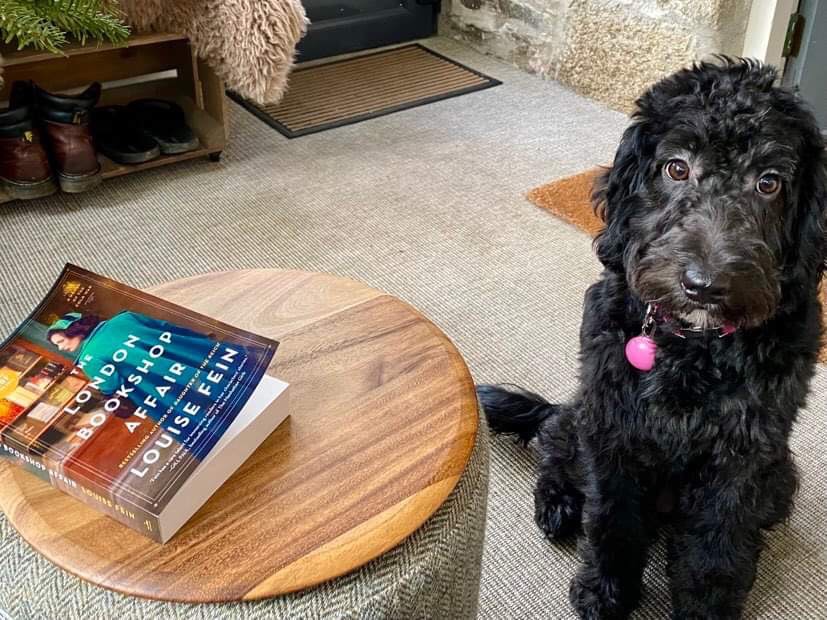
The London Bookshop Affair by Louise Fein

Books and Bramble, the perfect combination.

Historical fiction is one of the genres I enjoy most and I’m drawn to Louise Fein’s novels because she always finds an interesting time period then looks at it from an unexpected viewpoint. It makes you rethink events you thought you knew all about. Here she has chosen post-WW2 London and the dawning of the early 1960’s when Kennedy is president and the Cuban missile crisis is looming. Her heroine is Celia, an ordinary young woman with older parents who are stricter than most and perhaps don’t understand her modern preoccupations and ambitions. I always imagine the ‘swinging sixties’ when I think of London at that time, but progress like that hasn’t quite reached Southwark yet. Celia is working at a second hand bookshop, that specialises in antique and collectible books. Yet her heart yearns for adventure. The world is on the cusp of space travel, women’s liberation and the Beatles. It’s also rather closer to nuclear war than most realised as the USSR and USA start a terrifying game of brinkmanship. Celia wants to protest against the testing and gathering of weapons far more powerful than the Hiroshima bomb. She also chasing her dream career – she’s signed up for classes at Pitmans to gain the secretarial skills that might get her a job at the BBC. The little life her mum leads is not for her and she’s definitely not going to settle for Sam, the boy next door.

The catalyst for change is the bookshop’s new owner Mrs Denton, a dainty well dressed lady who is living alone in the flat above the shop. She seems more interested in shopping than books and offers Celia a raise to manage the shop as she sees fit. Mrs Denton has two regular male visitors: an older man called Mr Humphries who has wandering eyes and a scar down his face and a younger, handsome American called Septimus who Celia is drawn to. Could he be another pathway to a different life. The changes in Celia’s life are interspersed with a different timeline following a young woman called Anya Moreau who is dropped behind enemy lines in 1943. She’s been trained to help the French Resistance disrupt the Germans by sending messages back home via a wireless transmitter. She is betrayed by a double agent and faces torture to divulge her secrets, but she never betrays her cause. Meanwhile Celia finds a connection to this woman and in her desperation to know more she comes across the mysterious Miss Clarke who opens Celia’s eyes to the murky world of espionage running under the surface of everyday life. Possibly even in her own family. I felt for Celia’s parents who have always been protective of their girl, so much so that she sometimes feels suffocated. However their determination to keep Celia away from the past is understandable when we find out the truth.

I throughly enjoyed both timelines and Louise always has a wealth of research underpinning her story making it feel so real. I believed entirely in these two brave young women and their conviction to support their country. I loved seeing Celia’s political awakening as she talks to friend Daphne about the secret nuclear bunkers being dug out in the English countryside and the drastic measures to move works of art out of London – her shock at the immorality of a government that chooses to save art, but keeps it’s ordinary citizens in the dark is a real moment of growth. Her friendship with one of Mrs Denton’s visitors, Septimus, is also a place where she can freely discuss and share ideas about the world. This freedom to debate is new to Celia and you can see her growing all the time. At home her mum turns the tv off when the depressing news is on and Dad never talks about the war. In fact there seems to be a silence between them. I was excited and scared for Celia as her world opens up. The secrets she starts to discover will change her life forever, but will they leave her with the confidence to choose her own path and who will walk it with her? The emotional scenes between mum and daughter are really heart rending as finally everything is brought into the light. The pace of the novel really picked up towards the end as both stories come to their conclusions and different options start to open up before her. I really hoped Celia would choose wisely and not throw away everything about her home while still gaining some of the adventures she’s set her heart on. This was a great read and would make a fantastic film or TV series one day.

Published by William Morrow on Feb 29th 2024

Meet the Author

Louise writes historical fiction, focusing on unheard voices or from unusual perspectives. Her debut novel, Daughter of the Reich (entitled People Like Us in the UK edition) was published in 2020 into 13 territories and is set in 1930’s Leipzig. The book was shortlisted for the RSL Christopher Bland Prize 2021 and the RNA Historical Novel of the Year Award, 2021. Louise’s second novel, The Hidden Child, was published in 2021 and is centered around the eugenics movement in 1920’s England and America. It was a Globe & Mail bestseller in Canada. Her third novel, The London Bookshop Affair, about one woman’s journey to uncover secrets of her past, set against a backdrop of espionage and looming nuclear war in 1962 London, will be published in January 2024. 

Louise, previously a lawyer and banker, holds an MA in Creative Writing from St Mary’s University and now writes full time. Equally passionate about historical research and writing, she loves to look for themes which have resonance with today’s world. Louise lives in the Surrey countryside, UK, with her family, and is a slave to the daily demands of her pets.

For more information, go to https://www.louisefein.com and sign up to Louise’s newsletter. She also posts regularly to her blog at

https://www.louisefein.com/blog-and-news, or follow her on Facebook, https://www.facebook.com/louisefeinauthor; Twitter, https://twitter.com/FeinLouise; or Instagram, https://www.instagram.com/louisefeinauthor

Posted in Netgalley, Publisher Proof

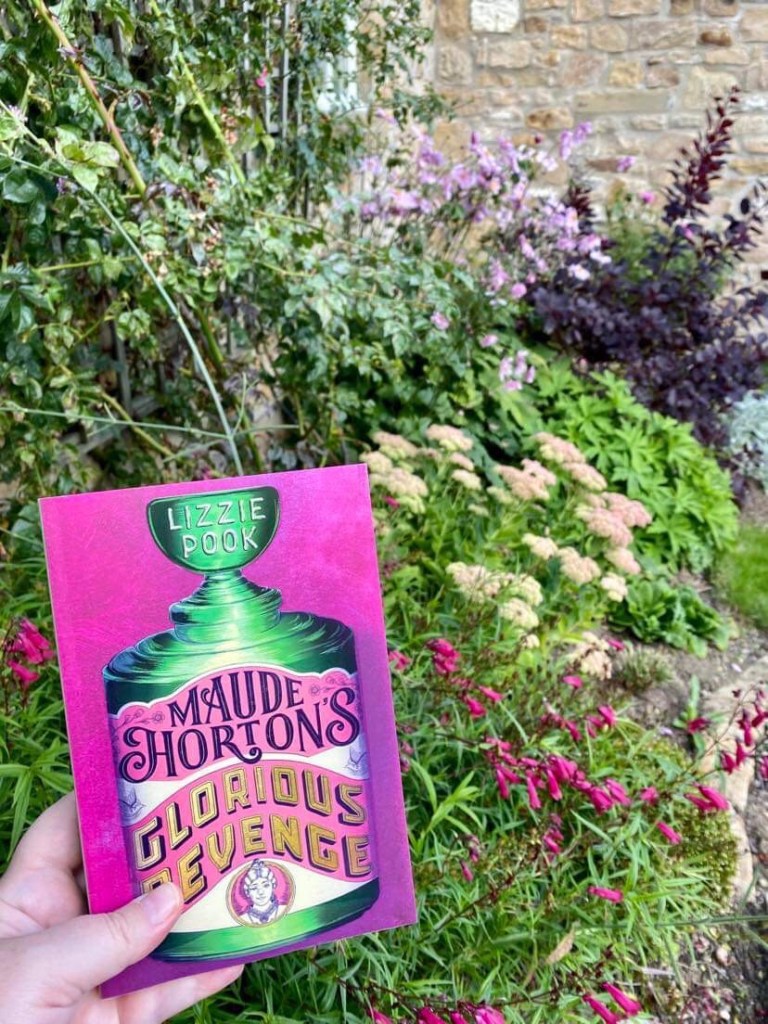
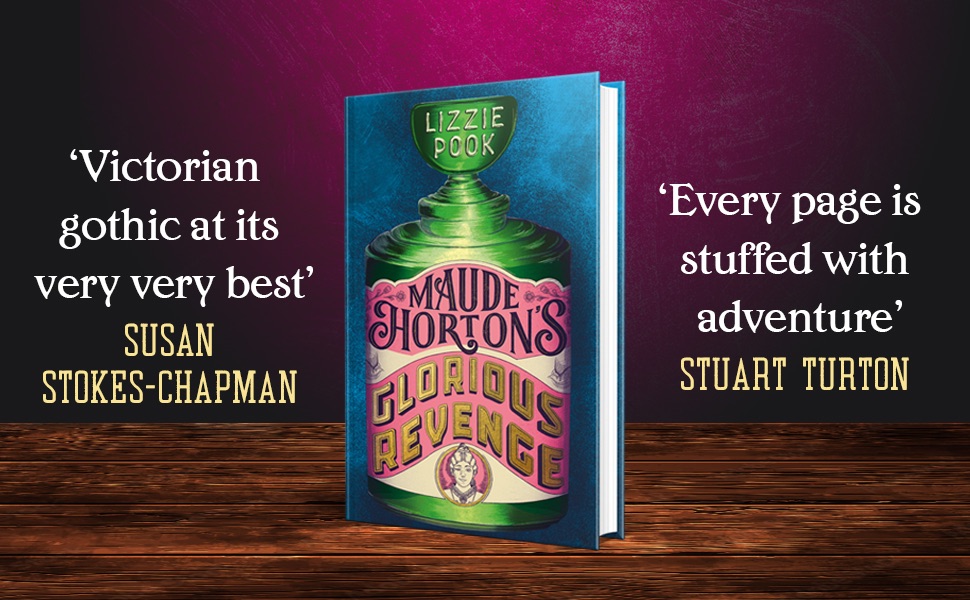
Maud Horton’s Glorious Revenge by Lizzie Pook.

Maud’s sister Constance is on a ship sailing to the Northern Passage, on a mission to find Franklin’s expedition ship. She has always craved adventure and climbed out of her bedroom window, taking the disguise of a cabin boy called Jack Aldridge. Does she really comprehend the dangers that could befall her should the men on board discover a woman on their vessel? On the same voyage is the rather strange and macabre Edison Stowe who has managed to get aboard as a scientific officer – mainly involving the killing and gathering of animals, as bone specimens or in jars. When Constance is lost on the voyage, the rather quiet and timid Maud is determined to find out what has happened to her sister. She devises a plan to get close to and expose Edison Stowe. Telling her grandfather she’s on a trip to the country, she embarks on a rather ghoulish steam train journey. Stowe has a money making scheme to turn various public hangings into a tourist attraction and Maud becomes one of his tourists. The author uses three different narrative voices to tell her story. A diary written by Constance on the voyage was returned to her family and gives us a front row seat for the horrors but also the wonders of the voyage complete with edible arctic creatures, ‘esquimaux’ women and the northern lights playing overhead. Then in the present day there’s Edison Stowe’s narrative of his day to day life, living in Mr Inchbold’s bone shop and dodging debt collectors. His debts being the reason behind his execution tourism. Finally, there’s Maud, whose narrative hangs everything together and provides context with memories of the sister’s lives and her own relentless quest for the truth.

Maud and Constance are fascinating characters, both sisters with the hearts of lions and nerves of steel. It just takes Maud longer to realise she is every bit as adventurous and brave as her sister. Maud has the disarming advantage of beauty and a composed, modest manner that makes her seem the ideal ‘Angel in the House’. Her knowledge of pharmacy and toxicology is honed by years of helping her grandfather in his shop. She is proud of her sister and has never believed the official version of her death, but we never realise the extent of her plotting and planning until the final few chapters. What an opponent she has in the villainous Edison Stowe! Not since Uriah Heep have I felt so uncomfortable while reading about a character. He constantly made me want to wash my hands. He’s a strange contradiction in all sorts of ways: dressed like a gentleman but absolutely penniless; seemingly genteel but capable of moments of extreme violence against those weaker than himself, people or animals. He seems oddly unmoved by inflicting violence, but has strange fits of illness, where he appears to pass out as well as seeing and hearing things, including people long dead.

I was absolutely fascinated by this novel from start to finish. I love books that subvert what we think about the supposedly straight laced Victorians, especially women. She doesn’t downplay the dangers women faced, especially those that try and move outside of their boundaries. It was interesting that it was far more successful for Maud to use her strengths as a woman, than to try and be like a man like Constance. I enjoyed the more macabre and decadent tastes of the Victorians such as Mr Inchbold having a shop full of animal skeletons and a bear welcoming people at the door, the popularity of the gruesome murder room at Madame Tussaud’s and the fascination with collecting such ghoulish souvenirs as Staffordshire figures of the people they’ve just watch hang. Lizzie always creates such a fabulous sense of place and I was feeling the arctic cold and really smelling the crowds, both at the hangings and in the pub at the quay where sailors come unwashed and straight off the boats and monkeys are racing round the tables. These little extra details keep you immersed in her worlds. We even get an unexpected love story that further breaks the image people have of the Victorians. This is such an incredible story and a must for people who love their historical fiction to surprise and compel them.

Published by Picador, Hardback and Kindle Editions 1st Feb 2024.

Meet the Author

Lizzie is an award-winning writer and journalist. She is the author of Moonlight and the Pearler’s Daughter, a STYLIST and WOMAN & HOME ‘Best Books of 2022’ pick.

Lizzie began her career in women’s magazines, covering everything from feminist motorcycle gangs to conspiracy theorists, before moving into travel writing, contributing to publications including Condé Nast Traveller, Lonely Planet and the Sunday Times.

Her assignments have taken her to some of the most remote parts of the world, from the uninhabited east coast of Greenland in search of polar bears, to the trans-Himalayas to track snow leopards. She was inspired to write Moonlight and the Pearler’s Daughter, her debut, after taking a road trip through Australia with her twin sister after the death of their father. A chance visit to the Maritime Museum in Fremantle led her to an exhibition about a family of British settlers involved in the early pearl diving industry. Thus began an obsession and a research journey that would take Lizzie from the corridors of the British Library to isolated pearl farms in the farthest reaches of northwest Australia.

She lives in London.

Posted in Netgalley

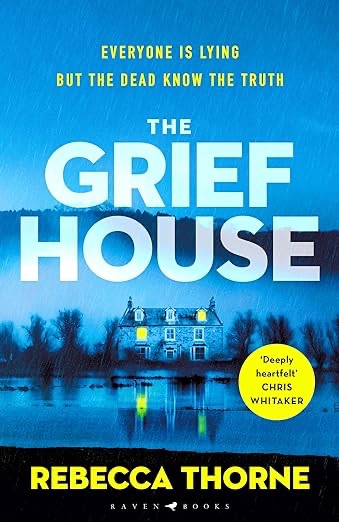
The Grief House by Rebecca Thorne

‘She searches for ways to stop feeling so lonely you fear your brain will melt and your heart will stop and your skin will never be touched again. She searches for ways to make herself feel better. The online forum has been a lifeline. A lifesaver. She can chat to counsellors when she needs to or other women who struggle with similar issues. Every week she receives a piece of advice to help her on the road to recovery or, as she calls it, the road to normality. The path to living a life.’

Blue makes a decision to deal with her unresolved grief and trauma with a residential course she sees advertised when she’s at a low ebb. At Hope Marsh House participants are offered counselling, art therapy and meditation with married couple Molly and Joshua Park. Blue has been struggling for a long time, culminating in the death of her mother with whom she had an uneasy relationship. However her grief journey begins with the loss of her stepfather Devlin, a rotund man with a fondness for kaftans and a talent with tarot. His own skills are based in clever observation, carefully worded open questions and more than average perception, but in Blue he recognises something he isn’t. A lonely child with strong, natural,psychic abilities. Prior to meeting Devlin, Blue’s mother has managed a rather haphazard upbringing at best with choices for Blue that are based in her own problems and inadequacies rather than what’s best for her child. Blue has been home-schooled but any learning was provided by magazines, television and whatever books Blue could lay her hands on. As a result she had no friends and was thought of as weird by the kids nearby. Her mother is equally isolated, not helped by the fact they move constantly. What exactly are they running from? So, Devlin’s attention is welcomed by both mother and daughter. Losing him to a heart attack was devastating and Blue became parent to her heartbroken mother, taking responsibility for her mum’s worsening mental health, the family’s income and single-handedly running Devlin’s mediumship business. Maybe it will take a place like Hope Marsh House to deal with the lonely and exhausting rut Blue finds herself in? It will be kill or cure….

‘And how long have you had your … talents?’ he said. Blue didn’t know what to say. Was hitting a saucepan with a wooden spoon a talent? Was babysitting a toddler in a dry bath whilst her mother cried herself to sleep a talent? She could wash her own clothes in the steel kitchen sink, she could heat soup and tins of beans, she could sing all the words to ‘May the Circle Be Open’. Is this what the strange man meant? She was five years old. She didn’t know.’

The author tells Blue’s story using different timelines: one gives us the present and focuses in on the retreat at Marsh House, while the others are in flashbacks to Blue’s life before her trip and further back in vignettes of her childhood. The flashbacks give us the building blocks of Blue’s personality and the strange abilities she has. She is a little girl simply longing for love and care, we can see this from the way she blossoms if praised by Devlin. Even more than that, the most powerful thing Devlin does is seemingly very simple – when Blue comes off stage, Devlin simply asks ‘are you ok, lass’? These four words mean more to her than anything else because they bypass the person she is on stage and the money her gift can make them and instead asks how she is. He knows and acknowledges what this gift costs her and how arduous a whole show can be, but mainly it’s just a dad checking in on his daughter. It means a lot to Blue, who has probably never been asked if she’s ok before. No one has ever cared enough. It is his care of her that she misses so deeply. I wondered if there were elements of personality disorder. Does Blue know who she is? When Devlin lives with them she’s at her happiest, but I was confused about her relationship with the other two children who live with them – Bodhi and the baby. They seem to be there, but she rarely relates to them. In fact she actively seems to avoid them and almost looks past them if they appear in her eye line.

Other short sections of the book include a story about a loving married couple who haven’t been able to have children, but look after a little girl who lives in a nearby flat with her elder brother. Unfortunately he is a drug addict and the couple, James and Marie, provide that stable family unit for Jessica. They dread something happening to Jessica’s brother because she could then be taken away from them. I knew that this couple related to Marsh House in some way, but I wasn’t sure how. Why does Blue keep hearing the same three girls names, Jessica, Eleanor and Lauren? Who is the strange long haired girl that appears in Sabrina’s room and opens the door when they’re not there. When she appears Blue starts to feel sick and a feeling of dread comes over her, a couple of times she comes close to passing out. The apparitions also have a way of spoiling her food, making it smell like rotten eggs or rubbish bins. They want to be noticed, but what are they trying to tell her?

The retreat itself is disturbed by a storm and the nearby river bursting it’s banks, threatening the house itself. Instead of the therapy they’re supposed to be receiving Blue and the other able bodied participant Sabina, help Mr Park with unblocking debris from the bridge to help the river flow on it’s normal path. The only other resident is Milton, an older man who uses a wheelchair and seems weakened by a lung disease that causes coughing fits. He’s been to the retreat several times, but seems incredibly grumpy with Molly and her husband. He also avoids any of the activities and even rebuffs Molly’s late night cocoa ritual. Is he just one of life’s misanthropes or is there more going on? Obviously, as a therapist, it’s Molly I’m fascinated with. I’ve been through a major bereavement and have run courses like the ones Molly advocates using a combination of meditation and group therapy using creative writing and art. I found her manner with the participants overwhelming at times. Even before the flood interrupted the normal flow of things there was a boundary issue that I couldn’t put my finger on. As time went on I realised the couple had no children, so who is the little girl in the picture that’s hidden in their own private sitting room? Who is the girl that Blue can see, if no children have lived there? Molly seems to mother her guests. It’s difficult to create clear boundaries when working in your own home and especially when participants are also eating with you and staying overnight. However, there’s something about the way Molly nurtures her clients that feels off. There’s a power imbalance at play, almost as if she is the parent and they are children. It’s this element in her personality and the care she gives that Milton seems to resist or even reject outright. Blue is particularly susceptible to her methods, because she has never had a nurturing mother figure. I felt protective towards Blue (my own maternal instinct at play) and my instinct was telling me she needed to keep her wits about her. The author created a sense of impending doom and as the worst of the storm hit it felt like a warning.

I don’t want to reveal any more, because I think the the story unfolds at the right pace and the truths are revealed slowly. The revelations come in both timelines, as Blue unearths the truths about her mother Bridget by looking through archived newspapers in the library. The secrets come out as if they’ve always been there in Blue’s mind, she just needed something to unlock the door. There will be moments at Hope Marsh House where you wonder what’s going on, placing you in exactly the same position as our main characters. The reader discovers the answers when the characters do so we feel their disorientation, confusion and fear. There were one or two moments that were genuinely terrifying! I enjoyed the growing bond between the three guests at Marsh House, something that Blue has never had before and exactly what she needs. I stayed up late to get to the end and I wasn’t disappointed, although it did lead to some disturbing dreams that night. This was a really great read with a perfect balance between psychological thriller and haunting, gothic tale.

Published Jan 18th by RAVEN Books

Meet the Author

Rebecca lives in the West Country with her family and their cat. She has written two best-selling novels under the name Rebecca Tinnelly: Never Go There and Don’t Say A Word, both published with Hodder.

Posted in Netgalley

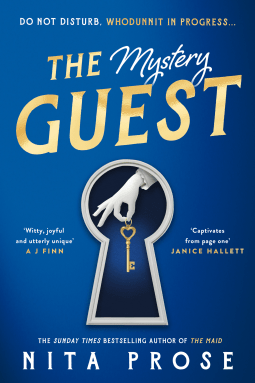
The Mystery Guest by Nita Prose

Molly the maid is back! Back in a new adventure, but still living in her grandmother’s apartment, which she now shares with partner Juan Marco, and still working at the Grand Regency Hotel. Juan is on a long awaited trip, visiting family, but Molly decided to stay behind in order to supervise a really important event at the hotel. Mystery writer Mr J.D. Grimthorpe is using the newly decorated Art Deco tea rooms to make an announcement to his fans and the press. Molly knows that Mr Grimthorpe is a very particular man, a knowledge that goes beyond the average bit of research, so it must be her that oversees how he’s looked after. Against most people’s judgement she has chosen her protege Lily to prepare his tea cart, because she’s sure that she’s passed on the requisite skills for her to make a success of it. However, at the crucial moment something goes badly wrong. As Mr Grimthorpe reaches out to his personal honey pot to add just a little sweetness to his tea, a hush descends. As he takes a drink however, chaos ensues. He suddenly plummets to the ground, dead. Molly knows that Lily will be terrified especially since it’s ‘always the maids fault.’ As a detective appears to take on the case, Molly’s skills in observation and brilliant memory turn out to be useful. Yet Molly has another insight that she hasn’t disclosed to her boss or the police. She has met J.D. Grimthorpe before and her memories of that time are not the most flattering to the famous author.

Nita Prose gives us a dual narrative, but both of are Molly. We follow the aftermath of Mr Grimthorpe’s death, but also go back to Molly’s childhood when she is taken to the Grimthorpe mansion by her grandmother who is their maid. Neither narrative is simple, but Molly’s different way of observing the world and her incredible memory create an exciting and complex journey. In one we see Molly’s childhood perspective and we understand that wide-eyed wonder of visiting such a rich house with all its treasures including a Faberge egg! Through a mishap with the egg, Molly is assigned a job in the silver room, polishing all the cutlery. This is supposed to be a punishment, but Mrs Grimthrope has no idea that cleaning is Molly’a idea of fun. I loved following this unique little girl as she uses her privileges to get into every nook and cranny of the house. It’s very atmospheric, quiet with just the steady tap tap of the keys on a typewriter as Grimthorpe creates his next masterpiece. Usually she uses his well stocked shelves to read, particularly the classics like Great Expectations. Molly discovers that if she attempts to take a particular book from the shelf it opens a secret door into his study. This proves to be a vital discovery that will shape their lives forever.

In the present, Molly is making great progress by thinking back to that time all those years ago for clues. When Grimthorpe keeled over nobody noticed what happened to the tea cart, but when it’s inspected they realise two items are missing – his particular honey pot and spoon plus a signed copy of his latest book. With so many super fans and book bloggers around that day, it could have been one of a hundred people, either looking for a macabre souvenir or looking for a good way to make some quick money – the moment Grimthorpe died his books suddenly became more valuable, especially the one he’d only just signed. Molly wants to check out local pawn shops and book collectors to see if anyone has recently brought the book in. Meanwhile suspicion falls on Lily as she knew it would, she needs all the support someone like Molly can give her.

I love Molly as a character and her development in the last novel was an important part of the story. Here we see her take another person under her wing. In the interviews, the others were not impressed by Lily but Molly knew she had all the skills to become the perfect maid. She might be quiet and introverted but that meant she wouldn’t waste time talking with colleagues or guests. She might have a polite and deferential way of talking to the customers too. Molly can clearly see something of her old self in this nervous and slightly strange girl. Molly is now head maid so has the hiring and firing power, and she’s certainly found some brilliant staff for the Regency so she is trusted. Lily shines under Molly’s directions which is lovely to see, but other members or staff are suspicious of her, especially Cheryl who is a loud and greedy chancer! I thought Lily’s manner became confusing, especially after Grimthorpe’s death. She keeps repeating that ‘loose lips sink ships’ but not elaborating on the meaning. She needs careful handling and Molly knows how to manage her. I loved how impressed the detective is with Molly, and the respect that builds between them.

Mr Preston, the doorman at the Regency, is still there and still having lunch every Sunday at Molly and Juan’s flat. His relationship with Molly becomes more significant here, not just because of the investigation but because Molly is delving into her past. Mr Grimthorpe had a very closed circle of people he trusted, including his wife, Molly’s grandmother and the secretary who faithfully turned his notes and verbal ramblings into a proper plot. It was her fingers making the steady clacking sound that was the heart beat of the house. Delving this far back brings up memories for Molly, including the reasons they were banished from this inner circle. She also has to process memories of her mother, someone barely mentioned during her upbringing. Despite having a happy and healthy family unit with her grandmother, Molly still missed her mum desperately and always wondered what happened to her. The mystery is interesting and kept me guessing throughout, with me almost thinking Nita might do something wholly unexpected and pin the blame on Molly. However it’s the love of Molly that will draw readers to this story and the fact that the mystery fills in some holes in her background is a huge bonus. I found myself finishing the book, hoping that Nita Prose would be kind enough to give us at least one more adventure with this charming and unique character.

Out on 18th Jan from Harper Collins

Meet the Author

Nita Prose is the author of The Maid, which has sold more than 1 million copies worldwide and was published in over forty countries. A #1 New York Times bestseller and a Good Morning America Book Club pick, The Maid won the Ned Kelly Award for International Crime Fiction and was an Edgar Award finalist. Her second novel, The Mystery Guest, publishes in November 2023 in North America (January 2024 in the UK). Prose lives in Toronto, Canada, in a house that is moderately clean.

Posted in Netgalley

The Island of Longing by Anne Griffin

One unremarkable afternoon, Rosie watched her daughter Saoirse cycle into town, expecting to hear the slam of the door when she returned a few hours later.

But the slam never came.

Eight years on, Rosie is the only person who believes that her child might one day return home. Will this belief come at the cost of everything she has left?

My previous work in mental health and my counselling training always lead me towards books that either portray dramatic life events or feature characters that are deep and three dimensional, with a flourishing inner life. Anne Griffin delivers this and more, so I was interested to read her latest novel because it goes into the character’s reactions to a highly dramatic and distressing event. The worst thing that can happen to a parent is to lose their child and this happens to Rosie. Her daughter, Saoirse Dunne, disappeared eight years ago and since then she has been unable to think straight or get on with life. Her heart and spirit are broken, So she heads back home, an island off the coast of Cork. There she’s hoping to find solace and some sort of healing from the natural world around her and the community she knows on the island. She and her husband Hugh have grieved differently over the last eight years, the loss has slowly separated them emotionally and now they continue to need different things. When we see a comparison of their relationship, before and after their daughter’s disappearance, the difference is stark.

Rosie still holds on to the belief that Saoirse might return and she isn’t ready to let go of this. She’s also taking her son Cullie with her and they share so those questions many people ask in grief – ‘what if I’d just…’ and ‘if only I had …’. There’s a sense of survivor’s guilt in these thoughts and I was hoping that they would both find some peace too. Rosie’s decision to return home to where she grew up and even her old work operating the ferry to the mainland, could be seen as a way of cutting out the most painful part of my life and returning to a time when life was more simple. When she’s operating the ferry she feels closer to her daughter than she has in a long while. Of course this gives her solace, but it’s also a barrier to her accepting reality.

I really enjoyed the sense of place created by the author and it’s meaning in the novel. I could visualise Roaring Bay Island completely and the surrounding sea even feels soothing. It’s a refuge, but only for the summer. I worried that after this idyllic interlude in her grief, going back to reality would be a terrible shock. The author acknowledges this, writing that it’s merely a chance to ‘step out of the world for a while’. I loved the freedom she feels while piloting the ferry, with the rocking motion of the waves like a cradle. It was wonderful to witness the kindness and thoughtfulness of the people on the island too. Is this something she isn’t getting in her current home. The place where Saoirse is still missing.

The author keeps Saoirse’s disappearance at the heart of the novel and the family’s experience of loss and pain is devastating but beautifully done. I have experienced loss and this was so raw and real, with incredibly authentic dialogue. I did feel tears coming here and there because Rosie’s feelings were so close to my own. It gives the reader a window into an experience they hope never to share. Please don’t be put off though, there are moments of lightness in the community, they really are an example of humanity at it’s best. There’s also such resilience in the characters, in the face of a loss that is unthinkable. When she returns from the island, she’s moved forward emotionally and Dublin feels like a dark place. It feels like the past. I loved the author’s addition of a sentence from Saoirse, on it’s own page and in a larger font. This lets us get to know Saoirse a little. It also seems to amplify that feeling that she’s gone, yet always there for those who love her. I won’t say this is an easy read. In fact some people may be uncomfortable witnessing the family’s grief. If people do push through that, they’ll gain an understanding of a universal human experience. We all experience loss. For people like me who have had their lives, like Rosie’s, divided into a before and after, this type of emotionally literate writing is a God send. A comfort and a reminder that we’re not alone.

Meet the Author

I’m the international bestselling author of three books: ‘The Island of Longing’, 2023, ‘When All Is Said’, 2019, and ‘Listening Still’, 2021.

I’ve been published all over the world, from the UK to the US and from Taiwan to Lithuania. It has been published in twenty-five territories. In 2019, I was honoured to be awarded Newcomer of the Year at the Irish Book Awards.

To me, writing is all about great storytelling and I hope you find that within the pages of my books, from Maurice Hannigan in ‘When All Is Said’ who sits to the bar of his local hotel to raise five toasts to the five most important people in his life, to Jeanie Masterson in ‘Listening Still’ who is struggling under the weight of obligation to the family funeral directors, and to Rosie Driscoll trying to find her daughter Saoirse who has been missing for eight years.

Thanks so much for all of the great support.

From Anne Griffin’s Amazon Author Page 1/11/23

Posted in Personal Purchase

Starling House by Alix E. Harrow

“When the house was complete, in February of 1870, Eleanor Starling took up residence and stayed there until her death in 1886. There is substantial evidence that she devoted the remaining years of her life to the study of the place she later called “Underland.” She believed, according to the notes and journals found by her successors, that there was another world beneath, or maybe beside, our own—a terrible, vicious world, populated by monstrous beings. She believed that there were cracks between that world and our own, places where things might leak through, and that one of these rifts lay underneath Eden, Kentucky.”

Starling House sits on Starling land and can’t be fully seen from the roadside, except for a pair of iron gates that are so intricate and sinuous it wouldn’t be a surprise if they started to move and become a living, writhing being. Opal passes the house daily as she takes a short cut from one of her jobs to another and she’s intrigued by the house, especially the one amber lit window, high up in the attic room. There she imagines Eleanor Starling, living the solitary life of an author trying to follow up their first extraordinary book. Opal loved Eleanor’s children’s book Underland described as a much darker Alice in Wonderland where a girl called Nell is under the ground with a weird array of beasts (all of which look like a member of the animal kingdom, but at the same time not at all). Opal’s life is a gruelling slog from the motel room she shares with brother Jasper, to her cleaning jobs then back to supervise homework and share their measly evening meal. It only takes one small difference in their routine to shake everything up and bring huge change to their lives. Opal pauses her route home and stops at the iron gates of Starling House. She holds on to the iron, but immediately finds her hand is slick with blood. More disturbingly, she feels the gates give, almost as if her blood is the key. She looks up to see that a tall, thin and rather bedraggled man has appeared in front of her. He looks her in the eye and says one word. Run!

[The town] “liked the Starlings even less. They’re considered eccentrics and misanthropes, a family of dubious origin that has refused for generations to participate in the most basic elements of Eden’s civil society (church, public school, bake sales for the volunteer fire department), choosing instead to stay holed up in that grand house. […] It’s generally hoped that both they and their house will fall into a sinkhole and rot at the bottom, neither mourned nor remembered, and—perhaps—release the town from its century-long curse.”

Arthur, the bedraggled man, is the current Starling living in the house and it isn’t long before Opal is drawn back into his presence. Arthur seems to be torn. He’s drawn to Opal, but so is the house. It seems unfair to strike up a friendship with her knowing that the house wants her and what that will mean for her life. Yet he asks her if she will clean for him and offers enough money that Opal can’t refuse. He is concerned about this flame haired waif that is now in his midst and he can’t help but offer her a winter coat, then his old truck. Are these genuine gifts, or is Arthur trying to assuage his guilt for doing the house’s bidding? The house almost seems to sigh and settle as Opal cares for it, like a cat stretching with pleasure when stroked. She does wonder about the crude symbols scratched into the wooden doors, that match Arthur’s tattoos. Every conceivable symbol to ward off evil is either scratched, painted or hung around the house. How do you ward off something that strikes from within? Opal is then approached by a woman in a suit, who seems to know a lot about Opal and the Starling House. She wants Opal to take photographs and pass on information from the inside of the house. Firstly she seems like any old local official, but becomes more sinister when Opal is reluctant to help, finally making threats against Jasper. Now she has no choice, but she’s surprised by her own emotions; it’s harder to betray Arthur Starling than she expected. Is it really the house she’s drawn to, or is it Arthur?

“Eleanor Starling left no record of why she built such a vast and strange house, but the oldest and best-loved book in her collection was a copy of Ovid’s Metamorphoses. It has been suggested by subsequent Starlings that she was not building a house but a labyrinth, for much the same reason the King of Crete once did: to protect the world from the thing that lived inside it.”

Opal isn’t easily afraid and I knew, just from that opening, she wasn’t done with Starling House. More to the point, the house isn’t done with her. I admired this plucky girl who is only just getting by in life and does everything for her brother Jasper. She desperately wants him to get away from Eden, Kentucky, because he has so much talent but also because nobody with any sense stays in Eden. She is saving for the fees of a private school she has seen, somewhere that would give him prospects and he would meet the right sort of people. She’s so set on this plan, she hasn’t bothered to ask what Jasper wants. Her heart is in the right place though. She doesn’t love many things, but when she does Opal loves like she does everything else – fiercely. Her existence is all work, striving just to survive but Opal is so intelligent, in fact one of the only places in town she visits religiously is the library. The librarian Charlotte is perhaps the closest thing to a friend she has. The truth is that Opal feels enormous guilt over the terrible car accident that killed their mother and what she sees as the decision she made to survive:

I’m fifteen and cold water is pouring through the windshield. The glove box is open, spewing pill bottles and plastic utensils. Mom is beside me, her limbs drifting gently, her hair tangling with the tacky dream catcher she pinned to the car roof. I’m reaching for her hand and her fingers are slick and limp as minnows and I might be screaming—Mom, come on, Mom—but the words can’t make it past the river? Then it goes very quiet and very dark. I don’t remember letting go of her hand, but I must have done it. I must have crossed her name off the list in my head and swum for the surface, abandoning her to the river bottom.”

I loved the psychological aspects of the story. The house has an identity and it knows who has the right stuff to live there and keep up the fight. I wondered whether the monsters were real or a manifestation of the occupant’s mental state. The thought of the monsters in our heads being able to run free in the world is definitely a terrifying one. The author builds the two worlds within the novel with contrasting techniques: short, blunt descriptions create Eden with it’s power plant and functional buildings, whereas Starling House and it’s labyrinthine tunnels are given long, descriptive passages that bring it to life. If something in Opal or Eleanor’s world is inexplicable she allows it to be unfinished or confused. Some of the monsters are beautifully described as ‘like a cat, but not quite’ or other strange combination that leaves gaps in the image for the reader to fill with their own imagination. This is an author that knows, the things we can’t see or comprehend are the most frightening.

When we finally get to Eleanor’s life story it is disturbing and sad, showing how unresolved trauma can project outwards into something monstrous. There’s a feminist thread here too in the truth about Eleanor’s life with the Gravely men and Opal recognition that her mother was shunned by the town, not just for liking sex but for not being sorry about it. In a reversal of the usual damsel in distress story, Opal is the architect of her own life and is determined to rid Starling House of it’s monsters and save Arthur. I was biting my nails in the final chapters, desperately wanting her to succeed! I’ve never doubted Alix E. Harrow’s talent or imagination. I’ve been a fan since her first novel, but this is her best yet. I’ve been reading that it’s a reimagining of Beauty and the Beast, and I can see that. However, Underland felt like the very darkest Alice in Wonderland to me. In both cases, all the ‘Disney-fied’ prettiness has been swept away. In it’s place are monsters that defy all description and a love story that’s more swords and thorns than hearts and flowers. It’s an absolute feast for the imagination and the perfect dark fantasy read for October.

Posted in Publisher Proof

Bone Rites by Natalie Bailey

“I collected the first bone when I was twelve… Such a tiny little bone, more like a tooth. I only kept it to keep him safe.” Kathryn Darkling, imprisoned in Holloway, is facing death by hanging for her vengeance killing. Haunted by a spirit, she still hopes to perform the ancient black magic that will free her soul, or her struggle to punish the mighty will have been in vain. Will the love of her life come to her aid? Or can she find a way to escape her fate?

Bone Rites is a dual timeline story, split between the early 1900s and 1925 when Kathryn Darkling is in Holloway, the women’s prison, where she awaits the date of her own execution, by hanging. While waiting Kathryn starts to tell her story to a priest, assigned to hear her final words and offer solace as she awaits death. She begins with the first time she found a bone and performed a rite, then works her way through to her training as a doctor in Edinburgh. All the while she is developing her practice of performing bone rites, a black magic focused on freeing her soul. As she tells the stories of her bones, I started to wonder about her version of events. Clearly she’s an incredibly intelligent and determined woman and I admired that, but should I be taking the owned of a convicted murderer? Is she a reliable narrator? She seems to be slipping into madness as the tale goes, but does that mean everything she’s telling us is a lie? The thing I most enjoyed was getting inside Kathryn’s head and trying to work out what makes her tick, rather like holding a counselling session with this imaginary character. As we drifted back into her early childhood, I became won over by this obstinate little girl who won’t be deterred from her purpose. We learn about how tough her upbringing was, alongside her little brother Freddie. I love a dark story with a sense of foreboding and I thought this was perfectly pitched for a Halloween read. It’s not a traditional ghost story but Kathryn is certainly haunted, like many of us are by our pasts. I thought the book perfectly fitted it’s timelines, one before and one after WW1 considering how much change and trauma happened in-between. I also enjoyed the LGBTQ+ representation in the novel, it’s fascinating when authors ‘write back’ to a time where minority groups are under represented. All in all this was a well- written piece of historical fiction with a rather macabre edge and an admirable heroine.

Out on Nov 1st from Aurora Metro Books

Meet the Author

Natalie Bayley is author of ‘Bone Rites’, ‘Lolita’s Daughter’, ‘The Secret Life of Grandmothers’, ‘The Witch Who Saved Paris’ and ‘The Lady Lyttle Murder Mystery’ series. Her dark thriller ‘Bone Rites’ was selected for the 2019 Blue Pencil long list, went on to be shortlisted for the 2021 Blue Pencil First Novel Award and was long listed for the 2021 Caledonia prize before becoming the Winner of the Virginia Prize for Fiction. Natalie lives in NSW, Australia and enjoys ocean swimming and whispering to cats. Born in the UK, she’s been in sunny Australia since 2000. Her books are always about justice and how a seemingly powerless underdog can always find a way to fight back. My spooky historical fiction novel, BONE RITES, won the prestigious Virginia Prize for Fiction and is being published by Aurora Metro books October 2023. Enjoy!

Posted in Netgalley

The Hidden Years by Rachel Hore

The Hidden Years is a tender-hearted and bitter sweet tale about how life can take unexpected turns. In fact John Lennon was right, life is what happens when you’re busy making other plans. She also explores how patterns emerge in life: we might find ourselves unconsciously choosing a path that repeats a pattern or takes us to somewhere that has a hidden importance in our lives. Belle has done something very impulsive. From the moment she met Gray they had a connection and now he’s invited her to Silverwood, a mansion next to the Helford River, where a group of his friends are living a different life. They are a creative collective, living as self-sufficiently as possible but dependent on the kindness of the house’s owner. Luckily he’s very fond of his nephew Arlo, one of the residents at Silverwood. As she leaves university and misses her exams for this uncertain life she has no idea that Silverwood holds secrets and some of them are quite close to home.

The author tells her story through a dual timeline; Belle’s story set in the 1960’s and then Imogen’s story, a young woman who visits Cornwall in the 1940’s. Imogen has been working for an agency that secures placements for young women who work with children. It’s mid- WW2 and Imogen is tasked with taking two young brothers down to Silverwood, a boy’s boarding school in beautiful and relatively safe surroundings. She soon finds out that life can change in an instant when she’s asked to temporarily for the school’s Matron who has fallen ill. Imogen takes the booking and finds she loves working with the young boys in the sick bay, feeling unwell and far from home. So, when she’s offered the chance to stay on she decides to take a chance and loves her work. She also makes friends with one of the teachers, Ned. They explore Cornwall on their days off and as the war comes ever closer Imogen makes the huge choice to serve her country, by training in nursing at a hospital in Truro. A bomb narrowly missing the school pushes her to use the skills she’s gained for the war effort. Meanwhile in the 1960’s Belle settles into life at Silverwood with Gray’s friends, trying to help out where she can and joining in with meditation sessions where the incense is more than a bit potent. She’s drawn naturally to Mrs Kitto, a lady of her parent’s generation who lives in a cottage on the estate. She’s slightly taken aback by Belle, because she reminds her of someone she once knew. Their afternoon visits become story sessions as Mrs Kitto tells Belle about a woman she used to know, back in the war.

I enjoyed both sections of this lovely story. Often with dual timelines the novel suffers because one narrative is much stronger than the other. Here I thought the author got the balance just about right. Since Imogen’s story is set during WW2 there’s obviously heightened drama and the decisions made can be life and death. However, I think the differences in the timelines complimented each other. The difference in moral expectations and behaviour is huge. There’s also a difference in how people make choices, creating a huge generation gap like the one between Belle and her parents. The fact that she leaves uni with her lover and is clearly living with him at Silverwood is difficult for her parents to understand and would have been unthinkable in the 1940’s when they were Belle’s age. It would be understandable to think that the 1960’s characters have it so much easier compared with their parents. Yet I could empathise with Belle, in fact without WW2 her generation wouldn’t have the freedom to make choices in the same way. Her father has high expectations for her and he wants her to buckle down and make life choices. After all, his generation had to lay their lives and their hearts on the line with often very little understanding of the person they were making promises to. Belle’s not quite ready to make a choice. Should Belle follow duty, when she could be an idealist and follow her heart? Singing with Gray’s folk band The Witchers comes very naturally to her when she’s got over her nerves. There are so many opportunities, how do you know which is the right path?

Imogen is doing her duty in her working life, but her heart is torn. She has a best friend in Ned. They love the same things, they’re comfortable together and have a similar outlook in life. She knows he’s starting to feel more for her than friendship, but also teaching at Silverwood is the rather enigmatic Oliver Dalton and there’s an immediate frisson between them. Although they don’t spend any time together, the pull towards him is hard to resist. When they finally do get a chance to spend time together during her work in Truro, could their spark develop into something more lasting? I found myself rooting for Ned, because he’s so kind and supportive. I thought they’d make a great team. There’s no denying her attraction to Oliver, but he’s more of a closed book and I felt life with him might be more turbulent. Which way would she choose?

I know this area of Cornwall well and it was very easy to imagine myself there as the author explores the scenery. The area was a Mecca for artists in the 1960’s and I loved the ideas that the Silverwood residents had for the place. It’s ripe to be an artistic retreat, offering creative and self- care workshops such as meditation. It’s such a now idea that I wanted to do it myself. I thought it was interesting how Belle reacted to these ideas, making decisions about which parts she’s supports and which isn’t for her. She’s intervened with one resident’s treatment of her son and calls an ambulance rather than watching her continue with homeopathic medicines and see the boy suffer, or perhaps die. That takes bravery and faith in her own convictions. When her family turn up in Cornwall will she get the space she needs to work out what’s best for her. As to Mrs Kitto, how does her story connect to Belle and what impact will this wartime story have on her choice? The historical detail shone through and seeing through Imogen’s eyes the arrival of the American soldiers, the preparations along the Cornish coastline for the D-Day landings and the bombing of Truro really does bring it alive. There’s a realisation that we’re all the product of our experiences and trauma can take a long time to heal, even several generations. I thought this was such such a bittersweet ending and it left me feeling a bit autumnal, sort of melancholy but glad for the experiences of love both women had known.

Out now in hardback from Simon and Schuster U.K.

Meet the Author

I came to writing quite late, after a career editing fiction at HarperCollins in London. My husband and I had moved out to Norwich with our three young sons and I’d had to give up my job and writing was something that I’d always wanted to try. I originally studied history, so it was wonderful finally to put my knowledge to good use and to write The Dream House, which is partly set in the 1920s in Suffolk and London.

Most of my novels are dual narrative, often called ‘time slip’, with a story in the present alternating with one set in the past. I love the freedom that they give me to escape into the past, but also the dramatic ways in which the stories interact. My characters are often trying to solve some mystery about the past and by doing so to resolve some difficulty or puzzle in their own lives.

The books often involve a lot of research and this takes me down all sorts of interesting paths. For The Glass Painter’s Daughter I took an evening class in working with coloured glass. My creations were not very amazing, but making them gave me insight into the processes so that my characters’ activities would feel authentic. For A Week in Paris I had to research Paris in World War II and the early 1960s through films and books and by visiting the city – that was a great deal of work for one novel. Last Letter Home involved me touring a lot of country houses with old walled kitchen gardens in search of atmosphere and to explore the different kinds of plants grown there.

Places often inspire my stories. The Memory Garden, my second novel, is set in one of my favourite places in the world – Lamorna Cove in Cornwall – which is accessed through a lovely hidden valley. A Place of Secrets is set in a remote part of North Norfolk near Holt, where past and present seem to meet. Southwold in Suffolk, a characterful old-fashioned seaside resort with a harbour and a lighthouse, has been a much loved destination for our family holidays and has made an appearance in fictional guise in several of my novels, including The Silent Tide and The Love Child.

Until recently I taught Publishing and Creative Writing part-time at the University of East Anglia, but now I’m a full-time writer, which felt like a bit step. My boys are all grown up now and finding their way in the world, but we still see a lot of them. My husband David is a writer, too (he writes as D.J. Taylor), so we understand each other’s working lives.

I find I have to have a regular routine with my writing, not least to keep the book in my head. My aim is to sit down at 9am every morning and write till lunchtime, then again the afternoon, but there is often something ready to interrupt this, not least our Labrador girl Zelda, so I go with the flow.

I hope that you are able to find my books easily and enjoy them – I am always happy to hear from readers!

Taken from Rachel’s Amazon author page on 18th Oct 23.