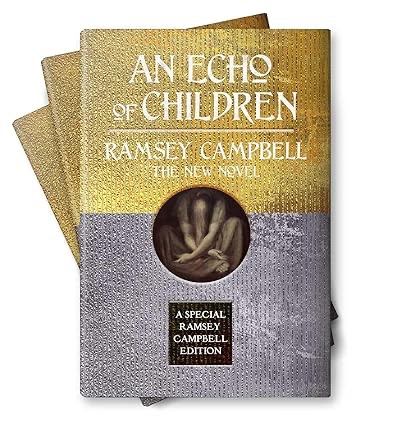
That title is enough to get the hackles raised because everyone knows that the most terrifying type of ghost is a child ghost! The novel’s opening does nothing to dissuade us of our fears. Thom and Jude are an elderly couple visiting their son Alan, his wife Coral and their grandson Dean. Recently moved to the seaside town of Barnwall, it’s an environment that should be perfect for children, but there is something right from the outset that feels ‘off’. While Thom and Jude seem natural and doting grandparents, they are warm and seem to have real affection for one another. However, the house feels stifling and distinctly unnatural. There are no toys scattered around and Alan and Coral’s dialogue is stilted and cold, even towards their son. As his other grandparents arrive, it doesn’t improve. As his grandparents give him a present Dean is reminded to thank them even before he’s had chance to do so. Jude’s quiet replies try to chip away at their reserve, thinking perhaps that they’re worried about how she and her husband will perceive Dean’s behaviour. She makes it clear that they’re fine, not at all concerned or bothered by a bit of mess or a late thank you. It simply does not matter. Yet as the day continues I began to think this is how they are all the time. There are so many rules, all of them contrary to how a child of that age would normally behave. It’s no surprise that he’s conjured up an imaginary friend called Heady, who he talks to from time to time. Although he does point out that it’s sometimes hard for Heady to hear him, because he doesn’t always have a head. It’s the first sign that something very weird is going on in this sterile and unpleasant atmosphere. All too soon the significance of Childer Close will be revealed.
The author clearly has a knack for making the reader uncomfortable and I certainly was. The dialogue didn’t feel real to me and this company of people made me squirm. As someone who immediately sits on the floor with children and starts to play I’m afraid I’d have been very vocal. My first thought was intergenerational child abuse and there are certainly clues that Coral’s parents are disciplinarians when compared to Jude and Thom, but why would Alan go along with it? It really did stretch my belief when time after time Dean is told that his wants and needs don’t matter, in tiny little micro-aggressions from his parents – not being able to play with his present as it will be untidy, talking too much, not leaving his grandparents alone, not finishing his fish and chip dinner. It’s a slow drip drip drip of negativity that drove me crazy. Why wasn’t Thom taking his son aside and asking what the hell was going on? We learn that an unusual number of children have died in Barnwall’s history, so why would a loving parent move there? Alan and Coral believe the house may have a malevolent spirit and perhaps an exorcism needs to be performed. He seems the least likely child to be possessed and by focusing on him in particular, again he gets the message that he’s not like other children and something is wrong with him. What unfolds I will leave you to find out….
Meet the Author
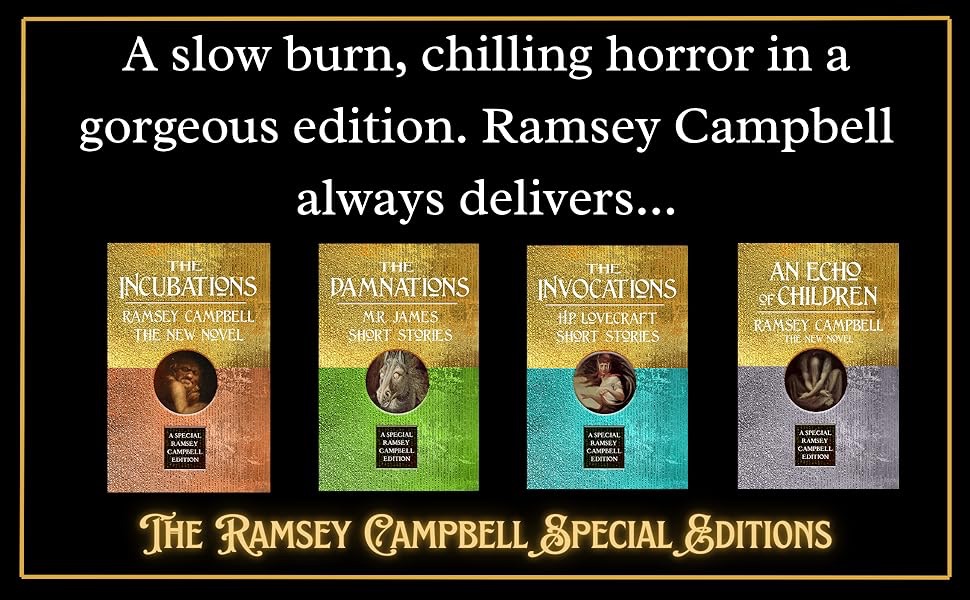
The Ramsey Campbell Special Editions. Campbell is the greatest inheritor of a tradition that reaches back through H.P. Lovecraft and M.R. James to Mary Shelley’s Frankenstein and the early Gothic writers. The dark, masterful work of the painter Henry Fuseli, a friend of Mary Wollstonecraft, is used on these special editions to invoke early literary investigations into the supernatural.
Ramsey Campbell (born 4 January 1946 in Liverpool) is an English horror fiction writer, editor and critic who has been writing for well over fifty years. Two of his novels have been filmed, both for non-English-speaking markets. Since he first came to prominence in the mid-1960s, critics have cited Campbell as one of the leading writers in his field: T. E. D. Klein has written that “Campbell reigns supreme in the field today”, and Robert Hadji has described him as “perhaps the finest living exponent of the British weird fiction tradition”, while S. T. Joshi stated, “future generations will regard him as the leading horror writer of our generation, every bit the equal of Lovecraft or Blackwood.”
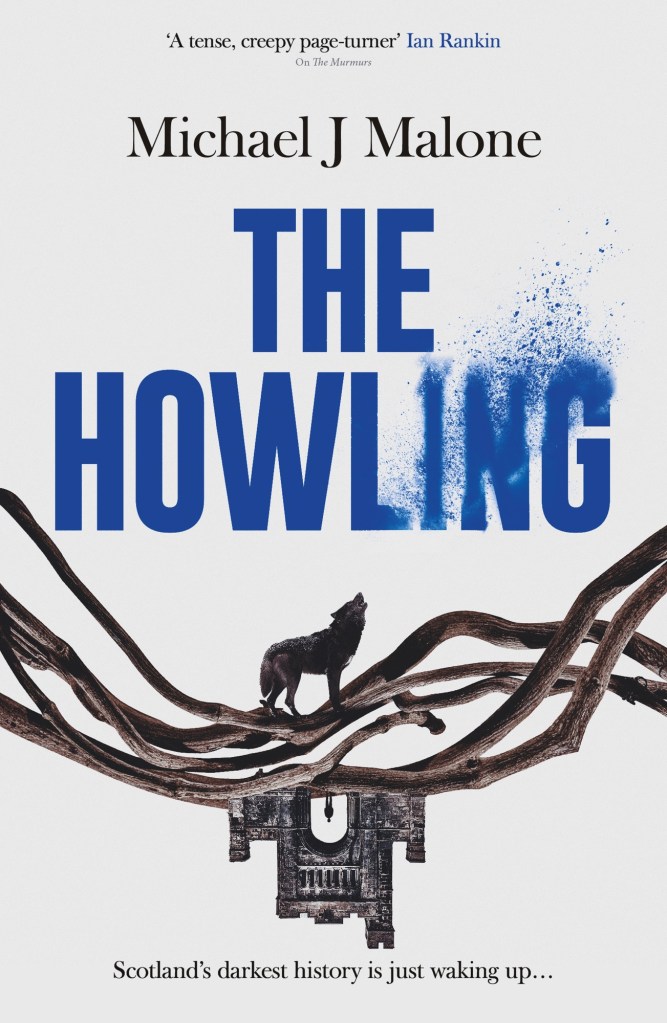
There was such an atmospheric opening to this last novel in the Annie Jackson series, setting up the link between the incredible scenery and Scottish folklore. Then we see Annie in her safe place, the little cottage she calls home nestled in the middle of nowhere. The only place where she gets some respite from the ‘murmurs’, the terrible portents of death she suffers when she meets someone who is going to die. They are a curse, not just because of the painfully loud noise in her head but because if she tells someone they rarely listen and if she doesn’t she’s left racked with guilt. She is taking in some fresh air outside, when she falls into the stream that runs at the front of the cottage. It’s freezing cold and reminds us that whenever Annie starts to feel safe, something comes along to challenge that sense of peace. This time it’s her brother Lewis and his girlfriend Clare with some brilliant news, they’re having a baby. Annie is so excited for them, but there is a downside. Even though it’s very early days, Annie is worried that this child will inherit the family curse of the murmurs. Maybe there’s a chance she can put the curse to bed? The woman who tried to kill her wants Annie to visit her in prison. Sylvia Lowry-Law was pulled into the dark arts by a professor at her university and believed that sacrificing Annie would raise an ancient demon to do her bidding. Now she needs Annie’s help in tracing the son she had adopted 17 years ago. Could this boy be the key to a future where she’s not waiting for the next murmurs to hit? That would be life-changing for Annie, not to mention Claire and Lewis’s baby.
This is a complicated story that Michael Malone tells with multiple narrators and different time frames, slowly bringing them all together to solve the mystery. Linking with the opening section, there’s a boy called Drew who feels bonded with a wolf cub more than the family around him.
“I was a wolf. And I was a boy. It was a long time ago. They wore funny clothes […] I would run away from my mother and be a wolf. And we were killed. They said we were witches”.
It’s been quite a year for witches and books that hark back to King James VI of Scotland and all of them have been incredible reads. Here Malone alludes to the dangerous atmosphere in that time, where even the remotest villages were aware the King had given licence for witchfinders to root out anyone seen as different or troublesome. They would be tested against the king’s book Daemonologie then strangled and burned at the stake. Drew clearly has a similar ancestry to Annie and perhaps a long line of ancestors fighting against lycanthropy. His family are emigrating and as usual the author takes us deep inside the character. Drew’s childhood narrative is so emotive because I understood his feeling overwhelmed in an airport full of people and having to feel all the layers of their anxiety. All he wants to do is curl up quietly with his fellow wolf cubs and when he’s pushed, his shout sounds more like a wolf howl – a definite cold feeling down the spine moment. Then there’s Annie and Lewis who are a great investigative pairing, Annie has bags of empathy and insight even without the murmurs and Lewis is well versed in the technology side of investigation, but one thing they both have is a stubbornness that means once they’ve started looking they can’t stop until it’s done, even when the costs for Lewis become very high. They both go to Ashmoor Hospital, the psychological facility where Sylvia is being treated, but she wants to see Annie alone. What she asks for is help finding her son and puts them on to her lawyer Bernard Peters, a timid soul who has worked for her several years as his grandfather did before him. They were helping trace her family and a rather familiar and colourful tale emerges:
“Witches and curses and twin sisters who fought over a man, leading to one of them being burned at the stake”.
There is a sense here of history repeating itself through generations. It blends with Scottish folklore and it being a ‘thin place’, the term for places where the veil between this and the spirit world is almost transparent – those that believe and can tune into it of course. Bernard is astounded by the prominent people who are caught up in this strange ancient order that Sylvia belongs to. She tells him she owned his grandfather and that there are secret records that must be protected. Bernard’s grandfather dying suddenly, leaves some of this dark and dangerous business undone. Even as they try to help him they can’t wait to get into the secret room he’s been searching in. There are secrets in here that could bring down very powerful people, but why would the order keep them? Again it brings to mind current news, the Epstein Files and the buzz around having them released, bringing into the spotlight people we could never have imagined to be involved. I felt for Bernard because everyone else has some understanding of the background to this, but he’s blindsided. Also everyone else is here by choice, whereas he is thrust into the middle of it by birth and the death of someone he loved and looked up to. Now he’s implicated in a widespread network of influence and blackmail. The author balances all these narrative viewpoints so well and each section brings a little more information, with sudden little discoveries that fill in gaps and definitely drip feed tension to the story.
This series has always been an unusual mix of thriller, family saga, horror, magic, folklore and crime. It defies being placed in a genre and I often find that’s where the best and most surprising reads are. It was lovely to have Sister Theresa make a cameo, with her sketchy grasp of data protection she’s a real asset in finding out about the past and nuns are often very quirky and unusual individuals I’ve always found. I left this novel less worried about Annie, I had always wondered if the isolation and loneliness of life with her gift would overwhelm her. Here I felt like Annie’s murmurs took a bit of a back seat, but she gets stronger with each book; a more resilient heroine who still has an otherworldly and mysterious air about her. I always imagine her rather like Kate Bush, which is always a compliment. The more she finds out about her family, the more settled she seems to be and is still working in the local café despite previous incidents with customers whose deaths she could see. However, as we raced towards the ending with tension in bucketloads I couldn’t be sure she’d be safe. The order is a many tentacled monster and I wondered if they would really be able to sever and destroy all its parts. As Sylvia says, they have ‘fingers in a lot of very interesting pies’. There is no depth they won’t stoop to and they operate very quickly indeed as Lewis finds out. I can’t ever imagine that Lewis and Annie will give up investigating and trying to help others, it doesn’t seem in their nature to kick back and enjoy the quiet life. Not for long anyway.
Meet the Author
Michael Malone is a prize-winning poet and author who was born and brought up in the heart of Burns’ country. He has published over 200 poems in literary magazines throughout the UK, including New Writing Scotland, Poetry Scotland and Markings. Blood Tears, his bestselling debut novel won the Pitlochry Prize from the Scottish Association of Writers. His dark psychological thriller, A Suitable Lie, was a number-one bestseller, and is currently in production for the screen, and five powerful standalone thrillers followed suit. The Murmurs and The Torments, first in the Annie Jackson Mysteries series, were published to critical acclaim in 2023. A former Regional Sales Manager (Faber) he has also worked as an IFA and a bookseller. Michael lives in Ayr, where he also works as a hypnotherapist.
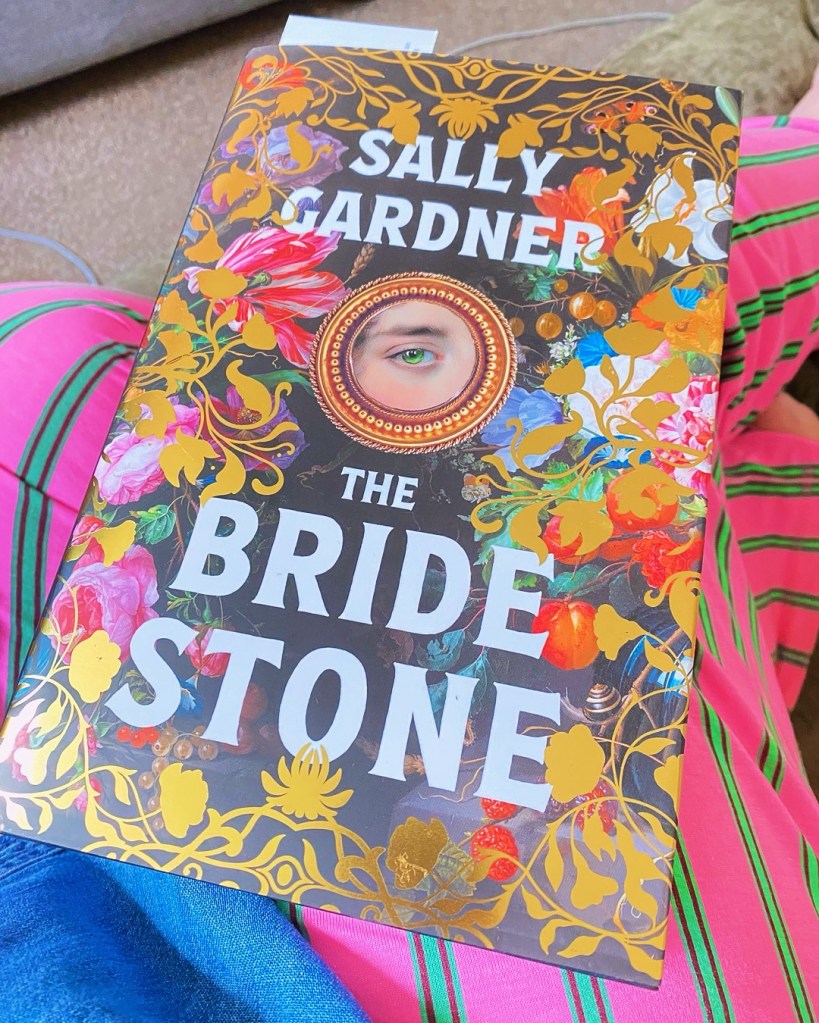
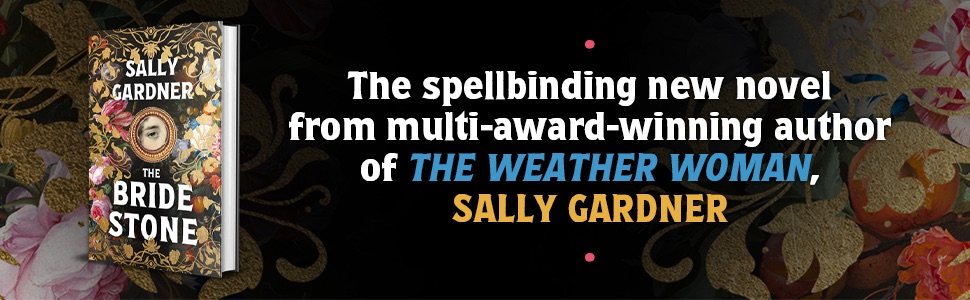
According to our narrator, a ‘bride stone’ is a precious stone given to the groom’s family as a dowry. Sometimes though, a beautifully made fake stone was used, one they could only have valued when it was too late. It’s an apt title for a book where women are traded in many different ways and in the human sense the most unprepossessing stones may turn out to be priceless. It is set just after the French Revolution where Marie Antoinette, who would have had no choice in marrying Louis VII, was condemned to the guillotine as his Queen. Many aristocrats left France for British shores at this time and were often welcomed in high society. Edmée has somehow made her way to Britain, despite seemingly being an ordinary citizen and she is being offered at a ‘wife sale’, something I had no idea existed until I read Thomas Hardy’s Mayor of Casterbridge where Michael Trenchard sells both his wife and daughter as chattels he can no longer afford. When I first read it at 14, I felt how degrading it must be and was automatically revolted but now, I’m even more aware of the implications of being sold to the highest bidder. The thought of being owned by a man, a complete stranger, to be treated as he wishes is horrifying. Yet for Edmée this chapter surely can’t be worse than the last? For Duval Harlington it’s something he would never usually countenance, but his circumstances are uniquely desperate. Having been captured by the French while fighting and treating wounded soldiers, he is met by one of the family servants who bears bad news. Duval Harlington so now Lord Harlington because his father has recently died. Although he now has the title, his right to the ancestral home of Muchmore and his father’s wealth is rather more complex. Duval had a tough relationship with his father who didn’t see the point of him training as a doctor. Once he departed for France, Duval’s father installed a distant relative, Mr Carson and his wife, to manage the day to day running of the estate. So his will has an interesting stipulation, in order to claim his inheritance Duval must be married and now he has only two days to achieve this aim. Otherwise the estate becomes Mr Carson’s. When his servant points out the wife sale it seems like a means to an end. Duval notices a young woman being led around the room by a scarf round her neck. Her hair has been shorn away like a boy’s and she has a veil covering her face, but the buyers call out for it to be removed and he’s shocked to see that one side of her face is swollen and covered in bruises. Someone has recently beaten her very badly. On impulse he puts up his hand and bids for her, his intention being to marry her quickly and claim his inheritance. Then he could seek an annulment. However he does find Edmée fascinating and with Mr and Mrs Carson ready for a fight this marriage might not be as easy to shrug off as he thinks.
This is a fascinating period of history and I didn’t know as much about it as I thought. I knew bits about Versailles, the French Revolution, Marie Antoinette and the guillotine but my understanding was very vague. I hadn’t realised how many aristocrats fled here to escape the Reign of Terror and their fate at the guillotine. Edmée is interesting because she is French but claims not to be an aristocrat, so how else did she end up here? Could she be a Jacobin or a spy? The fear that something similar to the overthrow of the ancién regime could spread here was a real one, because it would remove the power held by the Royal Family and other aristocrats, instead creating a republic where all people would share natural rights of liberty, property, security, and resistance to oppression. Yet a book is always the product of its time and I could definitely see parallels with today’s politics. A dinner guest, Sir Wilfred Fairley MP talks about the influx of French emigrés saying he was asked if he thought ‘we’d been too lenient with the number of emigrés we have allowed into the country and my answer is yes’. However, a Marquis replies very strongly that no one wants to be in that position:
“To be forced to leave their lands, their houses, to start again in a country that doesn’t possess their humour or their language and is frightened of their religion […] to cross La Manche in a small unseaworthy boat to discover they have paid a fortune to be at the mercy of sailors threatening to throw them overboard if they do not pay double.”
It felt like it could have been two people arguing on social media today.
It’s evident Edmée has gone through a terrible ordeal at the hands of her previous husband, the Reverend Hughes. At first she must fear a similar fate from this stranger and Duval doesn’t help by abandoning her as soon as they reach Muchmore to go and sleep with a long term mistress. I was fascinated with Edmée because she’s such an unusual character and like me she keeps a journal and writes daily. The author lets us into that diary and we get to know how unsure she feels and that she has secrets. Duval’s aunt notices Edmée’s vulnerability and really takes a shine to her as they dine together and she takes her to buy gowns from the local dressmaker, a fellow French woman called Madame DuPont. Now that she’s Lady Harlington, she must look like a lady. It’s hard to know who she really is because she could just be fitting into each person’s expectations. Maybe this is something she’s used to doing in order to survive. When she falls ill and Duval returns to Muchmore, using his knowledge as a doctor to treat her, he shows great care and tenderness. As he waits for her to recover he reads her journal and learns so much about this woman he’s married to. With Duval she seems to blossom a little. Something unlocks in her and it’s like watching a mistreated animal learning to trust a human. Until now she’s been a blank space for others to write on, but it seems like Duval might be the person who brings out the real her. It is hard not to like this woman, who is described by her previous husband’s natural son as courageous:
“There was hardly anything of her but she had a will of steel. I don’t say that lightly. Some soldiers profess bravery and talk about courage, but that’s a woman who says nothing and has survived a Revolution and a violent bastard of a husband […] she would be a hard candle to blow out.”
This isn’t just a love story though, it’s a thriller. Just as Duval starts to settle in to being home, the unthinkable happens. The couple are talked into holding a ball to introduce the new Lady Harlington to society. Their guests come from the local area, but also from London and some are French emigrés. Mr and Mrs Carson are even invited and unbelievably accept. Edmée is a great success as the host in her new role as mistress of Muchmore, but the next morning she has vanished. Did she leave of her own accord – perhaps spooked by someone she saw the previous night. Or has something more sinister happened? It could be the work of someone closer to home – a disgruntled lover of Duval’s or someone determined that their marriage won’t succeed. I was drawn so deeply into the story of these unlikely partners. Duval and Edmée have both had difficult starts in life. The relationship between Duval and his father is typified by the ridiculous terms of his inheritance. The only thing he has to guide his search is her journal and the book that came with her, seemingly an ordinary history book but beautifully bound.
The theme of domestic violence and sexual assault is distressing and hard to read, but what shocked me most was other people’s ability to ignore what was happening even when they witnessed it with their own eyes. It brought home to me how dependent women were, in fact the only women in control of their own destiny are those who have a skill or their own business such as Madame DuPont the dressmaker or the brothel madam where Duval was a loyal customer in his youth. This is absolutely in line with social history of the 18th and 19th Century, but so much literature adapted for television focuses on the upper and middle classes where marriage is the only means of improving a woman’s status. I love when writers go back and write people back into a history they’ve been erased from due to race, disability or sexuality or when characters are more complicated figures in society. Duval isn’t your average privileged heir and Edmée would never normally be his wife. During dinner discussion on the revolution, Sir Wifred points out that its biggest folly was that all people should be equal, meaning men and women. Duval surprises him by stating that in his view “it was one of the most exciting things to have come out of the revolution.” I love that he is starting to see women as equals. Edmée is surviving the only way she knows how and by the skin of her teeth, so why would she choose to move on again? Duval has no choice but to retrace his steps, go back to where he bought his wife and find the clues. I was hoping for Edmée to have a happy ending, but it was clear this might not be the case making for a tense read in those final chapters. The book has a mix of hardship, adventure and mystery interlaced with the romantic possibility of an unlikely match being perfect. If only Duval can find her again. The author has created a fascinating mystery and an extraordinarily modern hero and heroine that I desperately wanted to find each other again.
Meet the Author
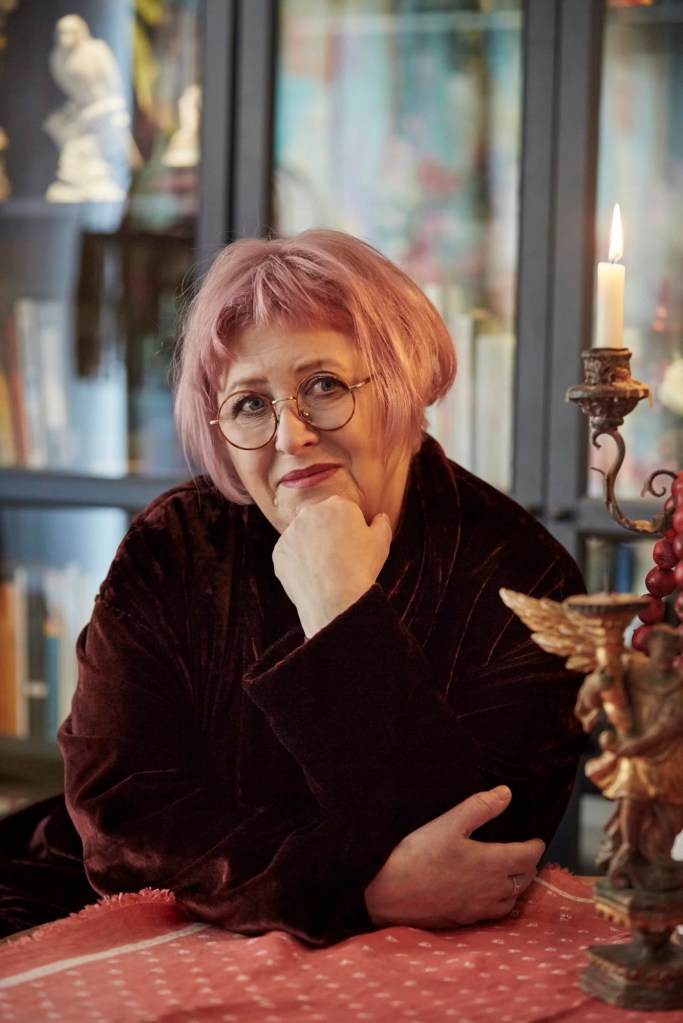
Sally Gardner gained a first class degree at a leading London art college and became a successful theatre costume designer before illustrating and writing books. Her debut novel, I, Coriander won the Nestle Gold Award and she is also a Costa and Carnegie prize-winner. Her books have been translated all over the world and have sold over two million copies. Find Sally online at sallygardner.co.uk, or on Twitter @TheSallyGardner.
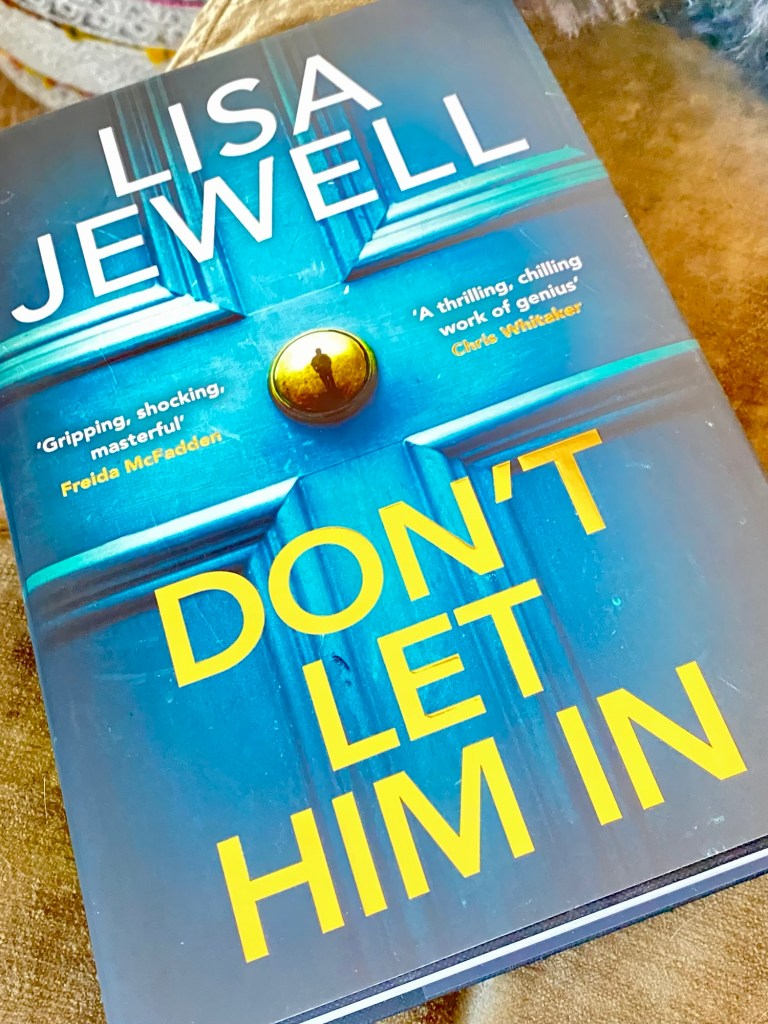
There was a pivotal moment in this book that made me go cold. It sent me back twelve years when I was trying to understand how someone could treat others so badly, in what seemed like a deliberately cruel way. I remembered something my counsellor said at the time; I was spending all my time trying to work out someone’s motivation and what had happened in life to make them behave that way, instead of considering the impact on me and how unacceptable the behaviour was. Some people just don’t think like others. Nick is a tall silver fox with a lot of charm and a knack with the ladies. He seems to know exactly what will please someone. Exactly the right gift to soften someone. To get under their defences. It’s almost as if he has empathy, but don’t be fooled. He’s just wearing a human suit.
Nina and her daughter Ash live in the bougie seaside town of Whitstable in Kent. They are grieving for husband and father Paddy, who was killed when a man having a mental health crisis pushed him into an oncoming train. Ash has been living at home since her own mental health deteriorated. She was living in a house in London with two other girls but she developed a crush on her boss, that turned into an obsession. She claimed to have letters from him, but it turned out she’d written them herself and she was eventually diagnosed with borderline personality disorder. She’d just come home to recover when Paddy was killed. When her mum receives a parcel in the post Ash is intrigued. It’s beautifully wrapped, with a note inside from a man who has heard about Paddy’s death. He used to work with him in the 1990s when Paddy was just starting out. The gift wrapped box contains a Zippo lighter he borrowed but never returned. Since then Paddy has built a restaurant empire, with his flagship restaurant in Whitstable and two others down the coast. He benefitted greatly from the area’s development into the weekend getaway spot for Londoners. Nick’s note explains he is now a troubleshooter, brought into eateries and hotels to assess what’s not working and put it right. There is of course a number, should Nina wish to thank him for his thoughtfulness. Over the next few months Nick and Nina start to WhatsApp each other and then go out for a drink. Ash is glad to see her mum with a glow, but there’s something about Nick that’s just ‘off’. She can’t be sure and maybe she’s viewing this situation through her own grief or her personality disorder, but something isn’t right. She needs to find out more about him before he becomes a permanent fixture.
It’s so hard to review Lisa’s books without letting things slip, but I’ll try my best. Most authors might have written a thriller based purely on the scenario above – is it the mentally ill daughter or the mum’s new boyfriend that’s the problem? Slowly drawing out the tension of whether she’s right or so unwell that she’s dreadfully mistaken. Lisa Jewell isn’t most authors so she takes that premise and builds an absolutely labyrinthine mystery that’s absolutely spellbinding. In multiple narratives and timelines we meet various women who are struggling in their relationships, all of which are linked by strange or abusive behaviour. There are different behaviours: gaslighting, manipulation, financial embezzlement and even disappearances. In some cases these women are married and have children, in others they’re older and widowed. There were so many conundrums, not least how these men are affording the lifestyle they’re living. Meanwhile, Ash has decided to take help from ‘Mad’ Jane Trevally, her dad’s old girlfriend from the 1990s. Surely if Nick was around for a while, Jane would remember him. Jane did have some obsessive qualities of her own back in the day, so maybe she’s not the best person for Ash to be hanging out with. She knows her mum would be furious. However, when they do meet, Jane tells Ash that Paddy categorically did not have a lighter. He was always taking the matches from the kitchen or cadging a light from other people, so much so that it was an ‘in’ joke with friends and customers. So whose lighter was in that parcel and why did he send it?
I galloped through this book as we went backwards and forwards in time, every time learning a little more and inching towards the truth. I loved the fragile Ash who is at that stage of recovery where she doesn’t fully trust her own mind. Is she making too much of this? Is she just paranoid? Worst of all, if she finds something questionable, will her Mum even believe her? She’s so lonely at this point, she doesn’t have many friends to talk to and feels bad she’s had to bounce back home at her age. Her mum deserves to be happy and she might ruin it all. Just when you think you have all the answers, the author takes it to the next level! There were twists here that I wasn’t expecting and I felt very relieved that I got away from my own situation relatively easily, if not unscathed. This book is like a twisted knot in a necklace. It takes a long time to loosen it, but suddenly the whole thing unravels before your eyes. This is masterful thriller that absolutely begs to be devoured in a couple of sittings, from an author who gets better and better.
Meet the Author
LISA JEWELL was born in London in 1968.
Her first novel, Ralph’s Party, was the best- selling debut novel of 1999. Since then she has written another twenty novels, most recently a number of dark psychological thrillers, including The Girls, Then She Was Gone, The Family Upstairs, The Family Remains and The Night She Disappeared, all of which were Richard & Judy Book Club picks.
Lisa is a New York Times and Sunday Times number one bestselling author who has been published worldwide in over thirty languages. She lives in north London with her husband and two daughters.
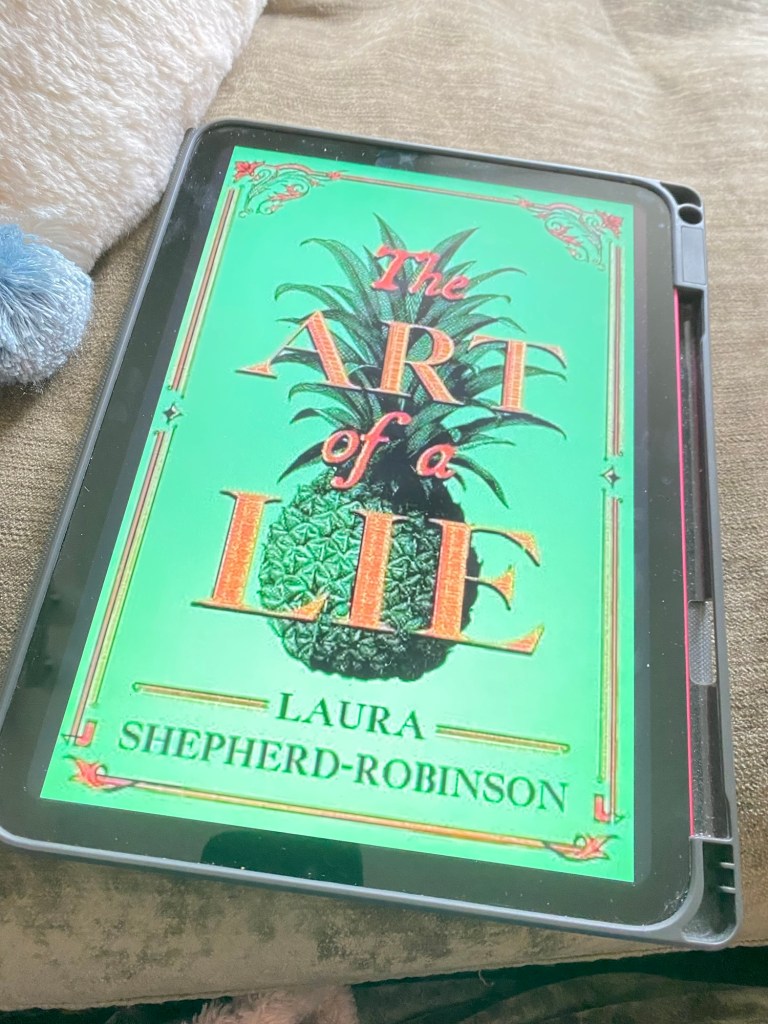
I loved this book. It drew me in immediately and two days after I finished it I can’t let go of it. I can’t start another book. It’s left me bereft. Our setting is 18th Century London and George II is on the throne. On St James’s Street is a confectioner’s shop called the Punchbowl and Pineapple and running it is the newly widowed Hannah Cole. This was her grandfather’s shop and has been handed down the family. Her father realised he needed an apprentice to pass on his skills and to work with Hannah, so he employed a young lad called Jonas Cole. Jonas and Hannah grew close and fell in love, with Hannah losing her father only a few days after they were married. So until a couple of days ago Hannah and Jonas ran the shop, with Hannah becoming quite an accomplished businesswoman. Jonas could be hard and ruthless in his business dealings and of recent years they had grown apart, with Jonas often spending evenings away from home. Then two nights ago he did not return and was found further down the Thames minus his money, his watch and several teeth. Hannah has had to borrow, especially to re-open after his death, something that caused a minor scandal so soon. She can’t afford to be closed and is waiting on their savings being released from the bank so she may pay her suppliers. Then Henry Fielding pays a call. In his role as magistrate rather than novelist, he explains that all money will remain frozen while he investigates Jonas’s death. He isn’t sure this is a simple robbery and wonders whether he should be looking into his business or personal dealings. He informs Hannah that Jonas had money in the bank, more than the £200 she knew about. Fielding explains he wants to be sure that the money was obtained legally and above board. Luckily, at Jonas’s funeral Hannah meets William Devereux. An acquaintance of Jonas, he has never met Hannah before but is very sympathetic to her plight. He promises to visit her shop and discuss how he may help her with Fielding and Jonas’s life outside the home – was he gambling, womanising or getting into shady business dealings? He also mentions a delicacy his Italian grandmother used to make called iced cream. It has all the ingredients of a custard, but flavoured with fruit or chocolate and is then frozen and eaten as a desert. Hannah resolves to let William help her and to master the art of ice cream, but are either of them being fully honest with each other about who they are and what their purpose is?
As with all Laura’s books we become fully immersed in the setting straight away and it’s the little details that stand out and make us believe in this world. I loved the descriptions of Hannah’s various confections and the way she can tell what people will choose, not to mention what it says about them.
“He paused to take a bite of his Piccadilly Puff, washing it down with a generous gulp of green walnut wine. It is a favourite choice of the sybarite: the silken sweetness of the custard, the crunching layers of puff paste, the dusky depths of the spices mingling with the sourness of lemon. I might have guessed that Mr Fielding was a man who struggled to keep his appetites in check.”
I believed in Hannah as a businesswoman and confectioner very quickly thanks to these details and as she narrates she tells us her hopes and dreams, including a joint dream of her and Jonas, to buy the empty premises next door and extend the shop so they could have more tables and chairs, especially when her iced cream starts to become popular. I think we always imagine that people from the 18th and 19th Century are very genteel and well behaved, this comes of too many Austen adaptations and strange hybrid historical settings like Bridgerton. While lovely to watch they give us little idea of what these centuries were like for those of the lower classes in society and women who worked. Real life 18th Century London was rather more colourful than Pride and Prejudice, as depicted in some of Fielding’s novels like Tom Jones and Daniel Defoe’s Moll Flanders. The author gives us the dirt and the bawdy side of London life when Hannah takes a trip to the theatre.
“The playhouse crowd gave a wide berth to the nest of alleys around the back of the Theatre Royal, home to brothels and bath houses, gin shops and squalid taverns. The residents started drinking over breakfast and then kept going. Groups of ragged men stood about on corners. One lot were fighting, skidding in vomit. Half-naked women leaned from the upper windows shouting encouragement.”
The King openly has a mistress and there are brothels and gaming rooms everywhere, operating just on the edge of the law. This is a book with every vice on display, even when if it is just cake. As Hannah points out when she’s evaluating Fielding, every man has his personal struggle. She is incredibly astute when it comes to assessing character and has Fielding’s own psychological make-up worked out through reading his novels. William Devereux appears to be equally astute, visiting Fielding’s rooms he notes the perfectly bound volumes of his own books and the wine glasses etched with the crest of Eton College, it’s students described beautifully as the “school of the most selfsatisfied fucksters in the kingdom.” I thought there were some brilliant choices in terms of the book’s structure and the way the story passed from Hannah to William was brilliant. Often when reading from NetGalley there are little mistakes or quirks to the format that can ruin the reading of the book, but here reading from NetGalley was a benefit because with no gaps or idea how far I was into the book, when the shocks came they were huge. The author has cleverly used aspects of modern thriller writing and applied them to her story, so there are twists and turns aplenty. She uses sudden unexpected confessions or statements that mean we know something no one else does. Other times a character suddenly changed their demeanour or had a different inner compared to their outer voice that made me go back a few pages in confusion. Then just as I become comfortable with my narrator, they switched back again.
This is definitely a cat and mouse game between three characters, a battle of wits where you’re never quite sure who is on the right side. Fielding appears to be pursuing this case to make his point to parliament that a national police force is needed to deal with crimes like murder. He also has a good point, Jonas’s watch had belonged to Hannah’s father and had a Russian Imperial Eagle on the case. If that had been stolen, every pawn shop and jewellers in London would have remembered someone trying to sell it. So where is it? Has the thief taken it to be sold elsewhere or is it still with a murderer rather closer to home? Devereaux seems like a gentleman, he introduces Hannah to friends who seem wealthy and of good status and they all vouch for his honesty and charity. He even seems to be thinking of making a young boy belonging to a distant relative his ward, in order to give him a better life. Hannah had a hard life at Jonas’s hands, especially when she found she was unable to have children something they both wanted. I loved the author’s detail of them both saving some urine to pour on a seedling and if the seedling grew they were believed to be fertile. Hannah’s didn’t grow and she felt her husband hardened his heart to her at that point and perhaps looked elsewhere. She has her head turned by the handsome gentleman who wants to find out where Jonas was going at night and intervening with Fielding on her behalf. He wants to help her keep her shop too and his iced cream idea is proving a huge hit, with even an impromptu visit from the King’s mistress who reassures Hannah that a hint of scandal is not necessarily a bad thing: “virtue matters rather less once you are rich.” Devereaux has some ideas in that area, that maybe rather than leave her money in the bank she might like to meet some of the people who’ve invested in a company of his called Arcadia, based in a place called Bentoo. Is he genuine or not? Does he have feelings for her, because Hannah’s starting to have stirring feelings she hasn’t had for years. Surely though Devereaux’s interest wouldn’t lie in the direction of an older widow?
I was utterly entranced in this novel from the first page to the last, especially as the tensions mounted in the final third when Fielding makes his move. However, just when you think you’ve worked everything out another twist will come along and surprise you. I was rooting for Hannah to come out on top, but was very scared for her in parts. For both her heart and her liberty! I wanted her to live out her days as the grand proprietress of the Punchbowl and Pineapple. I very much feared that Fielding had the desire to see her face the hangman’s noose. While I didn’t trust Devereaux at first I did wonder if he had feelings for Hannah or whether he was some sort of confidence trickster. There is certainly sexual chemistry by the bucketload. I was working out in my head who might play Hannah in a film or TV adaptation because it would be a brilliant period thriller with lots of raunchy scenes perfect for Netflix. I was honestly hypnotised by this story and Laura’s talent. Bravo on such a fantastic story that I’m still thinking about four days after finishing it. Go beg, steal or borrow a copy of this one, it’s a cracker.
Out now from Mantle Books
Meet the Author
Laura Shepherd-Robinson is the award-winning, Sunday Times and USA Today bestselling author of three historical novels. Her books have been featured on BBC 2’s Between the Covers and Radio 4’s Front Row and Open Book. Her fourth novel, The Art of a Lie, will be published in Summer 2025. She lives in London with her husband, Adrian.
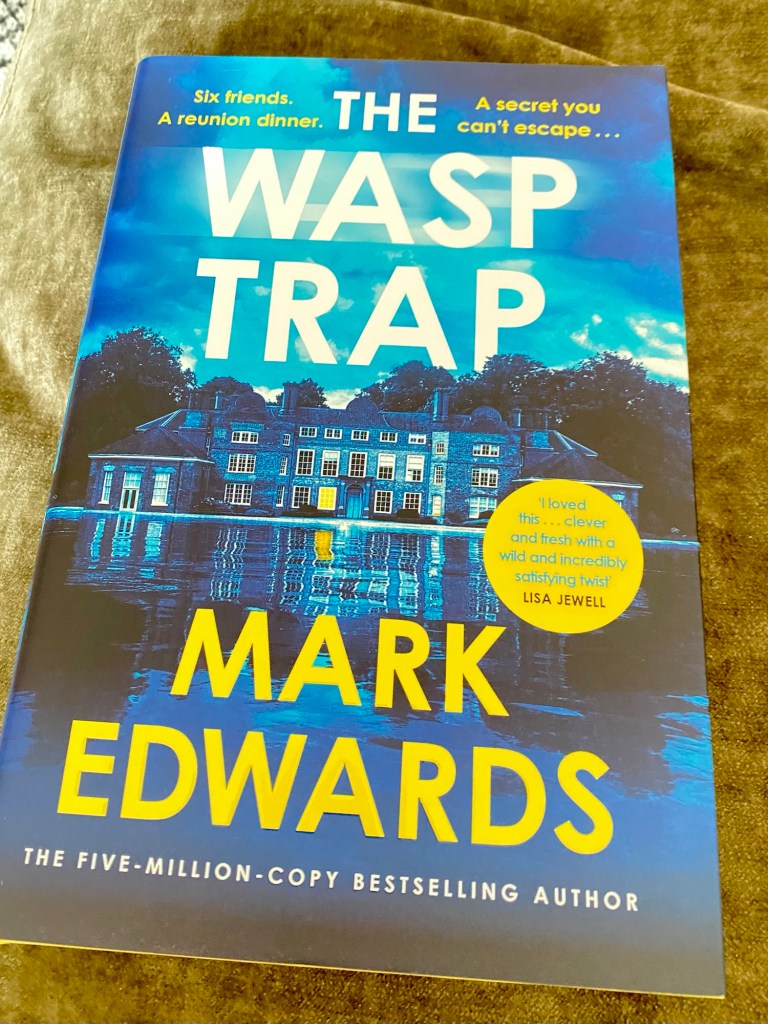
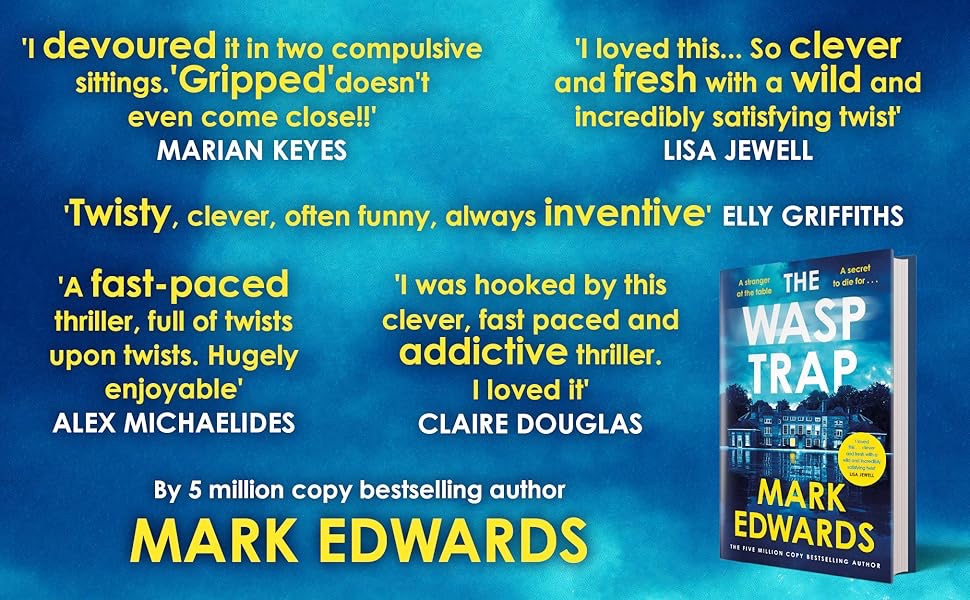
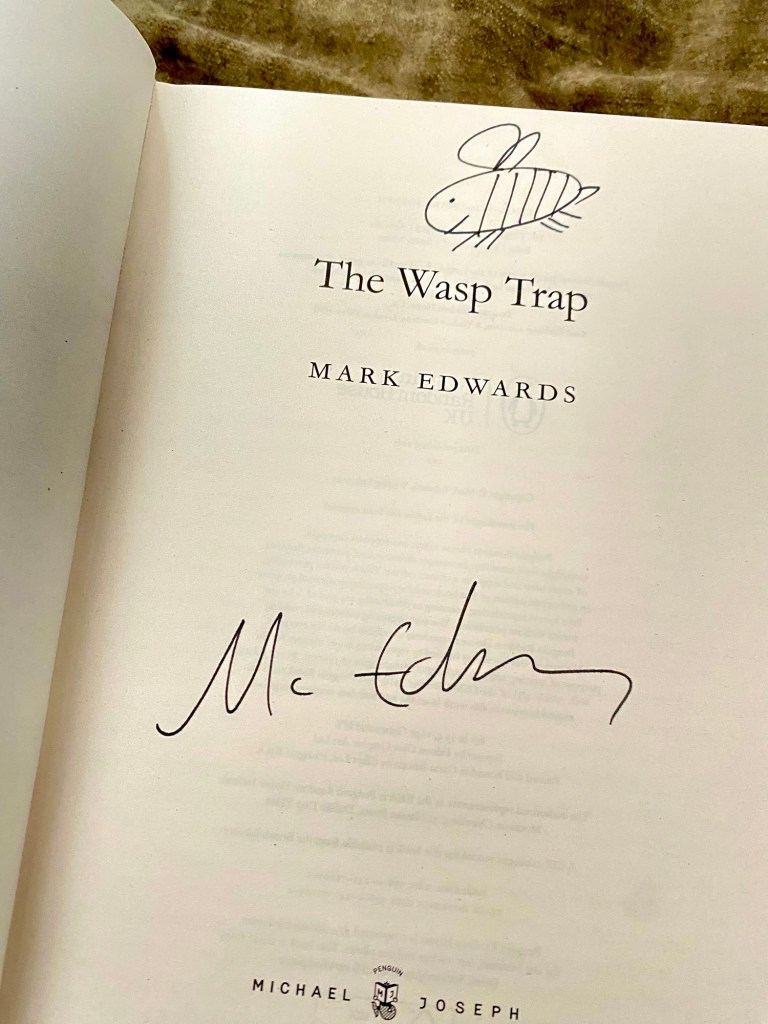
It’s been so enjoyable to read two of Mark Edwards’s novels back to back. I found myself completely engrossed and The Wasp Trap was definitely an interesting premise. Will is travelling to his friends Theo and Georgina’s house for a reunion dinner. Years ago, at their elite university in the 1990’s, Will and his group of friends were selected by their professor to spend the summer at his house in the countryside and work with him on a project he’s developed. He wants to create the first online dating site, one that truly works by using psychology. He wants the group to create an algorithm based on personality types – such as the Myers-Briggs scale, often used in business more than psychology. He recruits a mix of coders, web designers, psychology graduates and creatives like Will, who has an ambition to write a book. Here, he is tasked by finding a name for the site and Sebastian wants it to be poetic. That shouldn’t be difficult for a man who’s falling in love, with fellow student Sophie and after seeing an unusual butterfly he chooses “butterfly.net”. A little creepy when we consider what happened to those butterflies once they were caught. Lily is definitely the lynchpin intellectually, the person trying to create an algorithm that works, but even she’s distracted. Within the research are papers on using certain tests to determine whether someone is a psychopath. Since the team are being used as guinea pigs for the dating questionnaires why not use them for this? No one’s going to turn out to be a psychopath are they? This side research becomes named as “The Wasp Trap”. Decades later, as the group converge for dinner, it’s clear there’s so much to talk about, not least the disappearance of Georgina and Theo’s daughter Olivia. Why are they still holding the reunion? Who are the strange couple doing the cooking for the night? As secrets begin to unravel about that summer it’s clear this isn’t going to your average reunion.
I have to get it out first and foremost. I didn’t like any of these people, but Theo and Georgina are one of those couples I love to hate. The perfect home, perfect careers and plenty of money to throw around, not to mention those lovely teenage daughters too. How much was this reunion about rubbing other people’s noses into their success, especially Will who gets plenty of comments about his never finished book? They don’t seem like parents whose daughter is missing, because I’d be beside myself if it was one of my stepdaughters. I certainly wouldn’t be able to concentrate on a dinner for people I hadn’t seen for years. Make no mistake, these are the people who make me avoid school reunions like the plague. There’s so much nostalgia here and that element I did enjoy. I was a sixth former in the early nineties and I loved all that Manchester scene music and played my Stone Roses album so much it drove my mum and dad crazy. I was also a massive Pulp and Blur fan and still love those films of that decade from Tarantino and Danny Boyle through to Four Weddings and a Funeral. So I do reminisce, but I kept the most important friends and still see them, I don’t need to see the others thanks very much. My ‘now’ is much more interesting than my yesterday. Professor Sebastian certainly chose his students well because there are some incredibly intelligent people here, but I’m not sure about their emotional intelligence or morality. Will seems to have the most emotional intelligence but is hampered by his fear of failure when it comes to his career and love. In the past he’s clearly in love with Sophie, but fears telling her so much that he misses his chance. Will he do so again? It’s no surprise then that it’s Will who senses a weird atmosphere with the catering couple. I was so caught up with the emotional drama between these people that it was a shock when the chef and his assistant burst into the room with guns and give an ultimatum. They have a set amount of time to tell a secret they’ve been holding since that summer. When they come back into the room time is up; they either tell the secret or someone will be killed. Even though this is what they promise to do, I’m not sure I quite believed it. So when they come back in and the shooting starts it definitely concentrates the mind a bit, but the problem is they all have secrets. How do they know which secret the couple want to know?
As usual with Mark Edwards, the tension is almost painful. Especially those last few minutes of time before Callum returns with his gun and he’s definitely not bluffing. There’s a body in the hall to prove his intent. Of course, being the people they are, they start wondering if they can somehow outwit their captors by causing a distraction and one of them getting out of the house. Will does wonder if there’s a third conspirator hidden upstairs though. Despite the tension, there’s also that incredibly awkward sense of having to expose your darkest secrets in front of people you were at college or university with. I’ve spent most of my life embarrassed by something, so I could feel their reluctance to be shamed in this way. It’s as if the tables have been turned and the unpopular or bullied kids have decided to get their revenge but Callum certainly wasn’t at university with them so how could he know their secrets? He definitely seems to be getting a kick out of terrifying people he sees as better off in life, they certainly don’t have the upper hand now. There is one person though who knows something terrible happened that weekend and who was involved in covering it up. They’ve kept it to themselves all these years. Was it linked to the psychopath tests Lily was running on her friends without them knowing? Maybe one of them did turn out to be a psychopath and if they did, are they in the room?
I was on tenterhooks as the body count started to rise and I found myself rooting for Sophie and Will against the odds. I loved the appearances of the family’s fat cat here and there throughout the action and that he’s the only one who knows someone is definitely upstairs. There are two people from that summer who aren’t here tonight. Local girl Eve was their age, employed by the Professor to clean and cook for everyone over the summer but often around in the group’s leisure time too. There was also Sebastian’s nephew, an extra when it came to socialising and chilling out at weekends that summer, but not really one of them. He was usually running errands for his uncle but when he did join them he was a divisive figure, in fact some found him a bit creepy. Will had conversations with Sophie about how strange it was for him to still be driving the classic car that his parents had been killed in. Their outsider status shows in the fact that neither of them are there tonight, but could they be the key to a secret? I was absolutely gripped in the final chapters and couldn’t wait to find out which secret Callum wanted and what was his link to the group? I was also interested in where Theo and Georgina’s daughter was. We do know by this point who is upstairs but would they intervene or remain hidden? One thing is for sure, as the secrets come out it’s quite clear that no one is going to come out of this well. This is definitely one reunion they’ll wish they lost the invitation to. Brilliantly twisty, full of complex and unpleasant characters and so tense my teeth hurt.
Out now from Michael Joseph
Meet the Author
I write books in which scary things happen to ordinary people, the best known of which are Follow You Home, The Magpies, and Here To Stay. My novels have sold over 5 million copies and topped the bestseller lists numerous times. I pride myself on writing fast-paced page-turners with lots of twists and turns, relatable characters and dark humour. My next novel is The Wasp Trap, which will be published in July in the UK/Australia and September in the US/Canada.
I live in the West Midlands, England, with my wife, our three children, two cats and a golden retriever.
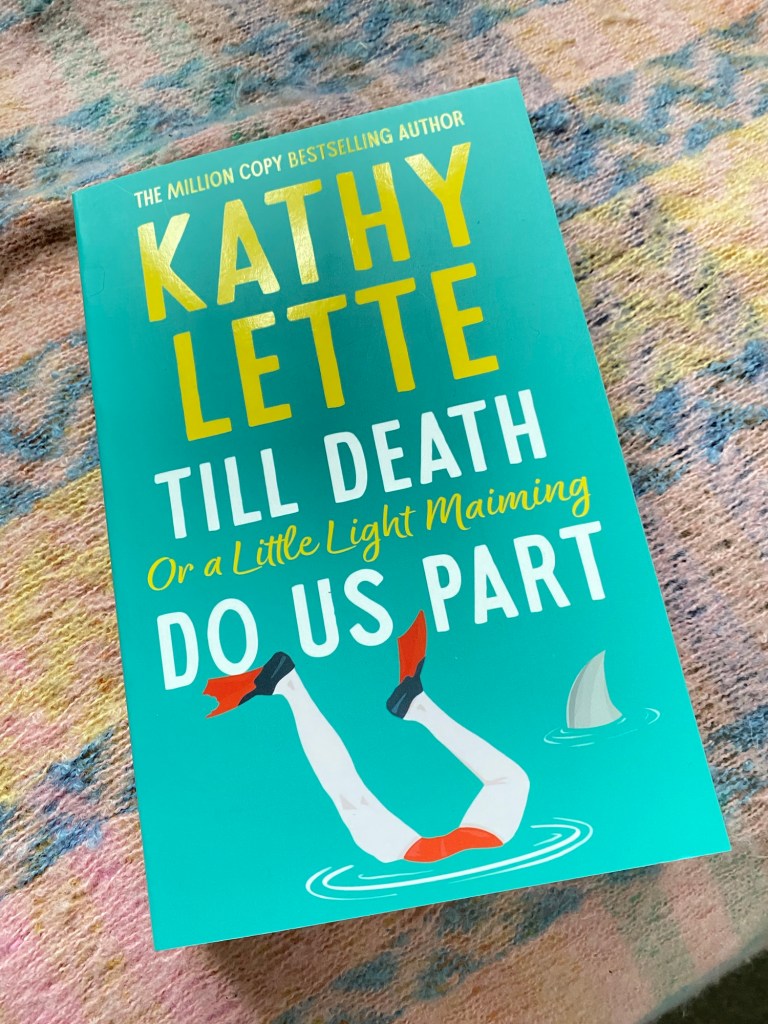
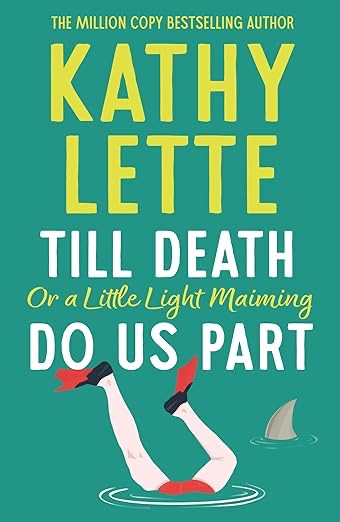
When she hears a man has been killed by a Great White shark, Gwen races to the beach only to find that all that remains of her husband is his swimming cap and a piece of torn, blood-stained wetsuit. Her grief is soon interrupted by Tish, screaming for information about the accident. When Gwen reassures her that it’s her husband, Jason Riley, who’s perished, Tish’s response is earth-shattering for them both: Jason was her husband too.
The women’s mutual animosity is not assuaged when they learn that Jason recently sent all his – make that their – money to a mysterious ‘business partner’ in Egypt called Skye. But when they fly to Cairo to confront her, they find another grieving widow whose life-savings have gone missing…
As this double-crossed threesome cross continents in their search for truth and retribution, they start to realise they’re embarking on a journey of self-discovery, renewal and friendship too.
I’ve read Kathy Lette before so I was expecting ballsy women, lots of wit, perhaps some raunchy behaviour and definitely laughter. I wasn’t disappointed. I’ve seen this described as a revenge caper and that is the perfect description. Gwen has a happy life with her children and second husband Jason, who’s a real hottie. He is a big blonde surfer type with a sprinkling of grey, but a body honed to perfection by Iron Man training. She sometimes wonders how they got together. She sees herself as a rather ordinary widow nearing her sixties, while he’s a lot younger and so fit. However, tragedy comes along when Jason is training. Gwen hears on the radio that there’s been a shark attack in the bay and she makes her way there immediately. When she arrives, she knows by the scrap of wetsuit on the sand that the lost man is Jason. She hardly has time to breathe before a leather clad ball of fury catapults herself into the situation. Tish is there because she thinks her husband is missing too, she’s married to a tall, blonde hunk called Jason. Surely they can’t both be married to the same man?
Gwen wants to quietly go home and cope with the double shock of Jason’s death and the news that he’s a bigamist. Tish has the grip of a small terrier and has about a million questions that Gwen is incapable of answering. She’s totally gobsmacked by Tish’s biker girl style, they couldn’t be more different so why was he attracted to both of them? It seems that when Gwen thought he was working or training, he was with Tish and vice versa. They’ve been together a similar amount of time. They make a very uncomfortable trip to Jason’s lawyer, Tish is adamant there should be a will and she wants to see it. She invested a large amount of money in a business start-up he was working on. Gwen is keeping her cards close to her chest but she too has invested some of her widow’s inheritance in his endeavours. Where has it gone? They soon find out. His lawyer tells them that Jason signed a document that transfers their joint investment to a woman in Cairo. Tish wants to be on the next plane and wants Gwen to go with her. Can they find this woman, solve the mystery of her connection to Jason and retrieve their money?
I found the novel intriguing and funny at first. Tish is an absolute ball of energy and her power as a character did overpower everyone else slightly. I wonder if Kathy based Tish on her most extrovert side. I felt a little bit like the momentum of the story was lost in long verbal exchanges between the two women that seemed more about the jokes than developing characters or their relationships. Some are admittedly very funny, but when they come thick and fast the humour sometimes misses the mark. It’s also difficult to change the tone and I think the novel could have done with some light and shade. However, it’s a madcap caper that takes on an escapist feel as we travel all over the world with the women and try to work out if Jason faked his own death and whether they’ll be able to retrieve their money. Cairo brings even bigger surprises, leading to Tanzania, the Maldives and throughout Europe. It’s an absurd plot, but it is fun and a great escape read. I read this in one afternoon and had some laugh out loud moments. There’s also some lovely female camaraderie as these women start to come together, overcoming their differences to bond and keep chasing their love rat husband. I really enjoyed the suggestion that there’s a re-evaluation of life as women reach middle-age. A realisation that if we are going to do the things we’ve always wanted we need to start planning now. It’s the chance to throw off things that no longer suit us – not just in our wardrobes! In amongst the action and the laughs is the very profound idea that just when you learn to make the most of your life, it is almost over.
For more information on Kathy Lette and her books visit
Calvin owns Therapy, the bakery of his dreams in an idyllic village in the Lake District, but business is a little quiet. He’s reluctant when wife Vicky suggests social media but it’s not long before assistant Tara has filmed and posted a reel of him making brownies. Suddenly he’s a local celebrity. It seems everyone wants a piece of Chef Calvin and creepy little DMs start to arrive, including some from a stranger claiming to be his biggest fan. At the same time a local recluse has been found dead on a nearby beach, buried up to the neck in sand and left for the tide to come in. Detective Imogen Edwards is under pressure to solve the case, but who would plan such a long, drawn out murder and did they stay to watch the man’s fate? Calvin’s admirer turns up at Therapy, just as Tara is injured and unable to work. Much to his wife Vicky’s horror, new girl Mel ends up standing in and Calvin offers her a job. At least until Tara returns. Then events seem to start spiralling out of control and Calvin doesn’t know who to trust or what to do. Perhaps these wheels were put in motion a long time before, putting those Calvin loves in terrible danger.
This is such a page turning thriller that I swept through it in an afternoon and evening. Seemingly unrelated events start to make potentially intriguing patterns. Mark Edwards has a way of sending your mind down a dozen different paths before getting to the truth. He also has the skill of leaving horrifying images in your head. This time it was the sight of Leo James’s head sticking out of the sand as the tide went out. I have a fascination with Anthony Gormley’s Another Place also known as the Iron Men of Crosby Beach in Liverpool. There is something slightly macabre and even profound about watching the tide come in, slowly submerging some figures underwater completely. This was a terrible human version and I couldn’t help musing on how it must have felt to be left waiting for the tide and what sort of man could watch it unfold. I enjoyed the internet element of the story and how reluctant Calvin is to put himself and his bakery out there – something which makes more sense later in the novel. I could understand his reticence. While Book Twitter was once a benign space, there are now arguments and attempts to police what other people are reading. It seems it’s no longer acceptable to separate art and the artist and I definitely spend less time there. When Tara creates her video, the baker starts to gain customers very quickly and this is definitely welcome. However, it comes with a side order of relative fame and that means teenagers want to take a look as well as a certain amount of women. Mel is one of these and the timing of her arrival in the bakery seems very suspect. Both Tara and Vicky are suspicious and my radar for emotionally damaged women was definitely going off. She seems to establish herself as someone who needs to be rescued, something that is Calvin’s kryptonite. She drops hints about a group of teenagers making a nuisance of themselves on the beach near her cottage and trying to intimidate or frighten her.
It soon becomes clear that Calvin is a rescuer. He has lived in the Lakes all his life and has an experience when he was a teenager that makes him susceptible to women needing him to be the hero. His teenage sister died in a car accident and in flashbacks we go back to that summer and the lead up to this awful event, it’s clear that Calvin carries a lot of guilt around her death but this is only half the story. Our other narrative is that of the murder and the police investigation. Imogen’s first port of call is the dead man’s home which isn’t easy to find, tucked away in the woods and completely off grid. Inside they find the most hideous paintings, possibly created by Leo himself. They show visions of torment and retribution in hell and seem to be inspired by Heironymus Bosch. The house is spartan and gloomy, suggesting that Leo leads a lonely and possibly depressed lifestyle. The paintings point towards his state of mind, but does he believe someone else should receive this punishments or himself? If himself, it seems like at least one other person agreed with him. When Imogen finds a young local girl called Billie lurking nearby she’s determined to find her link to this unusual man. In fact Imogen and Calvin’s wife Vicky seem the most level-headed of the characters. Imogen is a good police officer, methodical and not easily swayed by one thread of the investigation. She lets it reveal itself, but is still only minutes behind the culprit at times. Everything is linked and she just has to find that one person who holds the key. She does come under pressure from above but stays focused.
Vicky is perceptive and there were times I was mentally screaming at Calvin to listen to his wife. She senses someone has been in their house early on and is adamant she didn’t close their bedroom door and shut their cat Jarvis inside. She also wants rid of Mel, not specifically because she has feelings for Calvin, but because she simply doesn’t trust her. Where has she sprung from and why does she seem so keen to please? She thinks the story about teenagers is a deliberate ploy. The tension in each of the narratives is heightened and when Vicky disappears, Imogen has to work out whether this a choice to take time for herself after a row, or something more serious. Although when she speaks to Calvin and finds out that Vicky owns an animal rescue centre, it does seem unlikely for her to leave without warning leaving everything to her assistant Louise. As Imogen starts to join the dots I was praying she wouldn’t be too late for Vicky. How would Calvin cope if he lost Vicky after losing his sister, especially if Mel is involved? As Mel lures him into accompanying her home I was on tenterhooks over whether she would proposition him or whether something more disturbing was going on? The author takes us through some serious twists and turns, just when I thought my suspicions about a character were mistaken they were back on the hook again. I didn’t get to the truth before Imogen though and I managed to do that really annoying thing of rushing through to the end, then wishing I’d taken it slower. This is a first class thriller and has whetted my appetite beautifully for his latest book, The Wasp Trap.
Meet the Author
I write books in which scary things happen to ordinary people, the best known of which are Follow You Home, The Magpies, and Here To Stay. My novels have sold over 5 million copies and topped the bestseller lists numerous times. I pride myself on writing fast-paced page-turners with lots of twists and turns, relatable characters and dark humour. My next novel is The Wasp Trap, which will be published in July in the UK/Australia and September in the US/Canada.
I live in the West Midlands, England, with my wife, our three children, two cats and a golden retriever.
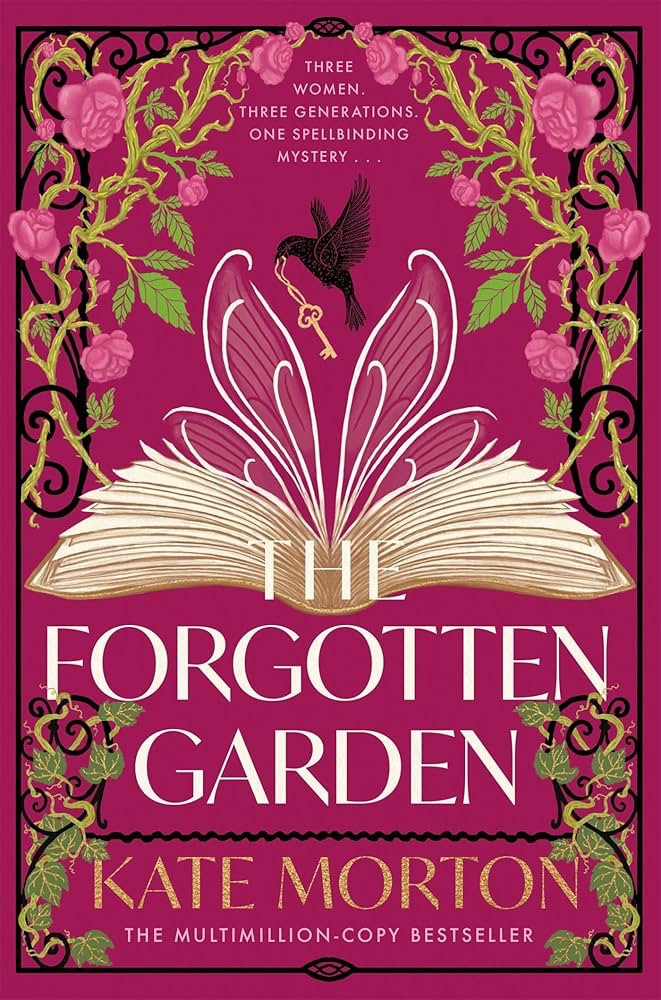
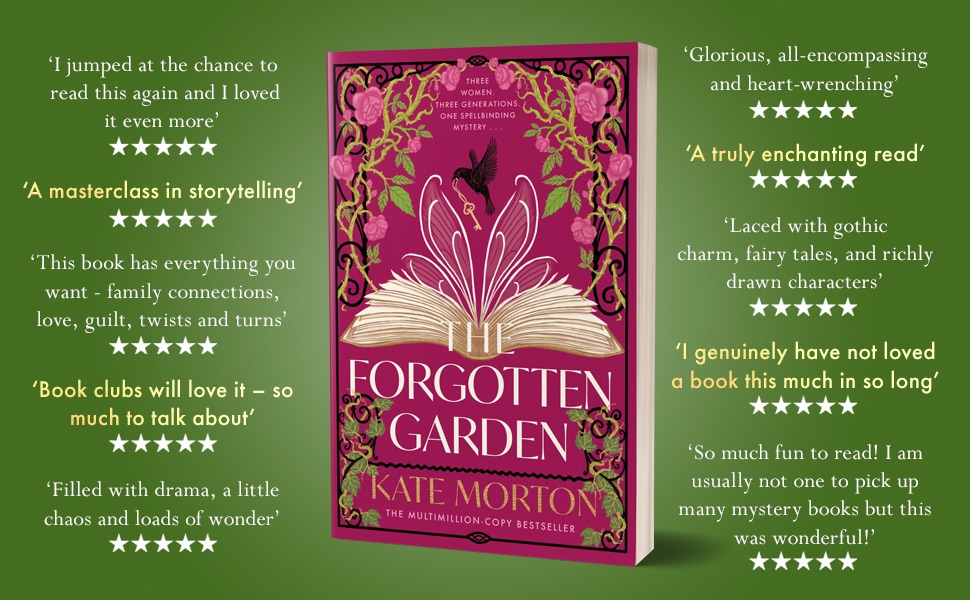
As part of the Squad Pod, I’ve been re-reading this novel in its new edition and I’ve really enjoyed my reintroduction to these interesting characters and the incredible atmosphere the author creates around the Blackhurst Estate in Cornwall. Our story begins in 1913, when a little girl sits forlorn on the harbour side, using her white suitcase as a seat. The authoress told her she was going on an adventure and she’d stayed hidden for such a long time, but now she doesn’t know when the authoress is coming. The harbour master notices her and resolves that if she’s still there when he finishes work, he will have to take her home to his wife. Surely someone will come for her in a day or two? The mystery of the authoress and the little girl took me from 1900 to 2005, in the company of three women who have a link to that little girl in 1913. Eliza lives in London digs with her mother and twin brother at the turn of the Twentieth Century but finds life changes suddenly after her brother is killed in an accident with a coach and horses. She is taken to the Blackhurst Estate in Cornwall to be the companion of Rose, the daughter of the family, who is an invalid and rarely leaves her bedroom. Then in 2005 there is Cassandra, living in Australia and also facing upheaval after the death of her beloved grandmother Nell. Cassandra has lived with her gran since her mother left her there when she was a little girl. She promised to return and never did, leaving her mother Nell to raise her daughter. Together they run an antiques business and after Nell’s death, Cassandra is stunned to find a series of sketches by American artist Nathaniel Walker in her grandmother’s belongings. There’s also a small white case and inside there is a book of strange fairy tales also illustrated by the artist, but the writer is unfamiliar. Eliza Makepeace doesn’t seem to be well known but Cassandra is happy to do some digging and understand what link exists between this famous painter, an obscure writer and her grandmother. After the funeral, Cassandra’s great aunties explain that Nell was the baby in the family, arriving some time after them since their father found her on the Maryborough harbour alone. He decided that Nell needed to know about her true origins before he died, but her sisters wonder if that was the right thing to do. It left her a little distanced from them, as if she didn’t know where she belonged anymore.
Interspersed between Cassandra and Eliza’s narratives is that of Nell, who did her own detective work on who she was decades before. In fact she had plans to make a big change before her daughter turned up with Cassandra and asked her if she would look after her for a short while. Nell knew that once her daughter was gone, neither of them would ever see her again. This put her own plans to one side but Nell never regretted bringing up Cassandra. Cassandra takes her book of fairy tales to a book dealer who explains that Eliza Makepeace was linked to the Blackhurst Estate in Cornwall. In fact Nathanial Walker was married to Rose, the daughter of the family. When Nell’s lawyer confirms that Cassandra has been left a small cottage on the Cornish coast she is intrigued and before long is on a flight to the UK. From there we are catapulted into the past where Eliza is adjusting and trying to make friends with Rose who has been ill for most of her childhood. Her regime is overseen by her rather formidable mother while her father seems largely absent, secretly longing for the return of sister Georgina who ran away to London with a menial worker from the estate. All of these separate story lines are linked beautifully by the author over the course of the novel, telling the story of a family beset by tragedy, but also shaped by rigid control, manipulation and jealousy. All of this is set within the beautiful backdrop of Cornwall and its history of fishing and smuggling as well as its stunning scenery. Cassandra’s cottage sits above the cliffs looking down to the sea, but has a stone wall around it. She wonders why someone would block off that incredible view, but also whether they were blocking people from seeing out or in? It must have been a gloomy existence. When Cassandra hires a local gardener to remove the tree that’s partially growing inside the cottage they discover a crawl space under the back wall and inside an overgrown but entirely enclosed garden. The walls that cradle the garden create a deep sense of belonging, as if the birds sing just for her. It’s a peaceful space, almost frozen in time.
Cassandra is also interested to know how Nell ended up buying the property and why she never came back. Speaking to the village’s estate agent Robin gives her a lot of insight and the date Nell bought the cottage starts to make sense to her. Through Robin’s father, a retired fisherman, she hears some of the cottage’s history from a smuggling lookout to the home of the Authoress, a beautiful red- headed lady who used to live at Blackhurst. The actual manor has slowly become a hotel and Cassandra learns more by talking to the owner, who has refurbished the house and made some fascinating finds. She shares some scrapbooks with Cassandra, made by Rose who later became the wife of Nathaniel Walker. Rose was an invalid and her scrapbooks show a young girl’s imaginings from fairies to beautiful dresses and what she imagined her wedding to be like. Not that anyone expected she would meet anyone to marry. Her cousin Eliza tells her strangely dark fairytales and encourages her to aim for some of her dreams, to travel and perhaps get married someday. When she is married, her longings become focused on having a child, but will that be possible for her and if not, how can she find another way to become a mother? Kate Morton gives us little revelations as we go along, taking us back into the past to show us exactly what transpired and another jigsaw piece of this mystery slots into place.
I loved how vividly Morton describes the squalor of turn of the century London and the harsh way of life for those just trying to keep a roof over their head. Blackhurst is the perfect name for the estate in Cornwall, named after an outcrop of black rock that juts out into the sea and provides an incredible lookout for the brave who enjoy the crashing waves and the seaspray. The estate feels like a mausoleum in contrast to Cornwall’s natural beauty. It is somewhere where people are shut away and miserable, with Rose in bed and her father shut away in his study and harbouring his secret obsessions. The cottage is accessed through the maze and it feels like a walkway to another world as it opens out in Eliza’s garden. What could possibly have caused two cousins to be entirely separate, with the maze as the barrier between their properties? I loved the theme of motherhood throughout, especially the loss of mothers for Eliza, Nell and Cassandra. One of the saddest parts for me was when Nell finds out that she isn’t a blood member of her Australian family and it changes her outlook, leading to her own trip to Cornwall. There’s even a touch of romance for one character who’s suffered a terrible loss. Reading this again has made me realise how rich Morton’s writing is and how reading her books probably led me to me enjoying this genre so much and current writers like Amanda Geard and Kate Lumsden. This is a sweeping epic of a mystery, with great characters and dark gothic undertones which I’ve thoroughly enjoyed rediscovering.
Meet the Author
KATE MORTON is an award-winning, Sunday Times and New York Times bestselling author. Her novels – The House at Riverton, The Forgotten Garden, The Distant Hours, The Secret Keeper, The Lake House, The Clockmaker’s Daughter and Homecoming – are published in over 45 countries, in 38 languages, and have all been number one bestsellers around the world.
Kate Morton grew up in the mountains of southeast Queensland and now lives with her family in London and Australia. She has degrees in dramatic art and English literature, and harboured dreams of joining the Royal Shakespeare Company until she realised that it was words she loved more than performing. Kate still feels a pang of longing each time she goes to the theatre and the house lights dim.
“I fell deeply in love with books as a child and believe that reading is freedom; that to read is to live a thousand lives in one; that fiction is a magical conversation between two people – you and me – in which our minds meet across time and space. I love books that conjure a world around me, bringing their characters and settings to life, so that the real world disappears and all that matters, from beginning to end, is turning one more page.”
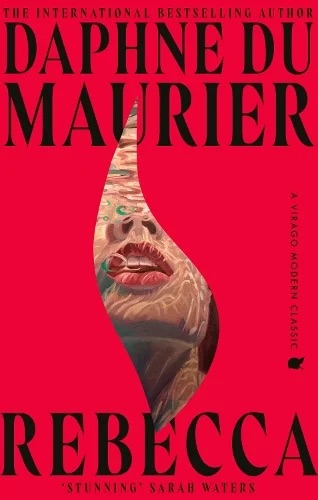
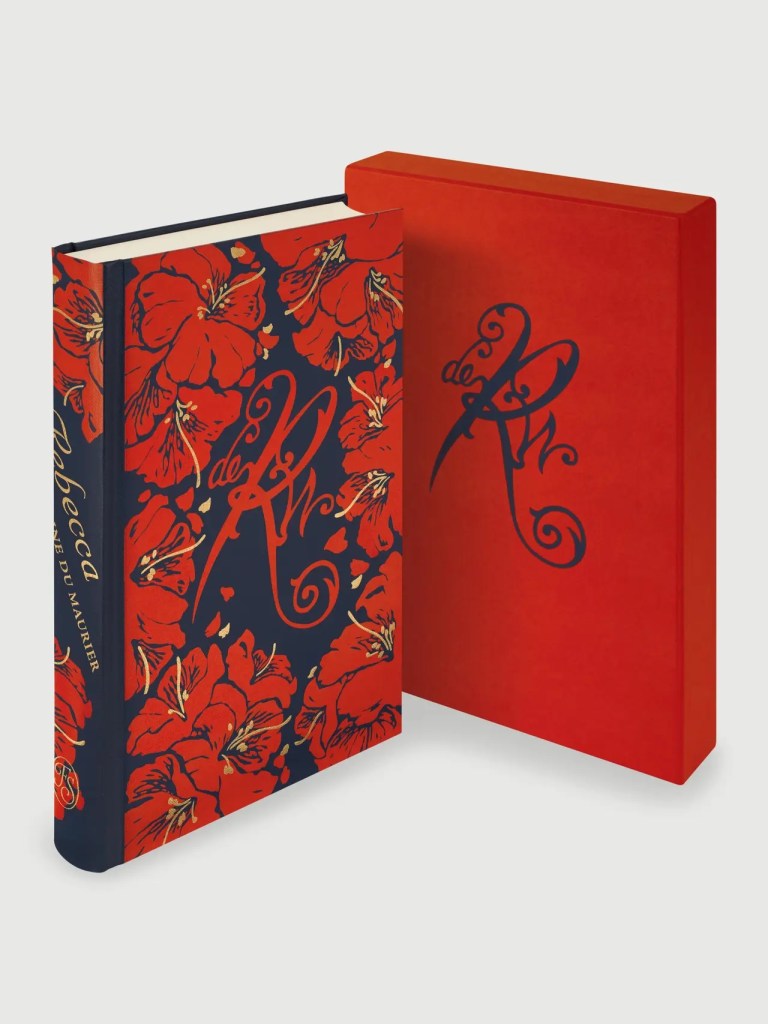
Rebecca is probably the reason I first visited Cornwall, but it’s also one of those books that I’ve changed my mind about when I reread it. I read the book as a teenager from mum’s bookshelf and I also watched the Hitchcock film at a similar age and both book and film are still favourites. I think I read it as a romance at first, rooting for the rather young and mousy heroine as she falls in love with brooding stranger Maxim de Winter as they meet in Monte Carlo. Now I read it as an altogether different story, probably emphasised by the above new Virago edition that’s billed as one of her ‘dark romance’ books. Maxim is dazzlingly and tragically romantic to our young heroine, mourning the wife who was known as a great beauty and unable to be in their Cornish stately home Manderlay. Perched on the cliffs near Fowey and based on de Maurier’s home Menabilly, this is one of the most beautiful and gothic settings. It’s impossible to see from the road, only from the sea and its private beach only accessible by boat or on treacherous steps from the grounds of the house. The heroine does seem to win it all – the man, the house, the money and love – but does she really? Immediately invisible next to the dark and sexy Rebecca of the title, the new Mrs de Winter doesn’t even warrant her own name. She’s scared of running the house having never done it, she’s not even the same class. She’s also scared of the servants, especially the creepy maid of his first wife, Mrs Danvers. At one point she breaks a statue in the morning room and hides the evidence. Maxim is no help. Instead of appointing a servant to help with decisions in the house, or at least to bring her up to speed, he just goes out first thing and leaves her to the brooding and obsessive Mrs Danvers, now the housekeeper. Max has no idea how privileged he is and can’t comprehend her hesitancy and fear of getting it wrong and when she does he flies into a temper or scolds her like a child. He gaslights, lies and yells at her. She may as well have been poured into a pit of vipers. This has never been a love story, it’s more a gothic retelling of Jane Eyre and origin of the domestic noir genre. This is an absolute Cornish classic from one of their most famous writers.
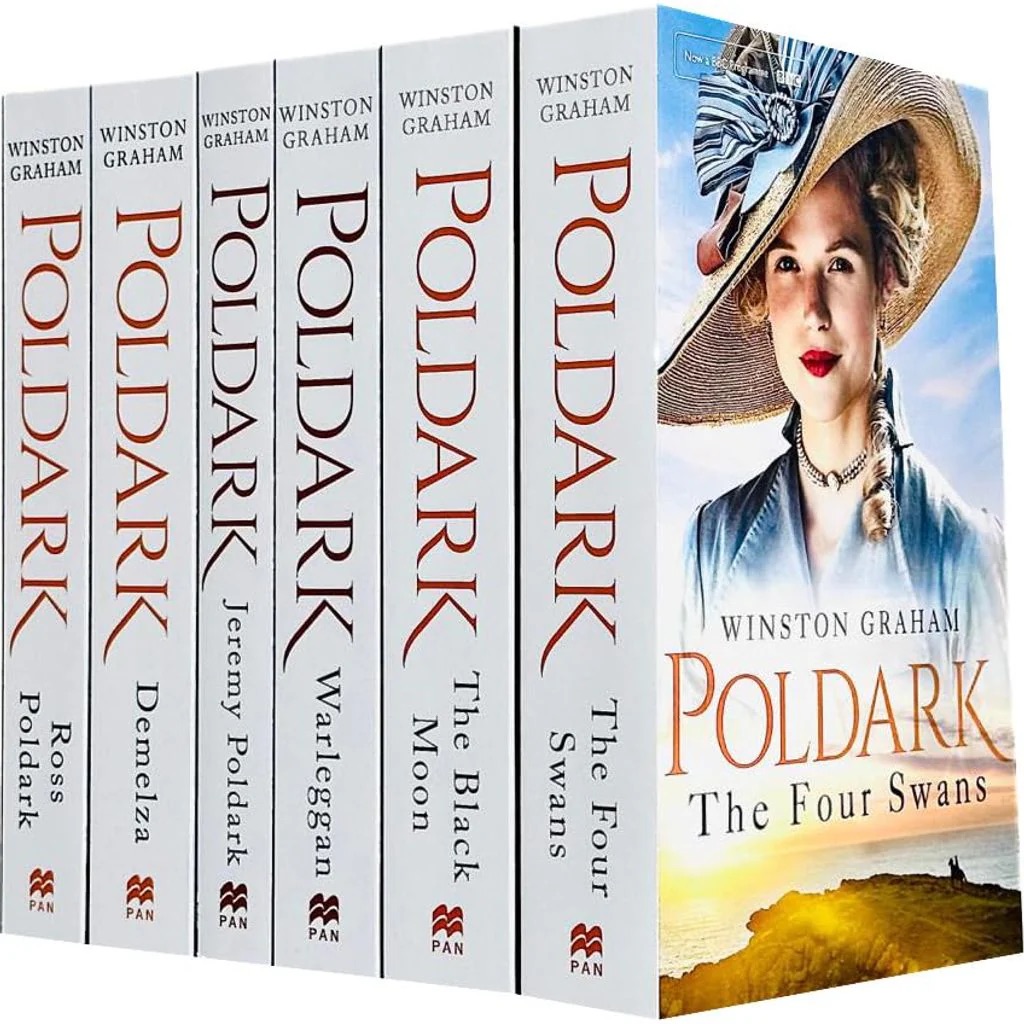
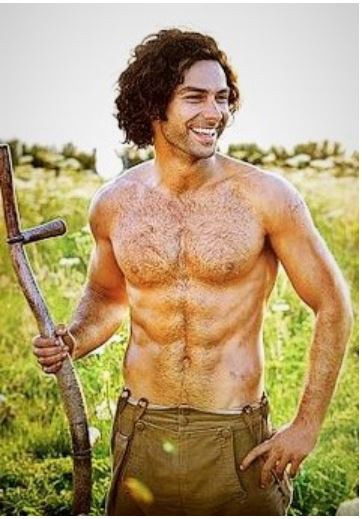
The Poldark novels had a resurgence and series of new editions thanks to the new BBC series which dominated Sunday nights and starred Aiden Turner as Ross Poldark and Eleanor Tomlinson as his wife Demelza. They begin in the late eighteenth century as Poldark returns from the American Revolutionary War to his home county of Cornwall and the Poldark house and land. Things have changed since he left. His father is dead and the copper mine is failing. His sweetheart Elizabeth has become engaged to Ross’s cousin George and they will be living at Trenwith with Ross’s grandmother. There are differences between the books and the TV series. Demelza is actually a child when Ross first meets her and he takes her to be one of the staff at the smaller farm estate of Nampara. There are ten years in age between them and it’s only when she’s an older teenager that their relationship changes – in the series he brings her as an adult and marries her very quickly, much to the disgust of his parish. I think the books are grittier than the tv series, with the main characters having more complexity and actually doing things we might not like. Ross particularly has more ambiguity, a good man when it comes to his workers and his politics but not such a great husband. The abuse and rape suffered by Morwenna in the marriage forced by Warleggan hits harder. The series really deviates after book three with no exploration of the children as they grow up and the terrible grief they go through as parents. I think the series wanted to paint Ross and Demelza as a love story with a happy ending after a tough period following infidelity, but in the books life goes and Ross’s rivalry with George Warleggan still continues, even when they’re older men. I think the books give more of that historical background, particularly with the backdrop of war and later the Industrial Revolution. It’s almost as if the series is the tourist’s view and the books place the characters more firmly in their time period.
For those of you missing Aiden Turner as Ross.
Mysteries and Thrillers
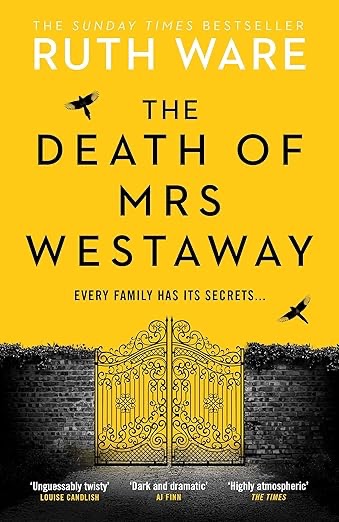
When I read a more recent Ruth Ware thriller I went back to some of her earlier books and I inhaled this in two sittings. We follow Harriet Westaway as she receives an unexpected letter telling her she’s inherited a substantial bequest from her Cornish grandmother. Could this be the answer to her prayers?
There’s just one problem – Hal’s real grandparents died more than twenty years ago. Hal considers her options, she desperately needs the cash and makes a choice that will change her life for ever. She knows that her skills as a seaside fortune teller could help her con her way to getting the money and once Hal embarks on her deception, there is no going back. This keeps you on tenterhooks from the minute Hal arrives at Trespassen House in Cornwall and there is that hint of Daphne du Maurier in the family estate and the mystery that plays out. Hal is also placing herself in a wholly different family and social class. Her upbringing may have been short on money, but it was never short on love. The tragic death of her mother Maggie was only three years ago and it catapulted Hal into adulthood but the Westaway family don’t hold the same values. They do have secrets though, ready to drop out of every closet. She is the outsider here, totally out of her depth and the wild coastline, storm porch and St Piran’s Church place this firmly in Cornwall. This family may have money and privilege but they don’t have the love or care for each other that Hal is used to, she will have to use her skills of perception and discernment honed by years of tarot reading. The remoteness of Trespassen and lack of internet signal add to the Gothic feel of this novel and there is even a Mrs Danvers mentioned. This is a great thriller with plenty of clues but a lot of red herrings, so you must be prepared for surprises.
Tamsyn is as local as it getsin their Cornish village. Her grandfather worked the tin mines, her father was a lifeboat volunteer alongside his work, but her brother is struggling to find work that’s not seasonal. Tamsyn’s attachment to The Cliff House to a beautiful coastal property just outside her village comes to a head in the summer of 1986. To her, the house represents an escape, a lifestyle that’s completely out of range for her and represents the perfect life. It’s also her last link to her father, who brought her here to swim in the pool when he knew the owners were away. Her father felt rules were made to be broken and they both considered it madness to own such a slice of perfection overlooking the sea yet rarely visit except for a few weeks in the summer. Now he’s gone, Tamsyn watches the Cliff House alone and views it’s owners, the Davenports, as the height of sophistication. Their life is a world away from her cramped cottage, her Granfer’s coughing into red spattered handkerchiefs and their constant struggle for money.
Tamsyn’s family are firmly have nots. Her hero father died rescuing a drowning child and now she has to watch her mother’s burgeoning friendship with the man who owns the chip shop. Her brother is unable to find steady work, but finds odd jobs and shifts where he can, to put his contribution under the kettle in the kitchen. Mum works at the chip shop, but is also the Davenport’s cleaner. She keeps their key in the kitchen drawer, but every so often Tamsyn steals it and let’s herself in to admire Eleanor Davenport’s clothing and face creams and Max’s study with a view of the sea. Yet, the family’s real lives are only a figment of her imagination until she meets Edie. When Tamsyn finally becomes involved with the Davenports she gets to see the reality of a family bathed in privilege. As we try and work out Tamsyn’s motivations, she seems blind to the problems and ticking time bomb at the centre of the family. Or is she more perceptive than we think? This is a great thriller with disturbing family dynamics and an interesting tension between second homers and those who live in Cornwall all year round and struggle to own a home. The rugged cliffs and raging sea are a beautiful, dangerous and fitting backdrop to this tension.
Another book highlighting the dangerous beauty of the Cornish coast is Jane Jesmond’s first thriller On The Edge. I was thoroughly gripped by this tense thriller set in Cornwall concerning Jenifry Shaw – an experienced free climber who is in rehabilitation at the start of the novel. She hasn’t finished her voluntary fortnight stay but is itching for an excuse to get away when her brother Kit calls and asks her to go home. Sure that she has the addiction under control, she drives her Aston down to her home village and since she isn’t expected, chooses to stay at the hotel rather than go straight to the family home. Feeling restless, she decides to try one of her distraction activities and goes for a bracing walk along the cliffs. Much later she wakes to darkness. She’s being lashed by wind and rain, seemingly hanging from somewhere on the cliff by a very fragile rope. Every gust of wind buffets her against the surface causing cuts and grazes. She gets her bearings and realises she’s hanging from the viewing platform of the lighthouse. Normally she could climb herself out of this, most natural surfaces have small imperfections and places to grab onto, but this man made structure is completely smooth. Her only chance is to use the rapidly fraying rope to climb back to the platform and pull herself over. She’s only got one go at this though, one jerk and her weight will probably snap the rope – the only thing keeping her from a certain death dashed on the rocks below. She has no choice. She has to try.
My heart was racing during the opening of this novel and I was so hooked I read it in one sitting. The sense of place was incredible. The author conjured up Cornwall immediately with her descriptions of the tin mine, the crashing sea on the cliffs and fog on the moors. I recognised the sea mist that seems to coat your car and your windows. The weather was hugely important, with storms amping up the tension in the opening chapters and the fog of the final chapters adding to the mystery. Will we find out who is behind the strange and dangerous events Jen has uncovered or will it remain obscured? Cornwall is the perfect place to hide criminal activity, hence the history of smuggling and piracy, so why would it be any different today? Has the cargo changed? I loved that the author wove modern events and concerns into the story, because it helped the story feel current and real. The concerns around development and tourism are all too real for a county, dependent on the money tourism brings, but trying to find a balance where it doesn’t erode the Cornish culture. Local young people are priced out of the property market completely. This is a great combination of setting and edge of your seat thriller, with a character as wild as the coastline.
Family Sagas
This book makes me nostalgic for the times I’ve spent in Cornwall. It also makes me want to go on RightMove and look for a little shop I can turn into a bookshop and writing therapy centre. Enough of my daydreams. I think this is one of those books that modern readers avoid because the covers have been too feminine and floral, marking it out as a romance when really it’s a family drama ( i want to use the word sweeping when I think about). Penelope is elderly and while she is recovering from a heart attack she thinks about the years she spent in Cornwall. What follows is the story of a family—mothers and daughters, husbands and lovers—and the many loves and heartbreaks that have held them together for three generations. It’s a magical novel, giving the kind of reading experience you can get swept away in for hours. Penelope prized possession is The Shell Seekers, painted by her father. It seems to symbolise her unconventional life, from her bohemian childhood to WWII romance. When her grown children learn their grandfather’s work is now worth a fortune, each has an idea as to what Penelope should do. But as she recalls the passions, tragedies, and secrets of her life, she knows there is only one answer…and it lies in her heart.
One of my favourite places in the world is Watergate Bay and I feel energised just by standing on that beach and feeling the sea spray hit my face. This book gave me the same feeling because you can feel Pilcher’s love for Cornwall throughout. It also made me grateful for a family who don’t care about money, just about love. This is a fabulous holiday read so don’t be put off by the cover.
In Kate Morton’s second novel she takes us through a family’s history with Gothic undertones, contrasting the beautiful setting of Cornwall with 19th Century London. It covers three timelines over three generations of women, all caught up in one compelling mystery.
Once, a little girl was found abandoned after a gruelling sea voyage from England to Australia. She carried nothing with her but a small suitcase of clothes, an exquisite volume of fairy tales and the memory of a mysterious woman called the Authoress, who promised to look after her but then vanished. Years later, Nell returns to England to uncover the truth about her identity. Her quest leads her to the strange and beautiful Blackhurst Manor on the Cornish coast, but its long-forgotten gardens hide secrets of their own. Now, upon Nell’s death, her granddaughter, Cassandra, comes into a surprise inheritance: an old book of dark fairy tales and a ramshackle cottage in Cornwall. It is here that she must finally solve the puzzle that has haunted her family for a century, embarking on a journey that blends past and present, myth and mystery, fact and fable. I am lucky enough to have a new edition of this book to read with my Squad POD next month so look out for my review.
Historical Fiction
My mum was a huge fan of D.H.Lawrence’s books so this book jumped out at me in a second hand bookshop. It’s Helen Dunmore’s first novel published in 1993. Set in the coastal village of Zennor, this covers the time that D.H.Lawrence and his German wife, Freida, laid low during the First World War. In the spring of 1917, at a time when ships were being sunk be U-boats, coastal villages were full of superstition. The Lawrence’s were hoping to escape the war fever in London and chose Cornwall. There, they befriend Clare Coyne, a young artist struggling to console her beloved cousin, John William, who is on leave from the trenches and suffering from shell-shock.
Yet the dark tide of gossip and innuendo is also present in Cornwall, meaning Zennor neither a place of recovery nor of escape. Freida and Lawrence are minor characters, with the main story focused on Clare and suspicions about her relationship with her cousin. Helen is adept at bringing people from history back to life, filling them with emotions and preoccupations that are familiar to us. The Cornish coast is vividly described with its fishing industry, craggy inlets and secret beaches providing a wonderful backdrop to the atmosphere of suspicion especially with the their smuggling history. She captures the claustrophobic feel of a small village where everyone knows each other and incomers are kept at a distance. She also captures how lonely it can be to move into such a close knit community and how lives can be ruined by assumptions.
Caroline Scott’s book is set in the aftermath of WWI in the summer of 1923. Esme Nicholls is drawn into spending the summer in Cornwall, close to Penzance which was the birthplace of her husband. Alec died fighting in the war and she’s hoping to spend some time learning more about the man she fell in love with and lost too soon. She’s been invited to stay in the home of her friend Gilbert, as a potential retreat for the lady she works for, Mrs Pickering. He inherited the rambling seaside house and has turned it into a recovery centre of sorts. All residents are former soldiers, expressing themselves through art or writing. She is nervous to be the only woman, but soon gets to know the men and their stories. They give her insight into what Alec may have experienced and that’s exactly what she needs.
However, this summer retreat is about to change as a new arrival brings with him the ability to turn Esme’s world upside down. She will soon be questioning everything about her life and the people in it. Cornwall is an idyllic backdrop to the story and a huge factor in the recovery and the creative work of these men. Esme’s growing friendships are beautifully drawn and as always I was emotionally invested in her characters. I loved how her relationship with Mrs Pickering softened from being a professional companion to friendship. I also enjoyed her growing closeness to Rory and Hal. They all help with her grief and the shock of this new guest. But as always, holidays come to an end, leaving Esme with huge choices to make.
My Favourite
I first read this wonderful novel when I was a teenager, captured by the romance at the centre of the novel. Then the backdrop really started to sing out to me, especially when I started to regularly visit Cornwall around twenty years ago. Lastly it was the history aspects to the latter parts of the story with our characters caught up in English Civil War and Cornwall’s unique role, both geographically and as staunch Royalists. It’s fair to say that the book wasn’t well received at first, especially after the instant success of Rebecca and My Cousin Rachel. This takes a similar romantic narrative but weaves in the history of a Cornish house that would eventually become her home, Menabilly on the Gribben peninsula near Fowey. At the time of starting her new book it had been owned by the Rashleigh family for over 400 years. Daphne would visit and talk to them about using the house and they told her a story about building work they were having done when builders found a bricked up room housing the skeleton of a Cavalier. She decided to write this real life mystery into the novel wanted to write, when she finally and inevitably overcame their objections.
Her decision to record historical facts truthfully could have been the book’s undoing. The history of the Royalist cause in Cornwall is convoluted and confusing and there’s a large background cast of related Cornish families. I think she wanted to remain faithful to the Cornish cause and be seen to include real Cornish people, but the reader could be forgiven for struggling with them, many names are similar and the intricacies of intermarriage sometimes make the plot hard to follow. Cornwall did declare for the King and our hero Richard Grenvile is the grandson of Sir Richard Grenville who fought the Spaniards in the Azores. He is depicted as flamboyant, with an incredibly fiery temper, but he can be very charming and as time and experience show, he is incredibly loyal. Our heroine Honor Harris is the character I fell in love with possibly because of the fact she’s always reading and is a bit wild. She is absolutely swept off her feet by the man she meets in the family orchard, while sitting in her reading place up in an apple tree. Luckily her hiding place is just big enough for two. Richard is older, a seasoned soldier with wars on the Continent and Ireland under his belt. He is known as ruthless with a terrible reputation. However, he and Honor fall in love. Only a day before their wedding, Honor goes hunting with Richard and his sister. He calls back to warn her about a ravine but his call is lost on the wind and she falls down the precipice. She is then paralysed from the waist down. I think this is possibly why I fell in love with the book, having had my own accident when I was eleven. I had two fractures and a crushed disc, but luckily my spinal cord wasn’t affected. I didn’t finish primary school but returned to start secondary school in the autumn. It has given me problems ever since. It was wonderful to read a character who had a disability but whose fiancé still loved and wanted to marry her, at a time when I was starting to look at boys a little differently.
Despite Richard’s promises, Honor knows she can’t fulfil the role of an army officer’s wife. She decides to let Richard go and gives him her blessing to find someone else. She still follows Richard’s exploits as he moves through Cornwall trying to turn the Royalist sympathisers into an effective fighting force. The Cornish aristocracy have the hereditary right to become fellow commanders, although he finds them incompetent and at times cowardly. Honor has a wheelchair made by her brother, which allows her some movement and at times she manages to support and actually assist Richard. Their love for each other never seems to fade and I enjoyed the romantic aspects of the novel. Their relationship is the spark that lights up this novel, even more so now that I am a wheelchair user at times. I was impressed by how intrepid and determined Honor is and that Daphne wrote a disabled heroine in the 1940s. A couple of years ago, on my honeymoon, I went to Fowey and the Daphne du Maurier bookshop and bought a first edition of the novel for my collection. My old copy was falling apart from re-reading, but I also wanted to own such an important copy of my favourite Cornish novel.