Doesn’t that sound completely enchanting? A lighthouse bookshop. Years ago on holiday near Hexham, I was standing outside in the twilight watching bats when I noticed a steady flashing white light in the distance. Between us friends we discussed what it might be and without really thinking I said ‘ is it the lighthouse?’ A male friend, somewhat scornfully, said ‘not unless it’s an inland lighthouse.’ I vowed from that moment to write a children’s book about a girl who builds an inland lighthouse as a metaphor for all those ideas women have that get shot down by men. I even wrote a quick version in my writing journal. This week I’m still recovering from a series of neurotomy procedures in my back and I wanted something to read that was easy to get into, where I’d be taken into a different place and community and be charmed. I should have known to go for Sharon Gosling, whose books set in a beautiful and remote corner of Scotland are always diverting with characters you can get attached to. Here we meet Rachel, who runs an extraordinary bookshop in Newton Dunbar built on the side of a hill miles away from the sea. Owned by elderly resident Cullen, it was designed as a library back in the 18th Century by one of Cullen’s ancestors James Macdonald. Rachel took on the job of looking after the bookshop several years ago and lives in the charming but tiny accommodation upstairs. Yet, life never stays the same for long and new people start to come into Rachel’s comfortable world; young, homeless girl Gilly and investigative journalist Toby, who’s recovering from a traumatic incident where he was shot. Yet these aren’t the only changes coming Rachael’s way as she loses someone close to her and makes an incredible discovery.
Gosling’s characters, particularly the women, are so well created and intriguing. Most have interesting and complex pasts that unravel as we go along with the main story. Gilly is a resourceful, but scared and closed-off teenager. She’s been sleeping in a tent in nearby woodland, until local developer and villain of the piece Dora McCreedy comes along. She finds the tent on her land and instead of allowing Gilly to move on, she takes a knife to the only thing keeping Gilly from the elements. As both Rachel and local artist Edie start to become closer to the girl, they begin to wonder what has sent this girl running and how can they help without sending her scurrying for the hills. Rachel realises more than most that it’s a tentative friendship growing between them, Gilly can’t be rushed into accepting help and they must take it at her pace. She knows this because it’s only five years since she turned up in a camper van and Cullen took her under his wing. She never talks about her past and while the friends she has made in the village ask no questions, Toby’s instinct is to root out the truth. Will he be able to resist digging, while helping research the library’s history and what might his discoveries mean for Rachel and their friendship? Edie was my favourite character. A rather irascible and formidable lady in her sixties who makes a living from her art, creating prints of the lighthouse and beautiful countryside surrounding the village. Edie has a natural elegance and a rather no nonsense manner, especially when it comes to neighbour Ezra and his marauding goat. I loved the relationship she builds with Gilly and the ‘will they – won’t they’ romance she’s embroiled in.
As you might realise from my opening, the plot based around the lighthouse’s history was really interesting to me and I loved how the mystery unfolded as Rachel found a hatch to the top level of the lighthouse. She finds it never had a light, but it did have a purpose that takes her and Toby back to James McDonald and the tragic love story passed down about his wife. Eveline is known as another madwoman in the attic, a woman who descends into madness and burns down their mansion. Using old documents in a local archive as well as finds from the gatehouse where Cullen lived, they start to piece together the true history of a couple trying to get over the worst loss they could ever experience. All this in the midst of a land grab by Dora McCreedy who would level the tower in order to make an access road for her residential development and the true heir to the McDonald’s fortune deciding whether or not to sell. It’s tense and while Toby desperately looks for a way to preserve the bookshop and Rachel’s home. The conclusion is satisfying, romantic and left me with a smile on my face. Exactly what the doctor ordered.
Published 18th August 2022 by Simon and Schuster U.K.
Meet The Author
Sharon started her writing career as an entertainment journalist, as a reviewer of science fiction and fantasy books. She went on to become a staff writer and then an editor for print magazines. Her beginning in books was as a writer of non-fiction ‘making-of’ books tied in to film and television including The Art and Making of Penny Dreadful and Wonder Woman: The Art and Making of the Film. Sharon now writes both children’s and adult fiction – her first novel was called The Diamond Thief, a Victorian-set steampunk adventure book for the middle grade age group, which won the Redbridge Children’s prize in 2014. She wrote two more books in the series before moving on to other adventure books including The Golden Butterfly, which was nominated for the Carnegie Award in 2017, The House of Hidden Wonders, and a YA horror called FIR, which was shortlisted for the Lancashire Book of the Year Award in 2018.
Her debut adult novel was published by Simon & Schuster in August 2021. It was called The House Beneath the Cliffs, set in a very small coastal village in Scotland. Her adult fiction tends to centre on small communities – feel-good tales about how we find where we belong in life and what it means when we do. You can find my review of this novel in the archive. Sharon lives in a small village in northern Cumbria with her husband, who owns a bookshop in the nearby market town of Penrith.
Lizzy’s last novel was a great modern romantic comedy that, thanks to it’s main character, managed to avoid being too schmaltzy and sentimental. It also contained a healthy dose of self-discovery and self-love for a young woman who was low in confidence and used to drifting in life. In The SetUp she’s done it again. Mara is just the sort of quirky and unsure girl that readers fall in love with and I did. Being in my late forties, Mara reminded me of a time I wasn’t sure of myself and I mostly wanted to give her some hope and a big motherly hug. We meet Mara as she’s leaving for a weekend in Prague with her best friend Charlie. This is going to be real quality time for them, something that’s been difficult to get organise since her friend became a Mum. Everything in her friend’s life has changed and while Mara is pleased for her, she can’t help but feel pushed out. Charlie’s going through a whole raft of life experiences that Mara simply can’t identify with or share. The holiday is an attempt to get their friendship back on track so she’s terribly disappointed when Charlie cancels at the last minute. So Mara is in Prague alone and while wandering one day she sees a sign for palmistry and fortune telling. Mara is astrology mad, often reading her daily horoscope first thing in the morning. So on a whim she decides to have her fortune told. There is a change on the horizon, the fortune teller explains, a tall and dark man will literally walk into her life imminently. This is everything Mara has wanted to hear and she’s still digesting the news when the fortune teller explains she has to run, even leaving the keys for Mara to lock up. Within seconds the door opens and in walks a tall, dark and handsome musician called Josef, all set to play cello in the nearby concert hall. He asks for his fortune and who is Mara to object? She wants to get to know him better, because this might be her ‘one’. So she gives him a very specific fortune – when he comes to play in England later that year he will meet a woman called Mara in the pub on the seafront at Broadgate and she is his destiny.
Mara has been drifting through life. After knowing what she wanted to do from an early age and doggedly followed her dream of going to film school. She now has an encyclopaedic knowledge of classic cinema and rom-coms too of course. She even has a little card index of all the films she’s seen, because she loves nothing better than showing one of them to someone who’s never seen it before. She completed almost three years of her degree course, when a lack of confidence and blind love and trust for someone proved to be a toxic combination. She thought that he was the one. He thought he knew more about film than Mara, because he had the more serious taste, for art house cinema. As they worked on their final project together, Mara was envisioning them being a great team and she was proud of her script about a taxi driver falling in love with a passenger. All was well until Mara heard what her boyfriend really thought, both of her and her work. Then to add to her broken heart, he stole her film. Unable to stick up for herself and claim the work as her own, instead she packed her bags and left university for good. Now living in sunny Broadgate, on the south coast, Mara is trying to make friends with her work colleagues at the town’s 1930’s lido. Directly on the sea front, the lido is a great example of Art Deco architecture but isn’t used nearly enough by the people of the town. Mara is full of ideas, but it’s whether her boss will agree to them. Every idea she puts forward seems to be blocked or put on the back burner to think about at a later date. Mara senses there is more to this than mere apathy and starts investigating. To improve her finances she advertises for a new roommate and is gratified to find Ash, a local handyman/ builder who is keen to make friends, but also help her revamp the flat. Finally and to add to her new found enthusiasm for work, she decides on a bold new look at the hair salon too. When Josef arrives in the autumn every aspect of her life is going to be perfect.
I’m guessing that Lizzy Dent is placed within ‘women’s fiction’ or categorised as modern romance, two descriptors that critics can be sniffy and superior about. I think this book is the very best of it’s genre and isn’t simply a romance, at least not the conventional sort. What I enjoyed most about this book was the transformation of Mara, from her new look and the confidence it brings, to the inner growth that becomes wisdom and really transforms her outlook on life. As Mara works on the big anniversary project for the lido she starts to appreciate her new home town and the history of the incredible Art Deco building where she works. The excitement about her work brings her closer to her colleagues and they start to really bond as friends, in fact it is Samira from work who recommends a hairdresser to give Mara’s look an overhaul. She starts to appreciate their quirks and their work skills. In turn they are impressed by Mara’s ideas and enthusiasm and their appreciation gives her confidence professionally. The negative voice that was once a constant narrator in her mind, becomes quieter, allowing a stronger, more nurturing voice to develop. I was desperate for this little team to triumph and save such a unique landmark for their community.
Romantically, Mara isn’t remotely self-aware. She believes in fate, destiny and ‘the one’ – a viewpoint that her new roommate Ash finds hilarious. He doesn’t believe there’s a ‘one’ or a specific destiny awaiting him. I loved his common sense approach to life and love. He tries to get Mara to see that Josef is merely a fantasy and the likelihood of him turning up is very slim. He wants Mara to grab hold of life and to make choices for herself: pursue things that make her happy; wear things that make her confident and comfortable; improve her relationship with the family she seems to have cut out of her life. The author keeps us guessing over what will come next for Mara and I wanted to carry on reading straight through in one sitting to find out. I became so invested in her as a character and Ash is so loveable too, the sort of man I just know gives the best hugs. The depiction of female friendships is so positive and true to life. I haven’t had children and only became a stepmum at the age of 46, so I felt that distance when my friends became mums like Charlie. I had to learn how much they needed new friends who were going through the same thing, but they needed their old friends to hang in there just as much. I loved the last minute twist to the tale that forces Mara to make a choice, between the destiny and romantic fantasy of the old Mara and the more confident and certain Mara, able to make her own choices with conviction rather than leaving the universe to decide on her behalf.
Published by Viking 9th June 2022
Meet The Author
Lizzy Dent (mis)spent her early twenties working in a hotel not unlike the one in her first novel, The Summer Job. Soon to be a TV series! She somehow ended up in a glamorous job travelling the world creating content for various TV companies, including MTV, Channel 4, Cartoon Network, the BBC and ITV. She writes about women who don’t always know where they’re going in life, but who always have fun doing it. The Setup is her second novel.
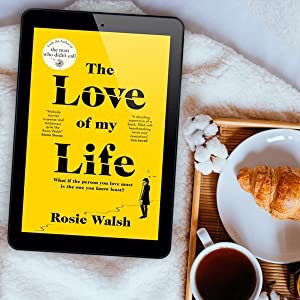
This is only Rosie Walsh’s second novel, but she’s established herself as one of those authors. Authors who draw you in, leave you wondering what the hell is going on, then pull the rug from under you by turning everything on it’s head. She’s also brilliant at building complex characters, the sort that stay with you. I know that Emma will stay with me for a long time. Emma is an academic, married to Leo and mum to three year old Ruby. Her field of study is the creatures that are brought in by the tide and then swept out again, her claim to fame was finding a new mutation of a Japanese crab. This took her through her masters and eventually resulted in a TV series. Leo adores Emma and the feeling is mutual, but things have been tough lately as Emma has had cancer. Leo is an obituary writer at a newspaper and because Emma was a TV personality the department was writing a ‘stock’ – an obituary they keep on file just in case. Leo asks if he can add some notes that he’d been writing and it’s here that Leo notices something wrong. Emma didn’t graduate from the university she said she did. It’s a minor thing, but along with a lot of messages from very odd male fans and her ‘disappearing times’ when she takes herself away to get her head straight, Leo’s mind is running through hundreds of scenarios. He can’t believe Emma would have an affair, but it’s the simplest explanation. He keeps digging and will have to confront her with what he’s found. Emma is becoming anxious, especially when he starts asking questions. How can she convince him that the life they’ve had together and the love she has for him is true? When everything else has been a lie.
I don’t know any other author who so beautifully combines a tender love story with aspects of a domestic thriller. Usually doubt is cast on the central relationship to such a degree that the reader stops rooting for them. Here I was really confused, because I believed in Leo and Emma. Each character felt so real and they were easy and comfortable together. When we flashed back to their marriage proposal it was probably the wrong moment, rushed and definitely not Insta-ready, but it was touching and honest. I really felt Emma’s eagerness to be with Leo. I couldn’t believe she would then have an affair, but the evidence did point that way. As the truth started to come out I felt so emotional for this young woman, who really had no one left to help her make good choices once she’d lost both parents. No one is harder on Emma than she is on herself and it was sometimes sad and painful to be in her head. I thought the author used the landscape beautifully and knowing Alnmouth well, I could see how it’s cottages and incredible view of the sea would soothe the mind. Although I’ve also been therein the midst of a storm and as the waves lashed against the rocks and driving rain set in, it was very inhospitable. I think this shows the extremes of Emma’s mood as she’s gone through her life, dealing with very deep lows and then sunny, enthusiastic highs.
Her house in Hampstead Heath, which was her grandmother’s, gives us some indication of how her mind feels. She’s never sorted through her grandmother’s things, so is living a new life cluttered with reminders of the past. She feels safe there, it’s possibly the only place she ever has. Leo is coming from a solid background. I loved his relationship with his brother and it’s likely he’s never felt truly lost and alone. Rosie Walsh has created a very rare novel and engrossing novel. So much so that every time I was away from Leo and Emma’s story I longed to back home with my book. She’s packed her book full of twists and turns, but with so much tenderness and love it never fully veered into domestic noir. Despite her secrets and lies, I never stopped wanting Emma to be with Leo and her little girl. I came away feeling that we never truly know another person’s journey, but we can empathise and try to understand. Emma’s mistake was thinking Leo wouldn’t love her if he knew the truth, but maybe she has underestimated the depth of that love.
Published on 23rd June 2022 by Mantle
Meet The Author
Rosie Walsh is the internationally bestselling author of two novels, the global smash hit THE MAN WHO DIDN’T CALL, and – new for 2022 – THE LOVE OF MY LIFE, a heart-wrenching, keep-you-up-all-night emotional thriller, which was an instant New York Times bestseller and stayed in the German top ten for several weeks.
Rosie Walsh lives on a medieval farm in Devon, UK, with her partner and two young children, after years living and travelling all over the world as a documentary producer and writer.
The Man Who Didn’t Call (UK) / Ghosted (US) was her first book under her own name, and was published around the world in 2018, going on to be a multimillion bestseller.
Prior to writing under her own name she wrote four romantic comedies under the pseudonym Lucy Robinson. When she isn’t parenting or writing, Rosie can be found walking on Dartmoor, growing vegetables and throwing raves for adults and children in leaking barns.
Evie Del Rio was the one, as far as Ed Nash was concerned.
Their teenage love was the inspiration for his song ‘Used to Be’ and helped Ed’s indie band, The Mountaineers, to international fame.But when Evie and her family suddenly up sticks and leave their London home without a forwarding address, she leaves a heartbroken Ed behind too.
Over thirty years later, washed up rocker Ed is suddenly back in the limelight when Evie’s love song is used as the theme tune for a new TV drama. Once the song is later featured on TV documentary ‘Musical Muses: The Girl in the Song’ it’s suddenly not just Ed who’s asking…
What happened to Evie Del Rio?
As a child of the 90’s I loved how this book opened with teenager Cassie finding out her mum is the inspiration behind one of the songs of the decade. Thanks to the 90’s becoming all the rage and an inspiration for TV, ‘Mum’s Song’ as Cassie and her brother now call it, is having a resurgence. Written back when her mum and musician Ed Nash were dating in the 1980’s, it wasn’t released until his band The Mountaineers produced their debut album ten years later. Now it’s one of the most downloaded songs of 2018. Cassie thinks the song isn’t bad, but the lyrics that have graced many a wedding become a bit cringe when you realise they’re about your Mum. As a teen I dreamed of meeting Damon Albany, who of course would fall madly in love with me and I would become his muse. So there was an element of nostalgia and wish fulfilment drawing me in from the first page.
Then we see the same situation from Genie’s point of view. Genie is Cassie’s mum and was once Evie Del Rio. Now she’s Genie, mum of two and with ‘a lovely big hunk of a husband’ called Gray. I was intrigued by what had made Evie’s family leave London all those years ago. Along with the change of name, there seemed to be something more going on than avoiding embarrassment over a song and a long ago romance with a rock star. Son Will is really taking the brunt of his mum’s newfound notoriety. Even adults think Genie was some sort of sex kitten and teenage boys don’t hold back. They chant about how many pop stars his mum has shagged on the football field, well they did until he broke someone’s nose. Yet Ed keeps blithely on, talking about his relationship with Evie and the origin of the song. Genie says he’s embellishing, but something about that time clearly gets under her skin. As we travel back and forth to Genie’s teens, when she’s still Evie, we slowly see more of their story revealed and secrets emerge that have been kept for a long time.
I thought this was an interesting idea for a book and as a middle aged stepmum to teenage girls I loved the idea of them getting an insight into the past. Imagine suddenly finding out that the person they see every day was once as exciting and full of promise as they are now. The multiple perspectives kept my interest, because it showed how the situation affects different members of the family. I loved Genie’s husband Gray, a lovely, solid and reliable anchor in a difficult time for his family. There are sensitive issues, but they are handled with care and empathy. I would recommend this nostalgic read, full of endearing characters and with a central mystery that unfolds slowly and with sensitivity.
Published by Cahill Davies 8th July 2022
Meet the Author
I’ve always enjoyed the written word and I have a great passion for music so I decided to put the two together and the result is my debut novel ‘What Happened to Evie Del Rio?’
I like to think I’m enjoying my ‘middle youth’ rather than my ‘middle age’. I’m married and Mum to two sons and a black rescue cat called Hector.
I enjoy going to gigs and discovering new music. I also love reading women’s fiction but I do have a bit of a penchant for crime and psychological thrillers! If I’m not on social media, reading or listening to music then you will probably find me on a football pitch cheering on my youngest son and his team.
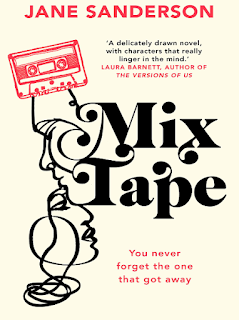
Jane Sanderson’s new novel, Waiting For Sunshine, is on my most anticipated list for the summer. So it’s a great time to look back on her previous work and MixTape really resonated with me. I loved this book. Is it because I had a Dan? A musician who started as my best friend, but who I fell in love with. I was 18 and he took me to my first prom. His band were playing and it was 1991 so perms were everywhere and we were just adopting grunge. I would turn up for school in jumble sale floral dresses with my ever present oxblood Doc Martens. They played some of my favourite songs on prom night: some that were contemporary like Blur and others were classics like Wild Thing. I most remember Waterloo Sunset. Then, like a scene in a rom-com we walked across town to his house – me in a polka dot Laura Ashley ball gown and him in his dinner suit with the bow tie undone. He had a ruffled shirt underneath that he’d bought from Oxfam. We crept into the house and into the playroom so we didn’t wake any of his family, then watched When Harry Met Sally. I remember a single kiss and then we fell asleep but the love carried over the years.
When I think of Elliot I always think of those best friend couples, like Harry and Sally or later, Emma and Dex in One Day. Now I can add Dan and Ali to the list. Alison and Dan live in Sheffield in the late 1970s when the city is still a thriving steel manufacturer. Dan is from the more family friendly Nether Edge, while Alison is from the rougher Attercliffe area, in the shadow of a steel factory. They meet while still at school and Dan is transfixed with her dark hair, her edge and her love of music. Their relationship is based on music and Dan makes mix tapes for her to listen to when they’re not together such as ‘The Last Best Two’ – the last two tracks from a series of albums. What he doesn’t know is how much Alison needs that music. To be able to put it on as a wall of sound between her and her family. Dan never sees where she lives and doesn’t push her, he only knows she prefers his home whether she’s doing her homework at the kitchen table, getting her nails painted by his sister or sitting with his Dad in the pigeon loft. Catherine, Alison’s mum, is a drinker. Not even a functioning alcoholic, she comes home battered and dirty with no care for who she lets into their home. Alison’s brother, Pete, is her only consolation and protection at home. Both call their mum by her first name and try to avoid her whenever possible. Even worse is her on-off lover Martin Baxter, who has a threatening manner and his own key. Alison could never let Dan know how they have to live.
In alternate chapters we see what Alison and Dan are doing in the present. Now a music writer, Dan splits his time between a canal boat in London and home with his partner Katelin in Edinburgh. Alison has written a new novel ‘Tell the Story Sing the Song’ set in her adopted home Australia and based round an indigenous singer. It’s a worldwide hit and she finds herself in demand, having to negotiate being interviewed and getting to grips with social media. She has an affluent lifestyle with husband Michael and has two grown up daughters. She has a Twitter account that she’s terrible at using and it’s this that alerts Dan, what could be the harm in following her? The secret at the heart of this book is what happened so long ago back in Sheffield to send a girl to the other side of the world? Especially when she has found her soulmate. She and Dan are meant to be together so what could have driven them apart? Dan sends her a link via Twitter, to Elvis Costelloe’s ‘Pump It Up’, the song she was dancing to at a party when he fell in love with her. How will Alison reply and will Dan ever discover why he lost her back in the 1970s?
I believed in these characters immediately, and I know Sheffield well, here described with affectionate detail by the writer. The accent, the warmth of people like Dan’s dad, the landmarks and the troubled manufacturing industry are so familiar and captured perfectly. Even the secondary characters, like the couple’s families and friends are well drawn and endearing. Cass over in Australia, as well as Sheila and Dora, are great characters. Equally, Dan’s Edinburgh friend Duncan with his record shop and the hippy couple on the barge next door in London are real and engaging. Special mention also to his dog McCullough who I was desperate to cuddle. Both characters have great lives and happy relationships. Dan loves Katelin, in fact her only fault is that she isn’t Alison. Alison has been enveloped by Michael’s huge family and their housekeeper Beatriz who is like a surrogate Mum. It’s easy to see why the safety and security of Michael’s family, their money and lifestyle have appealed to a young Alison, still running away from her dysfunctional upbringing. She clearly wants different fir her daughters and wishes them the sort of complacency Dan shows in being sure his parents are always there where he left them. But is the odd dinner party and most nights sat side by side watching TV enough for her? She also has Sheila, an old friend of Catherine’s, who emigrated in the 1970s and flourished in Australia. Now married to Dora who drives a steam train, they are again like surrogate parents to Alison. So much anchors her in Australia, but are these ties stronger than first love and the sense of belonging she had with Dan all those years before?
About three quarters of the way through the book I started to read gingerly, almost as if it was a bomb that might go off. I’ve never got over that unexpected loss in One Day and I was scared. What if these two soulmates didn’t end up together? Or worse what if one of them is killed off by author before a happy ending is reached? I won’t ruin it by telling any more of the story. The tension and trauma of Alison’s family life is terrible and I dreaded finding out what had driven her away so dramatically. I think her shame about her mother is so sad, because the support was there for her and she wouldn’t let anyone help. She’s so fragile and on edge that Dan’s mum has reservations, she worries about her youngest son and whether Alison will break his heart. I love the music that goes back and forth between the pair, the meaning in the lyrics and how they choose them. This book is warm, moving and real. I loved it.
And what of my Daniel? Well he’s in Sheffield strangely enough. Happily partnered with three beautiful kids. I’m also happily partnered with two lovely stepdaughters. We’re very happy where we are and with our other halves. It’s nice though, just now and again, to catch up and remember the seventeen year old I was. Laid on his bedroom door, with my head in his lap listening to his latest find on vinyl. Or wandering the streets in my ballgown, high heels in one hand and him with his guitar case. Happy memories that will always make me smile.
Meet The Author
A former BBC Radio 4 producer, Jane Sanderson’s first novel – Netherwood – was published in 2011. She drew on much of her family’s background for this historical novel, which is set in a fictional mining town in the coalfields of Yorkshire. Ravenscliffe and Eden Falls followed in the two subsequent years, then in the early summer of 2017, This Much Is True was published, marking a change in direction for the author. This book is a contemporary tale of dog walks and dark secrets and the lengths a mother will go to protect her family.
Jane lives in Herefordshire with her husband, the journalist and author Brian Viner. They have three children.
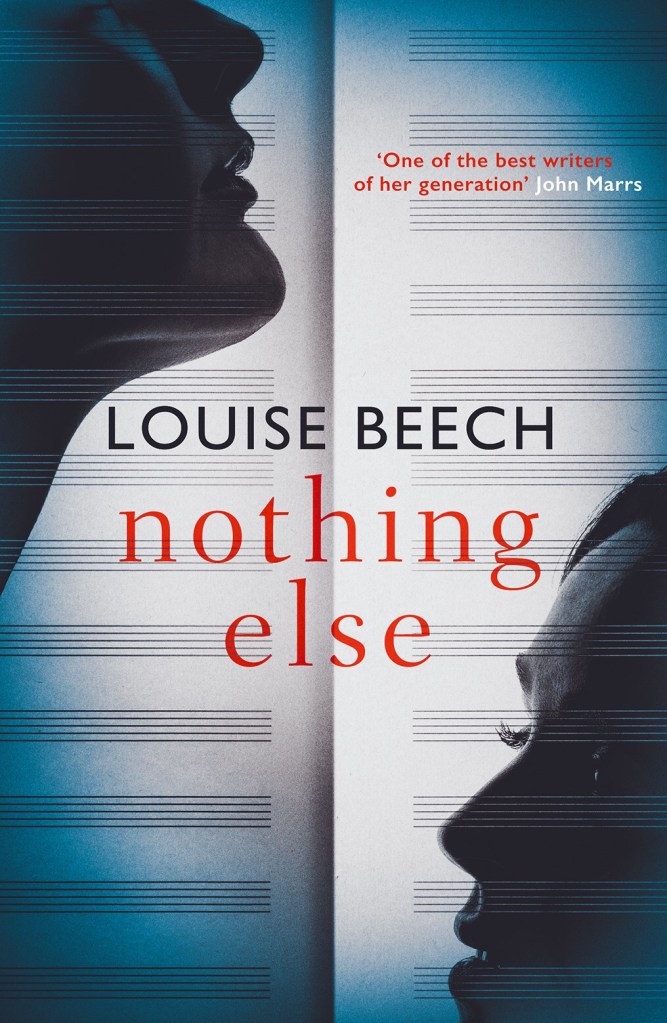
Louise Beech’s new novel, pulls us into the emotional and traumatic life of Heather, a pianist who lives in Hull. She teaches and plays in local bars, then relaxes in her harbour front flat looking out to the Humber Estuary and the North Sea. Heather has a quiet life and quite a solitary one too. She has no family and relies more on her strong connections with friends. In fact it is one of them that encourages her to try out for a job on a cruise ship, something she would never have imagined doing. She would be scheduled to play in different bars on the ship through the day, but as her friend says, she can enjoy the facilities and gets to travel. This particular cruise is stopping in New York then on to the Caribbean before doing it all again in reverse. There’s something lonely and a bit melancholy about her and we learn that Heather and her sister have grown up in the care system, after their parents were killed. Music was the girl’s escape, once their mother had convinced their father it wouldn’t hurt for them to learn on the piano they were given. They both had an aptitude for music, but it was Heather’s salvation, the only place she could fully express her emotions. With their father unwilling to pay for lessons, their mother secretly sent them to piano teacher Mr Hibbard who lived a few doors away. When their parents died, both girls were taken into a children’s home together, but one morning her sister Harriet was taken to see the staff in the office and Heather never saw her again. She could only hope that a kind family had adopted Harriet, but for some reason hadn’t been able to take her too. When the girls had most needed to express themselves they would play a duet they had composed called Nothing Else. It was this piece of music that stayed with Heather all her life, instantly taking her back to the piano and her little sister.
Heather’s chapters follow her current life and the piano job she applies for on a cruise ship. Here and there the author takes us back in time to her childhood, where their father was a controlling and violent man and Heather felt responsible for keeping her little sister Harriet safe. Like all children who have traumatic home lives, Heather had become attuned to the slightest hint of tension. She knew when her father was going to explode and on those nights where the sounds downstairs were terrifying, Heather would keep Harriet out of earshot and they felt safe when they were tucked up in just one bed. She was also aware that their father preferred cute and cheeky Harriet, so knew to stay quiet and keep her head down. These sections from the past are traumatic and very moving. The author maintains the tension in these flashbacks, until we too are on edge, always waiting for something to happen. The author moves deftly between the experiences of Heather as a child in the middle of this situation, and a grown up Heather commenting on what happened with the clarity and insight of an adult. There were brilliant present day sections onboard the cruise ship where Heather befriends a writer who is also working aboard, teaching sessions in creative writing. Heather joins her morning sessions and finds them much deeper than she expected. I could recognise this from the writing therapy sessions I’ve facilitated – the prompt is always just a starting point and eventually you start writing what you need to write about. This definitely happens to Heather and is one way of processing the care records she applied for before the trip, dipping into them little by little, like a reluctant bather dipping her toe into the cold, deep water. She doesn’t want to be overwhelmed.
Harriet has her own section of the book, again split into her current life and the past she doesn’t fully understand. Now living in America, Harriet has a daughter whose left home and case of empty nest syndrome. Her flashbacks into the past remind us that Heather’s story is only part of this family’s history and Harriet may have a very different tale to tell. We learn most when their narratives overlap and we see a subtly different side of the events Heather describes, like two sides of the same coin. Again, it’s psychologically very clever and gives the perspective of the younger sibling, the one who is cared for and shown love by her big sister. I was longing to know what had happened at the children’s home. Where did Harriet go and how was she persuaded to go without her sister? Thanks to all of these questions and my curiosity over whether the sisters would ever meet again, I was totally gripped by the story and immersed into the worlds of these sisters. I enjoyed their different characters, developed by their separate upbringings, as well as their different experiences with their parents due to their ages. There are secrets that neither child was aware of, so there are some rewarding revelations to be found. I was eager to know if the sisters were somehow able to find each other. Mainly though, I was moved to read their tales of childhood trauma and wanted to understand the adults they became in light of that experience. Which of their characteristics could be explained by the past? There’s a cautiousness in Heather, because her ability to trust others is affected, leading to a quiet and lonely life. It was lovely to watch the cruise atmosphere, and proximity to others, forcing her into being sociable and to make friends. There’s a sense that she’s coming alive in these moments, which felt hopeful and uplifting. This was an addictive read that beautifully captured how childhood trauma and it’s effects can follow us into adulthood. The author showed, so beautifully, that it’s only by sharing and in this case, playing out that experience that we begin to heal.
Published by Orenda Books 23rd June 2022
Meet The Author
All six of Louise Beech’s books have been digital bestsellers. Her novels have been a Guardian Readers’ Choice, shortlisted for Not the Booker Prize, and shortlisted for the RNA Most Popular Romantic Novel Award. Her short fiction has won the Glass Woman Prize, the Eric Hoffer Award for Prose, and the Aesthetica Creative Works competition, as well as shortlisting for the Bridport Prize twice. Louise lives with her husband on the outskirts of Hull. Follow her on Twitter @louisewriter
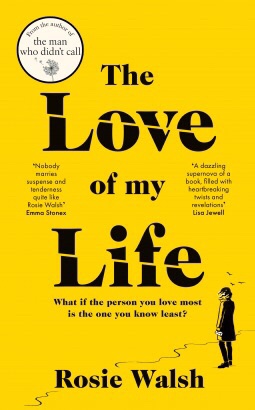
I’ve been putting together a list of all the summer releases I’m looking forward to and one of my most anticipated books is Rosie Walsh’s The Love of My Life. So I thought it was a great time to look back on her last novel which I absolutely loved.
I read this in two long bursts – one of which started at 3am. It’s a book I couldn’t put it down because all I wanted was these two people back together. The harsh realities of grief and lifelong family rifts are well drawn and believable. All of these people are trying to move forward despite their lives missing a beat one day on a country road, where a split second decision has lifelong consequences. This book explores grief, loss, loyalty, loneliness and the incredible ability the human heart has to heal.
Sarah has a 7 day whirlwind romance with Eddie. They meet by chance on a country road while Sarah is visiting her parents. She thinks Eddie just might be the one. But, Eddie goes away on holiday and she never hears from him again. Is Eddie a heartless playboy who never intended to call? Did Sarah do something wrong? Or has something terrible happened to him? Instead of listening to friends and writing this off as a one night stand, Sarah begins to obsess and is determined to find the answer. Every clue she has comes to a dead end and she is in danger of completely losing her dignity. As her time back home in the UK starts to run out, Sarah looks for clues to track Eddie down. What she hears is confusing her further. His friend doesn’t give the simple answer, that Eddie has moved on, but gives her a warning; if she knows what’s best for her, she needs to stop looking for Eddie
I quickly became invested in Sarah and Eddie’s story. I think we’ve all been subjected to the watched phone that never rings and how crazy it can make us. It could have made me dislike Eddie early on, but for some reason I never did. I’m definitely a hopeless romantic so I seemed to accept Sarah’s hope that this could still work out. The other characters in the novel are also well-written and compelling. I’m a therapist so I was particularly interested in Eddie’s mother and her mental ill health. I think her symptoms and the way she manipulated Eddie showed a streak of narcissism. She finds it impossible to see this situation from his point of view, only how it affects her. Anything that threatens their dynamic as carer and patient is a huge threat to her and she responds with emotional blackmail and hostility. Eddie is as much a prisoner of her mental ill health as she is. I also had empathy for Sarah’s friend Jenny who is struggling to conceive and undergoes IVF treatment to the point of financial ruin. Her character probably leapt out at me because I’m also not able to have children, and know how difficult it can be to come to terms with. Her stoicism and determination to support her friend in the face of her own loss is very moving.
I stayed up late to finish the book, because I had everything crossed that the mystery would be explained and these two people could move forward together. To different degrees, all the novels characters are imprisoned by the past and losses they can’t accept. My husband died when he was 42 and I was 35. It’s like a chasm opened up and I had to choose between staying on one side forever, with the past and my feelings of loss and fear. Or I could choose to jump over that chasm into a new future. I never forget what happened or the love I have for Jerzy, but twelve years later I have a wonderful partner and two beautiful stepdaughters. Thankfully, I had the bravery to move forward knowing I can’t lose my memories of the past but I still have a future full of possibilities I never imagined. That’s what the characters in the novel are trying to do. Grief is different for everyone and there are always tensions between those who are trying to heal and those who can’t imagine healing because it feels like a betrayal. Rosie Walsh draws these different threads together beautifully, creating a bittersweet novel that captures that moment of choice – to draw on our reserves of resilience, jump over the chasm and live again.
Meet the Author
Rosie Walsh is the internationally bestselling author of two novels, the global smash hit THE MAN WHO DIDN’T CALL, and – new for 2022 – THE LOVE OF MY LIFE, a heart-wrenching, keep-you-up-all-night emotional thriller, which was an instant New York Times bestseller and stayed in the German top ten for several weeks.
Rosie Walsh lives on a medieval farm in Devon, UK, with her partner and two young children, after years living and travelling all over the world as a documentary producer and writer.
The Man Who Didn’t Call (UK) / Ghosted (US) was her first book under her own name, and was published around the world in 2018, going on to be a multimillion bestseller.
Prior to writing under her own name she wrote four romantic comedies under the pseudonym Lucy Robinson. When she isn’t parenting or writing, Rosie can be found walking on Dartmoor, growing vegetables and throwing raves for adults and children in leaking barns.
Emily is a children’s illustrator, who spent her childhood in Hawke’s Bay but now lives in London. One evening she receives a call from her father’s neighbour, Raewynn, letting her know that his Alzheimer’s has progressed and he needs a little help. Despite both her brother and sister still living in New Zealand, Raewynn thinks Emily is the one best disposed to make the right decision. Emily’s father is well known in the area and is still known as Dr. Fitzgerald despite his retirement. He still lives on the family’s homestead with his two dogs and next door Raewynn and her son Ira who rents and farms the Arapito land. Until now they’ve managed to look after Dr. Fitzgerald, but trusting Raewynn’s opinion Emily decides to travel to New Zealand and check on her father.
When she arrives she knows all is not well. She realises her father has become very adept at seeming okay. He’s worked out which stock questions to ask when someone’s on the phone, using listening skills to let the caller think they’ve had a deep conversation. She thinks he’s rather like a magician, creating a Dr Fitzgerald who everyone knows and recognises, while underneath feeling confused, bewildered and frightened. As Emily spends time in her childhood home, memories rise to the surface: the unhappiness of her mother; her father’s distraction and avoidance of his family; the terrible state of Manu, Raewynn’s husband, who deteriorated and died from Huntington’s; the disappearance of Raewynn’s daughter Leah, who was lost on their range of mountains and has never been found. Emily was the last one to see Leah alive and the loss of this vibrant and beautiful girl still haunts the whole valley, including Emily’s father.
Norman writes about Alzheimer’s with knowledge and compassion. I spent some time working in nursing homes and Dr Fitzgerald is in the cruellest stage of his disease; he knows it is happening and he’s embarrassed, scared and exhausted from trying to appear like his old self. As Raewynn observes, it will be a blessing when he’s gone past this stage and reaches the place where he doesn’t remember his old self any more. It’s like watching the tide recede and as Emily settles in she can see this happening, layers and layers of what she recognises as her dad slowly drifting away towards the evening and then rolling back in the next morning when he’s at his most lucid. She can see the symptom of ‘sun downing’ as her dad becomes more anxious and confused in the evening. Then there are terrifying nights where he wakes screaming, doesn’t recognise her and can become violent. Then there are the family conflicts over care, as her brother and sister feel he would be better off in the ominous sounding St. Patrick’s where he’d be safe. Of course the other benefit to St.Patrick’s is that the house and land could be sold, meaning they would receive their inheritance. Emily doesn’t want to think her siblings are mercenary, but they have always stuck together and don’t have any interest in the land or the family’s long relationship with Raewynn and Ira who farm their land.
I had a huge soft spot for Raewynn, she feels like a real ‘earth mother’ type of woman and is a pillar of quiet strength. It takes a strong woman to come through the slow deterioration of her husband’s health, until he wasn’t the man she loved any more. She doesn’t complain and they all loved him fiercely, but those who know the family closely, know how much Manu’s illness took out of them all. For them to go through the loss of Leah only two years later seems unspeakably cruel. For Emily there is survivor’s guilt and her sadness for Ira, who was her best friend. Now there may be change coming, on the twenty year anniversary of her disappearance. Raewynn and Emily are interviewed, in the hope of jogging someone’s memory, that a change of allegiance might urge someone to talk, or that someone’s conscience finally forces someone to speak. In the meantime Emily is battling her siblings over her father’s wishes. Firstly, he gives her a living Will drawn up by his solicitor and much to her surprise, the person he wants to speak for him at the end, is Emily. It’s a revelation that her rather remote and unavailable father trusts her to do the right thing. It’s also a revelation that he’s been keeping a file of her memories in the box next to his bed, all the way back to her hospital baby bracelet. However, this isn’t the only revelation in the box and what Emily finds here will blow so many lives wide open.
This is what Charity Norman does best. She shows how relationship dynamics change and even break when something unexpected happens. Her characters are real, because they are so well constructed psychologically. Her sense of place is also incredible from the forbidding mountain range that backdrops the farm, to the bitter cold and the incredible micro-climate of a lush gully and waterfall hidden away. Oh how unbelievably emotional I felt at the end of this book, not just a lump in my throat, but actual tears. Yet I also felt such a feeling of ‘rightness’ that it ended the way it should. I was also deeply touched by the unique combination of Haka and bagpipes at Leah’s memorial. The New Zealanders I know seem to celebrate people for their unique traits and this memorial took me back to my brother in law’s funeral in Gisborne where a chainsaw and work boots adorned the coffin and the guttural roar of a stag heralded his departure. This writer is one of my favourites, because she understands the uniqueness of human beings, their incredible strengths and their hidden weaknesses. There is such emotional intelligence in this latest novel and it was my absolute pleasure to read it.
Meet The Author
Charity Norman was born in Uganda and brought up in successive draughty vicarages in Yorkshire and Birmingham. After several years’ travel she became a barrister, specialising in crime and family law. In 2002, realising that her three children had barely met her, she took a break from the law and moved with her family to New Zealand. REMEMBER ME is her seventh novel.
Tassie Morris is everyone’s favourite wedding photographer, famous for her photos of offbeat ceremonies and alternative brides. Yet commitment is proving impossible for Tassie herself, who cannot forget her first love.
When she’s sent to photograph a ceremony on Schiehallion – the Fairy Hill of the Scottish Caledonians – she meets Dan, who might be the one to make her forget her past. That is, until a family crisis begins a chain of events that threaten to destroy not only Tassie’s love life, but her entire career.
Set in a colourful world of extraordinary weddings, Shoot the Moon explores the complexities of different kinds of love: romantic love, mother love, friendship. And, ultimately, the importance of loving yourself.
There was an awful lot to admire in this novel about a young woman who makes her living capturing the love of others, while struggling to find the love she needs. I say needs rather than wants, because Tassie doesn’t really know what she wants or even the type of man that’s best for her. Largely this is because she’s stuck on a relationship she had when she was a teenager. I really felt for this woman, because she has so much going for her, but doesn’t realise it. She has had an exciting career in photography across the world, but more recently has worked for a U.K. wedding magazine. Tassie is given a file containing all the details of a wedding that her work colleague and friend has picked for their next real wedding feature. Tassie then travels down to that wedding to photograph it for the magazine. I particularly loved this rock and roll wedding, with the bride in a black dress and the mother of the bride performing the ceremony in her role as vicar. The author captures the beautiful details of the wedding so well I felt I was there. The Scottish wedding is also spectacular, not just the ceremony but the scenery around them. Scotland is the first time I see Tassie truly relax and let go of plans and schedules, leaving her phone to one side. It’s a moment of quiet in an otherwise busy story. In her spare time Tassie is a homebody, either tackling some of the DIY on her flat or tending the well-kept garden where she grows herbs and vegetables. She seems comfortable with who she is.
However, she doesn’t seem to know who she is when it comes to finding a partner. She harks back to her teenage years and the time she spent as Alex’s girlfriend. I love the way the author depicts our formative romantic relationships as something that shapes our love life into the future. Her seemingly perfect relationship with Alex possibly wasn’t that great, but when we put our rose tinted glasses on it can seem. Also, teenage relationships don’t have the pressures that our adult relationships do. They’re intense because it’s a new experience, but also because we don’t have the constraints or worries of work, money, mortgages and children. We have all the time in the world to be in love when we’re younger. Tassie only sees Alex occasionally these days and I wondered how much the relationship really suited his agenda, but left Tassie quite lonely and blocked her from moving on. There was an emotionally intelligent look at how attachment issues affect our relationships too; if we fear abandonment then we might put up with difficult behaviour just to avoid confrontation and potentially being abandoned again. I think Tassie is aware that Alex is not a fulfilling relationship for her, but can she cope with the feelings of being without it? Dan is a fantastic romantic lead character and has a lot of the qualities Tassie values in a man. He seems like someone who is straightforward, honest and loyal. Their personalities fit together well and he seems ready for a serious relationship, but can she take that step with someone she’s just met without fearing abandonment?
The author pulls everything together well as Tassie’s world changes completely when she makes a mistake at work and risks the reputation of the magazine. She has to think quickly because living in a London flat with her lifestyle won’t be financially sustainable. This seems like rock bottom for her, but could it possibly be a blessing in disguise? Could it be the right time to go home to the farm, given that her lifelong issues with her mum are still causing her emotional pain? Maybe it will also give her the opportunity to try something completely new as a career? I was keeping my fingers crossed for her because I wanted her to feel comfortable with who she was and feel whole. She might also be ready for that real, committed relationship to come along – but I didn’t need that for a happy ending. My only criticism of the book is that there were moments I felt like I was reading a different story. At the beginning we learn that Tassie sees a little blonde girl, who could be an imaginary friend, except Tassie continues to see her from time to time. Tassie feels like they’re connected in some way, but doesn’t know how. I found this really interesting and it had a different feel to the rest of the book. It didn’t seem to fit with the lighter tone around the wedding magazine and I had a feeling this could have been the start to quite a different novel. It’s a small thing, and I did like the way it was tied into her childhood anyway. All in all this was a great read for Valentine’s Day, and should suit romance readers as well as those who like their romances to have some emotional depth.
Meet the Author
Bella Cassidy grew up in the West Country – reading contemporary romances, romances, historical novels, literary fiction… just about anything she could lay her hands on. After a few years in London, working as a waitress and in PR and advertising, she went to Sussex to read English – despite admitting in her pre-interview that this rather sociable period in her life had seen her read only one book in six months: a Jilly Cooper. She’s had an eclectic range of jobs: including in the world of finance; social housing fundraising; a stint at the Body Shop – working as Anita Roddick’s assistant; as a secondary school teacher, then teaching babies to swim: all over the world.
She’s done a lot of research for writing a wedding romance, having had two herself. For her first she was eight months pregnant – a whale in bright orange – and was married in a barn with wood fires burning. The second saw her in elegant Edwardian silk, crystals and lace, teamed with yellow wellies and a cardigan. Both were great fun; but it was lovely having her daughter alongside, rather than inside her at the second one.
I thought I’d celebrate Valentine’s Day by talking about our literary crushes. Let’s be honest, we all have them. Those literary heroes that draw us in and make us swoon. From a young age there have been literary heroes that have stuck in my mind, and probably informed some ill-advised dating choices over the years. Those formative literary heroes who made my adolescent heart flutter, have changed a lot as years have gone by. Perhaps because what I’ve learned through my real life relationships has started to change the characteristics that attract me in a hero. Those young, dashing, tortured souls don’t seem quite so attractive when you’ve encountered a few in real life. Of course, literary adaptations on film or TV often influence these crushes greatly – remember the endless banging on about a wet Colin Firth striding across the Derbyshire countryside? My mum’s expectation of that scene had obviously been honed by 1970’s literary adaptations like Women in Love where Oliver Reed and Alan Bates famously wrestled naked in front of a roaring fire. She expected Darcy to be wearing less clothes and couldn’t see what all the fuss was about. Anyway, I much preferred a slightly dishevelled Matthew McFadyen Mr Darcy, striding across a field at dawn. However, between the book covers, Mr Darcy simply doesn’t do it for me. Similarly, Mr Thornton from North and South was incredibly sexy when portrayed by the lovely Richard Armitage, but simply fails to light my fire when reading the book. So, with some trepidation, here are my reading crushes. Let me know yours. There’s no judgement here. ❤️❤️
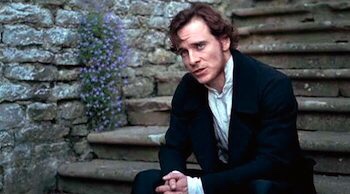
Mr Rochester – Jane Eyre
Michael Fassbender as Mr Rochester
“To women who please me only by their faces, I am the very devil when I find out they have neither souls nor hearts…but to the clear eye and eloquent tongue, to the soul made of fire, and the character that bends but does not break—at once supple and stable, tractable and consistent—I am every tender and true.”
Considering they barely left the surroundings of their home at Haworth, those Brontë girls knew how to write the brooding, Byronic, hero. Heathcliff is probably the best example, but I read Wuthering Heights again when I was older, and he was a bit too tortured soul for my liking, plus he hangs a woman’s dog for goodness sake! I first read Jane Eyre when I was ten, in my last year of primary school, and I’ve read it every couple of years since. When younger, I loved the slow burn of their romance. From the moment she saves him from burning in his bed, it’s clear there’s something about Jane that attracts him. For him, she seems like a cool drink on a hot day. Somewhere he can sit and find peace, and let’s face it, he has an awful lot of drama to escape from. Of course when I was young I couldn’t see the feminist or sexual implications of the novel – Bertha upstairs was a bit of a monster to me. She was the gothic, scary bit so I didn’t really think about her as a person or what Rochester had done to her, until I was in my teens. I liked his dark brooding character and when he appears out of the fog on his horse it is still a swoon moment for me. I think I also enjoyed that he loves the plain, poor governess rather than the decorative, but awful Blanche Ingram. I loved their conversations and the way he seems to enjoy that fiery part of Jane. In my teens I used to think she was mad for leaving Rochester, but later I could see why she left and sometimes wondered if it wouldn’t have been better for her to keep her fortune and take off on a trip across the world. At least when she does return to Rochester it’s as an equal, with her own fortune and experience
Willoughby – Sense and Sensibility
Greg Wise as Willoughby
In every meeting of the kind Willoughby was included; and the ease and familiarity which naturally attended these parties were exactly calculated to give increasing intimacy to his acquaintance with the Dashwoods, to afford him opportunity of witnessing the excellencies of Marianne, of marking his animated admiration of her, and of receiving, in her behaviour to himself, the most pointed assurance of her affection.
We’re still in bad boy territory here, with the ultimate cad who breaks Marianne’s heart and reputation in Sense and Sensibility. I have read the book, but I will admit that the Greg Wise version does play a large part in this choice. I loved the romantic way that Willoughby finds Marianne, having sprained her ankle on a hillside. He simply picks her up and carries her home. Factor in some rain, and Greg Wise being all dark and handsome, mastering a huge horse and a literary crush was born. No wonder Emma Thompson wrote in her diary on that particular day that Greg was setting all hearts fluttering as he was drippng wet an
a he loves Marianne, but in need of money he chooses status and an heiress above his heart. There’s no excuse for how he behaves, he’s an absolute rat, but that rush of chemistry can’t be denied. Would we have done any different to Marianne? In the film, when he rides to the hill in order to watch Marianne and Colonel Brandon leaving the church after their wedding, I think he’s truly sad and a little jealous.
Jamie Fraser – Outlander.
Sam Heughan as Jamie Fraser
“I will find you,” he whispered in my ear. “I promise. If I must endure two hundred years of purgatory, two hundred years without you–then that is my punishment, which I have earned for my crimes. For I have lied, and killed, and stolen; betrayed and broken trust. But there is the one thing that shall lie in the balance. When I shall stand before God, I shall have one thing to say, to weigh against the rest. Lord, ye gave me a rare woman, and God! I loved her well.”
I couldn’t resist the giant photo of Jamie Fraser! I had barely started reading the Outlander series when the TV series started so now the literary character is always going to be linked with the lovely Sam Heughan. He’s a great choice for the character and the chemistry between him and Catriona Balfe as Claire is perfect. What I love about Jamie is the way Diana Gabaldon has written him and it’s something that spills over into the TV series. We as readers are firmly with Claire and everything Jamie does is viewed through the female gaze. Their wedding night sequence is good example. We experience him through Claire and it’s his body we’re undressing and enjoying. I think the allure of Jamie is that heady mix of tough outdoors warrior, with a vulnerability underneath. There’s the way he respects her ideas and opinions, unheard of in most men of Claire’s time, never mind the 18th Century. It’s also his deep loyalty to Claire, not just across the few years they’re together but all those years inbetween when they’re in a different time from each other. There’s nothing more romantic than that.
Cormoran Strike – The Cuckoo’s Calling Series
Tom Burke as Cormoran Strike
‘My best mate . . . ” For a split second he wondered whether he was going to say it, but the whisky had lifted the guard he usually kept upon himself: why not say it, why not let go? ‘. . . is you.”
Robin was so amazed, she couldn’t speak. Never, in four years, had Strike come close to telling her what she was to him. Fondness had had to be deduced from offhand comments, small kindnesses, awkward silences or gestures forced from him under stress. She’d only once before felt as she did now, and the unexpected gift that had engendered the feeling had been a sapphire and diamond ring, which she’d left behind when she walked out on the man who’d given it to her.She wanted to make some kind of return, but for a moment or two, her throat felt too constricted. ‘I . . . well, the feeling’s mutual,” she said, trying not to sound too happy.”
Finally, I actually fancy someone in this century! From the moment I picked up a dog eared copy of The Cuckoo’s Calling in a charity shop I was hooked on private investigator Cormoran Strike. Yes, there’s the old tortured soul aspect to his personality, but it’s not just the high pitched warning alarm of a damaged man that calls out to me. I remember how well the author described him having to care for the stump left when his leg was amputated. It felt realistic to me, because walking and standing a lot was painful for him. If he is tailing someone he would ache and his leg might have chafed against his prosthetic. I appreciated a hero with a disability, his heroism magnified by the fact he was injured in action. He’s a big man, broad and tall, so much so that you’d feel safe with him. He may be vulnerable, but he can handle himself if necessary and that’s a heady combination. He’s a great listener, full of empathy for people in a predicament and for those close to him. He’s deeply loyal to those who he can trust, like his business partner Robin. He’s been messed up by women, from his mother to his long term girlfriend Charlotte. However, he’s a very private about his relationships and seems to have his own code of honour which is very attractive.
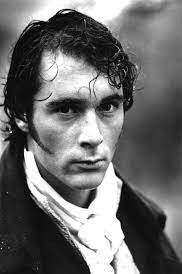
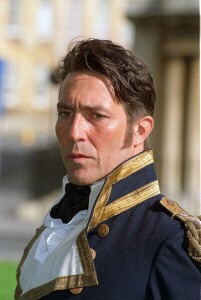
Captain Wentworth – Persuasion
Ciaran Hinds as Captain Wentworth
“I can listen no longer in silence. I must speak to you by such means as are within my reach. You pierce my soul. I am half agony, half hope. Tell me not that I am too late, that such precious feelings are gone for ever. I offer myself to you again with a heart even more your own than when you almost broke it, eight years and a half ago. Dare not say that man forgets sooner than woman, that his love has an earlier death. I have loved none but you.”
Are there any more romantic words in literature? Wentworth’s letter is, for me, the most romantic I’ve read. I’d go as far as saying it’s the best declaration of love in the classics. It’s all the more wonderful because Anne is so unassuming and modest. She has spent months with Wentworth back in her circle, loving him from afar, but never presuming he might feel the same way. In fact she’s so sure he’s moved on from the feelings he had for her when they were younger, she thinks he’s in love with Louisa Musgrove. She has so little confidence that she misses the care and kindness he shows her. After a long walk he makes sure it is Anne who gets the seat on the carriage because he’s thinking of her comfort. She thinks he wants to be alone with Louisa or that he thinks she needs to sit as she’s older. I love Wentworth’s constancy and the passion he has been hiding under that polite exterior. The kiss that follows is wonderful, because we’ve been waiting for it so long.
Jackson Brodie – Case Histories Series
Jason Isaacs as Jackson Brodie
“He was officially a lunatic, she decided. Strangely, that didn’t make him less attractive.”
What is it about Kate Atkinson’s Jackson Brodie? He’s a slightly rumpled, middle-aged, private investigator. He’s been in the military and the police so is probably institutionalised. In fact he’s a bit of a hopeless case, often taking on the lame ducks he finds along the way, whether they’re human or canine. Marriage doesn’t seem to suit him, but he is a very loyal friend. He’s quite grumpy and set in his ways. I’m not really selling him well I know, but there is that indefinable something that’s attractive. Rather like Cormoran Strike, there’s that sense that he’s an honourable man. He’s old-fashioned and would want to make sure you got home ok. In fact he’s one of those men who would walk on the outside on the pavement so you’re safe, away from the traffic and don’t get splashed. I imagine he looks like life has knocked him around a bit, but if someone needs help he would still be the first one there. There are times when he does the right thing, not by the book, but by his own moral code and I love that.
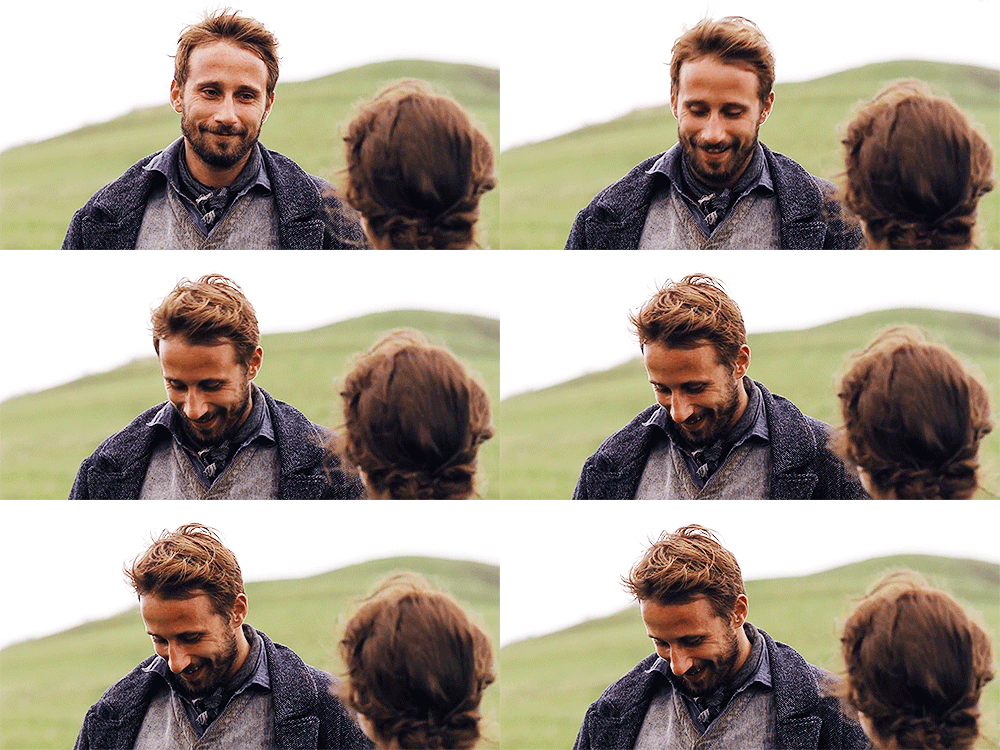
Gabriel Oak – Far From The Madding Crowd.
Matthias Schoenaerts as Gabriel Oak
“And at home by the fire, whenever you look up there I shall be— and whenever I look up, there will be you.”
I haven’t put my crushes in any sort of order, but I’ve definitely saved the best till last. If you ask me, for most of the book, Bathsheba Everdene needs her head examining. Near the beginning of the book, Gabriel visits her. They’ve been neighbours and he comes striding across the fields with a lamb under his arm. It’s an orphan and he thought she might like to feed and take care of him. He then proposes to her and she refuses! If a man brought me a lamb I’d be beside myself with excitement and I’d be saying yes before he’d finished his sentence. How can you turn down a man who brings you your very own lamb? However, their fates are intertwined. After a terrible tragedy where he loses his whole flock, Gabriel is forced to look for a job. It turns out that Bathsheba has become an heiress, inheriting a farm but luckily needing someone to manage it for her.
Gabriel proves himself to be a loyal employee and is constant even when she marries the ridiculous Sergeant Troy. Troy gambles her money and one night gets the whole workforce dangerously drunk. They are celebrating the harvest, but the hay stacks aren’t covered and a storm blows up. Bathsheba finds Gabriel desperately trying to save he harvest for her, while Troy is passed out cold in the barn. Bathsheba grows up a lot in the course of the novel and she starts to see and value the qualities Gabriel has. She has previously overlooked his steadfast loyalty, how hard he will work for her and what an incredible friend he can be. He listens to her and when she is silly enough to lead on Mr Boldwood, an older gentleman who owns the neighbouring land, he speaks to her and warns her that it isn’t fair. Of course, this being Hardy, this flirtation ends in tragedy. Yet Gabriel is still there and when he proposes a second time she’s finally ready for the love he’s offering.
Happy Valentine’s Day! I hope you have a literary crush you enjoy ❤️❤️