Posted in Personal Purchase

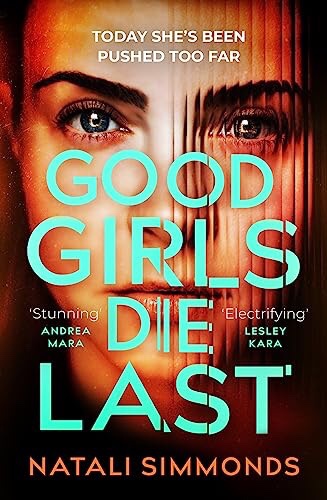
Good Girls Die Last by Natali Simmonds

Wow! This is a searingly raw story, simmering with righteous anger and injustice. Set on a boiling hot summer’s day, you can almost smell the tarmac and diesel fumes. You can hear the traffic noise and feel the agitation and impatience of people trying to get to work without exchanging a word with anyone else. It’s too hot to breathe let alone exchange a friendly word. I had the unnerving experience of reading our heroine’s thoughts and hearing my own words. During the day from hell that Em was experiencing, it felt like some of my own thoughts and frustrations were running round her head. They just need awakening. I have to be honest and say that my age is more in line with another heroine from earlier this year – Amazing Grace Adams – who had her own walk of rage, fuelled by love. However, Em’s voice is a millennial war cry that becomes a national phenomenon in the space of a day. As she leaves her landlord’s bed that morning she expects to look smart for work, especially since she has a HR meeting and expects to be offered a permanent role after completing three months maternity cover with great results. Finally she’s catching an evening flight back home to Spain for her little sister wedding. Her actual day is a complete clusterfuck!

It was her very first thoughts and actions as she woke in the morning that started to build that inner fury in me. First of all her name isn’t Em, or Emily and not even Emma. It’s Emygdia. Everyone shortens it for her. To something that’s more manageable for them. This is an indication of what’s to come and references all those things about women that people find ‘too much.’ Em gets up quietly, so as not to disturb her landlord Matt – son of a Tory MP and an absolute dick. She wouldn’t want to wake him up. She gathers her clothes quietly and scurries away as if she has done something wrong. It’s Matt who’s in the position of power. It’s Matt who has a long-term girlfriend. It’s Matt who started this little fling. Yet it’s Em who has to leave the flat to accommodate his weekend with the saintly Rebecca. It’s Em who shouldn’t be so sexy and irresistible. It’s Em who buys into this bullshit and scurries quietly to her own room as if nothing has happened. As if she doesn’t exist. It made me wonder, what is it she’s so scared of? In fact, what are women so afraid of?

‘you warm-blooded Mediterranean types’, he says ‘all that passion eh? You can’t control yourselves.’ Ah yes the Spanish thing. He talks about that a lot. My long thick hair, the way I use my hands when I talk, my olive skin, how red my lips are, how dark my eyes are, how round my breasts are. What do English girls look like in bed then? Maybe they just lie there silent, pale and still. I doubt it. Maybe that’s just Rebecca.’

This sets up a central idea in the book and it’s title. It’s classic Madonna-Whore complex, the misogynistic idea that there are women you sleep with and women you marry. ‘Emmy’ as Matt calls her, is definitely the former. Like obliging little opposites of a dichotomy Rebecca and Em have never met, but Em has Facebook stalked her. Rebecca, who hates being called Becca, isn’t a large breasted, wild haired, sexy inconvenience. She’s a pale, pretty girl who wears her hair in plaits at the weekend and has a rabbit called Sniffles. She dislikes spicy food and even her favourite colour is mild – who likes mint? She wears loose sundresses and flat sandals. Her figure can’t be seen. She even has freckles. Could anyone be less threatening? This is the type of woman men like Matt idealise, they are the wives and mothers, not to be sullied or degraded in any way. This type of thinking also applies to serial killers. As the character of Rose explains, while men are killing women who deserve it they’re notorious, they’re given sexy nicknames and people make documentaries about them. It’s ok to kill the ‘Ems’ of this world: immigrant girls, homeless girls, nagging wives, pushy girlfriends, women who sell themselves, who wear slutty clothes, who walk home late at night. It’s only when they kill the ‘Rebecca’ types that people sit up and take notice. Girls who are nice, who don’t take risks, who don’t deserve it, who are innocent little angels. This attitude is prevalent in real life, I remember it from both the police and the media during the Yorkshire Ripper investigation. It starts small. Men shout ‘cheer up’ or ‘give us a smile’ as if we owe them a nice expression! As if we owe them pretty. Then there’s the man who wants to buy you a drink, to put their arm round you or touch your waist. It’s a continuum that, at it’s most extreme, encompasses those who use, abuse and even kill. Em has encountered all of these types before – the sexual harassment that costs her a job, the violent father, the user landlord and those she meets throughout the day right up to the London Strangler.

I loved how the author wrote about the body and how ‘other’ women’s natural bodily functions seem to be. There’s a disgust conveyed by men that women buy into and internalise. The shame of being caught out by a period in a public place must be a lot of women’s worst nightmare. When I read it I physically cringed on Em’s behalf. It was interesting that this was the point she meets Rose, who simply accepts this woman she’s just seen cleaning herself up and having to pee outdoors. It doesn’t make her look away or form a value judgement. This isn’t the only bodily function that Em is trying to avoid – sweat, sore armpits where her blouse was too tight, foot blisters – they’re all unladylike and shouldn’t be seen. I go loopy when I see Naked Attraction where women’s vulvas are often praised as ‘all neat and tucked in’ and ‘hygienic’ for having no pubic hair. Apparently we should also have a thigh gap and be in proportion. Sometimes they seem keen to erase so much of us, it’s a wonder we don’t just disappear. Rose is the furious feminist voice in the novel and she’s almost like a mentor to Em, listening and giving frank advice where needed plus the odd political rant here and there. She is her own woman and lives life on her terms. Could Em ever be like that? Could she acknowledge with her friends and her religious family that the love of her life is Nikki, a woman? Could she live a happier life focused on what she loves? Em seems to realise that her destiny is to be an example. Only she can discover which direction to go and the best way to achieve it.

Out now from Headline and currently 99p on Kindle

Meet The Author

Natali Simmonds began her career in glossy magazines, then went on to manage marketing campaigns for big brands. She’s now a creative brand consultant, freelance writer, and fiction author, writing gritty and unflinching stories full of complex women and page-turning suspense (and sometimes a little magic).

Simmonds’ dark, feminist thriller debut, Good Girls Die Last, has been optioned for a television series by STV. As N J Simmonds, Natali penned the fantasy trilogy The Path Keeper and Son of Secrets, and in 2022 was shortlisted for the RNA Fantasy Award for the last book in the series, Children of Shadows. She’s one half of paranormal romance author duo, Caedis Knight, and has also written for manga. 

When she’s not writing or consulting, she’s a columnist for Kings College London’s ‘Inspire The Mind’ magazine, and lectures for Raindance Film School. Originally from London, Natali now divides her time between Spain, the UK, and the Netherlands where she can be found drawing, reading in her hammock, or complaining about cycling in the rain.
Posted in Squad Pod Collective

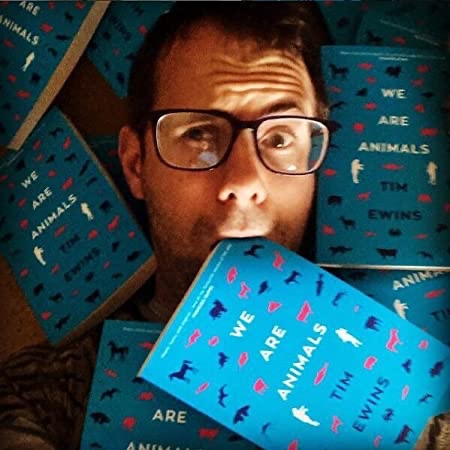
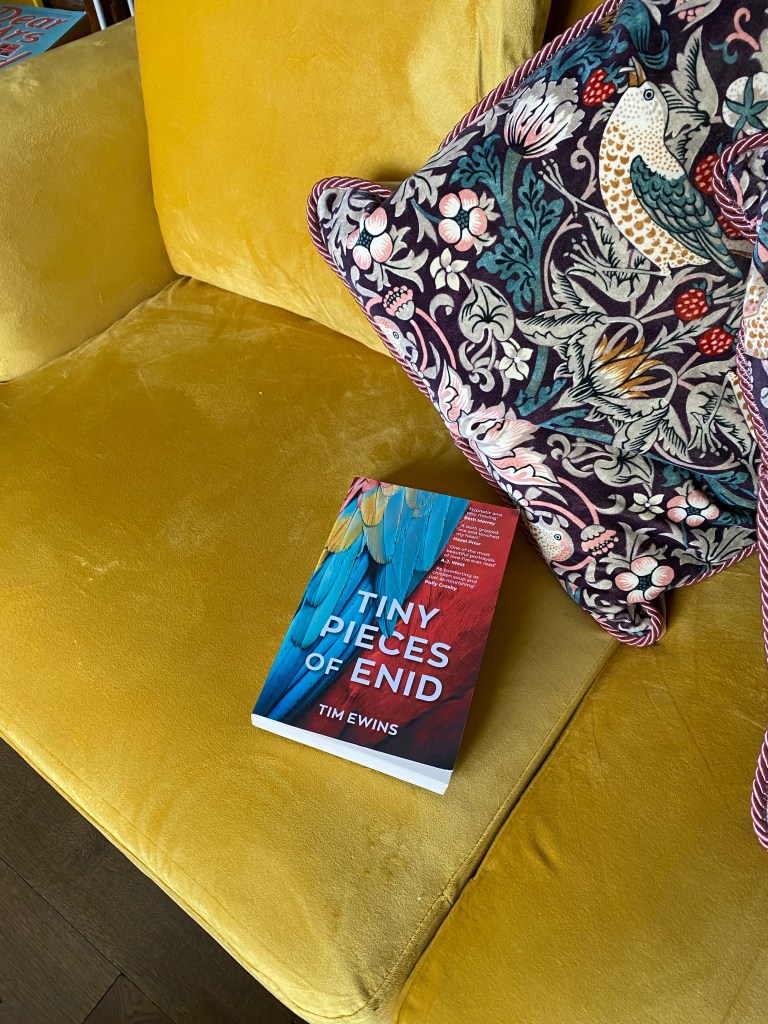
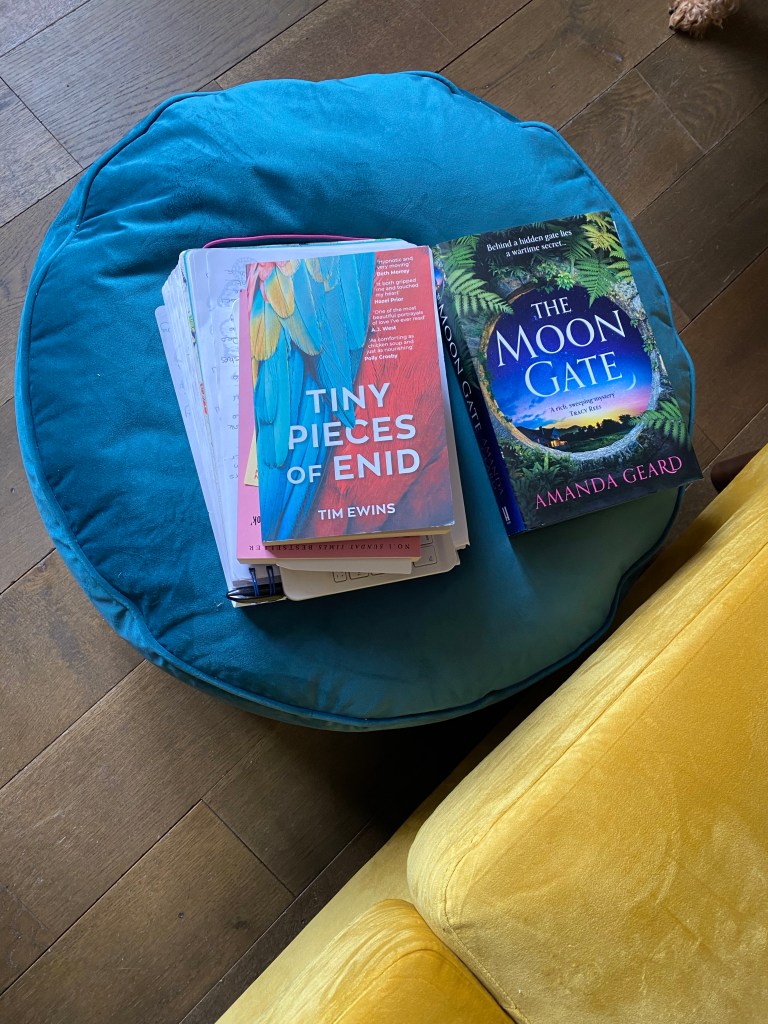
Tiny Pieces of Enid by Tim Ewins

I was so emotionally invested in this deeply moving story, written with such care and empathy for the characters, but also the people who are going through similar experiences in real life. I would also suggest hankies or tissues, a big bar of chocolate and a cat to cuddle. This is an incredible read – but you will cry, in fact if you don’t there’s probably something wrong with you. Our heroine Enid has had a stroke and also has a diagnosis of dementia. She has aphasia causing problems with comprehension and formulation of words. Often, people with aphasia know what they want to say, but find something stops them expressing it. Having looked after people who’ve had a stroke I know it is one of the most frustrating neurological symptoms someone can have. The author has set the book inside Enid’s brain – we learn that she’s not completely senile, in fact she has moments of incredible clarity and is often witty, with a great sense of humour. However, she is forgetful and shows a lot of frustration about her lot. Enid has lived with husband Roy for many years, but after another incident at home their daughter Barb has to make a horrible decision. She decides her mum would be better in a specialist nursing home, but this means separating her from her beloved husband. Enid believes that this is a temporary separation and that soon Roy will come live with her in the nursing home. Meanwhile Roy is trying to cope alone, missing his wife terribly but having to plod on without her.

In the home Enid meets Olivia, a young mum who frequently visits another resident and they have an affinity. While they might seem to be very different on the surface, they connect on a deep emotional level. Every time Olivia visits, Enid is reminded of her first marriage and the memories are painful. Enid’s husband was violent and she can see that Olivia’s husband is also a very angry man. She wants to help, to explain that she doesn’t have to stay with him, that there is happiness beyond here. The fact that Olivia and Enid become friends, despite all of Enid’s challenges is so important because Enid’s life experience could help Olivia make a definitive decision. To save her own life. Their experience shows that friendship comes in so many forms and we shouldn’t make snap judgements about who can bring something meaningful to our lives. It made me think of an observation I made a long time ago, when someone has a long term illness their life doesn’t stop at the time of diagnosis. Some people seem to think that an unwell person steps out of life, has treatment, then comes back when they’re cured but it isn’t so. There are so many of us out here, like Enid, living with an illness and even if our lives look different they’re still meaningful and worthwhile.

When Enid isn’t watching life pass by she’s remembering, it’s like her own personal movie running behind her eyes. She sees Roy, from their earlier life together and when they’re falling in love after the trauma of her first marriage. There’s her old home and her daughter Barb who was fascinated with birds, her Tom Jones & Elvis records waiting to be played. She then remembers a scar she has on her forehead. When was that from? It feels like another life. Then she’s back with Roy. Remembering their love story. Roy is her best friend.

The way the author has constructed Enid’s inner world is brilliant. All the information is there, but it’s fractured and complicated. It isn’t always there when she needs it. She’s a time traveller, not present in the moment but enjoying her early years with Roy. Then she’s with a little girl, her daughter. These memories are so clear, but the moments of lucidity are so fleeting and we’re aware that eventually they may disappear altogether. I’ve worked in a dementia unit and every week I would push one of our residents down through the village to the home he’d shared with his wife. He seemed to have no idea where we were, he was rarely, fully in the room. Mostly we would do jigsaws and he would try to wipe his nose on my cardigan. One day we were sat with his wife in the kitchen and I was helping him with his cup of tea when he looked over at her. Then he looked at me and said ‘I don’t know who this lady is, but isn’t she kind? I like her’. It made me cry that they had a whole history that he couldn’t recall, but in that moment he knew she was special. There was a little glimmer of feeling. It’s hard to live separately from someone you’ve had a life with, especially when the relationship hasn’t ended. You’re living like a single person again and while you can always visit your partner (and appreciate the respite from being a full time carer) there are parts of that person you miss. The tragedy is you didn’t need to separate from the person, just their condition. So it was easy to understand Roy’s decline without Enid, he’s lost the shared jokes, the conversational shorthand and that sense of it being the two of them against the world. Although Enid is safe, part of Roy will wish she was still at home with him. I would imagine he must miss her sense of mischief more than anything. Enid will try anything to be with Roy again, and she relies on an imaginary parrot to help her.

Tim Ewins has written a really special book with such fully rounded characters who have busy inner lives, including Enid. I have a long-term illness and it’s great to read a writer who understands that journey and shows how rich our lives can be, even if they are different. My late husband had the same illness as me and this book reminded me of the snatched moments we spent together between carers, district nurses, palliative stays and hospital admissions. Despite all of that ‘stuff’ no one could take away that connection we had and some of my happiest memories were in those snatched moments; the tiny pieces of life that Enid remembers might seem commonplace, but they are the very moments I’ve treasured and remembered ever since. This is a special book, written with such heart and compassion.

Meet The Author

Tim has enjoyed an eight-year stand-up career alongside his accidental career in finance.

He has previously written for DNA Mumbai, had two short stories highly commended and published in Michael Terence Short Story Anthologies, and enjoyed a very brief acting stint (he’s in that film Bronson, somewhere in the background). We Are Animals is his first novel.

When not writing, he enjoys travel, reading (of course), cycling and spending time with his wife, son and dog in Bristol. Follow him on Instagram @timewins and @quickbooksummaries where he writes inaccurate but humorous book reviews.

Posted in Publisher Proof

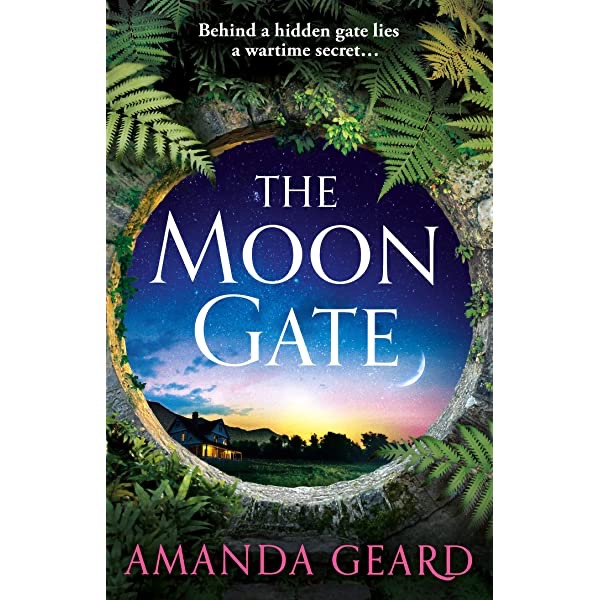
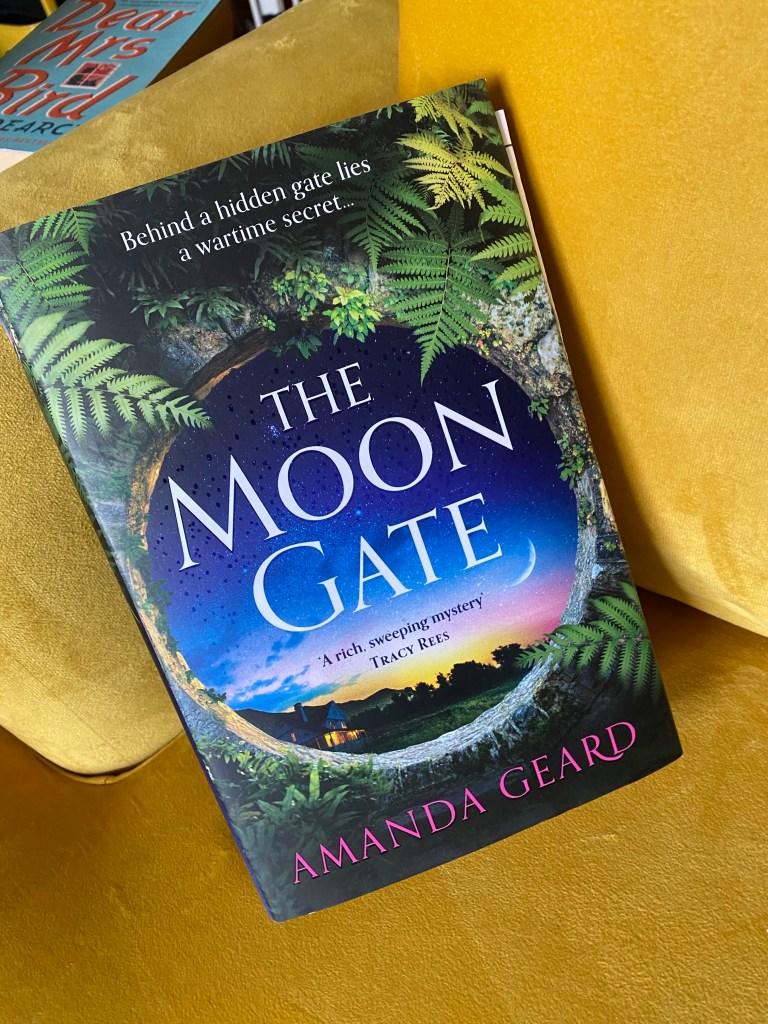
The Moon Gate by Amanda Geard.

1939 – Grace Grey lives in Grosvenor Place in London, with her mother Edeline who is a friend of the notorious Mosleys and wears the uniform of the Blackshirts. As war comes ever closer, Edeline makes the decision to send Grace and the housekeeper’s daughter Rose Munro to stay with her brother Marcus and his wife Olive in the north west coast of Tasmania. After an eight week voyage the girls are welcomed to Towerhurst, an unusual house with a whole tower where Uncle Marcus writes his poetry. Olive immediately takes to the beautiful Rose, but Marcus forms a bond with Grace over the poems of Banjo Patterson, an Australian ballad poet. Grace is reserved and shy, but is slowly coaxed out of her shell by Daniel McGillycuddy an Irish lad working at his aunt and uncle’s sawmill for Huron Pine. As war creeps ever nearer to their part of the Pacific there are dangerous emotional games at play between these young people with fall out that will extend over the rest of the century.

1975 – out of the blue Willow and Ben have been summoned to the north west of Tasmania because of a mysterious legacy. Willow has been left a house called Towerhurst, by an anonymous benefactor who placed it in trust. They decide it’s a great place for Ben to write and Willow to paint, but on their first visit Ben goes missing in the rainforest having fallen down an old mine shaft. What he finds there sends him on a quest that ends in London chasing a story about two young girls who lived at Towerhurst during WW2.

2004 – Libby has flown from Tasmania to London, wanting to claim the belongings of her father who died in the Moorgate Tube Station accident before she was born. Staying with her eccentric aunts in Grosvenor Square, she starts to follow the clues she finds in her father’s satchel: a publisher’s address, a book of ballads by poet D. McGillycuddy and the name Molly Munroe. Her quest will take her to a gentleman’s club, a narrow boat and eventually out to Ireland to solve a mystery that’s been laid buried for half a century.

I enjoyed Amanda Gerard’s first novel last year, so looked forward to reading her new one for a while. I was interested to see how her writing had developed over the last couple of years. To undertake a novel that takes in most of the 20th Century, three timelines and three different settings takes enormous confidence and she has definitely grown in confidence. This is a more complex novel, combining historical fiction with mystery and some romance too, but she pulls it off beautifully and I’ve absolutely loved it. From the historical perspective I learned a lot about living through WW2 in the Pacific Ocean, a completely different experience compared to Europe and the U.K. particularly. I thought Amanda beautifully captured how transient lives were at that time. This wasn’t just about the two English girls, Grace and Rose, uprooted from everything they knew and sent to the other side of the world. It was about the chaos of war, never knowing where your loved ones were, particularly if they were away fighting and whether they would ever come home again. For women that was especially difficult, left at home to wait but also left outside the experiences their men were having. Many women did their own war work, both to do their bit but also to feel a little closer to their men and as if they’re helping them to fight. War displaces people and there were huge shifts across the years of WW2 and afterwards as prisoners of war were slowly released and women who’d married a G.I. or perhaps a Polish airman travelled back to their native countries to start a new married life. It was a good time for people to disappear or slip away under the radar. I already knew a lot about the Blackshirts and their admiration of Hitler’s Nazi Party, but here I learned more about the women recruits and their activities. There was a breadth of research here, underpinning and enhancing the story across three different generations.

The main love story is so touching as the slightly awkward Grace is lured down to the beach by neighbour Daniel where he tries to kiss her. Sadly though it’s for a five shilling bet and as his mates turn up in a boat to witness her humiliation she runs away into the sea. It’s his friend Puds who has to rescue her, as she can’t swim and finds herself caught in an undertow. Daniel regrets his actions deeply, apologising the very next day and asking if Grace would perhaps share the book of ballads she’d been telling him about. They pass through the Moon Gate, a perfectly round doorway made of Atlantisite that leads to the waterfall and a small freshwater pool. Uncle Marcus claims that to pass through the gate is to become a new person and that certainly seems the case with Grace who not only forgives Daniel, but shares the ballad poems and agrees that he can teach her to swim. It’s so beautiful to watch them become close friends, but Grace knows that it’s Rose that Daniel finds attractive as everyone does at first. I felt for Grace deeply and I think a lot of other bookworms will too because she’s so uncomfortable in company, prefers solitude and loves words so much. My therapist side wanted to help her, because how does she learn to be herself and be confident in that, when even her own mother preferred Rose? When we’re not shown love from our parents, a child can’t understand that it’s a fault of the parent, so they learn there is something wrong with themselves. Grace is shocked by the help and affection she gets from Uncle Marcus, because her own mother is so austere and critical.

It was Rose who spent time with Edeline and became a member of the Blackshirts alongside her. Whereas Rose’s mother, the housekeeper Molly, can see something wonderful in Grace and so can her Uncle Marcus, it just needed to be coaxed out and nurtured. I was so invested in her feelings for Daniel and desperate for him to be clear about whether he had feelings for her. Rose is doing her bit in undermining and leading Grace to believe that Daniel only has eyes for her. She makes sure Grace knows when he writes from wherever he is in the world and if Grace shares news of her friend, Rose makes it clear she knew first. I’ve never wanted to slap a book character more! I wasn’t even sure that she genuinely loved Daniel, she’s just so used to getting one over on Grace that she hasn’t stopped to think it through. There are rumours in town about Rose and Uncle Marcus, she even winds Puds round her little finger but I wasn’t sure to what end? She certainly keeps her cards close to her chest, but when Rose takes up war work and isn’t around as much Grace can actually breathe. As I read I wasn’t sure what Rose was up to but I was certain there was something behind her manipulations and out of character support for the war effort. It’s a shock when her name comes up again in Libby’s investigations, was her father Ben simply interested in her fascist connections or is it something more personal?

There are definite echoes through the different time periods and motherhood is one of those themes that recurs. It’s an inter-generational trauma that starts with Edeline’s treatment of her daughter. Grace knows she isn’t her mother’s favourite, but is confused when this animosity seems to recur with her Aunt Olive. She asks a devastating question of her Uncle Marcus – ‘am I unloveable?’ because if her own mother can’t love her, why would anyone else? Willow has never known her birth parents, instead brought up with her two sisters who are twins. She never asked the question, even though she can see how different she is physically from her sisters. So when Towerhurst comes along, she starts to be intrigued by who created the trust and whether it could be one of her real parents. She finds out she’s pregnant alone, while Ben is over in London, but manages to tell him on the phone just before he is killed and they are both so happy in that moment. To then become a single parent, in such tragic circumstances must have been so difficult to come to terms with. Willow has never tried to collect Ben’s belongings despite knowing they were found and Libby clearly thinks her mother will disapprove of her choice to follow in his footsteps. Willow hasn’t been a terrible mother, just rather aloof and deeply engrossed in her work as a painter, where she demonstrates her terrible grief by only painting in black and white. She hasn’t grieved fully and I could see that Libby’s findings might bring those feelings to the surface. Luckily, Libby has had her eccentric aunts for support and it’s clear they adore her, but I hoped that Libby and Willow would have chance to talk and heal together.

As the mystery begins to unravel, there are revelations about these three generations that keep coming and a twist I truly didn’t expect. There are small disclosures, like the local police sergeant who helps the search for Ben is actually Puds, Daniel’s best friend who suffered a serious injury in the war and had to return home. How will he go about investigating what Ben finds in the mine shaft, when it might be better if they’d stayed buried? I was desperate to find the whereabouts of Rose, because all the hints are pointing to an answer I simply couldn’t bear! It seems possible that Grace never returned to England, but when Rose’s mother tells Ben she definitely saw Grace after the war he starts his search afresh. Could she have disappeared on this side of the world? I was constantly holding out a little bit of hope for the ending I wanted, so I had to keep reading – up till 2am again! There are so many layers to this story and often with dual timelines there’s a weaker section, but every timeline is intriguing, evocative and emotional. Tasmania sounds wild, dangerous, magical and atmospheric all at once. I loved the reference to the creature that lurks around the pool beyond the moon gate, could it be a shy Tasmanian devil? There’s such a massive difference between Tasmania and London, which feels more domestic than wild with very curated spaces like the old fashioned gentleman’s club and the minimalist narrow boat where Libby meets Sam. Then there’s Ireland, waiting like a promised land with all the answers and the beauty that Daniel shares with Grace right back at the beginning. We are left with an incredible tapestry of places and people full of colour, emotion and a yearning for home whether home is a place or a person.

Meet the Author

I have always loved dual-timeline novels, where stories from the past weave with those of the present day. I want to write books that transport you to another time and place, where secrets lie just beneath the surface if only the characters know where to look.

My new novel, The Moon Gate, is set across three locations I ADORE: Tasmania (my home state), London (where I rented a houseboat for many years) and County Kerry, Ireland (where I now live with my family). Each of these places is special to me and I hope you’ll feel you’re entering the temperate rainforest with Grace, opening the door to Towerhurst with Willow, walking through London’s layered history with Libby and stepping out to the heather-clad hills of County Kerry with … well, with several characters, the names of who I won’t reveal here!

The inspiration for my first novel, The Midnight House, appeared in the rafters of our Irish home, a two-hundred-year-old stone building perched on the edge of the Atlantic. Hidden there was a message, scratched into wood: ‘When this comes down, pray for me. Tim O’Shea 1911’. As I held that piece of timber in my hands, dust clinging to my paint-stained clothes, I was humbled that a person’s fingerprint could, in a thousand ways, transcend time, and I wanted nothing more than to capture that feeling of discovery on the page.

I’m also a geologist who loves to explore the world’s remote places. Luckily for me, writing novels provides a similar sense of wonder and discovery; but the warm office, fresh food and a shower in the evening make the conditions rather more comfortable! It’s also the perfect excuse to regularly curl up by a fire with a great book (often by the wonderful authors who write in my genre). I treasure my reading time, and I know you do too, so thank you for taking a chance on my books.

Come over to Instagram and Twitter (@amandageard) where I share plenty of photos of the wild settings in The Midnight House. You can also find me on Facebook (@amandageardauthor).

I love hearing from readers, so please get in touch!

From Amanda’s Amazon author page.

Posted in Netgalley, Publisher Proof

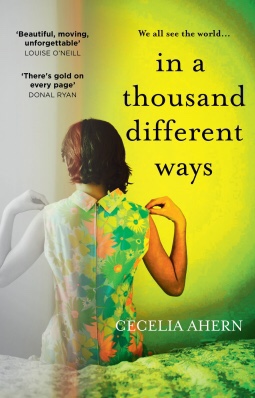
In A Thousand Different Ways by Cecilia Ahern

Cecilia Ahern gets better and better. I loved Freckles, which I’d tried despite hating her early books (especially P.S. I Love You, a book I hated with such a passion I wanted to throw it on the fire). This was such a profound book and touched me deeply. It was no stretch to believe in our heroine Alice and her ability to see people’s emotions as colours. I could also empathise with how difficult it is for her to cope with. I identified with our heroine so strongly, both physically and mentally. To explain, ever since I was diagnosed with MS I get strange crossed wires with my senses, especially around sight and taste. If I see a beautiful display of daffodils, I suddenly taste delightfully sour sherbet lemons and my mouth waters to the point of pain. Every so often, if I’m anxious, the smell and taste of Mum’s cottage pie drifts in and I can actually experience it as a physical sense. It’s obviously something that’s comforting to me. These experiences are as vivid and real as if what I smell and taste is directly in front of me. I think this ability to make strange connections and perceive senses in different ways also stretches to other people’s emotions. There are times when someone walks into a room when I can feel their emotion as strongly as my own. It goes beyond a knowledge of body language, I can actually feel their anger, confusion, grief or joy in my own body. As you can imagine this has been incredibly useful in my counselling work, but it’s also completely exhausting, especially when a lot of people are around.

Alice is from a dysfunctional family and we’re thrown directly into their daily life, where elder brother Hugh and Alice are desperately trying to keep their family together. Alice has to get her younger brother up and ready for school, trying so hard not to wake their mother Lily and incur her wrath. Sometimes when they return Lily still hasn’t surfaced, but if she has it’s still best to remain under the radar because she’s usually irritable, lethargic and unable to connect with her children. Other days they may come home and find Lily up, dressed and full of energy. She may be frantically cooking pancakes, multiples of them, while working out the overheads of running a mobile pancake van. This tendency to flit between extremes is spoken of in whispers between the children, quick warnings to brace themselves or expect the worst. One day after school Alice comes home and finds Lily still in bed, even worse there’s an eerie blue mist emanating from the bed and filling the room. Alice fears the worst and rings an ambulance, then runs into her room and hides. It’s only when she hears her mother screaming and swearing at the paramedics that she realises Lily is alive. What’s baffling to Alice is that no one else seems to see the blue colour emanating from her mum.

I absolutely loved the way the author described Alice’s adjustment to having this vivid colour display wherever there are people. In the school environment it’s a nightmare for her, everyone gives off a different mix of colours, moving and flashing at her eyes until she starts to suffer migraines. Her insistence on wearing sunglasses to school brings her to the teacher’s attention and they think she’s playing up and being insolent. Hugh knows though and seems to realise instinctively that it’s part of Alice’s hyper-sensitivity; the colours are simply a physical manifestation of her ability to feel other’s emotions. Alice is what might be called an empath, she has a highly tuned radar for the moods and sensitivities of people in close proximity to her. As a child she sees the negatives in her situation, mainly because she doesn’t have autonomy. If Lily is blue, red, or at worst black, there’s nothing Alice can do to avoid it. She can get out of the house if Lily hasn’t seen her, but that’s not always possible, leaving her at the mercy of her mother’s mood. The author brilliantly conveys Alice’s feeling of powerlessness and the fear she feels as she comes home, unsure of what will happen when she goes inside. Scenes where Lily is at her most angry, in one scene towards Hugh and his plans to go to university, the furious and messy black colour Alice can see is really menacing. Yet they go on hiding Lily’s condition, because the alternative is social services and possibly having to split the family up.

I found myself really worried for Alice, because in the swirl of colours and emotions that assail her every hour of the day how can she ever find peace? Between that and the terrible situation at home there’s never a moment for her to develop herself. We only know who Alice is in relation to everyone around her. She becomes subsumed by their emotions, needs and wants to such an extent that her own don’t get a look in. I was devastated by her choice to stay at home after leaving school with Lily and her little brother, who’s rapidly becoming a violent criminal. His antagonism towards Alice comes from being the baby of the family and not yet being able to view his mum objectively. Lily has the ability to threaten and manipulate quietly, deliberately under the radar of her youngest son. So he only sees Alice’s attempts to stick up for herself, which cause such a furore that in his eyes Alice is the problem. I was worried that she would never be able to leave home, follow a career or get married and have her own children. She has become so emotionally literate though and still worries about her family members, even the ones who treat her badly. I was worried she wouldn’t be able to discover her authentic self and develop the life she wants without leaving. One catalyst for change is the man she happens to see on his way to work. He stands out instantly because he isn’t giving off any colours and Alice is so fascinated that she follows him. Andy is a strange mix of both restful and mysterious. Alice has never had to work so hard on getting to know someone, it’s both scary and intoxicating to peel back the layers. However, when they’re just ‘being’ – taking a walk or watching a movie – Alice can relax fully, because she can’t sense all the colours lurking underneath the surface. I was intrigued to know whether this could mean he is Alice’s ‘one’, but also whether there were other colourless people in the world.

From the perspective of this reader with a disability it was so interesting to watch someone negotiate the world with a difference like this. I’d probably call it an ability rather than a disability. I loved discovering whether Alice grows to cope with her colours or moves beyond the difficulties of her childhood. As we moved through her life I forgot she wasn’t a real person, that’s how well-rounded a character she is. I felt like I was having a conversation with one of my counselling clients because of the depth the author goes to and the richness of her inner world. It was a surprise to see how her age and experience changes her relationships with other characters. I found the final sections of the novel, deeply moving and strangely comforting. I felt privileged to have moved through life with this extraordinary woman.

Meet the Author

After completing a degree in Journalism and Media Communications, Cecelia wrote her first novel at 21 years old. Her debut novel, PS I Love You was published in January 2004, and was followed by Where Rainbows End (aka Love, Rosie) in November 2004. Both novels were adapted to films; PS I Love You starred Hilary Swank and Gerard Butler, and Love, Rosie starred Lily Collins and Sam Claflin.

Cecelia has published a novel every year since then and to date has published 15 novels; If You Could See Me Now, A Place Called Here, Thanks for the Memories, The Gift, The Book of Tomorrow, The Time of My Life, One Hundred Names, How To Fall in Love, The Year I Met You, The Marble Collector, Flawed, Perfect and Lyrebird. To date, Cecelia’s books have sold 25 million copies internationally, are published in over 40 countries, in 30 languages.

Cecilia Ahern writes on her Amazon author page that the thread linking her work is in capturing that transitional period in people’s lives. She is drawn to writing about loss, to characters that have fallen and who feel powerless in their lives. She is “fascinated and inspired by the human spirit, by the fact that no matter how hopeless we feel and how dark life can be, we do have the courage, strength and bravery to push through our challenging moments. We are the greatest warriors in our own stories. I like to catch my characters as they fall, and bring them from low to high. My characters push through and as a result evolve, become stronger and better equipped for the next challenge that life brings. I like to mix dark with light, sadness with humour, always keeping a balance, and always bringing the story to a place of hope.”

Posted in Publisher Proof

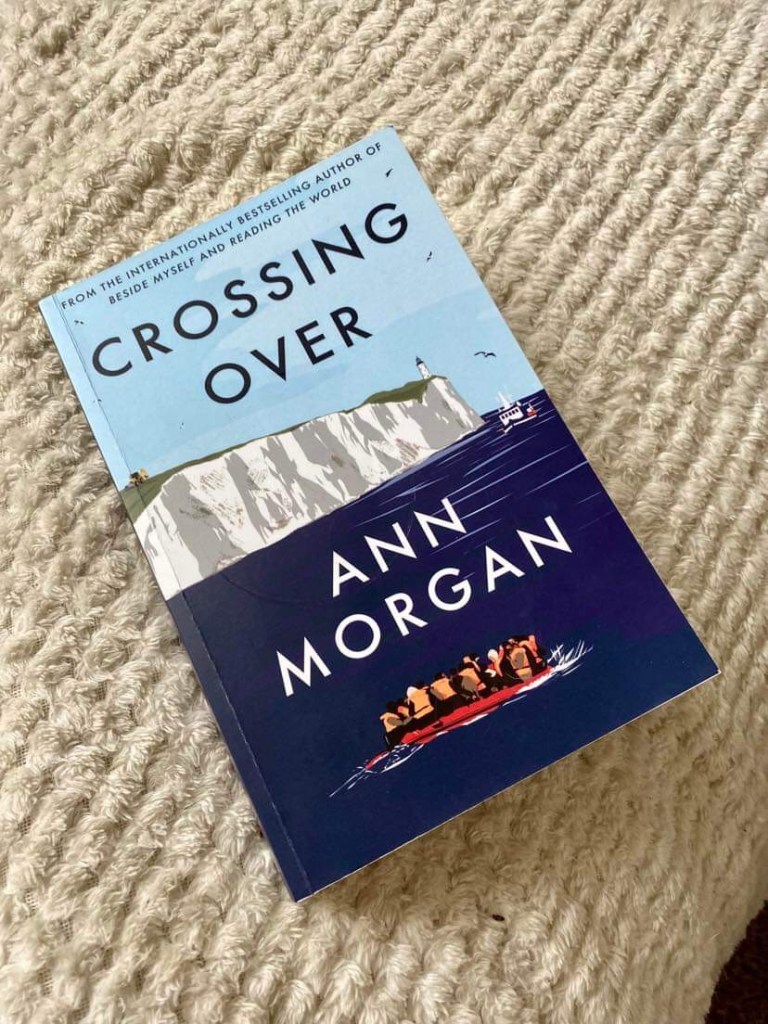
Crossing Over by Ann Morgan

Blurb

Edie is finding the world around her increasingly difficult to comprehend. Words are no longer at her beck and call, old friends won’t mind their own business and workmen have appeared in the neighbouring fields, preparing to obliterate the landscape she has known all her life. Rattling around in an old farmhouse on the cliffs, she’s beginning to run out of excuses to stop do-gooders from interfering when one day she finds an uninvited guest in the barn and is thrown back into the past.

Jonah has finally made it to England where everything, he’s been told, will be better. But the journey was fraught with danger and many of his fellow travellers didn’t make it. Sights set firmly on London, but unsure which way to turn, he is unprepared for what happens when he breaks into Edie’s barn.

Haunted by the prospect of being locked away and unable to trust anyone else, the elderly woman stubbornly battling dementia and the traumatised illegal immigrant find solace in an unlikely companionship that helps them make sense of their worlds even as they struggle to understand each other. Crossing Over is a delicately spun tale that celebrates compassion and considers the transcendent language of humanity.

My Review

My Review

As I started to read Crossing Over I was knocked backwards by how incredibly innovative the narration was, but also how incredibly brave. Edie’s inner world is fractured and of course we don’t know why or what’s going on at first. The author trusts her reader to carry on, to make sense of what’s happening and never underestimates us. We’re plunged headlong into Edie’s world and her desperate attempts to communicate her place in it. The timeless farmhouse she seems to have known all her life, the villagers and her routine of church or WI events all seem to be constants. What’s changing is Edie, as she drops backwards through time, forgets commitments and even visitors or why they are there. As we get to know her, the narrative works on two levels. We are with Edie in whatever time and circumstance her mind places her, but also with Edie as she becomes painfully aware that there’s a way she should be behaving, but even when she’s sure of the proper behaviour it’s often in the wrong context. She’s just on the edge of awareness most of the time, just about recognising from people’s response or facial expressions that she’s not quite hit the mark. Her brusqueness and artificial bonhomie only faintly cover the confusion and fear underneath. The chaos is brilliantly written, in jagged prose that contrasts the inner truth of how much Edie is struggling and the world’s response as it becomes more and more obvious that all is not okay. As Jonah comes into the narrative, also operating at fight or flight level, things become even more confused and complicated. Edie thinks he’s there to spy on her and he’s baffled by the way she communicates, her poor memory and her lapses into the past. Can they come to an understanding of each other and somehow help each other move forward?

This could have been one of those really sentimental novels, designed to be uplifting, but the author avoids that with these complex characters. Not everything about them is sympathetic, they are real and flawed. Edie isn’t a cosy little granny and through her time lapses we start to realise she has experienced traumatic events in her younger years. She has also made bad choices in life. There’s a deeply ingrained sense that there’s one correct way to be and her standards are slipping. Some of the muddled events are a strange mix of humorous and heartbreaking. The cake sale springs to mind, where she has lapsed back to being younger and wears an outfit that’s far too colourful and revealing for an elderly lady with varicose veins to cover. She then offers to keep track of the money and ends up making mistakes, as well as eating a whole batch of highly prized cakes. These types of escapades made me giggle and I loved the way she keeps her head high and won’t bow to their concerns or questions. Yet the fear and anxiety running underneath this forceful front made me feel for her, perhaps because I have a life limiting and degenerative illness I could understand her desperation to stay independent and deny what’s happening to her. Fear makes her angry and lash out, imagining the embarrassment of the vicar and other do-gooders if she let slip some of the secrets she holds about them. I could sense that the past held the clues to Edie’s character and I was waiting for something quite dark to be revealed.

Jonah also holds some dark secrets and memories deep inside, things he has experienced on the journey and from his life before. I read that the author had been very careful writing his character, with a great awareness of the sensitivities involved in writing a black character without that lived experience. She has used sensitivity readers and has revised the novel several times. Yet Jonah isn’t a stereotype or a cardboard cut-out, he has real depth. No one can go through what Jonah has and remain untouched and all credit to the author for not following an easier, and potentially more lucrative, redemption narrative. As a result this might not be to everyone’s taste, but I thoroughly enjoyed delving into two such complex and damaged characters and the disjointed way their stories are told. Have patience with it, get used to the complicated and unreliable narration and you will be rewarded with a rich and thoughtful read about people society increasingly sees as problems to solve, rather than human beings.

Thank you to Renard Press for my proof copy in exchange for an honest review.

Posted in Random Things Tours

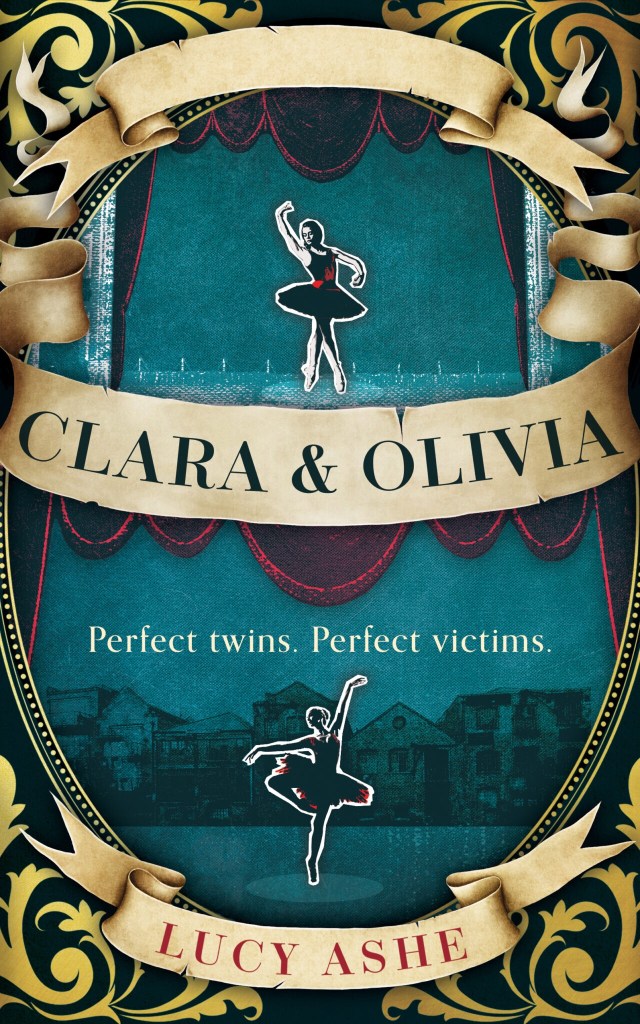
Clara and Olivia by Lucy Ashe.

“Surely you would like to be immortalised in art, fixed forever in perfection?”

I would kill to dance like her.

Disciplined and dedicated, Olivia is the perfect ballerina. But no matter how hard she works, she can never match identical twin Clara’s charm.

I would kill to be with her.

As rehearsals intensify for the ballet Coppélia, the girls feel increasingly like they are being watched. And, as infatuation turns to obsession, everything begins to unravel.

We’re in Black Swan territory here with the company at Sadler’s Wells as they rehearse Coppélia, which couldn’t be more apt for the story of Clara and Olivia. Clara and Olivia are identical twins, shaped by their ballet mad mother to become the perfect ballerinas. The girls are so identical that in order to assert her own identity Olivia wears her hair in a higher bun than her sister, with a rose attached. There are ballerinas who must be the epitome of perfection and blend in with the chorus so the audience sees perfectly synchronised ballet; the company as one rather than individuals. Olivia has taken her mother’s lessons to heart and is that perfect ballerina, she blends perfectly into the company, but she’ll never be the prima ballerina. Clara has that something extra.

Coppelia is about a man who creates a dancing doll, the image of a perfect ballerina. It’s so beautiful that Franz, a young man from the village, falls in love with it and sets aside his real sweetheart Swanhilda. To teach him a lesson Swanhilda dresses as the doll and pretends it has come to life. While the ballet is a comic one there is a more disturbing similarity, between the doll and the ballerina when each dancer stands at the barre every morning, identical in uniform and in movement. These are the parts the audience doesn’t see, that daily dedication to the same movements over and over until they are second nature. We are also blind to the years before this, where each dancer has persevered through pain and injury or given up sleep overs with friends, teenage boyfriends and even school work to become as light as air on the stage. To move like butterflies, while their worn out and broken shoes are the equivalent of Dorian Gray’s picture in the attic. When watching a ballet it’s not hard to imagine a giant puppet master behind the scenery controlling this whole row of ballerinas so they move as one. With the echoes of Black Swan in my head I was feeling a creeping sense of unease and psychological drama, both around the sisters and whoever it is who watches them.

There are two men in the book, employed or contracted by the ballet company and they too are caught up in this theme of appearances being deceptive. Samuel is a giant. A large, ungainly man whose looks mark him out as different. People would struggle to imagine that it is he who makes their pointe shoes; something that looks so delicate should not be made by people who look like him. When he finds out that the shoes he’s making are for Olivia Marionetta he knows he must find some way to mark them out as different from all the others, just as he noticed her among the other dancers in the company. He always writes the dancer’s name across the sole in pen, but her shoes should have something more. He takes his inspiration from the white rose he has seen pinned just about her bun and engraves it into the sole then, as he leaves the shoes in her pigeon hole, he places a white rose on top. Samuel is lucky that despite his size he can travel around the theatres and dance studios largely unnoticed. His contribution is unseen and therefore, he is invisible. So he has no doubt that Olivia won’t guess who has paid her this tribute, even if he has been hanging around the rehearsal room. He noticed that despite looking identical, the girls are not the same. Olivia is obedient and keeps her eyes cast down during rehearsals, not daring to challenge the dance mistress. Whereas Clara scares him, she knows she is an excellent dancer and there’s a challenge in her moves and the way she looks directly at the dance mistress. When given direction, she turns away and rolls her eyes at the other dancers. Clara knows she outshines the others, but he hopes his shoes will make Olivia feel adored too.

Nathan is even closer to the dancers during rehearsal because he is their practice pianist. He and Clara go out with the company at night while Olivia stays home, soaks her feet and mends her shoes for the following day. Her legs will be refreshed and her bag carefully packed, whereas Clara knows her feet will ache from practice, followed by dancing through the clubs till the early hours. She also knows that when she opens her bag, her tights will be full of hair grips. Usually the girls share clothes, but Clara has been wearing a dazzling green coat that Nathan bought her. Of late she has started to find the coat a little claustrophobic, the belt too restrictive and the shoulders too heavy. Nathan too seems to get a little closer each time, his hand always at her waist and his knee pressed tightly against hers under the table. She was also a little unnerved at the line of verse he scribbled when they were playing a game – ‘A lovely apparition, sent to be a moment’s ornament’ – while she isn’t sure what it means, something about it bothers her and I thought back to the puppet ballerina Coppelia. Nathan appears to be the perfect companion for a beautiful young dancer, but the closer he gets the more she wants to pull away. She imagines his houseboat, the ideal home for a young bohemian musician, but despite it being a few moments away from her flat he never takes her there. Is the look and idea of her more alluring than the reality? In their own private rehearsal he pushes her, far beyond tiredness and hunger. In the dressing room after he apologises, she notices how he looks at the dancer’s jumble of make up, jewellery and bits of costume that haven’t been returned to wardrobe. The one thing he becomes fixed on is a tiny figurine of a ballerina, like the ones you might find in a girl’s jewellery box, permanently on point and turning endlessly without exhaustion or hunger to mar her beauty. No real woman could be so perfect.

Although I found the novel a little slow at first, but I soon realised that the inner thoughts and feelings are slowly building towards action. Once strange things start happening around the theatre the pace picks up and I became intrigued. In the well under the theatre, where the dancers like to go for pre-performance rituals, a single shoe is found floating in the water like an evil portent. Then life changes start to come tick and fast. Clara receives an offer she has never imagined, but it will mean moving away from Nathan and choosing independence from her sister. Their mother, the woman who inspired their career choice, is deteriorating in a nursing home. Her imminent passing is another sign – do they still need to be in each other’s pockets? Usually they need their combined strength but without their mothers rigid ideals to live up to could they go it alone? The author hints at these changes of identity, with one sister choosing to borrow the other one’s clothes, perhaps hoping for a little of their attitude too. She often feels like a mere echo of her sister, but I worried that this ‘doubling’ would land one or both of them in further danger. This tension is offset by Samuel’s story, of being led away from an obsession towards something more real. Living instead of watching. If the ballerinas represent perfect objects of desire, he is being offered a real relationship. But is it Samuel who watches the twins and can he see that someone to love and support you is more important than appearance? As the hidden desires and obsessions of these characters come to the surface and explode into action more than one of them will be in danger. This thriller has real atmosphere and characters with fascinating psychological issues that drive the plot.

Published 2nd Feb by Magpie Publishing.

Meet the Author

LUCY ASHE trained at the Royal Ballet School for eight years, first as a Junior Associate and then at White Lodge. She has a diploma in dance teaching with the British Ballet Organisation. She decided to go to university to read English Literature at St Hugh’s College, Oxford (MA Oxon), while continuing to dance and perform. She then took a PGCE teaching qualification and became a teacher. She currently teaches English at Harrow School, an all-boys boarding school in North London. Her poetry and short stories have been published in a number of literary journals and she was shortlisted for the 2020 Impress Prize for New Writers. She also reviews theatre, in particular ballet, writing for the website Playstosee.com.

Posted in Netgalley

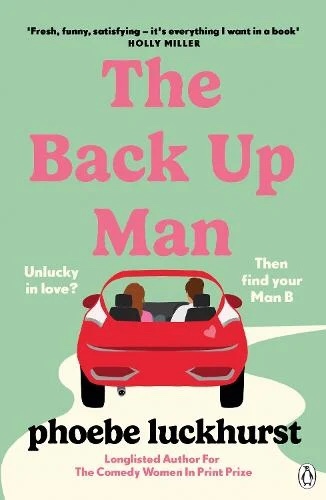
The Back Up Man by Phoebe Luckhurst.

I was enticed into our heroine Anya’s world for two main reasons: Glasgow is one of my favourite cities and I too had a back up man. My best friend Elliot and I made a pact when we were moving on from sixth form. He didn’t know that I was head over heels in love with him, but he was my best friend and I didn’t want to ruin anything (we did ruin things a few years later, after university, but that’s another story). So we decided that if both of us were single at the age of 40, we’d get married. Life takes strange turns and although we were still in touch, Elliot had a long term partner and three children by then and I was a widow. We’ve all had a break up or other difficult life event and been overcome with a bout of nostalgia. Sometimes what has happened to us has been so scary and life changing, it makes more sense to lapse into the past, revisiting times and people who feel safe. We’re always doing this through rose tinted spectacles forgetting the negative aspects of the relationship or memory. So I could really understand Anya’s reasoning, especially after the shock she gets on a visit to Sunday lunch at her boyfriend’s mother’s home. In fact it’s on their way home, as they drop into a Shell garage, where Callum ends their four year relationship. Because he hadn’t wanted to upset his mum by doing it sooner. So Anya is facing a massive life change. The couple live together in Callum’s flat and while he can find somewhere to stay for a few days until she gets herself together, he will want her to move out by the end of the week. What else can go wrong?

Glasgow’s west end is a beautiful setting, giving both atmosphere and warmth to the story. I love the beautiful Victorian stone homes in the area and I have imagined myself living in one of them, but they’re pricey and only for the city’s professional classes. People like Anya’s cousin Claire. It’s her sister Georgie who suggests that Claire might want a lodger. Georgie gets on better with Claire than Anya does, because Anya finds her a bit stuck up and joyless. She also dislikes her creepy partner Richard. So once her best friend Paddy has helped her move to a single mattress in Claire’s back bedroom, Anya lies there wondering if life could get any worse? Then the next day she loses her job. As she’s going through her badly packed boxes she finds her old year book from school and a note from Euan. In her final year of school, Euan and Anya had a casual connection that could perhaps have become something more had he not been going away to university. They were never officially together, so they didn’t really break up, but they did make a pact. If they are both single when they are thirty years old they will make a go of it together. In a wave of nostalgia, borne out of feeling her life has fallen apart, Anya starts to search for Euan when she’s surprised by a message from a mutual friend. Jamie has also been looking for Euan, maybe they could join forces?

For me, this romcom worked because it is so much more than a simple boy meets girl. This period of time is transformative for Anya in so many different ways. She learns so much about herself and for me that is the most interesting part of the story. She and sister Georgie live in Glasgow with their parents living out in a suburb of the city. Anya and her mother have a spiky relationship because she has very set ideas about how life should be. Anya’s favourite pastime is cooking, in fact she finds that in the week where she’s alone in Callum’s flat, the night she cooks from scratch is when she feels most relaxed. For a little while she’s been running a page on Instagram called anyaeatstoomuch and her friend Paddy suggests that she could develop this hobby into a business. So she starts to look into turning it into a catering company, but in the meantime her mum isn’t going to let her sit around feeling sorry for herself. She finds her a job looking after the granddaughters of a woman she knows, their mother is working as a beauty influencer. These terrible twins are brilliant comic relief, being both unruly and sneaky, but subdued by Anya’s incredible food. It could be a complete waste of her time, or it could provide opportunities.

This is just one of the things that Anya has to learn. She can’t continue to drift and let life happen to her, she has to take control to get the life she wants. There was a sense of mystery too, in the search for Euan and the dead ends they find but I also wondered about Jamie. His interest legitimises Anya’s search, just when everyone else is telling her she’s behaving like a crazy person. I could understand her need to look back when everything else is falling apart, but what was Jamie’s reason for looking for Euan? I was also concerned about Claire’s fiancé Richard. He’s very furtive, lurking around corners and exercising his ability to soundlessly appear in the room. Their relationship also teaches Anya something important, just because someone’s life looks perfect it doesn’t mean it is. We all show a very edited version of life on social media and the reality is often very different. Another lesson is that having everything you want – the fiancé, the West End house, the great career – doesn’t necessarily mean you’re happy. It’s all these bits of learning and the potential growth Anya could make in her emotional life and career that really make this story. I was rooting her her to make the right choices, survive the terrible twins and forge an exciting life for herself, whether a man is involved or not.

Published 19th January 2023 by Penguin

Meet The Author

Phoebe Luckhurst is a journalist and author, who has written for publications including the Evening Standard, ES Magazine, ELLE, Grazia, Sunday Times Style, Guardian, Telegraph and Grazia. The Lock In is her first novel and this is her second.

Posted in Publisher Proof

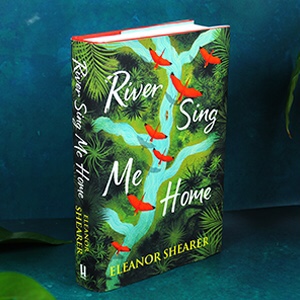
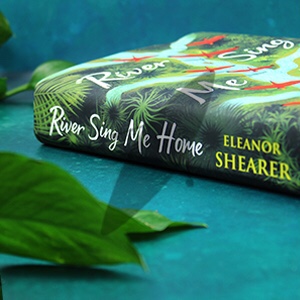
River Sing Me Home by Eleanor Shearer

This incredible debut novel grabbed hold of my mind and heart, never letting go until the final paragraph. I shed tears at several points in Rachel’s journey and she’s a character I won’t forget. We meet her working on a plantation in Barbados, at that strange point after slavery when plantations were instructed to free slaves, but their sense of freedom was short-lived as masters were able to keep slaves for a further six years as apprentices. So, despite being freed the day afterwards started just the same, at the crack of dawn and walking to the cane fields for a day of back breaking work. Having nothing meant that most had no other choice. Rachel is thinking of her children, several lost before they had a chance to live but others scattered to the four winds. Her boys Micah and Thomas Augustus and her girls Cherry Jane, Mary Grace and Mercy all taken from her in different ways. Only Cherry Jane spends a few years nearby as a house slave, but in her superior position she doesn’t acknowledge Rachel who is merely a field hand. One day she decides that she must find her children, she must know where they are and what happened to them, even if the news is that devastating final loss. Rachel says that as a slave she plants cane but nothing of her own. However her children came about, Rachel feels that they anchor her in this world and she can’t rest until she finds them. So she runs and with our hearts pounding we follow her.

As Rachel took her journey I kept thinking about my own mum. She always feels at her happiest when we’re all under her roof, all four generations. She told me that she feels like we’re all safe and there’s a feeling of completeness. I am not a mother, so until recently I hadn’t experienced anything like this, but now I am a step-mum and I do get a sense of relief when both my stepdaughters are here under my roof. There’s a feeling that I could close the curtains and we’d all be safe. I couldn’t imagine how it must feel to have those children stripped from you as commodities to be sold. As I finished reading the book on Holocaust Memorial Day, my mind was also taken to an account by a survivor on TikTok where she described her family being split apart into separate queues as they reached Auschwitz. She was placed in one queue bound for a factory sewing uniforms, but her mother and sister were deemed unsuitable for work and in the chaos was the final moment she saw them. It’s a similar atrocity, so huge that it’s hard to imagine or compute. A whole race of people are deemed as expendable and discarded with no more regard than swatting a fly. In amongst some powerful and distressing scenes in the book, one thing that hit me really hard was Rachel’s realisation that her emotions didn’t matter. As a younger woman she had held herself proudly and resolutely, determined that the actions of the overseer wouldn’t make her cry. As an older woman she realises that she could have owned her grief, it wouldn’t have satisfied or pleased the overseer to see her distress because she simply didn’t matter to him.

Rachel’s journey is a long one, across Barbados and over to Trinidad, and we experience every moment with her. The author provides vivid descriptions of each place Rachel experiences down to the way the earth feels under her feet. Cities give her a certain anonymity, but it’s in nature that I really felt Rachel’s freedom. The author layers sounds of birds, running water and wind through the trees with the feel of leaves or water against the skin. The water of the rivers are welcoming and help her journey: kayaking up the Demerara to look for runaway communities in the forest and Thomas Augustus; rushing down river holding an uprooted tree to avoid capture; feeling cocooned and supported by the water in a bathing pool. The runaway community are made up of escaped slaves and indigenous tribesmen who have survived the colonisation of their island and the forest both hides them and supports them. There is a sense of abundance in the food, the company and the mix of cultures that comes out in musical form. The ancient songs of Rachel’s African heritage come alive for her when mixed with slave songs and the music of the indigenous tribes represented. It seems fitting that it is in the forest that a marriage takes place and a baby is born – these are the building blocks of the future and that future is truly free.

I found some of the characters Rachel comes across on her travels fascinating and they add something to the tale by bringing their own experience, adjustment and acceptance of their situation. Nobody has adopted the very part of his identity forged by the slave experience, the sense that he is no one and belongs nowhere. Despite the negative connotations of the name, being nobody allows him to take his power back, to be anonymous, to escape unseen and leave a mark nowhere. He has been transitory ever since he started running, living a transitory life on the ships that travel between the islands, perhaps feeling more at home in the water than on the land he was enslaved by. I wondered whether Rachel’s quest would make a mark on him and if he would find a true home, whether that be a place or a person. I was also intrigued by Hope, whose very name embodies looking forward. She has found her place in Bridgetown by entertaining paying gentlemen. She is beautiful, impeccably dressed and seems to have found a independent way of living she’s at peace with. While some people don’t want to be seen with her, Rachel is not so judgmental. After all, Rachel tells us, men have been inside her but there she was the one who paid the price. The threat of sexual violence is alluded to but never explicit. Rachel won’t discuss or ask another woman how her children have come into being, because she knows the pain of a pregnancy where you pray the child you carry has no resemblance to it’s father. Equally she knows what it’s like to dread the birth of a child who might bear a resemblance to a man greatly loved and lost forever. We don’t know about the conception of any of Rachel’s children. Her ‘pickney’, as she calls them, are hers and hers alone and it is this that makes it imperative that she finds them. She needs to find them, in order to feel whole.

The whole journey is littered with joys and terrible grief, but Rachel knows she must keep going. She meets others who have started to build a new life, placing the past firmly behind them and never pining for it. They live firmly in the here and now with questions left unanswered and people left behind. For Rachel that isn’t enough. Her children are like the scattered pieces of a broken vase. She doesn’t expect her family to be perfect and knows that there will be cracks and missing pieces. Rachel is putting her broken vase back together and she will pour a substance into the cracks, bringing the pieces together until her past is whole again. The binding substance used in Japanese Kintsugi pottery is usually gold, each crack making the piece more beautiful. In Rachel’s case the binding substance is love. Love for those here, those found but far away and those gone forever. An all encompassing love symbolised by the birth of a baby in the forest.

There was a ‘feeling of complete, absorbing, unqualified love. The baby was a stranger, without speech, unknowable. It would be years before he could say what was on his mind. And yet, love did not wait. Love was there in the beginning – even before the beginning. Love needed no words, no introduction. Existence was enough.’

Published on 19th Jan by Headline Review

Meet The Author

Eleanor Shearer is a mixed race writer from the UK. She splits her time between London and Ramsgate on the coast of Kent, so that she never has to go too long without seeing the sea.

As the granddaughter of Caribbean immigrants who came to the UK as part of the Windrush Generation, Eleanor has always been drawn to Caribbean history. Her first novel, RIVER SING ME HOME (Headline, UK & Berkley, USA) is inspired by the true stories of the brave woman who went looking for their stolen children after the abolition of slavery in 1834. 

The novel draws on her time spent in the Caribbean, visiting family in St Lucia and Barbados. It was also informed by her Master’s degree in Politics, where she focused on how slavery is remembered on the islands today. She travelled to the Caribbean and interviewed activists, historians and family members, and their reflections on what it really means to be free made her more determined than ever to bring the hidden stories of slavery to light.

Posted in Random Things Tours

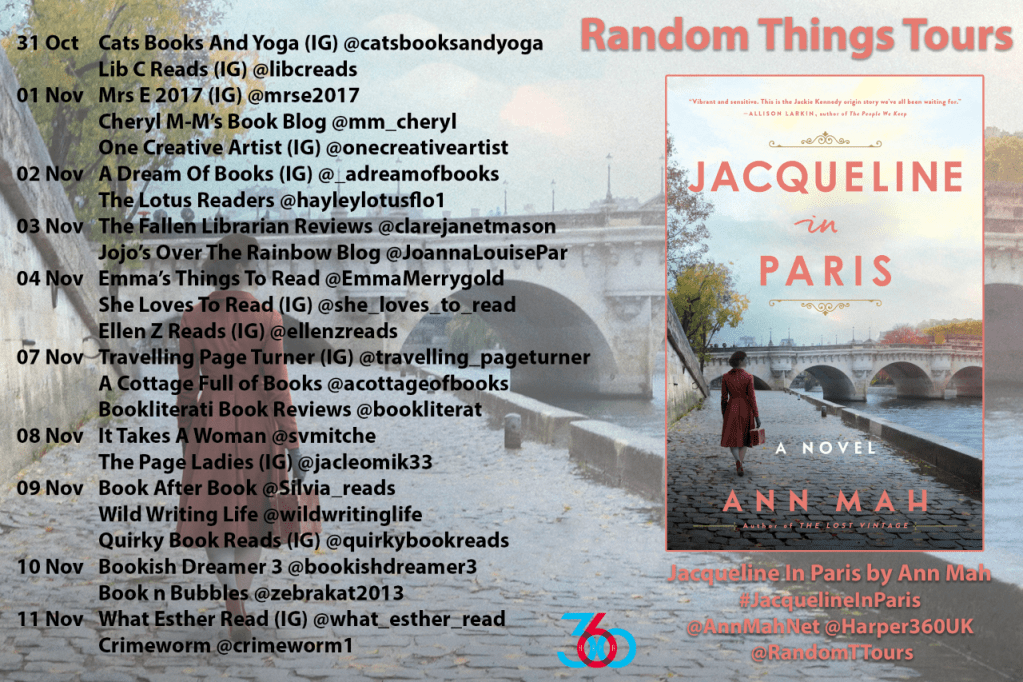
Jacqueline in Paris by Ann Mah

Jacqueline Bouvier Kennedy Onassis is one of those iconic women that we can’t help but be curious about. From watching the film JFK and numerous documentaries about the death of President Kennedy with my mother, I started to be curious about the woman in the blood-stained pink suit. I think people are drawn to women who remain silent. As far as I’m aware she has never spoken directly about the horrific, life changing events of that day. She has almost seemed stoic. The perfect widow, in her lace mantilla at the funeral, still seeming numb and shell-shocked. When she surprised everyone by marrying Aristotle Onassis, the millionaire shipping magnate, I think it was driven by a need to hide. She needed a place to be without cameras following her every move and on his yacht she was definitely away from prying eyes. Perhaps his protection allowed her to grieve and come to terms with her trauma. I wanted to read this book, because I was fascinated to meet this version of Jackie – the Jacqueline before she was Jackie in. I always had the impression that she could have been a woman in her own right, more than the political wife she became.

Ann Mah has set her book in one particular year. In 1949 Jacqueline Bouvier travelled abroad for her junior year at college. It was to be her last year of freedom. She was aware that despite being poised and ready for society, her family were on the edge financially and she felt pressure from her mother to make a good match on her return. She met Jack Kennedy in 1952. Jacqueline lives in an apartment with a widowed French countess and her daughters. She finds a world of champagne, avant-garde theatre and jazz clubs and socialises with people she would never have met in her home town or the social circles at Vassar. There’s even romance with a man who loves literature like she does, but who would be totally unsuitable back home. Yet Paris isn’t all fun and glamour, because this is the aftermath of WW2 and its clear that the city’s people have suffered. The countess and her daughters have suffered too, as part of the resistance. The whole city is haunted by events during the Occupation and it will take many years for them to recover from the lies, betrayals and suspicion that lurk round every corner.

I love that Mah has written this novel in the first person, so we have Jacqui’s unguarded thoughts and emotions from the start. Even though it is a fictionalised self we’re getting to know, it still feels like a rare window into the innermost thoughts of a very private woman. It may sound strange to regard her as private when she was later married to the most powerful leader in America and arguably the world. Jacqui is private though. From this part of her life when she has the most freedom she’s ever known she’s testing people out for herself, but there’s still a natural reserve. She gets to decide who to spend time with and who to trust. On her return to the US and her subsequent relationship with John Kennedy, she is private by design. It’s part of the mystique of being a powerful politician’s wife who should show loyalty, discretion and control of her emotions. Once she’s in those circles, who can she trust to be a true friend? Where many might have seen her as the archetypal political spouse, this was the ambition of her mother rather than Jacqui’s own desire. Here we see her when she was naive and idealistic. Her love of art and for the city of Paris is evident. She’s also keen to make friends and experience real French life, but that reserve can make it hard for others to feel they know the real her.

She finds that one of the biggest differences between the US and Europe is a political one. During the war, Parisian people did what they had to in order to survive and there are still grudges against those forced to collaborate. She learns which subjects to avoid. Madame de Renty is a lively and colourfully dressed woman during the day, but she was imprisoned at Ravensbrück concentration camp during the war and Jacqui hears her crying in the night. Some truths can never be spoken. Aside from the post-war adjustments and the effects of trauma that will last for generations, Jacqui is most shocked by the Parisian’s politics. There is a lean towards communism here, something that’s unthinkable in the US where it’s considered in the same breath as Nazism. Her mind is broadened by friends who explain it’s underlying principles – an equal, fair society. This has huge resonance for us, because we understand she will be First Lady during the Cuban missile crisis, and the 1950’s saw a wave of suspicion about communism that fuelled the McCarthy era.

Despite these darker undercurrents there’s also the joy of seeing Paris through her eyes, for the very first time. The beautiful language, the smells of incredible food and early morning croissants. There’s also Jacqui’s love of learning and through this I could see glimmers or the different life she could have had, if her family had valued her as more than a marriage commodity. This is a well-researched account that held some of the answers I’d pondered about her life: that pull between the security of marriage and the more precarious life of her own; the love of Europe that would see her return there after Kennedy’s death; the education from a really great college versus the education of how to be a wife provided by her mother. I thought the author found a great balance between fleshing out a story and what we know of Jacqui’s year abroad through historical research. I understood this Jacqui and felt I’d met her before in my own reading. Now I have to give this straight to my mum so we can talk about it.

Meet the Author

Ann Mah is an American food and travel writer. She is the author of the USA
Today and Wall Street Journal bestseller The Lost Vintage, as well as three other books. She contributes regularly to the New York Times Travel section, and her articles have appeared in the Washington Post, Condé Nast Traveler, The Best American Travel Writing, The New York Times Footsteps, Washingtonian magazine, Vogue.com, BonAppetit.com, Food52.com, TheKitchn. com, and other publications

Posted in Sunday Spotlight

Sunday Spotlight! Great Celebrity Memoirs.

I’m not a usual reader of celebrity memoirs. I know there’s a certain snobbery in bookish circles for the celebrity memoir, so I thought I’d get that in there before you click away to another blog. I’m all for whatever gets people reading to be honest, but it’s a rare book that sits above the usual ghost written Christmas fare. These are memoirs that sit above the ordinary, that have touched me emotionally or made me laugh, that have surprised me with the beauty of their writing or their inventiveness, or even revealed incredible stories that kept me gripped to the final page. Some you may have heard of while others are lesser known, but just as compelling.

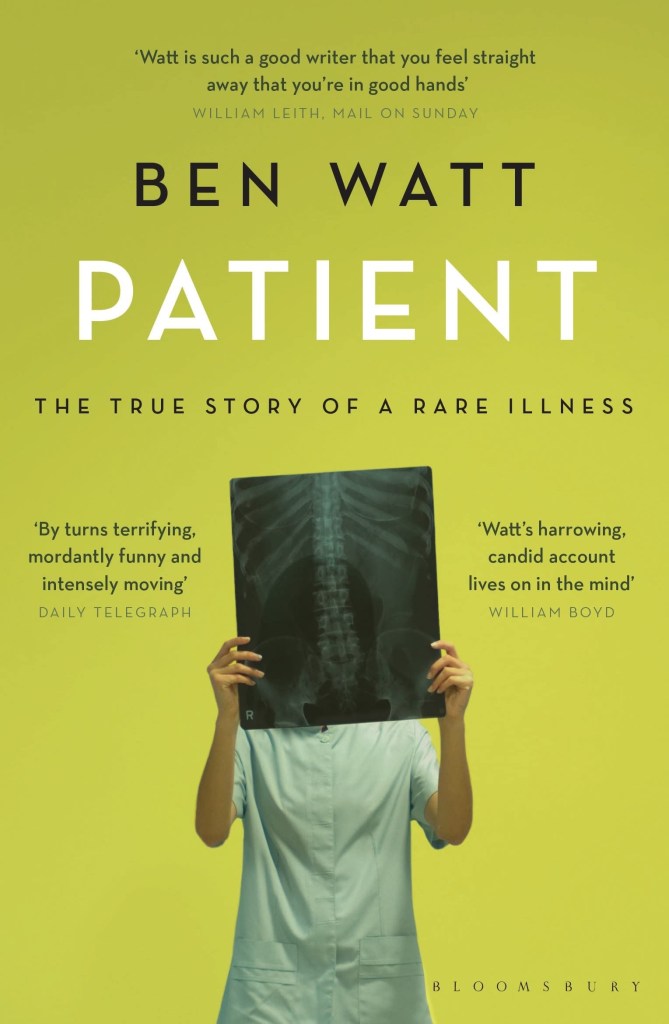
Patient by Ben Watt.

‘In the summer of 1992, on the eve of a trip to America, I was taken to a London hospital with bad chest pain and stomach pains. They kept me in for two and half months. I fell very ill – about as ill it is possible to be without actually dying – confronting a disease hardly anyone, not even some doctors, had heard of. People ask what was it like, and I say yes, of course it was dramatic and graphic and all that stuff, but at times it was just kind of comic and strange. It was, I suppose, my life-changing story.’

Benn Watt is half of the band Everything But The Girl and his short memoir covers a period when his bandmate Tracey Thorn was also his partner. In 1992, when I was taking my ALevels and listening to his band, Ben contracted a rare life-threatening illness that baffled doctors and required months of hospital treatment and operations. This is the story of his fight for survival and the effect it had on him and those nearest him. I recommend this book because it is beautifully written and captures the feeling of being seriously unwell perfectly. He describes coming institutionalised, so in sync with the day to day running of the ward that he could tell to the second when the newspaper lady was going to enter the ward. I love his play on ‘Patient’ as noun and verb at the same time, the patience it requires to endure the diagnostic process and to cope with what I call ‘hospital time’ – where ‘I’ll be a minute’ means half an hour. Only two years after his book is set, I was going through my own lengthy periods of hospitalisation, enduring unpleasant tests and realising there are limits to medical science. It’s an incredibly scary place to be and Ben conveys that so well, as well as the strange feeling when discharged when the patient goes from totally dependent to alone. I remember after a lengthy hospital stay, sitting in my flat thinking it was getting close to mealtime and that I was hungry, then a second later realising I had to make my own food! What he captures best is the realisation that what he expected to be a short interlude in his life, is actually becoming his life. The narrowing of his horizons from someone who toured the world to a resident of a single ward, or even to an individual bed.

Ben Watt

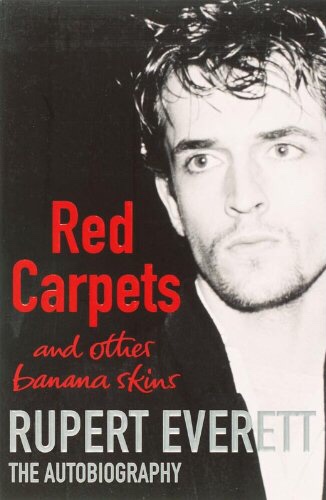
Red Carpets and Other Banana Skins by Rupert Everett

I became fascinated with Rupert Everett after seeing him on Graham Norton’s chat show and finding him both hilarious and painfully honest, both about himself and others. I loved his wit and comic timing in My Best Friend’s Wedding and especially in the Oscar Wilde films he starred in. I was pleased to find he was a devotee of Wilde, who wanted to make an honest film about his later life. My best friend from university always sends me a book at Christmas and I was lucky enough to receive a signed copy of his second memoir Vanished Years. I made sure I found a copy of his first memoir above so I could read them back to back. They both lived up to my expectations. I seem to remember first noticing him in conjunction with Madonna back in the 80’s and he had come across as a pretty boy in that context, but there is so much more to that rather spoiled exterior. His performance in Another Country was exceptional and his eventual film of Oscar Wilde was extraordinarily moving, but it is the drama of his private life that has attracted more attention than his talent. These memoirs show that he has always been surrounded by interesting and notorious people, becoming friends with Andy Warhol by the time he was 17. He has been friend to some of the most famous women in the world: Donatella Versace, Bianca Jagger, Sharon Stone and Faye Dunaway. This notoriety and films such as Dunstan Checks In overshadow incredible work with the RSC and I finally saw him shine on stage in the West End as Professor Higgins in Pygmalion.

I have always known, from his interview with Graham Norton, that Everett is a raconteur, but these memoirs show he can write a great story too. He has an uncanny ability to be at the centre of dramatic events: he was in Berlin when the wall came down, in Moscow at the end of Communism and in Manhattan on September 11th. The celebrity stories are deliciously gossipy and terribly honest. It seems Everett doesn’t hold anything back, whether he’s lampooning someone else or himself. His second memoir is again mischievous, but also touching with stories from childhood and early life. He takes the reader on an amazing journey around the world and from within the celebrity circus from LA to London. I loved the addition of family stories, such as a pilgrimage to Lourdes with his father that is both hilarious and moving. There’s a misguided step into reality TV that goes horribly wrong. A lot of celebrity authors are easy on themselves, writing solely from their own perspective rather than presenting life objectively. Everett is unfailingly honest, presenting his flaws and tragedies with the same scrutiny and irreverence he gives to others. Both books are incredibly enjoyable, a journey with the best and most disreputable storyteller you will ever meet.

Rupert Everett as Oscar Wilde

The Storyteller by Dave Grohl.

One of my favourite video clips recently was of the Westboro’ Baptist Church protesting outside a Foo Fighter’s gig. Then with perfect timing around the corner came a couple of majorettes, followed by a flat bed truck with a band playing The Beatle’s ‘All You Need Is Love’. On the back stood Dave Grohl with a microphone, shouting out their love for the protestors. I’ve always known that Grohl was a good guy and despite only enjoying some of the Foo Fighter’s music I’ve always thought he was an interesting and enlightened person. I’ve also wondered how he recovered following the suicide of Nirvana front man and personal friend Kurt Cobain, an event that stood out in my mind in the same way the death of John Lennon did for my parents. I loved Grohl’s humour and willingness to make an idiot of himself. My best friend and I rewatched the Tenacious D video for Tribute where Grohl is painted red and given an amazing pair of horns as Lucifer. I was bought this book last Christmas by my stepdaughters. However, it was only recently, after the death of another bandmate and friend Taylor Hawkins, that I picked it up and read a few pages every night in bed.

Grohl addresses my reservations about about celebrity memories straight away, stating that he’s even been offered a few questionable opportunities: ‘It’s a piece of cake! Just do four hours of interviews, find someone else to write it, put your face on the cover, and voila!’. Grohl writes his early experiences with fondness and an obvious nostalgia. He found the writing process much the same as writing songs, with the same eagerness to share the stories with the world. He has clearly linked back to old memories and emotions, feeling as if he was recounting ‘a primitive journal entry from a stained notebook’. He has definitely embraced the opportunity to show us what it was like to be a kid from Springfield, Virginia with all the crazy dreams of a young musician. He takes us from gigging with Scream at 18 years old, through his time in Nirvana to the Foo Fighters. What’s lovely is that same childlike enthusiasm while jamming with Iggy Pop, playing at the Academy Awards, dancing with AC/DC and the Preservation drumming for Tom Petty or meeting Sir Paul McCartney at Royal Albert Hall, hearing bedtime stories with Joan Jett or a chance meeting with Little Richard, to flying halfway around the world for one epic night with his daughters…the list goes on. We may know some of these stories, but what he promises is to help us reimagine these stories, focused through his eyes. I’ve seen reviews that claim he has glossed over or withheld some of the truth of his experiences, particularly around Kurt Cobain with Courtney Love absent from proceedings. I don’t think this is being disingenuous, I think this is what Dave Grohl is like – generous, humble and honest with regard to his own take on events. Perhaps he feels other people’s stories are their own and not his to tell. I was so impressed with how grounded he is and how aware of the most important things in his life: his family; his daughters; his friends; those who remind him of where he’s come from; and lastly, his music.

On Writing: A Memoir of the Craft by Stephen King.

Stephen King begins this memoir with the accident that he says has made the last twenty years of his life an incredible gift. With some humour he recounts being on his four mile daily walk and taking a break to relive himself in the woods. As he was returning to the road, a van driver was simultaneously trying to prevent one of his dogs rummaging in a beer cooler. This unlucky coincidence meant King was in a position to be struck as the van swerved off the road. A man who witnessed the crash watched as the impact threw King up and over the van, smashing the windscreen with his head and propelling him into a ditch 14 feet away. Local man, Donald Baker, found King ‘in a tangled-up mess, lying crooked, and had a heck of gash in his head. He kept asking what had happened.’ The van driver seemed devoid of emotion or panic, claiming he thought he’d hit a deer until he noticed King’s bloody glasses on his front seat. In a strange parody of his bestselling novel Misery King was left hospitalised with a shattered hip and pelvis, broken ribs, a punctured lung and fractured femur. The driver died only one year after the accident, from unrelated causes. It took King months to recover, with some limitations remaining to this day.

This strange hybrid book comes out of that time, from that trauma which affected him mentally as well as physically, back to his childhood, his early adult life, his marriage and the drinking that nearly cost him his relationship. If people read this hoping to read a masterclass or a shortcut to writing a bestseller, they’ll be disappointed. You don’t need a fancy masterclass to be a writer, you simply need to write. However, he does explore his own process and influences. There’s some practical advice on character building and plotting, showing how a spark of an idea was turned into Carrie. He also talks about pace, plots and presentation of a manuscript. He talks about he origins and development of certain books and uses examples of other writer’s work to illustrate what he’s advising. What he can’t do is identify that magic or spark that made him a No 1 bestseller for almost half a century. I enjoyed his stories about his early adult years when he was struggling financially, but was so persistent. The jobs he had to take to support his family, when the writing simply wasn’t paying. He was teaching by day and writing in the evenings. He also talks about the perceptions of him in the industry, perceptions I have always thought unfair, that despite incredible economic success and prolific output, he will never be considered a good writer. I loved his advice to write in a room with blinds and a closed door, if you’re not distracted by a view it is easy to disappear into a vista of your own making. He also plays loud rock music, but that wouldn’t be for me, I need silence or calm background music, no TV and no talking. It’s true that every writer needs their own best conditions for writing – although a closed door with no interruptions seems universal – you will need to find your own process. However, I do think he hits upon something important about life, like Dave Grohl, and that is the importance of family to ground us and stand by us while we create and especially when economic success does come.