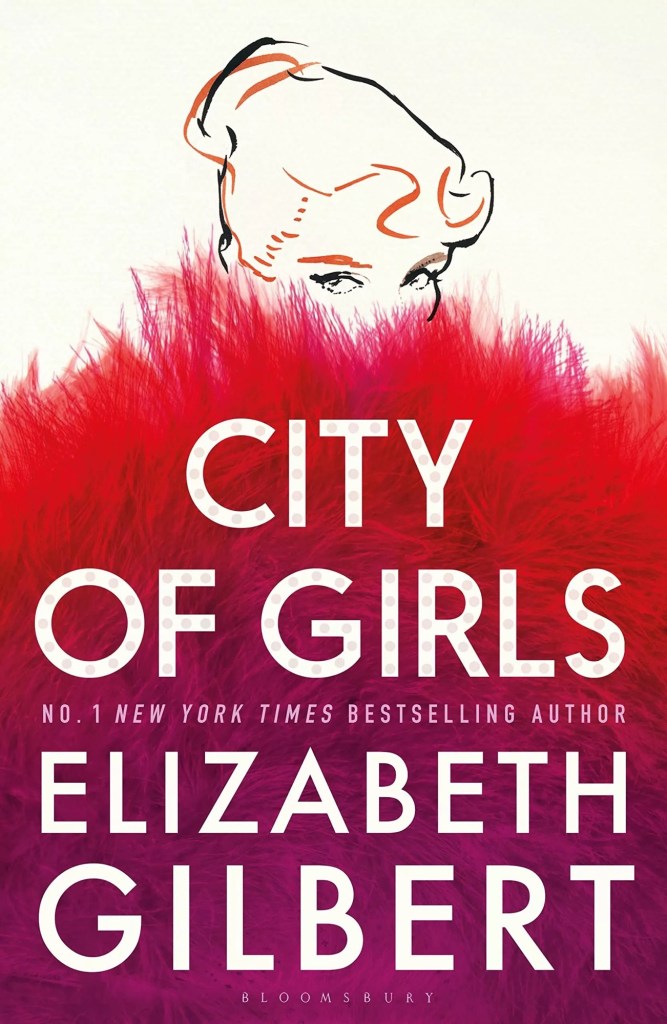
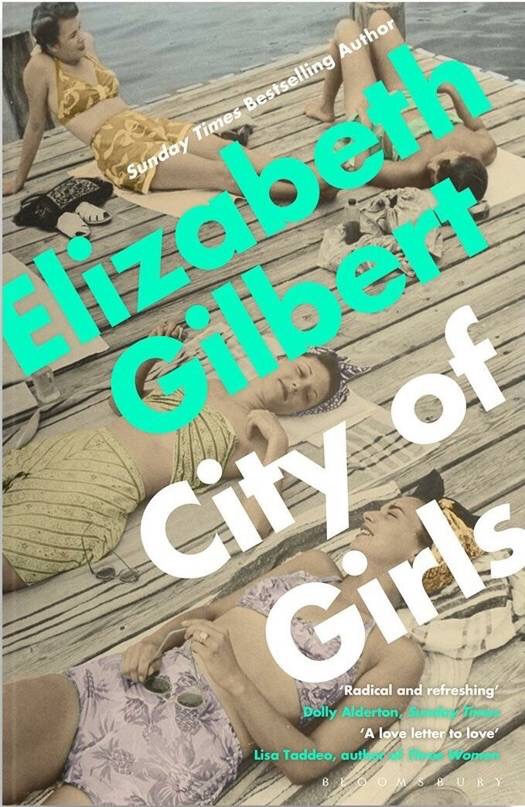
When one of my favourite authors writes a new book I always experience a confusing mix of emotions. Excitement and anticipation mix with fear; will I love it as much as I love their last book? I don’t want to be disappointed. Since there’s a new Liz Gilbert out this year I thought I’d share my review of her last novel, City of Girls. Like a lot of readers my first encounter with Gilbert’s writing was Eat, Pray, Love; a book that was nothing short of a cultural phenomenon, not to mention the following hit film. For me, it was her novel The Signature of All Things that caught the imagination. The combination of a sparky and intelligent heroine, the feminist theme and the historical detail came together in a beautifully woven story. So as the publication date approached for this new novel I desperately wanted it to live up to her first.
I shouldn’t have worried. City of Girls is a joyous, exhilarating riot of a book. Our narrator, Vivian, plunges us into 1940s Manhattan where she is sent by her parents after expulsion from Vassar. There she is placed in the care of her Aunt Peg who runs the, slightly ramshackle, Lily Theatre. I was suddenly immersed in the bohemian world of theatre people where Vivian soon finds her niche. At Vassar she made friends by creating outfits for the other girls on her trusty sewing machine. So, in her new rooms above the theatre she is soon surrounded by showgirls wanting costumes. I have an interest in fashion and sewing, so I really enjoyed the descriptions of Vivian’s creations, made on a shoestring with a lot of help from Lowtsky’s vintage clothing store downtown. Yet not everything is as it seems on the surface. Is her friendship with showgirl Celia as mutual as it appears? What influence does the matronly and doom laden Olive have over Aunt Peg? Where is Uncle Billy, whose rooms Vivian has been using since her arrival?
Some of these questions are answered during the production of the brand new play City of Girls. Aunt Peg’s friend Edna Parker Watson comes to stay after losing her London home during the Blitz. Edna is a talented theatre actress who is petite, beautiful and impeccably dressed. She arrives at the Lily with her huge wardrobe and her very famous and much younger husband, Arthur. Every member of the theatre company does their very best to get this musical off the ground and make it a success. Vivian works hard on her costume designs, but also finds herself becoming an unofficial PA and friend to Edna. Determined to put on the best show they can to turn the Lily Theatre’s fortunes around, Aunt Peg agrees to audition for new actors. When Vivian meets Anthony, the new leading man, she falls in love for the very first time. But alongside the awakening of first love, Vivian will also have her eyes opened to how cruel showbiz and the wider world can be. Several revelations teach her that not everyone can be trusted, the most unexpected people can come to your aid, and Vivian realises she has been walking around with her eyes closed. As the Second World War moves ever closer to their shores Vivian is left with a reckoning of her own. Does she want the respectable, quiet life her family expects or does she want to make her own way in a city and a career that is anything but quiet?
You will fall in love with Vivian as she takes you into her past and candidly shares her exploits in 1940s NYC. She takes you from theatre, to nightclub to a dingy apartment in Hell’s Kitchen where she conducts her first love affair. She holds nothing back and I felt her delight at encountering the bohemian characters of the theatre, her passion and ingenuity for costume work and her discovery of a city laid out before her like a playground. She allows us to experience her growing up with every triumph and mistake she makes along the way. Such an engaging central character is well matched with other beautifully drawn female characters from the dowdy killjoy Olive who has surprising depths, the enigmatic Edna Parker Watson, the brisk and sometimes foolhardy Aunt Peg to the glamorous showgirl Celia who leads our narrator into a world of nightclubs, make-up and disposable men. The women in this novel are strong, surprising and all teach Vivian something about the kind of woman she wants to be. The novel emphasises the importance of strong female role models or mentors in both our personal and working life. I found myself torn between bingeing on this book or savouring it slowly: I wanted to know what happened next but I didn’t want my adventures with Vivian to come to an end.
Meet the Author
Elizabeth Gilbert is an award-winning writer of both fiction and non-fiction. Her short story collection Pilgrims was a finalist for the PEN/Hemingway award, and her novel Stern Men was a New York Times notable book. In 2002, she published The Last American Man, which was a finalist for both the National Book Award and the National Book Critics’ Circle Award. She is best known for her 2006 memoir Eat, Pray, Love, which was published in over thirty languages and sold more than seven million copies worldwide. The film, released in 2010, stars Julia Roberts and Javier Bardem. Committed: A Sceptic Makes Peace with Marriage, a follow-up to Eat, Pray, Love, was published in 2010. Elizabeth Gilbert lives in New Jersey, USA.
Eugenics is described by National Human Genome Research Institute as
“an immoral and pseudoscientific theory that claims it is possible to perfect people and groups through genetics and the scientific laws of inheritance”.
It’s a word that’s been floating around social media for some time, mainly in connection to those behind the new US administration. There are concerns that people with physical disabilities, those of different ethnic origins and those with mental ill health or learning disabilities, might be considered less desirable in society. There are people with disabilities fighting against the introduction of assisted dying, because it could be interpreted to mean disabled lives have less value. We’ve all probably asked at one time or another, how could ordinary German citizens sleep walk into the Final Solution? The answer is slowly. There is evidence that children with disabilities were being removed and institutionalised as early as 1933. We like to think the Holocaust couldn’t happen again, but there is evidence of eugenic policies affecting the lives of ordinary Americans until the 1970s. Of course the Nazis are the ultimate and extreme example of eugenic policies being enacted, but both European countries and the US were using eugenicist policies on their own citizens across the 20th Century. This is what happens when we demonise the disabled, the poor and the destitute. The rise of the far right across the world is driven by eugenicist thinking, that some people are inherently better than others. This is why eugenicist policies affected those with learning difficulties, Native Americans, African Americans and people with long term disabilities. I try not to be political on the blog, but here I’m not advocating particular political parties. All I want to do is share novels that show how eugenics affected real communities and individuals.
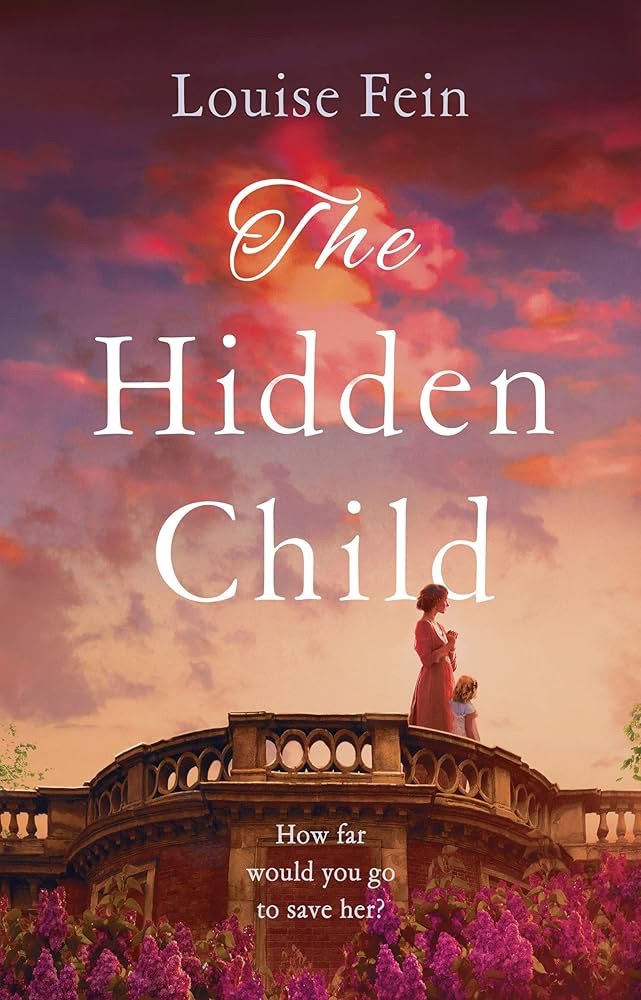
From the outside, Eleanor and Edward Hamilton have the perfect life, but they’re harbouring a secret that threatens to fracture their entire world.
London, 1929. Eleanor Hamilton is a dutiful mother, a caring sister and an adoring wife to a celebrated war hero. Her husband, Edward, is a pioneer in the eugenics movement. The Hamiltons are on the social rise, and it looks as though their future is bright. When Mabel, their young daughter, begins to develop debilitating seizures, they have to face an uncomfortable truth: Mabel has epilepsy – one of the ‘undesirable’ conditions that Edward campaigns against. Forced to hide their daughter away so as to not jeopardise Edward’s life’s work, the couple must confront the truth of their past – and the secrets that have been buried. Will Eleanor and Edward be able to fight for their family? Or will the truth destroy them?
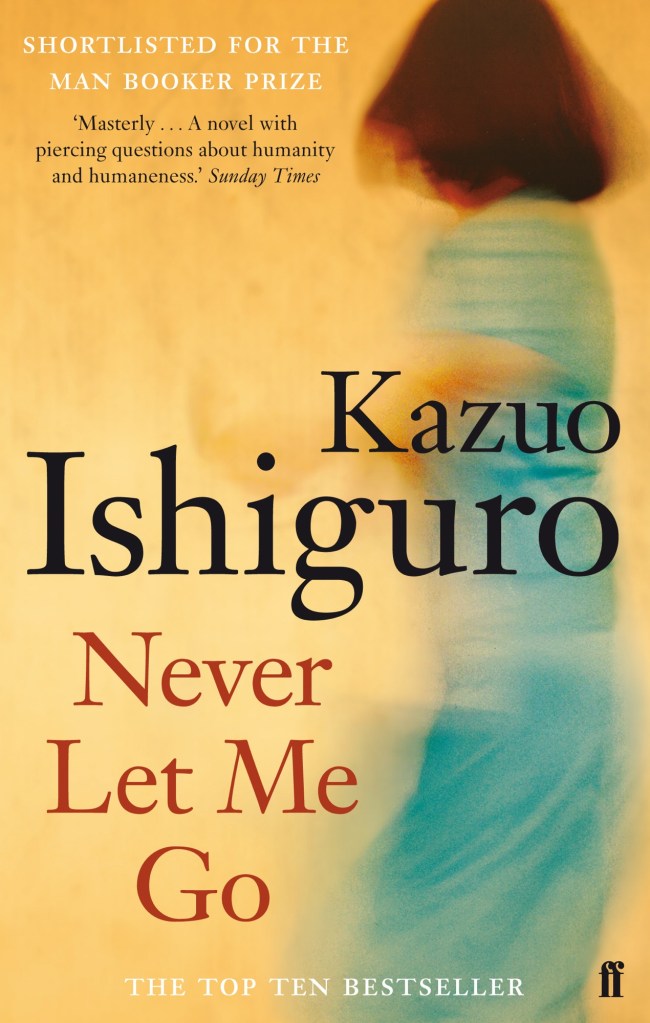
Many will have read this heart-rending novel or seen the film, beautifully performed by Andrew Garfield, Carey Mulligan and Keira Knightly. This perfectly encapsulates that head in the sand mindset humans are so good at. We can ignore terrible injustices when they’re not happening to us, or people like us. We can always think it doesn’t apply to us. Until it does. Kazuo Ishiguro imagines the lives of a group of students growing up in a darkly skewed version of contemporary England. Narrated by Kathy, now thirty-one, Never Let Me Go dramatises her attempts to come to terms with her childhood at the seemingly idyllic Hailsham School and with the fate that has always awaited her and her closest friends in the wider world. A story of love, friendship and memory, Never Let Me Go is charged throughout with a sense of the fragility of life and is utterly terrifying.
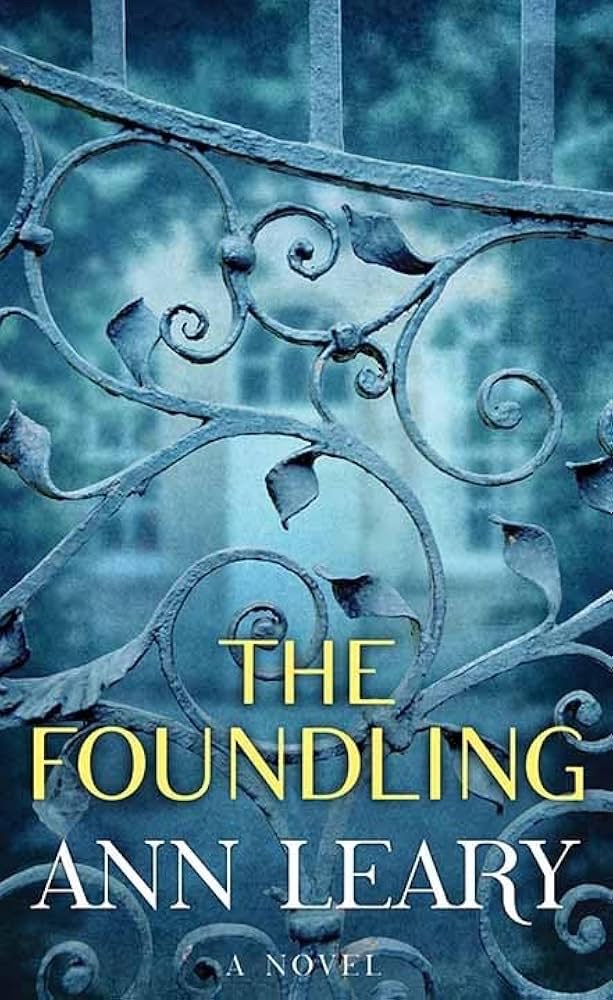
From the New York Times bestselling author of The Good House, the story of two friends, raised in the same orphanage, whose loyalty is put to the ultimate test when they meet years later at a controversial institution—one as an employee; the other, an inmate.
It’s 1927 and eighteen-year-old Mary Engle is hired to work as a secretary at a remote but scenic institution for mentally disabled women called the Nettleton State Village for Feebleminded Women of Childbearing Age. She’s immediately in awe of her employer—brilliant, genteel Dr. Agnes Vogel. Dr. Vogel had been the only woman in her class in medical school. As a young psychiatrist she was an outspoken crusader for women’s suffrage. Now, at age forty, Dr. Vogel runs one of the largest and most self-sufficient public asylums for women in the country. Mary deeply admires how dedicated the doctor is to the poor and vulnerable women under her care.
Soon after she’s hired, Mary learns that a girl from her childhood orphanage is one of the inmates. Mary remembers Lillian as a beautiful free spirit with a sometimes-tempestuous side. Could she be mentally disabled? When Lillian begs Mary to help her escape, alleging the asylum is not what it seems, Mary is faced with a terrible choice. Should she trust her troubled friend with whom she shares a dark childhood secret? Mary’s decision triggers a hair-raising sequence of events with life-altering consequences for all. Inspired by a true story about the author’s grandmother, The Foundling offers a rare look at a shocking chapter of American history. This gripping page-turner will have readers on the edge of their seats right up to the stunning last page…asking themselves, “Did this really happen here?”
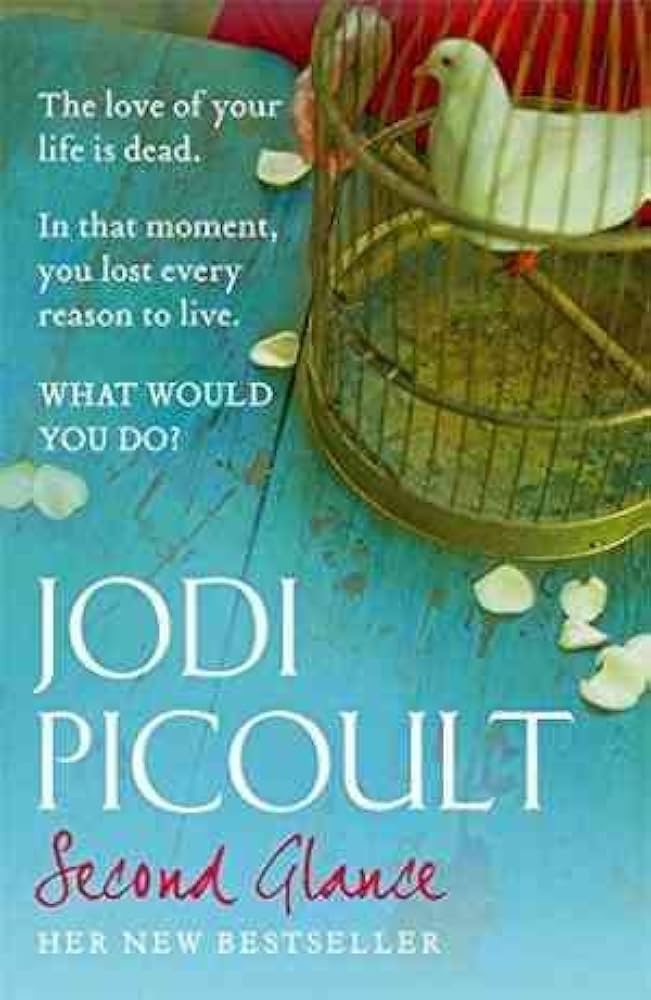
Since the death of his fiancée Aimee, Ross Wakeman has been unable to fill the hole she has left in his life. Seeking to end his pain, he becomes a ghost hunter, despite never having seen a ghost.
However, when his job leads him to the town of Comtosook, it becomes apparent that Ross isn’t the only one haunted by the past. When he meets the mysterious Lia, who brings him to life for the first time in years, redemption seems around the corner. But the discoveries that await him are beyond anything he could dream of – in this world or the next. Second Glance takes a look at how American eugenicist policies affected the lives of Native Americans with a programme of sterilisation. It’s not her usual court based drama, but still has her themes of injustice, identity and a lesser known part of American history.
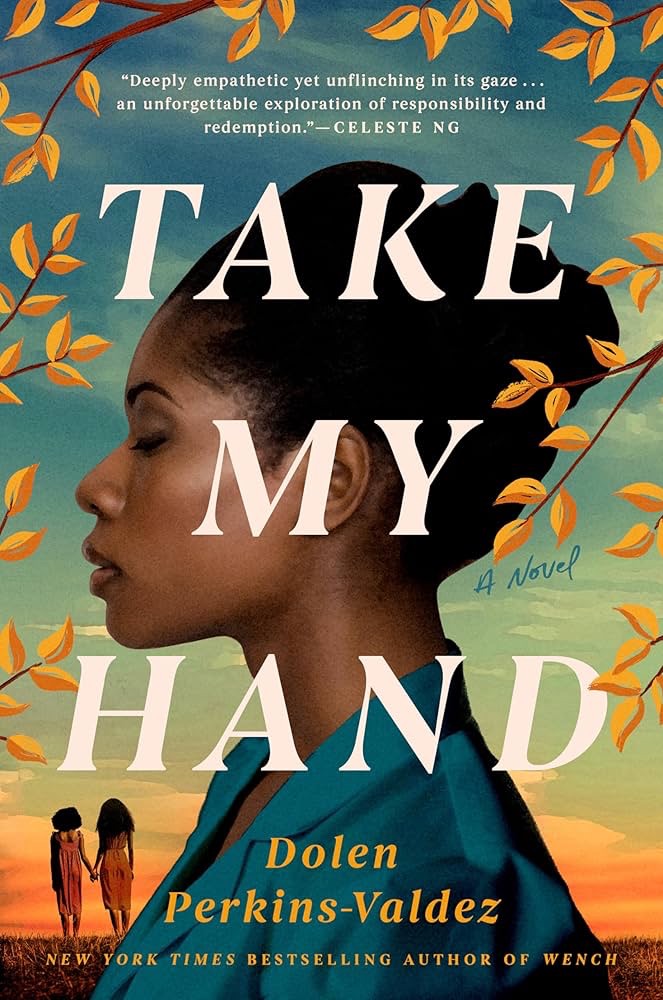
Montgomery, Alabama. 1973. Fresh out of nursing school, Civil Townsend has big plans to make a difference in her community. She wants to help women make their own choices for their lives and bodies.
But when her first week on the job takes her down a dusty country road to a tumbledown cabin and into the heart of the Williams family, Civil learns there is more to her new role than she bargained for. Neither of the two young sisters has even kissed a boy, but they are poor and Black, and for those handling their welfare benefits, that’s reason enough to have them on birth control. When Civil discovers a terrible injustice, she must choose between carrying out instructions or following her heart and decides to risk everything to stand up for what is right.
Inspired by true events and a shocking chapter of recent history, Take My Hand is a novel that will open your eyes and break your heart. An unforgettable story about love and courage, it is also a timely and uplifting reminder that one person can change the world.
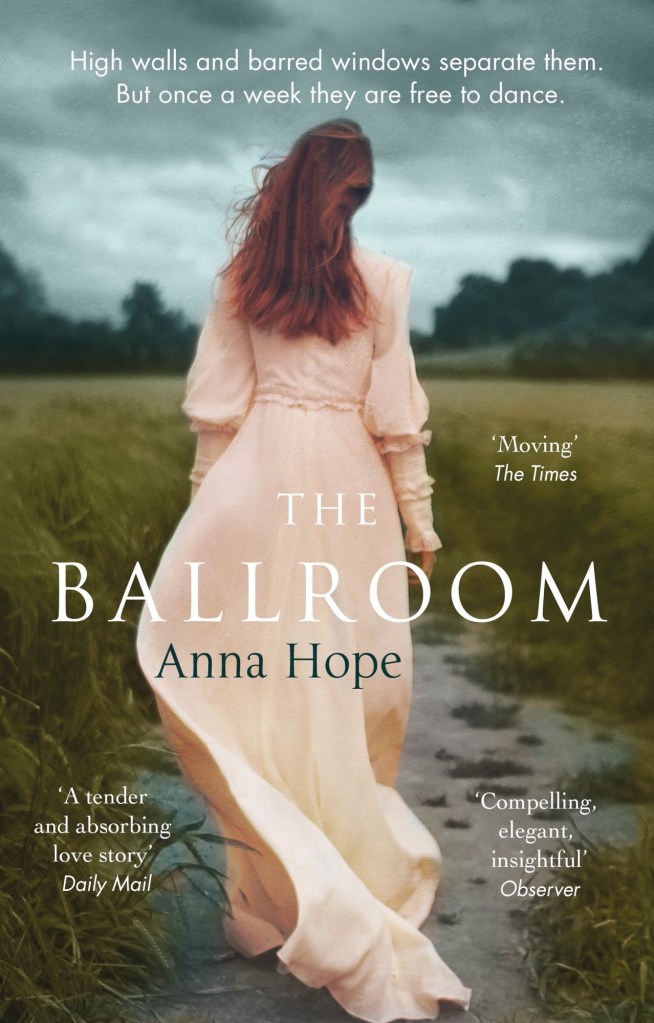
1911: Inside an asylum at the edge of the Yorkshire moors, where men and women are kept apart by high walls and barred windows, there is a ballroom vast and beautiful. For one bright evening every week they come together and dance. When John and Ella meet it is a dance that will change two lives forever.
Set over the heatwave summer of 1911, the end of the Edwardian era, THE BALLROOM tells a rivetting tale of dangerous obsession, of madness and sanity, and of who gets to decide which is which. It is a love story like no other, showing how eugenics affected those deemed mentally ill.
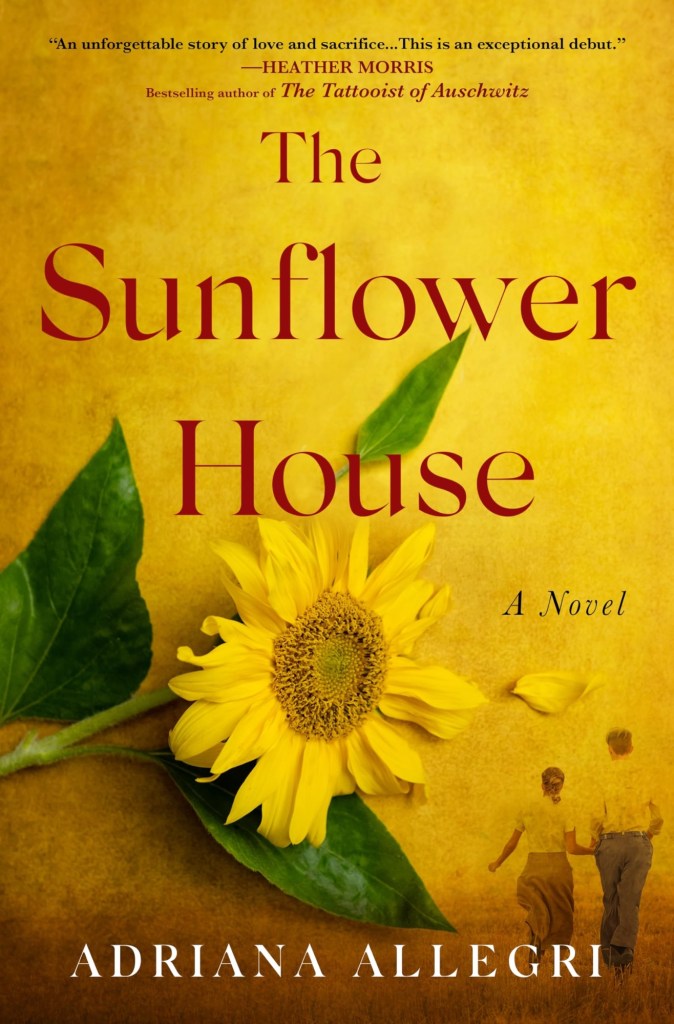
In a sleepy German village, Allina Strauss’s life seems idyllic: she works at her uncle’s bookshop, makes strudel with her aunt, and spends weekends with her friends and fiancé. But it’s 1939, Adolf Hitler is Chancellor, and Allina’s family hides a terrifying secret—her birth mother was Jewish, making her a Mischling.
One fateful night after losing everyone she loves, Allina is forced into service as a nurse at a state-run baby factory called Hochland Home. There, she becomes both witness and participant to the horrors of Heinrich Himmler’s ruthless eugenics program.
The Sunflower House is a meticulously-researched debut historical novel from Adriana Allegri that uncovers the notorious Lebensborn Program of Nazi Germany. Women of “pure” blood stayed in Lebensborn homes for the sole purpose of perpetuating the Aryan population, giving birth to thousands of babies who were adopted out to “good” Nazi families. Allina must keep her Jewish identity a secret in order to survive, but when she discovers the neglect occurring within the home, she’s determined not only to save herself, but also the children in her care.
A tale of one woman’s determination to resist and survive, The Sunflower House is also a love story. When Allina meets Karl, a high-ranking SS officer with secrets of his own, the two must decide how much they are willing to share with each other—and how much they can stand to risk as they join forces to save as many children as they can. The threads of this poignant and heartrending novel weave a tale of loss and love, friendship and betrayal, and the secrets we bury in order to save ourselves.
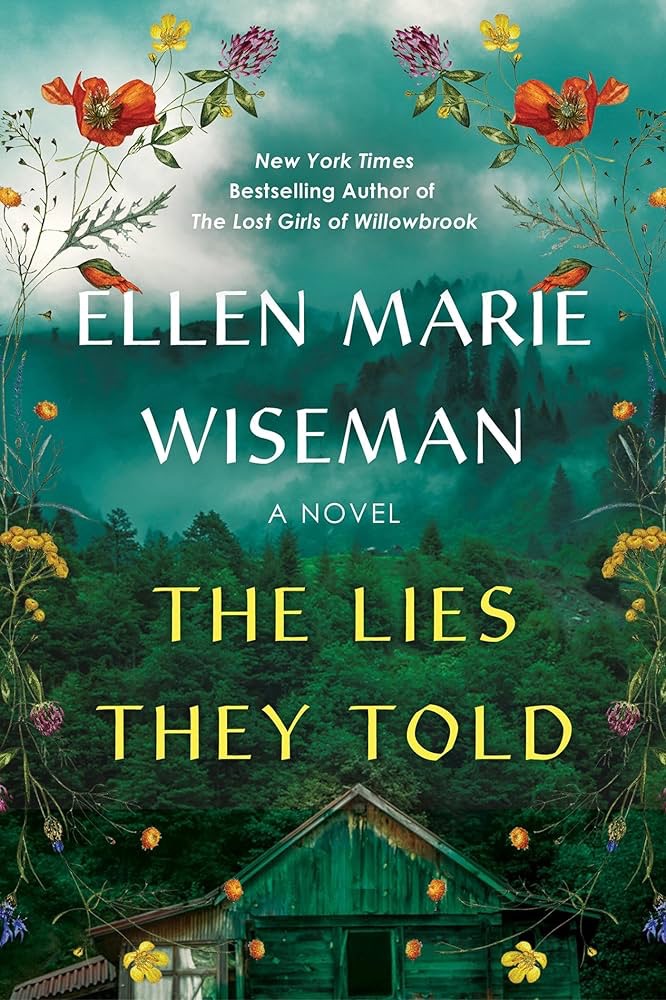
In rural 1930s Virginia, a young immigrant mother fights for her dignity and those she loves against America’s rising eugenics movement – when widespread support for policies of prejudice drove imprisonment and forced sterilizations based on class, race, disability, education, and country of origin – in this tragic and uplifting novel of social injustice, survival, and hope.
When Lena Conti—a young, unwed mother—sees immigrant families being forcibly separated on Ellis Island, she vows not to let the officers take her two-year old daughter. But the inspection process is more rigorous than she imagined, and she is separated from her mother and teenage brother, who are labeled burdens to society, denied entry, and deported back to Germany. Now, alone but determined to give her daughter a better life after years of living in poverty and near starvation, she finds herself facing a future unlike anything she had envisioned.
Silas Wolfe, a widowed family relative, reluctantly brings Lena and her daughter to his weathered cabin in Virginia’s Blue Ridge Mountains to care for his home and children. Though the hills around Wolfe Hollow remind Lena of her homeland, she struggles to adjust. Worse, she is stunned to learn the children in her care have been taught to hide when the sheriff comes around. As Lena meets their neighbors, she realizes the community is vibrant and tight knit, but also senses growing unease. The State of Virginia is scheming to paint them as ignorant, immoral, and backwards so they can evict them from their land, seize children from parents, and deal with those possessing “inferior genes.”
After a social worker from the Eugenics Office accuses Lena of promiscuity and feeblemindedness, her own worst fears come true. Sent to the Virginia State Colony for the Feebleminded and Epileptics, Lena face impossible choices in hopes of reuniting with her daughter—and protecting the people, and the land, she has grown to love.
If you want to read more background on eugenics here are a few links:
This first of Louise Hare’s novels really stayed with me, it grabbed me early and never let go. When a writer whisks you so convincingly to another time and place it’s such an incredible skill. I found myself in post-Windrush London where new people are making the capital their home and the huge social change is causing friction. As one mixed race character observed ‘she was no longer the odd one out’ as she went to the market. More immigrants are arriving, wandering the streets, weighed down by layers thrown on haphazardly as the reality of a British winter starts to bite. However, as those first pioneers answered the call from the motherland, they’d found London not at all what they were expecting. The British government had put that call out to its colonies. They needed workers, to replace those men lost in WW2 and to rebuild cities recovering from the Blitz. Yet no one seemed grateful, no one said thank you and the living was far from easy.
We follow two main characters: Lawrie and Evie. They are courting in the old fashioned sense. Lawrie sees in Evie a nice girl, a girl who has been well brought up even though she has never known her father. He wants to do things properly, do right by her. So he calls and they go to the cinema or for a walk. Lawrie has come over from Jamaica and works part time as a musician in a local band and full time as a postman, with a sideline in the odd special black market delivery too. Evie has lived in London her whole life with her mother Agnes. They have been Lawrie’s neighbours ever since a rented room opened up at the house next door. The two women understand prejudice, because they too have been victims of it, and live a life kept very much to themselves. Evie is mixed race and Agnes, who is white, has been the subject of gossip and judgement ever since she Evie was born. So, although what transpires in the book may be shocking to us, it barely surprises them, because they know how people feel about any sort of difference from the white British norm.
The story splits into two time frames approximately one year apart. In one, Lawrie is cutting across Clapham Common at the end of his postal route when he hears a woman shouting. She has found a baby in the pond. Lawrie rushes to help, but they are both too late. The baby becomes the book’s central mystery and because she has black skin, suspicion falls upon the already beleaguered Jamaican community. Rathbone, is the police officer assigned to the case and he relishes causing problems for the community. His suspicions fall on Lawrie, as the first man on the scene, but Rathbone doesn’t just investigate, he sets out to ruin Lawrie’s life. However, there is a secret to this baby’s background that is closer to home than Lawrie imagines.
I found myself rooting for Lawrie and Evie. I wanted them to be able to make marriage plans and live the simple, quiet life they dreamed about. Her mother Agnes has had to be very strong, being an unmarried mother of a mixed race child meant being ostracised. Evie has a childhood memory of her mother having the neighbours for tea when, against her instructions, Evie was caught looking down through the banisters. They never had tea for the neighbours again. It takes Evie several years to make the link; she is the reason her mum has no friends or visitors. This same hostility is now experienced by the men who arrived on the Windrush and it must have been bewildering. To be asked to this country, to fill a shortage of labour and pull a country out of difficulty, then meet nothing but hostility and suspicion from its people seems so unjust.
A lot of the tension in the novel is around sex and relationships. When the band are booked to play a wedding, the British host is immediately taken aback but decides they can play. All is well until a woman stumbles on the dance floor and one of the band rushes to help. Her husband doesn’t appreciate his wife being touched by a black man and a brawl breaks out causing the band to run for their lives. Provocative women, like the character Rose, stir up tension even more. The men refer to her as Rita Hayworth, the red-haired Hollywood bombshell. When the men first arrive she helps with getting them settled. Then she offers to take Lawrie and his friend to the Lido, dazzling them in her bikini and flirting with Lawrie. She makes it very clear that she wants him with no thought to the consequences if her husband finds out. Interracial relationships are simply not accepted. As Agnes points out, her daughter Evie is far better off in a long term relationship with Lawrie, because although they come from very different places, society will view them as the same due to their skin colour.
I felt immersed in this world the author has created. From the cold mornings on Lawrie’s postal round, to the smoky nightclubs the band plays into the early hours. This is my grandparents generation so I could also imagine the homes, the struggle of still being on rations and for the women, trying to look nice on a tight budget. It reminded me of stories my grandma and great- aunts told me about going out dancing in post-war Liverpool. I felt so much for Evie, especiallywhen her whole story unfolded towards the end of the novel. There is a whole cast of interesting characters, but Evie and Lawrie are this novel’s heart and I desperately wanted life to work out for them. Louise Hare has written a vibrant book with an incredible sense of place and time, and interesting characters. I loved it. In fact it’s a mark of how much I now love this author that I pre-ordered her next book due in 2026.
Meet the Author
Louise Hare is a London-based writer and has an MA in Creative Writing from Birkbeck, University of London. Originally from Warrington, she has found inspiration in the capital for much of her work, including This Lovely City and Miss Aldridge Regrets.
This Lovely City was featured on the inaugural BBC Two TV book club show, Between the Covers, shortlisted for the RSL Ondaatje Prize, and longlisted for the HWA Debut Crown Award. Louise was selected for the Observer Top 10 Best Debut Novelists list in 2020, securing her place as an author to watch.
Artists are an endless source of material for novelists and have fascinated me for most of my adult reading life. I think we afford artists the right to behave badly, because what they do feels like alchemy. To be able to take mere pen and paint and turn it into something that’s beautiful or utterly new is magical to someone like me who can only just manage to sketch something if I have lots of time and patience. I stick to colouring for my artistic endeavours. If I think about it I’ve been going to art galleries since my teenage years when the chance to see Klimt’s work at Tate Liverpool was too exciting to pass on. I loved ‘The Kiss’ but this exhibit took his work and placed it into the context of the secessionist movement, just one branch of Art Nouveau. I continued to visit exhibits on Art Nouveau, at the Kelvingrove Gallery in Glasgow to see the Glasgow School exhibits, The Met in New York a few times, as well as the Guggenheim there and in Venice. I visited London for many exhibits at the V and A and the Tate including Lucian Freud, a painter I’ve come to appreciate more recently. One of my great loves are the Pre-Raphaelites, since having the chance to study their work at university. We visit my mum’s hometown of Liverpool very frequently and I’m a regular at the Walker Gallery and Lady Lever gallery in Port Sunlight both of which have a great collection of Pre-Raphaelite work. Artists are often unconventional, have complicated love lives and some have a reputation for being hellraisers. Is it any wonder that we love to read about them? I usually jump at the chance and have quite a collection! here are a few of my favourite novels that feature painters.
Mistral’s Daughter by Judith Krantz
I have a very cracked and broken copy of this novel and I’ve read it several times. I blame it for starting my fascination with painters, I used to swipe it off mum’s bookshelves when I was a teenager. It’s romantic and sexually explicit, two things teenagers are definitely interested in! It follows the story of three generations of women from Paris to New York. We first experience Maggie Lunel’s journey to become an artist’s model. She is chosen by Julian Mistral and becomes his muse, as well as his lover until his ego and arrogance make her walk out. Years later, Maggie’s daughter Teddy is working as a fashion model. Her father Perry Kilkullen was the last man Maggie would fall in love with. Teddy has a job in France posing with artists for a fashion shoot and as soon as she poses with Mistral it is love at first sight. Mistral is married, but he leaves and sets up home with Teddy, never returning to America. Fauve Lunel is Mistral’s daughter, brought up with her grandmother Maggie she visits Mistral in the summer at his villa in the south of France. Fauve is a talented artist and begins to look into her family roots, finding out they are Jewish. When she realise Mistral might have been a collaborator during WW2 the revelation tears father and daughter apart, will they ever reconcile? This is a great story, romantic and bit racy too.
The Marriage of Oppositesby Alice Hoffman
As you all know by now, I’m a big fan of Alice Hoffman, but when I first picked up this novel on publication day I found it was very different from her usual books. We always expect to find strong women in Hoffman’s novels but there’s usually an element of magic realism to her work. Our heroine Rachel is definitely a strong woman, but magic takes a back seat for this novel that reads more like an biography. Rachel lives on the stunning island of São Tomé or St Thomas and is the mother of Camille Pissarro, one of the founders of Impressionism. Rachel is brought up with a strict Jewish faith, but she has always dreamed of getting off the island and going to Paris. Unfortunately Rachel has no choice and is married off to a widower with three children. Nevertheless she makes of the best of things until her husband dies suddenly. When his nephew Frédéric comes from Paris to settle the will and there is an instant spark between them. For once Rachel decides to make decisions for her own life and begins a passionate affair. The scandal that ensues when they marry has the whole island in uproar, but Rachel stands firm and will not be moved. This is a beautiful story, set on a lush island that’s described in gorgeous detail by Hoffman – she made me want to go there. I loved her relationship with her son and hoped that one day she would get to go to Paris as she dreamed.
Notes From An Exhibition by Patrick Gale
Set in the beautiful county of Cornwall, around Newlyn and Penzance, this is the story of a family struggling with secrets, brought back to the place they were born after a tragedy. Their mother, celebrated artist Rachael Kelly, is found dead in her Penzance studio after struggling with the creative highs and devastating lows that have coloured her life. As her family try to make sense of their mother’s life and it’s effect on them, devastating secrets come to light. As always with Patrick Gale the level of empathy in this book is incredible, he understands how different people think and respond to events. His depiction of mental illness is so authentic and heart-breaking. Rachael’s bi-polar disorder is the source of her art, but Gale also explores how it affects the rest of her working life and how it impacts on her family, especially her children. This is a favourite of mine and I’ve read it several times, but it never loses it’s power.
The Flames by Sophie Haydock
I devoured this brilliant book by Sophie Haydock, where she takes four women painted by artist Egon Schiele. Set in Vienna in 1912, on the back of the secessionist movement and artists like Gustav Klimt, Schiele paints four women and Sophie gives them a voice. Gertrude is in awe of her brilliant older brother, often posing for him but envying his freedom and agency. Then there’s Vally, a model for Klimt who’s trying to work her way out of poverty. Then sisters Edith and Adele move into the apartment building opposite Schiele’s in Vienna. The daughters of wealthy parents, they are not the type of girls who usually model for an artist and are expected to marry well. Yet both become embroiled with Schiele, professionally and privately. A portrait is always how the artists sees or wants to present you to the world, here the women step out from behind that image and tell their own story.
The Paris Muse by Louise Treger
Louise Treger’s 2024 novel concerns the life, or more accurately the love, of Dora Maar – a photographer and painter who lived in Paris for most of her life and most notably, during the German occupation in WWII. Born Henrietta Theodora Markovitch in 1907, she was known as a surrealist photographer exhibiting alongside Dali and other notable surrealists. She used her photographic art to better represent life through links with ideas, politics and philosophy rather than slavishly photographing what was naturally there. She was exhibited in the Surrealist Exposition in Paris and the International Surrealist Exhibition in London in 1936. In the same year she was exhibited at MOMA in NYC. She first encountered Picasso while taking photos at a film set in 1935, but they were not introduced until a few days later when Paul Elduard introduced them at Cafe des Deux Magots. They met in quite a dramatic way that showed her intent to catch his eye. She sat alone and using a pen knife she drove the blade between her splayed fingers and where she missed, blood stained the gloves she wore. The fact that Picasso kept these gloves and packed them away with his treasured mementoes is a metaphor for their entire relationship – he fed from her emotions. The author allows Dora to tell her own story and we are inside her mind at all times. We could say this is only her viewpoint of their relationship, but in a world where she is most known through her relationship with a man instead of her own work, Treger is simply redressing the balance. This is tough to read in parts, showing the ego of Picasso and how his call for freedom in their relationship, means his freedom. I felt sad for Dora, possibly influenced by some of my own experiences. She seemed like a smaller woman at the end with none of her original vitality and flamboyance. I’m so glad to know that her art lives on and is still exhibited as part of the surrealist canon.
The Blue Hour by Paula Hawkins
WELCOME TO ERIS – A TIDAL ISLAND WITH ONLY ONE HOUSE, ONE INHABITANT, ONE WAY OUT. . .
A place that is unreachable from the Scottish mainland for twelve hours each day. Once the hideaway of Vanessa, a famous artist whose husband disappeared twenty years ago. Now home to Grace. A solitary creature of the tides, content in her own isolation. Local GP Grace, often referred to as Vanessa’s companion or friend, might have inherited Eris. However, Vanessa’s artworks were left to an art foundation set up by her first agent. The curator of the foundation is Becker, hired for his expertise in Vanessa’s work. He is under pressure from the new owner to extract the last of Vanessa’s work from Eris. They have tried polite enquiries, legal letters and ultimatums but they are sure this has all been in vain and that Grace is deliberately holding back. Now a situation has arisen with one of Vanessa’s found object installations already on display in the gallery. A visiting doctor is convinced that the bone suspended in a glass box is human. They withdraw the box from view and contemplate having to break it open to have the bone properly tested. The unspoken thought on everyone’s mind is whether this might solve the mystery of Vanessa’s missing husband? It’s an opportunity for Becker to tell Grace face to face, but also to address the missing works that must be on Eris. He feels this is the best way forward; a last ditch attempt before legal action. However, visiting Eris is not without it’s risks. Are all of it’s secrets and lies about to be uncovered? This is a great thriller, full of questions about what an artist needs to be able to create, who owns an artwork and when does friendship become obsession?
New Reads To Look Out For …
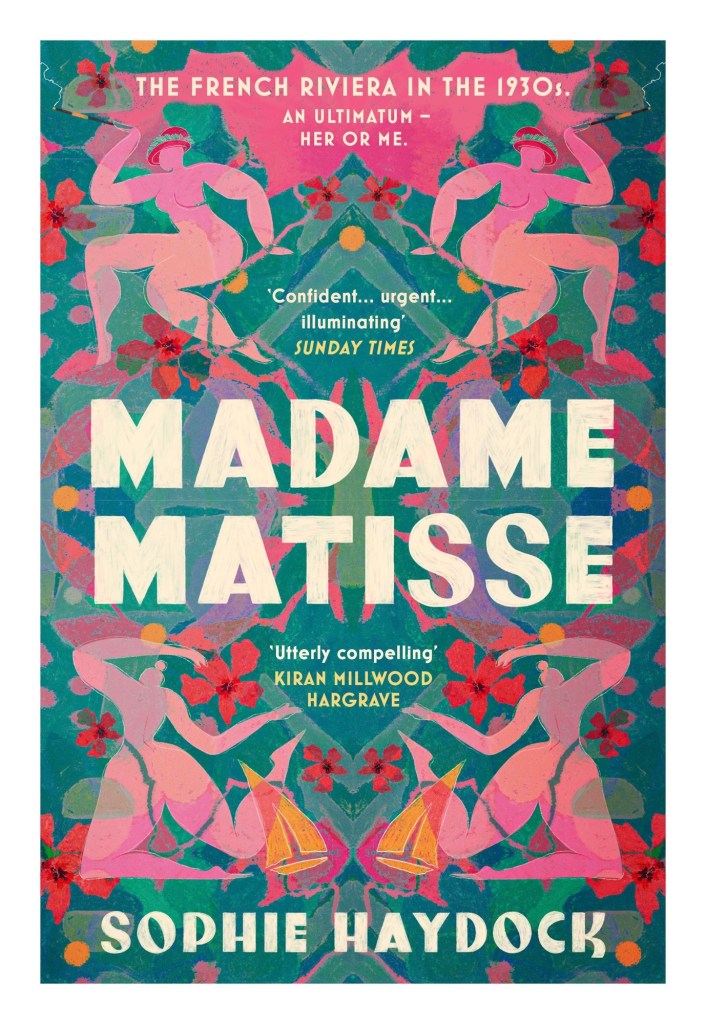
Sophie Haydock is delving back into the art world with her novel about the women surrounding the artist Matisse.
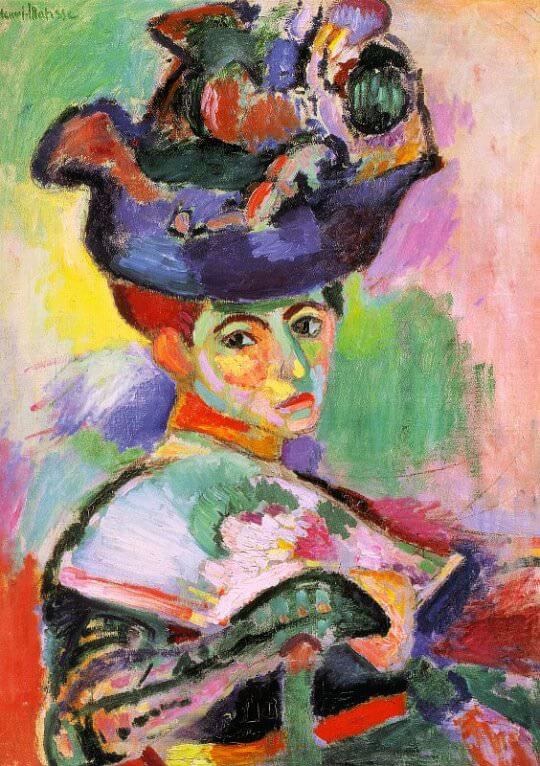
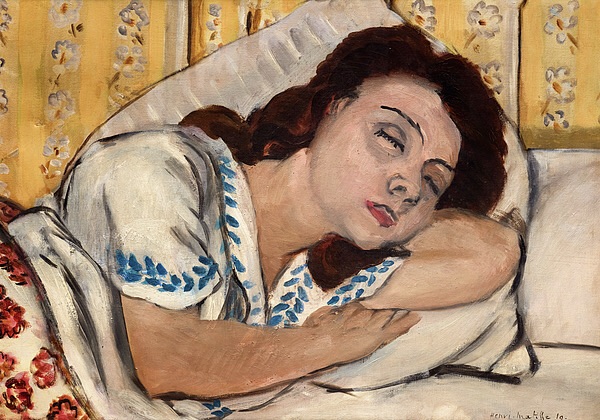
This is the story of three women – one an orphan and refugee who finds a place in the studio of a famous French artist, the other a wife and mother who has stood by her husband for nearly forty years. The third is his daughter, caught in the crossfire between her mother and a father she adores. Amelie is first drawn to Henri Matisse as a way of escaping the conventional life expected of her. A free spirit, she sees in this budding young artist a glorious future for them both. Ambitious and driven, she gives everything for her husband’s art, ploughing her own desires, her time, her money into sustaining them both, even through years of struggle and disappointment. Lydia Delectorskaya is a young Russian emigree, who fled her homeland following the death of her mother. She is trying to make a place for herself on France’s golden Riviera, amid the artists, film stars and dazzling elite. Eventually she finds employment with the Matisse family. From this point on, their lives are set on a collision course. Marguerite is Matisse’s eldest daughter. When the life of her family implodes, she must find her own way to make her mark and to navigate divided loyalties. Based on a true story, Madame Matisse is a stunning novel about drama and betrayal; emotion and sex; glamour and tragedy, all set in the hotbed of the 1930s art movement in France. In art, as in life, this a time when the rules were made to be broken…
Out from Doubleday on 6th March 2025
PROVENCE, 1920
Ettie moves through the remote farmhouse, silently creating the conditions that make her uncle’s artistic genius possible. Joseph, an aspiring journalist, has been invited to the house. He believes he’ll make his name by interviewing the reclusive painter, the great Edouard Tartuffe. But everyone has their secrets. And, under the cover of darkness, Ettie has spent years cultivating hers. Over this sweltering summer, everyone’s true colours will be revealed.
Because Ettie is ready to be seen. Even if it means setting her world on fire. This book will transport you straight to the south of France and straight to the heart of one woman’s rage.
Our story starts in 1768 on a sugar cane plantation in Jamaica, where a slave rebellion has been brewing. The signal will be sent to all the slaves by drum and Daniel has heard their rhythm. He needs to get to the house where his sweetheart Adanna works for the mistress, the house slaves aren’t in on the secret and he wants to get there in time. The field slaves might harm the house slaves along with their masters, perceiving their lives to be easier and their loyalties divided. When Daniel realises the house is already ablaze he leaves with his little sister Pearl, hoping to find a way to get off the island. His story then jumps to 1782 and the aftermath of the War of Independence where free slaves who fought for the British were promised a new life in England. Daniel was one such soldier fighting with the British under Major Edward Fitzallen, whose life he saved. Edward and his wife Elizabeth have taken Daniel and Pearl under their wing, meaning that both brother and sister have a level of education and independence one might think unusual for Jamaican slaves. When Edward is wounded he knows he won’t make the voyage home and calls Daniel to his side. He wants to ensure that Daniel and Pearl have a future in England and calls witnesses to his signature on a new will and testament. It hands all his worldly goods over to Daniel, telling him to call on his brother James to inform him of Edward’s demise and Daniel’s new position as his heir. Daniel naively expects the Fitzallen brothers to be equally honourable and he underestimates James who drugs Daniel, then throws the new will and all proof of Daniel’s claim and rank into the fire. Now Pearl and Daniel are abandoned in London with nothing.
There were many black soldiers shipped over here with the promise of a new life, without any provision made for them when they arrived. Many ended up in the area of St Giles, home to the infamous Rookery which was a warren of corridors and rooms under Covent Garden and accessed through St Giles church crypt. Here lived those forgotten black slaves, Irish immigrants escaping famine and others who had no means to live. People like Daniel and Pearl were outcasts from civilised society and known as the Blackbirds of St Giles, living in dark caves where sewage ran in channels through the rooms. The book was so beautifully detailed, taking us effortlessly into the late 18th Century like time travellers. I could sense absolutely everything from the steady thrum of the drums in Jamaica to the smells of London squalor and it’s poorest residences. The divide between those in poverty and those who are rich is a deep canyon, all the more shocking to Daniel who has become used to a certain deference and to Pearl who barely remembers the plantation and has grown up by Elizabeth Fitzallen’s side with all the privileges of a middle class young woman. Daniel and Pearl’s new home is a dark underground cave where it’s a choice between breathing or being cold because smoke from the fire can’t dissipate and simply sits in the room with them, making them cough and their eyes water. The rooms are filled with a sense of dark foreboding, worsened when Daniel sees the first ceremony with their self-styled King. I loved how the Black Apollo club is a haven by contrast with such an open and accepting feeling. Here black men are relaxed, having a drink or playing chess with friends. It’s a glimpse into the far future, because many of their customers can only dream of a time they’re not a servant, regarded with suspicion or hidden as a dirty secret. There’s also a contrast with Elias’s lodgings as King of the Rookery, he doesn’t share the dark caves of his subjects but instead enjoys plush lodgings policed by a beautiful, prowling cheetah called Infanta.
The sense of terrible injustice is palpable and I was desperate for Daniel to get what is owed to him. Daniel and Pearl have been defrauded and it all feels worse because of the dignity and command he’s had under Edward Fitzallen. I found myself rooting for them both pretty quickly. Their friendship meant that Pearl was always well-dressed and learned to read, something of a privilege for a young black woman born into slavery. The only man who could have corroborated Daniel’s claim is back on his ship by the time Daniel wakes from being drugged. There’s no way to get what he’s owed now. It’s only when he starts training with ex-boxer Melkie Trimme at his St Giles gym that Daniel starts to feel a sense of purpose and pride again. If he can beat the European champion then he and Pearl can get better lodgings and start to repay the kindness shown to them by young girl Jen who has organised their place at The Rookery, brought them food from her pub job and introduced him to some of the most influential men she knows. Daniel is drawn to her, but is still plagued with guilt about Adanna.
For me the women were particularly interesting. In the literature written or set in the 18th Century we’re used to the upper and middle classes, not people like these at the bottom. If we think of the Regency novels of Jane Austen and the more contemporary Bridgerton series the women are accomplished, but it’s all focused on making a good marriage. Women who are poor have no time for accomplishments as they’re too busy surviving, but they have more agency and autonomy. Jen is such a pretty girl but she’s fiery and used to making her own decisions. She has very little but she’s surviving and shows kindness and generosity to those she cares about. Having survived an horrific childhood she is keen for rebellion and knows that Daniel might have what it takes to lead people out of The Rookery and end Elias’s tyranny. She also takes Pearl under her wing and guides her into earning her own money for herself. Daniel wants to protect Pearl and keep her in the middle-class propriety she’s been used to, but this is no use to her when they’re living in a squalid underground cavern. Pearl really rises to the occasion with very little complaint, starting to work at the pub with Jen, then sneaking out in the evening for singing engagements. She has a beautiful voice and Jen thinks it might be her ticket out of the slums. As for the Marquise, she has used her beauty and poise to get where she is. When we’re let into her opulent townhouse Daniel is shocked at the squalor most black immigrants are living in compared to her. How could a black woman reach the heights she has? That’s without mentioning the residence in France or her wardrobe, full of all the gowns and perfumes she can wear. Could there be hints of a darker truth underneath the opulence?
All in all this is a fantastic historical novel; vivid and dark, but ultimately hopeful. I love it when authors take a character and write them back into the period of history they’ve been erased from. Middle class writers would rarely write about the people of The Rookery. Even Charles Dickens didn’t hint at this underground life, despite his interest in those living in poverty. Obadiah is such a great character, a disabled resident of the Rookery whose intellect and philosophies are articulate and inspiring. The fact that he runs the brotherhood at the Black Apollo and has a place at the head of the planning table is amazing. The other men do look up to him as their oracle. It seems strange to imagine that the novels of Jane Austen are only a few years away, because in them we never hear of people like this. It’s easy to forget that not everyone lives in the countryside and working class women are out there making things happen, working everyday and not at home with an embroidery hoop on their lap hoping for a gentleman caller. There’s no one from a different country and even the poor are ‘distressed gentlefolk’. Comparing this world with Austen’s shows how urban, dynamic and exciting London is, especially if women and people of all races have an opportunity to create their own future. Some did, like Olaudah Equiano who was enslaved to a master and a role in the Royal Navy. He came to Britain at the same time as Daniel and once he’d bought back his freedom had become a merchant. Sadly he had to stop travelling when he was almost captured and sold back into slavery in Georgia. However, he did write a memoir that’s still in print today. I came away from this book with everything crossed for Daniel and Pearl, as well as Jen. I was so immersed in the story that it felt strange to look up and find myself back in my own living room.
Meet the Author
Writing together as Lila Cain, Marcia Hutchinson and Kate Griffin are the co-writers and creators of The Blackbirds of St Giles, the first of two books centred on the lives of members of the little-known black community in Georgian London. United by their passion for history and a strong desire to tell an unfamiliar – and hugely resonant – story, Kate and Marcia are delighted that ‘Blackbirds’ and its sequel will be published by Simon & Schuster.
Marcia Hutchinson worked as a lawyer before founding educational publishing company Primary Colours and was awarded an MBE for services to Cultural Diversity in 2010. Her solo debut novel Mercy is due for publication in summer 2025.
Kate is the author of Fyneshade (Viper), a stand-alone Neo-Victorian gothic novel of witchcraft in a house of dark secrets. She is also the writer of the popular Kitty Peck thriller series (Faber and Faber) set in the Music Halls of Victorian London. After studying English Literature at university, Kate worked as assistant to a London antique dealer, as a journalist and in PR. Until recently she was Head of Communications for Britain’s oldest conservation charity, The Society for the Protection of Ancient Buildings (SPAB). Her love of old buildings and the stories they tell continues to inspire her.
This was my read for over Christmas week and having started a couple of novels only to put them down again, I was beginning to think I’d lost my reading mojo. I was crying out for something that would draw me in quickly so I went for a tried and tested genre. A genre that maybe has a title, but I don’t know it. A preference I blame on reading Jane Eyre as a very imaginative ten year old. The formula is: huge rambling country house; time period from Victorian – 1930’s; young unsure girl/woman; aristocratic families with huge secrets. This fantastic novel from Emily Critchley fit the bill perfectly and was the only thing that drew me away from watching Black Doves all in one go! Our heroine is Gillian Larking, a rather invisible girl at boarding school who does her best to fit in but has no real friends. Gillian has lost her mother and with her dad working in Egypt feels very much alone. However, when she gets a new roommate that feeling starts to change. Violet is a bright, lively girl whose first goal is to break school rules and sneak up onto the school roof to check out the view. Despite her mischievous and seemingly confident nature, Violet is anxious and has a series of rituals to perform that help her cope:
“She had to do certain things at certain times, like twirl around on the spot before she flushed the lavatory or touch a door handle twice before she opened a door. I often caught her whispering certain words to herself three times or counting to fifty on her fingers. When I asked her why she had to do these things, she struggled to tell me. For protection, was all she would say, or so that nothing bad will happen.”
She is also prone to emotional outbursts when things become overwhelming. Gillian is seemingly more aware that as young ladies of the middle and upper classes they must manage their emotions. She herself has had moments of despair and loneliness but has kept her tears for under the covers late at night. She also aware that girls in packs tend to sniff out weakness or odd behaviour and worries whether Violet’s rituals or ‘undoings’ as she calls them, could affect both their positions at school. Yet the other girls don’t seem to bother Violet and Gillian wonders whether that’s because she’s from a wealthy family. As Christmas approaches Gillian is delighted to receive an invitation from Violet to spend the holidays with her family at Thornleigh Hall. There she is dazzled by their slightly shabby country home, being waited on by the servants and Violet’s rather beautiful older sisters. Emmeline, the oldest and definitely in charge, wafts around in old Edwardian gowns whereas Laura is a rather more modern and fragile beauty. Both girls accept Gillian as one of their own, but their new friendship is tested by an incident on Boxing Day that will reverberate through the years.
I have a soft spot for books set between the two World Wars and this had a lot of the themes pertinent to aristocratic families of the time. Thornleigh Hall is badly in need of repair but has a faded grandeur that is still impressive to Gillian. They’re a family living a way of life that ended twenty years before. They clearly don’t have the funds to maintain their estate, but Gillian notices the lavish breakfasts laid out every morning under silver dishes. Emmeline, the eldest sister, is the family’s great hope. She must find a suitor with money and secure the family’s fortunes with a sensible marriage. She has a candidate in mind, much older than her but definitely of the right class and enough money to save the hall for another generation. Gillian is enthralled by the sister’s unique style and confidence and realises that to some extent her friend Violet is the odd one out. Her nervous rituals, like her need to read Peter Pan over and over, suggest a deep insecurity in her character and even a fear of growing up. She warns Gillian that her sisters are not all they seem to be, but Gillian feels accepted for the first time in her life. There was an element of L.P. Hartley’s The Go-Between in her relationship with the sisters because she is naive and doesn’t realise when she’s being manipulated. On that fateful Boxing Day, Emmeline takes charge as always, instructing Gillian and Laura to lie or even pass blame onto a man who lives in the lodge house. Gillian feels obliged to go along with the plan because they’ve been kind to her. Again there are shades of another book here, Ian McEwan’s Atonement, where naivety and misunderstanding could lead to a terrible end for an innocent man of a lower social status. The full implications of these lies are utterly life changing for Violet, but almost no one escapes unscathed.
The novel is structured into four parts, taking us to different points in the life of Gillian and her relationship to the events of that Christmas in 1938. I’ve already mentioned L.P.Hartley’s The Go-Between and the first section has echoes of it’s opening page, from the naivety and social position of Gillian to the sense of delving into a past that’s long dead with it’s own social codes; “the past is a foreign country – they do things differently there’. We start the novel in 1999 when Gillian visits Thornleigh Hall, now under the guardianship of the National Trust. Over a slice of lemon and poppy seed cake, she ponders life from her time as a guest here to the recent death of her husband and the diary from 1938 that she’s come across while clearing out cupboards. This 1999 visit to Thornleigh is like travelling into the past as she strolls the rooms now on show and sees Lord and Lady Claybourne in the dining room complaining about their eggs and Laura in her stockinged feet reading a book on the library sofa. There is so much about this first chapter that draws us in: the suggested tragic circumstances of some members of the family; the emotional state of Gillian as a young girl who has lost her mother and is desperate for a role model; there’s also the hint of darker secrets lurking underneath the surface of this beautiful stately home. In the other three parts we’re taken to the aftermath of that fateful day in 1938 and then to London in 1942 where Gillian bumps into Laura’s husband Charlie.
Finally part four brings us to the 1990s when Gillian and the Claybourne sisters are old women, taking us full circle to the beginning of the book. In each part there shocking revelations that leave Gillian in no doubt that the secrets from all those years ago are still having their effect. She has received a letter from Henry Cadwallander who has written to Gillian at his Aunt Violet’s request. Will she meet Violet and let her know that with the wisdom of experience she now understands her warning about the older sisters? I wondered if there would be closure or whether Gillian is always fated to be a horrified observer of the Claybourne’s family dynamics? This was an enthralling and fascinating look at a tumultuous time in history and it’s effects on one aristocratic family, observed through the eyes of a naive visitor. The author has created an incredible atmosphere that drew me in so strongly I felt like I was there. This is an amazing debut from Emily Critchley and I look forward to reading more of her work.
Out now from Zaffre Books
Meet the Author
Emily Critchley has an MA in Creative Writing from Birkbeck, University of London. She currently lives in Hertfordshire in the UK.
For the last four years I’ve been choosing my favourite books of the according to the year – Top 23 of 2023. I realised that would have to stop, otherwise I’d be doing my top 30 in a few years and that would be ridiculous. So I’ve limited myself to 20 and it’s been so hard. I’ve had to be ruthless. I enjoyed every one of these books, despite their different genres, because of the psychological elements: anxiety about the state of the world; relationship dynamics; becoming radicalised; events from the past marring the future; what makes someone kill; growing up with loss. Also, as you’d perhaps expect considering everything we have to worry about in today’s world, there are allusions to climate change, anti -vaxxers, pandemics, war, misogyny and violence against women, the wellbeing industry and psychological problems. There’s so much to wrap your reading brain around here so I’m going to whet your appetite…
This Squad Pod read from early 2024 kept me on the edge of my seat throughout. It was like a breath of fresh air. Cole is a great husband to wife Melanie, in fact he would definitely say he’s one of the good guys. So when his marriage ends he can’t understand what he’s done wrong. In the aftermath he moves to an isolated coastal area and meets artist Lennie who lives in the cottage on the cliff. Soon they’re tentatively embarking on a relationship, but when two activists go missing during their coastal walk to publicise violence against women it disrupts everything and the police are starting to ask questions. The twists in this book are brilliantly executed and totally unexpected. It’s daringly different and left me so much to think about.
Charity Norman always leaves us with a lot to think about, but this latest novel was particularly thought provoking. Scott and Livia have two children and are always on call to help Scott’s brother, who has Down’s Syndrome. It’s Scott’s inability to help his brother one Saturday morning followed by his sudden death that starts a downward spiral. One careless comment about his brother’s care sets Scott on a search for answers, branching into medical conspiracy theories and the dark web. So when son Noah falls ill, Scott has an online community ready to feed into his distrust and his grip on reality starts to slide, dragging his family with him. As their marriage begins to fall apart, Livia can’t support or even understand her husband’s perspective. In fact he’s become a danger to his children and she must protect them, whatever it takes. This is a brilliantly drawn study of how social media can lead to obsession and allow sinister, unscrupulous people to take advantage of those who are vulnerable. It’s also a painfully accurate depiction of marriage breakdown and a perfect book club choice.
This was another book where marriage breakdown is depicted in painstaking detail. It reads like a thriller where different perspectives and revelations constantly change our perceptions of a situation. It’s like a whodunnit, except the death we’re mourning is the death of a relationship. Bea and Niklas have been together for thirty years and live a comfortable life in Stockholm with their children. Yet one night, after what feels like a trivial argument Niklas walks out and doesn’t come home. Weeks pass where Niklas takes a break and Bea is constantly pushing for answers, but when he returns to their flat he stuns Bea by asking for a divorce. For Bea this has come completely out of the, but is it as unexpected as she claims? Bea narrates the first half of this novel and halfway through the narrative returns to the beginning and Niklas tells us his version of events, which is very illuminating and may change the readers mind about their marriage. This is a simple device that works to devastating effect. I felt genuinely sad for this couple, because neither of them are bad people. It explores boundaries and the unhealthy reasons people can end up together. It’s also a response to grief, beautifully played out over decades. Utterly brilliant.
This is the fifth instalment of Will Dean’s Tuva Moodysson series and it was an absolute cracker. Tuva is investigating further north from Gavrik to an even more isolated town on the edge of the arctic circle. Essleburg is a town where everyone knows everyone else and there’s only one way in or out. A huge tunnel under a mountain provides access to the town, but closes down at night. Once you’re in, you’re in for the night and so is everyone else. From her hotel room at the sun-bed store Tuva sets out to look for a missing teenage boy, drawn by the fact that he is also deaf. But when bodies are found Tuva must face facts, the boy could be one of the victim and if not, could he be the killer? With it’s usual quirky characters and alien landscape, Tuva’s world is as isolating as it is disorienting. As usual Will Dean knows when to ratchet up the tension and when Tuva is in danger it’s absolutely heart-racing stuff.
As all of you know I’m a massive Skelf fan and this addition to the series was brilliant. Every Skelf novel begins with a funeral and they rarely go off without a hitch. This one is no exception, with a drone buzzing the ceremony and it’s guests. Could it be to do with the deceased or has someone got it in for the Skelf women? Jenny’s case follows on from the last book and the cops they investigated for sexually abusing young girls in the travelling community. Both are inexplicably out on bail and Jenny likes to know where they are at all times. Daughter Hannah’s case concerns Brodie the new recruit to the undertaking business. Brodie finds strange scrabbled marks around his baby son’s grave and Hannah sets up a camera, but when told that Brodie hears voices she wonders if he might have gone to the grave and acted subconsciously. Dorothy’s case comes from her involvement with a community choir that includes some Ukrainian war widows. One of the women, Yanna, has gone missing. Her husband Fedir was killed over a year ago and now she’s left her two small children with her mother-in-law. Could she have returned to Ukraine to fight, or has something happened to her? Each of the Skelf women feel vulnerable this time and I felt like the author was playing on my emotions a little. I could sense we were on the verge of a huge change and it left me on tenterhooks throughout.
I absolutely loved this book. From the very first line – ‘there is someone in the house’ – this book grabs you and never lets go. Our narrator is at her secluded home with her two small children in a blizzard. The sound she hears is a familiar one, a tread on the stairs to her room, but it’s unusually heavy and slow. She has a split second to make the decision – does she hide, try to run or stay and fight. Will all three of them get out alive and if they do will anyone believe her? The first thing that hit me about this book was the unique the narrator’s unique voice. We see everything through her eyes and experience everything her body goes through – the heart-stopping tension of that first night with it’s immediate threat renders everything else unimportant. I should trust what she is experiencing. It’s just so incredibly odd. This tall intruder seems to have two voices: one is harsh and angry the other is soft, wheedling – a voice you might use for children as he asks them to ‘come out little pigs, little pigs are more delicious’. Her little girl identifies him as ‘Corner Man’ from her nightmares. Often sitting in the corner of her bedroom at night whispering to her. My heart was in my throat at this point! Was he real or something supernatural? Could he possibly be real if this is true? Yet I wondered if this overwrought mother is imagining this person, but that opens up a more frightening prospect – is she hallucinating and terrorising her own children with her delusions. The author plays with the reader beautifully from start to finish.
Surprisingly this was my first Peter May novel and is a sequel to his crime novels set in the Hebrides. Once a detective and now retired, Fin is drawn back to Lewis by family, when Caitlin Black’s body is discovered on a remote beach. Only eighteen years old, Caitlin was a student at the Nicholson Institute. When it emerges that she was having an illicit affair with Fionnlagh McLeod, her teacher and a married man twenty years her senior he becomes the prime suspect and is arrested on suspicion of her rape and murder. He is also Finn’s son. He must return to Lewis to support his daughter-in-law and granddaughter. He must also, despite the evidence against him, that he must try to clear his son’s name. As Fin travels around the island, he is drawn into past memories and soon realises this crime has echoes back into his own teenage past on the island. A terrible accident at a salmon farm caused two deaths, just as they started to expand on the island and become a multi-million pound industry. This is Finn’s journey, of family ties, secret relationships and the bleak and unforgiving landscape, where violence, revenge and old loyalties converge.
Frances McGrath is your typical All American teenage girl, living with her family on Coronado Beach, California. She has memories of growing up on that beach, swimming and surfing with her brother Finley. She is from a good family and expectations are that she will have the ‘right’ marriage and become a mother. However, things change when Finley makes a huge decision; he decides to enlist for Vietnam. It’s no surprise that he might go into military service at some point. Frankie’s dad has a wall in his office called the ‘Hero’s Wall’ where every family member’s military service is celebrated with cuttings, photos and medals. All the men, anyway. Yet not many of their friends and family members have sons who’ve voluntarily enlisted for Vietnam. There are ways of avoiding the draft, depending on who you know. Yet Finley enlists of his own accord, possibly believing the American government’s assertions that they must fight communism in Vietnam, lest it become even more widespread. Within weeks there’s a knock at the door; Finley has been killed in action. In a whirlwind of grief Frankie starts looking into her options. She wants to honour her brother and become a hero worthy of her father’s wall. Both the Air Force and Navy need a nurse to complete a long period of training before they’re posted to work in the field. However, if she enlists in the US Army, they’ll post her out to Vietnam after basic nursing training. Much to her parent’s shock Frankie is soon on her way to Vietnam. This is an incredible story about the horrors of war, falling in love and giving voice to the women forgotten in military history.
There have been some incredible historical novels this year, but I really was blown away by this story set just after WW1 and progressing to the mid-twentieth century. Two German sisters, Leni and Annette, live in Berlin and when we first meet them they’re in dire straits, living in a makeshift shelter in an abandoned garden. Thanks to war and the influenza epidemic they’ve lost their family. Leni gets a chance to earn some money at a notorious and rather seedy cabaret club called Babylon Circus. The naive and rather shy Leni becomes a cigarette girl in a second hand and pinned costume that just covers her modesty, but she is at first shocked by what she sees. With shades of the musical Cabaret the author creates a club that is a mirage of clever lighting, fairground mirrors and risqué musical numbers. It’s enchanting by dark and unwelcoming by day, but it doesn’t matter because this is the type of fun that can only be had at night. Everything is overseen by owner Dieter, a man with his own disguise having left half his face on a battlefield. When pianist Paul arrives, he and Leni start to gravitate towards each other. But Paul has a plan to leave Berlin and he would like to take Leni with him. We then move forward to the Cold War and a divided Berlin, where Annette has travelled from America to visit her sister and niece. The tensions and secrets of the Babylon Circus years still hang over the sisters, can they come to terms with the choices they made back then? Can Leni find a second chance of happiness? The author depicts her characters and the time period perfectly, with so much atmosphere. It’s an absolute must read.
Another amazing story set in Berlin is Josie Ferguson’s The Silence In Between. Imagine waking up and a wall has divided your city in two. Imagine that on the other side is your child…
Lisette is in hospital with her baby boy. The doctors tell her to go home and get some rest, that he’ll be fine. When she awakes, everything has changed. Because overnight, on 13 August 1961, the border between East and West Berlin has closed, slicing the city – and her world – in two. Lisette is trapped in the east, while her newborn baby is unreachable in the west. With the streets in chaos and armed guards ordered to shoot anyone who tries to cross, her situation is desperate. Lisette’s teenage daughter, Elly, has always struggled to understand the distance between herself and her mother, but perhaps she can do something to bridge the gap between them. What begins as the flicker of an idea turns into a daring plan to escape East Berlin, find her baby brother, and bring him home. The author takes us effortlessly back and forth in time to understand this family and my heart kept breaking for them over and over for. While I struggled to read it at first, I’m so happy that I went back to it because it was breathtaking. It was as if someone had bottled both moments in time and simply poured them onto the page, raw and confronting. This is an absolute must read for historical fiction fans and a book I will definitely go back to in the future.
Thanks for reading part one. Part 2 is coming tomorrow.
A single man in possession of a large fortune must be in want of a wife – so why choose her?
Katie Lumsden’s first novel – The Secrets of Hartwood Hall – was a fantastically addictive Gothic mystery where nothing was as it seemed. This second novel has the feel of Jane Austen; light, witty and full of gossip. In this comedy of manners, where class and family reputation is everything, scandal is just around the corner. Amelia Ashpoint is comfortable with her life as it is. She and her brother Diggory live at home with their wealthy father and younger sister Ada in their newly built mansion in the county of Wickenshire. Summer 1841 and at the start of marriage season Amelia is 23 and her father has decided he wants to secure a husband for her. He has his hopes for Mr Montgomery Hurst, the most eligible bachelor in their social set and the owner of stately home Radcliffe Park. At previous dinners and dances, he has sought Amelia for his dance partner and they chat comfortably together at dinner. Their easy manner has been noted in society. However, at the next society ball there is intrigue and shock. Mr Hurst has been secretly engaged elsewhere, to an unknown widow with three children. Their friends are appalled but Amelia feels nothing but relief. She has no interest in marriage at all. It seems society has big expectations for Amelia, but her heart lies in a very different direction.
There’s so much to like in this Regency tale and Amelia is the centre of the centre of that. She’s an intelligent young woman who really knows her own mind and accepts who she is. She also knows where her heart lies but realises it can never be made public. It’s interesting to watch her slowly realise that she’s no longer a girl but is considered a grown-up and there are expectations on young women to marry. She imagined spending her days at the family home with her father, never having to marry but hasn’t realised what her father already knows. He isn’t going to be here forever. He’s becoming anxious about making sure she is settled, because the truth is all of them will have to marry. The house and estate will go to her brother and whoever he chooses to marry will become the mistress of Ashpoint Hall. Ada is still a girl but there won’t necessarily be room for Amelia. If only everyone could have as simple and happy a marriage as the new Mrs Hurst. When Amelia visits Radcliffe she is heartened by their easy manner with each other and the very natural relationship he seems to have built with his new stepchildren. Everyone around Amelia, including her best friend Clara and even her brother Diggory, appears to understand this unwritten rule – it’s time to find a mate.
The author portrays Wickenshire society beautifully, detailing how much traditional country society has changed. The differences can be seen in the village’s gentleman’s club The Lantern, where one floor is for those deemed gentlemen and downstairs is for tenants and tradespeople. People like the foreman of the Ashpoint Brewery Mr Lonsdale and military men like Major Alderton. The Ashpoints are not aristocracy themselves, in fact Ashpoint Hall is relatively new despite it’s grandeur. They may be new money, but the fact they have so much of it qualifies them as acceptable in polite society. The Earl and Countess of Wickford are the pinnacle of county society, so when they have a ball, they invite everybody, including the Major and Mr Lonsdale, but they can only get away with this behaviour because they’re aristocracy. If anyone else invited such men to a soirée it could reflect badly on the host. However, the author shows very strongly that just because someone is viewed as a gentleman it doesn’t mean they behave as one. Amelia’s brother Diggory is horrified to find that his best friend Alistair, Viscount of Salbridge and heir to the current Earl, has a guilty secret. His behaviour shows he has no regard for those reliant on him for their wages, the roof over their head, or even for a woman’s honour. This discovery leads to such a parting of the ways that Diggory starts to frequent downstairs at The Lantern. The usual downstairs clientele would be considered beneath him normally, but he’s growing up quickly and making his own life choices. Ever since he decided to propose to Lady Rose he’s started a steep learning curve, working every day in the brewery and preparing to take over from his father. He’s also keen on showing Lady Rose’s parents that his intentions are serious, realising that men are not born with integrity and honour. Money is also no guarantee of a man’s good character. Falling in love has set Diggory on the path to be a better man, also abstaining from drinking and the dangerous levels of gambling that have been the norm for him and the Viscount.
Amelia also has to grow up a lot throughout the novel. The subject of a woman’s honour and her marriageability are the strongest theme in the novel. It’s clear that societies like Wickenshire are in flux. Amelia has been insulated by her father’s money, so up until now the reality of a woman’s choices in life haven’t touched her. It is only her money that makes Mr Hurst a possible mate, otherwise he would be completely out of reach. Meanwhile, some titled families are beginning to find themselves financially unstable, meaning they are having to cast their nets wider to find suitable marriage partners. Where once only a title would do, families might need to consider new money and potential grooms may have to support the whole family or maintain a huge mansion. This could be good news for Diggory and Lady Rose, who is horrified to find her parents in dire straits and in a hurry to find her a husband. If Diggory doesn’t secure his bride, anyone reasonably respectable might do! For Amelia it’s her best friend Clara’s potential suitors that shock her the most as she’s always assumed they were of the same mind. However, Clara’s family don’t have the financial stability of the Ashpoints so she doesn’t have the luxury of turning down good offers, even if it isn’t her inclination to marry. Amelia grows up and gains a lot of perspective listening to her friend’s dilemma, realising how lucky she is to have a family who can support her for life and a fledgling writing career to fall back on should her father’s plans come to nothing. When rumours start to spread about Mrs Montgomery Hurst, Amelia realises how even a whiff of scandal can ruin a woman and how polite society shuns those who stray from the accepted conventions. Could there be a way for Amelia to use her position to still the gossiping tongues and sway polite society to accept the family? This is also a timely reminder that her own perpetual single status could be the cause of gossip.
I loved this wonderful homage to Austen. It has everything: characters of all classes; light comedy; smart social events; a dissection of Regency love and the marriage market. The author then brings in themes that we might consider more modern, such as infidelity, domestic abuse and LGBTQ+ relationships too. Just as Sarah Waters did with the Victorian novel, Katie uses the format of a Regency novel to show us that these types of relationships did exist when Austen was writing. It’s a form of writing back; she’s placing people and themes that were not included in literature of the time back into their historical context and exploring how they might fit in that time period. It gives us a richer and more varied sense of how society might have been, touching on subjects that didn’t really start to appear in literature until Queen Victoria was on the throne. It was only a few decades later that the Brontë’s wrote about more complex relationships: Jane Eyre’s love for a married man, Anne Brontë’s Tenant of Wildfell Hall escaping from an abusive and violent marriage or Emily Brontë’s slightly incestuous and abusive relationship between Cathy and Heathcliff. These are very different novels though with a darker tone.
Katie has instead taken all the lightness and wit of Austen, making her novel such a pleasure to read, but brining darker and more complex themes under the surface. The opening scene of chaos as the Ashpoint family get ready for a ball while Ada sobs at the unfairness of having to stay at home, is reminiscent of the Bennett sisters in a similar situation. For Austen, the comedy of Mrs Bennett’s nerves, the preposterous Mr Collins and Mr Elton, as well as the romance of the storylines disguised more complex themes of a woman’s place in society and their inability to inherit, not to mention the awful fate of an unhappy marriage. Upon the death of their father, girls were often left at the mercy of distant male relatives and had no say over their own fate. Our heroine Amelia simply wants to achieve the best outcome for herself, knowing she doesn’t want to marry. All she wants is to live in her childhood home, write her books and to enjoy the company of her brother’s family when he inherits. Most of all she wants to have the personal freedom that characters like Lady Rose and her friend Clara sadly can’t have. You’ll keep turning the pages, hoping she can achieve it.
Meet the Author
Katie Lumsden read Jane Eyre at the age of thirteen and never looked back. She spent her teenage years devouring nineteenth century literature, reading every Dickens, Brontë, Gaskell, Austen and Hardy novel she could find. She has a degree in English literature and history from the University of Durham and an MA in creative writing from Bath Spa University. Her short stories have been shortlisted for the London Short Story Prize and the Bridport Prize, and have been published in various literary magazines. Katie’s Youtube channel, Books and Things, has more than 25,000 subscribers. She lives in London and works as an editor.
In Manhattan, Melina Green finds out that women’s voices are worth less than a man’s. Theatre critic Jasper Tolle eviscerates a play she has entered into a competition and it knocks her confidence so badly she finds it difficult to get her theatre career off the ground. Years later, her best friend Andre encourages her to write about her ancestor, 16th Century poet Emilia Bassano. Emilia has been described as the ‘dark lady’ of Shakespeare’s sonnets. Melina is inspired, furiously researching Emilia’s life and the possibility that she might have written for the stage, despite it being banned in Elizabethan England. She then wonders if she used a pseudonym or submitted her work under another playwright. Melina starts to read about the Shakespeare conspiracy – what if the bard didn’t write all those incredible plays after all? There are many theories out there about who could have written them, but what if the playwright was Emilia? Melina is inspired, ferociously writing her play. Andre is also inspired, after they celebrate her finishing the play and Melina sleeps, he decides to enter the play into a festival taking place ‘off off Broadway’. Cleverly deleting the last few letters of her name he enters it with the more ambiguous Mel Green. Could this be her big break and her chance to prove that women writers are still sidelined, even in the 21st Century?
I’m a huge fan of Jodi Picoult and I met her when she was in the UK promoting her book Sing You Home. Her books usually follow a pattern of presenting controversial issues -abortion, racism, the Holocaust – then testing them through the legal process. The first book that really caught the UK imagination was My Sister’s Keeper where a young girl takes her parents to court for medical autonomy, after she has donated blood and bone marrow to her sister with leukaemia. She’s had no say in these medical procedures and feels like she’s spare parts for her sister. This new novel is a complete departure from this tradition and it reads like a labour of love. I collected my copy from The Rabbit Hole Bookshop in Brigg and had read several chapters while we drove to Liverpool. Picoult has a brilliant way of drawing you straight into the character’s world and this book is no exception, despite it spanning several centuries. Picoult’s best novels are the ones where she can touch on her Jewish heritage such as one of my favourites, The Storyteller. This has definitely played a part here and the passion with which she tells Emilia’s story makes everything come alive.
Emilia is the sort of character I fall in love with. She’s determined, intelligent and dreams of being much more than women are allowed to be. Life deals her a terrible hand at times, but she tries to make the best of it. Sometimes she’s desperately struggling to survive and other times she’s living in the lap of luxury. Historically we only know fragments of Emilia’s life but she is mentioned in an article written by Elizabeth Winkler entitled ‘Was Shakespeare a Woman?’ We know that Emilia was from a Jewish family who kept up a pretence of Christianity outside their home. They were court musicians under Elizabeth I which dragged Emilia into the fringes of court life. Most information on her comes from the diary of Simon Forman who was an astrologer/doctor and he describes her as a woman who is sexually progressive and has one illegitimate child. He describes her as the paramour of Lord Hunsdon until she became pregnant and was then married off to a minstrel. Hunsdon was Lord Chamberlain with responsibility for entertainment and the theatre. Foreman describes her as beautiful and intelligent, but gives her the sad news that she will become pregnant again, but will miscarry. Picoult uses these small facts and others she’s found to flesh out this fascinating woman and pose the theory that she could, at least in part, have written the plays attributed to Shakespeare. The page is the only place where Emilia has any power or agency. She was brought up by a countess away from her family, the head of the family then sells her to Hunsdon as a courtesan and then to the minstrel Alphonso who squanders all of the money Hunsdon settled on her. Could this lack of agency have possibly create female characters with the sass of Beatrice, the adventurer in Viola, the manipulative and power hungry Lady MacBeth or the shrewish Katherine?
There is so much to love here, from Emilia’s personal story with it’s twists and turns, to the fascinating possibility that Shakespeare is merely a front rather than our greatest ever playwright. I enjoyed the idea of this woman who occupies a liminal space in so many ways: Italian by descent batt living in England; living humbly but entertaining the dazzling heights of Elizabeth’s court; Jewish but masquerading as Christians; living a rich lifestyle with Hunsdon but in the precarious position of a courtesan; a woman hiding her immense talent behind a man. Every single part of her life is a masquerade, in fact there are only two men she is herself with. She lets go with her secret lover Southampton and her great friend Kit Marlow – a friendship that beautifully echoes Melina and Andre’s relationship centuries later. Picoult’s skill in setting a scene takes us directly into Elizabethan London and we see the city at it’s extremes due to Emilia’s huge changes in fortune. The house she grows up in is a far cry from the humble home of her family and Hunsdon’s home is grander still. Then what follows are terrible years of hardship and violence, where she’s little more than a servant. They have very little to eat and we really see the squalor and poverty of the capital in those moments. I enjoyed the idea of literary salons as a space where women can freely share their talent and it’s only her position as Hunsdon’s mistress that gives her access to contemporaries like Spenser, Jonson and Marlow. I felt like even if the reader doesn’t agree with Picoult’s theory on Shakespeare her evidence is compelling and you realise she loves Britain and it’s literary tradition.
The modern day narrative does pose some interesting questions about authorship, especially the opportunities for women. As someone who reads female authors the majority of the time it seems like the opportunities are there at first glance. Yet I took on board all the points made here, how in a commercial space it’s hard as a woman to secure financial backing for their creative ideas. Especially where those who hold the purse strings are men. Although I was interested in Melina’s story I didn’t feel as connected to her as a character in the same way I did with Emilia. When the historical story is so dramatic and heartfelt it can overshadow the present day narrative. Overall though I loved this book and it’s up there with my favourites of the year so far. I felt completely transported to Elizabethan London. As for the premise, it’s an interesting one and the afterword brilliantly backs up her theory with points from her background research. It certainly gave me something to think about where Shakespeare is concerned. I could see why people question his authorship, but I can also see the all the reasons why such claims are rubbished and denied. What I’m taking away though is what an incredible woman Emilia was, with or without the possibility she was a playwright. I’ll definitely enjoy exploring around the subject further and I know this is a book I’ll be re-reading in the future.
Published 10th October by Penguin
Meet the Author
Jodi Picoult is the #1 New York Times bestselling author of twenty-nine novels, including Mad Honey, Wish You Were Here, The Book of Two Ways, A Spark of Light, Small Great Things, Leaving Time, and My Sister’s Keeper, and, with daughter Samantha van Leer, two young adult novels, Between the Lines and Off the Page. Picoult lives in New Hampshire.
Follow Jodi Picoult on Instagram, TikTok, Facebook, and Twitter: @jodipicoult
Orsola is the spirited teenage daughter of the Rosso family, all glassmakers from the tiny Venetian island of Murano. She’s very young when she sees her father bleed out in the workshop after he’s struck in the neck by a shard of glass while making pieces for a chandelier. Out of his two sons, the youngest is quiet, solid and dependable and would have made the perfect maestro, while his eldest Marco is loud, egotistical and very proud of his skill with glass. Now the entire family’s fortunes lie on his shoulders as the eldest always inherits the title of maestro from their father. He needs to support everyone from his widowed mother Laura and her youngest daughter Stella. His promotion leaves room for another servente to become the apprenticed glassmaker, second only to the maestro. In an unusual move Marco employs Antonio, originally a fisherman he has always wanted to work with glass. For Orsola it is love at first sight. Meanwhile, she is looking for ways to supplement the family’s income and visits their patron and merchant, a Dutchman called Klingenhorn. He suggests that she approach the only female glassmaker in the city to teach her how to make glass beads over a heated lamp. Once her beads are of the right quality, Klingenhorn agrees to place an order and she sets to work with determination. Orsola is our window on the Rosso family and she imparts both their history and the history of the island with it’s amazing glassmaking heritage. It is a history filled with love, passion, duty, tragedy and ingenuity, plus a little touch of the magic that Venice has in abundance.
It’s hard not to fall in love with Orsola because she’s so brave and independent, attacking life with a fearlessness that aligns her with the most important woman working in glass, Maria Barrovier. The family business is run by the men of the family, leaving the women powerless. Her mother has a great business brain and younger brother Giacomo would have definitely been a safer pair of hands, churning out the same simple glassware for daily use. Yet thanks to a circumstance of birth they are all at the mercy of the mercurial Marco. He is so dissatisfied with their usual output of plates and goblets that have been the Rosso’s bread and butter, he wants to make more ornate and decorative glass, but misses the fact that it still has to be functional. Orsola keeps her own business dealings with Klingenhorn a secret from her family, telling them her bead making is merely a hobby. Her budding romance with Antonio is intoxicating, but she knows immediately that he wouldn’t be her brother’s choice for a husband. They spend moonlit nights marooned on Antonio’s boat dreaming of a life where they can be together, away from the rivalry his presence has caused in the workshop. The Rosso’s business is a rollercoaster and they have to face hardship, change focus and rebuild several times. The author takes us from the 17th Century plague that hit Venice hard, all the way through to the COVID pandemic. While centuries pass in the real world, somehow everything happens within Orsola’s lifetime. When I visited Venice for the first time, particularly in the evening, I had a strange feeling I might turn a corner and be in another century. Orsola rarely leaves Murano and Venice, only once venturing to the mainland, rowed by Klingenhorn’s slave. I felt that if Orsola actually set foot on the mainland she would suddenly age by decades.
The time difference felt strange at first, but it soon felt completely normal. We get to experience the city’s heyday as a bustling port, filled with merchants and people of all races and places. We see that dwindle as time goes on and slowly native Venetians leave and tourists move in. The author explores issues that are important to the island today: the worsening of the acqua Alta; the building of flood defences in the lagoon; cruise ships dwarfing the city and disgorging hundreds of tourists into San Marco at once; the shops selling cheap Chinese versions of local crafts such as mask makers, leather workers and glass makers, undercutting local artists; the changing flora and fauna, illustrated by the dolphins reported in the lagoon during COVID when only residents were left in the city. The author explores that conundrum of the negative impact of tourism on the city, while also acknowledging the city’s absolute dependence on it’s visitors. The endless lament that Venice is sinking, only serving to heighten people’s desire to see it. There are those who feel Venice has become a theme park of of it’s original self. I utterly adore Venice and I’m going next year for what will probably be the last time as it is difficult for a disabled person to get around. The author mentions a Las Vegas hotel where a microcosm of Venice has been created, with some visitors thinking they no longer need to travel to see the city. Yet it’s picture perfect bridges and clean canals are miles away from the real Venice. Of all my memories of Venice, the most important are those that are far from perfect. It’s the churn of the mud in the Grand Canal and silty smell of the mud, the washing hanging above your head, meeting locals and their dogs walking after dinner and the sound of squeaking rubber against the dock as the vaporetto leaves it’s stop. We always laugh about the old man we met crossing a bridge into Castello who farted loudly, before laughing uproariously! I feel that spooky sensation I had walking round the back of La Fenice after dark and the smell of candles and incense as we heard mass in an unexpectedly beautiful church. It was watching everyday things that gave me an idea of living in Venice: the grocery deliveries; being rushed to hospital or having the rubbish collected by boats. It’s all these things that make Venice real and not a film set.
Of course I was longing for Orsola to reunite with her one love Antonio and I won’t ruin your enjoyment by telling all, except to say that just like the real Venice, real life is rarely a romantic novel. However, what I enjoyed most was Orsola herself because she is a pioneer and an incredible business woman. In fact she succeeds precisely because she is a woman. While Marco inherits the business, his ego and inability to change could have derailed the whole family. The women in this novel ‘manage’ the men, working around them and often slowly drip feeding ideas and solutions to the men until they adopt the idea as their own. Whereas Marco never asks for advice and rarely takes it, Orsola recognises the shortcomings of the business or when a crisis is looming. She knows who to ask, consulting with Klingenhorn and his replacement Johnas, Maria Barovier and the women of Cannaregio about threading and stacking seed beads. Even as the novel comes up to date she’s still diversifying, opening a second shop in a busy tourist Calle of Venice itself and employing someone to crate the glass balloons and trinkets that are easily packaged and stowed in a suitcase. She survives by being pragmatic, recognising when to challenge and when to do her duty, even if her temper does get the better of her at times. The depth of research that’s gone into her story and the author recommends many sources in her brilliant afterword. She creates a Venice I recognise, full of beauty and history but also a real and imperfect place, reliant on the very thing that destroys it. She captures the soul of the island and of Murano too and the people who feel themselves as Muranese first and foremost. I loved the magic of these places and how it attracts the eccentric and eclectic characters who have made it their home over the years. From Casanova, to Peggy Guggenheim and the previous owner of her home, the Marchessa and her pet Cheetahs. It is a moving, vibrant and intelligent novel that I know I will want to read again and again.
The Borough Press 12th September 2024
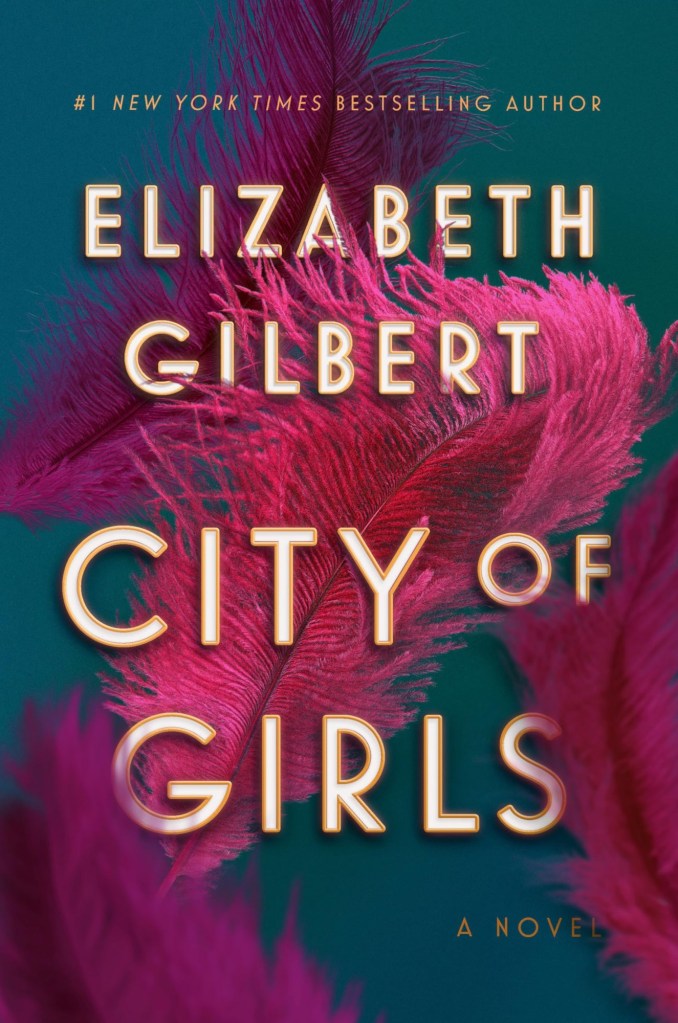
Meet the Author
Tracy is the author of 11 novels, including the international bestseller GIRL WITH A PEARL EARRING, which has sold over 5 million copies and been made into an Oscar-nominated film starring Scarlett Johansson and Colin Firth. American by birth, British by geography, she lives in London and Dorset. Her latest novel, THE GLASSMAKER, is set in Venice and follows a family of glass masters over the course of 5 centuries.