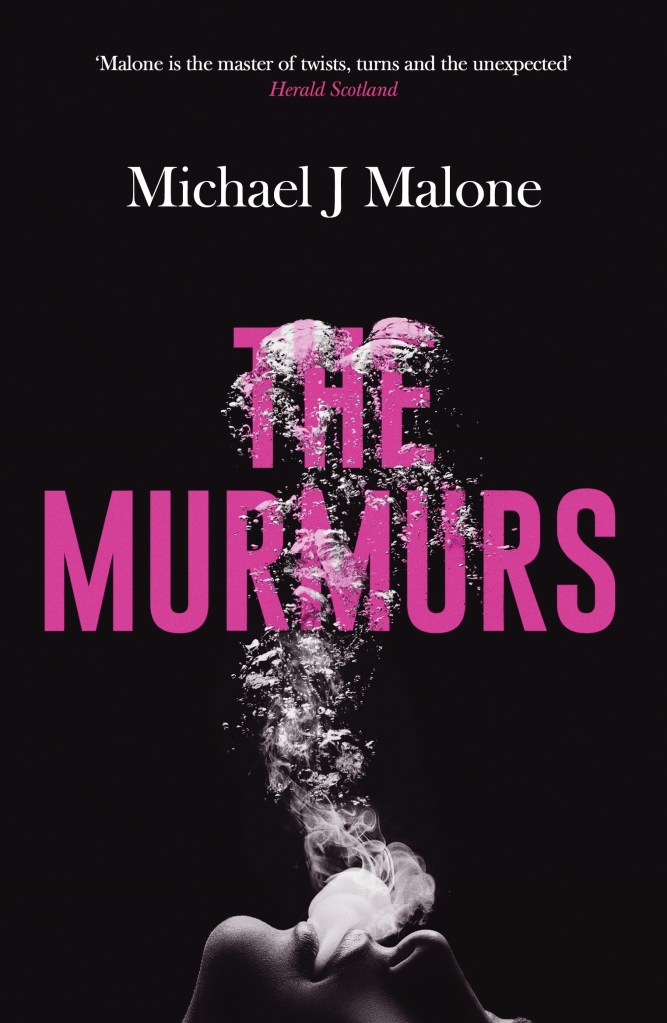
I quickly became fascinated with this mix of historical fiction, psychological suspense and the paranormal. We meet Annie Jackson as she tentatively starts her new job in a nursing home in the West End of Glasgow, hoping to get her life back on track. Annie suffers with terrible nightmares where she’s stuck in a car underwater. She also has the sensation that someone is holding her head under water until her lungs feel ready to burst. She also has debilitating headaches and she can feel one threatening as her new manager introduces her to resident Steve. Then something very odd happens, as a blinding pain in Annie’s head is followed by Steve’s face starting to shake, then reform. A whispering sound begins in her head and she sees Steve as a skull, followed by a vision of him falling in his room and suffering a debilitating stroke. She desperately wants to tell him but how can she without seeming like a lunatic? He becomes agitated and upset, as Annie starts to describe the layout of Steve’s bathroom and he asks her to stop. As she’s sent home from another job she starts to think back to her childhood and the first manifestations of her debilitating problem. Annie survived the terrible car accident that wiped her childhood memories and killed her mother. This strange supernatural phenomenon is why Annie is alone and struggles to make friends. These are ‘the murmurs’.
I felt so much compassion for Annie, as the story splits into two different timelines: we are part of Annie’s inner world as a child, but also 0in the present as fragments of memory slowly start to emerge. We also go back even further to the childhood of Annie’s mother Eleanor and her two sisters Bridget and Sheila. We experience their lives through other people’s stories and written correspondence, especially that of a nun who also works in a residential home. I enjoyed how this gave me lots of different perspectives and how the drip feed of information slowly made sense of what was happening in the present day. Different revelations have a huge effect on the adult Annie and because her memories have been buried for so long she experiences the shock and surprise at exactly the same time as we do. This brings an immediacy to the narrative and I felt like I was really there alongside her, in the moment. With my counselling brain I could see a psyche shattered by trauma, desperately looking for answers, she is piecing herself back together as she goes.
Teenage Annie had a similar vision about a girl called Jenny Burn, who went missing never to return. The murmurs awakened when her mum’s sister Aunt Sheila came to visit them. She tried to openly discuss an Aunt Bridget who also had a ‘gift’ but has ended up in a home. Eleanor, Annie’s mother, asks Sheila to leave, but it’s too late because Annie has already seen that her aunt is dying of cancer. Annie evades her mum and makes her way to the hotel, the only place Sheila can be staying. Unfortunately, Jenny is working on reception. Annie can see her climbing into a red car and she desperately wants to warn her, but she knows she’ll come across as a crazy person. Eleanor is desperately looking for a way to deal with her daughter, she’s a person of importance in the church and she can’t be seen to have a daughter who has visions. Pastor Mosley has Eleanor exactly where he wants her. There’s a control and fanaticism in him that scared me much more than Annie’s murmurs. When Eleanor takes Annie to the pastor, he demonstrates his control by holding her head firmly under his head as he prays for her. When she almost faints, he’s convinced there’s a demon in her. Annie is scared of him, she gets a terrible feeling about him but doesn’t know why. Religion is portrayed as sinister and controlling, with fervent followers who never question, but live in the way they’ve been instructed is Christian? story takes an interesting turn when Annie’s brother Lewis, a financial advisor, becomes involved with the church once more and it’s new pastor Christopher Jenkins, the son of their childhood neighbour. He’s revolutionised the church and through the internet he’s turning it into a global concern. He’s not just interested in saving souls though, he’s also amassing money from his internet appeals. He also seems very interested in meeting Annie.
As the book draws to a close the revelations come thick and fast as both past and future collide. The search for Aunts Bridget and Sheila seems to unearth more questions than answers. Annie finds out that Jenny wasn’t the only woman who went missing in Mossgaw all those years ago. As she starts to have suspicions about her childhood home, Chris seems very keen to draw her back there. Might he be planning a huge surprise? I was a bit confused at first with all these disparate elements, but as all the pieces started to slot together I was stunned by the truths that are unearthed. Then as Annie’s childhood memories were finally triggered I felt strangely terrified but also relieved for her all at once. I hoped that once she’d regained that past part of herself she would feel more confident and free, despite the strange gift she seemed to have inherited. Maybe by facing the past and leaning in to her relationship with her brother, she might feel more grounded and strong enough to cope with her ‘gift’. I thought the author brought that compassion he’s shown in previous novels but combined it with a spooky edge and some intriguing secrets. I really loved the way he showed mistakes of the past still bleeding into the present, as well as the elements of spiritual abuse that were most disturbing. This book lures you in and never lets go, so be prepared to be hooked. Michael Malone is a natural storyteller and the fact this is billed as Annie Jackson Number One makes me think there may be others. I certainly hope so,
Out Now from Orenda Books.
Meet the Author
Michael Malone is a prize-winning poet and author who was born and brought up in the heart of Burns’ country. He has published over 200 poems in literary magazines throughout the UK, including New Writing Scotland, Poetry Scotland and Markings. Blood Tears, his bestselling debut novel won the Pitlochry Prize from the Scottish Association of Writers. Other published work includes: Carnegie’s Call; A Taste for Malice; The Guillotine Choice; Beyond the Rage; The Bad Samaritan; and Dog Fight. His psychological thriller, A Suitable Lie, was a number-one bestseller, and the critically acclaimed House of Spines and After He Died soon followed suit. Since then, he’s written two further thought-provoking, exquisitely written psychological thrillers In the Absence of Miracles and A Song of Isolation, cementing his position as a key proponent of Tartan Noir and an undeniable talent. A former Regional Sales Manager (Faber & Faber) he has also worked as an IFA and a bookseller. Michael lives in Ayr.
After being slowly enticed by the glowing reviews of Olivie Blake’s Atlas Six series, I finally decided to take the plunge with this one. I’m a huge fan of Alice Hoffman so magic, romance and witchery are right up my street. However, this was the same themes but with some added NYC grit and sass.
In New York City, two rival witch families fight for the upper hand.
The Antonova sisters are beautiful, cunning and ruthless, and their mother – known only as Baba Yaga – is the elusive supplier of premium intoxicants. Their adversaries, the influential Fedorov brothers, serve their crime boss father. Named Koschei the Deathless, his enterprise dominates the shadows of magical Manhattan.
For twelve years, the families have maintained a fraught stalemate. Then everything is thrown into disarray. Bad blood carries them to the brink of disaster, even as fate draws together a brother and sister from either side. Yet the siblings still struggle for power, and internal conflicts could destroy each family from within. That is, if the enmity between empires doesn’t destroy both sides first.
I found myself hurled straight into this vivid world. It is earth but harbours a secret; witch families are vying to supply humans with magical pharmaceuticals. I loved the idea that there might be another realm within our own, hiding in plain sight. Baba Yaga has a shop – like Lush but with extra ingredients – whereas the Federovs sell on the streets and in the bars and clubs of the city. The rivalry and language of their industry was very ‘gangster’, with specific territories and penalties for stepping out of line. The patriarchal Federovs and the the matriarchal Antonova sisters. The sisters, although doing the bidding of Baba Yaga, are kept in line by eldest daughter Marya, also known as Masha. The scene that grabbed me was Masha simply walking into the Federovs lair and demanding to see second brother Dima. There has been an issue with territory and Masha believes it is Dima’s fault, so she carries out a terrifying enchantment that leaves Dima totally incapacitated. I was fascinated that youngest brother Lev tries to stop her, but is held back by his brother. Is there an honour code between the families? Even more intriguing is the obvious and immediate chemistry between Dima and Masha. The atmosphere was electric, the air charged with feelings and I was drying to know what had happened before and if these two had historic feelings for each other. If so, Masha is ruthless when it comes to business, but must have been full of hidden emotion. Would she be just as ruthless when protecting her family?
This scene showed me that Masha was confident in her power and very likely the successor to her mother. Masha is overseeing the expansion of their business. I found the idea of pharmaceutical drugs touched by magic fascinating too, I wanted to know more about their effects and whether they were largely benign. Did the customers truly know the power of what they were buying? I wondered about the family’s ethics with regards to black or white magic and was intrigued by how both families used their magic differently. Lev is sent to check out the clubs and see if he can work out the Antonov family’s next move, but he is distracted from his job by a young beautiful woman being hassled by a college student. As soon as he sees her he wants to help her, but already his attraction to her is obvious. She is very assertive and assures him she can look after herself and as Lev follows them out of the club she breaks the student’s nose. Intrigued by her confidence and the way she handled the situation, Lev offers to walk her home. Every block she tells him she can manage, but Lev has fallen in too deep already and the attraction is mutual. They have a passionate encounter down a side street. What Lev doesn’t know is that this young woman is Sasha, youngest of the Antonova sisters. As the pair fall in love, Lev confides the task he’s been given by his brothers. I wondered how she would react and whether she’s think his feelings were genuine or entrapment. Lev’s feelings are genuine and I was already wondering whether this was a repeat of Masha and Dima’s story. More importantly, if it comes to a showdown between the two families, which side would Lev choose?
Considering the amount of characters, they do have depth and feel very real. I think their back stories helped and the Russian folklore woven into their backgrounds seemed to ground them. Koshchei the Deathless is a male protagonist in Russian folklore, usually cast as an evil father figure who imprisons the male hero’s lover. He is called the immortal because he keeps his soul hidden within inanimate objects. Often he would hide his soul inside a tiny object then place it inside another object, perhaps an animal, like a rather grotesque set of Russian dolls. Baba Yaga was originally a supernatural being who hides within the disguise of a grotesque old woman. In a bizarre version of her story, which I love, she lived in a kettle with chicken’s legs – rather like the archetypal witch we all know from fairy tales. She would often take a maternal role and use that to hinder a character from the story. How these archetypes work within this story I’ll leave for you to find out. Then there’s the Romeo and Juliet parallel which certainly gives us the basic plot line of two rival families, where the youngest members of each family are falling in love with each other. That’s really where the comparisons end, because this is a loose retelling so don’t expect specific characters or even the same plot lines. This is a tragedy and it’s genuinely heartbreaking, but with gritty, real violence and it’s bloody consequences, just don’t expect the same victims. I loved that the rivalries are decades old and I think there’s definitely scope for more novels in this setting.
Although I loved Blake’s descriptive prose and enjoyed her characters, I did feel that the central love story lacked a bit of depth. I could tell these characters were in lust because their scenes were hot, but I didn’t feel the love at first. Perhaps that’s because I’m an older reader though and why I was interested in the oldest sister’s story. Also there were so many twists towards the end I had to go back and re-read sections to keep up with what was going on. However, for such a big book, it really fly by and the heady mix of love, power, magic, revenge and tragedy is a winner for sure. The art both inside and on the cover is absolutely beautiful. I feel that I could easily come back to these rival families in the future and it has certainly made me want to check out the author’s previous novels. If you like your love stories dark and laced with magic, violent tragedy and witches this is the book for you. It was definitely the book for me.
Published on 20th April by Tor (Pan Macmillan)
Meet The Author
Olivie Blake is the pseudonym of Alexene Farol Follmuth, a lover and writer of stories, many of which involve the fantastic, the paranormal, or the supernatural, but not always. More often, her works revolve around what it means to be human (or not), and the endlessly interesting complexities of life and love.
Olivie has penned several indie SFF projects, including the webtoon Clara and the Devil with illustrator Little Chmura and the viral Atlas series. As Follmuth, her young adult rom-com My Mechanical Romance releases May 2022.
Olivie lives in Los Angeles with her husband and baby, where she is generally tolerated by her rescue pit bull. More on Olivie can be found at http://www.olivieblake.com
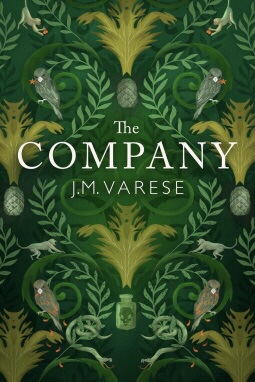
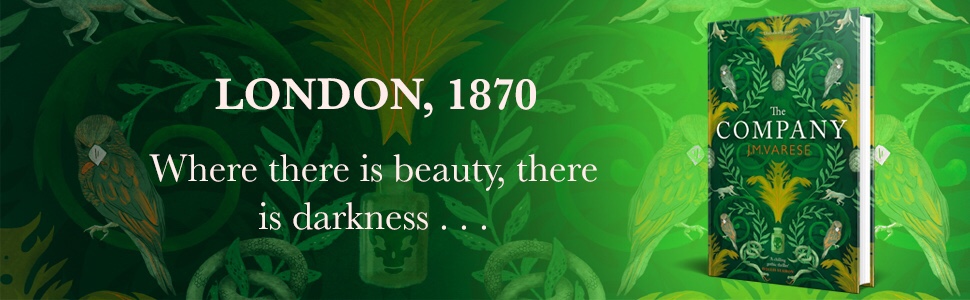
I once began a masters in Victorian Studies and did a lot of work around literature, art and visual culture. Through it I developed a lifelong love of the Pre-Raphaelites and the design of the Arts and Crafts period, so the scandal of Victorian wallpaper poisonings was something I’d researched and written about before. I was very keen to see how the author had used this moment in history to inspire a Gothic story and I was utterly seduced by that divine green cover. As the 19th century progressed, more intricate and vibrant wallpapers were the fashion, in much the shame way that they’re having a moment now. In the early part of the century a rich, vibrant green named Scheele’s Green had pemerged. The colour was so incredibly popular that by the 1850’s it was being used in the production of household items from wallpapers, paints, and candles, to clothes and children’s toys. A vibrant green called Schiele’s Green emerged in the 1850’s, but was manufactured using large amounts of copper arsenite. Arsenic had a completely unique property that enhanced colour pigments and stopped them from fading, perfect for items like wallpaper that would be affected by sunlight over time. Manufacturers knew that arsenic was toxic, but chose to promote the line that it was only harmful if ingested – a dangerous lie that lasted decades. As wallpaper became ever more popular, reports began of people suffering slow and agonising deaths. Damp homes amplified the problem because of toxic fumes released by moisture on the walls. Rooms with large fires created the same problem meaning that many Victorian homes were veritable death traps. Alison Matthews David, who wrote about the problem in ‘Fashion Victims: The Dangers Of Dress Past And Present’, explains that “arsenic didn’t fade and looked bright under lights. It was stunning and became hugely popular in clothes. A ball gown would contain enough arsenic to kill 200 people and a hair wreath 50. The amounts used were lethal.’ This background knowledge had me champing at the bit for some horrifying deaths and characters terrified by intricate, poisonous wallpaper.
Examples of Victorian wallpaper patterns using Scheile’s Green
Braithwaite and Company are a Victorian wallpaper company caught up in the arsenic scandal and murky work practices at their copper mines in Devon, where the family are from. When our heroine Lucy Braithwaite, along with her brothers Tom and John were young and living at the family’s country home there was an accident in the copper mine. There were small children from the village sent into the most remote and claustrophobic points of the mine, because only they could fit. They were all killed. Mr Braithwaite died soon after and the family chose to move to their London home, nearer to the company’s offices. The company ran under the management of long running manager Mr Luckhurst, who had worked closely with Mr Braithwaite for many years. Mrs Braithwaite concentrated on the home front, filling their home with the latest wallpaper patterns from the company. Apart from Being I love oLucy who chose to have her room painted in the palest blush pink to be a calm and quiet space in contrast to the rest of the house. Yet the family’s luck was still on a downward turn after the death of Tom, who seemingly declined while being tortured by terrible hallucinations. Were these visions from within or without?
Their luck seems set to change completely when Lucy is a young woman and a new, young and dynamic manager takes over after the death of old retainer Mr Luckhurst. Mr Rivers is young, handsome, gallant and personable, immediately charming Lucy’s mother and brother John. John is the obvious successor to the company, but he has become frail since moving to London. Lucy decided to move his bedroom down to their father’s old study so he doesn’t have to contend with stairs. His room is a combination of workplace and bedroom, the desk enabling to go through company papers and keep abreast of matters. He and Mr Rivers hit it off immediately and it’s soon common for them to retire to John’s bedroom after dinner and talk about the company. Lucy finds it strange that despite coming from Devon and apparently working under Mr Luckhurst for years, she has never met Rivers before. However, his knowledge of the company and it’s history is entirely accurate. I found Rivers suspicious straight away and I loved how the author creates this uneasiness in the description of his expressions, his speech and the sense that he’s saying all the right things, but is he just saying what the family want to hear? His name in a Victorian novel seemed significant, because my brain went immediately to Jane Eyre and St.John Rivers. The author’s description of Rivers and his gleaming eyes reminded me of the Jane Eyre character whose own eyes betrayed his fanaticism, of a religious kind in his case. Jane didn’t accept his proposal because there was no love there, but also due to this steeliness and determination, which meant he would pursue his aims to the end. I sensed this same determination in Rivers here but his aim seemed more dangerous and liable to bring harm to the family.
I loved the tension the author heightened towards the end and as I was reading on NetGalley I didn’t expect it to stop where it did. It felt rather sudden. Rivers assures Lucy and her mother that the recipe for the wallpaper colours is not being altered and isn’t causing any harm. However, his endless industrious meetings with brother John would suggest some sort of changes were being made. Also, John’s health is in serious decline. Lucy is called to his room in the night by screams of terror, apparently he sees phantoms but are they caused by his green wallpaper and it’s writhing botanical pattern? He insists on how much Rivers means to him and I started to wonder if there was more than a working connection. Was the attachment one that was considered unnatural? I felt like Rivers was trying to romance every member of the Braithwaite family, using whatever weakness he could find. I found Lucy intelligent, perceptive and able to think differently from her mother. Mrs Braithwaite really did want someone to sweep in and look after everything for her, whereas Lucy has been actively looking for evidence, befriending the boy Rivers uses as a lookout and appealing to those in their circle that they can still trust. Is there a chink in her armour? It’s perhaps likely that Rivers expects the archetypal Victorian heroine who might swoon at a mention of romance, but I was desperately hoping he was wrong. As the reckoning approaches would she be able to remain clear headed and courageous enough to form a plan? I found the final part of the book perplexing. It was exciting and nail-biting, but still with a shroud of mystery over certain details. I came away wondering and I still find myself thinking about it three or four days later. I know sooner or later I will have to pick it up and read it again. Another novel that left me with this feeling was The Turn of the Screw by Henry James; it’s scary and unsettling but difficult to pinpoint exactly what happens. I think this author wanted to wrap the reader in those toxic fumes till we were unsure which parts are real and where the supernatural creeps in, rather like Charlotte Perkins Gilman’s The Yellow Wallpaper. It doesn’t ruin the book, in fact it enhances that sense of the uncanny that always terrifies. Mysterious, gothic and brimming with historical detail I definitely recommend it, but don’t expect a mystery where every loose end is neatly tied.
Published by Baskerville 16th March 2023
Meet the Author
Jon Michael Varese (J.M. Varese) is an American novelist and literary historian whose first novel, The Spirit Photographer (2018), was published to critical acclaim. He has also written widely on Victorian literature and culture, and has served in various capacities, most recently as Director of Outreach, for The Dickens Project at the University of California for over two decades.
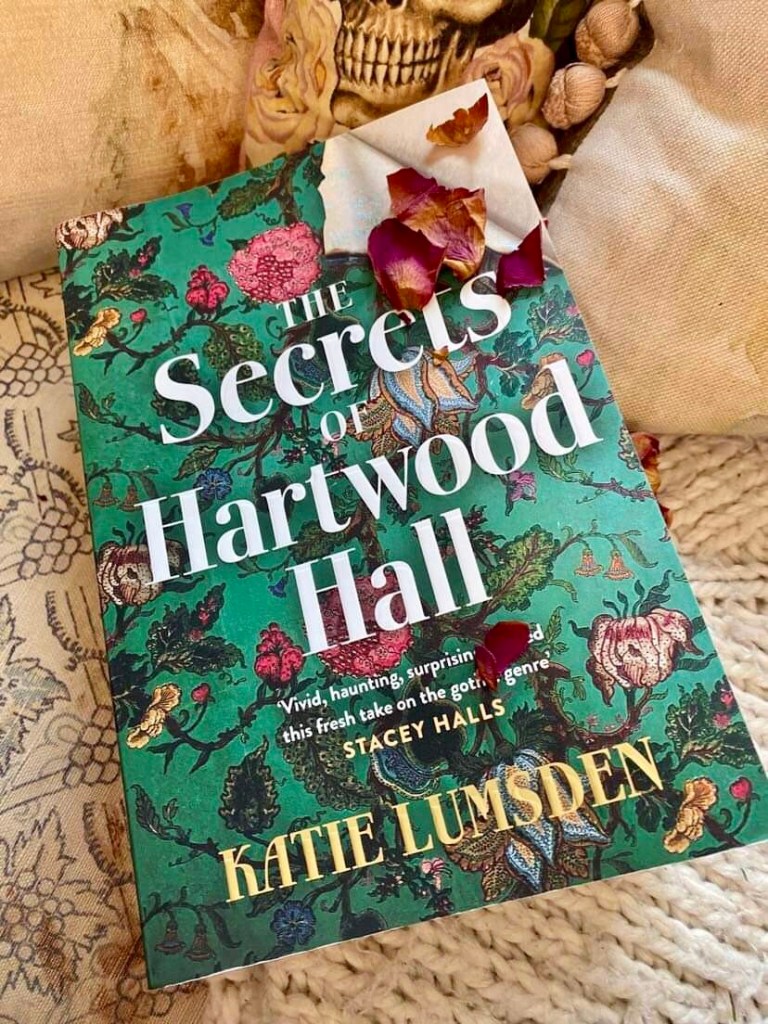
There couldn’t have been a better choice for a squad of female bookworms than this gothic mystery, full of spooky incidents, forbidden love, an orphan governess and within a house that holds many secrets. There was such a Jane Eyre feel about the book and also an hint of the Daphne Du Maurier opening as our narrator looks back to the hall’s approach.
‘when i think of Hartwood Hall, there are moments that come back to me again and again, moments that stain me, that cling like ink to my skin. My first view of the house: a glimpse of stone, of turrets and gables, tall windows and long grass’.
Our heroine is Margaret Lennox, recently widowed and forced to find paid work when her husband leaves his estate to his mother. She is offered a post by the mysterious Mrs Eversham, to educate her son Louis. This should be a moment of freedom for Margaret, but she notes the strange mood of the coach driver as soon as they enter the boundaries of the hall. Local people do not come near here. There is also a very clear rule: do not enter the East Wing of the house, because it is no longer used. As Margaret starts to find her way in Hartwood Hall and enjoys her time with Louis, she does notice a few strange things. She seems under suspicion from one of the existing staff, Susan. She has noticed Margaret’s response to a letter she receives at the breakfast table and is keen to find out more. Stranger than that, she has seen a distance figure in white out in the gardens and followed a figure with a candle down the stairs and towards the East Wing. Maybe the house is haunted, but there are other mysteries too such as what happened to Mr Eversham and why do people in the village treat this woman and her boy with such suspicion and fear?
I was hooked by this story straight away. Just like the author, Jane Eyre was the first grown up book I ever read and I was enthralled with it as a gothic story, years before I started to deconstruct it’s complexity at university. I was also hooked by the Sunday teatime BBC series starring Timothy Dalton as Mr Rochester. It’s the perfect mix of ghostly mystery, intrigue and romance. This book was inspired by the classic but breaks new ground of it’s own in terms of forbidden relationships, marital abuse, and freedom. The freedom of women making their own choices, having freedom of sexual expression and to earn their own living. The governess has always been a liminal figure in literature because they are educated more than other servants and even the woman of the house. They are usually single so have more freedom in their lifestyle and finances. Here Margaret is a widow, she chooses her own destiny and can shape her life as far as choosing where she works and for whom. She also has the choice of what to do with her spare time, no household chores or husband and family to consider. We learn that Margaret’s marriage was not a happy one and she has never felt the love that’s spoken of in literature and poetry. In fact she is surprised to learn it exists and it is joyous to watch her explore that chemistry, even if I did fear for her recklessness. She also becomes the face of Hartwood Hall in the village, choosing to take Louis to church and sit in the hall’s pew, whereas the hall’s gardener sits with his family. She even makes friends with the minister’s wife, although the rest of the village seem to avoid and ostracise them.
As always in these mysteries Margaret is drawn towards the very part of the house she is told not to enter, in fact it is a perfect way into the house after the main doors are locked at night. She is sure she’s seen a candle moving around the East Wing’s rooms when walking in the gardens one evening. There are also noises in the dead of night that can’t be accounted for, but for me the tension really arises at the less mysterious points in the novel. The sly, unpleasant Susan really made my pulse race at points and her blackmail of Margaret feels grubby. She really enjoys the power of knowing something that gives her power over the other person and she seems to enjoy taking something valuable or precious from her victim. The way she commits little acts of dissent when only Margaret is looking, such as stuffing bacon in her mouth in the breakfast room shows resentment about her position. As I could see Margaret settling and enjoying her new pupil I desperately didn’t want Susan to ruin it. The period where both Louis and Susan are ill was truly tense as the whole house waits for the fever of the measles virus to pass. The isolation of Mrs Eversham and her boy is brought into stark relief when they can’t secure a nurse from the village to care for the patients. Mrs Eversham is in despair:
‘So these people will let a child and a young woman die because they suspect me, because they distrust this house? […] Because they believe in ghosts and spirits and curses? Or because they think I am a woman of low character, that I have never had a husband?’
This speech reveals another possibility about their isolation, that Mrs Eversham’s widowhood is not what it seems. It also shows me that Mrs Eversham has a different set of morals to the Victorian norm, she is wiling to set aside ideas about decency and propriety when it comes to saving a life. Margaret is so relieved when Miss Davis appears from nowhere claiming she’s come from the further village of Medley because she heard there was a child who needed a nurse. Yet the other servants seem uncomfortable and even Mrs Eversham seems on edge. Margaret wonders whether Mrs Pulley knows something troubling about this young woman. This brings another yet another layer of mystery to the house: why isn’t Miss Davis as prejudiced against the hall as the locals? Where did she spring from so quickly? By this time I was fascinated and couldn’t stop myself from picking the book up at every opportunity to resolve all my suspicions. Needless to say that when the truth comes out, it was nothing I expected and I loved it! I loved that these strong, determined female characters were living according to their authentic selves. There’s a lot of discussion around the ending of Jane Eyre, I’ve even had an argument about it at a literature talk. A woman said that she felt let down by the ending and Jane’s choice to return to Rochester, because it betrayed her feminism. I argued that she goes back a different woman, with her own money and able to make her own choices. Rochester is her choice and their relationship is on her terms. The ending of Hartwood Hall definitely goes further. It was really heart-stopping, but also satisfying. Both Mrs Eversham and Margaret make their independent choices and decide to live life on their own terms. I throughly enjoyed this atmospheric gothic mystery and it’s strong, forward-thinking, female characters.
Meet the Author.
Katie Lumsden read Jane Eyre at the age of thirteen and never looked back. She spent her teenage years devouring Victorian literature. She has a degree in English Literature and History from the University of Durham and an MA in Creative Writing from Bath Spa University. Her short stories have been shortlisted for the London Short Story Prize and the Bridport Prize, and have been published in various literary magazines. Kate’s YouTube channel Book and Things has more than 20,000 subscribers and was long listed for the Book Vlogger of the Year Award at the London Book Fair Awards 2020. She lives in London and works in publishing.
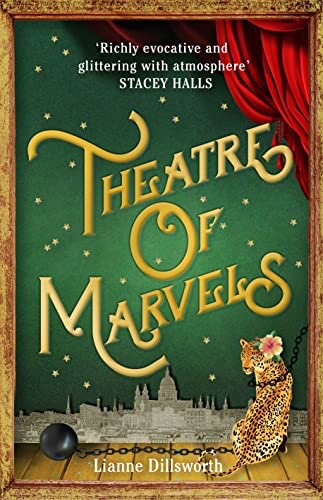
You may have heard of Sarah Baartman, a Khoekhoe woman from South West Africa who was exhibited as a freak show attraction in 19th-century Europe under the name the Hottentot Venus. She was even exhibited after her death, with one showman dissecting her body and keeping her genitalia and skull. Another museum displayed her skeleton and a body cast, which were still exhibited up till the 1970’s. She was exhibited for her steatopygic body type, where body fat is concentrated on the bottom and thighs. This body type wasn’t seen in Europe and was perceived as a curiosity. She was also a subject of scientific interest, but through the gaze of racial bias and erotic projection. In the 19th Century her body could be viewed for two shillings and for a bit extra you could poke her with a stick. Her genitalia were of specific interest as they were said to show her sexual primitivism, although this was more about the men’s erotic projection than Sarah’s own sexuality or libido. Recently, black women in academia and culture have been using her story and reframing it as a source of empowerment, rejecting the ideals of white mainstream beauty, and embracing more curvaceous figures as a source of female beauty. This is the historical and social background that I had in mind while reading this fascinating debut novel from Lianne Dilsworth. I was swept up into her world straight away and my personal academic interest in disability and the display of ‘other’ bodies added to my enjoyment.
Our setting is a theatre and a group of performers from singers to magicians who perform a variety show under the watchful eye of Mr Crillick. His current headline act is Amazonia – a true African tribeswoman, dressed in furs and armed with a shield and spear, her native dancing brings down the house in Crillick’s show. The audience watch, transfixed with fear and fascination, never realising that she is a ‘fagged’ act. Zillah has never set foot in Africa and is in fact of mixed race heritage, born in East London. She is making her money by pretending to be what the, largely white, audience wants to see. It doesn’t sit well with Zillah, but she is alone in the world and does need to make money. Besides it’s better than the other options for a young woman who finds herself in poverty. She’s used to slipping between worlds on stage and in her private life, renting a room in the rough St Giles area of the city, but regularly making her way to a more salubrious area and the bed of a Viscount by night. She and Vincent have been lovers for some time, but he is estranged from his family and can easily keep her a secret, never even walking with her in public. Their shared bed is situated in the middle class home of her boss Crillick. Now, everything is about to change, as Zillah’s consciousness is raised in several ways.
First, she realises that Vincent will never admit to their relationship in public, as he yet again cancels plans to take her to Richmond for the day. Secondly, she meets a young black man called Lucien, who is campaigning in the street. He addresses her in Swahili, with a suggestion this may be the native language of her ancestors, and he places a question in her mind that she can’t shake off. How does it feel to earn money misrepresenting her ancestors? In fact she is representing her ancestors through the gaze of a white audience. The sense that this is wrong, has always been on the edge of her conscience, but Lucien gives her doubts a voice and opens a door towards embracing both sides of her identity. While she dismisses him at first, the thought of him seeing her as Amazonia seems to fill her with shame. Lucien is working on a campaign to relocate black and mixed race Londoners to Africa and the first site is in Sierra Leonne. Meanwhile, Crillick has returned from a trip abroad with shipping containers that suggest he’s been gathering props and it seems he’s been finding new acts too. He taunts Zillah with the suggestion he has found an act that may even eclipse her and one night at his house she sees a new act unveiled to a small group of people. She is horrified to see him parade a terrified women he’s called the ‘Leopard Lady’, with strange white patches all over her dark skin. The men in the party are fascinated, drawing near and touching her skin, even roughly scratching it to see if it comes off. When Zillah notices medical implements laid out on a tray, the horror of what might happen to this woman overwhelms her. She must rescue the Leopard Lady from Crillick’s clutches. There’s a freedom Zillah has compared to a lot of Victorian heroines we might remember, due to her station in life there are certain rules and etiquette of dress and behaviour that don’t apply. Although that freedom does come at a cost – poverty, not belonging anywhere, and the way she is viewed in more polite society. She knows that if she could be with someone like Lucien then she’d be settled in a place society expects of her, still in poverty but at least belonging to a community. Her feelings for Vincent can never come to anything, because his society would never accept her and they would always be a secret.
Through Zillah’s search for the Leopard Lady, we see the truth of a man wiling to make his money treating human beings as objects for display. Whereas before Zillah’s act has at least had the sheen of the theatre world, the Leopard Lady will not be afforded that excitement and sense of performance. This is because Zillah was acting a part, whereas this poor woman is being shown as she is because due to how she looks and where’s she’s from. Zillah chooses to put on her Amazonia costume and take to a stage, if living hand to mouth is ever a choice. Crillick’s plans revolve around his ‘Odditorium’, but in the meantime he plans to show his new acquisition privately to small groups of men. I could imagine these sordid gatherings taking place, with men enjoying an after dinner viewing where the woman is both viewed, potentially sexually assaulted and experimented on. It made me feel sick. I was willing Zillah on in her efforts to find and free the lady, and I found her quest tense and gripping. I thought Zillah’s awakening was handled really well, but I was in two minds about where I wanted her to story to end. Of course there’s an opportunity of relocation to a new life in Sierra Leone, but here I felt strangely similar feelings to those I had about another 19th Century heroine Jane Eyre. We know that Jane’s flight from Thornfield Hall, and the man she loves, is the right move for her. Yet despite the space and time it’s given her to process Rochester’s attempt at bigamy, I never warm to St John Rivers. Although he rescues her from the moors and gives her life purpose again, when he proposes, I can’t be the only reader who’s screaming ‘No’ in her head. As for Zillah, I though Lucien was a good, honest and intelligent man, but to me he feels like the wrong choice. The contrast between him and the passionate relationship she has with Vincent is rather like the two sides of her identity battling against each other. I was hoping that, for a while at least, she could find a way for herself, separate from them both.
This was an exciting and fascinating tale, with elements of the thriller and a central character who is resilient and brave in her quest. I found the settings of the theatre, and Crillick’s home, beautifully rich. Whereas the St Giles area is brought to life with descriptions of sights, smells, many bodies sharing rented rooms and even beds in an attempt to keep costs down. The author has backed up her tale with solid research into freak shows, the many layers of Victorian society and details of food, fashion and leisure time. Through her main character we get an insight into women’s lives, the realities of being bi-racial and the struggles of identity and belonging. I also enjoyed the themes of ‘otherness’ and how outsiders survive in society; the complexities of display and exploitation when weighed against poverty and deprivation. Can freak shows be acceptable if individuals make a choice to exhibit themselves? Or should any exhibition of ‘different’ bodies be unacceptable? This is a question that still needs debate in light of television shows that exhibit overweight and disabled bodies in a prurient way. I really liked Zillah‘s quest to rescue another woman in danger and her own personal journey too. I read this so quickly and will definitely be putting a finished copy on my bookshelves, because I know it’s one I’ll want to read again and again. I just know I’ll find more and more detail in this brilliantly atmospheric exploration of the dark corners of Victorian London.
Published Penguin 28th April 2022.
Meet The Author
Lianne Dillsworth
Lianne Dillsworth has MAs in Creative Writing and Victorian Studies and won a place on the London Library Emerging Writers Programme. She was first runner up in the 2020 SI Leeds Literary Prize for Black and Asian Women Writers in the UK. Lianne lives in London where she works on growing inclusion within the Civil Service. Theatre of Marvels is her debut novel.
From NYT bestselling author comes a haunting, high-octane contemporary fantasy for fans of The Chilling Adventures of Sabrina. Winnie Wednesday fights to take the deadly Luminary hunter trials in Hemlock Falls’ nightmare-filled forest.
Hemlock Falls isn’t like other towns. You won’t find it on a map, your phone won’t work here, and the forest outside town might just kill you…
Winnie Wednesday wants nothing more than to join the Luminaries, the ancient order that protects Winnie’s town—and the rest of humanity—from the monsters and nightmares that rise in the forest of Hemlock Falls every night. Ever since her father was exposed as a witch and a traitor, Winnie and her family have been shunned. But on her sixteenth birthday, she can take the deadly Luminary hunter trials and prove herself true and loyal—and restore her family’s good name. Or die trying.
But in order to survive, Winnie must enlist the help of the one person who can help her train: Jay Friday, resident bad boy and Winnie’s ex-best friend. While Jay might be the most promising new hunter in Hemlock Falls, he also seems to know more about the nightmares of the forest than he should. Together, he and Winnie will discover a danger lurking in the forest no one in Hemlock Falls is prepared for.
Not all monsters can be slain, and not all nightmares are confined to the dark.
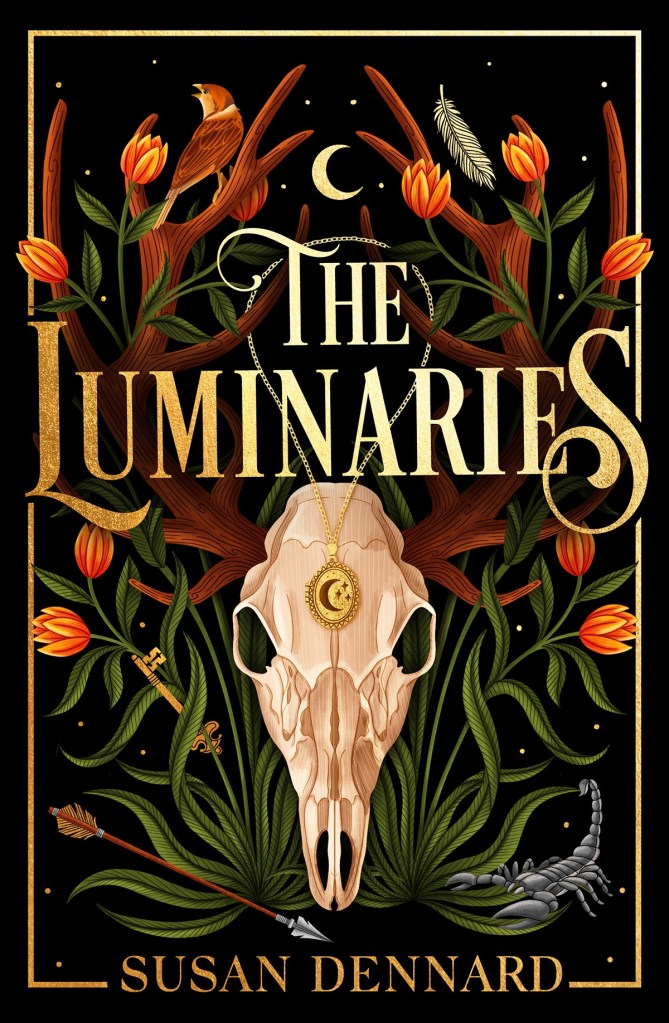
I’m always going to be sucked into a story where my heroine is named Winnie Wednesday, it’s gone straight on my list of potential cat names for the future. Of course one of my other strange interests is monsters, I even studied the Grotesque and Monstrous at university, so the beautifully described and illustrated monsters were exquisite. The novel had immediate appeal and didn’t disappoint. Winnie’s clan are known for belonging to a secret monster hunting society. In fact her family and her entire clan outcasts, thanks to the betrayal of her father. This is a matriarchal society and Wednesday is hoping to become the next clan leader, just like every generation of strong women in her family. Winnie is willing to risk her life on a deadly monster hunting trial, just for the chance to win back her family’s reputation and to be recognised as the foremost hunter of her generation.
The world building here is so creative and I was aware that the author is setting the scene for a series of novels, not a stand alone story. I’m a sucker for beautiful detail and there’s an abundance of it here, in Winnie’s home of Hemlock Falls, the creatures and the action scenes that follow during her mission. The mythology is based on beings that inhabit the surrounding forest, including the spirits who produce nightmares. I loved how Dennard wove an entire bestiary of mythological and paranormal creatures together all inhabiting her mystical forest. Could there be something as yet undiscovered lurking in the trees and if so, how dangerous might it be? Wednesday suspects this being could be a danger, not only to her quest, but to all the inhabitants of her town and their way of life.
As a main character I would suggest it’s impossible not to fall in love with Winnie. Once you have, you’ll be completely beguiled by her quest and you will be behind her all the way. That doesn’t mean she’s perfect, but many of her flaws come from her outcast status. For four years she’s been ostracised by friends and family, so she’s very self-reliant even if she is a little indecisive at times. She’s disconnected from others at an emotional level and doesn’t trust anyone around her. This lack of solid family background shows in the way she doubts herself, but despite this she keeps going. Her determination is incredible especially since the isolation from her society has meant she’s had to train herself with no resources at all. Despite this disadvantage her courage and abilities shine through. Out of the other characters, I enjoyed Winnie’s friendships with Bretta and Emma, because they’re the only people who show support and kindness aside from her mum and brother. There’s also a hint of romance with Jay Friday, a past friend of Winnie’s who could become something more. He’s a bit of a bad boy and I think their dynamic could develop nicely in future novels. The relationships with all other characters are established, but not developed and this can seem a bit slow. This is Winnie’s book though and the author is building our relationship with her, although I could really see the promise in these early interactions.
I loved reading this novel, it’s setting of Hemlock Falls and it’s history, the careful descriptions of each clan and their nightmares, and I liked the characters, too. It felt like a perfect base for an exciting series and I can already imagine how storylines might be expanded as we go on. It was such an easy book to read and the short chapters kept a lively pace, as well as being rather addictive late at night – just one more chapter won’t hurt will it? I’m itching to know more about Jay and his bad boy status, as well as how he and Winnie develop their romantic feelings. Of course there was a cliffhanger ending too and enough loose ends to lead us neatly into the sequel. I’m already looking forward to it.
Published 1st November 2022 by Daphne Press.
Meet The Author
Susan Dennard has come a long way from small-town Georgia. Working in marine biology, she got to travel the world—six out of seven continents, to be exact (she’ll get to you yet, Asia!)—before she settled down as a full-time novelist and writing instructor.
She is the author of the Something Strange and Deadly series, as well as the New York Times bestselling Witchlands series, and she also hosts the popular newsletter for writers, the Misfits & Daydreamers. When not writing, she is slaying darkspawn (on her PS4) or earning bruises at the dojo.
She lives in the Midwestern US with her French husband, two spoiled dogs, and two grouchy cats.
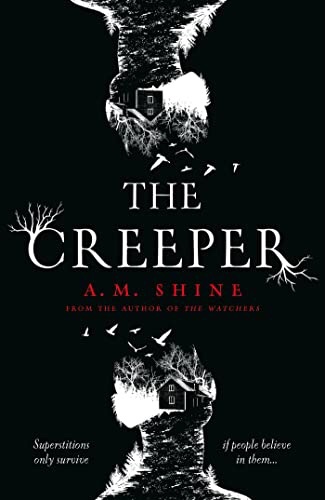
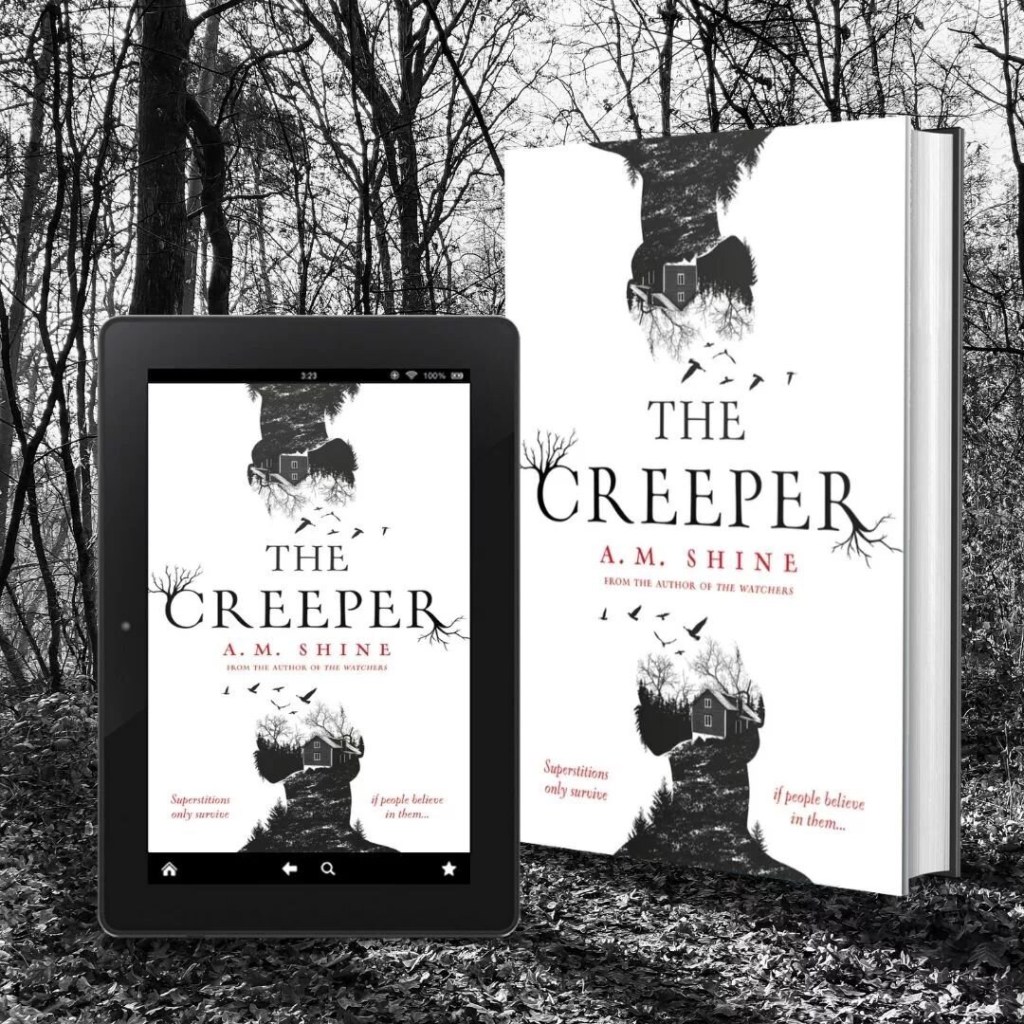
I was terrified by A.M. Shine’s first horror novel The Watchers last year and I have been looking forward to his new novel The Creeper. It has such an interesting premise. Academic Dr. Alec Sparling lives a very regimented existence in a remote Manor House in Ireland. His house is set back, covered and disguised with vegetation. There are shutters for the windows and and bolts for the doors. What is he hiding from? He has advertised for two academics to undertake field research and chooses Ben and Chloe. She is an archaeologist and he is an historical researcher with a wealth of experience in interviewing people. They must hike out to a remote Irish village and interview the residents about their life and their minimal contact with the outside world. This is a forgotten place, wary of strangers and as they stumble through a forest, tripwires attached to church bells ring out their presence, giving the villagers plenty of warning. As Chloe and Ben finally meet the people they are shocked by their physical appearance. Poverty and hardship has marked their faces, but it’s the lack of new residents that explains the deformities they observe, years of in-breeding has clearly had it’s effect. These people are not pleased to see them and like Dr Sparling, they are nervous about dusk creeping up on them. Chloe observes the shutters at their windows, less high tech than the wealthy doctor’s, but for exactly the same purpose. Are they to stop people looking out after dark, or are they to stop someone looking in?
As the pair start to interview villagers, they get the sense they’re being fed stock answers. There is something very wrong here, but no one is willing to talk about it, except for one little girl who repeats a piece of folklore:
Three times you see him. Each night he comes closer…
As darkness starts to fall and the villagers start itching to close themselves away for the night, Ben and Chloe realise they will not be able to get back to the car before nightfall. So they set up camp in the driest grass field they can find. As they organise themselves and darkness falls, Ben gets the sense they are not alone. Towards the back of the field, there’s a shape in the darkness. Could it be a person or something worse? This is The Creeper, kept alive by the villager’s superstitions and stories, he is the nameless fear in the night and tomorrow night, he’ll be even closer.
A.M. Shine is a horror genius. His clash of old Irish folklore and modern life is irresistible. I had only read Ben and Chloe’s first day at the village when I had a nightmare! I’m very suggestible. He’s brilliant at creating a sense of foreboding in the reader and here it’s heightened by never fully describing The Creeper till part way through the book. The author knows that our own imaginations are adequate enough to scare us and there’s nothing worse than not knowing or fully seeing the thing you fear. On the first night it’s so far away, covered in raggedy clothing, that we never see it’s face. The villager’s deformed appearances also feed the imagination, leaving the suggestion that the Creeper may be even more disfigured. The doctor’s preparations are also ominous, suggesting that the Creeper isn’t just restricted to the village, but can appear anywhere. We can explain away a superstition held by an isolated settlement, who still live like it’s the Dark Ages! However, if a respected academic who lives in the ‘normal’ world is scared, then we should be too. The author also drops little clues that are easy to dismiss at first, such as the unearthly cry Ben hears as they approach the village. Is it just a child crying out or something much much worse?
The whole atmosphere of this novel is dark, damp and dreary. The waterlogged fields that surround the village create mist. So it feels like everything is obscured and shrouded in mystery. The weather is constantly damp and miserable, so Ben and Chloe’s quest feels grounded and based in reality. Their discomfort as they set up camp for the night is something I remember well from my camping days, that awful feeling that you’ll never be dry again. The contrast between what is familiar and what is very, very wrong, adds to the horror of the situation. The author leaves us suspicious about everyone; I doubted the doctor’s motives in giving the academics this mission and I doubted the villagers too. I found them furtive and secretive, I wondered what they were withholding and whether they were really as downtrodden as they seemed to be. There was the hint that previous academics had come this way and if they had, where were they and where was their research? By the time something terrifying happened my nerves were as taught as bow strings. The final confrontations and the horrifying conclusion were both expected and at the same time shocking. I kept thinking about the author and asking myself ‘he’s not really going to do this is he?’ He really did. I won’t be divulging any of the final chapters, but it really was heart-stopping. This book cemented the feeling I had after reading his first novel The Watchers, Shine has become one of the best horror writers around.
Published by Head of Zeus 15th September 2022
Meet The Author
A. M. Shine is an author of Literary Horror from the west of Ireland. It was there that at a young age he discovered a passion for classic horror stories, and where he received his Masters in history, before ultimately sharpening his quill to pursue a life devoted to all things literary and macabre. His writing is inspired by the trinity of horror, history, and superstition, and he has tormented, toyed with, and tortured more characters than he will ever confess to.
Owing to a fascination with the works of Edgar Allan Poe and his ilk, A. M. Shine’s earlier writings were Gothic in their style and imagination. When his focus turned to novels he refined his craft as an author of Irish horror – stories influenced by his country’s culture, landscape, and language, but which draw their dark atmosphere and eloquence from the Gothic canon of his past.
When thinking about reads for Halloween I started thinking about books that genuinely scared me. The ones I couldn’t stop thinking about and made me look over my shoulder as I popped to the loo in the middle of the night. I blame the Brontë’s for my love of the gothic, from the terrible creature who visits Jane Eyre’s room in the night and tears her wedding veil, to the icy cold hand of a child that reaches into Mr Lockwood’s bedroom window in Wuthering Heights. I even studied gothic literature at university, that’s how much I love the genre. What scares us doesn’t always mean the traditional ghosts, vampires and witches we’re used to. It can be a really tense thriller, a mystery or even novels that defy genre. Here are a few books that genuinely gave me the creeps!
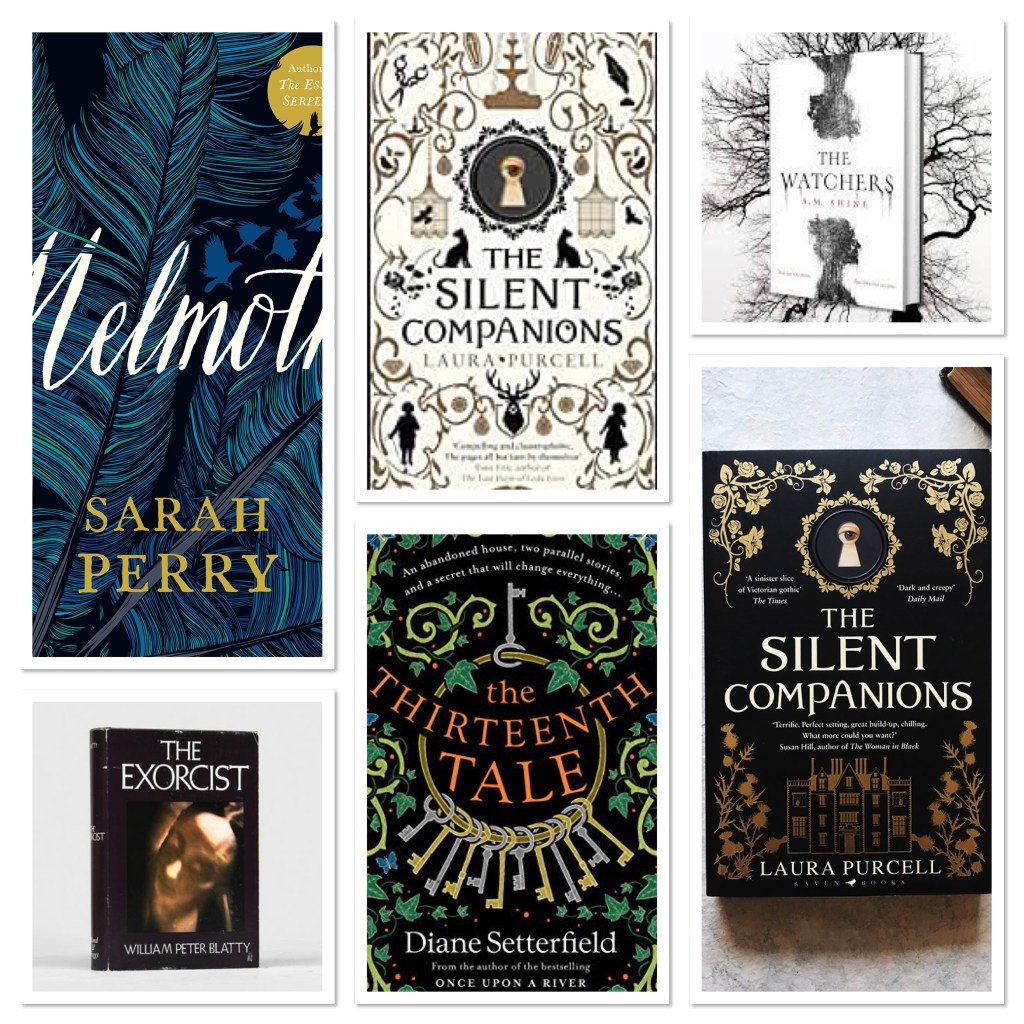
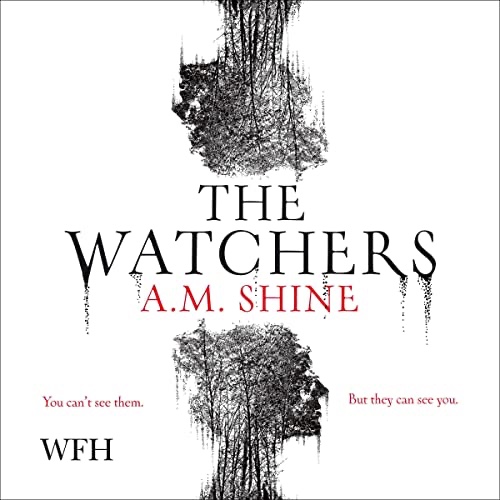
A.M.Shine was a completely new writer to me when I picked up this novel, so I had no expectations. Since reading this I’ve been so creeped out by his second novel, The Creeper, I had to stop reading it! The Watchers was an incredible read and such an unnatural situation for the characters to be in. Lost in a deep forest in rural Ireland, Mina feels unnerved, when she hears a scream that isn’t human, but isn’t like any animal she’s ever heard either. As the shadows gather she is beginning to panic, when suddenly she sees a woman beckoning her and urging her to hurry. Mina decides it’s better than staying out here to be found by whatever made that terrible noise. As the door slams shut behind them, the screams grow in intensity and volume, almost as if they were right on her heels. They’re in a concrete bunker and as Mina’s eyes adjust to the light, she finds herself in a room with a bright overhead light. One wall is made entirely of glass, but Mina can’t see beyond it and into the forest because it is now pitch dark. Yet she has the creeping sensation of being watched through the glass. A younger man and woman are huddled together, so there are now four people in this room, captive and watched by many eyes. Their keepers are the Watchers, dreadful creatures that live in burrows by day, but come out at night to hunt and to watch these captive humans. If caught out after dark, the door will be locked, and you will be the Watcher’s unlucky prey. Who are these creatures and why do they keep watching? I have to say that just when I thought my nerves were calm, this author found a way to leave me with a creeping sense of dread.
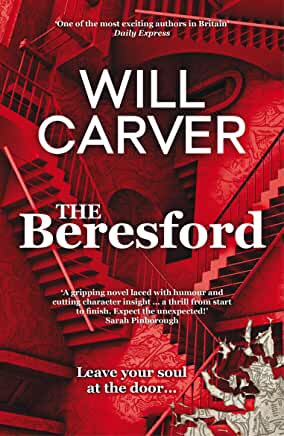
The Beresford is my favourite Will Carver novel, because it really does get under your skin without a single ghost in sight!
Abe Schwartz lives in a one-bed furnished flat. An apartment building called The Beresford. The bell rings and he’s the one opening the front door to a stranger. Before that, he’s dragging a dead body into his room, mopping up blood and asking himself, What the hell just happened?
The Beresford is an apartment building with a difference. It has a certain atmosphere and it’s not long before you dread the door bell ringing. Mrs May is the landlady, an incredibly sweet old lady who has a daily routine from her eggs and cold coffee first thing, to her rose pruning every afternoon. As anyone who has watched The Ladykillers knows, little old ladies should not be underestimated. Does she know more about what’s going on in her building than we think? Even worse, this is only one side of the building, and what’s going on next door is even more unsettling. I’ve been waiting for Carver to elaborate on the other side of the Beresford and I’m told I will only have to wait till next summer. I know one thing for sure – I’m definitely going to be reading it in the daylight.
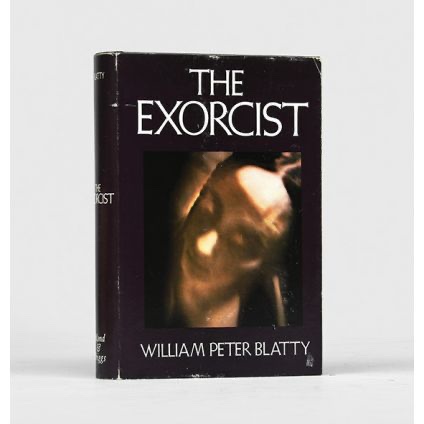
This is the copy of William Blatty’s book that I would sneak off the bookshelves when my parents went out. I would read as much as possible, then as soon as I heard the gravel crunching on the drive, I’d pop it back and wonder how I was going to sleep that night. When I was about 13, this book had the combination of being both terrifying and taboo – a teenage bibliophile’s holy grail. My parents had joined an evangelical church and became very restrictive in my teens, so the fact this book was even on our shelves felt transgressive. The book works because of atmosphere and tension the author creates. This is a child, so that innocence contrasts sharply with the creature Regan becomes. At first her mother Chris thinks Regan is ill. While Chris has been shooting a movie in Georgetown, there has been poltergeist activity in their rented house, but as time goes on Regan has been refusing to eat, unable to sleep and aggressive in her behaviour. Could it be psychological? The deterioration in Regan is horrific and the sense of horror that starts to come over Chris as she prepares to enter her daughter’s room can be felt. The icy cold, the smell and the violent expletives really hit home and when even a priest is struggling to contain the evil inside the girl, it’s power is still terrifying over fifty years later.
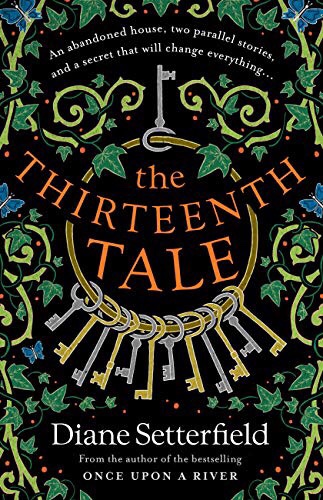
When people ask me if I believe in ghosts I always say no, not in the traditional sense of apparitions, but I do believe in energy and how a building’s past can be felt within it’s walls. Events leave an imprint behind, the emotional equivalent of muscle memory, and perhaps sensitive people can tap into those emotions. That’s the feel of this novel from Diane Setterfield and for me it conjures up dark winter afternoons and the warm fireside but outside of that cozy circle there may be something lurking and waiting to surprise you with it’s presence. Angelfield House stands abandoned and forgotten, but is full of atmosphere. It was once home to the March family: fascinating, manipulative Isabelle; brutal, dangerous Charlie; and the wild, untamed twins, Emmeline and Adeline. But the house hides a chilling secret which strikes at the very heart of each of them, tearing their lives apart…
Now Margaret Lea is investigating Angelfield’s past, and its mysterious connection to the enigmatic writer Vida Winter. Vida’s history is mesmering – a tale of ghosts, governesses, and gothic strangeness. But as Margaret succumbs to the power of her storytelling, two parallel stories begin to unfold…What has Angelfield been hiding? What is the secret that strikes at the heart of Margaret’s own, troubled life? And can both women ever confront the ghosts that haunt them…? Prepare to read this with a sense of unease, but a need to unravel the story.
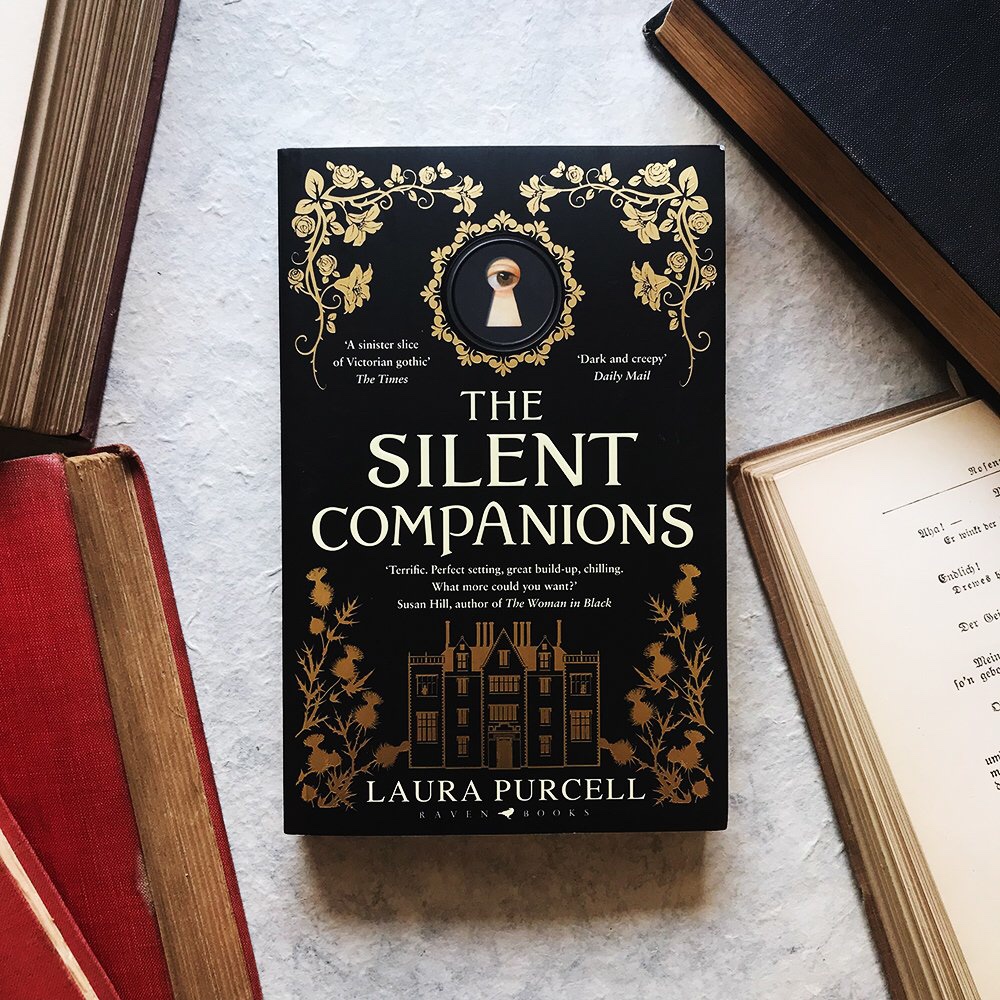
Laura Purcell’s debut was so good it made her my ‘go to’ author immediately! It taps directly into those Brontë themes of atmospheric houses with creepy nighttime visitations. It builds beautifully, from a young woman who is bereaved and pregnant to the huge ancestral home, this is one of those tales that slowly and imperceptibly creates unease in the reader. When newly married Elsie Bainbridge finds herself a widow. and pregnant she is dependent on the kindness of his family. Once she reaches her husband’s family estate, she is disappointed, because far from being awed by the house, the villagers fear it and believe the Bainbridge family are cursed. Elsie pays no mind to servants talk, but maid Sarah seems intent on scouring the creepy house. in order to learn more of her family history. Then strange sounds disturb their sleep, leading Elsie and Sarah to discover a life size wooden figure. It’s like the prop for a play, but yet it has an uncanny similarity to Elsie. They decide to move it to the Great Hall, rather than leaving it hidden in the attic. They’ve also found two notebooks which turn out to be the diaries of Anne Bainbridge beginning in 1635.
Anne has written about her hope to charm King Charles I and his Queen on a forthcoming visit and support her husband, Josiah who wants to make connections. The royal couple’s daughter Henrietta Maria was supposedly conceived using white magic. Anne writes about a shop of curiosities and the Dutch heritage of the ‘silent companions’ she purchased ahead of their visit, subsequently discovered in the attic by Sarah. The figures slowly started to resemble their real life counterparts. Elsie starts to fear she is losing her mind as more figures appear and the mystifying question of what’s going starts to consumer her. This is such an original idea and much like Jessie Burton’s The Miniaturist, anything that starts to magically resemble it’s owner is downright creepy! I love Purcell’s ability to create an eerie atmosphere and a very uneasy reader.
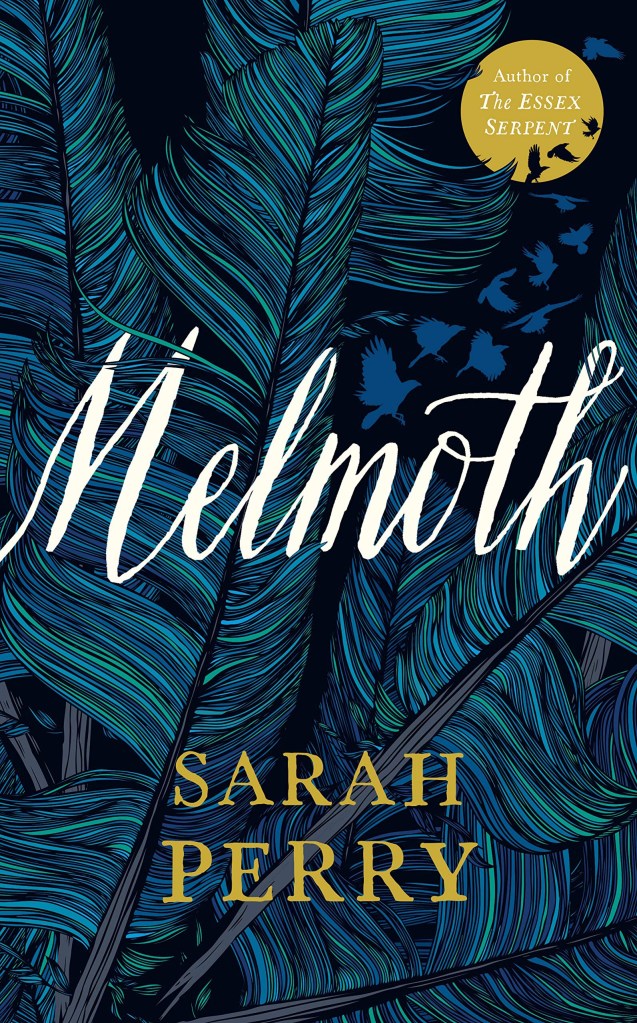
Melmoth the Witness is a figure from mythology, or is she? Known as one of the woman who witnessed the tomb on the morning that Christ resurrected, she is now an eternal traveller. Wandering the centuries she lures people into following her, whereupon they too become damned to an eternity of itinerant, solitary wandering. Set in the beautifully, atmospheric city of Prague we meet a woman called Helen and her friend Karel on the street. Agitated and enthralled, he tells her he has come into possession of a mysterious old manuscript, filled with personal testimonies taken from 17th-century England to wartime Czechoslovakia, the tropical streets of Manila, and 1920s Turkey. All of them tell of being followed by a tall, silent woman in black, bearing an unforgettable message. Helen reads its contents with intrigue and some scepticism, but everything in her life is about to change. We follow Helen’s story, but within it are all the other stories and lives, creating a Russian doll style tale, but where each incarnation has the same sense of menace and impending doom.
I think what scared me would have scared any ‘listener’. It’s the toll witnessing takes on a person. This book takes in the breadth of the horrors experienced in Prague throughout the 20th Century. It made me imagine being present to witness the trenches of WW1, the Holocaust, and so many other atrocities and personal tragedies. I’ve worked in mental health for twenty years and I’m taking a break at the moment to study. I know the emotional toll that listening to people’s stories can take on the listener or observer. For Melmoth, this would be so much worse because she has to sit back and witness all of humanity’s horrors. Even worse, she has no power to change anything, but is doomed merely to witness. No wonder she wants other souls to witness with her, she must feel the weight of the horrors yet to come. By the end of this novel so did I.
Who doesn’t love a witchy novel at this time of year? In fact, the only thing better than a witch novel is a whole series of them. Here I’m recommending series and one-offs that really fit the bill on these cold autumn afternoons. They’re exactly what I want on a Sunday afternoon, snuggled on the chaise langue with the log burner lit and preferably a pack of M&S Belgian Chocolate Toffee Popcorn. Bliss. There are golden oldies and a few new books to bring a sprinkle of magic into your Halloween.
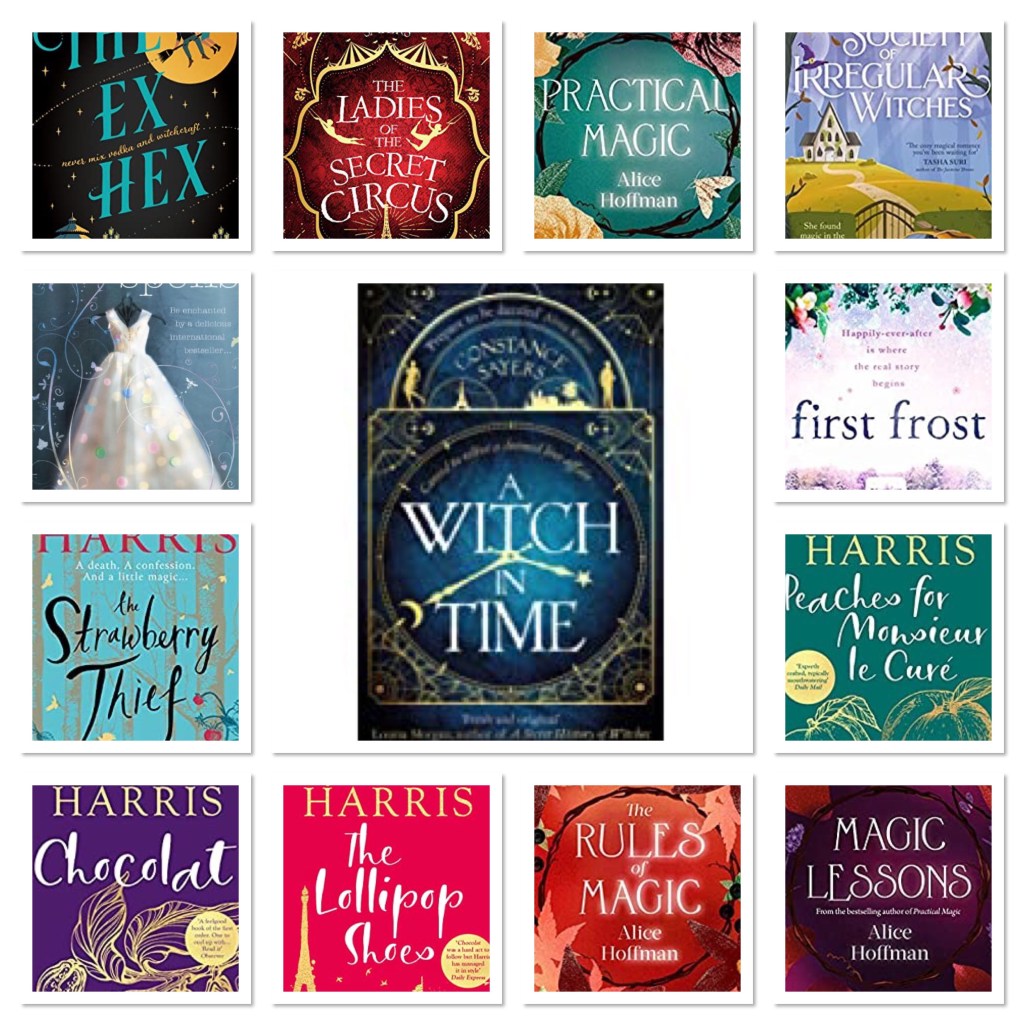
Joanne Harris’s Chocolat Series
Whenever I pick up Chocolat I immediately feel enclosed by this sumptuous and magical world that Joanne Harris has created. It is the book equivalent of sitting in a candlelit room, Christmas tree sparkling magically in the corner, a warm fire and some real hot chocolate. It’s as if Vianne Rocher is enchanting me from between the pages. From the moment the changing wind blows her into the village of Lansquenet she begins to work her magic on the villagers, much to the disgust of parish priest Father Reynaud. She establishes a chocolate shop directly opposite the church and so begins a struggle for power. Her magic is subtle, but she is an amazing chocolatier and she has the ability to discern which one of her chocolates will be someone’s favourite. With her chocolate pot always simmering and ready with a listening ear, her shop soon becomes the regular haunt of some of the villagers. However, the priest is preaching against Vianne Rocher. He doubts her morals, dislikes the sense of indulgence she’s creating, and is suspicious that she may be a witch. Maybe he’s seen Pantoufle, the imaginary friend of Vianne’s little girl Anouk. This push and pull between church and chocolate is left behind in her second novel The Lollipop Shoes where we follow Vianne to Paris where they live above her chocolate shop. Then Zozie De L’Alba sweeps into their lives, the woman with the lollipop shoes, but she isn’t all she seems. Seductive and charming on the surface, she can also be ruthless and devious. Again, Vianne finds herself with a powerful enemy. Should she do what she’s always done before and run?
Peaches for Monsieur Le Curé takes us back to Lansquenet and feels like a lighter novel, more suited as a sequel to Chocolat. It’s a letter from an old friend that brings her back to the village, but this is an unusual letter, because Vianne’s friend is dead. She finds the village changed since her last visit, with a new community blown in with the wind. Where once the river gypsies were the village has grown, there’s now a hint of spices, veiled faces and a minaret as North African migrants have settled. So Reynaud could have a new enemy. However, Vianne finds that he’s in trouble, could this possibly be the reason she’s been drawn back to the village? I loved the feel of this novel, with old characters popping up and old adversaries seeking change. It really felt like the story had come full circle so I was surprised when I heard there was another part to the series. The Strawberry Thief is every bit as atmospheric as Chocolat and all seems settled in Lansquenet. Vianne and her youngest daughter Rosette have settled in the chocolate shop. Even her relationship with Reynaud has settled into a friendship. It’s when the florist Narcisse dies that the wind changes. His will is cause for gossip and then someone opens a shop in the square, opposite Vianne, The strange pull it exerts seems familiar, but what could this mean for Vianne. This series is so warm and the settings are absolutely enchanting. The magic is sprinkled throughout, but Vianne is not just an enchantress. She’s a catalyst. A force for change. She inspires people to cast off rules and do what makes them happy. She gives women who are unhappy and even abused, the strength to leave. She frees people and that is an incredibly powerful gift to have.
A Witch in Time and The Ladies of the Secret Circus by Constance Sayers.
I’m relatively new to the work of Constance Sayers, but I’ve certainly made up for the oversight since. A Witch in Time is high on my TBR for the end of this year, but it sounds just up my street. We go to four different time zones, into the lives of four different women, but between them there’s just one star-crossed love. In 1895, sixteen-year-old girl called Juliet begins a passionate, doomed romance with a married artist. Next we’re in 1932, with aspiring actress Nora as she escapes New York for the bright lights of Hollywood and a new chance at love. Then it’s 1970 and we meet Sandra who lives in California, it’s perfect for her music career but she’s threatening to tear her band apart with a secret love affair. Finally, we reach the 21st Century and a confused Helen who has strange memories of lives that she hasn’t lived. These are tragic lives, cursed with doomed love, because Helen was bound to her lover in 1895, and trapped by his side ever since. She’s lived multiple lifetimes, under different names, never escaping her tragic endings. Only this time, she might finally have the power to break the cycle.
I was determined to have an early copy of The Ladies of the Secret Circus as soon as I saw a trailer for it on Twitter.
The surest way to get a ticket to Le Cirque Secret is to wish for it . . .
As a huge fan of The Night Circus I knew this was for me and thankfully I managed to get a copy on NetGalley. This time Sayer’s takes us back to Paris in 1925 where to enter the Secret Circus is to enter a world of wonder. See women weave illusions, let carousels take you back in time, and see trapeze artists float across the sky. Bound to her family’s circus, it’s the only world Cecile Cabot knows until she meets a charismatic young painter and embarks on a passionate affair that could cost her everything. In the 21st Century, Lara Barnes is getting married and feels on top of the world, but when her fiancé disappears on their wedding day every plan she has for the future comes crashing down. Desperate, Lara’s search for answers unexpectedly lead to her great-grandmother’s journals and is swept into a story of a dark circus and ill-fated love. There are secrets about the women in Lara’s family history, which need to come to light. They reveal a curse that has been claiming payment from the women in her family for generations. A curse that might be tied to her fiancé’s mysterious fate. Both of these tales are full of spells, magic and ancient curses, but they’re also colourful, romantic and full of wonder.
The Practical Magic Series by Alice Hoffman.
I write about these four books every Halloween and I should perhaps look for some new material, but I can’t stop because I love this author and these four books are a brilliant witch series. Although Practical Magic was the first book in the series, followed a very successful film with Nicole Kidman and Sandra Bullock, it’s actually the third instalment of this story following the Owens family try to juggle life with their witchy heritage. Hoffman went on to write two prequels and a sequel to Practical Magic where we meet a different generation of the Owens family, both as teenagers and then as elderly ladies, hoping to change change the curse that’s been controlling their lives ever since the witch trials. We start in Magic Lessons when baby Maria is left abandoned in a snowy field near the home of Hannah Owens. Hannah is a healer who lives in isolation, but the women of the town manage to make their way to her door for the remedies they sorely need usually due to the pains and consequences of love. When men feel threatened they do terrible things and when Hannah is set upon by the men of the village, Maria escapes and makes her way down to the Caribbean as a servant. However, when the man she loves betrays her, Maria follows him back to Massachusetts and begins a war against the Puritan settlers. Will her quest for revenge blind her to real love and curse her family for a generation? Then we jump to the 20th Century and the Owens sisters Franny and Jet, with their brother Vincent. Their mother knew they were special because they each have their own talent: Franny with the blood red hair can talk to birds, Jet is so beautiful and incredibly shy but in the quiet she can read what people are thinking. As the teenagers start to interact more with the outside world, it seems that Vincent’s charisma may get him into trouble. Yet it’s Jet’s world that may be turned upside down by the curse of the Owen family.
Practical Magic is actually the third in the series and we’re one generation on, in the same house in Massachusetts. Gillian and Sally live with their aunts Franny and Jet, they keep themselves to themselves mostly, but the girls know that if the porch light is left on at night, women who wouldn’t give them a glance by day seem to find their way at night. Gillian is the wilder one of the sisters, roaming from state to state and attracting all the wrong men. When she returns to Massachusetts, homebody Sally knows that she’s brought trouble home with her. Even their magic might not cover her tracks as a handsome investigator arrives in town asking questions. Since her husband died Sally has lived quietly, avoiding her magical skills and men. Now her sister’s return might jeopardise the stability she’s created for her girls. They may need help from the aunties for this. Hoffman’s fourth in the series, published last year, is The Book of Magic. The three generations of Owens women who all live in the same small town in Massachusetts, have found a way to accommodate their family curse and their magic skills. Until Sally’s youngest daughter Kylie falls in love with her best friend. As the curse does it’s worst the family must find a book of magic, the only one with the knowledge that might break the family curse and allow the younger generation to love without limits or fear of tragedy, Sally will have to embrace the skills she’s avoided for so long and as the family fight to save their youngest member, one of the oldest gets wind of a change coming. A fitting end to a brilliant series,
The Waverley Sisters Series by Sarah Addison Allen.
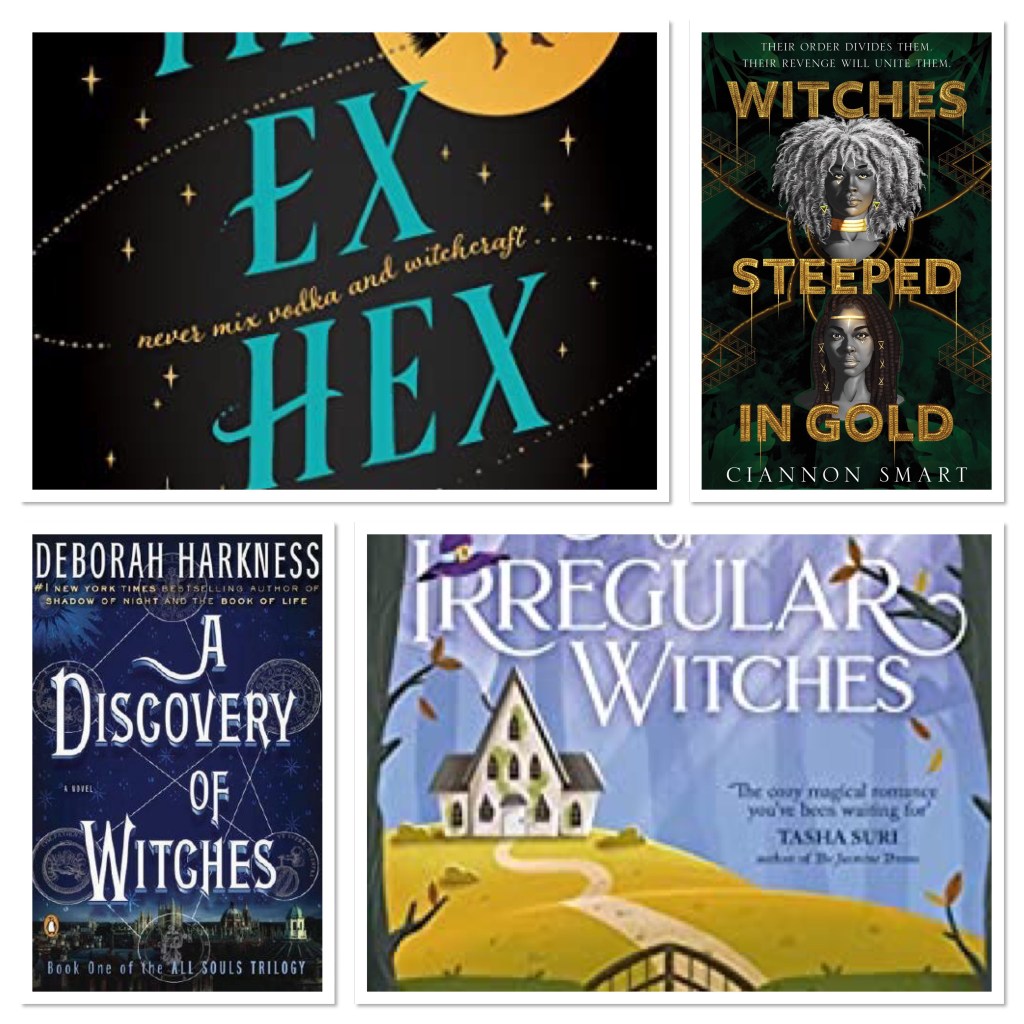
This is a lovely and light two part series set in Bascom, North Carolina. They’re warm books that focus on family first and spells second, plus it’s full of food and charm so it wins me over straight away. It seems everyone in Bascom has a story to tell about the Waverley women. They live in a house that’s been in the family for generations, have a walled garden that mysteriously blooms year round, and then those rumours of dangerous love and tragic passion that surround them. Every Waverley woman is somehow touched by magic, but Claire has always clung to the Waverleys’ roots. She stays grounded by tending the enchanted soil in the family garden and makes her sought-after delicacies – famed and feared in town for their curious effects. She has everything she thinks she needs – until one day she wakes to find a stranger has moved in next door and a vine of ivy has crept into her garden . . . Is Claire’s carefully tended life is about to run gloriously out of control.
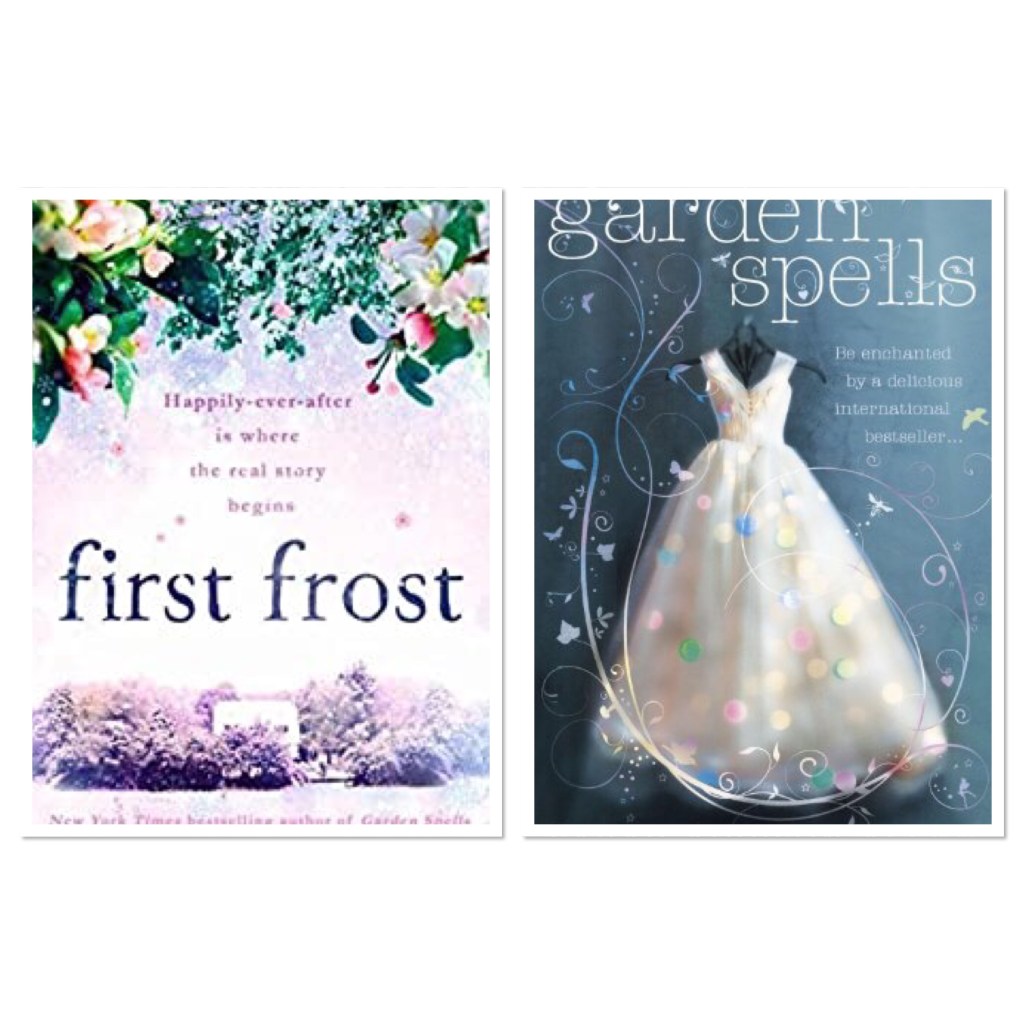
In the second book we see more of Claire’s sister Sydney and her daughter Bay. It’s October in Bascom, North Carolina, and autumn will not go quietly. As temperatures drop and leaves begin to turn, the Waverley women are also made restless by the whims of their mischievous apple tree…and the magic that swirls around it. But this year, first frost has much more in store. Claire Waverley has started a successful new venture, Waverley’s Candies. She makes handcrafted confections with specific intentions, like rose to recall lost love, lavender to promote happiness and lemon verbena to soothe throats and minds. Her remedies are effective, but the business of selling them is costing her the everyday joys of her family, and maybe even her belief in her own precious gifts.
Sydney Waverley, too, seems to be losing her balance. With each passing day she longs more for a baby — a namesake for her wonderful Henry. Yet the longer she tries, the more her desire becomes an unquenchable thirst, stealing the pleasure out of the life she already has. Sydney’s daughter, Bay, has lost her heart to the boy she knows it belongs to…if only he could see it, too. But how can he, when he is so far outside her grasp that he appears to her as little more than a puff of smoke?
When a mysterious stranger shows up and challenges the very heart of their family, each of them must make choices they have never confronted before. And through it all, the Waverley sisters must search for a way to hold their family together through their troublesome season of change, waiting for that extraordinary event that is First Frost. This is a real happy ever after story, filled with magic and warmth.
Next Up!
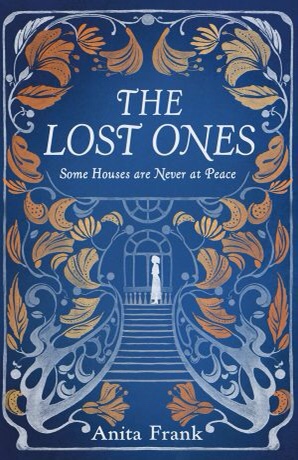
I must admit there are witchy books that are still on my TBR. I’m so surprised, but I’ve never read A Discovery of Witches and would love to read them after seeing a couple of episodes of the TV series. I love the mix of historical fiction and the gothic, and the addition of other magical beings such as demons and vampires. It also has incredible settings from Cambridge UK, to Venice and Elizabethan England. I must make time for them. Also on my pile is Witches Steeped in Gold by Ciannon Smart, a YA fantasy that’s based in a Jamaican tradition. I love reading about witches and magic from such different parts of the world and this is nearly at the top of my stack. I love that this is marketed as a more thrilling, fiery and powerful tale. Iraya Adair and Jazmyne Cariot are sworn enemies, but come together to carry out their revenge on a woman who threatens them both. This is an uneasy alliance and nothing is certain, except the lengths these women will go to for vengeance.
The Ex-Hex is a brand new rom-com that has apparently been a huge hit on TikTok. Vivienne was broken-hearted when she and Rhys broke up nine years ago. She tried bubble baths, then vodka and in the end she cursed him. Now Rhys is back to adjust the town’s ley lines, but everything he touches goes wrong and the village of Graves Glen seems out of balance. What if Vivienne’s hex wasn’t as harmless as she’d thought? Finally there’s The Secret Society of Irregular Witches by Mangu Sandanna, a book recommended to me buy one of my fellow bloggers in the Squad Pod. As one of the few witches in Britain, Mika Moon has lived her life by three rules: hide your magic, keep your head down, and stay away from other witches. An orphan raised by strangers from a young age, Mika is good at being alone, and she doesn’t mind it . . . mostly. But then an unexpected message arrives, begging her to travel to the remote and mysterious Nowhere House to teach three young witches, and Mika jumps at the chance for a different life. However, as this new life might be threatened, Mika must decide whether to risk everything to protect her found family. You’ll be the first to hear how I get on.
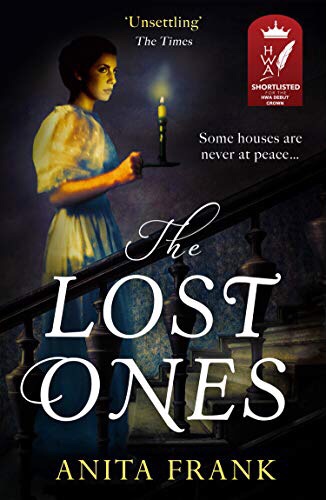
I’m always a real sucker for historical, gothic novels with strong female characters and this is up there with the best. The Lost Ones centres on Miss Stella Marcham and her new lady’s maid Annie Burrows. Stella is still in mourning for her fiancé Gerald who she lost in World War One. She keeps the locket he gave her close to her chest still. When she is invited to stay with her pregnant sister Madeline at her in-laws family home, Greyswick, she looks forward to a change of scenery. She sets out with Annie, who is a new addition to the household staff. Stella is unsure of Annie, but her family’s loyalty to the Burrows is long held and she resolves to get to know the unusual young woman.
Greyswick is a country estate, with formal gardens and ostentatious decor. Madeline is married to the heir of Greyswick, Hector Brightwood, who is away on business in London. At home are his mother Lady Brightwood and her companion Miss Scott, plus their staff, housekeeper Mrs Henge and ‘Cook’ whose name no one uses. However, Stella soon learns that they are not the only residents of her sister’s new home. Madeline confides that she can hear crying in the night and soon Stella finds a toy soldier in her bed. It’s not long before Stella is woken by the crying and follows the sound up the nursery stairs. On the stairs is a vivid portrait of a little boy with a hoop and in the background Stella sees a pile of toy soldiers. The portrait is of Lucien Brightwell, the original heir from Lord Brightwood’s first marriage, who died in a fall down the nursery stairs. This is only one of many secrets being kept by the Brightwood family and Stella senses a mystery to be solved. The creaks, bumps and cries in the night are her only clues.
This book sits in a long tradition and I had thought of Marian from Wilkie Collins’s The Woman in White even before Anita Frank mentions the book, as a reading recommendation from one character to another. When Hector returns home, bringing with him Mr Shears, I could sense tension between that old Victorian ideal of men who are ruled by reason and the women who use emotion, instinct and intuition even more. Frank’s book is set post-WW1 and the tensions of this changeable time are apparent. Women’s roles have evolved and Stella represents this change. She expected to be a married woman by now, but has instead chalked up experience nursing wounded soldiers and like most of the country is mourning a terrible loss. She is intelligent and restless after moving back into her ‘normal’ middle class role. She has also undergone psychiatric treatment following her bereavement, complicated by the fact that her severely wounded fiancé was brought to her hospital and care. She fears being thought of as mad or hysterical, so feels a constant pressure to be measured and rational. Other women in the novel are equally complex and class is another tension. Stella’s family are indebted to the Burrows family after Annie’s father died trying to save the younger sister, Lydia, from a house fire. Annie is acting as lady’s maid, a job beyond her experience, but is also trying to remain under the radar due to her own incredible gift that could mark her out as mad. Since the family lost their main bread winner Annie needs the job and doesn’t want to draw attention to herself, but Stella has her concerns. She has seen Annie talking to empty rooms and knows she saw something on the nursery stairs. Lady Brightwood’s companion Miss Scott lives in a very precarious position too, living with the family but being from a lower class than them. She was once a servant in the house, so how did she become so close to her mistress and does her devotion go beyond that of a companion? Also, what is her relationship with Mrs Henge and why is their contact so secretive?
Finally, the paranormal elements of the book are genuinely scary. The tension ratchets up from small events like the nighttime crying or the marble rolling across the room, both things that could possibly be explained away. Mr Shears tries to find a rational explanation for all of it and I did find myself thinking Annie’s presence was a potential cause. Then slowly, as people start to identify the poltergeist, the ante is upped and more characters experience events that seem impossible. The atmosphere is creepy and unsettling, reminiscent of Susan Hill or Laura Purcell. It also works as a female led detective story and builds to a denouement that doesn’t disappoint. Anyone who loves historical or gothic fiction will enjoy this novel. It’s a great Halloween read that sits beautifully in a genre the Victorians called sensation fiction. Perfectly pitched, beautifully written and full of interesting and complex female characters.
Meet The Author
Born in Shropshire, Anita studied English and American History at the University of East Anglia. She now lives in Berkshire with her husband and three children. Since The Lost Ones Anita has written a second novel, based during and after WW2. Her third novel The Good Liars is another work of historical fiction due out 8th June 2023.