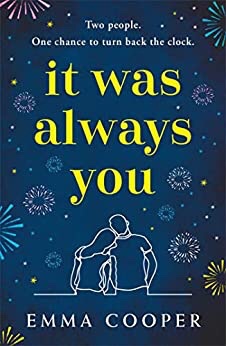
On the last night in October 1999 the clocks went back, and Ella and Will’s love began. A teenage Ella sat around a bonfire drinking with her future husband and her oldest friend Cole. As Ella wandered away from the group, she found herself leaning against a derelict archway before passing out. The next day, Ella remembered fractured images of a conversation with a woman in a green coat and red scarf but dismissed it as a drunken dream.
Twenty-three years later, with her marriage to Will in trouble, and Cole spiralling out of control, Ella opens a gift which turns her life upside down: a green coat and red scarf. When she looks in the mirror, the woman from the archway is reflected back at her. As the last Sunday in October arrives, Ella is faced with a choice. Would she choose a different life, if she could do it again?
This was an interesting read from Emma Cooper, looking at how the course of our whole life can change from very small decisions and the effects of these changes on our long term relationships. Ella is married to Will with two children and a big birthday approaching when she has a strange sense of life coming full circle. She opens her birthday presents to find a coat, scarf and brooch combination she recognises. Twenty-three years earlier at a party, she strolled away from the fireside to avoid watching her crush Will kissing another girl and saw a woman wearing exactly these clothes. It was almost as if the woman was on the other side of a mirror, visible but unable to be heard. Even though Ella can’t hear her, she knows that whatever she’s trying to tell her is a warning. Now she knows that woman was definitely her future self and she can’t help but wonder exactly what she was trying to warn her about. Life has definitely changed suddenly, because as their youngest left the family home for university, Will suddenly dropped the bombshell that he was leaving. Ella knows they’ve been drifting, in fact it runs deeper than that, Ella knows that Will would not have chosen the life they’ve had. She can pinpoint every surprise and life event thrown their way that derailed the life Will would have chosen, travelling the world playing guitar in a rock band. Ella has always known that she loved Will more than he loved her, so perhaps he need to spend some time discovering what he wants the rest of his life to look like.
Emma Cooper’s last novel was an absolute tearjerker and I really loved it. She gets that everyday drudgery that is part of being a family and here she portrayed beautifully how romance is hard to maintain when there is illness, two children to look after, family crises and those little curveballs that life likes to throw into the mix every so often. Cooper structures her book around these moments in Will and Ella’s lives together, such as her sudden pregnancy in Paris that she feels derailed Will’s music career. What she forgets is that Will did have a choice too and it was a joint decision to get married and have their baby. The fact that Will was fired from the band as a result was a terrible thing to happen, but wasn’t Ella’s fault. The flashbacks worked well in explaining the present day, from Ella’s perspective but Ella isn’t the only one in the relationship and I wondered if these two had ever properly communicated with each other. The problem with not communicating is that Will is also labouring under a misapprehension; he knows that he’s always loved Ella more than she loved him and now, with both children gone, it’s time for her to think about her choices and perhaps right a wrong. Will has felt in competition with Ella’s best friend Cole for many years, even the first day he met Ella’s family Cole was already there and part of the furniture. When Ella was struggling with depression, Will was just starting his career as a music teacher and simply couldn’t be there as much as he would have liked. Cole was there, burping and changing both babies, bringing chocolate and endless energy and literally propping Ella up. He has loved Ella since they were kids and he’s the first person Ella calls when something’s wrong – like when Will walks out the door 23 years later. Cole knows that Ella loves Will, even in his worst moments dealing with family trauma and his own alcoholism he knows Will and Ella should be together. He knows the power of Will’s charisma, because he’s felt it himself. In fact he and Will have a difficult history; Will’s brother drowned when he was left alone by a river, Will was saving Cole who had jumped in. This past leaves an uneasy feeling between them and has Ella desperately trying to please them both.
I enjoyed the carefree period Will and Ella have in France with the band. Will is offered the chance of playing guitar with a band and the couple rent a small apartment where they can have privacy and live outside of that hotel environment. It takes several mornings of Ella throwing up for a neighbour to point out she might perhaps be pregnant. The thought has never entered her head, but the neighbour is right. They expect their idyllic interlude to carry on, but once they announce their news and intention to get married, Will is summoned by the band manager and sacked. Young girls like to fantasise about their rock stars and married with a baby isn’t the look he wants for the band. So the couple return to Britain and to a life that looks a little more conventional. The author really doesn’t sugar coat the experience of parenthood. I was there in that living room with Ella, dealing with a two year old and a baby. It felt dark, oppressive and a total contrast to the freedom she had in France. With Will having to put in the long hours to support his new family, Ella feels like she’s doing this alone. So when friend Cole steps in to help it feels like a lifeline. He notices that Ella is desperately unwell and it’s his insight into his friend and his willingness to help that did make me waver on whether Will really was the right person for her. I don’t think I ever fully bonded with Will as a character. I didn’t know him in the same way as Cole or Ella and I think this was to some extent about the author’s description of him. He was so good looking and even Cole admits he’s the archetypal romantic leading man – he’s the man the girl should get. I didn’t know whether the author was trying to subvert the genre and have Ella realise that the less than perfect Cole, with all his issues, is the right man for her. In fact I was unsure of what would happen right up to the very end. This is a romantic read with an edge of reality, but maybe that makes it a more contemporary fairytale.
Meet The Author
EMMA COOPER is the author of highly acclaimed book club fiction novels and is known for mixing humour with darker emotional themes. Her debut, The Songs of Us, was snapped up in multiple pre-empts and auctions and was short-listed for the RNA contemporary novel of the year award. Her work has since been translated into seven different languages.
Emma has always wanted to be a writer – ever since childhood, she’s been inventing characters (her favourite being her imaginary friend ‘Boot’) and is thrilled that she now gets to use this imagination to bring to life all of her creations. She is now also an editor for Jericho Writers, where she has worked with traditionally published authors, as well as new aspiring writers. Emma spends her spare time writing novels, drinking wine and watching box-sets with her partner of twenty-eight years, who still makes her smile every day.
It has been my honour to meet this incredible writer and lovely lady on more than one occasion. The one that really stays with me is her visit to Lindum Books in Lincoln, at a time when caring responsibilities really cut into my ability to have a normal life. Having waited some time for a late carer to arrive I telephoned the book shop to enquire whether Rachel was still there. I was told she would be leaving in a few moments, so I explained what had happened and said I’d rush to get there. When I arrived, she was sat holding her coat and bag, clearly ready to leave, but she had waited for me to arrive because she didn’t want me to miss out. She signed my book and my friend’s book too, chatted about her writing and never showed impatience or a need to rush. I absolutely treasured that thirty minutes, because it showed such kindness and respect for her reader, but also because it was something I managed to do that was just about me. It was about me as a person and something I loved, nothing to do with my caring role. When meeting the NHS or social services about my husband and his care, I often felt overlooked and under appreciated by the powers that be and my personal needs didn’t matter. I often felt that I had lost myself and the things I enjoyed, so this moment mattered and showed an understanding that can be seen in her writing of this trilogy. The latest, Maureen Fry and the Angel of the North, was published late last year and it seems a perfect time to look back on these characters.
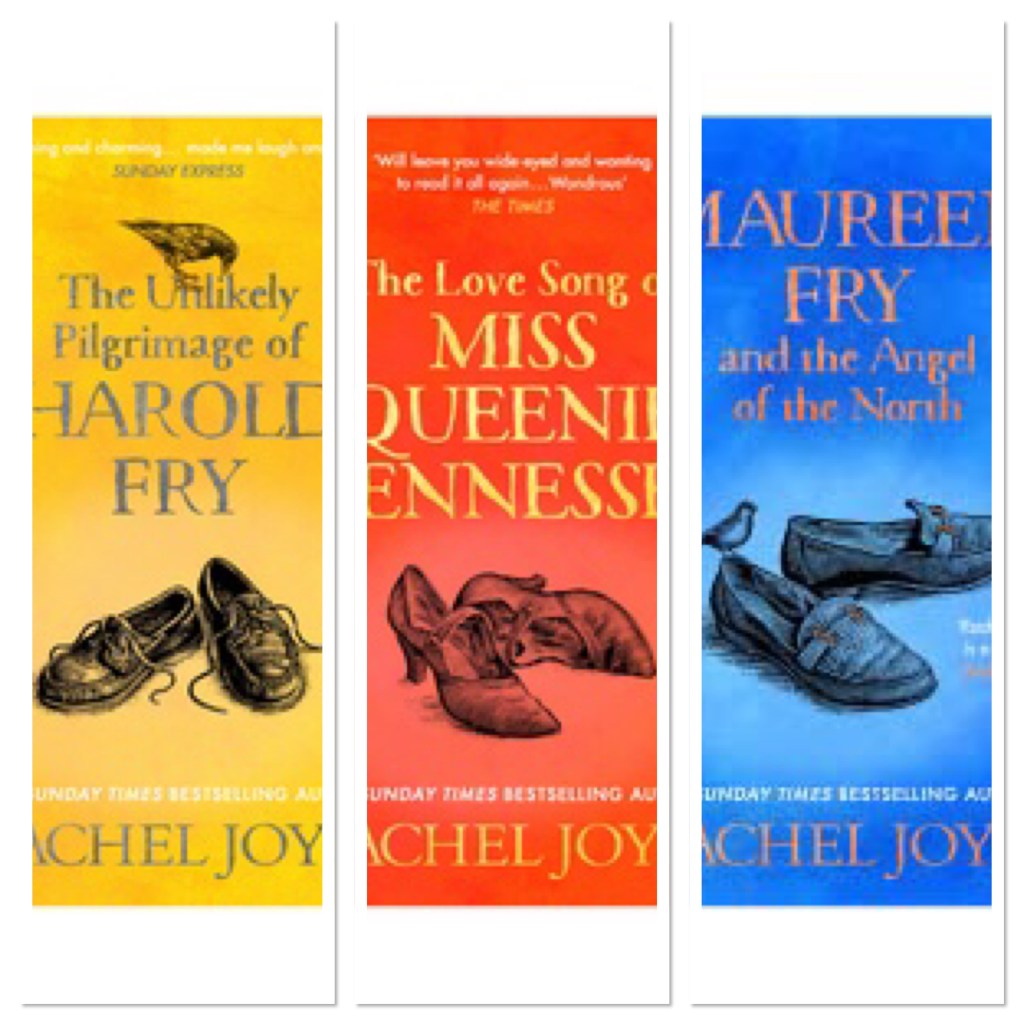
The first in the series, The Unlikely Pilgrimage of Harold Fry came out in paperback in 2013. Harold Fry is a retired gentleman living quietly with his wife Maureen. One morning he pops out to post a letter, with no idea he is about to walk the length of the country. If it had entered his head he might have left with better clothing and something more robust than canvas shoes. We know nothing about Harold when he starts his journey, an idea that pops into his brain during a conversation at a petrol station in the time it takes for the microwave to heat a burger. Rachel trusts her reader and her story, she knows the reader will want to read on, to know more about this man and what has happened in his life to create his need to walk. We begin to understand that what looks to outsiders like a ‘little life’ hides a torrent of emotion and experiences, because as Harold walks and runs he processes his life choices and the feelings that have been building up under the surface. We see his memories of meeting Maureen, set against her current, curtained off, attitude to Harold and to life. His difficult relationship with his son David. The closest friend he has ever had. All of this beautiful, painful and un-examined emotion comes out as Harold walks and his canvas shoes fray. We also get to enjoy his outer world, the people he meets and the kindnesses afforded to him on his journey. We gradually get the context of the letter Harold was replying to, a letter from that closest friend, Queenie Hennessy. Queenie was there for Harold when he most needed someone, but twenty years have passed and she is in a hospice in Berwick-Upon- Tweed in her final weeks. So, Harold’s pilgrimage is towards Queenie. He thinks that as long as he keeps walking and running, Queenie will wait for him.
Rachel is telling us to look beyond the surface for the context of things, starting with the assumption that Maureen and Harold are a settled old married couple with little more going on than their housework routine and fetching the paper every morning. Both are people, with a lifetime’s worth of events, emotions, gains and losses, just like you or me. Elderly people don’t cease to have ups and downs and their marriage, once we know what they have faced, is miraculously intact but still needs tending. I was desperately hoping that Harold’s pilgrimage and some time with Queenie might restore their connection in some way and bring Maureen from behind her barricades. That the further apart they become on the map, the closer they can become emotionally. We are taken through a changing landscape too, noticing nature and seasonal change as well as the sheer beauty of the country we live in without being twee or whimsical. Harold’s journey is a reminder that we can get up and change things, we can renew our relationships with others and ourselves and we can find meaning between the lines. Rachel Joyce reminds us that, if we choose to look, there is always something extraordinary in the every day.
For even more context, Rachel then takes us into the life of Queenie Hennessy – moving her from the sidelines as part of Harold’s story, to the centre of her own intersecting narrative. The Love Song of Miss Queenie Hennessy is my favourite in the series, because it shows how someone can seem to have such a small part in your life, while you can be at the absolute centre of theirs. I also love how Queenie’s story unfolds, as she learns that Harold is making his way up the country on foot towards her, she doesn’t know whether she can hang on for him to arrive. When she confides in one of the hospice volunteers, she comes up with a brilliant suggestion and one that makes so much sense from this writing therapist’s perspective. To alleviate her anxiety and be sure that Harold knows the whole story, the volunteer suggests she writes to him. Not like the first letter, these letters should be honest and atone for the past in a way she hasn’t done for twenty years. So, from her hospice bed, Queenie makes a journey into the past with Sister Mary Inconnue at the keyboard. She admits to her love for Harold, a love given freely and without reward for decades. She tells him of her friendship with his son David and how she tried to help him. She tells him about her cottage and the beloved garden she has created by the sea and its meaning to her and those who visit. Again, the author takes us into an experience we could see as depressing and final, but is actually a beginning that’s both vital and life affirming. Harold’s impending visit and her letter rich with memories and context that may help both Harold and Maureen, allow Queenie to live while dying and create even more meaning to her life.
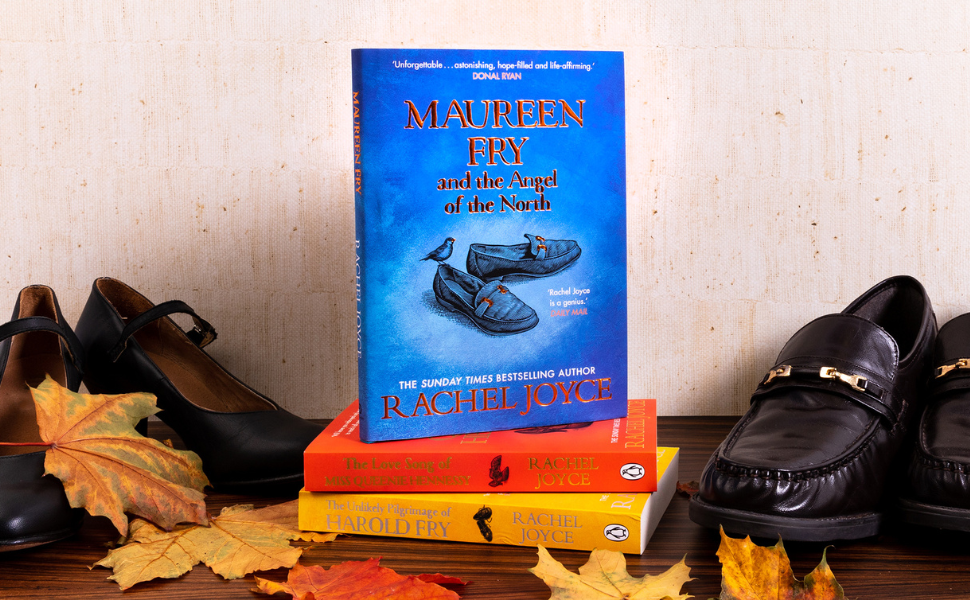
The final part of this trilogy seems like such a slight novel, when it arrived from the publisher I thought I’d been sent an extract rather than the full book. However, it packs a hefty emotional punch and brought a lump to my throat as we explored Maureen Fry’s inner world and her need for healing as a mother. In Maureen Fry and the Angel of the North, it is time for Maureen to take her own pilgrimage, ten years after her husband’s famous 600 mile journey. Again it’s a letter that sparks the change, a postcard from Kate who helped Harold on his journey telling them about Queenie’s garden which has become the Garden of Relics in Embleton Bay, Northumberland. Kate said there was a monument there that Queenie had built for their son David and this niggled away at Maureen as the months passed. Lots of questions and emotions started to buzz around her head: why had Queenie built this monument? Who gave her the right to do that? Why hadn’t Harold known about the friendship between Queenie and David? When she looked up the garden on the internet, Maureen found lots of people who had visited and enjoyed it enough to comment. Why had they seen this monument to David when she hadn’t? She felt angry and displaced somehow. After a terrible nightmare, where she found David lost and alone in the earth, Harold suggests that perhaps Maureen needs to see this garden for herself? She could see Kate and visit with her. Maureen knows that Harold cares about Kate and that she was kind to him on his journey. She’s some sort of activist and Maureen can’t imagine what she would say to someone like that. They wouldn’t get along.
When Maureen resolves to drive up to Northumberland and see the garden, she prepares for her journey in complete contrast to Harold. It shows the differences in their character and as she packs her sandwiches and her thermos flask I realised that Maureen believes everything can be prepared for and organised. This is why those unexpected side swipes that life deals out from time to time have affected her so badly. She tries to work them out, questions what she could have done differently and potentially blames herself. She learns very quickly, as roadworks take her off the A38 and she’s completely lost, that you can’t prepare for everything and sometimes you have to rely on the kindness of strangers. A lesson that’s repeated until Maureen simply has to give in and be wholly dependent on someone else, perhaps the last person she expected. These experiences open her up to the world in a way she hasn’t before. I won’t reveal what Maureen finds in the garden, but I felt it could be taken two different ways. Before her journey there was a void at her centre that she believed could never be filled and she held it close as a symbol of all she had lost. My hope was that after the journey that void would be become an opening, creating room for all the people she could let in. That’s the thing with Rachel Joyce’s writing, it may seem whimsical, charming and light, but it isn’t. While it might not be dramatic, it deals with the biggest themes in life; growing old, love, identity, birth, death, friendship and personal growth. To borrow that phrase again from Shirley Valentine, these are not ordinary ‘little lives’, they are extraordinary.
Meet The Author
Rachel Joyce is the author of the Sunday Times and international bestsellers The Unlikely Pilgrimage of Harold Fry, Perfect, The Love Song of Miss Queenie Hennessy, The Music Shop, and the New York Times bestseller Miss Benson’s Beetle, as well as a collection of interlinked short stories, A Snow Garden & Other Stories. Her books have sold over 5 million copies worldwide, and been translated into thirty-six languages. Two are currently in development for film.
The Unlikely Pilgrimage of Harold Fry was shortlisted for the Commonwealth Book prize and longlisted for the Man Booker Prize. Rachel was awarded the Specsavers National Book Awards ‘New Writer of the Year’ in December 2012 and shortlisted for the ‘UK Author of the Year’ 2014.
Rachel has also written over twenty original afternoon plays and adaptations of the classics for BBC Radio 4, including all the Bronte novels. She lives with her family near Stroud.
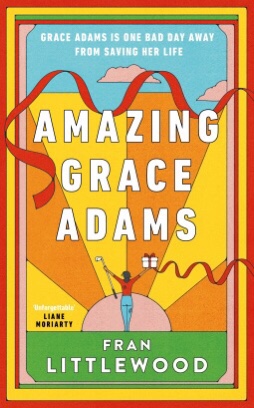
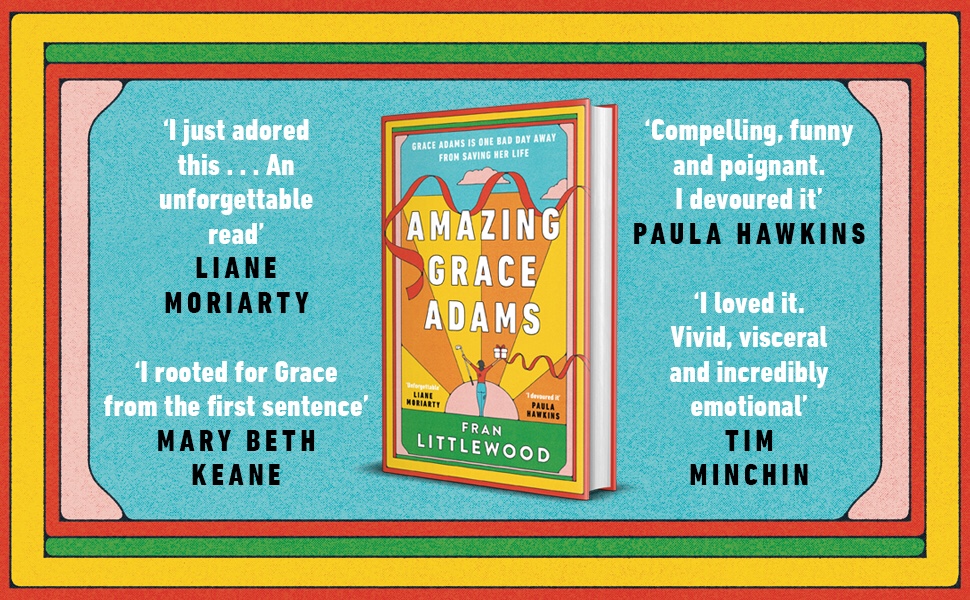
It’s possibly way too early to start picking candidates for favourite books of 2023 – I’m still deliberating over 2022 – but I think this book is certainly going to be in contention. Grace is one of those characters that you fantasise about having cocktails with and you already know you’d have the best time. Grace is stuck in traffic, it’s a boiling hot day and she’s melting. All she wants to do is get to the bakery and pick up the cake for her daughter’s birthday. This is one hell of a birthday cake, not only is it a Love Island cake; it has to say that Grace cares, that she’s sorry, that will show Lotte she loves her and hasn’t given up on their relationship. It’s shaping up to be the day from hell and as Grace sits in a tin can on boiling hot tarmac, something snaps. She decides to get out of the car and walk, leaving her vehicle stranded and pissing off everyone now blocked by a car parked in the middle of a busy road. So, despite the fact her trainers aren’t broken in, she sets off walking towards the bakery and a reunion with Lotte. There are just a few obstacles in the way, but Grace can see the cake and Lotte’s face when she opens the box. As she walks she recounts everything that has happened to bring her to where she is now.
When we first meet Grace she’s living alone, estranged from husband Ben and even from her teenage daughter Lotte. She’s peri-menopausal, wearing trainers her daughter thinks she shouldn’t be wearing at her age and she’s had enough. There’s that sense of the Michael Douglas film Falling Down except when the meltdown comes all she has is a water pistol filled with river water, an embarrassingly tiny Love Island cake and a blister on her heel. Then in flashbacks we can follow Grace all the way back to the start, to when she and Ben met at a competition for polyglots. We also get Ben’s point of view here too, so we see her through his eyes and fall in love with her too. He describes her as looking like Julianne Moore, her hair in a messy up do with the odd pencils tucked in. She suggests that, should she win the prize of a luxury hotel break in Cornwall, they should go together. It’s a crazy suggestion, but deep down, he really wants to go with this incredible woman. Once there, the first thing she does is dive into the sea to save a drowning woman. Ben has never met anyone so free and fearless. Yet on their return four months pass before Grace tracks him down and they meet at the Russian Tea Room. There Grace tells him that he’s going to be a father, he doesn’t have to be in, but can they come to an agreement? Of course Ben is in, he was never out. There love story is touching and yet honest at the same time, it’s not all schmaltzy romance – for example after coming together in Cornwall, Grace’s bed is full of sand. It’s so sad to contrast these early months with the distance between them now, what could possibly have brought them to this place.
I eagerly read about Grace and Lotte’s relationship because I’m a stepmum to a 13 and 17 year old girl. I thought this was beautifully observed, with all the ups and downs of two women at either end of a battle with their hormones. There’s that underlying sadness, a sort of grief for the child who called out for her Mum, who let Mum play Sutherland her hair and would lie in an entwined heap on the sofa watching films. Grace aches to touch her daughter in the same way she did when she was a toddler, but now Lotte watches TV in her bedroom and shrugs off cuddles and intimacy of the physical or emotional life. Pulling away is the normal process of growing up and reminds me of the ABBA song ‘Slipping Through My Fingers’. In the film Mamma Mia, Meryl Streep plays Donna as she helps her daughter get ready for her wedding. In the cinema with my Mum I could see she was emotional and now with my own stepdaughters I can understand it. I just get used to them being a certain age and they’ve grown, with one going to university next year I’m going to be so proud of her, but I’m going to miss her terribly. There’s also a terrible fear, as Grace sees her daughter’s behaviour at school deteriorate and her truant days start to add up, she’s desperate to find out what’s wrong, but Lotte won’t talk. She’s torn between Lotte’s privacy and the need to find the problem and help her daughter, but some mistakes have to be made in order to learn. Grace might have to sit by and watch this mistake unfold and simply be there when it goes wrong. No doubt, she thinks, Grace is involved with a boy and it will pass, but the reality is so much worse.
The truth when it comes is devastating, but feels weirdly like something you’ve known all along. Those interspersed chapters from happier times are a countdown to this moment, a before and after that runs like a fault line through everything that’s happened since. As Grace closes in on Lotte’s party, sweaty, dirty and brandishing her tiny squashed cake, it doesn’t seem enough to overturn everything that’s happened, but of course it isn’t about the cake. This is about everything Grace has done to be here, including the illegal bits. In a day that’s highlighted to Grace how much she has changed, physically and emotionally, her determination to get to Lotte has shown those who love her best that she is still the same kick-ass woman who threw caution to the wind and waded into the sea to save a man she didn’t know from drowning. That tiny glimpse of how amazing Grace Adams is, might just save everything.
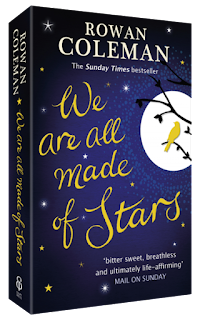
This book was originally published in 2015, but the first time I’ve read it is after reading Rowan Coleman’s novel The Girl at the Window. I do like to feature books as I discover them, rather than trying to chase the latest or next best thing.This may sound weird but I actually picked this up as light relief between a couple of deeply dystopian reads. I think there is an incredible skill in writing about such a serious subject but with such a lightness of touch and an edge of romance. Coleman has a group of characters, all linked to the Marie Francis hospice in some way. The story comes from all their points of view interspersed with letters written from patients in their final days, revealing secrets and emotions that have been held back, offering advice or instructions on where the money has been left.
These letters are written by Stella, who works at the hospice at night, giving her plenty of time to listen to patients and capture their last words. Behind her professional exterior Stella has her own problems. Her night shifts have become a way of avoiding problems at home. Her husband Vinny was a soldier and has returned home after losing his leg in a bomb blast. Now they feel like different people who are unable to connect and Stella runs miles every day to avoid her fear this is the end of their marriage. One of the letters Stella writes leads us to Hugh. Hugh is an academic researcher and collects artefacts relating to death such as death masks, Victorian mourning brooches and photos of dead loved ones. Hugh’s mum left when he was small leaving a suicide note. This personal tragedy has possibly lead to his research and has left him very isolated and scared of connection. When a single mum moves next door with her son, Hugh’s cat Jake starts to spend time there and they name him Ninja. This shared cat brings them closer, but will Hugh be able to form a relationship with his new neighbours and how will he cope when Stella delivers a letter that will change his life?
Finally, we meet Hope who is a young woman with cystic fibrosis recuperating at the hospice before returning home. Hope’s best friend and lifelong hanger on is Ben. They have been close friends for years and he has seen her in the worst moments of her illness. He visits every day at the hospice, and patients and staff start to notice that maybe there’s more than friendship here. Hope doesn’t think so, but she is starting to realise that she is missing out on things in life. Her friendship with a young girl, Issy, begins to make her think. Issy is terminally ill and tells Hope how sad she is to be leaving life when she has experienced so little. She makes Hope promise to live life to the full and try all the experiences Issy has missed out on. This inspires Hope and she asks Ben to help her fulfil this promise, knowing it might change their relationship forever.
It was Hope and Stella’s narratives that most resonated with me. I knew how I wanted their narratives their narratives to end happily. I know how it feels to have your plans cut into by an illness so young, the need to have new experiences and live like any other girl in their early twenties. I remembered the hen nights missed and friends celebrating graduations, weddings and births of their first children when I had none of these things in sight. So I identified with Hope’s need to do as much as possible before time runs out. Yet, I also felt for Stella, who tries her hardest to make people’s last wishes a reality while her own life is falling apart. She gives constantly, at home and the hospice, so when she finds she can maybe reunite two people she throws caution to the wind. I wanted her and Vinny to find their way through their difficulties and come together again, but with his survivor’s guilt and difficulties coming to terms with his amputation it’s no easy task.
This book seems so light and easy to read but is packed full of real, honest and deep emotions across the characters. Maybe I found the subject easy to enjoy, because I’m used to this world. I know people who might read the hospice setting and pass it over, but they’d be missing out. This book relates what life limiting illness is really like; it’s not easy, but you can still live well and all the other parts of life like learning, being fulfilled, finding meaning and feeling love are still very much part of the experience. Within these characters, and the letters Stella writes for her patients, are glimpses of human life that take us far beyond them as patients and closer to them as people.
Published by Ebury Press and available in all formats.
Meet the Author
I’m Rowan Coleman, and I live in England with my husband, 4 children and 2 dogs! The Girl at the Window is my 14th novel is my twelfth novel. I am also the author of the internationally bestselling THE MEMORY BOOK, the double award winning THE RUNAWAY WIFE, and the NYT bestseller THE ACCIDENTAL MOTHER and the Zoe Ball ITV Bookclub pick THE SUMMER OF IMPOSSIBLE THINGS. Growing up dyslexic made my dream of becoming a writer seem impossible, but I never gave up trying and in 2001 I won Young Writer of the Year competition in Company Magazine. This lead to the publication of my first novel, and I’ve never looked back since.
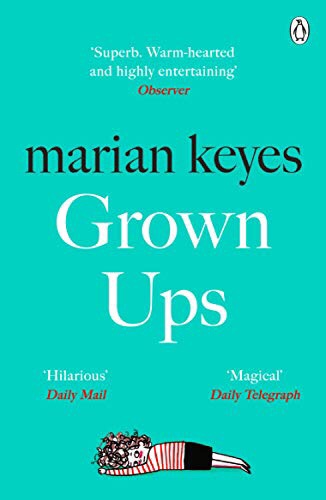
Years ago, when I was a book snob after my English lit degree, I wouldn’t have read Marian Keyes. It was firmly in the category of chick-lit and that meant it would be ‘easy-reading’. The literary equivalent of easy listening music, pleasant but no depth, just tinkling on in the background when I wanted my reads to grab me, make me think and blow me away. It was reading Jojo Moyes ‘Me Before You’ that put me onto Rachel’s Holiday and the Walsh family. Before I knew it I was racing through her back catalogue and loving every minute of it. It helps that she’s also an incredible woman, mad as a box of frogs and funny, enthusiastic about what she loves and chatters on ten to the dozen. She’d fit right in with my family and is one of the first people I’d invite to a fantasy dinner party. If I had to pick one thing about her writing that makes it so good, amply demonstrated in this novel, it’s that she provided a family tree to keep track of the characters and how they were related to each other, but I didn’t need it once. Each and every character was so real and so distinct that I felt I knew them all personally.
Ed, Johnny and Liam are brothers and enjoy a large extended family. Their background isn’t great, in fact their parents are awful people – demonstrated at their golden wedding anniversary when their father’s speech manipulated and put down each of his sons in turn. Ed has never had that feeling of being grounded, of belonging somewhere, until he met his wife Cara. She makes him feel safe. Cara has a head receptionist role at the Ardglass Hotel in Dublin and they have two children. Cara has always had problems with her body image and has been yo-yo dieting ever since Ed met her. She can’t seem to resist bingeing on chocolate and then hates herself for having no will-power, but is this cycle of overeating just a blip or is she heading for something more serious? Jonny and Jessie are the successful pair in the family, running their own chain of specialist food shops and a cookery school. Jessie had the original idea, with Jonny and his best friend Rory Kinsella going to work for her several years later. However, it was Rory who won Jessie’s heart and they were married with two children when he died suddenly. The Kinsella family were like a second family for Jonny, especially Rory’s dad Michael who had been a surrogate father since his own was so lacking. They all grieved together, until two years later when Jonny and Jessie found themselves drawn to each other. Surely the Kinsellas would be happy for them? Now years on, with three more children, and despite being a good husband and stepfather to Ferdia and Saoirse, the Kinsellas had cut themselves off from their former daughter-in-law. It was probably for this reason that Jessie focussed so much time on their family spending time together, all three brothers and their respective families spent Easter and many other holidays together, with Jessie even footing the bill to make it happen. Yet neither had ever really given up hope that everyone would be reunited in time, but time runs out and so does money.
Liam is the youngest brother, an ardent runner in his prime he now had to cycle thanks to a difficult knee injury. Handsome and charming, it never took very long for him to get what he wanted in life. Most would say he had a charmed life, despite his split with wife Paige and her relocation to the US with his two daughters, who are missed terribly by their cousins. In an incredible financial settlement, Liam lives in an apartment in Dublin paid for by Paige. When he meets Nell, a young set designer full of idealism and principles, he has to have her. Nell is beautiful, with cascades of pink hair and a quirky dress sense that comes from never buying anything new. She’s so passionate about art and conveying the message of a play through her set, plus she’s passionate about so many causes. The family love her and she brings her outlook on life to everyone, especially Liam’s nephew Ferdia who has similar opinions but never does anything to back them up. The family are surprised when the couple get married in an ice hotel on the arctic circle. Since the wedding though, despite Nell throwing herself into the family and their rather claustrophobic way of doing everything together, Liam hasn’t seemed the same. He starts to drop out of things she’s planned, branding them boring, and then chips away at her confidence. When she has a good review saying she’s the most exciting new designer in the country – he points out that Ireland is a very small place. He’s also very creepy, ogling his young niece’s friends and his nephew’s girlfriend. Nell is drawn to Ferdia, young, ethical and concerned with social justice, but can they be friends?
I loved how Marian Keyes presents the image of a perfect family that others must see, when they gather for an Easter Egg Hunt at a luxury hotel or holiday together in a Tuscan villa. Then she undermines it by showing that none of these people, or their relationships, are perfect. Her depiction of Cara’s eating problems were familiar to me because I’ve also had that urge to eat my feelings from time to time. I thought the way Cara down played the seriousness of her bulimia was realistic and the resistance to treating it as an addiction also rang true. Her counsellor was also brilliant, firm and not pulling her punches about the road ahead for Cara as a patient. If there was anyone I was rooting for it was Cara and husband Ed. Getting married again when you’re a widow is also something I know about and the relationship dynamics are so fragile. Luckily for me my lat husband’s family were very understanding and I treated them with respect, being up front and letting them know everything early on. I really felt for Jessie, but in the early chapters I really didn’t understand her desperate need for the whole family to get together constantly. There was a moment where she’s laid on a pool lounger with all the kids (bunnies) piled on top of her and she’s supremely happy. Then I got it. The friendship she had with Rory’s sisters Izzy and Keeva was the first real friendship she had and being part of the Kinsella tribe was just as important to her as it was to Jonny. She needed to belong. Strangely I also felt for Nell. I liked her as a person and thought she had been love-bombed by Liam into a marriage without truly knowing who he was. I really loathed him and that’s rare for me. He was lazy, living entirely off his ex-wife and not making any effort to see or maintain his relationship with his children. The way he commented on her talent and gaslighted her made me furious. I wanted Nell to have the romantic happy ending. In this book Marian Keyes has punctured that Instagram perfection many families seem to project these days. It’s also a welcome reminder that we never know what another person is going through, even the person lying next to us. I also found the message that we have to work on ourselves, take responsibility and live authentically, very empowering. I truly enjoyed my time as a fly on the wall with this family and laughed out loud so much that my other half commented on how much I seemed to be enjoying it.
Meet The Author
Marian Keyes is the international bestselling author of Watermelon, Lucy Sullivan is Getting Married, Rachel’s Holiday, Last Chance Saloon, Sushi for Beginners, Angels, The Other Side of the Story, Anybody Out There, This Charming Man, The Brightest Star in the Sky , The Mystery of Mercy Close, The Woman Who Stole My Life, The Break and her latest Number One bestseller, Grown Ups. Her two collections of journalism, Making it up as I Go Along and Under the Duvet: Deluxe Edition are also available from Penguin.
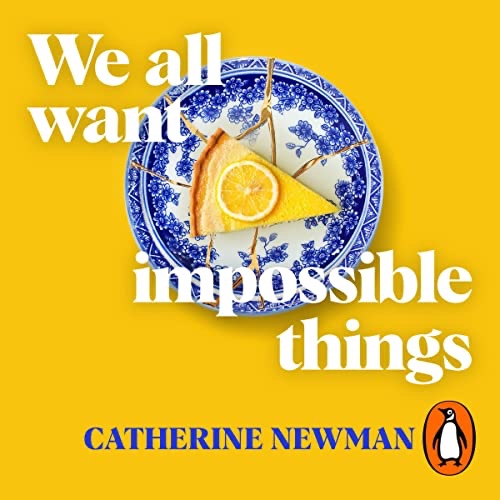
This book was a joy. That’s going to seem odd when I explain what it’s about, but it is joyful and full of life. Even though at it’s centre there’s a death. Ash and Edi have been friends forever, since childhood in fact. They’ve gone through adolescence together: survived school; other girls; discovering boys and even that awkward phase of starting adult life, when one went to college and the other stayed behind. They’ve both married and been each other’s maids of honour and become mothers. Instead of any of these things pulling them apart they’ve remained platonic partners in life. However, now Edi is unwell and decisions need to be made. After years of struggle with being, treatment, remission and recurrence, Edi now has to decide how she’ll be dying. With all the hospices locally being full, Ash makes an offer – if Edi comes to a hospice near Ash, she can devote time to being with her and Edi’s husband can get on with every day life for her son Dash. There’s a hospice near Ash that’s like a home from home, with everything that’s needed medically, but the informality and personal touch of a family. Now Ash and Edi have to negotiate that strange contradiction; learning how to live, while dying.
This is just the sort of book I enjoy, full of deep emotion but also humour, eccentric characters and situations. It takes us through a process of how someone’s life and death changes those around them, with unexpected behaviours and consequences all round. Firstly the environment the author creates is so wonderfully rich and full of warmth, whether we’re at the hospice or in Ash’s welcoming home. She does this with layers of detail, from the decor to the people and some seriously mouthwatering food. The hospice is an absolute wonderland – this may sound like a very weird description, but having had a loved one become terminally ill from multiple sclerosis and not cancer, it was a horrible wake up call to realise there was nowhere for him to die. I would have loved to be in this incredibly nurturing environment that’s more of a family home, where they’re putting comfort and individuality first, with first class medical care always available in the background to play it’s part. I loved the busy kitchen with a cornucopia of treats in the fridge, because here no one is on a diet. Each room is very individual, but there’s are little links between such as the hospice dogs wandering in and out, the smell of someone else’s favourite food, the wandering guitar player or the ever present soundtrack to Fiddler on the Roof from another room. All of these elements come together and create a warm embrace for Edi, but also for her loved ones who spend a lot of time there.
Ash’s home and family life is so enviable I wanted to be part of it. Her estranged husband Honey is an incredible chef and her daughter seems to have picked up the talent. The author’s descriptions of their meals really did make the mouth water and are their way of contributing and supporting Ash. All of these people are so nurturing, in Honey’s case this is despite he and Ash being separated. Before you think this sounds schmaltzy and sentimental I can assure you that these characters are not perfect. Each has their flaws and their ways of coping, some of which are destructive and possibly difficult for others to understand. Ash particularly has a novel approach to grief, but I understood it. If we look beneath the surface, it’s a way of forging connection with others on the same journey and expressing their love for Edi. It’s also a distraction, a way of leaving all the paraphernalia of death behind and affirming life. That doesn’t mean her behaviour isn’t confusing, especially to her teenage daughter who supplies whip smart commentary, eye rolls and remarkable wisdom. The men in this friendship group seem to understand that their grief is secondary, because Edi is the love of Ash’s life. I enjoyed the little addition of Edi’s other friend – the college friend – who Ash has concerns about. Does Edi like her more than Ash? Do they have a special bond? The author provides us with this loving picture but then undermines it slightly, so it isn’t perfect. We are imperfect beings and no one knows how they will react in a time like this, until we’re there. Catherine Newman shows this with realism, charm, humour and buckets of compassion.
Published by Doubleday 12th Jan 2023
Meet The Author
Catherine Newman is the author of the kids’ how-to books How to Be a Person and What Can I Say?, the memoirs Catastrophic Happiness and Waiting for Birdy, the middle-grade novel One Mixed-Up Night, and the food and parenting blog Ben and Birdy, and she edits the non-profit kids’ cooking magazine ChopChop. She is also the etiquette columnist for Real Simple magazine and a regular contributor to the New York Times, O, The Oprah Magazine, The Boston Globe, and many other publications. She lives in Amherst, Massachusetts, with her family. Visit her website at http://www.catherinenewmanwriter.com
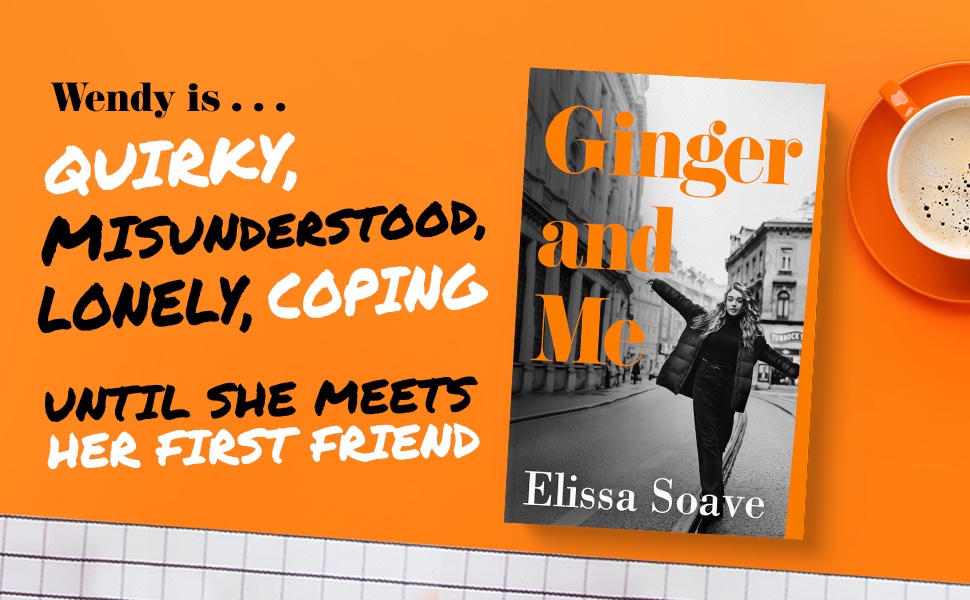
Wendy is lonely but coping. All nineteen-year-old Wendy wants is to drive the 255 bus around Uddingston with her regulars on board, remember to buy milk when it runs out and just to be okay. After her mum died, there’s nobody to remind her to eat and what to do each day. And Wendy is ready to step out of her comfort zone. Each week she shows her social worker the progress she’s made, like the coasters she bought to spruce up the place, even if she forgets to make tea. And she even joins a writers’ group to share the stories she writes, like the one about a bullied boy who goes to Mars.
But everything changes when Wendy meets Ginger. A teenager with flaming orange hair, Ginger’s so brave she’s wearing a coat that isn’t even waterproof. For the first time, Wendy has a real best friend. But as they begin the summer of their lives, Wendy wonders if things were simpler before. And that’s before she realizes just how much trouble Ginger is about to get them in…
I’ve worked for 25 years in mental health and one thing I’ve learned is that there are almost always reasons people behave the way they do, but also that there is no such thing as a ‘normal’ life. I love books that relate the extraordinary lives of ordinary people and Wendy certainly lives a simple life. She’s happy driving the 255 bus through Uddingston, reading books and having a good go at writing her own. Concerned that her social worker thinks she’s stagnating a little, since the death of her mother, Wendy makes a decision to reach out. She joins a writing group to build her confidence and starts to make friends with some of her passengers, but then Ginger comes along. Ginger is going to push Wendy completely out of her comfort zone.
This is a great novel that shows how mental health issues can creep up on young girls and when they’re as alone as Wendy is, there’s no one to notice things going wrong. Life is hard for her, because she feels like she doesn’t fit anywhere. She can see that society has rules, but she doesn’t understand them and her ignorance of the rules means she’s socially awkward. Instead of upsetting others, it sometimes seems easier to withdraw altogether. There is a sense in which Wendy’s being failed by the system, plus the double bereavement of losing her mum and dad has left her especially vulnerable. Being stepmum to two teenage girls I know only too well how problems can suddenly escalate and be made worse by social media. This is a gritty story and I knew very early on that something bad has happened to Wendy, so I did have a certain amount of suspicion most of the time. It felt to me like Wendy was heading down a dark road, but the addition of the rather wild Ginger seems to accelerate the downfall. I felt immediately protective of this girl, because it felt like she was out in the world with a layer of skin missing. I wanted to give her a big hug and have a heart to heart over a mug of tea. I found myself thinking about her long after the book finished, so bravo to the author for creating such an incredible character in her debut novel.
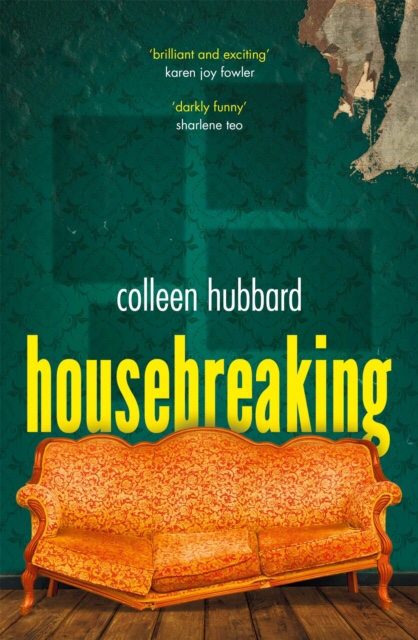
Following a long-standing feud and looking to settle the score, a woman decides to dismantle her home – alone and by hand – and move it across a frozen pond during a harsh New England winter in this mesmerizing debut. Home is certainly not where Del’s heart is. After a local scandal led to her parents’ divorce and the rest of her family turned their backs on her, Del left her small town and cut off contact. Now, with both of her parents gone, a chance has arrived for Del to retaliate.
Her uncle wants the one thing Del inherited: the family home. Instead of handing the place over, and with no other resources at her disposal, Del decides she will tear the place apart herself – piece by piece. But Del will soon discover, the task stirs up more than just old memories as relatives-each in their own state of unravelling – come knocking on her door.
This spare, strange, magical book is a story not only about the powerlessness and hurt that run through a family but also about the moments when brokenness can offer us the rare chance to start again.
I spent much of yesterday afternoon in the attic searching for Christmas decorations and our tree, but inevitably raving through boxes unearthed an awful lot of history. As usual I found myself poring over my old high school yearbook, reminiscing on other lives such as the time I spent in Milton Keynes with my late husband, and having that strange bittersweet feeling. It’s smiling about memories of the past but also a pang of sadness because it’s so long ago and there was the realisation that I’ve now spent more years without him than with him. When I return to Milton Keynes that feeling of nostalgia is even stronger and I even get the feeling I might bump into him, having a coffee and living a life that carried on without me. It’s these feelings we have when we return to a place that has huge significance in our lives and for Del that’s her home town and the family home she’s now inherited. Fate seems to be laughing at her though, because she’s never wanted to return to the small town in Maine where she grew up but she has nowhere else to go. Her friend and room mate Tym would like his boyfriend to move in and since Del has been sacked she can’t pay the rent anyway. Her uncle wants to buy the house and develop the plot, but with no other choice Del finds herself on a bus back to a place she’d left behind long ago and holds some of the worst memories of her life.
After dreading the house for a long time, Del is surprised that although it’s in a terrible state of repair, the house is conjuring up some good memories too. All relate way back, to the time before the scandal that forced her parent’s divorce. She’s surprised to find that she’s loathe to give the house up, even though she’s desperate for the money. Her uncle has inherited a lot of land around the house, but the house itself was the only thing her mother inherited from Del’s grandparents. Then an idea presents itself, what if she sells the site but keeps the house? To me, Del’s idea feels like an act of protest at first. However, as time goes on, I can see that the physical exertion seems to illicit a change in Del. I loved her grit and determination in taking the house apart, especially during the Maine winter. Her family can’t believe that she will succeed, fully expecting her to abandon the project and disappear again. Del surprises them all, but she also surprises herself. The house is almost a metaphor for the wall Del has built up to cope with mental anguish. With clients I always equate our ‘selves’ as wall built up of bricks, each one represents something about our development or experience. Here and there, are bricks that represent a trauma and they are often unstable. If we continue to build on top of that trauma without dealing with it, the foundations of the wall will be unstable. It’s only by dismantling the wall, brick by brick, that we can go back to the trauma and process the pain. Then the wall can continue on a strong base that will last. Del’s dismantling of her family home is the equivalent of therapy. Each brick represents a memory and Del needs to make peace with each one before she can move on.
I really enjoyed Del as a character. She’s beautifully written and is a bit of a ‘hedgehog’ person – covered in prickles, not to hurt others but to protect herself. She’s not great at sharing her feelings, with Tym being her only friend she’s effectively isolated herself. I really enjoyed Tym, who is a wonderful friend to Del despite his own sadness and tragedy. I thought the author depicted the physical and mental struggle that comes with working on ourselves really well. It’s wonderful to watch as Del puts down these huge burdens she’s been carrying and sloughs off those prickles and extra skins she’s used as a defence. I loved how more people started to form relationships with Del as she becomes more approachable and open. Her determination to move the house and move on in her emotional life touches other people. This is a quiet book, but don’t mistake that as a criticism. I love quiet books that follow the pace of life, that takes us into the heart of real life and how we make human connections. What I loved more than anything, after the reality of hard psychological graft, were the little glimmers of hope. It made me think of a couple of my favourite lines of poetry.
‘Hope is a thing with feathers, that perches in the soul,
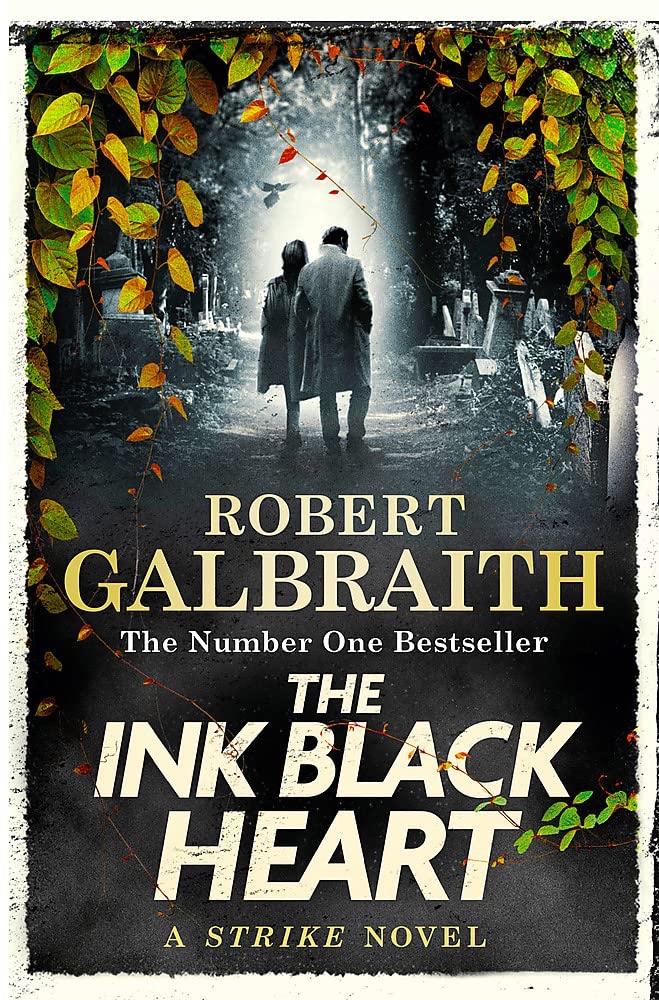
I have loved the characters of Cormoran Strike and his business partner Robin Ellacott for a long time, after seeing one of Robert Galbraith’s books in a charity shop and deciding to give it a go. I’ve bought every book in the series since and Strike has become one of my literary crushes – the troubled, wounded, war hero with a rescuer complex and rugged good looks is right up my street. Then there’s Robin, the country girl from Yorkshire who has bags of Northern common sense and is also brave, intelligent and caring. Their friendship works due to respect; he respects her intelligence and investigative abilities, whereas she respects his experience and never pushes beyond his boundaries. Their ‘will they/won’t they’ romance has had me on tenterhooks. I had heard this might be their last outing, so I was expecting their relationship to be resolved in some way. I also expected the main case to grab me immediately, just as their previous investigations did. This combination that has always kept the Strike books instantly readable, no matter if they do weigh the same as a house brick. The leading character’s issues aside, the cases have always been complex and multi-layered, with enough drama to keep me on the edge of my seat as I move towards the conclusion.
This time the agency is delving into two different worlds – the art world and the world of online gaming. Edie Ledwell and Josh Blay are artists who met while training and created a cult cartoon called The Ink Black Heart, set in Highfield Cemetery and peopled by odd little characters such as a talking human heart and a pale wispy ghost. The fans of this cartoon are real super fans, with two of them creating an online game for players to create a character and complete challenges around the graveyard. There was also a facility to meet other fans and talk on private channels during the game. However, fame is never straightforward and when Edie and Josh are found in Highfield Cemetery, attacked with a knife, rumours abound. With Edie dead at the scene and Josh paralysed in hospital, Strike and Robin are tasked to find out who had a grudge against the pair. Edie particularly, was bombarded with online abuse from misogynistic trolls, but it’s a character from the online game that Robin and Strike need to unmask. Anomie is a cloaked, faceless character, j one of the moderators and possibly even the creator of the game. The question is, how do they find someone, whose presence in the real and virtual world is a mystery?
It felt to me as if Robin really stepped up in this novel and took the primary role. Strike struggles physically this time, because years of not looking after himself have started to take their toll. His stump becomes inflamed and unable to take his prosthetic leg or bear his weight. Despite this Strike continues as long as he can, until even he has to accept medical help and enforced rest. So Robin’s detective skills come to the fore, as she infiltrates the art centre and commune, as well as the online game. I really enjoyed her undercover work on this case, firstly becoming Jessica a young woman who works in marketing and finance, but always wanted to explore her artistic side. She signs up to an art class at the centre to improve her skills and meet those who rubbed shoulders with Edie and Josh. She then visits comic-con as a journalist to interview someone they believe is very active in the game – Strike’s disguise amused me greatly here. I’ve always enjoyed Robin’s inner world and here I loved how much confidence her investigative role gives her. Her personal life has given her confidence a battering, especially now that her husband and the woman he was cheating with have a baby together. She has avoided her home town for a while, knowing they’ll be parading their offspring. Robin has worked out that it was the rape she went through at university that led to her settling with ex-husband Matthew. He was there and knew what had happened, it was infinitely easier than having to share this part of her past with someone new.Her feelings for Strike became more obvious when he turned up at her wedding and she left the celebrations to speak to him, much to husband Matthew’s disgust.
Strike is her best friend and she doesn’t want to lose that, but in this story other concerns also come to the fore. She feels inexperienced and unsophisticated in comparison to other woman she has seen with Strike, such as his ex-girlfriend Charlotte and his current girl Madeleine. Robin has no idea how beautiful she is, but Strike is very aware of the effect she has on men when she enters a room. What she doesn’t know is that Strike is currently comparing her with Madeleine, and his girlfriend is not doing well by comparison. Madeleine is well-groomed and always fully made up, plus she’s part of the same sophisticated London set as Charlotte. Strike has noticed the clean smell of Robin’s just washed hair and admires her simplicity. There are no games with Robin, she is always honest and says what she feels. Yet when Strike does weaken and try to kiss her when they go for birthday drinks, she looks so surprised that he interprets it as revulsion, but I think it’s fear. They are both frustrating, but the tension has to continue. The alternative is unthinkable, because people of my vintage remember Bruce Willis and Cybil Shepherd in Moonlighting and the disaster it became when their characters consummated years of flirting. If Strike and Robin ever did get together, I have no doubt it would have to be the end of the series.
It was within the case that I started to have some issues with the book. This is a long novel and the case concerned a wide range of people both real and virtual. Trying to remember where each character fit in the story was one thing, but when I realised they were possibly in the game with a user name too, it became much more complicated. I found it hard to follow the clues that pointed towards who Anomie was. There were also long sections written in private channels within the game. This felt awkward, although it wasn’t so bad when just two people were chatting, it became impenetrable to me when several channels were open at once with the same characters talking to different people at the same time. Although it gave an insight into how these characters communicated and talked behind each other’s backs, it was hard to keep track. The issues of misogyny and trolling felt like they’d come from the writer’s personal life and the type of trolling she’s been experiencing lately. Studies show that women who game online are exposed to misogynistic abuse and often use male avatars to avoid this type of trolling. So it was true to the story, but often felt she was trying to make a point, especially when we started skirting around subjects like trigger warnings and cancel culture. The sections that bothered me most were those around disability, particularly invisible disabilities and chronic illness. Strike is a hero, because of the war injury he sustained. He’s in that section of ‘acceptable’ disability that includes those who’ve acquired a disability in combat or try to ‘overcome’ their disability such as a Paralympian or other disability athlete. However, there are two characters in the book who have chronic illness, most notably ME or come under scrutiny from Strike and Robin as possible suspects in the case. Inigo uses a wheelchair and has an adapted home, character wise he is shown to have little patience, yelling at his children and wanting his environment just so. There’s an inference that his disability shouldn’t rule him out as the killer, as he could be playing on his symptoms. The second ME sufferer is a young girl who Strike goes to interview, but as he arrives at the house, she has fled out of the back door. This sudden movement immediately has him wondering whether she is also putting on her symptoms. However, Strike himself uses a flash of his disability to get into the family home – who would refuse a chair to a man with a prosthetic leg?
In the same breath the author does include articles about the Ink Black cartoon being ‘ableist’, showing an awareness of how problematic representations of disability can be. She also quotes the ‘spoonies’ blog, which refers to limited units of energy as spoons and exploring the difficulty of using more spoons than you have. I have always praised Galbraith’s depictions of Strike’s disability. Yes, he’s portrayed as a hero, but he’s not invincible as this novel’s physical difficulties shows. Where representation does become problematic here is that Strike is portrayed as wounded, but also a ‘hero’. He comes under the disability theory heading of a ‘supercripple’ – always able to perform beyond his abilities particularly when tasked with rescuing Robin. He’s also depicted as a sexual being, desirable to women still and clearly able to perform in the bedroom. Yet the character of Inigo, an ME patient, is not seen as sexual. In fact, again he’s under suspicion – aspersions are cast on his marriage, their sex life, and his character. I think this is possibly an attempt to show the reader how suspicious people are of those with invisible disabilities. It’s something I’ve experienced in my own life. However, there’s just something I’m uneasy about in these depictions. I was reminded of Ricky Gervais’s clever depictions of disability in The Office, where David Brent tries, in his own inimitable way, to educate his workers on how to approach a co-worker in a wheelchair. We’re supposed to be laughing at Brent, who’s so tone deaf he never asks how his colleague feels about being the subject of this impromptu lecture on disability awareness. He insults her as he tries his best not to, and that is the joke. Uneasily though, I wondered how many tone deaf people were laughing at what they complain is political correctness or at the wheelchair user who looks uncomfortable and embarrassed. This knife edge type of writing can go either way and I wondered how many people with ME would be comfortable with Galbraith’s representations of their disability. Since coming under scrutiny in the previous Strike novel for the depiction of a notorious serial killer dressing as a woman to lull the women he approached into a false sense of security. I would have thought it best to avoid controversial representations altogether. I have to take into account my own invisible disability, which may have prejudiced my feelings on the subject.
In all, this is another solid read from Galbraith, in terms of storyline and character development. It’s both entertaining and dramatic, with some complex and eccentric characters along the way. I love that we saw an even more vulnerable side to both characters, especially Strike. It was also great to see his dealings with ex-girlfriend, and trouble-maker, Charlotte taking a more realistic line. Maybe this clears the way for a different approach to matters of the heart for Strike and it’s this hope that will keep me looking out for the next instalment.
Holliday Grainger as Robin Ellacott and Tom Burke as Cormoran Strike in the BBC series.
Meet The Author.
Robert Galbraith’s Cormoran Strike series is classic contemporary crime fiction from a master story-teller, rich in plot, characterisation and detail. Galbraith’s debut into crime fiction garnered acclaim amongst critics and crime fans alike. The first three novels The Cuckoo’s Calling (2013), The Silkworm (2014) and Career of Evil (2015) all topped the national and international bestseller lists and have been adapted for television, produced by Brontë Film and Television. The fourth in the series, Lethal White (2018), is out now.
Robert Galbraith is a pseudonym of J.K. Rowling, bestselling author of the Harry Potter series and The Casual Vacancy, a novel for adults. After Harry Potter, the author chose crime fiction for her next books, a genre she has always loved as a reader. She wanted to write a contemporary whodunit, with a credible back story.
J.K. Rowling’s original intention for writing as Robert Galbraith was for the books to be judged on their own merit, and to establish Galbraith as a well-regarded name in crime in its own right.
Now Robert Galbraith’s true identity is widely known, J.K. Rowling continues to write the crime series under the Galbraith pseudonym to keep the distinction from her other writing and so people will know what to expect from a Cormoran Strike novel.
There are so many great books this autumn, but I’ve narrowed it down to those I have and I’m looking forward to reading the most. It’s all here, from spooky Halloween reads to feel-good fiction, thrillers to historical fiction and a splash of horror. Here’s a little preview of these great books.
In the midst of the woods stands a house called Lichen Hall. This place is shrouded in folklore – old stories of ghosts, of witches, of a child who is not quite a child. Now the woods are creeping closer, and something has been unleashed.
Pearl Gorham arrives in 1965, one of a string of young women sent to Lichen Hall to give birth. And she soon suspects the proprietors are hiding something. Then she meets the mysterious mother and young boy who live in the grounds – and together they begin to unpick the secrets of this place. As the truth comes to the surface and the darkness moves in, Pearl must rethink everything she knew – and risk what she holds most dear. I loved this author’s previous book The Lighthouse Witches and I can’t wait to get stuck into this one.
Published on 13th October 2022 by HarperCollins
I loved Caroline’s first two novels, both set in the aftermath of WW1 and full of historical detail, characters to empathise with and that chaos that seems to thrive in war’s aftermath. Between the two World Wars the country was in a state of flux, with huge changes in class structure, gender and the finances, both public and personal. This book is set in England, 1932, when the country was in the grip of the Great Depression. To lift the spirits of the nation, Stella Douglas is tasked with writing a history of food in England. It’s to be quintessentially English and will remind English housewives of the old ways, and English men of the glory of their country. The only problem is –much of English food is really from, well, elsewhere and can one cookbook really manoeuvre people back into those pre-war roles?
Stella sets about unearthing recipes from all corners of the country, in the hope of finding a hidden culinary gem. But what she discovers is rissoles, gravy, stewed prunes and lots of oatcakes. Longing for something more thrilling, she heads off to speak to the nation’s housewives. But when her car breaks down and the dashing and charismatic Freddie springs to her rescue, she is led in a very different direction . . . Full of wit and vim, Good Taste is a story of discovery, of English nostalgia, change and challenge, and one woman’s desire to make her own way as a modern woman.
Published on 13th October 2022 by Simon and Schuster U.K.
Rachel Joyce is one of those authors I’ve had lick to meet twice, at book signings, where I’ve been one of the last people to queue with my old books under my arm and her latest in my hand. Her last book Miss Benson’s Beetle was an incredible read about extraordinary women. Now she reverts to a series of books that have celebrated very ordinary people doing extraordinary things and Mrs Fry is no exception. Ten years ago, Harold Fry set off on his epic journey on foot to save a friend. But the story doesn’t end there. Now his wife, Maureen, has her own pilgrimage to make.
Maureen Fry has settled into the quiet life she now shares with her husband Harold after his iconic walk across England. Now, ten years later, an unexpected message from the North disturbs her equilibrium again, and this time it is Maureen’s turn to make her own journey. But Maureen is not like Harold. She struggles to bond with strangers, and the landscape she crosses has changed radically. She has little sense of what she’ll find at the end of the road. All she knows is that she must get there. Maureen Fry and the Angel of the North is a deeply felt, lyrical and powerful novel, full of warmth and kindness, about love, loss, and how we come to terms with the past in order to understand ourselves and our lives a little better. Short, exquisite, while it stands in its own right, it is also the moving finale to a trilogy that began with the phenomenal bestseller The Unlikely Pilgrimage of Harold Fry and continued with The Love Song of Miss Queenie Hennessy.
This is a slender book but it has all the power and weight of a classic.
Published by Doubleday 20th Oct 2022. Kindle Edition available from 5th October.
I have already started this book and had a nightmare of epic proportions the very first night. I’m suggestible and have a wild imagination, but I think the opening to this book is strangely unsettling. I felt uneasy, even though the chapters I read didn’t have any particularly terrifying events. It’s the strangeness that creeps up on you.
Superstitions only survive if people believe in them… Renowned academic Dr Sparling seeks help with his project on a remote Irish village. Historical researchers Ben and Chloe are thrilled to be chosen – until they arrive. The village is isolated and forgotten. There is no record of its history, its stories. There is no friendliness from the locals, only wary looks and whispers. The villagers lock down their homes at sundown. It seems a nameless fear stalks the streets, but nobody will talk – nobody except one little girl. Her words strike dread into the hearts of the newcomers. Three times you see him. Each night he comes closer… That night, Ben and Chloe see a sinister figure watching them. He is the Creeper. He is the nameless fear in the night. Stories keep him alive. And nothing will keep him away..
Published by Head of Zeus/ Aries 15th September 2022.
I’m a sucker for historical fiction with a gothic edge, so this really captured my imagination as soon as I read the blurb. Obviously my counsellor brain is always ready for tales of supposed madness and hysteria too.
I must pull myself together. I had to find Dr Rastrick and demand my immediate release. My stomach knotted at the prospect, but I knew I was perfectly sane and that he must see reason.
In 1886, a respectable young woman must acquire a husband. But Violet Pring does not want to marry. She longs to be a professional artist and live on her own terms. When her scheming mother secures a desirable marriage proposal from an eligible Brighton gentleman for her, Violet protests. Her family believes she is deranged and deluded, so she is locked away in Hillwood Grange Lunatic Asylum against her will.In her new cage, Violet faces an even greater challenge: she must escape the clutches of a sinister and formidable doctor and set herself free. This tantalizing Gothic novel from Noel O’Reilly tells a thrilling story of duty and desire, madness and sanity, truth and delusion from within a Victorian asylum.
Published by HQ 8th December 2022
Spring 1937: Teresa is evacuated to London in the wake of the Guernica bombing. She thinks she’s found safety in the soothing arms of Mary Davidson and the lofty halls of Rochester Place, but trouble pursues her wherever she goes.
Autumn 2020: Corrine, an emergency dispatcher, receives a call from a distressed woman named Mary. But when the ambulance arrives at the address, Mary is nowhere to be found. Intrigued, Corinne investigates and, in doing so, disturbs secrets that have long-dwelt in Rochester Place’s crumbling walls. Secrets that, once revealed, will change her life for ever . . .
Who is Mary Davidson? And what happened at Rochester Place all those years ago? Set between the dusty halls of Rochester Place and the bustling streets of modern-day Tooting, this emotive, intricately layered mystery tells the spellbinding story of two people, separated by time, yet mysteriously connected through an enchanting Georgian house and the secrets within its walls.
Published by Penguin 8th Dec 2022
I always look forward to an Orenda book, because I know I’m going to great a fantastic and often thought provoking read. I’m on the blog tour for this in November and I’m looking forward to this one. James Garrett was critically injured when he was shot following his parents’ execution, and no one expected him to waken from a deep, traumatic coma. When he does, nine years later, Detective Inspector Rebecca Kent is tasked with closing the case that her now retired colleague, Theodore Tate, failed to solve all those years ago.
But between that, and hunting for Copy Joe – a murderer on a spree, who’s imitating Christchurch’s most notorious serial killer – she’s going to need Tate’s help … especially when they learn that James has lived out another life in his nine-year coma, and there are things he couldn’t possibly know, including the fact that Copy Joe isn’t the only serial killer in town…
Published by Orenda Books Nov 10th 2022
In between the serial killers, ghostly apparitions and terrifying ‘creepers’ I need some light relief. I was looking for something warm and uplifting and this could be it. Newly installed at All Souls Lutheran, Mallory “Pastor Pete” Peterson soon realizes that her church isn’t merely going through turbulent waters, but is a sinking ship. With the help of five loyal members of the Naomi Circle, the young, bold minister brainstorms fundraising ideas. They all agree that the usual recipe book won’t add much to the parish coffers, but maybe one with all the ingredients on how to heat up relationships rather than casseroles will…
Pastor Pete has her doubts about the project, but it turns out the group of postmenopausal women has a lot to say on the subject of romance. While Charlene, the youngest member at fifty-two, struggles with the assignment, baker-extraordinaire Marlys, elegantly bohemian Bunny, I’m-always-right Velda, and ebullient Edie take up their contributions enthusiastically. After all, their book is really about cooking up love in all its forms. But not everyone in the congregation is on board with this “scandalous” project. As the voices of opposition grow louder, Pastor Pete and these intrepid women will have to decide how hard they’re willing to fight for this book and the powerful stories within—stories of discovery, softened hearts, and changed lives.
Published by Lake Union 6th December 2022
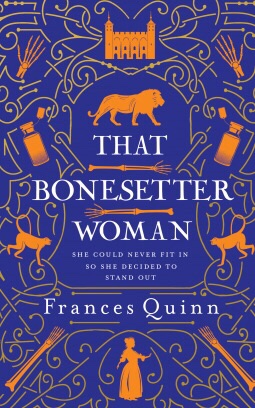
Although this book is already out I’m saving it for the autumn, because it’s one of my Squad Pod’s Book Club reads. I loved Quinn’s debut novel The Smallest Man so I’ve had my eye on this for a while. I also love unusually named heroines, ever since Mary Webb’s Precious Bane, and Endurance Proudfoot is a brilliant invention. It’s usual, they say, for a young person coming to London for the first time to arrive with a head full of dreams. Well, Endurance Proudfoot did not. When she stepped off the coach from Sussex, on a warm and sticky afternoon in the summer of 1757, it never occurred to her that the city would be the place where she’d make her fortune; she was just very annoyed to be arriving there at all.
Meet Endurance Proudfoot, the bonesetter’s daughter: clumsy as a carthorse, with a tactless tongue and a face she’s sure only a mother could love. Durie only wants one thing in life – to follow her father and grandfather into the family business of bonesetting. It’s a physically demanding job, requiring strength, nerves of steel and discretion – and not the job for a woman. But Durie isn’t like other women. She’s strong and stubborn and determined to get her own way. And she finds that she has a talent at bonesetting – her big hands and lack of grace have finally found their natural calling. So, when she is banished to London with her sister, who is pretty, delicate and exactly the opposite to Durie in every way, Durie will not let it stop her realising her dreams. And while her sister will become one of the first ever Georgian celebrities, Durie will become England’s first and most celebrated female bonesetter. But what goes up must come down, and Durie’s elevated status may well become her undoing…
Published by Simon and Schuster 21st July 2022.
There are a few formidable women in my autumn reading and this is another brilliant historical fiction novel for the list. This is billed as a ‘rich and atmospheric’ new novel from prize-winning author Sally Gardner, set in the 18th century between the two great Frost Fairs. Neva Friezland is born into a world of trickery and illusion, where fortunes can be won and lost on the turn of a card. She is also born with an extraordinary gift. She can predict the weather. In Regency England, where the proper goal for a gentlewoman is marriage and only God knows the weather, this is dangerous. It is also potentially very lucrative.
In order to debate with the men of science and move about freely, Neva adopts a sophisticated male disguise. She foretells the weather from inside an automaton created by her brilliant clockmaker father. But what will happen when the disguised Neva falls in love with a charismatic young man?
It can be very dangerous to be ahead of your time. Especially as a woman.
Published by Apollo 10th November 2022.
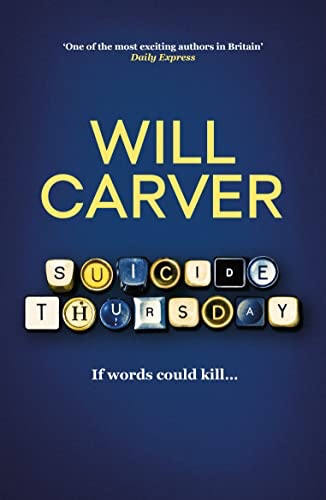
Will Carver is an incredible writer and his imagination knows no bounds. His books are always so completely original.
Eli Hagin can’t finish anything. He hates his job, but can’t seem to quit. He doesn’t want to be with his girlfriend, but doesn’t know how end things with her, either. Eli wants to write a novel, but he’s never taken a story beyond the first chapter. Eli also has trouble separating reality from fiction.
When his best friend kills himself, Eli is motivated, for the first time in his life, to finally end something himself, just as Mike did… Except sessions with his therapist suggest that Eli’s most recent ‘first chapters’ are not as fictitious as he had intended … and a series of text messages that Mike received before his death point to something much, much darker…
Published by Orenda Books 24th November 2022.
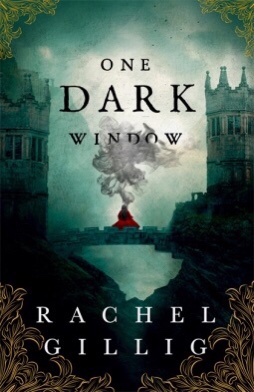
This book sounds like a very dark fairy tale and aren’t they the best ones? An ancient, mercurial spirit is trapped inside Elspeth Spindle’s head – she calls him the Nightmare. He protects her. He keeps her secrets. But nothing comes for free, especially magic.
When Elspeth meets a mysterious highwayman on the forest road, she is thrust into a world of shadow and deception. Together, they embark on a dangerous quest to cure the town of Blunder from the dark magic infecting it. As the stakes heighten and their undeniable attraction intensifies, Elspeth is forced to face her darkest secret yet: the Nightmare is slowly, darkly, taking over her mind. And she might not be able to fight it. This is a gothic fantasy romance about a maiden who must unleash the monster within to save her kingdom.
Published by Orbit 29th September
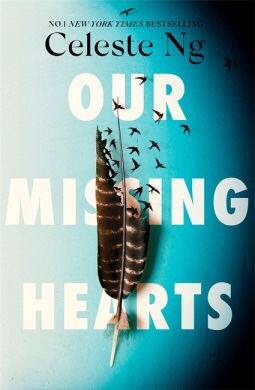
Twelve-year-old Bird Gardner lives a quiet existence with his loving but broken father, a former linguist who now shelves books in a university library. Bird knows to not ask too many questions, stand out too much, or stray too far. For a decade, their lives have been governed by laws written to preserve “American culture” in the wake of years of economic instability and violence. To keep the peace and restore prosperity, the authorities are now allowed to relocate children of dissidents, especially those of Asian origin, and libraries have been forced to remove books seen as unpatriotic—including the work of Bird’s mother, Margaret, a Chinese American poet who left the family when he was nine years old.
Bird has grown up disavowing his mother and her poems; he doesn’t know her work or what happened to her, and he knows he shouldn’t wonder. But when he receives a mysterious letter containing only a cryptic drawing, he is pulled into a quest to find her. His journey will take him back to the many folktales she poured into his head as a child, through the ranks of an underground network of librarians, into the lives of the children who have been taken, and finally to New York City, where a new act of defiance may be the beginning of much-needed change.
Our Missing Hearts is an old story made new, of the ways supposedly civilized communities can ignore the most searing injustice. It’s a story about the power—and limitations—of art to create change, the lessons and legacies we pass on to our children, and how any of us can survive a broken world with our hearts intact. This sounds absolutely epic and I’m so excited to have been granted a copy on NetGalley, so I’ll keep you all informed.
Published 4th October 2022 by Penguin Press
1643: A small group of Parliamentarian soldiers are ambushed in an isolated part of Northern England. Their only hope for survival is to flee into the nearby Moresby Wood… unwise though that may seem. For Moresby Wood is known to be an unnatural place, the realm of witchcraft and shadows, where the devil is said to go walking by moonlight. Seventeen men enter the wood. Only two are ever seen again, and the stories they tell of what happened make no sense. Stories of shifting landscapes, of trees that appear and disappear at will… and of something else. Something dark. Something hungry.
Today, five women are headed into Moresby Wood to discover, once and for all, what happened to that unfortunate group of soldiers. Led by Dr Alice Christopher, an historian who has devoted her entire academic career to uncovering the secrets of Moresby Wood. Armed with metal detectors, GPS units, mobile phones and the most recent map of the area (which is nearly 50 years old), Dr Christopher’s group enters the wood ready for anything. Or so they think. I love the mix of historical fiction and a touch of the supernatural so this one is a definite title for the TBR.
Published on 13th October by S
If someone says gothic, paranormal, romance to me, I’m there with bells on! As a lifelong fan of Wuthering Heights it’s very much my sort of thing. 1813. Lizzie’s beloved older sister Esme is sold in marriage to the aging Lord Blountford to settle their father’s debts. One year later, Esme is dead, and Lizzie is sent to take her place as Lord Blountford’s next wife.
Arriving at Ambletye Manor, Lizzie uncovers a twisted web of secrets, not least that she is to be the fifth mistress of this house. Marisa. Anne. Pansy. Esme. What happened to the four wives who came before her? In possession of a unique gift, only Lizzie can hear their stories, and try to find a way to save herself from sharing the same fate. This sounds to me like a Bluebeard type tale and perfect for a cozy autumn afternoon in front of the log burner.
Published 24th November 2022 by Penguin.
Three women Three eras One extraordinary mystery…
1899, Belle Époque Paris. Lucienne’s two daughters are believed dead when her mansion burns to the ground, but she is certain that her girls are still alive and embarks on a journey into the depths of the spiritualist community to find them.
1949, Post-War Québec. Teenager Lina’s father has died in the French Resistance, and as she struggles to fit in at school, her mother introduces her to an elderly woman at the asylum where she works, changing Lina’s life in the darkest way imaginable.
2002, Quebec. A former schoolteacher is accused of brutally stabbing her husband – a famous university professor – to death. Detective Maxine Grant, who has recently lost her own husband and is parenting a teenager and a new baby single-handedly, takes on the investigation.
Under enormous personal pressure, Maxine makes a series of macabre discoveries that link directly to historical cases involving black magic and murder, secret societies and spiritism … and women at breaking point, who will stop at nothing to protect the ones they love. I’m so excited about this one I’ve ordered a special copy from Goldsboro Books it’s simply stunning and I’m dying to read it.
Published by Orenda Book on 15th September 2022
Bleeding Heart Yard by Elly Griffiths
Another stunning cover here. From the author of the Ruth Galloway crime series this is a propulsive new thriller set in London featuring Detective Harbinder Kaur. A murderer hides in plain sight – in the police. DS Cassie Fitzherbert has a secret – but it’s one she’s deleted from her memory. In the 1990s when she was at school, she and her friends killed a fellow pupil. Thirty years later, Cassie is happily married and loves her job as a police officer.
One day her husband persuades her to go to a school reunion and another ex-pupil, Garfield Rice, is found dead, supposedly from a drug overdose. As Garfield was an eminent MP and the investigation is high profile, it’s headed by Cassie’s new boss, DI Harbinder Kaur. The trouble is, Cassie can’t shake the feeling that one of her old friends has killed again. Is Cassie right, or was Garfield murdered by one of his political cronies? It’s in Cassie’s interest to skew the investigation so that it looks like the latter and she seems to be succeeding.
Until someone else is killed…
Published on 29th September 2022 by Quercus
And I can’t believe I forgot…..
I possibly forgot this one because I’ve already read and reviewed it for NetGalley and it really is a cracker. After going in a slightly different direction with her last two novels, Jodi Picoult is back in her usual territory here. After teaming up with author Jennifer Finney Boylan, from a Twitter conversation, Picoult is back to tackling a controversial issue with a tense legal case at the centre of the drama.
Olivia fled her abusive marriage to return to her hometown and take over the family beekeeping business when her son Asher was six. Now, impossibly, her baby is six feet tall and in his last year of high school, a kind, good-looking, popular ice hockey star with a tiny sprite of a new girlfriend. Lily also knows what it feels like to start over – when she and her mother relocated to New Hampshire it was all about a fresh start. She and Asher couldn’t help falling for each other, and Lily feels happy for the first time. But can she trust him completely? Then Olivia gets a phone call – Lily is dead, and Asher is arrested on a charge of murder. As the case against him unfolds, she realises he has hidden more than he’s shared with her. And Olivia knows firsthand that the secrets we keep reflect the past we want to leave behind - and that we rarely know the people we love well as we think we do. Each author has written the story from a different character’s perspective, sometimes taking us back in time to understand their experiences. I don’t want to ruin your enjoyment so I won’t give you any more of the plot, but I will say it’s a belter of a novel that will make you question your own prejudices.
Published on 15th November 2022 by Hodder & Stoughton