After being slowly enticed by the glowing reviews of Olivie Blake’s Atlas Six series, I finally decided to take the plunge with this one. I’m a huge fan of Alice Hoffman so magic, romance and witchery are right up my street. However, this was the same themes but with some added NYC grit and sass.
In New York City, two rival witch families fight for the upper hand.
The Antonova sisters are beautiful, cunning and ruthless, and their mother – known only as Baba Yaga – is the elusive supplier of premium intoxicants. Their adversaries, the influential Fedorov brothers, serve their crime boss father. Named Koschei the Deathless, his enterprise dominates the shadows of magical Manhattan.
For twelve years, the families have maintained a fraught stalemate. Then everything is thrown into disarray. Bad blood carries them to the brink of disaster, even as fate draws together a brother and sister from either side. Yet the siblings still struggle for power, and internal conflicts could destroy each family from within. That is, if the enmity between empires doesn’t destroy both sides first.
I found myself hurled straight into this vivid world. It is earth but harbours a secret; witch families are vying to supply humans with magical pharmaceuticals. I loved the idea that there might be another realm within our own, hiding in plain sight. Baba Yaga has a shop – like Lush but with extra ingredients – whereas the Federovs sell on the streets and in the bars and clubs of the city. The rivalry and language of their industry was very ‘gangster’, with specific territories and penalties for stepping out of line. The patriarchal Federovs and the the matriarchal Antonova sisters. The sisters, although doing the bidding of Baba Yaga, are kept in line by eldest daughter Marya, also known as Masha. The scene that grabbed me was Masha simply walking into the Federovs lair and demanding to see second brother Dima. There has been an issue with territory and Masha believes it is Dima’s fault, so she carries out a terrifying enchantment that leaves Dima totally incapacitated. I was fascinated that youngest brother Lev tries to stop her, but is held back by his brother. Is there an honour code between the families? Even more intriguing is the obvious and immediate chemistry between Dima and Masha. The atmosphere was electric, the air charged with feelings and I was drying to know what had happened before and if these two had historic feelings for each other. If so, Masha is ruthless when it comes to business, but must have been full of hidden emotion. Would she be just as ruthless when protecting her family?
This scene showed me that Masha was confident in her power and very likely the successor to her mother. Masha is overseeing the expansion of their business. I found the idea of pharmaceutical drugs touched by magic fascinating too, I wanted to know more about their effects and whether they were largely benign. Did the customers truly know the power of what they were buying? I wondered about the family’s ethics with regards to black or white magic and was intrigued by how both families used their magic differently. Lev is sent to check out the clubs and see if he can work out the Antonov family’s next move, but he is distracted from his job by a young beautiful woman being hassled by a college student. As soon as he sees her he wants to help her, but already his attraction to her is obvious. She is very assertive and assures him she can look after herself and as Lev follows them out of the club she breaks the student’s nose. Intrigued by her confidence and the way she handled the situation, Lev offers to walk her home. Every block she tells him she can manage, but Lev has fallen in too deep already and the attraction is mutual. They have a passionate encounter down a side street. What Lev doesn’t know is that this young woman is Sasha, youngest of the Antonova sisters. As the pair fall in love, Lev confides the task he’s been given by his brothers. I wondered how she would react and whether she’s think his feelings were genuine or entrapment. Lev’s feelings are genuine and I was already wondering whether this was a repeat of Masha and Dima’s story. More importantly, if it comes to a showdown between the two families, which side would Lev choose?
Considering the amount of characters, they do have depth and feel very real. I think their back stories helped and the Russian folklore woven into their backgrounds seemed to ground them. Koshchei the Deathless is a male protagonist in Russian folklore, usually cast as an evil father figure who imprisons the male hero’s lover. He is called the immortal because he keeps his soul hidden within inanimate objects. Often he would hide his soul inside a tiny object then place it inside another object, perhaps an animal, like a rather grotesque set of Russian dolls. Baba Yaga was originally a supernatural being who hides within the disguise of a grotesque old woman. In a bizarre version of her story, which I love, she lived in a kettle with chicken’s legs – rather like the archetypal witch we all know from fairy tales. She would often take a maternal role and use that to hinder a character from the story. How these archetypes work within this story I’ll leave for you to find out. Then there’s the Romeo and Juliet parallel which certainly gives us the basic plot line of two rival families, where the youngest members of each family are falling in love with each other. That’s really where the comparisons end, because this is a loose retelling so don’t expect specific characters or even the same plot lines. This is a tragedy and it’s genuinely heartbreaking, but with gritty, real violence and it’s bloody consequences, just don’t expect the same victims. I loved that the rivalries are decades old and I think there’s definitely scope for more novels in this setting.
Although I loved Blake’s descriptive prose and enjoyed her characters, I did feel that the central love story lacked a bit of depth. I could tell these characters were in lust because their scenes were hot, but I didn’t feel the love at first. Perhaps that’s because I’m an older reader though and why I was interested in the oldest sister’s story. Also there were so many twists towards the end I had to go back and re-read sections to keep up with what was going on. However, for such a big book, it really fly by and the heady mix of love, power, magic, revenge and tragedy is a winner for sure. The art both inside and on the cover is absolutely beautiful. I feel that I could easily come back to these rival families in the future and it has certainly made me want to check out the author’s previous novels. If you like your love stories dark and laced with magic, violent tragedy and witches this is the book for you. It was definitely the book for me.
Published on 20th April by Tor (Pan Macmillan)
Meet The Author
Olivie Blake is the pseudonym of Alexene Farol Follmuth, a lover and writer of stories, many of which involve the fantastic, the paranormal, or the supernatural, but not always. More often, her works revolve around what it means to be human (or not), and the endlessly interesting complexities of life and love.
Olivie has penned several indie SFF projects, including the webtoon Clara and the Devil with illustrator Little Chmura and the viral Atlas series. As Follmuth, her young adult rom-com My Mechanical Romance releases May 2022.
Olivie lives in Los Angeles with her husband and baby, where she is generally tolerated by her rescue pit bull. More on Olivie can be found at http://www.olivieblake.com
Over the last couple of weeks I’ve had the brilliant experience of buddy reading with my eldest stepdaughter. I bought her Rachel’s Holiday and this sequel Again, Rachel for Christmas and she decided to read them in her down time from revising for her A’Levels. I realised it would be a great opportunity to share the reading experience together. I finished this on my weekend away and I genuinely found it hard to look up from the story. For the author, the anxiety of revisiting a much loved character must be huge, because I felt it too. I’d kept it on one side for this long because of that anxiety. I loved Rachel and the whole Walsh family and I wasn’t sure I wanted to know what happened next. We’re twenty years on from the end of the last book and Rachel is settled, with a job she loves and a happy home. She works as a senior counsellor at The Cloisters – the place where she started her own recovery journey. She owns a beautiful little house and a garden that’s become an unexpected part of her ongoing recovery and mental well-being. She also has a little dog, Crunchie. There’s also a man, Nick Quinliven (known as Quin) who has a penchant for trying new and exciting things from from the latest restaurant to wild swimming and escape rooms. They haven’t said they love each other yet, but he is an important part of her life. Life is great until Rachel hears that Rose Costello has died. Rose was her mother-in-law and although she hasn’t seen her since she and Luke divorced, she does feel an obligation. Should she go to the funeral or not?
Rachel and Luke have never spoken since he left their Brooklyn flat several years ago and cut all contact. I kept thinking what on earth could have separated these two people who really loved each other? Skilfully taking us back and forth in time, Marian Keyes constructs the intervening years as Rachel copes with the unexpected present and the painful past. Rachel’s whole life is upended as she sees Luke for the first time and tries to cope with the emotions of their reunion. However, she’s also plunged deeply into the past and the reasons she and Luke ended. Rachel is emotionally intelligent and knows all about buried trauma, but is surprised when she experiences all of those emotions afresh as if it only happened yesterday. It upsets her equilibrium, but has that sense of calm recovery merely been a front? Rachel hasn’t wilfully deceived others. She’s deceived herself. Is her version of what happened back then even the truth? If given the chance to connect with Luke and unpick their past, should she take it?
Marian Keyes really knows her stuff when it comes to addiction and mental health. It’s always a joy to read her books because they’re so emotionally intelligent. This framework provides so much depth to the characters and their story. Here she shows us a wounded healer, as Rachel struggles through addiction and loss, but still supports clients to achieve psychological change. I love her courage, because anyone who uses their own pain to help others is an incredible human being. I love how Keyes describes group sessions, as Rachel keeps her boundaries and sticks to her script, no matter how strongly she might be identifying with the client or feeling deeply moved by their story. We get to see that conflict in her; as a human being she might want to comfort that person, but as a therapist she must hold back to effect change. She knows that sometimes it’s important to sit with the feelings, to truly feel negative emotions without distractions or outside comfort. They always pass. I loved the wisdom she’s acquired over the years and how she rides to cope with her own trauma the same way.
I was deeply moved by Luke and Rachel’s experience because I’ve been through something similar. It made some parts hard to read, but it was written beautifully and with an accuracy I really appreciated. Keyes offsets the sadness with the usual comic touches, with Walsh family conferences being a great source of humour. All the sisters have their own idiosyncratic characters, causing conflict at times but we know that love is always present. Mrs Walsh is typically overbearing and contrary and her upcoming ‘surprise’ birthday party is an extra source of stress, especially when she decides to invite her ex-son-in-law. Luckily, the meticulously organised Claire has everything in hand, despite also trying to negotiate a session of swinging for her and her husband. Husband Adam is reluctant, but once convinced he becomes so enthusiastic that Claire is furious with him! The love stories are convincing and both Rachel’s current beau Quin and ex-husband Luke have their strengths. I held out hope for Quin and Rachel because I thought they suited each other. However, once Luke is on the scene the chemistry and unfinished business between him and Rachel is undeniable. Quin isn’t the only obstacle either, Luke’s partner Callie is with him in Ireland and seems very determined to keep Rachel close. I didn’t know if Rachel and Luke would be able to move past their history and connect again, as the people they are now. I loved how they tried their hardest to work through what happened, despite the pain it’s clearly causing. Could they possibly remain friends and share their loss, after all only the two of them can fully understand what they went through. Despite knowing that that Rachel didn’t need either man to build a happy life, I knew where my loyalties as we approached the end. Oh what an ending!! I was snap chatting my stepdaughter and we’d both cried buckets at the ending. I was so glad that Marian Keyes had been brave enough to revisit Rachel again.
Published by Penguin 13th April 2023
Marian Keyes is the international bestselling author of Watermelon, Lucy Sullivan is Getting Married, Rachel’s Holiday, Last Chance Saloon, Sushi for Beginners, Angels, The Other Side of the Story, Anybody Out There, This Charming Man, The Brightest Star in the Sky , The Mystery of Mercy Close, The Woman Who Stole My Life, The Break and her latest Number One bestseller, Grown Ups. Her two collections of journalism, Making it up as I Go Along and Under the Duvet: Deluxe Edition are also available from Penguin.
‘All happy families are alike; each unhappy family is unhappy in it’s own way’. Anna Karenina Leo Tolstoy
I’ve been wanting to try a Sarah Stovell novel for the last couple of years, because it’s a name that’s come up with other bloggers as someone I would enjoy. This story had me gripped to the very last page. This is the history of a family, but told like a thriller. We know that one central incident is the lynchpin of the whole story, explaining the family’s geography, personalities and dynamics with each other. Yet the incident isn’t laid bare for the reader. We must go back and forth in time, with the truth only revealed in short bursts and from different family member’s perspectives. Minnie is an academic, a professor of sociology and women’s studies and is married to Bert, another academic. Minnie is also the matriarch of the Plenderleith family: Owen, his wife Sophie and daughter Layla; Lizzie who lives in a platonic partnership with Tamsin and has a daughter, Ruby; then there’s baby Jessie and her wife Anna who have had two babies in quick succession. For the first time, Minnie will have her entire family under one roof for Christmas. This is a rare occasion because Owen lives in Australia and everyone leads very busy lives. Plus there is a tension at the centre of this family, something they never talk about, which has led to misunderstanding, distance and fear. Fear that if the incident is brought into the open and talked about, the family might implode. However, Owen hasn’t brought his wife to England and his teenage girlfriend Nora is in the village, sorting out her father’s house after his death. Could Nora be the catalyst that for an explosive Christmas?
The depth of characterisation in these family members is brilliant. I found myself understanding each family member as I read their section of the narrative. Even where their point of view clashed completely with someone else, or where they’re acting from a complete misunderstanding, I could empathise with their position. I fell in love with Lizzie, probably because I am overweight, nearing middle age and have an abusive relationship behind me. There was an instant understanding of her emotional need for calm, quiet and meditation. I also understood her medication, whether it was food or a prescription from the GP. Lizzie left a physically abusive relationship when her daughter Ruby was 16, with her self-esteem and sense of self eroded almost beyond repair. Lizzie is the jolly, overweight sister who jokes about her love of cake and seems outwardly confident, someone who owns her choices. Underneath though, is a animal that stays curled into a ball waiting for the next kick. Perhaps unable to trust men, or even trust her own judgement, she has found solace in a platonic family unit with friend Tamsin and although they perhaps don’t fully understand it, the family accepts it as a life choice and Tamsin is very much part of the family. Twenty years earlier, when Owen started dating Nora, Lizzie made friends with this unusual girl. Nora is the opposite of Lizzie, she looks like a fragile waif that you would want to feed and look after. Having lost her mother at a young age, Nora only had her father and it wasn’t an ideal relationship, so when Owen started bringing her home, his family became Nora’s family too. Minnie is impressed with her son’s choice, because she’s not into fashion or anything superficial, she’s bright, idealistic and wants to change the world. She’s going to spend summers working on conservation projects in different parts of the world and she follows through on her dreams. She might seem frail, but she’s determined and not scared of stepping out into the world alone. She’s so different to Owen but they have a connection that’s natural, deep and all encompassing.
I really did understand Minnie, a woman with so much education, intelligence and personal experience. She is the centre of the incident and takes so much of the blame for what happened, even though her point of view isn’t unreasonable. Minnie is on her second marriage, her first was to Owen and Lizzie’s father who was a drunk. Minnie was trying to hold down an academic position, run a household and two children, but always on tenterhooks for the next crisis to hit. Would she come home from work and find their father had hurt himself, given away the family car or worse? When he died, it was more of a relief than anything but Minnie was burned out. I could see immediately that Minnie was one of life’s ‘copers’. She’s used to picking up the pieces of whatever disaster her family members bring home, always without complaint and assuring them it will be ok. Holding the anxiety and responsibility for everyone creates burn out and resentment. When is it someone else’s turn to hold it together? She just wants one opportunity to fall apart. So when the big incident happened Minnie decided this was one mess she would not be clearing up. The fall out from this decision will last twenty years, compounded by miscommunication, layers of regret and grief, and the blame never apportioned out loud.
When trauma isn’t processed and discussed it grows and can come out in the most unexpected ways. Like on Christmas Day, when at least three generations of the family bring the trauma into the present. I loved how the author brought all those strands together to create this tension filled and momentous day. There’s all the usual stuff; prepping the veg, opening the presents and playing games. Between the celebrations, we’re told parts of the story by those who were there and those who are living in the aftermath. Even the grandchildren are affected, because things that are never spoken about can be misunderstood and blown out of proportion. The sections become shorter and faster towards the end, driving then tension and compelling you to keep reading. This is a brilliant, emotional and addictive read that’s a must read for this spring and would make a great TV thriller.
Published by HQ 30th March 2023
Meet the Author
Sarah lives in Northumberland, England, with her family. She teaches creative writing at Lincoln University. During the Covid pandemic, she was unable to write because her children kept interrupting her, so she started baking instead. She now spends her time writing, teaching, hanging out with her kids, baking fine patisserie and trying to believe her luck.
One of my April reads is Lucy Atkins’s new novel Windmill Hill, so I thought it was a good opportunity to talk about one of her previous novels. I have been a fan since her very first novel The Missing One and we read it as a book club choice. I have enjoyed all Lucy Atkins other novels and it seems they get better and better. I enjoyed the character of Dee and became drawn in by her straight away. There’s a sense that she doesn’t really belong anywhere, but she is curiously at ease with who she is. Something of an outsider in Oxford, she doesn’t belong to any of the colleges but is one of those invisible people who provide services to those who do belong. Dee is a nanny and makes a very disturbing observation about the academics who use her services – when desperate, people will let a near stranger look after their child. The new master and his wife, Nick and Mariah, hire her after a chance meeting on a bridge early one morning and one hasty conversation. They do not ask for references or do a police check. If they had, they would have found that Dee has a criminal record. It is no coincidence that Mariah restores old wallpaper. She is adept at papering over cracks. She tells Dee that Felicity is selectively mute, that she met Nick after his wife died from a longstanding illness and that they both did everything to get Felicity talking again. There us a stifling atmosphere in the lodgings and the author carefully links the house with the people in it – with both there is a long history being erased and retold through renovation or retelling. Is the start of this couple’s relationship as simple as they portray? Mariah’s chirpy and wholesome exterior might, just like the new decor, hint at a darker, more murky interior world. The house’s history is slowly being unearthed by Linklater, a social historian hired by Nick. It shows how out of step these two characters might really be. Nick wants to disturb and discover the chequered past of their new home, while Mariah is whitewashing it. Linklater discovers family dramas, haunted occupants and a possible answer for the ‘priest’s hole’ in Felicity’s bedroom that may be even more malign than the original poisonous Victorian wallpaper.
Felicity isn’t just mute. She is a very distressed child, seemingly obedient but full of simmering anger and confusion. She roams the house while still asleep, makes patterns on the floor with her collection of bones and artefacts, and seems to be drawn by the ‘priest’s hole’ in the middle of the night. She slowly starts to speak to Dee, but also makes a surprising connection to Linklater when the three of them start to take tea together after school. They are a group of misfits, finding each other and developing trust. There seems to be a distinction made between those who appear genuinely themselves, however odd they may seem, and those who are putting on an act; a natural family forming where there is a forced family unit at home. It has to be significant that the one person Felicity never speaks to at all is Mariah. Dee becomes more than a passing childcare worker, she is deeply involved with this little girl. I like the way the author foreshadows this relationship as Dee sees Felicity for the first time and notices her curls, just like those of another child she once knew. Is this another nanny’s role or is she giving hints of a past we don’t know about? If Dee once had a family what happened to them? This is where we come to discussing Dee’s role as narrator and whether she is not as candid with us as she seems. I kept waiting for a terrible secret to emerge and for Dee’s reaction to being exposed. The tension is ratcheted up when we learn that Felicity has gone missing and the narrative passes back and forth between the present day and what has happened in these character’s pasts.
I enjoyed the ending, although I raced there a little too quickly. I was desperately hoping for a happy ending for both Felicity and Dee. Watching Mariah and Nick’s ‘perfect’ life completely implode was oddly satisfying. With her perfectly calm exterior ravaged by the birth of her first child, Mariah struggles to function normally and seems haunted by Felicity’s mother Ana. She starts to spend days in pyjamas while coping with a colicky baby and this break in her usually ordered world threatens to break her. I was left feeling that Nick and Mariah didn’t deserve Felicity, but was that what the narrator wanted me to feel. I was left wondering whether I’d been manipulated all along. As the police wondered and questioned, the reader does the same. Is Felicity as disturbed as Dee would have us believe? Or was Nick right in his assessment that it was Dee’s presence, her inability to sleep, her encouragement in discovering something supernatural and the constant buckets left in the kitchen to bleach animal skulls that are to blame? Finally, I liked the way maths was used as a theme in their interactions; Dee’s proof is an example of how something seemingly factual and definite can still be manipulated. A maths problem can have two correct answers. It simply has to be worked out differently. Which version do we trust? This is an intelligent, psychological, thriller that keeps you guessing long after reading, Lucy Atkins has done it again! A great read.
Meet the Author
Lucy Atkins is an award-winning British author and journalist. Her latest novel, MAGPIE LANE, was picked as a ‘best book of 2020’ by BBC Radio 4’s Open Book, the GUARDIAN, the TELEGRAPH and GOOD HOUSEKEEPING MAGAZINE. Her other novels are: THE NIGHT VISITOR (which has been optioned for TV), THE MISSING ONE and THE OTHER CHILD. Lucy is book critic for The Sunday Times and has written for publications including the Guardian, the Telegraph, the Times, and many magazines. She teaches on the creative writing Masters degree at the University of Oxford.
She has written several non-fiction books including the Amazon #1 parenting guide, FIRST TIME PARENT (Collins).
The first thing I have to say is ‘Wow! What an opening.’ I read the first page then went to find my other half so I could read it to him. He’s one of those people who say ‘just chuck me in a bin bag’ so I thought he’d love it too. Of course it’s horrifying, but I also found it blackly comic and with Irish ancestors myself I can honestly say it’s an Irish trait. We laugh at the story of Mother – my great-grandmother – putting her head in the oven and wondering why it was taking too long. Slowly realising it was an electric oven. Tragic, horrifying, but hilarious at the same time. I felt this all the way through the story of Sally Diamond, a young woman having to negotiate a new life after the death of her incredibly protective father. He was an academic doctor and it turns out Sally was his subject. He leaves Sally letters to read after his death to give her all the information about what to do next. However, Sally can be very literal and by carrying out his verbal wishes to be in a bin bag, it turns out she may have committed a crime. Luckily family friend and GP Angela comes to the rescue, explaining to the police that Sally is ‘different’ she’s been sheltered and her childhood before her adoption was very traumatic. In fact her father left specific instructions in his letters, but as Sally points out he should have labelled the envelope ‘open this as soon as I’ve died’. Sally learns that she was born in terrible circumstances and it’s only chance that saved her. How will Sally cope with the detailed news about her past and how will she integrate into the community and learn how to manage by herself?
I found Sally rather endearing, despite her tendency to ask personal questions and disappearing to play the piano when things get too much. Sally knows that her mother died, in fact she committed suicide after their escape. Sally was born Mary Norton, in a locked extension attached to the home of Connor Geary and his son. Sally’s mother was abducted by Geary and brought back to the specially built annex where he chained her to the radiator. Denise Norton was subjected to all forms of abuse and violence and gave birth to her daughter in captivity. They were only found when a burglar broke into the house and Denise shouted to him ‘I am Denise Norton’ over and over, in the hope he’d tell the authorities. Sally doesn’t remember anything about her earliest years, but when she’s sent a grubby, old teddy in the post she knows instinctively that he’s hers. Sally was adopted by the husband and wife psychologist team who were treating her and her mother after they left hospital. After a short space of time, it became clear that Denise would not recover well and it was decided that in order for her to develop, Mary must be removed from her mother. Tragically, as soon as this happened, Denise committed suicide. Ever since, and with the new name Sally, she has lived an isolated rural life in Ireland. Sally has her quirks: she asks deeply personal questions; she would tear out her hair if upset; she could be extremely violent. As we followed Sally’s journey it started to feel really uplifting and I was so happy for her, finding the ability to live a fuller life would be a real happy ending to the story.
Then the book changes and we’re listening to a boy called Peter from New Zealand, having emigrated from Ireland. I found Peter’s father terrifying, he is a misogynist and incredibly controlling to the extent of telling his son he has a rare disease that means he can’t touch other people. This lie will have terrible consequences, when Peter tries to make connections with others. Slowly a terrifying story emerges about their home in Ireland and the ghost who lived through the wall. Sometimes he’d hear the shrieks and moans from that room. When Peter was left to be looked after by the ghost, something terrible happened and the trauma has stayed with him for life. I felt so moved by Peter’s story, but terrified by what he could become. I felt as if the loss of his friend Rangi that was the turning point. Peter can also be extremely violent and even though he is assailed by guilt afterwards, the damage is done. I hoped and hoped for a point of redemption for him. When his father starts to build a barn and look for another victim he has no choice but to be complicit. If something happened to his father, would he able to come clean and let them victim go? Does he ever wonder about what happened to his mother’s family in Ireland?
I was hoping that these two damaged people would get to meet each other. Both of them need family and a sense of where they’re from, even when the truth is awful to comprehend. The author has such a talent for playing with the reader’s emotions, letting us feel for a character then finding out they’ve done something terrible or making us feel sorry for a character we dislike, because of something they’ve experienced. Her characters are always complicated and flawed, but this was the next level. I loved watching Sally start to thrive with the support of those around her. She uses the money she inherits to renovate a cottage closer to the village. She starts to build relationships with her dad’s sister Aunt Christine and her Uncle Mark too. The high point is a lovely party at Sally’s cottage with a bouncy castle for the kids, which she is even persuaded to try herself. Then a stranger from New Zealand turns up at her door and I was riveted to the story from then on to see how this will affect Sally. Can two damaged people console and support each other, or will they drag each other down? We are about to witness the difference of growing up on opposite sides of the wall. This was a fascinating novel, especially if you love psychological thrillers and studying how someone’s start in life contributes to the person they are. I was also fascinated with the idea that those who heal can also hurt. When your adopted child is also your subject, your academic reputation and possibly even your funding, lines become blurred. I desperately wanted a happy ending for Sally because she’d made so much progress but can so much trauma ever be left behind? The author created a character that I was so emotionally invested in, she will definitely stay with me. She’s so complex and nuanced that she felt completely real to me. The book is incredible and is up there with my top reads of this year, it’s one of those that will keep coming back to me until eventually I grab it from the shelf and read it again.
Meet the Author
Liz was born in Dublin in 1967, where she now lives. She has written successfully for soap opera, radio drama, television plays, short stories and animation for children.
Liz’s first novel Unravelling Oliver was published to critical and popular acclaim in March 2014. It quickly became a firm favourite with book clubs and reader’s groups. In November of that year, it went on to win the Ireland AM Crime Novel of the Year at the Bord Gais Energy Book Awards and was long listed for the International Dublin Literature Prize 2016. She was also the winner of the inaugural Jack Harte Bursary provided by the Irish Writers Centre and the Tyrone Guthrie Centre in Dec 2014. Her second novel, Lying in Wait, was published in July 2016 and went straight to number 1 where it remained for seven weeks. Liz won the Monaco Bursary from the Ireland Funds and was Writer in Residence at the Princess Grace Irish Library in Monaco in Sept/Oct 2016. In Nov 2016, Lying in Wait won the prestigious RTE Ryan Tubridy Listener’s Choice prize at the Irish Book Awards.
Aside from writing, Liz has led workshops in writing drama for broadcast, she has produced and managed literary salons and curated literary strands of Arts Festivals. She regularly does public interviews and panel discussions on all aspects of her writing.
MEET SAM She’s not got much, but she’s grateful for what she has: a job she’s just about clinging on to and a family who depend on her for everything. She knows she’s one bad day away from losing it all – and just hopes today isn’t it . . .
MEET NISHA She’s got everything she always dreamed of – and more: a phenomenally rich husband; an international lifestyle; and . . . she’s just been locked out of all of it after her husband initiates divorce proceedings . . .
Sam and Nisha should never have crossed paths. But after a bag mix-up at the gym, their lives become intertwined – even as they spiral out of control.
Each blames the other as they feel increasingly invisible, forgotten, lost – and desperately alone.
But they’re not.
No woman is an island. Look around. Family. Friends. Strangers. Even the woman you believe just ruined your life might turn out to be your best friend. Because together you can do anything – like take back what is yours . . .
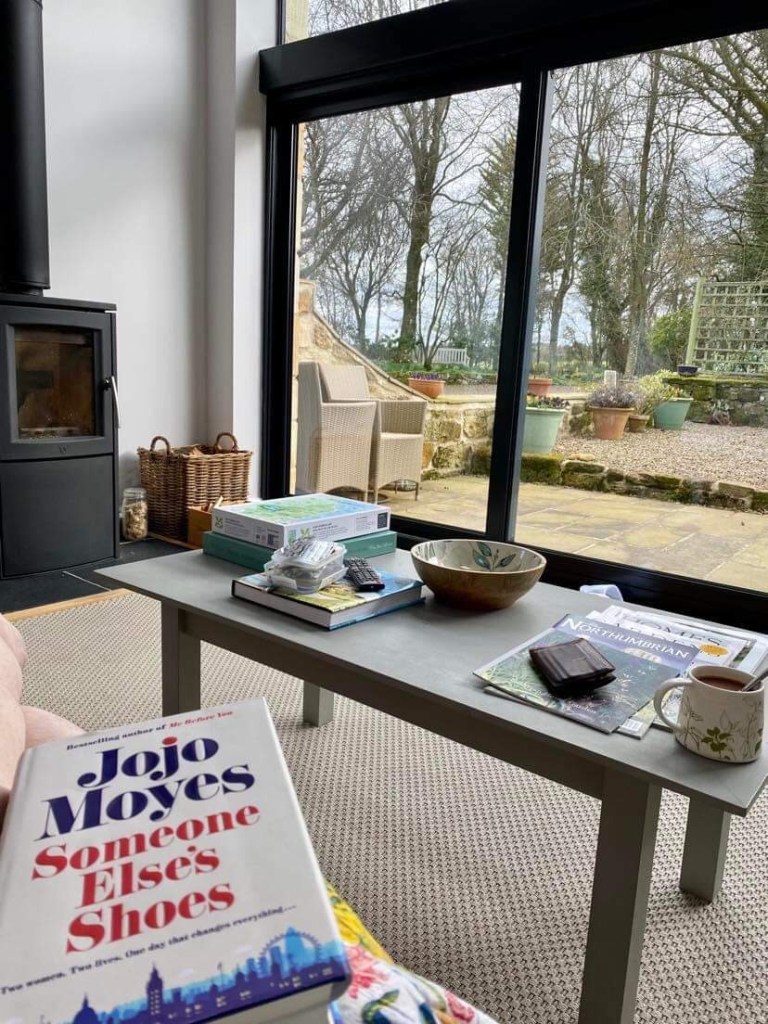
When Sam and Nisha swap bags accidentally at the gym, one a Marc Jacobs knock-off, the other is the real deal, they are in very different places in life. Nish is living in the penthouse suite of the Bentley Hotel, even though her husband Carl owns several homes around the world. She is living the high life and has for the past eighteen years. She’s used to the best service and the bespoke experience, as Sam finds out when she opens the bag before a business meeting to find a pair of red Christian Louboutin heels instead of her trusty black pumps. Destined for a business meeting where she can’t turn up bare foot, Sam has to take the plunge and put them on. They’re the sort of shoes that get a woman noticed, not always for the right reasons. Sam is so easy to get to know and love, because if you’re a middle aged woman you’ve probably been there. She’s feeling the squeeze of still having a teenage daughter at home, while taking on the shopping and cleaning for her parents too. Husband Phil has been no further than the sofa for months, he lost his job and then his dad died. Since then Phil’s been suffering with depression, but won’t go for counselling or go to the GP for medication. He’s not touched the camper van he bought with the last of their savings and can’t even get up to let their geriatric dog Kevin out. Sam is greeted by dog mess in the hallway and a tired husband who immediately goes off to bed on her return. Yet this day feels different. When Sam notices clients looking at her shoes, they make her feel powerful. At the end of the day she’s made three out of four deals for the printing company, but will that appease new boss Simon who seems to have made a beeline for the only 40+ woman in the office?
Nisha is also facing massive changes since the bag swap. On her return to the hotel she is told that Carl has given orders to his security not to let her in. He’s locked her out of the penthouse, their bank accounts and his line of credit at the hotel. All she has is Sam’s bag and the clothes she’s standing up in. Left penniless and homeless after eighteen years, Nisha is mourning the loss of her life and the fact she can’t call her son in New York to let him know. Ray is in a mental health unit and usually they speak every day. Hoping to gain access to the penthouse and all of her clothes, Nisha dresses like one of the housekeeping staff but is mistaken for the real deal by Jasmine, a senior housekeeper who rushes Nisha through checks and has her working alongside her in minutes. Nish can’t believe she’s fallen from the penthouse, to scrubbing poo marks off a toilet bowl. However, she needs something to pay for the cheap B and B she’s found. All the time she’s scrubbing, she’s assessing her eighteen year marriage and realising she’s come out of it with no friends, no family and not a single person she can call for help. After a disastrous attempt to get her clothes, Jasmine stands up for her and fixes the issue. Once Nish has come clean, Jasmine becomes her guardian angel and takes her home to the little flat she shares with daughter Grace that’s covered with laundry and clothing needing alterations – Jasmine’s second job. When she finally gets to confront Carl she’s baffled by his position; there will be no financial settlement until she has the red Louboutins back. Nisha has no idea how to find them, but is determined try as it is the only way she can be reunited with her beloved son.
There is a little touch of romance in the novel, which was a lovely thread, but I loved the sense of sisterhood in the novel most, particularly those who come to learn the importance of the women in their lives. Nisha needs to learn about female friendship, having had only one friend in NYC who Carl persuaded her to give up. She’s stunned that Jasmine would help her and the depths of her generosity in giving her a job, a bed and a roof over her head. This flat that Jasmine shares with her daughter Grace is not large and what space they do have is often covered with clothes that she’s either laundering or altering. It’s amazing to Nish that someone who has so little, is prepared to share it. When Sam and her friend Andrea come along, the last thing Nish expected was to like her, but she’s also impressed with the way Sam lives. She notices that Sam’s home is a huge contrast to the way she’s been living. Having several homes and living in a hotel is impersonal. While she wouldn’t want Sam’s decor, she can see it’s a celebration of her family and their life together. This is something Nish has never had. She’s stayed in some of the most expensive places in the world, but has never had a home. Could this group of women become that for her? I loved how they all embraced each other and the times that they were all together simply leapt off the page. These are complex, funny and generous women who felt completely real and made me miss my women. I’m out of the habit of socialising after shielding during lockdown and I miss that camaraderie, swapping wisdom and having a laugh. It has inspired me to reach out to my friends and try to see them a bit more, because when it comes to those tough parts of life, it’s your women who hold you up and see you through.
Meet the Author
Jojo Moyes is a novelist and screenwriter. Her books include the bestsellers Me Before You, After You and Still Me, The One Plus One, The Giver of Stars, the forthcoming Someone Else’s Shoes and her short story collection Paris for One and Other Stories. Jojo’s novels have beentranslated into forty-six languages, have hit the number one spot in twelve countries and have sold fifty-one million copies worldwide. Me Before You has now sold over fifteen million copies worldwide and was adapted into a major film starring Sam Claflin and Emilia Clarke. Jojo lives in London.
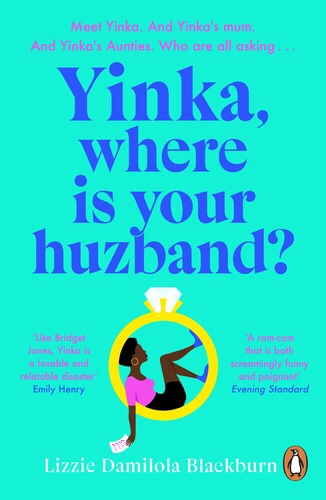
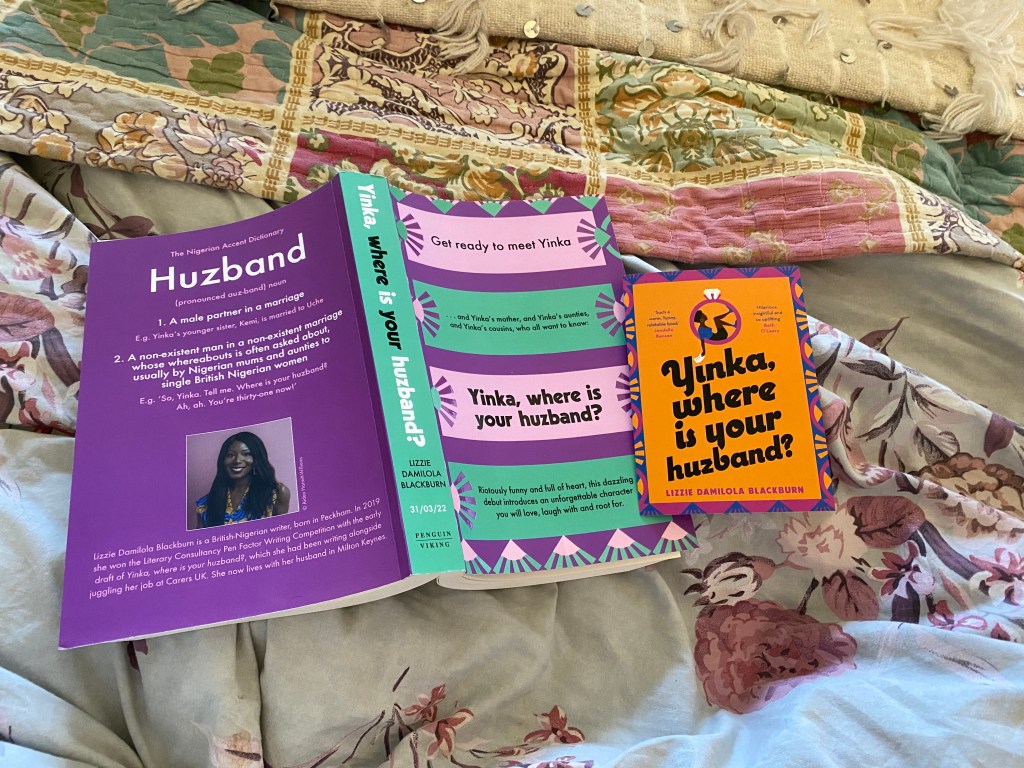
I have absolutely loved reading this charming and uplifting debut novel from Lizzie Damilola Blackburn and I already know it’s one I will keep on the bookshelves and read again in the future. It has such charm and a huge heart at it’s centre. Yinka is a 31 year old British Nigerian woman with a degree from Oxford and a brilliant job at an investment bank, but despite all that she has going for her, she hears only one thing from her mother and aunties. Why is she still single? What exactly is she doing wrong? A perfect storm of circumstances affects Yinka’s confidence: her baby sister Kemi is about to have a baby; her friend Rachel becomes engaged and starts planning her wedding; then she expects a promotion at work and is instead made redundant. When her Mum and Aunty Debbie both pray out loud for her to find a man at Kemi’s baby shower, Yinka feels humiliated. Using her project planning skills she decides on a course of action. She will find a man in time to take a date to Rachel’s wedding.
I found the themes of identity woven into the storyline fascinating and complex. At the start of the novel Yinka is wearing her hair short and natural, is more likely to be in jeans than traditional Nigerian fabrics and prefers to eat fried chicken than learn to cook African food. Yet there are so many opinions and judgements, both in her everyday life and on social media, on what it means to be a British Nigerian and an attractive, desirable black woman. The men she meets aren’t short of opinions either. Donovan, who she knows from her gap year working for charity, despairs of her lack of knowledge about hip-hop and music of black origin in general. She accepts an introduction to Alex, a single man at her Mum’s church and they start to chat on social media. He seems to think she should be more aware of her Nigerian culture. He voices surprise, and judgement, that she can’t cook Nigerian food and she doesn’t know many words of the Yoruba language. A Tinder meet up goes horribly wrong when her date makes the assumption she will sleep with him on their second date. When Yinka explains that part of her faith is prizing her virginity and that sex is sacred, something she would only do with her husband. He seems okay about it, but then ghosts her, finally accusing Yinka of misleading him, because this is something she should have made clear up front. Her experience with Emmanuel was the one I found most painful and my heart broke a little for her. He goes to her Mum’s church and she has to swallow her pride just to agree on a number exchange. On FaceTime though he seems disappointed and admits that he agreed to pass on his number, because he thought she was someone else. It’s not his fault, he says, but he does prefer girls with lighter skin. It’s not hard to see how these experiences and opinions chip away at Yinka until she feels like she’s lost herself.
Yinka is constantly receiving messages about the woman she should be, through her experiences, the constant badgering from her Mum, and from social media. The black women society deems beautiful have lighter skin in caramel tones, long and flowing Western hair, and are curvaceous. Yinka feels her skinny body, her J shape bottom and dark skin are not good enough. Even the messages she is receiving from her own family don’t help. Her Mum openly criticises her short Afro hair, it used to be so long and beautiful, how will she get a huzband if she doesn’t make an effort? Yinka has internalised these messages all her life – the lighter her skin, the rounder her bottom, the longer and more Western her hair, the more attractive she will be. She tries a wig for a date then is constantly terrified of the parting being off centre and when her date touches it she knows he has never dated a black woman before – black men know not to touch women’s hair. When she gets a weave and wears one of her friend Nana’s dresses, made from African fabric, her Mum radiates approval – see how pretty she is? My heart went out to her when she remembers her Dad saying to her that the moon is just as beautiful as the sunshine, that midnight has a beauty all of its own. Another problem is the comparisons her Aunties and her Mum make, between Yinka and her sister or her friends, creating division and resentment. Her mum’s constant praise of the beautiful light skinned Kemi, the little sister who has pipped Yinka to the post by getting married and now adding to the family with her new son Chinedu, makes Yinka resent her sister. They become more distant from each other and never talk about the way their mum behaves. Her cousin Ola even laughs when the older women badger Yinka and embarrass her, Ola is married with three children, but is she as happy as her aunties assume she is?
The two aspects of the book I related to so strongly were the culture around Pentecostal Christianity and the role of counselling. Yinka normally attends the Church of England, but her Mum and Aunties frequent the All Welcome Pentecostal church and this felt so familiar to me as I grew up in a New Life Pentecostal Church. I found the scenes with the church so humorous and true to life, especially the constant praying out loud, even at parties. It was a very hard church to grow up in and those teenage years onward when I was single I felt hounded by youth leaders telling me what I could and couldn’t do in a dating situation, that I should only date other Christians and then pushing me towards people I didn’t find remotely attractive. I had a ‘boyfriend’ at church when I was 12 and we only saw each other at youth group and church. It really was more of a friendship, but youth leaders treated it like a serious relationship and when I wanted to break up I was forced to pray about it in a group. The youth leader prayed that God would bring us back together in the future. I felt that single girls were treated with suspicion and that adults were just waiting to matchmake. I rebelled at 16 and walked away, because I felt judged and stifled. It was wonderful though, to read about these experiences and hear certain phrases like being ‘in the spirit’, the endless praying out loud, the sense of having elders to answer to, because it’s rare for someone to understand my experience. It’s even more rare to see it in fiction in a way that acknowledges its drawbacks, but also its benefits and the deep well of humour it provides.
Counselling is something that my church would have been very resistant to, but I am now a counsellor myself and I loved seeing how positively it was portrayed in the book. The use of writing as therapy is something I do with clients and I was moved by Yinka’s letter to her younger self, going back and undoing some of the negative judgements and ideals she had internalised. It was brilliant to see how it took Yinka deeper, into how imbalanced those parental injunctions had become once she lost her father. I wanted Yinka to realise she had two incredible role models to aspire to; her Aunty Blessing who is happy and fulfilled despite having no husband or children and her friend Nana who is simply not bothered with dating and is pouring her energies into building her fashion brand. I loved both of these women and how they really pull Yinka back from the brink, help her untangle the lies she’s told and work out what and where she really wants to be in life. It reminded me of the power of female friendship and how it is most often the women who will hold you up in life. I loved how Yinka’s changes through counselling rippled out to others around her too. Once she has started to talk there are relationships she can mend and maybe others that need some redefining and new boundaries set. Her realisations, about her Mum particularly, are interesting and Yinka’s bravery in trying to address how she has felt made me feel so proud of her. It showed how counselling doesnt just create change in one person, it can change the people around them too. I don’t know if Yinka will ever return, but she was a great character to spend time with and I’d definitely be first in the queue for more. This was a pleasure to read from beginning to end, full of strong female characters, emotionally aware and addressing some really tough issues in a humorous and ultimately uplifting way.
Meet The Author
Lizzie Damilola Blackburn is a British-Nigerian writer, born in Peckham, who wants to tell the stories that she and her friends have longed for but never seen – romcoms ‘where Cinderella is Black and no-one bats an eyelid’. In 2019 she won the Literary Consultancy Pen Factor Writing Competition with the early draft of Yinka, Where is your Huzband?, which she had been writing alongside juggling her job at Carers UK. She has been at the receiving end of the question in the title of her novel many times, and now lives with her husband in Milton Keynes.
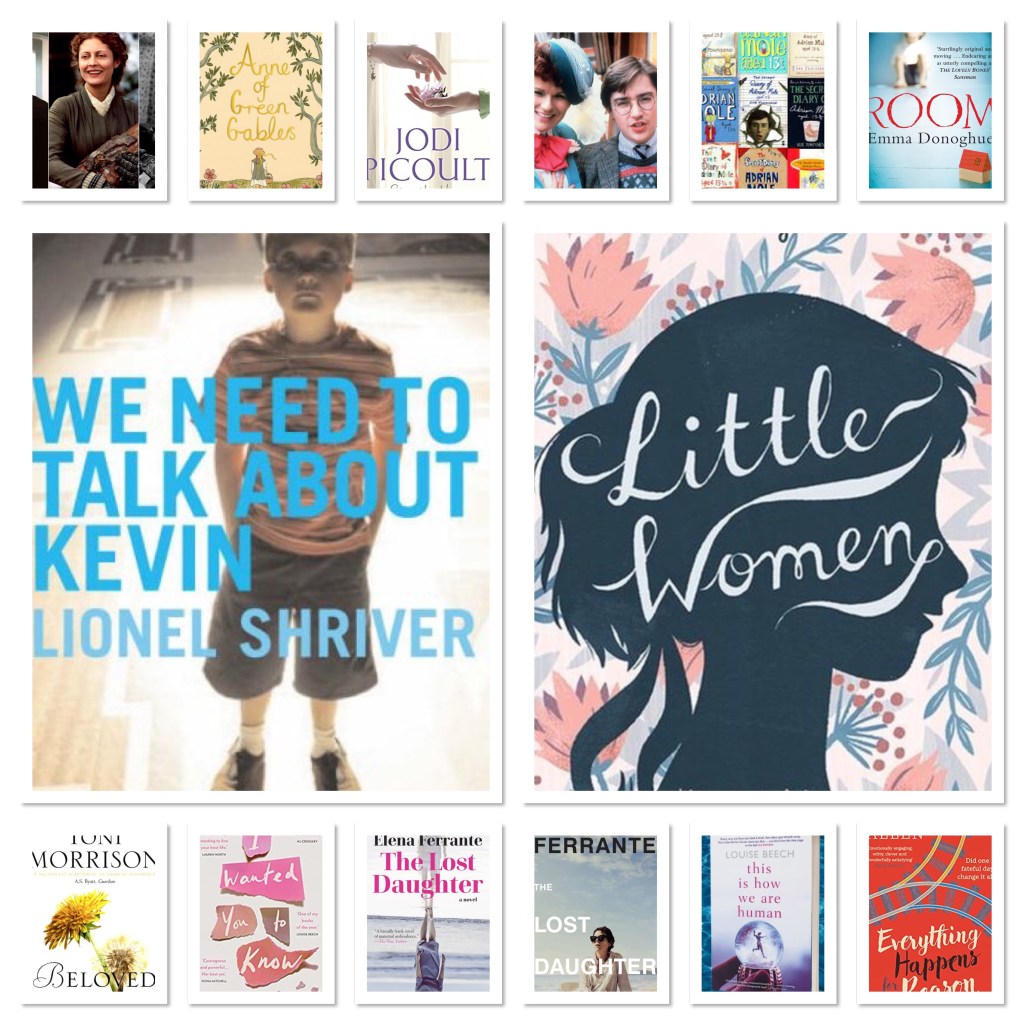
The experience of motherhood is such a rich seam of material that writers are always mining it in new and creative ways. Every relationship between mother and child is different and it is one of my favourite subjects in fiction, because of that variety but also because of the emotional complexity. Without my mum I wouldn’t have my love of literature. It was mum who taught me to read. She always had books around the house and took us to the local library to borrow books and explore whatever we wanted to read. I’m so proud of my mum, that despite being unable to finish her secondary education, she has always loved literature and writes beautiful poetry. She introduced me to classics through her book collection and through film adaptations that she enjoyed. I watched D.H.Lawrence adaptations Women in Love and The Virgin and the Gypsy, the Thomas Hardy adaptations of Tess and Far From the Madding Crowd with Alan Bates, and the beautiful 1970s adaptation of L.P. Hartley’s The Go Between starring Julie Christie, which I still love to this day. Thanks to her I was introduced to Du Maurier, Mary Webb and the beauty (rather than the sensationalism) of Lady Chatterley’s Lover. These days she is the first person I would take to see a literary film and the first member of my book club. She is endlessly understanding, encouraging and doesn’t judge me whatever I do. My own experience with motherhood has been a difficult one, so when choosing the mothers for this post I wanted to include the tougher parts of being and becoming a mum. Happy Mother’s Day to all of you mums, step mums, adoptive mums, fosterers and those whose babies have angel wings. I hope you all have a wonderful day celebrating the love you all have for your children and the love they have for you.
The Ideal Mum. Marmee from Little Women.
“Money is a needful and precious thing,—and, when well used, a noble thing,—but I never want you to think it is the first or only prize to strive for. I’d rather see you poor men’s wives, if you were happy, beloved, contented, than queens on thrones, without self- respect and peace.”
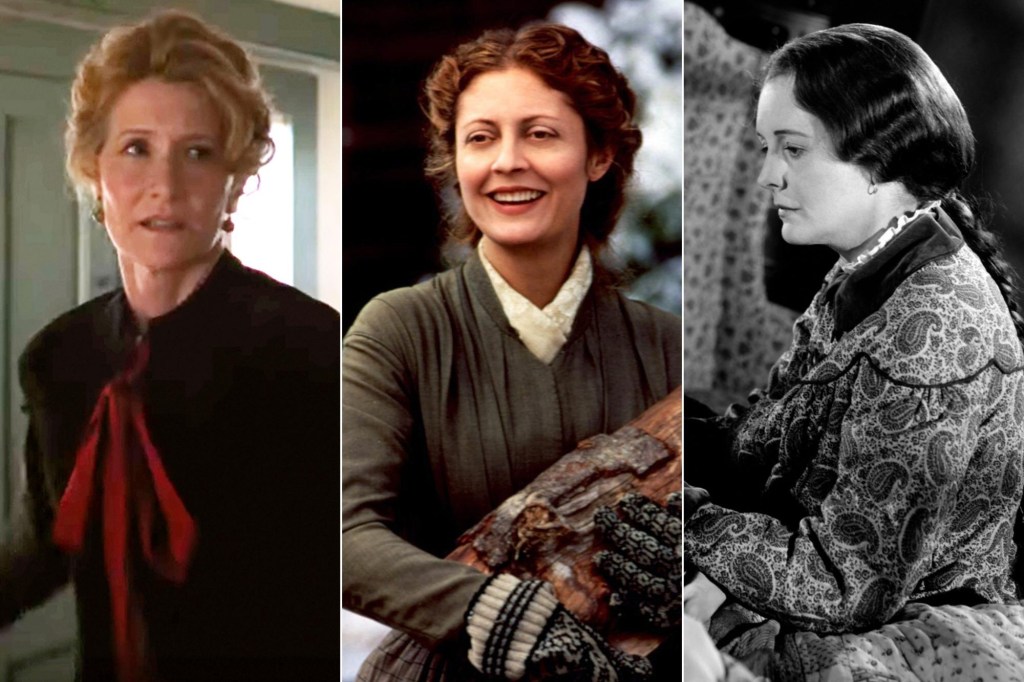
Laura Dean, Susan Sarandon and Mary Astor as Marmee
Marmee is the sort of literary mum who gives the reader a great big hug from within the pages. Yes her Christian values are a little out of step with today’s society, but if you listen to her wisdom such as the quote above there’s still so much to take away from it. She’s teaching her girls that however much you have, you’ll be richer by sharing it with someone else. I love that she allows her girls the freedom to explore who they are, especially Jo who doesn’t dress like other girls, uses slang and is always running, leaping over gates and climbing down the drainpipe. She even allows her a relationship with Laurie from next door that’s very close and ignores the society gossips who think she’s hoping to make a rich match for her daughter. Marmee knows that Laurie respects her and her daughters. She teaches the girls to be charitable, and not just with material things but with time and commitment. She’s incredible with her advice, her time and her love. Most of all though, she influences them by example; one of my favourites is when she tells Jo about her own terrible temper and her attempts to master it. Her relationship with Jo evolves into a friendship as Jo becomes older and has returned home to nurse her sister Beth. They have a frank discussion about Laurie, now in Europe on his Grand Tour, and Jo doesn’t hold back. She admits that were Laurie to return and ask her to marry him a second time she might say yes, not because her feelings for him have changed but because she cares more about being loved these days. Loss and loneliness have made Jo appreciate what he was offering, and I love that the only person she shares this with is her mum.
The Feminist Mum. Pauline Mole from Adrian Mole’s Diaries.
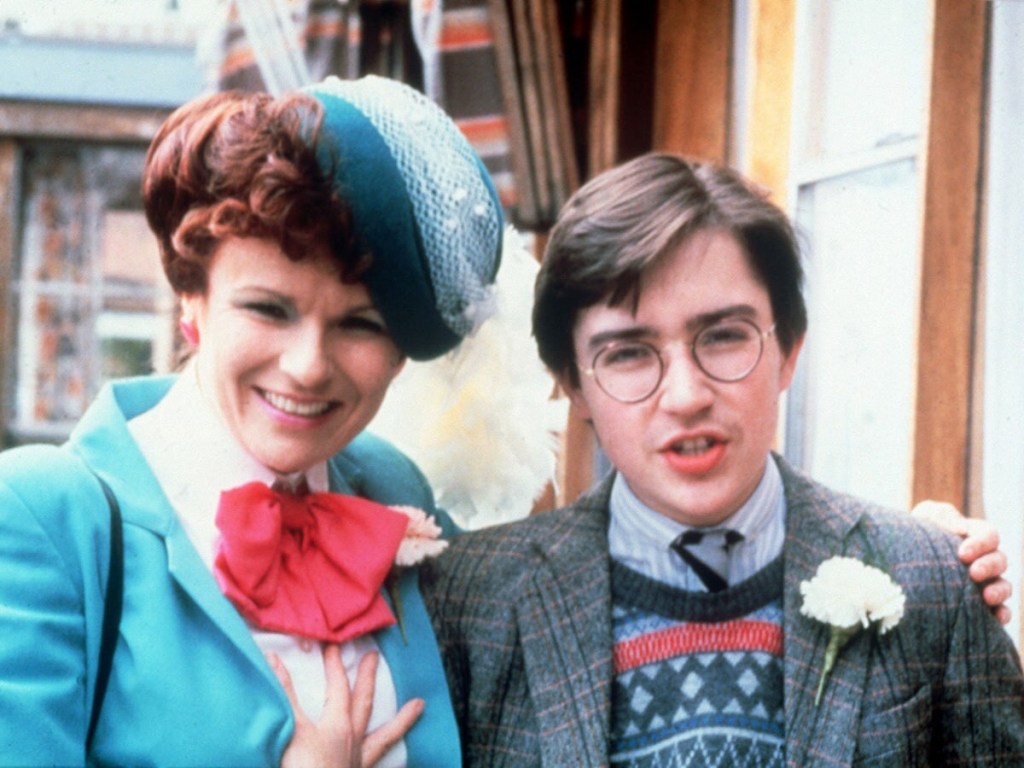
Julie Walters as Pauline Mole with Gian Sammarco as Adrian
“All under-fives are mad Adrian, you used to talk to the moon. You invited it to your birthday party and cried when it didn’t turn up.” George: “When it went dark and the moon came up, you ran outside and threw a sausage roll at it!”
I don’t think we can call Pauline Mole an ideal mum, but she is more realistic and probably one of the funniest mums in literature. Adrian despairs of his parents, in fact at one point he’s so disillusioned that he observes he wouldn’t be surprised if his father turned out to be a Russian agent and his mother ran off with a circus knife thrower. I always remember when Adrian’s father George gives him some sage advice about matters of the heart. He suggests that before he even thinks about marrying a woman, he should live with her and if she leaves her knickers on the floor for more than three days not to bother. There are the romantic entanglements, first with Mr (Ratfink) Lucas and then with Ivan Braithwaite father of Pandora. However, she does end up in a cottage caring for George after he’s had a stroke. She has a feminist awakening in the 1980’s when she organises a trip for ladies in the close to Greenham Common. They come back awakened and are keeping Adrian awake singing ‘We Shall Overcome’ till the wee small hours. She even names Adrian’s baby sister Rosie Germaine Mole after reading The Female Eunuch. Despite having an ideal son called Brett Mole in her head she does love her son and is there whenever something goes badly wrong. She collects him when everything goes wrong after his brief stint as a celebrity chef. When Adrian is ill in the final diary of the series, she is the one who drives him to hospital every day and nurses him at home too after his wife leaves. Despite making mistakes with each other, mother and son do stick together.
The Unexpected Mum. Marilla Cuthbert from Anne of Green Gables.
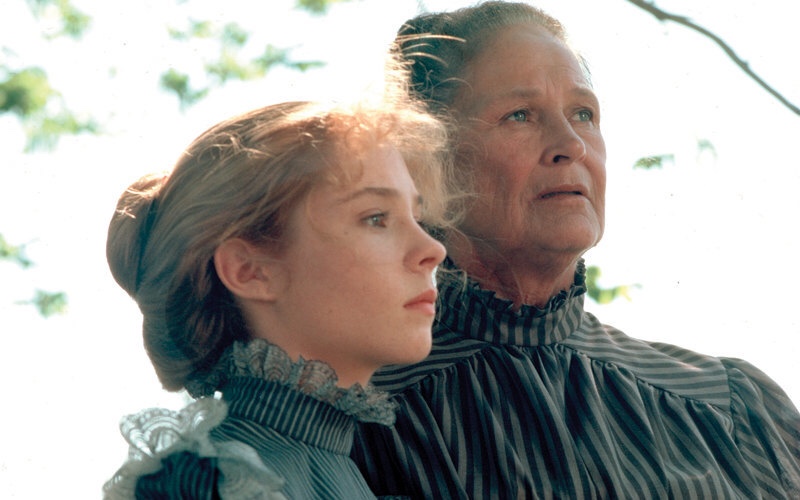
I loved Anne of Green Gables when I was younger and even now, if this particular adaptation of the books is on I do watch, because I love this depiction of the rather severe Marilla, a woman who never expected to be a mum. Marilla and Matthew Cuthbert are brother and sister, running a farm together on Prince Edward Island in Canada. They decide to apply for an orphan, a boy who will be able to help them with the farm work as Matthew gets older. Yet, when Matthew goes to the train station to collect their new charge he finds a freckle faced, red headed girl with two pigtails and a hot temper. Being soft hearted and not knowing what to do, he takes her home to Marilla. I love how Marilla has no idea what to do with Anne Shirley, in fact at first she wants Matthew to return her, but she slowly thaws towards this unexpected girl who tries her patience terribly. Marilla is an old maid so has never expected to be a mum, especially not to the dreamy and clumsy Anne. Marilla can seem harsh and has just as hot a temper as Anne does, but slowly she learns to love the girl she wanted to send back and watching Anne love Marilla, knocking off her harsh edges, is so heart-warming. As an unexpected step mum myself I do have a soft spot for this particular woman, who it turns out had missed her one chance of love and a family many years before.
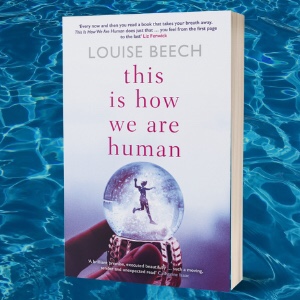
The Mum Who Will Do Anything. Veronica Murphy from This Is How We Are Human.
Louise Beech’s novel was one of my favourite books of last year and the story has stayed with me, because its hard not to fall in love with Sebastian Murphy and the lengths Veronica will go to for her child are incredible. As mum to a son with autism, Veronica is used to having an unconventional relationship. She knows everything about her son: his schedule, favourite music, the way he likes his eggs. She expected questions about relationships as he got older, but is a bit shocked when he tells her he’d like to have sex. She’s helped him negotiate everything else in his world. Should she help with this and how would she go about it? This is a mum who has tried to insulate her son from all the difficulties he might face in the world. He loves swimming and he still goes to the same swimming group he did when he was eight. He doesn’t like change so Veronica fixed it for him, so how is she going to cope now he’s entering into an area of life there’s no control over? Her solution might shock some people, she decides to meet with a sex worker with the name of Violetta. Violetta is working to pay for student loans and for her father’s care. He is affected by a stroke and wanted to rehabilitate at home rather than a nursing home. Veronica makes an agreement: a set time every week for Sebastian to spend time with Violetta. However, Veronica is worried about him becoming too attached, what if his emotions bleed into the arrangement? These three people will affect each other in unexpected ways and its just possible that Veronica has underestimated her son. A beautiful, moving story about the things we do for people in the name of love, and a depiction of a mother who’s far from conventional, but is determined that her child will be happy.
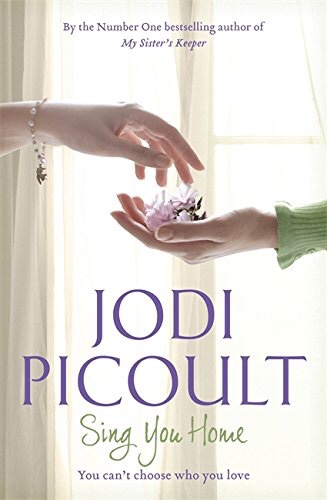
Mums in Waiting. Zoe Baxter from Sing You Home.
Zoe and Max Baxter are having problems in their marriage, after a ten years struggle with infertility. They have frozen embryos stored at a medical facility, but since every attempt has so far failed they are left heartbroken. They are struggling to grieve together and with heavy hearts agree to separate. Max finds consolation in God and joins an evangelical church, soon making friends and finding support. Zoe’s life starts to change unexpectedly when a new colleague starts at the school. Zoe works with the students using music therapy, so she works in close contact with the new school counsellor Vanessa. They form a friendship, but much to Zoe’s surprise their feelings start to deepen. Zoe finds herself falling in love and coming into conflict with her ex-husband’s new born-again Christian views. So, when Vanessa and Zoe discuss starting a family, and she approaches Max about their remaining embryos, it’s no surprise to find he’s resistant to the idea. Those three embryos are Zoe’s final chance to have her own biological children and her desperation is understandable. However, doesn’t Max have a right not to become a father, especially in circumstances he doesn’t agree with? As the two become embroiled in a court battle for rights to the embryos, Max makes it clear he believes Zoe and Vanessa’s relationship to be an aberration. Zoe is not going to give up her right to be a mother without a fight. As a woman who has Hughes Syndrome, I know the heartbreak of being unable to have your own children. The treatment for Hughes meant given up a lot of the medication for my Multiple Sclerosis and then medicating to thin my blood for three months before any attempt to conceive. I decided with a heavy heart that perhaps motherhood was something I wouldn’t experience. Twenty years later I’m an unexpected step mum and love the challenge of helping to raise two teenage girls. I believe motherhood is a gift and not a right, and although I don’t agree with Max’s views on same sex relationships, I can understand his reticence to become a father with Zoe after their split. It’s a tough, complicated court case and I seemed to changed my mind with every chapter.
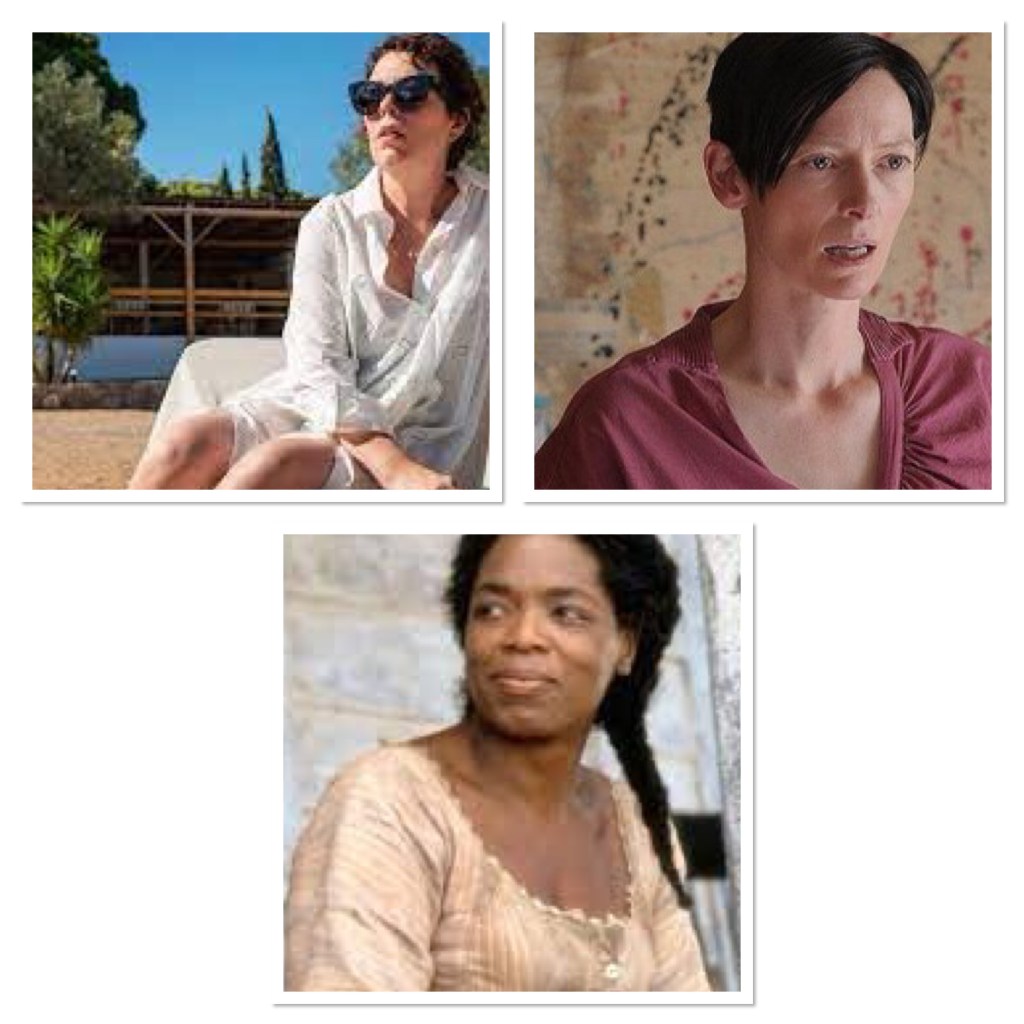
Complicated Mums. Eva from We Need To Talk About Kevin, Sethe from Beloved, and Leda from The Lost Daughter.
Clockwise from top left: Olivia Coleman as Leda in The Lost Daughter, Tilda Swinton as Eva in We Need To Talk About Kevin and Oprah Winfrey as Sethe in Beloved.
Of course all mother-child relationships are complicated, but these are a little more complicated than most. In The Lost Daughter we are on holiday with Leda, who is taking a break alone in Italy. As she lies on the beach reading each day she notices the mother-daughter relationship between young mum Nina and her daughter Elena. Slow and unsettling, her observance of this relationship opens up her relationship with her own daughters. In watching Nina’s motherhood she is taken back to when her own daughters were young. She sees the ideal of motherhood as a performance, a performance she didn’t want to undertake. There are echoes of problematic motherhood throughout this novella. Leda’s own mother threatens to leave her, but is that any better than leaving without warning, like Leda did? When Elena loses her doll, Leda finds it and does perform those simple tasks of caring for it, the washing and drying are soothing when the recipient is silent and lifeless. Leda explores that pull between career and motherhood dragging her in two different directions, but also that feeling of giving herself so wholly to the care of others that she loses who she is. The whole book is claustrophobic, Nina’s family feel threatening but for no specific reason and Leda’s anxious introspection adds to the tension. This is a dark and brutally realistic look at motherhood with an intelligent grasp of intergenerational trauma.
In Beloved we are introduced to Sethe, a freed slave who escaped the plantation named Sweet Home and found a home with her mother-in-law Baby Suggs. Sethe lives with an ailing Baby Suggs, her daughter Denver, the dog and the angry ghost who has been haunting their home for most of that time. Toni Morrison explores so many complex mother-child relationships through Sethe. How do you feel about those children who were taken from you? How do you mother the children forced on you? How do you mother the ghost child whose so angry with you they won’t let you live in peace? Sethe has learned to live alongside the baby ghost and the guilt of killing her with the handsaw from the shed, rather than see her suffer the slavery Sethe escaped. The baby’s headstone simply reads Beloved, but that mother’s love is tested when a young woman turns up at the door claiming that she is Sethe’s lost daughter. This young woman is the embodiment of all Beloved’s fury and she slowly encircles Sethe, demanding her attention and love while excluding her daughter Denver. Beloved ruins Sethe’s fledgling relationship with another escapee of Sweet Home. She is a parasite who won’t be satisfied until she has consumed her mother. This is a genuinely scary ghost story, but the real horror lies in the history of slavery and Sethe’s experiences before her escape. We are never sure whether the young woman is Beloved, a demon or a manifestation of Sethe’s own guilt.
One of the most complicated mother and child relationships I’ve ever read is that between Eva and her son in Lionel Shriver’s We Need To Take About Kevin. The most brilliant thing about this story is how ambiguous it is; is Eva a terrible mother who creates a monster or is Eva correct in her belief that Kevin is born a monster. Shriver brilliantly portrays their relationship from Kevin’s birth onwards, but always in Eva’s voice. As she portrays events from his early years the reader is left to make their own judgement of his actions. Persistent crying is something most parents experience, but in Eva’s eyes this is a battle of wills and Kevin wants to break her. I veer between feeling suspicious of Eva and terribly sorry for her. Even if Kevin is just the average baby, Eva is clearly exhausted and not coping but her husband just doesn’t see it. He believes Kevin is just a normal, exhausting, baby and Eva is overreacting, but never seems to think Kevin might come to harm despite his wife’s feelings about their son. Interspersed with these difficult early years is Eva’s present day situation dealing with the aftermath of an horrific mass murder. Cleverly, Shriver keeps the tension going, in fact it seems to be heightened as Eva takes us back to situations from Kevin’s earlier life that seem to foreshadow his murderous tendencies – there’s a scene with eyes and lychees that completely turns my stomach. Despite being completely unnerved by her son, Eva is constant. Her husband convinces her to have a second child, a daughter who she’s sure will be Kevin’s victim. Yet despite Kevin’s actions she never walks away. I guess its up to the reader as to whether that’s a good thing or not.
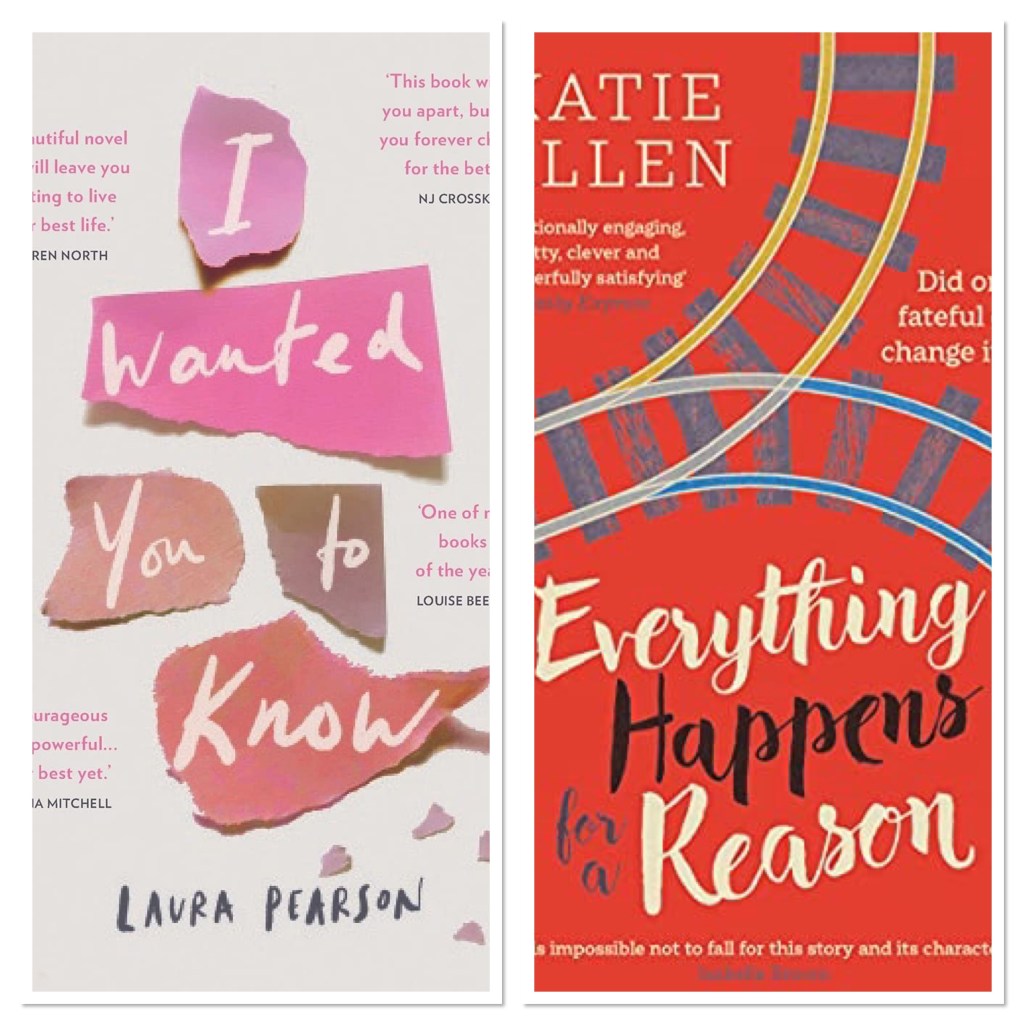
Mums That Make Me Cry. Rachel in Everything Happens For A Reason and Jess in I Wanted You To Know.
In her debut novel Everything Happens For A Reason Kate serves up raw emotional honesty in her character Rachel, whose son Luke was stillborn. When a well-meaning but thoughtless woman tells her ‘everything happens for a reason’ Rachel becomes obsessed with finding that reason. She is deranged by grief and feels that Luke’s death must be her fault, so she fixates on an incident from earlier in her pregnancy, when she stopped a man from jumping in front of a train. What if stopping that man from killing himself meant that her child died? She becomes determined to find him, enlisting the help of an underground worker Lola and her daughter, Josephine. I lost several pregnancies in my late twenties, so this was a tough read in parts, particularly the insensitivity of well meaning family and friends. I remember some of the most painful things said to me, were from people who meant well. I also recognised the endless questions that Rachel subjects herself to and the endless turmoil – marking milestones, imagining her child’s lost future, the complete emptiness and inability to feel or reach him after nine months of him being part of her. There were times when standing a room of people when I wanted to scream out loud. To communicate some of how it felt inside. I was so glad Kate wrote this novel because it made me feel like a mother. Everyone has always thought of me as childless, whether by choice or not, whereas I felt like a mum. A mum who had lost her children.
In her third novel I Wanted You To Know Laura Pearson tells her story in a series of letters, letters written by Jess to her daughter Edie. Jess didn’t expect to be negotiating life as a single mother. She certainly didn’t expect to be juggling a newborn and cancer treatment. This part of life is meant to be a beginning, not an ending. Not knowing how much time she has left and full of all the wisdom she wanted to give her daughter at different times in her life, Jess starts to write letters for Edie. Dear Edie, I wanted you to know so many things. I wanted to tell you them in person, as you grew. But it wasn’t to be. This novel is a real heartbreaker as Jess has to decide who she wants to be there for her daughter and what she would want her to know about school, leaving home, getting her first boyfriend and becoming a mum. Yet, it never feels maudlin, just real, raw and honest. I can’t imagine how terrifying it must be to become aware that the most precious thing in your life will have to grow up without you. What I love most about the book is the way the author avoids making Jess a saintly figure. When I think about the book I’m blown away by this woman’s practicality and courage, but it’s done in such an understated way.
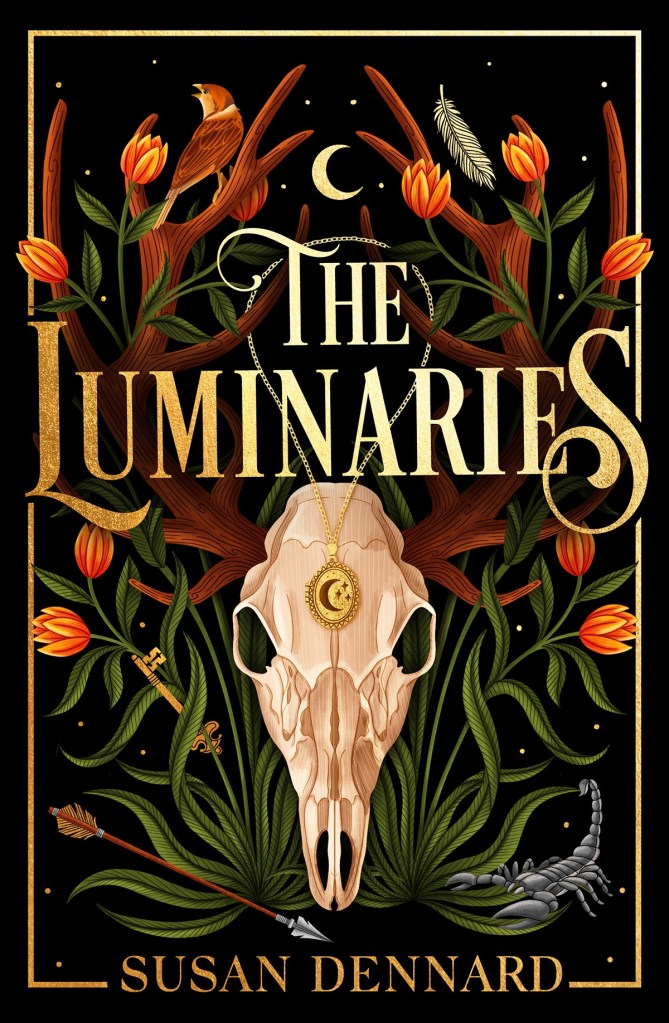
From NYT bestselling author comes a haunting, high-octane contemporary fantasy for fans of The Chilling Adventures of Sabrina. Winnie Wednesday fights to take the deadly Luminary hunter trials in Hemlock Falls’ nightmare-filled forest.
Hemlock Falls isn’t like other towns. You won’t find it on a map, your phone won’t work here, and the forest outside town might just kill you…
Winnie Wednesday wants nothing more than to join the Luminaries, the ancient order that protects Winnie’s town—and the rest of humanity—from the monsters and nightmares that rise in the forest of Hemlock Falls every night. Ever since her father was exposed as a witch and a traitor, Winnie and her family have been shunned. But on her sixteenth birthday, she can take the deadly Luminary hunter trials and prove herself true and loyal—and restore her family’s good name. Or die trying.
But in order to survive, Winnie must enlist the help of the one person who can help her train: Jay Friday, resident bad boy and Winnie’s ex-best friend. While Jay might be the most promising new hunter in Hemlock Falls, he also seems to know more about the nightmares of the forest than he should. Together, he and Winnie will discover a danger lurking in the forest no one in Hemlock Falls is prepared for.
Not all monsters can be slain, and not all nightmares are confined to the dark.
I’m always going to be sucked into a story where my heroine is named Winnie Wednesday, it’s gone straight on my list of potential cat names for the future. Of course one of my other strange interests is monsters, I even studied the Grotesque and Monstrous at university, so the beautifully described and illustrated monsters were exquisite. The novel had immediate appeal and didn’t disappoint. Winnie’s clan are known for belonging to a secret monster hunting society. In fact her family and her entire clan outcasts, thanks to the betrayal of her father. This is a matriarchal society and Wednesday is hoping to become the next clan leader, just like every generation of strong women in her family. Winnie is willing to risk her life on a deadly monster hunting trial, just for the chance to win back her family’s reputation and to be recognised as the foremost hunter of her generation.
The world building here is so creative and I was aware that the author is setting the scene for a series of novels, not a stand alone story. I’m a sucker for beautiful detail and there’s an abundance of it here, in Winnie’s home of Hemlock Falls, the creatures and the action scenes that follow during her mission. The mythology is based on beings that inhabit the surrounding forest, including the spirits who produce nightmares. I loved how Dennard wove an entire bestiary of mythological and paranormal creatures together all inhabiting her mystical forest. Could there be something as yet undiscovered lurking in the trees and if so, how dangerous might it be? Wednesday suspects this being could be a danger, not only to her quest, but to all the inhabitants of her town and their way of life.
As a main character I would suggest it’s impossible not to fall in love with Winnie. Once you have, you’ll be completely beguiled by her quest and you will be behind her all the way. That doesn’t mean she’s perfect, but many of her flaws come from her outcast status. For four years she’s been ostracised by friends and family, so she’s very self-reliant even if she is a little indecisive at times. She’s disconnected from others at an emotional level and doesn’t trust anyone around her. This lack of solid family background shows in the way she doubts herself, but despite this she keeps going. Her determination is incredible especially since the isolation from her society has meant she’s had to train herself with no resources at all. Despite this disadvantage her courage and abilities shine through. Out of the other characters, I enjoyed Winnie’s friendships with Bretta and Emma, because they’re the only people who show support and kindness aside from her mum and brother. There’s also a hint of romance with Jay Friday, a past friend of Winnie’s who could become something more. He’s a bit of a bad boy and I think their dynamic could develop nicely in future novels. The relationships with all other characters are established, but not developed and this can seem a bit slow. This is Winnie’s book though and the author is building our relationship with her, although I could really see the promise in these early interactions.
I loved reading this novel, it’s setting of Hemlock Falls and it’s history, the careful descriptions of each clan and their nightmares, and I liked the characters, too. It felt like a perfect base for an exciting series and I can already imagine how storylines might be expanded as we go on. It was such an easy book to read and the short chapters kept a lively pace, as well as being rather addictive late at night – just one more chapter won’t hurt will it? I’m itching to know more about Jay and his bad boy status, as well as how he and Winnie develop their romantic feelings. Of course there was a cliffhanger ending too and enough loose ends to lead us neatly into the sequel. I’m already looking forward to it.
Published 1st November 2022 by Daphne Press.
Meet The Author
Susan Dennard has come a long way from small-town Georgia. Working in marine biology, she got to travel the world—six out of seven continents, to be exact (she’ll get to you yet, Asia!)—before she settled down as a full-time novelist and writing instructor.
She is the author of the Something Strange and Deadly series, as well as the New York Times bestselling Witchlands series, and she also hosts the popular newsletter for writers, the Misfits & Daydreamers. When not writing, she is slaying darkspawn (on her PS4) or earning bruises at the dojo.
She lives in the Midwestern US with her French husband, two spoiled dogs, and two grouchy cats.
When Katy’s mother dies, she is left reeling. Carol wasn’t just Katy’s mum, but her best friend and first phone call. She had all the answers and now, when Katy needs her the most, she is gone. To make matters worse, the mother-daughter trip of a lifetime looms: two weeks in Positano, the magical town where Carol spent the summer before she met Katy’s father. Katy has been waiting years for Carol to take her, and now she is faced with embarking on the adventure alone.
But as soon as she steps foot on the Amalfi Coast, Katy begins to feel her mother’s spirit. Buoyed by the stunning waters, beautiful cliffsides, delightful residents, and – of course – delectable food, Katy feels herself coming back to life.
And then Carol appears, healthy and sun-tanned… and thirty years old. Katy doesn’t understand what is happening, or how – all she can focus on is that somehow, impossibly, she has her mother back. Over the course of one Italian summer, Katy gets to know Carol, not as her mother, but as the young woman who came before.
But can we ever truly know our parents? Soon Katy must reconcile the mother who knew everything with the young woman who does not yet have a clue.
I enjoyed Rebecca Serle’s last novel rather unexpectedly, as it became so much more than the simple romance I was expecting. Her new novel One Italian Summer also had some unexpected elements and was an interesting look at the relationships between mothers and daughters, the endurance of long term relationships and coping with grief. As the book opens Katy is married to Eric and has just lost her Mum to cancer. Katy is broken as her Mum has been her best friend, her shopping buddy, her sounding board, her arbiter of taste and so many other things and now she doesn’t know what to do without her. In a strange way she sees her mother as her partner in life, rather than her husband. Eric is also grieving, having been a part of Katy’s family since they were at college. However, when her mother started receiving end of life care, Katy went to live at her parent’s home sleeping on a sofa to keep her mother company while her father slept in a chair next to his wife. As the couple meet again at her mother’s funeral, Katy still feels unsure about their marriage. She wonders if her mother was right and they married far too soon. Katy needs some space, to grieve her mum and think about her marriage and an obvious opportunity presents itself. When her mother was younger she spent a summer living on the Amalfi coast at the picturesque town of Positano renovating a hotel. To surprise her mother Katy had bought them tickets to spend a week in there and the thought comes into her head. What if she went ahead and travelled to Italy by herself?
Katy finds herself in a beautiful hotel where she feels immediately embraced by the family who run it. She meets a man at breakfast called Adam who works for the large luxury hotel chain. He would love to acquire the hotel and his bosses would like a piece of this beautiful coastline for their portfolio. He charms Katy and offers to show her around a little, he has been coming to Positano for many years in his time off and can suggest some great places to eat and explore. Katy has felt totally cut off from her mother, but here she feels closer to her as if part of her mother’s spirit has always been here waiting for her. One morning as she wanders through reception she sees a woman who has brought a parcel to put into the hotel’s outgoing post. She looks strangely familiar and as she turns around Katy can’t believe her eyes. This is her mother Carol, full of life and only thirty years old. I loved the way the author creates this strange time loop in such a magical setting. I never once questioned it, because I was so involved with Katy’s feelings that she might just turn the corner and see her mum as if she’d never left. It was such an interesting chance for her to meet her mother as a young woman and understand more about her. This Carol is young, carefree and full of passion for her goal of becoming an interior designer. There’s so much that Katy wants to know, but is this going to change her view of her mother and their relationship?
I loved the Italian setting of this novel, having just read Adriana Trigiani’s new novel also set on the Tyherrenian Sea I am now dying to visit this beautiful coastline. The way the town is nestled into the cliff side and every balcony makes you feel you’re hanging over the sea. I could literally feel the sunshine and the warm sea on my skin. The descriptions of food had my mouth watering and I found myself longing for Italy. Meeting her Mum at this age was always going to throw up things Katy didn’t know. Carol doesn’t recognise her, so her actions are completely unguarded, whereas Katy has the knowledge of who Carol is. I wondered how long she would be able to keep it to herself. It was interesting to see Katy starting to question whether all aspects of their relationship were positive. Carol has always been so opinionated and matter of fact about how things should be done. As a couple, Katy and Eric have always gone to her for advice when making decisions and she is the family’s anchor, keeping them grounded and safe. However, was this safety always a positive thing? Katy starts to see that she’s never been left to make her own decisions, that she and Eric have rarely made their own choices as a couple. Carol has always weighed in on everything from what clothes to buy and whether they should have children yet. She always seemed so sure of what to do and Katy has felt inadequate to an extent, unable to weigh up the options and make her own mistakes. There is a bit of anger and resentment here; if she’s never been allowed to stand on her own two feet, no wonder Katy feels lost. As her mother’s story unfolds, will Katy get the answers she’s looking for? Why does this Carol seem so ‘go with the flow’ when her mum always planned everything, even a family picnic, with military precision?
This was another beautiful book from Rebecca Searle, concentrating on the relationships between women and perhaps the most complex female relationship we have. This shows beautifully the effect our parents have on our development as people and how one mistake can change the way someone approaches life forever. All set in the beautiful Italian sun, with a lot of personal reflection and even a little bit of romance thrown in. I loved how the space and the experience gives Katy a chance to re-evaluate her life and the way she’s been living it. This is the perfect summer getaway book and if you’re not going anywhere this year I definitely recommend it for vicariously enjoying Italy.
Rebecca Serle is an author and television writer who lives in New York and Los Angeles. Serle developed the hit TV adaptation of her YA series Famous in Love, and is also the author of The Dinner List, and YA novels The Edge of Falling and When You Were Mine. She received her MFA from the New School in NYC. Find out more at RebeccaSerle.com.