Oh my goodness 2023 is looking delicious when it comes to new releases and there were so many I’ve been lucky enough to either read in the last month, or that are still waiting on my TBR that I’ve had to do this in two parts. I wanted to tell you about all of them. This is a combination of proofs I’ve been lucky enough to receive, NetGalley ARC’s, and others I’ve got on pre-order for their release date. Some are for blog tours, others I’ve been given through working with the Squad Pod Collective. It’s going to be a busy year for me and I’m hoping to go to a few more events this year and meet some of the lovely people who support me or who send me books, hoping that I’m going to love them. So, without further rambling, these are the books on my radar for the first part of 2023.
I’m so grateful that Viper Books sent me a copy of this beautiful book when I was too unwell to go to their showcase event. Slated as perfect for readers of Jessie Burton, Stacey Halls and Laura Purcell and recommended by the amazing Essie Fox, this might as well have ‘written for Hayley Baxter written across the cover! We’re in Victorian gothic territory as Many would find much to fear in Fyneshade’s dark and crumbling corridors, its unseen master and silent servants. But not I. For they have far more to fear from me… On the day of her grandmother’s funeral, Marta discovers that she is to be sent to be governess at Fyneshade, her charge the young daughter of the owner, Sir William Pritchard. All is not well at Fyneshade. Sir William is mysteriously absent, and his son and heir Vaughan is forbidden to enter the house. Marta finds herself drawn to him, despite the warnings of the housekeeper that Vaughan is a danger to all around him. But Marta is no innocent to be preyed upon. Guided by the dark gift taught to her by her grandmother, she has made her own plans. It will take more than a family riven by murderous secrets to stop her.
Published 18th May 2023 by Profile Books
Expectant is the latest novel in Vanda Symon’s Detective Sam Shephard series and I finished this late last night so I can reveal it’s brilliant and full of tension as the countdown to catch a murderer coincides with the last weeks of Sam’s pregnancy. This great series, set in Dunedin New Zealand, never lets me down. Sam is a fantastic character, who I’d happily go for a drink with. She’s professional and has one of those faces that people trust immediately, meaning she can elicit new leads and confessions from the unlikeliest criminal. She’s stubborn and outspoken, very ballsy and, although she tries her best not to use it, has an incredible swearing vocabulary. She and partner Paul are expecting their first child and she’s working up to two weeks before her due date. They haven’t found time to organise their endless piles of baby kit into a nursery when a case comes in that Sam can’t help but be drawn into. A group of kids who are hoping to tag the wall down a quiet side street find a woman covered in blood, only one of them has the conscience to stay and ring an ambulance. He’s willing to face the music for the graffiti if he can save her. At first it’s thought to be a stabbing, but it soon becomes clear this is something more sinister. A pregnant woman has been subjected to a rudimentary Caesarian and left for dead, even worse there’s no sign of the baby. This must be someone with a certain amount of medical skill. For Sam, who’s at her most vulnerable, it’s scary to think this might have been someone the victim trusted and it makes her more determined to catch her killer.
Published 18th May 2023 by Orenda Books
I received a beautiful copy of this book because I’m taking part in the blog tour with Random Things Tours. This is a heartbreaking memoir about the power of stories with beautiful illustrations from Anna Walker.
Let me tell you a story…
When Chloe Hooper’s partner is diagnosed with a rare and aggressive illness, she has to find a way to tell their two young sons. By instinct, she turns to the bookshelf. Can the news be broken as a bedtime tale? Is there a perfect book to prepare children for loss? Hooper embarks on a quest to find what practical lessons children’s literature—with its innocent orphans and evil adults, magic, monsters and anthropomorphic animals—can teach about grief and resilience in real life. As she discovers, ‘the right words are an incantation, a spell of hope for the future.’ From the Brothers Grimm to Frances Hodgson Burnett and Tolkien and Dahl—all of whom suffered childhood bereavements—she follows the breadcrumbs of the world’s favourite authors, searching for the deep wisdom in their books and lives. Both memoir and manual, Bedtime Story is stunningly illustrated by the New York Times award-winning Anna Walker. In an age of worldwide uncertainty, here is a profound and moving exploration of the dark and light of storytelling.
Out now from Scribner U.K.
Grace has the incredible power to grab hold of you, immerse you in her world and have you firmly on her side all the way through. It’s possibly way too early to start picking candidates for favourite books of 2023, but I think this book is certainly going to be in contention. I found myself fantasising about having cocktails with her, already knowing we’d have the best time. Grace is stuck in traffic, it’s a boiling hot day and she’s melting. All she wants to do is get to the bakery and pick up the cake for her daughter’s birthday. This is one hell of a birthday cake: it’s a Love Island cake; it has to say that Grace cares; that she’s sorry; that she loves Lotte and hasn’t given up on their relationship. It’s shaping up to be the day from hell and as Grace sits in her tin can of a car on boiling hot tarmac, something snaps. She decides to get out of the car and walk, leaving her vehicle stranded and pissing off everyone now blocked by a car parked in the middle of a busy road. So, despite the fact her trainers aren’t broken in, she sets off walking towards the bakery and a reunion with Lotte. There are just a few obstacles in the way, but Grace can see the cake and Lotte’s face when she opens the box. As she walks she recounts everything that has happened to bring her to where she is now. The deep delves into the past slowly recount how Grace’s life imploded and created a permanent before and after. This book is a stunning debut and should be on your reading list.
Published on 19th January 2023 by Michael Joseph.
Touted as perfect for fans of Eve Chase, Kate Morton and Kate Mosse – all of whom take up space on my forever shelves – this is the third novel from Polly Crosby and on the strength of her first two I would pre-order this without question. In a time slip structure we meet two women, Lady Vita Goldsborough and Eve Blakeney. In 1938 Vita lives in the shadow of her controlling older brother, Aubrey. Trapped and isolated on the East Anglian coast, Vita takes solace in watching the birds that fly over the marshes. But then she meets local artist Dodie Blakeney. The two women form a close bond, and Vita finally glimpses a chance to escape Aubrey’s grasp and be as free as the birds she loves. Decades later in the 1990’s and in the wake of her mother’s death, Eve Blakeney returns to the coast where she spent childhood summers with her beloved grandmother, Dodie. Eve hopes the visit will help make sense of her grief. The last thing she expects to find is a bundle of letters that hint at the heart-breaking story of Dodie’s relationship with a woman named Vita. Eve and Vita’s stories are linked by a shattering secret that echoes through the decades, and when Eve discovers the truth, it will overturn everything she thought she knew about her family – and change her life forever. It shows how much I rate Polly Crosby that this isn’t out until the end of May 2023 and I’m already anticipating publication day.
Published 25th May 2023 by HQ
I’ve been lucky enough to receive a special proof copy of this romantic book with special spredges, which I’m always a sucker for. This isn’t one love story. It’s two.
Becca Calloway is calling it: she’s ready for Mr Right, and she’s ready now. She even goes as far as to hold a manifestation ceremony for him – and when she receives a text from her ex five minutes later, she knows it’s a sign. The problem is, she doesn’t know which way it’s pointing…
Should Becca reply and reignite things with her old flame Mike? Or delete and block, moving forward with the new man in her life? Becca has one choice, with two ways this could go. And in Lovestruck, you’re about to see them both.
Published by Penguin 8th June 2023.
THEY TRIED TO CAGE US.
BUT A WEYWARD WOMAN BELONGS TO THE WILD.
WE CANNOT BE TAMED.
Kate, 2019 Kate flees London – abandoning everything – for Cumbria and Weyward Cottage, inherited from her great-aunt. There, a secret lurks in the bones of the house, hidden ever since the witch-hunts of the 17th century.
Violet, 1942 Violet is more interested in collecting insects and climbing trees than in becoming a proper young lady. Until a chain of shocking events changes her life forever.
Altha, 1619 Altha is on trial for witchcraft, accused of killing a local man. Known for her uncanny connection with nature and animals, she is a threat that must be eliminated.
But Weyward women belong to the wild. And they cannot be tamed…
I couldn’t be more excited about this debut. Weaving together the stories of three women across five centuries, Weyward is an enthralling novel of female resilience and the transformative power of the natural world.
Published 2nd February 2023 by Borough Press.
1852. Margaret Lennox, a young widow, is offered a position as governess at Hartwood Hall. She quickly accepts, hoping this isolated country house will allow her to leave the past behind.
Margaret soon feels there’s something odd about Hartwood: strange figures in the dark, tensions between servants and an abandoned east wing.
Margaret is certain that everyone here has something to hide, and as her own past threatens to catch up with her, she must learn to trust her instincts before it’s too late… this is another Gothic treasure that I can’t wait to open.
Published by 30th March 2023
I loved the psychological detail in Liz Nugent’s last novel about family dynamics and the fact that no two children have the same parent. I’m hoping for similar in this new novel. Sally Diamond cannot understand why what she did was so strange. She was only doing what her father told her to do, to put him out with the rubbish when he died.
Now Sally is the centre of attention, not only from the hungry media and police detectives, but also a sinister voice from a past she cannot remember. As she begins to discover the horrors of her childhood, Sally steps into the world for the first time, making new friends and big decisions, and learning that people don’t always mean what they say.
But who is the man observing Sally from the other side of the world? And why does her neighbour seem to be obsessed with her? Sally’s trust issues are about to be severely challenged . . .
Published 2nd March 2023 by Sandycove Publishing
‘All of you are cursed, you hear me? An ugly death for the ones with whom you fall in love’
For generations, the Montrose women have lived alone with their secrets, their delicate peace depending on the unspoken bond that underpins their family life – Voodoo and hoodoo magic, and a decades-old curse that will kill anyone they fall for. When seventeen-year-old Nickie Montrose brings home a boy for the first time, this careful balance is thrown into disarray. For the other women have been keeping the curse from Nickie, and revealing it means that they must reckon with their own choices and mistakes.
As new truths emerge, the Montrose women are set on a collision course that echoes back to New Orleans’ French Quarter, where a crumbling book of spells may hold the answers that all of them have been looking for… Rich in its sense of character and place, Black Candle Womenis a haunting and magical debut from a talented new storyteller.
Published 28th February 2023 by Headline
Power. History. Love. Hate. Vengeance.
She will be Queen. Whatever it takes…
Daughter of an ousted king, descendant of ancient druids, as a child it is prophesied that one day Gruoch will be queen of Alba.
When she is betrothed to Duncan, heir elect, this appears to confirm the prophecy. She leaves behind her home, her family and her close friend MacBethad, and travels to the royal seat at Scone to embrace her new position.
But nothing is as Gruoch anticipates. Duncan’s court is filled with sly words and unfriendly faces, women desperate to usurp her position, and others whose motives are shrouded in mystery. As her coronation approaches, a deadly turn of events forces Gruoch to flee Duncan and the capital, finding herself alone, vulnerable and at the mercy of an old enemy. Her hope of becoming Queen all but lost, Gruoch does what she must to survive, vowing that one day she will fulfill her destiny and take up the future owed to her. Whatever it may take.
Published 2nd March 2023 by Raven Books
In New York City, two rival witch families fight for the upper hand.
The Antonova sisters are beautiful, cunning and ruthless, and their mother – known only as Baba Yaga – is the elusive supplier of premium intoxicants. Their adversaries, the influential Fedorov brothers, serve their crime boss father. Named Koschei the Deathless, his enterprise dominates the shadows of magical Manhattan.
For twelve years, the families have maintained a fraught stalemate. Then everything is thrown into disarray. Bad blood carries them to the brink of disaster, even as fate draws together a brother and sister from either side. Yet the siblings still struggle for power, and internal conflicts could destroy each family from within. That is, if the enmity between empires doesn’t destroy both sides first. I’m totally new to this author, but have seen such great reviews for her last novel The Atlas Six and five star previews for this one too. I’m excited to discover an author that’s new to me but has a back catalogue to read my way through.
Published by Tor, 6th April 2023.
For someone who spent time studying the Gothic, Grotesque and Monstrous at university, this cover would have screamed out to me in any bookshop even if I wasn’t a book blogger. gothic adventure story, a classic tale with a feminist twist, a story of ambition and obsession, forbidden love and sabotage…
‘It is not the monster you must fear, but the monster it makes of men…’
Mary is the great-niece of Victor Frankenstein. She knows her great uncle disappeared in mysterious circumstances in the Arctic but she doesn’t know why or how…
The 1850s is a time of discovery and London is ablaze with the latest scientific theories and debates, especially when a spectacular new exhibition of dinosaur sculptures opens at the Crystal Palace. Mary, with a sharp mind and a sharper tongue, is keen to make her name in this world of science, alongside her geologist husband Henry, but without wealth and connections, their options are limited.
But when Mary discovers some old family papers that allude to the shocking truth behind her great-uncle’s past, she thinks she may have found the key to securing their future… Their quest takes them to the wilds of Scotland, to Henry’s intriguing but reclusive sister Maisie, and to a deadly chase with a rival who is out to steal their secret. Our Hideous Progeny is a sumptuous tale of ambition and obsession, of forbidden love and sabotage; an adventure story that blends classic, immersive storytelling with contemporary themes.
Published by Doubleday 4th May 2023
This is a book I’ll be reading along with the rest of my Squad Pod Collective and I’m looking forward to the discussions coming up. I’ve seen preview comments from other authors and it’s recommended by Erin Kelly, Catriona Ward and one of my favourite authors Will Dean, so it must be good. Plus it’s a book about books and what do we book bloggers like more than that? It’s billed as the debut thriller of 2023 and much as I usually avoid hype, this one has tempted me.
Roach – bookseller, loner and true crime obsessive – is not interested in making friends. She has all the company she needs in her serial killer books, murder podcasts and her pet snail, Bleep. That is, until Laura joins the bookshop. Smelling of roses, with her cute literary tote bags (oh I do love a tote bag) and beautiful poetry, she’s everyone’s new favourite bookseller. But beneath the shiny veneer, Roach senses a darkness within Laura, the same darkness Roach possesses. As Roach’s curiosity blooms into morbid obsession, it becomes clear that she is prepared to infiltrate Laura’s life at any cost.
Published by Hodder and Stoughton 28th April 2023
I heard the words ‘Edwardian heist novel’ and ‘Ocean’s 8 meets Fingersmith’ and I was hooked by this novel.
Mayfair, 1905. The grandest house on Park Lane has just dismissed its housekeeper. All manner of treasures lie behind the pillared doors – and scandalous secrets too. With the event of the season looming, nothing must go wrong. But what no one knows is that Mrs King will be back at Park Lane on the night of the ball. She has an audacious plan in mind… and knows just who to recruit to help her clean up.
Housekeeper. Sewing maid. Kitchen girl. Thief.
Never underestimate the women downstairs.
IT’S YOUR HOUSE. BUT IT’S THEIR RULES.
Dazzling, stylish and wildly entertaining, The Housekeepers lets loose an outlandish alliance of women you’ll never forget.
Published by Headline Review 6th July 2023.
Kate Sawyer’s debut novel The Stranding was my favourite novel of 2021 so I have high hopes for this second novel and have been the luckiest blogger in the world to receive this early copy.
It is my dearest wish, that after so long apart, I am able to bring this family together for my wedding day.
This house. This family.
Mary has raised a family in this house. Watched her children play and laugh and bicker in this house. Today she is getting married in this house, with all her family in attendance. The wedding celebrations have brought fractured family together for the first time in years: there’s Phoebe and her husband Michael, children in tow. The young and sensitive Rosie, with her new partner. Irene, Mary’s ex-mother-in-law. Even Emma, Mary’s eldest, is back for the wedding – despite being at odds with everyone else. Set over the course of an English summer’s day but punctuated with memories from the past forty years of love and loss, hope and joy, heartbreak and grief, this is the story of a family. Told by a chorus of characters, it is an exploration of the small moments that bring us to where we are, the changes that are brought about by time, and what, despite everything, stays the same. This sounds like my perfect mix of reminiscences and recriminations, with a fractured family dynamic there can be a dozen interpretations of the past and I’m looking forward to making sense of them.
Published 11th May 2023 by Coronet.
In the name of the Father, not a word of this. Her letters are forbidden.
Beatrice is the convent’s librarian. For years, she has shunned the company of her sisters, finding solace only with her manuscripts.
Then, one carnival night, two women, bleeding and stricken, are abandoned outside the convent’s walls. Moments from death, one of them presses something into Beatrice’s hands: a bewitching book whose pages have a dangerous life of their own.
But men of the faith want the book destroyed, and a zealous preacher has tracked it to her door. Her sisters’ lives – or her obsession. Beatrice must decide.
The book’s voice is growing stronger. An ancient power uncoils. Will she dare to listen?
Published 2nd March 2023 by Wildfire.
My final pick for this post is The Walled Garden, which again has a stunning cover and is a debut novel. The aftermath of war is something I’ve been deeply interested in, although my reading covered the post- WW1 period. This past year I’ve read a couple of books set post WW2 and I learned so much about prisoners of war and how long it took communities, both those occupied and those of the occupier, to recover. No one survives war unscathed. But even in the darkest days, seeds of hope can grow.
It is 1946 and in the village of Oakbourne the men are home from the war. Their bodies are healing but their psychological wounds run deep. Everyone is scarred – those who fought and those left behind.
Alice Rayne is married to Stephen, heir to crumbling Oakbourne Hall. Once a sweet, gentle man, he has returned a bitter and angry stranger, destroyed by what he has seen and done, tormented by secrets Alice can only guess at. Lonely and increasingly afraid of the man her husband has become, Alice must try to pick up the pieces of her marriage and save Oakbourne Hall from total collapse. She begins with the walled garden and, as it starts to bear fruit, she finds herself drawn into a new, forbidden love. Set in the Suffolk countryside as it moves from winter to spring, The Walled Garden is a captivating love story and a timeless, moving exploration of trauma and the miracle of human resilience.
Published 16th March by Manila Press.
Tomorrow I’ll be musing on more new books from the coming year. ❤️📚
This book was a joy. That’s going to seem odd when I explain what it’s about, but it is joyful and full of life. Even though at it’s centre there’s a death. Ash and Edi have been friends forever, since childhood in fact. They’ve gone through adolescence together: survived school; other girls; discovering boys and even that awkward phase of starting adult life, when one went to college and the other stayed behind. They’ve both married and been each other’s maids of honour and become mothers. Instead of any of these things pulling them apart they’ve remained platonic partners in life. However, now Edi is unwell and decisions need to be made. After years of struggle with being, treatment, remission and recurrence, Edi now has to decide how she’ll be dying. With all the hospices locally being full, Ash makes an offer – if Edi comes to a hospice near Ash, she can devote time to being with her and Edi’s husband can get on with every day life for her son Dash. There’s a hospice near Ash that’s like a home from home, with everything that’s needed medically, but the informality and personal touch of a family. Now Ash and Edi have to negotiate that strange contradiction; learning how to live, while dying.
This is just the sort of book I enjoy, full of deep emotion but also humour, eccentric characters and situations. It takes us through a process of how someone’s life and death changes those around them, with unexpected behaviours and consequences all round. Firstly the environment the author creates is so wonderfully rich and full of warmth, whether we’re at the hospice or in Ash’s welcoming home. She does this with layers of detail, from the decor to the people and some seriously mouthwatering food. The hospice is an absolute wonderland – this may sound like a very weird description, but having had a loved one become terminally ill from multiple sclerosis and not cancer, it was a horrible wake up call to realise there was nowhere for him to die. I would have loved to be in this incredibly nurturing environment that’s more of a family home, where they’re putting comfort and individuality first, with first class medical care always available in the background to play it’s part. I loved the busy kitchen with a cornucopia of treats in the fridge, because here no one is on a diet. Each room is very individual, but there’s are little links between such as the hospice dogs wandering in and out, the smell of someone else’s favourite food, the wandering guitar player or the ever present soundtrack to Fiddler on the Roof from another room. All of these elements come together and create a warm embrace for Edi, but also for her loved ones who spend a lot of time there.
Ash’s home and family life is so enviable I wanted to be part of it. Her estranged husband Honey is an incredible chef and her daughter seems to have picked up the talent. The author’s descriptions of their meals really did make the mouth water and are their way of contributing and supporting Ash. All of these people are so nurturing, in Honey’s case this is despite he and Ash being separated. Before you think this sounds schmaltzy and sentimental I can assure you that these characters are not perfect. Each has their flaws and their ways of coping, some of which are destructive and possibly difficult for others to understand. Ash particularly has a novel approach to grief, but I understood it. If we look beneath the surface, it’s a way of forging connection with others on the same journey and expressing their love for Edi. It’s also a distraction, a way of leaving all the paraphernalia of death behind and affirming life. That doesn’t mean her behaviour isn’t confusing, especially to her teenage daughter who supplies whip smart commentary, eye rolls and remarkable wisdom. The men in this friendship group seem to understand that their grief is secondary, because Edi is the love of Ash’s life. I enjoyed the little addition of Edi’s other friend – the college friend – who Ash has concerns about. Does Edi like her more than Ash? Do they have a special bond? The author provides us with this loving picture but then undermines it slightly, so it isn’t perfect. We are imperfect beings and no one knows how they will react in a time like this, until we’re there. Catherine Newman shows this with realism, charm, humour and buckets of compassion.
Published by Doubleday 12th Jan 2023
Meet The Author
Catherine Newman is the author of the kids’ how-to books How to Be a Person and What Can I Say?, the memoirs Catastrophic Happiness and Waiting for Birdy, the middle-grade novel One Mixed-Up Night, and the food and parenting blog Ben and Birdy, and she edits the non-profit kids’ cooking magazine ChopChop. She is also the etiquette columnist for Real Simple magazine and a regular contributor to the New York Times, O, The Oprah Magazine, The Boston Globe, and many other publications. She lives in Amherst, Massachusetts, with her family. Visit her website at http://www.catherinenewmanwriter.com
This fantastic historical fiction novel is set in the 1920s and follows two women, vastly different in circumstances but similar in terms of ambition. Harriet is following the path laid out for an upper class woman, she lives with her parents and is engaged to a young, up and coming politician. Ruby is from the other side of the tracks, a vibrant and talented member of women’s crime gang The Forty Thieves. Harriet and Ruby meet in the same jewellers, but Ruby is there with a member of The Elephant Boys. Billy is her lover but today they’re doing a joint ‘job’ where Billy’s patter and Ruby’s sleight of hand are the perfect marriage. As they flee, Ruby and Harriet’s eyes meet for a few seconds and that’s all it takes for Harriet to become fascinated with this girl’s life. She writes a piece for the daily newspaper, telling their readership about the Forty and naming Ruby the Jewel of the Borough. She doesn’t realise it, but this article will change both women’s lives.
I loved this author’s ability to ground her story perfectly within it’s historical period. This was a time of huge change in society; men found that bullets and shells don’t care about the class you’re from and all of them died in the mud together. As class barriers fall, women really come to the fore in terms of work, ambition and protesting for equality. It’s clear to Ruby that there’s a big job on the cards, Billy has hinted as much and she spends time close to the club where planning is afoot. The men involved would never normally give the Elephant Boys the time of day, these are men from the highest class, who usually drink at their club or the Savoy, but don’t mind slumming to acquire more money or the company of a beautiful woman like Ruby. I desperately wanted some of them to get their just desserts, but that’s not the way of the world. The real winners prove to be those that can move between worlds, like club owner Peter Lazenby. Despite her misdemeanours I was thoroughly charmed by Ruby and I wanted her to find this middle ground where she could survive comfortably. As for Harriet I wanted her to break out of her parent’s upper class restrictions. I wanted her to have a love affair with someone unsuitable and a friendship with Ruby, if not a full on passionate affair. This was a fantastic book, full of characters, historical detail and that verve and energy that seems synonymous with 1920. It’s hard to believe this great book is a debut.
The Skeleton Key by Erin Kelly.
This book took me knee deep into my favourite territory – arty, bohemian families, with big rambling houses, full of eccentricities and dark secrets. I was so ready for skeletons to start tumbling out of closets and that was almost literally the case here. The Churcher’s and the Lally’s have a history that goes back decades and now they live in each other’s pockets, in two adjoining houses on the edge Hampstead Heath thar smell of oil paint and weed. Back in the the 1970’s, when their friendships and marriages began, artist Frank used some old folk verses to create a story full of clues to hidden treasure and his talented friend illustrated them to create a much loved book. The story is macabre, as a young woman named Elinore is suspected of infidelity and murdered by her husband. He then scatters her bones in sites across the British Isles. The verses in the book, The Golden Bones, contain clues to the whereabouts of hidden treasure – a one off, tiny gold skeleton with a jewel set in it’s pelvis. When the book caught the public imagination, a group calling themselves The Bonehunters emerged and with the birth of the internet hunters and enthusiasts could solve clues together, pass on information and stoke rumours. Unfortunately, for some it became an obsession and twenty years later, Frank’s daughter – also named Eleanor- is attacked outside her school by a knife-wielding woman who is certain the final piece of treasure – the pelvis – resides within her actual body. It’s no surprise that as the book reaches it’s fiftieth anniversary, speculation and concern from some parts of the family, has reached fever pitch. With the help of son Dom, the book has been re-issued in a Golden Anniversary edition, complete with locations for people to check in online. The families come together at the houses on the heath, to film for a television special about the book, including a secret unveiling that Frank’s been planning. As he gives a speech, under a tree on the heath, to everyone assembled and on camera, it’s clear he’s planned a publicity stunt. Could this be the final piece of treasure? However, even Frank is shocked when one of his grandchildren climbs the tree and instead of treasure pulls free a woman’s pelvis. The book follows the aftermath of this gruesome discovery, how it affects both families and starts a police investigation. Everyone is under suspicion. The author takes us back into the past, shows us events from different characters point of view, and turns the reader into a Bonehunter of sorts, trying to work out who this woman was and how her pelvis ended up buried in a tree on the heath. This book was utterly engrossing and very hard to put down.
Black Hearts by Doug Johnstone
This summer I was so pleased to be back with the Skelf women and the lovely Indy of course. The things I most love about these books is Doug Johnstone’s depictions of these women, his obvious love for Edinburgh and the way he weaves incredible ideas, philosophy and physics into his novels. I’ve not been to Edinburgh since I was in my twenties, but the way he describes the city makes me want to go back. He doesn’t sugar coat the it either, there’s good and bad here, but as a whole these books are a poem to a place that’s in his soul. Grandmother Dorothy muses on her home town a lot in this novel and even though she was born in America, this place is her heart’s homeland. She ponders on the people this city produces, including her husband and child, the history, and the architecture almost as if she’s taking stock. She concludes that she’s a person who always looks forward to where life’s going, but grief and loss are like the waves and there’s no telling when it will wash ashore again. Jenny tends to frequent the less salubrious areas of the city. She’s stuck. Her past has, quite literally, washed ashore and the problem with losing someone is that you’re rarely the only one grieving and everyone does it differently. She’s not mourning ex-husband Craig as he truly was. She’s grieving the loss of all the hope they both had for their future, especially on their wedding day and when Hannah was born. Similarly Craig’s mum and sister aren’t missing the Craig who committed all those terrible crimes. Violet misses the little boy she had and the life she wanted for him and his sister just misses her baby brother. Hannah seems to be the person who’s most accepting of her losses. She always seems older than she is and with Indy alongside her she has all the support she needs. There’s so much wisdom in these two young women, honed from a combination of Indy’s spirituality, years of working with grieving families and Hannah’s physics knowledge, especially where it tries to explain the universe. The supermassive black holes at the centre of everyone who grieves are not much different than those thought to be at heart of every galaxy. We know that they have a huge power that acts like a magnet, drawing in items from across the universe into the void. Each of the Skelf women have their own grief to bear, a black hole at the centre of their heart. Each must find their own way to remember a little, to prevent becoming overwhelmed by their memories. To prevent that black hole from drawing in every part of them and swallowing up their lives. Only by reconciling this, can they live in the present moment and make plans for their altered future, a future I can’t wait to read about.
The Last Girl to Die by Helen Fields
This book was one of my picks for the autumn and it really is an absolute cracker of a crime novel. It’s chilling, atmospheric and incredibly clever, especially at weaving the setting into the story. I read this straight through and halfway through my binge read I had to look it up and check that it really was a stand-alone novel. Sadie Levesque is a compelling central character: brave, resourceful, determined, intelligent and ever so slightly impulsive. I could easily imagine her as the backbone of a great crime series. Sadie is a private investigator based in Canada where she’s about to be the birth partner for her sister. She has time to fit in one last job, which takes her to Scotland and the atmospheric island of Mull. The Clark family recently moved to Mull from the United States to start a new life, but their plans have been derailed by the disappearance of their seventeen year old daughter Adriana. With her American accent and dark Latino looks, Adriana caused a stir among the teenagers of Mull and was very noticeable in her job at the local pub. Her desperate parents feel the local police force are doing very little to look for their daughter, possibly because they are outsiders. When Sadie finds the girl’s body while searching local teen hang outs, the police become hostile. Adriana has been drowned. The killer has sexually assaulted her, adorned her with a seaweed crown and filled her mouth and throat full of sand. Sadie’s immediate thought is she’s been silenced. Without police cooperation, Sadie must find the killer and is drawn into a mix of local folklore, witches, a misogynistic priest and a community that looks after it’s own. Will Adriana be the last girl to die?
The Blackhouse by Carole Johnstone
I loved this dark thriller from acclaimed author of Mirrorland Carol Johnstone, with its bleak setting, mysterious deaths and Norse folklore. Maggie Mackay is a successful investigative journalist, but has always been held back by a negative inner voice and terrible nightmares. She’s been haunted by the idea that there’s something wrong with her and she can see or sense darkness. She thinks this feeling is linked to her childhood and a small village in the Outer Hebrides called Blairmore. Maggie stayed there with her mother when she was very young and caused a furore when, out of nowhere, she claimed that someone in the village had murdered a man. She left the community in uproar, claiming she was really a man called Andrew MacNeil who had lived in the village before. Her mother believed and encouraged her claims, but when they returned to the mainland this strange interlude wasn’t referred to again. Now 25, Maggie returns to the island, in search of answers. Mainly, she wants to find out if her claims could possibly have been true, but with her history on the island Maggie may struggle to get people to talk to her. This is an island with few inhabitants, but a wealth of secrets and if Maggie gets too close to the truth she may be in serious danger. The central mystery is fascinating and makes the book very difficult to put down. Charlie feels like the designated spokesperson for the islanders, he approaches Maggie with an apology for the way they treated her when she was a child and there’s a fatherly feel to the way he talks to her. On one hand I felt he was on Maggie’s side, but I also wondered whether he was a decoy – someone sent to give her just enough information, perhaps to deflect her from the reaching the truth. Other people greet her with outright hostility and I had a lot of admiration for Maggie’s tenacity considering how vulnerable she must feel, staying on the island as a lone woman. Maggie also has a bipolar diagnosis and I thought this was well portrayed by the author, even though it adds another layer of uncertainty – can we trust what Maggie is experiencing? I found Maggie’s narration more compelling than the male narrator, but overall loved the pace and the different perspectives, each one giving us an insight into events back in the 1970’s. There were twists I didn’t expect and the final revelations about the mystery felt satisfying. I love how this author likes to wrong-foot her reader and although this was more gothic than horror, there were parts that were very unsettling and left me listening out for creaks in the dead of night. I came away from it with an uneasy feeling, not about the supernatural aspects, but more about what humans are capable of doing and how isolated communities like this one have the perfect environment in which to commit crimes and keep secrets, in some cases for decades. This cements Carol Johnstone in my mind as an author to look out for and I have just bought a real copy for my permanent collection.
Meredith Alone by Claire Alexander
This was one of those books where it only took a couple of pages for me to be ‘in’ the author’s world and completely convinced by her main character. Meredith hasn’t left her house for more than a thousand days, but her inner world is so rich and full. She was absolutely real to me and I could easily imagine having a coffee and a catch up with her. We meet her at a crossroads in life where she’s trying to make changes. Her daily life is quite full, she works from home as a writer and between work she bakes, exercises by running up and down the stairs, reads and fills in jigsaws of amazing places from all over the world. The jigsaws are the key to Meredith’s phobia, they show us that she doesn’t stay inside from choice, it’s that just standing outside her front door gives her a wave of rising panic. Meredith feels a terrible fear, her heart starts hammering out of her chest, her throat begins to close and ” going to die. However, as she looks at yet another jigsaw of something she’d love to travel and see in person, she becomes determined to live a fuller life. Meredith has sessions with an online counsellor and a new addition to her weekly calendar is a visit from Tom, who is a volunteer with a befriending society. With this support and that of her long time best friend Sadie, can Meredith overcome her fear and come to terms with the events behind her phobia? The upsurge of positivity in her current life is exhilarating to read, I I knew that I was also getting closer to finding out what had brought Meredith home one day, to close her door and not go out again. Claire Alexander balances this beautifully and where many authors might have gone for the schmaltzy ending, she doesn’t. She keeps it realistic and in doing so made me aware of everything that Meredith has had going for her all along. She’s so self-aware, independent and knows who she is. Above all, even as she starts to overcome her demons she’s determined to do it on her own two feet. She appreciates support, but gives it as well. She doesn’t want to become dependent on an emotional crutch. Meredith is perfectly ok. Alone.
The Seawomen by Chloe Timms
Wow! This book was so evocative, from the author’s descriptions of the island’s landscape to the way of life followed by it’s inhabitants. It’s oppressive and bleak, but also strangely mystical. On an isolated island with no access to the ‘Otherlands’ beyond, a religious community observes a strict regime policed by male ‘Keepers’ and female ‘Eldermothers’ under the guidance of their leader Father Jessop. There were shades of The Handmaid’s Tale in this community, that polices it’s borders and it’s women. Women must not go near the water, lest they be pulled into the wicked ways of the Seawomen, seemingly a species of Mermaid. The water can breed rebellion in the women and cause bad luck for the islanders. Any woman could be singled out by the Eldermothers, so they must learn to keep their heads down and stay away from the water. Any bad luck – crop failure, poor fishing quotas, storms, pregnancy loss – all can be blamed on the community’s disobedient or disloyal women, influenced by the water. Each girl will have their husband picked out for them and once married, the Eldermothers will assign her a year to become a mother. If the woman doesn’t conceive she is considered to be cursed and is put through the ordeal of ‘untethering’ – a ceremonial drowning where she is tethered to the bottom of a boat. Esta is a young girl who lives with her super religious grandmother, but often asks questions about the mum she has never known. Her grandmother insists she sees a darkness in Esta and is constantly praying and fasting so that Esta doesn’t go the same way as her mother. The sea does call to Esta and she goes to the beach with her terrified friend Mull, to feel the water. There they see something in the waves, something semi-human, not a seawoman, but a boy. Will Esta submit to what her community has planned for her or will she continue to commune with the water? I had so many suspicions and theories of my own as the story unfolded, not just about Esta’s past, but about the patriarchal society itself. What will happen when the Esta’s story reaches its conclusion, might she face the very ceremony she feared so much at the beginning? Even more important to me, was whether or not Esta reaches the Otherlands and the freedom she longs for, or whether she is fated to be forever one with the sea.
That Green-Eyed Girl by Julie Owen-Moylan
The women depicted in this incredible debut novel are a long way from flashy, fashionista, New York City Girls we’re used to post-SATC. This is a different NYC, where real people live and work day to day, just trying to get by in a city that’s exciting, but expensive and tough. In a split narrative, set partly in 1955 and partly in 1975, this is a novel that writes back to women’s history and opened my eyes to a time when women were persecuted for the way they choose to live their lives. In 1955 Dovie Carmichael and her friend Gillian work together as teachers and share an apartment. The friends have a lot in common: they love jazz, a glass of whiskey at night and lazy Sundays at home. The pair guard their private time very carefully, until one day the wrong person gets a glimpse into their lives, changing everything. Twenty years later teenager Ava Winter lives in the same apartment with her Mum and her Dad, when he’s around and not with his mistress. Ava’s mum is not well mentally and Ava is struggling to live a normal teenage life, preferring to stay home to keep an eye on her. She becomes fascinated with a mysterious box and letter sent to their address from France. Inside are letters, a butterfly necklace and a photograph with LIAR scrawled across a woman’s face. Ava wants to know the story behind the box. Who was this woman, that lived in her home and what do the letters say? I found the history of the LGBTQ+ scene so interesting and the contrast between women who kept their relationships secret and those who were more open whether in NYC or Paris, was beautifully portrayed. Dovie has never ventured into going out to meet other women and the scene where she visits a club stayed with me. There’s an innocence about Dovie that contrasts sharply with the sophisticated women she sees there, some of whom are scathing of Dovie’s lack of knowledge about being openly lesbian in 1955. I don’t think she really understood the danger she faced which could be anything from losing her job to being arrested or put into an asylum. I was just as shocked to realise that women who were open about their sexuality, or discovered, were subject to arrest and even ECT treatment to curb their ‘unnatural’ activities or desires. The nightclub raid where Dovie is helped to escape through a bathroom window is unbelievably tense and so poignant when we realise it’s link to 1975. The way police manhandle and sexually assault the women reminded me of how the suffragettes were treated so many decades earlier. The idea was to break the women’s resolve and remind them what they were really for – the amusement, desires and dominance of men. Reading these women’s experiences made me so angry, but also opened a door into a world I am ashamed to say I knew little about. At heart this is a love story and all the way through I wanted to know what had happened in that apartment in 1955 and I also hoped that Ava would find the intended recipient of the box from Paris. For me this book had a similar impact to the television series It’s A Sin. This was an emotionally captivating story that’s sure to stay with me and has inspired me to read more about the history of sexuality and the fight LGBTQ+ people still have for equal rights across the globe. It left me with a lump in my throat, thinking about how love can last a lifetime, even beyond separations and loss. I really look forward to reading more from this talented author in the future.
The Whalebone Theatre by Joanna Quinn
This book feels like an epic. A familial version of The lliad, the very first play that Cristabel Seagrave puts on in the family’s theatre by the beach, entered through the jawbones of a whale. The whale washed up on the beach and was claimed for the Seagraves by Cristabel who is the orphan cousin of the family. Cristabel doesn’t really fit because she loves adventure, activity, and endeavours. She spends her time climbing, running and conquering the Seagrave estate rather than being the lady of it her stepmother expects, when she can be bothered. The Seagrave children are an odd bunch, brought up by staff and each other, while their parents stay in bed late, have endless houseguests and like to drink as early as it is socially acceptable to do so. This is a story of ‘the heir and the spare’, which begins when Jasper Seagrave brings his new wife home to the Chilcombe Estate and Rosalind is thrown into being mistress of the house and stepmother to his daughter Cristabel. There are definite vibes of Rebecca in this beginning, with a much younger wife slightly overawed by her new home and struggling to find her place. The ghostly presence in this case being Cristabel, creeping round corridors and the attic, having ‘boy’s own’ adventures with imaginary friends. Rosalind isn’t in love, but is happy to have bagged an aristocratic husband, considering they’re in very short supply since the war. That is until the ‘spare’ arrives. Willoughby is everything his elder brother isn’t, a dashing war hero fascinated by speed whether it’s a new car or learning to fly. There’s an immediate attraction, deepening when Rosalind is on bed rest in the last stages of pregnancy and Willoughby keeps her company. Is the Chilcombe estate about to lapse into scandal and what will become of Cristabel? We move from there to WW2 and Cristabel’s war years, she’s incredibly courageous and there are scenes where I was scared for her. The languid inter-war years seem decadent by comparison with these more sparse and disjointed episodes showing all three Seagrave children, now scattered across the continent. The pace really hots up as we follow Cristabel on her missions, parachuting into occupied France as a messenger, often with German soldiers a hair’s breadth away from discovering her. One scene with a German officer is so real I felt sick for her! She proves that her ‘adventures’ were not just an affectation and she is willing to put herself on the line, proving her aptitude for work as a operative. I thought this was an incredible depiction of life through the war, whether from Flossie’s more domestic side including service as a land girl to Cristabel and Digby’s seemingly more dashing exploits. Cristabel’s determination to find Digby showed that these children loved and cared for each other so deeply, probably because they had been left to their own devices. For Cristabel, it is servant Maudie who shows her what a mother’s love should look like and she in turn, mothers her little brother and sister. The author shows what a toll both wars took on people and the rapid changes they forced on society. I won’t reveal whether any of our characters survive, but there are those who shine through difficult days and in their own ways I think the Seagrave children all stepped up to the mark. Most importantly the loving bond they had as children, stands firm and survives to the end.
Memphis by Tara Stringfellow
There’s a point in this book where Miriam remembers her mother Hazel waking her up and fixing her a breakfast fit for a king. There were green tomatoes and grits, spicy pork and scrambled eggs and Miriam was distracted by the delicious meal and didn’t notice her mother running the tap. Then suddenly she threw a whole jug of cold water over her daughter. Miriam thought her mother had lost her mind. All she said was ‘you ready’ and that afternoon took her to her first activist’s sit in. Miriam’s experience is similar to the one I had reading this incredible book. I’d just settled into the story when suddenly something was revealed that was so momentous I would have to take a moment, blind-sided by what had just happened. Memphis is the home of three generations of African-American women from grandmother Hazel, her two daughters Miriam and August, and Miriam’s daughters Myra and Joan. Their personal lives are set against a backdrop of American history from the early 1950s through to the 2000s, taking in world-changing events like the Kennedy assassinations and 9/11. Told in sections from each woman’s viewpoint, Stringfellow takes us back and forth across the 20th Century. Each step back in time informs the present and confirms that the women in this family are strong. They need to be because some of what happens to them over their three generations is terrible and you will probably have a good cry like I did. I was touched by what Hazel, Miriam and Joan go through, but there were also quieter struggles that touched me too. August’s decision to care for her mother and the loneliness she must feel with both her mum and sister gone really moved me. Also the fear she feels for her son Derek, growing up as a black man in a place where shootings and gangs are commonplace. I could understand the mixed feelings of guilt, anger and love that come with being a mother of a son who does things that are unforgivable. I also loved the camaraderie of August’s hair salon and the strength she gets from the women who are her customers and her community. I was touched by her ability to take pleasure and solace when it’s offered, despite it not being the long term love and companionship she craves. The pain these women go through makes the good times even more enjoyable and I really felt that joy and relief of reaching the light at the end of a dark tunnel. The author manages to capture that sense of peace I have seen in my counselling room, when the long held fear, anger and shame that comes from trauma is finally let go. That need for revenge finally silenced. The chance for joy and celebration to fill the void left behind and the companionship that comes from communing with others who know your journey.
The Flames by Sophie Haydock
I knew this book would be one I enjoyed, after all it encompasses some of my favourite things: History between the World Wars; the Vienna Secession and Gustav Klimt; Art Nouveau; a feminist narrative. However, I didn’t expect it would grab hold of me in the way it did! I sat down with it in the garden one Sunday afternoon and read two thirds straight away. When duty and blog tours called that week I had to set it aside, but I kept glancing over at it like a forbidden lover all week. Despite recognising the featured portraits, I didn’t know much about Egon Schiele, other than he was a protégée of Klimt. I have only seen one of the paintings, Portrait of a Woman modelled for by his sister Gertrude Schiele because it was at the Metropolitan Museum of Art in NYC. Schiele is described as a figurative painter and as an artist under the banner of the Vienna Secession he was pushing the boundaries, trying to create something completely new or ‘art nouveau’. This was the time of a rebirth in painting, writing and all other art forms towards a new way of describing the world – the birth of Modernism. The unusual shapes and colours in his work is reminiscent of writers like Virginia Woolf who were throwing out the rule book and wrote novels with unusual timelines, streams of consciousness and complex characters whose inner world was often more important than events outside it. Haydock’s book uses some of these devices and a way of ‘writing back’ to art history and challenging Schiele’s representation of these women. Schiele’s portraits are not life-like reproductions of his model and while they might shed light on aspects of their characters, they can only ever be the artist’s view of that woman with all the prejudices and biases of his time. Here we get to hear the women’s stories as they experienced them and particularly their relationship with Schiele. We do get a sense of Schiele through these women, particularly Gertie because she’s there for the formative years. I often found him infuriating, because I felt he wanted to be a modern man, unrestricted by society’s rules and expectations on one hand, but then showed a total disregard for the women who were willing to break rules with him. There was a slight Madonna/Whore complex at work here, where women were compartmentalised into those to have fun with and those acceptable for marriage. Some of his choices felt like betrayals to those women who risked everything by literally laying themselves bare before him and the world, for his sake and for the sake of art. I thought Haydock beautifully captured this sacrifice and it’s consequences, something picked up beautifully in the short interludes from the 1960’s where an elderly woman searches for a painting she’s glimpsed of someone she loved. Desperate to give an apology she never heard in life. Haydock beautifully captures a rapidly changing Vienna between two World Wars where barriers of class and gender are breaking down. She also captures the complexities of the barriers for women and those who have the pioneering spirit to break them. She gives a voice to their silent gaze. This is one of the best books I read this summer and I read it greedily in two sessions, but I’m already looking forward to entering Haydock’s world and savouring these wonderful women again.
Peach Blossom Spring by Melissa
As they are torn from the only home he has ever known, Renshu’s mother Meilin, tells him stories from a scroll she has carried with them as their most precious possession. One story she tells is that of Peach Blossom Spring, a fisherman passes through a cave that becomes so narrow he can only just squeeze to the other side. There he finds a kind of Eden, with flowering peach trees and the all the wonders of nature. It’s a peaceful place, but eventually there is a dilemma to solve. Once he leaves this place, he cannot return. If he stays, he can never return to his old life. Meilin tells him the fisherman stays and builds a life in this new place, leaving everything that came before. The book is divided into sections from WW2 to the latter part of the 20th Century, as we follow events from China when Renshu is a little boy, to his middle age and the life of his daughter Lily in the USA. This structure shows how his early experiences shape the man he becomes, but also the parent he becomes and the daughter he shapes along with his wife Rachel. The author weaves together themes of identity, women’s history, politics and conflict, as well as inter- generational trauma so beautifully, yet all the while framing Renshu’s life through this ancient Chinese story that’s still relevant today. Renshu is traumatised by war. His existence started with minute to minute thinking, the mind fully occupied with the basic needs of food, shelter and safety. Never in one place for long, Meilin and Renshu are powerless and can never really stop to enjoy any period of good fortune, because they know it can be taken away from them again in a click of the fingers. Meilin understands this. She sees that her boy has struggled to move fully away from that short term thinking – he has been able to have some aspirations though and the relative luxury of safety, a constant income and roof over his head, a long and happy marriage. Yet she sees that he still struggles to trust it all. This is why Meilin tells him to plant an orchard, because a man who plants an orchard knows there will be a tomorrow and that he will still be in the same place, watching them grow.
Yinka, Where Is Your Huzband by Lizzie Damilola Blackburn.
I absolutely loved reading this charming and uplifting debut novel from Lizzie Damilola Blackburn and I already know it’s one I will keep on the bookshelves and read again in the future. It has such charm and a huge heart at it’s centre. Yinka is a 31 year old British Nigerian woman with a degree from Oxford and a brilliant job at an investment bank, but despite all that she has going for her, she hears only one thing from her mother and aunties. Why is she still single? What exactly is she doing wrong? A perfect storm of circumstances affects Yinka’s confidence: her baby sister Kemi is about to have a baby; her friend Rachel becomes engaged and starts planning her wedding; then she expects a promotion at work and is instead made redundant. When her Mum and Aunty Debbie both pray out loud for her to find a man at Kemi’s baby shower, Yinka feels humiliated. Using her project planning skills she decides on a course of action. She will find a man in time to take a date to Rachel’s wedding. I found the themes of identity woven into the storyline fascinating and complex. At the start of the novel Yinka is wearing her hair short and natural, is more likely to be in jeans than traditional Nigerian fabrics and prefers to eat fried chicken than learn to cook African food. Yet there are so many opinions and judgements, both in her everyday life and on social media, on what it means to be a British Nigerian and an attractive, desirable black woman. The men she meets aren’t short of opinions either. Donovan, who she knows from her gap year working for charity, despairs of her lack of knowledge about hip-hop and music of black origin in general. She accepts an introduction to Alex, a single man at her Mum’s church and they start to chat on social media. He voices surprise, and judgement, that she can’t cook Nigerian food and she doesn’t know many words of the Yoruba language. A Tinder meet up goes horribly wrong when her date makes the assumption she will sleep with him on their second date. When Yinka explains that part of her faith is prizing her virginity and that sex is sacred, something she would only do with her husband. He seems okay about it, but then ghosts her, finally accusing Yinka of misleading him, because this is something she should have made clear up front. Her experience with Emmanuel was the one I found most painful and my heart broke a little for her. He goes to her Mum’s church and she has to swallow her pride just to agree on a number exchange. On FaceTime though he seems disappointed and admits that he agreed to pass on his number, because he thought she was someone else. It’s not his fault, he says, but he does prefer girls with lighter skin. It’s not hard to see how these experiences and opinions chip away at Yinka until she feels like she’s lost herself, however it’s in watching Yinka’s self-growth and self-acceptance that this novel truly shines.
The Unravelling by Polly Crosby.
When Tartelin Brown accepts a job with the reclusive Marianne Stourbridge, she finds herself on a wild island with a mysterious history. Dogger Island used to exist in the North Sea, somewhere between East Anglia and Holland. Tartelin is tasked with hunting butterflies for Marianne’s research. But she quickly uncovers something far more intriguing than the curious creatures that inhabit the landscape. Because the island and Marianne share a remarkable history, and what happened all those years ago has left its scars, and also some terrible secrets. As Tartelin pieces together Marianne’s connection to the island, she must confront her own reasons for being there. Can the two women finally face up to the painful memories that bind them so tightly to the past? Each section of the past sheds light on something in the present day, but I wanted the whole story of why Marianne was so alone in her old age, when did her family leave the island but most of all why was the island requisitioned? I loved the sense of the uncanny that the author created; a feeling that life on the island was like real life, but not quite. There are strange, unfinished or half destroyed buildings, eroded cliffs and houses that have been literally swallowed up by the sea. Tartelin’s island has a feel of dilapidated grandeur in it’s buildings. They must have once been extravagant and beautiful, like the pavilion where Tartelin meets the peacock that’s slowly being broken down and reclaimed by the sea. This is a strong theme throughout the novel, the idea that nature will always find a way, like a flower growing from a tiny crack in the pavement. I found Marianne a fascinating character with the manner of someone very intelligent and far too busy to be bothered with trifles. Her exterior as this grumpy old woman probably brushes most people off, but Tartelin is more persistent than most. Watching these two women slowly learning to trust and understand one another was a joy. Marianne’s story, as it is revealed, moved me beyond words. Even though there’s a fantastical, dream-like quality to her recollections the emotions ring true and are devastating to witness. However, I also felt an incredible sense of joy over the ending too. This novel is evocative and bittersweet, full of rich detail and interesting women. I have no hesitation in recommending all of Polly Crosby’s writing, but this is extraordinary and will stay with me forever.
The Maid by Nita Prose.
I’m an absolute sucker for books where the narrator addresses the reader directly. I loved Molly the Maid from the first page and the book was an absolute delight from start to finish. Molly works as a maid at the Regency Grand Hotel and she is very proud of her skills as a cleaner, skills she learned from her grandmother who died a few months ago. Many of her colleagues find Molly a little bit odd – in fact they call her Roomba after a robot hoover – but she thinks they call her Rumba after the dance on Strictly although she doesn’t know why. Molly likes things to follow a routine, things must be in their place and there are ways to clean everything. In fact her Gran said that cleanliness was next to Godliness. Even at home they had a cleaning schedule, something different each night before dinner, and Molly has carried that into her work. She does have some friends, Mr Preston who works on the door, Juan who washes dishes in the kitchens and Rodney who works behind the bar. Her friends are very important to her and if it does good, it’s occasionally okay to bend the rules. So, when Rodney takes her out for a meal and asks for a favour she’s only too happy to help. This was a clever way of merging a thriller, with a genuinely uplifting story about someone who has gone through an enormous change in her life. I truly felt gripped by the thriller aspects of the story, but also touched by the personal journey that Molly is facing. She has lost someone close to her and is learning to negotiate life as a fully fledged adult. She doesn’t have that ability to read people’s moods and motivations so she’s perhaps an easy mark for people who want to exploit her. I thought the author had a very difficult line to tread with the tone of the novel. We know that Molly thinks in an individual way and there are times when we do understand more than she does about what’s going on at the hotel. Molly refers to this with a jigsaw analogy – she knows she has all the pieces, but hasn’t put them in the right order yet. This could have been disastrous if the reader was superior to Molly, but we never are. The author keeps us firmly with our heroine, even while other characters treat her badly and underestimate her intelligence. The story was gripping and I wanted to know what was really going on at the hotel, and which of Molly’s friends were truly fighting her corner. Molly is a heroine who will stay with me a long time. Even though the goings on at the hotel are sleazy and dangerous, her personal story is touching, charming and ultimately joyful.
The Marsh House by Zoë Somerville.
I simply loved this book. In fact, a finished copy arrived through the post and I started browsing the first page then couldn’t stop reading. So I read it straight through, finishing at 2am. It’s a split timeline story, beginning with Malorie and her daughter deciding to spend Christmas in a cottage on the Norfolk coast after an argument with her boyfriend. Malorie feels like a bad mother and wants to get one thing right – an idyllic holiday cottage Christmas for her daughter. Maybe if she achieves this one thing, she can convince herself she’s not as useless as she imagines. The sense of foreboding hits the reader immediately as the weather promises snow and Malorie becomes disoriented in the fog. She skids and ends up wedged into a hedge. The Marsh House itself is damp, dark and neglected. They cannot even see the sea through the mist. Malorie begins to wonder if this is a bad idea, but finds a pair of journals in the attic while searching for Christmas decorations, and she begins to read. Written by a young woman called Rosemary, who lived in the house, the journals tell a tale of a young woman’s crush on the boy from the big house. This young woman’s story paints a picture of 1930’s rural Norfolk, becoming a young mum and her husband’s link to fascism and Oswald Moseley in particular. Malorie can’t put the journals down, but alongside the house’s strange atmosphere, they are having an effect on her sleep and her state of mind. I did enjoy Rosemary’s story too, her innocent crush on the boy from the family at the big house. She fantasises about what it would be like to have him like her too, to kiss her on the cheek and choose her above the more well to do girls in society. There does seem to be a part of him that is attracted to Rose, but she might also suit his purposes – a compliant country wife at home to keep the line going while he gallivants in London with Moseley’s social circle. As time goes on and Rosemary is treated very badly by her husband it was clear that something terrible was going to happen, but the final revelations are truly shocking. I loved the way the author delved into the complicated, emotional experience of becoming a mother. She opens up the inner world of these women, with their constant questioning of whether they’re good enough, or are they failing at this job we’re led to believe should come naturally? There is a special skill in weaving real historical events with fiction and this author is so talented and creative. She brings this area of England to life and makes the reader want to visit and search it out for themselves. The atmosphere was so evocative I spent two days with a ‘book hangover’ – unable to start another book because my emotions and senses were so embedded in Malorie’s story. I loved this so much I could have happily gone back to the first page and read it over again.
Caged Little Birds by Lucy Banks
Oh my goodness this book packs a punch! The author has created an incredibly complex character and took me from slight unease to wide-eyed horror at what was happening. Robin is trying to live a quiet life these days. She wishes she could live where there’s nobody else, just miles of wilderness, a rugged coastline and hundreds of sea birds. Yet she’s grateful for the roof over her head and the benefits she has to start her new life with. She’s grateful to be able to eat what she wants, when she wants and to have a hot shower without a queue and no fighting for the shampoo and conditioner. She doesn’t feel like ‘Robin’ though, such an insignificant and ordinary bird. In prison she was called ‘Butcher Bird’ and the public hate her, so even now twenty-five years later she can’t use Ava, her real name. As Robin settles into her new home and new identity, she becomes aware that someone knows who she is. Can she stay under the radar and stick to all the conditions of her release? Or will she be flushed out and shown to be the monster people think she is? The real Ava strikes this reader as someone with a personality disorder. The isolated childhood and lack of schooling have left her lonely, naive and unable to form boundaries with others, as she’s never had anyone to form a relationship with. She’s grown up as easy prey for those who seem able to sense someone vulnerable and manipulate or use them. Unable to deal with rejection in the usual way someone her age might, by reflecting on the experience, feeling sad and angry, maybe seeing a counsellor. She doesn’t even go get drunk, eat ice cream, and malign him to her friends, because she doesn’t have any. Her response is immature, because she is immature emotionally, but no one could have predicted the events that followed. Lucy Banks brings the past into the narrative as Ava ruminates on what happened. She’s triggered by what she sees as another rejection, so her rage and anger are disproportionate to the situation. She becomes that young girl again. At this point I started to be scared for anyone who came into her orbit. I think the way the writer slowly allows this unease to develop between reader and narrator is brilliant. I noticed that Robin’s sleep pattern changed, her paranoia starts to build, she starts to link past and present events in a way that isn’t logical, and acting on emotions rather than fact. I wasn’t sure whether I was in the mind of a murderer or the mind of someone who is just struggling with their mental health, distorting the facts and hallucinating the more violent aspects of her story. I won’t tell you which it is, because slowly finding out is so satisfying and such an enjoyable read. The writer has created a highly original narrative voice and a reveal that I hadn’t worked out. It really stands out as one of the best books I’ve read this year and I recommend you read it.
Demon by Matt Wesolowski
I was fascinated and blown away by this sixth novel in the author’s Six Stories series. As always the novel’s structure is based on a podcast format, where Scott King presents his investigation into a true crime case. Each podcast consists of six stories told by six people associated with the case, with additional emails, news reports and documents on the crime. This time King has chosen a highly emotive crime that reminded me of the James Bulger case. The novel takes us to the old mining village of Usslethwaite in Yorkshire, where a terrible crime was committed, one that shocked the world. In 1995 the murder of twelve year old Sidney Parsons, by two boys his own age, was front page news. The murderers were dubbed the ‘Demonic Duo’ by the press and as well as the usual speculation about both the boy’s upbringing and mental state, there was a whisper of something more sinister. The hills above Usslethwaite were reknowned as a place where witches congregated, all the way back to the 17th Century when witch-hunting was rife. Rumours of something dark and disturbing lurking in the caves near the crime scene had plagued the village for centuries, as well as more contemporary plagues of flies, animal deaths and a strange black shape seen nearby. Is there something supernatural and demonic about this crime? Or are they just hysterical excuses for a crime so savage no one can understand it? Now that the murderers have reached adulthood, they’re quite possibly rehabilitated and living somewhere in the U.K. Maybe now it’s time to hear the truth about what happened when Robbie and Danny formed a friendship and proceeded to commit this unspeakable crime. While never losing sight of the victim and his family’s loss, we get to explore the ideas of rehabilitation and how a perpetrator lives with their crime, especially ones so young. Can they ever make a life for themselves and get over the guilt? Or are they forever doomed to keep moving, constantly looking over their shoulder for fear of being exposed? I was fascinated with the question of whether a demon influenced these boys or whether we could call the boys demons. They are labelled monsters, but are they? Perhaps we just label them this way, because we can’t accept one human being could do this to another, let alone a child. This is another incredible read from this inventive and original author.
Take My Hand by
Our narrator Civil, is a new district nurse, working in the southern states of America. Her very name brings to mind civil rights, equality and fairness, so it’s not a surprise that where she sees injustice she’s willing to fight. The Williams girls are her very first patients and she is sent out on a home visit to give them a Depo Provera injection, a long term method of contraception. When she notices that India is only 11 years old her brain immediately starts questioning, who put this little girl on this injection, has anyone asked if she has a boyfriend or worse, is she being preyed upon? We are privy to her thoughts and her shock at the way the family are living is evident. Her first thought is that she must do something for them, get them away from the dirty shack where their clothes seem to be stored on the floor. What she does notice is that the girls smell and when she finds out they don’t have sanitary towels, she decides to buy some for them from her own money. This is the first line crossed and although Civil’s actions are generous and could change the family’s lives for the better, it’s a boundary crossed which makes it so much easier to cross others as time goes on.
The author weaves fact into fiction so seamlessly, using contemporary medical research and having the family meeting with real life senator Teddy Kennedy. This grounds the book beautifully and it feels even more true to life; the girls aren’t real, but I’m guessing that this story could be the reality for many poor, young, African American women. I thought Civil’s home life was really interesting, especially when her Aunty arrived and talked plainly about her Mum’s depression. Even in a household where there are always guest towels, there are struggles and issues that are overlooked, either due lack of understanding or through avoidance of something too painful to acknowledge. In fact there’s a way this whole episode is fuelled by avoidance, because if Civil buried herself in this family’s trouble she could avoid her own loss. The present day sections are evidence of that avoidance, because we see Civil finally having to confront and process feelings long buried. She’s close to retirement, yet is still haunted by what happened back then. There are positives in her visit back home, in that her relationships have adjusted so there’s more equality with some people than there was back then. I was left with a sense of how incredible women are, the strength we have to survive life altering circumstances and what can be achieved when we support each other.
Theatre of Marvels by Lianne Dillsworth.
I was thinking of Sara Baartman when I came to read this book. Otherwise known as the Hottentot Venus, Sara’s body was displayed as ‘other’ to the 19th Century world and was even dissected after her death with her private parts being the most prized spectacle. It was this historical and social background that I had in mind while reading this fascinating debut novel from Lianne Dilsworth. I was swept up into her world straight away and my personal academic interest in disability and the display of ‘other’ bodies added to my enjoyment. Our setting is a theatre and a group of performers from singers to magicians who perform a variety show under the watchful eye of Mr Crillick. His current headline act is Amazonia – a true African tribeswoman, dressed in furs and armed with a shield and spear, her native dancing brings down the house in Crillick’s show. The audience watch, transfixed with fear and fascination, never realising that she is a ‘fagged’ act. Zillah has never set foot in Africa and is in fact of mixed race heritage, born in East London. She is making her money by pretending to be what the, largely white, audience wants to see. It doesn’t sit well with Zillah, but she is alone in the world and does need to make money. Besides it’s better than the other options for a young woman who finds herself in poverty. She’s used to slipping between worlds on stage and in her private life, renting a room in the rough St Giles area of the city, but regularly making her way to a more salubrious area and the bed of a Viscount by night. She and Vincent have been lovers for some time, but he is estranged from his family and can easily keep her a secret, never even walking with her in public. Their shared bed is situated in the middle class home of her boss Crillick. Now, everything is about to change, as Zillah’s consciousness is raised in several ways. She is told about a country in Africa called Liberia where there will be a resettlement of freed slaves. At the same time Crillick is in receipt of a new exhibit named the Leopard Woman due to the white patches on her black skin. Zillah’s fears for this woman, being used for private views where she is prodded and poked, are raised when she witnesses medical instruments being offered to paying guests, all of them men. Can Zillah rescue the Leopard Woman and what will it do to her life if she succeeds?
All About Evie by Matson Taylor.
All About Evie is the warm and funny sequel to The Miseducation of Evie Epworth.set around ten years after Evie’s big move down to London from Yorkshire. Evie now has a flat, a steady job at the BBC and the support of close friend Caroline and her partner. However, she is at another crossroads, still hoping to write for a living and to meet the right man. The catalyst is an unfortunate incident with a pregnancy testingkit and a member of the royal family, leading to a series of trials and tribulations testing out what she really wants to do. It’s totally by chance that she stumbles upon Right On magazine, run by the two Nicks – NickStickUpBum and NickWithCollars. Luckily both decide to give her a trial with the listings pages – a list of arty events and exhibits all over London. Of course Evie is unable to stick to the brief and brings some of her particular flair to the pages, a move that isn’t universally popular in the office. I felt like this was a really fresh take on the character with just enough time in her new environment and nostalgic trips back to the farm in Yorkshire. I really enjoyed her relationship with Caroline Scott-Pimm who is a mentor to Evie and whose flat in London is like an outpost of home. Another great character is Lolo, a very cultured man who works at Radio Three and is great at educating Evie about opera and classical music. This novel had all the charm and humour of the first novel and our leading lady is as optimistic and irrepressible as ever.
House of Fortune by Jessie Burton.
I’ve waited a long time to read the sequel to one of my favourite ever novels – Jesse Burton’s The Miniaturist. Inspired by an intricate cabinet house that lives in the Rejksmuseum in Amsterdam, Burton wove a magical tale around its owner. We followed 18 year old Petronella Oortman as she is married to wealthy merchant Johannes Brandt and leaves behind her family and the countryside for a life in one of the most spacious townhouses in the city. Nella had certain expectations of nmarriage, so is surprised to be furnished with her own room and the growing realisation that she isn’t expected to perform all of her wifely duties. This is a house full of secrets and Nella feels a little lost until she starts to receives packages from the miniaturist. Do they have a magical purpose, do they intend to support and direct Nella or is the miniaturist a witch, determined to meddle in the Brandt’s lives? Burton left her novel without answers to these questions and ripe for a sequel. House of Fortune is set eighteen years after Nella arrived in Amsterdam and the household’s fortunes have changed considerably. Since Johannes’s execution at the hands of the state, this unusual family have struggled. Nella and Otto have brought up Thea, Otto and Marin Brandt’s daughter, with the help,of Cordelia their faithful servant. Struggling by on Otto’s salary has been difficult and they have supplemented their income selling the house’s treasures, but now they’re down to their last painting. Nella can see only one way out, to start accepting some of their social invitations and place Thea on the marriage market. A good marriage could save all of them, but Thea’s father Otto doesn’t agree. Instead, with the help of botanist Caspar Witsen, he has drawn up plans to utilise Nella’s land in the countryside and turn it into a pineapple farm. Assendelft was Nella’s family home, but the house is now derelict and the land is no better than a bog. Is Nella remembering accurately, or are her painful childhood memories clouding her judgement? Meanwhile, Thea is living her own life, visiting the theatre as much as she can and making friends with the actress Rebecca Bosemann. She has also forged a friendship with Walter, the scenery painter and talented artist. When she receives a miniature of Walter she takes it as a sign and the strength of first love means she will not be dissuaded from a love affair, one she must keep secret from Aunt Nella and her father. Burton takes us straight back to 1705 Amsterdam with her incredible sense of detail and into a society that guards it’s borders closely. There are some interesting issues around identity and both Otto and Thea’s ‘otherness’, particularly how it affects Thea in the marriage market. I was engrossed, wondering whether this time we would get to meet the miniaturist and finally understand what her purpose is and why she is targeting the Brandt family.
Special Mentio
There are two novels that almost made the 22 that really deserve to be mentioned, because I know I’ll love them but just haven’t got to them yet. One of these is Maggie O’Farrell’s The Marriage Portrait is my next book on the TBR and I really regret not being able to read it in time. This is simply due to over-committing to blog tours and new book releases over the year. I’ve never met a Maggie O’Farrell I haven’t loved so I’d have been surprised if this didn’t make the list. The second is Notes on an Execution from ….. which has been recommended to me so many times and keeps teetering on the edge of my NetGalley list and has never reached my kindle.
Those that just missed out on the list were the fantastic new novel from Jodie Picoult, written with Jennifer Boylan Finney, covering a court case where a young man is accused of murdering his girlfriend. As usual with Picoult there’s a controversial issue at the centre of the story and in Mad Honey it’s trans rights with Jennifer Boylan Finney bringing her expertise and authenticity to the issues. Next there’s the summer rom-com from Lizzy Dent entitled The Set-Up where we meet Mara, a slightly insecure woman who is desperately looking for love – going as far as a Hungarian fortune teller to find her fate. I loved Mara’s journey of self-growth and self-acceptance in this story just as much as her search for love. Then there are the Orenda books, because it seems impossible to find a bad read from their amazing roster of authors. I’ve chosen two in the list, but Lilja Sigurdardóttir’s novel Red as Blood is easily a five star read as is Eva Bjorg Aegisdottir’s Night Shadows. I read both series and I’m always looking forward to the next instalment. There’s the really unusual The Change from Kirsten Miller, an incredible combination of menopause, murder, mystery and magic realism. Finally there’s Kate Atkinson’s Shrines of Gaiety, a book I really enjoyed. However, when comparing it to The Dazzle of the Light, which covered similar issues in the same time period, the debut author just pipped Atkinson at the post for me. It’s been a truly exciting and its already shaping up to be a great reading year in 2023.
It’s very hard to buy for a book blogger, because I’m told people assume I have all the books I want. This is so far from the truth! I don’t always managed to secure a proof of a book I want so I still buy a huge amount of books. There’s also those e-books I’ve read, from the publisher and from Netgalley, where I would love a finished copy. This especially matters where the format of a book has been a struggle in e-book form – Robert Galbraith’s The Ink Black Heart and Janice Hallett’s The Mysterious Case of the Alperton Angels come to mind. Finally there’s those special editions, whether it’s a first edition, signed edition or has special sprayed edges I’m there for it. I’m an absolute sucker for spredges so I’m happy to receive pre-orders at Christmas if it secures me that special book. I’ve also included here, some sellers who create bookish jewellery, clothing etc because there’s nothing I like more than a sweatshirt or piece of art inspired by a favourite book. So here’s my Christmas List. I hope you get whatever your bookish heart desires.
Have an E-Copy want a Real Copy.
The left-over women from Jane Eyre and Dracula, Lucy Westernra and Bertha Mason – are living in Los Angeles when they find out that Dracula and Mr Rochester are on their way. Lucy has been resisting Dracula for many years and Bertha does not want to join Rochester’s harem of female fans. They must fight against these men who have tried to erase them.
A fantastic post WW1 look at the seedier side of London through the eyes of two women; Ruby Miller the charismatic and ambitious member of girl gang the Forty Thieves and Harriet Littlewood an aspiring writer who wants her own position at the local newspaper. These women’s lives overlap, changing the course of their lives and ambitions for the future.
Lucy Caldwell takes us back to four days in August 1941 when two sisters, Audrey and Emma, are caught up in the Belfast Blitz. One sister is engaged to be married and the other is in a secret relationship with another woman. Here we find out how they live under duress and try to maintain those elements of our personality that make us who we are.
Maggie Mackay has been haunted her entire life. No matter what she does, she can’t shake the sense that something is wrong with her. And maybe something is…When she was five years old, without proof, Maggie announced that someone in the remote village of Blairmore in the Outer Hebrides had murdered a local man, sparking a media storm. Now, Maggie is determined to discover what really happened and what the villagers are hiding. But everyone has secrets, and some are deadly. As she gets closer to the horrifying truth, Maggie’s own life is in danger…
The much-loved poet behind Milk and Honey and Home Body presents a guide to mindfulness and self-love through the act of writing, blending her own luminous verse with profound and empathetic advice for exploration through art. Healing Through Words is a guided tour on the journey back to the self, a cathartic and mindful exploration through writing. This carefully curated collection of exercises asks only that you be vulnerable and honest, both with yourself and the page. You don’t need to be a writer to take this walk; you just need to write – that’s all.
Throwback Books and Classics
In 1976, Dana dreams of being a writer. In 1815, she is assumed a slave.
When Dana first meets Rufus on a Maryland plantation, he’s drowning. She saves his life – and it will happen again and again.
Neither of them understands his power to summon her whenever his life is threatened, nor the significance of the ties that bind them.
And each time Dana saves him, the more aware she is that her own life might be over before it’s even begun.
This is the extraordinary story of two people bound by blood, separated by so much more than time.
It is 1865, the American Civil War has just ended, and 18-year old Vita Tenney is determined to pursue her lifelong dream of becoming a country doctor like her father. But when her father tells her she must get married instead, Vita explores every means of escape – and finds one in the person of war veteran Jacob Culhane. Damaged by what he’s seen in battle and with all his family gone, Jacob is seeking investors for a fledgling business. Then he meets Vita – and together they hatch a plan that should satisfy both their desires.
Months later, Vita seemingly has everything she ever wanted. But alone in a big city and haunted by the mistakes of her past, she wonders if the life she always thought she wanted was too good to be true. When love starts to compete with ambition, what will come out on top?
Paris, 1750.
In the midst of an icy winter, as birds fall frozen from the sky, chambermaid Madeleine Chastel arrives at the home of the city’s celebrated clockmaker and his clever, unworldly daughter.
Madeleine is hiding a dark past, and a dangerous purpose: to discover the truth of the clockmaker’s experiments and record his every move, in exchange for her own chance of freedom.
For as children quietly vanish from the Parisian streets, rumours are swirling that the clockmaker’s intricate mechanical creations, bejewelled birds and silver spiders, are more than they seem.
And soon Madeleine fears that she has stumbled upon an even greater conspiracy. One which might reach to the very heart of Versailles…
A intoxicating story of obsession, illusion and the price of freedom.
Those Very Special Editions
How beautiful is this special addition of Kiran Millwood Palgrave’s The Girl of Ink and Stars? Not only is this book an award winning tale in it’s own right, this is a beautiful hardback gift edition with stunning illustrations from Olia Muza. Forbidden to leave her island, Isabella dreams of the faraway lands her cartographer father once mapped. When her friend disappears, she volunteers to guide the search. The world beyond the walls is a monster-filled wasteland – and beneath the dry rivers and smoking mountains, a fire demon is stirring from its sleep. Soon, following her map, her heart and an ancient myth, Isabella discovers the true end of her journey: to save the island itself. I think this is a beautiful gift for any age group and it’s high on my list this Christmas.
This is a beautiful new special edition of a much loved book within the blogger community. This new edition is from Waterstones and has incredible Art Deco inspired end papers as well as this gold foil cover. Aging and reclusive Hollywood movie icon Evelyn Hugo is finally ready to tell the truth about her glamorous and scandalous life. But when she chooses unknown magazine reporter Monique Grant for the job, no one is more astounded than Monique herself. Why her? Why now? Monique is not exactly on top of the world. Her husband has left her, and her professional life is going nowhere. Regardless of why Evelyn has selected her to write her biography, Monique is determined to use this opportunity to jumpstart her career.
Summoned to Evelyn’s luxurious apartment, Monique listens in fascination as the actress tells her story. From making her way to Los Angeles in the 1950s to her decision to leave show business in the ’80s, and, of course, the seven husbands along the way, Evelyn unspools a tale of ruthless ambition, unexpected friendship, and a great forbidden love. Monique begins to feel a very real connection to the legendary star, but as Evelyn’s story near its conclusion, it becomes clear that her life intersects with Monique’s own in tragic and irreversible ways.
Pre-Order Promises
When I was young I had absolutely no patience when waiting for presents I had to feel them all and was allowed to open one present when we got home from midnight Mason Christmas Eve, just to stop me from getting up at 4am to open them all! Now I don’t mind waiting, espe
In New York City, two rival witch families fight for the upper hand.
The Antonova sisters are beautiful, cunning and ruthless, and their mother – known only as Baba Yaga – is the elusive supplier of premium intoxicants. Their adversaries, the influential Fedorov brothers, serve their crime boss father. Named Koschei the Deathless, his enterprise dominates the shadows of magical Manhattan.
For twelve years, the families have maintained a fraught stalemate. Then everything is thrown into disarray. Bad blood carries them to the brink of disaster, even as fate draws together a brother and sister from either side. Yet the siblings still struggle for power, and internal conflicts could destroy each family from within. That is, if the enmity between empires doesn’t destroy both sides first. There are some gorgeous editions out there too, with spredges and end papers to die for.
Be careful what you wish for… it may just come true.
At The Mercury Theatre in London’s West End, rumours are circulating of a curse.
It is said that the lead actress Lilith has made a pact with Melpomene, the tragic muse of Greek mythology, to become the greatest actress to ever grace the stage. Suspicious of Lilith, the jealous wife of the theatre owner sends dresser Jenny to spy on her, and desperate for the money to help her family, Jenny agrees.
What Jenny finds is a woman as astonishing in her performance as she is provocative in nature. On stage, it’s as though Lilith is possessed by the characters she plays, yet off stage she is as tragic as the Muse who inspires her, and Jenny, sorry for her, befriends the troubled actress. But when strange events begin to take place around the theatre, Jenny wonders if the rumours are true, and fears that when the Muse comes calling for payment, the cost will be too high.
No one survives war unscathed. But even in the darkest days, seeds of hope can grow.
It is 1946 and in the village of Oakbourne the men are home from the war. Their bodies are healing but their psychological wounds run deep. Everyone is scarred – those who fought and those left behind.
Alice Rayne is married to Stephen, heir to crumbling Oakbourne Hall. Once a sweet, gentle man, he has returned a bitter and angry stranger, destroyed by what he has seen and done, tormented by secrets Alice can only guess at.
Lonely and increasingly afraid of the man her husband has become, Alice must try to pick up the pieces of her marriage and save Oakbourne Hall from total collapse. She begins with the walled garden and, as it starts to bear fruit, she finds herself drawn into a new, forbidden love.
Bookish Extras
As I’m sure most bookish people know, there are a wealth of gifts out there for your favourite bookworm. Above are just a few items from my wishlist on Etsy, as it’s my ‘go to’ place for bookish extras. I’m going to feature just a couple of them to give you a place to start and for all those bookish ladies, something to leave for your other half to ‘find’ when it’s your Ruth day.
The Vintage Bookworm is a great shop full of old books that need a new home. Some are recovered and restored vintage books, but the owner also makes new stationery such as covered sketch books and journals. You can even adopt an old book!
If you or your loved one has a favourite book, just do a search and you’ll find. Wealth of different gift ideas from bookmarks, to earrings to book cover art. I love The Great Gatsby and luckily it’s one of those books that seems to inspire artists. I also collect items inspired by The Night Circus and again, it’s a book that seems to spark creativity.
Another great shop on Etsy is Storiarts, who stock unique products from scarves and long fingerless gloves (which I’ve taken to writing in) to weekend bags, duvet covers, badges and candles. Usually based on classic literature from Shakespeare to 19th Century classics like Jane Eye and Dracula, there is something for every reader.
Finally there’s this lovely shop that does book subscription boxes of all kinds from self-care boxes to Blind Date With A Book. Each box has a chosen book plus other items like journals, teas, chocolate, bookmarks and bath bombs. They look lovely and are great for those bookish friends who live far away.
So that’s my Christmas list. My lovely other half is brilliant at choosing something I’d love from my lengthy list. I don’t make a long list so I get so much stuff, I do it because I like to be surprised and also I like him to choose what he wants to give me from my suggestions. It’s often quite a surprise what he chooses. Us bookish types are not so hard to please, ask your bookworm to list books they’d like or share their Amazon wishlist with you. Or use their favourites list on Etsy or Folksy to steer you into the right direction. If you find out what your bookworm’s favourite book is you can find tote bags, sweatshirts and art for that title, or maybe look on abe.books or trawl old bookshops to find a vintage copy or even a first edition if it’s not too expensive. Finding an old copy of their favourite childhood book always looks thoughtful. I hope something here has given you a great idea for the bookworm in your life. I’ll be sure to post a first look at my pressies on Christmas Day. Happy Christmas shopping everyone.
Wendy is lonely but coping. All nineteen-year-old Wendy wants is to drive the 255 bus around Uddingston with her regulars on board, remember to buy milk when it runs out and just to be okay. After her mum died, there’s nobody to remind her to eat and what to do each day. And Wendy is ready to step out of her comfort zone. Each week she shows her social worker the progress she’s made, like the coasters she bought to spruce up the place, even if she forgets to make tea. And she even joins a writers’ group to share the stories she writes, like the one about a bullied boy who goes to Mars.
But everything changes when Wendy meets Ginger. A teenager with flaming orange hair, Ginger’s so brave she’s wearing a coat that isn’t even waterproof. For the first time, Wendy has a real best friend. But as they begin the summer of their lives, Wendy wonders if things were simpler before. And that’s before she realizes just how much trouble Ginger is about to get them in…
I’ve worked for 25 years in mental health and one thing I’ve learned is that there are almost always reasons people behave the way they do, but also that there is no such thing as a ‘normal’ life. I love books that relate the extraordinary lives of ordinary people and Wendy certainly lives a simple life. She’s happy driving the 255 bus through Uddingston, reading books and having a good go at writing her own. Concerned that her social worker thinks she’s stagnating a little, since the death of her mother, Wendy makes a decision to reach out. She joins a writing group to build her confidence and starts to make friends with some of her passengers, but then Ginger comes along. Ginger is going to push Wendy completely out of her comfort zone.
This is a great novel that shows how mental health issues can creep up on young girls and when they’re as alone as Wendy is, there’s no one to notice things going wrong. Life is hard for her, because she feels like she doesn’t fit anywhere. She can see that society has rules, but she doesn’t understand them and her ignorance of the rules means she’s socially awkward. Instead of upsetting others, it sometimes seems easier to withdraw altogether. There is a sense in which Wendy’s being failed by the system, plus the double bereavement of losing her mum and dad has left her especially vulnerable. Being stepmum to two teenage girls I know only too well how problems can suddenly escalate and be made worse by social media. This is a gritty story and I knew very early on that something bad has happened to Wendy, so I did have a certain amount of suspicion most of the time. It felt to me like Wendy was heading down a dark road, but the addition of the rather wild Ginger seems to accelerate the downfall. I felt immediately protective of this girl, because it felt like she was out in the world with a layer of skin missing. I wanted to give her a big hug and have a heart to heart over a mug of tea. I found myself thinking about her long after the book finished, so bravo to the author for creating such an incredible character in her debut novel.
Following a long-standing feud and looking to settle the score, a woman decides to dismantle her home – alone and by hand – and move it across a frozen pond during a harsh New England winter in this mesmerizing debut. Home is certainly not where Del’s heart is. After a local scandal led to her parents’ divorce and the rest of her family turned their backs on her, Del left her small town and cut off contact. Now, with both of her parents gone, a chance has arrived for Del to retaliate.
Her uncle wants the one thing Del inherited: the family home. Instead of handing the place over, and with no other resources at her disposal, Del decides she will tear the place apart herself – piece by piece. But Del will soon discover, the task stirs up more than just old memories as relatives-each in their own state of unravelling – come knocking on her door.
This spare, strange, magical book is a story not only about the powerlessness and hurt that run through a family but also about the moments when brokenness can offer us the rare chance to start again.
I spent much of yesterday afternoon in the attic searching for Christmas decorations and our tree, but inevitably raving through boxes unearthed an awful lot of history. As usual I found myself poring over my old high school yearbook, reminiscing on other lives such as the time I spent in Milton Keynes with my late husband, and having that strange bittersweet feeling. It’s smiling about memories of the past but also a pang of sadness because it’s so long ago and there was the realisation that I’ve now spent more years without him than with him. When I return to Milton Keynes that feeling of nostalgia is even stronger and I even get the feeling I might bump into him, having a coffee and living a life that carried on without me. It’s these feelings we have when we return to a place that has huge significance in our lives and for Del that’s her home town and the family home she’s now inherited. Fate seems to be laughing at her though, because she’s never wanted to return to the small town in Maine where she grew up but she has nowhere else to go. Her friend and room mate Tym would like his boyfriend to move in and since Del has been sacked she can’t pay the rent anyway. Her uncle wants to buy the house and develop the plot, but with no other choice Del finds herself on a bus back to a place she’d left behind long ago and holds some of the worst memories of her life.
After dreading the house for a long time, Del is surprised that although it’s in a terrible state of repair, the house is conjuring up some good memories too. All relate way back, to the time before the scandal that forced her parent’s divorce. She’s surprised to find that she’s loathe to give the house up, even though she’s desperate for the money. Her uncle has inherited a lot of land around the house, but the house itself was the only thing her mother inherited from Del’s grandparents. Then an idea presents itself, what if she sells the site but keeps the house? To me, Del’s idea feels like an act of protest at first. However, as time goes on, I can see that the physical exertion seems to illicit a change in Del. I loved her grit and determination in taking the house apart, especially during the Maine winter. Her family can’t believe that she will succeed, fully expecting her to abandon the project and disappear again. Del surprises them all, but she also surprises herself. The house is almost a metaphor for the wall Del has built up to cope with mental anguish. With clients I always equate our ‘selves’ as wall built up of bricks, each one represents something about our development or experience. Here and there, are bricks that represent a trauma and they are often unstable. If we continue to build on top of that trauma without dealing with it, the foundations of the wall will be unstable. It’s only by dismantling the wall, brick by brick, that we can go back to the trauma and process the pain. Then the wall can continue on a strong base that will last. Del’s dismantling of her family home is the equivalent of therapy. Each brick represents a memory and Del needs to make peace with each one before she can move on.
I really enjoyed Del as a character. She’s beautifully written and is a bit of a ‘hedgehog’ person – covered in prickles, not to hurt others but to protect herself. She’s not great at sharing her feelings, with Tym being her only friend she’s effectively isolated herself. I really enjoyed Tym, who is a wonderful friend to Del despite his own sadness and tragedy. I thought the author depicted the physical and mental struggle that comes with working on ourselves really well. It’s wonderful to watch as Del puts down these huge burdens she’s been carrying and sloughs off those prickles and extra skins she’s used as a defence. I loved how more people started to form relationships with Del as she becomes more approachable and open. Her determination to move the house and move on in her emotional life touches other people. This is a quiet book, but don’t mistake that as a criticism. I love quiet books that follow the pace of life, that takes us into the heart of real life and how we make human connections. What I loved more than anything, after the reality of hard psychological graft, were the little glimmers of hope. It made me think of a couple of my favourite lines of poetry.
‘Hope is a thing with feathers, that perches in the soul,
It’s been an unusual month, because I’ve cut my blog tours right down for the end of the year so I’ve made more personal choices about what to read and when. I’m still working through an endless TBR, but I’m reading them in the order I fancy – this feels like blissful freedom to a book blogger, even through I can see a teetering pile of proofs out of the corner of my eye. Not to mention the virtual teetering pile on Netgalley that I’m slowly working through. It’s a month that seems to disappear for me, as Christmas shopping starts in earnest and I end up so focused on December that November seems to pass me by. I’m also having my living room decorated, so that it’s all dry and we can put the Christmas tree up this weekend. I’ll be rearranging my reading corner too, now that it’s a more restful colour rather than the hectic stripes of the previous owner. So, it’s now a headline rush toward Christmas with lots of advent and Christmassy content to come.
This month’s photo collage is in honour of this new book from Jodi Picoult and her writing partner Jenny Finney Boylan. It’s seen as a controversial novel and I’ve been surprised by the many trigger warnings applied to it in reviews and read alongs. Some of these have misrepresented the novel or even ruined it by disclosing parts of the plot. What you need to know about this book is that it’s a straightforward Picoult novel based around a crime and a legal case. Bearing this in mind, I think most people know by now that one of the characters in the novel is transgender. For some people this makes the book problematic, but I am reassured by the fact that Jennifer Finney Boylan is a celebrated trans writer and activist. So this isn’t a cisgender writer trying to write about transgender experience. This is a writer who is using her own experience to communicate that character’s experience with authenticity. Yes, there are characters in the book who are ignorant or even show prejudice, but that’s necessary to fully represent what it’s like to be transgender. Our storyline follows Olivia and her son Asher and the life they’ve built since fleeing domestic violence when Asher was a toddler. Olivia settled in her father’s home and gradually took over his role as a beekeeper. Asher is now a teenager and has his first girlfriend, Lily. Lily is lovely and has been given the vote of confidence by the bees, helping Olivia remove the honeycomb like a pro. Olivia’s whole existence has been devoted to keeping Asher safe, so when she gets a phone call from the local sheriff to say Lily is dead and Asher has been arrested for her murder. Could Asher have inherited some of his father’s characteristics? This is an interesting novel that is also about domestic violence, trauma, jealousy and the difficulties of being a single parent. It’s a great read and I highly recommend it.
This is an interesting addition because I re- read the book while writing about the work of Sarah Waters. I was interested in the parallels between this and her novel Affinity. I loved this when it I first read it last year and it was great to read it again. I loved the strong female characters here and the author’s clever use of liminal spaces to introduce relationships that would have been frowned upon in the 19th Century. Viola has been brought up by her clergyman father alongside a young boy he took into his care. Jonah and Viola have an incredible friendship and it’s really no surprise when they get married, although it does come immediately after their father’s death. Viola loves photography and is asked by a bereaved family if she would take a picture of their dead child. However, when Viola develops the pictures there is another child in the photographs – a child who wasn’t there. This potential spirit photography brings her to the attention of Henriette, a medium who’s been through a lot before she meets Viola and helps her to become a spirit photographer. The two women become close and Viola starts to worry about the intensity of her feelings for this new friend. Jonah, meanwhile, has secrets of his own left back in India where he was posted with his regiment. All three of these characters are so well observed and have such convincing inner lives so when they’re added to some evocative settings you’re immediately transported back in time. Loved it.
The Marmalade Diaries by Ben Aitken.
This was another unusual read for this time of year, but I was simply charmed by the relationship between Ben and the formidable old lady he’s tasked with living with. Ben is at a low ebb when a local charity matches him up to help a pensioner. Winnie is 85 years old and needs help from someone who can live with her and Ben needs a roof over his head. Winnie has an attic flat so he imagines only some of his time will be needed – for tasks such as putting the bins out, changing light bulbs and support with hospital treatment. However, once they are alone Winnie’s first words are along on the lines of ‘so what’s for tea’ and he realises he’s going to be at her beck and call a lot more. I found Winnie so funny, but sometimes she shows cunning and an ability to exploit her situation that was as hilarious to read as it must have been infuriating to live with. The stand-off with the coal man over unloading her delivery was epic – leaving Ben to receive the delivery, she feigns surprise that there was an extra charge to bring the coal onto the property and tip it into the bunker. Winnie has only paid to have dropped on the boundary, then claims that she knew nothing about the charge. Ben wonders if this is an oversight, or a sign of forgetfulness but the coal man comments that it’s an oversight that’s happened the last three times they’ve delivered. It’s beautiful to watch a friendship develop between these two unlikely house-mates and I was sorry to leave their company.
Last year A.M.Shine’s The Watchers scared the living daylights out of me and I was introduced to a new horror writer who writes stories I want to read. Yes, there are creatures and theyre terrifying, but there isn’t a lot of violence until the group start to venture about. I love that these are old fashioned stories in a sense, theres a slow creeping dread that builds, until you find yourself shutting your curtains at even the hint of sunset. Dr. Alec Sparling lives a very regimented existence in a remote Manor House in Ireland. His house is set back, covered and disguised with vegetation. There are shutters for the windows and and bolts for the doors. What is he hiding from? He has advertised for two academics to undertake field research and chooses Ben and Chloe. She is an archaeologist and he is an historical researcher with a wealth of experience in interviewing people. They must hike out to a remote Irish village and interview the residents about their life and their minimal contact with the outside world. This is a forgotten place, wary of strangers and as they stumble through a forest, tripwires attached to church style bells ring out their presence, giving the villagers plenty of warning. As Chloe and Ben finally meet the people they are shocked by their physical appearance. Poverty and hardship has marked their faces, but it’s the lack of new residents that explains the deformities they observe, years of in-breeding has clearly had it’s effect. These people are not pleased to see them and like Dr Sparling, they are nervous about dusk creeping up on them and Chloe observes the shutters at their windows, less high tech than the wealthy doctor’s, but for exactly the same purpose. Are they to stop people looking out after dark, or are they to stop someone looking in? The pair are told, if theDeeply unsettling and brilliantly written.
This beautiful book had been sat all year waiting to be read and I read this, then it’s sequel Heart of the Sun Warrior for our November Squad Pod book club. I don’t read a lot of fantasy, but weirdly when I’m doing my yearly round up, quite a lot of my favourites have a fantasy or magic realism element. The first book in the duology introduces us to Xingyin who lives on the moon with her mother Chang’e. Her peaceful life is interrupted and she is forced to live incognito as a servant in the Celestial Palace, hoping all the time to free her mother from exile. In a stroke of luck she is chosen to train as a warrior alongside the Emperor’s son. This is a great story of a girl growing into a woman and also into her destiny as a great warrior. The settings are incredible, the mythology is full of monsters, an incredible atmosphere and so much colour. To top everything there’s also a love triangle between two warriors, one who is a loyal friend and the other brings pure chemistry. In the sequel, we see another disturbance in the peaceful realm in the sky meaning Xingyin must once again draw on her skills as a warrior. She has a to face a betrayal from one of her suitors and decide whether she can ever trust him again. What I loved most about the books were the luscious layers of description the author uses to build her world in the clouds, but also that Xingyin is always the centre of the tale as a strong, warrior woman.
My final book of the month is The Dazzle of the Light, which leapt straight into my top books of the year. It was possibly overshadowed by Kate Atkinson’s new release which covered the same period of history, but although I loved Atkinson’s book, I enjoyed this one more. The author told a story of two ambitious women, both from very different parts of society. Ruby is part of the notorious Forty Thieves gang. Women of all ages commit crimes ranging from pick-pocketing to jewellery heists and Ruby has her sights set on these more glamorous jobs where she can team up with one of the Elephant Boys. It’s on one of these robberies, where Ruby is seen by Harriet Littlemore. Harriet comes from a wealthy, upper class family and is engaged to a young politician. This isn’t enough though, Harriet wants something for herself and is excited to get a small role writing women’s interest features for the local newspaper. Ruby inspires her to research and write a piece about the robbery she’s witnessed and the Forty Thieves in general. When it appears, her words are accompanied by by an artists’s impression of Ruby, whose Harriet has called ‘The Jewel of the Borough’. It’s clear that Harriet hasn’t thought about what this article might mean for Ruby and her place in the Forty Thieves, or even where Ruby has come from before the gang. I loved how the author brought this post WW1 London to life, from the upper echelons of Parliament to the seedy club of Soho. She presents beautifully the issues of this strange period of adjustment after the war and the women’s fascination with each other is electric. A brilliant read and way up the list in my books of the year.
So, these were my favourites from the past month. In December the blog is always a little quieter, but I will check in from time to time. Currently I’m reading Russ Thomas’s DS Adam Tyler series, based in nearby Sheffield. I’ll be sharing my favourite reads of the year and my own bookish Christmas List too. Hoping you all have a lovely December.
I never stop counting my lucky stars that I’m a member of the Squad Pod Collective – a group of friends formed organically on Twitter who have formed a book blogging community. Not only are they lovely women who support each other daily they are very talented writers and book reviewers. Each month we have a book club pick and I’ve been lucky enough to have time at the end of the year to read this stunning fantasy duology back to back and I’m so glad I did. I loved escaping into the clouds in Sue Lynn Tann’s first instalment, Daughter of the Moon Goddess because it lured me into a richly evocative world of goddesses, monsters, warriors and Chinese mythology. I’m so in awe of this author’s imagination and I was fascinated to see the next part of Xingyin’s journey. The first book has really set the scene for this sequel in terms of the relationships and character developments that are immediately picked up where we left them last time. We meet Xingyin, now reunited with her mother and living contentedly back on the moon. However, this is only a short moment of peace because there is a power shift in the Celestial Kingdom and Xingyin is forced to flee from her home again and defend the realm.
The author’s vivid imagination can be seen on every page, with such lush description that I fully believed in this incredible world she builds, but her attention to detail doesn’t stop at the setting. Once again she takes her heroine through ordeals and personal choices that build real character growth. Her journey is an emotional one and her growing maturity is shown in the tough decisions she makes both in her quest and in her personal life. I felt that the romance angle was more successful this time, with all characters in the love triangle showing more maturity. This could be just my age and experience though and young adult readers may well identify strongly with the set up of this storyline in the first book. Here she has to face betrayal and I was caught up in this powerful dynamic that threatens to tip over into enemies, rather than potential lovers. Her sadness and conflicted feelings over Wenzhi’s betrayal work well and he’s still very much part of the story. In my opinion he brings that spark of chemistry too. He really wants to make things right with Xingyin and shows this by devotedly sticking by her side to be there whenever she needs him. There is less instant chemistry between Xingyin and Liwei, but there is strong friendship and loyalty. He shows he is willing to defy his parents for her which removes the main obstacle to their potential romance. The mental push and pull between these very polarised relationships was definitely more engaging this time and I became more and more interested to see who, if anyone, she would choose.
The pace of the novel did ebb and flow, with a quieter middle section followed by a helter -skelter rush towards the conclusion. The battle sequences are incredibly effective because they feel dynamic and there’s genuine peril – characters do die here. The decision to make this a duology was a clever one. As the novel rushed towards it’s conclusion I worried that it might feel jumbled or sudden, but everything worked and I came away feeling satisfied. In many ways The Heart of the Sun Warrior worked better for me than the first novel, taking the story to new places with higher stakes and life-changing consequences. There was more tension, a faster pace and a few twists and turns to surprise the reader. As mentioned the romance seemed better worked out here too, but everything Sue Lynn Tan did well in the first novel is maintained. We didn’t lose any of the luscious description and lyrical language that she does so well, drawing the reader into her magical world. As with the first novel though, it was the heroine’s self-growth that I enjoyed most and those life lessons extended to the other characters too, who go on their own inner journey. Of course there’s the strength and courage you would expect from warriors, but that conflict also brought lessons in loss and coping with grief. Each character had to practice forgiveness and learn what it means to give unconditional love. These deeper emotional elements really elevated this book for me and along with the strength of Chang’e and Xingyin’s mother/daughter relationship, they give a very magical world it’s human heart. Sue Lynn Tan should be incredibly proud of these debut novels and her beautiful, poetic writing style. What finishes these books off beautifully are those stunning covers, both of which would look perfect as framed book posters on my bedroom wall (if anyone’s listening).
Published 10th November 2022 by Harper Voyager
Meet The Author
Sue Lynn Tan writes stories inspired by the myths and legends she fell in love with as a child. After devouring every fable she could find in the library, she discovered fantasy books, spending much of her childhood lost in magical worlds.
Daughter of the Moon Goddess is her debut, the first in the Celestial Kingdom duology – a fantasy of immortals, magic and love, inspired by the beloved legend of the Chinese moon goddess, Chang’e. Its sequel, Heart of the Sun Warrior, is also out now.
When not writing or reading, she enjoys exploring the hills, lakes, and temples around her home. She is also grateful to be within reach of bubble tea and spicy food, that she unfortunately cannot cook.
I am a huge fan of Damon Albarn – I haven’t gone crazy, this is relevant – from the first 12 inch Blur single I bought in 1989, to Gorillaz and all the solo projects in-between I’ve been there. For me, the most amazing piece of work he’s composed is Monkey: The Opera which I went to see at the Royal Opera House in Covent Garden and then again at Lincoln Centre in NYC. I’d seen the ‘Monkey Magic’ series when I was a child, me and my brother loved the hilarious and badly dubbed chronicles of Monkey and his quest. However, in the opera house, when the music started and the curtains opened this Monkey was simply magical, like a window to another world. The music was exquisite and the set was just incredible, with floating clouds and giant bamboo, underwater realms and ancient gods and spirits lurking above while Monkey learns what his journey is about. I’d honestly never seen anything like it. So, when I picked up this beautiful book I put the music on so I had a soundtrack to my reading experience and it fitted together beautifully. Used to Greek, Roman and Celtic mythology, Albarn’s soundtrack felt like fitting music for the entirely alien, but rich and evocative mythology I was becoming immersed in.
This incredible debut novel from Sue Lynn Tan is a mix of mythology, spirituality, magic and Bildüngsroman- that wonderful and almost untranslatable word that relates to books focused on a young person growing up. Our heroine is Xingyin a young woman who has grown up on the moon, hidden from a powerful Celestial Emperor who placed her mother Chang’e in exile for the theft of his elixir of mortality. Xingyin’s life has been a lonely one and as she grows she longs for new experiences and places. Now Xinying is coming into her power and as her magic increases, she is discovered. Now she must flee the moon and leave her mother behind, knowing that she’s pitted against the most powerful immortal leaving both their lives at risk. Alone, powerless, and afraid, she makes her way to the Celestial Kingdom, a land of wonder and secrets. Disguising her identity she works as a servant, but then seizes a lucky opportunity to train in the Crown Prince’s service. Xingyin starts learning to master archery, magic, and the strange attraction between her and the emperor’s son. I loved being back in a world within the clouds. The author’s beautifully lyrical language is so vibrant and she really does bring this stunning world to life. This celestial realm is woven from layers of description about the clothing, the food, the buildings and the unique magical elements, creating a setting and atmosphere that’s suitably awe inspiring.
I found Xingyin’s inner journey interesting too, because she develops so much from the naïve young girl at the beginning. I loved that she is following a path to be a warrior, something that seems rare for women in Western mythologies. I learned so much about Chinese culture through her obligations to family, particularly the mother/daughter relationship and the concept of honour and how it informs her ambitions. Her focus is to free her mother from exile and this brings out an incredible determination in Xingyin. She starts out unable to fend for herself and she shows both patience and grit, achieving each goal on the way to her destiny. She has to learn the history of these Immortal Realms in order to negotiate her way forward. She also has to practice her magic and the find the best way to utilise it in her quest. I loved how the author kept a steady pace in these early sections, the slower pace echoing that Xingyin is only at the beginning of her journey and she feels those same emotions we do when our goals are still so far away. The pace really speeds up when Xingyin has undergone her initial training and the army leaves to test it’s recruits in battle. I really enjoyed the extraordinary monsters from Chinese legend that the army must defeat for Xingyin to really fulfil her potential as a battle-hardened warrior. The author beautifully describes that uncertainty and fear soldiers must feel before a battle – the self-doubt that can creep in and takes hold. Yet Xingyin manages to feel this and still maintain her warrior-like demeanour. She isn’t just a killing machine. Throughout her endeavours she has kept her own deep seated sense of morality and a self-awareness that allows her to set boundaries.
Aside from Xingyin’s quest there is also an element of romance in the novel; a love triangle that does dominate in parts and takes up an enormous amount of her head space. I wasn’t sure I needed the romance for the book to work, but I guess it’s part of a young girl’s journey into womanhood. She is torn between two men and seems on a rollercoaster of trying to understand her feelings for both. One minute she’s berating her own fickleness in wanting one and then the other, then is angry that whatever they do she can’t let either one of them go. I think the author is trying to capture the immaturity of relationships at this age and I felt the romance might have been pitched at a YA audience who would understand the angst better than this middle-aged reader. I didn’t want the romance to take over the storyline and distract Xingyin from her own journey and potential. I don’t read a enormous amount of fantasy, but this was a complete escape from normal everyday life and I found myself lost in it’s imagery and those wonderful mythical creatures. The author has a boundless imagination, shown in the sheer scale of this work and how she paints her world with words so that it’s beautifully rich, evocative and ultimately, enchanting. I’m looking forward to diving into her world again for the sequel to this incredible debut novel.
Published 20th Jan 2022 by Harper Voyager
Meet the Author
Sue Lynn Tan writes stories inspired by the myths and legends she fell in love with as a child. After devouring every fable she could find in the library, she discovered fantasy books, spending much of her childhood lost in magical worlds. Daughter of the Moon Goddess is her debut, the first in the Celestial Kingdom duology – a fantasy of immortals, magic and love, inspired by the beloved legend of the Chinese moon goddess, Chang’e.
When not writing or reading, she enjoys exploring the hills, lakes, and temples around her home. She is also grateful to be within reach of bubble tea and spicy food, that she unfortunately cannot cook.
It’s a tough year for all of this year and Christmas is no exception, most of us are still more worried about how to keep warm than feeling festive. As I get older, I seem to think about Christmas earlier each year, then get to this point and realise I’ve done nothing, again. Last year the Christmas cards didn’t even get posted, so I’ve got to sift through the pile just to weed out anyone who’s had another baby, got married or even worse, divorced. There’s nothing worse than sending a card with the ex-husband’s name in it! This year I’m buying less and with my side of the family we’ve decided on a meal at the local pub together, rather than struggling to buy each other more stuff. With my lot the best side of Christmas is us all together having a laugh. For those people we’re still buying for I’m always keen on buying a book and in our Squad Pod Collective we do a Secret Santa where everyone gets a book and chocolate. So I thought I’d share with you the books I’ll be buying friends and family this year. There’s nothing I love more than seeing someone reading the book I’ve bought for them and really enjoying it. Happy Christmas Reading folks. 🎄🎄
Colditz: Prisoners of the Castle by Ben Macintyre
My other half really enjoys reading when he gets a chance and he loves military stories like this one I saw him pick up in Waterstones a few weeks ago. He read the book behind the SAS Rogue Heroes series a few years ago, followed by the author’s other novels. I think he feels at home in that world, after spending 22 years in the RAF in avionics he misses the camaraderie. In fact he picked this book up because he knew that SAS founder David Stirling spent some time in Colditz, as did pilot Douglas Bader. This book is an incredible story that challenges the usual tale of daring and brave British officers plotting their daring escapes from captivity. Colditz was a forbidding Gothic castle on top of a hill in Nazi Germany. Bestselling historian Ben Macintyre, does tell a tale of the indomitable human spirit, but also one of class conflict, homosexuality, espionage, insanity and farce.
Macintyre has gone through an incredible amount of historical material to reveal a remarkable cast of characters, wider than previously seen and hitherto hidden from history, taking in prisoners and captors who were living cheek-by-jowl in a thrilling game of cat and mouse. From the elitist members of the Colditz Bullingdon Club to America’s oldest paratrooper and least successful secret agent, the soldier-prisoners of Colditz were courageous and resilient as well as vulnerable and fearful—and astonishingly imaginative in their desperate escape attempts. Deeply researched and full of incredible human stories, this is said to be the definitive book on Colditz and I can’t wait to hear about it.
Rachel’s Holiday and Again,Rachel by Marian Keyes
My eldest stepdaughter is 18 next February and she’s finishing her A’Levels. She’s been trying to improve how much she reads, in competition with her boyfriend. I thought it would be nice for her to have something that’s an easy read, but with great character and storytelling, plus lots of heart. Who better than Marian Keyes? Again, Rachel is her latest novel and a sequel to Rachel’s Holiday, first published 25 years ago. Rachel Walsh has been living in New York City, spending night’s partying in glamorous venues and spending the early hours with hot boyfriend Luke.
‘How did it end up like this? Twenty-seven, unemployed, mistaken for a drug addict, in a treatment centre in the back arse of nowhere with an empty Valium bottle in my knickers….’ Rachel’s older sister turns up and talks her into going to rehab, something Rachel only agrees to because she’s heard that rehab is wall-to-wall Jacuzzis, gymnasiums and rock stars going cold turkey – plus it’s about time she had a holiday. Saying goodbye to fun will be hard. But not as hard as losing the man who she realises, all too late, might just be the love of her life.
Back in the long ago ’90s, Rachel Walsh was a mess. But her spell in rehab transformed everything. Life became very good, very quickly. These days, Rachel has love, family, a great job as an addiction counsellor; she even gardens. Her only bad habit is a fondness for expensive trainers. But with the sudden reappearance of a man she’d once loved, her life wobbles. She’d thought she was settled. Fixed forever. Is she about to discover that no matter what our age everything can change? Is it time to think again, Rachel? I hope these are the perfect introduction to a great author.
For Agatha Christie Lovers.
I know a lot of Agatha Christie lovers and this is the perfect package for someone who’s perhaps read all of Agatha’s stories and novels. Firstly, Marple is a collection of twelve original short stories, all featuring Jane Marple and introducing the character to a whole new generation. Each author reimagines Agatha Christie’s Marple through their own unique perspective while staying true to the hallmarks of a traditional mystery. There are some great crime and mystery writers here such as Lucy Foley, Elly Griffiths and Val McDermid giving us a reminder why Marple is the most famous fictional female detective of all time. Agatha Christie is a new biography of the writer from acclaimed historian Lucy Worsley, to run alongside the BBC series. I was surprised at how modern Agatha was in her thinking – she liked fast cars, went surfing and was fascinated by the new science of psychology. I hadn’t known she suffered from mental ill health herself. Yet despite this, she seemed to project an image of being an ordinary Edwardian housewife. She was born in 1890, which really was another world compared to the modern period post WW1. Lucy Worsley shows a woman who lived through a period of huge social change and became an incredibly successful woman writer, a pioneer of crime fiction. To round everything off is a novel about a very specific period of Agatha Christie’s life; the eleven days in 1926 when she went missing and created a mystery worthy of one of her own novels. The Christie Affair is narrated by the other woman, the woman Agatha’s husband says he’s leaving her for. Nan has an unusual link to the Christie’s and her tale unfolds from a childhood in Ireland and through the Great War. Agatha has something that Nan wants, but it isn’t just her husband. This was a fascinating novel, that again shows the huge differences in life before and after the war, particularly for women. I think any of these books would be a great addition to to a Christie lover’s library.
Novels With an Italian Flavour.
I read both of these novels over the summer and absolutely craved the Italian coast, the food and the incredible people. Both these authors are brilliant storytellers and conjure up a real atmosphere of Italy, as well as the history. Santa Montefiore takes us to Brooklyn first, to the heart of the Italian neighbourhood in the late 1970’s. Evelina has her close family and friends around her for Thanksgiving and while she’s full of gratitude for what she has, she can’t help but reminisce about what she left behind thirty years ago. She thinks back to a turbulent part of Italian history, when she lived a sheltered life in the countryside in Northern Italy in 1934. Her older sister Benedetta follows her father’s choice and marries a banker, against her own wishes, but Evelina is determined to never marry out of duty. Of course she’s never been in love, that is until she meets the dressmaker’s son Ezra and her heart recognises him. They have a beautiful summer getting to know one another, but as the shadows of war gather and Italy seems certain to follow in Hitler’s wake, Ezra and his Jewish family could be in danger. This is a beautiful love story and a different look at WW2, showing how it affected ordinary Italians and tore families apart.
Adriana Trigiani tells the story of proud grandmother Matelda Cabrelli who always has something to say, but as she faces the end of her life, she worries she’s failed to tell the stories that matter. Most of all, she finds herself needing to tell the tale of her mother Domenica’s two great loves. First, she tells us about Domenica’s childhood sweetheart: a boy from her own small coastal town of Viareggio. Second, a mysterious captain: an infatuation forged in the midst of WW2, and the father Matelda never knew. Now, before her time runs out, it falls to Matelda to tell her granddaughter Domenica’s story. Together, the Cabrelli women unpick the mysteries, passions and tragedies that sent Domenica away from Italy—then brought her home again. This book introduced me to a gorgeous sounding part of Italy – the Tyrrhenian coast, but also beautifully conjured up the atmosphere of Scotland and a favourite haunt of mine, the West End of Glasgow. Both of these novels fully immerse the reader into Italy and it’s history, as well as telling a beautifully romantic love story.
An Introduction to Will Carver
I’d been wondering what to buy our 17 year old’s boyfriend when she came home and told us they were both trying to read more. I take any opportunity to recommend Orenda books and I thought what better than Will Carver, the most inventive and original novelist I’ve read in a long time. He’s impossible to review, but I’ve cherry picked these three. Good Samaritans is dark, sexy, dangerous crime fiction with the tagline – ‘One crossed wire, three dead bodies and six bottles of bleach’. Seth Beauman can’t sleep, so he stays up late, calling strangers from his phone book, hoping to make a connection, while his wife, Maeve, sleeps upstairs. A crossed wire finds a suicidal Hadley Serf on the phone to Seth, thinking she is talking to The Samaritans. This seemingly harmless late-night hobby turns into something more for Seth and for Hadley, and soon their late-night talks are turning into daytime meet-ups. And then this dysfunctional love story turns into something altogether darker when Seth brings Hadley home, and someone is watching. Nothing Important Happens Today opens as nine people arrive one night on Chelsea Bridge. They’ve never met, but all at the same time, they run and leap to their deaths. Each of them received a letter in the post that morning, a pre-written suicide note, and a page containing only four words: Nothing important happened today. That is how they knew they had been chosen to become a part of the People of Choice: a mysterious suicide cult whose members have no knowledge of one another. People of Choice are appearing around the globe: a decapitation in Germany, a public shooting at a university in Bordeaux; in Illinois, a sports team stands around the centre circle of the football pitch and pulls the trigger of the gun pressed to the temple of the person on their right. It becomes a movement. But how do you stop a cult when people do not know they are members?
Finally there’s Psychopaths Anonymous, where Maeve welcomes you to the club. Maeve has everything: a high-powered job, a beautiful home, a string of uncomplicated one-night encounters. She’s also an addict: A functioning alcoholic with a dependence on sex and an insatiable appetite for killing men. What she can’t find is a support group to share her obsession, so she creates her own and Psychopaths Anonymous is born. Now in a serious relationship, Maeve wants to keep the group a secret. But not everyone in the group adheres to the rules, and when a reckless member raises suspicions with the police, Maeve’s drinking spirals out of control. She needs to stop killing and she needs to close the group. But Maeve can’t seem to quit the things that are bad for her, including her new man. This is a scathing, violent and darkly funny book about love, connection, obsessions and sex – and the aspects of human nature we’d prefer to hide – Psychopaths Anonymous is also an electrifyingly original, unpredictable thriller that challenges virtually everything. These seem the perfect unexpected gift for an 18 year old keen to extend his reading range. I’m sure he’ll be surprised.
A Little Bit Ghostly..
I really enjoyed both of these reads and I would recommend both of them if you like historical fiction, women’s history and a very spooky edge. The Marsh House is definitely in my books of the year, it’s so atmospheric and also unearths a fascinating tale of the influence of eugenics in early 20th Century Norfolk. Zoe Somerville takes us back to 1962 and a young mum eager to create a magical Christmas for her daughter Franny. Malorie rents a remote house on the Norfolk coast, but once there, the strained silence between them feels louder than ever. As Malorie digs for decorations in the attic, she comes across the notebooks of the teenaged Rosemary, who lived in the house 30 years before. Trapped inside by a blizzard, and with long days and nights ahead of her, Malorie begins to read. Though she knows she needs to focus on the present, she finds herself inexorably drawn into the past. In the summer of 1932, Rosemary lives in the Marsh House with her austere father, surrounded by unspoken truths and rumours. So when the glamorous Lafferty family move to the village, she succumbs easily to their charm. Dazzled by the beautiful Hilda and her dashing brother, Franklin, Rosemary fails to see the danger that lurks beneath their bright façades and the same political outlook that spawns Naziism. The more Malorie reads Rosemary’s diary, the past and present begin to merge in this moving story of mothers and daughters, family obligation and deeply buried secrets. It’s stunningly atmospheric and Malorie’s evening visitations and dreams are incredibly haunting.
C.J. Cooke’s novel The Ghost Woods also has a focus on mothers and daughter, a spooky house and women’s history of the mid- 20th Century. In the midst of the woods stands a house called Lichen Hall, a place shrouded in folklore—old stories of ghosts, of witches, of a child who is not quite a child. In 1965, Pearl arrives at the hall about to give birth, something she’s chosen because the hall’s owners help young girls find adoptive families for their child. However, the supposedly philanthropic family who live in Lichen Hall, are eccentric to say the least, with the family patriarch obsessed with parasitic lichens. Mabel, who lives in a caravan in the grounds with her mysterious son, had her baby here several years ago but he wasn’t adopted, because he has a talent the family can use. There’s an incredible sense of creeping evil at Lichen Hall and a system that only works due to women’s shame and society’s judgement. The author mixes her women’s history with a supernatural story that’s genuinely scary.
Other Books I’d Love To Gift
The Maid by Nita Prose – one of my first reads of 2022 this is a great crime novel with a unique narrator that you’ll fall in love with. When a murder takes place in a smart hotel, who knows most about what goes on in the behind the locked doors?
Take My Hand by Dolen Perkins-Valdez – an incredible novel based in 1970’s America, where a young nurse starts work in a rural part of the southern states of the USA. Her attachment to two young sisters, from a poverty stricken family, leads to her uncovering a terrible injustice inflicted on African-American women.
The Flames by Sophie Haydock – if you have a family member or friend who loves art, this is the novel for them. We’re taken to early 20th century Vienna and two upper class sisters who meet artist Egon Schiele. Haydock takes four of Schiele’s paintings of women and gives each model a voice to tell their own story.
The Blackhouse by Carole Johnstone – this is a brilliant crime story, based in the Outer Hebrides, with mysterious elements of folklore. Maggie is an investigative journalist who returns to the village of Blairmore to uncover a secret. As a child Maggie claimed that someone on the island had killed a man, but do the locals want her to solve that mystery? Atmospheric, dark and very compelling.


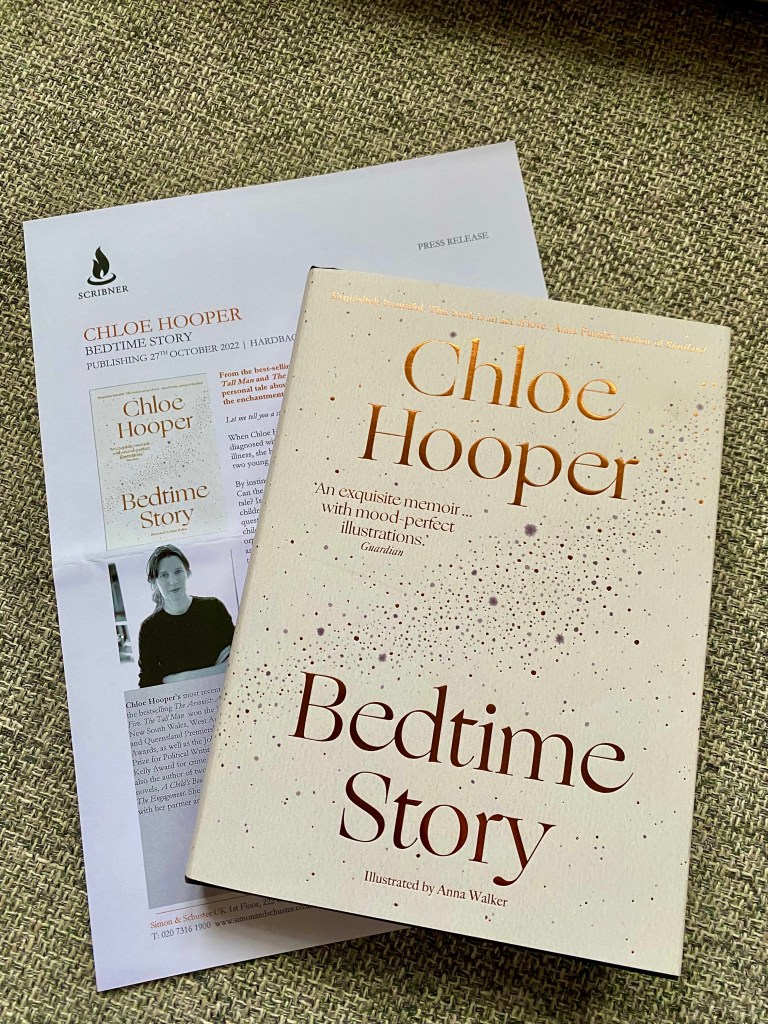

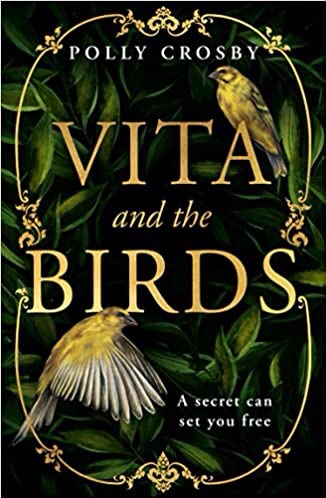


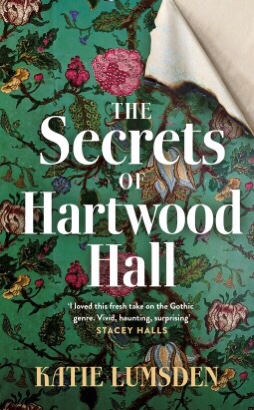
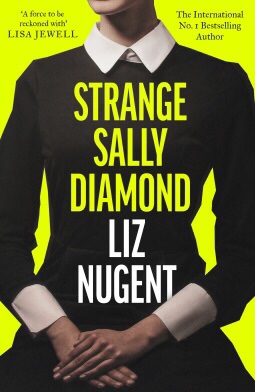

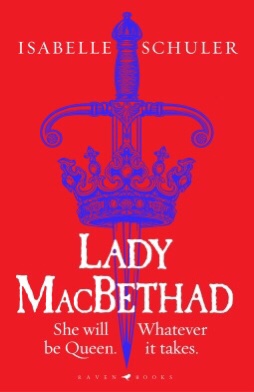
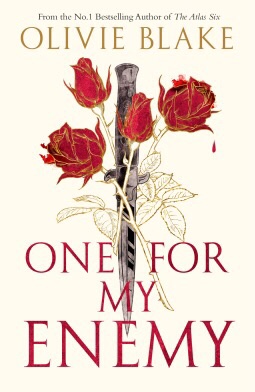


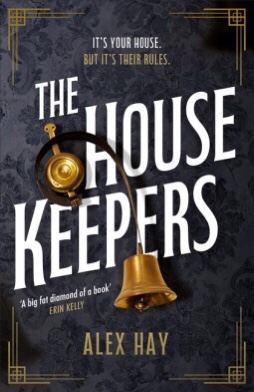
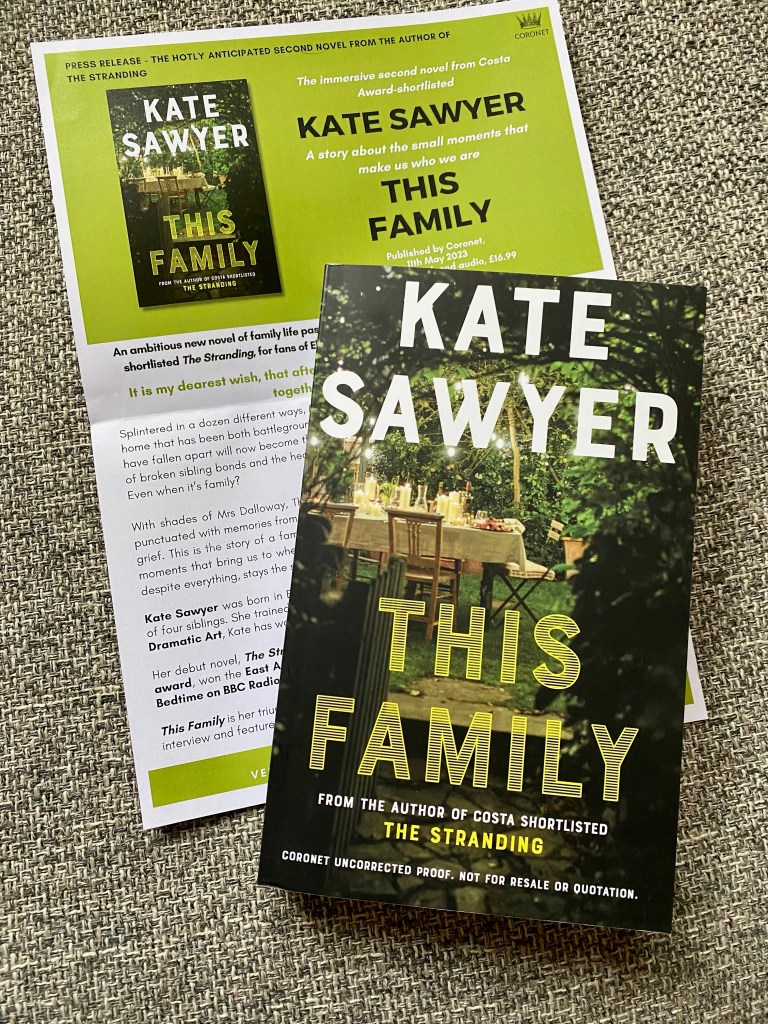

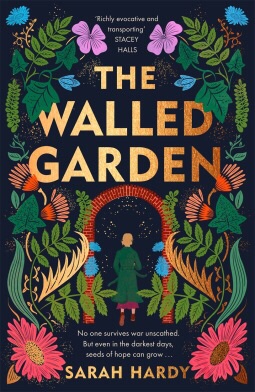
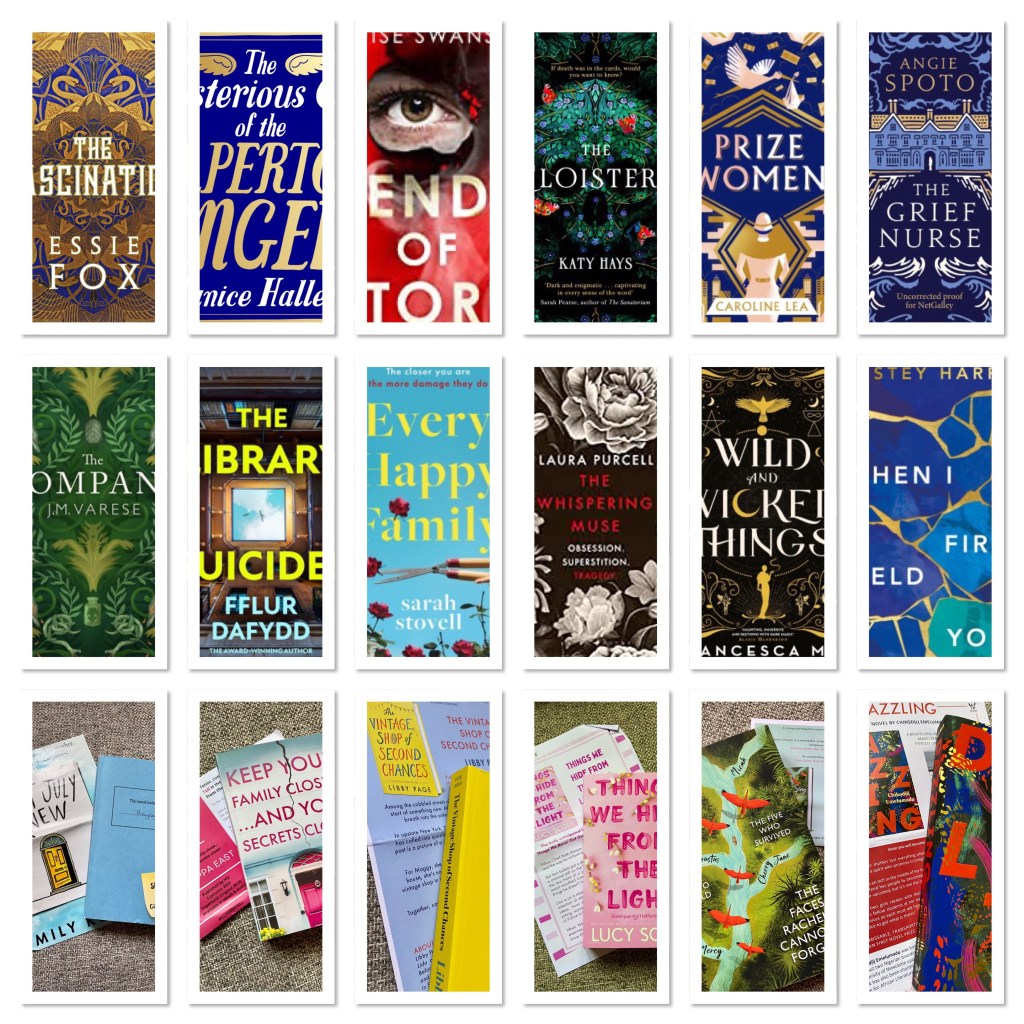
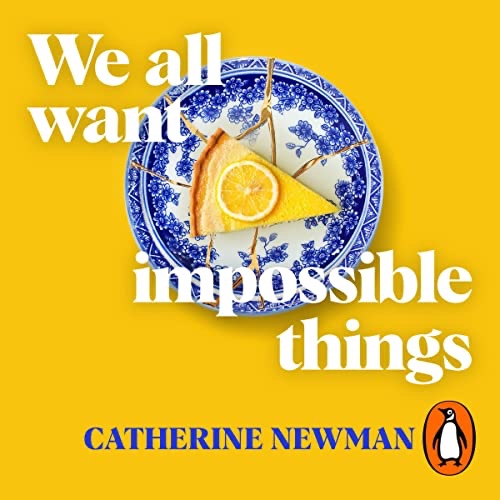

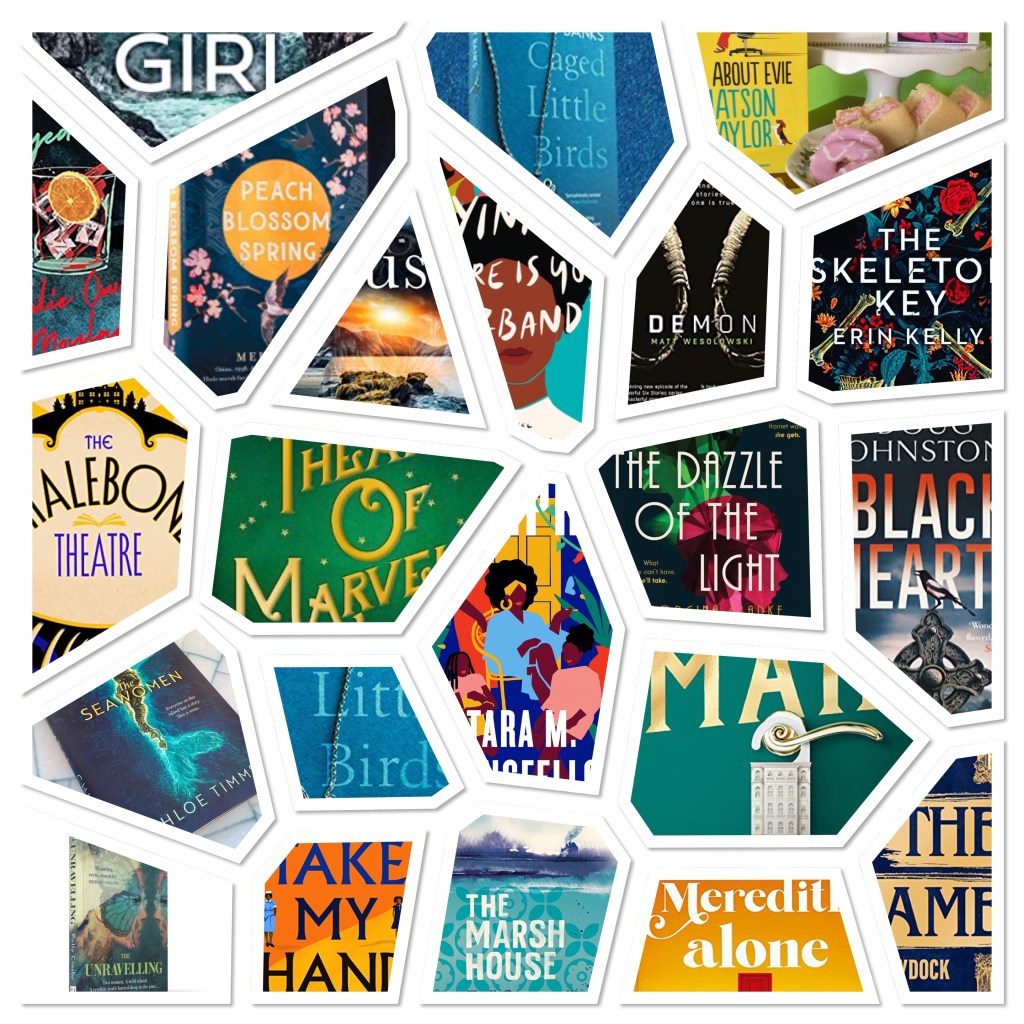
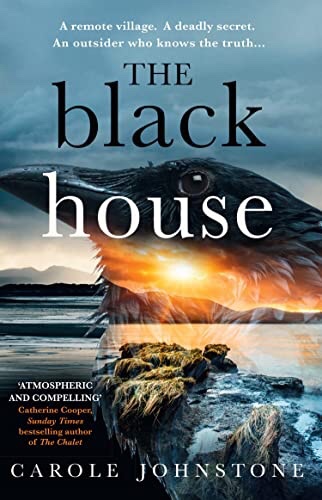
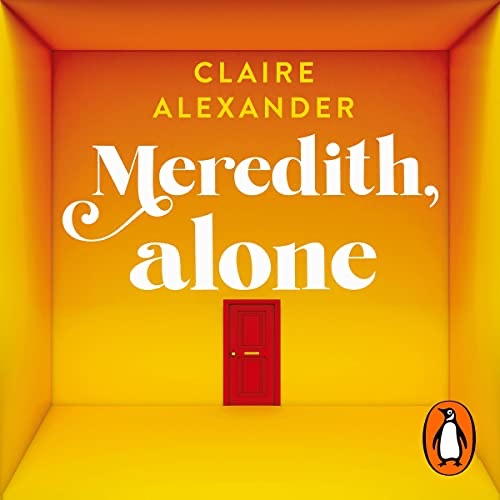
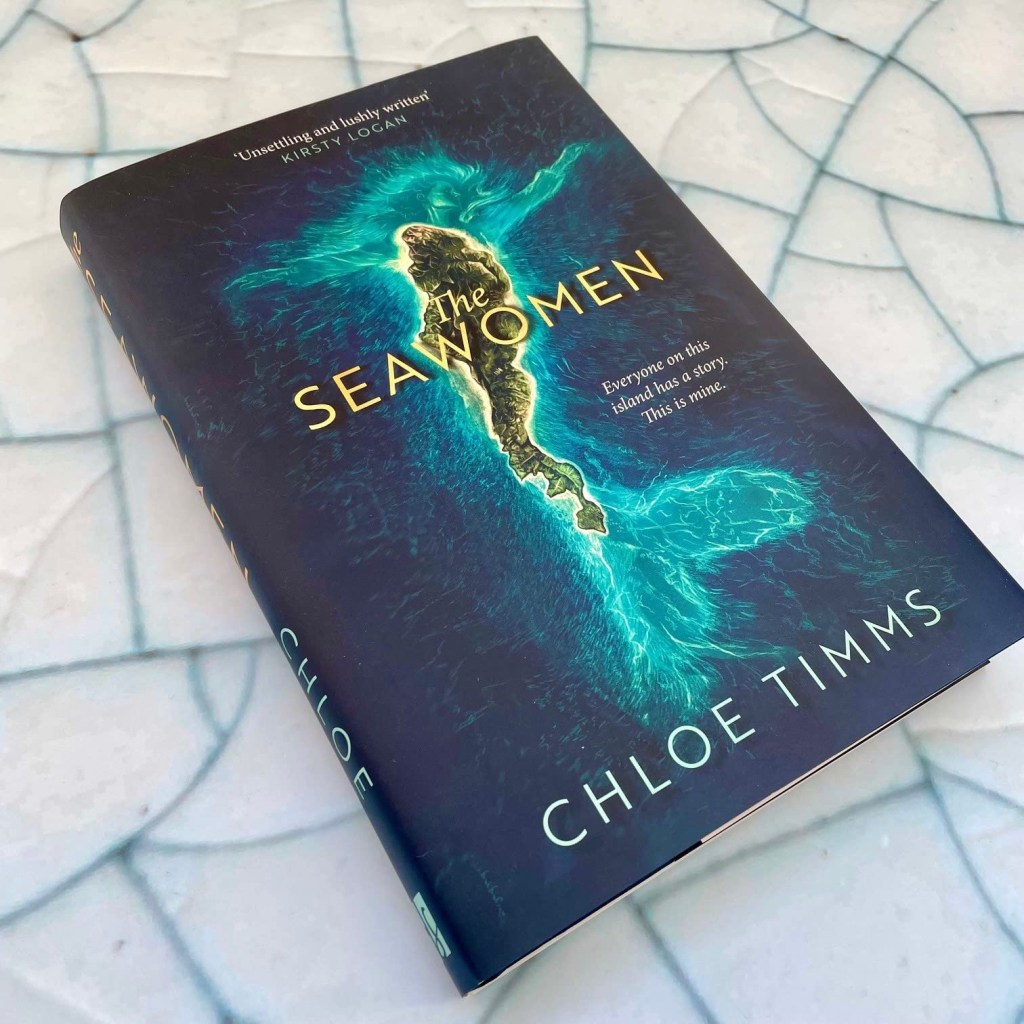
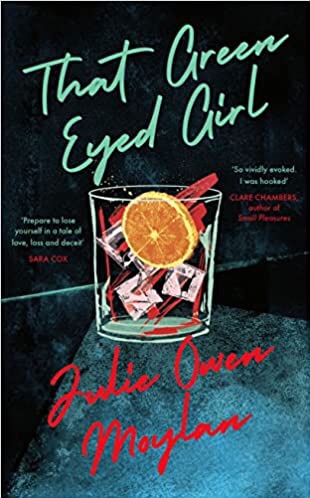
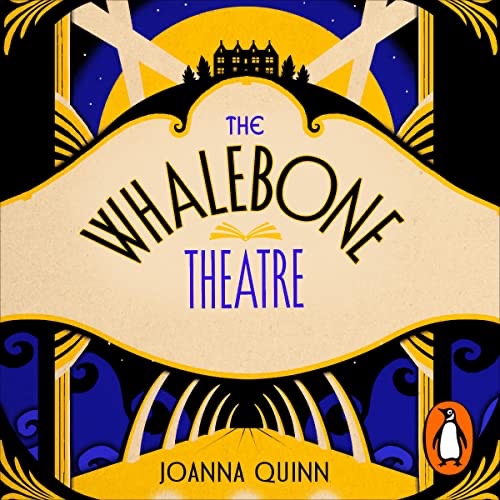
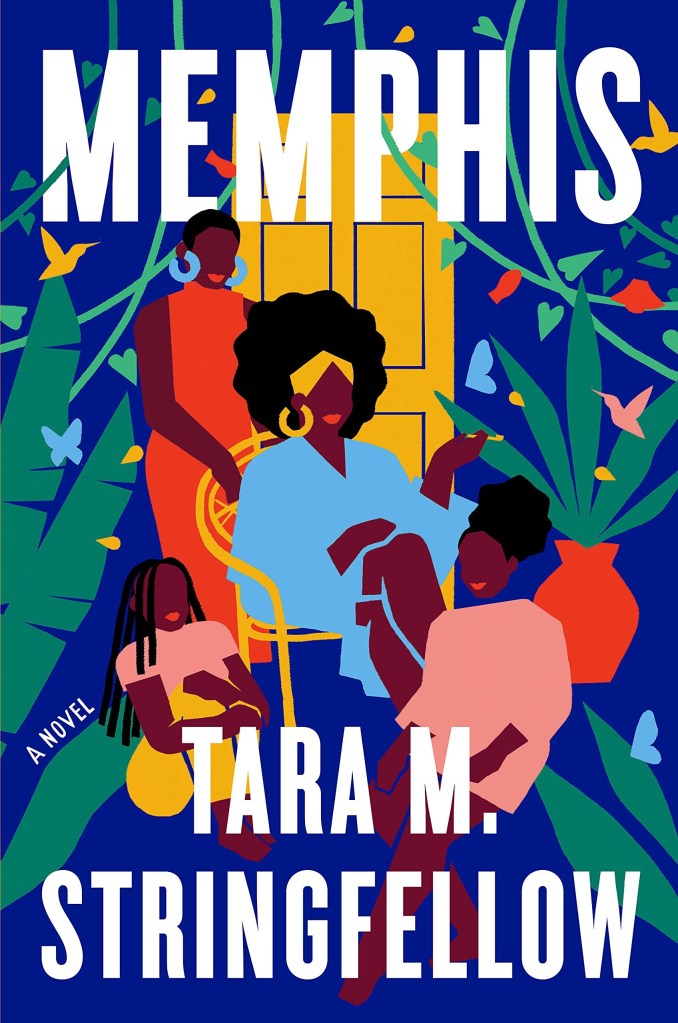
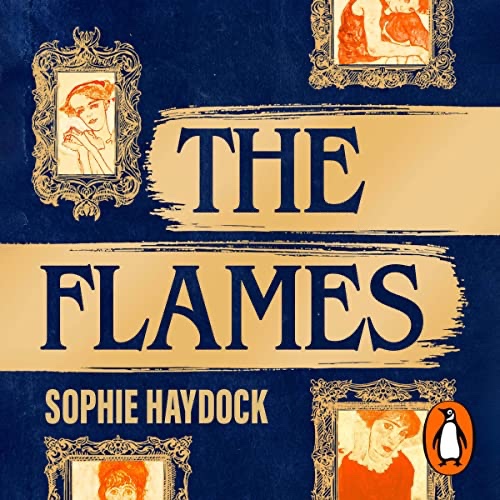
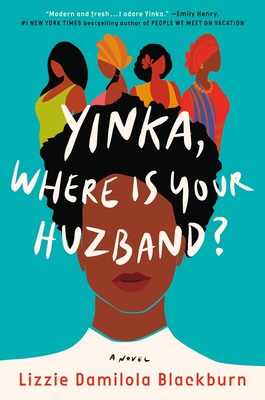
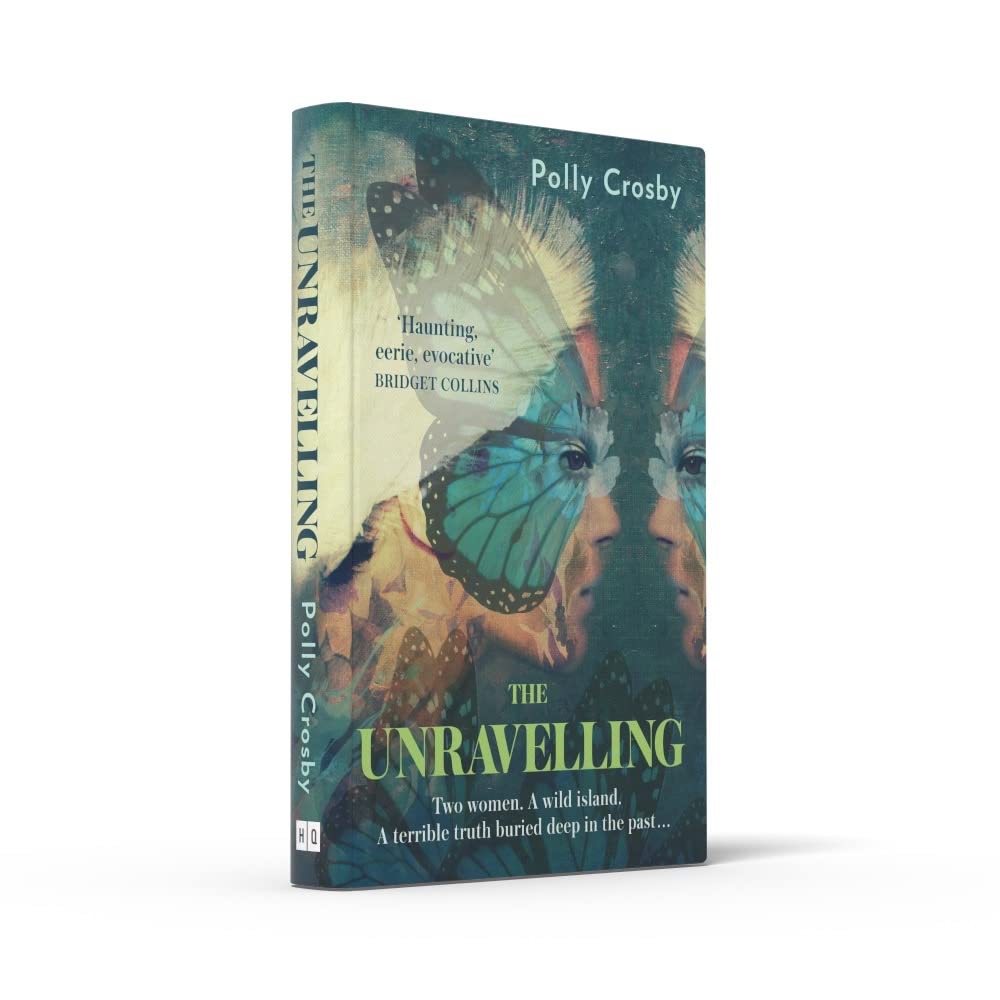
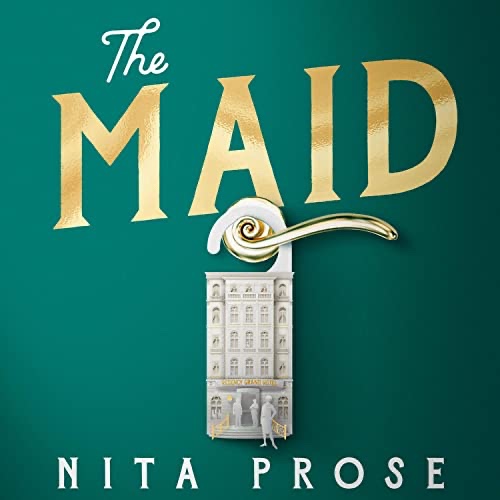

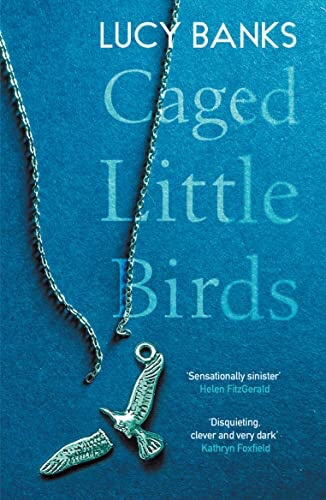
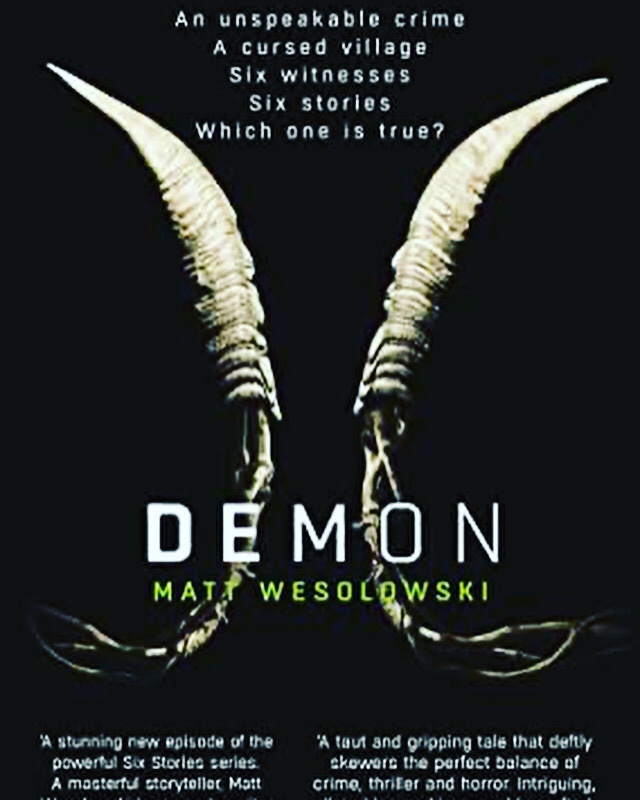
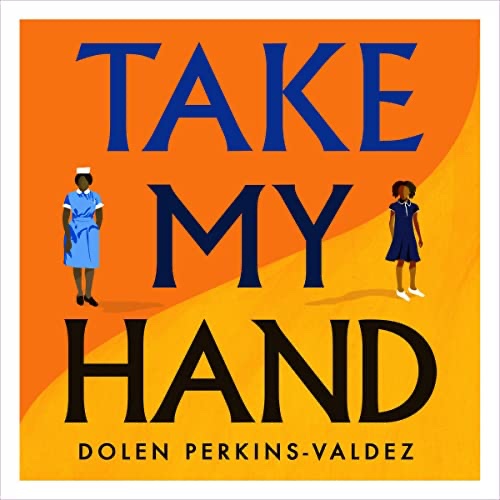
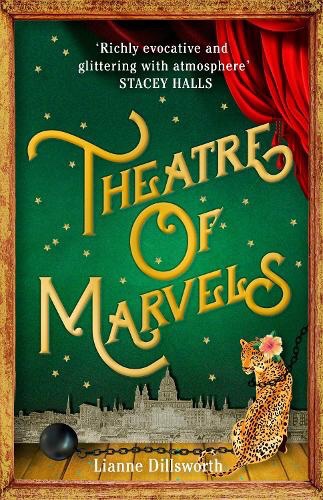
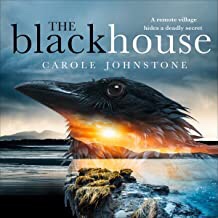
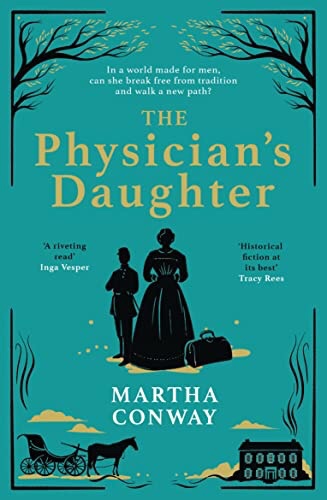
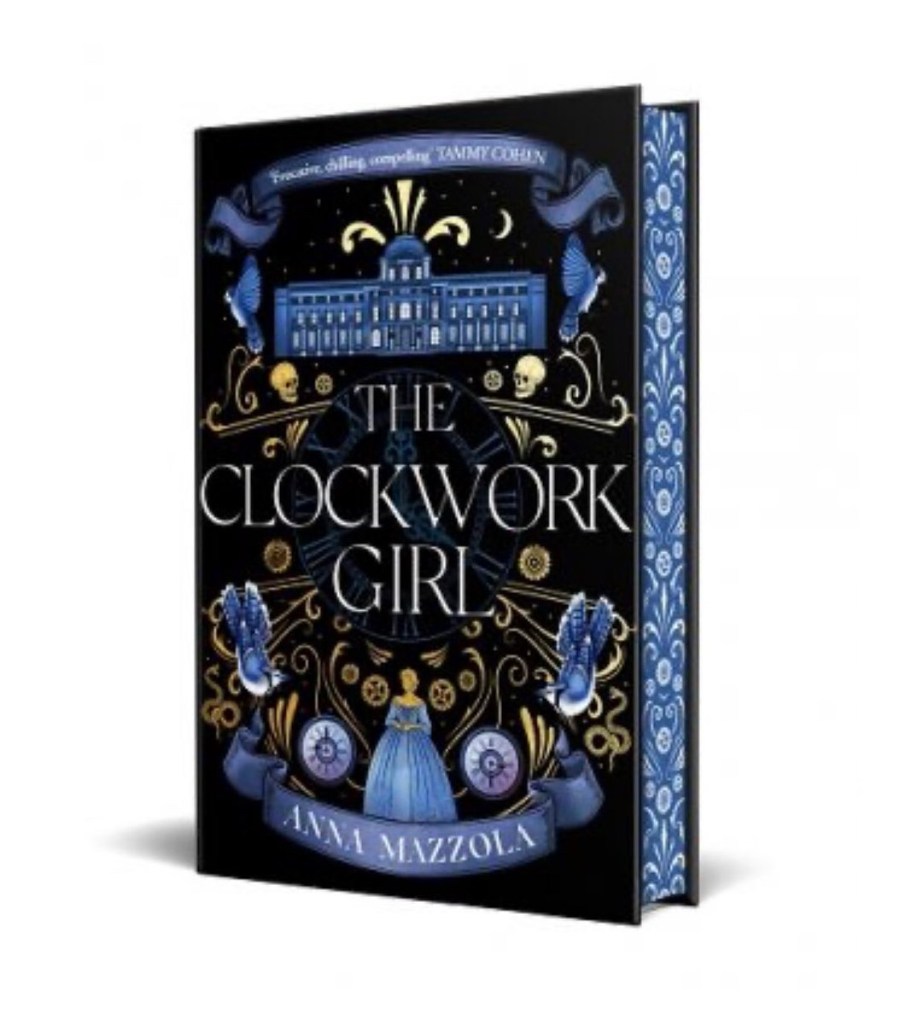
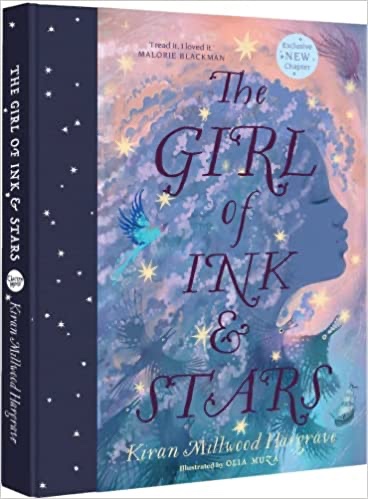
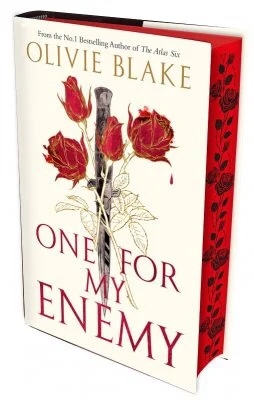
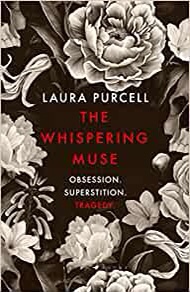
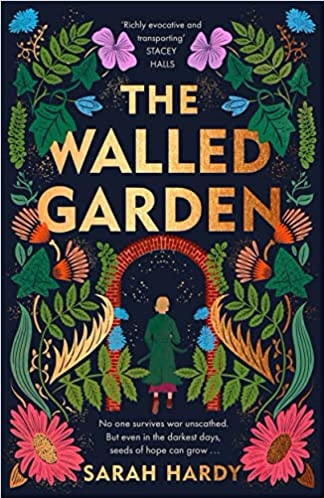
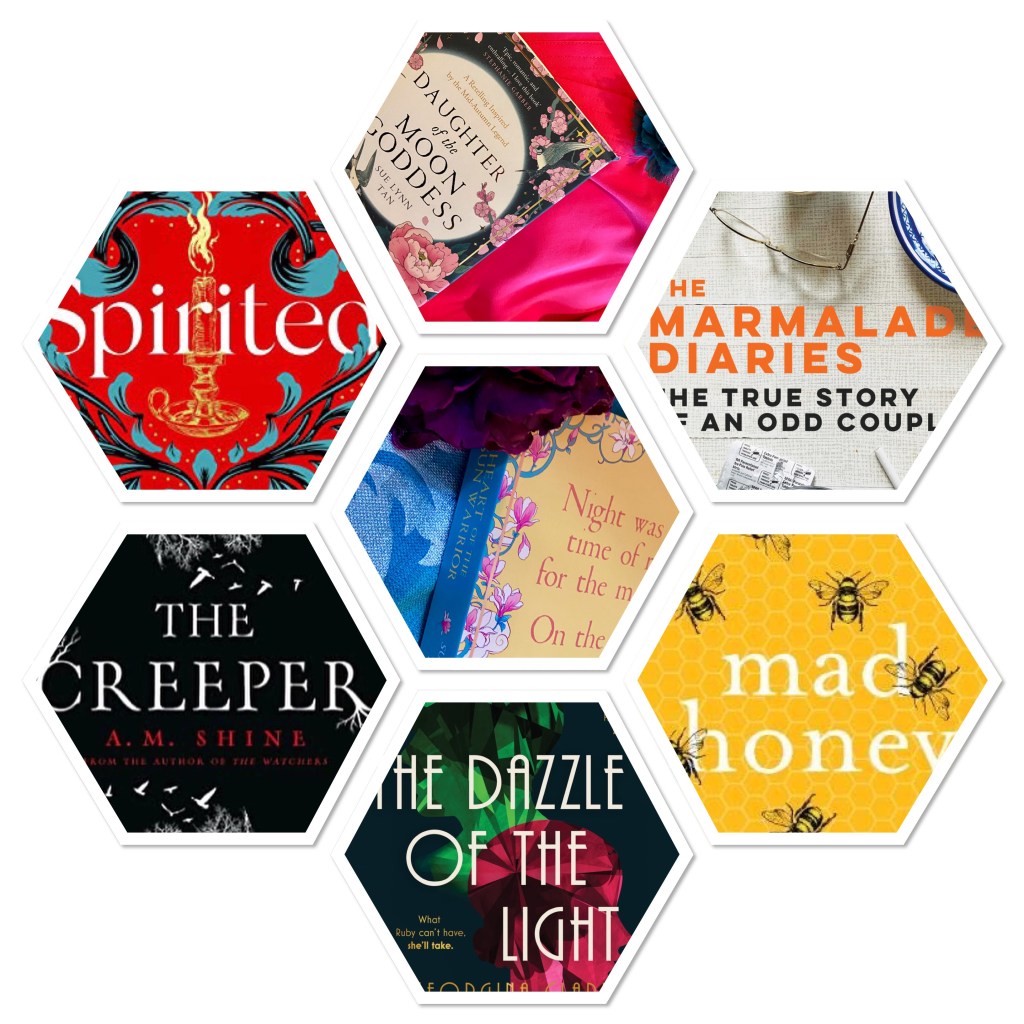
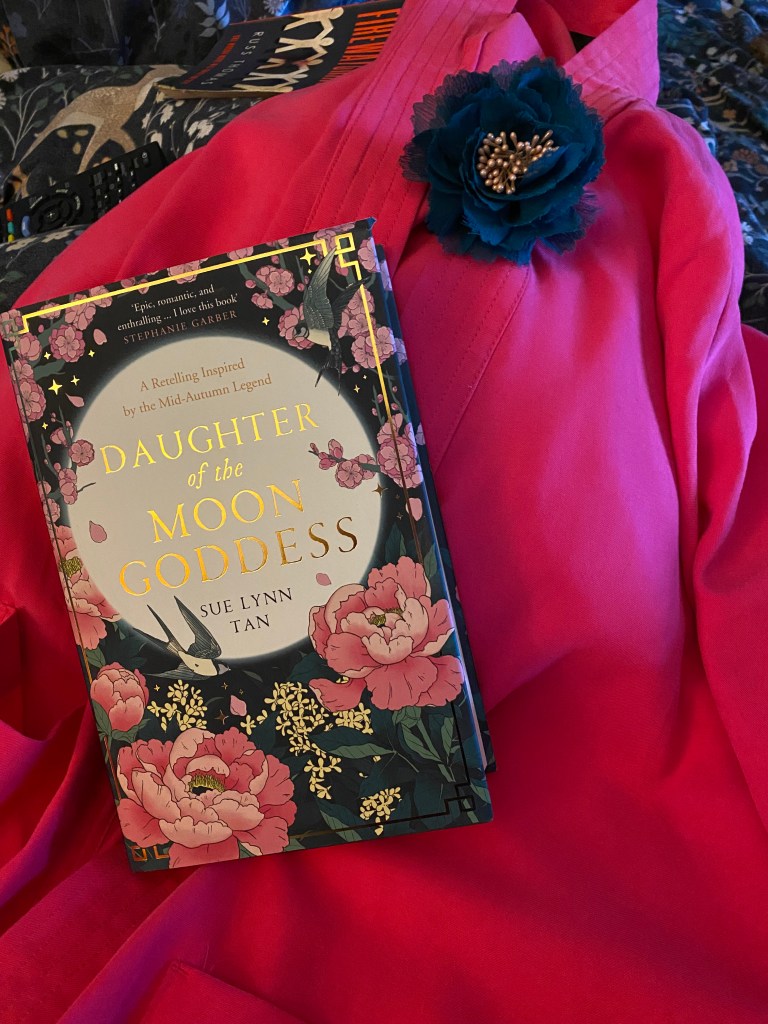
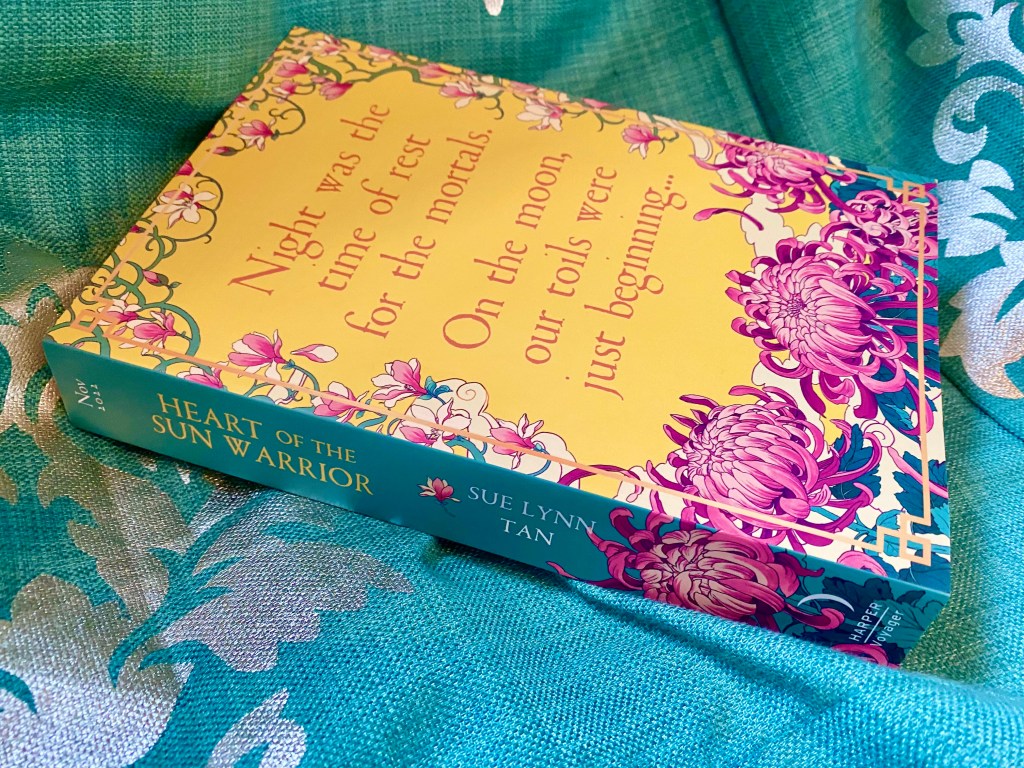
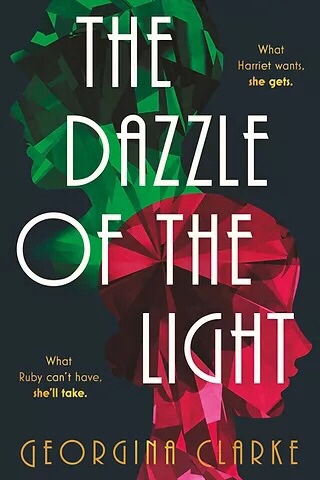
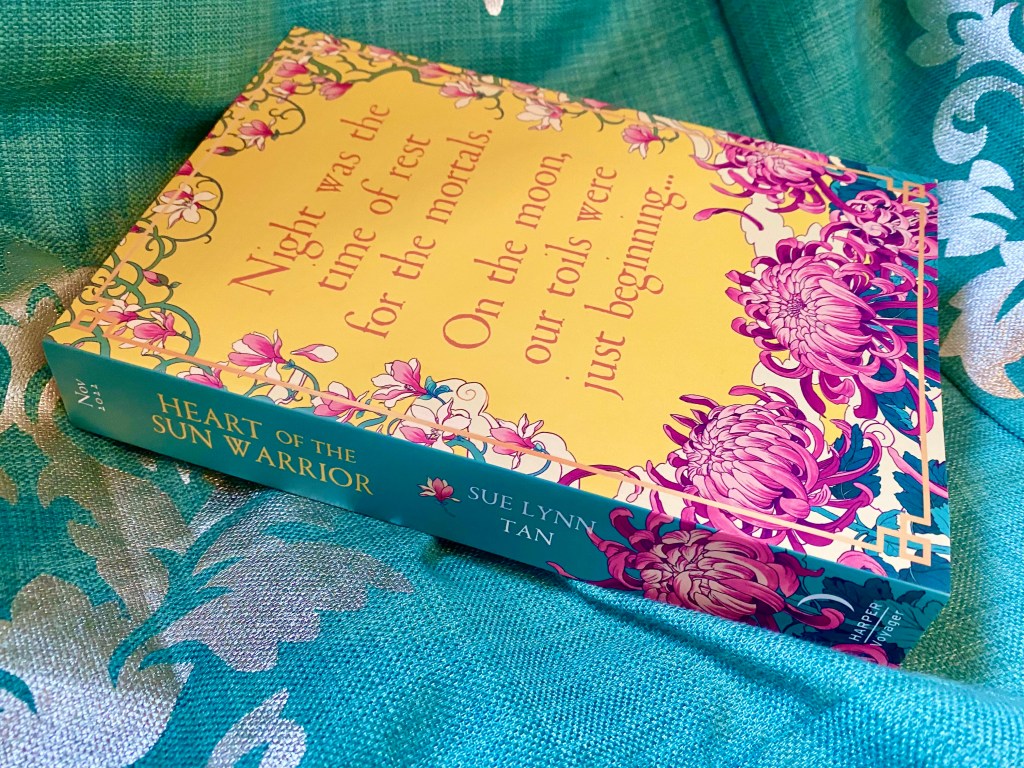
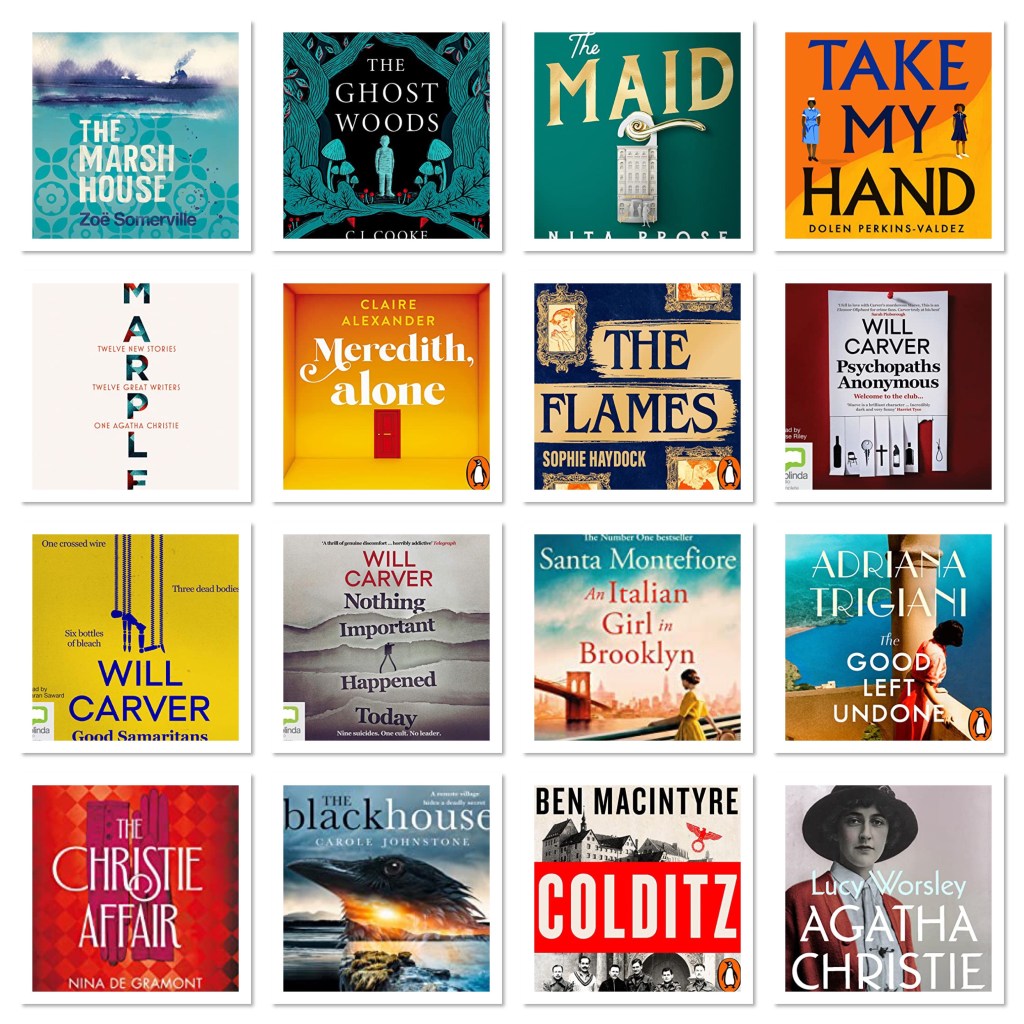

 The Lotus Readers