Harmony and Will have been together for a long time and live in a garden flat in London. They are the couple that most of their friends and family would say are meant to be together. Harmony’s closest friend, Amanda and her husband, throw a party where Harmony bumps into a man she feels an instant chemistry with. They talk for a while and when he suggests they just get into the car and leave together, she’s shocked to find that part of her responds to his suggestion. Harmony goes to find Will and imagines she will never see this man again. It’s only a few days later, that the couple go to lunch with Amanda who explains that they are also entertaining one of her husband Ian’s clients. Client Luke isn’t new to Harmony, he’s the man from the party, but much to her surprise, Luke isn’t new to Will either.
In fact Will’s reaction goes far beyond his explanation that he knew Luke at School. I knew immediately there was something much worse. Harmony has always wondered why Will is so cagey about his past, especially because he’s very stubborn in his outlook about becoming a parent himself. His childhood was so bad, he can’t imagine being a good parent. He is great with Amanda’s kids, but adamant he and Harmony should remain childless. So when Harmony became pregnant a few months ago he wasn’t going to be overjoyed. In fact when she tragically lost their baby, Harmony was devastated and Will’s first emotion was relief, not that he’s told her this. She has now realised how much she wants a child, but isn’t hopeful of changing his mind. It was while they were slightly at odds with each other, that Luke had bumped into a confused and vulnerable Harmony. Luke continues to be charming, intelligent and very forthright about his attraction to Harmony, including turning up at her work. Her head is turned, but despite that she knows she loves Luke. She wants to be his wife, but what if they don’t want the same things any more? When Ian introduced Luke has such a charismatic way about him. She could see though, that Will was horrified to see Luke again. His explanation that they were at boarding school together seems plausible, but she knows there’s more and so do we.
Amanda Jennings has a clever way of introducing you to characters and they don’t grab you immediately, because you’re taking in the world they’re in and the clues about the story. Then suddenly, by about the fifth page, she’s got you caught in a vice like grip. That was certainly the case here, as the sophisticated city lives these characters live is a world away from a country mouse like me. Yet as soon as Luke met Harmony, I knew there was something off and that he had an agenda. He intervenes between the couple at the perfect time too, not that he could have know that – or could he? Luke has a strange magnetism around him even when he’s at school. Will’s early life is sad and his father is abusive. I could understand why he didn’t want to relive it, but when we don’t talk about things they gain an importance they often don’t warrant. We know that whatever is at the root of the animosity between Luke and Will, it’s something humiliating, shameful and life changing. Jennings beautiful times her chapters so we get a bit of the present day and then a snippet of Will’s story. They way it’s eked out keeps you reading and it’s a story that’s horrifying and devastating for these young boys. I won’t say any more, but when we meet a classmate of theirs later on in the novel I wanted to push him under a bus! The fact that things like this happen at boarding school isn’t surprising, but creating or turning a blind eye to an environment like this should be criminal.
Harmony is an interesting character because she almost acted as if she had no choices. I think she’s still in that numb stage of grief and in this vulnerable state people make bad decisions. She seemed to have low self-esteem and really struggled to create boundaries. When Luke starts to encroach on her workplace and not take no for an answer, I was mentally screaming at her to say no and walk away. I wanted her to make a scene and call the police. Especially at first, because she’s done nothing wrong in chatting to a man at a party. I also wanted her and Will to communicate. The key to everything are those secrets that Will has been keeping, things that have happened that make him sure he’s unloveable and unfit to be a parent. It’s Harmony’s fear of encroaching on those boundaries that leads to her keeping her own secrets in turn. The author slowly turns the screw and the tensions rise, making it impossible to put the book down. I was glued to the story, hoping for the couple to break their silence and come together. This had all the ingredients of a great thriller and has real psychological insight into bullying and trauma. It was also brilliant to read a thriller where psychological healing is such an important part of the equation, as well as the thrilling twists and turns.
Meet The Author
As opposed to this latest novel, Amanda’s previous novels The Storm, In Her Wake and The Cliff House, are all set in Cornwall, in Newlyn, St Ives, and Sennen respectively. Cornwall is where her heart truly lies! Her mother’s side of the family is from Penzance and she holds many blissful memories of long summers spent there. She is never happier than when she’s beside the sea, though she’s also fond of a mountain, especially when it’s got snow on it. When she’s not beside the sea or up a mountain or sitting at my desk, you can usually find her chatting on the radio as a regular guest on BBC Berkshire’s weekly Book Club, or loitering on Twitter (@mandajjennings), Facebook and Instagram (@amandajennings1). She loves meeting and engaging with readers, whether that’s on social media, or at libraries, book clubs and literary festivals. If you see her out and about at an event do say hello! You can find more information on her webpage: http://www.amandajennings.co.uk
Just a couple of weeks ago I was waxing lyrical about Kate Atkinson’s novel Shrines of Gaiety and then another novel passes my way covering the same territory and the same time period. While I loved Atkinson’s novel on it’s own merits, this one feels more urgent and alive. I felt immediately in the story and fascinated by the two main female characters. Ruby is one of a female gang known as the Forty Thieves (the Forties) who commit crimes from pick-pocketing for the young members to shoplifting and even jewellery theft for those more experienced members. Ruby has been one of the Forties for years and due to her looks doesn’t always attract suspicion in the fancier stores. In fact, she’s on a joint job with her lover Billy from the Elephant Boys, when she first runs into Harriet Littlemore. Harriet is the real deal, a young woman from a very good family, engaged to an up and coming member of parliament. Harriet has ambitions beyond being an MP’s wife, she wants to be a journalist and her father permitted her to ask for a job with the evening paper. She’s been hired to write pieces for the woman at home, such as ways to wear the new style of hat, but Harriet has ambitions for so much more, thinking she might write a piece about the young thief she’s seen. However, her fascination with Ruby seems to be much more than journalistic interest.
The story follows these two women as they each pursue their ambitions. Ruby wants to do more work with the Elephant Boys. She wants to take on bigger jobs and wear beautiful clothes and jewellery. When she meets Harriet again, on a shoplifting run in a department store, she cheekily suggests she should update her style. Perhaps she should cut her hair in the new shingled way that’s the height of fashion, Ruby tells her, then she could wear the new style of hat she’s considering. Like a woman in a trance, Harriet goes to a French hairdresser and has her long hair cut short. She’s amazed by how much it suits her and hopes to see Ruby with her new fashionable look, even if it does cause a stir at home, particularly with her traditional mother. She’s furious when the story about the jewellery heist she witnessed is written by one of the male reporters at the paper. So she decides to write a piece on Ruby, the Jewel of the Borough, and gets one of the artists to draw a sketch from her description. In a way, Harriet admires Ruby. She sees Ruby’s freedom, her nerve and confidence, and contrasts it with her own restrictions. She has no idea what her article will truly mean for Ruby. We see what Harriet can’t, because we’ve met the rest of the Forties and Ruby’s other mentor Solly, who runs a jewellery business. The women of the Forties are in a hierarchy, with Annie ? At the top. Many have been thieving since they were children, looked after by the Forties in return for their tiny hands making their way into pockets. The ones that are married are struggling to feed their kids and to avoid their husband’s fists. Most have done time in Holloway and without the Forties, they and their families would be cold and hungry. From Ruby’s perspective, money is freedom and Harriet certainly has plenty of that.
I loved the way the author showed, that despite their differences in class and means, Ruby and Harriet are still second class citizens due to their gender. Although Ruby has earned some equality thanks to her sleight of hand and is chosen by leader Annie, to do jobs with the Elephant Boys, her personal life is very different. Solly is a father figure to her and always keeps a room for above the jewellers, but when it comes to her lover Billy she has no real power. She has confidence in her allure, but when she’s forced to lie low for a while Billy soon moves on to the next warm body. She often has to give up her body to seal a deal, whether it’s a little extra for the man who fences the more risky pieces of jewellery she’s stolen or romancing someone to get information out of them for Peter who runs the nightclub. This work gives her a rather glamorous roof over her head when she really needs it, but she definitely earns her money. Peter has a big job coming up with the Elephants, something that involves men of money and influence. Ruby has no clue how respectable these men are, or their standing in society. It seems to her that all men will use women, no matter how respectable they may seem. Harriet is completely powerless when it comes to the men in her life. She has a life set up for her as Ralph’s wife and her parents can’t understand why she isn’t satisfied with her lot. She has money, beautiful clothes and a handsome fiancé who is going to be a man of great influence. They can’t understand that she wants something for herself, something she has earned on her own merits. I couldn’t put the book down because I wanted both of these women to break out of the prison they are in, choose a different life and perhaps become close. I didn’t want the system to win.
The setting for this fascinating story is beautifully built by the author. We’re post-WW1, a period of huge shifts in the class system and changes for both men and women. The author shows how the class system and expectations of women have changed through Harriet’s relationship with her parents. They still have pre-war attitudes and are expecting Harriet to fall in line. Even the changes she makes to her appearance show that shift from the restrictions of Edwardian dress and the relative freedom of the 1920’s fashions with shorter skirts, no restrictive undergarments and shorter hair. These fashions suit women who are busier and don’t have hours to dress in the morning. Financial changes mean only the very wealthy can afford the help of a ladies maid every morning. Ruby can wear the latest fashions to please herself, when she can afford them. She loves the glamour of the clothes she wears to the club, where she needs to attract the more discerning gentleman.
For the men, those who were in the trenches found them democratising. Bullets and shells don’t care about the class you’re from and although there was still a hierarchy, they died in the mud together. This led to some strange allegiances back in the post-war world. It’s clear to Ruby that there’s a big job on the cards, Billy has hinted as much and her time at the club throws her close to the planning. There are men involved who would never normally give the Elephant Boys the time of day, so they must need them to do the dirty work. These are men from the highest class, who usually drink at their club or the Savoy, but don’t mind slumming it at the club if it makes them money or the company of a woman like Ruby. I desperately wanted some of them to get their come uppance, knowing that’s not always the way of the world. The real winners though are those that can move between worlds, like Peter Lazenby. Though the polish and charm of all these men hides something more brutal. Despite her misdemeanours I was as charmed by Ruby as Harriet was and I wanted her to find a middle ground where she survives comfortably. As for Harriet I wanted her to break out of her parent’s upper class restrictions. I wanted her to have a love affair with someone unsuitable and a friendship with Ruby, if not a full on passionate affair. This was a fantastic book, full of characters, historical detail and that verve and energy that seems synonymous with 1920.
Published by Verve Books 17th November 2023
Meet The Author
Georgina Clarke has always been passionate about stories and history. The Lizzie Hardwicke novels give her the opportunity to bring to life her love of the eighteenth century and her determination that a strong, intelligent and unconventional woman should get to solve the crimes – rather than be cast in the role of the side-kick. Georgina was born in Wolverhampton, has degrees from Oxford, Cambridge and London, but now lives in Worcester with her husband and son and two lively cats.
Her first two novels, Death and the Harlot and The Corpse Played Dead, are published by Canelo. She is currently cooking up plots for the next novels in the series.
If you would like to visit her website, you can find her at:
This week I’ve been writing a Sunday Spotlight post about the Victorian novels of Sarah Waters and while I was thinking about some of the themes of Affinity this book popped into my mind. So I decided to make it this week’s Throwback Thursday. At the time I’d never read Julie Cohen’s work, so I didn’t know what to expect from her writing. Only a few weeks before, on Twitter, I was discussing when a new Sarah Waters novel would be appearing. Spirited by Julie Cohen has definitely filled that gap. It’s also made an impact on me that’s all it’s own. Viola Worth has grown up cared for by her clergyman Father, as well as his ward, a little boy called Jonah. Viola and Jonah are the best of friends, spending their childhoods largely inseparable. As we meet them in adulthood, they are getting married, but in mourning. A lot has happened during the period of their engagement. Jonah had been out to India, staying at his family’s haveli and checking on his financial interests. For Viola, it’s been a tough time nursing, then losing, her father. He encouraged her in his own profession as a photographer and she has become accomplished in her own right. Viola’s father wanted her to marry Jonah, and they are still the best of friends, but the time apart has changed them and neither knows the full extent of the other’s transformation. As they try to settle into married life on the Isle of Wight, Jonah spends his time sketching fossil and bone finds with his scientific a friend. Viola feels cut adrift and without purpose, as we find out later she doesn’t even feel she is fulfilling her role as Jonah’s wife. Through new friends the couple meet a visiting spirit medium, although as daughter of a clergyman, Viola would never normally enjoy this type of entertainment. Little do they know, this woman will change their lives.
The author slips back and forth in time to tell us about Henriette, who worked her way in life from being a servant to a respected spirit medium. She is a woman who started with no advantage in life, and as a young servant models herself on the governess in the house, a French woman known as Madame to the family. Henriette diligently listens to the children’s French lesson and nurses a hope of a future where she doesn’t clean up after other people or have to wish for a roommate so she isn’t sexually assaulted in the night. Her attacker labels her a whore and one early morning, after there’s been a house party, she stumbles on a group of men in the stables betting. They are playing cards for money, but once they see Henriette they become intent on a different sport. It is Madame who interrupts the attackers and she gives Henriette advice from one woman surviving alone in the world to another. The author also takes us back to Jonah’s time in India. We discover that in social circles Jonah is a hero, because during a massacre he rescued a young girl who lived in his haveli after all her family are killed. Viola wonders if it is this experience that has changed Jonah. They live as if they are brother and sister, Jonah spends less time with her than before and at bedtime they still go to their separate bedrooms and sleep apart. Viola knows there is more between husband and wife but doesn’t really know what and has no idea who to talk to. Through Henriette, Viola is asked to take a photograph of a child who has died so the parents have an image to keep. No one is more stunned than Viola when she develops the image and sees a blurred figure standing next to the bed, the likeness to their child shocks and comforts the parents; they feel reassured that their child lives on in spirit. This experience, and her experience of her first proper female friendship, is like a floodgate opening for Viola. She starts to question the limits of her faith, whether there is more in life she would like to try and as time goes on, whether the burgeoning feelings she has for Henriette are friendship or something else.
I loved the feminist threads running through this novel. The central women in the novel are each in liminal spaces, different from the conventional Victorian women we see like Mrs Newham. Henriette is a self-made woman, unmarried and travelling from space to space offering her spiritualist services for enough to survive on. She has moved from bar girl, to servant, to nursing and losing her elderly husband, and now into a semi-respected occupation. She gets to visit the homes of those she might have once waited upon, but isn’t tied by their social rules and conventions. In India we meet Pavan, who has made the exceptional choice within her societal rules to become educated and has made huge sacrifices in order to achieve that. Love was not on her agenda, and when it comes she experiences a painful separation between her intellectual choice and her emotions. Viola may seem the most conventional of these women, but her relationship with her father has set her apart from others of her class. He believed in educating Viola the same way as Jonah, then teaches her the art of photography too, usually considered a male pastime. Viola is respectful of many conventions, but finds herself emboldened by Henriette and the new experiences she brings to her life. She tries bathing in the sea and is bold enough to start accepting her ‘gift’ of capturing spirits. Behind them all is the french governess Madame. The role of Victorian governess is the very definition of a liminal space: she works in the home but is not a servant, educated and unmarried, respectable, but not on the same level as the family she works for. She has power in that she works for herself, has and controls her own money and can choose to leave her position and join another family, in a different place. Her acknowledgment of Henriette’s fate, as a pretty face in the power of men, inspires Henriette to be more. It gives her aspiration, although she may never be a gentlewoman, with careful decision making she could be more like Madame.
It is within the physical liminal spaces where there are beautiful passages of writing from the author. The scene where Henriette and Viola go bathing is absolutely exquisite because I could feel everything. The strangeness of undressing in a darkened box on wheels, the feel of the swimming dress, the rough and tumble of being pulled into the sea by a horse, then opening the door to see nothing but the ocean in front of you. This is a play on conventional baptism for Viola. She fully immerses herself in the water, supported by Henriette, and feels a rebirth. The heaviness in the uncoiling of her hair and letting it float free signifies a freeing from the constraints of Victorian fashion, as is the unlacing of the corsets. As they trundle back up to the sand after their swim, Viola wishes they could stay in this space in the dark for the intimacy with Henriette, and the knowledge of the freedom she will feel as she opens the door and sees nothing but ocean. When the women share Viola’s room the writing is so tender. Viola worries what the servants might think, but Henriette frees her thinking again. Love between women does not exist, she tells her, there are laws and conventions regarding love between a man and a woman, and even the love between men. What they are to each other is beyond the thoughts of most people, the servants will see two friends staying together and nothing more. Pavan and Jonah, don’t meet in the main haveli but in an ancient old temple in its grounds, a space no longer used for its purpose and outside the family structure inside the house. They meet as two people of different cultures and beliefs, but find a connection so powerful that each would put their lives on the line for the other. Jonah wonders whether he could live a different life to the one laid out for him back in England. He’s seen other English men here who have married Indian women and had children. They’re neither totally respectable, but are not shunned either. This is a novel of people, particularly women, learning to live in the spaces between; the places that promise more freedom.
This was an original, emotional and beautifully written novel that weaves a powerful story from a combination of painstaking historical research and imagination. Each character is fully fleshed out and has a rich inner life. Where real events such as the 1857 Siege of Delhi are used in the novel, they are deeply powerful and the author treats them with respect. The elements of spiritualism and spirit photography are well researched and based on a real fascination for the paranormal in Victorian society. Cohen acknowledges that this is a novel about faith: religious faith, faith in the paranormal and that the ties to those we love don’t end in death; faith in romantic love and the promises we make to each other; even the faith she has in herself. In the acknowledgements to this novel Julie Cohen says ‘I wrote the first draft of this book when I thought my writing career was over’. Judging by this book, it’s far from over. However, by allowing herself to think of that possibility, she gave herself the space to write something truly extraordinary.
Meet The Author
Julie Cohen grew up in the western mountains of Maine and studied English at Brown University and Cambridge University before pursuing a research degree in nineteenth century fairies. After a career as a secondary school English teacher, she became a novelist. Her award-winning novels have sold over a million copies worldwide. DEAR THING and TOGETHER were both selected for the Richard and Judy Book Club. Julie runs an oversubscribed literary consultancy which has helped many writers go on to be published. She is a Vice President of the Romantic Novelists’ Association, founder of the RNA Rainbow Chapter for LGBTQ+ authors, and a Patron of literacy charity ABC To Read. You can find Julie on Twitter: @julie_cohen or you can visit her website: http://www.julie-cohen.com
Latest Novel from Julie Cohen
‘Marriages end with a whisper, not a bang. Not an argument, which is after all about passion, waves crashing on a shore, but with the small pockets of coldness that an argument creates. It’s like islands. They don’t sink like Atlantis. They wear away, little by little, until all you’ve got left is a single rock and a light. A warning to safer travellers to stay away’.
Sitting on my TBR is this latest novel from Julie Cohen, a very different novel to Spirited in that it’s contemporary, but still about love and relationships. The last time Vee left the shores of Unity Island, she thought she’d left forever. But this summer, she’s returning with her charming husband, Mike. Vee’s unexpected arrival, this time as one of the wealthy ‘summer people’, sets the small island community alight with gossip. What’s more, her childhood best friend, Sterling, is furious that she’s come back – Vee abandoned him when he needed her most.
And then Vee meets Rachel, Sterling’s wife, and a spark is ignited within her that she can’t extinguish. And as summer turns to autumn, long-buried secrets emerge that will cause a storm greater than any of them could ever have imagined.
But when autumn comes, who will sail away with the tide and who will choose to stay behind on the island…?
I don’t know a lot about Turkey, so I jumped at the chance to read this book that delves into Turkish history and the heart of it’s people. Set in 2017, at Buyukada in Turkey we watch as a family gathers to celebrate the 100th birthday of the famous artist Shirin Saka. They are expecting reminiscences that are joyful, with everyone looking back on a long and succesful artistic career, and on family memories spanning almost a century. Some members of the family are set on this opportunity to delve into family history. However, for Shirin, the past is a place she has been happy to leave behind. In fact she has concealed some of her experiences even from her closest family. In particular her children and great-grandchildren have no idea what those experiences were, despite being aware of their psychological consequences. Some are thinking of Shirin and hoping she can open up and heal. Others want, perhaps, to find answers for their own struggles. In an attempt to persuade her into telling her full story, one of her grandchildren invites family friend and investigative journalist Burak, to celebrate her achievements but in the hope of helping her too. Burak has his own reasons for being there – he was once the lover of Shirin’s granddaughter. I wondered if the younger members of the family truly understood the well of pain that Shirin has kept from them? They have never gone through the type of experience and turbulence Shirin and those of her generation have. Unable to express her pain any other way, Shirin begins to paint her story. Using the dining room wall she reveals a history that’s been kept from her family, but also from the public’s consciousness, an episode from the last days of the Ottoman Empire.
As a believer in the healing power of many different art forms, including writing, I was very interested in how her family’s plan would work out. We don’t always know how people will react to opening up in this way, it’s why trained therapists like me are taught to create a safe space for people to talk and reveal their secrets. Even the client has no idea how they will react, so I felt Shirin’s family were playing with something they didn’t understand. Why would they think their grandmother would want to delve into her trauma on her birthday, let alone divulge her history to Burak? Surely therapy would have been more appropriate first? To tell her history, the author splits the narrative across four characters, each one is a member of Shirin’s family and friend group. This gives us a wide angle lens on the past. I loved the atmosphere created and the way the author didn’t exoticise Turkey. She still showed us a place of vibrancy and colour, but this wasn’t a tourist’s view. It was the Turkey of the people who work and live there. I felt there could have been more balance between the past and the present, because I was interested in Shirin’s recovery from these memories being dragged up, especially at such an emotional time. As it was, the book felt off balance, more heavily weighted in the past and from four different perspectives rather than just Shirin’s.
However, the four narrators did work in terms of showing the same events from different perspectives. There were times when one character’s view of the facts was so far from the truth it had an emotional effect on me! This is an emotionally intelligent author at work, she wants us to feel that dissonance so we can understand the painful consequences of these misunderstandings. I’m a big believer in generational trauma and how strong it’s effects can be. We see that, despite Shirin thinking she’s shielded her children and grandchildren from these events, they have still been deeply affected by her trauma. They are traumatised because of her pain and how it influenced her personality and her actions, without ever knowing the full story. I could imagine the relief of understanding why a parent has behaved a certain way, especially if it caused you pain. Despite me wishing I could have spent more time with them, we do see enough of the present to know that despite the stress fractures in this family, they still love each other. Their playfulness and sibling banter was realistic and touching. The dynamics of their interactions were so deeply rooted in the past, but we’re the only ones who can see it all with our privileged 360 degree view. This was a fascinating look at a family’s history and how their intertwined lives spiral out from one single event so long ago.
Translated by Betsy Göksel. Published by Apollo 1st September 2022
Meet The Author
Defne Suman was born in Istanbul and grew up on Buyukada Island. She gained a Masters in sociology from the Bosphorus University and then worked as a teacher in Thailand and Laos, where she studied Far Eastern philosophy and mystic disciplines. She later continued her studies in Oregon, USA and now lives in Athens with her husband. Her books include The Silence of Scheherazade and At The Breakfast Table. Her work is translated to many languages all around the world.
I was terrified by A.M. Shine’s first horror novel The Watchers last year and I have been looking forward to his new novel The Creeper. It has such an interesting premise. Academic Dr. Alec Sparling lives a very regimented existence in a remote Manor House in Ireland. His house is set back, covered and disguised with vegetation. There are shutters for the windows and and bolts for the doors. What is he hiding from? He has advertised for two academics to undertake field research and chooses Ben and Chloe. She is an archaeologist and he is an historical researcher with a wealth of experience in interviewing people. They must hike out to a remote Irish village and interview the residents about their life and their minimal contact with the outside world. This is a forgotten place, wary of strangers and as they stumble through a forest, tripwires attached to church bells ring out their presence, giving the villagers plenty of warning. As Chloe and Ben finally meet the people they are shocked by their physical appearance. Poverty and hardship has marked their faces, but it’s the lack of new residents that explains the deformities they observe, years of in-breeding has clearly had it’s effect. These people are not pleased to see them and like Dr Sparling, they are nervous about dusk creeping up on them. Chloe observes the shutters at their windows, less high tech than the wealthy doctor’s, but for exactly the same purpose. Are they to stop people looking out after dark, or are they to stop someone looking in?
As the pair start to interview villagers, they get the sense they’re being fed stock answers. There is something very wrong here, but no one is willing to talk about it, except for one little girl who repeats a piece of folklore:
Three times you see him. Each night he comes closer…
As darkness starts to fall and the villagers start itching to close themselves away for the night, Ben and Chloe realise they will not be able to get back to the car before nightfall. So they set up camp in the driest grass field they can find. As they organise themselves and darkness falls, Ben gets the sense they are not alone. Towards the back of the field, there’s a shape in the darkness. Could it be a person or something worse? This is The Creeper, kept alive by the villager’s superstitions and stories, he is the nameless fear in the night and tomorrow night, he’ll be even closer.
A.M. Shine is a horror genius. His clash of old Irish folklore and modern life is irresistible. I had only read Ben and Chloe’s first day at the village when I had a nightmare! I’m very suggestible. He’s brilliant at creating a sense of foreboding in the reader and here it’s heightened by never fully describing The Creeper till part way through the book. The author knows that our own imaginations are adequate enough to scare us and there’s nothing worse than not knowing or fully seeing the thing you fear. On the first night it’s so far away, covered in raggedy clothing, that we never see it’s face. The villager’s deformed appearances also feed the imagination, leaving the suggestion that the Creeper may be even more disfigured. The doctor’s preparations are also ominous, suggesting that the Creeper isn’t just restricted to the village, but can appear anywhere. We can explain away a superstition held by an isolated settlement, who still live like it’s the Dark Ages! However, if a respected academic who lives in the ‘normal’ world is scared, then we should be too. The author also drops little clues that are easy to dismiss at first, such as the unearthly cry Ben hears as they approach the village. Is it just a child crying out or something much much worse?
The whole atmosphere of this novel is dark, damp and dreary. The waterlogged fields that surround the village create mist. So it feels like everything is obscured and shrouded in mystery. The weather is constantly damp and miserable, so Ben and Chloe’s quest feels grounded and based in reality. Their discomfort as they set up camp for the night is something I remember well from my camping days, that awful feeling that you’ll never be dry again. The contrast between what is familiar and what is very, very wrong, adds to the horror of the situation. The author leaves us suspicious about everyone; I doubted the doctor’s motives in giving the academics this mission and I doubted the villagers too. I found them furtive and secretive, I wondered what they were withholding and whether they were really as downtrodden as they seemed to be. There was the hint that previous academics had come this way and if they had, where were they and where was their research? By the time something terrifying happened my nerves were as taught as bow strings. The final confrontations and the horrifying conclusion were both expected and at the same time shocking. I kept thinking about the author and asking myself ‘he’s not really going to do this is he?’ He really did. I won’t be divulging any of the final chapters, but it really was heart-stopping. This book cemented the feeling I had after reading his first novel The Watchers, Shine has become one of the best horror writers around.
Published by Head of Zeus 15th September 2022
Meet The Author
A. M. Shine is an author of Literary Horror from the west of Ireland. It was there that at a young age he discovered a passion for classic horror stories, and where he received his Masters in history, before ultimately sharpening his quill to pursue a life devoted to all things literary and macabre. His writing is inspired by the trinity of horror, history, and superstition, and he has tormented, toyed with, and tortured more characters than he will ever confess to.
Owing to a fascination with the works of Edgar Allan Poe and his ilk, A. M. Shine’s earlier writings were Gothic in their style and imagination. When his focus turned to novels he refined his craft as an author of Irish horror – stories influenced by his country’s culture, landscape, and language, but which draw their dark atmosphere and eloquence from the Gothic canon of his past.
I was so charmed by this wonderful book about writer Ben and his unusual experiences during the COVID lockdowns. Something I could truly understand as the lockdowns bonded me with my partner and his two girls at a speed and depth that couldn’t have happened at any other time. Ben is looking for a new place to live, when through a charity scheme he sees an apartment in a great part of town. There’s one catch. He will have a housemate. The charity places younger people in homes belonging to the elderly. The aim is to help the homeowner stay independent and in their own homes far longer than normally possible and in houses with way more room than they need. Winnie is 85 years old and a formidable woman with very set opinions about how things are done. Winnie doesn’t suffer fools and isn’t very gentle with her criticism. There’s a gulf between the pair in so many areas: their politics, their class and their ages. How can two people with so many differences live together harmoniously?
This is a book that can be read so quickly. It’s in a diary form so there’s always that temptation to read just one more entry. Ben’s previous work has been travel writing and he brings all of those skills to this book. Physically he’s in the same place, but he’s taking a voyage into this person, seeing her like no one else has and experiencing her in very different types of weather. Winnie is grieving her husband of 65 years. Henry died suddenly, in their marital bed upstairs, less than a year ago so she’s in a very emotionally vulnerable state. Of course Winnie doesn’t seem terribly vulnerable, unless you count ‘busyness’ as a response to grief. I think Winnie has always been a busy person, possibly through anxiety or perhaps a work ethic instilled by her upbringing, but this has been exacerbated by living alone. Her son Stewart and his family tried to move in for a few months over summer, but that didn’t work out and fairly quickly Ben can see why. Imagining that he would largely live upstairs and help when called upon, he’s surprised that as soon as they’re alone Winnie asks him what he’s cooking for tea? The apartment has a small kitchen, but it seems Winnie expects him to cook and eat with her downstairs. Not that these meals are appreciated, with Winnie dishing out critique that would seem harsh on Masterchef.
As soon as the dishes are cleared she lays the table for breakfast and lays it for two – something she says she still does without thinking. Ben gets into the habit of lighting the fire and then having breakfast, although there are rules to be observed here. Winnie makes her own marmalade, but only once a year when the Seville oranges are available, so she puts only the thinnest scraping of marmalade on the toast to make it last. Heaven forbid they run out and have to buy some. That wouldn’t be on at all. Eggs have a language all their own, with certain specimens warranting their own message written on the shell in pen and left in the fridge. One rather philosophically asks whether it is cooked or not? Another has been giving her nightmares because he’s ‘been harbouring it for yonks.’ It was her wry little comments on the newspaper that made me giggle. When she sees a picture of comedian Matt Lucas in the paper, she observes ‘well he won’t survive the pandemic’. She’s also remarkably cunning, willing to pull out the poor little old lady card when its to her advantage and let people think she didn’t hear or understand them. When she asks Ben to let the coal man through the side gate one day, there’s a misunderstanding about the delivery. Ben indicates they need it tipping into the bunker (an extra £10) but Winnie has only paid for it to be dropped at the edge of the property. Ben wonders if she’s forgotten or misunderstood, but the coal man says no, she does this every time. Once the coal is safely in the bunker and an extra invoice issued Winnie miraculously appears and denies all knowledge of the problem.
There’s some beautiful observation around the family, because Ben is in the perfect position to analyse their relationships as an outsider on the inside. Out of her three children, it is Arthur who seems to have her heart and most of her time. Arthur lives in a group home within walking distance for Winnie and even in a pandemic she’s not going to stop taking him the paper, the fruit from the garden or a daily yoghurt. Once a week she spends a good hour cleaning out his electric shaver, which always looks like he’s pruned the garden with it. Arthur had cerebral palsy and had a traumatic birth where Winnie’s pelvis was cut to get him out before he was deprived of any more oxygen. Maybe it’s his vulnerability due to his disability, or that shared traumatic experience right at the start of his life, but Winnie doesn’t seem complete until Arthur is there to look after. The other two children seem to have accepted this arrangement, but there is some underlying resentment, especially when it comes to Winnie forgetting theirs and their children’s birthdays. For Stewart and his family, their far more relaxed way of being clashed with Winnie’s distrust of anyone in bed past 9am, people who have their marmalade more than wafer thin and people who lounge for more than ten minutes without a schedule for their next task.
I guess Winnie is selfish in a lot of ways, she’s not self-aware and really finds it hard to prioritise other people’s way of doing things. Some of her habits would have driven me to distraction, particularly her ability to pick up new tasks just as it’s time to leave the house. Even after making a plan she could leave her housemate waiting for hours because the roses needed deadheading. My other half has a similar ability to be doing one thing, cooking tea for example, then pick up a second job that didn’t need prioritising, such as reprogramming the TV channels or syncing the car with his new phone, often leaving tea to burn to a cinder. So I felt Ben’s pain, but also understood the deep connection he started to form with this formidable woman. I feared what would happen when the arrangement came to an end and I found the ending so poignant. Ben’s feeling that he knows this person better than anyone, that her idiosyncrasies are just that and not a sign of something more sinister is beautiful considering where they started. A deep friendship and respect has formed, despite their difference in age and outlook. The pandemic and it’s lockdowns have bonded them in a way that couldn’t have happened at any other time. We fall in love with the Winnie he sees, without rose-tinted spectacles or sentimentality, and I think that’s the greatest compliment he could have given her.
Published by Icon Books 10th March 2022
Meet The Author
Ben Aitken was born under Thatcher, grew to 6ft then stopped, and is an Aquarius. He followed Bill Bryson around the UK for Dear Bill Bryson: Footnotes from a Small Island (2015) then moved to Poland to understand why everyone was leaving. A Chip Shop in Poznan: My Unlikely Year in Poland (2019) is the fruit of that unusual migration. For The Gran Tour: Travels with my Elders (2020), the author went on six package coach holidays – Scarborough, Llandudno, Lake Como et al – with people twice or thrice his age in order to see what they had to say for themselves and to narrow the generation gap a notch. The Marmalade Diaries (2022) is the story of an unlikely friendship during an unlikely time, and stems from the author’s decision to move in with an 85 year old widow ten days before a national lockdown.
‘In movies the monsters are always zombies, vampires, or some weird kind of mutant, but in this moment his eleven year old brain tells him he was wrong all this time. What he’s looking at now are monsters. Real monsters.’
I loved the central premise of this novel from Paul Cleave, the idea that there are pain tourists – people who gain satisfaction from soaking up the pain and misery of others. I’ve always used the term ‘emotional vampires’ to describe something similar and it has levels, from those who revel in reading lurid tabloid coverage of a celebrity break-up to something much more disturbing. We all know those people who have a tendency to insert themselves into other people’s life dramas and grief or who get a kick out of watching true crime or the accounts of serial killers, such as the page after page of obscene detail that filled the pages of tabloids following the discoveries at Cromwell Street, the home of Fred and Rose West. It seems lately as if everyone is watching serial killer documentaries and actors from Dominic West to David Tennant are queueing up to play them. I think here, by imagining the more disturbing lengths someone might go to in order to feel part of that crime or tragedy, the author really made me think about this trend.
The novel opens as a tense and violent crime is being committed. An eleven year old named James is watching his parents being threatened at gunpoint by three masked men who have broken into the family home in the night. As the intruders try to obtain the whereabouts of a safe from his parents, using whatever means to make them talk, James is trying to set up an escape plan for his sister Hazel. As both James and his mother’s lives were threatened, my heart was racing wondering why his parents don’t tell the gunmen! James’s quick thinking saves his sister, in a heart-stopping escape she gets to a neighbouring house, but it earns him a bullet to the head after watching both his parents killed. The terrible tragedy is compounded by the fact James’s family did not have a safe. However, one had been recently fitted a few doors away where a diamond dealer had just moved in with his family.
Cleverly, Cleave then splits the narrative in two directions, in an almost ‘sliding doors’ type story. James’s life continues into the future with his family intact or James comes out of a nine year coma, convinced he’s been living a life way beyond the four walls of his hospital room. For the cops who worked the case, a lot has happened in the last nine years since they failed to solve the murder of Hazel and James’s parents. Theo Tate left the force and is now a private investigator after a terrible tragedy touched his own family. Rebecca Kent is still a police officer, but is marked by tragedy in a more physical way, every reaction from strangers reminds her she now has a scar running down her face. The pair come together to revisit the case, when Kent is informed that James has woken up. Now, despite her relentless hunt for a serial killer nicknamed Copy Joe, Kent is tasked with reopening the cold case. Feeling hopeful that James may remember some new detail to add to existing evidence she also wonders if he could become a target for the killers, who are still at large? James can’t speak, but can communicate with pen and paper. The investigators are shocked by the detail packed into James’s story as he starts to write more. His ‘ComaWorld’ diary seems to flow out of him with very little thought or res. Nine notebooks, one per year, document a life unlived by anyone but James. Familiar names and events start to become apparent to his sister, such as his accuracy on each day’s weather or the book she was reading to him slipping into the narrative. What nobody expected him to reveal is that Kent has more than one serial killer on her hands.
This was such an original and complex thriller. As you might expect, considering I’m a writing therapist, the ‘Coma World’ stories were fascinating to me. The aspects of real life that Hazel notices are brilliant plot devices, but also play with the idea that the unconscious mind is still very much alive and picking up on what’s going on around it. From a therapy angle, James’s narrative could be seen as the mind’s way of healing itself while his body is asleep. One therapy technique I’ve seen involves the client writing a different narrative ending to something that’s happened. It helps the client discuss how a different ending might feel – would they feel more closure about the event for example? By exploring this, we can then discover and discuss why the real ending caused so many problems. The way James writes, in longhand and over a period of days fascinated me too. Is he scared if he doesn’t write it down it will be lost to the truth? The complex level of detail is incredible, as if he’s still seeing it running like a movie in his mind’s eye. I wondered how he kept it so rigidly to one year per book, suggesting there was a lot of detail he chose not to record. What we choose to edit out of a narrative is sometimes as important as what we leave in. When it becomes clear he’s been aware of other patients in the room, we can see how his mind is weaving their names and other facts into his narrative – he’s heard all their conversations too.
Tate and Kent were great characters to guide us through these complex interwoven cases. Kent is driven, but slightly less idealistic than Tate. She’s made peace with the fact that some cases don’t get solved in a way he hasn’t. It’s clear why she’s stayed inside the police force and he’s preferred to forge his own path. He’s an incredible investigator but perhaps not so good at office politics and coping with an imperfect system. Kent is desperately trying to solve the case of Copy Joe, a serial killer who copies the methods of previous serial killers, like the Christchurch Carver. Whoever he copies, he likes to leave the crime scene exactly the same way, almost like an homage to the murderers, showing his admiration. Are they looking for a fan of the ‘True Crime’ genre? Someone who perhaps started with the odd book, the podcasts, and the documentaries until he’s had to experience the same thrill. It’s an uncomfortable concept and made me question our enjoyment of such narratives, especially when true crime documentaries are constantly in the daily top ten on Netflix or other streaming service. When it comes to curiosity, how far is too far? When does an interest become an urge, an action. Tate’s private life was so devastatingly sad and I was moved by his visit with his wife. He loves her still and they sit and talk like any other married couple, the difference being, that as soon as Tate walks out of the room she will forget everything all over again. He chooses to bear a terrible loss alone. This showed another, devastating, side of brain injury -a patient who is physically capable, but with a brain that erases every interaction leaving a blank slate. She is happy in the moment, but that present moment is all she has.
From the explosive opening, which really gets the adrenaline flowing the tension ebbs and flows depending on the narrative or case we’re following that chapter. Towards the end, as all these cases come together in one terrible night, the heart really started pounding again. I did get a bit confused between locations and who was where towards the end. So I had to keep going back, desperately trying not to miss a moment as the twists and turns came thick and fast. I found it was Tate and Kent I was rooting for, not just that they would solve their cases, but that they would survive! I found the way James was constantly moved around in these final chapters a bit concerning. My experience in occupational health and care needs had me asking all sorts of questions. If James couldn’t walk how was he managing in these different spaces, using various different surfaces to sleep on from beds to couches? I kept wondering how he was getting to the loo – I’m laughing at myself as I write this, because honestly the way my brain works! This says so much about my inner life. I just kept thinking ‘how has he been discharged from hospital without an occupational therapy assessment and a multi-disciplinary meeting?’ Of course these facts are like the days James edits out of his narrative, not very interesting or helpful to the plot. The details of a character’s loo habits tend to dissipate the tension and excitement. This was an incredibly fast read, giving you some idea of the pace and that addictive pull you want in a thriller. Each character is cleverly written to draw you in, but you’re always left on edge and unsure. The multiple endings are brilliant, I just thought it was solved and I could breathe, then the author pulled the rug out from under me. Yet I loved that we get to have multiple endings, as James’s doctor suggests they write a book together, framing the narrative in yet another way.
Meet The Author
Paul is an award-winning author who often divides his time between his home city of Christchurch, New Zealand, where his novels are set, and Europe, where none of his novels are set. His books have been translated into over twenty languages. He’s won the won the Ngaio Marsh Award three times, the Saint-Maur Crime Novel of the Year Award, and Foreword Reviews Thriller of the Year, and has bee shortlisted for the Ned Kelly, Edgar and Barry Awards. He’s thrown his Frisbee in over forty countries, plays tennis badly, golf even worse, and has two cats – which is often two too many. The Pain Tourist is his (lucky) thirteenth novel
I truly enjoyed this beautiful piece of historical fiction, focused on one of the most iconic women of the 20th Century. I’ve read biographies on Jackie and watched many documentaries about the Kennedy family with my mum who is fascinated with the theories about the assassination of JFK. I’ve always had a picture in my head of a woman who didn’t fulfil her potential and had so much more to give than being a First Lady, supporting her husband. I’d most recently read a book focused on her life with Aristotle Onassis and his mistress Maria Callas. I always wondered why she married Onassis but felt it could have been a response to the assassination and a desire to be protected and live out of the spotlight. This book focuses on a single year in the life of Jacqueline Bouvier as she travels to Paris for the junior year of her degree course. She has a fascination with France and was interested in researching her family tree. Ann Mah shows us a girl torn between the life she wants and the life her family wants or needs her to have. Her mother has planned for Jacqui to marry someone in the political classes, preferably with family money behind them. This feels like her last year of freedom, in a Paris still recovering from the occupation of WW2 and with politics that are very different from the US. I thoroughly enjoyed reading about a new side to this fascinating woman.
Where I End by Sophie White
This was an extraordinarily powerful book, that I’m still thinking about several weeks later. On a remote island somewhere in the Irish Sea, an arts centre is being built to attract tourists, because the island is barren and without attractions. The first resident artist is Rachel, who arrives with her baby Seamus and while swimming on the beach meets local girl Aoileann. Aoileann is a strange girl, not used to strangers and fascinated with the way Rachel mothers her baby. Aoileen’s odd manner is due to her home life, where in a house with the front door and windows blocked up, she shares a caring role with her grandmother. The ‘bed thing’ needs round the clock care, with a Heath Robinson system of ropes and pulleys they haul her out of bed and into the bathroom. She does not move for herself, except the wearing away of her fingers, now bloody stumps. The line that sent a nasty shiver down my spine and changed the whole book for me, revealed the one finger where the bone protrudes from the skin. It’s this bone that the bed thing uses to scratch out messages on the floor. This is a disturbingly horrific book that shows the drudgery of caring, the effect of remote and superstitious communities, and the terrible power of secrets in a family. The author explores motherhood in such a clever way, contrasting Rachel’s love for Seamus with the neglect Aoileann has thought was the norm. This book isn’t for the faint-hearted, but it is utterly devastating in it’s effect.
The Ink Black Heart by Robert Galbraith.
This instalment of the Cormoran Strike series is an absolute monster of a book. I had to give up reading the physical copy because it was like holding a brick! So I purchased the kindle copy so I could finish without breaking my thumbs. I’m a huge fan of Cormoran Strike, so although this wasn’t my favourite book of the series, it’s still up there as one of my favourites. This time Strike and Robin are drawn into the worlds of community arts and gaming. Two talented young artists from a community art centre create a cartoon called The Ink Black Heart, set in Highgate Cemetery and featuring unusual characters, one a wisp of a ghost and another that’s a human heart. An anonymous group of fans created an online game, where participants meet in Highgate Cemetery and complete challenges. Yet where there is success there are always people ready to tear it down and a person with the code name Anomie seems keen to do that. When the two creators are lured to the cemetery and attacked, things become serious. We’re privy to personal chats within the game and with Robin infiltrating the chat secrets will out. There are more complications in Cormoran’s love life as he dates a friend from ex-girlfriend Charlotte’s circle – can he shake off his feelings for good? Then there are those growing feelings between him and Robin, are they brave enough to follow those emotions or not?
The Pain Tourist by Paul Cleave.
I can’t stay too much about this thriller, because I’ve got a full review coming in a couple of days. This is such a fast paced thriller and it has such a tense opening! A family is woken in the night by masked men who are asking for the whereabouts of the safe. James is desperately trying to find a way to get his sleeping sister to safety. As she runs into the night, James watches the men shoot his mum and dad before he takes a bullet to the head. There is no safe. Nine years later, James wakes from a coma and his sister Hazel is soon by his side. The strange thing is James has been living all these years, in a different reality to this one and he is determined to capture it in writing. So he asks for nine notebooks, one for each year and begins to write his Coma World journal. Detective Rebecca Kent is assigned to his case and she has the help of Tate, the original detective who is now a private investigator. She is already chasing a meticulous serial killer called Copy Joe who likes to reproduce other killer’s crime scenes. What she doesn’t know is that James is recording events that happened in the real world in his journals, such as the books Hazel was reading to him or details of the weather. What else might he know? Rebecca is about to realise there’s more than one serial killer in town.
The Ghost Woods by C.J. Cooke
This is an intensely creepy novel from the beginning as we follow two young girls dealing with the consequences of becoming pregnant out of wedlock in the mid- Twentieth Century. Both choose to have their baby at Lichen Hall where the Whitlock family have been looking after young girls in trouble for several years. Mabel is the first, scared by her situation she doesn’t remember doing anything that might have led to pregnancy and concludes she must be having a ghost baby. The hall is strange, with Mr Whitlock who collects parasitic fungus and is often confused and in a state of undress. Wulfric, the Whitlock’s son, has unusual behaviour and becomes easily overwhelmed and angry. Mrs Whitlock is erratic, one moment she seems kind, but can also be snappish and dismissive. Only a few years later Pearl arrives, but the house is declining with the entire east wing seemingly overtaken by mould and fungus. Pearl has so many questions about this strange place, being a nurse she has more confidence and knowledge about having a baby. It seems strange that the Whitlock’s don’t have outside help for the girls giving birth. She wonders who the babies go to eventually and whether it’s legal. Who is the small boy she’s seen? Within a few chapter I was screaming at them to get out. They’re not restrained so it can only be the shame around their condition that holds them there. Each girl is infested by this destructive emotion and in one girl’s case, shame has made her put a lot of her experiences into a little box in her mind, under lock and key. Shame causes the denial of truths so scary, they could overwhelm us. It’s so sad that these girl’s shame creates an opening for others to exploit and exert power over them, but will they succumb? Or will they find strength from somewhere to resist and discover the truth about this mouldy house and family who live there.
Mad Honey by Jodi Picoult and Jennifer Finney Boylan
This is a return to the legal case format of earlier novels by Picoult and the addition of Jennifer Finney Boylan to make a writing team has led to this interesting look at transgender rights in America. Olivia fled her marriage with her young son Asher after her abusive husband directed his violence towards their son instead of her. Now Asher is getting ready to go away to college and has his first girlfriend Lily. Lily is a lovely girl and Olivia took her out to meet her honey bees. Olivia is impressed by the way Lily works with the hives and knows that the bees are a good judge of character. Asher is so in love with Lily, so Olivia is shocked when she takes a call to say Asher has been arrested and Lily is dead. Picoult introduces a familiar character from her earlier novels as Olivia calls her brother Josh to defend her son. It really does keep you on tenterhooks as you try to work out what went wrong at Lily’s house. There are twists and turns, right to the very end. You may have seen trigger warnings about this novel, but I didn’t agree with some of them. Yes, there is a transgender character and Picoult does explore some of the negative aspects of being trans. However, this is only done to highlight how hard it can be to transition and the prejudice faced by people who are transgender. While there were prejudice characters, there were also well-meaning but ignorant characters. I never doubted that these writers were trying to portray a true representation of the experience, especially the sections written by Jennifer Finney Boylan who is one of the most famous transgender writers in the USA. This is a great book club choice, because there’s so much to talk about.
Good Taste by Caroline Scott
Caroline Scott enjoys writing about the period just after WW1 where Britain is in flux and people are going through huge changes within class, gender and the expected ‘family’ unit. England is struggling through a depression and our heroine Stella has had something of a life change. It’s 1932 and she is facing the first Christmas without her mother. With memories of her mother’s frailty last Christmas and the fear of that obvious empty chair, Stella has moved back from London to a small cottage in the West Riding of Yorkshire in order to be near her father. Money is tight, since her first book The Marvellous Mrs Raffald hasn’t done as well as she’d hoped. Celandine Cottage is rather shabby and Stella is surviving on the money she’s paid by a women’s magazine for writing a weekly article with five new recipes. When she’s summoned to London by her publisher, she’s half expecting her novel to be pulped and although she wants to write a biography of 18th Century cookery writer Hannah Glasse, she’s rather gloomy about her prospects. She’s shocked when he tasks her with a new idea – a history of English food. He wants a book that will inspire English housewives and remind English men of a nostalgic past. Although as Stella starts to think about her research, she realises that a lot of food people consider to be quintessentially English, is actually from elsewhere. Caroline has a wonderful way of balancing period detail, charming characters, and a touch of humour, while also showing us the grittier underbelly of life in a depression. There are also moments of grief for her mother, which are so beautifully rendered. Caroline makes this look incredibly easy when in reality it’s such a complex juggling act, one that she pulls off beautifully.
So, that wraps up October and since all my blog tours are read for November, i now have until the end of the year to catch up on NetGalley ARCs and publisher proofs I haven’t got to yet. Most exciting to me is that I get to choose which ones I read, so it feels like free reading all the way to January. I’m really excited for this! I might need that long to do my Books of the Year list.
I was granted access to this novel on NetGalley and couldn’t wait to read it, bumping it to the top of my TBR when I had a free weekend. This is Jodi Picoult in her element. Her last book was an interesting take on the pandemic and a couple of her recent novels have been more experimental, moving away from the legal case structure of her earlier work. When I met Jodi Picoult several years ago I asked about her writing. Did she start with character, or was it the controversial issues she explores that start the writing process? Having covered racism, school shootings, teen suicide and abortion it seems that these complex issues drive her imagination. She admitted that these issues do spark her creativity and if an issue stays in her mind for a couple of weeks she knows it has potential. Then she starts to research and during that process, characters form and make themselves known to her. I loved the flow of Picoult’s writing and the tension she builds around the featured legal case, but thought she’d maybe moved away from this way of working. When Jennifer Finney Boylan approached her with the idea to write a book together with a trans character at it’s heart, Jodi Picoult had been thinking about setting a novel around trans rights for a number of years. The structure of Mad Honey feels like vintage Picoult and even where Jennifer Finney Boylan takes over the narration I didn’t notice a huge difference in tone or style. I’ve never read Jennifer Finney Boylan, but she is the first openly transgender American to write a bestselling book, a book that is now thought of as an important part of the transgender canon. She is the perfect writer to join Picoult in this venture that’s bound to be controversial considering the trigger warnings I’ve seen used. Picoult and Boylan haven’t shied away from controversy in choosing to write about one of today’s hottest and most complicated topics; the complexities of being transgender. Yet the combination of authors takes away the debate over ‘own voice’ narratives and brings a sensitivity and knowledge to the project it wouldn’t have had if Picoult had written alone.
We meet Olivia and her son Asher, who live near a small town in New Hampshire. When Asher was a toddler she fled her abusive marriage to return to the place she grew up. Her timing was perfect, as her father was starting to struggle physically and needed to teach Olivia all the wisdom he’d accrued in a lifetime of keeping bees. Now Olivia is the bee expert, tending daily to her hives where each queen bee is named after a musical diva: Celina, Gaga, Beyoncé. The toddler who was just steady enough on his feet to intervene when his father attacked his mother, is now a six foot ice hockey player in his final year before leaving for college. Asher is a popular teenager with lots of friends and now he has girlfriend Lilly too. Lilly understands starting over, so Olivia feels they have something in common. She likes Lily when she’s been over to the house and she’s successfully helped them with the bees, who are a good judge of character. Lilly feels happy for the first time in her life and Asher is a huge part of that, although there is still a part of her that wonders if she can truly trust him, be open and be vulnerable. Then out of the blue Olivia takes the call every parent dreads. It’s the police. Lily is dead and Asher has been arrested for her murder. She calls her brother Jordan to come to New Hampshire and be Asher’s lawyer. In her mind there’s no way that the gentle boy she knows could have done this. However, as the case starts to unfold she realises that Asher has hidden more than he’s shared. Could he be exhibiting the same tendencies as his father? As Olivia knows more than anyone, we rarely know the people we love as well as we think we do.
I think it’s incredibly hard to take on writing about someone else’s experience, especially someone from a minority group. When it comes to books about disability, my own minority, I do prefer ‘own voice’ narratives. After all, who better to write a character with a disability than a writer with a disability? Failing that I want to know that an author has done their very best to represent that minority, through research and spending time with people who have a disability. I want to know they’ve asked the hard and sometimes uncomfortable questions that take them to the heart of how living in that body might feel. Armed with that they can hopefully create a character who feels real rather than clichéd and avoids stereotypes. I have to be honest and say I don’t know enough about being transgender to judge whether the authors have everything right, but I can see they’ve tried and truly wanted to write about transgender rights in a mainstream novel that’s very likely to be a bestseller. I guess time will tell how the book is received as it moves out into the world. In her acknowledgments, Jennifer Finney Boylan quotes a terrible statistic; in the year that she and Picoult wrote the book, ‘more than 350 transgender people were killed around the world, more than a fifth of them inside their own homes’. This awful number stayed with me and I was glad these authors are starting a conversation, with a mainstream audience who might not seek out information about being transgender ordinarily. It helped me have a conversation with my 75 year old dad who becomes confused between gender and sexuality and is totally baffled by labels like transgender, transsexual, non-binary. I think these are conversations everyone should have and maybe the book is an entry point, inspiring people to read more ‘own voice’ narratives.
Picoult speaks for me when she says it never occurred to her to think of a transgender woman as anything other than a woman, but it was good to have my view challenged, because it showed me how vehemently some corners of society disagree with me. We are given a lot of background information that clearly comes from both author’s research, but is presented in the guise of Olivia educating herself. She talks about how common it is for animals to change gender, from clown fish to bearded dragons and female hyena’s who can have retractable penises. She’s pressing home the argument against those who claim transgender people are unnatural and that if you were not born with the sexual organs of a woman then you’re not a woman. There does seem to be a huge emphasis on the ability to procreate, but where does that leave women like me who can’t have children? Or those who’ve had a hysterectomy? Are we not real women too? I was very interested in something called ‘passing’, a concept that applies to race, disability, sexuality: an African-American man may be treated very differently if he has a lighter skin tone; a gay man may ‘pass’ as straight in order to be avoid prejudice at work; someone with an invisible disability like mine can be seen as able-bodied with all the benefits of both ways of being. If a transgender woman has a naturally feminine look she can pass as a woman more easily than someone who is is taller or broader. This ability to pass means no one, not even someone the transgender woman is in a sexual relationship with, need ever know that their assigned sex at birth was different. Of course this then begs the question of whether there is an obligation to disclose this information and when? All of this debate comes into the novel’s courtroom sections, in the guise of expert testimony so it doesn’t feel like endless exposition. There are times when opinions may be offensive to some readers, but I think they reflected the reality of being transgender and the discrimination faced.
The story flows beautifully and really grabbed hold of me quickly. I found myself unable to do anything until I’d finished reading, so I let uni work and household chores pile up, completely engrossed in the terrible situation both Asher and Lily’s mums find themselves in. I did feel this was Olivia and Ava’s story, despite our narrators being Lily and Olivia. For me the transition between the two writers is seamless. I really couldn’t tell whether I was reading Jodi or Jennifer’s writing and I know they worked hard at this, swapping sections for re-writes at times. I did feel for Olivia who has fled a terrible situation to protect her boy from her violent husband. I understood how she and Asher had become a tight unit, now challenged by Asher’s age and this new person coming into their small world. I thought the aftermath of being a victim of violence was tackled really well, as Olivia’s job keeps her hidden from the world. She doesn’t make friends and relationships haven’t been on her radar at all. I felt the weight of this massive change looming over them, Asher going away to college and leaving his mum alone for the first time. Her protection of them both has been necessary, but she must be lonely at times. It was interesting to see her reaction to a possible romance, could she take down those walls and start to build a life for herself? By contrast, Lily’s chapters are lighter than Olivia’s, capturing that moment of being on the cusp of adulthood. Lily is brim full of potential and possibility. She’s like a newly transformed butterfly taking it’s first flight. Then all of a sudden she’s gone and it feels like a light has been snuffed out. How much harder must it be for Ava, who has nurtured and protected her daughter in much the same way as Olivia has protected her son? Ava stayed with me after the book had ended because her loss is unimaginable and her only solace is to retreat into the natural world where she feels at home. I found myself hoping she experienced the healing power of nature and didn’t feel too lonely out there on the Appalachian Trail.
I enjoyed the bee analogy that ran through the book, the reference to Mad Honey referring to bees who’ve collected pollen from rhododendrons and laurels. Unfortunately the honey produced is poisonous, causing dizziness, convulsions and cardiac symptoms. The ancient Greeks used it in germ warfare, it’s success dependent on the eater’s expectations of sweetness not deadly poison. The analogy between this and Olivia’s husband is clear as she describes the love bombing in their early relationship and her utter shock when he first lashes out in anger. Her biggest fear is that Asher could be cut from the same cloth as his father, when she sees nothing but her sweet boy. However, she knows that her own mother-in-law would have struggled to accept that her boy was a monster behind closed doors. The tension is brilliantly handled, rising slowly as we get to the final days of the court when I found myself biting my nails! I wasn’t sure how I felt about Asher and the potential verdict, I wasn’t sure I believed his version of events and if Asher was found innocent, would we ever find out what happened to Lily? The twists and turns here were brilliant, with the killer blow delivered just as everything is starting to calm down.
I’m hoping that this novel can be a gateway novel, an introduction to the issues that inspires readers to really think about the experience of transgender people, hopefully inspiring readers to search out writing by transgender authors going forward. There is one scene where Olivia seeks out the woman who runs the town’s record store, because she’s known to be transgender. Here she gets to ask the her the questions that are running through her mind and although she’s a reluctant authority on the subject, she doesn’t get offended by Olivia’s insensitivity or ignorance. What she does reinforce for her is that no one can speak for all trans women, because ‘when you’ve met one trans woman, you’ve met one trans woman’. What it reinforces for me is that gender and sexuality are a spectrum, there are as many ways of being as there are people. Our need to categorise, label and compare creates a pyramid of bigotry and ultimately divides us. All we can hope is that future generations find ways of relating to each other that bridge these man made divides. It’s only then that all people can live ‘with power, and fierceness, and with love’ and, as one of our characters says, without the obligation ‘to explain and defend the things I have known in my heart since the day I was born.’
Mad Honey is published on 15th November by Hodder and Stoughton
Meet the Authors.
Jennifer Finney Boylan is a bestselling author, transgender activist and professor at Barnard College. She is also a contributing opinion writer for the New York Times. She has written thirteen books, including novels, collections of short stories, and her memoir. Her 2003 memoir She’s Not There: A Life in Two Genders was the first book published by an openly transgender American to become a bestseller and has become as ‘a seminal piece of the trans literary canon”.
Jodi Picoult is the #1 New York Times bestselling author of twenty-eight novels, including Wish You Were Here, The Book of Two Ways, A Spark of Light, Small Great Things, Leaving Time, and My Sister’s Keeper, and, with daughter Samantha van Leer, two young adult novels, Between the Lines and Off the Page. Picoult lives in New Hampshire. Her next novel, Mad Honey, co-written with Jennifer Finney Boylan, is available on November 15th.
Jacqueline Bouvier Kennedy Onassis is one of those iconic women that we can’t help but be curious about. From watching the film JFK and numerous documentaries about the death of President Kennedy with my mother, I started to be curious about the woman in the blood-stained pink suit. I think people are drawn to women who remain silent. As far as I’m aware she has never spoken directly about the horrific, life changing events of that day. She has almost seemed stoic. The perfect widow, in her lace mantilla at the funeral, still seeming numb and shell-shocked. When she surprised everyone by marrying Aristotle Onassis, the millionaire shipping magnate, I think it was driven by a need to hide. She needed a place to be without cameras following her every move and on his yacht she was definitely away from prying eyes. Perhaps his protection allowed her to grieve and come to terms with her trauma. I wanted to read this book, because I was fascinated to meet this version of Jackie – the Jacqueline before she was Jackie in. I always had the impression that she could have been a woman in her own right, more than the political wife she became.
Ann Mah has set her book in one particular year. In 1949 Jacqueline Bouvier travelled abroad for her junior year at college. It was to be her last year of freedom. She was aware that despite being poised and ready for society, her family were on the edge financially and she felt pressure from her mother to make a good match on her return. She met Jack Kennedy in 1952. Jacqueline lives in an apartment with a widowed French countess and her daughters. She finds a world of champagne, avant-garde theatre and jazz clubs and socialises with people she would never have met in her home town or the social circles at Vassar. There’s even romance with a man who loves literature like she does, but who would be totally unsuitable back home. Yet Paris isn’t all fun and glamour, because this is the aftermath of WW2 and its clear that the city’s people have suffered. The countess and her daughters have suffered too, as part of the resistance. The whole city is haunted by events during the Occupation and it will take many years for them to recover from the lies, betrayals and suspicion that lurk round every corner.
I love that Mah has written this novel in the first person, so we have Jacqui’s unguarded thoughts and emotions from the start. Even though it is a fictionalised self we’re getting to know, it still feels like a rare window into the innermost thoughts of a very private woman. It may sound strange to regard her as private when she was later married to the most powerful leader in America and arguably the world. Jacqui is private though. From this part of her life when she has the most freedom she’s ever known she’s testing people out for herself, but there’s still a natural reserve. She gets to decide who to spend time with and who to trust. On her return to the US and her subsequent relationship with John Kennedy, she is private by design. It’s part of the mystique of being a powerful politician’s wife who should show loyalty, discretion and control of her emotions. Once she’s in those circles, who can she trust to be a true friend? Where many might have seen her as the archetypal political spouse, this was the ambition of her mother rather than Jacqui’s own desire. Here we see her when she was naive and idealistic. Her love of art and for the city of Paris is evident. She’s also keen to make friends and experience real French life, but that reserve can make it hard for others to feel they know the real her.
She finds that one of the biggest differences between the US and Europe is a political one. During the war, Parisian people did what they had to in order to survive and there are still grudges against those forced to collaborate. She learns which subjects to avoid. Madame de Renty is a lively and colourfully dressed woman during the day, but she was imprisoned at Ravensbrück concentration camp during the war and Jacqui hears her crying in the night. Some truths can never be spoken. Aside from the post-war adjustments and the effects of trauma that will last for generations, Jacqui is most shocked by the Parisian’s politics. There is a lean towards communism here, something that’s unthinkable in the US where it’s considered in the same breath as Nazism. Her mind is broadened by friends who explain it’s underlying principles – an equal, fair society. This has huge resonance for us, because we understand she will be First Lady during the Cuban missile crisis, and the 1950’s saw a wave of suspicion about communism that fuelled the McCarthy era.
Despite these darker undercurrents there’s also the joy of seeing Paris through her eyes, for the very first time. The beautiful language, the smells of incredible food and early morning croissants. There’s also Jacqui’s love of learning and through this I could see glimmers or the different life she could have had, if her family had valued her as more than a marriage commodity. This is a well-researched account that held some of the answers I’d pondered about her life: that pull between the security of marriage and the more precarious life of her own; the love of Europe that would see her return there after Kennedy’s death; the education from a really great college versus the education of how to be a wife provided by her mother. I thought the author found a great balance between fleshing out a story and what we know of Jacqui’s year abroad through historical research. I understood this Jacqui and felt I’d met her before in my own reading. Now I have to give this straight to my mum so we can talk about it.
Meet the Author
Ann Mah is an American food and travel writer. She is the author of the USA Today and Wall Street Journal bestseller The Lost Vintage, as well as three other books. She contributes regularly to the New York Times Travel section, and her articles have appeared in the Washington Post, Condé Nast Traveler, The Best American Travel Writing, The New York Times Footsteps, Washingtonian magazine, Vogue.com, BonAppetit.com, Food52.com, TheKitchn. com, and other publications
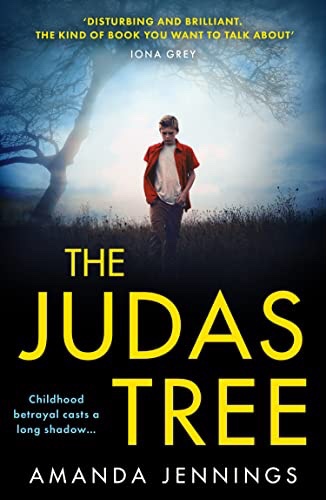
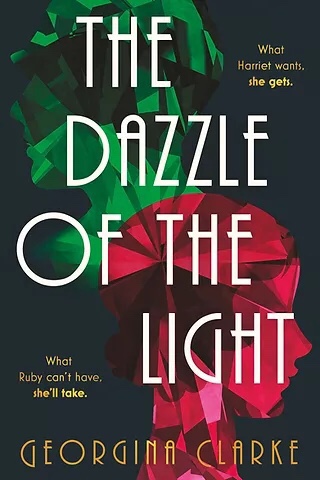

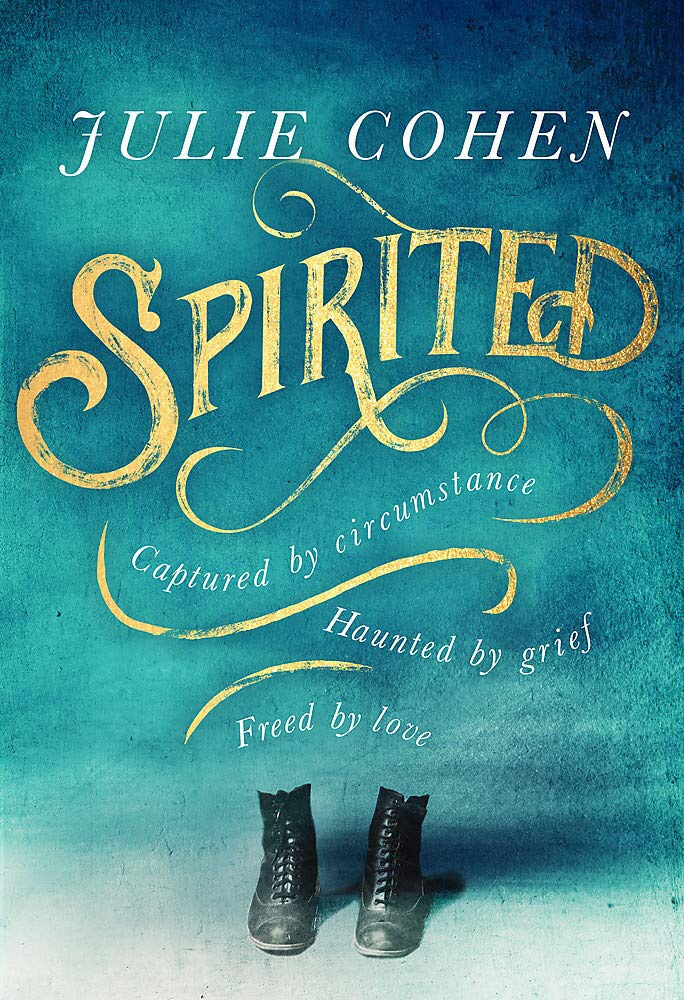
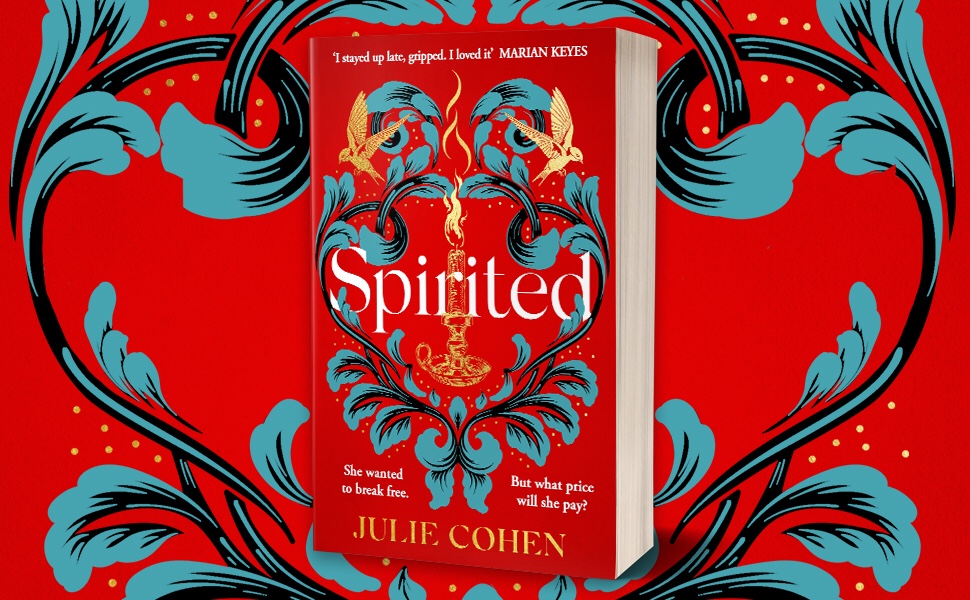
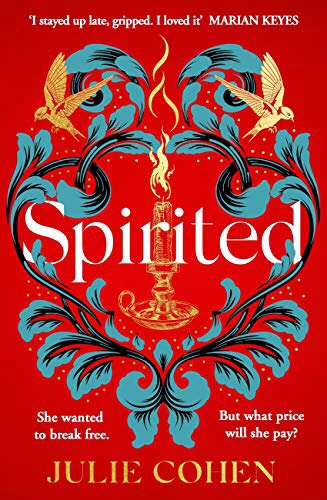
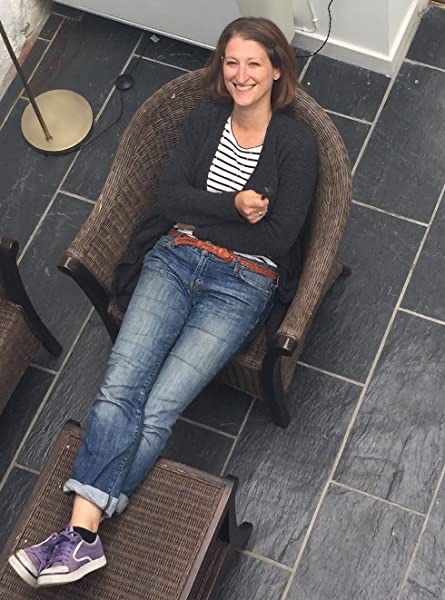
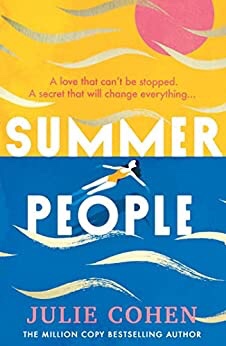
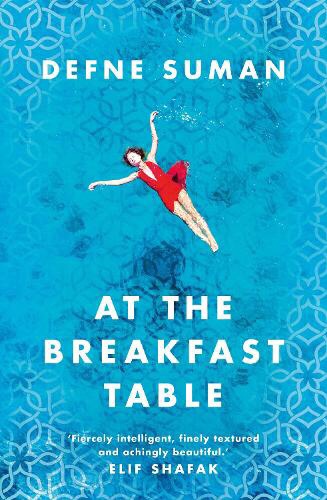
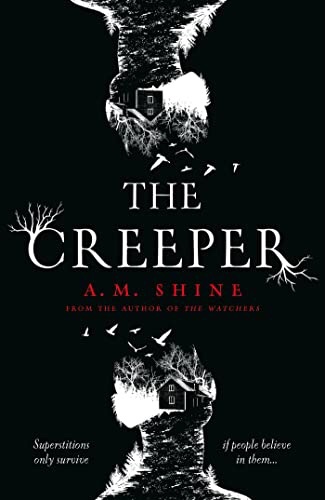
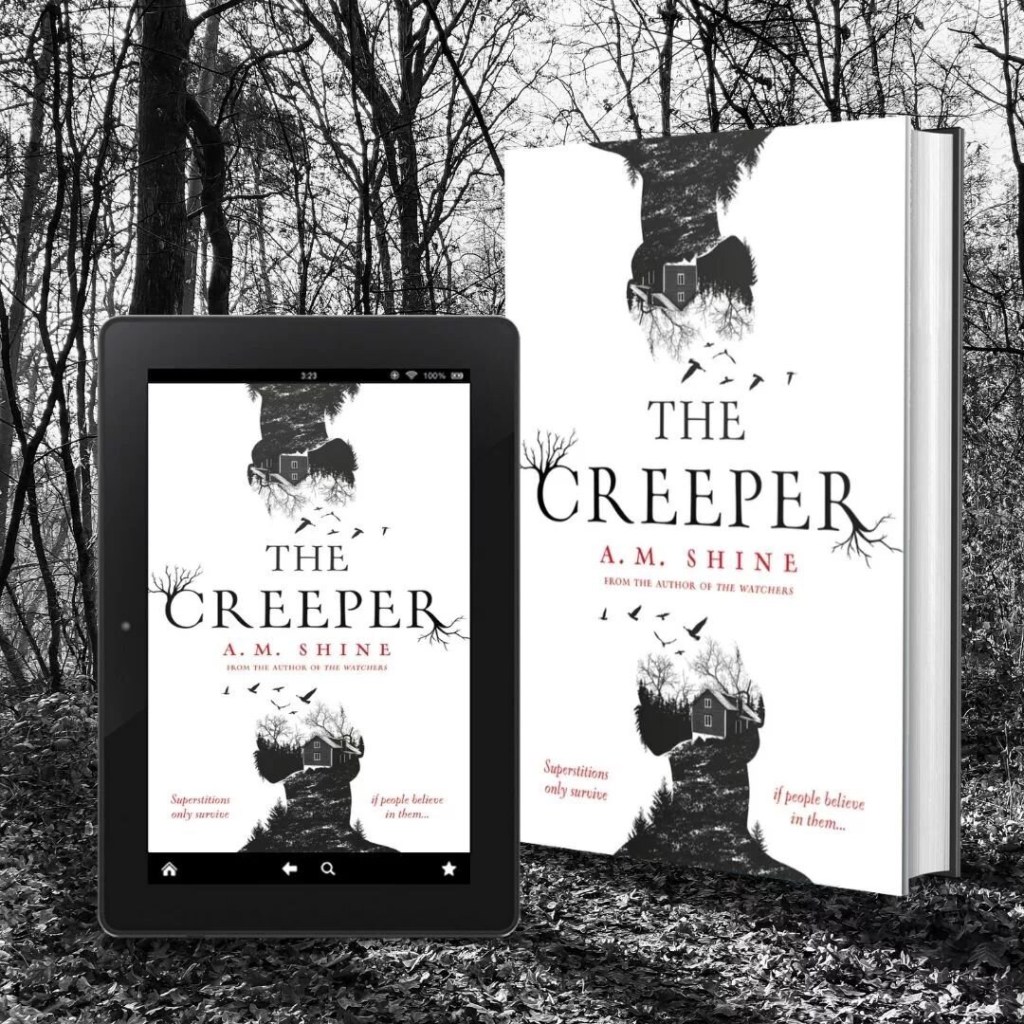
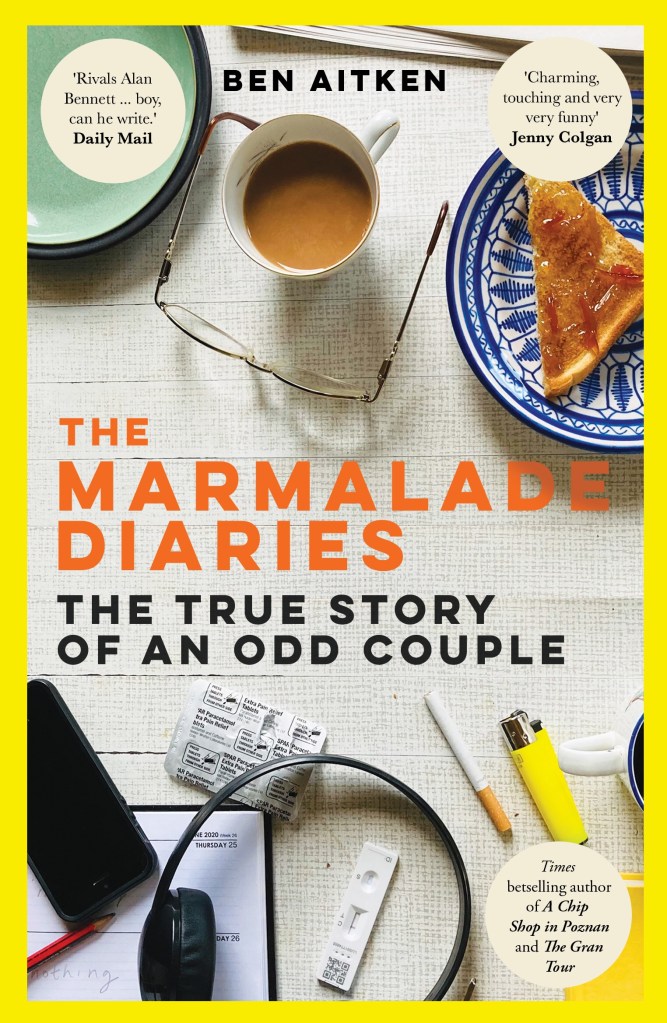
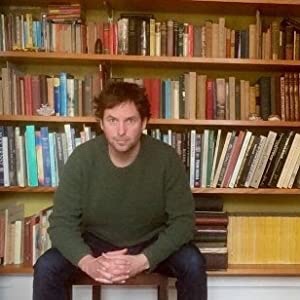
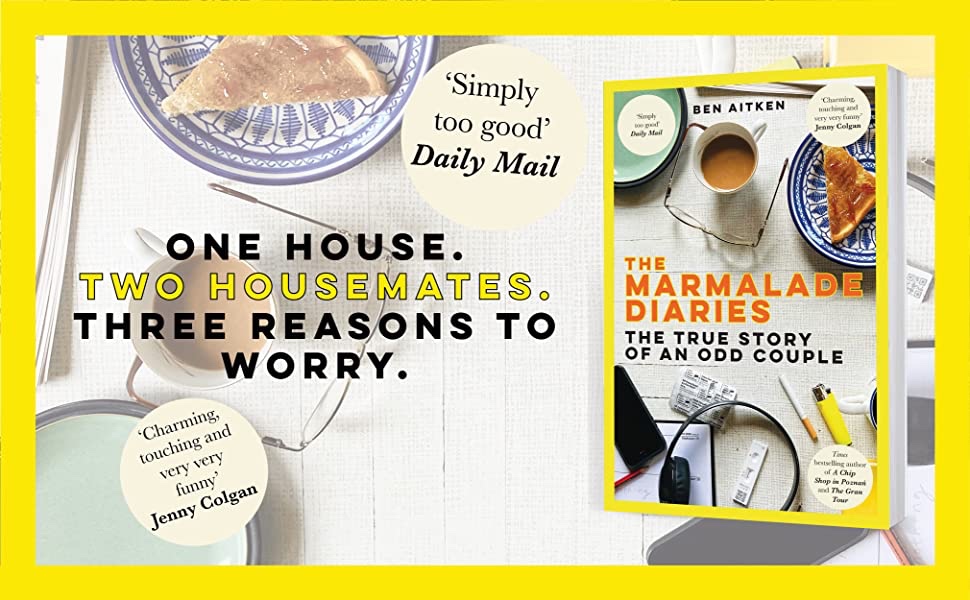
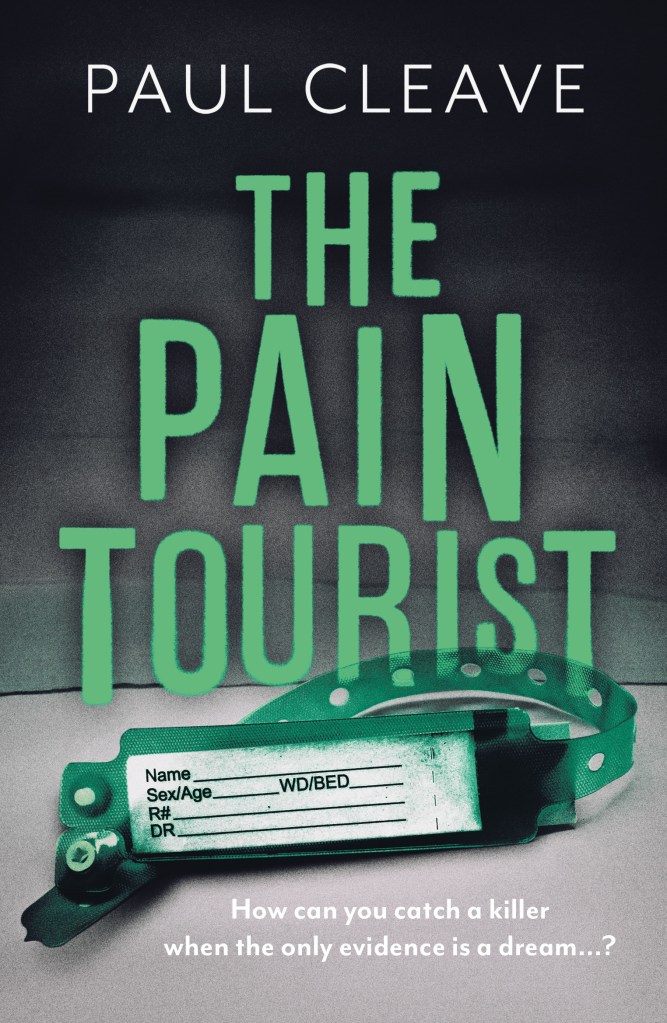


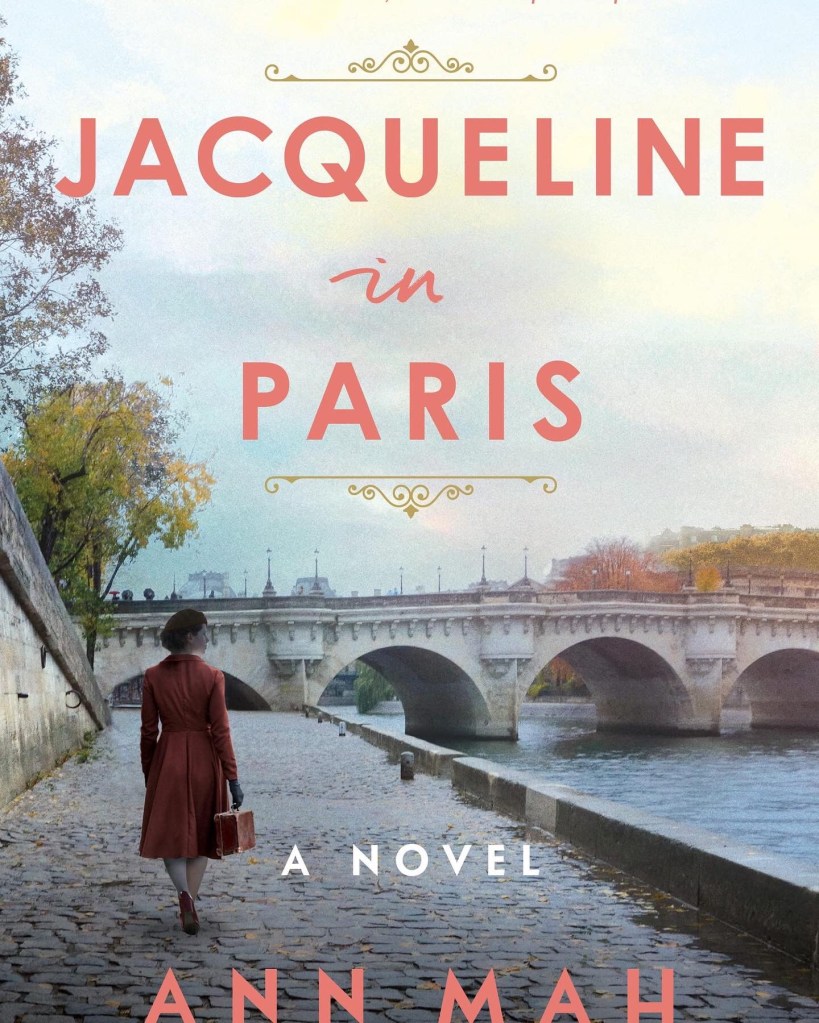

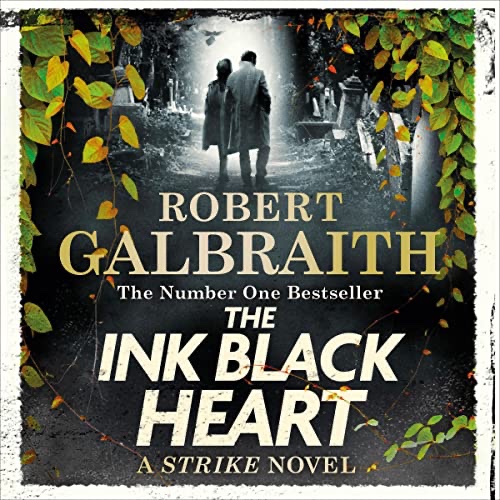

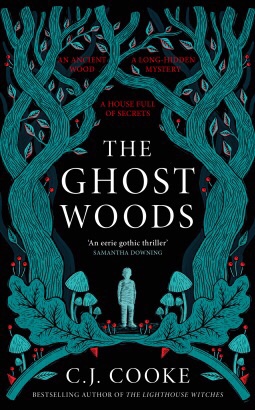


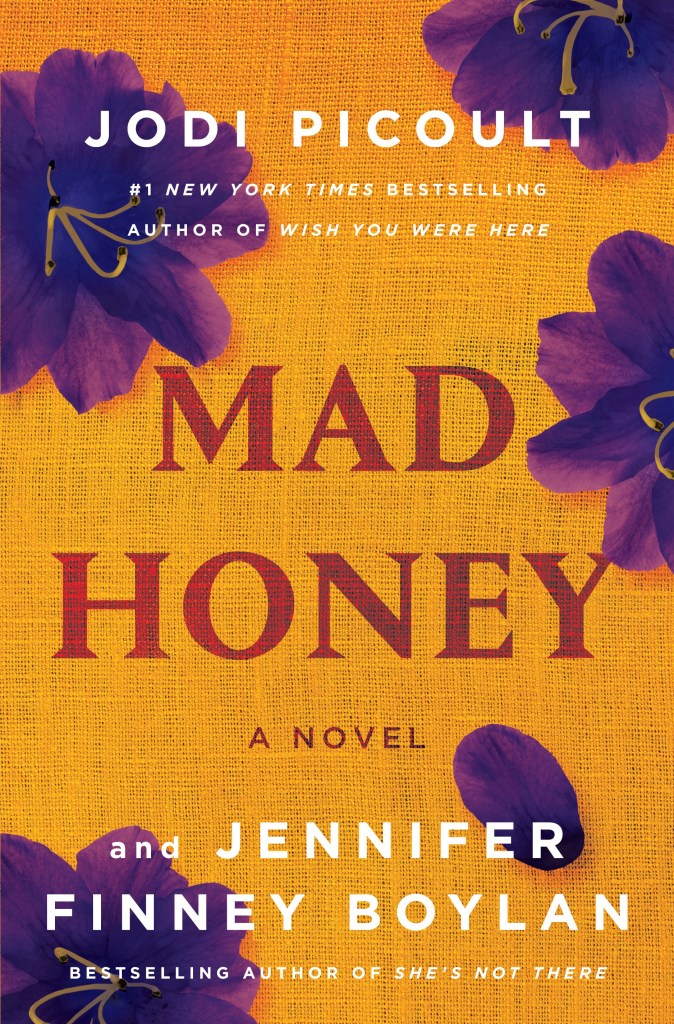



 The Lotus Readers