I am a huge fan of Damon Albarn – I haven’t gone crazy, this is relevant – from the first 12 inch Blur single I bought in 1989, to Gorillaz and all the solo projects in-between I’ve been there. For me, the most amazing piece of work he’s composed is Monkey: The Opera which I went to see at the Royal Opera House in Covent Garden and then again at Lincoln Centre in NYC. I’d seen the ‘Monkey Magic’ series when I was a child, me and my brother loved the hilarious and badly dubbed chronicles of Monkey and his quest. However, in the opera house, when the music started and the curtains opened this Monkey was simply magical, like a window to another world. The music was exquisite and the set was just incredible, with floating clouds and giant bamboo, underwater realms and ancient gods and spirits lurking above while Monkey learns what his journey is about. I’d honestly never seen anything like it. So, when I picked up this beautiful book I put the music on so I had a soundtrack to my reading experience and it fitted together beautifully. Used to Greek, Roman and Celtic mythology, Albarn’s soundtrack felt like fitting music for the entirely alien, but rich and evocative mythology I was becoming immersed in.
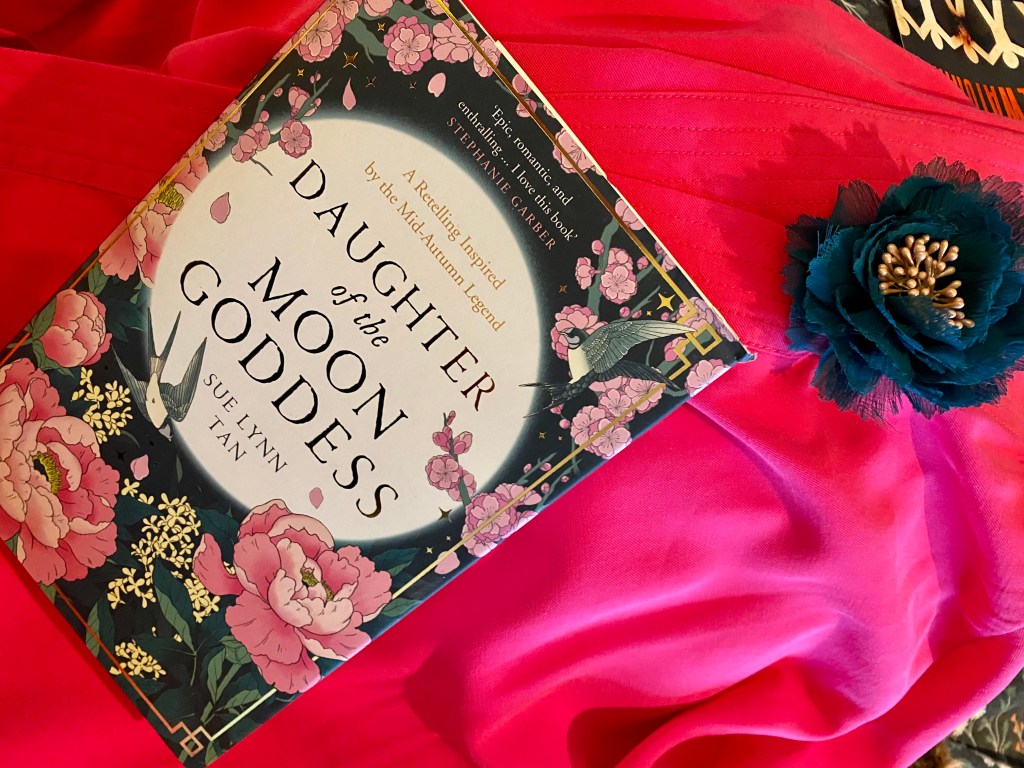
This incredible debut novel from Sue Lynn Tan is a mix of mythology, spirituality, magic and Bildüngsroman- that wonderful and almost untranslatable word that relates to books focused on a young person growing up. Our heroine is Xingyin a young woman who has grown up on the moon, hidden from a powerful Celestial Emperor who placed her mother Chang’e in exile for the theft of his elixir of mortality. Xingyin’s life has been a lonely one and as she grows she longs for new experiences and places. Now Xinying is coming into her power and as her magic increases, she is discovered. Now she must flee the moon and leave her mother behind, knowing that she’s pitted against the most powerful immortal leaving both their lives at risk. Alone, powerless, and afraid, she makes her way to the Celestial Kingdom, a land of wonder and secrets. Disguising her identity she works as a servant, but then seizes a lucky opportunity to train in the Crown Prince’s service. Xingyin starts learning to master archery, magic, and the strange attraction between her and the emperor’s son. I loved being back in a world within the clouds. The author’s beautifully lyrical language is so vibrant and she really does bring this stunning world to life. This celestial realm is woven from layers of description about the clothing, the food, the buildings and the unique magical elements, creating a setting and atmosphere that’s suitably awe inspiring.
I found Xingyin’s inner journey interesting too, because she develops so much from the naïve young girl at the beginning. I loved that she is following a path to be a warrior, something that seems rare for women in Western mythologies. I learned so much about Chinese culture through her obligations to family, particularly the mother/daughter relationship and the concept of honour and how it informs her ambitions. Her focus is to free her mother from exile and this brings out an incredible determination in Xingyin. She starts out unable to fend for herself and she shows both patience and grit, achieving each goal on the way to her destiny. She has to learn the history of these Immortal Realms in order to negotiate her way forward. She also has to practice her magic and the find the best way to utilise it in her quest. I loved how the author kept a steady pace in these early sections, the slower pace echoing that Xingyin is only at the beginning of her journey and she feels those same emotions we do when our goals are still so far away. The pace really speeds up when Xingyin has undergone her initial training and the army leaves to test it’s recruits in battle. I really enjoyed the extraordinary monsters from Chinese legend that the army must defeat for Xingyin to really fulfil her potential as a battle-hardened warrior. The author beautifully describes that uncertainty and fear soldiers must feel before a battle – the self-doubt that can creep in and takes hold. Yet Xingyin manages to feel this and still maintain her warrior-like demeanour. She isn’t just a killing machine. Throughout her endeavours she has kept her own deep seated sense of morality and a self-awareness that allows her to set boundaries.
Aside from Xingyin’s quest there is also an element of romance in the novel; a love triangle that does dominate in parts and takes up an enormous amount of her head space. I wasn’t sure I needed the romance for the book to work, but I guess it’s part of a young girl’s journey into womanhood. She is torn between two men and seems on a rollercoaster of trying to understand her feelings for both. One minute she’s berating her own fickleness in wanting one and then the other, then is angry that whatever they do she can’t let either one of them go. I think the author is trying to capture the immaturity of relationships at this age and I felt the romance might have been pitched at a YA audience who would understand the angst better than this middle-aged reader. I didn’t want the romance to take over the storyline and distract Xingyin from her own journey and potential. I don’t read a enormous amount of fantasy, but this was a complete escape from normal everyday life and I found myself lost in it’s imagery and those wonderful mythical creatures. The author has a boundless imagination, shown in the sheer scale of this work and how she paints her world with words so that it’s beautifully rich, evocative and ultimately, enchanting. I’m looking forward to diving into her world again for the sequel to this incredible debut novel.
Published 20th Jan 2022 by Harper Voyager
Meet the Author
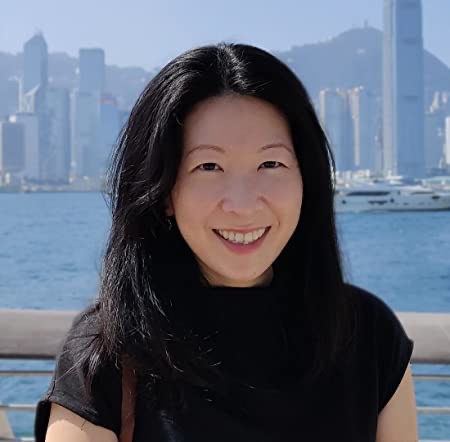
Sue Lynn Tan writes stories inspired by the myths and legends she fell in love with as a child. After devouring every fable she could find in the library, she discovered fantasy books, spending much of her childhood lost in magical worlds. Daughter of the Moon Goddess is her debut, the first in the Celestial Kingdom duology – a fantasy of immortals, magic and love, inspired by the beloved legend of the Chinese moon goddess, Chang’e.
When not writing or reading, she enjoys exploring the hills, lakes, and temples around her home. She is also grateful to be within reach of bubble tea and spicy food, that she unfortunately cannot cook.
It’s a tough year for all of this year and Christmas is no exception, most of us are still more worried about how to keep warm than feeling festive. As I get older, I seem to think about Christmas earlier each year, then get to this point and realise I’ve done nothing, again. Last year the Christmas cards didn’t even get posted, so I’ve got to sift through the pile just to weed out anyone who’s had another baby, got married or even worse, divorced. There’s nothing worse than sending a card with the ex-husband’s name in it! This year I’m buying less and with my side of the family we’ve decided on a meal at the local pub together, rather than struggling to buy each other more stuff. With my lot the best side of Christmas is us all together having a laugh. For those people we’re still buying for I’m always keen on buying a book and in our Squad Pod Collective we do a Secret Santa where everyone gets a book and chocolate. So I thought I’d share with you the books I’ll be buying friends and family this year. There’s nothing I love more than seeing someone reading the book I’ve bought for them and really enjoying it. Happy Christmas Reading folks. 🎄🎄
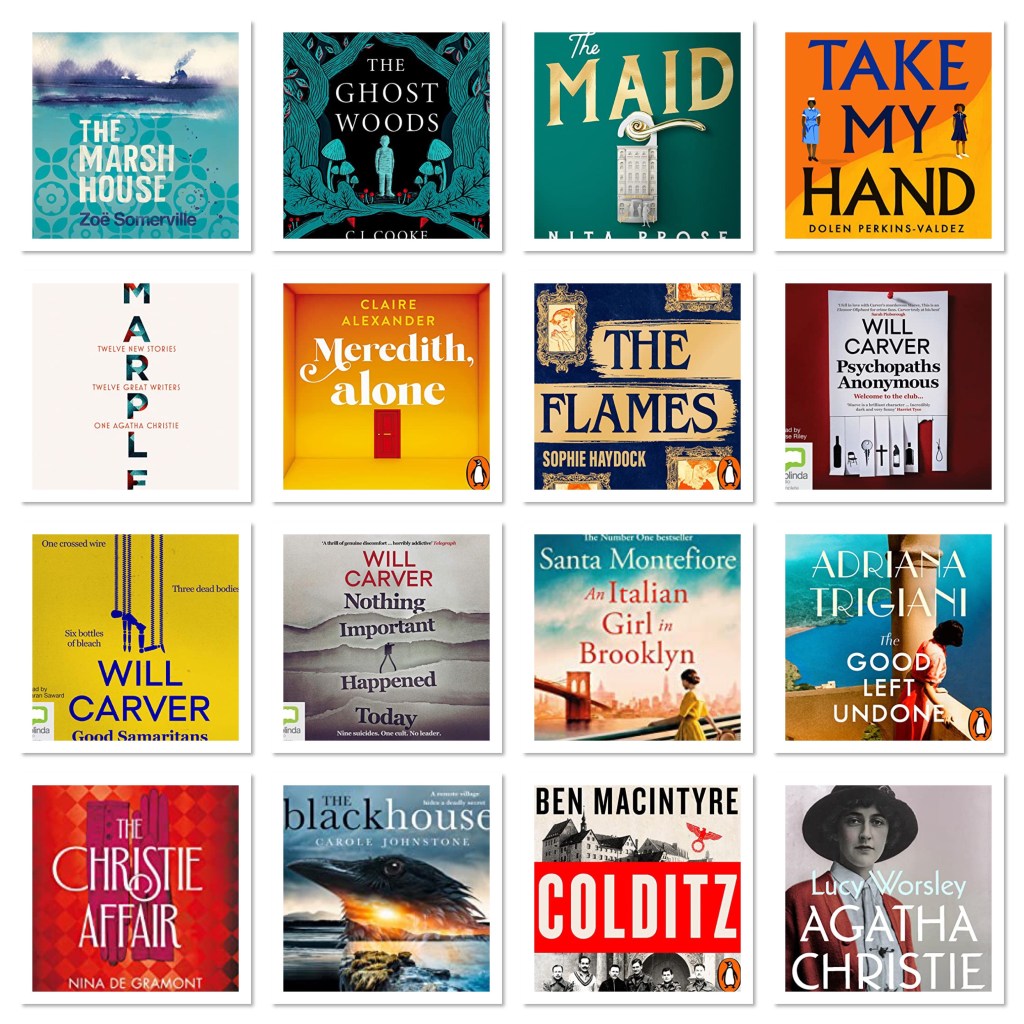
Colditz: Prisoners of the Castle by Ben Macintyre
My other half really enjoys reading when he gets a chance and he loves military stories like this one I saw him pick up in Waterstones a few weeks ago. He read the book behind the SAS Rogue Heroes series a few years ago, followed by the author’s other novels. I think he feels at home in that world, after spending 22 years in the RAF in avionics he misses the camaraderie. In fact he picked this book up because he knew that SAS founder David Stirling spent some time in Colditz, as did pilot Douglas Bader. This book is an incredible story that challenges the usual tale of daring and brave British officers plotting their daring escapes from captivity. Colditz was a forbidding Gothic castle on top of a hill in Nazi Germany. Bestselling historian Ben Macintyre, does tell a tale of the indomitable human spirit, but also one of class conflict, homosexuality, espionage, insanity and farce.
Macintyre has gone through an incredible amount of historical material to reveal a remarkable cast of characters, wider than previously seen and hitherto hidden from history, taking in prisoners and captors who were living cheek-by-jowl in a thrilling game of cat and mouse. From the elitist members of the Colditz Bullingdon Club to America’s oldest paratrooper and least successful secret agent, the soldier-prisoners of Colditz were courageous and resilient as well as vulnerable and fearful—and astonishingly imaginative in their desperate escape attempts. Deeply researched and full of incredible human stories, this is said to be the definitive book on Colditz and I can’t wait to hear about it.
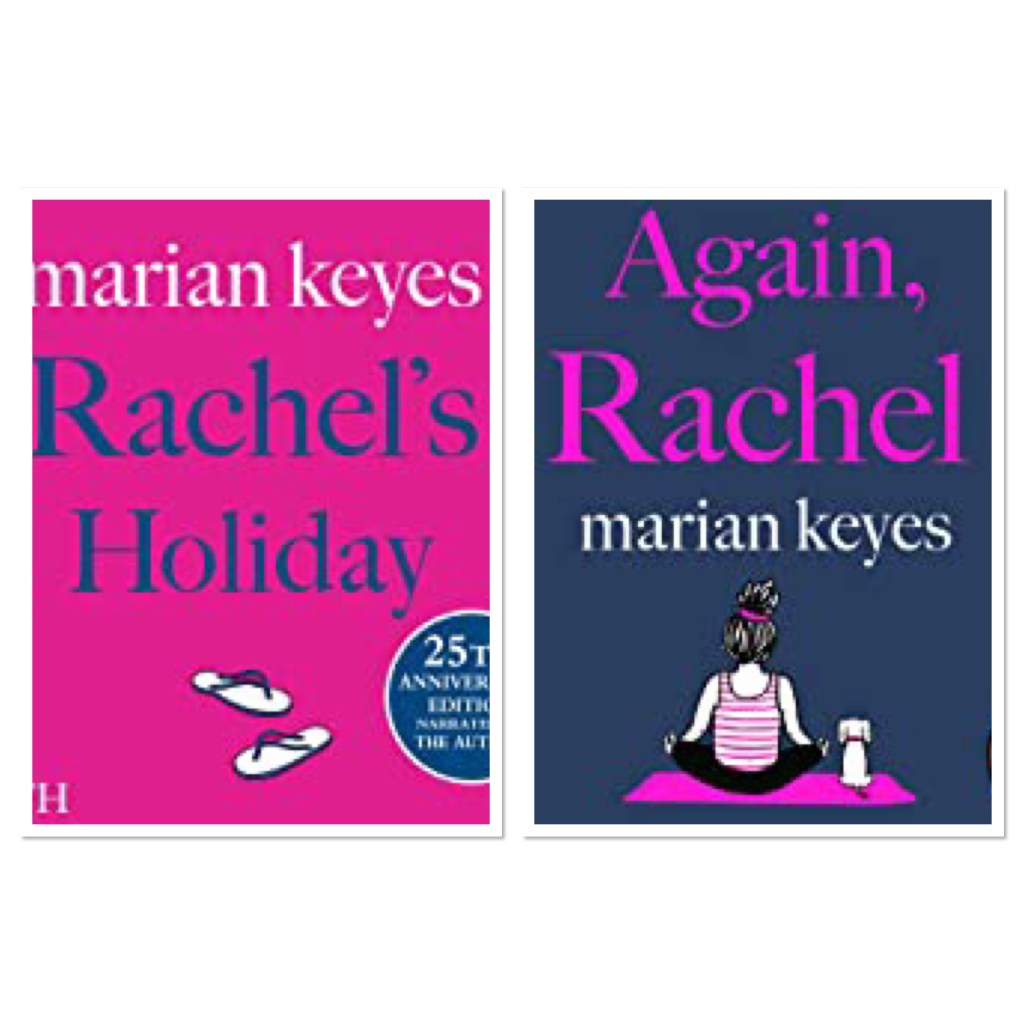
Rachel’s Holiday and Again,Rachel by Marian Keyes
My eldest stepdaughter is 18 next February and she’s finishing her A’Levels. She’s been trying to improve how much she reads, in competition with her boyfriend. I thought it would be nice for her to have something that’s an easy read, but with great character and storytelling, plus lots of heart. Who better than Marian Keyes? Again, Rachel is her latest novel and a sequel to Rachel’s Holiday, first published 25 years ago. Rachel Walsh has been living in New York City, spending night’s partying in glamorous venues and spending the early hours with hot boyfriend Luke.
‘How did it end up like this? Twenty-seven, unemployed, mistaken for a drug addict, in a treatment centre in the back arse of nowhere with an empty Valium bottle in my knickers….’ Rachel’s older sister turns up and talks her into going to rehab, something Rachel only agrees to because she’s heard that rehab is wall-to-wall Jacuzzis, gymnasiums and rock stars going cold turkey – plus it’s about time she had a holiday. Saying goodbye to fun will be hard. But not as hard as losing the man who she realises, all too late, might just be the love of her life.
Back in the long ago ’90s, Rachel Walsh was a mess. But her spell in rehab transformed everything. Life became very good, very quickly. These days, Rachel has love, family, a great job as an addiction counsellor; she even gardens. Her only bad habit is a fondness for expensive trainers. But with the sudden reappearance of a man she’d once loved, her life wobbles. She’d thought she was settled. Fixed forever. Is she about to discover that no matter what our age everything can change? Is it time to think again, Rachel? I hope these are the perfect introduction to a great author.
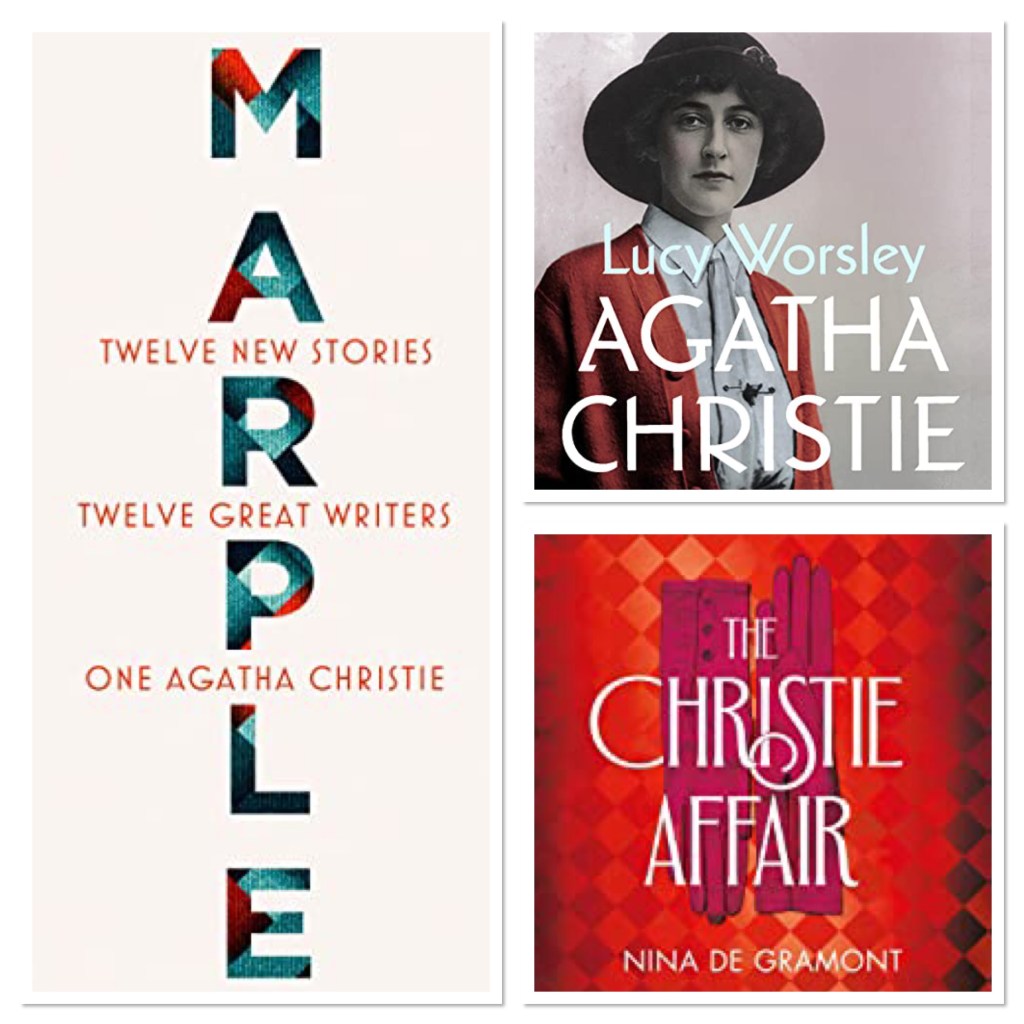
For Agatha Christie Lovers.
I know a lot of Agatha Christie lovers and this is the perfect package for someone who’s perhaps read all of Agatha’s stories and novels. Firstly, Marple is a collection of twelve original short stories, all featuring Jane Marple and introducing the character to a whole new generation. Each author reimagines Agatha Christie’s Marple through their own unique perspective while staying true to the hallmarks of a traditional mystery. There are some great crime and mystery writers here such as Lucy Foley, Elly Griffiths and Val McDermid giving us a reminder why Marple is the most famous fictional female detective of all time. Agatha Christie is a new biography of the writer from acclaimed historian Lucy Worsley, to run alongside the BBC series. I was surprised at how modern Agatha was in her thinking – she liked fast cars, went surfing and was fascinated by the new science of psychology. I hadn’t known she suffered from mental ill health herself. Yet despite this, she seemed to project an image of being an ordinary Edwardian housewife. She was born in 1890, which really was another world compared to the modern period post WW1. Lucy Worsley shows a woman who lived through a period of huge social change and became an incredibly successful woman writer, a pioneer of crime fiction. To round everything off is a novel about a very specific period of Agatha Christie’s life; the eleven days in 1926 when she went missing and created a mystery worthy of one of her own novels. The Christie Affair is narrated by the other woman, the woman Agatha’s husband says he’s leaving her for. Nan has an unusual link to the Christie’s and her tale unfolds from a childhood in Ireland and through the Great War. Agatha has something that Nan wants, but it isn’t just her husband. This was a fascinating novel, that again shows the huge differences in life before and after the war, particularly for women. I think any of these books would be a great addition to to a Christie lover’s library.
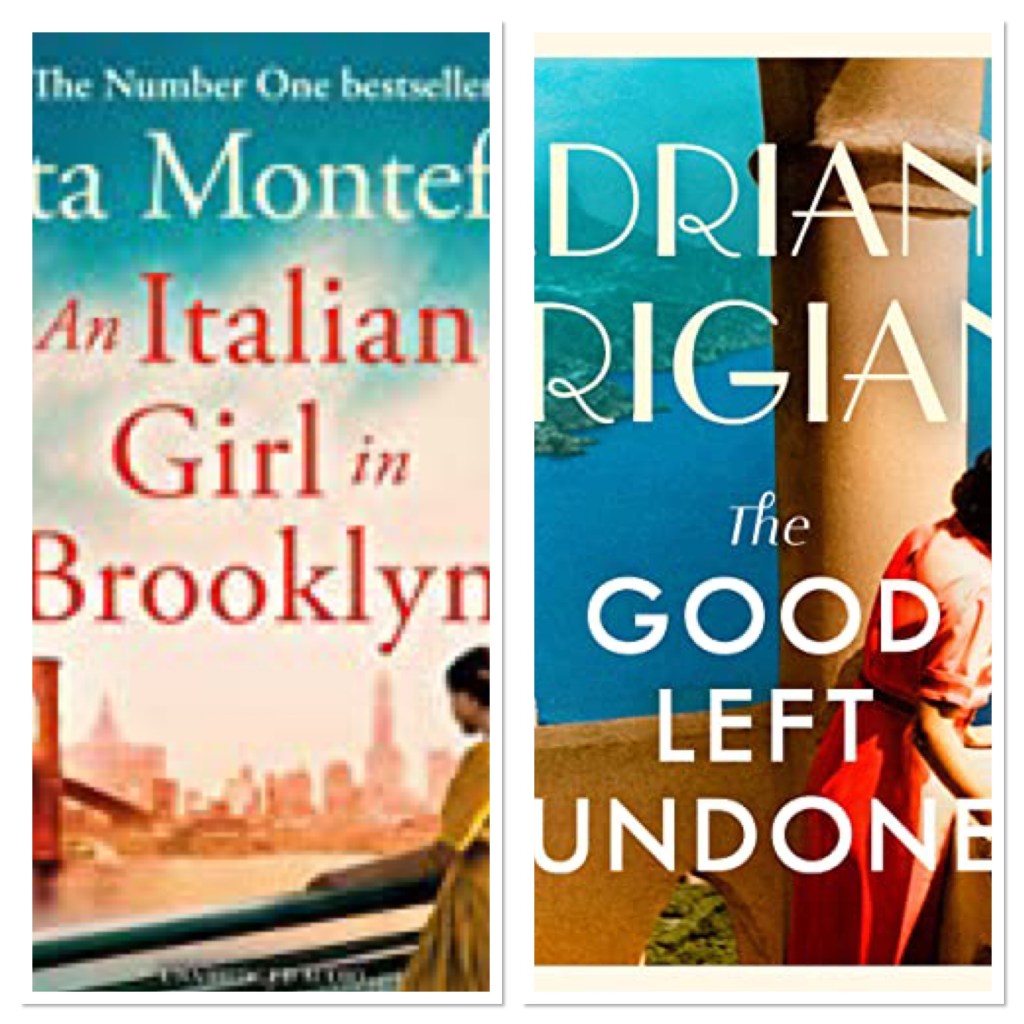
Novels With an Italian Flavour.
I read both of these novels over the summer and absolutely craved the Italian coast, the food and the incredible people. Both these authors are brilliant storytellers and conjure up a real atmosphere of Italy, as well as the history. Santa Montefiore takes us to Brooklyn first, to the heart of the Italian neighbourhood in the late 1970’s. Evelina has her close family and friends around her for Thanksgiving and while she’s full of gratitude for what she has, she can’t help but reminisce about what she left behind thirty years ago. She thinks back to a turbulent part of Italian history, when she lived a sheltered life in the countryside in Northern Italy in 1934. Her older sister Benedetta follows her father’s choice and marries a banker, against her own wishes, but Evelina is determined to never marry out of duty. Of course she’s never been in love, that is until she meets the dressmaker’s son Ezra and her heart recognises him. They have a beautiful summer getting to know one another, but as the shadows of war gather and Italy seems certain to follow in Hitler’s wake, Ezra and his Jewish family could be in danger. This is a beautiful love story and a different look at WW2, showing how it affected ordinary Italians and tore families apart.
Adriana Trigiani tells the story of proud grandmother Matelda Cabrelli who always has something to say, but as she faces the end of her life, she worries she’s failed to tell the stories that matter. Most of all, she finds herself needing to tell the tale of her mother Domenica’s two great loves. First, she tells us about Domenica’s childhood sweetheart: a boy from her own small coastal town of Viareggio. Second, a mysterious captain: an infatuation forged in the midst of WW2, and the father Matelda never knew. Now, before her time runs out, it falls to Matelda to tell her granddaughter Domenica’s story. Together, the Cabrelli women unpick the mysteries, passions and tragedies that sent Domenica away from Italy—then brought her home again. This book introduced me to a gorgeous sounding part of Italy – the Tyrrhenian coast, but also beautifully conjured up the atmosphere of Scotland and a favourite haunt of mine, the West End of Glasgow. Both of these novels fully immerse the reader into Italy and it’s history, as well as telling a beautifully romantic love story.
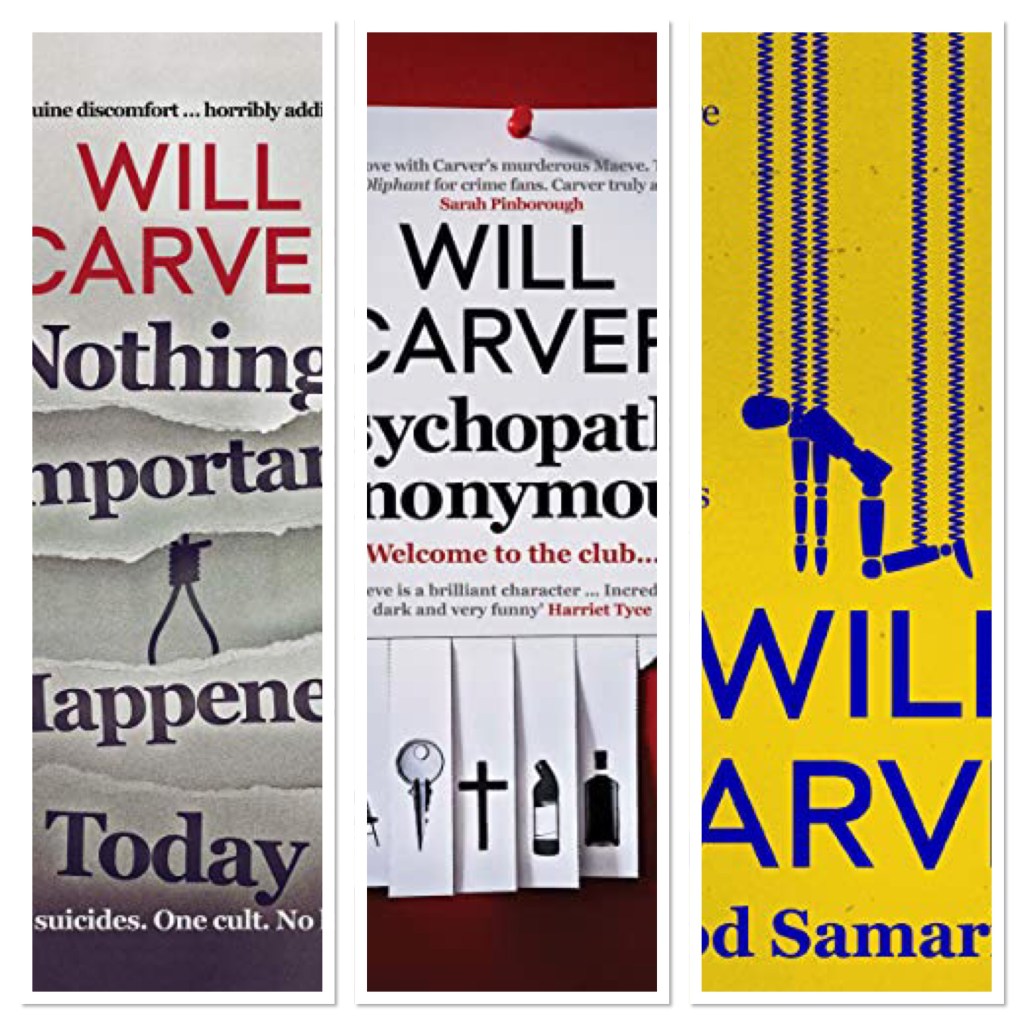
An Introduction to Will Carver
I’d been wondering what to buy our 17 year old’s boyfriend when she came home and told us they were both trying to read more. I take any opportunity to recommend Orenda books and I thought what better than Will Carver, the most inventive and original novelist I’ve read in a long time. He’s impossible to review, but I’ve cherry picked these three. Good Samaritans is dark, sexy, dangerous crime fiction with the tagline – ‘One crossed wire, three dead bodies and six bottles of bleach’. Seth Beauman can’t sleep, so he stays up late, calling strangers from his phone book, hoping to make a connection, while his wife, Maeve, sleeps upstairs. A crossed wire finds a suicidal Hadley Serf on the phone to Seth, thinking she is talking to The Samaritans. This seemingly harmless late-night hobby turns into something more for Seth and for Hadley, and soon their late-night talks are turning into daytime meet-ups. And then this dysfunctional love story turns into something altogether darker when Seth brings Hadley home, and someone is watching. Nothing Important Happens Today opens as nine people arrive one night on Chelsea Bridge. They’ve never met, but all at the same time, they run and leap to their deaths. Each of them received a letter in the post that morning, a pre-written suicide note, and a page containing only four words: Nothing important happened today. That is how they knew they had been chosen to become a part of the People of Choice: a mysterious suicide cult whose members have no knowledge of one another. People of Choice are appearing around the globe: a decapitation in Germany, a public shooting at a university in Bordeaux; in Illinois, a sports team stands around the centre circle of the football pitch and pulls the trigger of the gun pressed to the temple of the person on their right. It becomes a movement. But how do you stop a cult when people do not know they are members?
Finally there’s Psychopaths Anonymous, where Maeve welcomes you to the club. Maeve has everything: a high-powered job, a beautiful home, a string of uncomplicated one-night encounters. She’s also an addict: A functioning alcoholic with a dependence on sex and an insatiable appetite for killing men. What she can’t find is a support group to share her obsession, so she creates her own and Psychopaths Anonymous is born. Now in a serious relationship, Maeve wants to keep the group a secret. But not everyone in the group adheres to the rules, and when a reckless member raises suspicions with the police, Maeve’s drinking spirals out of control. She needs to stop killing and she needs to close the group. But Maeve can’t seem to quit the things that are bad for her, including her new man. This is a scathing, violent and darkly funny book about love, connection, obsessions and sex – and the aspects of human nature we’d prefer to hide – Psychopaths Anonymous is also an electrifyingly original, unpredictable thriller that challenges virtually everything. These seem the perfect unexpected gift for an 18 year old keen to extend his reading range. I’m sure he’ll be surprised.
A Little Bit Ghostly..
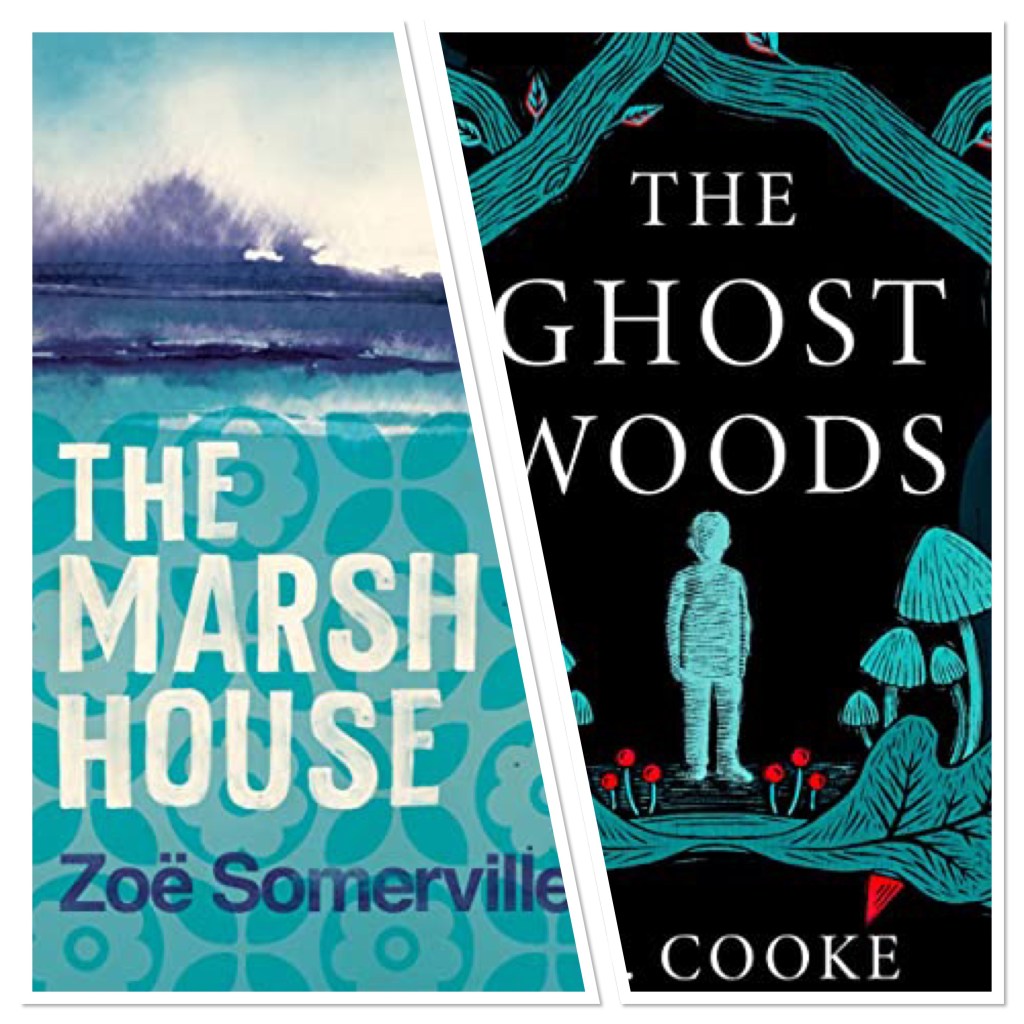
I really enjoyed both of these reads and I would recommend both of them if you like historical fiction, women’s history and a very spooky edge. The Marsh House is definitely in my books of the year, it’s so atmospheric and also unearths a fascinating tale of the influence of eugenics in early 20th Century Norfolk. Zoe Somerville takes us back to 1962 and a young mum eager to create a magical Christmas for her daughter Franny. Malorie rents a remote house on the Norfolk coast, but once there, the strained silence between them feels louder than ever. As Malorie digs for decorations in the attic, she comes across the notebooks of the teenaged Rosemary, who lived in the house 30 years before. Trapped inside by a blizzard, and with long days and nights ahead of her, Malorie begins to read. Though she knows she needs to focus on the present, she finds herself inexorably drawn into the past. In the summer of 1932, Rosemary lives in the Marsh House with her austere father, surrounded by unspoken truths and rumours. So when the glamorous Lafferty family move to the village, she succumbs easily to their charm. Dazzled by the beautiful Hilda and her dashing brother, Franklin, Rosemary fails to see the danger that lurks beneath their bright façades and the same political outlook that spawns Naziism. The more Malorie reads Rosemary’s diary, the past and present begin to merge in this moving story of mothers and daughters, family obligation and deeply buried secrets. It’s stunningly atmospheric and Malorie’s evening visitations and dreams are incredibly haunting.
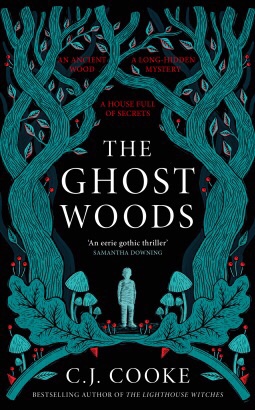
C.J. Cooke’s novel The Ghost Woods also has a focus on mothers and daughter, a spooky house and women’s history of the mid- 20th Century. In the midst of the woods stands a house called Lichen Hall, a place shrouded in folklore—old stories of ghosts, of witches, of a child who is not quite a child. In 1965, Pearl arrives at the hall about to give birth, something she’s chosen because the hall’s owners help young girls find adoptive families for their child. However, the supposedly philanthropic family who live in Lichen Hall, are eccentric to say the least, with the family patriarch obsessed with parasitic lichens. Mabel, who lives in a caravan in the grounds with her mysterious son, had her baby here several years ago but he wasn’t adopted, because he has a talent the family can use. There’s an incredible sense of creeping evil at Lichen Hall and a system that only works due to women’s shame and society’s judgement. The author mixes her women’s history with a supernatural story that’s genuinely scary.
Other Books I’d Love To Gift
The Maid by Nita Prose – one of my first reads of 2022 this is a great crime novel with a unique narrator that you’ll fall in love with. When a murder takes place in a smart hotel, who knows most about what goes on in the behind the locked doors?
Take My Hand by Dolen Perkins-Valdez – an incredible novel based in 1970’s America, where a young nurse starts work in a rural part of the southern states of the USA. Her attachment to two young sisters, from a poverty stricken family, leads to her uncovering a terrible injustice inflicted on African-American women.
The Flames by Sophie Haydock – if you have a family member or friend who loves art, this is the novel for them. We’re taken to early 20th century Vienna and two upper class sisters who meet artist Egon Schiele. Haydock takes four of Schiele’s paintings of women and gives each model a voice to tell their own story.
The Blackhouse by Carole Johnstone – this is a brilliant crime story, based in the Outer Hebrides, with mysterious elements of folklore. Maggie is an investigative journalist who returns to the village of Blairmore to uncover a secret. As a child Maggie claimed that someone on the island had killed a man, but do the locals want her to solve that mystery? Atmospheric, dark and very compelling.
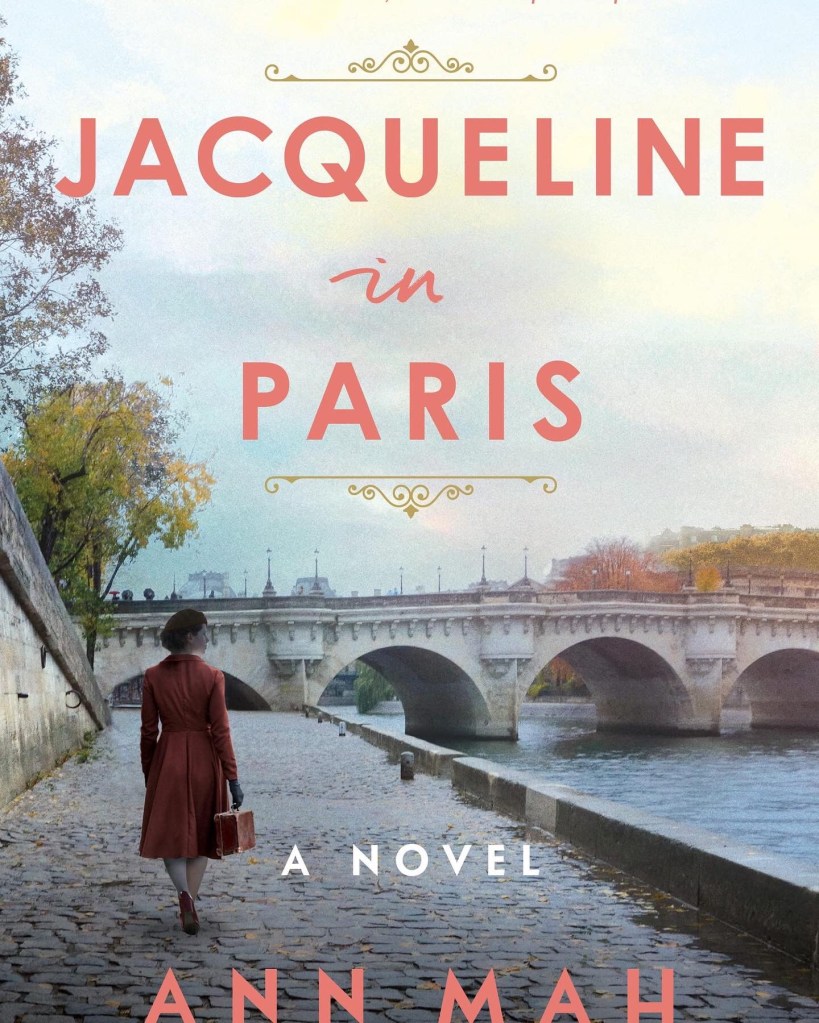
I truly enjoyed this beautiful piece of historical fiction, focused on one of the most iconic women of the 20th Century. I’ve read biographies on Jackie and watched many documentaries about the Kennedy family with my mum who is fascinated with the theories about the assassination of JFK. I’ve always had a picture in my head of a woman who didn’t fulfil her potential and had so much more to give than being a First Lady, supporting her husband. I’d most recently read a book focused on her life with Aristotle Onassis and his mistress Maria Callas. I always wondered why she married Onassis but felt it could have been a response to the assassination and a desire to be protected and live out of the spotlight. This book focuses on a single year in the life of Jacqueline Bouvier as she travels to Paris for the junior year of her degree course. She has a fascination with France and was interested in researching her family tree. Ann Mah shows us a girl torn between the life she wants and the life her family wants or needs her to have. Her mother has planned for Jacqui to marry someone in the political classes, preferably with family money behind them. This feels like her last year of freedom, in a Paris still recovering from the occupation of WW2 and with politics that are very different from the US. I thoroughly enjoyed reading about a new side to this fascinating woman.
Where I End by Sophie White
This was an extraordinarily powerful book, that I’m still thinking about several weeks later. On a remote island somewhere in the Irish Sea, an arts centre is being built to attract tourists, because the island is barren and without attractions. The first resident artist is Rachel, who arrives with her baby Seamus and while swimming on the beach meets local girl Aoileann. Aoileann is a strange girl, not used to strangers and fascinated with the way Rachel mothers her baby. Aoileen’s odd manner is due to her home life, where in a house with the front door and windows blocked up, she shares a caring role with her grandmother. The ‘bed thing’ needs round the clock care, with a Heath Robinson system of ropes and pulleys they haul her out of bed and into the bathroom. She does not move for herself, except the wearing away of her fingers, now bloody stumps. The line that sent a nasty shiver down my spine and changed the whole book for me, revealed the one finger where the bone protrudes from the skin. It’s this bone that the bed thing uses to scratch out messages on the floor. This is a disturbingly horrific book that shows the drudgery of caring, the effect of remote and superstitious communities, and the terrible power of secrets in a family. The author explores motherhood in such a clever way, contrasting Rachel’s love for Seamus with the neglect Aoileann has thought was the norm. This book isn’t for the faint-hearted, but it is utterly devastating in it’s effect.
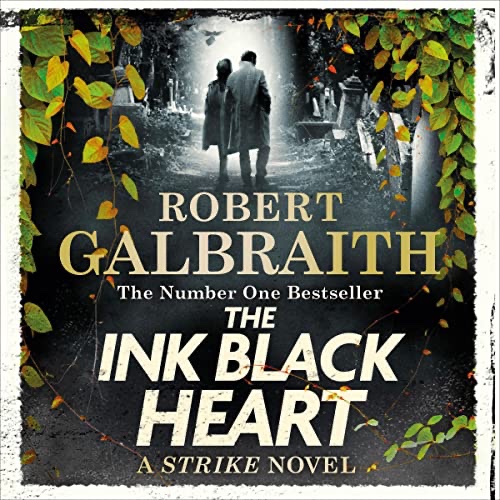
The Ink Black Heart by Robert Galbraith.
This instalment of the Cormoran Strike series is an absolute monster of a book. I had to give up reading the physical copy because it was like holding a brick! So I purchased the kindle copy so I could finish without breaking my thumbs. I’m a huge fan of Cormoran Strike, so although this wasn’t my favourite book of the series, it’s still up there as one of my favourites. This time Strike and Robin are drawn into the worlds of community arts and gaming. Two talented young artists from a community art centre create a cartoon called The Ink Black Heart, set in Highgate Cemetery and featuring unusual characters, one a wisp of a ghost and another that’s a human heart. An anonymous group of fans created an online game, where participants meet in Highgate Cemetery and complete challenges. Yet where there is success there are always people ready to tear it down and a person with the code name Anomie seems keen to do that. When the two creators are lured to the cemetery and attacked, things become serious. We’re privy to personal chats within the game and with Robin infiltrating the chat secrets will out. There are more complications in Cormoran’s love life as he dates a friend from ex-girlfriend Charlotte’s circle – can he shake off his feelings for good? Then there are those growing feelings between him and Robin, are they brave enough to follow those emotions or not?
The Pain Tourist by Paul Cleave.
I can’t stay too much about this thriller, because I’ve got a full review coming in a couple of days. This is such a fast paced thriller and it has such a tense opening! A family is woken in the night by masked men who are asking for the whereabouts of the safe. James is desperately trying to find a way to get his sleeping sister to safety. As she runs into the night, James watches the men shoot his mum and dad before he takes a bullet to the head. There is no safe. Nine years later, James wakes from a coma and his sister Hazel is soon by his side. The strange thing is James has been living all these years, in a different reality to this one and he is determined to capture it in writing. So he asks for nine notebooks, one for each year and begins to write his Coma World journal. Detective Rebecca Kent is assigned to his case and she has the help of Tate, the original detective who is now a private investigator. She is already chasing a meticulous serial killer called Copy Joe who likes to reproduce other killer’s crime scenes. What she doesn’t know is that James is recording events that happened in the real world in his journals, such as the books Hazel was reading to him or details of the weather. What else might he know? Rebecca is about to realise there’s more than one serial killer in town.
The Ghost Woods by C.J. Cooke
This is an intensely creepy novel from the beginning as we follow two young girls dealing with the consequences of becoming pregnant out of wedlock in the mid- Twentieth Century. Both choose to have their baby at Lichen Hall where the Whitlock family have been looking after young girls in trouble for several years. Mabel is the first, scared by her situation she doesn’t remember doing anything that might have led to pregnancy and concludes she must be having a ghost baby. The hall is strange, with Mr Whitlock who collects parasitic fungus and is often confused and in a state of undress. Wulfric, the Whitlock’s son, has unusual behaviour and becomes easily overwhelmed and angry. Mrs Whitlock is erratic, one moment she seems kind, but can also be snappish and dismissive. Only a few years later Pearl arrives, but the house is declining with the entire east wing seemingly overtaken by mould and fungus. Pearl has so many questions about this strange place, being a nurse she has more confidence and knowledge about having a baby. It seems strange that the Whitlock’s don’t have outside help for the girls giving birth. She wonders who the babies go to eventually and whether it’s legal. Who is the small boy she’s seen? Within a few chapter I was screaming at them to get out. They’re not restrained so it can only be the shame around their condition that holds them there. Each girl is infested by this destructive emotion and in one girl’s case, shame has made her put a lot of her experiences into a little box in her mind, under lock and key. Shame causes the denial of truths so scary, they could overwhelm us. It’s so sad that these girl’s shame creates an opening for others to exploit and exert power over them, but will they succumb? Or will they find strength from somewhere to resist and discover the truth about this mouldy house and family who live there.
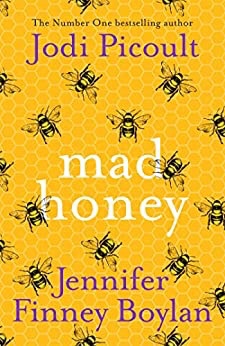
Mad Honey by Jodi Picoult and Jennifer Finney Boylan
This is a return to the legal case format of earlier novels by Picoult and the addition of Jennifer Finney Boylan to make a writing team has led to this interesting look at transgender rights in America. Olivia fled her marriage with her young son Asher after her abusive husband directed his violence towards their son instead of her. Now Asher is getting ready to go away to college and has his first girlfriend Lily. Lily is a lovely girl and Olivia took her out to meet her honey bees. Olivia is impressed by the way Lily works with the hives and knows that the bees are a good judge of character. Asher is so in love with Lily, so Olivia is shocked when she takes a call to say Asher has been arrested and Lily is dead. Picoult introduces a familiar character from her earlier novels as Olivia calls her brother Josh to defend her son. It really does keep you on tenterhooks as you try to work out what went wrong at Lily’s house. There are twists and turns, right to the very end. You may have seen trigger warnings about this novel, but I didn’t agree with some of them. Yes, there is a transgender character and Picoult does explore some of the negative aspects of being trans. However, this is only done to highlight how hard it can be to transition and the prejudice faced by people who are transgender. While there were prejudice characters, there were also well-meaning but ignorant characters. I never doubted that these writers were trying to portray a true representation of the experience, especially the sections written by Jennifer Finney Boylan who is one of the most famous transgender writers in the USA. This is a great book club choice, because there’s so much to talk about.
Good Taste by Caroline Scott
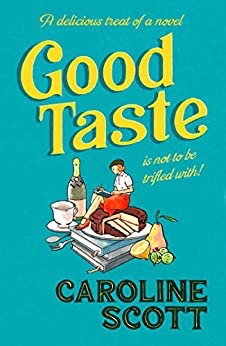
Caroline Scott enjoys writing about the period just after WW1 where Britain is in flux and people are going through huge changes within class, gender and the expected ‘family’ unit. England is struggling through a depression and our heroine Stella has had something of a life change. It’s 1932 and she is facing the first Christmas without her mother. With memories of her mother’s frailty last Christmas and the fear of that obvious empty chair, Stella has moved back from London to a small cottage in the West Riding of Yorkshire in order to be near her father. Money is tight, since her first book The Marvellous Mrs Raffald hasn’t done as well as she’d hoped. Celandine Cottage is rather shabby and Stella is surviving on the money she’s paid by a women’s magazine for writing a weekly article with five new recipes. When she’s summoned to London by her publisher, she’s half expecting her novel to be pulped and although she wants to write a biography of 18th Century cookery writer Hannah Glasse, she’s rather gloomy about her prospects. She’s shocked when he tasks her with a new idea – a history of English food. He wants a book that will inspire English housewives and remind English men of a nostalgic past. Although as Stella starts to think about her research, she realises that a lot of food people consider to be quintessentially English, is actually from elsewhere. Caroline has a wonderful way of balancing period detail, charming characters, and a touch of humour, while also showing us the grittier underbelly of life in a depression. There are also moments of grief for her mother, which are so beautifully rendered. Caroline makes this look incredibly easy when in reality it’s such a complex juggling act, one that she pulls off beautifully.
So, that wraps up October and since all my blog tours are read for November, i now have until the end of the year to catch up on NetGalley ARCs and publisher proofs I haven’t got to yet. Most exciting to me is that I get to choose which ones I read, so it feels like free reading all the way to January. I’m really excited for this! I might need that long to do my Books of the Year list.
Along with many others, particularly my Squad Pod Collective ladies and the lovely Danielle and Kelly who devised the challenge for Bookstagram, I have been following the Orentober Challenge. Today’s has been a struggle because picking a favourite prologue from all the books I’ve read is a touch difficult. So today, I’ve turned my usual photograph into a blog post where I’m featuring two of my favourite prologues. I’ve also chosen my prologues from a couple of older titles that some newer readers might not have come across before.
I dreamt vividly the night she died. I’ve had this dream before. In it I am running. Always running. My heart thumps in my ears. My breath comes in short, painful gasps. It is dark and cold and the trees reach out to grab at me, as if they are alive, as if they are trying to capture me with their long, twiggy fingers. Their roots are thick and hiddenand I trip repeatedly. I think my feet must hurt. I look down to see that I am wearing only one slipper. When did I lose the other?
Fear has taken hold of me now. A rising panic fills me and I begin to struggle for breath. My chest is tight, like a giant’s hand is squeezing and squeezing, making each gasp impossible. It is getting darker. I must keep running. And then, just when I think it’s all over, there it is, a glorious sunrise appears ahead and forces back the darkness. She is sitting, as she always does, in the pool of light on the forest floor. A little girl in a white nightie, soft, golden curls framing her pale face. I run to her and she lifts her head. When she sees me, she smiles. I wave and she waves back and then I laugh because she is wearing my other slipper. We both have one bare foot and one slipper. How funny! As soon as I laugh, the light begins to fade and so does she. I scream so loudly my lungs feel as if they might split open. I have to reach her before she melts away. But it’s always too late. As I stretch my fingers out to touch her, she vanishes. My hand grasps at nothing, like catching smoke.
Published by Orenda Books 2016.
I love this prologue because it grips me from the first sentence. I know something terrible has happened and this is our narrator’s dream, an otherworldly response from her subconscious. We don’t know how it happened, but we get so much of the narrator’s emotions – the panic, desperation, the sense of a struggle between the evil darkness and the light. The strange detail of the slipper, showing a connection between the narrator and the little girl. Is it a subconscious version of herself that she’s trying to return to? Or is this a real life girl, someone that’s part of her? Her little sister. Maybe her daughter. There’s a hint of Rebecca to the style of this prologue; ‘last night I dreamt I went to Manderley again’. I think that connection also sets the reader at the centre of a mysterious story, something the narrator is relating to us after the event. It’s so compelling and odd, that I automatically wanted to devour this story and now that I’ve picked it up to quote here, I want to read it again.That’s what a great prologue does.
‘Certain dank gardens cry aloud for a murder; certain old houses demand to be haunted… Within these ivied walls, behind these old green shutters, some further business smoulders, waiting for it’s hour’. Robert Louis Stephenson
‘There’s an unfamiliar smell in the air today. Something like wet pine cones and mulched earth. A hint of old sweat, something sweet, like a lily, and the sticky ripeness that comes with unwashed bodies. The Family like to tease me with my overactive imagination and my exaggerated sense of smell. I like to think I have a mild and unusual form of synaesthesia- certain smells triggering sounds and feeding my mind with wild possibilities. As for the imagination, it might be overactive or it might just be that I’ve attuned my senses to pick up things others choose to ignore. I can hear Cyril, tapping his walking stick on a fence post from the other end of the flower garden, but perhaps it’s the still air that’s making the sound travel. Usually I can hear the birds nesting in the trees down by the entrance to the long drive-way. Blackbirds or ChiffChaffs with their distinctive melodic tweets; and sometimes squirrels as they patter through the undergrowth, in the hedgerows that border the vegetable patches. But today there is silence, apart from Cyril’s stick. And the air is filled with smells, not noise. I breathe it in, waiting, realising I am the only one here, in the grounds, awaiting their arrival. Wondering who they are and why it is they have managed to secure a place here without any of us meeting them before, without them learning about any of our rules and ways.
Again, this is an incredible opening that makes me want to dive right into the first chapter and damn the housework. There are enough clues to put us on edge, even before the Prologue! That cover with the looming building and it’s gothic architecture, eerily reminiscent of the Dakota Building in NYC where John Lennon lived and was murdered. The title leaves a strange feeling, ‘lingering’ usually referring to something that’s stayed past its welcome whether it’s a visitor or an unpleasant smell. If we wanted a guest to remain we tend to say they stayed, not they ‘lingered’. Then those incredible lines from Robert Louis Stevenson, from his essay The Lantern Bearers, are all about setting the scene. A lantern bearer goes before others, shining their light into darkness and seeing what lies ahead. Here the lines quoted do just that – they signal to the reader what lies ahead, something unusual, unsettling, something that has caused our narrator to go out searching. Something has triggered her senses, her unusual senses; she can taste what she sees and pick up clues from what she smells. We get the sense our narrator is in an institution or sanctuary of some kind. Somewhere run by rules and agreement from all parties that live there. Whatever is coming this morning is not agreed. It comes with no warning, were it not for our narrator’s amazing senses. She can smell danger coming. I’m now dying to read on and I hope you are too.
Published by Orenda Books 2018.
Thank you to Karen Sullivan at Orenda Books for allowing me to use the prologues quoted in this blog.
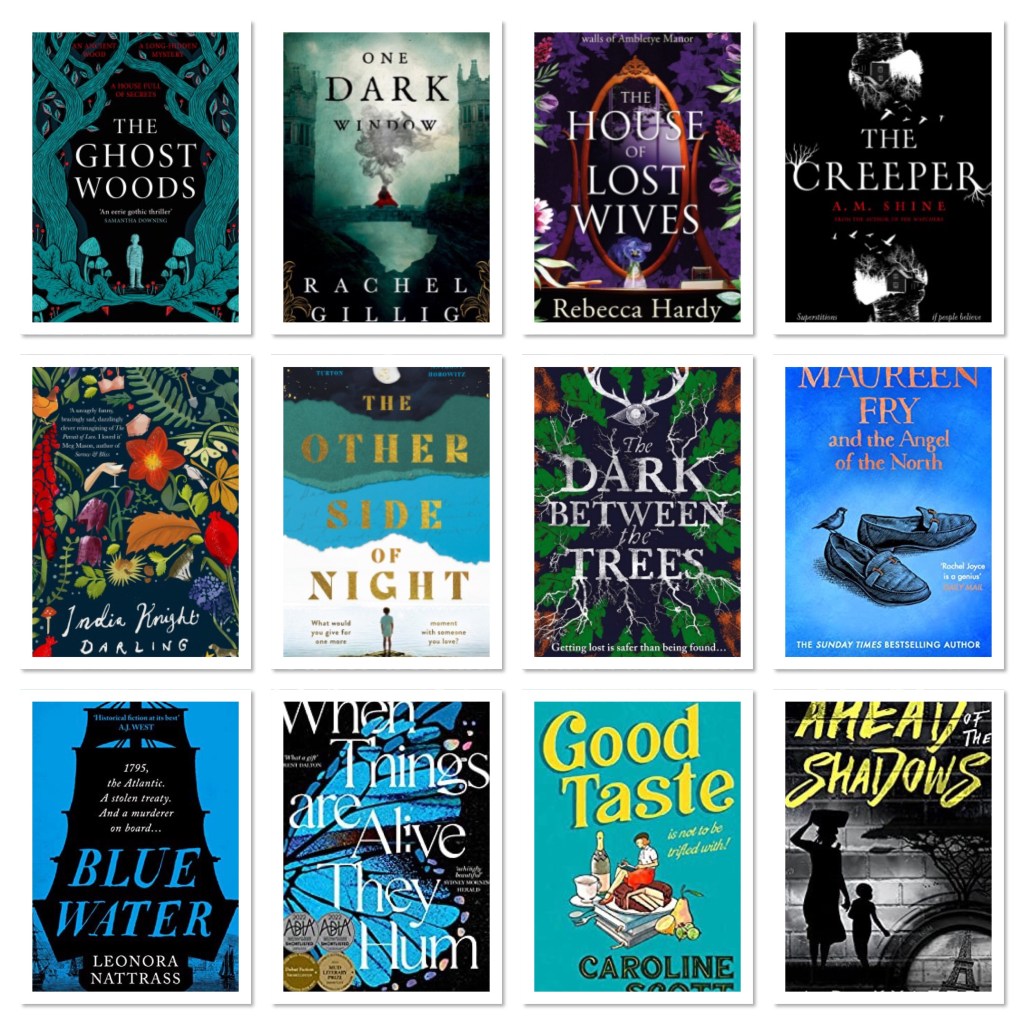
There are so many great books this autumn, but I’ve narrowed it down to those I have and I’m looking forward to reading the most. It’s all here, from spooky Halloween reads to feel-good fiction, thrillers to historical fiction and a splash of horror. Here’s a little preview of these great books.
In the midst of the woods stands a house called Lichen Hall. This place is shrouded in folklore – old stories of ghosts, of witches, of a child who is not quite a child. Now the woods are creeping closer, and something has been unleashed.
Pearl Gorham arrives in 1965, one of a string of young women sent to Lichen Hall to give birth. And she soon suspects the proprietors are hiding something. Then she meets the mysterious mother and young boy who live in the grounds – and together they begin to unpick the secrets of this place. As the truth comes to the surface and the darkness moves in, Pearl must rethink everything she knew – and risk what she holds most dear. I loved this author’s previous book The Lighthouse Witches and I can’t wait to get stuck into this one.
Published on 13th October 2022 by HarperCollins
I loved Caroline’s first two novels, both set in the aftermath of WW1 and full of historical detail, characters to empathise with and that chaos that seems to thrive in war’s aftermath. Between the two World Wars the country was in a state of flux, with huge changes in class structure, gender and the finances, both public and personal. This book is set in England, 1932, when the country was in the grip of the Great Depression. To lift the spirits of the nation, Stella Douglas is tasked with writing a history of food in England. It’s to be quintessentially English and will remind English housewives of the old ways, and English men of the glory of their country. The only problem is –much of English food is really from, well, elsewhere and can one cookbook really manoeuvre people back into those pre-war roles?
Stella sets about unearthing recipes from all corners of the country, in the hope of finding a hidden culinary gem. But what she discovers is rissoles, gravy, stewed prunes and lots of oatcakes. Longing for something more thrilling, she heads off to speak to the nation’s housewives. But when her car breaks down and the dashing and charismatic Freddie springs to her rescue, she is led in a very different direction . . . Full of wit and vim, Good Taste is a story of discovery, of English nostalgia, change and challenge, and one woman’s desire to make her own way as a modern woman.
Published on 13th October 2022 by Simon and Schuster U.K.
Rachel Joyce is one of those authors I’ve had lick to meet twice, at book signings, where I’ve been one of the last people to queue with my old books under my arm and her latest in my hand. Her last book Miss Benson’s Beetle was an incredible read about extraordinary women. Now she reverts to a series of books that have celebrated very ordinary people doing extraordinary things and Mrs Fry is no exception. Ten years ago, Harold Fry set off on his epic journey on foot to save a friend. But the story doesn’t end there. Now his wife, Maureen, has her own pilgrimage to make.
Maureen Fry has settled into the quiet life she now shares with her husband Harold after his iconic walk across England. Now, ten years later, an unexpected message from the North disturbs her equilibrium again, and this time it is Maureen’s turn to make her own journey. But Maureen is not like Harold. She struggles to bond with strangers, and the landscape she crosses has changed radically. She has little sense of what she’ll find at the end of the road. All she knows is that she must get there. Maureen Fry and the Angel of the North is a deeply felt, lyrical and powerful novel, full of warmth and kindness, about love, loss, and how we come to terms with the past in order to understand ourselves and our lives a little better. Short, exquisite, while it stands in its own right, it is also the moving finale to a trilogy that began with the phenomenal bestseller The Unlikely Pilgrimage of Harold Fry and continued with The Love Song of Miss Queenie Hennessy.
This is a slender book but it has all the power and weight of a classic.
Published by Doubleday 20th Oct 2022. Kindle Edition available from 5th October.
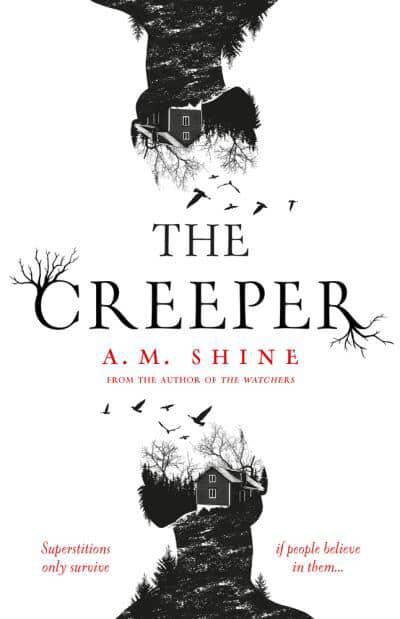
I have already started this book and had a nightmare of epic proportions the very first night. I’m suggestible and have a wild imagination, but I think the opening to this book is strangely unsettling. I felt uneasy, even though the chapters I read didn’t have any particularly terrifying events. It’s the strangeness that creeps up on you.
Superstitions only survive if people believe in them… Renowned academic Dr Sparling seeks help with his project on a remote Irish village. Historical researchers Ben and Chloe are thrilled to be chosen – until they arrive. The village is isolated and forgotten. There is no record of its history, its stories. There is no friendliness from the locals, only wary looks and whispers. The villagers lock down their homes at sundown. It seems a nameless fear stalks the streets, but nobody will talk – nobody except one little girl. Her words strike dread into the hearts of the newcomers. Three times you see him. Each night he comes closer… That night, Ben and Chloe see a sinister figure watching them. He is the Creeper. He is the nameless fear in the night. Stories keep him alive. And nothing will keep him away..
Published by Head of Zeus/ Aries 15th September 2022.
I’m a sucker for historical fiction with a gothic edge, so this really captured my imagination as soon as I read the blurb. Obviously my counsellor brain is always ready for tales of supposed madness and hysteria too.
I must pull myself together. I had to find Dr Rastrick and demand my immediate release. My stomach knotted at the prospect, but I knew I was perfectly sane and that he must see reason.
In 1886, a respectable young woman must acquire a husband. But Violet Pring does not want to marry. She longs to be a professional artist and live on her own terms. When her scheming mother secures a desirable marriage proposal from an eligible Brighton gentleman for her, Violet protests. Her family believes she is deranged and deluded, so she is locked away in Hillwood Grange Lunatic Asylum against her will.In her new cage, Violet faces an even greater challenge: she must escape the clutches of a sinister and formidable doctor and set herself free. This tantalizing Gothic novel from Noel O’Reilly tells a thrilling story of duty and desire, madness and sanity, truth and delusion from within a Victorian asylum.
Published by HQ 8th December 2022
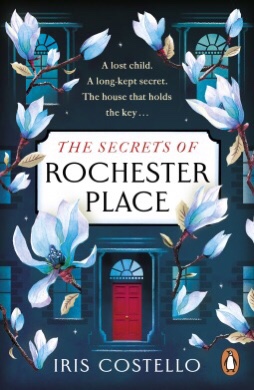
Spring 1937: Teresa is evacuated to London in the wake of the Guernica bombing. She thinks she’s found safety in the soothing arms of Mary Davidson and the lofty halls of Rochester Place, but trouble pursues her wherever she goes.
Autumn 2020: Corrine, an emergency dispatcher, receives a call from a distressed woman named Mary. But when the ambulance arrives at the address, Mary is nowhere to be found. Intrigued, Corinne investigates and, in doing so, disturbs secrets that have long-dwelt in Rochester Place’s crumbling walls. Secrets that, once revealed, will change her life for ever . . .
Who is Mary Davidson? And what happened at Rochester Place all those years ago? Set between the dusty halls of Rochester Place and the bustling streets of modern-day Tooting, this emotive, intricately layered mystery tells the spellbinding story of two people, separated by time, yet mysteriously connected through an enchanting Georgian house and the secrets within its walls.
Published by Penguin 8th Dec 2022
I always look forward to an Orenda book, because I know I’m going to great a fantastic and often thought provoking read. I’m on the blog tour for this in November and I’m looking forward to this one. James Garrett was critically injured when he was shot following his parents’ execution, and no one expected him to waken from a deep, traumatic coma. When he does, nine years later, Detective Inspector Rebecca Kent is tasked with closing the case that her now retired colleague, Theodore Tate, failed to solve all those years ago.
But between that, and hunting for Copy Joe – a murderer on a spree, who’s imitating Christchurch’s most notorious serial killer – she’s going to need Tate’s help … especially when they learn that James has lived out another life in his nine-year coma, and there are things he couldn’t possibly know, including the fact that Copy Joe isn’t the only serial killer in town…
Published by Orenda Books Nov 10th 2022
In between the serial killers, ghostly apparitions and terrifying ‘creepers’ I need some light relief. I was looking for something warm and uplifting and this could be it. Newly installed at All Souls Lutheran, Mallory “Pastor Pete” Peterson soon realizes that her church isn’t merely going through turbulent waters, but is a sinking ship. With the help of five loyal members of the Naomi Circle, the young, bold minister brainstorms fundraising ideas. They all agree that the usual recipe book won’t add much to the parish coffers, but maybe one with all the ingredients on how to heat up relationships rather than casseroles will…
Pastor Pete has her doubts about the project, but it turns out the group of postmenopausal women has a lot to say on the subject of romance. While Charlene, the youngest member at fifty-two, struggles with the assignment, baker-extraordinaire Marlys, elegantly bohemian Bunny, I’m-always-right Velda, and ebullient Edie take up their contributions enthusiastically. After all, their book is really about cooking up love in all its forms. But not everyone in the congregation is on board with this “scandalous” project. As the voices of opposition grow louder, Pastor Pete and these intrepid women will have to decide how hard they’re willing to fight for this book and the powerful stories within—stories of discovery, softened hearts, and changed lives.
Published by Lake Union 6th December 2022
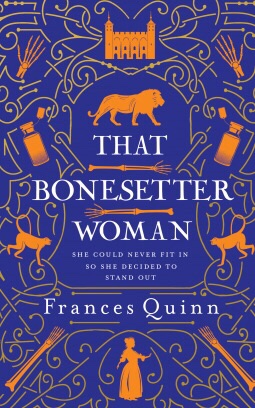
Although this book is already out I’m saving it for the autumn, because it’s one of my Squad Pod’s Book Club reads. I loved Quinn’s debut novel The Smallest Man so I’ve had my eye on this for a while. I also love unusually named heroines, ever since Mary Webb’s Precious Bane, and Endurance Proudfoot is a brilliant invention. It’s usual, they say, for a young person coming to London for the first time to arrive with a head full of dreams. Well, Endurance Proudfoot did not. When she stepped off the coach from Sussex, on a warm and sticky afternoon in the summer of 1757, it never occurred to her that the city would be the place where she’d make her fortune; she was just very annoyed to be arriving there at all.
Meet Endurance Proudfoot, the bonesetter’s daughter: clumsy as a carthorse, with a tactless tongue and a face she’s sure only a mother could love. Durie only wants one thing in life – to follow her father and grandfather into the family business of bonesetting. It’s a physically demanding job, requiring strength, nerves of steel and discretion – and not the job for a woman. But Durie isn’t like other women. She’s strong and stubborn and determined to get her own way. And she finds that she has a talent at bonesetting – her big hands and lack of grace have finally found their natural calling. So, when she is banished to London with her sister, who is pretty, delicate and exactly the opposite to Durie in every way, Durie will not let it stop her realising her dreams. And while her sister will become one of the first ever Georgian celebrities, Durie will become England’s first and most celebrated female bonesetter. But what goes up must come down, and Durie’s elevated status may well become her undoing…
Published by Simon and Schuster 21st July 2022.
There are a few formidable women in my autumn reading and this is another brilliant historical fiction novel for the list. This is billed as a ‘rich and atmospheric’ new novel from prize-winning author Sally Gardner, set in the 18th century between the two great Frost Fairs. Neva Friezland is born into a world of trickery and illusion, where fortunes can be won and lost on the turn of a card. She is also born with an extraordinary gift. She can predict the weather. In Regency England, where the proper goal for a gentlewoman is marriage and only God knows the weather, this is dangerous. It is also potentially very lucrative.
In order to debate with the men of science and move about freely, Neva adopts a sophisticated male disguise. She foretells the weather from inside an automaton created by her brilliant clockmaker father. But what will happen when the disguised Neva falls in love with a charismatic young man?
It can be very dangerous to be ahead of your time. Especially as a woman.
Published by Apollo 10th November 2022.
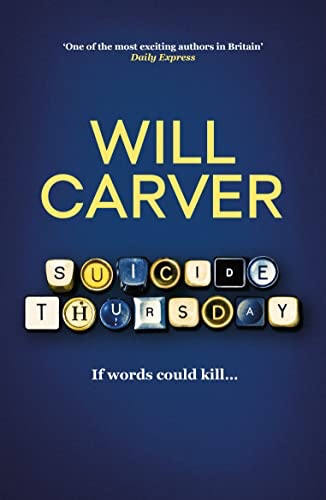
Will Carver is an incredible writer and his imagination knows no bounds. His books are always so completely original.
Eli Hagin can’t finish anything. He hates his job, but can’t seem to quit. He doesn’t want to be with his girlfriend, but doesn’t know how end things with her, either. Eli wants to write a novel, but he’s never taken a story beyond the first chapter. Eli also has trouble separating reality from fiction.
When his best friend kills himself, Eli is motivated, for the first time in his life, to finally end something himself, just as Mike did… Except sessions with his therapist suggest that Eli’s most recent ‘first chapters’ are not as fictitious as he had intended … and a series of text messages that Mike received before his death point to something much, much darker…
Published by Orenda Books 24th November 2022.
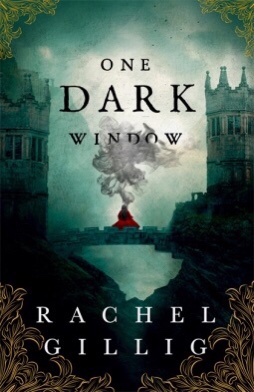
This book sounds like a very dark fairy tale and aren’t they the best ones? An ancient, mercurial spirit is trapped inside Elspeth Spindle’s head – she calls him the Nightmare. He protects her. He keeps her secrets. But nothing comes for free, especially magic.
When Elspeth meets a mysterious highwayman on the forest road, she is thrust into a world of shadow and deception. Together, they embark on a dangerous quest to cure the town of Blunder from the dark magic infecting it. As the stakes heighten and their undeniable attraction intensifies, Elspeth is forced to face her darkest secret yet: the Nightmare is slowly, darkly, taking over her mind. And she might not be able to fight it. This is a gothic fantasy romance about a maiden who must unleash the monster within to save her kingdom.
Published by Orbit 29th September
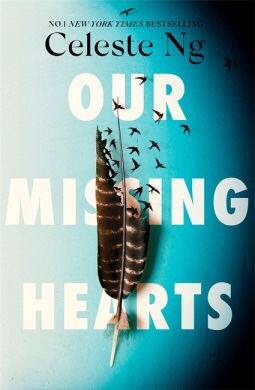
Twelve-year-old Bird Gardner lives a quiet existence with his loving but broken father, a former linguist who now shelves books in a university library. Bird knows to not ask too many questions, stand out too much, or stray too far. For a decade, their lives have been governed by laws written to preserve “American culture” in the wake of years of economic instability and violence. To keep the peace and restore prosperity, the authorities are now allowed to relocate children of dissidents, especially those of Asian origin, and libraries have been forced to remove books seen as unpatriotic—including the work of Bird’s mother, Margaret, a Chinese American poet who left the family when he was nine years old.
Bird has grown up disavowing his mother and her poems; he doesn’t know her work or what happened to her, and he knows he shouldn’t wonder. But when he receives a mysterious letter containing only a cryptic drawing, he is pulled into a quest to find her. His journey will take him back to the many folktales she poured into his head as a child, through the ranks of an underground network of librarians, into the lives of the children who have been taken, and finally to New York City, where a new act of defiance may be the beginning of much-needed change.
Our Missing Hearts is an old story made new, of the ways supposedly civilized communities can ignore the most searing injustice. It’s a story about the power—and limitations—of art to create change, the lessons and legacies we pass on to our children, and how any of us can survive a broken world with our hearts intact. This sounds absolutely epic and I’m so excited to have been granted a copy on NetGalley, so I’ll keep you all informed.
Published 4th October 2022 by Penguin Press
1643: A small group of Parliamentarian soldiers are ambushed in an isolated part of Northern England. Their only hope for survival is to flee into the nearby Moresby Wood… unwise though that may seem. For Moresby Wood is known to be an unnatural place, the realm of witchcraft and shadows, where the devil is said to go walking by moonlight. Seventeen men enter the wood. Only two are ever seen again, and the stories they tell of what happened make no sense. Stories of shifting landscapes, of trees that appear and disappear at will… and of something else. Something dark. Something hungry.
Today, five women are headed into Moresby Wood to discover, once and for all, what happened to that unfortunate group of soldiers. Led by Dr Alice Christopher, an historian who has devoted her entire academic career to uncovering the secrets of Moresby Wood. Armed with metal detectors, GPS units, mobile phones and the most recent map of the area (which is nearly 50 years old), Dr Christopher’s group enters the wood ready for anything. Or so they think. I love the mix of historical fiction and a touch of the supernatural so this one is a definite title for the TBR.
Published on 13th October by S
If someone says gothic, paranormal, romance to me, I’m there with bells on! As a lifelong fan of Wuthering Heights it’s very much my sort of thing. 1813. Lizzie’s beloved older sister Esme is sold in marriage to the aging Lord Blountford to settle their father’s debts. One year later, Esme is dead, and Lizzie is sent to take her place as Lord Blountford’s next wife.
Arriving at Ambletye Manor, Lizzie uncovers a twisted web of secrets, not least that she is to be the fifth mistress of this house. Marisa. Anne. Pansy. Esme. What happened to the four wives who came before her? In possession of a unique gift, only Lizzie can hear their stories, and try to find a way to save herself from sharing the same fate. This sounds to me like a Bluebeard type tale and perfect for a cozy autumn afternoon in front of the log burner.
Published 24th November 2022 by Penguin.
Three women Three eras One extraordinary mystery…
1899, Belle Époque Paris. Lucienne’s two daughters are believed dead when her mansion burns to the ground, but she is certain that her girls are still alive and embarks on a journey into the depths of the spiritualist community to find them.
1949, Post-War Québec. Teenager Lina’s father has died in the French Resistance, and as she struggles to fit in at school, her mother introduces her to an elderly woman at the asylum where she works, changing Lina’s life in the darkest way imaginable.
2002, Quebec. A former schoolteacher is accused of brutally stabbing her husband – a famous university professor – to death. Detective Maxine Grant, who has recently lost her own husband and is parenting a teenager and a new baby single-handedly, takes on the investigation.
Under enormous personal pressure, Maxine makes a series of macabre discoveries that link directly to historical cases involving black magic and murder, secret societies and spiritism … and women at breaking point, who will stop at nothing to protect the ones they love. I’m so excited about this one I’ve ordered a special copy from Goldsboro Books it’s simply stunning and I’m dying to read it.
Published by Orenda Book on 15th September 2022
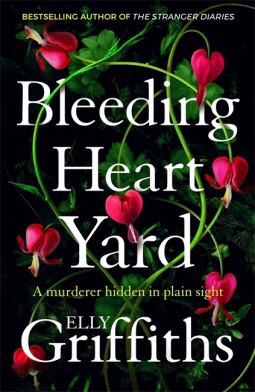
Bleeding Heart Yard by Elly Griffiths
Another stunning cover here. From the author of the Ruth Galloway crime series this is a propulsive new thriller set in London featuring Detective Harbinder Kaur. A murderer hides in plain sight – in the police. DS Cassie Fitzherbert has a secret – but it’s one she’s deleted from her memory. In the 1990s when she was at school, she and her friends killed a fellow pupil. Thirty years later, Cassie is happily married and loves her job as a police officer.
One day her husband persuades her to go to a school reunion and another ex-pupil, Garfield Rice, is found dead, supposedly from a drug overdose. As Garfield was an eminent MP and the investigation is high profile, it’s headed by Cassie’s new boss, DI Harbinder Kaur. The trouble is, Cassie can’t shake the feeling that one of her old friends has killed again. Is Cassie right, or was Garfield murdered by one of his political cronies? It’s in Cassie’s interest to skew the investigation so that it looks like the latter and she seems to be succeeding.
Until someone else is killed…
Published on 29th September 2022 by Quercus
And I can’t believe I forgot…..
I possibly forgot this one because I’ve already read and reviewed it for NetGalley and it really is a cracker. After going in a slightly different direction with her last two novels, Jodi Picoult is back in her usual territory here. After teaming up with author Jennifer Finney Boylan, from a Twitter conversation, Picoult is back to tackling a controversial issue with a tense legal case at the centre of the drama.
Olivia fled her abusive marriage to return to her hometown and take over the family beekeeping business when her son Asher was six. Now, impossibly, her baby is six feet tall and in his last year of high school, a kind, good-looking, popular ice hockey star with a tiny sprite of a new girlfriend. Lily also knows what it feels like to start over – when she and her mother relocated to New Hampshire it was all about a fresh start. She and Asher couldn’t help falling for each other, and Lily feels happy for the first time. But can she trust him completely? Then Olivia gets a phone call – Lily is dead, and Asher is arrested on a charge of murder. As the case against him unfolds, she realises he has hidden more than he’s shared with her. And Olivia knows firsthand that the secrets we keep reflect the past we want to leave behind - and that we rarely know the people we love well as we think we do. Each author has written the story from a different character’s perspective, sometimes taking us back in time to understand their experiences. I don’t want to ruin your enjoyment so I won’t give you any more of the plot, but I will say it’s a belter of a novel that will make you question your own prejudices.
Published on 15th November 2022 by Hodder & Stoughton
What an excellent reading month it’s been and a good mix of independent publishers as well as the majors. As part of the Squad Pod Collective, this month we’ve been reading Sandstone Press novels as part of our Sandtember feature. Next month will be Orentober – a celebration of Orenda Books, two of which feature here. I’ve been a lot busier and had so much more clarity this month, possibly something to do with us moving into the cooler months of autumn which are my favourite of the year, possibly due to it being Halloween, my birthday, Bonfire Night and the run up to Christmas. Plus Strictly is back on the telly. Here we have mainly thrillers and crime fiction, but very different from each other. I think some of this month’s books may easily reach my Books of the Year list in December. Hope you all have a great October!
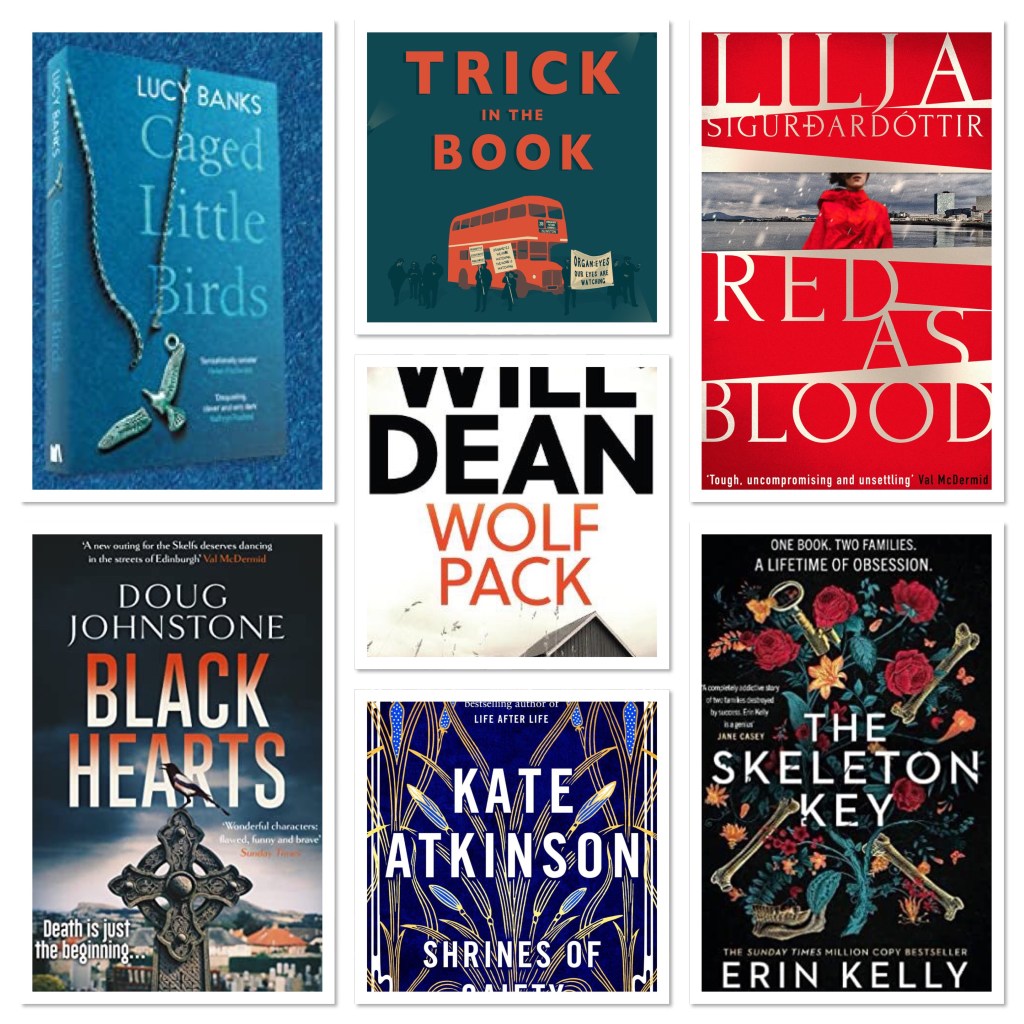
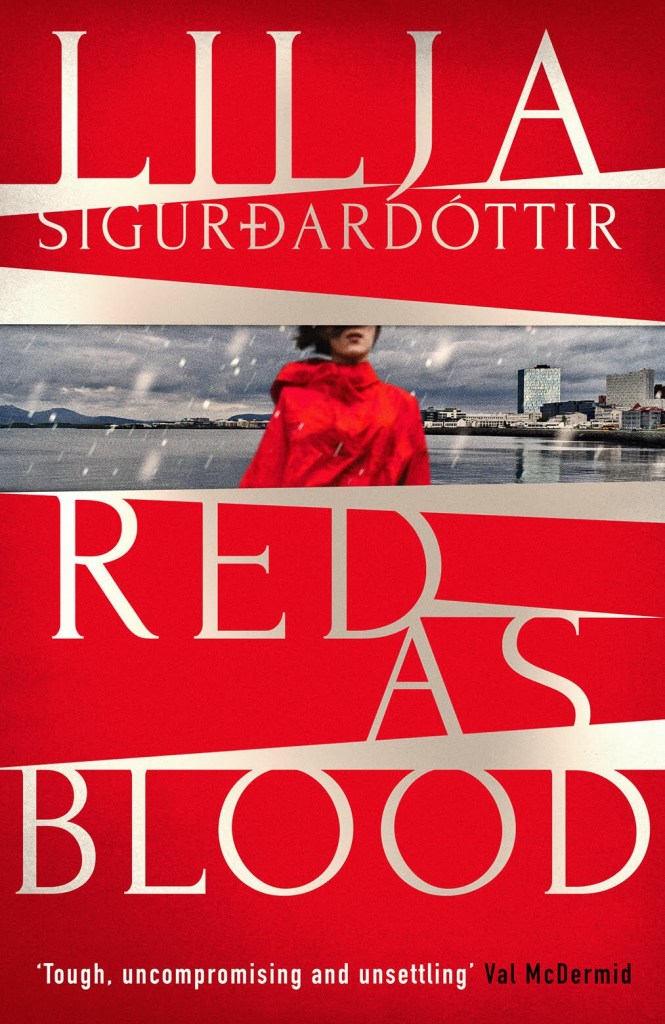
This is an October review, but I read it as soon as it was delivered to my Kindle. I loved her first in the series so I was eager to see what Āróra was up to now. I won’t tell you too much, just a quick outline of what to expect from this excellent thriller. When entrepreneur Flosi arrives home for dinner one night, he discovers that his house has been ransacked, and his wife Gudrun missing. A letter on the kitchen table confirms that she has been kidnapped. If Flosi doesn’t agree to pay an enormous ransom, Gudrun will be killed. Forbidden from contacting the police, he gets in touch with Áróra, who specialises in finding hidden assets, and she, alongside her detective friend Daniel, try to get to the bottom of the case without anyone catching on.
Meanwhile, Áróra and Daniel continue the puzzling, devastating search for Áróra’s sister Ísafold, who disappeared without trace. As fog descends, in a cold and rainy Icelandic autumn, the investigation becomes increasingly dangerous, and confusing. Chilling, twisty and unbearably tense, Red as Blood is the second instalment in the riveting, addictive An Áróra Investigation series, and everything is at stake…
Out 13th October from Orenda Books
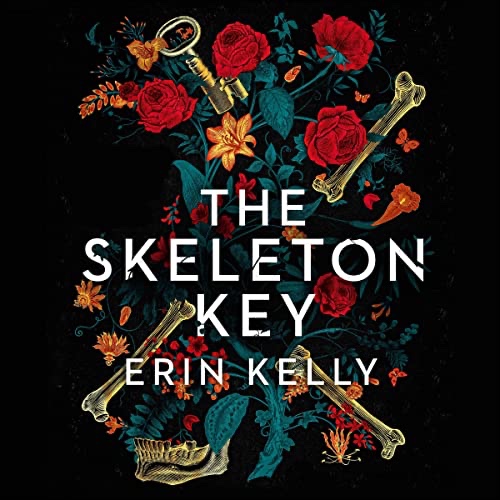
I thoroughly enjoyed this twisty thriller from an author I read automatically these days, knowing I’m going to get a quality thriller. Here we’re brought into the arty, bohemian world of the Churcher and Lally families and their adjoining houses on the edge of the heath. Frank Churcher and his friend Lal have been friends since the 1970s when they shared drugs, alcohol, women and ideas. Frank has called everyone together to celebrate the 50th Anniversary edition of his book The Golden Bones. This could be one reunion that tears the family apart…
Nell has come home at her family’s insistence to celebrate an anniversary. Fifty years ago, her father wrote The Golden Bones. Part picture book, part treasure hunt, Sir Frank Churcher created a fairy story about Elinore, a murdered woman whose skeleton was scattered all over England. Clues and puzzles in the pages of The Golden Bones led readers to seven sites where jewels were buried – gold and precious stones, each a different part of a skeleton. One by one, the tiny golden bones were dug up until only Elinore’s pelvis remained hidden. The book was a sensation. A community of treasure hunters called the Bonehunters formed, in frenzied competition, obsessed to a dangerous degree. People sold their homes to travel to England and search for Elinore. Marriages broke down as the quest consumed people. A man died. The book made Frank a rich man. Stalked by fans who could not tell fantasy from reality, his daughter, Nell, became a recluse. But now the Churchers must be reunited. The book is being reissued along with a new treasure hunt and a documentary crew are charting everything that follows. Nell is appalled, and terrified. During the filming, Frank is set to reveal the whereabouts of the missing golden bone, but as one of his grandchildren climbs the tree for the treasure all hell is going to break loose. This was an addictive thriller, with complicated family dynamics and a brilliant final chapter.
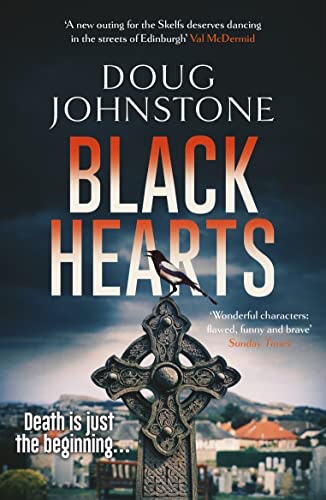
Orenda Books must get so fed up with me banging on about the genius of Doug Johnstone and his wonderful creations; the Skelf women. Set in Edinburgh, Grandmother Dorothy, daughter Jenny and granddaughter Hannah live in the shadow of death every day. Jenny and Dorothy live literally above a morgue, as the family’s funeral business is run from the ground floor. They also run a private investigation business from their kitchen table. But now their own grief interwines with that of their clients, as they are left reeling by shocking past events. As usual there’s a shocking opening, with a fist-fight by an open grave. This leads Dorothy to investigate the possibility of a faked death, while a young woman’s obsession with Hannah threatens her relationship with Indy and puts them both in mortal danger. An elderly man claims he’s being abused by the ghost of his late wife, while ghosts of another kind come back to haunt Jenny from the grave … pushing her to breaking point.
As the Skelfs struggle with increasingly unnerving cases and chilling danger lurks close to home, it becomes clear that grief, in all its forms, can be deadly… you can look for my full review of this in my Sept 2022 archive, but it really is a cracker.
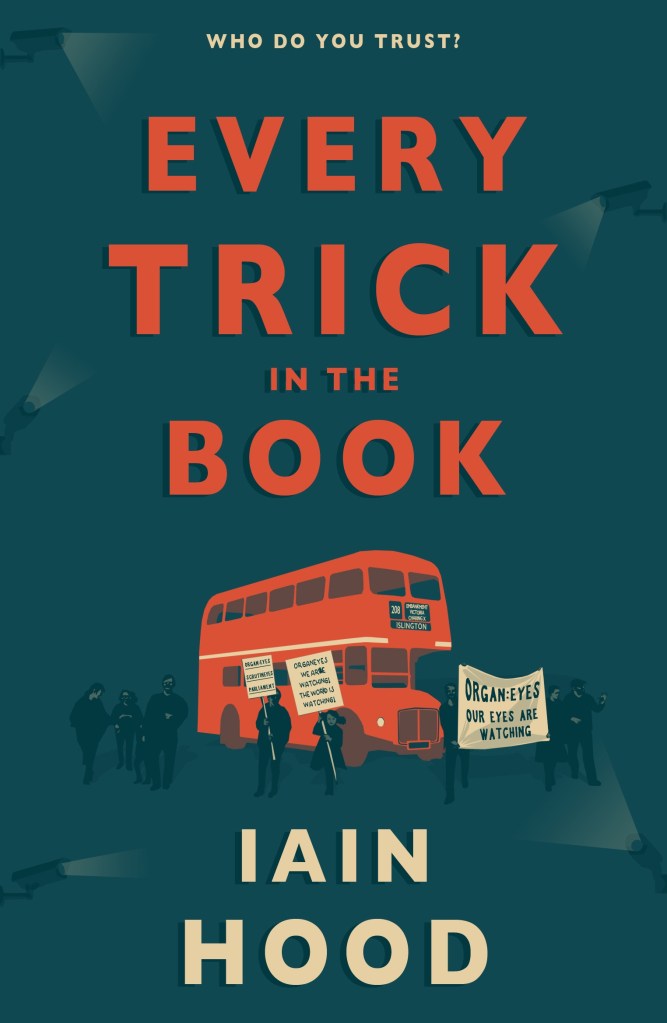
This was one of those blog tours I was asked to do and I went in blind. I knew nothing about the author or the book, but straight away I was intrigued. You are invited to cast your eye over the comfortable north London home of a family of high ideals, radical politics and compassionate feelings. Julia, Paul and their two daughters, Olivia and Sophie, look to a better society, one they can effect through ORGAN:EYES, the campaigning group they fundraise for and march with, supporting various good causes. But is it all too good to be true? When the surface has been scratched and Paul’s identity comes under the scrutiny of the press, a journey into the heart of the family begins. Who are these characters really? Are any of them the ‘real’ them at all? Every Trick in the Book is a genre-deconstructing novel that explodes the police procedural and undercover-cop story with nouveau romanish glee. Hood overturns the stone of our surveillance society to show what really lies beneath. Be prepared to never take anything at face value again.
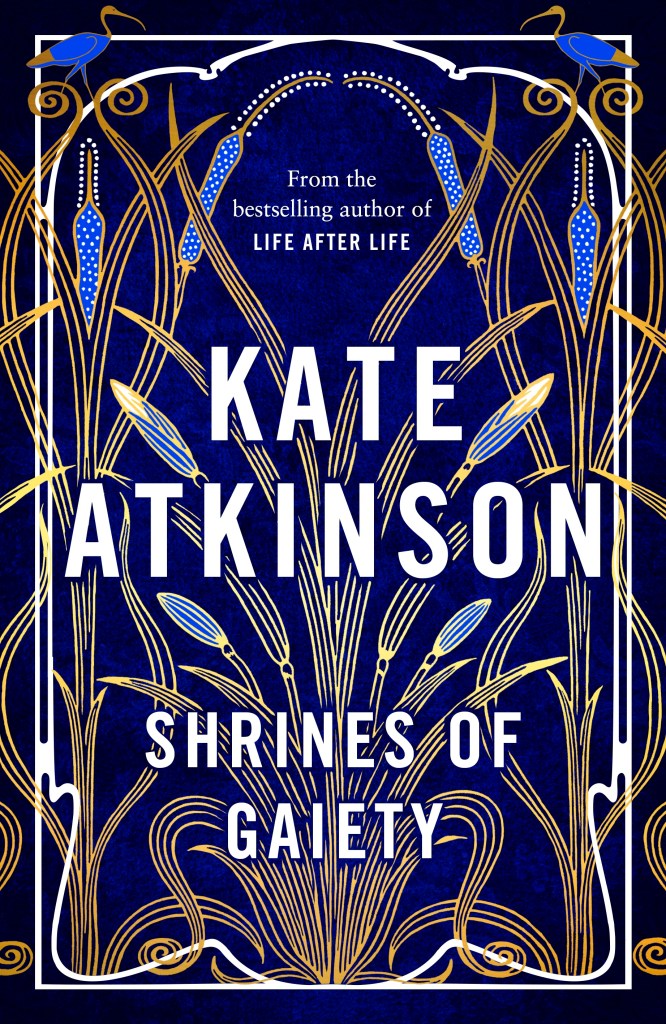
Now I’d been waiting all year for this one. It’s been up there with Jessie Burtons House of Fortune as the ones I’ve most been looking forward to this year. I wasn’t disappointed. Kate Atkinson has written a crime novel that lays bare a decade in flux, a London that’s drowning in decadence and a generation determined to leave loss and grief behind them.
1926, and in a country still recovering from the Great War, London has become the focus for a delirious new nightlife. In the clubs of Soho, peers of the realm rub shoulders with starlets, foreign dignitaries with gangsters, and girls sell dances for a shilling a time. At the heart of this glittering world is notorious Nellie Coker, ruthless but also ambitious to advance her six children, including the enigmatic eldest, Niven whose character has been forged in the crucible of the Somme. But success breeds enemies, and Nellie’s empire faces threats from without and within. For beneath the dazzle of Soho’s gaiety, there is a dark underbelly, a world in which it is all too easy to become lost.With her unique Dickensian flair, Kate Atkinson brings together a glittering cast of characters in a truly mesmeric novel that captures the uncertainty and mutability of life; of a world in which nothing is quite as it seems. I loved the historical background to this fascinating story and my only complaint was that I wanted to spend more time with some of her characters. See my September archive for the full review, but I was dazzled and drawn deeply into Atkinson’s world.
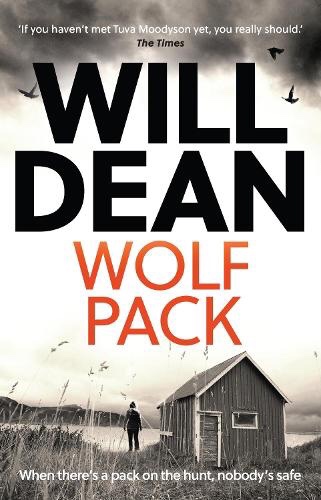
Tuva Moodyson is another character I’m always banging on about on Twitter. I think she’s an incredible woman and I love the representation of her disability too. Here Tuva is back at work after the shooting of her girlfriend, police officer Noora. Noora survived but now exists in a persistent vegetative state, in bed and cared for round the clock by her mother. In the circumstances, Noora’s parents understood that Tuva needed to go back to work. Dean takes us straight into the action, as Tuva finds an armoured hunting dog wounded by the side of the road. In the course of taking the dog to the vet, Tuva leans of a farm further down the road where a group of survivalists live. It’s not long before she hears that a girl’s gone missing from Rose Farm, and while the police will be investigating, Tuva wants to find her story. There are two businesses on the farm, a café and spa, so Tuva visits to get to know a couple of the residents up there. Andreas, who patrols the compound with his dogs, shows Tuva the security system and training they have in place for their members, including underground bunkers if necessary. Are these people simply ‘preppers’, getting ready for the end of the world, or is something more sinister going on? Who is the mysterious Abraham? What was missing girl Elsa Nyberg to do with the preppers and is she still alive? As usual, Tuva throws herself in and soon her own life is in danger.
This was an interesting and addictive book from Lucy Banks and I loved it. The public think Ava is a monster. Ava doesn’t think she’s to blame. She’s spent twenty five years in prison and now it’s time to start a new life. With a changed identity, her name is now Robin, she has a roof over her head and she hopes for the quiet life she’s always wanted. However, her idea of quiet is an uninhabited island off the coast of Scotland, just her and the seabirds. This reminds her of the places they lived when she was small, when her father was working for a bird protection charity. He would teach her to catch and tag the puffins. There’s no hope for a quiet life, as probation officer Margot pops in unexpectedly pushing her to apply for jobs because ‘the state can’t keep you forever’. There’s Bill next door, who likes a chat and flirt over the garden hedge, not to mention his daughter Amber who really isn’t sure of their new neighbour. Finally there’s her unwanted visitor; the strange person in black who lurks and watches; the person who sent the poison pen letter; the person who throws a brick through the window. We see everything through Robin’s mind and a slow unease starts to creep in here and there. Is she the murderer she’s been painted as or is she misunderstood? I went from feeling sorry for Robin, to being terrified of her. Absolutely brilliant!
So that’s this month. I’m having a week’s break from blog tours to read Robert Galbraith’s The Ink Black Heart, which has been staring at me from the TBR shelf for past fortnight. Here are some of next month’s reads.
There are so many cliches we use in the world of book blogging but it’s hard not to use them when all of them applied to this original and unusual novel. This was an unputdownable, page turning, keep me up all night, edge of your seat thriller with intriguing characters and exotic settings.
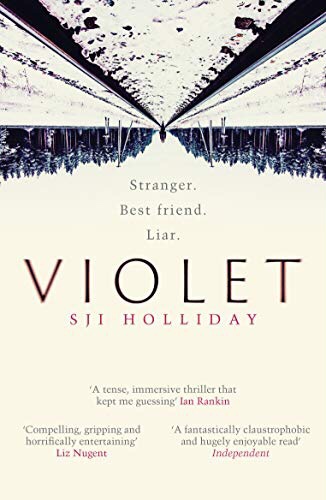
It was refreshing to read a thriller with a female protagonist who steals all of the limelight. Added to that she has a feisty female travel partner. In a genre where women are often prey and merely a catalyst for the real action, these women more than hold their own. Violet has tired of Thailand and her boyfriend wants to stay put. Far from being the island paradise she expected Thailand has become about the same scene, people and drugs. Violet decides to follow their itinerary without him and she does it in style. She makes her way to China but feels strangely alone and dislocated. When trying to organise a ticket for the Trans-Siberian railway Violet overhears a girl talking to the travel agent about her spare ticket. Her friend has had an accident and can’t travel, but the travel agent is no help and the girl has a spare ticket on her hands. Violet follows her to a bar and engineers a meeting that turns into dinner and many drinks. By the next day Violet has scored a ticket and a new travel companion in Carrie. By this time we have a few doubts about our narrator and I worried for Carrie and whether she knew what she was taking on board.
The rest of the novel is told in sections through Violet’s eyes and the emails that Carrie sends back to her injured friend back home. The girls have a stop off in Mongolia where they experience Nomadic life, sheep’s milk tea and a shamanic experience that threatens to put their friendship on a very different footing. Violet reads like someone with borderline personality disorder; despite her narration I don’t feel a coherent sense of self. I don’t think Violet knows who she is. Carrie starts to have her own doubts on the train and tries to create some space by befriending other passengers. Violet starts to panic. What if Carrie decides to go her separate ways? Violet’s friendship has become obsessive and potentially dangerous. However, when we reach Russia we start to see what both girls are really capable of.
The brilliance of Holliday’s writing is that we never really know what the girls are going to do next. This is not helped by the copious amounts of drink and drugs the girls partake in. It’s like being on a rollercoaster ride blindfolded. Just when you think you’ve worked Violet out, something else happens and your opinion changes. I loved the travel detail as well. It isn’t romanticised. It’s scuzzy and grimy. It dispels the backpacker myth of Thailand being a paradise better than The Beach did. Mongolia was at least an authentic experience, but the thought of ewe’s milk tea was grim. I loved the gritty realism and and the psychological manipulation. Living for a while in Violet’s head shows us how dark, obsessional jealousy manifests and left me feeling very uneasy. How much do we really know about what’s going on in someone else’s head? After all this, Holliday still surprised me with a final twist I didn’t see coming that turned everything I thought I knew on its head. It was like seeing The Sixth Sense for the first time, you want to pop back to the beginning and see it all over again with fresh eyes and try to pick up the clues. I read the end of this novel at 2am and was so blown away I had to wake up my other half and tell him all about it. This is definitely one of my books of the year.
Published 14th September 2019 by Orenda Books
Meet the Author
Susi (S.J.I.) Holliday is the bestselling Scottish author of 10 novels, a novella and many short stories. By day she works in pharmaceuticals. She lives in London (except when she’s in Edinburgh) and she loves to travel the world.
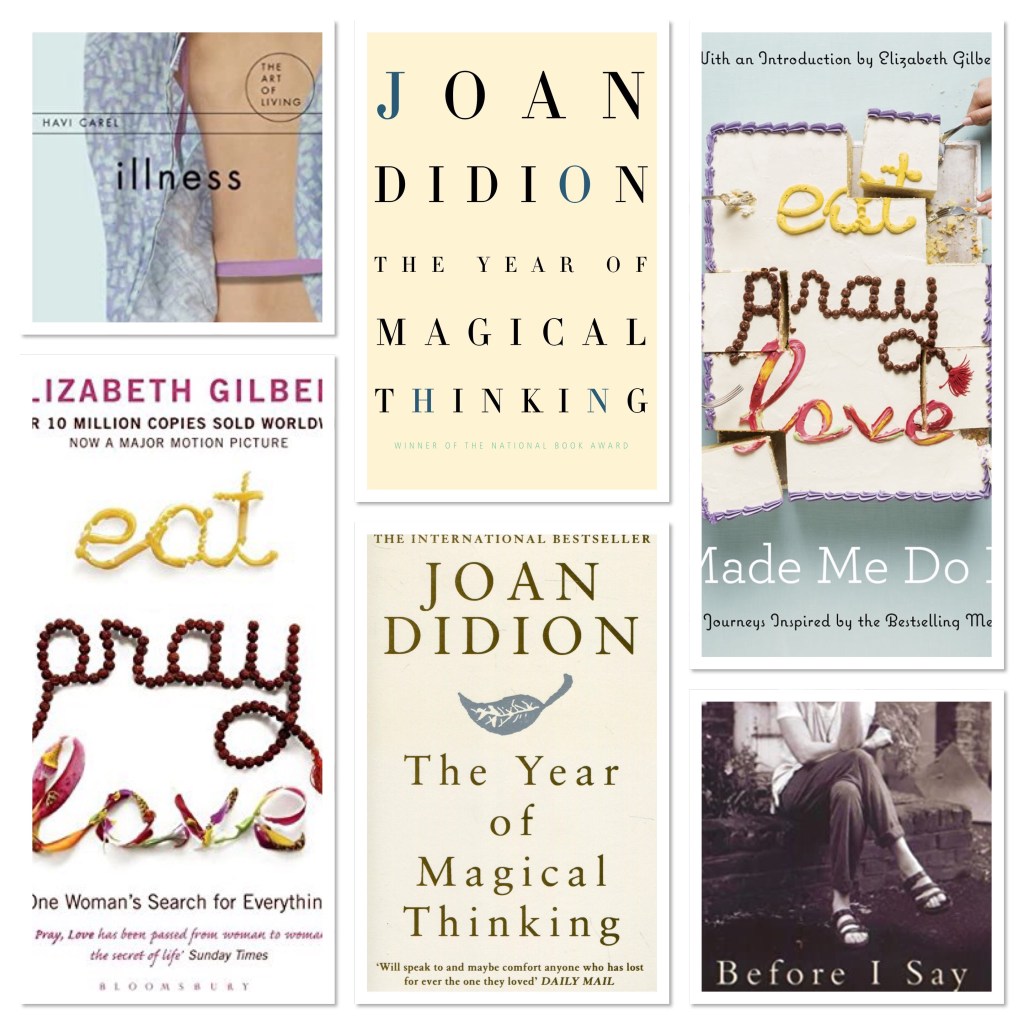
I’m continuing my look at the books that have had a huge effect on me personally or helped me to make a difference in my life. If I’m facing a difficulty, challenge or setback in life I usually look for something to read about it. My late husband used to say that knowledge can’t be taken away from you and that the more knowledge you have, the more options you have too. I’m looking at four books today, all of them memoirs in different forms, but each quite different in how they communicate to the reader. Each one did make me think and I can honestly say I came out of each book feeling changed a little: whether it was energised and inspired; feeling less alone in the world; learning how to face life’s obstacles or reaching an emotional catharsis.
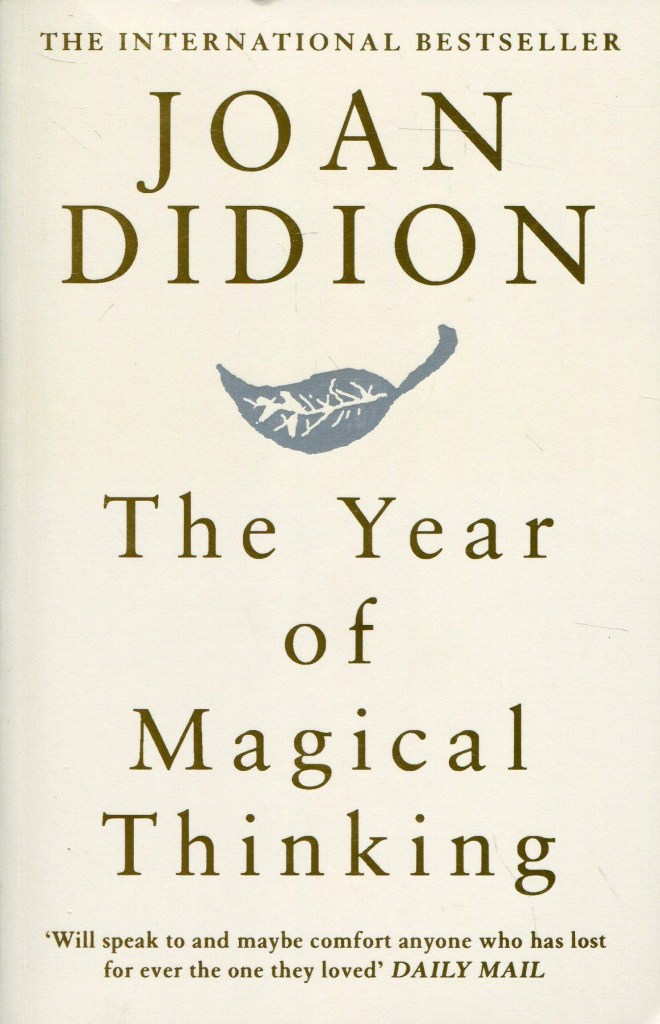
The Year of Magical Thinking by Joan Didion.
Joan Didion’s memoir is award winning for a reason. I found it a dense read in parts, but then my intelligence is probably far below Ms Didion’s level. However, there’s no denying the power of her opening chapter as she and her husband are preparing the table for dinner. Joan and her husband John had already been given the terrible news that their daughter had been placed on life support. Quintana had been suffering with flu symptoms, that became pneumonia and eventually septic shock. In the throes of grief, they are preparing for dinner when with no warning John collapses. John died from a heart attack instantly. In the maelstrom of emotions surrounding his death, Joan writes to make sense of what she’s thinking and feeling.
I found her writing raw and painful. I read this in my own grief and I recognised so much of the past year of my life in her descriptions. The way mind and body become disconnected; one carrying out the duties and routines of everyday life while the other is in another place. I felt like the bit that’s me, my ‘self’ had hunkered down deep inside the shell of my body, unable to cope with the shock of what happened. We were now in a world without my husband, where he didn’t exist. I think my ‘self’ was still in the one where he did. With her beautiful choice of words, Didion articulated a grief I didn’t have words for yet.
Illness by Havi Carel.
I came across this lesser known book when I was researching for a PhD. I was interested in the gap between a person’s perspective of their illness and the self presented in disability memoirs. My argument being that people write about their disability using certain tropes and archetypes – such as Christopher Reeve still presenting himself as superman. There is often a narrative of redemption or triumph that doesn’t relate to someone whose illness or disability is lifelong. I didn’t know whether these tropes were so ingrained in our society, there was only one acceptable way of writing about disability experience, or whether the truth simply doesn’t sell so publishers pressure writers to frame their disability this way. My supervisor suggested I needed to read Havi Carel’s book, because not only was she a professor in philosophy, she also had a long term illness that affects her lung function. What I was floundering around trying to describe was the phenomenology of illness – the ‘lived experience’ to you and me.
In some ways this is a text book, as Carel looks into what is illness? Is it a physiological dysfunction, a social label, or a way of experiencing the world? How do the physical, social, and emotional worlds of a person change when they become ill? Can there be well-being within illness?Carel explores these questions by weaving together the personal story of her own illness with insights and reflections drawn from her work as a philosopher. Carel’s fresh approach to illness raises some uncomfortable questions about how we all – whether healthcare professionals or not – view the ill, challenging us to become more thoughtful. A scene where Carel is devastated during a test of her lung function, because the result shows a decline, is so much worse because of the cold, unfeeling, practitioner. I had tears in my eyes reading it. Illness unravels the tension between the universality of illness and its intensely private, often lonely, nature. It offers a new way of looking at a matter that affects every one of us, because every one of us can become ill or disabled in our lifetime.
Before I Say Goodbye by Ruth Picardie.
Back in 1998, way before Dame Deborah James and You,Me and the Big C, there was Ruth Picardie. Her column in The Observer was read by millions and it was the cancer experience laid bare. Searingly honest and raw about her illness one minute and the next the day to day routine of being a Mum to two small babies. I loved how Picardie debunked those myths and archetypes of illness. How people still associate being ill with the old Victorian consumptive idea of wasting away. Those who are ill should at least be thin. However, as a result of steroid treatment for a secondary brain tumour, Picardie gains weight and has the characteristic ‘moon face’ that I remember from my own steroid days. She is angry with herself for being shallow, especially when she has to dress up for a wedding and nothing fits. She expected that being faced with death, she might be able to let go of the small stuff that doesn’t matter. It does matter though and she goes to Ghost to buy one of their flowy maxi dresses to make herself feel beautiful. She documents the progress of her cancer without holding back and when she can no longer do so, around two days before she died, her husband and sister Justine conclude.and put a frame around this collection of diary events from The Observer. This is a tough one, because I know the context is needed, but losing her narrative voice and hearing her sister Justine’s still chokes me up today. Ruth died from complications following the misdiagnosis of breast cancer in September 1997, leaving a young husband and two-year-old twins.
Eat, Pray, Love by Elizabeth Gilbert
I read Gilbert’s book before all the hype and the film version. I’d been on holiday and picked it up as an easy read and I was hooked by page one. Liz Gilbert has a way of writing that makes the reader feel like it’s just you and her, two friends having a catch up after a long time apart. It’s an intimate and honest account of how she found herself again after a marriage breakdown and a long term relationship that wasn’t healthy. She decided to take a long trip and broke it into sections, each one to feed part of her: body, spirit and heart. First she went to Italy for the eating part, then India for spirituality, then Bali which sounds like an absolute paradise and the perfect place to conclude a healing journey. If you read this as a simple travelogue you won’t be disappointed. Her descriptions of the food in Rome and Naples made me want to book a plane and the warmth in the friends she made there were really heartwarming. I found the discipline and struggle of ashram inspiring, it was her time to really go inside and work things out. She needed to confront what had happened in her marriage, forgive her husband and herself, then remember the parts that were good.
Bali is a like a warm place to land after all that mental work, where the people are welcoming and Liz finds work with a holy man transcribing his prayers and wisdom to make a book. Here she learns to love again and there was something that really chimed with me, when Liz meets a man at a party and they have a connection, she’s absolutely terrified about what it might lead to. She has worked hard and found her equilibrium and now her emotions are stirred up and unpredictable. She felt safe and grounded before, so she doesn’t want to lose it. I’d spent six years on my own, after the death of my husband I’d ended up in an abusive relationship and it had taken me a long time to recover. Then I met my current partner and I remembered back to this book and the wise friend who advised Liz to think of her life as a whole, it could only be balanced if it has periods of imbalance. Sometimes we have to throw ourselves into life. I used meditation a lot to keep grounded and it has changed my life in terms of improving mood and helping me cope with life’s difficulties. However, we can’t avoid life and stay in neutral all the time. When I read this with my book club there were mixed responses, the most negative being ‘it’s okay for some, able to swan off round the old and get paid for it’. It’s a valid point, but I never felt that. I thought she was in need of something drastic to get her life back on track and I didn’t begrudge her a moment of it. You might also like to try Eat, Pray, Love Made Me Do It. A series of stories about women’s journeys inspired by the book.
This novel was a wonderful surprise when Sandstone Press kindly granted me a copy. We were only three weeks into January and I’d fallen immediately in love with a new literary heroine. I absolutely adored Sybil and felt so at home in her company I just kept reading all day. I then finished at 11pm was bereft because I wouldn’t be with Sybil any more. Yes, this is what happens to avid readers. We fall head over heels with a character, can’t put the book down, then suffer from book withdrawal. All day I was grumpy and reluctant to start a new book.
Sybil’s life is puttering along nicely. She has a job she enjoys at a London museum – Royal Institute of Prehistoric Studies (RIPS). There she produces learning materials, proof reads and indexes archaeological publications. She also helps people with research enquiries. She has a great boyfriend, Simon, who is a chef and likes to make her bread with obscure grains. Her quiet, settled life is turned upside down when she, quite literally, bumps into an old nemesis from her university days. Sybil and Simon have gone ice skating, where they spot Helene Hanson, Sybil’s old university lecturer. Sybil doesn’t want to say hello, after all Helene did steal some ideas from Sybil’s dissertation to further her own research into the Beaker people. They try to make their way over, very unsteadily, and end up careering into Helene’s group. In Sybil’s case she’s only stopped by the wall of the rink. She has a nasty bang on the head, and from there her life seems to change path completely. Only weeks later, Helene has stolen Sybil’s boyfriend and in her capacity working for a funding body, she has taken a huge interest in RIPS. Now Sybil’s workplace will be selling Helene’s range of Beakerware (TM) in the gift shop and they even welcome her onto their committee as chair of trustees. Sybil’s mum suggests a mature exchange of views, but Sybil can’t do that. Nothing but all out revenge will satisfy how Sybil feels. She’s just got to think of a way to expose that Helene Hanson as a fraud.
First of all I want to talk about the structure of the novel. As Sybil’s life starts to unravel, so does her narration. A suggestion from a friend leads Sybil to a poetry class at her local library, so prose is broken up with poetry and very minimal notes of what Sybil has seen that she hopes to turn into haiku. Haiku is a Japanese form of poetry with a set structure of thirteen syllables over three lines in the order of 5, then 3, and then 5 syllables. Having lived next to a Japanese meditation garden for several years I started to write and teach haiku as a form of meditation. It’s a form linked to nature and is very much about capturing small moments. So if Sybil sees something that might inspire her, it makes its way into her narration. I loved this, because I enjoy poetry, but also because it broke up the prose and showed those quiet still moments where Sybil was just observing. She works with found objects – most notably a little teacup, left on a wall, that has ‘ a cup of cheer’ written on the side. There’s a very important reason for the fragmentary narration, that I won’t reveal, but I loved it and thought it was so clever. Many of my regular readers will know why I connected with this narrative voice. It could be that this is the only visible symptom of the chaos in Sybil’s mind as she goes through a massive shift – physically from one flat to another – but also a mental shift towards living alone, to coping with her nemesis constantly popping up and to the heartbreak she’s gone through. We’ve all had to start new chapters in life so her situation is easy to relate to.
Helene’s organisation brings much needed funding to the museum, but with it come obligations. As chair of the trustees, she wants to change the very structure of the building and some of the precious display spaces might be sacrificed. Her commercial enterprise, recreating Beakerware (TM) for the museum gift shop, means the shop expanding into other areas. Exhibits that have been on display for years will be moved into storage to make room and Sybil dreads Helene using Simon as the face of the range, imagining giant posters of her ex greeting her every morning at work. To add insult to injury Helene even inserts herself into Sybil’s everyday job by adding a section into her boss Raglan’s upcoming book meaning that Sybil has to index Helene’s writing. Could there be a chance here, for Sybil to gain some satisfaction? However, as Sybil’s mum hints, revenge can be more damaging to the person seeking it. This book is character driven and they’re brilliantly drawn, funny, eccentric and human. Sybil’s boss Raglan Beveridge – who she observes sounds like a cross between a knitted jumper and a hot drink – is such a lovely man, easily swayed but kind and tries to ensure that Sybil is ok. I enjoyed Bill who she meets several times across the book, in different situations. He’s calm, funny, thoughtful and shows himself to be a good friend to Sybil, even while she’s barely noticing him! Helene seems to hang over everything Sybil does, like an intimidating black cloud promising rain to come. She is a glorious villain in that she has very few redeeming features, and tramples all over Sybil’s world at home and at work. The author cleverly represents this in the very structure of RIPS. Sybil likes her slightly fusty, behind the times little museum. There’s a sense in which it is precious, that the spaces within shelter some eccentric and fragile people. They’re like little orchids, who might not thrive anywhere else. They’re introverts, so need familiarity and quiet. How will they survive Helen’s onslaught?
On the whole this was a quiet book. As I was reading it, I was totally. engrossed and the outside world was muffled for a while. It reminded me of those mornings after snowfall, when the outside world is silenced. I felt a deep connection with Sybil. She’s offbeat, quirky and has a dark sense of humour. We meet her at her lowest point and while we’ve all been heartbroken, this was much more than that. I’ve been broken by life just once, but I was a like a vase, smashed into so many pieces I didn’t know if I could pull them all back together. Even if I did, I knew I would never be the same person. This is the process Sybil is working through and her grief is central to the novel. My loss felt so huge that it affected my actions – I left doors unlocked when I went out, forgot to pay bills, and started to make mistakes at work. I had always prided myself on being very ‘together’ and here I was falling apart. I discovered Japanese art that healed me in some way – it’s called Kintsugi and it’s the art of repairing broken ceramics with liquid gold or other contrasting metal. It shows the cracks, the evidence that this piece has been through something, but it’s still whole and it’s still beautiful. I feel this is Sybil’s journey and what she needed to hear was broken things can still be beautiful. This was a thoughtful novel, with serious themes but a lovely hint of humour running through. I still love it now, a couple of years later and my finished copy has pride of place on my bookshelves.
Q & A with Ruth Thomas.
1. The Snow and the Works on the Northern Line is very character driven – did the idea for the story or Sybil come first?
The setting came first, in fact. I wanted to write about a fusty old institute, and that’s how the Royal Institute for Prehistorical Studies (RIPS) began. I also wanted to write about Greenwich Park. It’s an early memory from childhood. I remember it being a beautiful but rather melancholy place.
2. The RIPS is a wonderful setting! Could you tell us a bit about it, and why you set The Snow and the Works on the Northern Line in a museum?
I love museums, especially small old-fashioned ones. They have so much character and lend themselves to description. I also wanted to tell the story of a museum artefact – how it fitted into someone’s life in the 21st century as much as the time when it was made.
3. Sybil’s voice is brilliantly handled – did you do anything in particular to pin that down when you started working on the novel, or to get in the zone each time you sat down to write?
I don’t think too much about voice before I begin – I just start with my own take on things, and after a while a character and voice shapes itself around those observations. I think the mood your character’s in has a big effect on the way they tell their story.
4. Quite early on in the book, Sybil joins ‘Poetry for the Terrified!’ at North Brixton Library – could you tell us a bit about that?
I love poetry but am a bit rubbish at writing it! I thought I’d harness that inability for Sybil too. At school, we were always supposed to find poetry profound. It can be fantastic and moving, of course, but sometimes you have to discover that in your own time.
5. One of the themes that stood out while reading The Snow and the Works on the Northern Line was grief – we’d love to hear about how you explored different aspects of grief.
I wanted Sybil’s grief to be reflected elsewhere in the book too. She thinks she’s alone with her heartbreak, but that’s one of the qualities of grief – you don’t necessarily know others are going through something similar. I also wanted to explore sorrow without writing a very sad book!
6. Was any of the office politics/social etiquette inspired by real life?
I love office politics! It’s one of the things I really missed during lockdown. Small-scale conversations and seemingly trivial things are what make me tick as a writer. At the momentI’m just having to focus a bit more on remembering the details.
Thank you so much to Sandstone Press and the SquadPod Collective for inviting me to share this lovely book with you again and thank you to Ruth Thomas for her contribution to this post.
I’ve been struggling over the last couple of weeks, probably since the procedure on my back and short term increase of medication, I’ve struggled to connect fully with a book and to remember all the plot points in those twisty – turny thrillers I usually love. Often when I’m like this I find the best thing to read is non-fiction, which in my case usually means history or memoirs. So for the next few Sundays I’m going to feature some of the non-fiction books I’ve enjoyed and those that have changed my life.
An Evil Cradling by Brian Keenan
I wouldn’t have read this amazing piece of writing, had it not been set for my Autobiography class at university. It is an absolutely stunning book, for it’s story, it’s language and how Keenan tries to hold on to his sense of self when everything that normally defines us is stripped away. The Irish writer was teaching in Beirut in the 1980’s, when he was taken hostage by Shi’ite Militia Men, he was held for four years, much of his time with the British writer John McCarthy. What Keenan manages to do is convey the fear, the indignities, the atrocities and the endless hours of waiting. He muses on what it is that makes us ‘us’. Usually when we are asked what makes us who we are we tend to list the foods, music, sport or pastimes we love. I might feel defined as a rock music fan, who loves Italian food, Woody Allen films and reading novels. However, if we imagine all those things taken away, who do we become? While keeping us abreast of day to day events, Keenan goes inside himself to ask who he is when he isn’t observed or compared to another. He has to consider whether it is easier to let his psyche split into many different pieces that may be impossible to assemble should he survive? Or should he try to keep his sense of a cohesive self, if indeed there is one, and if he reminds himself daily of who he is will it help him survive. It’s hard to imagine the situation Keenan is in and how deprived he is of sensory information, so much so that just seeing an orange inspires this passage:
‘I want to bow before it. Loving that blazing, roaring, orange colour … Everything meeting in a moment of colour and form, my rapture no longer abstract euphoria. It is there in that tiny bowl, the world recreated in that broken bowl. I feel the smell of each fruit leaping into me and lifting me and carrying me away. I am drunk with something that I understand but cannot explain. I am filled with a sense of love. I am filled and satiated by it. What I have waited and longed for has without my knowing come to me, and taken all of me.’
Three Things You Need to Know About Rockets by Jessica A Fox
This was one of those books I simply fell upon while on holiday in Northumberland as I was browsing in Cogito Books at Hexham. For some reason this appealed to me as a holiday read because it felt light and had an escapist quality. Fox is living a life I can’t imagine, in a sublet house that has a lovely garden for meditation and she has a job working as a story teller, at NASA of all places. When she’s hit with redundancy she feels a need for a change of direction and Googles ‘second hand bookshops in Scotland’, dreaming of a quiet bookish retreat. She finds a bookshop in Wigtown where there is a book festival in the summer and they want voluntary help, with accommodation included. She fires off an email which starts an incredible journey geographically and emotionally.
She arrives in Scotland and is welcomed into the home and shop of Euan, where she’s due to spend a month. It’s not long before it’s clear there are feelings between these two book lovers, but they are very different people. Jessica’s is enthusiastic and wears her heart on her sleeve whereas Euan is all reserve and doesn’t want to define or commit to the relationship. When she returns to Scotland for a second time, she makes it clear that she needs to know he is as committed to this as she is and sets an ultimatum. She will return to the US and if he wants a relationship with her he must come out to get her before a certain date. Heartbroken, she returns to her parents house and tries to put her life back together again, thinking that she must move forward in case he doesn’t come. This isn’t soppy or sentimental, as Jessica relates a good amount of personal growth too. She learns to slow down, after living in a city where everything is available at any time of day, and has to accept that in Wigtown going for a walk or seeing some Highland Cattle is quite enough incident in one day. I truly enjoyed this and look forward to reading Euan’s story, under his real name Shaun Bythell.
Small Dogs Can Save Your Life by Bel Mooney
Although this is now packaged in a cutesy pink way, it’s quite a powerful memoir about loss and finding one’s identity against, written by journalist Bel Mooney and relating some of the most painful times in her life. Married for thirty-five years, Bel recounts the life shattering experience of her husband coming home and telling her he was in love with someone else. He had met an opera singer through his work and it had been an instant understanding between them. Through her pain, Bel could recognise this as love and he left the family home. While still in shock and starting to negotiate the terms of their divorce, Mooney rescued a small Maltese dog called Bonnie. Her story recounts the growth of her bond with this little rescue dog and how the simple act of looking after an animal can aid the process of recovery. The small steps it required to look after her small dog were the first tentative steps towards finding a new life, when she couldn’t even imagine what it might look like. When her husband’s new partner was suddenly diagnosed with terminal cancer, she even finds the strength to be loving and compassionate despite her own pain.
I know the power of a dog to heal. After the death of my husband I’d managed to do no more than put one foot in front of the other for about six months, when I bought a tiny cockapoo puppy. I collected him on New Year’s Eve and we settled in to a night in front of the fire with the TV on. I was watching the film Finding Neverland and the sequence where the boy’s mother slowly slips away while they perform a play for her really hit a nerve with me. The weight of the past six months seemed to suddenly become unbearable and for the first time in my life I actually considered what a relief it might be to not be here anymore. I knew I had enough medication in the house to do the job. The thing that stopped me was the bundle of fur I’d brought home that afternoon. In the battle going on inside my head I kept coming back to how scared and bewildered he would be. His first night away from his litter I couldn’t do that to him. Rafferty has been by my side ever since and on those days where I couldn’t face coming out from under the duvet, having to get up and let him out in the morning forced me to keep going. He’s now fifteen and his health is failing, but I’m still there each day supporting him like he’s supported me. Without him, I wouldn’t be here. So it seems that books and small dogs can save your life.