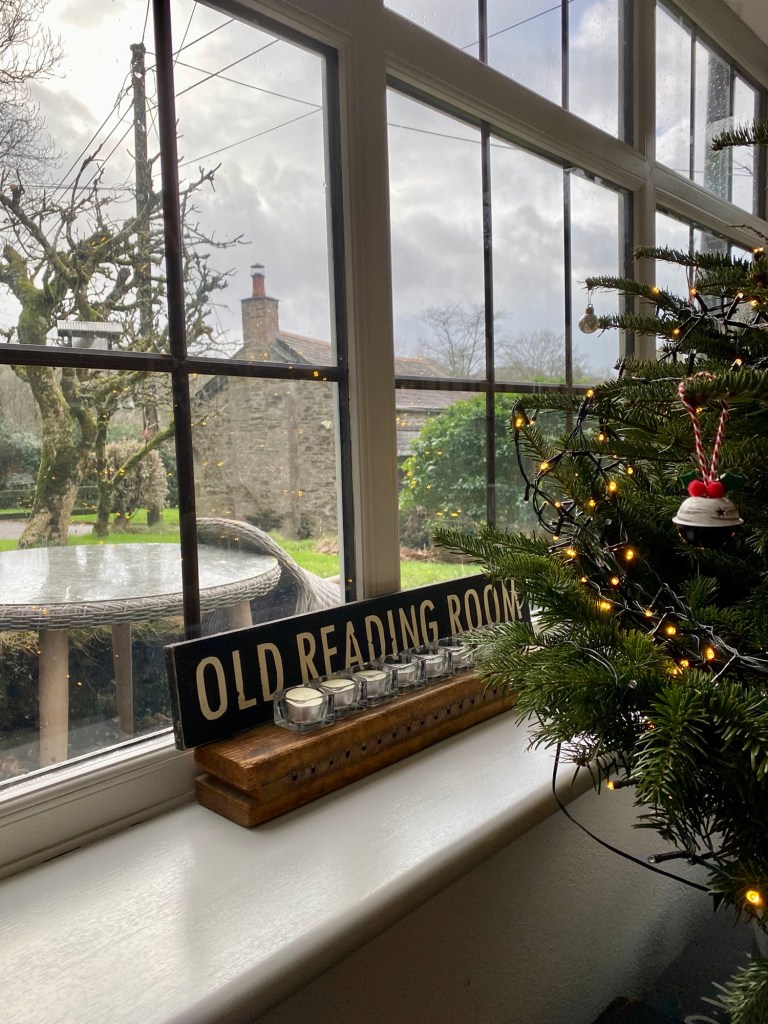
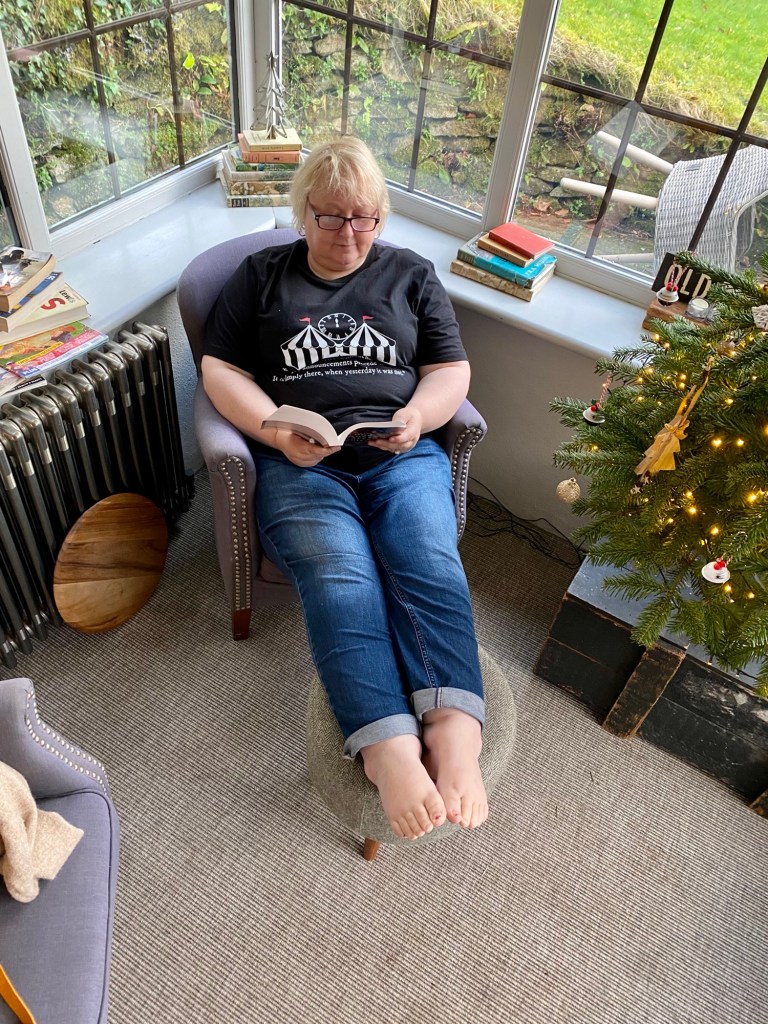
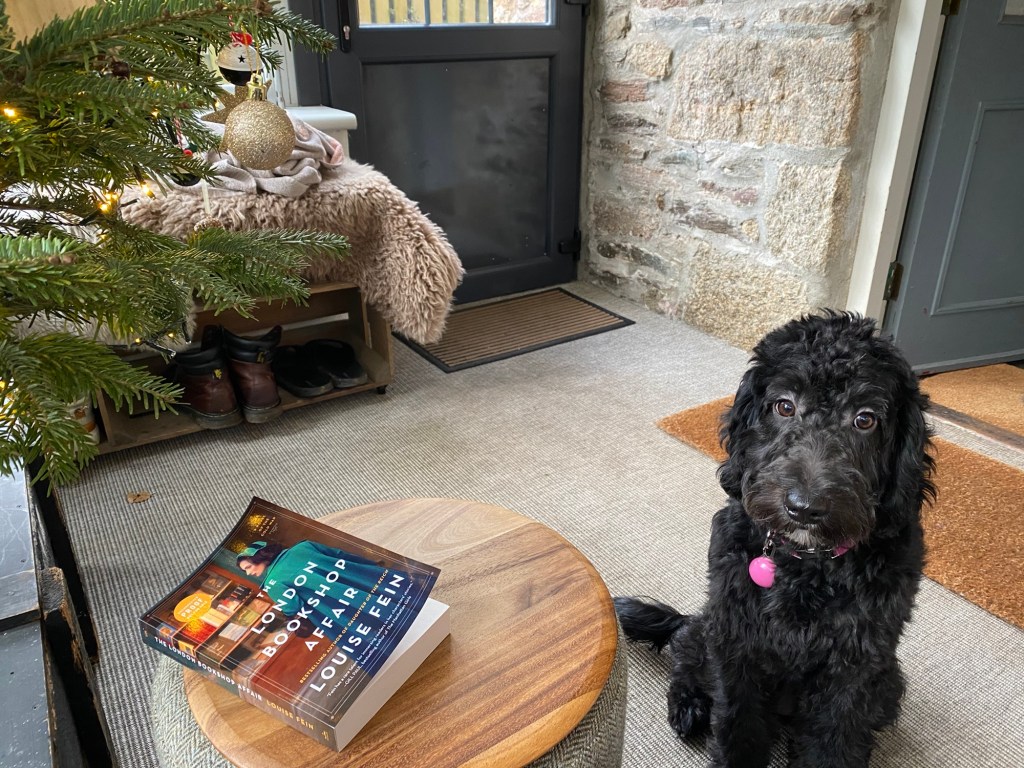
I’ve spent the last two weeks celebrating both the New Year and our recent marriage in a little cottage in Cornwall. We were married on the 22nd December and although I’ve always fancied a Christmas wedding, the reality was a little more stressful than I anticipated. So rather than wander off abroad we decided to stay in the U.K. and find somewhere special to stay with our new puppy ( I know, utter madness) down in Cornwall. I was very lucky to find this rustic and relaxing cottage several months before and had been hoping for an excuse to go, because it was a little more expensive than we usually go for. Aside from the cottage’s look, rustic and relaxing, there was a special meaning for me because of what the building was originally used for; a reading room for local miners and their children, who were often working alongside them.
Cornish mines employed children for many different roles, but usually for ‘surface’ work which might include washing down the mined stones in long troughs. In the middle of the 19th Century, the working day for a child was very long, usually between 7am and 5.30pm, with a daylight hours working arrangement in the winter. Many children also had a long walk to work of up to several miles, meaning the day didn’t end at 5.30pm. For example, a young woman called Martha Buckingham, was working at Consolidated Mines at the age of ten. In order to reach work for 7am she had to get up at 4am ready for a two mile walk. She would retire to bed at 9.30 pm, leaving little time for anything but sleeping, walking and working. Sundays were the only days that might provide leisure time. With little to no schooling many of these children would have been illiterate and while reading rooms were often set up to create an alternative to the pub for adults, some seem to have focused on encouraging reading for children. Reading Rooms were provided even in small villages and towns, funded by often the church and local landowners, mainly for the working classes and their children, reflecting contemporary attitudes to philanthropy, recreation and self-help. Of course the mines benefitted from having sober and literate workers too.
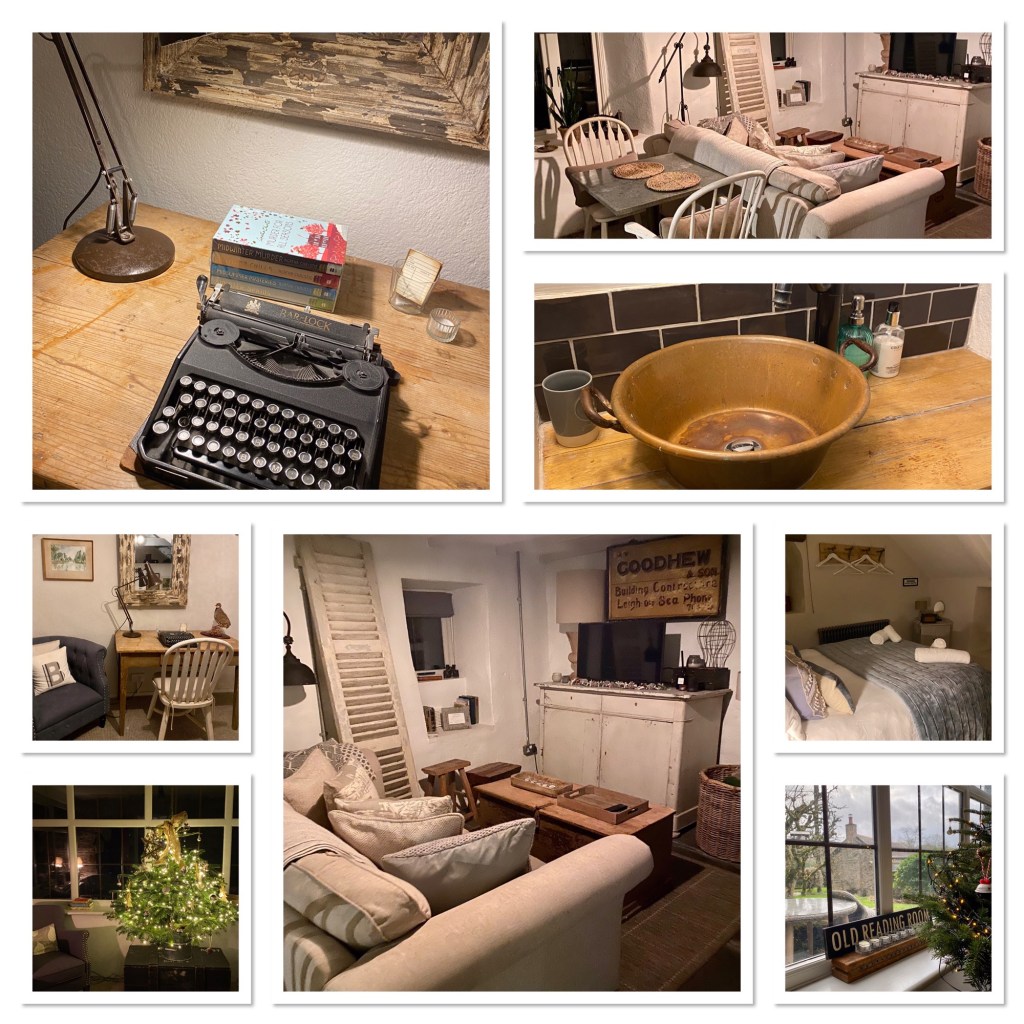
Books, magazines and newspapers became more accessible for everyone and learning to read was encouraged. It amazed me that even in such a small, isolated area this place had been providing a haven for people to read. Essentially a small cottage that had been left derelict is now a holiday home and everywhere in the cottage there was a sense of it being like an old school room. The slate floor and rustic wood finish everywhere felt authentic and even the cupboards and shelving wouldn’t have looked out of place in an old school or library. Everything was worn, a little bit battered, but serviceable. It had a really quiet feel to it and when I was reading in the garden room all I could hear was the gentle tick of the clock and the sound of the river flowing past (although it did become a bit of a roar on about day 4 and I wondered if I should have taken flippers and a snorkel).
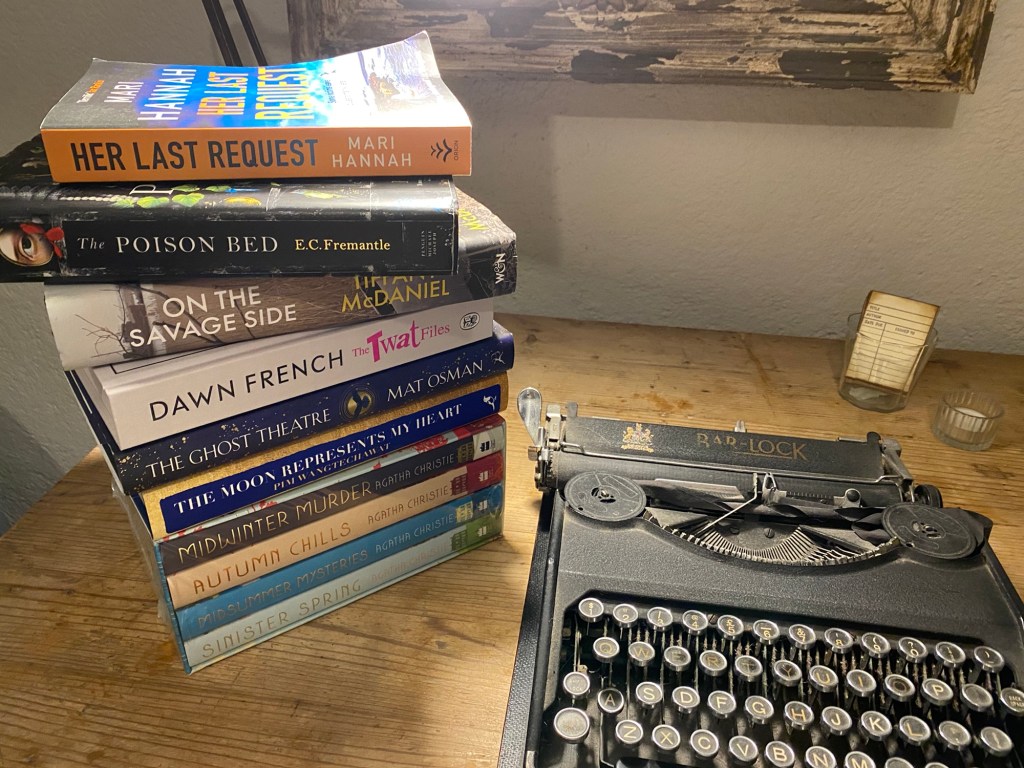
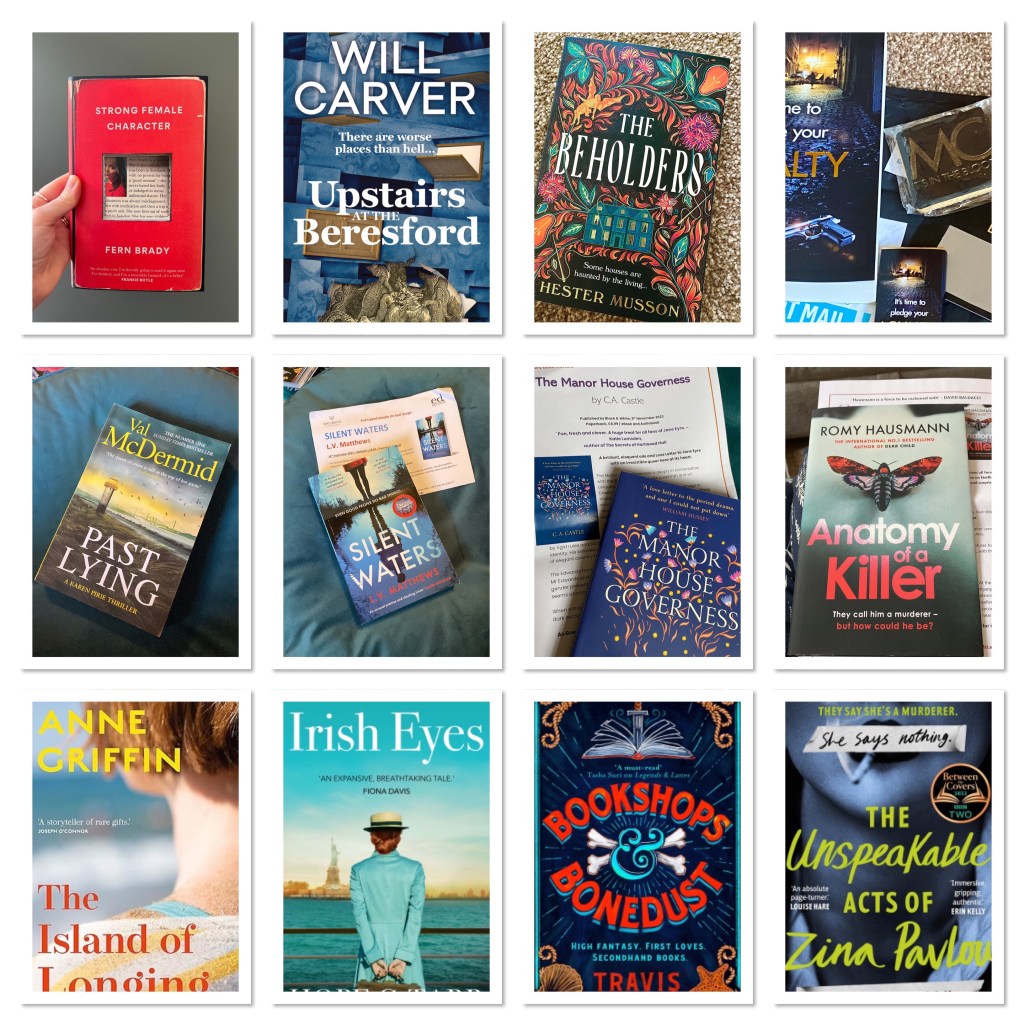
Styled everywhere with old books, lamps and an incredibly old typewriter it was the perfect place for a bookish person to feel at home. Thankfully while there I even got my reading mojo back and managed to read the following books with reviews on the way:
Preloved by Lauren Bravo
The Collapsing Wave by Doug Johnstone
First Lie Wins by Ashley Elson
One of the Good Guys by Araminta Hall
Into the Uncanny by Danny Robins
Meet Me When My Heart Stops by Becky Hunter.
The Guests by Agnes Ravatn.
If you’d like to look at The Old Reading Room the link to the holiday site is listed below. It is expensive but I wanted my honeymoon to be special and with a nine month old goldendoodle on our hands there was no way we could go abroad. It was worth it to stay somewhere with that history and feel about it, it made me feel that rather than rushing around to see this or that attraction I could just read and take in my surroundings instead.
I’m lucky enough to have spent the first two weeks of the New Year on honeymoon in Cornwall. It’s been blustery, wet and very brisk ( a Lincolnshire euphemism for those mornings when it’s so cold and the rain so hard that your face feels like it’s been pebble-dashed ). I wouldn’t have it any other way though. I love the brisk cold followed by a hot brew, a roaring fire and a good book. I love winter beaches and meeting other nutters out walking their dogs on New Year’s Day while the Atlantic batters the shore. It’s wild and beautiful. If I want something more sheltered and sedate we are no further away from the opposite coastline with it’s pretty coves, creeks and Daphne Du Maurier style private shingle beaches along the Helford River. There I can pretend to be the second Mrs De Winter, walking Jasper along the beach below Manderley. I’m also staying somewhere rather special – a place I’m going to tell you all about tomorrow. I’ve brought with me an iPad full of January book releases so I can get ahead of my blog tours, but also enjoy some NetGalley picks. Inevitably New Year gets us all thinking about how we’ve been living and the changes we might want to make. As regular readers know, I don’t believe in New Year’s Resolutions but I do have some thoughts about how I want my bookish adventures to continue.
1. Making more sensible reading choices – it’s so easy to be lured by blog tours and the organisers I work with do have some incredible titles coming up. However, the more blog tours I do the more my NetGalley list comes to a standstill and older books might never get a look-in. Despite my shelves groaning with second hand books I rarely find time to read one, having been lured away by shiny new releases. So I’m going to do a maximum of two blog tours per month so I can choose every other book I read. Whether it’s from NetGalley, my second hand purchases or the physical proofs I get sent it brings some freedom back to my reading. It’s so easy to get caught up in the race to get the newest proof or next year’s must have new book. I don’t want to lose the joy I’ve always had in reading and writing about books.
2. Writing About Second-Hand Books – I love to find an absolute bargain when browsing through the second-hand books and plan holidays around browsing some of my favourite second-hand haunts. A lot of people can’t afford the latest book, or the myriad of special editions that I’m susceptible to – honestly I need an addiction clinic for this particular vice. So I’m going to be featuring more of my charity shop bargains and recommending great second hand books to pop on your buying lists when you’re trawling Oxfam or some of the fantastic second hand haunts around the country. There are so many great reads out there and they don’t have to be the latest big thing.
3. Featuring ‘Gift’ Books – Like a lot of my bookish friends I received some brilliant books for Christmas and some were what I’d call ‘gift’ books. They might be a special copy of a novel, including illustrations or be a non-fiction subject I’m interested in. My other half knows I love books around creativity, fashion, Art Nouveau and the Pre-Raphaelite movements, well-being, animals, costumes for the theatre or ballet. Or very specifically I love Liverpool, Moomins, Chatsworth House and anything to do with Liberty. This Christmas I was treated to a beautiful gift edition of The Girl of Ink and Stars, a biography of Tove Jansson and her creation of the Moomins, a stunning book about Jane Austen’s wardrobe and another about using ‘free’ embroidery as a technique for improving well-being. I often think that I should photograph and share them with followers and I’m going to resolve to do it this year, maybe even use TikTok a little more.
4. Saying No – this is a tough one for a people pleaser, but I do feel the need to say no more often. This is about saying no and protecting my time to read and write first of all. It’s easy to get sidetracked by other people or housework. There’s also that difficulty all workers from home have, that because it isn’t paid work or just because you’re at home it’s okay to drop in unannounced. I’ve got to learn to say that I have a little work to do. If someone pays me a long afternoon visit and I have blog post imminent or have been on fire with my own writing, I have to make up those hours. I need to write that blog in the evening or hope that the inspiration has lasted. I do love people feeling able to pop in though so this is going to be a tough one to break. Also this links back to numbers 1 and 2 in that I will have to say no to some books this year too.
5. Book Sluttery – twenty years ago when I first met my late husband, Jez, I was catapulted into a different world when it came to money. I’d been skint most of the time, on disability benefits but doing up to ten hours a week of permitted work meant that I had to pay rent. Usually after bills, I had approximately £20 to cover food for me and my cats, then after that any sort of socialising or personal spending. His financial advisor came to see us after we moved in and I was utterly fascinated with the way he created a budget. I know you’re a bit of a film and book person so that needs to be factored into the budget. I explained that I usually only spent on myself after everything else was paid. He taught me that if I didn’t split whatever amount left I had into portions for each hobby, I would never do anything or I would overspend. He was right. So I have given myself a monthly book budget because we know I’m going to buy them, but at least I won’t be tempted into bookish incontinence. I remain a bookslut, just hopefully a more sensible one.
6. Championing My Own Writing – one of my most read blogs from last year was about what I called ‘literary glimmers’, those beautiful shining moments in a book where an incredible landscape transports you to another place, where an incredible first kiss whisks you back to a memorable moment, or where a truth becomes so evident you can’t ignore it. This year I’d like to write more blogs like that or maybe share some poetry. I’d like people to hear my narrative voice and see what they think. I’m not going to hide the fact I have a WIP.
7. More Focus on the Squad Pod Collective – you may or may not know that I am a member of the Squad Pod Collective. This group of bookish friends became very close during COVID, keeping a chat group running on Twitter and another on WhatsApp. It was mainly personal support while we all shielded, home-schooled and were furloughed. Of course the talk often did turn to books and now the Squad has developed enormously, having a monthly book club choices, read-alongs and author interviews which is really exciting. I’m hoping to be able to give more focus to the squad this year and join in more with online chats and read-alongs.
8. The Therapeutic Aspect of Books – I have until very recently, been studying for an MA in Creative Writing and Well-being. However earlier last year I had to accept that my health was deteriorating too much to continue. It was a sad choice, but I have MS and there are days every week where I don’t even end up out of pyjamas. Reading has always been my ally when I’m struggling and I can still read or write unless I’m feeling really unwell and have to take a complete break. I love keeping my brain active and learning is a big part of my life so I’ve signed up for online courses in writing and bibliotherapy. When counselling I’ve often recommended books to clients and I’m interested finding out more. There are no set deadlines and I can do as much as I want when I can, so it’s perfect for my up and down life. Im also going to share some therapeutic books with you and share what they’ve done for my health and well-being.
9. Sharing Great Book Haunts – wherever my husband and I go on holiday or weekend breaks I have to spend one day on a bookshop visit. I have a favourite haunt everywhere we go and I’d like to spend more time this year telling you all about them.
10. Saying Yes Too New Experiences– I suppose number 8 is part of this, but I think it’s unhealthy to be in a rut and never try anything new. So I’m going to say yes to things: meeting new book friends, trying some bookish events, finally learning how to use TikTok. I know health is going to dictate some of these, but I’m feeling determined!
So that’s just a few thoughts for my bookish year ahead and I’m excited about the amount of incredible books coming up. It seems that every year gets better and I have to spend a lot of December trying to wrangle a top 20 out of so many great reads. I’m looking forward to it. Let me know what you’re looking forward to this year or any changes you’re thinking of making to your blogging life.
The Amazing Grace Adams – I loved taking Grace’s journey with her, as she ends up abandoning her car and walking to deliver a birthday cake to her daughter. As she walks, family secrets start to emerge and we watch Grace find herself again. Funny, moving and uplifting.
Shark Heart – This is such an unusual novel, as newlyweds Lewis and Wren find out about a rare genetic mutation that will slowly turn Lewis into a Great White Shark. The author uses magic realism to explore the grief of losing someone by slow degrees. Beautiful and utterly heartbreaking.
The Opposite of Lonely – Of course the Skelf novel number 5 is on my list! I’m such a fan of these books and the three Skelf women: grandmother Dorothy, mother Jenny and daughter Hannah. There are changes afoot in the funeral business, plus three new cases for them to investigate including a fire at a traveller’s site, the whereabouts of Jenny’s sister-in-law and an astronaut who came back to earth a ‘changed’ woman. Brilliantly written and woven together this is the best one yet.
End of Story – this book is an absolute masterpiece. Louise creates a dystopian world where all fiction is banned and writers are monitored very carefully by compliance officers who visit and interrogate their activities. Fern is one such writer whose third novel Technological Amazingness was banned for creating dissent. I sensed another story lurking beneath the surface and I read the last chapters with tears running down my cheeks.
The Birdcage Library – this had all the elements of my favourite type of novel – dual timelines, women’s history, a gothic castle, and taxidermy! What more could you want? Emily Blackwood is an explorer in her own right, but is asked by a collector of taxidermy to help him catalogue his collection. However when she arrives and finds pieces of a woman’s journal from 50 years ago, she is pulled into a story that has implications for the collector and for her own safety. Dark, compelling and quirky.
All The Little Bird-Hearts – Sunday and her daughter Dolly have a glamorous and gregarious new neighbour. Vita wants to be friends, a big deal for Sunday who finds socialising difficult. Vita and her husband Rollo seems to accept Sunday’s ‘quirks’, but as they get closer Sunday starts to notice Vita is spending more time with Dolly. Are they just taking an interest in Dolly or is something more manipulative going on? This is a subtle and emotionally literate debut that’s so beautifully written.
Good Girls Die Last – I read this book in a day, because it’s so compelling. Em’s 30th birthday looms along with the imminent wedding of her younger sister back home in Spain. On the hottest day of the year she loses her job and home in one morning. All she’s got to do is get to the airport, but with strikes, protests and a serial killer on the loose will she ever get there? A raw and searingly insightful thriller.
River Sing Me Home – a stunning novelty set in the first years after slavery is outlawed in Barbados. Rachel is still in the cane fields as an apprentice and doesn’t feel free. The only way Rachel will feel free is if she can find her children; scattered to different places and owners by the slave owner. This is a beautiful, moving journey of a mother trying to put the pieces of her family back together and it is unforgettable.
Vita and the Birds – I loved this haunting tale from the wonderful Polly Crosby. Told in a dual timeline, we follow Eve Blakeney who returns to her grandmother’s home by the coast to sort through her belongings and work through her grief. She finds a tin of letters that take us back to the 1930’s and her grandmother’s relationship with a woman called Vita. A novel of family secrets kept for decades and so beautifully written.
The Fascination – with it’s setting of travelling fairs, the West End and the Victorian fascination with ‘curiosities’ it was perfect for me. Tilly and Keziah Lovell are twins and alike in everything except Tilly hasn’t grown since she was five. They follow their father to fairgrounds selling his quack remedies until they are sold at 15 to the mysterious Captain who whisks them to London. Theo is raised by Lord Seabrook, a man who has an obsession with anatomical curiosities. As Theo undertakes work at Dr Summerwell’s Museum of Anatomy his path crosses with the Captain and his troupe. Theo, Keziah and Tilly are drawn into a web of deceit and secrets that could upturn everything they know.
The Running Grave – I was disappointed with the last Cormoran Strike novel but this was back on form. Strike and Robin are hired to find a young man drawn into a cult and estranged from his family. Robin volunteers to infiltrate the church through their temple in London, with the hope of being taken to their farm in Norfolk to undergo induction. The Universal Humanitarian Church is, seems like a peaceable organisation that campaigns for a better world, but Strike discovers that beneath the surface there are deeply sinister undertones, and unexplained deaths. Is Robin prepared for the dangers that await her there or for the toll it will take on her?
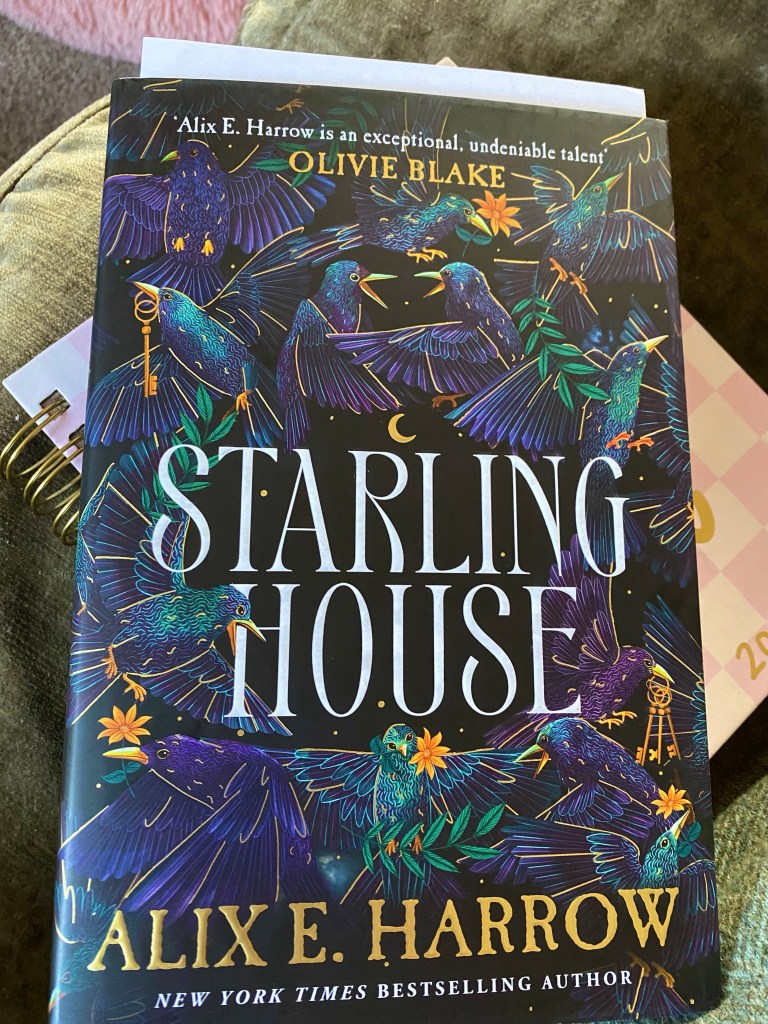
Starling House – An absorbing Gothic fairytale set in the small town of Eden, Kentucky. No one remembers when Starling House was built, but stories of the house’s bad luck have been passed down the generations. Opal knows better than to mess with haunted houses, but when an opportunity to work there arises the money might get her brother out of Eden. Starling House is uncanny and full of secrets – just like Arthur, its heir. It also feels strangely, dangerously, like something she’s never had: a home. Yet Opal isn’t the only one interested in the horrors and the wonders that lie buried beneath it. As sinister forces converge on Eden Opal realizes that if she wants a home, she’ll have to fight for it.
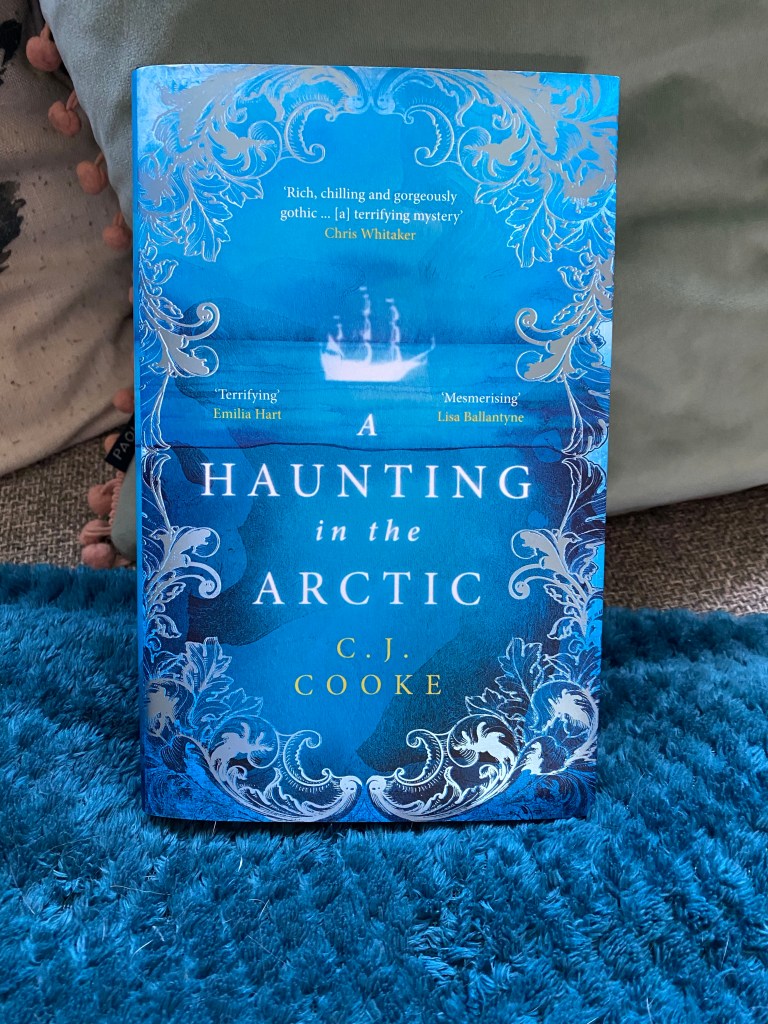
A Haunting in the Arctic – 1901. On board the Ormen, a whaling ship battling through the unforgiving North Sea, Nicky Duthie awakes. Attacked and dragged there against her will, it’s just her and the crew – and they’re all owed something only she can give them. 1973. Decades later the ship is found still drifting across the ocean, but deserted. Just one body is left on board, his face and feet mutilated, his cabin locked from the inside. Everyone else has vanished. Now, urban explorer Dominique travels to the northernmost tip of Iceland and the Ormen’s wreck, determined to uncover the ship’s secrets. But she’s not alone. Something is here with her. And it’s seeking revenge… hauntingly brilliant.
In A Thousand Different Ways– Alice sees the worst in people. She also sees the best. She sees a thousand different emotions in shades of colour and knows exactly what everyone around her is feeling. Every. Single. Day. It’s the dark thoughts. The sadness. The rage. These are the things she can’t get out of her head. The things that overwhelm her. With a difficult family life including her mother who’s a permanent shade of blue, where will the journey to find herself begin? This was a beautifully thoughtful depiction of intergenerational trauma and the ways in which we heal.
The Moon Gate – This brilliant historical fiction novel weaves together three timelines, starting in Australia in the 1930’s and two girls shipped down under to avoid the Blitz – Grace and their housekeeper’s daughter. At Towerhurst, Grace and neighbour Daniel bond over poetry, and when Australia’s young men are finally called up a secret is carried forward over the decades. In 1975 Willow and her husband Ben are shocked to receive a letter informing them she has been bequeathed a house, Towerhurst, on the northwest coast of Tasmania. Ben decides to use his journalism skills to find out why. Libby Andrews has always been shielded from the truth of her father Ben’s death. When she decides to travel to London and claim his belongings, she finds an intriguing photograph that inspires her to finish his investigation. This is a beautiful story, emotional and perfectly set within it’s different settings and time frames. This is my favourite read of the year.
Harlem After Midnight – In the middle of Harlem, at the dead of night, a woman falls from a second storey window. In her hand, she holds a passport and the name written on it is Lena Aldridge… after the voyage of Miss Aldridge Regrets, Lena arrived in Harlem less than two weeks ago. She’s full of hope for her new romance with Will Goodman, the handsome musician she met on board the Queen Mary. Will has arranged for Lena to stay with friends of his, and give their relationship a chance. She’s also in Harlem to find out what happened in 1908 to make her father flee to London. As Lena’s investigations progress, not only does she realise her father lied to her, but the man she’s falling too fast and too hard for has secrets of his own. And those secrets have put Lena in terrible danger…
The Girls of Summer – I couldn’t get this novel out of my head, especially having teenage stepdaughters stepping out into the world. Rachel has loved Alistair since she was seventeen, even though it was sixteen years ago and she’s now married to someone else. She was a teenager when they met and he was almost twenty years older than her. Rachel has never been able to forget their golden summer together on a remote, sun-trapped Greek island. But as dark and deeply suppressed memories rise to the surface, Rachel begins to understand that Alistair – and the enigmatic, wealthy man he worked for – controlled much more than she ever realized. Rachel has never once considered herself a victim – until now. Not only a great thriller, but shows how thinking has changed around abuse and exploitative power dynamics in relationships.
The House of Fortune – This return to 18th Century Amsterdam and the world of Nella Oortman is set several years after Nella’s husband’s execution. Nella’s sister-in-law Marin died in childbirth, after a relationship with her brother’s manservant Otto. The household is running out of money, so Nella knows that their only option is to find a wealthy husband for Thea, Marin’s daughter. Will the notoriety of Thea’s birth and her mixed race heritage hold her back in the marriage market? When small packages start to appear on the doorstep, Nella knows that the miniaturist has returned.
The Good Liars – Anita Frank’s new historic thriller is set in a favourite period of mine, the period after the First World War. In the summer of 1914 a boy vanishes from the estate of Darkacre Hall, never to be seen again. In 1920, the once esteemed Stilwell family of Darkacre are struggling with the war’s legacy. Leonard bears the physical scars, while his brother Maurice has endured more than his mind can take. Maurice’s wife Ida yearns for the lost days of privilege and pleasure and family friend Victor seems unwilling to move on. Then a young nurse arrives to work with Leonard changing the dynamic. She finds that the dead haunt the living at Darkacre and dark secrets lie buried. When the missing boy’s case is reopened – and this time they themselves are under police scrutiny. A great Gothic novel, that beautifully conjures the 1920’s and the aftermath of war.
Strange Sally Diamond – After her father dies, Sally carries out his wishes to the letter and he’s always said put me in a bin bag and throw me out with the rubbish. There’s a dark, Irish humour in this novel about a vulnerable young woman who finds out she has been her father’s subject of study. This story veers between an uplifting tale of a sheltered young woman trying to live independently and a thriller. As Sally gets on her feet a man from New Zealand turns up on the doorstep. What is his link to Sally and will his presence change everything? I know this is a book I’ll read again and again.
73 Dove Street– Edie Budd arrives at a shabby West London boarding house in October 1958, carrying nothing except a broken suitcase and an envelope full of cash, it’s clear she’s hiding a terrible secret. The other women of 73 Dove Street have secrets of their own. Tommie, who lives on the second floor, waits on the eccentric Mrs Vee by day. After dark, she harbours an addiction to seedy Soho nightlife – and a man she can’t quit. Phyllis, the formidable landlady, has set fire to her husband’s belongings after discovering a heart-breaking betrayal – yet her fierce bravado hides a past she doesn’t want to talk about. The three women keep to themselves, but as Edie’s past catches up with her, Tommie becomes caught in her web of lies – forcing her to make a decision that will change everything . . .
The Space Between Us – Heather, Ava and Lennox see a bright light in the sky and on the same evening suffer a rare form of stroke. Yet they seem to suddenly recover. All are drawn back to where the light came down and find themselves in a race to help Sandy, an alien cephalopod who needs to find others of his kind. An unusual, funny and deeply moving read.
Beautiful Shining People – Awkward teenager John is a coding genius, who is in Japan on business when he comes across an ear-cleaning service, run by a beautiful girl called Neotnia, a giant ex-Sumo wrestler and a robot dog. This book is like nothing I’d ever read before: part romance, part science-fiction and part thriller. I loved it all.
Also worth reading…
I had a really hard time keeping to 23 books this year so here are a few that almost made the cut.
Death of a Bookseller by Alice Slater – brilliant thriller set in a bookshop chain, with dark humour and some great swipes at our bookish culture – you will recognise yourself..
You Can’t See Me by Eva Björg Ægisdottir – a great addition to the Forbidden Iceland series as a wealthy family have booked a reunion in a hotel on the lava fields. When someone goes missing their darkest secrets start to be exposed.
Thirty Days of Darkness by Jenny Lund Madsen – a dark and funny thriller ensues when an author is challenged to write a thriller in 30 days and her writing retreat is anything but relaxing.
The Seawomen by Chloe Timms – the women on the island of Eden are forbidden to enter the water, to even touch the water will stir up the sin inside. Obedience, marriage and motherhood are the only path to salvation. The sea is Esta’s greatest temptation, can she resist it’s siren call?
We All Want Impossible Things by Catherine Newman – Ash and Edi have been friends for forty years, so when Edi is diagnosed with terminal cancer Ash arranges her life round Edi’s care. She wants to squeeze every bit of joy out of these moments, but will she be able to let go?
This Family by Kate Sawyer – Mary has watched all three of her daughters grow up in this house and today she is getting married there. Will Phoebe, Rosie and especially Emma be able to put all that has happened since aside to be there for their mother? A brilliant family drama.
Past Lying by Val McDermid – the latest in Val McDermid’s Karen Pirie series sees the DI investigating during lockdown when a librarian finds a disturbing manuscript as she’s archiving an author’s final effects. Could his unfinished manuscript actually link to a missing person case?
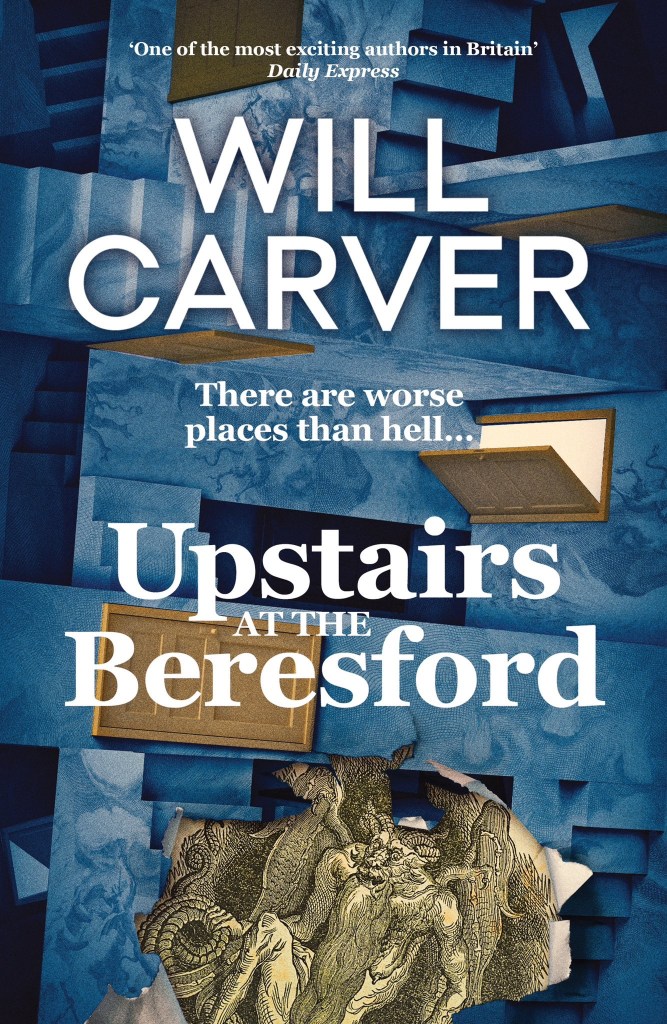
“The entrance to Hotel Beresford is art deco. Strict lines, geometry and arches showing cubist influence. The monochrome carpet screams elegance as it leads towards the desk that stretches the length of one wall, marble with chrome embellishments. Or, at least, it once looked that way. Back when writers and poets and dignitaries roamed the hallways and foyer. It still feels lavish. Glamorous, even. But faded. And a little old-fashioned.”
Ever since I read The Beresford I’ve been wondering what was going on through the other entrance. The entrance merely hinted at in one of it’s scenes. If what was going on up there was more weird or dangerous than the apartments at the front, I dreaded to think! In my review for the first book I wrote about the Dakota Building in New York City, because my mind kept drifting towards it while reading. It has just the atmosphere for this particular den of iniquity, it has a brooding sense of menace or presence of evil. Yet inside it reminds me of the Chelsea Hotel, a NYC landmark where in the mid Twentieth Century writers, musicals and artists lived. Arthur Miller, Bob Dylan, Arthur C. Clarke, Andy Warhol and Edie Sedgwick all inhabited the hotel in the 1960’s.
“Each floor looks the same yet somehow has its own unique landscape; it’s known for something particular. A celebrity affair. A mysterious death. A legendary party. Rumours that a serial killer crashed there between sprees. Rock stars smashing up rooms. Writers creating their masterpieces. Some is legend, much is true. All is talked about. With fondness, fascination and morbid curiosity.”
The author tells his story through a series of fascinating characters who live or work in the building. A young boy called Otis who lives on the seventh floor with his parents, who are constantly at war. Sam is an angry man who lets everyone feel his displeasure, often taking out his anger on wife Diane and son, Otis. Diane is turning tricks while Sam is at work in order to have an escape fund, often leaving Otis hanging round the building trying to avoid what’s going on. His favourite place to hang out is at their neighbours, but knows his mum would go crazy if she found out. Neighbour Danielle is a jazz singer with a voice so smokey it immediately conjures up exactly the kind of bar that would employ her. She likes to sit on her couch, under the window with one leg dangling out into the street. Along the corridor are the Zhaos, a sweet Chinese couple who also like to dangle out of their window, smoking something a little stronger than Danielle. Then, living in the penthouse on the top floor, is Mr Balliol. He owns the building and has the disconcerting ability to know everything that’s going on in the rooms he rents out and often sidles up to guests and his staff with no warning or sound. His unique staff are working on a business conference which will keep the hotel busy for a couple of days, but today is going to be an unusual day. Many different rumours swirl around the Beresford Hotel, some more fantastical and darker than others. It’s had more than it’s fair share of deaths, some accidental and some less so. Today is going to test the people who dismissed those darker rumours as impossible. Anything is possible at The Beresford Hotel.
“Peeling paint and faded hopes. Much like Carol. Carol seems to age with the building. For every strip of wallpaper that gets ripped or falls away, Carol gets another wrinkle. When the front facade gets uplifted with a new paint job or some detail on the masonry, Carol turns up with a Botoxed forehead or facelift. But not from a reputable surgeon. From somebody she saw advertising in the back of a magazine.”
Of all the characters I was absolutely transfixed by hotel manager Carol who seems like part of the building. She is that wonderful mix of unobtrusive, but yet ever present when needed, that all the best hotel employees have. No one notices the person who quietly sits in her office or on reception, but Carol has an uncanny way of knowing most things that go on in the hotel. She can probably guess at the rest, but doesn’t share Mr Balliol’s seemingly supernatural abilities. She has the world weariness of having seen it all before; most guest’s behaviour is not as unique as they would like to think. So she’s adept at covering up minor indiscretions all the way up to the accidentally dead: the husband who’s beaten his wife for years and finally gets his comeuppance, a solo sex game gone wrong or prostitutes- who end up accidentally dead more than most. Nothing much surprises Carol, even if a business conference does turn into a wild party or bacchanalian orgy. Yet behind the secret door to her inner office we see a softer Carol, perhaps the real woman beneath he hard nosed employee. It’s clear she’s suffered a loss. One guest who has spied Carol’s profile on a website has noticed this crack under the surface:
“He remembers Carol’s profile among the twenty that he settled on. He could see her former beauty, but this isn’t about going deeper than the surface, it isn’t some outreach programme. It isn’t benevolence or sensing someone’s spirit. Danny can see that Carol is broken. And he likes that. She had loved somebody so completely and then they died, and she has never recovered.”
Her soulmate and husband Jake is almost fatally injured in an accident and hasn’t come out of a coma since and as the weeks go on she begins to realise that the Jake she knew and loved was gone. His body was here, but not his mind, and the more time that passes the more it dawns on her that he is going to need help with his most basic human functions – he will have to be fed and piss into a bag for the rest of his life, if it can be called that. In desperation she calls on God, she will do anything if it will save the man she loves. God doesn’t answer. Yet bargaining is her only hope and if God won’t answer ……
Will Carver is one of the most unique writers I’ve ever read and this latest novel is no exception. He understands human nature. Not that all of us are checking into hotels and choking the life out of prostitutes, but he gets the smallest most innocuous and innocent thoughts as well as the darker side of our nature. His narrative voice is conspiratorial, it lets us into every corner of the hotel and also gives us curious little asides about the world we live in. Many of the speeches are recognisable as things we’ve thought and said about the absurdities and horrors of our world.
I loved his insight into writing through the character of I.P. Wyatt who also lives on the seventh floor and is struggling with that difficult second novel after a very successful first. His words are probably self-reflexive – where an author writes their own experience of writing the novel into their novel – although I do hope Carver isn’t applying Wyatt’s method.
“Some days he writes without breathing for hours, others he spits four perfectly formed words onto the page. And each evening, he deletes everything. He can’t stay in love with his words. He had it so perfect. Anything less than that and he will be chewed up by the press and readers and strangers online who just want to vomit vitriol with no personal consequence. Even if he can replicate the quality of that last book, it won’t be that book, that surprise success. And too much time has passed now. It will never live up to the hype. He should have just churned something out quickly. Something that could be torn apart that he wouldn’t care about.”
Carver has taken the age old tale of the Faustian pact and brought it up to date, into the 21st Century where despite all the advances in science and technology there are still terrible events we can’t control. As we all know, especially if we’ve watched Peter Cook and Dudley Moore’s film Bedazzled, making that sort of bargain or deal rarely benefits the desperate petitioner. The brilliance of Carver is that when we think we’ve worked out what’s going on, just like the twelve elite businessmen at their conference find out, a whole new level opens up before us. This is a daring novel, with a deep vein of human emotion at the centre. Yet it’s also playful, thrilling and dangerously dark indeed. If you’re not convinced by me then I’ll let Carver persuade you in his own words.
“When you watch a television soap opera, things are hyperreal. It’s unfathomable to have that many murderers and fraudsters and adulterers living on one street as part of one of three largely incestuous families. Life isn’t like that. Things don’t happen in that way. Hotel Beresford makes television soap operas look like a four-hour Scandinavian documentary about certified tax accountancy.”
Published 9th November 2023 by Orenda Books
Meet the Author
Will Carver is the international bestselling author of the January David series and the critically acclaimed, mind-blowingly original Detective Pace series, which includes Good Samaritans (2018), Nothing Important Happened Today (2019) and Hinton Hollow Death Trip (2020), all of which were ebook bestsellers and selected as books of the year in the mainstream international press. Nothing Important Happened Today was longlisted for both the Goldsboro Books Glass Bell Award 2020 and the Theakston Old Peculier Crime Novel of the Year Award. Hinton Hollow Death Trip was longlisted for Guardian’s Not the Booker Prize, and was followed by four standalone literary thrillers, The Beresford, Psychopaths Anonymous, The Daves Next Door and Suicide Thursday. Will spent his early years in Germany, but returned to the UK at age eleven, when his sporting career took off. He currently runs his own fitness and nutrition company, and lives in Reading with his children.
THE BERESFORD is currently in development for TV.
If you would like to get in contact, I can usually be found on TWITTER/X @will_carver but who knows how long that will last..?
You could always check out my website where you can join the MAILING LIST to stay updated with deals and competitions and which EVENTS I will be attending throughout the year. (There are also many hidden easter eggs within the site, just as there are in my books. Feel free to click around and see what you find.)
Recently, I have also become a podcaster and present the LET’S GET LIT podcast with fellow writer SJ Watson, where we discuss books and writing each week while sharing a drink. (Find us wherever you get your podcasts from.)
Oh, and just in case TWITTER implodes, I can also be found here…
‘Holding her robust infant, Beatrix murmured a prayer in her native Dutch. She prayed that her daughter would grow up to be healthy and sensible and intelligent, and would never form associations with overly powdered girls, or laugh at vulgar stories, or sit at gaming tables with careless men, or read French novels, or behave in a manner suited only to a savage Indian, or in any way whatsoever become the worst sort of discredit to a good family; namely, that she not grow up to be een onnozelaar, a simpleton. Thus concluded her blessing — or what constitutes a blessing, from so austere a woman as Beatrix Whittaker.’
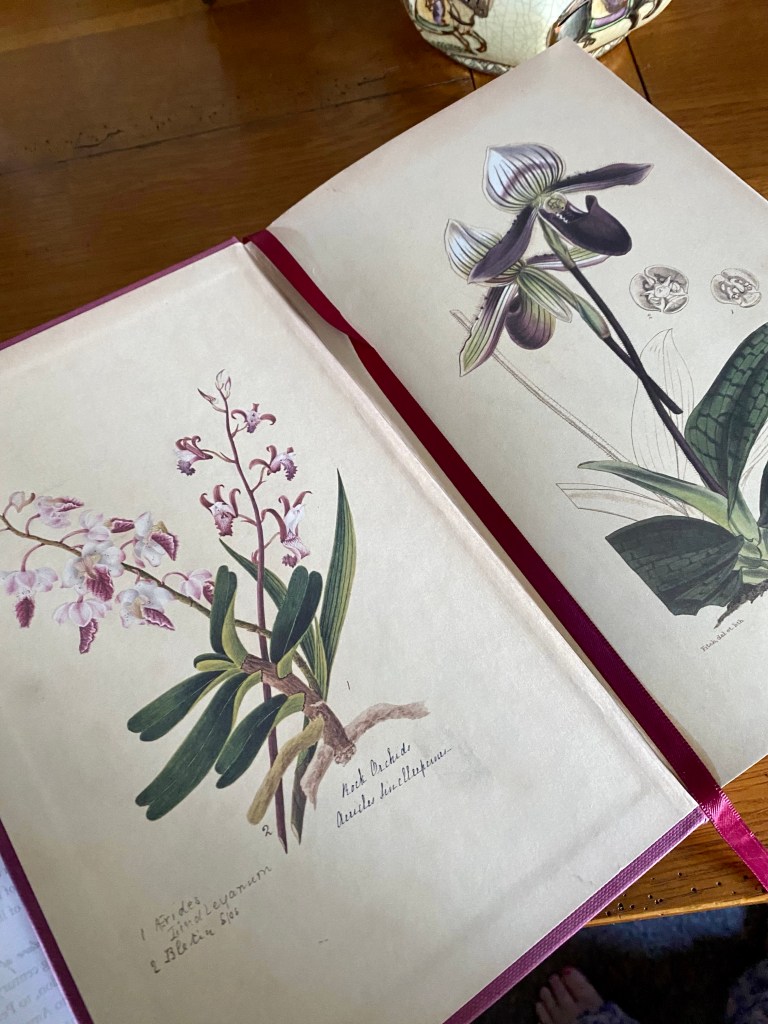
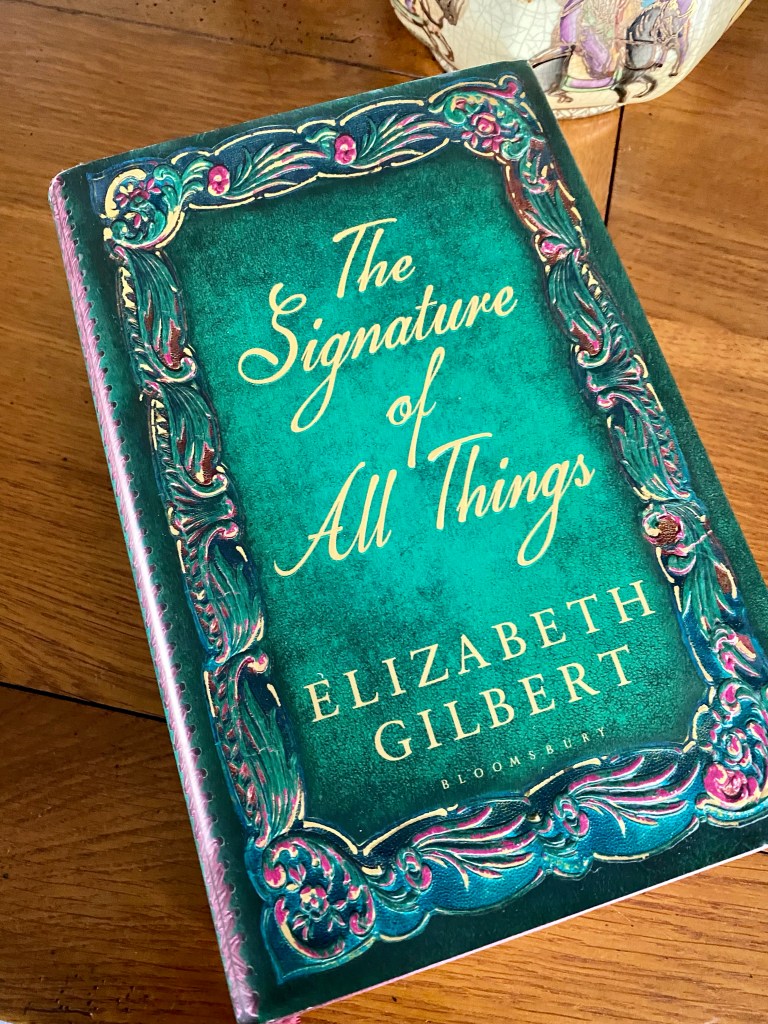
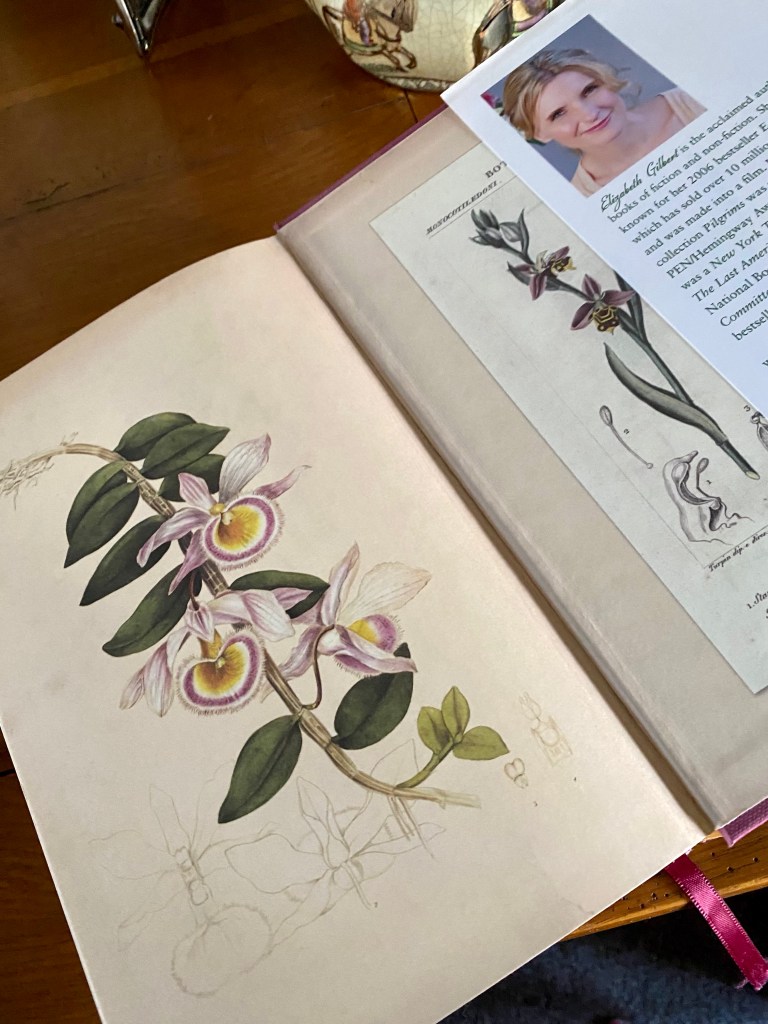
Some people didn’t know Liz Gilbert until the film ‘Eat, Pray, Love’ came out, in fact I was surprised to learn how many people hadn’t known about or read the book. I’d really enjoyed the book and found the film ok, but thought it didn’t dwell enough on the psychological and spiritual aspects of her journey. It had a mixed reception at my book club where some really identified with her character, but others were screaming how lucky she was to have a publisher willing to fund her trip of a lifetime during her divorce as many have to continue getting the kids to school, going to work and only having the millisecond before sleep hit them to have anything resembling a spiritual or self-aware thought. I’d not expected the anger and jealousy that it evoked in some readers. So it was with trepidation that I approached her novel The Signature of all Things. If I’m honest I probably wouldn’t have sought it out, but I was in one of my favourite bookshops while on holiday in Wales and I saw it in the second hand section. It was such a beautiful book that I had to buy it and I flicked through it back at the holiday cottage, then was sucked in very quickly and all my planned reading went out of the window. I was stunned to be sailed around the globe from London to Amsterdam, Peru and Tahiti. Even more exciting was the heroine, Alma Whittaker, daughter of a famous explorer, plant hunter and botanist. I was drawn to her intelligence, her busy mind, her assertion that she is the equal of any man and the depths of her feelings.
The book begins be setting up Alma’s early life and family situation, so we meet her father and his beginnings in botany as a boy apprentice to a plant hunter- actually a punishment for some very sneaky thefts from Kew Gardens. His incredibly enterprising ideas mean that by the time Alma is born he is a very rich man, with a mansion in Philadelphia. His fortune has been made in the quinine trade, a medicine extracted from the Cinchona tree found in Peru then traded and grown around the world to produce a drug for malaria. At his home, White Acre, he and his wife have two daughters: Prudence their adopted daughter who follows an extraordinary path into abolitionism and Alma. Alma is a tall, large-boned girl who is described as ‘homely’, but is intelligent, determined and secretly contains well pools of sexual curiosity, all qualities that seem unusual for her gender in this time period. Her father’s belief that all people should be given the opportunities that enable them to manage others and excel in their own chosen field governs the household. ‘All’ really does mean all in William’s case and his daughters are given a thorough education at home, rivalling any man. Both he and his Dutch born wife are clearly progressives and Alma flourishes with the opportunities they give her to become a very accomplished botanist in her own right and perfectly able to develop her own projects and command the voyages necessary to hunt for the plant she has set her heart on. Unexpectedly, at an age when scholarly spinsterhood is expected to be her path, a painter visits White Acre and Alma falls deeply in love. This painter believes Joseph Boehme’s philosophy that all of nature contains a divine code, every flower and every creature – such as the Fibonacci sequence. Their two interests combine and while Ambrose is a utopian artist, often found to be painting orchids rather than studying them in a lab, they do have the same passion for nature. Where he saw life as divine and a guardian angel watching over him, Alma saw a life as a struggle where only the fittest survived, something she found out for herself when exploring:
“Then — in the seconds that remained before it would have been too late to reverse course at all — Alma suddenly knew something. She knew it with every scrap of her being, and it was not a negotiable bit of information: she knew that she, the daughter of Henry and Beatrix Whittaker, had not been put on this earth to drown in five feet of water. She also knew this: if she had to kill somebody in order to save her own life, she would do so unhesitatingly. Lastly, she knew one other thing, and this was the most important realization of all: she knew that the world was plainly divided into those who fought an unrelenting battle to live, and those who surrendered and died.“
Of course, this love is not the end of Alma’s story. Liz Gilbert isn’t going to let a man eclipse Alma or create a sappy rom-com ending to such a strong, feminist story. Alma and Ambrose represent two great schools of thought in the 19th Century, that of the spiritual and the scientific. These two schools of thought had equal status and often intermingled to this point, but as the century progressed a complete separation occurred where spirituality became a belief without reason and science became fact without a divine sense of wonder. Could the common ground that Ambrose and Alma thrive upon at first, survive the divide between their two disciplines? Make no mistake though, Alma is the protagonist here and she’s one of my favourite characters ever. I loved her drive (sadly lacking in this writer) and her preservation of it, no matter what. She can speak five languages at five years old! Oh and two dead ones. Her educational achievements aside, it was her confidence and self-belief that stood out to me. Yet here we are two centuries later in a crisis of confidence, with an epidemic of imposter syndrome and doubts about how to be women. Alma is wholly herself, even when at times that might seem steely, reserved and abrupt. She believes that everyone is the master of their own self, including women. It is sad that the introduction of Prudence to their family is the catalyst for Alma experiencing negative self- thoughts. She wishes to keep Prudence, who has been staying with the Whittakers since a family tragedy, but her presence is an opportunity for comparison – the ultimate thief of joy. Alma realises for the first time that she is not beautiful. She retreats into her work at moments of doubt or unhappiness, even extreme heartbreak and loss. It is her refuge and the one area of life that she can control and that she continues to be confident in. I truly admire her ability to continue. To live.
The research that Liz Gilbert must have undertaken for the verisimilitude of this novel is colossal. She writes with a 19th Century sensibility, keeping Alma completely grounded in her place and time. The first rule of creative writing – show, don’t tell – is so strongly in place that I felt like I was with Alma, only seeing or hearing things at the same moment she does. This brings such an immediacy to the novel that it gallops on at quite a right, especially considering this is the story of a 19th Century dowdy and academic spinster. It’s a book that a lot of people might not consider reading from the blurb, which is why it needs to be highlighted in this way. It ranges across biology, exploring, business, philosophy, science, the mystical and yes, the sexual. There are secrets kept all the way to the end that I really didn’t expect at all. I have to say that my favourite review of this book is a negative one. Mainly because it made me laugh out loud, but also because it unwittingly makes you want to read it.
“I was actually enjoying this and then at 49% a spinster has a spontaneous orgasm from holding hands with a dude in a closet.”
left by Goodreads Member, Sylvia, October 2nd 2015
I don’t know about you, but I’d want to read that book!
Meet the Author
Elizabeth Gilbert is the #1 New York Times bestselling author of Eat, Pray, Love, as well as the short story collection, Pilgrims—a finalist for the PEN/Hemingway Award, and winner of the 1999 John C. Zacharis First Book Award from Ploughshares. A Pushcart Prize winner and National Magazine Award-nominated journalist, she works as writer-at-large for GQ. Her journalism has been published in Harper’s Bazaar, Spin, and The New York Times Magazine, and her stories have appeared in Esquire, Story, and the Paris Review.
October has continued to be a quieter reading month as I’m still recovering from a relapse that started last month. I’ve not taken part in blog tours and mainly have picked and choose what I’ve read from my TBR book trolley and my pile that lives next to me in the bedroom. It’s been an eclectic mix and I’m even starting to pick up the odd non-fiction book too. I’ve enjoyed most things I’ve read but these six really are the cream of the crop.
This latest novel from C.J. Cooke was originally a NetGalley choice but I bought it as well, because I like a finished copy when I’ve enjoyed a book and I’ve bought her last three models without worrying about trying it first. They’re always good. This one was exceptional and all based on board the Arctic whaling boat the Ormen. In the present day it’s a shipwreck just off an isolated part of Iceland and about to be moved out to deeper water and sunk. We follow Dom, who is try to document the ship before it is disappears forever, but I had so many questions about why she’d chosen to do this alone. Not long after a group of three explorers also turn up to document the boat and they join Dom, living on the Ormen and measuring sounds, distances and filming their attempts at Parkour. Then we’re sent over 100 years into the past and a different voyage for the Ormen, a whaling expedition with an unusual addition on the ship. Nicky wakes as the ship is moving and soon realises she has a severely broken ankle with an open wound. She has no recollection of coming aboard, but does remember being in the park and bundled into a sack. For some reason she has been taken from her home and family by one of these rough and ready crewmen. She hopes the captain will free her, but when he refers to her as the crew’s Selkie wife she knows what she’s here for. If Nicky wants to live and return to her family, she will spend the voyage ‘entertaining’ the men in her cabin. Nicky resigns herself to her fate, but not to the strange thing that’s happening to her injured leg. Where the leg is healing, instead of soft warm skin covering the wound Nicky can see a sleek silver grey skin, almost like that of a seal. This is a brilliant bit of historical fiction and a great ghost story too. The setting is eerie and unsettling, Nicky’s voyage is horrifying and the explorers become very on edge with their situation and each other. Unputdownable!
The Hidden Years is another dual timeline narrative, set in a large mansion in Cornwall both in the 1960’s and the war years. We start with Belle who is at university in the 1960’s when she meets Gray and falls head over heels in love. Gray invites her to Silverwood, a community where self sufficiency and creativity are a way of life. Gray wants to work on his music and he wants to take Belle down to Helford, Cornwall with him. Once there, Belle experiences a different way of living but also befriends a lady in a nearby cottage who inexplicably seems to recognise her. We then go back to the 1940’s a girl called Imogen taking two boys down to their school in Cornwall, where she’s offered a temporary job as matron in the dormitory. She has a friendship with one of the teachers Ned, but there’s a spark of attraction with another school master too. When Imogen starts to volunteer as a nurse for the war effort, her relationships with these two men will cause heartache and shape her life. I loved the way she writes about how war shapes the future of these young people and how far reaching it’s influence is. This is a great read, full of period detail and local history with a central mystery you’ll want to uncover.
Alice Hoffman’s new novel The Invisible Hour is a mixture of historical fact and magic realism, including one of America’s most famous writers, Nathaniel Hawthorne. Hoffman’s book uses Hawthorne’s book The Scarlet Letter as a basis for her story which starts with a young girl called Ivy who becomes pregnant while still a teenager. Her rich, Boston, family are horrified and reject her pleas for help, so Ivy leaves home. With the help of a friend she makes her way to a community in Massachusetts that has a very charismatic leader. Joel has been left land by his first wife and has built a religious community that makes its money from the apple orchards they harvest. By the time Ivy’s father has sent out a private investigator to find her, she is married to Joel and has a small daughter, Mia. In a separate timeline we meet a teenage Mia who is finding the restrictions of their community too hard to cope with. She has already found a way to sneak into the library and enjoy the books banned by Joel. When tragedy strikes at the farm, Mia takes a chance and runs with the help of the librarian. However, Joel isn’t very good at letting things go and Mia has left with a painting, with a very important inscription on the back. There’s jeopardy and tension all the way, but of course Alice Hoffman brings in some romance and a sprinkle of magic as Mia steps outside her time and meets Nathaniel Hawthorne. This was a feminist take on the themes of The Scarlet Letter, with a strong defence of women across history and an even stronger defence of the written word.
This was a real return to form for the Strike novels after the complex and internet based case at the centre of the last book. Here Strike is running several cases, but the main investigation is of a religious organisation not unlike Scientology in it’s methods. A peer of the realm asks Robin and Strike to find his son, who has been part of the church for a number of years. They have been trying to let him know that his mother was terminally ill and would like to see him, unfortunately she has now died and he believes that the church haven’t given him their letters. We’re taken to the church’s farm and retreat in Norfolk, known as the Chapman Farm. With most of their operatives already on cases it’s Robin who volunteers to be a new recruit, offering to visit services at their London temple. Strike worries, but from Robin’s point of view as an equal partner she has the right to make these choices. However, knowing Robin’s previous trauma I was worried that the church would target and manipulate her. They agree she will identify a place on the farm’s perimeter to leave them a note each week under a rock. That way if she wants to come out, they will know. The farm sections are tense, disturbing and kept me turning the pages – no mean feat in a book of this size. As always the feelings these two have for each other will threaten to break the surface and as Robin finds herself in danger will this be the time they are honest with each other? This was a great investigation and a definite step up from the last novel in the series.
This is the third novel from Alix E. Harrow and she became a ‘must-buy’ author for me after her last. Consequently, I ended up with three copies of this after forgetting I’d ordered it and getting a copy from the publisher. We’re in the town of Eden, Kentucky, a place where industry dominates the job market and the Graveley’s power plant is the destination of most young men who stay put. Opal doesn’t want that for her brother Jasper, who she’s been looking after since she was twelve and their mother drowned in an accident. The brother and sister live in a motel room, exist on food that doesn’t need cooking and live hand to mouth. Opal has two cleaning jobs, but isn’t spending their money on their day to day expenses, or on herself. She has seen potential in Jasper and she wants him to get a proper education. Her savings are all for him to attend a private academy where he’ll flourish and be able to leave Eden. However, Opal is attracted to Starling House. She passes on her way between jobs each day and although it’s barely visible from the road, there is one light that glows in an attic room and there’s the gates, sinuous ironwork that almost looks alive. One night she stands at the gate and places her hands on the curls of the ironwork. Immediately, she feels wetness and realises her hand is cut, but on what? When she looks up, a tall, dark wild looking man has appeared in front of her with a sword. He’s magnetic and as they stare into each other’s eyes he says one word – ‘Run’. Opal doesn’t need telling twice, but will she be able to stay away? Especially when the house wants her. … A love story of swords and thorns rather than hearts and flowers, this is a perfect dark fantasy for autumn.
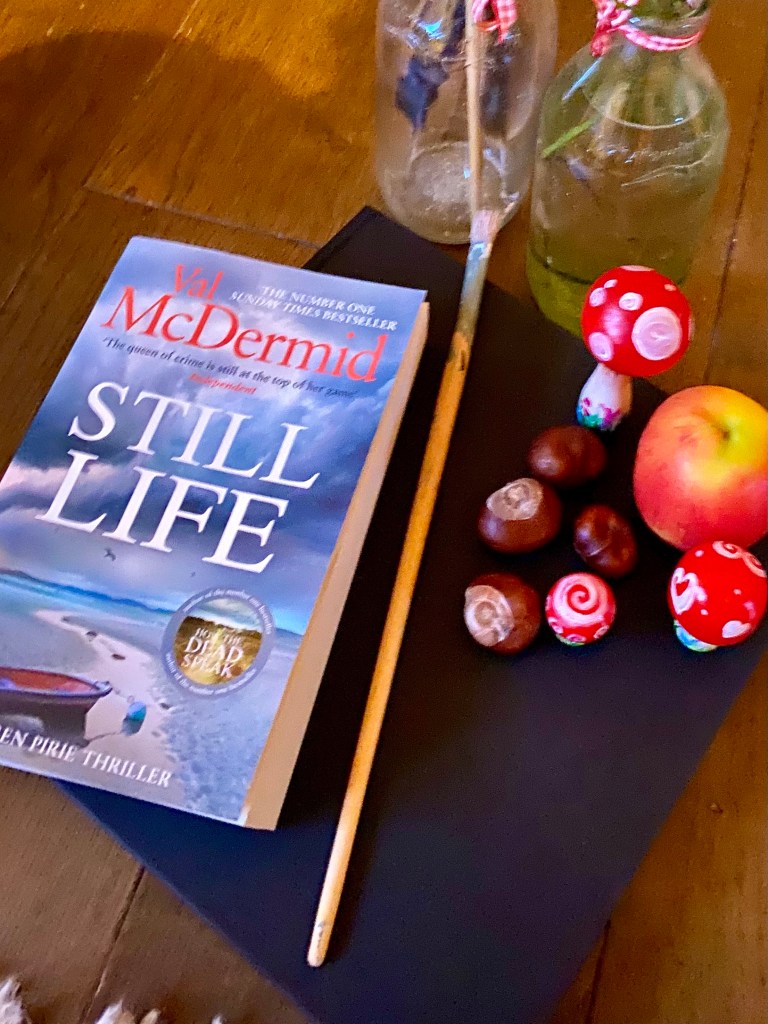
Val McDermid is one of my reading oversights, so I was thrilled when her latest Karen Pirie novel was chosen for one of our Squad Pod reads. We were also sent Still Life, to catch up with the story and I can now see why Val is the Queen of Crime. Karen Pirie is in charge of a cold case unit, but this case begins with a new body being pulled from the Firth of Forth. The dead man has been living in France under an alias, but strangely his artist brother went missing a few years before and is in Karen’s cold case files. Surely the two disappearances are related? I loved Karen because she’s so determined, meticulous in gathering every detail and not above getting her hands dirty. They follow the dead man’s movements during his Scottish visit and think he had a lead on his brother’s disappearance. Meanwhile, her sergeant Jason is following leads on a skeleton found in a camper van, within the garage of a rented house. Two women lived there, but the team can’t be sure at first who they body is and which woman is on the run. They have a lead to the north west of England where one of the women has lived in an art collective. So, on her own travels to France, then Ireland Karen has the help of a young recruit called Daisy. The story took us into interesting places, including Westminster and the Scottish office and how they choose their art from the National collections. I was also touched by the sensitivity Val brought to Karen’s personal life and her new relationship with Hamish, while still grieving for Phil – a fellow police officer and the man she loved. The cases are fascinating, but so is Karen and there are so many reasons to keep turning the pages. I was so sucked in by this that I read the next one straight away and then went back to the first in the series! I’m so excited to have all of Val’s back catalogue to read.
So that’s been October. Here’s what I’m hoping to read in November.
“When the house was complete, in February of 1870, Eleanor Starling took up residence and stayed there until her death in 1886. There is substantial evidence that she devoted the remaining years of her life to the study of the place she later called “Underland.” She believed, according to the notes and journals found by her successors, that there was another world beneath, or maybe beside, our own—a terrible, vicious world, populated by monstrous beings. She believed that there were cracks between that world and our own, places where things might leak through, and that one of these rifts lay underneath Eden, Kentucky.”
Starling House sits on Starling land and can’t be fully seen from the roadside, except for a pair of iron gates that are so intricate and sinuous it wouldn’t be a surprise if they started to move and become a living, writhing being. Opal passes the house daily as she takes a short cut from one of her jobs to another and she’s intrigued by the house, especially the one amber lit window, high up in the attic room. There she imagines Eleanor Starling, living the solitary life of an author trying to follow up their first extraordinary book. Opal loved Eleanor’s children’s book Underland described as a much darker Alice in Wonderland where a girl called Nell is under the ground with a weird array of beasts (all of which look like a member of the animal kingdom, but at the same time not at all). Opal’s life is a gruelling slog from the motel room she shares with brother Jasper, to her cleaning jobs then back to supervise homework and share their measly evening meal. It only takes one small difference in their routine to shake everything up and bring huge change to their lives. Opal pauses her route home and stops at the iron gates of Starling House. She holds on to the iron, but immediately finds her hand is slick with blood. More disturbingly, she feels the gates give, almost as if her blood is the key. She looks up to see that a tall, thin and rather bedraggled man has appeared in front of her. He looks her in the eye and says one word. Run!
[The town] “liked the Starlings even less. They’re considered eccentrics and misanthropes, a family of dubious origin that has refused for generations to participate in the most basic elements of Eden’s civil society (church, public school, bake sales for the volunteer fire department), choosing instead to stay holed up in that grand house. […] It’s generally hoped that both they and their house will fall into a sinkhole and rot at the bottom, neither mourned nor remembered, and—perhaps—release the town from its century-long curse.”
Arthur, the bedraggled man, is the current Starling living in the house and it isn’t long before Opal is drawn back into his presence. Arthur seems to be torn. He’s drawn to Opal, but so is the house. It seems unfair to strike up a friendship with her knowing that the house wants her and what that will mean for her life. Yet he asks her if she will clean for him and offers enough money that Opal can’t refuse. He is concerned about this flame haired waif that is now in his midst and he can’t help but offer her a winter coat, then his old truck. Are these genuine gifts, or is Arthur trying to assuage his guilt for doing the house’s bidding? The house almost seems to sigh and settle as Opal cares for it, like a cat stretching with pleasure when stroked. She does wonder about the crude symbols scratched into the wooden doors, that match Arthur’s tattoos. Every conceivable symbol to ward off evil is either scratched, painted or hung around the house. How do you ward off something that strikes from within? Opal is then approached by a woman in a suit, who seems to know a lot about Opal and the Starling House. She wants Opal to take photographs and pass on information from the inside of the house. Firstly she seems like any old local official, but becomes more sinister when Opal is reluctant to help, finally making threats against Jasper. Now she has no choice, but she’s surprised by her own emotions; it’s harder to betray Arthur Starling than she expected. Is it really the house she’s drawn to, or is it Arthur?
“Eleanor Starling left no record of why she built such a vast and strange house, but the oldest and best-loved book in her collection was a copy of Ovid’s Metamorphoses. It has been suggested by subsequent Starlings that she was not building a house but a labyrinth, for much the same reason the King of Crete once did: to protect the world from the thing that lived inside it.”
Opal isn’t easily afraid and I knew, just from that opening, she wasn’t done with Starling House. More to the point, the house isn’t done with her. I admired this plucky girl who is only just getting by in life and does everything for her brother Jasper. She desperately wants him to get away from Eden, Kentucky, because he has so much talent but also because nobody with any sense stays in Eden. She is saving for the fees of a private school she has seen, somewhere that would give him prospects and he would meet the right sort of people. She’s so set on this plan, she hasn’t bothered to ask what Jasper wants. Her heart is in the right place though. She doesn’t love many things, but when she does Opal loves like she does everything else – fiercely. Her existence is all work, striving just to survive but Opal is so intelligent, in fact one of the only places in town she visits religiously is the library. The librarian Charlotte is perhaps the closest thing to a friend she has. The truth is that Opal feels enormous guilt over the terrible car accident that killed their mother and what she sees as the decision she made to survive:
“ I’m fifteen and cold water is pouring through the windshield. The glove box is open, spewing pill bottles and plastic utensils. Mom is beside me, her limbs drifting gently, her hair tangling with the tacky dream catcher she pinned to the car roof. I’m reaching for her hand and her fingers are slick and limp as minnows and I might be screaming—Mom, come on, Mom—but the words can’t make it past the river? Then it goes very quiet and very dark. I don’t remember letting go of her hand, but I must have done it. I must have crossed her name off the list in my head and swum for the surface, abandoning her to the river bottom.”
I loved the psychological aspects of the story. The house has an identity and it knows who has the right stuff to live there and keep up the fight. I wondered whether the monsters were real or a manifestation of the occupant’s mental state. The thought of the monsters in our heads being able to run free in the world is definitely a terrifying one. The author builds the two worlds within the novel with contrasting techniques: short, blunt descriptions create Eden with it’s power plant and functional buildings, whereas Starling House and it’s labyrinthine tunnels are given long, descriptive passages that bring it to life. If something in Opal or Eleanor’s world is inexplicable she allows it to be unfinished or confused. Some of the monsters are beautifully described as ‘like a cat, but not quite’ or other strange combination that leaves gaps in the image for the reader to fill with their own imagination. This is an author that knows, the things we can’t see or comprehend are the most frightening.
When we finally get to Eleanor’s life story it is disturbing and sad, showing how unresolved trauma can project outwards into something monstrous. There’s a feminist thread here too in the truth about Eleanor’s life with the Gravely men and Opal recognition that her mother was shunned by the town, not just for liking sex but for not being sorry about it. In a reversal of the usual damsel in distress story, Opal is the architect of her own life and is determined to rid Starling House of it’s monsters and save Arthur. I was biting my nails in the final chapters, desperately wanting her to succeed! I’ve never doubted Alix E. Harrow’s talent or imagination. I’ve been a fan since her first novel, but this is her best yet. I’ve been reading that it’s a reimagining of Beauty and the Beast, and I can see that. However, Underland felt like the very darkest Alice in Wonderland to me. In both cases, all the ‘Disney-fied’ prettiness has been swept away. In it’s place are monsters that defy all description and a love story that’s more swords and thorns than hearts and flowers. It’s an absolute feast for the imagination and the perfect dark fantasy read for October.
After a few years building on the Practical Magic series, I was looking forward to seeing what Alice Hoffman would come up with next. She has based her story around the writer Nathaniel Hawthorne and his classic novel The Scarlet Letter and introduces us to two young women facing difficulties. Ivy is from a rich Boston family and when she finds herself pregnant at 16, she truly expects support. The father of her baby retreats into his wealthy family and the elite university he’s due to attend, taking no responsibility for the predicament they’re both in. Facing her pregnancy alone she talks to her parents who also wash their hands of her, not wanting the stigma or embarrassment. Ivy decides to leave home and climbs out of the bedroom window, setting out to see a friend who she knows will have an idea. She suggests they leave together and make their way out to a religious community she’s heard of in Blackwood, Massachusetts, with a charismatic leader called Joel Davies. When her father decides to look for her several months later he finds the worst, Ivy has a little girl called Mia and has become the leader’s wife. Mia grows up in Joel’s community and he decides who is in favour and what is a transgression. Everyone is punished, but the women particularly so – they might have their hair cut off or even be branded with a letter. Women are not allowed reproductive rights, but nor do they get to keep their children. Children belong to everyone and after a few days with their mother, sleep in dormitories. Books are not allowed and as she grows up books are Mia’s particular downfall. She finds her way to the public library and starts to read American classics like Little Women and Huckleberry Finn. Then she finds a copy of The Scarlet Letter, beautifully bound and very old. On the fly leaf is a dedication:
To Mia. You were mine and mine alone.
Is it perhaps her mother, who does show her special attention despite the rules. She tucks the book into her dress and keeps it. Reading in the barn, where she has loosened a board to keep her treasures behind. She has a small landscape painting of the view from the community’s buildings. Land that was left to Joel by his first wife Carrie. Carrie was also a rich girl, but one who had assets to bring to this Puritan community. Carrie was a great painter, but was often punished lest she become too vain about it. On the back of this painting is an inscription about the lands she owns and a promise that Joel will get to keep it ‘as far as the eye can see’.
One day during the apple harvest, a terrible accident happens and Ivy is killed. Mia is distraught, but as her mothers body is carried away she grabs the red boots that Joel uncharacteristically bought for her mother to have as a keepsake. She knows that now it’s either run or stay forever. Grabbing The Scarlet Letter and the painting she takes a leap, out of the bedroom window and across the fields to the library. The librarian had noticed Mia lurking in there, reading in the warmth. She had a feeling the girl was in trouble so she gave her a key and invited her to let herself in if she is ever in danger. She understands that to keep Mia safe they mustmove quickly, so she packs up the car and takes her somewhere he won’t know, because nobody knows. She has a long-term partner, a woman she doesn’t live with but trusts implicitly. She knows that with them, Mia should be able to thrive without the community breathing down her neck, to go to school and read to her heart’s content and have the life she has dreamed up for herself.
She also sensed that Joel was a man who wouldn’t give up Mia without a fight.
Of course it wouldn’t be an Alice Hoffman without something magical happening and here Mia experiences a time slip and finds herself in the same time and place as her hero Nathaniel Hawthorne. He hasn’t yet written The Scarlet Letter, in fact he’s on the verge of giving up writing altogether. When he meets Mia their connection is instant despite the centuries between them. They start a love affair, but what will the consequences of that be? Anything they do will change the future. Could her presence in his world mean that the very book that brought her here, no longer exists? In fact the consequences of their love could be even more life changing for both of them. Can she stay in his world? Is there any way he could come into hers? Mia is becoming aware that Nathaniel may have to sacrifice his writing for them to be together and she’s not sure she can let him do that. All the while, her father Joel is still watching and waiting.
I loved the play on The Scarlet Letter here because it shows us how powerless women have been across the centuries. I loved how Alice Hoffman creates this magical setting. The landscape, particular the woods and river, feel like something out of A Midsummer Night’s Dream. It would be easy to dismiss her work as whimsical and romantic, but underneath is a fierce feminist manifesto and an equally fierce defence of the written word. I was aware as I read the novel that it could go the same way as other books that have supported women’s reproductive rights and end up banned. The way the religious community prevent women from controlling their own fertility is a representation of what’s happening in some states of America. Abortion has always been a controversial topic in the US and the rights of women in some areas have reverted back to the early 20th Century. Jodi Picoult often cites Alice Hoffman as her favourite writer and a huge influence on her own work. In some states of America Jodi Picoult’s work is banned from libraries and schools because it concerns issues like abortion, teenage pregnancy, fertility treatment and same sex marriage. Here Hoffman is hugely critical of a community that doesn’t value women’s education, burns books and leaves them with no rights over their own bodies. There’s a part of her magical landscape where desperate women have taken matters into their own hands. They’ve taken herbs or potions to end their pregnancies and have created a burial place for the children they’ve lost and those they can’t bear to have.
Mia’s surrogate parents are the antithesis of Joel’s community. They are intelligent and progressive women who actively encourage questioning and reading. They remind Mia that no matter how moral and righteous a community might seem, if it restricts education, burns books and controls women, believing them to be inferior to men, then it is on the way to being fascistic. It’s so sad that Joel won’t let women read but then uses letters to punish them and control their behaviour, by literally branding them into the skin in a ceremony. Instead of wearing a scarlet letter, an adulteress would be branded on the upper arm with a letter ‘A’. Words and books are the source of our knowledge and that scares men like Joel. This is a brave book and will probably be underestimated, but women have been speaking their truth in ways that fly under the radar for centuries; films or books dismissed as ‘chick lit’ or ‘rom coms’; jingly, bright pop music with dark or subversive lyrics; pretty pink fashion branding the wearer as stupid, like Elle in Legally Blonde. I think there are people who will see the beautiful landscape, the time travel and magical feeling of this nook and underestimate it. I’m hoping readers look for the deeper themes here and see what Alice Hoffman was doing when choosing to use The Scarlet Letter. It’s a much beloved classic that she clearly loves, but it’s also a perfect basis for a story about these women. The ending is perfect for the autumn in that it’s bittersweet. We love the beautiful fall colours, particularly in the part of the USA where the book’s set. Those brightly coloured leaves bring us joy, but they’re also signalling an ending. The beauty of loss. 🍂
Published on 17th August by Scribner
Meet the Author
Alice Hoffman is the author of thirty works of fiction, including Practical Magic, The Dovekeepers, Magic Lessons, and, most recently, The Book of Magic. She lives in Boston. Her new novel, The Invisible Hour, is forthcoming in August 2023. Visit her website: http://www.alicehoffman.com
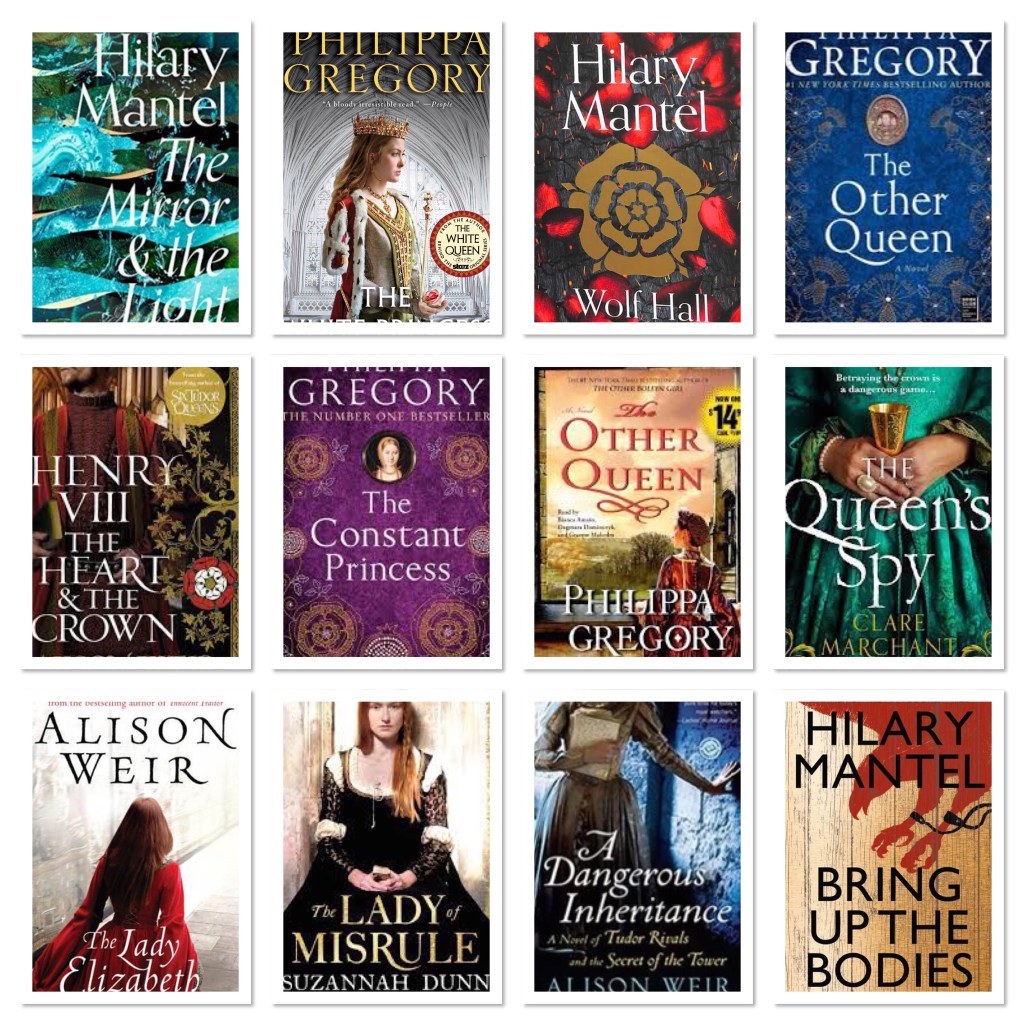
I’ve had this fascination with Henry’s wives and the whole Tudor dynasty since primary school, as I wrote about earlier in the week. It was my introduction to Philippa Gregory when I was in my twenties that really started the ball rolling. I started to learn about the women’s perspective behind these historical facts we all learn. I’d never known that Henry VIII had an affair with Anne Boleyn’s younger sister Mary or that it’s possible she had the King’s children just like Bessie Blount. I learned more about the political and religious machinations that hide behind the six marriages and their tragic ends. I hadn’t known about the uneasiness within Henry’s aristocratic courtiers and advisors about the commoners he was bringing in to advise him, such as Cardinal Wolsey and Thomas Cromwell. There were aspects of the Queen’s roles in events that opened up to me, such as their religious allegiances and how the marriages cemented Henry’s beliefs at the time and signalled his intentions to the rest of the world. I’d never known about how ladies in waiting were chosen or trained, often shipped to grand houses with aristocratic women overseeing their education. I’d also become fascinated about women on the periphery like Jane Rochford, who’d been married to Thomas Boleyn and had to give evidence against her own husband, then years later oversee the young Queen Katherine Howard only to be drawn into treachery yet again. I’d become interested in Bess of Hardwick after buying a book about her at Chatsworth House then going to an exhibition about her, including the household accounts written in her own hand. I knew that Chatsworth had been one of the houses where Mary, Queen of Scots was held, but not what her captivity did to her marriage and her reputation with Elizabeth I. There is such a rich seam of Tudor fiction in these areas, but I’m going to recommend some of my favourites that you will probably know, then some you might not as well as those still sitting on my TBR.
Great for Beginners
This is a great beginning because it’s outside the Queen’s series and deals with characters outside the actual court. Set in 1568, Elizabeth I has been on the throne for ten years, but hasn’t married and won’t choose a successor. Mary Queen of Scots has been forced to flee her own lands, due to rebellions and rash actions in her choice of husband. Her enemies have used her weaknesses and their perceptions of women to unseat her, leaving her on the mercy of her cousin, Elizabeth I. However, Mary is Catholic and advisors to the Queen don’t want to risk their already weak position against Catholic France and Spain. They also worry about her infant son James, another threat to the throne. Elizabeth’s advisor and spy master William Cecil comes up with a plan, Mary will be kept under house arrest, living with all the luxury a Queen should expect but unable to leave. He has to find a suitable couple to house Mary and decides upon Bess of Hardwick and her new husband George Talbot, who reside at Chatsworth House. Mary does not accept her house arrest though, bringing George Talbot under her spell and plotting to regain her throne in Scotland. Bess sees her husband’s deference to the young Queen and knows that if they are linked to her plotting, William Cecil will make sure they face the Tower or even the block. This is an interesting angle on Mary as we see her through the eyes of another woman, a very shrewd and intelligent woman who has managed to amass her own fortune along with estates and land left to her by her previous husband. I felt pulled into Mary’s story and despite feeling very sympathetic towards her I also felt angry on Bess’s behalf. Neither woman wanted to be in this position and I felt that frustration.
Set in 1539. It’s time for Henry to find a fourth wife after the tragic death of Jane Seymour. He has the heir and now he needs to have a spare. Since he is head of the church in England, it seems wise to take a Protestant Queen and Anne of Cleves fits the bill. Chosen from the painted likeness on the book’s cover and organised by Thomas Cromwell. The marriage falters immediately, when Henry dresses as a commoner to surprise his newly arrived wife to be she doesn’t even recognise him. Aggrieved, Henry tells Cromwell he finds her undesirable because she has too much flesh and smells unpleasant. His advisors are asked to pay court to the teenage Katherine Howard while a divorce agreement is reached. Anne Boleyn’s sister-in-law Jane Rochford returns to court and becomes close to the new Queen, desperately trying to cope with a young naïve and rather silly girl on one hand and the tyrannical Henry on the other. When Katherine starts to play dangerous games with Henry’s servant Thomas Culpepper, will Jane be able to avoid the block a second time? I love this period of the wives’s story because I think Anne of Cleves is the shrewdest of his wives, accepting his terms to live alone like his sister immediately and setting up home in palaces vacated by Wolsey and the Boleyn family. In fact the King got along very well with Anne and often joined her for dinner or to play chess in the evening. By contrast Katherine Howard’s tale is tragic and her eventual death is desperately sad as her courage fails her and she begs for her life.
Wider Reading
I have so much sympathy for this poor girl who is caught in a power play between political and religious factions. Jane Grey was the great niece of Henry VIII, a descendent of his closest friend Charles Brandon, Duke of Suffolk and Princess Mary – Brandon didn’t seek permission to marry Henry’s sister and their friendship faltered. Jane was actually the cousin of Edward IV, Mary I and Elizabeth I. At only 16 years old she is forced to marry into a powerful family – the Dudleys – as part of a plan to usurp the throne. When Edward IV dies, they decide to install Jane and her husband Guildford Dudley on the throne before Edward’s sister Mary can travel to London. The book is fascinating even if you do know the story of this nine day Queen and adds that human element behind the facts. Weir presents Jane as manipulated and physically abused by the powerful men who were desperate for her to take power on their behalf. There was the religious concern about having a Catholic queen on the throne and her allegiances with Spain. Would Mary return England to the Catholic faith? Might she seek a Catholic marriage with one of her European allies? Jane was a devout Protestant to the end, in fact it sustained and strengthened her when held in the Tower of London. I felt her dread towards the end and I felt so sad for her because she had so little control or peace in her short life.
The woman who outlived Henry VIII still had a tragic end. Her true love was Thomas Seymour and she expected after her first husband had died that she would have a husband of her choosing. Unfortunately Henry got there first with a surprise proposal and no one is allowed to refuse the King. Clever and sensible, she is known for being able to appease an increasingly cantankerous Henry. However, there is so much more to Katherine Parr than being a nursemaid to elderly husband. She published a religious text and proved a great stepmother to all of Henry’s children who joined them at court. It seemed as if love and motherhood had passed this woman by. After Henry’s death Thomas Seymour does jump in, determined not to miss the moment but with almost unseemly haste. Katherine thinks that finally she can have a husband of her choosing and love is on the cards. However, does Thomas have other plans? Could it be that Katherine’s house guest, the very young and spirited Elizabeth, is the reason he’s so keen on a quick marriage? As they marry and live together, Katherine soon becomes pregnant but her age and health are against her. With a wife on bed rest, Thomas has plenty of time on his hands and too little to do. Will Katherine know the happy family she always wanted? This book sticks closely to historical fact and is a fascinating read about one woman’s hopes and dreams dashed by duty.
The Tudors in Context
Hilary Mantel’s incredible Tudor trilogy starts with this introduction to Thomas Cromwell, set in the 1520’s when he was clerk to Cardinal Wolsey. His rise from lowly blacksmith’s son is a fascinating one and his eventual succession to Wolsey’s role as chief advisor to Henry VIII was not liked by aristocratic courtiers. Usually appointments like this were filled by dukes or earls, often from very specific families who traditionally held senior roles at court such as the Seymours. Wolsey is removed from office for failing to secure an answer to the King’s ‘Great Matter’, his divorce from Katherine of Aragon based on a biblical verse that states if a man should marry his late brother’s wife they will be childless. Henry did receive a special dispensation to marry Katherine when she was his heart’s desire, but several miscarriages later and only one daughter to succeed him, Henry is desperate for a male heir. Thomas is ambitious. He’s also a bully, with the ability to charm and manipulate to get the result he wants. He handles the King’s vacillations between romantic desire and murderous rage. He is pursuing Anne Boleyn who is not succumbing to his offer to be his exclusive mistress. She’s seen many women discarded by Henry, including her own sister and she’s playing a different game. Thomas is keen to install Anne as Henry’s wife because she shares his Protestant leanings and has a reformer’s agenda. Can Thomas secure Henry’s divorce and set in motion the English reformation? This is a different viewpoint on Henry and the turbulent moods that are starting to control both him and the court.
Elizabeth is a fascinating woman who grows up in the most tumultuous period in royal history: the Wars of the Roses or the Cousin’s War as it’s also known. She was the daughter of Edward IV and his wife Elizabeth Woodville, sister of the two lost princes in the tower, courted by her own uncle Richard III, but eventual wife of Henry VII and mother of Henry VIII. As Henry VII takes the throne from Richard III in battle, Elizabeth and her family are in a very precarious position. Her father’s death left the family fleeing to sanctuary as allegiances changed all around them. There are rumours she has been the mistress of Richard III. There is still no sign of her two younger brothers, Edward IV’s rightful heirs who were placed in the tower by her uncle and thought to be dead. As the Lancaster side take the throne she expects to live in sanctuary again, but her mother Elizabeth Woodville is a survivor and is in correspondence with the new King’s mother, the formidable Margaret Beaufort. She knows that her son’s reign is controversial and he needs to create a more peaceful England in order to secure the throne for his successors. Lancaster and York need to unite and Elizabeth is the last York princess. Their marriage is a symbol of peace an to represent that the white rose and the red rose are combined to create the symbolic Tudor rose, visible in many Royal palaces and historic buildings. Elizabeth presents a united front to the country, but their union was difficult. Henry was a paranoid man who dreaded Elizabeth’s brothers being found and was often suspicious of her mother too. This novel takes us into that marriage and sets the scene for Henry VIII’s unexpected reign, after the death of his brother Arthur, Prince of Wales. See also Philippa Gregory’s novel The White Princess.
My Tudor TBR
This is the third and final book in Hilary Mantel’s trilogy on Thomas Cromwell and takes us into his final years as Henry’s advisor. The book starts in 1536 when Anne Boleyn is decapitated with a french sword when Cromwell’s fortunes may be at their peak. Henry is settled with Jane Seymour who is expecting a baby. Calm reigns at court. Behind the scenes, Cromwell still has much to think about: rebellion, traitors and spies both at home and abroad. Can the nation shake off it’s Catholic past and move on? Or do the dead continually return to haunt us? The execution of Thomas More is playing on Henry’s mind particularly at this time. For Cromwell, the Spanish ambassador whispered something in his ear. A though that will not go away. Henry will turn on him too. As he always does in the end. With no family, title or private army behind him, Thomas has no one to defend him. It’s a lonely place to be, reliant solely on your own cunning to survive. This thought comes to life as the Queen dies and the lives of predator and prey move to their inevitable end. I know what happened to Thomas Cromwell, in fact I had to close my eyes when watching The Tudors and seeing his fate. That doesn’t stop me from wanting to read this book though, because Mantel’s research is extensive and she has an almost spooky ability to get inside a character’s mind and portray what those dry historical facts felt like. I must admit to being a little daunted by the size of this, so I think I’m going to separate it into readable sections and make it a daily reading goal.
I have this on the pile of books by the bedside, mainly paperbacks I’ve picked up from charity shops and second hand bookshops. It seems to provide or imagine a back story for Henry’s fifth wife that makes her plight even more tragic. Katherine is only twelve when she is sent to the home of the Duchess of Norfolk, a place where girls from aristocratic families go to train as ladies in waiting. As a member of the Boleyn family, this is a normal placement but she must have been aware of the terrible end her cousin met at Henry’s hands. Cat Tilney, another girl living in the house, is suspicious of Katherine. She thinks she’s only interested in clothes and boys, but is eventually drawn in by the young girl and they become close confidantes. When Katherine is called to court and drawn into the King’s orbit, Cat becomes her lady-in-waiting. Henry has set aside Anne of Cleves and despite Katherine only being 17 his advisors present the young girl as a possible successor. Henry is charmed by this charming young girl and at first married life is enjoyable on his side. However, Katherine is married to a much older man who is now in ill health and has a permanent leg ulcer that smells terrible. A rumours start to filter through the ladies-in-waiting that Henry can’t perform in the marital bed, whispers start to reach courtier’s ears about Katherine’s conduct. Girls that came from the Duchess of Norfolk’s home may have been entertaining much older men. In fact her present conduct is worse, because she’s already having an affair with King’s manservant Thomas Culpepper. Katherine is terrified and implicates others, including her childhood sweetheart Francis. Unknown to her though, Francis is now in a serious relationship with Cat Tilney. With Francis in the tower, Cat could save him, but but only by implicating the Queen and ensuring her death. I’m fascinated in reading this take on Katherine’s early life, which seems to show how vulnerable young women were at court and how they were always blamed for men’s actions.
I hope this gives you some ideas about where to start with historical fiction about The Tudors. It isn’t an exhaustive list and there’s plenty of non-fiction from various historical that’s equally fascinating, not to mention the debate on how male and female historicans often interpret material very differently and with potential bias. I do think Henry is more understandable when put in the context of his father’s reign. Henry wasn’t meant to be King and was allowed to spend time carousing with friends like Charles Brandon rather than learning about the constitutional obligations of the crown. Henry was an intelligent young man in terms of history, philosophy and religion, but wasn’t schooled in duty and service in the same way as his brother Arthur. He was also left at court with women: his mother, both grandmothers and his sisters were said to have spoiled him. His relationship with his father was complex considering he was the spare, but he was at court to see his father’s paranoia, his alleged affairs and his vacillating over whether Henry could marry Katherine of Aragon.
I’m interested in research that looks at the Tudor’s medical history. Henry’s jousting accident during his relationship with Anne Boleyn was a bad one, with Henry knocked out for some time afterwards. It is very possible he sustained a head injury at that time, not to mention the leg injury which became ulcerated and impossible to heal. The pain and restrictions of this ulcer certainly contributed to his obesity and terrible mood swings in later years. It is likely he was also impotent after his marriage to Jane Seymour, providing more insight into his comments on Anne of Cleves’s desirability; there was nothing wrong with him, she was too unattractive. I have also read about possible chromosomal abnormalities that might explain why both his first wives were unable to produce a male heir, with all male babies being miscarried or dying within a few days or weeks of their birth. Edward IV was a sickly child and died very young too, while his sisters Mary and Elizabeth lived into adulthood. All of this adds to our understanding of the Tudor’s reigns, but can’t fully excuse a man who was cruel and tyrannical. It does however give us insight into the experiences of the Tudor Queens and their daughters, most of whom met tragic ends either wholly or in part caused by men.
Sometimes as book bloggers we struggle with maintaining our blogs, for many different reasons. Illness, bereavements, family issues, working lives, caring duties, mental ill health are just a few reasons – most of which I’ve encountered over the past four years – but there are others. Most book bloggers, have at various points in their reviewing journeys, had a complete crisis and felt imposter syndrome. We might question our abilities, feel burned out or just wonder why we spend so much of our time pursuing a hobby that can be thankless. Recently I’ve struggled with the double whammy of undergoing hospital treatment, feeling unwell and experiencing a loss so some authors and publicists perhaps didn’t get everything they’d asked for. I’ve been going back over my work and trying to fill in those gaps and now that my brain’s firing again, some of these books have inspired me to spotlight a review again and take them a bit further. So this week, thanks to going back over my review of Clemmie Burton’s The Apple and the Tree, I realised I needed to publish my Q and A with this lovely author and perhaps highlight a little bit about my favourite books set in the Tudor period, one of the biggest collections of books I have. So this week on The Lotus Readers blog it’s Tudor week!
We’ll be starting with a second look at Clemmie’s first novel in what will be a series, following 21st Century Ella when a piece of jewellery seems to transport her back to the Tudor court. This is a familiar place to Ella because her grandmother Lolly had spent time walking around Hampton Court with her, talking about Henry VIII in particular and all his wives. You will see from my Q and A with Clemmie tomorrow, that her inspiration for this time period came from watching Showtime’s The Tudors. For me, my interest came very early on a family day out to Chatsworth House where a portrait of Henry VIII stands in their library. I thought it was a copy of the Hans Holbein portrait, but the artist is Hans Eworth and it’s thought to be painted around 1560. In style it’s exactly like the famous Holbein painting, the stance and richness of the clothing is so similar. It exudes power, strength and wealth. I knew from school that he had six wives, but being primary school age I didn’t know any details about that. However, being a rather macabre child I did think a lot about ghostly Tudors wandering around with their heads under their arm. Living near to Gainsborough’s Old Hall with it’s resident Grey Lady, ghostly women were definitely on my radar.
I began to read historical fiction when I was a little older and a friend decided to lend me The Wise Woman by Phillipa Gregory. This interesting and slightly disturbing novel is set in Tudor England rather than the court, but Henry VIII’s policies directly affect the events of the story. Our heroine is Alys, a wise woman expelled from her sanctuary in a nunnery by the Reformation. Without a penny to her name, Alys has to return to the old cottage where she lived before and with only her own skills to support her, she returns to the magic and healing that are her natural gifts. However, when she falls for Hugo who is a feudal Lord and already someone else’s husband. She is tempted to use her gifts in a darker way, to remove her rival and secure the object of her desire. This then took me into reading her Wideacre series and eventually The Other Boleyn Girl, thought of as the start of her Tudor novels. While I was consuming the Phillipa Gregory series, I was also reading non-fiction by authors such as David Starkey and Alison Weir, giving me the facts behind the fiction. I loved the amount of reading that Philippa Gregory did to make her novels as authentic as possible, but it was also fascinating to read about those events where even historical researchers differ on their interpretation of primary sources like Henry VIII’s own letters. When Alison Weir moved into fiction I began to read her novels too, starting with a novel about Lady Jane Grey Innocent Traitor. I found myself enjoying these novels that gave voice to the women in and around the Tudor court. These novels explored what events must have been like from their point of view, bringing the human side of these, often silent, women to life. As Philippa Gregory moved into the years before Henry, exploring events of the Cousin’s Wars, it was interesting to follow the thread of events – to surmise who and what laid the groundwork for the Tudors and how their reign had stabilised England even though many noblemen resented Henry VIII and his father.
I will be talking about my favourite historical novels set in Tudor England later in the week. However, I can’t deny that I was also fascinated by television and film that portrayed this time period and controversial monarch. Like the author Clemmie Burton I was glued to The Tudors and yes, a lot of my fascination was down to Henry Caville as Charles Brandon, Duke of Suffolk. In the late 1990s there were so many great films that fired up public interest in the reign of Henry’s daughter Elizabeth. Shakespeare in Love was something widely used at university when looking at the Tudor theatre and Shakespeare in particular. It’s essentially a romance, but it’s period detail was brilliant and it was perfect for presenting post- modern representations of Shakespeare at university. For me Cate Blanchett’s turn as Elizabeth I in two films about her life that was more Oscar worthy. Again, they were largely inaccurate, but glorious to look at and with an incredibly strong performance from Blanchett especially in The Golden Age. A similarly strong performance was Anne Marie Duff as Young Elizabeth following the years before she became Queen and her love of Robert Dudley. I was so glad I’d done the reading when it came to Renaissance Literature at university, I had so much background knowledge in my head that I was easily able to place a poem or play within it’s historical context. It was like I’d done half the work already. Later in the week I’m going to list my favourite novels set around the Tudor period and perhaps inspire you to delve into this turbulent historical period a little more.