Posted in Random Things Tours

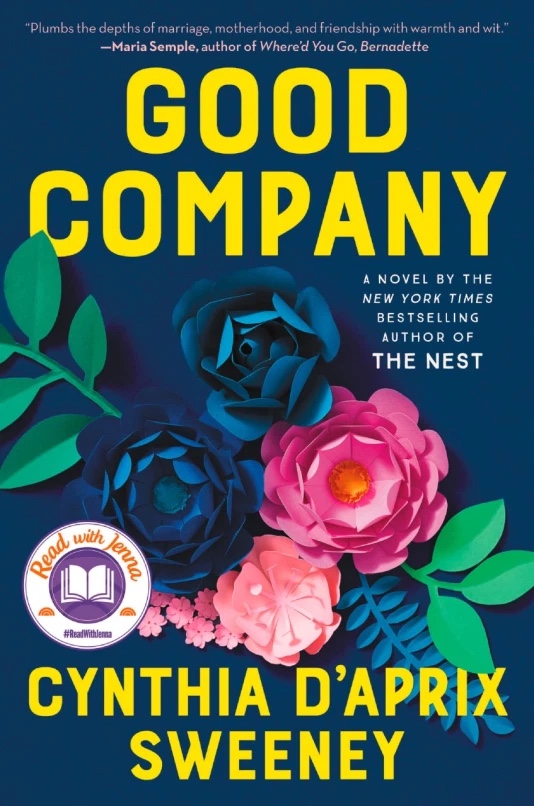
Good Company by Cynthia D’aprix Sweeney

Flora and Julian struggled for years, scraping together just enough acting work to raise their daughter in Manhattan and keep Julian’s small theatre company—Good Company—afloat. A move to Los Angeles brought their first real career successes, a chance to breathe easier, and a reunion with Margot, now a bona fide television star. But has their new life been built on lies? What happened that summer all those years ago? And most importantly, what happens now?

GOOD COMPANY follows two couples entering the midpoint of their lives, against the backdrop of the New York theatre scene and Hollywood. It tells a story of what it means to, as the author says, “truly love but never truly know another person”.

By chance this week I’ve read two books that focus on that mid-point in life, either that or the universe is trying to tell me something. It seems to be a time of shake-ups and regrets. The time when we look at life and either wonder where our younger selves and their vitality disappeared to, or take stock and realise if we don’t make our dreams a reality soon, we never will. It’s the archetypal mid-life crisis on one hand and we shake things up – buy a motorbike, a sports car or trade in our partner for a different type of ‘racy little number’. Other people throw out the ordinary life and go travelling, create a micro-brewery or start a bucket list. For me it means getting some writing experience and gaining confidence with an MA, while finally sitting down and starting to write my book (wish me luck).

Flora meanwhile, is feeling the need to catalogue the years of mementos and evidence of what she and husband Justin have achieved in life. Whether it’s through the theatre group Good Company that they work on together, or through the family they’ve created. The author sets the scene with something familiar that we’ve all done, clearing out old cupboards and storage spaces we’ve been neglecting for years. Flora is looking for a photograph, but is also enjoying reminiscing over the years they’ve spent together professionally and personally. The photo she’s looking for is from when their daughter Ruby is about five years old and they’re staying in Julian’s family mansion in upstate New York for the summer. At the bottom of the filing cabinet she finds it, an envelope of photographs marked ‘KEEP’ from that very summer. Under it is another envelope with an object in, so Flora opens it to find Julian’s wedding ring. This is nothing new. He’s had at least three since they’ve been together. However, on closer inspection this is their first ring, she had engraved especially for him. We all know that feeling. When you discover something that makes the bottom fall out of your world. Julian claimed to have lost this ring on their summer vacation, somewhere outdoors. So how did it get here, carefully sealed and buried under years of family detritus?

We also get to take a look at Flora’s friend Margot, who alongside Ben and Julian used to tread the boards with Good Company. She was one of those friends so interwoven in their lives she’s like family. In fact a five year old Ruby was so taken with Margot that she was always on her knee and being cuddled. Another photo from that summer shows them all, each intertwined in some way with the other. When people are that close, boundaries can be forgotten and it’s hard to see where your ‘self’ ends and the other begins. When one boundary is crossed, others can be breached too. We see that Margot could be overbearing, even interfering, especially back when Flora is planning to marry Julian. Now a famous actress, with a lead role in a hospital soap, we start to see her personality emerging during an interview with a very well informed journalist. It’s clear that she’s well versed in avoiding the difficult question and very willing to manipulate to get what she wants.

I found the setting fascinating, whether it was a beautifully realised New York or sunny LA I felt like I’d escaped into a different world world while reading. I love the idea of Broadway, it was the only thing I wanted to do when I turned 40 – go to Manhattan and see a Broadway show. To be able to read behind the scenes made me feel like I was reading an episode of Smash, a series that I used to watch with a stupid grin on my face. I love to see people perform so it was an absolute joy to have that feeling after being barred from live theatre for so long now. As we sit back and observe the ins and outs of these characters, we can really observe and analyse their behaviour. We see the individual behaviour but also how it feeds into the group dynamic. I could see the established roles, the shorthand they have developed when communicating, and some undercurrents that even the group aren’t aware of. Margot’s controlling ways have followed her through life, Julian is more passive and even powerless in some situations, and Flora is awakening to the fact that sometimes the individual is more important than the group. Many people in middle age are ‘stuck’ in friendship dynamics that are unhealthy and need to change. It can be impossible to change within the group and only by walking away can the individual put themselves first or initiate change in their own life. Our friends can be used to us being one way and may even actively try to manipulate or force us to stay in our little box. I could see all of this here and for a therapist it’s a delicious psychological puzzle to unravel.

I can see why the author’s debut novel was such a success. This was a great character driven read, with a great sense of place to get lost in. I became fully immersed in Flora’s life and all the complexities of these interwoven friendships and marriages. A wonderful ‘holiday read’ to get lost in from a novelist well-versed in the dynamics of people and their friendship circles. It might even make you think about your own friendships. I must just mention that stunning cover art too.

Thanks to Anne Cater at Random Things Tours and Ecco Harper Collins for having me on the tour.

Meet The Author

Cynthia D’Aprix Sweeney’s debut novel, The Nest, was a smash success, receiving widespread critical acclaim and named a Best Book of 2016 by many, including The Washington Post. Much of what made The Nestbeloved is back in play with GOOD COMPANY, including Sweeney’s distinctive wit and her incisive examination of the way people, and their relationships—with others and themselves—evolve over decades.

Posted in Rachels Random Resources

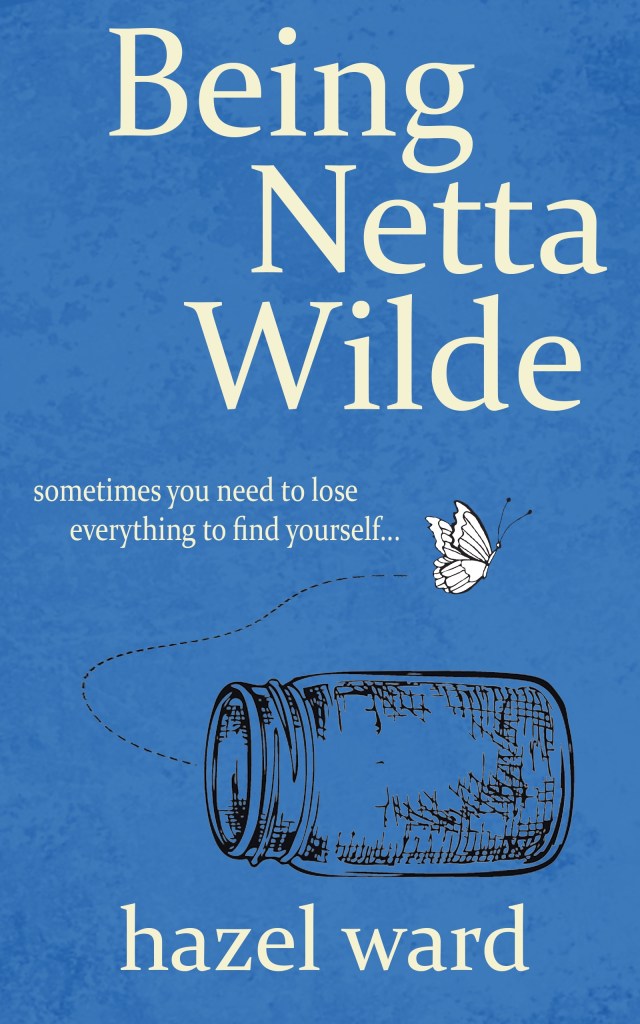
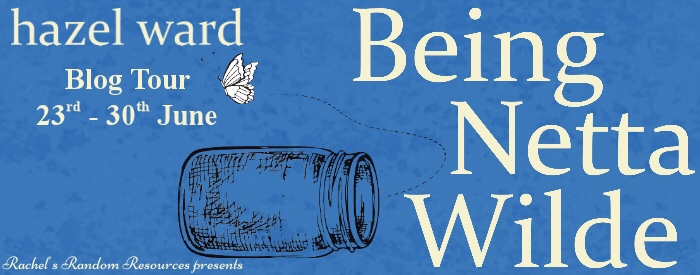
Being Netta Wilde by Hazel Ward.

An uplifting story of love, loss and second chances that celebrates friendship and human connections.

Netta Wilde was all the things Annette Grey isn’t. Netta Wilde was raw, unchecked and just a little bit rebellious. She loved The Clash and she loved being Netta Wilde.

Annette Grey is an empty, broken woman who hardly knows her own children. Of course, it’s her own fault. She’s a bad mother. An unnatural mother. At least, that’s what her ex-husband tells her.

The one thing she is good at …

the one thing that stops her from falling …

is her job.

When the unthinkable happens, Annette makes a decision that sets her on a journey of self-discovery and reinvention. Along the way, her life is filled with friends, family, dogs, and jam. Lots of jam.

Suddenly anything seems possible. Even being Netta Wilde again.

But, is she brave enough to take that final step when the secrets she keeps locked inside are never too far away?

I chose to read this novel, purely because I am a middle-aged woman who looks back to the nineties from time to time and wonders what would that girl think of who I am now? I still wear floral dresses, Doc Marten boots and big slouchy cardigans. I still listen to the same music sometimes, go to gigs and read, constantly. Of course there are times I think I’ve lost myself – that underneath the avalanche of life experience I’ve taken on a different shape. There are times life has been so difficult I haven’t been able to find the girl I was. I’m at my happiest when I’m close to her. When I feel we’re still connected. The times when I can’t find her and I feel completely lost, she’s still there. She never really goes away.

Annette Gray doesn’t know that. She thinks she’s lost her self. She’s become drab, miserable and as Gray as her name suggests. I thought it was clever to create a structure where the actual story feels dull and slow, just as Annette does. It just didn’t come alive at first. Then I realised what the author was doing. As we see flashbacks to her university days they do come alive like the bit in Wizard of Oz where Dorothy wakes from her black and white world to glorious technicolour. It isn’t surprising that she feels so drained. Under the pressure of a terrible marriage where all of her confidence was eroded, it was no surprise to me that she had lost herself. Colin, thankfully now her ex-husband, is unfortunately still playing a huge role in her life. Not only is he a spiteful bully, he has conditioned his children to treat their mother the same way. While working she has footed the bill for their life, while never getting chance to see her children or even put across what life was life was like for her. Even now they’re grown up, their Dad still influences how they feel about her.

When Netta is made redundant I worried that this was another setback for her and when Colin starts complaining about his hand-outs I worried she would crumble. However, this is where the book really does take on some colour and Annette Gray starts to find her inner Netta Wilde again. I loved the joy she found at the foodbank and the new friends she makes there. She also has time for a new hobby that brings her happiness and self-fulfilment – jam making. As a jam maker, I know the satisfaction that comes from a completed batch on the pantry shelf. Like Sophie’s mum in Peep Show, I like to give my batches quirky names that remind me of when I made them – Blair Resignation Plum and Downton Abbey Zingy Damson being two from my shelves! This new lease of life and financial upheaval really opens Netta’s eyes. She can no longer afford to subsidise Colin or her children the way she has, and when she realises she’s been taken for a ride, even more revelations come to light that made me furious. I was dying for the children to realise what a thoroughly unpleasant man Colin is. I also wanted them to see the real person Netta was, someone willing to give up her home to live more simply so she could look after others. Her fellow volunteers at the foodbank really do rally round and become the family she’s been missing for so long.

I think many women lose each themselves, because of the expectation that we’re the caregivers in life. Not just for children, but for elderly parents, disabled siblings and sick spouses. Instead of rebelling, we internalise this and blame ourselves for our rebellious and ‘unnatural’ feelings if we don’t want to do it. Often we don’t even stop and ask ourselves if the men in our family and of our age have the same expectations placed upon them. I think the book captures an experience familiar to many middle aged women. It is peopled with great characters and has a real sense of someone awakening to who they want to be for the next chapters of their life. Someone who’s still a little bit Netta Wilde of yesteryear, but brought bang up to date. The Netta Wilde for now.

Meet The Author

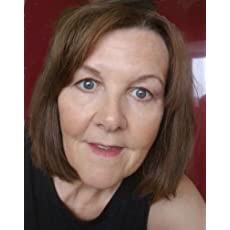
Hazel Ward was born in a back-to-back house in inner city Birmingham. By the time the council knocked the house flat and packed her family off to the suburbs, she was already something of a feral child who loved adventures. Swapping derelict houses and bomb pecks for green fields and gardens was a bit of a culture shock but she rose to the occasion admirably and grew up loving outdoor spaces and animals. Especially dogs, cats and horses. 

Strangely, for someone who couldn’t sit still, she also developed a ferocious reading habit and a love of words. She wrote her first novel at fifteen, along with a lot of angsty poems, and was absolutely sure she wanted to be a writer. Sadly, it all came crashing down when her seventeen-year-old self walked out of school after a spot of bother and was either too stubborn or too embarrassed to go back. It’s too long ago to remember which.  What followed was a series of mind-numbingly dull jobs that paid the bills but did little to quell the restlessness inside. 

Always a bit of a smart-arse, she eventually managed to talk herself into a successful corporate career that lasted over twenty years until, with the bills paid and the children grown up, she was able to wave it all goodbye and do the thing she’dalways wanted to do. While taking a fiction writing course she wrote a short story about a lonely woman who was being made redundant. The story eventually became her debut novel Being Netta Wilde.

Hazel still lives in Birmingham and that’s where she does most of her writing. When she’s not there, she and her partner can be found in their holiday home in Shropshire or gadding about the country in an old motorhome. Not quite feral anymore but still up for adventures. 

Social Media Links – 

https://hazelwardauthor.com

https://www.facebook.com/hazelwardauthor

https://twitter.com/hazelward

https://www.instagram.com/hazel.ward

https://www.youtube.com/channel/UCrmdeA7DKEXhrj6n


Purchase Links

UK – https://www.amazon.co.uk/Being-Netta-Wilde-Hazel-Ward-ebook/dp/B0947351XQ

US – https://www.amazon.com/Being-Netta-Wilde-Hazel-Ward-ebook/dp/B0947351XQ

Posted in Random Things Tours

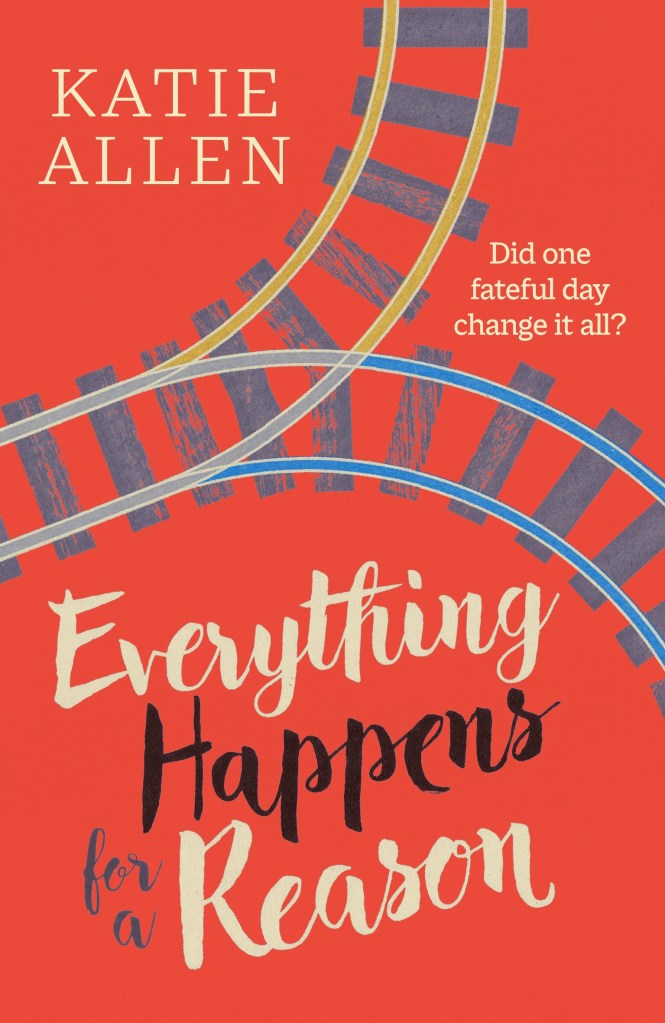
Everything Happens For a Reason by Katie Allen.

Mum-to-be Rachel did everything right, but it all went wrong. Her son, Luke, was stillborn and she finds herself on maternity leave without a baby, trying to make sense of her loss.

When a misguided well-wisher tells her that “everything happens for a reason”, she becomes obsessed with finding that reason, driven by grief and convinced that she is somehow to blame. She remembers that on the day she discovered her pregnancy, she’d stopped a man from jumping in front of a train, and she’s now certain that saving his life cost her the life of her son.

Desperate to find him, she enlists an unlikely ally in Lola, an Underground worker, and Lola’s seven-year-old daughter, Josephine, and eventually tracks him down, with completely unexpected results…

Both a heart-wrenchingly poignant portrait of grief and a gloriously uplifting and disarmingly funny story of a young woman’s determination, Everything Happens for a Reason is a bittersweet, life- affirming read and, quite simply, unforgettable.

When I first talked to Karen Sullivan at Orenda about this incredible book – part of the Jubilant June publishing event – she told me I would cry but I would love it. She was right. I did cry. I cried buckets. I did love it too. This novel reminded me so much about my own loss. I cried for Rachel, I cried for the author, and I cried for anyone who has suffered this terrible loss. Mostly, and selfishly, I cried for myself. I do know the profound sense of loss Rachel goes through, because I lost three pregnancies, one with twins, when I was in my twenties. Of course these were miscarriages, not full term pregnancies, and as someone once tactfully told me ‘better to lose them earlier, than to actually have to give birth, or to have your baby die after a few days’ as if we were playing some sort of ‘Grief Top Trumps’. I was told many things in the months after each miscarriage: there was probably something wrong with the baby; we don’t always understand God’s plans; maybe it wasn’t meant to be. People don’t say these things because they’re malicious. They say these things because they don’t know what to say and silence seems unacceptable. The most useful thing anyone said was from the nurse who discharged me the first time. I was so traumatised by the past 24 hours I was staring ahead, not really seeing and not really listening. She touched my hand and said ‘it isn’t your fault, remember that’.

However, as it happened again and again, I did feel guilty and wracked my brain looking for things I might have done wrong. Rationally I knew it was not my fault, but I wasn’t always rational. Was this to do with my MS? Did I take a tablet I shouldn’t? Should I have helped in the charity shop sorting and labelling clothes, moving boxes? I wasn’t trying for a baby so was it the lack of vitamins? No folic acid? My body felt like such an inhospitable place. It was already attacking itself, now it was attacking my babies. Is it because I shouldn’t be a mum? Did I have a right to bring a baby into my already imperfect world, with my imperfect body? My brain switched off. My heart broke. I was told I had incomplete miscarriages, the baby dies but doesn’t ‘come away’. I then had to read and sign a clinical form that referred to my baby as the ‘products of conception’ and was headed ‘Consent for Termination’. My guilt clicked in again. What if they were wrong and I was killing my baby? To really complete the trauma I contracted an infection after my third miscarriage, and the doctor who had to examine and admit me to hospital actually slapped me on my bare leg because I wasn’t moving fast enough. I felt like my body wasn’t mine anymore. It broke my relationship. It took me on a long, painful journey of finding out that becoming a Mum was going to be more difficult for me because I had Hughes Syndrome, a clotting abnormality. It would be so difficult that I had to choose my own mental health over becoming a mother. I couldn’t make sense of what I’d done wrong to deserve this, on top of my other disabilities.

This is all our central character, Rachel, is trying to do. She wants to make sense of why her baby, Luke, died. She latches onto a platitude and weaves a story around it. If everything does happen for a reason, what could that reason be? Then she thinks of that fateful day when she stopped a stranger from jumping in front of a train, the same day she found out she was pregnant. What if he’d been meant to die? Then, because he was saved, someone else had to die in his place. It’s not clear if she truly believes this, or whether she has to think a greater purpose is at play, because if Luke’s death is without a reason she will fall into the abyss. So, we follow her search for the man she saved. Maybe if she sees him making the most of his second chance at life, she can accept her loss. There is, of course, sadness and grief on the journey, but there’s also humour and the hope that Rachel will work through the worst of her loss and find some peace and acceptance in this awful situation.

The writer is incredibly courageous to take her experiences and lend them to Rachel for the purposes of the novel. As we follow her ‘non-maternity leave’ she tells her story with such a frank, raw, and brutal honesty. This could be a difficult read for someone only just going through the same experience, but for me, I felt like someone had finally seen the pain I was carrying. I would no longer have to stand in the Post Office queue, watching people going about their business, with a terrible inner urge to scream ‘my baby died’. Rachel’s story is told through a series of emails addressed to the son she’s lost. In this private correspondence she can express her worst fears and nothing is left unsaid. There is also a sense for her, that she can send them somewhere; that somehow, Luke can see them. The authenticity of this stream of consciousness can only be achieved by letting us delve deeply into Rachel’s feelings and state of mind. It seems so authentic, because it is. Katie has delved into her very soul for this novel and welcomed us in. I can’t thank her enough. I admire her enormously. It inspires me to keep going, to keep writing my own story.

The fact that this is Rachel’s world means that everyone we meet, we can only see through her eyes. I really enjoyed some of these characters and they do bring balance to a tough story by creating some of the lighter, more humorous moments. Josephine, the daughter of a woman who helps Rachel in her search, has an offbeat humour that I really enjoyed. She really doesn’t have the ability to filter her thoughts before they come out of her mouth, and while that’s always funny, it can also be very insightful in a quirky way. The author has a unique ability to affect the reader’s emotions in one way and then switch them round again very quickly. Rachel’s family mean well when they help and hope she can ‘move on’ from her grief. Some don’t fully understand her quest and want the very best for her. I found myself understanding their confusion and agreeing with their wish that she heals emotionally. The next second I’d be furious, because something has been said that’s so glaringly insensitive. I’d want to turn the air blue with a few ‘F’ words.

I know I have rambled about my own experiences here and maybe I haven’t said enough about why you should read the book. However, I can honestly say this is the book about the loss of a baby, and the chance to be a mother, that is the most authentic I have ever read. I felt represented by this story and by this talented debut author. It’s unique structure, it’s rawness and ability to plumb the depths of despair, while still making you laugh and dare to hope, is simply extraordinary. It is beautifully written and captures our human need to make sense of something that is senseless. No one should be told how to grieve. Each person, and each individual loss is different. We humans find it difficult to accept that some life-experiences have no explanations or answers. When we can’t find meaning, we create it. So, we tell each other stories.

I’d like to say a big thank you to Karen at Orenda for putting this book in front of me months ago, then waiting patiently for my response. I’d also like to thank Anne Cater for letting me ramble like this on the blog tour.

Meet The Author

Everything Happens for a Reason is Katie’s first novel. She used to be a journalist and columnist at the Guardian and Observer, and started her career as a Reuters correspondent in Berlin and London. The events in Everything Happens for a Reason are fiction, but the premise is loosely autobiographical. Katie’s son, Finn, was stillborn in 2010, and her character’s experience of grief and being on maternity leave without a baby is based on her own. And yes, someone did say to her ‘Everything happens for a reason’.
Katie grew up in Warwickshire and now lives in South London with her husband, children, dog, cat and stick insects. When she’s not writing or walking children and dogs, Katie loves baking, playing the piano, reading news and wishing she had written other people’s brilliant novels.

Posted in Random Things Tours

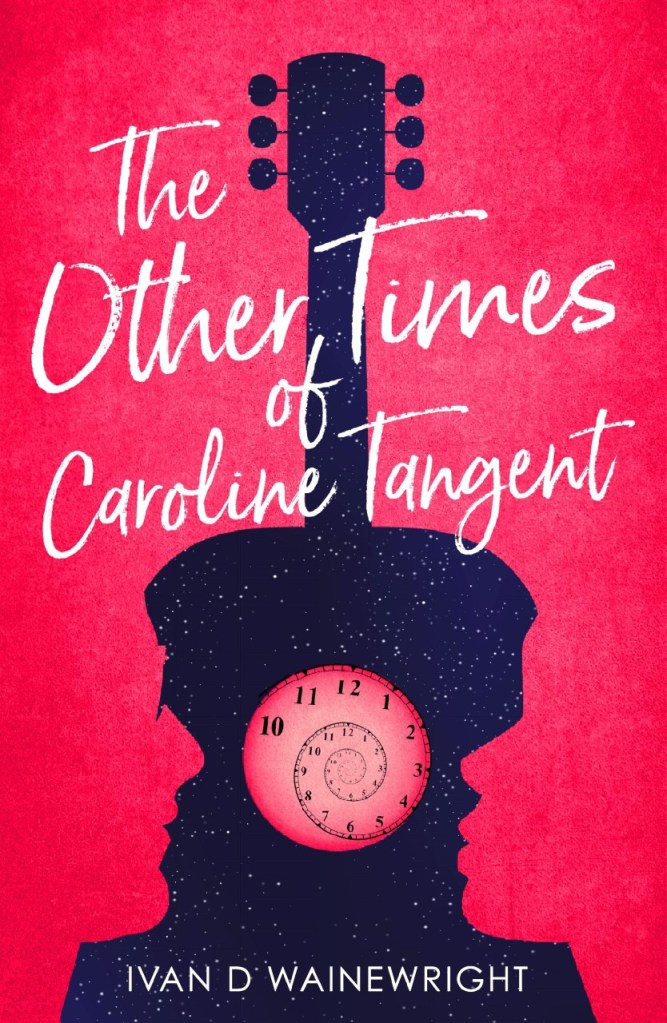
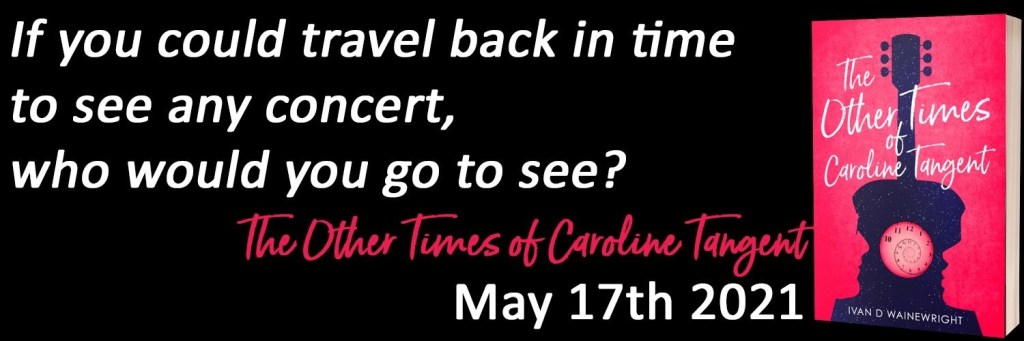
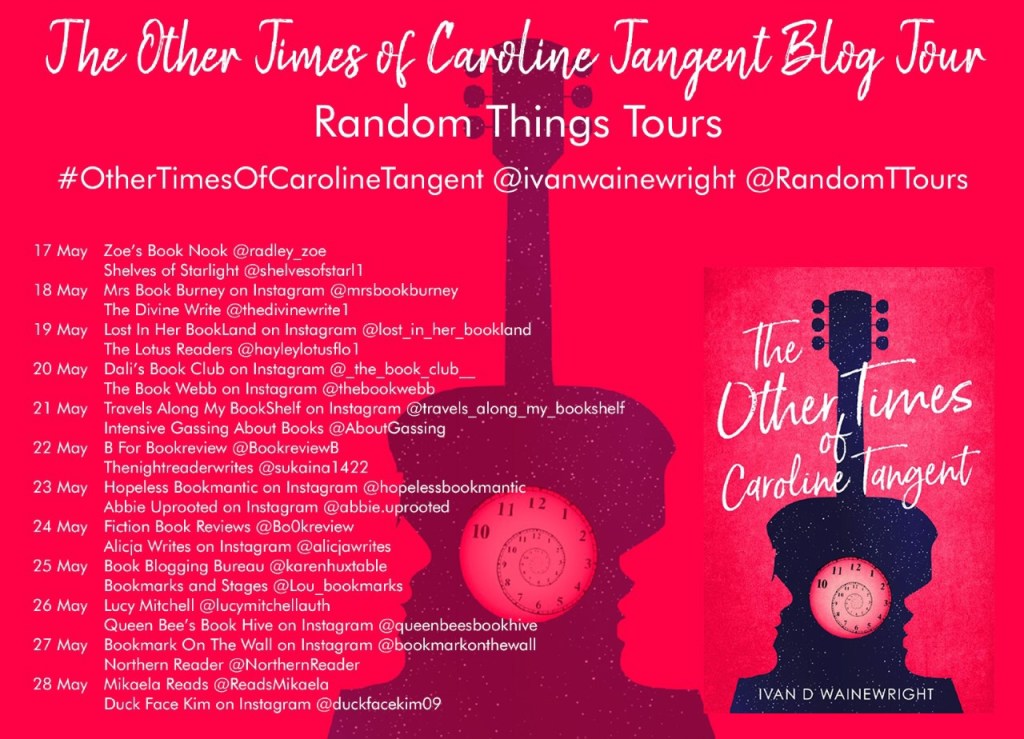
The Other Times of Caroline Tangent by Ivan D. Wainewright.

This book had a premise that was so attractive for someone like me who loves going to gigs and has missed it so much over the last eighteen months. My gig-going best friend and me often talk about which were our favourites, those breakthrough gigs that made your favourite band or those gigs that just captured the zeitgeist. The gig I went to that was a real cultural moment was at Alexandra Palace in 1994; Blur with Pulp as supporting artists. It was a real Britpop landmark and during Song 2, being pummelled and pushed about in the pit at the front I fainted and had to be carried out of the crowd. I’ve been lucky enough to see most of my favourites – Muse, Manic Street Preachers, The Killers, Depeche Mode, U2, Florence and the Machine- but if I did invent a time machine and could go back in time to any gig, it would be The Stone Roses 1989/90. They’re my band that got away. Everyone has one and sometimes we only see their importance in hindsight and simply wish we could have been there.

This is what happens to Caroline Tangent. Her music loving husband Jon, builds a time machine in his basement workshop. One surprising day he whisks her away to a controversial music performance – Kanye West at Glastonbury, 2015. She has on her gardening clothes, so luckily she’s pretty much dressed for a muddy field in Somerset. He didn’t choose the gig because they were huge fans of Kanye, but because it’s an important moment in music history, when there was an outcry over the direction Glastonbury was taking, considering it had always been dominated by more rock or indie groups than anything else. Their second trip is more complicated. Greenwich Village NYC, 1966. The preparation almost heightens their anticipation for the gig. Jon keeps the artist a secret, but they have to scour eBay for vintage clothing and work out how to get round the need for 1960s currency. Although, as Jon jokes, the exchange rate is pretty good. As they settle in a café, Caroline doesn’t recognise the musician playing, but they soon finish their set and on walks a young man with a guitar. It takes a moment because his name is different, but as soon as she realises who it is her excitement bubbles over. That’s Jimi Hendrix!

I found the way the writer created Jon and Caroline’s world really different for such a sci-fi concept. He didn’t treat it like sci-fi, but more like an exploration of long term relationships, friendship and all human life. We get to know their long term friends who they meet for dinner once a month. These people are relatable, and not perfect by any means. He creates tension between Jon and Andrew, who were producing copies of old concert tickets and posters to sell online as the real thing. They’re three dimensional and we see all their good and bad points. Caroline and Jon have managed to keep their time travel a secret so far. She wanted to tell their friends and share his incredible invention, but Jon is adamant it has to be just the two of them. He explains that the secret is just too big, look at how much trouble Caroline is having keeping it to herself? He knows their friends and one of them would be bound to tell someone outside their circle. However adamant he is, there are moments when they’re all together that he sails close to the wind.

I felt unsure about Jon early on, the fact that he’s in this seemingly fractious relationship with Andrew and has produced false memorabilia before made me question his character. I thought their reasons for continuing to visit the past might be different and I didn’t always like the way he treated Caroline. At first I just thought he was very controlled – I know my other half and if he’d developed the capability to build a time machine in his workshop he wouldn’t have been able to keep it to himself. Jon seemed to like having the secret, being superior and even where there were clashes he’d caused, holding himself above the argument. As time went on I noted he was gaslighting Caroline too, letting things go wrong and insinuating she was to blame, or that something she knew had happened, hadn’t happened at all. I was so glad she had such a strong friendship with Bree for support. I felt sad for her, because although she is an emotionally intelligent woman, her love for her husband has made her blind to who he really is.

Of course we all know that the cardinal rule of time travel is not to change anything. Jon goes into great detail about the about chaos theory – the idea that events are interlinked so intricately that it might only take a butterfly flapping its wings on one side of the world to cause a tsunami somewhere else. No matter how small the change in the past, it could have a seismic effect on their future. As much as they want it to be fun and all about the music, past traumas do start to haunt them. Their world could be about to turn upside down because one of them makes a terrible decision. I don’t want to reveal any more, just that this is a time travel novel that is more about the emotional journey of the people involved, than it is about the destinations. I did love the destinations though, and how the author made me feel I was there in 1960s NYC, or 1930s Paris. I think it would be great to create a Spotify playlist alongside the book so readers can fully immerse themselves in the music. The best way I can describe the novel is to say it’s sci-fi with a very big heart. Sometimes the most important and life changing places we travel are within ourselves.

Meet The Author

Ivan D Wainewright lives in Kent (England) with his partner, Sarah and their slightly neurotic rescue Staffie, Remi. Before moving to Kent, he lived in North London, Leeds and Singapore. When not writing, he can be found watching (and occasionally) playing football, running, listening to music from Chumbawamba to Led Zeppelin, arguing over politics and trying to cook. He has been an independent IT consultant for many years, working solely with charities and not-for-profit organisations.

For more on this novel check out these other bloggers on the tour.

Posted in Damp Pebbles Tour

Charity by Madeline Dewhurst.

I’m aware that blog tours have been a subject for discussion this month: giving them up; wondering whether they are a true reflection of a book; or might they be disappearing altogether? I enjoy them because I get to read outside my comfort zone, and then bring a great book like this, that might not have been noticed otherwise, to my follower’s attention. This was definitely the case with Charity, because I might not have encountered it in my normal reading life, but now I can tell you just how good it is and hope that some of you love it as much as I did.

Our narrator is Lauren, a teenage girl who is being interviewed as a potential lodger and carer for an elderly lady named Edith. The two get along, bonding over their experiences of Kenya where Lauren’s grandmother was born and where Edith’s husband Forbes was stationed in the 1950s, during what became known as the Mau Mau uprising. This was a war between the colonisers and the Kenya Land and Freedom Army (the KLFA also known as the Mau Mau). This was a bitter fight for independence from the British by the KLFA, made up of Kikuyu, Meru and Embu people, as well as a small proportion of Masai and Kamba tribesmen. There were war crimes on both sides, but at the end of the war there were over 11,000 dead on the Mau Mau side, including over 1000 executions – the largest use of wartime capital punishment in the British Empire’s history. That’s not to mention the atrocities carried out on women, in a conflict where rape was deliberately used as a means to diminish tribal bloodlines with British blood.

Lauren works on a high street make-up counter and had been running out of places to live, since her Mum is getting remarried to someone she doesn’t get on with. She and Edith seems to rub along together nicely. So, Lauren moves into the spare room and starts caring for her. I love how the relationship between these two women works, as they have such diverse views. Edith is a staunch right winger whose views would really raise eyebrows these days. So, in the present day passages, there are a few clashes. There are statements from Edith that many would find offensive.

‘I’m sure I’m the last of their priorities. If you want to get to the top of the queue you have to be a Muslim who doesn’t speak any English, or a gay lesbian woman, then you’ll get seen straightaway.’

‘Oh, Edith, you crack me up, the things you come out with.’ Lauren shook her head and laughed. ‘I don’t think people’s religion or sexuality show up in X-rays.’

When they do talk about Kenya, and eventually Forbes, Lauren listens intently. At turns interested and horrified by the perspective he clearly brought home with him. Edith’s perspective affects Lauren so personally because of her grandmother. When Lauren suggests that Edith’s family were economic migrants, only in Kenya to make a better life for themselves, Edith strongly dismisses it, declaring Kenya had ‘nothing’ before white farmers arrived. Lauren is incensed.

‘There wasn’t ‘nothing’ there. There was people, living differently to how English people lived, but it was still their land – land the English colonists stole off them. I mean, imagine if I suddenly told you this was my house now, that you’re just a squatter and if you want to stay you’ve got to work for me, obey my orders.’ I thought I’d gone too far, but instead of making her angry, what I’d said seemed to excite Edith. She was looking at me weirdly, kind of like she was in awe of me. ‘Have you been talking to Mary?’

It seems that both women have secrets. Mary was Edith’s friend, but she now visits her at night, creeping into the bedroom and up the bed. Edith is sometimes so scared of her she can’t sleep. What could have happened between them? We do travel back in time to find out, following Edith’s childhood in Kenya as well as Forbes’s service in the army, and a young Kenyan woman named Charity. Charity is just a young girl, caught, accidentally out after curfew, and put into a prison camp where she meets a brutal British officer. There is bloodshed and sexual violence in these flashbacks. It’s harrowing at times, but necessary for us to see why this period of Kenyan history and the brutality of the colonisers, still resonates so strongly generations later.

Two other characters are brought into the present day section of the novel: Paul, who is Edith’s lodger in the basement flat and Jo her daughter. Jo is back from running a new age retreat in Europe and is probably the best example of white privilege I’ve seen in a long time. She has no concept of how her life is easier, because she is from financially stable parents, but also because she is white. She assumes that her mother will have her living there, that the house will be hers as soon as Edith has gone, and that she’s automatically prised by her mother above Lauren and Paul, even though she’s never been there for her mother. However, when Edith’s lawyer visits she’s soon disabused, of her assumptions. Paul seems to have watched over Edith for some time, supporting her with financial decisions and stepping in when she needs help. Once all the characters are in play, some very big secrets start to emerge and we begin to see how all of them are linked by one incident sixty years ago.

It’s very hard to believe that this is Madeline Dewhurst’s first novel. It’s a brilliant read and once you’re hooked, it will be so hard to put it down. I couldn’t wait and finished it in the wee small hours of the morning, following every twist and turn. The author has a great understanding of post-colonial cultures and how the atrocities inflicted by the British empire still resonate in those countries we colonised, but also here at home. I studied post-colonial literature over twenty years ago at university. It is stories like these that remind me why I feel sick when crowds at the Albert Hall sing Land of Hope and Glory at the Last Night of the Proms. This isn’t just a harmless song – it extols the virtues of empire, invokes God as being on the coloniser’s side and suggests that the boundaries of empire should spread further still. It calls Great Britain ‘the mother of the free’ but that freedom is only open to the coloniser not the colonised. This novel shows the impact of the British Empire on one family, with it’s malign influence still felt three generations later. I truly enjoyed this as a thriller, where you’re never quite sure who is the spider and who is the fly. I also loved the honest and brutal way the British Army’s rule in Kenya is depicted, tainting the lives of everyone involved across time. Finally, there is a glimmer of hope as to how this trauma can be addressed and resolved for the future.

Meet The Author.

Madeline Dewhurst is an academic in English and Creative Writing at the Open University. Her previous writing includes fiction, journalism and drama. Charity, which was longlisted for the Bath Novel Award, is her first novel.

Posted in Publisher Proof

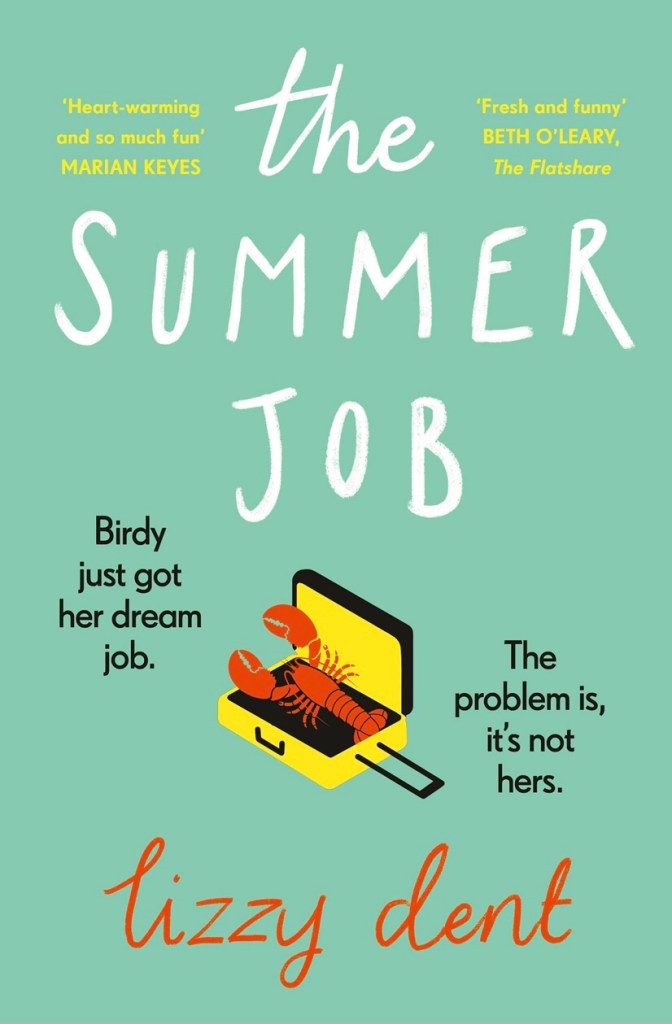
The Summer Job by Lizzy Dent.

I defy anyone to not fall in love with Elizabeth ‘Birdy’ Finch. She’s the fantastic literary creation I was rooting for so hard in this great novel from Lizzy Dent. Having had a tough upbringing in Plymouth, Birdy is pretty much alone in life, except for loyal friend Heather. She and Heather have been friends for life, understanding each other’s difficult family situations and providing undying support for each other. However, Heather’s family were financially better off than Birdy’s, so despite being without the emotional support and presence of her family, Heather has been able to rely on a financial cushion to train as a sommelier or wine expert, working in hospitality. Birdy hasn’t had the same education, so tends to drift from job to job without ever finding a passion of her own. Now, Heather is going to Italy with her current boyfriend and Birdy feels lost. With no sofas left to surf, Birdy may have to do the unthinkable and return to Plymouth, when an idea strikes her. Before the Italy opportunity, Heather had the chance of a summer job at a hotel near Loch Dorne in Scotland. For some reason, she’d been keen to go, then changed her mind. She gives Birdy tickets to the British Wine Awards at the Ritz and Birdy goes with her on/off boyfriend Tim. It’s there, where an idea takes shape. While wearing Heather’s name badge, Birdy runs into Irene – the manager of the Loch Dorne hotel. They get along and Birdy starts to wonder – could she do Heather’s job for the summer? It would take a lot of studying, but maybe she could pull it off and surely anything’s better than going back to Plymouth?

I loved the hotel and the surrounding Scottish scenery. The author describes the area with love and with such detail I could truly imagine it. The way Birdy connects with the place really surprises her. Having always lived in a city, Birdy has never really experienced being in nature and at first turns up in all the wrong clothes. Her first hike, which she undertakes in Converse trainers is a bit of a disaster as she sprains her ankle. Scotland’s beauty has a slow, but remarkable, effect on her mental health, seeming to soothe her anxiety and allow her to ‘be’. For someone with such a busy brain it’s amazing to see how she grows to love walking and travelling to Skye, both on her own at times. Birdy has never really been confident enough to do things on her own, but now she starts to try it, either hiking or going to the coast for fish and chips. It seems to give her the space and quiet she needs to sort things out in her own mind. She even tries foraging, horse riding and fishing! There’s a stillness about her when she’s outdoors that she’s never had before and perhaps a growing sense of belonging to this place.

Of course, her plan doesn’t go without incident and she’s permanently exhausted from studying the wine list in her room. Yet there is a new found confidence about her. She loves being part of this small team who work like a family. Nobody is without their weaknesses but they help each other along and they’re united in their concern about the executive chef Russell and his modern ideas. The pub has been redecorated and the menu changed from the ‘neeps, tatties and whiskey’ destination it was previously. The staff seem so pleased to have Heather there and she quickly makes friends. I could imagine how these people could become a little family for Birdy – if she hadn’t been deceiving them of course. There are just so many hurdles for her to jump, not to mention the little tiny spark of something she can feel with the chef James. Will she succeed and will this spark grow into something more real than Birdy’s used to?

Lizzy Dent is clearly astute when it comes to how a difficult start in life, can affect someone into adulthood. If the people who bring you into the world don’t love and value you it’s very hard to understand how anyone else might. Children whose parents neglect or emotionally abuse them, don’t wonder what’s wrong with their parents, they wonder what’s wrong with themselves. This is Birdy all over. She knows her family aren’t great, but yet she still can’t see the good in herself. Those moments Birdy has, when she’s walking in her new hiking boots or eating fish and chips on the harbour, are moments when she’s discovering her genuine self for the first time. As you read, you will be rooting for those seeds to grow. This book is absolutely joyous. So, if you’re going on holiday this summer, make sure you have this little gem packed in your hand luggage. You won’t regret it.

Meet The Author

Lizzy Dent (mis)spent her early twenties working in Scotland in hospitality, in a hotel not unlike the one in this novel. She somehow ended up in a glamorous job travelling the world creating content for various TV companies, including MTV, Channel 4, Cartoon Network, the BBC and ITV. But she always knew that writing was the thing she wanted to do, if only she could find the confidence. After publishing three young adult novels, she decided to write a novel that reflected the real women she knew, who don’t always know where they’re going in life, but who always have fun doing it. The Summer Job is that novel.

Posted in Netgalley

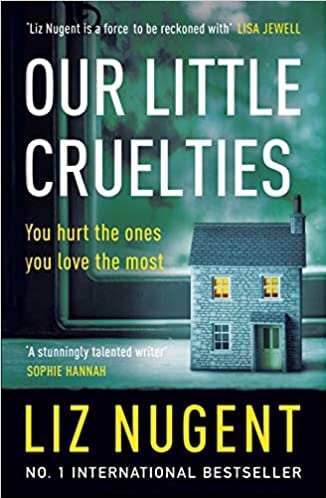
Our Little Cruelties by Liz Nugent

Published: Penguin Paperback Edition 21st Jan 2021

Never have the famous words of Phillip Larkin – ‘they fuck you up your Mum and Dad’ – been so apt. Reading this book was a very interesting experience and patience definitely paid off. Had I given in to my impulses and thrown the book down in frustration during the first part, I would have missed out on a great read. The story of three brothers over their lifetimes is compelling, interesting and a great study in how mental health difficulties can be passed on from one generation to the next.

The structure of the novel is what I had difficulty with at first. The first section was narrated by the eldest brother, Will. Written in short chapters, slipping between decades, we see aspects of his childhood through to the present day where he is a successful movie producer. He meets his wife Kate through his brother Brian,when she’s brought to a family dinner. They have a little girl called Daisy, but Will is much more focused on work than he is his family. We get the sense that Kate is a long suffering woman who gets more support from Brian, who is now Daisy’s godfather as well as her uncle. Brian is there for the birthdays and school concerts and has a great rapport with Daisy. Will is dismissive of Brian and his lack of ambition. He is also dismissive of Luke, despite Luke’s success as a pop star in his late teens. This section was difficult to read because I disliked him from page one. I didn’t think I could stand to listen to his perspective for a whole book. This made me think about my own bias and prejudice – what would I have done if he was a client and I was his counsellor? My main interest was in how close Will was to his Mum and through flashbacks we see she favours him, quite openly.

Luke, by contrast, really gets the brunt of their mother’s moods. He is the youngest, the weakest perhaps, but he is attractive and in his teenage years soon finds real success as a pop star. However, in the later fragments of his life he has times of struggle, where his mental health is poor and he turns to drink or experiments with drugs. He is an unusual child with a religious fixation to the extent where the family priest thinks he has a vocation! The other boys use his goodness against him, he is manipulated by them and by blaming him, they get extra food and attention. Only his Dad seemed wise to this, and just how poisonous the brothers, particularly Will, can be. There are moments where it seems his life is on track and he could be happy, but others where I wondered if he was just not meant for this world.

Finally, there’s Brian the middle brother. If Will is his Mum’s favourite and Luke is doted on by his Dad, who is left for Brian? He does seem mentally torn between both parents, but is without a champion in the same sense his brothers have one. Will is very dismissive of him, even though Brian does so much for his niece. He’s not grateful when Brian stands in for him, but instead is scornful that Brian has nothing more important to do. Will only recognises material success, not the strength or reward of happy relationships. Brian is the one who looks after Luke when his mental health deteriorates, but Will never recognises or appreciates this. In fact Brian’s relationship with Will becomes so destructive that other family members get caught in the crossfire.

The genius of this book is in the knowledge of family dynamics and how destructive they can be, but also in it’s clever structure. As mentioned, during the first part, narrated by Will, I was ready to put the book down. I couldn’t stand him. He was arrogant, self-centred and treats women appallingly. If the whole book had been his viewpoint I might have thrown it out of the window. Just when I was at the point of giving up, I saw Luke’s name across the next section and it was such a relief. As the tale goes back and forth in time and perspective we see a tiny bit more of the whole. At a Bob Dylan concert at a local castle, Will ends up in a fight and is taken to hospital with Dad and Luke following behind. Mum is left behind at the castle and doesn’t arrive at the hospital till late. We think that maybe she’s been caught out here, or that she simply cares more about enjoying herself than her son. But, this is Will’s perspective, for once his Mum has let him down. However, through Luke’s narrative we learn the truth, that something terrible happened to her, something that explains so much about how she behaves. When we finally get Brian’s section we see what a lifetime of being in the middle feels like; he feels overlooked, unconsidered and brushed aside. We find out things we already suspected and other things that surprise and enlighten us. Every single strand of this novel teaches us that we are only ever a small part of the picture and we must step back to see the whole.

This brings me to the second line of Larkin’s poem This Must Be The Verse and easily the best; – ‘they do not mean to but they do’. There are parts of this novel, particularly the way Dad behaves, where genuine mistakes are made and misunderstandings occur in the same way they do with any family. No parent, however hard they try, will get it completely right. However, there are other situations where the mental damage seems deliberate, especially in their mother’s attitude to Luke. Will’s intervention in Luke’s relationship, and the treatment of Will’s daughter Daisy towards the end of the novel are not mistakes. These acts are more than little cruelties. They are deliberately causing lifelong psychological disturbance. This is a complex and interesting novel that deftly moves from one narrow perspective to another, finally giving us all the pieces of the emotional jigsaw puzzle that makes up this family.

Meet The Author

Before becoming a full-time writer, Liz Nugent worked in Irish film, theatre and television. Her three novels – Unravelling Oliver, Lying in Wait and Skin Deep have each been Number One bestsellers in Ireland and she has won four Irish Book Awards (two for Skin Deep). She lives in Dublin with her husband.