Posted in Random Things Tours

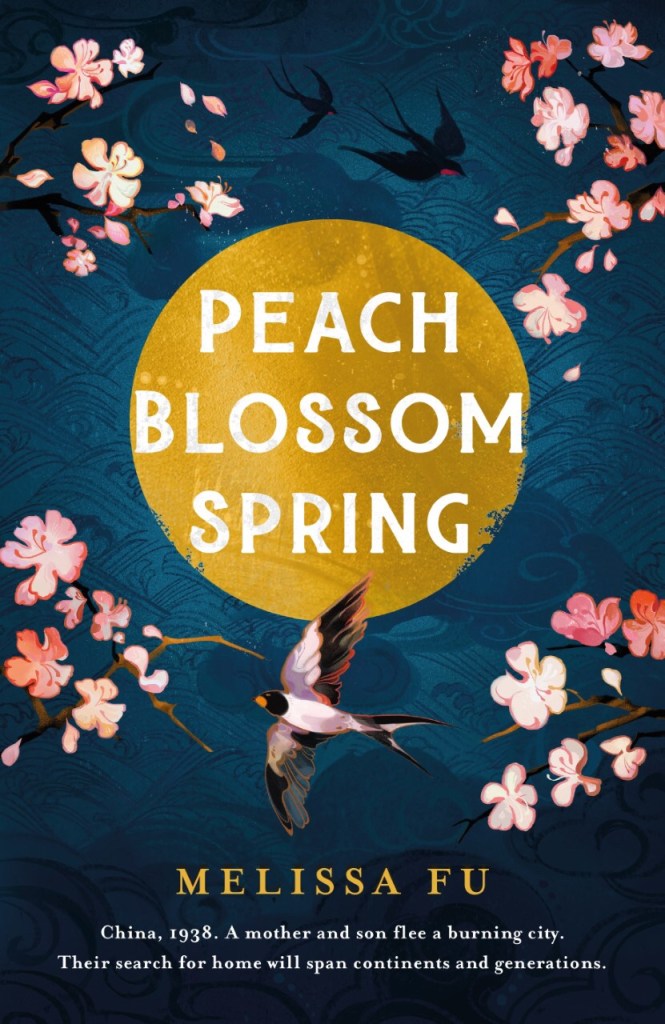
Peach Blossom Spring by Melissa Fu

With every misfortune there is a blessing and within every blessing, the seeds of misfortune, and so it goes, until the end of time.

It is 1938 in China, and the Japanese are advancing. A young mother, Meilin, is forced to flee her burning city with her four-year-old son, Renshu, and embark on an epic journey across China. For comfort, they turn to their most treasured possession – a beautifully illustrated hand scroll. Its ancient fables offer solace and wisdom as they travel through their ravaged country, seeking refuge.

Years later, Renshu has settled in America as Henry Dao. His daughter is desperate to understand her heritage, but he refuses to talk about his childhood. How can he keep his family safe in this new land when the weight of his history threatens to drag them down?

Spanning continents and generations, Peach Blossom Spring is a bold and moving look at the history of modern China, told through the story of one family. It’s about the power of our past, the hope for a better future, and the search for a place to call home.

As they are torn from the only home he has ever known, Renshu’s mother Meilin, tells him stories from a scroll she has carried with them as their most precious possession. One story she tells is that of Peach Blossom Spring, a fisherman passes through a cave that becomes so narrow he can only just squeeze to the other side. There he finds a kind of Eden, with flowering peach trees and the all the wonders of nature. It’s a peaceful place, but eventually there is a dilemma to solve. Once he leaves this place, he cannot return. If he stays, he can never return to his old life. Meilin tells him the fisherman stays and builds a life in this new place, leaving everything that came before. The book is divided into sections from WW2 to the latter part of the 20th Century, as we follow events from China when Renshu is a little boy, to his middle age and the life of his daughter Lily in the USA. This structure shows how his early experiences shape the man he becomes, but also the parent he becomes and the daughter he shapes along with his wife Rachel. The author weaves together themes of identity, women’s history, politics and conflict, as well as inter- generational trauma so beautifully, yet all the while framing Renshu’s life through this ancient Chinese story that’s still relevant today.

I think that reading this while watching the horrific images of war in Ukraine, really brought the plight of Meilin and her son more vividly to life for me. That fear, the desperation of grasping what you can, then running with only the things you carry. I’ve been thinking about it a lot. The trauma and displacement these characters, and the real people who inspired them, went through fleeing from city to city as the war crept closer and the only option was escape to Taiwan. The author’s descriptions of fire bombed cities, cramped underground shelters, and the terrifying trip down the white waters of a narrow river in a deep ravine conveyed the panic and desperation of Meilin and her family. I found the descriptions of sheltering underground so claustrophobic, with that many people crammed into the space the air becomes limited and the bombs above so loud you can’t even think. I could imagine being a child in that situation, totally powerless and trying to make sense of what you’re being told – that the dark, cramped space that scares you more than anything is the only thing that might keep you alive. Renshu’s panic is described so well I felt it, so it was no surprise when these panics resurfaced in middle age. Renshu (or Henry as he becomes known) is a curious, intelligent boy who loses his father before really knowing him and is reliant on his Mum for his very survival. We read these early turbulent experiences through Meilin’s eyes and what stayed with me so strongly was her quiet strength. There are situations where it is impossible to have a voice, where all she can do is endure. Through her section of the books what stayed with me is that the price of war is very different for women than it is for men.

Meilin does not even have time to process the loss of her husband, and has to live under the charity and protection of her brother- in -law. Even though he constantly tells her that they are family and it is his pleasure to look after them, she knows his wife does not feel the same way. She’s uncomfortable and thinks of returning to her own family, but in the chaos of conflict how does she know they’re even alive? The risks she takes to be independent from her husband’s family are huge and they don’t always pay off. I was particularly affected by the ordeal she endures while trying to sell their family scroll – the only thing of value they have left. Yet she’s resourceful, always looking for work and a roof over their heads, working hard to keep Renshu safe and financially provided for. All the sacrifices she is making for him, to go to a good school and university, are clouded by the painful realisation that every step of her effort will take him further away from her. She must be lonely, especially when the companionship and support she receives from other women is broken when their men slowly return. She learns to rely on herself instead of others, especially men who always want something in return and curtail her freedom. She only relies on her brother-in- law where she knows his government connections will help Renshu get to school in America. Yet she doesn’t take any of his offers for herself, of marriage and she never asks for anything from Renshu either. In the 1970s when President Carter wins the US election, then officially recognises the communist government of China, it’s Renshu who worries about bringing her to the US. In fact when they realise there’s a mix up in his own official paperwork, Meilin is quietly resigned to living out her days in Taiwan. She doesn’t seem angry at the ‘mistake’ made by her brother-in-law, even though I felt it was a deliberate ploy to keep her close by. All she asks is for Renshu to plant an orchard, but it will take several years for him to fully understand her meaning.

The settings are so incredibly full of life and it was fascinating to compare Renshu’s surroundings in China and Taiwan with his new home in America. I experience synaesthesia and I found the settings of Shanghai and Taiwan an overload on the senses. In fact when Renshu reached his lodgings in America it felt like a sudden silence as if I’d gone deaf. Renshu himself has to go outside and marvel at the quiet of his empty street with everyone inside their homes. Compared to Meilin’s visit to market, filled with people, vendors shouting, the colour and variety of produce, it seems to lack colour and life. I saw one place in colour and one in black and white. I wondered if the noise and bustle had simply followed on from the noises of war for Renshu, but in his first months in the US it is simply the sound of home. He might have experienced less culture shock in a bustling city like New York or Chicago, but in the mid-west it must have felt like the colour and music had been drained from the world. However, quiet doesn’t necessarily mean safe and there are insidious dangers in an anti-communist America of the 1950’s with McCarthyism in the air. Renshu’s Uncle has given him a contact in America who warns him of the dangers of seeming too sympathetic to his home country and it’s politics. He suggests he stick to Henry, the Western name that Renshu chose on a friend’s advice, but also to avoid gatherings with other Chinese students. Anything anti-Communist could see him in trouble with the government at home, whereas anything pro-Communist might mark him out as trouble to the American authorities. So, even as Henry, he is walking a tightrope, constantly on alert and perhaps missing out on friendships that might have made him less alone. His regular listening to Chopin in the university library is an expression of his emotions, he feels an affinity with the music as if it articulates something he can’t as yet.

In this epic story the author has beautifully portrayed inter-generational trauma, something that can’t be escaped no matter how many oceans you put between you and your past. There is a psychological theory that society’s seemingly expanding mental health issues are caused by trauma from as far back as the early Twentieth Century and is a legacy of two world wars. Men who went to war became distant and emotionally closed off fathers, a problem that then passes to another generation who don’t know how to be affectionate, emotional and available. The effect of that stiff upper lip mentality of the 1940s can be seen in a generation’s rebellion of the 1960’s. Just as the author describes the giant destructive force of the two bombs dropped on Hiroshima and Nagasaki, trauma creates a shockwave that rapidly spreads outward affecting everyone in its path. It takes a strong person to stand up and say I will not pass this trauma on to my children. Renshu is traumatised by war. His existence started with minute to minute thinking, the mind fully occupied with the basic needs of food, shelter and safety. Never in one place for long, Meilin and Renshu are powerless and can never really stop to enjoy any period of good fortune, because they know it can be taken away from them again in a click of the fingers. Meilin understands this. She sees that her boy has struggled to move fully away from that short term thinking – he has been able to have some aspirations though and the relative luxury of safety, a constant income and roof over his head, a long and happy marriage. Yet she sees that he still struggles to trust it all. This is why Meilin tells him to plant an orchard, because a man who plants an orchard knows there will be a tomorrow and that he will still be in the same place, watching them grow.

Meet The Author

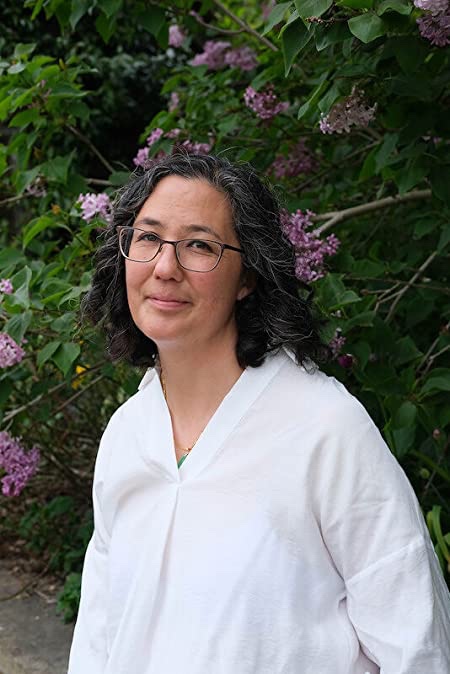
Melissa Fu grew up in Northern New Mexico and now lives near Cambridge, UK, with her husband and children.With academic backgrounds in physics and English, she has worked in education as a teacher, curriculum developer, and consultant.
Melissa was the regional winner of the Words and Women 2016 Prose Competition and was a 2017 Apprentice with the London-based Word Factory. Her work appears in several publications including The Lonely Crowd, International Literature Showcase, Bare Fiction, Wasafiri Online, and The Willowherb Review. In 2019, her debut poetry pamphlet, Falling Outside Eden, was published by the Hedgehog Poetry Press. In 2018/2019, Melissa received an Arts Council England, Developing Your Creative Practice grant and was the David TK Wong Fellow at the University of East Anglia.

Posted in Rachels Random Resources

Shoot The Moon by Bella Cassidy

Tassie Morris is everyone’s favourite wedding photographer, famous for her photos of offbeat ceremonies and alternative brides. Yet commitment is proving impossible for Tassie herself, who cannot forget her first love.

When she’s sent to photograph a ceremony on Schiehallion – the Fairy Hill of the Scottish Caledonians – she meets Dan, who might be the one to make her forget her past. That is, until a family crisis begins a chain of events that threaten to destroy not only Tassie’s love life, but her entire career.

Set in a colourful world of extraordinary weddings, Shoot the Moon explores the complexities of different kinds of love: romantic love, mother love, friendship. And, ultimately, the importance of loving yourself.

There was an awful lot to admire in this novel about a young woman who makes her living capturing the love of others, while struggling to find the love she needs. I say needs rather than wants, because Tassie doesn’t really know what she wants or even the type of man that’s best for her. Largely this is because she’s stuck on a relationship she had when she was a teenager. I really felt for this woman, because she has so much going for her, but doesn’t realise it. She has had an exciting career in photography across the world, but more recently has worked for a U.K. wedding magazine. Tassie is given a file containing all the details of a wedding that her work colleague and friend has picked for their next real wedding feature. Tassie then travels down to that wedding to photograph it for the magazine. I particularly loved this rock and roll wedding, with the bride in a black dress and the mother of the bride performing the ceremony in her role as vicar. The author captures the beautiful details of the wedding so well I felt I was there. The Scottish wedding is also spectacular, not just the ceremony but the scenery around them. Scotland is the first time I see Tassie truly relax and let go of plans and schedules, leaving her phone to one side. It’s a moment of quiet in an otherwise busy story. In her spare time Tassie is a homebody, either tackling some of the DIY on her flat or tending the well-kept garden where she grows herbs and vegetables. She seems comfortable with who she is.

However, she doesn’t seem to know who she is when it comes to finding a partner. She harks back to her teenage years and the time she spent as Alex’s girlfriend. I love the way the author depicts our formative romantic relationships as something that shapes our love life into the future. Her seemingly perfect relationship with Alex possibly wasn’t that great, but when we put our rose tinted glasses on it can seem. Also, teenage relationships don’t have the pressures that our adult relationships do. They’re intense because it’s a new experience, but also because we don’t have the constraints or worries of work, money, mortgages and children. We have all the time in the world to be in love when we’re younger. Tassie only sees Alex occasionally these days and I wondered how much the relationship really suited his agenda, but left Tassie quite lonely and blocked her from moving on. There was an emotionally intelligent look at how attachment issues affect our relationships too; if we fear abandonment then we might put up with difficult behaviour just to avoid confrontation and potentially being abandoned again. I think Tassie is aware that Alex is not a fulfilling relationship for her, but can she cope with the feelings of being without it? Dan is a fantastic romantic lead character and has a lot of the qualities Tassie values in a man. He seems like someone who is straightforward, honest and loyal. Their personalities fit together well and he seems ready for a serious relationship, but can she take that step with someone she’s just met without fearing abandonment?

The author pulls everything together well as Tassie’s world changes completely when she makes a mistake at work and risks the reputation of the magazine. She has to think quickly because living in a London flat with her lifestyle won’t be financially sustainable. This seems like rock bottom for her, but could it possibly be a blessing in disguise? Could it be the right time to go home to the farm, given that her lifelong issues with her mum are still causing her emotional pain? Maybe it will also give her the opportunity to try something completely new as a career? I was keeping my fingers crossed for her because I wanted her to feel comfortable with who she was and feel whole. She might also be ready for that real, committed relationship to come along – but I didn’t need that for a happy ending. My only criticism of the book is that there were moments I felt like I was reading a different story. At the beginning we learn that Tassie sees a little blonde girl, who could be an imaginary friend, except Tassie continues to see her from time to time. Tassie feels like they’re connected in some way, but doesn’t know how. I found this really interesting and it had a different feel to the rest of the book. It didn’t seem to fit with the lighter tone around the wedding magazine and I had a feeling this could have been the start to quite a different novel. It’s a small thing, and I did like the way it was tied into her childhood anyway. All in all this was a great read for Valentine’s Day, and should suit romance readers as well as those who like their romances to have some emotional depth.

Meet the Author

Bella Cassidy grew up in the West Country – reading contemporary romances, romances, historical novels, literary fiction… just about anything she could lay her hands on. After a few years in London, working as a waitress and in PR and advertising, she went to Sussex to read English – despite admitting in her pre-interview that this rather sociable period in her life had seen her read only one book in six months: a Jilly Cooper. She’s had an eclectic range of jobs: including in the world of finance; social housing fundraising; a stint at the Body Shop – working as Anita Roddick’s assistant; as a secondary school teacher, then teaching babies to swim: all over the world.

She’s done a lot of research for writing a wedding romance, having had two herself. For her first she was eight months pregnant – a whale in bright orange – and was married in a barn with wood fires burning. The second saw her in elegant Edwardian silk, crystals and lace, teamed with yellow wellies and a cardigan. Both were great fun; but it was lovely having her daughter alongside, rather than inside her at the second one.

Social Media Links –

https://www.facebook.com/BellaMoonShoot/

https://www.instagram.com/bellamoonshoot/

https://mobile.twitter.com/bellamoonshoot

Purchase Links

UK – https://www.amazon.co.uk/SHOOT-MOON-alternative-game-hearts-ebook/dp/B09D2DHZYG

US – https://www.amazon.com/SHOOT-MOON-alternative-game-hearts-ebook/dp/B09D2DHZYG

Posted in Random Things Tours

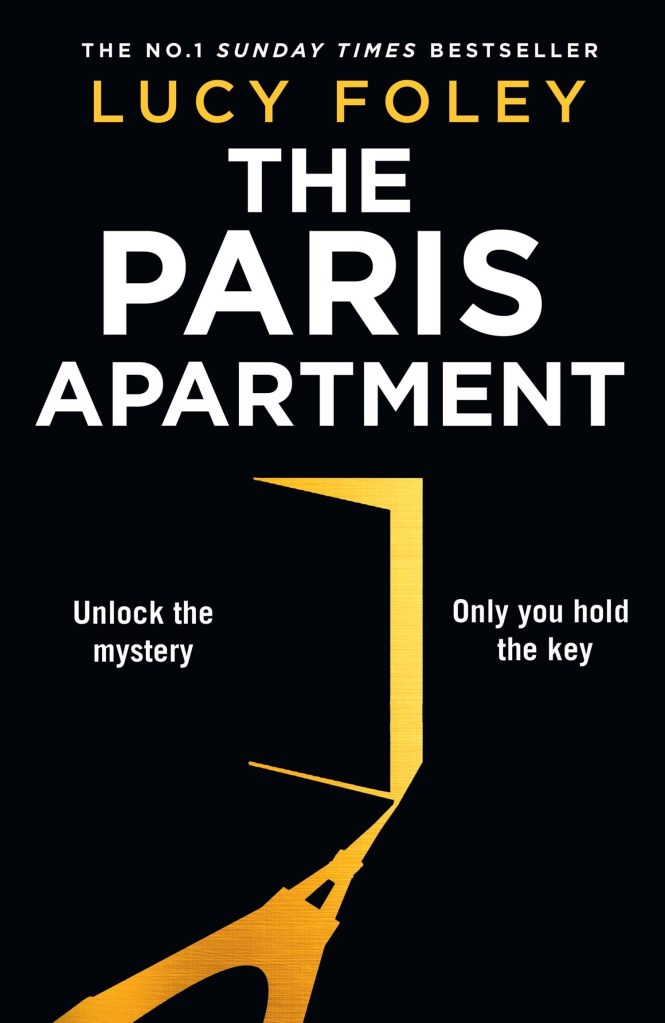
The Paris Apartment by Lucy Foley

Welcome to No 12 Rue des Amants

A beautiful old apartment block, far from the glittering lights of the Eiffel Tower and the bustling banks of the Seine.

Where nothing goes unseen, and everyone has a story to unlock.

The watchful concierge
The scorned lover
The prying journalist
The naïve student
The unwanted guest

There was a murder here last night.
A mystery lies behind the door of apartment three.

When things go wrong at home in London, Jess is ready for a fresh start. She’s broke, and she’s suddenly left her job. Maybe things would look better from somewhere else? Jess jumps on the train to Paris and makes a quick call to her brother Ben to say she’s on her way. Ben should be set with work and an apartment now, but he did seem unimpressed or distracted when she called. Or was there someone with him? Either way she’s here now and for some reason Ben isn’t answering her calls or messages. She’s also taken aback by the size and luxury of his apartment block, surely Ben can’t afford to live somewhere like this? So with no money and nowhere else to stay, she manages to pick the lock and get in. Next morning there’s still no word from him and the questions keep coming. Why is the cat bloodstained? Why are his neighbours so unfriendly and mysterious? Jess is sure that her brother has been harmed, but by who and why?

This was an enjoyable thriller and I liked the structure, that allowed us behind the other doors at apartment building No 12 and into the worlds of these strangely eclectic residents. We were also taken back in time to Ben’s arrival at the apartments so we could see how his relationship built with the other residents. Who did he get on with and why? It also showed up my own misconceptions about people: I expected Ben to have made a beeline for the beautiful Camille in her tiny bikini; that the grumpy man Jess sees at the beginning to be a relative of the concierge; that Mimi would be the kind, girl next door type. Nothing is what it seems with these residents. However, the residents were not the only ones with secrets. Ben had never told Jess what he was working on in Paris. As for Jess, we don’t know exactly what forced her to flee England or how she’s ended up alone and penniless. We do find that they are half-brother and sister, forced into care at an early age and very close to each other, because their experience of parents is that they can’t be trusted. It is very out of character for Ben to forget or ignore her in this way. Jess is very resourceful, soon finding people she can talk to about her brother, including the residents, although they were less than welcoming. She has good investigative skills that she’s possibly learned from her brother and meets with a friend of his who may be helpful. I couldn’t decide whether I liked her or not, but kept reminding myself that no one is above suspicion, even family.

The writer immerses us in the less salubrious side of Paris. No fairy lit boat rides on the Seine for Jess as she heads deeper into the city’s underbelly. This is not a pretty Paris, but it is compelling and different especially when compared to the apartment building. Although we don’t have to go into the streets, the difference in social class can be see in the courtyard garden where the concierge lives in what sounds like a shed. It’s a humble home and it seems Ben is the only resident who treats her like an equal. She’s shocked by his kindness and is the person who gives us the most snippets about what’s really going on with the residents of these luxury flats. She is invisible to these wealthy people, but she’s always watching, eager to catch those little indiscreet moments that happen when people think you’re invisible. I had a lot of empathy for her, because she’s stuck. She knows too much and has too little to move on in life. I didn’t really like or connect with any of the other characters and that makes it hard to care about what happens to them. However, I’m not sure we’re meant to like them. We’re obviously drawn to Jess because of the position she’s in and her tenacity (and sometimes recklessness) in pursuit of the truth. This book hangs on the mystery and it’s twists and turns. I did enjoy the revelations and the cliffhangers, because there were things I didn’t expect, especially Ben’s life in the building and interactions with other residents. This is a fast, addictive thriller where you’re never sure what will happen next, but when it does everything can be turned on it’s head.

Meet the Author

Lucy Foley is a No.1 Sunday Times bestselling author. Her contemporary murder mystery thrillers, The Hunting Party and The Guest List, have sold over a million copies worldwide and also hit the New York Times and Irish Times bestseller lists. The Guest List was a Waterstones Thriller of the Month selection, a Reese’s Book Club pick, it was chosen as one of The Times and Sunday Times Crime Books of the Year, and it won the Goodreads Choice Award for best mystery/thriller.
Lucy’s novels have been translated into multiple languages and her journalism has appeared in publications such as Sunday Times Style, Grazia, ES Magazine, Vogue US, Elle, Tatler and Marie Claire. Lucy lives in Brussels with her husband their baby.

Posted in Publisher Proof

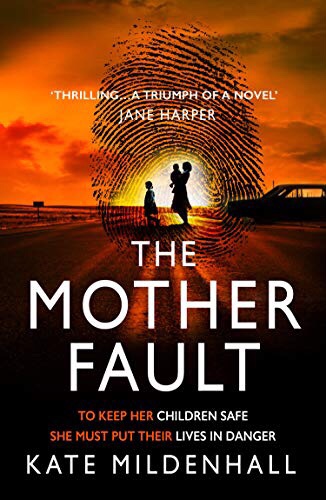
The Mother Fault by Kate Mildenhall.

To keep her children safe, she must put their lives at risk …
In suburban Australia, Mim and her two children live as quietly as they can. Around them, a near-future world is descending into chaos: government officials have taken absolute control, but not everybody wants to obey the rules.
When Mim’s husband Ben mysteriously disappears, Mim realises that she and her children are in great danger. Together, they must set off on the journey of a lifetime to find Ben. The government are trying to track them down, but Mim will do anything to keep her family safe – even if it means risking all their lives.
Can the world ever return to normality, and their family to what it was?

Every time I read a new dystopian novel I end up feeling a little disturbed about how close it is to the world we’re in now. Especially with the extreme weather events, potential for WW3 and the lingering pandemic all competing for our attention. Yet for some reason I’m drawn to them and when they’re done well they blow me away. There have been a few dystopian novels sitting high on my ‘Books of the Year’ list for the past two years running.

This was another novel set in the near future, where severe climate change events and continued terrorist attacks have made the government take drastic action. They now have a totalitarian government, run under the sinister title of the “Department”. Humans have been installed with the type of microchips anti-vaxxers are terrified by, allowing the government to keep tabs of every single citizen. All civil liberties and freedoms have been swept aside for the false promise of round the clock security provided by their privacy being invaded. Any dissent is dealt with quickly and without mercy, and there are purpose built compounds ready to house anyone who speaks out. Many go in, but nobody comes out again, a though that fills me with dread considering I’m writing this as Russia is dismantling any left-wing TV or radio station and announcing new laws to curb anyone even labelling their invasion of the Ukraine as a war instead of a ‘special military operation.’

So when officials from the Department tell Mim is tell Mim that her husband Ben is missing, she has to think quickly and tactically about the best plan of action for her and their children Essie and Sam. When officials arrive at her home to department to “help and advise’ she knows that she’s being trapped. Their advice warns her to stay home and they offer her some official looking forms to sign, but without giving her a chance to read them. Finally, they’re asked to surrender their Passports. This might be run of the mill stuff in a dictatorial regime, but Mim isn’t so easily controlled or fobbed off. Ben had been working in Indonesia, at a gold mine, so Mim is used to him being away from home, but he’s never been unexpectedly delayed or kept at his place of work without some notice. However, his return ‘in the next few days’ allows Mim time to think and delay telling anyone they know. The only other person who. knows the truth is Raquel – a foreign, independent journalist who had happened to ring because she had heard Ben had disappeared on the grapevine. Mim decides to run, knowing that officials will take them as security to lure Ben to them if they don’t already have him.

The story of this family on the run makes a great thriller, the pace is mostly superb and I was rooting for this family. The Department are relentless though, and Mim finds her way blocked, not just by the confiscated passports, but by frozen bank accounts and phone calls where her children are threatened if she doesn’t return home. I felt torn about Mum’s decision making. I applauded her for sticking to her principles and the belief that her children are in more danger living within this totalitarian regime than by running any. The other half of me was thinking she was crazy to risk their lives this way. An old friend of Mim’s takes the family on a treacherous sea voyage to find Ben, but I kept wondering whether she could trust her friend or if there are ulterior motives. I found some of Mim’s choices here difficult to understand and the story seemed to slow as they tried to reach Borneo. However, once there and towards the end the pace changed suddenly and my only criticism of the book would be that this huge change in pace made the final section feel like it passed too quick, giving me a bit of an anti-climactic feel. I thought the Big Brother elements of the novel were well established and the government felt truly terrifying in their scope and methods of punishment. I enjoyed the fact that it made me think, not just about the politics, but about being a mother in this oppressive situation and the decisions I would have made for my children. Was it worth putting their lives in immediate danger to avoid the potential future consequences of staying put? I found it involving, intelligent and eerily prescient, with the ability to start a few dystopian nightmares of my own.

Published in paperback by Harper Collins on 3rd March 2022.

Meet the Author

Kate Mildenhall is a writer and education project officer, who currently works at the State Library of Victoria. As a teacher, she has worked in schools, at RMIT University and has volunteered with Teachers Across Borders in Cambodia.

Skylarking was her debut novel. She discovered the story while on a camping trip and she wishes for more such fruitful adventures. She lives with her husband and two young daughters in Hurstbridge, Victoria.

Posted in Publisher Proof

The Lying Club by Annie Ward

If you love a juicy gossip about your fellow villagers or friends, or watching rich people’s lives implode, then this is definitely the book for you. Based around an elite Colorado private school, a tangled web connects three women. Brooke, the archetypal private school mum, fiercely protective and an filthy rich heiress with a creative approach to her wedding vows. Asha is a realtor, staging and selling houses while juggling children, hormones and an increasingly distant husband who she fears is having an affair. Then there’s Natalie, a lowly office assistant, watching the parents and children at the school taking for granted a life she could only dream about. Brooke has probably passed Natalie hundreds of times since she started working at the school, but probably doesn’t even know her name. Asha has noticed her, but only because Natalie has turned up at lots of her open house events. This is strange because there’s no way she could afford the types of properties Asha is selling. These women are bound by their relationships with the handsome, charming assistant athletic director Nicholas. Brooke wants him, in the way she wants any handsome man to notice her, but also because he has the contacts to get her daughter Sloane into one of the best colleges based on her talent at football. Asha uneeds him to get daughter Mia ready for the competitive world of college applications, because the best school won’t take two girls from the same school and Brooke seems several steps ahead. Natalie’s motives are the purist, she’s falling in llove with him and he’s making all the right noises, but is it just lip service? When two bodies are carried out of the school early one morning, it looks like the jealousy between mothers and daughters, or rival lovers, or the haves and have-nots has boiled over. The truth will shatter the surface of this isolated, affluent town, but whose version of the truth counts in a town where people will stop at nothing to get what they want?

I’ll be honest, it was hard to like anyone in this novel. Even the kids were awful; they were spoiled, entitled and self-centred. Asha’s daughter Mia, being the best of the bunch, is unsure what it will take to get into a good college until Brooke brings it to the family’s attention when she buys a state of the art camera to film Sloan’s soccer matches and create a reel for her application. Once Asha realises and approaches Coach Nick for help, Brooke becomes furious, worried that Mia’s Indian heritage will ensure her a place thanks to the positive discrimination built into the application process. Meanwhile, it’s clear there’s something brewing in the girl’s social circle of students who are particularly gifted at sport. I was shocked by just how sophisticated their sports programme was with gym work, massages, physiotherapy, and even anti-inflammatory injections happening on school premises. Are these kids simply rebelling over the level of control the coaches seem to have in their lives? I wondered whether they were plotting revenge against Coach Nick. Sloan’s boyfriend Reade, is fed up with Nick’s control over his athletes, hinting that he may want to get rid of Nick or at least have him reprimanded and he wants to recruit Mia to their plan.

Natalie is meant to be the most sympathetic character I think and on the morning she drives to the school to find it swarming with police she is in genuine shock. Then we go straight back to her reasons for being in Colorado; her brother had an accident and broke his leg so badly he couldn’t get around. So Natalie has been caring for him and took the job at the school when he started doing more for himself. She’s a painter by trade, with a shop on Etsy selling quirky pet portraits. She starts seeing Nick, almost accidentally, after a bit of flirtation at her desk when he’s been in to se the Headteacher. He invites her to his home and Natalie is blown away by how beautiful it is. Yet I was seeing red flags everywhere about their relationship going long term: Nick is a lot older and possibly wants different things; he’s previously been a womaniser; they never go anywhere but his place; he asks Natalie to keep their relationship secret. Yet Natalie seems to be falling in love and I had to admit he talked a good game. Is Nick just super careful because of his teaching role and what are these private sessions he seems to be conducting with elite kids?

The best thing about not really warming to anyone in the novel meant I could genuinely enjoy the tension and these people getting their comeuppance! The structure worked really well with an excerpt from a police interview, then going back to the events in question. The move back in time a few months illuminated the case going forward and the interview drew together many of the things I’d been concerned about. The drip feed of new information definitely kept me reading and gave me sudden changes of opinion on some characters. I was so invested in what the kids were up to and why Mia seemed to be under pressure from the others to join in. I kept wondering if they really had the measure of their opponent or was someone going to get hurt? I was also wondering if the mystery of the memorial Natalie had seen on her walk would be explained? Who was the crying woman and would new revelations shed light on this old story? With it’s luscious settings, opulent homes and beautiful people the best way to describe the book is to say this was like a particularly indulgent dessert. Strangely, even though the subject matter is dark, it’s delicious, decadent and rather thrilling.

Published by Quercus 3rd March 2022.

Posted in Random Things Tours

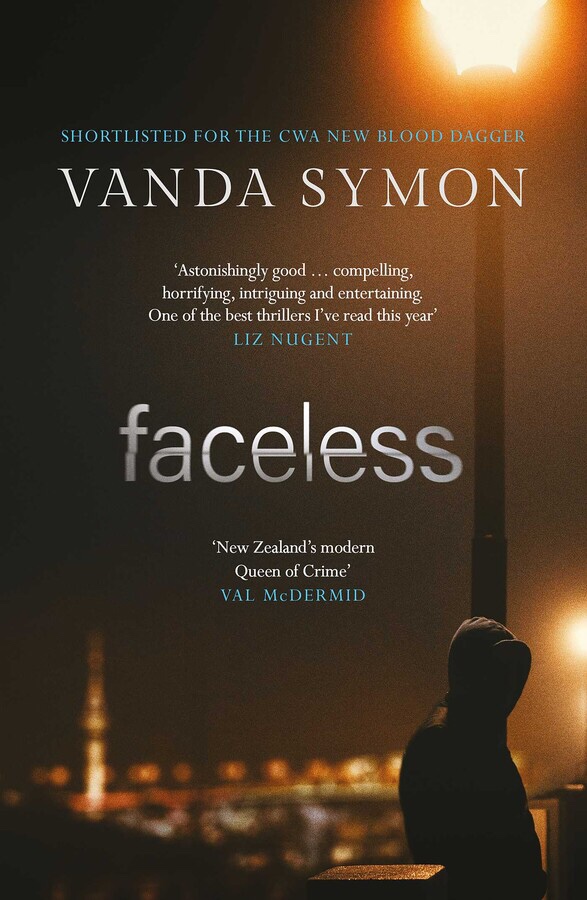
Faceless by Vanda Symon.

I devoured this fast paced novel set on the streets of Auckland and focused on a young street girl called Billy and a hardened homeless veteran called Max. Ever since Billy stumbled into the same doorway one cold night, she and Max have had a connection. He showed her how to use cardboard boxes to keep warm and where to find the best thrown out food. They have a pact to take care of each other and wherever they go in the day, they always make their way back to the same adjoining doorways at night. So, when Billy doesn’t appear one night, Max knows something is wrong. He needs to find her, but where to start in a city of this size and will anyone take him seriously?

Meanwhile, Billy has stumbled into the path of someone having a very bad day. Bradley is exhausted. Over-mortgaged, overworked and under appreciated, he is reaching the end of his tether. Having neglected his family all weekend to work, Bradley has been in the doghouse with his wife Angie. Yet it’s not enough for his boss who doesn’t seem to appreciate that five people used to do the same job Bradley is now doing alone. Bradley sees the prostitutes on their usual patch as he drives home, wondering idly what sort of man actually has the nerve to drive up and do it, to actually pay a woman to do what he wants. He wouldn’t have the nerve. Then he sees a young, tomboyish girl standing a little way from the others. She’s not a regular and he is less intimidated by her. So he picks her up and she directs him to an industrial area where no one will disturb them. He doesn’t know what impulse drives him to hit her, possibly the amusement in her eyes when he isn’t ready for her, but the feeling it gives him is better than anything he’s felt in a long time. There’s a rush of power and it’s intoxicating. So he takes her to an empty industrial unit he owns and using cable ties he makes sure she doesn’t escape. He might come back tomorrow.

Told from both Max, Billy and Bradley’s points of view in short chapters that prove rather addictive, the story unfolds of how both these people ended up on the streets and how an ordinary family man becomes a monster. I was constantly thinking ‘just one more chapter’ until I was half way through the story in my first sitting. I finished the book the next morning. The story is gritty. It doesn’t pull its punches when it comes to describing life living on the streets, or the realities of being kidnapped and left with nothing for your comfort. I could actually feel the cold, smell the mustiness of not showering for several weeks, and understand the shame of being left with no toilet facilities. It is vivid and because it’s a first person experience it’s very confronting in parts. I was so caught up in Max’s search for his friend, linked somehow to an old trauma and another young girl, and how desperate he becomes to have someone listen to him. So desperate that he has to overcome embarrassment and maybe even face whatever terrible experience has kept him running all this time. Billy is running too, but being alone and captive gives her ample time to explore what’s happened to her. Although it will take the police investigation to find out the full truth of Billy’s need to run. Through these two people we see just a couple of the reasons that people end up on the streets, but no matter why it’s a tough life that no one would choose unless they were desperate.

As for Bradley, he raises a lot of questions about the making of violent offenders, particularly those who commit crimes against women. Would anyone in Bradley’s position make the same choices he does? Or was there something latent in him, triggered by stress and what he saw as a girl from the streets looking down on him? He doesn’t fully understand the changes himself, all he knows is that the more he takes out his stresses and strains on Billy, the better he feels. He also seems to have regained his libido too, as he and Angie cavort like teenagers. He has just the right sort of happily married suburban man vibe to get away with what he’s done. I found myself rooting for Billy and whatever strength she could summon to survive just long enough for Max to find her. The visions of her grandmother are touching, providing context for Billy and an insight into her culture. Auckland is a strong presence in the novel too, from the rough, deserted areas where Billy creates her spray paint portraits of mythical women to the over-mortgaged suburbs where Bradley is lucky enough to live. We see the multi-cultural mix of kids hanging out in the park and the life of a suburban wife with their book club, exercise class lifestyle. It’s very clear that for most people in this life how you look and what you have defines you. Thankfully thats not the case for everyone and I loved Meredith, a snappy and intelligent detective who would rather wear heels than the regulation shoes. She looks beyond the surface and her investigative skills are the best, but she doesn’t have much to go on. Through her we get Max’s back story and her respect and trust in him doesn’t depend on his status – although she does insist on a shower. This book will keep you up at night to find out what happens to these characters. There isn’t a word wasted here and the pace is perfect. If you like your crime gritty, with great characterisation and empathy then this is for you. I loved it.

Meet The Author

Vanda Symon is a crime writer, TV presenter and radio host from Dunedin, New Zealand, and the chair of the Otago Southland branch of the New Zealand Society of Authors. The Sam Shephard series, which includes Overkill, The Ringmaster, Containment and Bound, hit number one on the New Zealand bestseller list, and has also been shortlisted for the Ngaio Marsh Award. Overkill was shortlisted for the CWA John Creasey (New Blood) Dagger.
Twitter @vandasymon, Instagram @vanda-symon, Facebook, @vandasymonauthor, http://www.vandasymon.com.

Posted in Publisher Proof

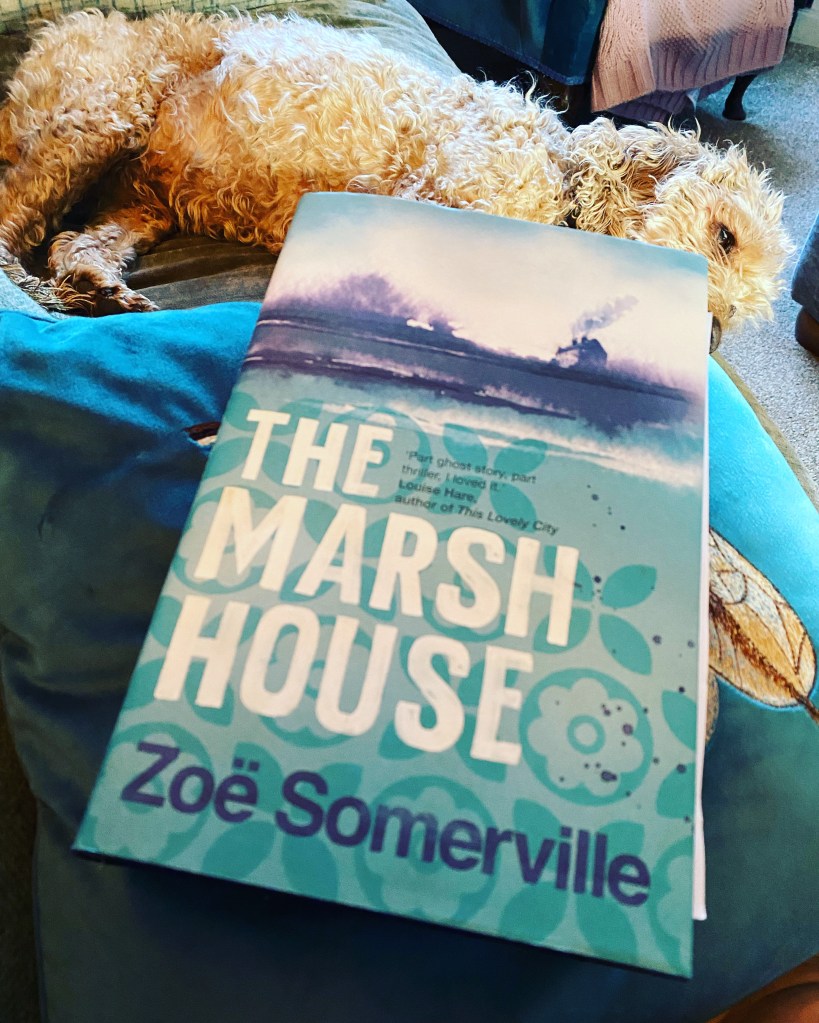
The Marsh House by Zoë Somerville

I simply loved this book. In fact, a finished copy arrived through the post and I started browsing the first page then couldn’t stop reading. So I read it straight through, finishing at 2am. It’s a split timeline story, beginning with Malorie and her daughter deciding to spend Christmas in a cottage on the Norfolk coast after an argument with her boyfriend. Malorie feels like a bad mother and wants to get one thing right – an idyllic holiday cottage Christmas for her daughter. Maybe if she achieves this one thing, she can convince herself she’s not as useless as she imagines. The sense of foreboding hits the reader immediately as the weather promises snow and Malorie becomes disoriented in the fog. She skids and ends up wedged into a hedge. The Marsh House itself is damp, dark and neglected. They cannot even see the sea through the mist. Malorie begins to wonder if this is a bad idea, but finds a pair of journals in the attic while searching for Christmas decorations, and she begins to read. Written by a young woman called Rosemary, who lived in the house, the journals tell a tale of a young woman’s crush on the boy from the big house. This young woman’s story paints a picture of 1930’s rural Norfolk, becoming a young mum and her husband’s link to fascism and Oswald Moseley in particular. Malorie can’t put the journals down, but alongside the house’s strange atmosphere, they are having an effect on her sleep and her state of mind.

I felt for Malorie straight away and her sprite of a daughter. Malorie is very hard on herself and has a negative inner voice, not helped by an over critical partner at home. Here she is capable, ordering logs and a turkey, rigging up a Christmas tree with vintage ornaments from the loft, and even managing real candles in their holders. However, even when she’s barely started the journals, the locals are giving her the house’s sordid history. That whiff of fascism becomes stronger when Malorie finds leaflets in the attic and the girl in the village shop asks if she knows what happened at The Marsh House? Tales of lost cocklers cut off by the tide that can still be heard screaming in the fog don’t help her state of mind. The house itself holds some scary relics too including a weird picture of women who perhaps lived here, one with bright green eyes that bore into you. I loved how the author drip fed these little bits of information, adding to the house’s history but also to the creepy tension that keeps building. It’s Malorie’s kinship with Rosemary, the writer of the journals, that drives the story forwards. The more she understands about the writer’s life, the more confused she becomes between fantasy and reality leading to some truly terrifying visions in the night. Why does she feel so connected with someone she’s never met who lived here thirty years before? Who is the strange woman with the large dog she sees from time to time, and why does she seem to be looking after the family by leaving logs to keep them warm?

I did enjoy Rosemary’s story too, her innocent crush on the boy from the family at the big house. She fantasises about what it would be like to have him like her too, to kiss her on the cheek and choose her above the more well to do girls in society. There does seem to be a part of him that is attracted to Rose, but she might also suit his purposes – a compliant country wife at home to keep the line going while he gallivants in London with Moseley’s social circle. Having read a bit about the Mitford sisters and Unity in particular, I had already known how popular fascism was in the ranks of the aristocracy and how some of our great country houses were used as meeting places for talks on appeasing Hitler. I hadn’t known of it’s hold in Norfolk and found this aspect of the book interesting. As time goes on and Rosemary is treated very badly by her husband it was clear that something terrible was going to happen, but the final revelations are truly shocking. I loved the way she delved into the complicated, emotional experience of becoming a mother. She opens up the inner world of these women, with their constant questioning of whether they’re good enough, or are they failing at this job we’re led to believe should come naturally? There is a special skill in weaving real historical events with fiction and this author is so talented and creative. She brings this area of England to life and makes the reader want to visit and search it out for themselves. The atmosphere was so evocative I spent two days with a ‘book hangover’ – unable to start another book because my emotions and senses were so embedded in Malorie’s story. I loved this so much I could have happily gone back to the first page and read it over again.

Published by Apollo 3rd March 2022

Meet The Author

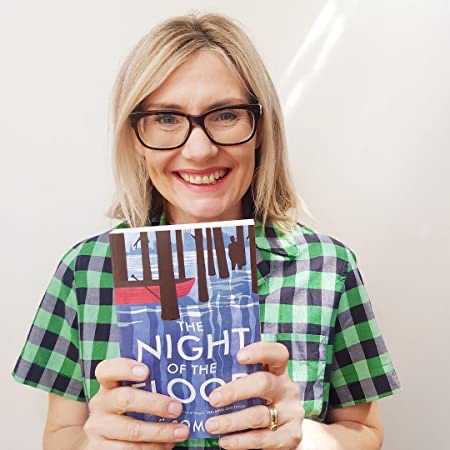
Zoë Somerville is originally from Norfolk, but has settled with her husband and children in the West Country. She works as an English teacher. Zoë began her debut novel, The Night of the Flood on the Bath Spa Creative Writing MA in 2016. It was published in September 2020. Her second novel, The Marsh House, a ghost story and mystery is published in March 2022. She is currently writing her third novel.

Posted in Random Things Tours

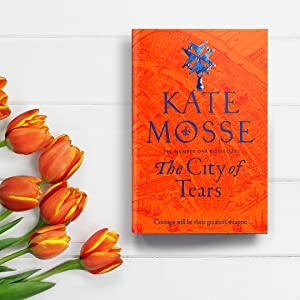
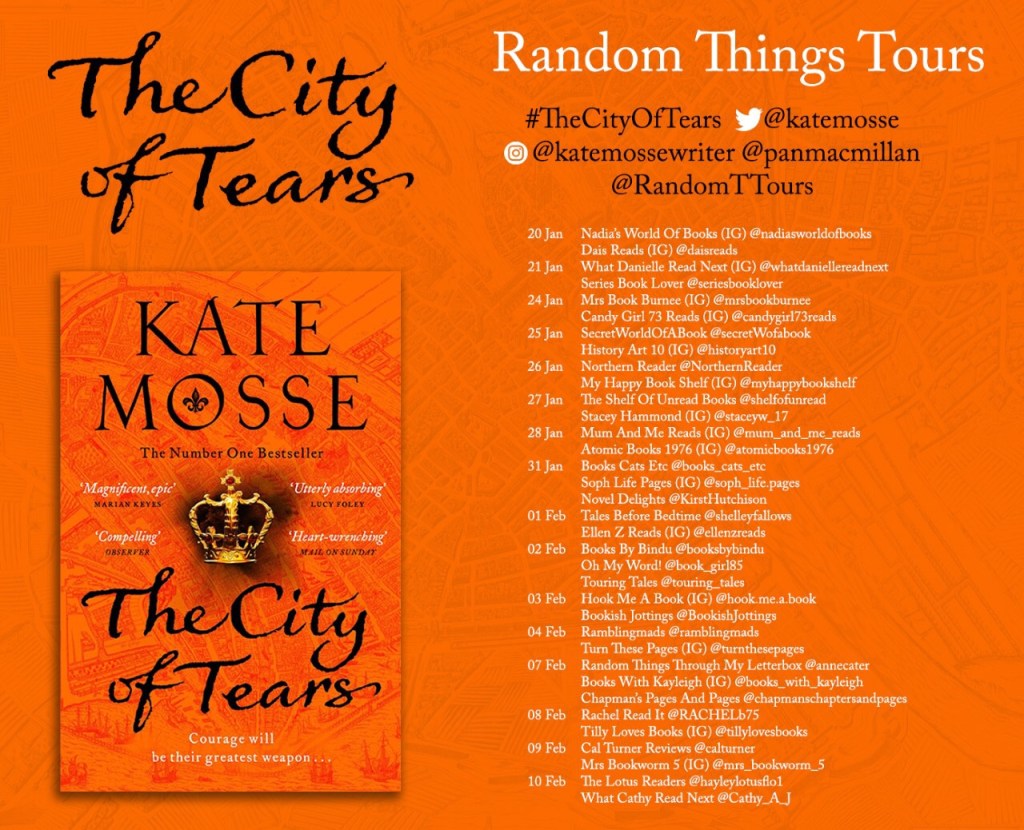
The City of Tears (The Burning Chambers 2) by Kate Mosse.

I’ve been reading Kate Mosse since Labyrinth all those years ago and I’m always impressed by the level of detail and knowledge of French history she weaves into her books. Every detail is considered and you have the impression straight away that you’re in safe hands. In The City of Tears she combines her fictional narrative with fascinating real events focusing on the Catholic and Huguenot conflicts of the 16th Century. This is the second book in the Burning Chambers series and I did choose to go back and read the first book. However, due to Mosse’s ability to immerse you in her world, I think this could be read as a stand alone novel. It continues the adventures of Minou Reydon-Joubert and Piet Reydon, characters caught up in a period beset by complicated religious and political wars. Mosse walks the tightrope between these warring factions carefully, illustrating that there is honour and corruption on both sides, but keeping the focus on the family at the centre of these conflicts.

We return to the Languedoc region of France and the wars have now raged for ten years. It’s May 1572 and Minou and Piet travel with their two children, Marta and Jean Jacques, to Paris for the royal wedding of Charles IX’s sister, Catholic Marguerite de Valois, and Protestant Henry III of Navarre. This wedding has the political and religious benefits of uniting both Catholic and Protestant factions, so could mark the start of peace, but it’s a fragile accord. Piet’s old acquaintance Cardinal Valentin (Vidal) is in Paris too, but he’s now an enemy, unbeknownst to Piet he has a plan to kill all important Huguenots during the celebrations. The terrible violence that follows was known as the St Bartholomew’s Day Massacre and thousands of Huguenots were murdered. Seven year old Marta is separated from her parents in the chaos and goes missing. It’s a parent’s worst fear, but unable to find her, Minou and Piet have to flee the city without her. The pair are devastated as they cross the border and make their way to safety in Amsterdam. I loved the way Mosse depicted the strain this decision places on the couple’s relationship. They have managed to ensure the safety of their two year old son, but are filled with guilt for leaving their daughter behind.

Minou and Piet only return to France twelve years later after hearing of a woman who bears a resemblance to Minou. Could it be Marta? They have to take a chance and search for their daughter, but danger is still everywhere. They don’t know that family enemy Vidal is there, with his collection of fake relics, that he intends to use with the ambition of gaining power and position. He believes Piet is in possession of a stolen relic and is driven by bitterness and revenge. His evil nature and conviction he is carrying out God’s work, is beautifully offset by Minou who is a strong willed and opinionated woman doing the best for her family rather than a religion. Piet is also more logical and open-minded, he’s a Huguenot by religion, but doesn’t believe there is only one way to God, particularly when religious difference is used as an excuse to oppress and murder. The couple’s return has raised the tension and jeopardy for all their friends and family, and Mosse delivers some suspense filled twists and turns where the hunted and hunter just miss each other.

I felt like I was in the hands of a master storyteller here. Mosse is able to bring historical fiction to life, and really makes the reader care about the lives of people long gone. She delivers the drama at such a pace, her characters barely have time to draw breath. The depth of her research is truly impressive, even if sometimes I found myself having to read very carefully so I didn’t become confused – but that’s my failing, not hers. The family are so well drawn I truly cared about their outcome and the dynamics between them are written with emotional intelligence. The character’s emotions feel so real and add depth to an already absorbing story. My heart broke for Minou at the loss of her daughter, and I was so invested in her grief that I couldn’t see how she would adjust to living without her. The strain they were under and the constant danger they’re in added an intensity to Minou and Piet’s relationship that was so romantic. Mosse’s incredible skill is to make the reader care about and feel a connection with people who lived in the 16th Century. They are so different to us in dress, daily life and beliefs but the themes of family, parenthood and loss are so universal that they cross the centuries. It will be interesting to see where these fascinating characters go next.

Check out the other reviews from these great bloggers:

Meet The Author

Kate Mosse is a number one international bestselling novelist, playwright and non-fiction writer. The author of eightnovels and short story collections –including the multimillion-selling Languedoc Trilogy (Labyrinth, Sepulchreand Citadel) and Gothic fiction The Winter Ghosts and The Taxidermist’s Daughter, which she is adapting for the stage –her books have been translated into thirty-eightlanguages and published in more than forty countries. She is the Founder Director of the Women’s Prize for Fiction and a regular interviewer for theatre & fiction events. Kate divides her time between Chichester in West Sussex and Carcassonnen in south-west France.

Posted in Random Things Tours

We Are Not In The World by Connor O’Callaghan.

‘The cargo door opens. It opens incrementally. It falls forward, away from us, into foreign day. There are men down there, stevedores in hi-viz and hardhats shouting to one another. I rotate the ignition to halfway, to check for evidence of light. The instrument panel flashes and falls still. There are chains. There is shrieking of iron like gates of hell. Then this fluorescence gradually floods the floor between rows and creeps towards us and feels warm.’

As soon as I read these lines, following Paddy as he and his lorry emerges from the ferry and out into the light, I knew the writing was going to be spectacular and that this was a poet’s novel. Paddy is travelling from England to France, with his stowaway daughter in tow. It’s hard to explain, but this is a book that manages to be both bitter and beautiful. There’s a bleakness to Paddy’s existence, but such a richness in the language used to describe it. It feels bang up to date too, despite the fact no pandemic is mentioned, the author captures a sense of unreality that is all too commonplace these days. The feeling that the world we know and understand has gone, and we are plunged into something other, like Alice down her rabbit hole. We Are Not In The World is an apt title indeed. We follow Paddy on his mundane journey, punctuated by graphic brief encounters and interactions with his daughter Kitty. However, we are also taken into Paddy’s memories of the past and into his relationships, which are largely disastrous. This is an intelligent rendering of psychological damage wrought within families. His marriage is broken, his brother is more successful than he is and there is a complex, almost Oedipal, relationship between him and his mother – also named Kitty. His daughter is wild and rebellious, and in another nod to Paddy’s mother, she wears her gran’s mink coat at all times.

This is not an easy read, but the right readers will love it. Having searched out some of the author’s poetry, it’s clear that the novel touches on some of the same themes. Family and sibling rivalry are represented in Paddy’s relationship with his brother. There’s a jealousy of his apparent successes, but Paddy has still made him the godfather of his daughter. There’s a sense that family is inevitable and no matter how much we wish to escape it we can’t. Separation is explored too – separateness from the land where he grew up, from family and even from his own self. There’s a sense of wanting to be home, but not being able to and the feeling of homesickness that pervades Paddy’s daily existence. He describes it as like a ‘low level virus’ that he permanently lives with. To me it felt like a low-level depression, one that would drop under the radar of most GP’s charts, but is debilitating nonetheless. There’s a numbness in Paddy. He’s on auto-pilot in his daily life, only living in his head until an interaction jolts him out of his memories. The separateness he describes is something I’ve felt when depressed or going through grief. I was physically in the world, but felt no connection to my surroundings or other people. It was like looking at the world through glass.

The only thing Paddy seems to look forward to is some sort of homecoming. He looks at the family home of Tír na nÓg as both a rose-tinted past and a future redemption. Situated on a shingle beach in Ireland, it feels like his chance of happiness or at least a respite from the homesickness that plagues him. Can it be a place of things coming full circle? A completion of this endless mental push and pull between past and future. It feels like a pipe dream, far removed from the reality he’s in and the way he thinks about certain family events, referred to by him and Kitty as ‘the thing we never mention.’ There are times when I wondered if Kitty was real, or whether her birth from the hiding place of his bunk behind the cab was purely metaphorical. I had moments of confusion, moments of being unsure how these fragmented memories and feelings fit together. I was even unsure of what was real and what was imagined occasionally. However, I loved the feelings it induced in me and the sheer beauty of the prose. There’s a haunting quality to the novel that will stay with me. It was a reading experience that I let wash over me, rather like listening to an opera or viewing a beautiful painting. This is for those readers who like their novels to be strange, and bleak, but beautiful at the same time.

Published by Doubleday 18th February 2022

Meet The Author

Conor O’Callaghan is originally from Dundalk, and now divides his time between Dublin and the North of England. His critically acclaimed first novel Nothing on Earth was published by Doubleday Ireland in 2016.

Posted in Publisher Proof, Random Things Tours

Demon by Matt Wesolowski

I was fascinated and blown away by this sixth novel in the author’s Six Stories series. As always the novel’s structure is based on a podcast format, where Scott King presents his investigation into a true crime case. Each podcast consists of six stories told by six people associated with the case, with additional emails, news reports and documents on the crime. This time King has chosen a highly emotive crime that reminded me of the James Bulger case. The novel takes us to the old mining village of Usslethwaite in Yorkshire, where a terrible crime was committed, one that shocked the world. In 1995 the murder of twelve year old Sidney Parsons, by two boys his own age, was front page news. The murderers were dubbed the ‘Demonic Duo’ by the press and as well as the usual speculation about both the boy’s upbringing and mental state, there was a whisper of something more sinister. The hills above Usslethwaite were reknowned as a place where witches congregated, all the way back to the 17th Century when witch-hunting was rife. Rumours of something dark and disturbing lurking in the caves near the crime scene had plagued the village for centuries, as well as more contemporary plagues of flies, animal deaths and a strange black shape seen nearby. Is there something supernatural and demonic about this crime? Or are they just hysterical excuses for a crime so savage no one can understand it? Now that the murderers have reached adulthood, they’re quite possibly rehabilitated and living somewhere in the U.K. Maybe now it’s time to hear the truth about what happened when Robbie and Danny formed a friendship and proceeded to commit this unspeakable crime.

I love the originality of this author’s work and his audacity in writing about subjects other writers might avoid. I was 20 years old when Robert Thompson and Jon Venables lured James Bulger away from his mother at a Liverpool shopping centre, then murdered him and left him on the train line in Walton. Everything I remember from that case also comes up in the course of King’s interviews about Usslethwaite. I remember being shocked by the murder, the age of Thompson and Venables, but also the savagery of the press and public towards the accused who were still children. Whilst the anger the crime aroused was understandable, I couldn’t understand grown men gathering outside a court to attack the prisoner transport. I kept wondering what their goal was. What would they do if they actually broke through to those boys? Even now, the mention of either boy, their incarceration or the new lives they now have kicks up a frenzy of controversy and rage. While Demon isn’t based on the Bulger case I did wonder if Wesolowski had it in mind, because he has managed to capture a lot of those conflicting feelings in this novel. Through his podcast guests we can look at different aspects of the Usslethwaite murder, and consider the differing perspectives on what happened. Although there is outrage that Scott King is even featuring this case, I can see that all he is trying to do is answer that universal question: Why? What drove these two boys to kill?

The psychological and paranormal aspects of the case are carefully intertwined here. Robbie is a newcomer to the village, fostered by a lovely, community minded couple who haven’t been able to have children. There is speculation on what Robbie went through before he was taken into care and whether he is the disruptive force behind the crime, with Danny simply taken along for the ride. However, Danny is quite a sad, lonely and disturbed little boy even before Robbie comes along. He found his mother when she had hung herself from the rafters of the barn. Rumours abound about his mother who was a herbalist and reiki healer – something rather frowned upon and misunderstood by some members of the village. In fact she was well regarded by her patients and it could be said that the suspicion was raised due to her occupation and how lucrative it seemed to be, more than anything she did. There were reports of her coming down from the caves with another person, scandalously naked. She was also thought to set fires and dance around them. However, to Danny she was the parent who brought warmth, love and softness to his life. Without her, he is left in the care of his father who is not a bad man, but is absorbed by work and struggles to show affection. Danny visits the caves to speak to his Mum, and thinks he might hear her, but in this dark place it’s hard to know who or what might reply.

The author is incredibly skilled at ratcheting up the tension, whether with more detail of the case or the next eerie happening. I often found myself reading yet another chapter so I could find out what was next. I found the paranormal elements clever, I wasn’t scared at first, but after a while the atmosphere built and I found myself uneasy. One night, my other half asked me to turn the bedside light off since it was late and I found myself unsure whether I wanted to carry on reading in the dark. The strange happenings in Robbie’s room at his foster home were very unsettling, from phantom footsteps to flies and a horrible smell that seems to permeate everything. There’s so much in this village that can’t be explained and is witnessed by lots of different people. Were these boys influenced by demons or was this a case of two very mixed up and lost boys doing something so terrible it would destroy the village, the victim’s family, and the rest of their lives. I loved the varied perspectives, especially those unexpected ones that took our understanding to another level. While never losing sight of the victim and his family’s loss, we get to explore the ideas of rehabilitation and how a perpetrator lives with their crime, especially ones so young. Can they ever make a life for themselves and get over the guilt? Or are they forever doomed to keep moving, constantly looking over their shoulder for fear of being exposed? I was fascinated with the question of whether a demon influenced these boys or whether we could call the boys demons. They are labelled monsters, but are they? Perhaps we just label them this way, because we can’t accept one human being could do this to another, let alone a child. This is another incredible read from this inventive and original author. I devoured it so quickly that I’m buying the whole series with this month’s book budget.

Meet The Author.

Matt Wesolowski is an author from Newcastle-Upon-Tyne in the UK. He is an English tutor for young people in care.

‘Six Stories’ was published by Orenda Books in the spring of 2016 with follow-up ‘Hydra’ published in the winter of 2017, ‘Changeling’ in 2018, ‘Beast’ in 2019 and ‘Deity’ in 2020.

‘Six Stories’ has been optioned by a major Hollywood studio and the third book in the series, ‘Changeling’ was longlisted for the Theakston Old Peculier Crime Novel of the Year, 2019 Amazon Publishing Readers’ Award for Best Thriller and Best Independent Voice.

‘Beast’ won the Amazon publishing award for Best Independent voice in 2020.