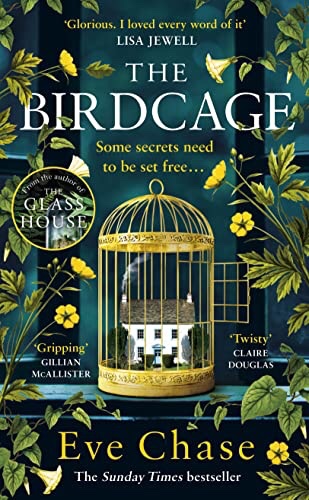
Eve Chase’s new novel had all the ingredients of a perfect read for me – quirky bohemian family, unconventional artistic father, large Cornish house and family secrets that have haunted his daughters for years. It’s the psychological impact of these family secrets that really make the novel. The story is told in a dual timeline, in the present Lauren, Kat and Flora are returning to Rock Point, her father’s mansion house on the Cornish Coast. He has invited them after many years away from the house, following a terrible incident that occurred on the day of the eclipse in August 1999. The events of this day are told in our second timeline. Lauren is the youngest by a few years, and on that day she was an adolescent , while her half-sisters Flora and Kat are older teenagers. Each girl has a different mother and their overlapping ages show the sexual profligacy of their father Charlie, a well-known artist. As he sits down with his three adult daughters, Charlie has a big announcement for them. The girls are expecting an illness or plans concerning his artwork, but they have a shock in store.
The complexity of this family’s relationships is at the core of this novel and I really enjoyed going back in time to work out why and how each woman’s personality was formed. On the surface Flora is the most conventional sister, with a husband and young son Raff, but is everything at home as happy as it seems on the surface? Kat is the most career minded sister having developed a well-being app. She is constantly checking her phone and looking for a reliable signal so she can work, but is she just busy or is the world of well-being more stressful than it should be? Lauren has had the most recent difficulties in life, nursing her mother Dixie who was terminally ill. After moving into a local hospice Dixie died, and although Flora invited her for Christmas Lauren didn’t come. These women are anxious to be together again. Flora and Kat used to tease Lauren, even bully her a little bit. The reasons for this become clearer, but Lauren has always thought it was about Dixie. Dixie was different to me 6 hCharles’s usual choice in women, she was unadorned apart from piercings, kept her hair shorter and was artistic in her own right. Indeed Charlie is touchingly affected by her death and seems to regard this separation as something he most regrets in life. Each sister’s personality fits perfectly with their back story: Flora’s hesitancy and submissive nature; Kat’s avoidance and distraction, creating workaholic tendencies; Lauren’s phobias, which are usually under control, but thanks to Bertha the parrot and the wealth of seabirds surrounding their home it can be a problem. The parrot has other tricks as well, mimicking the house’s occupants with phrases that only one person knows are true or false.
I thought the pace was clever, becoming more urgent in the past and present day at once propelling the reader towards the eclipse event and the effect of it’s revelations in the present. What was particularly clever was the way some people are only revealed in all their complexity, in the present. Angie, who worked as their au pair, was disliked by Lauren when she was a child. Lauren sensed her duplicitous nature and knew she wasn’t really there for them, describing her as hungry to get to Charlie like an art groupie. However, as an adult Lauren can see that this was more complicated and how she didn’t understand adult relationships. There’s a shift in years and awareness, where Lauren and her sisters can now see that Charlie wasn’t just a man beleaguered by women throwing themselves at him. He is an active participant in these complicated affairs and in bringing these girls into the world. He’s even passive at their visits, always pleased to see them but never negotiating with exes, or organising the logistics. Their gran does all the work, leaving Charlie free to paint in his studio, a place where only his models and Lauren are welcome. He’s never taken responsibility for his actions and as events unfold it’s possible that those actions have created a perfect storm of sibling jealousy and conflict.
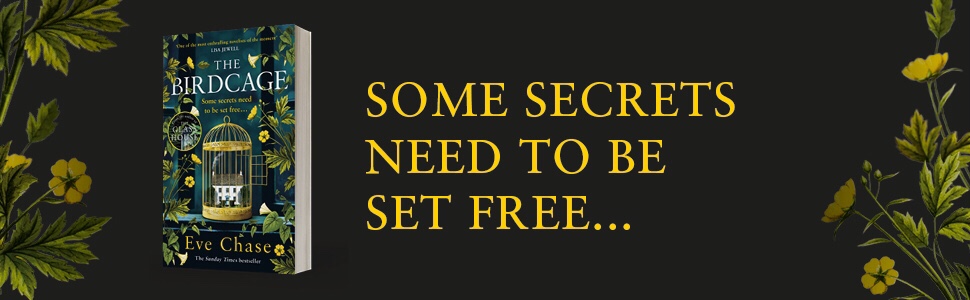
That eclipse summer, Charlie has asked his three daughters to sit for a painting with the large ornamental birdcage. It’s the painting that will become his most well known and most valuable, in fact the girls are sorry it’s gone to art collector because as far as they know it’s his most personal. There’s a wealth of imagery in this painting, starting with the three sister’s pose, sitting together but not touching, like three separate islands. There’s the solemnity behind it too, the girls are not talking or cracking a joke and all three are staring out towards the viewer. Or is it towards the painter? In feminist readings of visual arts the bird within a cage represents the imprisonment of women, but also the gilded frame through which we view femininity. We can’t know the painter’s intention, but by painting it next to his daughters is he acknowledging their freedom? Or could he be pointing out a sexual double standard? He has been free to create these overlapping lives without censure, whereas their mothers and the girls have borne the gossip, shaming, poverty and hardship that comes with being a single parent. They’ve had to hear the whispers and insults about their morals, while he has been free to carry on with only the reputation of being bohemian to his name. Or could the birdcage contain his secret? The consequences of this secret we see on eclipse day, although it isn’t fully revealed until the present when it puts Lauren and her nephew Raff in danger. Only then will Charlie have to deal with how his behaviour has affected others, like ripples on a pond. This was an engaging tale of complex family ties and the psychological effect of a parent’s action. It has all the bohemian glamour of a country house occupied by an artist and a gorgeous atmospheric setting in beautiful Cornwall. I was gripped to the final page, having felt an affinity with Lauren and Flora I wanted to know how their stories turned out and the epilogue brings a satisfying ending to this family saga.
Published by Penguin on 28th April 2022

Eve Chase is an author who writes rich suspenseful novels about families – dysfunctional, passionate – and the sort of explosive secrets that can rip them apart. She write stories that she’d love to read. Mysteries. Page-turners. Worlds you can lose yourself in. Reading time is so precious: I try to make my books worthy of that sweet spot – she says on her Amazon.com author page.
Her office is a garden studio/shed with roses outside. She lives in Oxford with her three children, husband, and a ridiculously hairy golden retriever, Harry. She invites readers to say hello. ‘Wave! Tweet me! I love hearing from readers’.
Eve is on Twitter and Instagram @EvePollyChase and on Facebook, eve.chase.author.