Posted in Netgalley

Small Angels by Lauren Owen

I love a gothic novel, something I put down to my first reading of Jane Eyre. Being only ten years old I read it as a ghost story, full of horrors like the Red Room and the haunted ghost-like creature stalking the corridors of Thornfield Hall, setting fire to Rochester’s bed and rending Jane’s wedding veil in two. So I picked this from the NetGalley shelves, my brain already turning towards the cooler air of September and the dark nights of the autumn. As it is I read it in the middle of a heatwave, but it still managed to send the odd chill up my spine. Chloe and Sam are getting married at Small Angels, a quaint little church in a wooded area with nearby Tithe Barn for their reception. The venue is situated near to Sam’s childhood village and they are the first couple to be married there. The owner has given them a key and they have a few days up to the wedding day to clean the dusty church and decorate both buildings. They’re staying at the Albatross, the village pub, and on the first night they gather to have a drink with their guests among the locals. One local man, Brian, approaches the couple to tell them a story about Small Angels that might make them rethink their plans. Others are more reticent, they don’t want Brian to tell the tale and ruin the couple’s big day. What Sam doesn’t know is that the person best placed to tell this tale is his own sister Kate.

We’re told this story from several perspectives and to be honest I did get a little confused at first. The current perspectives are split between Chloe and Kate. However, Kate also goes back to when she was a child and started a friendship with one of the Gonne girls. The Gonnes lived on a farm, close to Small Angels and Mockbeggar – the local woodland. For years they have kept up a ritual of lighting beacons every evening and ringing the church bells once a year, followed by a candlelight vigil overnight. The rest of the village have traditionally left the Gonnes to their lonely rituals, but Kate knows that the story Brian will tell the wedding party, might not be so far fetched. The Gonnes believe they are appeasing the ghost of Harry Child, a vicious and vengeful phantom who wants to keep the wood for his own, but is also very lonely. Kate is shocked to hear that one of the sisters she knew from childhood is living at the farm. Will all the generations of secrets surrounding the village come to light on her brother’s wedding day? Kate questions her brother’s sense in agreeing to hold it at Small Angels, no matter how much Chloe fell in love with it.

Chloe takes up the narrative, as the innocent bystander thrown into this strange village with it’s spooky history. Chloe has been the driving force behind the week’s celebrations and has no idea of the story Brian tells on the Hag Night. She is amazed that Sam has never told her and has thought Kate doesn’t like her because she’s seemed disinterested in their plans. She’s surprised that Kate has committed to helping out this week, not realising that she’s coming to keep an eye on things. The tension in this section is brilliant as we see Chloe sucked in by the legend and looking for local history at the library. She’s confused by the villagers avoidance of the subject, even her own in- laws are reluctant to discuss it. Chloe start to find her sleep disturbed and with Sam called away to work she’s alone at the Albatross. She can’t shake the feeling she’s being watched after taking a walk into the woods. While cleaning the church she hears an animal scratching at the door, then again at night. Has something or someone followed her? I was intrigued as to what it might want from Chloe and whether the wedding would ever happen.

The Gonnes seem to be the key to solving this mystery so I was fascinated with Lucia’s sections of the book, especially those that go back to her childhood. She lives at the farm with her father, her grandparents and three sisters: Elphine, Helena and Ruby. One day while playing, Lucia goes into the woods and finds a small boy to play with. He becomes her secret friend and his name is Harry. With all the adults working on the vines at the farm and keeping up the family rituals, it’s easy for her to slip away unnoticed. Besides she’s the black sheep of the family, Nan calls her Lucia the Bad, so I felt sorry for her and could understand why she was looking for friends. Years later she meets another teenage girl in the woods and is happy to have a second friend, but Harry isn’t so happy. He wants Lucia to himself and she’s never seen him angry. All the rituals in the world won’t satisfy his wrath and Lucia is terrified. What will happen to the Gonne family now?

As we countdown to the wedding the stakes become greater and the author creates a real sense of fear and horror. Whatever force is in the woods, it’s growing stronger by the day. The real cost of the wedding starts to become clear and I loved how the author brought experiences from the past into the present to terrify the wedding party. I had a real sense of my old Jane Eyre fears when Chloe wakes from a nightmare to find a tear in her wedding dress and her veil fashioned into a noose. I really felt the burden of the Gonne family, ostracised by the village and left with the responsibilities of Mockbeggar. Once I’d reached a third of the way in, I was hooked on the mystery in the same way Chloe was, wanting to find out more about the malicious spirit and why he is determined to terrify her. I was also fascinated by the Gonne sisters and why Lucia is the only one left at the farm. I was also interested in how long the locals had kept their heads in the sand, merely speeding up on the road out of the village to evade the woods. You’ll be asking all the same questions and more. This is a really atmospheric, modern, Gothic tale with enough scares that I kept the bedside light on once or twice.

Published by Tinder Press 2nd August 2022

Meet The Author

Lauren Owen is the author of THE QUICK and SMALL ANGELS. She studied at St. Hilda’s College, Oxford, holds an MA in Victorian Literature from Leeds University, and an MA in Creative Writing from the University of East Anglia, where she was awarded the Curtis Brown Prize. In 2017 she completed a PhD in English Literature with a thesis on vampires and the gothic in fiction.

Posted in Netgalley, Publisher Proof

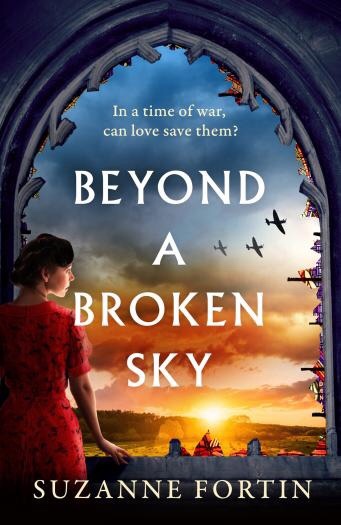
Beyond a Broken Sky by Suzanne Fortin

Beyond A Broken Sky by Suzanne Fortin

I’m a big fan of historical fiction and Suzanne Fortin cemented her place as an author to look out for when I read her debut novel The Forgotten Life of Arthur Pettinger. Her combination of time-slip narrative, history and romance is irresistible. I’m interested in the stories people don’t tell us about themselves and the years spent at war often feel like a parallel dimension where people and stories were lost. People died, became displaced, or were simply too traumatised to relive the events of those years. For many, their ordinary every day lives stopped in 1939 and they lived a completely different life away from friends and family, with a new occupation and a changing sense of self. They could act completely out of character in the high pressure of combat or became worn down by the difficulties of being a civilian in a bombed city, living on rations and making new friendships with the unlikeliest people.To then return and pack everything that’s happened neatly away to restart where you left off seems impossible, but many people did. How often do we hear people say that their father or grandfather never talked about the war? My own father-in-law had been sent to a Russian work camp in Siberia, because his father was in the military. His brother didn’t survive, but he and his Mum escaped and lived in a forest camp with the Polish resistance, gradually walking their way down through the Middle East, across Northern Africa and into Europe and eventually England. I would never have known this incredible story if I hadn’t seen a photo of him as a boy, standing in front of the pyramids. My mother-in-law was a child in the Warsaw Ghetto who escaped through the sewer system. Yet neither dwelled on that life, preferring to look forward where life was less painful. Suzanne’s novels fill that gap, that silence where someone’s experience is perhaps too painful to share. She writes these stories that are often complex and present something new about the war, and about people, that I hand’s thought of before.

It just happened that I’d read Ruth Druart’s The Last Hours in Paris and Joanna Quinn’s The Whalebone Theatre very recently, both of which included characters who were enemy prisoners of war, brought to English camps, but often released into the community to help out farmers or do other work that helped the Allied war effort. Some of these men waited up to three years after the war ended to be returned to their homeland and working within communities led to friendships and relationships with some British people. In Fortin’s latest novel we are taken to Somerset in 2022. Telton Hall is the home of Jack Hartwell, a farmer in his eighties, trying to come to terms with the compulsory purchase of his land and home. Rhoda Campbell is a stained glass expert and restorer, visiting to look at a stained glass window designed by POW Paulo Sartori. She works for a museum that conserves old historic buildings and they hope to move the whole chapel and window to their site. However she finds Jack blocking the driveway in his tractor, in the hope of delaying a little bit longer. It takes Rhoda’s charm and the arrival of his son Nate to get things moving again. As the three of them look at the chapel, Jack’s terrier disappears down a gap between flagstones. Rhoda lays on her front to see where he’s gone and makes a terrible discovery, human bones buried underneath the flagstones. This puts in place a chain of events that reaches all the way back to WW2 and has an effect on Rhoda whose own brother is a missing person.

The story alternates between 2022 with Rhoda’s urge to investigate the mystery she’s uncovered and back to the end of WWII when a young woman called Alice Renshaw finds herself pregnant to an American airman, Brett. As she prepares to marry Brett at the village church, Alice is so happy even though it’s an uncertain future she faces, possibly over in America. However, Brett doesn’t turn up at the church and thanks to his father’s connections he is transferred out of the country immediately. Alice is heartbroken. A few weeks later she’s at Telton Hall, where Louise Hartwell takes on young girls ‘in trouble’ and finds homes for their babies with couples who can’t have children. Louise is also still running the farm, with the help of Jack who is ten, his step-brother Billy, who needs to walk with a stick after being wounded. There are also two Italian POW’s helping with the produce gardens, one of whom is Paolo Sartori. Every time the book delves into the past we hear a little more about the story of Telton Hall, the diverse characters staying there and the connections they form with each other. Each time we go back to WW2, we’re getting closer to the answers and the tension builds, while in the present those that would like Rhoda silenced, come ever closer.

I was gripped by the drama of Telton Hall in the 1930’s and desperate for the hateful Billy to get his just desserts before he can permanently hurt anyone. In the present I was convinced I wouldn’t like the answers to the mystery. I was worried that it would have an impact on characters I’d become attached to, who might have only acted badly due to the extreme circumstances. The ending was a surprise and gave me the answers, as well as putting a smile on my face knowing that there was a happy ending for some. I loved Alice’s ability to trust and love after her experience with Brett. I felt the author really captured that sense of displacement and dislocation that many felt during the war, their separation from ‘normal’ life and the way their actions within that time had repercussions for years to come. Ultimately, the story shows us the amazing ability we humans have to heal, our incredible resilience and capacity to love. This could manifest in holding on to a love that won’t die or in finding we have an endless capacity of love, even when our experiences have shown us a depth of loss that seems insurmountable. For Rhoda it means the possibility of letting love in, despite having no blue print of family life from her own childhood. This book is heartfelt and moving, showing us that like Rhoda’s stained glass we are made up of many parts, each experience and influence adding together to make something uniquely beautiful.

Published on 22nd July by Aria

Meet the Author

Suzanne writes historical fiction, predominantly dual timeline and set in France. Her books feature courageous women in extraordinary circumstances with love and family at the heart of all the stories. 

Suzanne also writes mystery and suspense as Sue Fortin where she is a USA Today bestseller and Amazon UK #1 and Amazon US #3 bestseller. She has sold over a million copies of her books and been translated into multiple languages.

Posted in Netgalley

The Blackhouse by Carole Johnstone

I loved this dark thriller from acclaimed author of Mirrorland Carol Johnstone, with its bleak setting, mysterious deaths and Norse folklore. Maggie Mackay is a successful investigative journalist, but has always been held back by a negative inner voice and terrible nightmares. She’s been haunted by the idea that there’s something wrong with her and she can see or sense darkness. She thinks this feeling is linked to her childhood and a small village in the Outer Hebrides called Blairmore. Maggie stayed there with her mother when she was very young and caused a furore when, out of nowhere, she claimed that someone in the village had murdered a man. She left the community in uproar, saying she was really a man called Andrew MacNeil who had lived in the village on the island of Kilmery. Her mother believed and encouraged her claims, but when they returned to the mainland this strange interlude wasn’t referred to again. Now 25, Maggie returns to the island, in search of answers. Mainly, she wants to find out if her claims could possibly have been true, but with her history on the island, Maggie may struggle to get people to talk to her. However, this is an island with few inhabitants, but a wealth of secrets and if Maggie gets too close to the truth she may be in serious danger.

Kilmery is sat across a causeway from Lewis and Harris, and the author makes this incredible place a real character of it’s own. It’s isolated position reinforces the feeling of loneliness that surrounds Maggie. She roams around the island, often alone and there were times she felt like an easy target, especially to someone who knows the terrain better than she does. Shipwrecks litter the coast and the author’s description of a ship coming to harm one stormy night enhances that feeling of danger.

‘It wasn’t the screams he remembered the most, although they crashed to shore inside the howling, furious wind and ricocheted around the high cliffs above the beach for hours. It wasn’t the storm or the roaring, foaming waves that carved great snaking wounds through the wet sand and stole its shape from under his feet.’

For Maggie, the island is changeable and I felt the way it was viewed echoed the journey she’s on through this dark, dangerous investigation to the hint of a possible brighter future. The wind, fog, and storms lashing against the rocks are unnerving, but there are places that Maggie finds peace. At the Oir na Tir standing stones, even with the wind and rain driving against them, Maggie senses their permanence. This is something that won’t be moved and stands like a sentinel, weathering every storm that’s passed over them. This is the kind of permanence Maggie wants in her own mind, a sense of peace that stays despite what life throws at her. Then there’s the meadow, shown to her by Will, one of the locals she befriends.

‘At the bottom of the hill is a vast green meadow stretching as far as the eye can see. It’s gorgeous, dotted with silver-still lochans, gold winter heather, and boulders covered in moss and orange lichen. It opens something inside my chest, precarious and fragile; a sense of longing that I suppose is awe or wonder. At this uncannily beautiful place full of a light and colour so at odds with the bronze desolation of those inland bens and glens […] I can feel the sting of ludicrous tears, and blink them away.’

This is machair, a type of dune grassland formed by sand and broken shells blown over from the beach. In opens up a sense of wonder in Maggie, like the childhood awe we have for Christmas and it’s magic. It’s almost as if this piece of the landscape connects her to the child she was before all of this happened. Can she trust it though?

I loved the link to the supernatural and Norse folklore, particularly the idea of ‘thin places’, something I’ve had a feeling about before. As an avid reader of the Outlander series, this ability to move into a different time or experience a haunting feels synonymous with Scotland. Old fisherman Charlie, who decides to talk to Maggie about the past, describes a thin place as where the space between this and other worlds is the shortest. The chance of seeing, knowing or feeling something from another world is high. There’s superstition within the fishermen, who never say a prayer aboard a boat, but douse it in whiskey and salt or even use burning rags to cleanse every corner of the boat, rather like smudging using sage twigs. It’s the ‘Vándr-varði’ that feel really disturbing, left anonymously outside The Blackhouse, where Maggie is staying. They’re mummified crows, old Norse talismans to guard against evil, but Maggie doesn’t know whether they’ve been left to protect her or whether she’s the evil that needs to be kept at bay. All of this superstition adds to the mystery Maggie is trying to solve, but she wonders whether it’s meant to spook her and warn her off the truth. The tension keeps building and by the time Maggie has a midnight visitor, my heart was racing.

The central mystery is fascinating and makes the book very difficult to put down. Charlie feels like the designated spokesperson for the islanders, he approaches Maggie with an apology for the way they treated her when she was a child and there’s a fatherly feel to the way he talks to her. On one hand I felt he was on Maggie’s side, but I also wondered whether he was a decoy – someone sent to give her just enough information, perhaps to deflect her from the reaching the truth. Other people greet her with outright hostility and I had a lot of admiration for Maggie’s tenacity considering how vulnerable she must feel, staying on the island as a lone woman. Maggie also has a bipolar diagnosis and I thought this was well portrayed by the author, even though it adds another layer of uncertainty – can we trust what Maggie is experiencing? I found Maggie’s narration more compelling than the male narrator, but overall loved the pace and the different perspectives that give us an insight into events back in the 1970’s. There were twists I didn’t expect and the final revelations about the mystery felt satisfying. I love how this author likes to wrong-foot her reader and although this was more gothic than horror, there were parts that were very unsettling and left me listening out for creaks in the dead of night. I came away from it with an uneasy feeling, not about the supernatural aspects, but more about what humans are capable of doing and how isolated communities like this one have the perfect environment in which to plot and keep secrets, in some cases for decades. This cements Carol Johnstone in my mind as an author to look out for and I will be buying a finished copy of this book for my collection.

Published 4th August by Harper Collins UK

Meet the Author

Scottish writer Carole Johnstone’s debut novel, Mirrorland, will be published in spring 2021 by Borough Press/HarperCollins in the UK and Commonwealth and by Scribner/Simon & Schuster in North America. 

Her award-winning short fiction has been reprinted in many annual ‘Best Of’ anthologies in the UK and the US. She has been published by Titan Books, Tor Macmillan, Simon & Schuster, and PS Publishing, and has written Sherlock Holmes stories for Constable & Robinson and Running Press.

Posted in Netgalley, Publisher Proof

Meredith Alone by Claire Alexander.

This was one of those books where it only took a couple of pages for me to be ‘in’ the author’s world and completely convinced by her main character. Meredith hasn’t left her house for more than a thousand days, but her inner world is so rich and full. She was absolutely real to me and I could easily imagine having a coffee and a catch up with her. We meet her at a crossroads in life. She’s trying to make changes. Her daily life is quite full, she works from home as a writer and between work she bakes, exercises by running up and down the stairs, reads and fills in jigsaws of amazing places from all over the world. The jigsaws are the key. Meredith doesn’t stay inside from choice, just standing outside her front door gives her a wave of rising panic. Meredith feels a terrible fear, her heart starts hammering out of her chest, her throat begins to close and she feels like she’s going to die. However, as she looks at yet another jigsaw of something she’d love to travel and see in person, she becomes determined to live a fuller life. Meredith has sessions with an online counsellor and a new addition to her weekly calendar is a visit from Tom, who is a volunteer with a befriending society. With this support and that of her long time best friend Sadie, can Meredith overcome her fear and come to terms with the events behind her phobia?

The author tells Meredith’s story on a day by day basis, with the amount of days she’s spent indoors at the beginning of each chapter. There are also flashbacks that take us to Meredith’s childhood, living at home with her mum and sharing a room with big sister Fi. Underpinning her childhood is such a well-constructed tale of psychological dysfunction. Of course all families are dysfunctional in their own way, but Meredith’s broke my heart. Her mother is inconsistent in the way she treats her daughter, as Fi later says, their mother was horrible to both of them, but saved her fiercest venom for Meredith. She would insult her youngest daughter’s dark hair and withheld medical attention when Meredith developed eczema. She tells her itchy, uncomfortable child that she has faulty genes and it takes Fi to engineer a visit to the GP without their mother knowing. Meredith can remember happy times or at least times where she felt safe, such as a memory of being freshly bathed and drying off in front of the fire with hot chocolate. Fi and Meredith lie in bed at night conjuring up a future where they leave home and get a flat together, finally leaving their Mum to her bitterness and the alcohol. If it’s true that our self image is made up of those rules our parents tell us about ourselves and life, then Meredith is left with low self-esteem, no sense of security and the sense that she is strange or tainted in some way. It’s a recipe for mental ill health and it’s amazing that Meredith grows into such an intelligent and kind-hearted woman. It’s even more amazing that it’s Meredith who has the strength to leave.

I truly enjoyed the friends Meredith manages to make along the way and the resourceful way she tries to make herself part of the outside world from her living room. She chats in a forum of people struggling with their mental health and Celeste becomes a particular friend, even going as far as visiting Meredith and cementing their friendship in person. I loved how her befriending visits with Tom develop, because at first Meredith is slightly suspicious of his motives and keeps the extremities of her condition to herself. They have a drink together and stay in the kitchen doing one of her jigsaws, but soon they’re baking together and the relationship is becoming more of a two way street. Less befriending and more of an actual friendship. They share and Meredith realises that other people around her struggle too in their own ways. She even strikes up a friendship with a little boy who comes to ask if she wants her car washed. The upsurge of positivity in her current life is exhilarating to read, but it’s also necessary because I knew that I was also getting closer to finding out what had brought Meredith home one day, close her door and not go out again. Claire Alexander balances this beautifully and where many authors might have gone for the schmaltzy ending, she doesn’t. She keeps it realistic and in doing so made me aware of everything that Meredith has had going for her all along. She’s so self-aware, independent and knows who she is. Above all, even as she starts to overcome her demons she’s determined to do it on her own two feet. She appreciates support, but gives it as well. She doesn’t want to become dependent on an emotional crutch. Meredith is perfectly ok. Alone.

Published by Penguin 9th June 2022

Meet the Author

Claire Alexander lives on the west coast of Scotland with her husband and children. She has written for The Washington Post, The Independent, The Huffington Post and Glamour. In 2019, one of her essays was published in the award-winning literary anthology We Got This: Solo Mom Stories of Grit, Heart, and Humor. When she’s not writing or parenting, she’s on her paddle board, thinking about her next book.

Posted in Netgalley

The Three Dahlias by Katy Watson

Dahlia Lively is the redoubtable heroine of a long series of books by crime author Lettuce Davenport. Over the years she has been portrayed on the big and small screen by two actresses Rosalind and Caro, both of whom were well loved. Our novel takes place at a Dahlia Lively convention, held at a stately home called Aldemere, the home of the Davenport family for generations. In fact, Lettuce wrote some of her novels in the study. Now it is home to her nephew Hugh Davenport, his wife Isobel and his stepdaughter Juliette. This is the first time the convention has taken place at Aldemere and VIP attendees have paid to stay in the house for the weekend. In an amazing coup for the convention, organiser Marcus has secured all the Dahlias including Hollywood actress Posy Starling who is about to start filming a 21st Century version of the books. Posy was a child star who became the enfant terrible of the tabloids as she grew up in the glare of publicity. With addiction and criminal convictions behind her, she wouldn’t be everyone’s choice for Dahlia – rather like casting Lindsey Lohan in a young Miss Marple series. Posy is hoping this movie will erase her previous bad girl status and industry insiders will start to take her seriously. With Aldemere House needing repair and money running out, Posy isn’t the only person depending on this film. The Davenport family are getting desperate and are selling heirlooms to stay afloat as Aldemere starts to look a little threadbare. Staying at Lettuce Davenport’s home is an immersive experience, so when murder becomes part of their eleven course dinner many people aren’t surprised, but this is no act and that means one of them is a murderer.

There are so many secrets flying around at Aldemere, you’d need a Dahlia Lively to keep track. Luckily we have three. I enjoyed all three characters and we see the action in three separate sections through their eyes. I felt for Posy who has really been thrown in at the deep end this weekend. Dahlia fans are obsessive and know every detail about their favourite literary character and her creator. Posy is coming into this completely blind and has only just starting reading the books. The film makers have given this adaptation a reboot, casting Posy against type and casting Kit, a young Black British actor, as her police sidekick Johnnie. Traditionalist are complaining, but Rosalind and Caro can see that perhaps each generation needs it’s own Dahlia. Besides, keeping the character in the limelight keeps the royalties coming in for them. I thought Posy really thrived as these two strong women believed in her and almost became Dahlia in front of their eyes as the women embark on some amateur sleuthing of their own. Each woman has also received a blackmail note, because each woman has their own secrets. Rosalind was older and wiser than the other two, really able to sit back and sift through the evidence in her mind until a solution presents itself. Rosalind also has the strongest links with the Davenport family, having dated Hugh before he married Isobel. I felt Rosalind’s sadness and loneliness, but also her confusion that he chose to marry someone else after what they felt for each other. It’s a question she’s never been able to ask, but now she might have to. She regrets staying quiet and wishes she’d been more like Caro who set fire to her ex-husband’s tie – while he was still wearing it. Caro is the firecracker and the driving force behind the Dahlia’s investigative efforts. She likes the centre of attention and relishes the role of interrogator so that she can take centre stage at the end and unmasks a murderer. I did feel like she was playing a role though, and aside from knowing she was married to Annie I didn’t feel we got fully under her skin.

The mystery itself is clever and labyrinthine, at times I started to lose my way with who was where and when. That possibly says more about my brain than the plot. There wasn’t just the murder to solve but lots of smaller mysteries like who the blackmailer was, who had stolen Lettuce’s jewelled loupe from the study and who was making the creepy little dolls left behind to signal the next victim. I loved the dolls, but other than that I never felt this was a creepy or violent murder mystery. It’s more of a cosy puzzle and potentially good Sunday evening viewing on TV. I loved the odd couple who had come to the convention for their 25th wedding anniversary and knew everything there was to know about Dahlia. There was something sweet, but slightly obsessive about them that was fun. I loved the quirky elements of the house too – such as Posy’s room, named the ‘China Room’ for it’s very famous blue and white patterned wall paper that featured in one of the books. We never find out exactly what the wall paper does, but that makes it more scary. I also thought the Murder Spiral was incredible, a garden planted with poisonous specimens featured in Lettuce’s writings and giving her the title ‘Princess of Poison’. It feels wrong to say a murder mystery is fun, but this one was. With nostalgia, vintage fashion, a quirky old house and three formidable heroines this was a clever and well-constructed read with an affectionate nod to the golden age of detective fiction.

Published by Constable on 21st July 2022

Meet the Author

Growing up in a family of murder mystery addicts, Katy learned early to look for means, motive and opportunity.

After studying English Literature – with a sideline in crime fiction – at Lancaster University, she set about teaching herself to write her own stories, while also experiencing enough of the world to have things to write about.

Two careers, a lot of airmiles, one husband, two children, three houses and forty five published books for children and adults later, lockdown finally gave her the means, motive and opportunity to create her own murder mystery – with the aid of her scientist husband’s worryingly thorough knowledge of poisons.

The Three Dahlias is the result.

Posted in Netgalley

The Ruins by Phoebe Wynne

At about 40% into the kindle version of this book it started to become very uncomfortable reading. I’d no idea where it was going to go and I wasn’t sure if I wanted to be along for the ride. I was glad I stayed with it, because of the truth it shows about the effects of trauma. They are life long. Now I’m finding it very difficult to review in my usual way. It felt like reading a client’s journal work, the sort I might ask them to write as part of their counselling journey. There was something prurient about reading Ruby’s account, because it was so intimate and harrowing who could gain pleasure from reading it? Perhaps this is exactly the effect that Phoebe Wynne was hoping to evoke in the reader? Not all reading is pleasurable, sometimes it has a different purpose. To educate, to shock, to show people they are not alone in their experience. In the author’s first novel Madame we were introduced to some of the same themes: the super rich who are above the law and practice exploitation like a religion; young teenage girls being groomed to become Stepford wives to the millionaire class; a creepy gothic school where the girls are educated; the complicity of women in this continuous cycle. Yet with that book the creepy undertones suggested a supernatural element and the malice of some of the pupils was just enough for dislike to creep in. Both help us look past the true horror of what is going on. Once I’d finished the book I felt like I’d glimpsed behind life’s curtain to see the decadent and corrupt inner workings of society. This book felt different. The girls were younger, the setting perhaps more realistic, so the flashbacks to what should have been a blissful summer for three girls at a French château, felt claustrophobic, exploitative and very dark indeed.

Ruby and her family are spending the summer at their Château in France, as usual they are joined by her father’s two best friends; Harley and Angus, with his daughter Imogen. However, added to their party this year are the Fullers and their daughter Annie, plus a woman called Georgina and her teenage daughter Ned (Edwina). Their normal equilibrium is disturbed immediately when one of the Fullers drives back to the château after a few drinks and hits a child in the village. With their combined power and influence, the men ‘handle’ the problem, but Mrs Fuller is not so easily silenced. Was she driving or is she reacting to her husband’s callous disregard for life? Whatever the reason she returns to the château screaming and crying. She has to be sedated and removed back to England as soon as possible. From there the holiday descends into decadence – heavy drinking becomes the norm, little jibes and full blown arguments ensue.

Make no mistake these men are in charge and however they choose to behave, no one will rebuke them. The author creates a sense of powerlessness in the women of the party, from the hysterical Mrs Fuller to the passivity of Ruby’s mum. Within this patriarchy, women are policing the borders. Whether it’s because they believe in the system or because they are keeping quiet to stay safe, every woman here is reacting to male dominance. Ruby’s mum is a walking list of instructions – keep up your flute practice, stay quiet at the table, don’t ask questions and above all don’t read books. Ruby’s love of Agatha Christie is frowned upon by the men and that disapproval is acted on by her mother who eventually stops her. At first her reading is tolerated and admired by Angus. Harley cruelly ruins the end of Murder on the Orient Express, making the point that reading fiction is not the best use of Ruby’s time. Then a seemingly kind birthday present of Death on the Nile becomes tainted – it’s intentions called into question by later events. Events that suggest someone might have been using her love of reading as a way to groom this young girl. Then eventually, the book becomes part of a terrible traumatic memory. I don’t have any personal experience of what Ruby and Imogen go through that summer, but it’s still shocking to read. It was the neglect that bothered me most, the fact that none of these mothers, except perhaps Ned’s mother Georgina, are on their daughter’s side. Not only do they seem curiously detached from how their husbands behave – until it’s in front of other people – they don’t intervene with their daughters, spend time with them or speak up when they are treated badly. Their silence makes them complicit. As a reader I felt powerless to stop what was happening.

In between the flashes of that summer we follow another trip to France, many years later, with Mrs Cosgrove. She’s come to visit the château that’s for sale along with the coast, the venue of childhood memories and events that still haunt her today. Some locals seem to recognise her but she denies being here before, claiming to be taking a holiday. Yet Mrs Cosgrove is jumpy, looking out for particular cars and appearing frightened when two men appear also claiming a link to the château. Does this place and it’s memories still have power over her? Or is she hoping to finally breathe, so that what happened here is no longer such an influence on her life? She might not be the only one who has ghosts to lay here. I found the mood of these sections very different from the tension and seedy atmosphere of the past. Mrs Cosgrove is tense, but curiously I wasn’t even though her story takes us back into the truth of that summer. Maybe because I knew the worst had already happened. Maybe because the after effects of trauma are something I’m more used to, where I have some power to help. Considering the scandals that haunt the headlines these days, whether it’s Harvey Weinstein, Jimmy Saville, Jeffrey Epstein and Ghislaine Maxwell, no one can be surprised by a constructed reality in which the rich and entitled behave as if anything they want they can take. Perhaps my reluctance to read about it says a lot about why these abusers were free to commit crimes against those less powerful for so long – no one wants to face the reality that people can and do act this way. The men in this novel are grotesque, we want to think of them as monsters in order to distance them from ourselves, but sadly they are not. The author wants us to see and not look away, otherwise we are complicit too. In the blurb, Phoebe Wynne says that very little is made up and with my twenty years experience of working in mental health I sadly confirm that childhood abuse is more common than most realise. Perhaps my struggle with reading it is because I’ve seen what abuse does to people and witnessing the effects of trauma is hard to forget. The author also says she wrote the book so that it might ‘provide some consolation for the darkest moments of female experience’ and I truly hope it does that.

Meet the Author

Phoebe Wynne worked in education for eight years, teaching Classics in the UK and English Language and Literature in Paris. She left the classroom to focus on her writing, and went on to hone her craft in Los Angeles and in London. She is both British and French, and currently spends her time between France and England.‘Madam’ is her debut novel, and ‘The Ruins’ is her second.

Posted in Netgalley

The Love of My Life by Rosie Walsh

This is only Rosie Walsh’s second novel, but she’s established herself as one of those authors. Authors who draw you in, leave you wondering what the hell is going on, then pull the rug from under you by turning everything on it’s head. She’s also brilliant at building complex characters, the sort that stay with you. I know that Emma will stay with me for a long time. Emma is an academic, married to Leo and mum to three year old Ruby. Her field of study is the creatures that are brought in by the tide and then swept out again, her claim to fame was finding a new mutation of a Japanese crab. This took her through her masters and eventually resulted in a TV series. Leo adores Emma and the feeling is mutual, but things have been tough lately as Emma has had cancer. Leo is an obituary writer at a newspaper and because Emma was a TV personality the department was writing a ‘stock’ – an obituary they keep on file just in case. Leo asks if he can add some notes that he’d been writing and it’s here that Leo notices something wrong. Emma didn’t graduate from the university she said she did. It’s a minor thing, but along with a lot of messages from very odd male fans and her ‘disappearing times’ when she takes herself away to get her head straight, Leo’s mind is running through hundreds of scenarios. He can’t believe Emma would have an affair, but it’s the simplest explanation. He keeps digging and will have to confront her with what he’s found. Emma is becoming anxious, especially when he starts asking questions. How can she convince him that the life they’ve had together and the love she has for him is true? When everything else has been a lie.

I don’t know any other author who so beautifully combines a tender love story with aspects of a domestic thriller. Usually doubt is cast on the central relationship to such a degree that the reader stops rooting for them. Here I was really confused, because I believed in Leo and Emma. Each character felt so real and they were easy and comfortable together. When we flashed back to their marriage proposal it was probably the wrong moment, rushed and definitely not Insta-ready, but it was touching and honest. I really felt Emma’s eagerness to be with Leo. I couldn’t believe she would then have an affair, but the evidence did point that way. As the truth started to come out I felt so emotional for this young woman, who really had no one left to help her make good choices once she’d lost both parents. No one is harder on Emma than she is on herself and it was sometimes sad and painful to be in her head. I thought the author used the landscape beautifully and knowing Alnmouth well, I could see how it’s cottages and incredible view of the sea would soothe the mind. Although I’ve also been therein the midst of a storm and as the waves lashed against the rocks and driving rain set in, it was very inhospitable. I think this shows the extremes of Emma’s mood as she’s gone through her life, dealing with very deep lows and then sunny, enthusiastic highs.

Her house in Hampstead Heath, which was her grandmother’s, gives us some indication of how her mind feels. She’s never sorted through her grandmother’s things, so is living a new life cluttered with reminders of the past. She feels safe there, it’s possibly the only place she ever has. Leo is coming from a solid background. I loved his relationship with his brother and it’s likely he’s never felt truly lost and alone. Rosie Walsh has created a very rare novel and engrossing novel. So much so that every time I was away from Leo and Emma’s story I longed to back home with my book. She’s packed her book full of twists and turns, but with so much tenderness and love it never fully veered into domestic noir. Despite her secrets and lies, I never stopped wanting Emma to be with Leo and her little girl. I came away feeling that we never truly know another person’s journey, but we can empathise and try to understand. Emma’s mistake was thinking Leo wouldn’t love her if he knew the truth, but maybe she has underestimated the depth of that love.

Published on 23rd June 2022 by Mantle

Meet The Author

Rosie Walsh is the internationally bestselling author of two novels, the global smash hit THE MAN WHO DIDN’T CALL, and – new for 2022 – THE LOVE OF MY LIFE, a heart-wrenching, keep-you-up-all-night emotional thriller, which was an instant New York Times bestseller and stayed in the German top ten for several weeks. 

Rosie Walsh lives on a medieval farm in Devon, UK, with her partner and two young children, after years living and travelling all over the world as a documentary producer and writer. 

The Man Who Didn’t Call (UK) / Ghosted (US) was her first book under her own name, and was published around the world in 2018, going on to be a multimillion bestseller. 

Prior to writing under her own name she wrote four romantic comedies under the pseudonym Lucy Robinson. When she isn’t parenting or writing, Rosie can be found walking on Dartmoor, growing vegetables and throwing raves for adults and children in leaking barns.

Posted in Netgalley

The Gin Sisters’ Promise by Faith Hogan

Three estranged sisters. Six months to come back together.

When Georgie, Iris and Nola’s mother died and their father disappeared into his grief, the sisters made a pact: they would always be there for one another, no matter what.

Now, decades later, they haven’t spoken for years and can barely stand to be in the same room. As his health declines, their father comes up with a plan to bring them back to one another. In his will, he states that before they can claim their inheritance, they must spend six months living together in their childhood home in the village of Ballycove, Ireland, and try to repair their broken relationships.

As the months progress, old resentments boil over, new secrets threaten to come out and each sister must decide what matters more: their pride, or their family. Can they overcome their past and find a way to love each other once more?

This is another comforting instalment of what Faith Hogan does best – the charm and quirks of an Irish village, picturesque settings, a pinch of humour, and complicated female relationships. The latter being three sisters with so many differences it might take a lifetime to sort them out, never mind six months. Each has enough endearing qualities that it’s possible to see through the more difficult parts of their personalities. Iris is the oldest sister and, to borrow a phrase from Helen Fielding, the other two see her as ‘the smug married one’. Neither can stand Iris’s husband Miles, who is controlling, unfaithful and created a rift in the family when he was caught stealing from the family distillery. Georgie loathes him for that and the creepy hold he seems to have over their elder sister, a resentment that possibly dates back to Iris’s role as mum to the younger girls when their mother died. I felt for Iris the most. Having stuck her neck out for Miles in their teenage years, he repaid her by stealing when he should have been learning the distillery’s secrets in order to take over from their father. Over the years Iris has become lost, acquiescing to Miles’s wishes even when it came down to something very important to her. She wanted children. He didn’t. Now he has a mistress, a baby on the way and would like to talk Iris into giving him everything they own. Georgie has the balls in the family and was determined to leave Ballycove and make a success of her life. Now in her thirties she’s expecting promotion and a partnership at the marketing firm where she works, but the board have decided against it. It turns out that Georgie is universally disliked by all her co-workers. Her work is exceptional, but her manner is rude and condescending. Unable to take being passed over, Georgie’s summons home comes at just the right time. However, underneath her bullish exterior she is devastated at the loss of her father who she was very close to. The youngest sister, Nola, is the beauty of the family and the baby. She spent her teens desperate for a life beyond Ballycove and moved to London as soon as she could to study acting. Having had a burst of success playing a favourite new addition in a British soap opera, she turned an original two week part into years, but was recently shocked to be told she was being killed off. Unable to admit to failure, after a long time attending auditions which came to nothing, Nola is returning home broke and without an agent.

I loved the way these sister’s personalities rub against each other, often in complete ignorance or misunderstanding of how the other is feeling. They neglect to realise that they need to meet as they are now. They’re making assumptions about each other based on old information, they base it on the way they acted as teenagers because that’s when they were last this close. To place them back in the family home, while grieving and with all these old resentments flying around, is a massive gamble and I enjoyed finding out whether it would pay off. The way that each sister veered towards their own niche within the estate was fun, because it balanced out the arguing and negativity. Here each woman was in their element: Iris loves creating homes and cozy spaces for people to enjoy; Georgie loves a challenge and when that’s matched with a tribute to their mother she’s all fired up; Nola starts to realise that here in Ballycove she’s been successful and can now use that experience to help others follow their dreams. There’s a wisdom that comes with age and the sisters are surprised to meet others who stayed or returned home. It’s Iris who seems to make that connection in her mind, that she can have what she wants and be fulfilled as she is. She doesn’t need a man to help her reach her dreams and she is surprisingly capable. I was desperate for her to send Miles on his way and realise her own worth, to fight her corner, but I had to wait to the very end to find out whether she would. The main focus though is the three sisters and whether they can come together, to use their complimentary skills to keep their childhood home and their parent’s memories alive. This is a cozy but emotionally intelligent read, all set within beautiful countryside and written by an author whose love for rural Ireland is evident throughout.

Meet The Author

Faith Hogan is an award-winning and bestselling author of seven contemporary fiction novels. Her books have featured as Book Club Favorites, Net Galley Hot Reads and Summer Must Reads. She writes grown up women’s fiction which is unashamedly uplifting, feel good and inspiring.

Faith’s Kindle Number 1 bestselling book, The Ladies Midnight Swimming Club is published in May 2021. Your 2022 Faith Hogan fix – The Gin Sisters’ Promise is out now!

She writes twisty contemporary crime fiction as Geraldine Hogan.

She lives in the west of Ireland with her family and a very busy Labrador named Penny. She’s a writer, reader, enthusiastic dog walker and reluctant jogger – except of course when it is raining!

Posted in Netgalley

A Lady’s Guide to Fortune-Hunting by Sophie Irwin.

This book really was fun with a capital F! If you enjoy Jane Austen or Bridgerton then this is a book you’ll love. It has that clever ability to be frothy and witty, while actually bringing up some important issues, especially about the woman’s role in Regency society. It takes a look at class and what is really expected of those in the very highest society, or the ‘ton’ as they are dubbed here – I’ll be honest and say I’ve watched two whole series of Bridgerton and wondered what ‘ton’ meant, now I’ve finally looked it up! This brilliant debut rackets along at a fantastic pace, with glorious balls and luxurious fashions one minute, then adventurous rescues the next. Our heroine is Kitty Talbot, eldest of five girls who live in the Dorset countryside. As the book opens Kitty is responsible for her sisters, since both of their parents have died. Mr and Mrs Talbot were ostracised from high society before the girls were even born and the family have lived a relatively quiet life. Unfortunately, Mr Talbot had kept a taste for the gaming tables and while his debt grew he also turned to drink. On their death Kitty was left in charge of four sisters, a badly trained dog, a leaking roof and a threat from the debt collectors that payment must be made soon. Luckily, four years ago Kitty secured a proposal of marriage from Mr Linfield, a local squire with a reasonable fortune. Horrifyingly though, a few months before their debt is due, Mr Linfield withdraws his offer of marriage, leaving Kitty solely responsible for her sister’s home and their future. There is only one solution; Kitty needs a fortune and she needs it fast. So, she pawns the last of their mother’s jewellery for costs and decides that she and her sister Cecily will visit their Aunt Dorothy in London where they may be able to gain introductions into society. The season has begun and every eligible bachelor with a fortune will be in attendance. Can Kitty find her fortune before her time runs out, or the secrets about their parent’s departure from London are made known?

As with Austen, there are serious issues and themes underneath the glamour and witty repartee. There’s an absolute honesty in what Kitty is trying to do, both with her family and herself, if not with her potential suitor. She soul searches about whether she can live with the decision to marry purely for financial protection, but when she thinks of her sisters she finds she can live with it quite comfortably. She knows each of them so well, that she can imagine their future needs – the one who wants to learn, the one who needs to marry for love and the one who might never marry. She’s happy as long as her sacrifice means they can have what they need and I found that an admirable quality. Yet, polite society and certainly those of the ‘ton’ find this deceitful and vulgar. The author is highlighting the double-standard here, it’s only Kitty’s gender and class that make her actions vulgar. Men in high society can pick the most eligible woman based on her looks, her age, her child-bearing possibilities and even her fortune, should his be lacking. Should a society gentleman, even a Duke, chooses a young woman of a lower class to him then his actions are accepted. There may be gossip, but whether it’s for love, lust, money or breeding ability no one truly cares as long as she is of good character and virtue. Kitty is simply doing the same, there’s a commodity she needs and marriage is her only means of achieving it. In the ballrooms and salons of London, all young women in the act of finding a match are sparing with the truth. They are making the best of their looks, inventing accomplishments and laughing at awful jokes. They make themselves less: less intelligent, less witty, less feisty. They have to flatter, make the man seem superior in all these things. So, why is Kitty’s plan any different? Her class is the deciding factor, breeding being all important for men of the peerage particularly, it is desirable to meet a woman of a similar class and not marry down. It is Kitty’s dishonesty about her class and lack of money that condemn her.

Once settled at her Aunt’s house, they ‘accidentally’ meet the de Lacey family, one of the most respected families here for the London season. It is the younger son Archie that Kitty thinks might be a suitable candidate and since Cecily went to school with his younger sister Amelia they have a connection. However, it’s with Archie’s elder brother that Kitty can be truly open and honest. James is now Lord Radcliffe after the death of his father but has spent most time at their country seat in Devon. He is in hiding, alongside fellow officer Captain Hinsley, with whom he shared the experience of fighting at Waterloo. He’s superior, intelligent and doesn’t suffer fools, but he’s also holding a lot of emotions in check and felt he wasn’t ready to be the head of his family. Once alerted to the possibility of an alliance between Archie and a young woman who appears to have no breeding or family fortune, he rides back to London determined to sever the connection. He and Kitty’s exchanges are probably the most honest and equal in the book, as well as making me laugh. He can see her ability to charm and once they’ve been honest with each other they seem to relax in each other’s company and Kitty grows in confidence. She makes it clear that no matter what he may see her as – a fortune hunter – her only other choice is to let the family home go and for the sisters to look for paid work that will separate them. I admired her honesty and her ability to see the objections to fortune hunters as hypocrisy. The whole London season is about making matches, sometimes for very similar reasons to Kitty’s own.

I thoroughly enjoyed the ups and downs of her mission and her determination to become an integral part of the season. The setting is beautifully described, especially the culture shock of a dirty and sooty London as compared to the country. I loved the image of higgledy-piggledy buildings that are bowed or look ‘haphazardly drawn as if by a child’. The detailed description of the latest fashions and how the girls have to craftily accessorise so they look like they’re wearing something new. Even so, Kitty is outed in the mind of Lady Radcliffe who notices a shoe with a wooden button that marks them out as from Cheapside. There are also other plot lines that feed into the central premise that work very well too: the story of Kitty and Cecily’s parents and why they were unwelcome in polite society; the identity of Aunt Dorothy and her reluctance to follow Kitty’s forays into high society; Kitty’s insistence that Cecy isn’t looking for a husband while her sister has her own plans; Archie’s discovery of gambling clubs and the predatory lords who frequent the clubs looking for young, inexperienced men who are about to come into their fortunes. I felt the author had the balance just right between humour and frivolity and the darker sides of the story. It gallops along at a jolly pace and it’s very easy to keep on reading into the night. The excitement peaks one evening as two very different rescue missions are undertaken; one to save a reputation and the other to save a fortune. These missions are taken at a breakneck pace and it’s impossible to put the book down once you’ve reached this point – you will simply have to keep reading to the end. The author has written a wonderfully satirical and deceptively light novel, with plenty of intrigue and some darker undertones. I enjoyed the Talbot sisters and wondered whether we’d be seeing more of them in the future, if so they’ll definitely be on my wishlist.

Published by Harper Collins 12th May 2022

Meet The Author

Sophie has spent years immersed in the study of historical fiction, from a dissertation on why Georgette Heyer helped win World War Two, to time spent in dusty stacks and old tomes doing detailed period research when writing this book. Her love and passion for historical fiction bring a breath of fresh air and a contemporary energy to the genre. Sophie hopes to transport readers to Regency London, where ballrooms are more like battlegrounds.

A Lady’s Guide to Fortune-Hunting is Sophie’s debut novel and it has already sold in twenty territories worldwide.

Twitter @SophieHIrwin

Instagram @sophie.irwin

Posted in Netgalley, Throwback Thursday

Throwback Thursday! The Cliff House by Amanda Jennings.

With the summer holidays upon us already I thought I’d flag up some great holiday reads on Throwback Thursday. I often pick up books about Cornwall as it is a favourite haunt of mine, somewhere I love to go in the summer. It’s a romantic, beautiful setting, but it’s history of struggle between the haves and have nots goes back through the centuries. This tension between Cornwall’s local population and it’s wealthy visitor is just as highly charged today and still resonates through the pages of this book set largely in the 1980s.

Tamsyn is as local as it gets. Her grandfather worked the tin mines, her father was a lifeboat volunteer alongside his work, but her brother is struggling to find work that’s not seasonal. Tamsyn’s attachment to The Cliff House to a beautiful coastal property just outside her village comes to a head in the summer of 1986. To her, the house represents an escape, a lifestyle that’s completely out of range for her and represents the perfect life. It’s also her last link to her father, who brought her here to swim in the pool when he knew the owners were away. Her father felt rules were made to be broken and they both considered it madness to own such a slice of perfection overlooking the sea yet rarely visit except for a few weeks in the summer. Now he’s gone, Tamsyn watches the Cliff House alone and views it’s owners, the Davenports, as the height of sophistication. Their life is a world away from her cramped cottage, her Granfer’s coughing into red spattered handkerchiefs and their constant struggle for money.

Tamsyn’s family are firmly have nots. Her hero father died rescuing a drowning child and now she has to watch her mother’s burgeoning friendship with the man who owns the chip shop. Her brother is unable to find steady work, but finds odd jobs and shifts where he can, to put his contribution under the kettle in the kitchen. Mum works at the chip shop, but is also the Davenport’s cleaner. She keeps their key in the kitchen drawer, but every so often Tamsyn steals it and let’s herself in to admire Eleanor Davenport’s clothing and face creams and Max’s study with a view of the sea. Yet, the family’s real lives are only a figment of her imagination until she meets Edie.

Edie Davenport is a disaffected teenager with heavy eye make-up, black clothing and a love of The Cure. The two girls hit it off after bumping into each other on the cliff and Tamsyn learns that Edie has been expelled from her exclusive girl’s school. She has a spiky relationship with her Mum and as readers we can see why, but Tamsyn seems oblivious to the problems of the family; a family that the reader can see is already disintegrating. Max hides away writing and is accused of having multiple affairs by his wife. Eleanor is an alcoholic, on medication for depression and seemingly paranoid about her husband’s behaviour. As the summer goes on, their relationships worsen and we get a sense that the Davenports are the worst kind of rich people; to quote from The Great Gatsby, they are people who are careless of the lives of others. The summer party shows the couple at their decadent worst and it is fitting that the final acts of the novel occur surrounded by the detritus of that night.

Tamsyn wishes her mum were more like Eleanor at times. She thinks Eleanor is so kind by helping with her make-up, painting her nails and even letting her borrow her clothes, but these are easy gestures when money isn’t an issue. We can we that Eleanor never sees Tamsyn as an equal to her own daughter. The scene where Tamsyn realises that she hasn’t been invited to the Davenport’s party, but is instead expected to work in the kitchen, is particularly painful. I found myself very drawn in with Tamsyn’s narrative – possibly because I was an awkward teenager from a poor background at a school full of middle class kids. I longed to have the things they did, the fashionable school shoes and bags instead of the clunky, unattractive ones that were built to last. However, was this familiarity and empathy for her emotional state, blinding me to the faults in her character. It’s clear she’s becoming obsessed with the house and family, but could I be underestimating just how attached she is to a home she could never own. As Edie meets Tamsyn’s brother Jago and another family member falls under the Davenport’s spell, Tamsyn’s jealousy becomes obvious. Is she jealous that he’s taking Edie from her, or is Edie taking up the time she might have spent with her brother? There is a creeping sense that from here, these entangled lives and simmering tensions will reach a crescendo – rather like Jago points out, the seventh wave is always the largest and comes crashing towards the cliff, drowning the rocks down below.

The crescendo is certainly explosive and in the quiet aftermath, true characters and motivations are revealed. Some characters surprised me completely, and I found myself wanting to read their sections again. Would they read differently now I knew the truth and the eventual outcome? I think the author was very cleverly keeping some characters deliberately understated, leaving the more volatile and explosive characters driving the surface narrative. I was left with questions around how we feel and act once we get what we’ve always wanted? Do we bask in the glory and celebration of the win, or are we left haunted by what we chose to do in order to succeed? Is our victory the fulfilment we’ve been chasing or is it largely empty? Ultimately, as a reader, it made me think about the trust we place in the narrators of a story and how effective it can be when we find out our trust in some characters was completely misplaced.

Published by HQ 7th May 2018

Meet the Author

On her Amazon author page, Amanda Jennings says she loves anything with a dark vein and secrets which affect families. Her books tend to fall into the psychological suspense category. Her books, The Storm, In Her Wake and The Cliff House are all set in Cornwall: Newlyn, St Ives, and Sennen respectively. Her mother’s side of the family is from Penzance and she has strong memories of long summers spent there as a child. She is happiest when beside the sea, but is also fond of a mountain, especially when it’s got snow on it. When she’s not beside the sea or up a mountain, she’s sitting at her desk, you can usually hear her chatting on the radio as a regular guest on BBC Berkshire’s weekly Book Club, or loitering on Twitter (@mandajjennings), Facebook and Instagram (@amandajennings1). She loves meeting with and engaging with readers, whether that’s on social media, or at libraries, book clubs and literary festivals. You can find more information on her webpage: http://www.amandajennings.co.uk