This book was a joy. That’s going to seem odd when I explain what it’s about, but it is joyful and full of life. Even though at it’s centre there’s a death. Ash and Edi have been friends forever, since childhood in fact. They’ve gone through adolescence together: survived school; other girls; discovering boys and even that awkward phase of starting adult life, when one went to college and the other stayed behind. They’ve both married and been each other’s maids of honour and become mothers. Instead of any of these things pulling them apart they’ve remained platonic partners in life. However, now Edi is unwell and decisions need to be made. After years of struggle with being, treatment, remission and recurrence, Edi now has to decide how she’ll be dying. With all the hospices locally being full, Ash makes an offer – if Edi comes to a hospice near Ash, she can devote time to being with her and Edi’s husband can get on with every day life for her son Dash. There’s a hospice near Ash that’s like a home from home, with everything that’s needed medically, but the informality and personal touch of a family. Now Ash and Edi have to negotiate that strange contradiction; learning how to live, while dying.
This is just the sort of book I enjoy, full of deep emotion but also humour, eccentric characters and situations. It takes us through a process of how someone’s life and death changes those around them, with unexpected behaviours and consequences all round. Firstly the environment the author creates is so wonderfully rich and full of warmth, whether we’re at the hospice or in Ash’s welcoming home. She does this with layers of detail, from the decor to the people and some seriously mouthwatering food. The hospice is an absolute wonderland – this may sound like a very weird description, but having had a loved one become terminally ill from multiple sclerosis and not cancer, it was a horrible wake up call to realise there was nowhere for him to die. I would have loved to be in this incredibly nurturing environment that’s more of a family home, where they’re putting comfort and individuality first, with first class medical care always available in the background to play it’s part. I loved the busy kitchen with a cornucopia of treats in the fridge, because here no one is on a diet. Each room is very individual, but there’s are little links between such as the hospice dogs wandering in and out, the smell of someone else’s favourite food, the wandering guitar player or the ever present soundtrack to Fiddler on the Roof from another room. All of these elements come together and create a warm embrace for Edi, but also for her loved ones who spend a lot of time there.
Ash’s home and family life is so enviable I wanted to be part of it. Her estranged husband Honey is an incredible chef and her daughter seems to have picked up the talent. The author’s descriptions of their meals really did make the mouth water and are their way of contributing and supporting Ash. All of these people are so nurturing, in Honey’s case this is despite he and Ash being separated. Before you think this sounds schmaltzy and sentimental I can assure you that these characters are not perfect. Each has their flaws and their ways of coping, some of which are destructive and possibly difficult for others to understand. Ash particularly has a novel approach to grief, but I understood it. If we look beneath the surface, it’s a way of forging connection with others on the same journey and expressing their love for Edi. It’s also a distraction, a way of leaving all the paraphernalia of death behind and affirming life. That doesn’t mean her behaviour isn’t confusing, especially to her teenage daughter who supplies whip smart commentary, eye rolls and remarkable wisdom. The men in this friendship group seem to understand that their grief is secondary, because Edi is the love of Ash’s life. I enjoyed the little addition of Edi’s other friend – the college friend – who Ash has concerns about. Does Edi like her more than Ash? Do they have a special bond? The author provides us with this loving picture but then undermines it slightly, so it isn’t perfect. We are imperfect beings and no one knows how they will react in a time like this, until we’re there. Catherine Newman shows this with realism, charm, humour and buckets of compassion.
Published by Doubleday 12th Jan 2023
Meet The Author
Catherine Newman is the author of the kids’ how-to books How to Be a Person and What Can I Say?, the memoirs Catastrophic Happiness and Waiting for Birdy, the middle-grade novel One Mixed-Up Night, and the food and parenting blog Ben and Birdy, and she edits the non-profit kids’ cooking magazine ChopChop. She is also the etiquette columnist for Real Simple magazine and a regular contributor to the New York Times, O, The Oprah Magazine, The Boston Globe, and many other publications. She lives in Amherst, Massachusetts, with her family. Visit her website at http://www.catherinenewmanwriter.com
Wendy is lonely but coping. All nineteen-year-old Wendy wants is to drive the 255 bus around Uddingston with her regulars on board, remember to buy milk when it runs out and just to be okay. After her mum died, there’s nobody to remind her to eat and what to do each day. And Wendy is ready to step out of her comfort zone. Each week she shows her social worker the progress she’s made, like the coasters she bought to spruce up the place, even if she forgets to make tea. And she even joins a writers’ group to share the stories she writes, like the one about a bullied boy who goes to Mars.
But everything changes when Wendy meets Ginger. A teenager with flaming orange hair, Ginger’s so brave she’s wearing a coat that isn’t even waterproof. For the first time, Wendy has a real best friend. But as they begin the summer of their lives, Wendy wonders if things were simpler before. And that’s before she realizes just how much trouble Ginger is about to get them in…
I’ve worked for 25 years in mental health and one thing I’ve learned is that there are almost always reasons people behave the way they do, but also that there is no such thing as a ‘normal’ life. I love books that relate the extraordinary lives of ordinary people and Wendy certainly lives a simple life. She’s happy driving the 255 bus through Uddingston, reading books and having a good go at writing her own. Concerned that her social worker thinks she’s stagnating a little, since the death of her mother, Wendy makes a decision to reach out. She joins a writing group to build her confidence and starts to make friends with some of her passengers, but then Ginger comes along. Ginger is going to push Wendy completely out of her comfort zone.
This is a great novel that shows how mental health issues can creep up on young girls and when they’re as alone as Wendy is, there’s no one to notice things going wrong. Life is hard for her, because she feels like she doesn’t fit anywhere. She can see that society has rules, but she doesn’t understand them and her ignorance of the rules means she’s socially awkward. Instead of upsetting others, it sometimes seems easier to withdraw altogether. There is a sense in which Wendy’s being failed by the system, plus the double bereavement of losing her mum and dad has left her especially vulnerable. Being stepmum to two teenage girls I know only too well how problems can suddenly escalate and be made worse by social media. This is a gritty story and I knew very early on that something bad has happened to Wendy, so I did have a certain amount of suspicion most of the time. It felt to me like Wendy was heading down a dark road, but the addition of the rather wild Ginger seems to accelerate the downfall. I felt immediately protective of this girl, because it felt like she was out in the world with a layer of skin missing. I wanted to give her a big hug and have a heart to heart over a mug of tea. I found myself thinking about her long after the book finished, so bravo to the author for creating such an incredible character in her debut novel.
Following a long-standing feud and looking to settle the score, a woman decides to dismantle her home – alone and by hand – and move it across a frozen pond during a harsh New England winter in this mesmerizing debut. Home is certainly not where Del’s heart is. After a local scandal led to her parents’ divorce and the rest of her family turned their backs on her, Del left her small town and cut off contact. Now, with both of her parents gone, a chance has arrived for Del to retaliate.
Her uncle wants the one thing Del inherited: the family home. Instead of handing the place over, and with no other resources at her disposal, Del decides she will tear the place apart herself – piece by piece. But Del will soon discover, the task stirs up more than just old memories as relatives-each in their own state of unravelling – come knocking on her door.
This spare, strange, magical book is a story not only about the powerlessness and hurt that run through a family but also about the moments when brokenness can offer us the rare chance to start again.
I spent much of yesterday afternoon in the attic searching for Christmas decorations and our tree, but inevitably raving through boxes unearthed an awful lot of history. As usual I found myself poring over my old high school yearbook, reminiscing on other lives such as the time I spent in Milton Keynes with my late husband, and having that strange bittersweet feeling. It’s smiling about memories of the past but also a pang of sadness because it’s so long ago and there was the realisation that I’ve now spent more years without him than with him. When I return to Milton Keynes that feeling of nostalgia is even stronger and I even get the feeling I might bump into him, having a coffee and living a life that carried on without me. It’s these feelings we have when we return to a place that has huge significance in our lives and for Del that’s her home town and the family home she’s now inherited. Fate seems to be laughing at her though, because she’s never wanted to return to the small town in Maine where she grew up but she has nowhere else to go. Her friend and room mate Tym would like his boyfriend to move in and since Del has been sacked she can’t pay the rent anyway. Her uncle wants to buy the house and develop the plot, but with no other choice Del finds herself on a bus back to a place she’d left behind long ago and holds some of the worst memories of her life.
After dreading the house for a long time, Del is surprised that although it’s in a terrible state of repair, the house is conjuring up some good memories too. All relate way back, to the time before the scandal that forced her parent’s divorce. She’s surprised to find that she’s loathe to give the house up, even though she’s desperate for the money. Her uncle has inherited a lot of land around the house, but the house itself was the only thing her mother inherited from Del’s grandparents. Then an idea presents itself, what if she sells the site but keeps the house? To me, Del’s idea feels like an act of protest at first. However, as time goes on, I can see that the physical exertion seems to illicit a change in Del. I loved her grit and determination in taking the house apart, especially during the Maine winter. Her family can’t believe that she will succeed, fully expecting her to abandon the project and disappear again. Del surprises them all, but she also surprises herself. The house is almost a metaphor for the wall Del has built up to cope with mental anguish. With clients I always equate our ‘selves’ as wall built up of bricks, each one represents something about our development or experience. Here and there, are bricks that represent a trauma and they are often unstable. If we continue to build on top of that trauma without dealing with it, the foundations of the wall will be unstable. It’s only by dismantling the wall, brick by brick, that we can go back to the trauma and process the pain. Then the wall can continue on a strong base that will last. Del’s dismantling of her family home is the equivalent of therapy. Each brick represents a memory and Del needs to make peace with each one before she can move on.
I really enjoyed Del as a character. She’s beautifully written and is a bit of a ‘hedgehog’ person – covered in prickles, not to hurt others but to protect herself. She’s not great at sharing her feelings, with Tym being her only friend she’s effectively isolated herself. I really enjoyed Tym, who is a wonderful friend to Del despite his own sadness and tragedy. I thought the author depicted the physical and mental struggle that comes with working on ourselves really well. It’s wonderful to watch as Del puts down these huge burdens she’s been carrying and sloughs off those prickles and extra skins she’s used as a defence. I loved how more people started to form relationships with Del as she becomes more approachable and open. Her determination to move the house and move on in her emotional life touches other people. This is a quiet book, but don’t mistake that as a criticism. I love quiet books that follow the pace of life, that takes us into the heart of real life and how we make human connections. What I loved more than anything, after the reality of hard psychological graft, were the little glimmers of hope. It made me think of a couple of my favourite lines of poetry.
‘Hope is a thing with feathers, that perches in the soul,
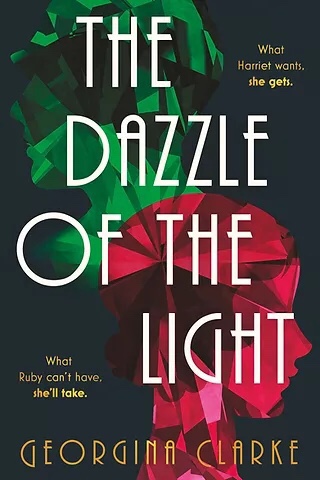
Just a couple of weeks ago I was waxing lyrical about Kate Atkinson’s novel Shrines of Gaiety and then another novel passes my way covering the same territory and the same time period. While I loved Atkinson’s novel on it’s own merits, this one feels more urgent and alive. I felt immediately in the story and fascinated by the two main female characters. Ruby is one of a female gang known as the Forty Thieves (the Forties) who commit crimes from pick-pocketing for the young members to shoplifting and even jewellery theft for those more experienced members. Ruby has been one of the Forties for years and due to her looks doesn’t always attract suspicion in the fancier stores. In fact, she’s on a joint job with her lover Billy from the Elephant Boys, when she first runs into Harriet Littlemore. Harriet is the real deal, a young woman from a very good family, engaged to an up and coming member of parliament. Harriet has ambitions beyond being an MP’s wife, she wants to be a journalist and her father permitted her to ask for a job with the evening paper. She’s been hired to write pieces for the woman at home, such as ways to wear the new style of hat, but Harriet has ambitions for so much more, thinking she might write a piece about the young thief she’s seen. However, her fascination with Ruby seems to be much more than journalistic interest.
The story follows these two women as they each pursue their ambitions. Ruby wants to do more work with the Elephant Boys. She wants to take on bigger jobs and wear beautiful clothes and jewellery. When she meets Harriet again, on a shoplifting run in a department store, she cheekily suggests she should update her style. Perhaps she should cut her hair in the new shingled way that’s the height of fashion, Ruby tells her, then she could wear the new style of hat she’s considering. Like a woman in a trance, Harriet goes to a French hairdresser and has her long hair cut short. She’s amazed by how much it suits her and hopes to see Ruby with her new fashionable look, even if it does cause a stir at home, particularly with her traditional mother. She’s furious when the story about the jewellery heist she witnessed is written by one of the male reporters at the paper. So she decides to write a piece on Ruby, the Jewel of the Borough, and gets one of the artists to draw a sketch from her description. In a way, Harriet admires Ruby. She sees Ruby’s freedom, her nerve and confidence, and contrasts it with her own restrictions. She has no idea what her article will truly mean for Ruby. We see what Harriet can’t, because we’ve met the rest of the Forties and Ruby’s other mentor Solly, who runs a jewellery business. The women of the Forties are in a hierarchy, with Annie ? At the top. Many have been thieving since they were children, looked after by the Forties in return for their tiny hands making their way into pockets. The ones that are married are struggling to feed their kids and to avoid their husband’s fists. Most have done time in Holloway and without the Forties, they and their families would be cold and hungry. From Ruby’s perspective, money is freedom and Harriet certainly has plenty of that.
I loved the way the author showed, that despite their differences in class and means, Ruby and Harriet are still second class citizens due to their gender. Although Ruby has earned some equality thanks to her sleight of hand and is chosen by leader Annie, to do jobs with the Elephant Boys, her personal life is very different. Solly is a father figure to her and always keeps a room for above the jewellers, but when it comes to her lover Billy she has no real power. She has confidence in her allure, but when she’s forced to lie low for a while Billy soon moves on to the next warm body. She often has to give up her body to seal a deal, whether it’s a little extra for the man who fences the more risky pieces of jewellery she’s stolen or romancing someone to get information out of them for Peter who runs the nightclub. This work gives her a rather glamorous roof over her head when she really needs it, but she definitely earns her money. Peter has a big job coming up with the Elephants, something that involves men of money and influence. Ruby has no clue how respectable these men are, or their standing in society. It seems to her that all men will use women, no matter how respectable they may seem. Harriet is completely powerless when it comes to the men in her life. She has a life set up for her as Ralph’s wife and her parents can’t understand why she isn’t satisfied with her lot. She has money, beautiful clothes and a handsome fiancé who is going to be a man of great influence. They can’t understand that she wants something for herself, something she has earned on her own merits. I couldn’t put the book down because I wanted both of these women to break out of the prison they are in, choose a different life and perhaps become close. I didn’t want the system to win.
The setting for this fascinating story is beautifully built by the author. We’re post-WW1, a period of huge shifts in the class system and changes for both men and women. The author shows how the class system and expectations of women have changed through Harriet’s relationship with her parents. They still have pre-war attitudes and are expecting Harriet to fall in line. Even the changes she makes to her appearance show that shift from the restrictions of Edwardian dress and the relative freedom of the 1920’s fashions with shorter skirts, no restrictive undergarments and shorter hair. These fashions suit women who are busier and don’t have hours to dress in the morning. Financial changes mean only the very wealthy can afford the help of a ladies maid every morning. Ruby can wear the latest fashions to please herself, when she can afford them. She loves the glamour of the clothes she wears to the club, where she needs to attract the more discerning gentleman.
For the men, those who were in the trenches found them democratising. Bullets and shells don’t care about the class you’re from and although there was still a hierarchy, they died in the mud together. This led to some strange allegiances back in the post-war world. It’s clear to Ruby that there’s a big job on the cards, Billy has hinted as much and her time at the club throws her close to the planning. There are men involved who would never normally give the Elephant Boys the time of day, so they must need them to do the dirty work. These are men from the highest class, who usually drink at their club or the Savoy, but don’t mind slumming it at the club if it makes them money or the company of a woman like Ruby. I desperately wanted some of them to get their come uppance, knowing that’s not always the way of the world. The real winners though are those that can move between worlds, like Peter Lazenby. Though the polish and charm of all these men hides something more brutal. Despite her misdemeanours I was as charmed by Ruby as Harriet was and I wanted her to find a middle ground where she survives comfortably. As for Harriet I wanted her to break out of her parent’s upper class restrictions. I wanted her to have a love affair with someone unsuitable and a friendship with Ruby, if not a full on passionate affair. This was a fantastic book, full of characters, historical detail and that verve and energy that seems synonymous with 1920.
Published by Verve Books 17th November 2023
Meet The Author
Georgina Clarke has always been passionate about stories and history. The Lizzie Hardwicke novels give her the opportunity to bring to life her love of the eighteenth century and her determination that a strong, intelligent and unconventional woman should get to solve the crimes – rather than be cast in the role of the side-kick. Georgina was born in Wolverhampton, has degrees from Oxford, Cambridge and London, but now lives in Worcester with her husband and son and two lively cats.
Her first two novels, Death and the Harlot and The Corpse Played Dead, are published by Canelo. She is currently cooking up plots for the next novels in the series.
If you would like to visit her website, you can find her at:
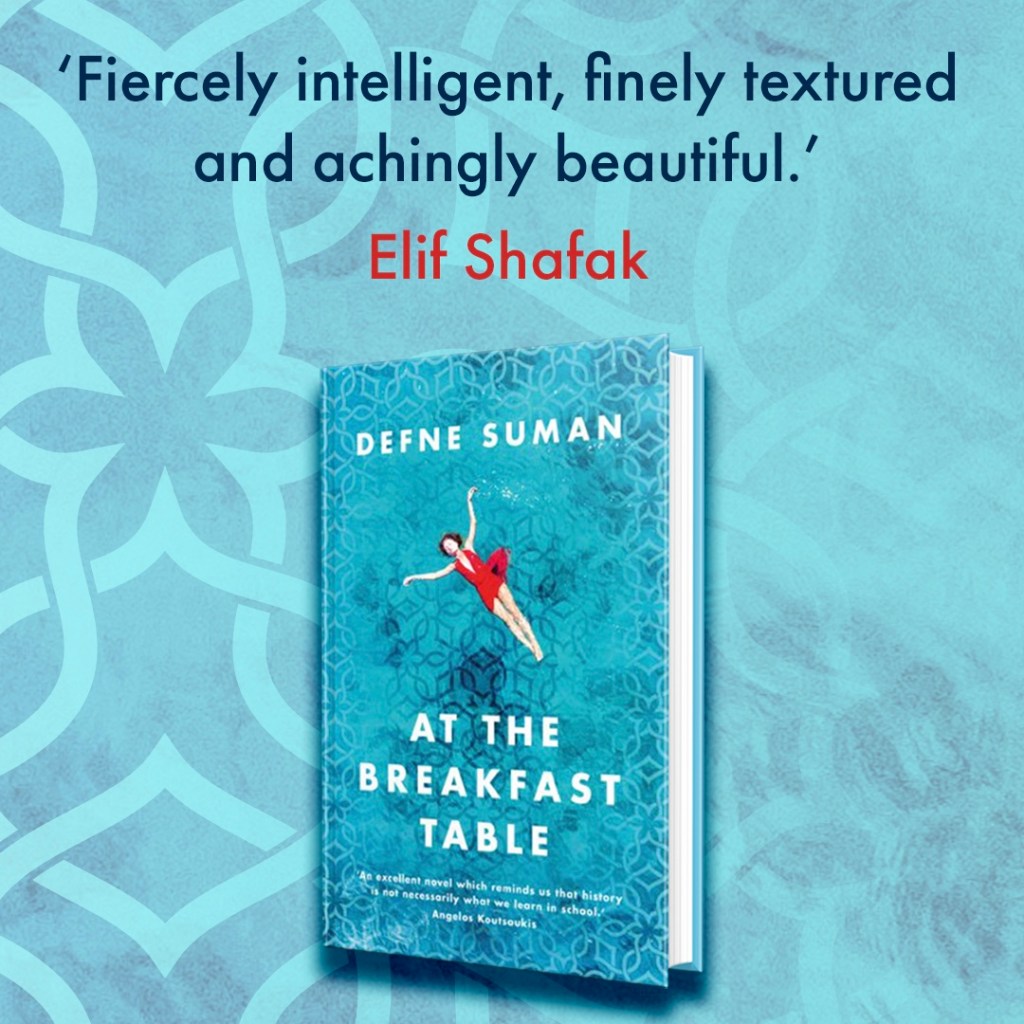
I don’t know a lot about Turkey, so I jumped at the chance to read this book that delves into Turkish history and the heart of it’s people. Set in 2017, at Buyukada in Turkey we watch as a family gathers to celebrate the 100th birthday of the famous artist Shirin Saka. They are expecting reminiscences that are joyful, with everyone looking back on a long and succesful artistic career, and on family memories spanning almost a century. Some members of the family are set on this opportunity to delve into family history. However, for Shirin, the past is a place she has been happy to leave behind. In fact she has concealed some of her experiences even from her closest family. In particular her children and great-grandchildren have no idea what those experiences were, despite being aware of their psychological consequences. Some are thinking of Shirin and hoping she can open up and heal. Others want, perhaps, to find answers for their own struggles. In an attempt to persuade her into telling her full story, one of her grandchildren invites family friend and investigative journalist Burak, to celebrate her achievements but in the hope of helping her too. Burak has his own reasons for being there – he was once the lover of Shirin’s granddaughter. I wondered if the younger members of the family truly understood the well of pain that Shirin has kept from them? They have never gone through the type of experience and turbulence Shirin and those of her generation have. Unable to express her pain any other way, Shirin begins to paint her story. Using the dining room wall she reveals a history that’s been kept from her family, but also from the public’s consciousness, an episode from the last days of the Ottoman Empire.
As a believer in the healing power of many different art forms, including writing, I was very interested in how her family’s plan would work out. We don’t always know how people will react to opening up in this way, it’s why trained therapists like me are taught to create a safe space for people to talk and reveal their secrets. Even the client has no idea how they will react, so I felt Shirin’s family were playing with something they didn’t understand. Why would they think their grandmother would want to delve into her trauma on her birthday, let alone divulge her history to Burak? Surely therapy would have been more appropriate first? To tell her history, the author splits the narrative across four characters, each one is a member of Shirin’s family and friend group. This gives us a wide angle lens on the past. I loved the atmosphere created and the way the author didn’t exoticise Turkey. She still showed us a place of vibrancy and colour, but this wasn’t a tourist’s view. It was the Turkey of the people who work and live there. I felt there could have been more balance between the past and the present, because I was interested in Shirin’s recovery from these memories being dragged up, especially at such an emotional time. As it was, the book felt off balance, more heavily weighted in the past and from four different perspectives rather than just Shirin’s.
However, the four narrators did work in terms of showing the same events from different perspectives. There were times when one character’s view of the facts was so far from the truth it had an emotional effect on me! This is an emotionally intelligent author at work, she wants us to feel that dissonance so we can understand the painful consequences of these misunderstandings. I’m a big believer in generational trauma and how strong it’s effects can be. We see that, despite Shirin thinking she’s shielded her children and grandchildren from these events, they have still been deeply affected by her trauma. They are traumatised because of her pain and how it influenced her personality and her actions, without ever knowing the full story. I could imagine the relief of understanding why a parent has behaved a certain way, especially if it caused you pain. Despite me wishing I could have spent more time with them, we do see enough of the present to know that despite the stress fractures in this family, they still love each other. Their playfulness and sibling banter was realistic and touching. The dynamics of their interactions were so deeply rooted in the past, but we’re the only ones who can see it all with our privileged 360 degree view. This was a fascinating look at a family’s history and how their intertwined lives spiral out from one single event so long ago.
Translated by Betsy Göksel. Published by Apollo 1st September 2022
Meet The Author
Defne Suman was born in Istanbul and grew up on Buyukada Island. She gained a Masters in sociology from the Bosphorus University and then worked as a teacher in Thailand and Laos, where she studied Far Eastern philosophy and mystic disciplines. She later continued her studies in Oregon, USA and now lives in Athens with her husband. Her books include The Silence of Scheherazade and At The Breakfast Table. Her work is translated to many languages all around the world.
I was terrified by A.M. Shine’s first horror novel The Watchers last year and I have been looking forward to his new novel The Creeper. It has such an interesting premise. Academic Dr. Alec Sparling lives a very regimented existence in a remote Manor House in Ireland. His house is set back, covered and disguised with vegetation. There are shutters for the windows and and bolts for the doors. What is he hiding from? He has advertised for two academics to undertake field research and chooses Ben and Chloe. She is an archaeologist and he is an historical researcher with a wealth of experience in interviewing people. They must hike out to a remote Irish village and interview the residents about their life and their minimal contact with the outside world. This is a forgotten place, wary of strangers and as they stumble through a forest, tripwires attached to church bells ring out their presence, giving the villagers plenty of warning. As Chloe and Ben finally meet the people they are shocked by their physical appearance. Poverty and hardship has marked their faces, but it’s the lack of new residents that explains the deformities they observe, years of in-breeding has clearly had it’s effect. These people are not pleased to see them and like Dr Sparling, they are nervous about dusk creeping up on them. Chloe observes the shutters at their windows, less high tech than the wealthy doctor’s, but for exactly the same purpose. Are they to stop people looking out after dark, or are they to stop someone looking in?
As the pair start to interview villagers, they get the sense they’re being fed stock answers. There is something very wrong here, but no one is willing to talk about it, except for one little girl who repeats a piece of folklore:
Three times you see him. Each night he comes closer…
As darkness starts to fall and the villagers start itching to close themselves away for the night, Ben and Chloe realise they will not be able to get back to the car before nightfall. So they set up camp in the driest grass field they can find. As they organise themselves and darkness falls, Ben gets the sense they are not alone. Towards the back of the field, there’s a shape in the darkness. Could it be a person or something worse? This is The Creeper, kept alive by the villager’s superstitions and stories, he is the nameless fear in the night and tomorrow night, he’ll be even closer.
A.M. Shine is a horror genius. His clash of old Irish folklore and modern life is irresistible. I had only read Ben and Chloe’s first day at the village when I had a nightmare! I’m very suggestible. He’s brilliant at creating a sense of foreboding in the reader and here it’s heightened by never fully describing The Creeper till part way through the book. The author knows that our own imaginations are adequate enough to scare us and there’s nothing worse than not knowing or fully seeing the thing you fear. On the first night it’s so far away, covered in raggedy clothing, that we never see it’s face. The villager’s deformed appearances also feed the imagination, leaving the suggestion that the Creeper may be even more disfigured. The doctor’s preparations are also ominous, suggesting that the Creeper isn’t just restricted to the village, but can appear anywhere. We can explain away a superstition held by an isolated settlement, who still live like it’s the Dark Ages! However, if a respected academic who lives in the ‘normal’ world is scared, then we should be too. The author also drops little clues that are easy to dismiss at first, such as the unearthly cry Ben hears as they approach the village. Is it just a child crying out or something much much worse?
The whole atmosphere of this novel is dark, damp and dreary. The waterlogged fields that surround the village create mist. So it feels like everything is obscured and shrouded in mystery. The weather is constantly damp and miserable, so Ben and Chloe’s quest feels grounded and based in reality. Their discomfort as they set up camp for the night is something I remember well from my camping days, that awful feeling that you’ll never be dry again. The contrast between what is familiar and what is very, very wrong, adds to the horror of the situation. The author leaves us suspicious about everyone; I doubted the doctor’s motives in giving the academics this mission and I doubted the villagers too. I found them furtive and secretive, I wondered what they were withholding and whether they were really as downtrodden as they seemed to be. There was the hint that previous academics had come this way and if they had, where were they and where was their research? By the time something terrifying happened my nerves were as taught as bow strings. The final confrontations and the horrifying conclusion were both expected and at the same time shocking. I kept thinking about the author and asking myself ‘he’s not really going to do this is he?’ He really did. I won’t be divulging any of the final chapters, but it really was heart-stopping. This book cemented the feeling I had after reading his first novel The Watchers, Shine has become one of the best horror writers around.
Published by Head of Zeus 15th September 2022
Meet The Author
A. M. Shine is an author of Literary Horror from the west of Ireland. It was there that at a young age he discovered a passion for classic horror stories, and where he received his Masters in history, before ultimately sharpening his quill to pursue a life devoted to all things literary and macabre. His writing is inspired by the trinity of horror, history, and superstition, and he has tormented, toyed with, and tortured more characters than he will ever confess to.
Owing to a fascination with the works of Edgar Allan Poe and his ilk, A. M. Shine’s earlier writings were Gothic in their style and imagination. When his focus turned to novels he refined his craft as an author of Irish horror – stories influenced by his country’s culture, landscape, and language, but which draw their dark atmosphere and eloquence from the Gothic canon of his past.
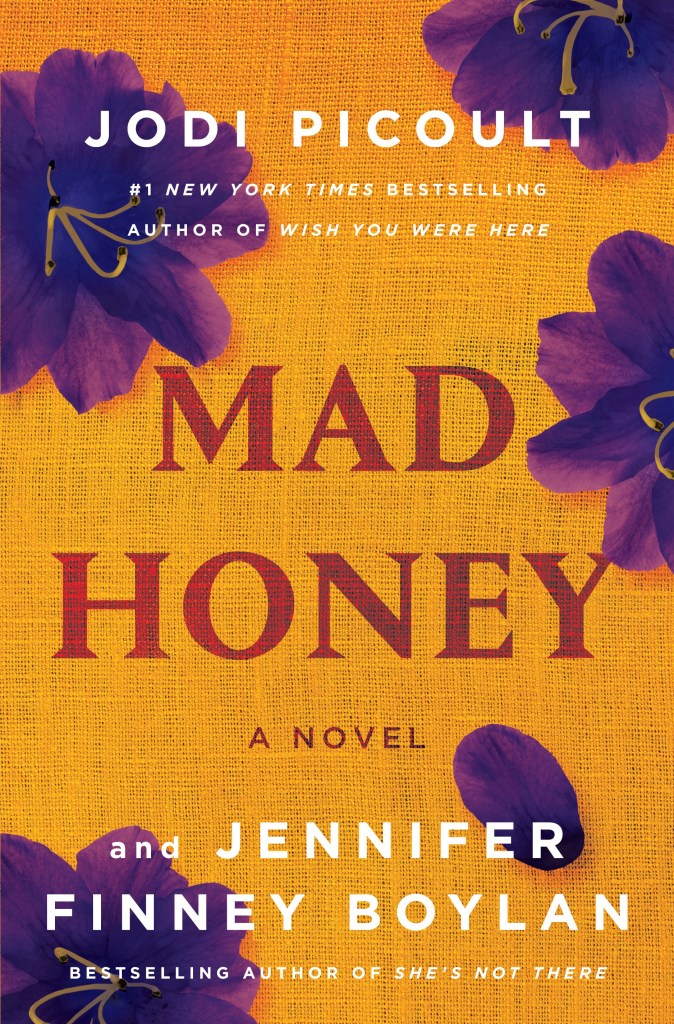
I was granted access to this novel on NetGalley and couldn’t wait to read it, bumping it to the top of my TBR when I had a free weekend. This is Jodi Picoult in her element. Her last book was an interesting take on the pandemic and a couple of her recent novels have been more experimental, moving away from the legal case structure of her earlier work. When I met Jodi Picoult several years ago I asked about her writing. Did she start with character, or was it the controversial issues she explores that start the writing process? Having covered racism, school shootings, teen suicide and abortion it seems that these complex issues drive her imagination. She admitted that these issues do spark her creativity and if an issue stays in her mind for a couple of weeks she knows it has potential. Then she starts to research and during that process, characters form and make themselves known to her. I loved the flow of Picoult’s writing and the tension she builds around the featured legal case, but thought she’d maybe moved away from this way of working. When Jennifer Finney Boylan approached her with the idea to write a book together with a trans character at it’s heart, Jodi Picoult had been thinking about setting a novel around trans rights for a number of years. The structure of Mad Honey feels like vintage Picoult and even where Jennifer Finney Boylan takes over the narration I didn’t notice a huge difference in tone or style. I’ve never read Jennifer Finney Boylan, but she is the first openly transgender American to write a bestselling book, a book that is now thought of as an important part of the transgender canon. She is the perfect writer to join Picoult in this venture that’s bound to be controversial considering the trigger warnings I’ve seen used. Picoult and Boylan haven’t shied away from controversy in choosing to write about one of today’s hottest and most complicated topics; the complexities of being transgender. Yet the combination of authors takes away the debate over ‘own voice’ narratives and brings a sensitivity and knowledge to the project it wouldn’t have had if Picoult had written alone.
We meet Olivia and her son Asher, who live near a small town in New Hampshire. When Asher was a toddler she fled her abusive marriage to return to the place she grew up. Her timing was perfect, as her father was starting to struggle physically and needed to teach Olivia all the wisdom he’d accrued in a lifetime of keeping bees. Now Olivia is the bee expert, tending daily to her hives where each queen bee is named after a musical diva: Celina, Gaga, Beyoncé. The toddler who was just steady enough on his feet to intervene when his father attacked his mother, is now a six foot ice hockey player in his final year before leaving for college. Asher is a popular teenager with lots of friends and now he has girlfriend Lilly too. Lilly understands starting over, so Olivia feels they have something in common. She likes Lily when she’s been over to the house and she’s successfully helped them with the bees, who are a good judge of character. Lilly feels happy for the first time in her life and Asher is a huge part of that, although there is still a part of her that wonders if she can truly trust him, be open and be vulnerable. Then out of the blue Olivia takes the call every parent dreads. It’s the police. Lily is dead and Asher has been arrested for her murder. She calls her brother Jordan to come to New Hampshire and be Asher’s lawyer. In her mind there’s no way that the gentle boy she knows could have done this. However, as the case starts to unfold she realises that Asher has hidden more than he’s shared. Could he be exhibiting the same tendencies as his father? As Olivia knows more than anyone, we rarely know the people we love as well as we think we do.
I think it’s incredibly hard to take on writing about someone else’s experience, especially someone from a minority group. When it comes to books about disability, my own minority, I do prefer ‘own voice’ narratives. After all, who better to write a character with a disability than a writer with a disability? Failing that I want to know that an author has done their very best to represent that minority, through research and spending time with people who have a disability. I want to know they’ve asked the hard and sometimes uncomfortable questions that take them to the heart of how living in that body might feel. Armed with that they can hopefully create a character who feels real rather than clichéd and avoids stereotypes. I have to be honest and say I don’t know enough about being transgender to judge whether the authors have everything right, but I can see they’ve tried and truly wanted to write about transgender rights in a mainstream novel that’s very likely to be a bestseller. I guess time will tell how the book is received as it moves out into the world. In her acknowledgments, Jennifer Finney Boylan quotes a terrible statistic; in the year that she and Picoult wrote the book, ‘more than 350 transgender people were killed around the world, more than a fifth of them inside their own homes’. This awful number stayed with me and I was glad these authors are starting a conversation, with a mainstream audience who might not seek out information about being transgender ordinarily. It helped me have a conversation with my 75 year old dad who becomes confused between gender and sexuality and is totally baffled by labels like transgender, transsexual, non-binary. I think these are conversations everyone should have and maybe the book is an entry point, inspiring people to read more ‘own voice’ narratives.
Picoult speaks for me when she says it never occurred to her to think of a transgender woman as anything other than a woman, but it was good to have my view challenged, because it showed me how vehemently some corners of society disagree with me. We are given a lot of background information that clearly comes from both author’s research, but is presented in the guise of Olivia educating herself. She talks about how common it is for animals to change gender, from clown fish to bearded dragons and female hyena’s who can have retractable penises. She’s pressing home the argument against those who claim transgender people are unnatural and that if you were not born with the sexual organs of a woman then you’re not a woman. There does seem to be a huge emphasis on the ability to procreate, but where does that leave women like me who can’t have children? Or those who’ve had a hysterectomy? Are we not real women too? I was very interested in something called ‘passing’, a concept that applies to race, disability, sexuality: an African-American man may be treated very differently if he has a lighter skin tone; a gay man may ‘pass’ as straight in order to be avoid prejudice at work; someone with an invisible disability like mine can be seen as able-bodied with all the benefits of both ways of being. If a transgender woman has a naturally feminine look she can pass as a woman more easily than someone who is is taller or broader. This ability to pass means no one, not even someone the transgender woman is in a sexual relationship with, need ever know that their assigned sex at birth was different. Of course this then begs the question of whether there is an obligation to disclose this information and when? All of this debate comes into the novel’s courtroom sections, in the guise of expert testimony so it doesn’t feel like endless exposition. There are times when opinions may be offensive to some readers, but I think they reflected the reality of being transgender and the discrimination faced.
The story flows beautifully and really grabbed hold of me quickly. I found myself unable to do anything until I’d finished reading, so I let uni work and household chores pile up, completely engrossed in the terrible situation both Asher and Lily’s mums find themselves in. I did feel this was Olivia and Ava’s story, despite our narrators being Lily and Olivia. For me the transition between the two writers is seamless. I really couldn’t tell whether I was reading Jodi or Jennifer’s writing and I know they worked hard at this, swapping sections for re-writes at times. I did feel for Olivia who has fled a terrible situation to protect her boy from her violent husband. I understood how she and Asher had become a tight unit, now challenged by Asher’s age and this new person coming into their small world. I thought the aftermath of being a victim of violence was tackled really well, as Olivia’s job keeps her hidden from the world. She doesn’t make friends and relationships haven’t been on her radar at all. I felt the weight of this massive change looming over them, Asher going away to college and leaving his mum alone for the first time. Her protection of them both has been necessary, but she must be lonely at times. It was interesting to see her reaction to a possible romance, could she take down those walls and start to build a life for herself? By contrast, Lily’s chapters are lighter than Olivia’s, capturing that moment of being on the cusp of adulthood. Lily is brim full of potential and possibility. She’s like a newly transformed butterfly taking it’s first flight. Then all of a sudden she’s gone and it feels like a light has been snuffed out. How much harder must it be for Ava, who has nurtured and protected her daughter in much the same way as Olivia has protected her son? Ava stayed with me after the book had ended because her loss is unimaginable and her only solace is to retreat into the natural world where she feels at home. I found myself hoping she experienced the healing power of nature and didn’t feel too lonely out there on the Appalachian Trail.
I enjoyed the bee analogy that ran through the book, the reference to Mad Honey referring to bees who’ve collected pollen from rhododendrons and laurels. Unfortunately the honey produced is poisonous, causing dizziness, convulsions and cardiac symptoms. The ancient Greeks used it in germ warfare, it’s success dependent on the eater’s expectations of sweetness not deadly poison. The analogy between this and Olivia’s husband is clear as she describes the love bombing in their early relationship and her utter shock when he first lashes out in anger. Her biggest fear is that Asher could be cut from the same cloth as his father, when she sees nothing but her sweet boy. However, she knows that her own mother-in-law would have struggled to accept that her boy was a monster behind closed doors. The tension is brilliantly handled, rising slowly as we get to the final days of the court when I found myself biting my nails! I wasn’t sure how I felt about Asher and the potential verdict, I wasn’t sure I believed his version of events and if Asher was found innocent, would we ever find out what happened to Lily? The twists and turns here were brilliant, with the killer blow delivered just as everything is starting to calm down.
I’m hoping that this novel can be a gateway novel, an introduction to the issues that inspires readers to really think about the experience of transgender people, hopefully inspiring readers to search out writing by transgender authors going forward. There is one scene where Olivia seeks out the woman who runs the town’s record store, because she’s known to be transgender. Here she gets to ask the her the questions that are running through her mind and although she’s a reluctant authority on the subject, she doesn’t get offended by Olivia’s insensitivity or ignorance. What she does reinforce for her is that no one can speak for all trans women, because ‘when you’ve met one trans woman, you’ve met one trans woman’. What it reinforces for me is that gender and sexuality are a spectrum, there are as many ways of being as there are people. Our need to categorise, label and compare creates a pyramid of bigotry and ultimately divides us. All we can hope is that future generations find ways of relating to each other that bridge these man made divides. It’s only then that all people can live ‘with power, and fierceness, and with love’ and, as one of our characters says, without the obligation ‘to explain and defend the things I have known in my heart since the day I was born.’
Mad Honey is published on 15th November by Hodder and Stoughton
Meet the Authors.
Jennifer Finney Boylan is a bestselling author, transgender activist and professor at Barnard College. She is also a contributing opinion writer for the New York Times. She has written thirteen books, including novels, collections of short stories, and her memoir. Her 2003 memoir She’s Not There: A Life in Two Genders was the first book published by an openly transgender American to become a bestseller and has become as ‘a seminal piece of the trans literary canon”.
Jodi Picoult is the #1 New York Times bestselling author of twenty-eight novels, including Wish You Were Here, The Book of Two Ways, A Spark of Light, Small Great Things, Leaving Time, and My Sister’s Keeper, and, with daughter Samantha van Leer, two young adult novels, Between the Lines and Off the Page. Picoult lives in New Hampshire. Her next novel, Mad Honey, co-written with Jennifer Finney Boylan, is available on November 15th.
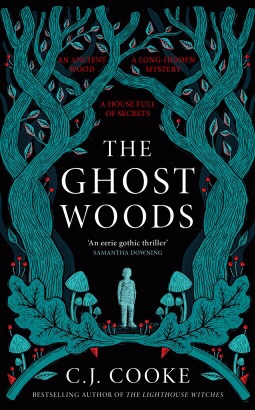
The Ghost Woods is the third book I’ve read by C.J. Cooke and I’m convinced she’s getting better with each novel. This brilliant mix of historical fiction, women’s history, Scottish folklore and the supernatural had me transfixed. We follow two young girls struggling with the realities of becoming pregnant out of wedlock in mid-Twentieth Century Scotland. In 1965, Pearl Gorham is sent to Lichen Hall, a large 16th Century private house set in the middle of woodland and home to a wealthy couple and their grandson. Pearl is 22 and heavily pregnant, until now she’s been working as a nurse, but she’s being driven to Lichen Hall. The family here look after young women ‘in trouble’ and find adoptive parents for their babies. Five years earlier in Dundee, Mabel Haggith is at the doctors with her mother and has just found out that she’s pregnant. Her mother is furious, but Mabel is confused, how can she be pregnant when she hasn’t done anything wrong? To make sense of her predicament, Mabel assumes it must be the ghosts that live inside her that have made her pregnant, she can feel one in her knee right now. Her mum and stepfather decide Mabel must go to a mother and baby home, but Mabel has heard what can go on in those places. She decides to go to Lichen Hall instead, where she’ll have her baby and hopefully adoptive parents will be found. As long as they don’t mind having a ghost baby of course.
What they find at Lichen Hall is an eccentric and isolated family called the Whitlocks. Mrs Whitlock is most definitely in charge, but is dealing with her husband and son’s issues as well. Mr Whitlock was a professor of biology, focused on the more unusual types of fungi and the symbiotic relationship between them and humans. However, more recently dementia has made his behaviour rather erratic. He has taken to wandering and wearing eccentric combinations of clothing, some of which are more revealing than others. Son, Wolfie, is a complex boy with erratic moods and explosive behaviour when frustrated. Mrs Whitlock herself is a strange mix of pleasant and welcoming, then suddenly cold, distant and even mean. Into this bizarre setting come girls who need help, empathy and care. Of course there are also other residents: Morwen who appears to be the only servant when Mabel arrives, as well as the other girls there to have their babies. Who will tend to these girls when they go into labour in this remote place? With folkloric stories of witches and evil fairies around, plus a deliciously Gothic house, full of atmosphere and and an infestation of fungi, that doesn’t seem to be as straightforward as they might have thought.
I loved this strange gothic mix of the horrors of nature and the supernatural. In the room where he keeps his favourite specimens, Mr Whitlock has a wasp that’s been taken over by a fungus. The life cycle starts when people simply breath in the spores, but then they grow inside the insect until it bursts out of their body. Monstrous births have a rich seam in gothic fiction and it feels like there may be parallels here, especially for Mabel and her ghost baby. By the time Pearl arrives, this mini example of a parasitic fungus is overshadowed by the fungal takeover in the west wing. Despite being closed off, she finds spores growing and multiplying on the stairs. Will it eventually take over the whole of Lichen Hall? There is a sense in which the girl’s pregnancies do seem monstrous. There are descriptions of their babies’ movements such as seeing a tiny foot stretching out the skin on their abdomens, which is amazing but strange all at the same time. Mabel’s boy is beautiful, but its not long before she notices the strange lights appearing from under his skin. What do they signify? Is this the legacy of the ghosts? The atmosphere feels isolated and wild, but weirdly suffocating and claustrophobic at the same time. When walking outside it’s best not to go into the woods where a shadowy figure awaits. It’s terrifying when one of the girls falls trying to escape this creature and it grabs her leg, seemingly able to make clear it’s intention to get ‘inside’ her skin.
The book works really well because the girl’s vulnerable position creates empathy and interest in the reader. We don’t want to see them harmed so there’s tension from the outside as well as that sense of foreboding we get from the atmosphere. I found the parts where the girls are struggling with giving up their babies, terribly moving, especially when some are given no warning or chance to say goodbye. The Whitlocks can only act like this due to the shame attached in society to an unmarried mother. We can see a change in attitudes between Mabel and Pearl’s time at the hall even though its only 6 years. Mabel is very ignorant of sex and motherhood, whereas Pearl is older and a nurse so she has more agency in her decisions. She also slept with a man at a party, after falling out with her true love Sebastian. When he turns up after all this time to the hall, they share a romantic picnic and he declares his love for her. It’s a ray of hope in an otherwise gloomy prospect for the residents of the hall. Pearl chooses to make love with Sebastian, showing a young woman making choices about her sex life, choices that don’t seem as bound up with shame and stigma. For Mabel, her early days at the hall are softened by servant Morwen, who seems to do everything for the family – besides looking after Wulfric. She helps the girls give birth too, a skill that’s severely tested if two girls are in labour at once. The new girls are also expected to help with Wulfric when they can. Mrs Whitlock’s present of some hens and wood to build a coop, felt doomed to failure to me. His erratic behaviour up to this point leaving me constantly in fear for the chicken’s lives. One question kept recurring to me, time and time again. Why are the Whitlocks taking these girls in? Could it be for free labour or is there another, more sinister reason, because the Whitlocks do not seem to be particularly charitable souls.
This is an intensely creepy book from the beginning, but as we start to find new clues it becomes more disturbing still. The strange notes that read ‘Help me’ can only be from one of the hall’s residents but who? Has Mr Whitlock had a more lucid moment? Is it a despairing mother to be who wishes to keep her baby? To be honest, by the time both Mabel and Pearl have been with the Whitlocks a few days, I was screaming at them to get out. It seems strange to me that no one enforces the girl’s stay, so there’s only one reason for their obedience and I think that is shame. Each girl is infested by this destructive emotion: they’ve been made to feel shame because of their behaviour, their condition and their lack of a man to stand by them. In one girl’s case, shame has affected her so strongly that she’s pushed a lot of her experiences into a little box in her mind and keeps them under lock and key. Denial is a very powerful tool that shuns truths that are so scary they would overwhelm us. It’s so terribly sad that the girl’s shame creates an opening for others to exploit and exert power over them, but will they succumb? Or will they find strength from somewhere to resist and discover the truth about this mouldy house and family who live there. This book is a brilliant mix of women’s history, gothic fiction and both psychological and physical deterioration. I’d been a little wary of mushrooms since Silvia Moreno Garcia’s Mexican Gothic, now I’m definitely keeping a lookout for fairy rings when I walk the dogs in the woods.
Published 13th Oct 2022 by Harper Fiction
Meet The Author
C J Cooke (Carolyn Jess-Cooke) lives in Glasgow with her husband and four children. C J Cooke’s works have been published in 23 languages and have won many awards. She holds a PhD in Literature from the Queen’s University of Belfast and is currently Senior Lecturer in Creative Writing at the University of Glasgow, where she researches creative writing interventions for mental health. Two of her books are currently optioned for film. Visit http://www.cjcookeauthor.com.
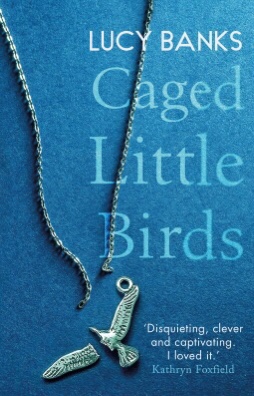
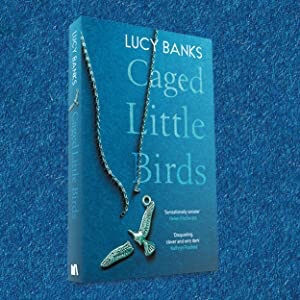
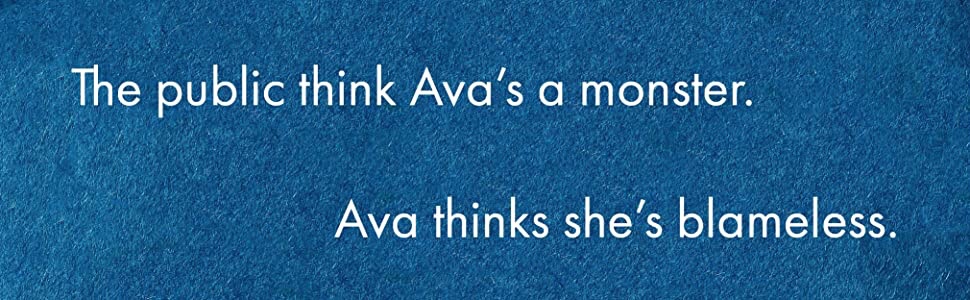
Oh my goodness this book packs a punch! The author has created an incredibly complex character and took me from slight unease to wide-eyed horror at what was happening. Robin is trying to live a quiet life these days. She wishes she could live where there’s nobody else, just miles of wilderness, a rugged coastline and hundreds of sea birds. Yet she’s grateful for the roof over her head and the benefits she has to start her new life with. She’s grateful to be able to eat what she wants, when she wants and to have a hot shower without a queue and no fighting for the shampoo and conditioner. She doesn’t feel like ‘Robin’ though, such an insignificant and ordinary bird. In prison she was called ‘Butcher Bird’ and the public hate her, so even now twenty-five years later she can’t be Ava any more. As Robin settles into her new home and new identity, she becomes aware that someone knows who she is. Can she stay under the radar and stick to all the conditions of her release? Or will she be flushed out and shown to be the monster people think she is?
I loved the way Banks writes Ava, we see everything from her perspective and her mind is such a complicated place to be. I found myself in the strange position of being in her head, but feeling strangely detached and unsure of her. It becomes clear early on that Ava was convicted of murder and has served her full twenty-five year tariff, so there are things about the modern world she doesn’t fully understand. Social media seems ridiculous (in fact, when I try to explain Facebook it sounds ridiculous) and she’s baffled by the little rectangular boxes people carry everywhere, even paying attention to that more than the people they’re with. It’s unusual to see our society this way, with the things we take for granted shown as alien. She’s trying to fit in with her parole conditions, but they break into her peaceful world when she doesn’t want it. There are weekly appointments with the psychiatrist and home visits from Margot her probation officer. Everyone is telling her how lucky she is to be looked after by the state like this, but given the choice Ava would prefer to fend for herself. She goes to pointless interviews, where her crime means she will never be hired, but they fulfil a condition of receiving benefits. There are obligations and places to be at certain times, something she has never been used to.
I had the impression that Ava has always lived inside her own head, rather than being present in the world. We learn that her childhood was spent on a remote Scottish island where there was a huge seabird colony. With no mother, Ava is kept out of school and taken to work with the birds, helping her father, identify, check and ring them for identification. He removed any meaningless junk from the house, including Ava’s toys and her late mother’s armchair, assuring her she wouldn’t need them because she’d be outside. There are other figures that loom in Ava’s past too; Henry who she’s had a relationship of sorts with; Ditz, a fragile young woman from prison who hanged herself; then someone she addresses as ‘you’. The importance of these people and their place in Ava’s life is slowly unveiled as Ava either reminisces or becomes paranoid about them. Another catalyst is Bill next door, or more importantly, his daughter Amber. Bill has been friendly and welcoming, chatting over the fence and eventually asking whether she’d like to go for a walk. However, his daughter is more suspicious, or is it just Ava’s paranoia? Their relationship is very uneasy and Ava is sure that Amber wants to expose her, she’s just waiting for an opportunity. A poison pen letter and a brick through the window add even more pressure to the mix.
Ava strikes this reader as someone with a personality disorder. The isolated childhood and lack of schooling have left her lonely, naive and unable to form boundaries with others, as she’s never had anyone to form a relationship with. She’s grown up as easy prey for those who seem able to sense someone vulnerable and manipulate or use them. Unable to deal with rejection in the usual way someone her age might by reflecting on the experience, feeling sad and angry, maybe seeing a counsellor. She doesn’t even go get drunk, eat ice cream, and malign him to her friends, because she doesn’t have any. Her response is immature, because she is immature emotionally, but perhaps no one could have predicted the events that followed. Lucy Banks brings the past into the narrative as Ava ruminates on what happened. She’s triggered by what she sees as another rejection, so her rage and anger are disproportionate to the situation. She becomes that young girl again. At this point I started to be scared for anyone who came into her orbit. I think the way the writer slowly allows this unease to develop between reader and narrator is brilliant. I noticed that her sleep pattern changed, her paranoia starts to build, she starts to link past and present events in a way that isn’t logical, and acting on emotions rather than fact. Another clue is her inability to take responsibility for anything that has happened, she veers around it or presents it as something that just happened. I wasn’t sure whether I was in the mind of a murderer or the mind of someone who is simply struggling with their mental health, distorting the facts and hallucinating the more violent aspects of her story. I won’t tell you which it is, because slowly finding out is so satisfying and such an enjoyable read. The writer has created a highly original narrative voice and a reveal that I hadn’t worked out. I veered between being scared for Ava and scared of her. This really stands out as one of the best books I’ve read this year and I recommend you read it too.
Published by Sandstone Press 15th September 2022
Meet The Author
Lucy Banks is the author of The Case of the Green-Dressed Ghost, described by Publisher’s Weekly as ‘Ghostbusters with a British accent’. It’s the first in the series, exploring the strange, sinister (and often slightly silly) world of Dr Ribero’s Agency of the Supernatural.
In 2016, Lucy also won Amazon’s A New Night Before Christmas writing competition with her entry about a slug living under a family’s floorboards, who assumes Christmas is not for him, until he comes face to face with Father Christmas.
As you might guess (being all too familiar with slugs and ghosts), Lucy hails from South-West England – an area rife with spectral tales and plenty of bugs. She lives in Devon with her husband and two children, and in addition to writing, is an avid reader – less of a bookworm, and more of a book-python!
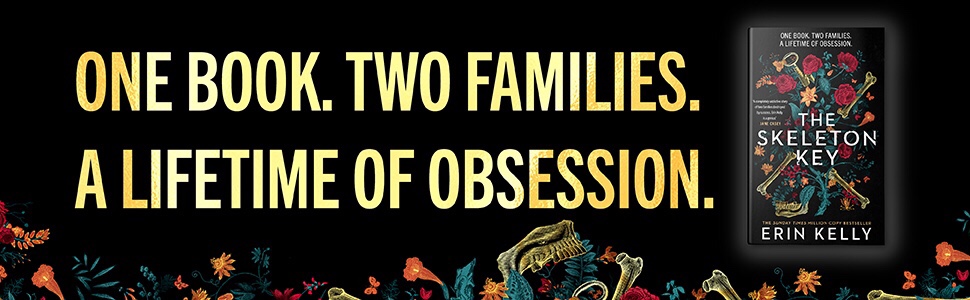
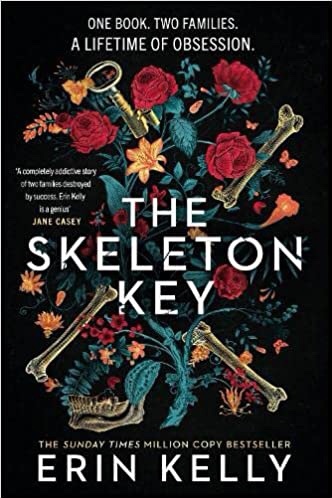
I’ve been reading Erin Kelly since her debut The Burning Air and she’s pretty much unbeatable in her ability to grip the reader and immerse them in her world of domestic noir. This was read in a very enjoyable weekend with Alice Feeney’s Daisy Darker so I was knee deep in my favourite territory – arty, bohemian families, with big rambling houses, full of eccentricities and dark secrets. I was ready for skeletons to start tumbling out of closets and that was almost literally the case here. The Churcher’s and the Lally’s have a history that goes back decades and now they live in each other’s pockets, in two adjoining houses on Hampstead Heath, smelling of oil paint and weed. Back in the the 1970’s, when their friendships and marriages began, artist Frank used some old folk verses to create a picture book full of clues to hidden treasure. The story is macabre, as a young woman named Elinore is suspected of infidelity and murdered by her husband. He then scatters her bones in sites across the British Isles. The verses in the book, The Golden Bones, contain clues to the whereabouts of hidden treasure – a one off, tiny gold skeleton with a jewel set in it’s pelvis. When the book caught the public imagination, a group calling themselves The Bonehunters emerged and with the birth of the internet hunters and enthusiasts could solve clues together, pass on information and stoke rumours. Unfortunately, for some it became an obsession and twenty years later, Frank’s daughter – also named Eleanor- is attacked outside her school by a knife-wielding woman who is certain the final piece of treasure – the pelvis – resides within her actual body.
It’s no surprise that as the book reaches it’s fiftieth anniversary, speculation and concern from some parts of the family, has reached fever pitch. With the help of son Dom, the book has been re-issued in a Golden Anniversary edition, complete with locations for people to check in online. The families come together at the houses on the heath, to film for a television special about the book, including a secret unveiling that Frank’s been planning. As he gives a speech, under a tree on the heath, to everyone assembled and on camera, it’s clear he’s planned a publicity stunt. Could this be the final piece of treasure? However, even Frank is shocked when one of his grandchildren climbs the tree and instead of treasure pulls free a woman’s pelvis. The book follows the aftermath of this gruesome discovery, how it affects both families and starts a police investigation. Everyone is under suspicion. The author takes us back into the past, shows us events from different characters point of view, and turns the reader into a Bonehunter of sorts, trying to work out who this woman was and how her pelvis ended up buried in a tree on the heath.
We meet Eleanor again, but this time as a woman and she prefers it when people call her Nell. She weirdly had my dress sense, although I might draw the line at dungarees from now on having read the criticisms about them on middle-aged women! Anything to do with the book raises Nell’s blood pressure and it’s hardly surprising. It has influenced how she lives, as anonymously as possible on a narrow boat that she moves every so often on the London waterways. She claims this is to avoid mooring rates, but it also feels part of her PTSD, the need to keep moving and be hyper-vigilant. She has more than one reason to stay safe these days, because her step-daughter from a previous relationship is living with her. Unbeknown to social services her father left a long time ago. Nell hasn’t had much luck with friends or relationships and she blames the book for this too. She feels she can’t trust anyone since she fell in love with Richard when she was a teenager and he turned out to be an investigator, hunting the final bone on behalf of a rich Bonehunter. His protestations that he loved her anyway fell on deaf ears and she was left heartbroken. Now she’s more paranoid than ever and terrified that the police investigation will bring social services back into their lives.
I was fascinated with the dynamics of these two families living on top of each other in a way that was almost like a commune. The children would flit between houses, gravitating towards the parent who seemed most able to give that parental attention that they needed. Their friendship starts in the 1970’s as they shared ideas, drugs and a desire to create art. The families are so close that when Frank’s son Dom and Lal’s daughter Rose are found kissing it almost feels incestuous. Now there are shared grandchildren, linking them through blood. Where once there was equality, even if they were so poor there was nothing to share, now it seems like everyone functions for Frank. He is the successful artist and his whims should be accommodated. He felt like a law unto himself to me: working when he wants; neglecting his family; indulging his sexual appetites wherever he can. His mercurial temperament is excused because of his talent, but some family members already find him unbearable. Lal’s drinking seems to distract everyone from Frank’s bad behaviour and his decline has been very useful. It eliminates him as artistic competition too. We travel back to one particular night several times from different viewpoints. Wanting to break away from The Golden Bones Frank has created a collection of beautiful nude paintings. However, unable to let them show on their own merits, Frank has let it be known that every model in the show is one of his conquests. The tongues start to wag and by opening night it’s at fever pitch. I can’t work out whether he underestimates the family, or whether it’s a deliberate attempt to humiliate and dominate, but one of the models seems familiar. If Frank’s suggestion is true, he has betrayed everyone close to him. To make things worse he’s openly flirting with a waitress, in front of his wife and children. Luckily, Lal gets predictably drunk, drawing the attention and concern elsewhere.
In the present day both Lal and Frank are arrested, leaving the family scrabbling for the truth. Will it pull them all together or apart? The psychological interplay between family members is brilliantly done. Nell and Dom mean everything to each other, working as each other’s stability since both parents are absent when consumed by their work or drink and drugs. Dom and Rose’s relationship is borne out of the same impulse, desperately seeking stability and being steadfast in providing it for their own children. Nell has to decide whether this family is healthy for her and her daughter. The dynamic between Frank and his family becomes clearer as the novel goes on, with a wife seemingly dependent on medication to cope and Dom desperately trying to protect her. Frank is like a puppet master, in a strange echo of his role in the book, he’s choreographing events and controlling how they act, using distraction to hide what he doesn’t want them to see. He uses friend Lal as a whipping boy, in a terribly destructive dynamic. Frank can do what he wants as long as Lal is drinking and flying into rages, alienating his family. I felt there was a rivalry there and even a contempt for Lal, whose use is to be the comparison point – as long as Lal’s life and work is worse, then Frank is okay. Lal is, quite simply, a scapegoat. Even so, it is Nell’s character arc that I loved because she has to confront a lot of her past and start to build a better future as a family of two. Her strength is shown in the real quest of the book, not for golden bones, but for the truth. However messy, unexpected and inconvenient that might be.
Published 1st September 2022 by Hodder and Stoughton.
Meet The Author
Erin Kelly is perhaps best know for her novel He Said/She Said, about a young couple who witness a rape and, after the trial, begin to wonder if they believed the right person. Her first novel, The Poison Tree, was a Richard and Judy bestseller and a major ITV drama starring Myanna Buring, Ophelia Lovibond and Matthew Goode. She’s written four more original psychological thrillers – The Sick Rose, The Burning Air, The Ties That Bind.
She read scores of psychological thrillers before she heard the term: the books that inspired me to write my own included Endless Night by Agatha Christie, Rebecca by Daphne du Maurier and A Fatal Inversion by Barbara Vine. Her books are atmospheric thrillers, always about people trying to atone for, escape, or uncover a past crime. She says she’s more interested in what happens before the police arrive – if arrive they ever do – than how murder is solved.