
Like many English Literature students, Jane Eyre remains one of my favourite books and it has inspired writers ever since its publication in 1847. I first read it at ten years old and for me it was a romantic ghost story, read alongside the 1980s BBC series. As one of my first reads at university I could see how the novel contained aspects of everything I needed to learn on my 19th Century module: class, colonialism, morality, gender, work, women and much more. It also defies genre, with the potential to be classified as a mystery, romance, gothic fiction, Bildungsroman and historical fiction. I think this is what helps the novel endure. Its flexibility allows it to appeal to different generations for very different reasons. Each of this authors were inspired to use those multiple themes to shape a novel around Charlotte Brontẽ’s work.
My reading of the novel has definitely changed over the years. University opened up the novel for me as much more than the ghost story I’d enjoyed as a child. It brought colonialism into my mind for the first time, feminism and autonomy. It made me think more about the role of governess as a liminal figure in the household – she is an employee but doesn’t sleep or eat where the domestic staff do, she is unmarried and independent, earning her own money and making her own choices about it. I think it’s easy for a reader to identify with Jane, whether it’s the bullied and child trying to read behind the curtain or terrified by the Red Room. The girl scapegoated at school as ‘too passionate’ and a little bit defiant too. The young woman falling in love with an older man who isn’t what he seems, making decisions about whether to be in the role of mistress. All of these aspects are ripe for fictional updates and retellings. Bringing the book bang up to date there are aspects of manipulation and coercive control in Rochester’s use of Blanche Ingram and dressing up as a fortune teller to influence Jane’s thoughts. We can look at femininity through Bertha Mason, the madwoman in the attic and the comparison of Jane as everything she supposedly isn’t – modest, compliant, emotionally stable and moral. This is especially important in light of public figures like the Tate brothers who want to control how women behave and denigrate those who don’t fit their ideal. The nanny or governess has become a staple of modern thrillers because of their intimacy with the family they work for, often living in close quarters and becoming close emotionally. That is the book’s enduring appeal, that we can always look at it through the lens of today and find something new. One of my specific interests in the novel is mental health and who is in control of what constitutes instability. I’m also interested in the disability aspect of the novel and what it is about Rochester’s disabilities towards the end of the novel that brings some equality between him and Jane. Here I’ve gathered just a few of the novels that are inspired by the novel in very different ways.
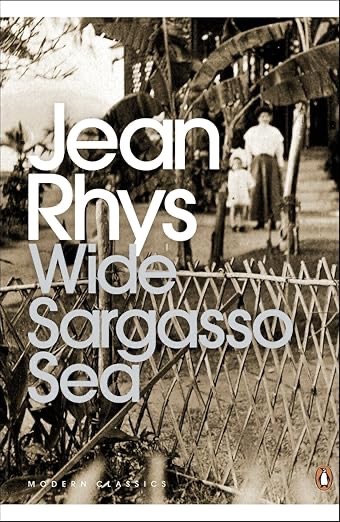
Born into the oppressive, colonialist society of 1930s Jamaica, white Creole heiress Antoinette Cosway meets a young Englishman who is drawn to her innocent beauty and sensuality. After their marriage, however, disturbing rumours begin to circulate which poison her husband against her. Caught between his demands and her own precarious sense of belonging, Antoinette is inexorably driven towards madness, and her husband into the arms of another novel’s heroine. Rhys shows us why Antoinette isn’t just the antithesis of the quiet and composed Jane Eyre. Her work evokes thoughts around female sexuality and whether sexual enjoyment or the woman’s initiation of sexual activity is what Rochester rejects in his wife. Is it really the history of madness in her family or is it the ‘Creole’ aspect of Antoinette’s heritage? Is she insane or furious about his rejection, withdrawal from and later imprisonment of her that aroused violent tendencies? This is a classic study of betrayal, a seminal work of postcolonial literature and is Jean Rhys’s brief, but beautiful masterpiece.
Jean Rhys (1894-1979) was born in Dominica. Coming to England aged 16, she drifted into various jobs before moving to Paris, where she began writing and was ‘discovered’ by Ford Madox Ford. Her novels, often portraying women as underdogs out to exploit their sexualities, were ahead of their time and only modestly successful. From 1939 (when Good Morning, Midnight was written) onwards she lived reclusively, and was largely forgotten when she made a sensational comeback with her account of Jane Eyre’s Bertha Rochester, Wide Sargasso Sea, in 1966.
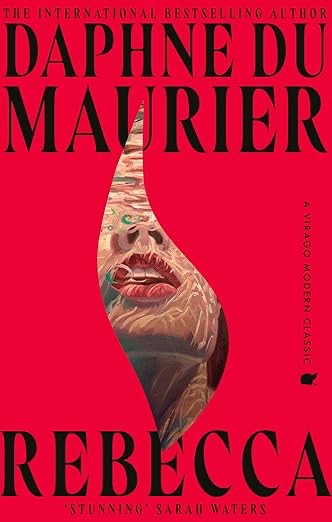
He did not belong to me at all, he belonged to Rebecca. . .
Everyone knows that Maxim de Winter was obsessed with his glamorous wife – and devastated by her tragic death. So when he proposes to a shy, anxious young woman after a whirlwind meeting in the South of France, no one is more surprised than the new bride herself. But when they reach Manderley, his beautiful, isolated Cornish mansion, the second Mrs de Winter begins to realise that every inch of her new home – and everyone in it – still belongs to Rebecca.
Daphne du Maurier’s thriller has Jane Eyre in it’s DNA, especially when it comes to it’s heroines: the dark and delicious vamp Rebecca who we never see and the quiet, awkward and compliant second wife who is never named. Here though, instead of a housekeeper, we get the gothic masterpiece that is Mrs Danvers, once Rebecca’s maid and now the housekeeper of Maxim de Winter’s stately home on the Cornish coast, Manderley. Maxim has chosen this new, much younger and adoring wife without any thought as to whether she has the knowledge or the qualities to run a great house. She doesn’t even have the confidence to ‘leave it all to Danny‘ as he tells her. He has the detachment of the upper classes who are so privileged they don’t care if they’re rude, ignorant or leave the staff to pick up after them. His new wife however can’t give orders and ends up trying to fit into the routine of her predecessor only to be reminded of her at every turn. Here, the madwoman is in the attic of the mind, ever present and even more intimidating in the imagination. There is also the creepy Mrs Danvers, slowly pressuring the new bride, showing her deficiencies as a mistress to Manderley and hinting at the sexual chemistry between Rebecca and Maxim. This is an incredible update of the classic, bringing in psychological aspects from the age of Freud and an addictive suspense that culminates in that bright glow of fire in the Cornish dawn.
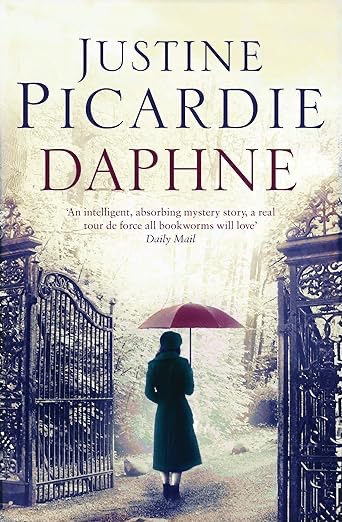
It is 1957. As Daphne du Maurier wanders alone through her remote mansion on the Cornish coast, she is haunted by thoughts of her failing marriage and the legendary heroine of her most famous novel, Rebecca, who now seems close at hand.Seeking distraction, she becomes fascinated by Branwell, the reprobate brother of the Brontë sisters, and begins a correspondence with the enigmatic scholar Alex Symington in which truth and fiction combine.
Meanwhile, in present day London, a lonely young woman struggles with her thesis on du Maurier and the Brontës and finds herself retreating from her distant husband into a fifty-year-old literary mystery. This is a subtle update of the themes of Jane Eyre in a time when a second wife isn’t an unusual and dealing with issues like blended families and the presence of ex-wives is an everyday occurrence. However, we have the clear Jane Eyre figure still in our PhD student, quiet and unassuming but psychologically dependent on her husband who still holds a fascination for the more colourful and bohemian poetess who was his first wife. It also delves beautifully into the psychology of Daphne Du Maurier, who sealed her journals for fifty years after her death. We now know she suffered mental abuse from her father, an actor whose fascination with younger actresses derailed his marriage and perhaps provides the blueprint for the older romantic figure of Max de Winter, an updated version of Edward Rochester. There is an incredible amount of research in this book that even goes back to the Brontë’s and the psychological genesis of their writing. The more you know about them and Daphne du Maurier, the more you will enjoy this one.
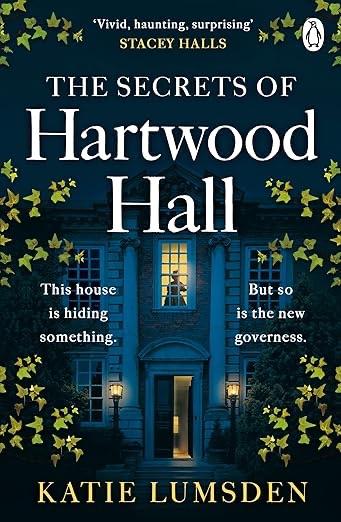
1852. When Margaret Lennox, a young widow, is offered a position as governess at Hartwood Hall, she quickly accepts, hoping this isolated country house will allow her to leave the past behind. But she soon feels there’s something odd about Hartwood: strange figures in the dark, tensions between servants and a wing of the house no one uses.
Why do the locals eye her employer, widowed Mrs Evesham, with suspicion? What is hidden in the abandoned East Wing? Who are the strangers coming and going under darkness? Hartwood Hall conceals mysteries, perhaps even danger. Margaret is certain that everyone here has something to hide, and as her own past threatens to catch up with her, she must learn to trust her instincts before it’s too late?
This is a brilliant example of the ‘gothic governess’ novel as I like to call them and brings an elements of modern preoccupations like gender and sexuality to the 19th Century novel. It begins with a du Maurier style opening of a winding drive and a forbidding house that local people like to avoid. When her charge is ill, Margaret is disturbed that locals won’t come near the hall and is more puzzled by the sudden presence of Miss Davis, a nurse who turns up at the house after hearing a child was unwell at the hall. After experiencing lights in a forbidden part of the house and seeing the unease Mrs Evesham has about people knowing their business, Margaret knows there’s a mystery here but is unsure exactly what it is. Because it’s a mystery I can’t say more, but I loved how this story unfolds and what it means for the women involved.
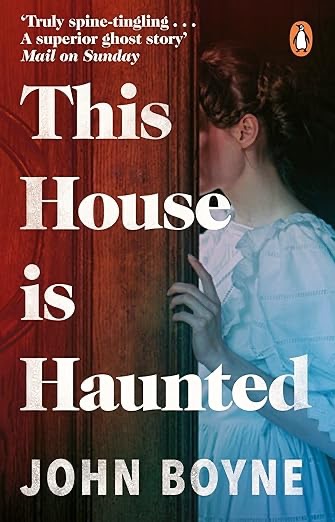
1867. On a dark and chilling night Eliza Caine arrives in Norfolk to take up her position as governess at Gaudlin Hall. As she makes her way across the station platform, a pair of invisible hands push her from behind into the path of an approaching train. She is only saved by the vigilance of a passing doctor.
It is the start of a journey into a world of abandoned children, unexplained occurrences and terrifying experiences which Eliza will have to overcome if she is to survive the secrets that lie within Gaudlin’s walls. This is such a gothic novel that it could almost be a parody but what saves it is Eliza herself, arguably a rather more modern governess than we would expect in 1867. curiosity, her determination and her rational analysis of her situation. Eliza is no hysterical heroine of a sensitive disposition, and her self-awareness is not just important to her handling of the mystery that surrounds Gaudlin, but also entertaining. Her independence, dry wit and forward-thinking views on certain social issues, if not necessarily likely for a woman living in the 1860s, elevate her above the average Victorian Gothic female protagonist, and her innate kindness is also an endearing counterpoint to her impressive courage. The children are also much more than the standard creepy kids of many a horror story, and the different ways in which they each deal with the challenges of their situation are fascinating and credible.
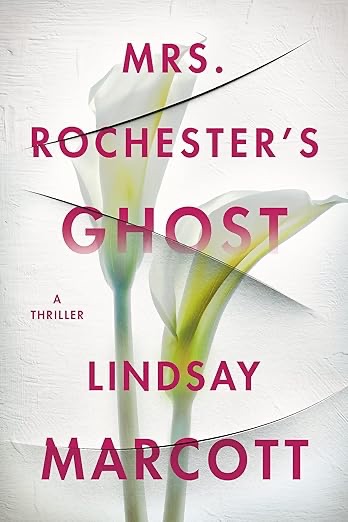
In a modern and twisty retelling of Jane Eyre, a young woman must question everything she thinks she knows about love, loyalty, and murder.
Jane has lost everything: job, mother, relationship, even her home. A friend calls to offer an unusual deal―a cottage above the crashing surf of Big Sur on the estate of his employer, Evan Rochester. In return, Jane will tutor his teenage daughter. She accepts.
But nothing is quite as it seems at the Rochester estate. Though he’s been accused of murdering his glamorous and troubled wife, Evan Rochester insists she drowned herself. Jane is skeptical, but she still finds herself falling for the brilliant and secretive entrepreneur and growing close to his daughter.
And yet her deepening feelings for Evan can’t disguise dark suspicions aroused when a ghostly presence repeatedly appears in the night’s mist and fog. Jane embarks on an intense search for answers and uncovers evidence that soon puts Evan’s innocence into question. She’s determined to discover what really happened that fateful night, but what will the truth cost her?
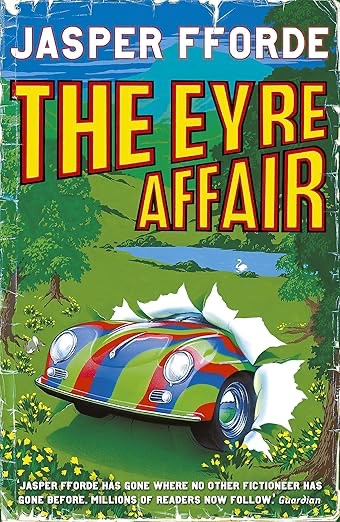
Meet Thursday Next, literary detective without equal, fear or boyfriend.
There is another 1985, where London’s criminal gangs have moved into the lucrative literary market, and Thursday Next is on the trail of the new crime wave’s MR Big. Acheron Hades has been kidnapping certain characters from works of fiction and holding them to ransom. Jane Eyre is gone. Missing.
Thursday sets out to find a way into the book to repair the damage. But solving crimes against literature isn’t easy when you also have to find time to halt the Crimean War, persuade the man you love to marry you, and figure out who really wrote Shakespeare’s plays. Perhaps today just isn’t going to be Thursday’s day. Join her on a truly breathtaking adventure, and find out for yourself. Fiction will never be the same again. This is such an inventive novel, part sci-fi and part detective novel with all the post-modern intertextuality you could want. Thursday is such an appealing heroine, with a detective’s flair and a keen nose for the bad guy – possibly due to her criminal father. We slip into various different worlds before finding ourselves back on that flaming roof at Thornfield Hall. Whimsical and utterly brilliant.
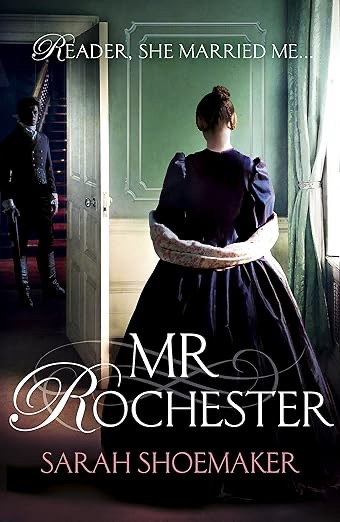
Uncover the secrets of Edward Fairfax Rochester, the beloved, enigmatic hero of Jane Eyre, as he tells his story for the first time in Mr Rochester, Sarah Shoemaker’s gorgeous retelling of one of the most romantic stories in literature.
On his eighth birthday, Edward is banished from his beloved Thornfield Hall to learn his place in life. His journey eventually takes him to Jamaica where, as a young man, he becomes entangled with an enticing heiress and makes a choice that will haunt him. It is only when he finally returns home and encounters one stubborn, plain, young governess, that Edward can see any chance of redemption – and love. Rich and vibrant, Edward’s evolution from tender-hearted child to Charlotte Bronte’s passionately tormented hero will completely, deliciously, and forever change how we read and remember Jane Eyre. Sarah Shoemaker takes us back to a world before Jane Eyre, using a 19th Century style in keeping with its source material. Most of the book is Edward Rochester’s early life, giving us a background that makes sense of the moody and changeable man we see in the original novel. His background is dogged by loss, including the death of his mother at an early age. We see with each loss how isolated he feels so that when he is betrayed by family into a marriage with the unknown Bertha Mason she becomes all he has, but everything he didn’t want. When Jane finally appears the stage is set for events at Thornfield but through his eyes. The tragedy is that the angel he sees before him is out of reach. Given access to his inner voice we can see how much he agonises over his feelings and whether to act, making sense of his odd hot and cold behaviour towards her. This book shines a new light on this story and is a definite must read for lovers of Jane Eyre.
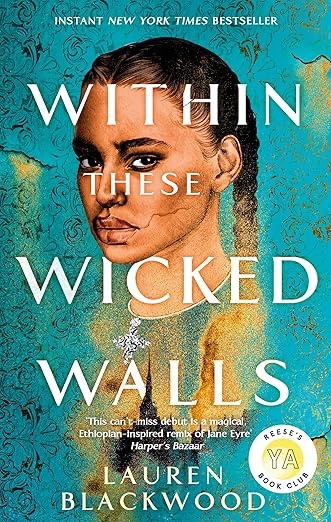
What the heart desires, the house destroys…
Andromeda is a debtera – an exorcist hired to cleanse households of the Evil Eye. She would be hired, that is, if her mentor hadn’t thrown her out before she could earn her license. Now her only hope is to find a Patron – a rich, well-connected individual who will vouch for her abilities.
When a handsome heir named Magnus reaches out to hire her, she takes the job without question. Never mind that he’s rude and eccentric, that the contract comes with outlandish rules, and that the many previous debteras had quit before her. If Andromeda wants to earn a living, she has no choice. But this is a job like no other, and Magnus is hiding far more than she has been trained for. Death is the likely outcome if she stays, the reason every debtera before her quit. But leaving Magnus to live out his curse isn’t an option because, heaven help her, she’s fallen for him.
This is an unexpectedly romantic debut from Lauren Blackwood that has been both an Oprah Winfrey and Reese Witherspoon book club choice. It has beautiful imagery and its Ethiopian setting gave me background on a country mainly known for famine (especially for this child of the 1980s). The mythology is fascinating and brings an even spookier aspect to the story. This is a very loose retelling of Jane Eyre, with the emphasis on the gothic elements and reminding us what a Beauty and the Beast story this is. The romance develops a little too quickly for me, but there’s a great banter between the central characters that feels true to the original pair. It also sticks quite firmly to the premise that he is the one being rescued. An interesting addition for the Jane Eyre fan, but not a faithful retelling.
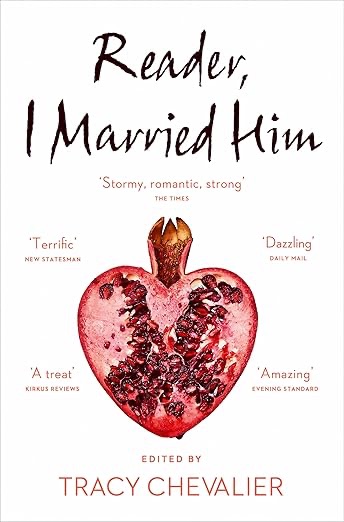
A collection of short stories celebrating Charlotte Brontë, published in the year of her bicentenary and stemming from the now immortal words from her great work Jane Eyre.
The twenty-one stories in Reader, I Married Him – one of the most celebrated lines in fiction – are inspired by Jane Eyre and shaped by its perennially fascinating themes of love, compromise and self-determination. A bohemian wedding party takes an unexpected turn for the bride and her daughter; a family trip to a Texan waterpark prompts a life-changing decision; Grace Poole defends Bertha Mason and calls the general opinion of Jane Eyre into question. Mr Rochester reveals a long-kept secret in “Reader, She Married Me”, and “The Mirror” boldly imagines Jane’s married life after the novel ends. A new mother encounters an old lover after her daily swim and inexplicably lies to him, and a fitness instructor teaches teenage boys how to handle a pit bull terrier by telling them Jane Eyre’s story.
Edited by the fantastic Tracy Chevalier, this collection brings together some of the finest and most creative voices in fiction today, to celebrate and salute the strength and lasting relevance of Charlotte Brontë’s game-changing novel and its beloved narrator.

 The Lotus Readers