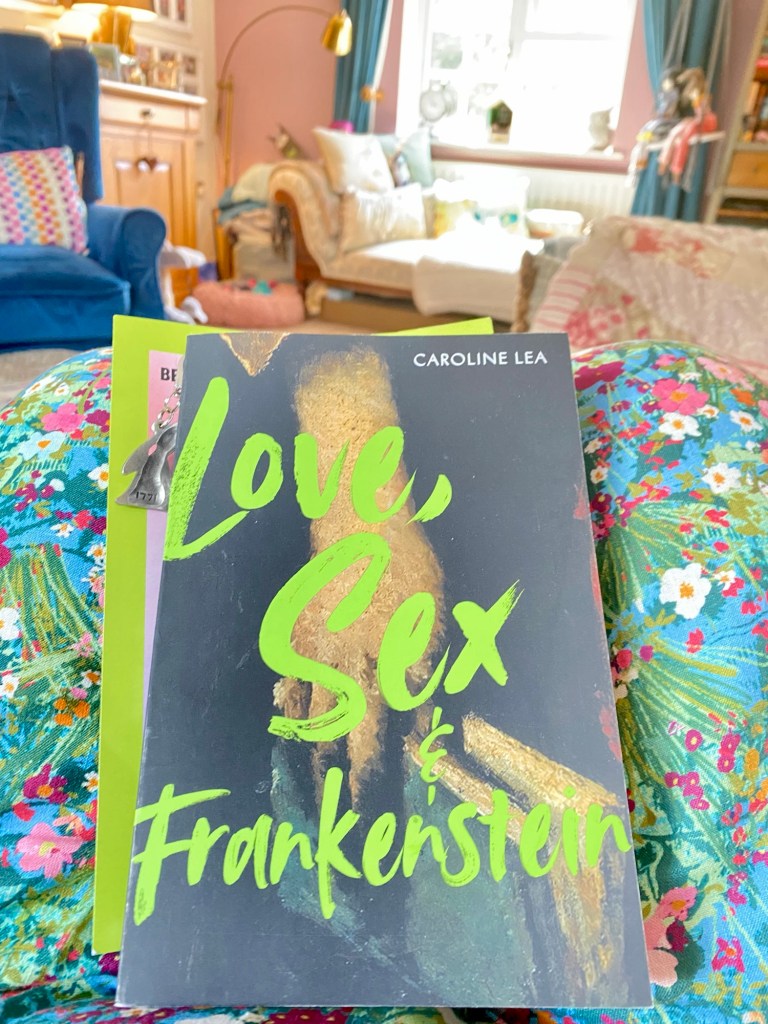
Mary Shelley, the author of Frankenstein, was born in 1797 to politician and writer William Godwin and his wife and fellow writer, Mary Wollstonecraft who wrote The Vindication of the Rights of Women. In her book she made, possibly the first, claim that women were not naturally inferior to men. It was a feminist manifesto centuries ahead of it’s time. Sadly Mary’s mother died only eleven days after she was born from puerperal fever, leaving Godwin to raise Mary as a single father. However, he remarried in 1801 to a widow with two children of her own, Clare being very near in age to her stepsister Mary. In 1841 Mary became connected to the poet Percy Bysshe Shelley, a well-known writer who was already married with three children. Shelley was 22 and Mary was 16. Facing nothing but criticism and social sanctions in London, the couple decided to escape to the continent along with Mary’s step-sister Clare. They then settled for a time on Lake Geneva, sharing a house with Lord Byron and his doctor Polidori. As the weather changed they become snowed in for a period of time and one of the diversions thought up by Byron was that each of them write a ghost story. Up until this point, Mary has only written in her journal but she can feel something stirring within her and in this strange place, Frankenstein’s monster is born.
Probably every English Graduate who specialised in Gothic Fiction has fantasised about a stormy night, in a house on the edge of a lake near Geneva. That night was supposedly the genesis of the first vampire story – Polidori’s The Vampyre – and Mary Shelley’s classic horror, Frankenstein. It always seemed strange to me, how two iconic horror legends were conjured up in the same place on the same night. Of course it was a longer period of time and everything these writers experienced in their young lives so far was fuel for their creativity. The setting is definitely strange and unsettling. Caroline Lea paints a picture of the lake becoming monstrous, magical but evil too and no longer a place where children paddle and dive underwater. The sky is dark, trees look like ‘funeral lace’ and ash rains down from above. Local people have noticed that at times the lake throws up strange shadows and clouds, some that look like sky cities floating in the air. When they find a man called Karl Vogel drowned in the lake with his eyes turned from brown to blue – they are shocked, but this is a place of transformation. It’s as if nature is creating the perfect circumstances for monsters to be born.
This incredible book. is a brilliant combination of historical and horror fiction, with a large side order of feminism – all of my favourite things. Every time I put the book down I would look at my husband and say ‘wow’ then try to write down everything that struck me. I ended up with ten pages of notes that I now need to build into coherent sentences and do this novel justice! Firstly the historical settings were incredible. When we first meet Mary and Clare, they are living in lowly lodgings in London. Mary’s baby is born and they are desperately trying to avoid the bailiffs that seem to follow Shelley wherever he goes. The author really captures 18th Century London with the girl’s filthy lodgings a bleak place to look after a baby. They’re also struggling to sleep, worried that any moment their flimsy door will be kicked down. This is the reality of being the mistress and illegitimate child of a well-known poet who does not pay his debts and has retreated back to his family home. I never imagined that Shelley left her in this position. I’d imagined them living on Lake Geneva complete with servants and all the excesses that Byron was famous for, then travelling around Europe, leaving their troubles behind them. Their relationship would probably be considered abusive now, not just because of their age difference but because of the way Shelley manipulates her. Something that only worsens when Byron and his peculiar brand of chaos are on the scene. When Mary tries to stick up for herself, all the qualities he supposedly loved about her – her independence, her spirit, her intelligence – are thrown back at her, in order to control, manipulate and punish her. He calls her a good mother, but also accuses her of fretting and becoming boring. It is her independent spirit that landed her in Shelley’s arms but he’d rather she didn’t have the independence to question him, refuse him or leave him. His threat is very clear:
‘Women who leave their children, will never see them again’.
Of course Shelley wouldn’t give up his carefree life to look after his child. He would probably hire a string of nursemaids to seduce then discard, until his only option is to dump his son on his long suffering wife who is pregnant again. Mary starts to realise that although he professes to love her, once she has become a mother she is always expendable. My urge to slap Mary’s step-sister Clare started early in the book and flared up very frequently. She has absolutely no girl code. She had left with Mary in the hope of rekindling a brief liason with Byron. However, it’s clear she’s happy to switch affections if he isn’t there, even onto Shelley. She flirts and simpers, touching his arm and holding his hand to guide her outside. Byron’s treatment of Clare is utterly cruel, he manages to ghost her even when they’re finally face to face. He refuses to acknowledge she exists and then only picks her up again when the weather descends and there are no other prospects. Despite this it is hard to like her, especially when she gains snippets of information from Shelley only to drop them on Mary when they’ll hurt the most. The arrogance of both poets is endless! Byron isn’t just a seducer of women, he drinks and takes laudanum at every opportunity too. He abuses his supposed friend and doctor Polidori, considering him dull and mimicking his stutter in front of the women. His own disability is never mentioned by anyone – the limping stride he’s had since childhood is overlooked or even compensated for as Mary notices some people unconsciously falling into step next to him, slowing their stride to match his. His impulsivity is like that of a toddler, moving mid-week from a hotel to the house on the lake, determined not to pay for the weeklong stay he originally booked. It will cost more for the hotelier to clean up after his bizarre animals, including two eagles, a huge dog and a monkey. He sets his sights on Mary and despite his magnetism she can see what he truly is – a boy throwing mud at windows to detract from his own badness and shortcomings.
The setting is glorious and it’s clear why frozen mountains, cavernous lakes and the arctic weather feature heavily in Frankenstein. It’s where Mary goes to have time to think, away from the chaos and hedonism indoors. The seemingly magical weather conditions are explicable, even though they feel supernatural. Lake Geneva is known for throwing up mirages called ‘Fata Morgana’. They take the form of distorted boats just above the horizon or even ‘castles in the air’, where a whole city seems projected into the clouds. Named after Morgan Le Fay the mirages are created by rays of light pass through air layers of different temperatures. The sheets of ice on a lake keep the surface air cooler than in the layers above. It’s easy to see why people might by unnerved by something that appears so otherworldly. A more psychological phenomenon that’s clearly takes hold within the house is cognitive dissonance, felt strongly by Mary in particular. The villa is starting to feel like a place she doesn’t belong because her emotions and reactions don’t seem to match anyone else’s in the group.
‘She feels like a stranger in the foreign land of this room, unable to understand their bright chatter and loud laughter […] every moment takes her further away from these awful people who carry on as if she isn’t there at all’.
Motherhood and the reality of being Shelley’s mistress has changed Mary and it’s so relatable. She wonders whether all women feel pulled in so many different directions at once. She also wonders if she ever had a true understanding with Shelley. A fire that lit up her heart and her mind is now glimpsed very rarely and she wonders if it ever truly existed. Has she fallen in love with her idea of Shelley – the one who creates the grand illusion of romance in his poems. He doesn’t love her, merely the idea of love itself. In disappointment with all men she turns to the wisdom of women, particularly her mother’s work. Mary Wollstonecraft was the first woman to write a feminist manifesto and she truly understood what needed to change for women – the problem of having to depend on a man. She realised that nurturing women’s learning was the first step:
‘Strengthen then the female mind by enlarging it and there will be an end to blind obedience’.
Women could only overcome their dependence on men if they were educated and could earn their own living. In Mary’s dark night of the soul she hears her mother’s voice encouraging and coaching her and the minute she does Mary’s able to breathe again and see a clear way to support herself – by selling her writing. Once she can do that, it no longer matters whether Shelley is inconstant or distant – she does not depend upon him for security and stability. She is ashamed that despite her intellect she has allowed this man to reduce her. Yet she has to tread a fine balance and think these things rather than say them outright. She fears that Polidori’s friendship with the two men, means they have convenient access to a doctor. If she fully expresses what she feels might Shelley think her mad and seek to have her committed? However, she is furious that she might be asked, yet again, to grant forgiveness to a man who is not sorry. She feels that both poets have taken and ruined promising young women, not caring that the consequences of their actions will rest solely on the girl’s shoulders. She wonders what it must be like to take up space in the world, to believe it is your birthright to dictate the temperature of every room they’re in. It is Byron’s arrogance that becomes her blueprint for a future self, allowing herself to be angry and consequences to be damned. She wants to be more like him, true to her emotions and principles and saying exactly what she thinks without worrying about the outcome. In fact it’s a dalliance with Byron where Mary seems to find more strength. It’s an uncomplicated exchange of desire, full of passion, but at no paint does he take anything from her. It gives her the strength to confront Shelley about returning to his wife and leaving both women at the mercy of debt collectors, out of sight and out of mind. She finds her voice and addresses Shelley as a man, rather than the great poet, making her feelings about his infidelity very clear, but also pointing out his cowardice and the times he hasn’t been there for her.
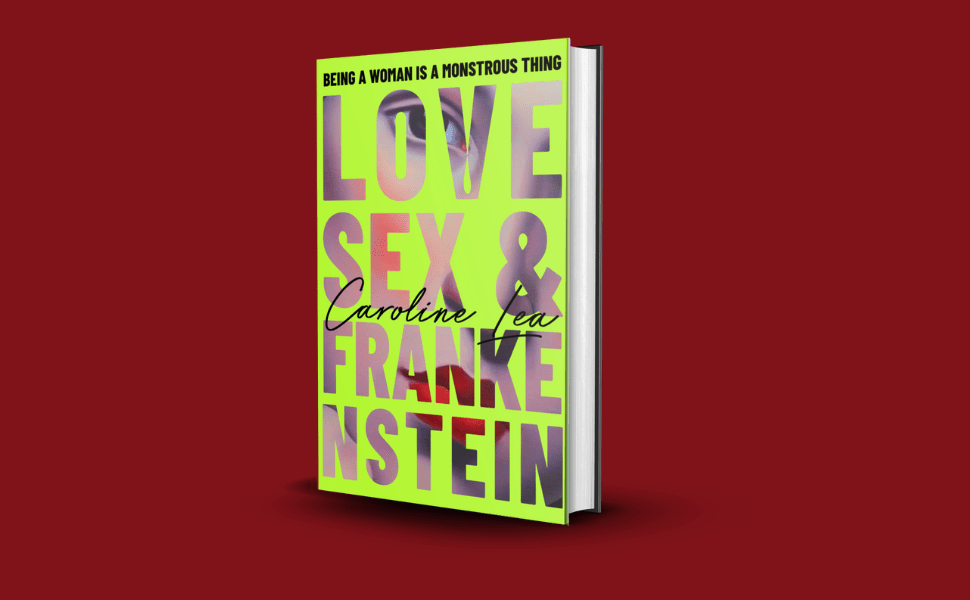
I loved how the story of Frankenstein’s monster is psychological fragments stitched together, just like the monster himself. Through writing Mary processes her own emotions and thoughts which then feed into the emotions of the abandoned monster. She remembers stories of medical students digging up bodies and stealing them for dissection. Then she gives the creature an internal monologue, ripe with the emotions she has felt, but never expressed. Frankenstein leaves his monster just as Shelley left Mary and their baby in squalor. She’s writing a criticism of men who create with no thought for the thing they’ve created. Victor Frankenstein goes to sleep expecting his creature to die and feels nothing. The creature meanwhile feels a combination of Mary’s grief and abandonment, first losing her mother and then the loss of her father, a man who brought her up to have a rebellious spirit and think for herself, but rejected her when she lives by these principles. Mary is this bewildered and angry creature and that’s perhaps why she gives her monster the equivalent of philosopher John Locke’s tabula rasa – the blank slate of a small child ready to experience nature, love and all that is beautiful. Frankenstein’s monster embodies the nature/nurture debate in that the creature isn’t born evil, it’s other people’s cruel treatment of him that makes him monstrous. Her writing has processed all these feelings and working through them makes her feel hopeful for the first time. She might return to London with her son and instead of being beholden to Shelley or her father, she could keep them both with her own writing.
Typically, blinded by his own arrogance Shelley doesn’t see himself in Victor Frankenstein at all. At first Mary thinks he’s feigning ignorance, but he genuinely can’t see his own reflection. He sees too much ambiguity in the story, thinking either the creature should make Victor look at his own shortcomings or she should make it so monstrous that no reasonable person would expect Victor to care for it. I loved the way she takes his criticism, because it shows us how much Mary has grown up. She realises that at every stage on the way to publication there will be a man who wants to shout his opinion. It doesn’t matter, because she knows they will all be mistaken. The book, like the creature at it’s centre, will be sent out into the wilderness looking for a creator. She’s fairly sure it will find one, because she knows her book is special. As for Caroline’s book, this is an absolute masterpiece and made me think about Frankenstein from so many different angles. Caroline Lea’s Mary take us through the psychological trauma and brings to life her relationship with Shelley, often told in a rather salacious or romantic way without any thought to the inequality between them. Through this experience she guides the reader through the genesis of this incredible novel. It is stitched together from so many different parts, but here we can see them all and understand the circumstances they come from. What Caroline has written is a Bildungsroman, a novel of Mary’s rebirth from girlhood to womanhood. Frankenstein is the chronicle of that birth, as messy, terrifying, horrific and momentous as it is. This birth being the genesis of Mary Shelley as a woman but also as a writer of one of the most important novels in literature.
Meet the Author

Caroline Lea grew up in Jersey and gained a First in English Literature and Creative Writing from the University of Warwick, where she has also taught on the Creative Writing degree. Her fiction and poetry have been longlisted for the BBC Short Story Prize and Sunday Times Short Story Award, and shortlisted for the Bridport Prize, the Fish Short Story Competition and various flash fiction prizes. Her novel, THE GLASS WOMAN, was published to critical acclaim and shortlisted for the HWA Debut Crown. Her next novel, THE METAL HEART, was Scottish Waterstones Book of the Month. Her most recent novel, PRIZE WOMEN was featured and acclaimed on BBC Women’s Hour. Caroline is passionate about helping other writers to grow and succeed: she teaches creative writing both privately and, currently, for Writing West Midlands and is often recruited to give talks at literary festivals and events. She currently lives in Warwick with her partner and children and is working on her next novel about Mary Shelley writing Frankenstein. Her books often feature ordinary women in extraordinary circumstances.

 The Lotus Readers