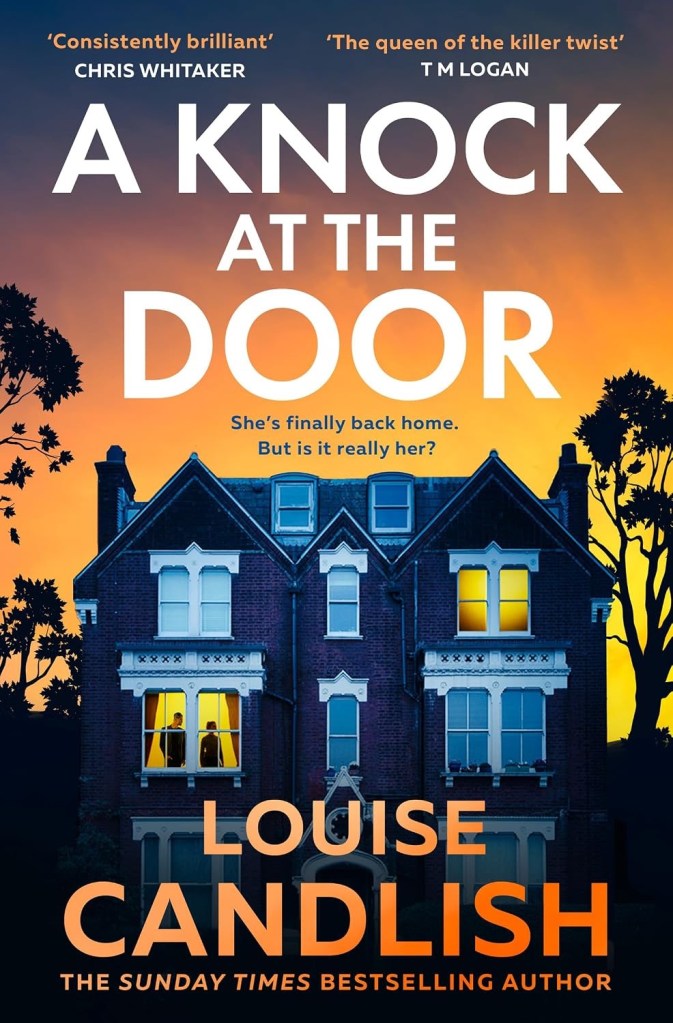
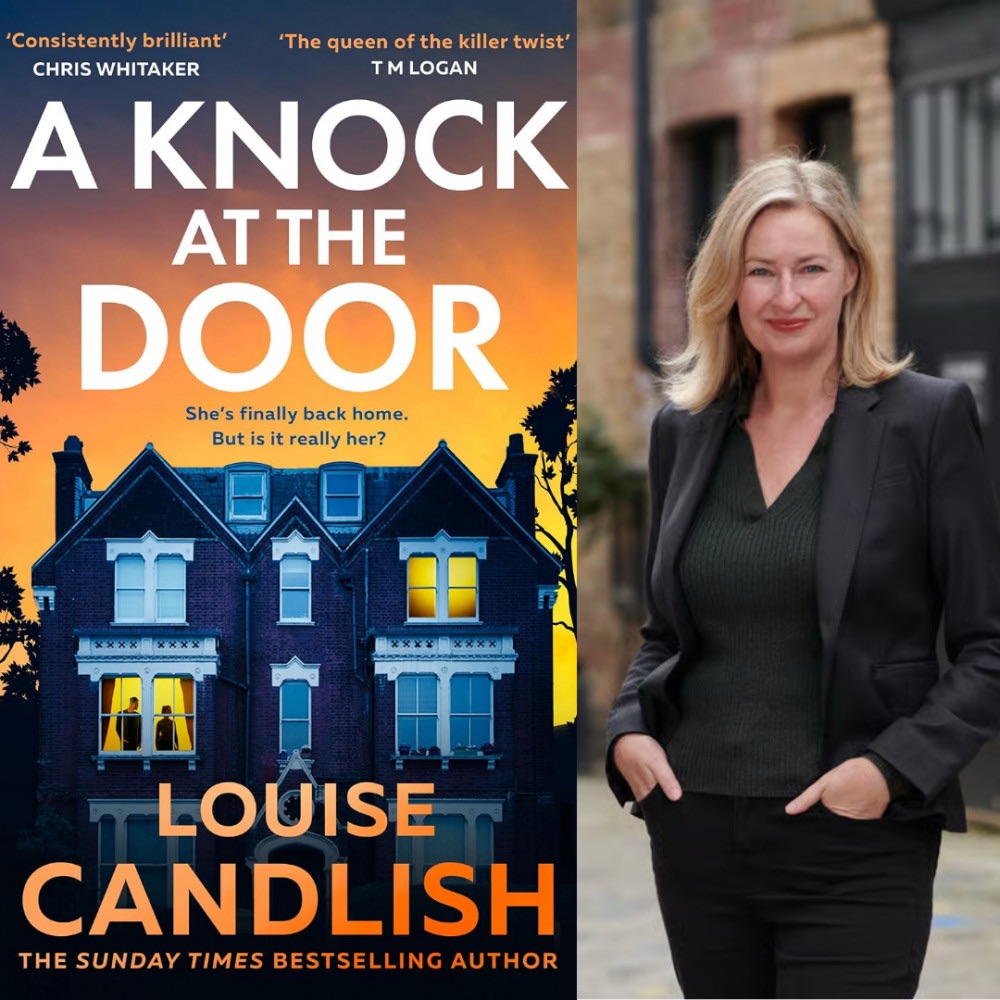
When three-year-old Tippi Macklin goes missing on a weekend break with her parents, her face appears in newspapers around the world, sparking endless debate and conspiracy theories. Wealthy and glamorous Jed and Gabby never give up hope that ‘Little Tippi’ will be found.
Eighteen years later, a young woman arrives at their door claiming to be their lost girl. She has a new name, a new history and some startling evidence to support her claim. Can she really be Tippi – or is she an imposter?
A DNA test will prove her identity one way or the other, but when the results come back, it seems the mystery has only just begun…
I do LOVE a Louise Candlish novel, so much so that when I saw I’d been approved on Netgalley I spent my whole Saturday reading it. I’m never disappointed and this is such a fascinating subject and family. Narrated by Gabby Macklin’s sister Bel, this is about how such a huge tragedy affects a whole family, but also about the underlying tensions and dynamics between its members. If it wasn’t for Jed and Gabby losing their daughter eighteen years ago you would absolutely hate them. They’re one of those couples on Escape to the Country or Grand Designs who say ‘I’m a cheese maker, my wife is a freelance bid writer and we have 2.4 million to spend.” Those people who claim to want a country kitchen, but really mean Downton Abbey. It’s now eighteen years later and a young woman claims that, after her parents died in a car crash, she’s discovered things that make her think she’s their lost daughter Tippi. This isn’t the first time their hopes have been raised, but it’s by far the most exciting lead they’ve had in a long time. Gabby tells her sister she feels that Eden is her daughter but Bel isn’t so sure and starts to investigate. Told mainly through Bel there are also a few different narratives: feeds from the couple’s social media pages for Tippi, some creative writing pieces from Tippi’s perspective from someone clearly obsessed with the case and text messages between two people that are very hard to decipher and suggest illegal activities.
The characters are fascinating with Bel and her sister Gabby at the story’s heart, but also a weird dynamic between Bel and her brother in law Jed. The two families are in very different positions financially. Jed runs a very successful training business and Gabby makes candles in at home studio. Their home is clearly interior designed with a sunken living room area and so much party space. Theirs is the house where the family get together and with such a disparity in their earnings, it’s clear that some resentment is felt by Bel. She’s supporting her family while husband Marc gets his business off the ground. They rent their home and are aware that if London prices go up much more they will have to move, probably to a worse area than now. Their home is lived in rather than designed and with Bel working full time as a trading standards officer she has a lot on her plate. Daughter Luna is coming up to her GCSEs and becomes more incommunicative by the day. Grace is away at university studying psychology and seems the most sensible and sorted out of all of them. Wherever Bel’s busy schedule allows she is quite determined to find out whether Eden really is her lost niece or has she realised her similarity to Tippi and noticed Gabby and Jed’s wealthy lifestyle? It’s hard to like Bel but there’s a lot to empathise with. Jed came across as a man who is used to setting the agenda and uses his money to control and manipulate. Gabby is almost like a shadow, physically present but quiet and passive. Losing her daughter has been a trauma she will never get over and Bel doesn’t want her sister to sleepwalk into a relationship with Eden without proof that she’s definitely who she says she is. But why is Bel so sure Eden isn’t Tippi?
I thought the author captured the endless speculation and media attention around a missing child, especially one as photogenic and appealing as Tippi clearly was. When a case captures the public attention it’s as if everyone wants to be involved. The furore surrounding Madeleine McCann’s disappearance has shown us that people on social media will comment, discuss and make wild accusations about the family. The excerpts from the Facebook page show that people want to be part of the story whether that’s pretending to know something, throwing a wild theory out there or just sending their love and prayers. Often there appears to be no thought for the family who have to wade through this just in case there is a clue. The creative writing pieces are particularly cruel and well written. Who would do such a thing? What’s their aim? Is there any truth in them? It plays on Gabby’s hope that one day she’ll find her. The guilt of the parents felt very real and I found it very hard to believe that Eden was preying on that hope, just wishing that Gabby’s need to find her daughter might overwhelm the need for the truth. In the midst of DNA tests, research and quizzing Eden, has Bel has taken her eye off the ball at home? Something that has bothered her for years keeps resurfacing, a frustration that her sister’s ongoing drama overshadows her and her daughters. Because of what happened, Gabby is the precious sister who they can’t upset. Every problem Bel’s family has pales in comparison to what the Macklins have gone through. As her mother says, she can’t complain about her daughters because at least she has them.
There are so many secrets here and as always I was glued to the page as they were revealed. Each revelation was a surprise and explained a lot about the family dynamics. The twists were not just focused on the Macklins though, Bel’s family had a few surprises in store too. I thought this was an addictive read and captured perfectly how trauma like this ripples outwards into wider family and friends. Through Gabby we can see how the loss affects a mother, leaving her in limbo and something of a recluse in her own home, perhaps not wanting to miss any development and having her hopes raised and dashed continually. Bel tells the story very well, becoming obsessed with Eden perhaps at the expense of her own daughters. My thoughts about some characters were confirmed, but others surprised me completely. You will devour this novel like I did as it’s Louise Candlish at her very best.
Out November 5th from Harper Collins
Meet the Author
Louise’s previous thrillers include OUR HOLIDAY, a Sunday Times bestseller, WHSmith Richard & Judy Book Club pick, and OUR HOUSE, now a major four-part drama starring Martin Compston and Tuppence Middleton (watch the full series on ITVX in the UK and PBS/Amazon Prime in the US) and winner of the British Book Awards Book of the Year – Crime & Thriller.
She has celebrated her 20th anniversary as an author with the news of two prestigious awards for 90s-set thriller THE ONLY SUSPECT: the Capital Crime Fingerprint Award for Thriller of the Year and the Ned Kelly Award for Best International Crime Fiction. Filming has just wrapped in London for the ITV adaptation, with Kevin McKidd starring as Alex, a middle-aged man with a deadly secret to hide. More soon on that – and on the adaptation of THE HEIGHTS, starring Anna Friel.
She lives in South London with her husband, daughter and a fox-red Labrador called Bertie. Books, TV and long walks are her passions – and drinking wine in the sun with family and friends. Authors she loves include Tom Wolfe, Patricia Highsmith, Barbara Vine, Agatha Christie and Evelyn Waugh. Her favourite book is Madame Bovary.
What’s worse than a big little lie? An even bigger little truth . . .
Ten years ago, at the Pirriwee Primary school gates, the friendships of Celeste, Jane and Madeline were forged in the fires of young motherhood, the big little lies we all tell to hide our deepest fears and secrets – and the event that changed everything.
Now mothers to hormonal teens, these frazzled friends are starting to worry about the strangers occupying their kids’ bedrooms. Or they would, if they weren’t so distracted by their own problems.
Because:
Madeline’s landmark birthday is about to land a bombshell.
Jane’s rock-solid marriage is suddenly crumbling.
And Celeste’s mother-in-law is asking awkward questions about the past.
Not to mention the mystery of who sent the school principal a freshly severed finger.
So many difficult little truths.
Such a pity then that not a one of them can see the biggest ugliest truth hiding in their midst . . .
Reading this book felt like catching up with old friends and listening to their latest gossip. It was good to be back in Pirriwee and it’s a testament to the HBO series that I was surprised to be in Australia. The music, casting and setting of the series were so strong that I was seeing Reece Witherspoon and Nicole Kidman as I was reading. The ongoing lives of Madeline, Celeste and Jane are narrated in chapters headed with their names. In between is the transcript of a group counselling session with all the teenagers. All of this must link to a package, sent to the school containing a severed human finger. Their narration has all the hallmarks of life in the dreaded ‘middle’ even though Jane is a little younger than her friends. Their days are taken up with the care of their teenagers and elderly parents, ill health, the question of more children before menopause, big birthday celebrations and a role as mother of the bride for one of our friends. There’s also a cool new teacher at the school who’s keen to make friends. Underlying this are the events of the previous novel – the trauma of domestic violence for Celeste and the loss of Perry her husband, the discovery that Jane had a non-consensual experience with Perry resulting in the birth of her son Ziggy, and Perry’s ‘accidental’ death at a fancy dress party. Bonnie, the wife of Madeleine’s ex-husband Nathan is processing the trauma of pushing Perry to his eventual death and both she and Renata have larger roles in this follow up.
Our new storylines are the growing presence and confusion of Celeste’s mother-in-law Mary Louise, who is both monstrous and hilarious at the same time. Celeste has to cope with Mary-Louise’s perception of Perry as her golden boy and her perception of Bonnie as a murderer. In a co-hort of liberal and correct women, her loose canon approach is hilarious at times. However she’s in danger of ruining her twin grandsons and turning them into their father. On a more positive note she treats Jane’s son Ziggy equally and insists on spending time with all three, much to Jane’s anxiety. Jane is coping with Perry’s ever widening circle of victims as the consequences of his actions affect her marriage and Tom in particular. Celeste is worried that Mary-Louise is being unusually spontaneous, erratic and forgetful. The fear of being responsible for a woman she never bonded with is always in the back of her mind. Madeline is turning 50, but instead of all eyes being on her the limelight is stolen by her eldest daughter and the ‘perfect boyfriend’ when he decides to publicly propose. Madeleine is just waiting for the cracks to show in this seemingly faultless young man, but soon planning for the wedding falls to the wayside as she finds a lump in her breast and needs to undergo diagnostic procedures. Facing her mortality and waiting for her test results has Madeline on a very thin rope, however it’s a bombshell from husband Ed that really brings life to a crashing halt. It. was interesting to see Madeline actually lose some of her famous composure and with very good reason.
The peripheral characters are also back and with a little bit more space to grow, something the author has deliberately done after watching actress Laura Dern turn the small role of Renata into something really interesting. Now she’s in the centre of the group more and I really enjoyed her ballsy choices and independent spirit, such as taking motorcycle lessons. She’s also a lot more astute than the others give her credit for, calmly sitting back and reading people perfectly. Bonnie has always felt underused in the first novel, now we focus on her a little more as she continues to process the trauma of Perry’s death and struggles to communicate with her daughter. Then there’s new woman in town and everyone’s favourite teacher, Melody, who is soon at Tom’s morning boot camp and gravitating towards the friends. She’s a good listener and brilliant at giving women permission to focus on their own needs between all the demands on our time. The freedom Jane feels when she’s taken to a club spontaneously and just lets loose is so lovely to see. The rather magical weekend away she organises is another hit, allowing Madeline to open up about struggles she’s having. Melody starts to feel like a fairy godmother and as the women welcome her into their friendship group, their teenagers enjoy her approach to teaching and she looks like a welcome addition to their community. There’s a new principle too and Celeste meets a man called Marco who has also just moved to Piriwee and is pleasantly surprised to feel that tingle of excitement when meeting someone who has romantic potential.
So when a severed finger arrives at school addressed to the new principal rumours start to fly. A particularly worrying one for the parents is their kids casual joke about a ‘paedo’ middle aged man hanging around and asking questions about the school. Another rumour involves a mob boss who has the reputation for sending body parts through the mail when displeased, but who is his intended target? This central mystery meanders along through their busy lives. As before this set of parents are trying their best to work together, despite their tangled web of blended families. Jane hates being with Mary Louise, in fact it makes her feel sick, but if it’s the price of Ziggy having a grandmother in his life she will persevere. Maddy tries to work with Bonnie and Nathan, actually turning to her ex-husband for help when she realises that she’s overwhelmed. I felt so much for Jane and her experience of giving birth to the child of a man who has assaulted her. She finally shares something about Ziggy’s birth that I really identified with and found very emotional. The only jarring note in the whole narrative was the transcript of the teenagers who seem to be super intelligent and articulate compared with teenagers I know. They felt way more sophisticated (and rich) than me. I did have some inkling of the central mystery but it didn’t detract from my enjoyment at all. I’d feared I might be let down by this sequel but it definitely lived up to the first novel and the TV series. It still had that difficult to describe magic that makes you want to read it all in one go and I pretty much did.
Out now from Michael Joseph
Meet the Author
Liane Moriarty is the Australian author of nine internationally best-selling novels: Three Wishes, The Last Anniversary, What Alice Forgot, The Hypnotist’s Love Story, Nine Perfect Strangers and the number one New York Times bestsellers: The Husband’s Secret, Big Little Lies, Truly Madly Guilty and Apples Never Fall. Her books have been translated into over forty languages and sold more than 20 million copies.
Big Little Lies, Nine Perfect Strangers and Apples Never Fall were adapted into popular television series with the star-studded casts including Nicole Kidman, Reese Witherspoon, Melissa McCarthy and Annette Bening.
Liane lives in Sydney, Australia, together with her husband, son and daughter.
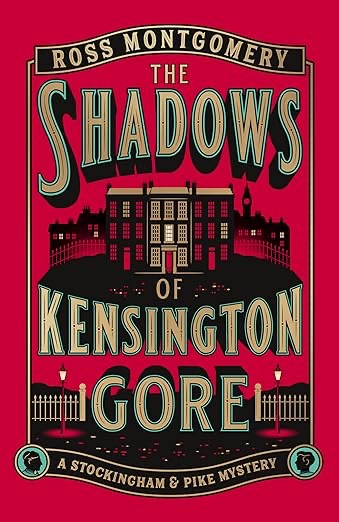
London, 1911. Coronation fever. Suffragette unrest. A city crackling with tension.
When a policeman is found brutally murdered on the streets of Kensington, blame falls on the three women seen fleeing the scene.
Their sole witness? Stephen Pike: ex-borstal boy, under-butler extraordinaire and assistant to the most unconventional detective in London, Miss Decima Stockingham. Sharp-tongued, fearless and bored of behaving herself, she’s the only one able to see that this case is not what it seems.
Aided by an invisible network of maids – their eyes and ears in every house in London – this unlikely duo must catch the killer before time runs out. But in a city dazzled by ceremony and divided by change, you never know what might be lurking in the shadows…
It’s impossible for me to start this review without declaring my undying devotion to Miss Decima Stockingham who intelligent, entitled, sweary and short-tempered. On meeting her long-suffering servant Stephen Pike, other servants from the apartments that line Kensington Gore commiserate that at least he isn’t indentured to the mad old cow in 89C. He doesn’t correct them because largely their only impression of this woman is her morning bellow for her egg and her propensity to fling books out of the window until it arrives:
“I was under the impression that boiling an egg was a quick job, but apparently you’re rearing the chicken by hand and fetching the water from fucking Spain.”
Underneath this exterior is a sharp-witted woman who doesn’t mind appearing contrary and rude if it gets her the results she needs or the information she’s seeking. This character is begging for a TV series and Olivia Coleman. Her foil is Stephen Pike, driven to distraction by her demands and her willingness to place him in dangerous situations. He’s equally comic, mainly physically, in one scene he’s lured to a union meeting at the pub which soon descends into an evening of rounds, a drunken football match, injury and a hefty hangover. He may seem ordinary to the untrained eye but Miss Decima can see a sharp intelligence, observational skill and an ability to put a pattern together that makes them a formidable team.
We meet them ten years after the Victorian era ended and the coronation of George V and Queen Mary is just around the corner. The suffragettes are ramping up their civil disobedience and taking direct action to gain the vote. The author uses this backdrop for a labyrinthine murder mystery and our mismatched pair are investigating. Historically, we can see all the signs of change that will come to England after WW1, the changes in class structure with working men wanting to form unions and enforce their employment rights. Women didn’t just want to vote but also to work, run their own finances and have rights to divorce. The Divorce and Matrimonial Causes Act of 1857 made divorce a civil matter but it didn’t treat men and women equally, seeing women as property. The suffragettes had very different factions within the wider movement, although Miss Decima claims to have no time for any of them, particularly those who take direct and destructive action. She believes that their antics play into the hands of men who say women are too emotional to vote. However, despite some snobbery about which class of woman should get the vote, she is a feminist. She explains women’s frustration with the status quo by pointing out the memorial statue for the Great Exhibition of 1851 to Stephen. It depicts Prince Albert held aloft by four female figures showing that women are relegated to the background.
“The world is stacked upon the unseen labours of women’.
The murder case is sensationally linked to the suffragette movement with three young campaigners, seen to leave the main march and head towards the south of Kensington Gore, situated near the Royal Albert Hall. Their intent seems to have been defacing a statue but all that’s left behind is a dead policeman and the women seem to have vanished. The police officer has had his throat cut from ear to ear and the gory details causes a sensation, as Miss Decima shrewdly observes female murder suspects are regarded more harshly than men. If they apply the theory of Occam’s Razor it’s an open and shut case but Miss Decima senses this plot is more Byzantine than first thought. Stephen is befuddled when she takes the case on, especially when she states her reasoning – ‘they’re clearly innocent.’ If found guilty the women’s actions could upset the suffrage cause for some time and have repercussions of international significance, maybe that’s worth killing for? On a more basic level she believes there is no way the woman could have physically managed to overpower and kill him. This is the case they have to prove and with her razor sharp logic, a small battalion of female investigators all called Ivy and Stephen’s ability to pick out obscure clues and patterns they will surely succeed.
There was nothing about this historical crime caper that I didn’t like. It is full of action, humour and incredible period detail. Miss Decima is a formidable woman and I could hear a definite Miriam Margoyles tone as she barks out her orders and insults: ‘put down the poker and stop being a twat’ being a favourite. The author perfectly captures the struggles and atrocities committed against women in the suffrage movement, especially by the police and prison service. Then in the next chapter we’re knee deep in the funniest union meeting I’ve encountered. Stephen is so endearing and the perfect foil for his employer. He can go where a more upper class woman can’t, although I’m sure she’d give it a good try. She knows that other servants and those lower down the class order are going to be more candid with someone of their own station. This mystery does have some links to the previous book but I didn’t have to read it to enjoy this one in its own right. The action sequence at the end, as all those old jigsaw pieces come together in Stephen’s mind is so well done I could see it all – Guy Ritchie’s directing style would be perfect for a film adaptation. Miss Decima is the closest thing to a female Sherlock Holmes I’ve read in a long time. With her three sets of teeth -“one for speaking, one for eating, one for shouting” – she’s a wonderful grotesque and an absolute joy to read. More please..
Out October 2026 from Penguin Books
Meet the Author
Ross Montgomery has worked as a pig farmer, a postman and a primary school teacher, so writing books was the next logical step. He spent his childhood reading everything he could get his hands on, from Jacqueline Wilson to Beano annuals, and it taught him pretty much everything that’s worth knowing. He has now written over twenty books for children, including THE MIDNIGHT GUARDIANS, which was shortlisted for the Costa Book Award 2021 and selected as one of The Guardian’s Children’s Books of the Year. He lives in London with his wife, a cat called Fun Bobby, and a cactus on every available surface.
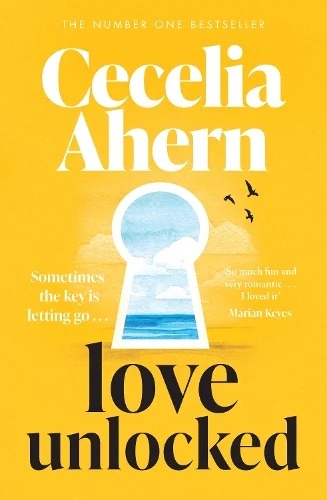
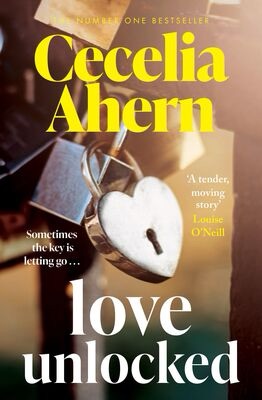
Melody has vowed never to fall in love again. Al is a hopeless romantic. So, when they quite literally bump into each other, there’s no reason sparks should fly. But the world seems a little upside down lately.
A few weeks ago, Al ordered the removal of all the lovers’ padlocks from one of Dublin’s beautiful bridges. Ever since then, couples across the world have started splitting up. And as Melody begins investigating this mysterious wave of breakups for her podcast, it seems there might be a bigger story to tell.
Together, they decide to uncover what’s unravelling so many love stories. And, in the middle of solving everyone else’s heartbreak, can they unlock theirown?
For her latest novel, Cecilia has brought us to Dublin and the marriage of Joseph Plunkett and Grace Gifford, a famous love story that ended with a candlelight marriage in Kilmainham Jail the night before his execution. This tragic story is immortalised in the 1985 song Grace and the Grace Plunkett bridge is a site of pilgrimage where people represent their love with initialled padlocks secured to the bridge railings. However, this proclamation of love is having its effect on the city’s bridges, that were never engineered for the extra weight of thousands of steel padlocks. For Al this is a problem, he works for the bridge authorities and he has been tasked with checking not only how much strain this adds to their bridges but how best to manage the problem. When the advice comes it’s not great for those of a romantic disposition, the locks will need to be removed in order to keep the bridge safe. So Al orders their removal as soon as possible, not in the best frame of mind romantically he isn’t fully prepared for the response. It’s not long before podcaster and DJ Melody is in touch with him regarding the love locks, she’s been inundated with stories of people who had a lock on the Grace Plunkett Bridge and since their removal have split with their other half. Some of them very close to home. She decides she must interview the man behind this phenomenon, but this isn’t the best time for Al since his own relationship has spectacularly imploded. Melody isn’t someone who takes no for an answer and soon the pair are investigating the stories and getting to know each other. Could the unlucky lovers clamouring for answers turn into something like luck for these two heartbroken people?
This is a story I’ve come across before with a lesser known author and found the whole subject fascinating. Could removing a love lock genuinely remove the love between two people, or was it a matter of psychological suggestion? They know they can’t rule out some opportunists using it as a reason to break up without taking the blame, but the sheer amount of coincidences is spooky. Neither Al or Melody are lucky in love. Melody split up with long term partner Sam after a very public proposal she wasn’t ready for. They still run a jacket potato van together and spend lots of time in each other’s company, despite Sam’s marriage and new baby. Melody knew that it wasn’t that she didn’t want to marry Sam but more that she knew she didn’t want to marry anyone, ever. Al’s relationship with Tara ended when he discovered a long term affair with their flatmate and Al’s best friend, Walter. Now Al has been forced to move out of a house he owns and Tara and Walter are living together. Not that he’s taking this lying down. There are some downright sneaky but hilarious ways of getting your own back. One of which backfires spectacularly leading to an office confrontation that had me in the same position as Al’s assistant Natasha – almost pissing myself. In fact Natasha was one of my favourite characters throughout. Both Al and Melody need to let go of the past and grow; could the misfortune of hundreds of couples actually bring them together?
I really loved Melody. She’s quirky, edgy, funny and a bit neurotic – but all the best people are… right? She’s beautiful in an offbeat way and knows exactly what she wants, her pizza ordering at Al’s flat is a great example:
“We are ordering two separate pizzas because we are two unique individuals who have different tastes, desires and goals and who know our own minds”.
Perhaps keeping their connection loose and undefined gives them both the space to properly get to know each other. Melody has relied on Sam (and still does if she’s honest) but that can’t continue. Even her mum isn’t available this time and needs space of her own. This means she gets to know Al with no expectations or barriers and actually opens up. She can’t sleep well at night without someone there but Al supports her to try. He’s there listening on the end of the phone while she does her bedtime routine and it’s strangely intimate despite the distance between them. He’s encouraging her to stand on her own two feet and she’s allowing herself to be vulnerable with someone she’s attracted to. She recognises that important ritual of going to bed with someone, not in the sexual sense, but seeing each other without a mask. It’s when we’re our most authentic self, trusting someone enough to fall asleep in their presence when we’re so vulnerable and sharing each other’s day, our worries and fears. My husband always says it’s the absolute favourite part of his day. Al on the other hand could do with learning to lean on someone, especially in this situation where he works with the man who’s betrayed him. I loved the scene with his fellow rowers, literally being part of something bigger than himself again and working as a team. It breaks the dam he’s built to hold his feelings and he finds himself both relieved and surprised by their reactions.
I found myself rooting for this couple and aside from their romantic potential I hoped for Melody’s podcast with unlikely friend Prunella to take off. Their shared visit to Joseph Plunkett’s jail cell was moving and gave a depth to the story they were telling. I could see them thinking about what Grace’s story could teach them. I could also see how Melody’s fear of being alone was linked to her absent father, something that can have a devastating impact on women’s later relationships. The space she gets from Sam and from her Mum allows her to make a connection between how she feels when alone and an incident from the past. Her chat with her mum’s partner Dave during their split really cements their own relationship. He leaves her his record player and the memories it evokes bring real revelations about how she thinks in a negative way and misses the positives in her life. This book left me feeling like no love is perfect, but it isn’t meant to be. It left me happy, hopeful and so privileged to have a man like my husband even if he does drive me up the wall at times.
I reach up and unravel my braid. When my hair is loose and whipping around my face, I take the red ribbon I’ve woven through it and press it just beneath my mother’s etched name, underlining. She was here. She was mine.
When Molly Fitzgerald was two months old, her mother went to a morning appointment in downtown New York.
Like so many who left their homes on September 11th, 2001, Molly’s mother never came home. Now Molly saves lives for a living, running a department for when disasters strike.
Molly and her husband Jesse―a police polygraph expert with his own fractured family―have found a love that is a solace in a dangerous world.
But then Molly’s whole world is turned on its head. She’s spent her life preparing for catastrophe. But nothing could prepare her when a disaster strikes too close to home.
In this powerful novel, Jodi Picoult tells an epic story of the lies we tell ourselves, the plans we design to protect ourselves at the worst moments, and the ties that bind mothers and daughters.
A new Jodi Picoult novel is always cause for celebration in my house and this was devoured in just two days. She has a knack of drawing in the reader immediately with a casual conversational style. I went in with no blurb so I didn’t know which way the story was going and was surprised by the different direction. This is the story of a family caught up in events beyond their control as the world processed one of those events that splits history into a before and after. The shock of 9/11 was felt the world over and everyone has a story of where they were when the planes hit the World Trade Centre. I was in Milton Keynes and I’d been married to my late husband Jez for six weeks. A few days previously he’d flown out to Cape Cod to attend a family wedding, planned long before we met. I stayed home and started university, but I also had my mum staying with me. I’d dropped her in the town centre, came home for a brew and switched on the television to see the second plane hit the south tower and I was transfixed. Then it hit me. When was Jez’s internal flight from Boston to Washington? I didn’t know. I remember scrabbling through paperwork and even ringing his secretary to see if she had it, but nothing. By the time a jet hit the Pentagon I was sure I’d lost him. Between my mum and my sister-in-law Jenny in New Zealand we tried to keep calm, but no calls were going through to his hotel or their mobiles. I’d been so happy in our honeymoon period that I hadn’t thought to ask where he was and when. Finally at around 9 o’clock that night, his cousin Joanna rang me from her honeymoon to tell me they were ok. They left Dullas Airport in Boston twelve hours before the hijackers and had been eating breakfast at IHOP when the pentagon was hit close to their hotel. I was lucky.
The author has also written a flashback section that goes back and takes us through Eloise’s story. We meet her twin sister Adie who wears the white ribbon – a link to The Scarlet Letter perhaps? Eloise’s story isn’t an easy read but I identified with her upbringing in an evangelical church and the spiritual and emotional harm such environments can have on developing teenagers. Eloise had plenty of reasons to run away and she kept running. She’s an artist and uses her art to express her emotion. The significance of her chosen medium – mosaics- is clearly recovery, painstakingly placing broken pieces together to create a bigger, beautiful picture. At art college she creates a large heart with an anatomical heart placed within it using white grout to define its shape. Called ‘Love Thyself’ the piece seemed to signify romantic love but with the reality of love deep inside, a recognition that love isn’t easy but needs action not just pretty words. Despite having empathy for Eloise I did also feel for Evie, Eloise’s best friend at college who falls in love with Adam before she introduces him to Eloise, only to see them fit together as if meant for one another. Evie isn’t perfect, but she stepped in and held Adam and Molly in the aftermath of 9/11 and has been an incredible stepmum. Eloise might have been Adam’s great love but there’s no doubt that Evie’s great loves are Adam and Molly. There’s a huge twist within the book that I hadn’t expected at all, taking it in a completely different direction to what I was expecting. It was so unexpected I had to go back and read a few pages for it to make sense, but from that point on I was gripped. As always this is one of those books that made me think, about chance and destiny and whether there’s ever a right time for something. It made me think about the lives we don’t live – what if Jez had been on that earlier plane? What if I’d gone to the US with them?
Lastly I want to say how brave Jodi Picoult is. At a time when she is the most banned author in school libraries she continues to write about those hot topics that stir up interest and even anger. Here I felt she used her reputation to throw the reader a couple of curveballs – when I realised Molly was pregnant I wondered if she was going to revisit the controversial subject of abortion or babies with special needs, but she surprised me by going in a completely different direction. Taking on 9/11, a seismic event in everyone’s memory, is going to bring criticism her way but she doesn’t let it stop her. Taking on Evangelical Christianity is something that needs to be done a lot more because it should be treated as a cult. We can see the current effect it’s having on politics in the curbing of women’s rights and policies to end an equality people in minority groups have had for most of the 21st Century. Finally she uses Molly’s job in disaster preparation to criticise the current US administration! When I met Jodi Picoult over ten years ago now she told me that it’s the issues in her books that come first. If it stays in her mind a few days she knows it might be worth researching and then finally she hears the characters voices. Here she’s taken different criticisms of the Trump presidency and directly attacked his choices for important roles within government and cuts in spending. I love that she’s still speaking truth to power in her work. This is a timely novel about the world we live in since 9/11 but also how a family face personal loss inside such an international tragedy. It’s also a beautiful look at motherhood and how mums sacrifice themselves for their children in small everyday ways, but also in big life-changing ways too.
“I reach up and unravel my braid. When my hair is loose and whipping around my face, I take the red ribbon I’ve woven through it and press it just beneath my mother’s etched name, underlining. She was here. She was mine.”
Meet the Author
Jodi Picoult is the #1 New York Times bestselling author of twenty-nine novels, including Mad Honey, Wish You Were Here, The Book of Two Ways, A Spark of Light, Small Great Things, Leaving Time, and My Sister’s Keeper, and, with daughter Samantha van Leer, two young adult novels, Between the Lines and Off the Page. Picoult lives in New Hampshire.
Follow Jodi Picoult on Instagram, TikTok, Facebook, and Twitter: @jodipicoult
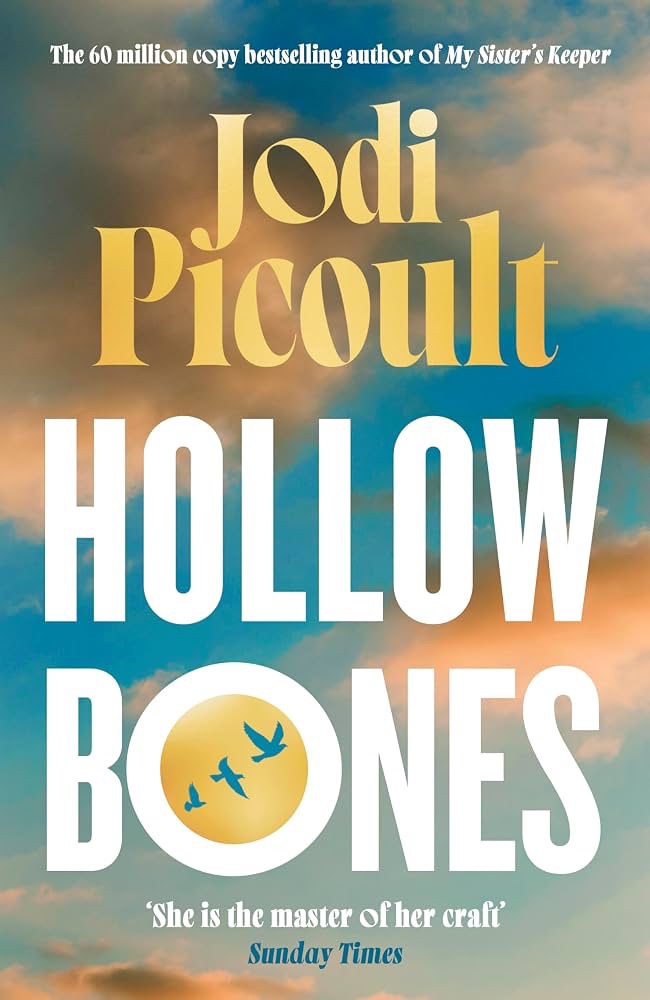
Hollow Bones is out in the UK on 5th November from Penguin
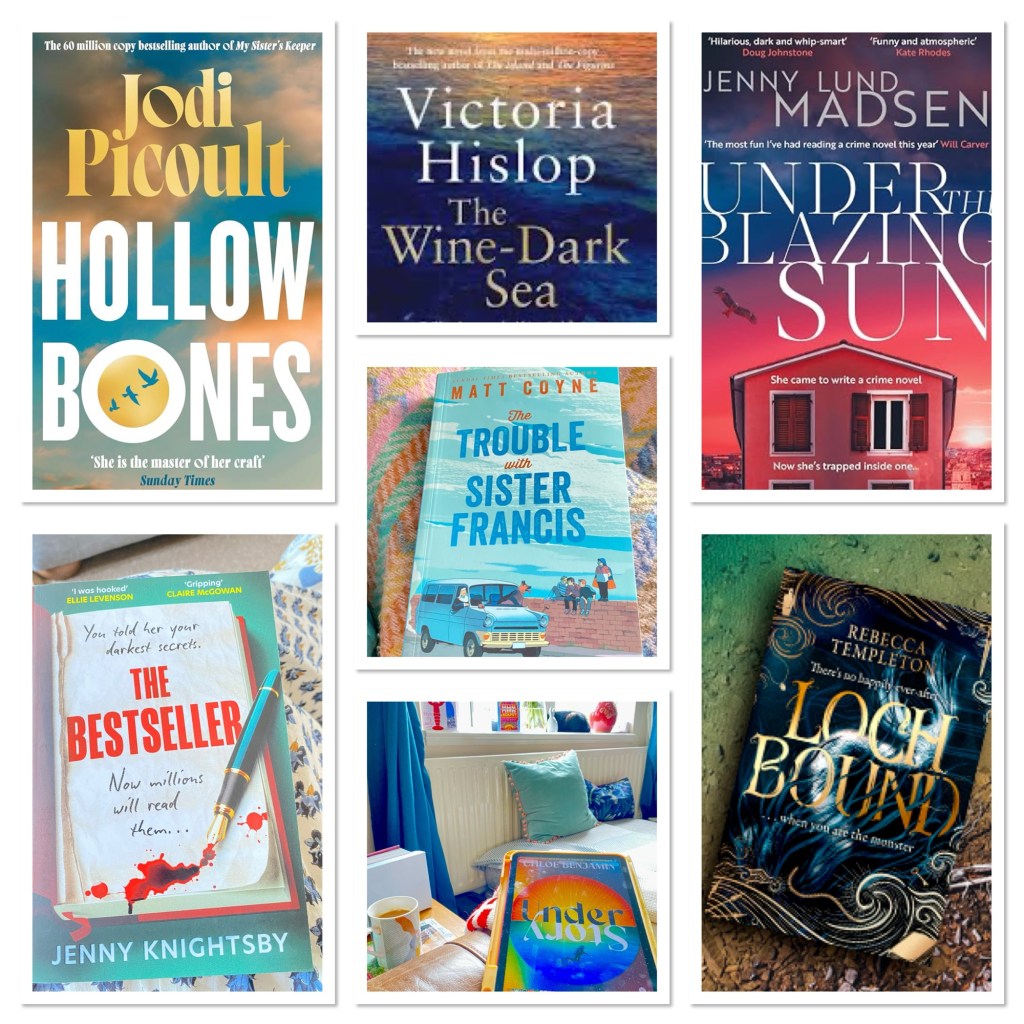
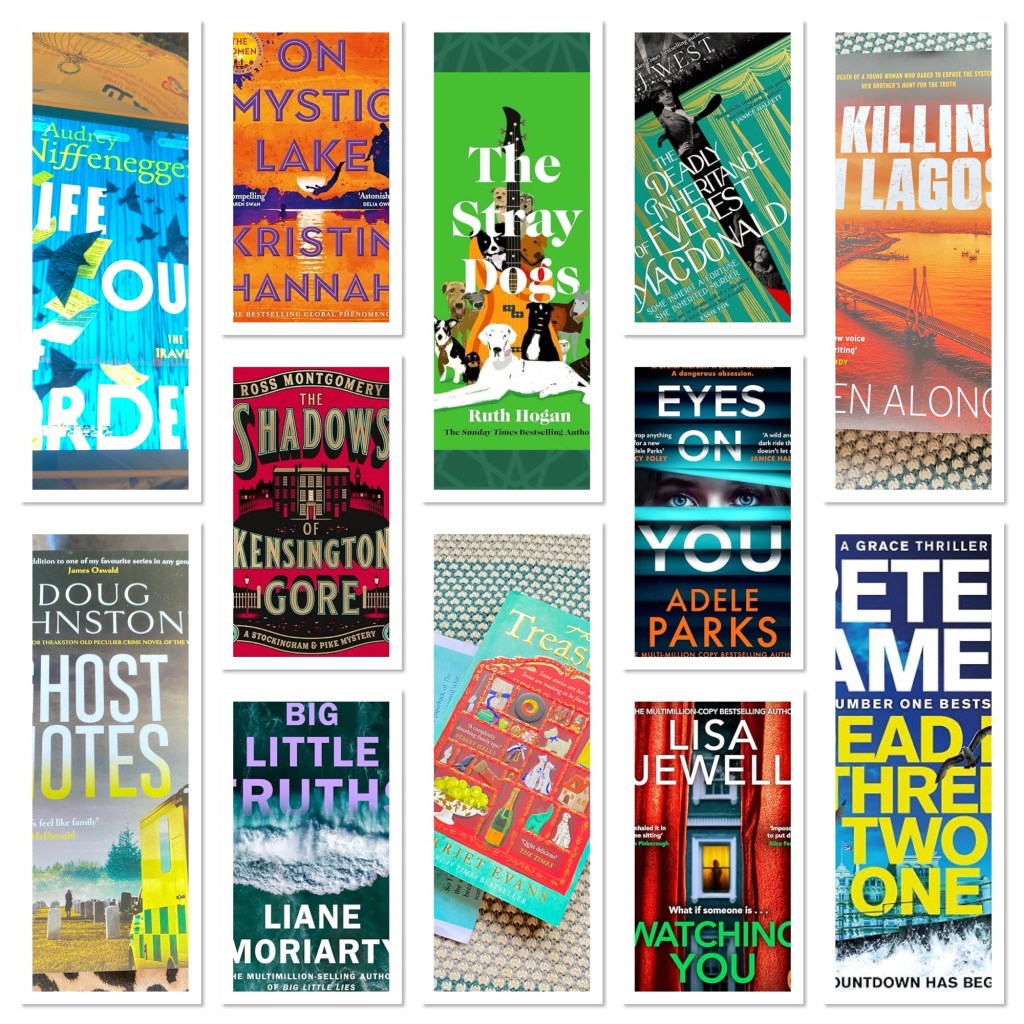
There have been some absolutely belting books this month and I loved telling you all about them. So I’ve been in the US, Italy, Greece Scotland and Sheffield. Oh I forgot about the ‘anti-verse’. It’s been a whirlwind of monstrous mermaids, a universe that goes backwards, the Greek civil war, a family dealing with the aftermath of 9/11, a crime writer who wakes up in a Sicilian villa with a dead body, a counsellor dealing with coercive control and a group of young boys trying to save their summer boy’s club. I’ve struggled to keep my mind on my reading to be honest it’s been a tough month. At the end of the last heatwave my cat returned home late one night and collapsed in the hall. I thought it was heatstroke and we tried to cool him but I could see he couldn’t put any weight on his back end. We rushed him to the vets where they diagnosed possible epilepsy. I knew this wasn’t right. She gave us some anti-convulsants but I wasn’t sure this was the right call. We kept him confined and on pain killers but he still couldn’t walk. I decided on a second opinion and went to a vet I used to see before moving house and he was brilliant. Poor Max had broken his pelvis in two places, his hip and damaged his lumbar spine. He also had a partially healed wound on his side. I can’t believe all that was missed. I could feel where his pelvis was pushed over, twisting his whole lower body. He’s had some surgery and lots of care at home. It’s going to take twelve weeks or more to fully settle. My husband has built him a three bedroom home under the stairs so he’s confined some of the time but can come out for exercise and fuss. My animals are my daily company now I don’t get out and about too well so they’re an important part of my life. I was so upset and I’ve really been focused on making him comfy and safe. So there’ll be lots of reading time in the upcoming weeks and I can’t wait be use it looks like an amazing autumn. I’ll share some recommendations for your tbr at the end. ❤️📚
I’ve been looking forward to this new release from Jodi Picoult and I was lucky enough to get it on NetGalley. I dived in and read it very quickly over a couple of days. My full review will be later in the week, but this was a fascinating read, bravely taking on some of the most contentious and sacred subjects in modern day America. We follow Molly, a young woman in her twenties who is incredibly driven and has the difficult job of coordinating emergency response in her state. Her job is not medical, it’s to prevent incidents and plan for potential disaster situations based on the geographical features of the area, possible targets and population. Having just got through COVID, Molly is happily settled down with husband Jesse close to her dad and stepmum. It’s easy to see that it’s the loss of her mother that has influenced Molly’s choice of career. Eloise was lost on 9/11 when she attended a medical appointment in the South Tower. Every year Molly takes the trip to NYC for the memorial ceremony and tucks a red ribbon behind her mum’s name, representing the one she always wore in her French plait. What Molly doesn’t know is that her own life is about to blow up unexpectedly, changing everything she’s ever known and challenging what she knows about motherhood and risk prevention. I thought this was a classic Jodi Picoult novel with dilemmas, big emotions and using different narrative voices to give us all sides of an argument. We think we know Molly’s story, but a different narrator throws all of that up in the air so unexpectedly. Reading Molly’s narrative I kept thinking “ah this is going to be about x” but I was wrong. There are strong issues here – mental health, abuse, cult mentality – and they are shocking, because they should be. Jodi Picoult has such an easy, conversational style and it was great to be back in the hands of a fantastic storyteller.
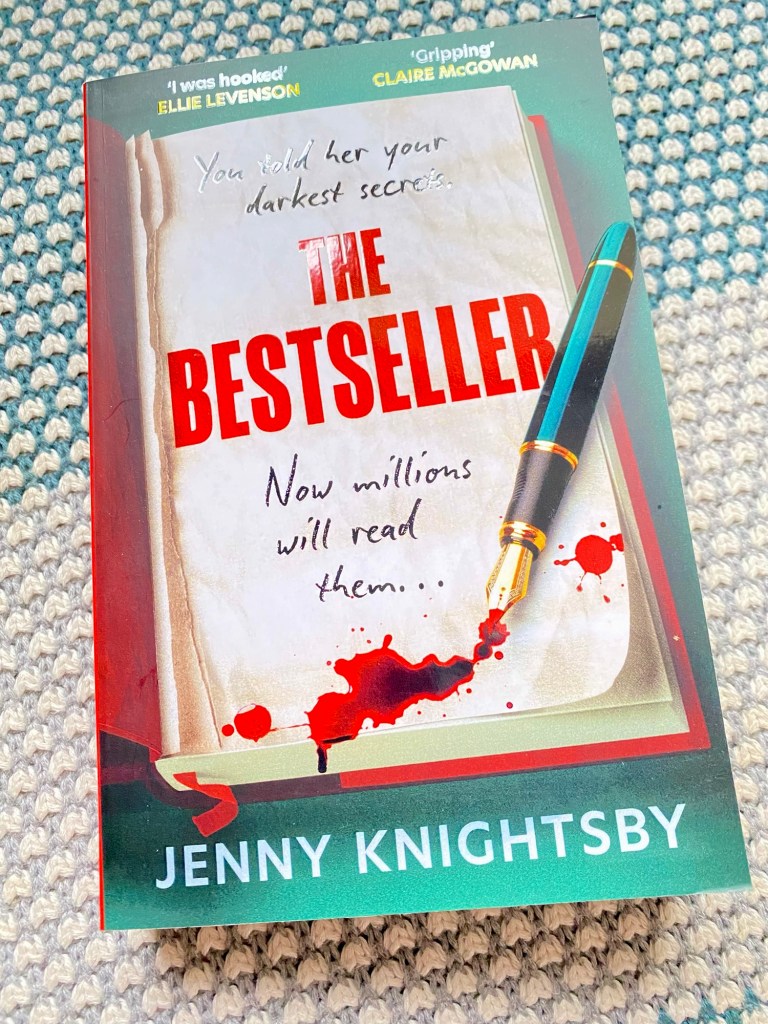
This is a great premise for a thriller and having been a therapist I’m always fascinated by books that are based on the therapeutic relationship. I think there’s a fascination in what therapist’s personal lives actually look like. Do they have it all sorted? The answer is invariably no and here there’s so much projection happening between Helena and her client Belle. Confidentiality is the bedrock of any therapeutic relationship, but that can get tricky when the therapist knows the client needs either specialist help or practical help. Helena is there to listen and guide Belle towards her own answers, but the constant disclosure of coercive control is uncomfortable to sit in. The urge to do rather than sit back and listen becomes difficult for Helena and it’s this discomfort that leads to her talking about it with best friend Tala. This is an issue for supervision, where Helena should disclose that she’s finding Belle’s passivity and indecision on leaving very difficult, but she doesn’t and now Tala is talking about how positive early responses have been to her new novel. Yet she doesn’t offer Helena a proof. When Helena stumbles across one at Tala’s flat she takes it and reads in horror as she realises Tala has fictionalised the problems of her client. This is going to be like a grenade in her personal and professional life.
The lives of Tala, Helena and her boyfriend Dylan and their paths into adulthood hinged on a single night. I thought the author managed these flashbacks well, placing them absolutely perfectly for maximum effect. It seems everyone has secrets but they are slowly revealed creating a very addictive read with short, pacy chapters that make you want to read just one more. The tension is almost unbearable as I worried about Helena overstepping with her client, the client finding out what’s in Tala’s book and somehow passing that on to her husband Julius. Would Helena be safe? As her well-ordered life starts to fall apart Helena starts to lose her belongings, forget her schedule and have terrible nightmares. She has no access to supervision and her relationship with Tala is broken. I wondered if she was heading for a breakdown. You may see the twist coming, but that doesn’t detract from the story. Eyes are opened, secrets past and present are revealed and I devoured the last few chapters late at night, unable to wait till the morning to find out what happened. This was an excellent thriller, full of psychological drama and really nailed the experience of being a counsellor with a problematic client. I also loved the ‘meta’ structure of reading a book about a book and just like Tala’s new novel this one should be a bestseller.
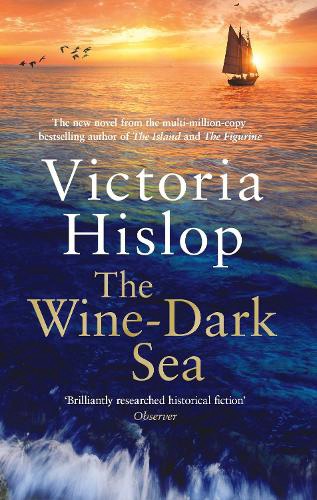
This epic story from Victoria Hislop really taught me a lot about a period of history I knew little about. The events happen after the end of WW2, a turbulent time that has already seen the punishment of Nazi collaborators and now many would like to see the end of their right wing government. The setting is a village called Kalopetra where Fotini’s husband has gone to fight for government forces against the communists, causing a schism in the family because Fotini’s brother-in-law fights for the communists. The sudden divide causes friction across the village, but the women must work together if they’re to survive. When government forces come to the village they capture all the women and Fotini is allowed to bring her baby son with her but older daughter Iliana is left behind with older children. How will they survive? That moment of Iliana chasing the truck, with her mother unable to do anything to reassure her, is burned into my memory. Although soon enough communist forces will round up the children and move them into camps where they are fed, clothed and then sent on to other countries like Yugoslavia. After having the entire burden of the other village children on her shoulders, Iliana is relieved to be fed and clothed by such kind people and so the process of brainwashing begins. All Fotini can think about is returning to her peaceful village and living the rustic existence that has survived for centuries, she doesn’t know that her way of life is already dead and nothing will be the same again.
I really enjoyed the later parts of the novel where we see Fotini piecing life back together in the city of Piraeus. It’s a massive change for this country girl but she can see the benefits of more job opportunities, entertainments like the cinema and eating good Greek food again at a lovely restaurant run by Demetrios. He’s such a kind man and gently reminds Fotini that she can’t spend the rest of her life wandering and looking for the children. The best thing she and Mitsos can do is stay in one place and hope the children find her, the place she was trying to get back to is gone. There was so much material to choose from in this book that it could have filled a trilogy. I had questions about all sorts of characters, such as Fotini’s relationship with her sister Stella. I also had questions about Nikos’s journey and his adoptive mother, there just seemed to be more about her that could have been explored. However, I loved Iliana’s growth and her life as an adult living under communism. The differences between Greece and Hungary were fascinating and as always the author captured the beauty of the Greek islands, their isolation and wildness and how this conflict disrupts a way of life that existed for centuries. The book symbolically ends with a circular dance that’s life affirming and perhaps a way of capturing, just for a few moments, that lost way of being.
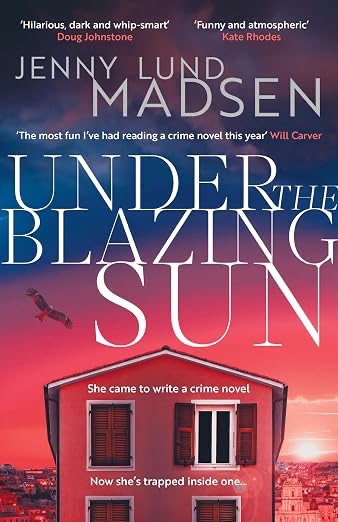
I loved the first book in this series and I devoured this one in a day. Hannah is once again fretting over writing her latest book, disgusted that copies of the romance novel she poured her heart into is being ignored, while the crime novel she wrote in one month for a bet is a bestseller. Hannah is a brilliantly flawed character full of writer’s neurosis, hating that she is forced to write what will sell rather than the books she aspires to write. Again she’s on a deadline and as a last resort her editor Bastian finds her a quiet villa in Sicily with its own swimming pool. No distractions and plenty of time to unwind and write the novel she’s had an advance to produce. I love this character because she says and does the things I’d love to, but my inhibitions keep it inside. She has no such restrictions, happily saying what she thinks when she thinks it. Her disgust with the crime genre and Jorn Jensen in particular is so funny. I wonder if she has ever had a thought or need she didn’t express? She also seems totally unregulated. I would have asked the elderly couple who caretake the villa for help but Hannah decides to walk to the village without thought about the heat, how far and which direction home is in. She has no idea which hill to take and ends up exhausted and on the verge of sunstroke on her way back. This is where she is found by Hans and Greta who take her to their incredible house to clean up and drink something. This turns into dinner, wine and a night spent in their house. It’s when she wakes up in a strange place that she and the housekeeper Lucette find a dead body. Greta has been murdered and Hans is nowhere to be found. Has he been kidnapped or could he be the murderer? Hannah seems to have an inability to weigh up a decision before taking action. There’s so much going on in her head that it’s very hard for her to remain in the present. I’m always wishing she’d slow down a minute and breathe, but the only times she seems to do this are in water.
The case is an absolute maze of connections and suspects showing up a tension between villagers and tourists, a misogynistic police force and possible Mafia interference. Despite Hannah’s aversion to crime as a genre, she’s just as caught up in the mystery of this murder as any reader would be. She’s utterly reckless, in a comical way and there’s a chase on a moped during the final chapters that is clumsy and hilarious to imagine. Sparks fly when Jorn Jensen appears, but she can’t deny he helps make things happen. His arrogance is brilliant and when he suggests they write a crime novel together I thought Hannah might hit him with something heavy. The creepy moment in the basement, including Jensen’s cardboard cut out made me laugh out loud. This is a dark humour that I love. Jorn’s statement that he has ‘enormous sex appeal’ and it’s that and not his wealth that attracts women shows what sort of brash and conceited character he is, but there’s no denying his bravery and quick thinking. They are quite the investigative team, despite her reticence about working with him. Hannah’s instincts are good. She won’t accept the police’s conclusion that Hans killed his wife, reasoning that he adored her and couldn’t have done it. Instead she follows the money, often blundering into compromising situations and dangerous people. If the conclusion teaches her anything it’s that people will murder for very unexpected reasons. This is a brilliant second instalment of Hannah’s adventures and I’m going to resolve to be a little more Hannah and say what I think here and there.
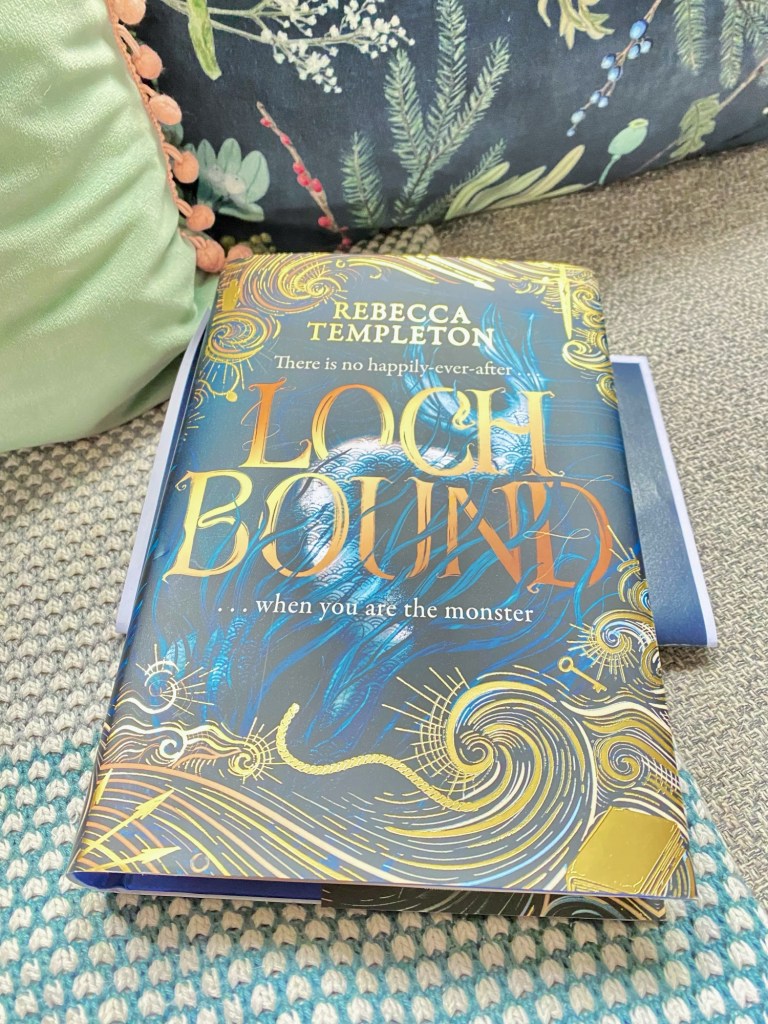
I love when monster stories are given a retelling and in this one it’s a mermaid living in a loch, but not the Disney-fixed Little Mermaid we might be used to. Here she is a truly fearsome creature named Moireach with yellow eyes, sharp teeth, shiny scales and the drive of a predator. She lives in the loch, only changing after dark when she reverts back to her human form – Iris. As a young girl Iris defied her father and fell in love with Thane. He forbade their relationship, as the daughter of a laird she must marry well and for the clan’s gain not her own. Devastated she visits a witch hoping to be free of her father’s obligations, but the witch cursed her and she became banished to the loch by day. Now, some fifty years later, when Iris emerges she is still the beautiful girl of her youth. Thane has never come for her and as dead men have been discovered around the loch with their hearts ripped out, the name of the monster is on everyone’s lips. Her childhood friend Duncan, now an old man, knows it cannot be Iris. She isn’t capable. He hides her with all the love and loyalty he had fifty years earlier, even though she chose someone else. The laird has made a big decision, he’s hired a hunter of monsters, a man called Henry Cartwright and he has never failed to catch his prey.
The backdrop of this story is perfect, using the mist, cold and breathtaking landscape to add to it’s mystery. There are parallels with Outlander here in the feel of this place, making good use of Scotland as a thin place where the paranormal, time travel and a history of monsters seems part of life. With the historical backdrop of the witch trials it’s also a dangerous place, particularly for a woman. Iris talks about the smell of the burnings and how women must be careful, but it’s no easier being a monster when men are turning up dead. The background of misogyny and brutal witch trials hangs over them all and shows a willingness to believe in magic, curses and female malevolence. It’s not just witches though, other fantastical creatures exist here like the seelies and selkies and there’s more one woman with powers a man would kill for. All of these things appear to be aligned with the nature that surrounds them and we can see that wildness as Iris changes to Moireach. It’s not just the yellow eyes and scales but the way her mind becomes that of a predator with only one goal. Reading this felt like being a child again and discovering a fairy tale rooted in darkness. Yes, some elements are fantastical, but it doesn’t read like fantasy. It’s more like a hybrid of historical fiction and fairy tales with aspects of a thriller. The pace speeds up as Iris begins to run out of time and we still don’t know why she was cursed, who cursed her and what will finally break it. There are those in the village who may seem kind, but could benefit from keeping Iris in her watery prison. As she takes us back to those fateful days in flashback, when her family were all together and her father didn’t yet know about Thane. I was engrossed with the tangled web of lies and betrayal but also by the question of what life Iris would choose if she could lift the curse. Would she pick the life she’d always wanted or had things changed? There are some unexpected revelations too, making for an exciting and absorbing conclusion. I thoroughly enjoyed this dark and feminist take on the mermaid stories we’re used to and I look forward to what the author writes next.
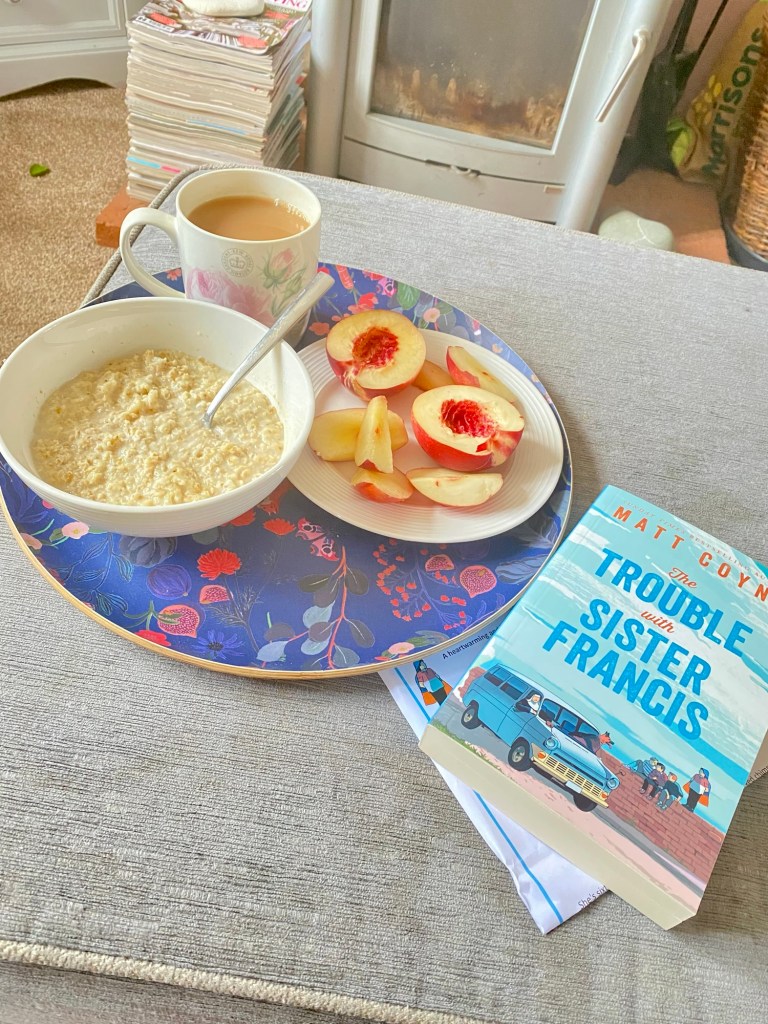
I feel like I’ve been living under a rock because I’m the only book blogger who hasn’t read Frank and Red, so this was my first introduction to Matt Coyne. I don’t even follow him on social media so went in completely blind. This book was a gem from start to finish. Matt Coyne’s ability to write a novel with the emotional intelligence to balance weighty subjects like war and loss against laugh out loud comedy is akin to Sue Townsend and her wonderful creation Adrian Mole. Sister Francis is like my rather formidable previous schoolteacher, Sister Joan. She had the sharpness and discipline of a military veteran, but underneath that there was a twinkle that made me think there was a sense of humour and quick wit underneath. Sister Francis drives an old van as if she’s in a rally, always has a cigarette on the go and reads the racing post. I have always found nuns to be singular and quirky individuals so I warmed to her immediately. Although she’s a comic character there’s so much more to her. She’s clearly keen on restarting a boy’s club she used to run years ago, with origins of supporting boys who had lost their father in WW2. She has a way of relating to boys from the area and our four friends can see she’s a formidable ally from the first day. When they roll up to the clapped out shed they’re accosted by one of the local priests, asking what they’re doing hanging around the presbytery and accusing them of looking for things to steal. When Sister Francis bursts out of the shed he’s taken aback and the boys notice she uses her sweetest voice and emphasises the holy intentions behind her club, but as soon as he’s gone she lights up and is her sweary self. Behind this exterior are buckets of empathy and determination to help the boys in her care, not that she’s easy on them. The four boys have a deal with her, if they come and help her clean the club house on the last Saturdays of term they can come to the club in the holidays and keep the entrance fee. It’s hard work but they stick at it and it’s not long before the Dead Dad’s Club is up and running.
I developed a soft spot for Rich’s Grandad Bob, who has a keen sense of humour and is a great role model for a young boy who has lost his father. I loved how he made Rich laugh with his assessment of Aunt Carole – she has a beard and looks like a pirate. He’s also there for the worse times too, after Rich’s dad died he has enough sense to simply sit with him as the loss hits him, no platitudes or promises, just sitting with him in his grief. Alongside Rich’s 1980s narrative is the journal of another boy who went to the Dead Dad’s Club after the upheaval of WW2. This narrative is evocative of a totally different era as Reginald is evacuated to a small village near Sheffield that’s something of a culture shock after growing up in London. Evacuees didn’t always have the best time and Reginald is coping with the boredom of the village – his observations on what passes as news worthy are so funny. He’s also navigating that rite of passage from primary to secondary school and the author really does conjure up those fears about the bigger school, getting lost and being without your usual friends. I wasn’t sure where his story fit with our four main characters and this is kept under wraps until exactly the right moment. This book has been a wonderful mood lifter just when I needed one, like a warm hug in book form. One line made me think about the friends who knew me in my small village at a similar age, one of whom I’ve tried to see regularly more recently. We try to get together at least once a month for cake and a catch up and I remember being taken aback at first by exactly how well she knew me. But of course she does. As Matt Coyne writes ‘real friendships are cast in the everyday’ and even though my friend and I often just walked her dog, cleaned out the rabbits and watched telly we grew up together and that counts for a lot. I heartily recommend this hilarious but heartfelt story that’s a ray of sunshine in book form.
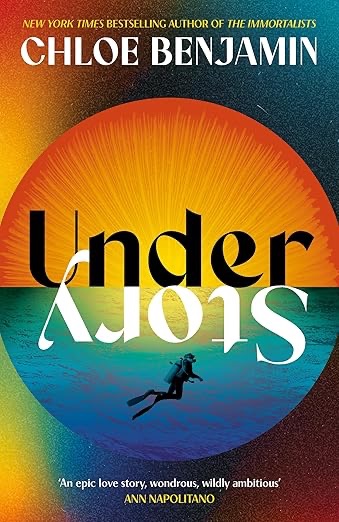
This book has to be my book of the year so far. I’ve been going on about it since May because it really is something special. I was quite simply blown away by this complex and beautiful story of science, loss and second chances. Our heroine Laurel is a scientist, studying fungus and how it grows but for some reason that isn’t clear at first, she’s on a research station in the Antarctic, away from her former husband Eli and without any fungus in sight. When she develops a fascination in the Arc that appears she thinks about its significance. When she becomes aware there is a matching basin underneath the water, her imagination is fired. Could this possibly be a portal? A gateway to a different world? She knows Eli won’t be far behind because she remembers his theory of the ‘duoverse’, the idea that at the moment of the big bang time and space was formed in two directions: our universe, the planets and the development of the world we know and in the other direction it’s complete opposite. I am not a scientist, in fact I barely have GCSE Biology, so I wasn’t aware of any background to this idea so could drift with it and enjoy two incredible minds exploring ideas. Our characters are fascinating, Eli and Laurel are a couple who were made for each other but their relationship is real and they face tough times, particularly when devastating events crash into their lives but I never doubted their love for each other. It’s fascinating to watch their characters face the concept of the duoverse, not just whether it is a portal, but if it is what will their relationship look like there and will going backwards fix whatever tore them apart? I felt both were analytical and might even appear cold at times, but in the moments of heightened emotion we really see who these characters are and the deep wells of love they hold.
I was on tenterhooks wondering about the duoverse under the ice and if Lauren is right whether they’ll ever be able to return? I found myself wondering how this world would look as time scrolled backwards. I was genuinely scared for them but also full of admiration for their bravery. The mirroring is so cleverly done, showing how life always comes full circle and we’re often helpless at the end and the beginning, if we’re lucky enough to lead a full life. As someone who worked in nursing homes in my twenties this really made me think of the role of nostalgia and how often elderly people hanker after experiences from their childhood. Laurel wants her mother’s blueberry pancakes, to watch a film she’s seen a million times and disappear into a favourite book because there’s comfort in it. It might seem like science has sent them on this potential journey, but it isn’t. The totally unscientific emotion of love is what pushes them on, but also guilt, hope and desperation. Loss is a huge theme in the novel, something that always hits me in the heart, and I was deeply moved by how the author dealt with loss and how the scientific concept of a duoverse changes this experience. This novel was moving, profound, invigorating, deeply intelligent and so full of life. I kept thinking about the symbols of the cover, the circle and the tree, the same under the ground as they are over it. As Laurel observes:
“A line implies before and after; a circle says And then, and then…”
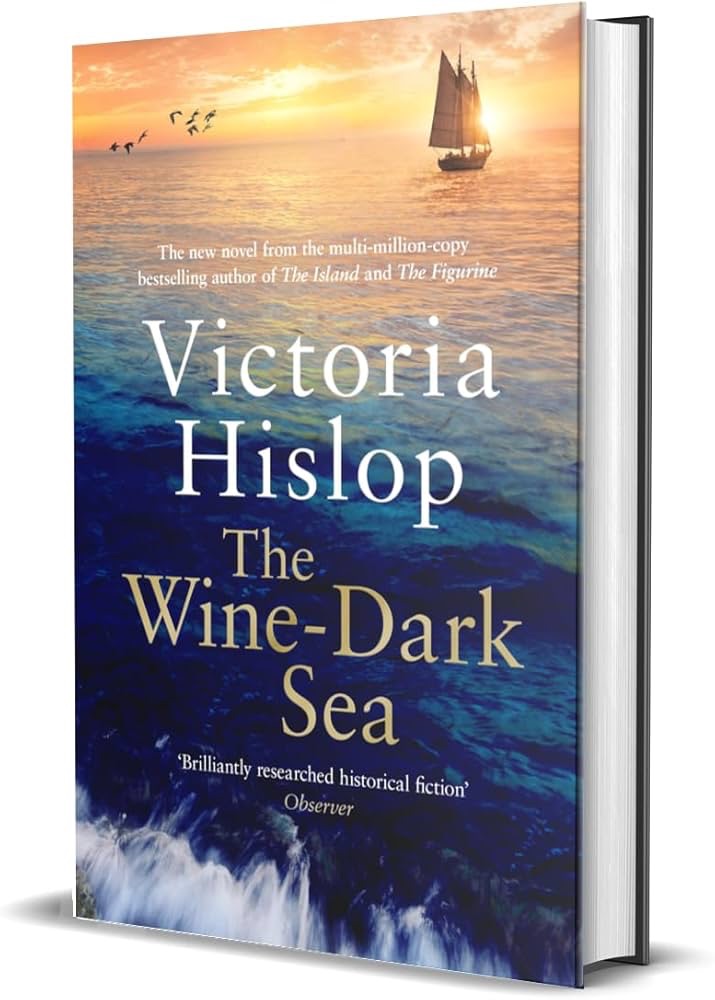
Greece, 1946. In the power vacuum remaining after the Second World War, a brutal civil war erupts between rival left- and right-wing factions. The conflict spirals as the country pays a bitter price in human lives and fighting soon erupts in the mountains, turning villages into battlefields and pulling ordinary women and children into the fray.
When the government soldiers come to Kalopetra, Fotini is nursing her newborn second child. She urges her daughter, Iliana, to hide with the older children as she and the other women are herded into trucks. Weeks later, soldiers return for the children . . . but they are not to be reunited with their mothers, a wholly different fate awaits them.
Fotini finds herself transported to a prison on the island of Chios, where she befriends Markella, whose little son, Nikos, is wise beyond his years. After months of imprisonment, when Fotini and Markella find themselves separated from one another – and from Nikos – Fotini vows to hunt not only for her own child but for Markella’s too.
The Wine-Dark Sea tells of families flung apart across continents and of a strong, determined mother who resolves not to let war destroy hers.
This epic story from Victoria Hislop really taught me a lot about a period of history I know little about. She has taken an incredible amount of research for this novel and I imagine some of it was harrowing. She has taken the stories from women living through this time and shown some of them through one family, magnifying their power. The events happen after the end of WW2, a turbulent time that has already seen the punishment of Nazi collaborators and now many would like to see the end of their right wing government. The setting is one little village called Kalopetra where Fotini’s husband has gone to fight for government forces against the communists. This immediately causes a schism in the family because Fotini’s sister Stella has a husband who fights for the communists. The sudden divide is causing friction across the village, but the women left behind must work together if they’re to survive. When government forces come to the village they capture all the women and Fotini is allowed to bring her baby son with her. However, her older daughter Iliana is left behind along with a group of older children. How will they survive? That moment of Iliana chasing the truck with her mother unable to do anything to reassure her is burned into my memory. Although soon enough communist forces will round up the children and move them into camps where they are fed, clothed and then sent on to other countries like Yugoslavia. After having the entire burden of the other village children on her shoulders, Iliana is relieved to be fed and clothed by such kind people and so the process of brainwashing begins. All Fotini can think about is returning to her peaceful village and living the rustic existence that has survived for centuries, she doesn’t know that her way of life is already dead and nothing will be the same again.
The author uses Fotini as her main narrator, but we also have chapters from Iliana’s perspective as she grows into adulthood and some through Nikos, the clever son of Fotini’s friend in their camp. These two narratives show how far and wide one family could be spread as Iliana thrives in the communist way of life and Nikos is chosen for a programme directly backed by the Queen of Greece. Iliana sums it up perfectly when she asks:
“Was there a single family on earth that had remained intact, or in the place they belonged or wanted to be.”
One of the benefits of a communist system is that women are seen as equal to men and this intrigues Iliana who knows that if they’d remained in Kalopetra her fate would have been the same as her mother and grandmother. She’d be married to someone in the village and bring up babies. Here she could learn to drive or even fly a plane. She longs to be an engineer and hopes if she studies hard she will have the opportunity to go to university. It’s easy to see how a young woman like her would see communism as an improvement on what she expected from life, scratching out a living from the land and being second to a man. In the government camp Fotini is holding out against signing a confession that she was a communist. Those who do sign the waiver are set free but forever marked as traitors to the government, especially in the eyes of their fellow villagers. Fotini doesn’t want that hanging over their family when they return home. She doesn’t know whether her husband is alive or dead, but isn’t longing for his return. She makes friends within the camp, particularly with Markella who comes from an island with a leper colony where she used to work. It’s where she plans to return. As her baby Mitsos grows he plays with Markella’s interesting boy Nikos, something of a child prodigy when it comes to numbers. His fascination is with ships and he will build them out of any material he can find to hand. It’s not long before he’s noticed and singled out for a different institution backed by the Queen. From there he seems to disappear and Fotini is determined to find both her daughter and Nikos when she is released. When she is released it’s clear one thing hasn’t changed – the generosity of Greek people. As Fotini and Mitsos travel to search for the lost children people take them in, share their own dwindling food supplies and clothe them too. It restores her faith in humanity that there is still such generosity left in a people who have been tearing each other apart. There is a glimmer of hope for the future.
I really enjoyed the later parts of the novel where we see Fotini piecing life back together in the city of Piraeus. It’s a massive change for this country girl but she can see the benefits of more job opportunities, entertainments like the cinema and eating good Greek food again at a lovely restaurant run by Demetrios. He’s such a kind man and gently reminds Fotini that she can’t spend the rest of her life wandering and looking for the children. The best thing she and Mitsos can do is stay in one place and hope the children find her, the place she was trying to get back to is gone. There was so much material to choose from in this book that it could have filled a trilogy. I had questions about all sorts of characters, such as Fotini’s relationship with her sister Stella. I also had questions about Nikos’s journey and his adoptive mother, there just seemed to be more about her that could have been explored. However, I loved Iliana’s growth and her life as an adult living under communism. The differences between Greece and Hungary were fascinating and imagine some very heavy editing of this material had to be done to get it into one novel. As always the author captures the beauty of the Greek islands, their isolation and wildness and how this conflict disrupts a way of life that existed for centuries. The book symbolically ends with a circular dance that’s life affirming and perhaps a way of capturing, just for a few moments, that lost way of being.
Out from Headline Books September 24th 2026
Meet the Author
Victoria Hislop is the international bestselling author of The Island and The Return. In the United Kingdom, she writes travel features for The Sunday Telegraph, The Mail on Sunday, House & Garden, and Woman & Home. The Island sold over a million copies in the UK and has been translated into 24 languages. Victoria’s second novel, The Return, has been published in more than a dozen languages. She lives in Kent, with her husband Ian and their two children.
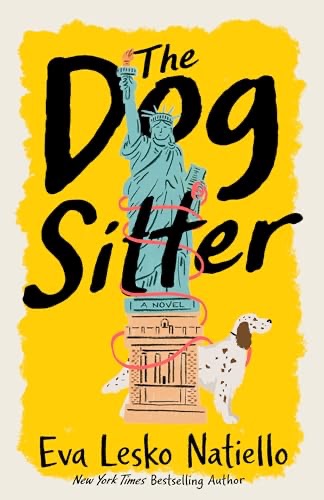
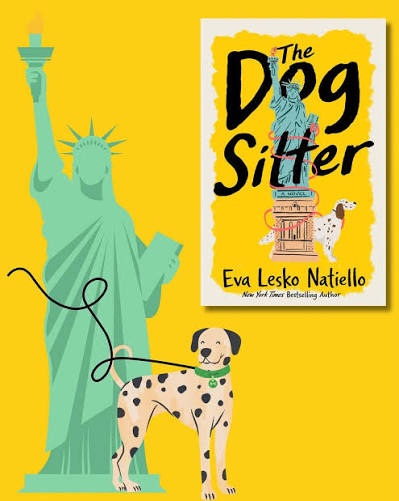
When a woman whose life has gone sideways takes a 30-day dog-sitting job in New York City, despite not being a dog person, she’s pulled into Manhattan’s chaotic social orbit. This delightfully offbeat story is a heartfelt journey of messy midlife reinvention, filled with sharp humor, quirky characters, and one very judgmental dog.
Recently divorced, newly evicted, and suddenly strapped, Colleen Fitzroy is out of options. She reluctantly agrees to work for former boss, Massimo Locatelli—editor of Savor Magazine—dog sitting his precious Aldo while he’s out of town. At least no one will bother her.
That’s until an endless parade of New Yorkers arrives unannounced, pulling Colleen into their knotty orbit. As she juggles strangers, a high maintenance dog, and her unraveling plans, Massimo takes note of her grit. He offers her a role in an ambitious new venture inside Manhattan’s rarefied restaurant scene—which triggers a shameful secret.
Colleen must confront the life she’s been living—and decide if she has the courage to seize the life that’s long overdue.
My counselling work is all about hope and recovery so as soon as I saw this book on NetGalley I knew it would be for me. We follow Colleen who’s something of a character as she has a total break from her disastrous life to think about what to do next. All she must do is spend one month in her previous boss’s incredible apartment to dog sit his canine companion Aldo. This is complicated by the fact that Massimo once fired her from the magazine he edits. There’s no one else and he must fly to Italy in a hurry to help his cousin and Colleen is the only option. However, Colleen has never had a dog before so this is going to be a steep learning curve. She’s also not that keen on being woken in the middle of the night, having unexpected visitors who let themselves into the apartment with no warning, or spending long FaceTime calls with Massimo so he can spend time with Aldo. She also doesn’t have a lot of time for privileged rich people. She honestly made me laugh and struck me as someone who has been through a lot in her life and has zero fucks left to give. If this were a film I could imagine either Meg Ryan or Renee Zellwegger playing this part to perfection. She has all of her belongings, meagre as they are, with and nowhere to go when Massimo returns. She’s insightful about the position she’s in. She was married to a firefighter who survived 9/11 but contracted terminal lung cancer from the dust at Ground Zero. Having lost the man she loves and struggling with the sense of loss she throws herself into a relationship with a man she describes as a ‘party partner’ – great fun for one night but disastrous in the long term. She thought she’d left grief behind but it came back and hit her twice has hard. This is a definite crossroads, but does she know how to move forward both physically and emotionally?
The change is gradual as she learns to look after the beautiful Aldo and cope with the various visitors to Massimo’s flat. She’s woken in the middle of the night by someone entering the flat and a lot of shouting from the street below. It’s Massimo’s daughter and a boyfriend who won’t take no for an answer. Without missing a beat Colleen opens the window and lets fly with some well chosen warnings. In no uncertain terms he knows to give the apartment a wide berth. Other visitors include a woman called Gloria who appears to be a cleaner, but a very stylish and well-dressed one. There’s also the caretaker of the building, a group of gourmets who hold a supper club despite Massi not being there and various others. At times these interruptions are a little jarring, especially when we’re first trying to get to know Colleen. However, all play their part and slowly Colleen starts to see that Massi’s life might not be as picture perfect as it seems. The gourmets let slip that he may have lost his job at Savor magazine, gossiping about their absent host in a horrible way. Slowly we can see Colleen opening up to people again as she enjoys chatting with Massi’s daughter and when she sees a photo of the supper club she barely recognises herself because she looks engaged and as if she’s truly in the moment. Aldo slowly begins to bond with Colleen as only dogs can, showing he’s now depending on her for comfort. Even Massi starts to make longer phone calls where he’s actually confiding in this women he’d pretty much written off. We can see their similarities in upbringing, with poverty and scarcity of food being the source of their pleasure in food now. In fact food is very sentimental to Colleen who remembers her garden with her husband very fondly, in fact her prize possession is a carrot plan grown directly from the seeds he collected on their vegetable patch. She also does a regular stint at the food bank, making sure children don’t grow up in food poverty and hates what she calls ‘food peacocking’ something that Massi and Savor Magazine do daily. Even though Massi grew up in a poor environment he certainly doesn’t now. When he asks if Colleen has found Aldo’s dog food in the fridge she realises she’s been heating it in the microwave and eating it herself it is so delicious.
The settings are interesting and contrast beautifully. Massi’s apartment is both aspirational and sentimental with his kitchen table covered with the carved names of people who’ve eaten there. He keeps back copies of his magazine in pristine condition, clearly very proud of his position. By contrast the home that Colleen has just left is in a New Jersey suburb, ‘neat and smells like ocean mist and sea salt in the way cheap candles do.’ This is typical of the self-deprecating way Colleen talks about her life, she’s never had the luxury that Massi and his friends take for granted. Manhattan is frenetically busy when compared to the serenity and elegance of Massi’s hotel in Italy. We can even see the difference in the pace of life with city people like little ants, busily scurrying around. Colleen’s back in that pace but struggles to cope with the busy in and out of the apartment and it does interrupt the flow a little. The plot then wanders into different territory as Massi decides to start a business importing truffles for Manhattan restaurants and asks Colleen to be his courier and saleswoman, visiting contacts in their kitchens and selling directly. This was a plot development I really didn’t expect and I suspected there was more to this venture than met the eye.
This book could have been a simply madcap makeover story, but it does tap into deeper themes such as childhood, loss and how we process trauma. I wasn’t sure where the truffle business was going to go but it felt like a great metaphor for humans – even the most dirty and unpromising truffles are treated like gold and Colleen could be seen like that, a treasure underneath those layers of defensiveness and snarky wit. She also learns that people are not what they seem and even those who live very different lives can teach each other something. Rather than do all the cliched things such as yoga and celebrating her ‘me’ period, Colleen actually learns things she didn’t expect like not taking people at face value and of course she learns the joy that a dog like Aldo can bring into your life. The absolute gem of the story though is Colleen herself, a rather chaotic, irritable and closed off person who slowly blossoms.
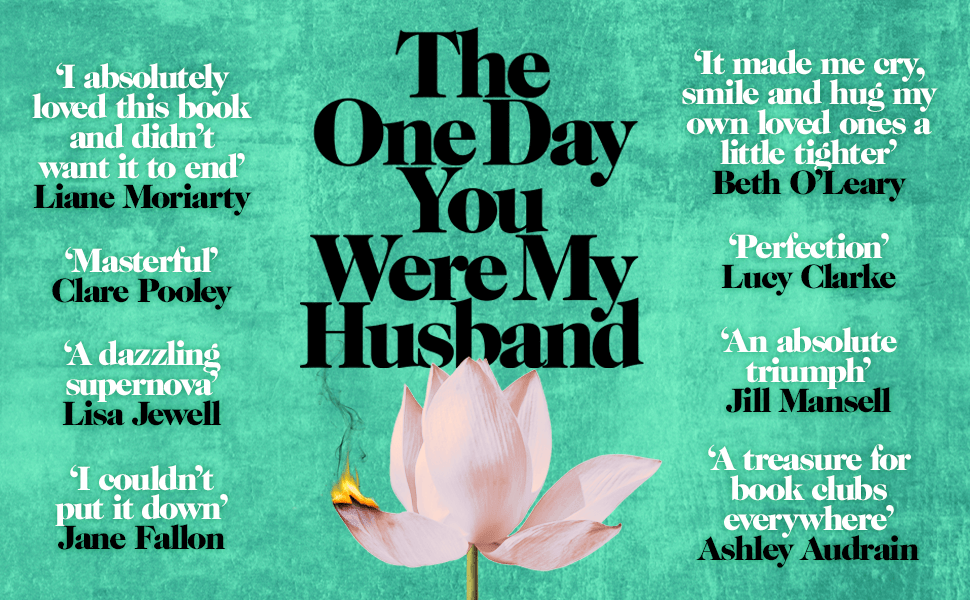
I don’t usually like romance novels, but I do love Rosie Walsh’s novels. That might seem strange when often her novels are categorised as romance, but for me there’s much more to them than the more formulaic romances I see. Rosie Walsh creates such complex characters, facing heart-wrenching situations. This is definitely the case for our narrator Carrie Cole who’s a surgeon by profession, but since the premature birth of her twins has been more focused on home life. She and her husband Robin live in a draughty cottage on the moors, with a small ‘Roof’ (AirB&B) holiday let next door in the old piggery. Robin works in the world of medical philanthropy, matching investors to areas they can support medical causes and this is how the couple met. Nearby, her Dad lives with his wife Nicola, but he’s recently been struggling with dementia and may need to move into a home. Both Carrie and her sister Maya have a complex relationship with their mum, who is an international activist and charity worker. Carrie has been feeling the urge to return to work and has put out feelers with her old mentor Yanika about what steps she would have to take in order to level up to the required standard. There’s an event coming up for Roof hosts in Sweden, where Yanika works and they discuss meeting up for a conversation. She could do both in one trip. Carrie has never left the children overnight, although she knows they’re perfectly safe with Robin, in fact he gives her his blessing in the form of a generous booking of a lovely hotel near to the venue. Carrie had been looking at cheaper Roof accommodation, when a familiar name and face appeared on the screen. All of a sudden Carrie’s mind sweeps back to her twenties, where she’s dancing barefoot on a Thai beach with her new husband, Johan, mere moments before Thai police swarmed the beach with guns and arrested him. Carrie knows that Johan was sentenced to twenty years in a Bangkok prison, so how can he be in Sweden hosting a beautiful lakeside retreat?
There were so many questions I wanted to ask during this novel, as Carrie’s narrative follows her present and a deeply traumatic past that she thought was buried, This is a love story but it’s also a mystery, as we see how the couple met when he came into the hospital with a trauma patient he’d helped. He travelled with them into the hospital. Carrie’s connection to him is immediate, but it’s incredibly deep and even though she knows she can’t pursue anything with him, she can’t stop thinking about him. Slowly, through flashbacks we piece together their story and I was devastated for both of them. Carrie pieced herself together after Johan’s court case with the help of her family, particularly her mother who had flown out to Thailand to use her influence and local contacts. Over time Carrie has hardened her heart towards Johan, feeling both betrayed and abandoned by him. Abandonment is a big deal for Carrie and her sister, after they were removed from their mother’s care as children when her advocacy and activism were so absorbing she’d overlooked their safety. Since then Carrie and Maya lived with their father who had a more stable home life. Both girls show signs of abandonment issues and a tendency to self-medicate their feelings. Carrie doesn’t eat when stressed and Maya has issues with alcohol, both of them display displacement activity like cleaning madly when they’re in distress. Robin has proved himself to be a safe harbour for Carrie and she calls him her rock. However, she can’t deny that she wants to know what happened to Johan and the urge to see him is stronger than she expected. I could understand why she needed this, to have someone ripped from your life in this way is devastating, but even worse would be the questions: was Johan really trafficking drugs? If not why did he plead guilty? How did he end up back in Sweden and when? Lost love is painful enough but when you’re left unsure of what was real there’s no sense of closure, Can Carrie meet with Johan and get her answers without her carefully balanced life back in the UK imploding?
I really understood Carrie and I believed in her love story with Johan. Their connection leaps off the page like a flame and never goes out. I also had so much time for Robin, who is an incredibly supportive husband and dad. I was willing Carrie to be honest with him and explain why she still needed the answers. Carrie’s inner voice is so powerful that I believed in her utterly. She has the problems of every working mum who has gone through a traumatic pregnancy with incredibly premature twins and all the ailments that come alongside that. Her little boy still struggles with asthma and her instinct to be with them is a definite response to her mother’s inability to put her and Maya first. Carrie doesn’t want her children to ever doubt her love and commitment to them, but that has come at a high price for her own goals. Perhaps she’s even denied a strong part of who she is – that drive and ambition to the best doesn’t just disappear. She berates herself for thinking about Johan, telling herself she’s very lucky and has everything she needs, but does she? I loved how the author gave Carrie room to ask questions of herself and her closest relationships. Is there a part of her that chose to hide away after the birth of the children? Although she loves the feeling of being cared for and supported, where does caring end and control begin? In some ways her pursuit of Johan and the answers isn’t about her feelings for him, but her feelings for herself and the person she was when they met, I loved how Johan called her Carrie Cole, as if only her full name could encompass all the things she is. Part of me wanted their love to still be there, but the more rational part of me knows that long term relationships and parenthood are tough. Often what we long for in past relationships is a fantasy, one that doesn’t include vomit on the rug, temper tantrums and a Dad that’s slowly losing his sense of reality. Can Johan really be all that Carrie sees through her younger, love filled eyes?
Once the questions start there’s no stopping this complex tale from unravelling and the tension builds as we realise there’s so much that Carrie doesn’t know. As Johan realises that Carrie truly knew nothing from their final moments in front of the courthouse in Bangkok he’s he’s confused. Has she really only just found out a week ago when she looked for accommodation in Sweden? He asks why nobody told her. But who should have told her? Who in her protective and much loved inner circle has been keeping secrets? Can she cope with another betrayal? The answers, when they came, were totally unexpected.. Nothing here is exactly as it seems, for both us and Carrie. What happened on her wedding day in Thailand created a huge scar across her timeline, with her life divided into before and after as if severed from each other, Now she knows there were tiny unseen strands of connection and the cut was never as clean as she thought. Despite telling herself, ever since that day, to make decisions with her head could her heart and her gut have been right along? This really was a heart-breaking love story, with so much depth and emotion for the reader to relate too. I was rooting for Carrie, both with her ambitions to return to work and her personal life. I felt an affinity with her discovery that she had allowed herself to become small and knew that only time alone, recovering and accepting the truth would help her make the right choices. Yet there was still an impulsive and romantic part of me hoping that love would find a way.
Out in June 2026 from MacMillan
Meet the Author
Rosie Walsh is the internationally bestselling author of two novels, the global smash hit THE MAN WHO DIDN’T CALL, and – new for 2022 – THE LOVE OF MY LIFE, a heart-wrenching, keep-you-up-all-night emotional thriller, which was an instant New York Times bestseller and stayed in the German top ten for several weeks.
Rosie Walsh lives on a medieval farm in Devon, UK, with her partner and two young children, after years living and travelling all over the world as a documentary producer and writer.
The Man Who Didn’t Call (UK) / Ghosted (US) was her first book under her own name, and was published around the world in 2018, going on to be a multimillion bestseller.
Prior to writing under her own name she wrote four romantic comedies under the pseudonym Lucy Robinson. When she isn’t parenting or writing, Rosie can be found walking on Dartmoor, growing vegetables and throwing raves for adults and children in leaking barns.
A reunion. A journey. A longing for a place called home… When veteran Canadian wheat farmer, Harry Cane is obliged to sell up and sail home to an England transformed by two world wars, his arrival triggers unwelcome self-examination for the family he abandoned, and for whom he has never been more than a distant myth. His daughter feels duty bound to take him in but is riven with doubt and ambushed by a long buried anger she has never before expressed. Harry’s effect on the next generation is less predictable, and enables his granddaughter to deal with an unspeakable trauma, while her gentle husband feels seen for who he truly is. Can Harry stay and make a new life before it’s too late, or will he find himself cast out again, punished for having witnessed and understood too much? LOVE LANE is a searing portrayal of escape and entrapment, and a powerful exploration of what home and family can really be.
I was thrilled when I found out that Patrick Gale had written a sequel to one of my favourite books of all time, A Place Called Winter. This first book followed Harry as a secret is discovered and he’s advised to leave the country by his wife’s family. Leaving both wife and daughter behind Harry embarks on a new life in Canada as a pioneer. This book finds a much older Harry living on his homestead with his dog and secret nightly visits from his neighbour Paul who he loves. When a woman and her young son come to Harry’s place looking for work, Harry says he has nothing, but that Paul might need help. He takes her to Paul’s and they settle her and her son into Paul’s cabin, separate from the main house. It only takes a few days for his whole world to change, with Paul’s houseguests now living in the main house. Harry isn’t all that surprised when Paul tells him they’re to be married, but assumes their arrangement will continue exactly as it did when Harry married Paul’s sister, who died a few years before. However, for Paul this signals the end of their relationship leaving Harry heartbroken. At the same time Harry has been receiving letters from his estranged daughter Betty who is now married. Her cabal of aunts have kept her away from her father but now she wants to get to know him and they start a tentative correspondence. So, years later when Harry is forced to sell the homestead he suggests a visit to England and with no set plan he sets sail for Betty’s city of Liverpool.
Gale splits the novel into five narrators: Harry, Betty, her husband Terry, their daughter Pip and her husband Mike, with Harry closing the story. I know this character’s inner world so well but have never really seen him through someone else’s eyes. Liverpool couldn’t be more different to the wheat fields of Canada and it’s interesting to hear it described as it would have been when my mother was born there. I was experiencing my favourite city as my grandma and grandad would have done. It’s also a big change for Betty, from the moneyed world of the aunts and their large family home at Strawberry Hill. This is post WW2 and the city is rather grey and dismal, more dirty and industrial than it is now. Knowing the docks as I do it was strange to see it actually being used where now it’s all museums, hotels and galleries. If Harry finds Liverpool a little imposing and grey, Betty is shocked at his appearance, thinking he looks like ‘a man who has been through a series of shattering ordeals or a war.” This is a man who has worked very hard and never had spare money to spend on himself and Betty can see he is in need of clothes and a dentist at least. She expected more warmth, but can see that he’s a man of restraint who values his privacy. Will they even get on and what will her daughter Whistle make of him?
Terry’s section focuses on his work as prison governor, with Harry arriving just as two executions are to be carried out, something that Whistle finds particularly difficult to cope with as their street becomes overrun with protestors and journalists. I found it interesting how women are kept sheltered from the details of prison life, perhaps a hangover from the reality of WW2. For Pip’s section we travel to Wakefield and Harry stays with their family for a couple of weeks. Pip’s husband is also in the prison service and they have children, making Harry a great grandfather. What she finds in Harry’s silence is someone who will listen and she can confide in, knowing it will be guarded as a secret. I was astonished about what she almost discloses. Mike is a very controlled individual who worries about money, Harry is perceptive and on walks with the dog realises things about Mike that no one else has. The effect Harry has on several generations of this family is fascinating for a man who is so taciturn and unable to reveal his true self. Gale paints a picture of a closeted England, with homosexual men furtively making secret connections in fear of the law. Terry has met many men who are imprisoned not for what they’ve done but for who they are something he seems to find unjust. He has known men who prefer men during the war, but hasn’t noticed that his own tailor is living with a man. Harry notices their matching rings straight away. There’s also a secret bar on the voyage across the Atlantic where Harry is invited by one of the stewards. It’s probably the only openly gay space Harry has ever been in and my heart broke for him as he glimpses a little of the freedom to come.
Another person who responds to Harry is his granddaughter Whistle, she doesn’t have her own narrative but we can see she’s very different to her sister Pip. Betty describes her as beautiful but sensitive, born ‘without Pip’s protective layers’. One evening close to the execution she has a panic attack in her bedroom and Betty is shocked when she finds Harry has come into the room, talking to her quietly and calmly, encouraging her to breath slowly and bringing her anxiety down much quicker than Betty can. We can see this side of him in his chats with Mike also, proving that he’s an emotionally intelligent observer who never lets on the depths of his own heartbreak. We can see so much about the mid-Twentieth Century in these generations, from the Great Aunts of Harry’s generation to Pip we can see the collapse of the social order. There’s a drop from upper middle class to lower middle class in two generations. Betty bemoans the fact that a girl as beautiful as Whistle would have had a ‘mantle-piece crowded with invitations but rationing and bereavements and shortages had made everyone so cautious and life rather drab.” There are devastating moments delivered with such matter of factness – Harry’s only proof that Paul loved him destroyed by blackmail, Mike’s handling of the family dog, Pip’s secret about her hospital appointments and more than anything the chillingly robotic way Pierrepoint and his executioner apprentices measure out the correct drop to break a young man’s neck in the name of justice. Behind it all I felt a huge anxiety about where Harry was going to go? Would Betty ask him to stay or will he have to make his home back across the Atlantic with strangers. I cried in those final pages with Harry. Patrick Gale has created a character I’ve grown unexpectedly fond of and I didn’t want him to live out his final years alone. This is a beautiful companion to A Place Called Winter full of compassion and unspoken yearning, not just for a lost lover but for a place to call home in the twilight of life.
Out Now from Tinder Press
Meet the Author
Patrick Gale is a cellist, gardener and patron of North Cornwall Book Festival, Penzance LitFest and the Charles Causley Trust. He lives with his husband, the farmer and sculptor, Aidan Hicks (aidanhicks dot com), on their farm at Land’s End. In addition to his latest, Love Lane, published on March 26, 2026, his eighteen novels include Mother’s Boy (2022), Take Nothing With You (2018), which was his fourth Sunday Times bestseller, Rough Music (2000), Notes From an Exhibition (2007), A Perfectly Good Man (2012) and A Place Called Winter (2015). In 2017 his two part drama Man in an Orange Shirt was screened by BBC2 as part of the Gay Britannia season. Continuing to be broadcast regularly around the world, this won the International Emmy for best miniseries and is now in development as a musical. He is working on a television adaptation of A Place Called Winter and a stage version of Take Nothing With You. Extracts from the BBC documentary All Families Have Secrets – the Narrative Art of Patrick Gale can be seen on his website galewarning dot org. The garden at Trevilley was featured on Gardener’s World and is opened under the National Garden Scheme every June.