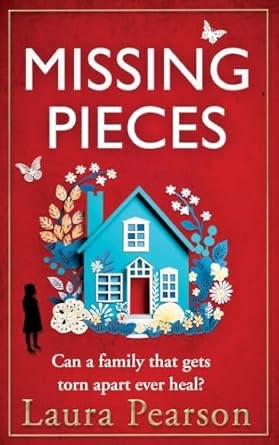
I’ve read a little bit of Laura Pearson before, so I did come to this expecting a moving and powerful story. It didn’t disappoint. When Bea is born it should have been a healing, new chapter for the family – mum, dad and older sister Esme. However, Bea was born to a family struggling in the aftermath of a tragedy. Esme was only seven years old when her sister Phoebe died suddenly and unexpectedly. It hits Esme hard because she was supposed to be looking after her sister. Their dad Tom feels an immense weight of guilt because he shouldn’t have stayed out later than expected. Esme’s mother is also wrestling with guilt and blame, she’d briefly popped next door to help a neighbour knowing that Tom would be home imminently. This is a story of a family, years later, struggling with unimaginable loss. How can they learn to forgive each other, or themselves?
Laura splits the story into two sections: the first months after Phoebe’s death interspersed with a narrative where Bea is trying to understand what happened to her family a couple of decades later. These feelings are coming to the surface because she herself is pregnant. I really enjoyed the section in the present day as Bea searches for the truth when her parents won’t ever talk about it. It reminded me of something my mum has recently done. Her first sister, Teresa, died on Bonfire Night 1959 and although she doesn’t remember everything she does have a memory of a tiny coffin that my grandad was carrying and putting in a black car. Mum tracked down a community group who were looking for the resting place of their stillborn babies in the same area where she grew up. Back then, if there was no money for a funeral or a grave plot then a baby might have been buried in a coffin with someone else or in a grave for several bodies. Three years ago she was able to take my grandma to a ceremony at the graveyard in Liverpool where a memorial was finally in place for babies lost and buried in a pauper’s grave on the site. It’s easy to underestimate how much the death of a baby affects other children in the house and i think we all underestimated how it still affected my grandma who is now 91.
Bea feels like she’s lost part of her identity. This loss is part of their joint family history and no one is addressing or memorialising it. Of course this is tough for other family members, all of whom blame themselves. The loss for Bea and her older sister Esme is threefold: they lost a sister, they lost the relationships and life experiences they would have had as three sisters and they lost the happy family life they might have had if their parents hadn’t been carrying the weight of all that grief and guilt. As for the other characters in the book, I did find Linda a bit of a struggle. It’s clear she’s never fully connected with Bea and when we go back in time we can see her conflicting emotions over being heavily pregnant. She is buried by her grief for Phoebe and feels bad for being pregnant again. She doesn’t want to replace Phoebe and sometimes wishes she wasn’t pregnant. A combination of fear, guilt, sadness and anger take over and she really wasn’t there for Esme or Bea, once she’s born. In the past sections there’s an oppressive atmosphere that hasn’t fully lifted, even in the girl’s adulthood. Esme can’t talk with her father so Bea doesn’t stand a chance when wanting to ask questions. It would mean delving back into the pain and communicating honestly, but no one wants to go back into the raw grief and horror of that day. Bea wonders how she can be a good mother when she has no relationship with her own. Will the family be able to rally around her, find a way to talk and become a united family again?
It’s a trademark of Laura’s books that characters are forced to talk about difficult and frightening experiences or situations they find themselves in. I love the openness and honesty these issues need and it is like a counselling process if people can start sharing and healing. I did shed some tears at times. I thought the author’s depiction of the parent’s grief was realistic and raw. We’re let into every aspect of a characters mind, no matter what their thoughts might be. I could genuinely feel these character’s emotions and pain. Yes, this is intense. Somehow through, this isn’t off-putting. We’re given just enough glimpses of hope to lift the story, personified by the new start Bea’s baby brings to the family. I found myself gripped, willing these people to give themselves a break and stop being angry with themselves and each other. This is an emotional but satisfying novel that shows healing is possible, if we’re willing to do the work. Beautifully written, emotional and ultimately hopeful.
Out now from Boldwood Books
Meet the Author

Laura Pearson is the author of five novels. The Last List of Mabel Beaumont was a Kindle number one bestseller in the UK and a top ten bestseller in the US. Laura lives in Leicestershire, England, with her husband, their two children, and a cat who likes to lie on her keyboard while she tries to write.

 The Lotus Readers