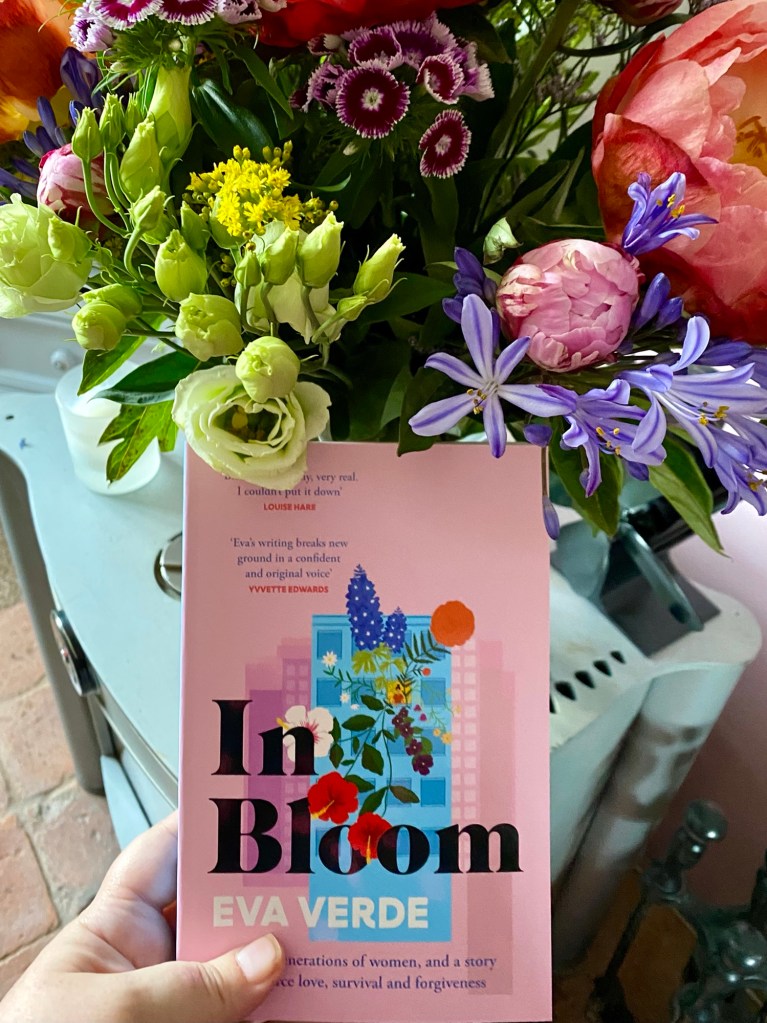
‘This is my family story. From all I’ve sown together, through all I couldn’t ask. I want to be the bud who makes it.’
In Bloom tells of strength, survival, forgiveness, resilience and determination, and the fierce love and unbreakable bonds between mothers and daughters.
Ever since Sol’s untimely death left her pregnant and alone at twenty-two, Delph’s kept herself small as a form of self-protection. Now, over a decade later, she lives with their daughter Roche and her new partner Itsy, a kind and protective cabbie, on the fourteenth floor of Esplanade Point on the Essex coast.
But Delph’s protective bubble bursts when Roche moves in with her estranged nan, Moon. Feeling on the outside of the bond between her fierce-yet-flaky tarot-reading mother and volatile martial-arts-champion daughter, Delph begins questioning her own freedom. And when Roche’s snooping into her grandmother’s past unearths a familial line of downtrodden women; a worrying pattern emerges. Has keeping small and safe truly been Delph’s choice all these years…?
I’m hosting the paperback blog tour for this wonderful book today and it’s lost none of its charm and power since I read it last year. I don’t believe in trigger warnings, despite their intended purpose to flag up material that may ‘trigger’ difficult emotions in the reader, I feel that they might stop someone experiencing a connection with a text. It might well be a trigger, but that doesn’t always have to mean it’s a negative one. It might be a trigger that starts a healing process. If anyone should have avoided this book it was me, because I was Delphine. I lost the love of my life in my early thirties and then sleepwalked into a coercive and damaging relationship. Yes, it was a hard read at times, but it wasn’t a remotely negative experience. Moon, Delphine and Roche are three generations of a family. Each woman has her own issues, but they all stem from one place. Right back at the beginning.
As the book opens Roche can no longer live with her mother and Itsy, the man she’s been living with for most of Roche’s life. So she decamps to her grandmother Moon’s house. Roche can’t stand Itsy, he dislikes her and wishes she wasn’t there. In fact what he wants is Delphine all to himself, it’s easier to control someone who’s isolated. Delphine has had a glazed over look ever since he arrived in her life and she doesn’t seem like her mum anymore. Delphine has done everything she can to keep Itsy happy. She’s changed how she dressed, made herself less beautiful, stayed at home and stopped going out with friends. Every day she makes herself smaller to make more space for him and Roche can’t watch it anymore. However, things are changing slowly. Delphine has a job she enjoys at B & Q, new connections with her colleagues and today she has made a choice. Delphine is pregnant and she knows deep down in her soul that ‘the thought of more years, more life, tied to him’ is more than she can bear. She goes quietly on her own for an abortion, the quietest but most powerful act of rebellion she can make. Then comes her opportunity, Itsy receives a phone call from Jamaica to tell him his mother is dying. He must jump straight on a flight, so Delphine lets him go alone, knowing that now she has several weeks to herself. She doesn’t stop Roche from moving out and accepts this as her time to heal, time to be the parent that so often Roche has to be for her. However, this isn’t the only recovery needed in the three generations of this family thanks to the actions of men.
I felt at first that I was slowly piecing together the story of a client. Being a person- centred therapist means letting the client choose what they want to talk about. I would use my counselling skills to tease out that story and ask questions where it needs to be clarified or where I might only be getting one perspective. Here the story has it’s own pace and each woman narrates her own section. We flit back and forth, also delving into the past here and there and it’s like doing a jigsaw puzzle but only being handed one piece at a time, then another from a different angle. It takes some time to perceive the whole and that was definitely the case here. Only we the reader can see where they all are in relation to one another. The reality of being a woman in today’s world is explored fully, there is no doubt that these women’s lives would have been immeasurably better had they not encountered men. It takes Roche to articulate this properly with the words and wisdom of her generation.
“Roche knows, remembers, how her life changed at around the time she started secondary, and her bubble of invisibility popped. How, despite the school uniform screaming otherwise, she very suddenly became the inhabitant of a woman’s body, complete with a depressing self-awareness that this was now Roche’s life until one day men deemed her invisible again. In fairness, it’s not her contemporaries who usually do the perving – no, it’s men, grown–ass men who have always done the bulk of the wolf–whistling, the innuendoes and basic compliments that they expect her to ‘smile, love’ and be grateful for.”
As a middle aged woman I now know the power of that invisibility and how, in many ways, it’s a blessing.
I love how carefully the author drew the threads between generations, those behaviours that create a pattern of intergenerational trauma. There are moments in her journey where Delph needs her daughter by her side, but she recognises that it’s a selfish need. Delphi’s lived experience stops her; “is not for a child to fix the parent. Nor is Roche the ointment to Delph’s current troubles”. Then we go back into her mother Moon’s early years, when her grandmother is in hospital, suffering from mental ill health. Her name was still Joy back then and her job is to dispense sunshine to a women who can’t even remember her name. ‘Come on,’ Ma says, in a giddy-up way. ‘You know how happy your little face always makes her.’ This a learned behaviour, people pleasing and exactly what Delph is trying to avoid for her own daughter, three generations later. By sitting with her own pain, Delph is avoiding instilling that behaviour in her own daughter, she’s actively breaking the cycle. Yes, there are traumatic moments in these women’s lives, Moon’s story being particularly harrowing, but we can also see the women’s determination to change. It’s that change and what it means for Roche that brings such an uplifting feeling to the book. For me it’s Delph’s struggle that touched me deeply. The loss of Sol, who’d been there her entire life, is devastating. So moving out of Itsy’s orbit and the mental paralysis she’s been living with means opening up her emotions. That’s all of the emotions including her grief, but it’s a process that needs to happen so that Roche can talk about her father openly and in a joyful way. I found myself more engrossed in the later stages of the book as I had to see whether these women could heal together. This is beautifully written and manages to be funny, moving and hopeful.
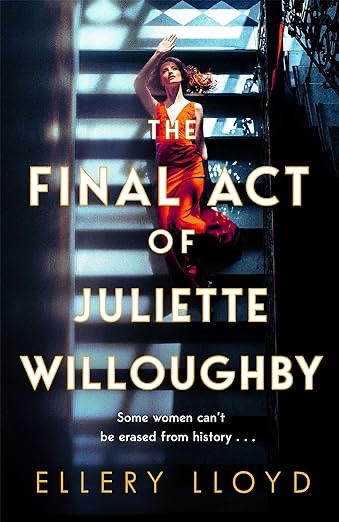
Having just read about female surrealist artists in The Paris Muse by Louise Treager I was so ready for this story about the art world, women painters and a mystery surrounding British artist Juliette Willoughby. The writers tell their story across three timelines. In 1938, Juliette Willoughby is living and painting alongside her lover Oskar in Paris. A British heiress, she left her family and their money behind for a life as an artist who is best known for her painting ‘Self-Portait as Sphinx’, thought to be lost in a studio fire where she also lost her life. We meet our main characters Caroline and Patrick at Cambridge in 1991, where they are both studying art history and specialise in the Surrealists. They are sent to the same dissertation supervisor and while researching come across something sinister about Juliette’s death. Their investigations may expose terrible secrets about the Willoughby family, who are acquaintances of both students and aristocrats who don’t want their family history out in the open. Our final timeline is present day Dubai where Patrick is an art dealer and lives with his wife. Caroline is now an academic and expert on Surrealism, especially Juliette Willoughby so when a new Self-Portrait as Sphinx is uncovered he asks her to fly to Dubai and authenticate the painting. A sale is on the cards and Patrick needs to know if this painting is a second version by the artist and potentially worth millions. He plans a night for collectors to view the painting and offer sealed bids, but the night ends with Patrick in a cell accused of murdering one of his closest friends – the last surviving member of the Willoughby. There are now three suspicious deaths linked to this painting, but can Caroline unlock the mystery before Patrick is charged with a crime he didn’t commit?
I have a real interest in art history and the lives of artists, probably formed when I studied Victorian art history as part of my literature degree. My particular interests are the Pre-Raphaelites, the Arts and Crafts movement, Klimt and Frida Khalo, so it was brilliant to learn more about the Surrealists who are outside of my experience. My only understanding is that the artists may be representing the contents of their subconscious rather than the conscious. I can be a little bit scathing of some modern art, having my teenage years in the 1990s we were in the world of the YBAs – such as Damien Hurst and Tracey Emin. I have been to gallery openings where I could only conclude that other people had an ability to see something I couldn’t or that everyone was affected by a dose of the Emperor’s New Clothes – too scared to say anything negative they just nodded along and agreed it was good. I will never grasp why people spend a fortune on paintings that are nothing more than a red square on a beige background. As you can imagine, I drove my artist friend crazy when we visited the Guggenheim in NYC. I understand a piece that hits you in the emotions or a true passion to own and look at something incredibly beautiful every day, but it seems that more often than not investors pay millions for something that will sit in a storage unit. I thought I might find the art world in the book pretentious, but I could understand Caroline’s deep fascination with Juliette. There’s something about a female artist, often overshadowed by the man she lives with, that brings out the feminist in me. From Dora Maar whose photography and painting was eclipsed by Picasso to authors like Zelda Fitzgerald, thought to have contributed greatly to F. Scott Fitzgerald’s writing, there’s an urge to uncover their talent and put them in their historical context. This is the passion of Caroline, but Patrick is definitely complicit in trying to solve the mysteries the this particular painting found at a party in the Willoughby mansion.
This story has all the ingredients of a good old-fashioned mystery with the archetypal eccentric aristocratic family at it’s centre. Juliette’s father is an Egyptologist who never got over the death of her younger sister Lucy who drowned in the lake. Juliette is aware that she can never measure up to the baby of the family, who never reached her teenage years or tested her family. After her death, her father built a pyramid shaped sarcophagus on the island in the middle of the lake. Close to Lucy’s death, a maid disappeared from the house and then Juliette’s cat went missing too. Keeping the Egyptian theme was the club the Willoughby men formed at university, which had several similarities to the Bullingdon club. It was like an American college fraternity with it’s own initiation tests, pranks and hazing rituals. All members wear a signet ring with an Egyptian hieroglyph. Patrick was friends with both Harry and Freddie Willoughby, but the brother’ enmity for each other ran deep. At the party attended by Caroline and Patrick, Freddie disappeared after falling from some scaffolding during an argument with his brother. The amount of blood left behind would indicate a severe head injury but he is nowhere to be found, much to the distress of his girlfriend Athenia. It’s this same night when Caroline finds Juliette’s masterpiece and her diary. On impulse she takes the painting, wraps it carefully and places it in the boot of Patrick’s MG. What can she do with it from here and will the Willoughby’s know that it’s gone? Patrick suggests it’s placed in a small country sale where it’s value will go under the radar and they should be able to legitimately buy it, yet the unthinkable happens and the painting soars above when they can afford. Caroline still has the diary though and through it we can hear about her life with Oskar and the inspiration for the painting. She brings 1930s Paris alive for us a d provides clues to the symbolism of her Sphinx painting.
Finally, these sections are interspersed with the present day where Patrick has asked Caroline to come to Dubai. This is all the more tense because she is his ex-wife and Patrick has remarried. He wants her in Paris to answer questions that potential investors might ask. How can she know this piece is by the same artist as the 1930’s painting and is it from the same time period? There are differences in the smaller narrative parts of the painting in the background, why would the artist change them? Soon the presence of the painting brings other people from the past into Dubai, including Freddie’s girlfriend from the 1990’s Athenia. She is advising one investor who wants to remain nameless and as they all gather to make their bids in just one night it becomes clear that Patrick and Caroline’s reputations hang in the balance. However, it’s Patrick who finds himself in a cell, losing his standing, his financial future, his liberty and possibly even his marriage. What could have gone so wrong? This is such a complex mystery and as we get closer to unravelling some of the secrets, the tension starts to build. It definitely grips you and keeps the pressure on. I loved the history unravelled through Juliette’s diary and her take on what it’s like to live and work alongside another artist. There’s a certain point where I found myself reaching for the book in my downtime more than putting on the TV or radio. It’s a real skill to build tension like these authors do, slowly but surely sucking you in. You will find that you want the answers as much as Caroline and Patrick do. I also thought there were more tangled questions than they could ever resolve, but keep going. It’s definitely worth it and there are no loose ends left untied. I found myself focused on Juliette, Caroline and Patrick more than any other characters. Others are definitely hard to like – especially those with the hint of the Bullingdon Club in their pasts and a sense of elitist entitlement in their characters. These are people who will commit any sort of crime to keep their status and the respectability of their family. I found this attitude strangely believable in the recent political climate where lies and cover-ups seem to be the norm. I was amazed how well it was all tied-up and how the author used distraction and first person narrative to make sure we only read what they wanted us to. The novel moves effortlessly from writer to writer and I wouldn’t have known it was a writing team. They are masters at letting us into some secrets while shielding others until later on, right up until the last few pages.
Out now from Pan MacMillan
Meet the Authors
Ellery Lloyd is the pseudonym for New York Times bestselling husband-and-wife writing team Collette Lyons and Paul Vlitos.
Collette is a journalist and editor, the former content director of Elle (UK) and editorial director at Soho House. She has written for The Guardian, The Telegraph, and the Sunday Times.
Paul is the author of two previous novels, Welcome to the Working Week and Every Day is Like Sunday. He is the program director for Professor of Creative Writing at the University of Greenwich.
This book was an absolute joy to read, which may sound strange considering the subject matter but somehow it awakened my senses, stirred my emotions and kept me reading. In fact I read it so quickly I was finished in an evening that turned into morning before I knew it. Funke lives in Nigeria with her mother, known as Misses Lissie to most people, her father and brother Femi. Mum is a teacher and Dad works at the university. Their entire world is shattered one morning as they make their normal run to school when their mother’s car fails to stop and ploughs directly under a lorry. The drivers side of the car is destroyed but Funke’s side is left completely unscathed. She loses her mother and brother in a moment. In his grief, her father Babatunde is inconsolable and he takes it out on Funke. How did she get out without a scratch? Encouraged by his superstitious mother, he calls Funke a witch and insists she must be protected by some magical being. Seeing how Funke will be treated by her grandmother, her aunties put their heads together and decide she should be sent for a while to her mother’s family in England. Her white family. Funke is ripped away from everything she knows and sent to The Ring, the mansion where her mother and Aunty Margot grew up. There, although she isn’t being hit or accused of evil spells, she feels the resentment of Aunt Margot and her cousin Dominic. They call her Kate, after all it’s easier than pronouncing Funke isn’t it? There’s no colour, bland food and where she was accused of being white in Nigeria, here she is seen as black – with all the racist connotations that come alongside it. Especially in white, upperclass Britain. England’s only saving grace is her cousin Liv. Liv scoops her up and feeds her comfort food. The problem is it’s not the food or the comfort she’s used to.
This is a book about being in between. Funke’s mother was ostracised by her family for marrying a Nigerian man. Aunt Margot sees Lizzie’s relationship with Babatunde as the reason for her own engagement being called off just before the wedding. In her eyes Lizzie was selfish, pursuing her own feelings at the expense of her family. She feels Lizzie had the looks, the charisma and the man she loved, while Margot was left heartbroken and with parents who seemed to miss Lizzie more than they enjoyed Margot’s presence. She sees Funke as her mother’s daughter and a threat to her own children. Her parents seem to love Kate, as they’ve christened her, and Margot doesn’t want her to take all the attention, the love and their eventual inheritance. She’s a bitter woman who is very hard to like. Sadly for Funke, history repeats itself and on the night of their prom a series of events mean they must drive home early. Liv is drunk and high. Yet even Funke, who is teetotal, feels unwell. Dominic throws caution to the wind and decides to drive them home, despite his own drinking, and a terrible accident occurs. Everyone survives but Liv suffers a bad break to her leg. In the aftermath Dominic asks Funke to admit to driving, which she agrees to, not knowing that covering for her cousins will lead to her life being uprooted for the second time.
Funke feels like she belongs nowhere. In Nigeria when her mother was alive they had a wonderful life, even if children would follow her singing a song about her pale skin. That’s nothing to the blatant racism she faces in England, but she faces it down and it fuels her will to succeed. Then she’s back in Nigeria and is again the odd one out. This time she’s in her dad’s new family and their lifestyle in the village is very different to the childhood she remembers on the university compound. His new wife and their children eat and live in ways her dad would have dismissed as ‘bush’ when Funke was a child. Her small brother and sister are black and fascinated with her pale, mixed race skin. Things are familiar, such as the spicy red stew and the heat, but it’s a changed land without her mother in it. At least in England she didn’t expect her mother to be there. Now she faced with the shock of her absence all over again. Will she ever find home? Meanwhile, back in Britain, when Liv finally comes round from the accident she asks for Kate. What will her mother tell her?
I thought the author brilliantly showed how different people cope with mental pain. Funke takes a bottle top from her mother’s hoard (for craft projects) and holds it in her hand so hard that it cuts into her palm. Liv is horrified that she’s hurt herself like this, but for Funke it’s the only thing that distracts her from the grief of losing her and her brother. Liv also deals with motherly absence, but externalises her feelings in a different way. She has a mother who is present, just not for her. Liv starts to drink excessively, uses marijuana and acid tabs to blank out the feelings that she isn’t loved and therefore isn’t worth anything. When we’re children and we’re rejected by a parent, we never assume it’s the parent’s fault and we don’t stop loving them. Instead we internalise their criticism and think we are the problem. Liv has a lot of casual sex because she thinks it sex is all she really has to offer. Meanwhile Funke struggles to give love and truly trust someone. She is in a relationship with a young man who is keeping his true sexuality under wraps, because it’s not accepted in his family or community. The younger people are aware he’s gay and call Funke his ‘beard’, but how far can she take this relationship? What if he suggests a more permanent arrangement and is Funke willing to give her life away so easily? The the same root cause, a loss of the mother figure they so needed, affects both girls, it just manifests in different ways. With them both on opposite continents, how will they ever find each other again? The spaces between can be painful and isolating places to be and the author depicts that with such tenderness and understanding. However, liminal spaces are also freeing. Being in-between gives us the space to choose, to take bits and pieces from each place, each family and make our own identity. I found the end chapter so uplifting and it gave me hope that we can each forge our own identity, once we’ve explored who we truly are. This is a fascinating, touching story about growing up and how we become who we are. It’s vibrant, atmospheric and an absolute must read.
Meet the Author
Born in Bristol, raised in Lagos, I’m proud to be Anglo-Nigerian. I ran a successful ad agency before turning to writing and now live in Dorset with my husband, two standard schnauzers, and way too many books.
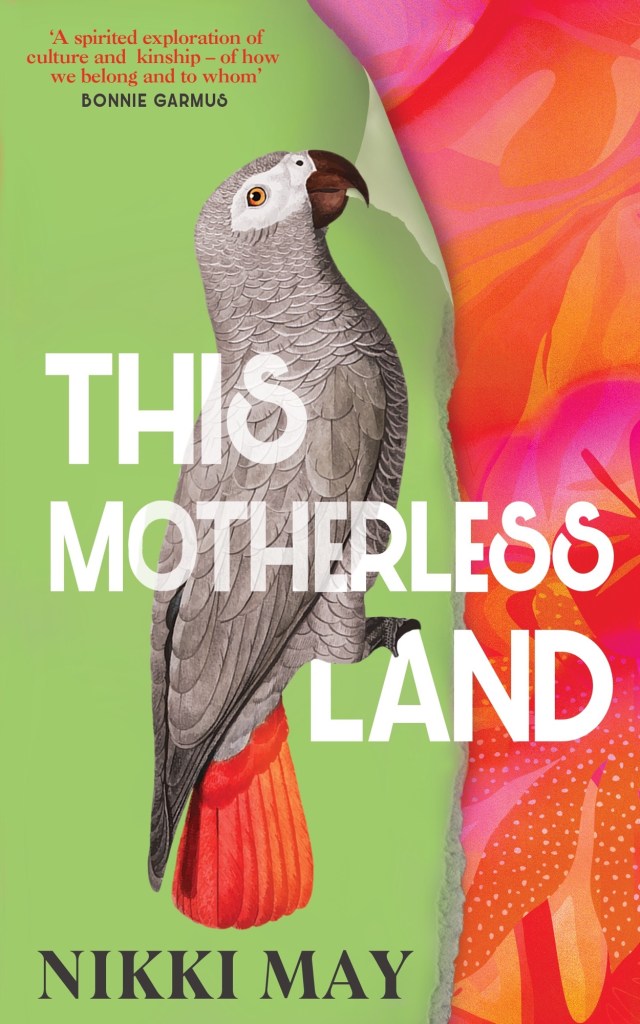
My debut novel WAHALA was inspired by a long (and loud) lunch with friends. It was published around the world in January 2022 and is being adapted into a major BBC TV drama. This Motherless Land is my second novel.
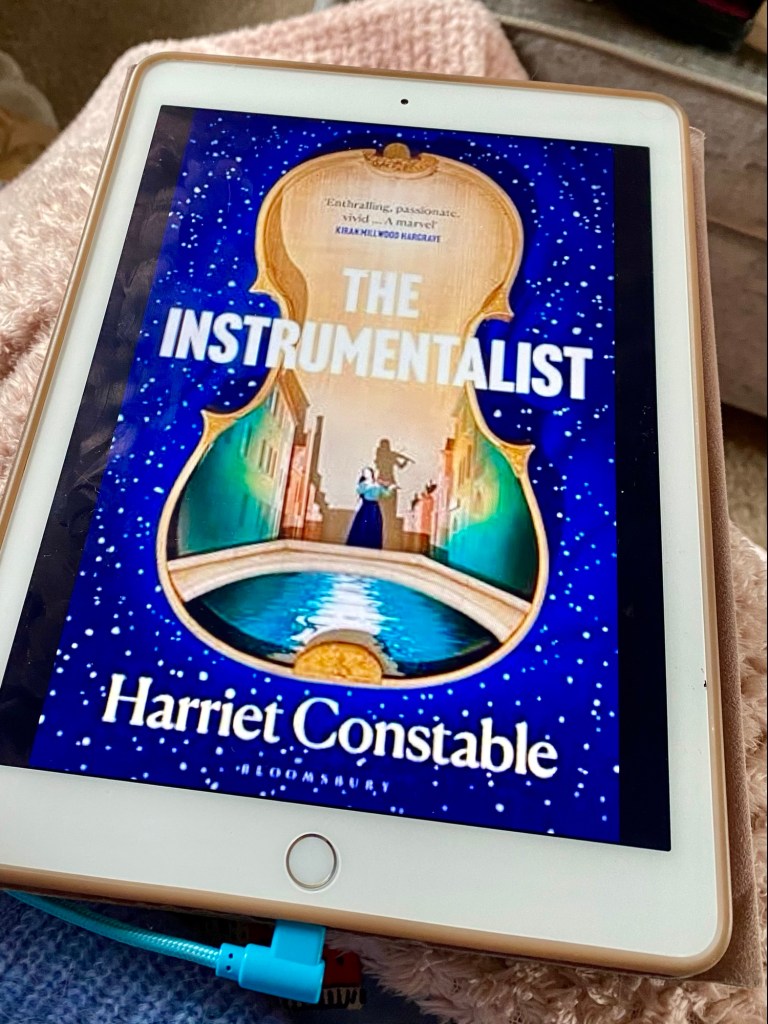
Wow! What an incredible debut this is. I absolutely consumed this book and even found myself furtively reading in the middle of the night with a tiny torch. Anna Maria della Piétro is a fascinating heroine and while not always likeable, I found myself rooting for her. Like all the girls at the Piétro, Anna Maria is an orphan, posted through the tiny hatch in the Ospedale Della Pietá often with a note or keepsake from the unlucky girl who had leave her child behind. The author shows us the incredible splendour of Venice, a place I fell completely in love with, contrasted with it’s destitution and desperation. A state that seems more likely for women, especially those from a poorer background. The convent brings up it’s girls very strictly, according to the Catholic faith and the virtues of hard work from scrubbing the floors or working in the nursery. It is also a college of music. Each girl is taught at least one instrument with the best trying out for the orphanage’s orchestra, the figlio. Those chosen will work with the master of music and they will play in the some of the most beautiful basilicas and palazzos in all of Venice. Anna Maria’s great love is the violin and there’s no doubt she will try to become the best.
Anna Maria is a bundle of youthful exuberance, fireworks, talent and ambition. She practically leaps off the page and it seems impossible for her to fail. She starts by aiming to be noticed by the master of music and after that to be the youngest member of the figlio. No sooner is one ambition fulfilled then she’s already thinking of the next. The rewards are also intoxicating – not that Anna Maria cares much for the lace shawls from Burano, but she is partial to the small pastries with candied peel and spices that she loves to share with friends Paulina and ?? Through them we see the girl rather than the musician. They bring out a lightness of spirit, playfulness and a sense of sisterhood. The love she has for her custom made violin is absolutely infectious and when she becomes the favourite of the music master will those girlish aspects of her character remain? Constable shows us a dark underbelly, both to the Ospedale and their music programme. Although the alternatives are even worse. She also shows us huge disparity between the rich and poor in Venice. As visitors we only see the beauty and history of this incredible city, but once I did catch a glimpse of the systems that keep the city going. While waiting on a jetty to catch my water taxi one early morning I met the dustbin men of the city, having to negotiate tiny lanes and creaking jetties to clear up after all the visitors. When Anna Maria gets to play at private palazzos, the grandeur is overpowering. After her performances she is showered with lavish gifts that are at home where she plays but out of place in her bare room. She also notices that those orphans who don’t excel are easy pickings for the rich patrons of the Ospedale. Unsurprisingly, Anna Maria wants to escape the fate of becoming a wife to a much older man and putting aside her talent. As she is taken under the wing of a female patron, Elizabetta ?? She’s impressed by incredible dresses and Elizabetta’s elegant palazzo, but this patron also uses her wealth for good. She shows Anna Maria another fate for the cities’ poor women, by taking her to a brothel where the wealthy woman helps with supplies ensuring these women can make their living in safe and clean surroundings. She points out to Anna the danger in becoming a favourite – there are always people lining up to replace you. When the master is fickle or arrested by a newer, talented young girl what would happen to Anna? It makes her think about the person she replaced for the first time.
I loved the synaesthetic aspect to Anna Maria’s talent because it really added to my understanding of why she loves it so much. I have tastes that are related to colour, so if I see a garden full of beautiful yellow daffodils my mouth begins to water and I get the sensation and taste of lemon sherbet sweets. As Anna Maria plays, colours dance through her and the flurry of colour gives us a sense of how transformative it is for her to play. She is utterly lost in this moments. She’s floating within a rainbow of colour. Even when she begins to compose the written notes on the page are hastily drawn because she’s somewhere else experiencing a unique explosion of sound and colour. Even though she’s not always likeable I was still rooting for her. However some of her tougher decisions are made from within the context of survival. Only by being ruthless and getting to the position of power she craves can she feel safe. Then she can make better, more equitable decisions from a place of safety. This is an incredible story, made all the more powerful because Anna did exist. While this is a novelisation rather than an autobiography she was real and so was her music master . He is a mercurial and sometimes cruel man whose identity remains unspoken – although I did realise who he was part way through. I loved that this is written as a feminist counterpoint to his fame, highlighting a woman of equal talent who is cheated in a creative partnership and ends up with her woke stolen and uncredited. This is an abusive relationship characterised by manipulation, exploitation and a fascination with talented pre-pubescent young girls. Harriet has created a brilliant work of historical fiction that gives voice to one such young woman full of spark, talent and incredible drive to succeed. Her book is totally immersive, plunging us into a world where women were expendable, only there to parrot and enhance a man’s talent. It’s a powerful and compelling tale that I’m sure I’ll still remember when it comes to my end of year favourite books.
Out on 15th August from Bloomsbury
Meet the Author
Harriet Constable is an award-winning journalist and filmmaker living in London. Her work has been featured by the New York Times, the Economist, and the BBC, and she is a grantee of the Pulitzer Center. Raised in a musical family, The Instrumentalist is her first novel. It has been selected as one of the Top 10 Debuts of 2024 by the Guardian.
The year is 1939, and in Paris, France a young woman is about to commit a terrible betrayal…
For Iris, each visit to her mother in St Mabon’s Cove, Cornwall has been the same – a serene escape from the city. But today, as she breaths in the salt air on the doorstep of her beloved childhood home, a heavy weight of anticipation settles over her. Iris knows she’s adopted, but any questions about where she came from have always been shut down by her parents, who can’t bear to revisit the past.
Now, Iris can’t stop thinking about what she’s read on the official paperwork: BABY GIRL, FRANCE, 1939 – the year war was declared with Nazi Germany.
When Iris confronts her mother, she hits the same wall of pain and resistance as whenever she mentions the war. That is, until her mother tearfully hands her an old tin of letters, tucked neatly beside a delicate piece of ivory wool.
Retreating to the loft, Iris steels herself to at last learn the truth, however painful it might be. But, as she peels back each layer of history before her, a sensation of dread grows inside her. The past is calling, and its secrets are more intricate and tangled than Iris could ever have imagined.
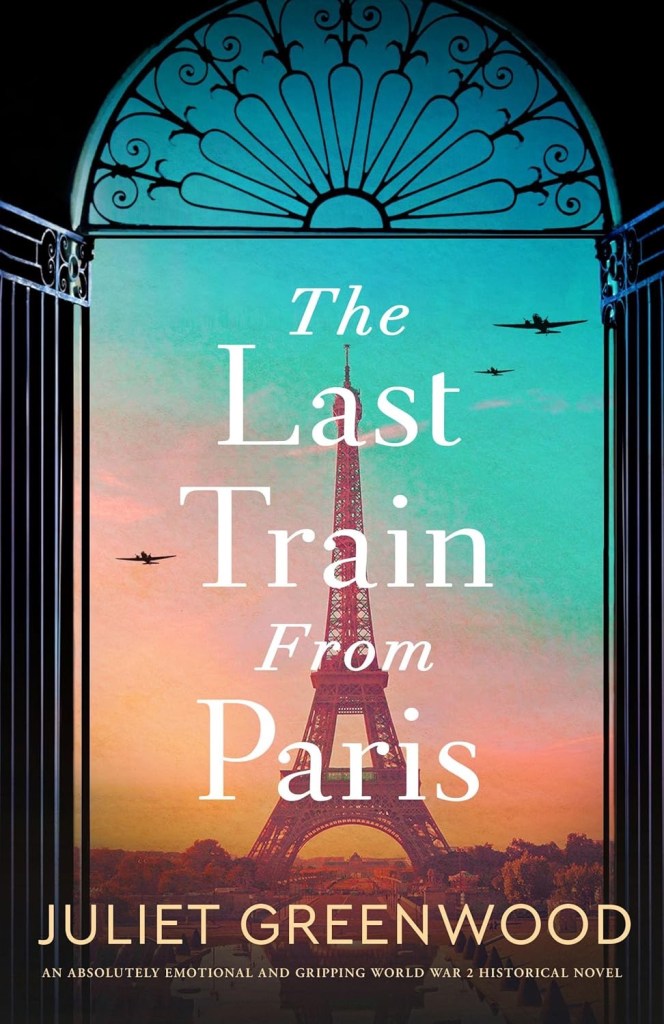
I always say that we read books at the right time. Having COVID has left me in bed with very little to do except read between doses of Sudafed! So I’ve been catching up on some of those books still languishing unread on my NetGalley shelf, which is always overstuffed. How strange then that this pick had a link to a blog tour book I’m reading this month, both featuring mothers separated from their children but one set in a Cold War Berlin and this one set in pre-WWII Paris. I love books filled with emotion and those based in pivotal moments of history, especially disability history, so this one would sit perfectly within that Venn diagram. I was drawn in immediately by this gripping story, set across two timelines; one set in 1939 and the other in the 1960s. It didn’t take me long at all to get into ‘The Last Train From Paris’. In fact by the time I got to the end of the first few pages, I knew that I was in for a treat and from then on, I found it increasingly difficult to put the book to one side for any length of time. I was spot on too! I was moved by the story and by the bravery of these remarkable women. Nora and Sabine meet and a form a strong friendship in pre-war Paris, after Nora travels from the UK to join a catering course. In the later timeline, the early 1960s, we meet Iris, a young woman who has questions about the circumstances of her birth.
Juliet is a new author to me and I really enjoyed her style. Her characters feel genuine and show such bravery in turbulent times. She doesn’t stint on the gritty detail of wartime life in Paris and the darkness of occupation. She focuses on an aspect of the Nazi’s eugenicist policies that I think is only just coming to light in fiction. Many families were desperate to escape Europe, as the Nazis plans for the Jewish population start to become clear but Sabine’s little family have a different reason. To give you some background, it’s a lesser known fact that the Nazis targeted those with physical and mental disabilities by inciting a belief that they were a burden to the state. A programme of euthanasia was devised at a Tiergartenstrasse 4, the building giving the name of the plan as T4. In 1933 they passed a piece of legislation called The Law for the Protection of Hereditarily Diseased Offspring pushing forced sterilisation of those regarded as ‘unfit’. Their list ranged from conditions like epilepsy, but also suspected long-term illness and mental illness such as schizophrenia or addictions. They targeted nursing homes, asylums and special schools for their victims and over three years, even before the outbreak of war, had sterilised 360,000 people. Once war broke out they started to kill disabled children and adults, for this book the author has concentrated on the children. Children under three who had illnesses like Down’s Syndrome or Cerebral Palsy (or were thought to have an illness) were forwarded to a panel of medical experts to be assessed and approved for euthanasia. Parents were misled, told their children were receiving expert or enhanced care, then told they had died of illness or natural causes. The truth was they killed at least 200,000 people with disabilities in gas chambers that were also used to kill other marginalised people including, overwhelmingly, Jewish people from across Europe. This truth is deeply moving and horrifying to me as a disabled person and as someone who has spent their working life trying to support people coping with long term illness and disability. It is also why the disabled community fight so hard and shout so loud about any rhetoric from government that denigrates or devalues people with disabilities in today’s society. It is why many disabled people breathed a sigh of relief at the recent change in government as many perceive Conservative austerity measures and rhetoric to have led to the deaths of 180,000 disabled people since 2006. So you can imagine why this subject really spoke to my heart and my values.
If this sounds a little heavy, it really isn’t. The author weaves these historical facts into the story beautifully so we see it through the eyes of one of these horrified parents. Many of whom tried different ways of keeping their child away from the T4 programme, especially those who were developing disabilities. In 1939, as the Nazi march on Paris began, Nora is still in the middle of her chef’s training. This dream she has been realising has come to an end as she realises she has to take a last chance to escape. She really has left it until the last train leaving Paris before enemy arrives. As she gathers her things to leave and says goodbye to Sabine, out of the blue her friend has a last request. Having only just given birth, Sabine knows she must leave Paris too and will be travelling away from the city with her husband. She suspects one of her twins may have a disability and has heard about the T4 programme. She knows what could await her daughter if she’s right. Although it will break her heart, she has to put her daughter’s life first and asks Nora if she will take the baby back to England with her. She knows Nora well enough to be satisfied that her little girl will be safe, loved and well cared for. Nora agrees and takes the heart-wrenching choice to say goodbye to one of her daughters. Iris lives away from home, but often visits her adoptive parents in the the little fishing village in Cornwall where she grew up. She has always known she was adopted, but whenever she asks questions about the circumstances surrounding her birth her parents avoid or shut down the discussion. It has left Iris unsure about her identity and that inner feeling she has that something is missing. I kept thinking about the bond that twins have and how not knowing your other half would affect Iris’s sense of self. I desperately wanted her to find the answers she was looking for, but could understand how Nora might worry about how she would take the truth. I could also empathise with Sabine who must be desperately worried about how her daughter feels and also feel a desperate sense of loss for all those moments she wasn’t there. Would Iris feel betrayed? Would she understand the dangers they believed she was facing under occupation?
This was a story about an evil and previously unimaginable situation, faced by two friends whose trust in each other was absolute even at their most terrified. Most readers would empathise with Sabine’s sacrifice, but I could also see the sacrifice that Nora made. She expected to finish her training in the culinary capital of Europe and become a chef, instead she sacrificed all that out of love for her friend and for a little girl who could perhaps be saved from the fate of so many others. As Iris visits her mother, this time, Nora hands over a box full of letters and mementos, and Iris slowly discovers the true story of her life. She must also face the cruelty of what happened to children with disabilities in those years before the Germans invaded Iris’s origin story is one of bravery and a mother’s desperation, with secrets in store. These young women come alive in this story of a deep commitment made from one mother to another. It’s evocative and moving, reminding those of us who have never been in this position that such young women were capable and willing to make decisions like this that were heart-wrenching and ultimately life-saving. It reminds us that duty, often seen as such a dry word, is sometimes an expression of love and hope for the future.
Out now from Storm Publishing
Meet the Author
Juliet Greenwood is the author of eight historical novels, published by Orion and Storm Publishing. She has been a finalist for The People’s Book Prize, and her books have been top 100 kindle bestsellers in the UK and USA.
She has long been inspired by the histories of the women in her family, and in particular with how strong-minded and independent women have overcome the limitations imposed on them by the constraints of their time, and the way generations of women hold families and communities together in times of crisis, including during WW2.
Juliet now lives in a traditional quarryman’s cottage in Snowdonia, North Wales, set between the mountains and the sea, with an overgrown garden (good for insects!) and a surprisingly successful grapevine. She can be found dog walking in all weathers working on the plot for her next novel, camera to hand.
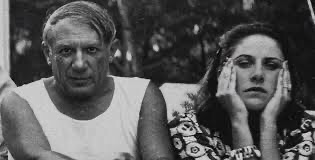
Treger’s latest novel concerns the life, or more accurately the love, of Dora Maar – a photographer and painter who lived in Paris for most of her life and most notably, during the German occupation in WWII. Born Henrietta Theodora Markovitch in 1907, she was known as a surrealist photographer exhibiting alongside Dali and other notable surrealists. She used her photographic art to better represent life through links with ideas, politics and philosophy rather than slavishly photographing what was naturally there. She was exhibited in the Surrealist Exposition in Paris and the International Surrealist Exhibition in London in 1936. In the same year she was exhibited at MOMA in NYC. He first encountered Picasso while taking photos at a film set in 1935, but they were not introduced until a few days later when Paul Elduard introduced them at Cafe des Deux Magots. They met in quite a dramatic way that showed her intent to catch his eye. She sat alone and using a pen knife she drove the blade between her splayed fingers and where she missed blood stained the gloves she wore. The fact that Picasso kept these gloves and packed them away with his treasured mementoes is a metaphor for their entire relationship – he fed from her emotions.
The author allows Dora to tell her own story and we are inside her mind at all times. We could say this is only her viewpoint of their relationship, but in a world where she is most known through her relationship with a man instead of her own work, Treger is simply redressing the balance. Also you’d have to be utterly blind to think there’s any other way of looking at his treatment of her and the other women he was involved with. But the nine years they were together, she was subjected to mental and psychological abuse. She was underestimated as an influence on his work, particularly Guernica and his politics. I feel on reading the book that he was drawn to what he saw as her masochism and drew on the pain he caused her both for his personal satisfaction and his art. He comes across as a narcissist; constantly told he was a genius he believes everything revolves around his needs and his freedom to work. This is seen in The Weeping Woman series of paintings where she’s depicted as a woman who is constantly tortured and distressed.
Picasso ‘The Weeping Woman’.
We can see how their affair had a distinct honeymoon period. The mistake she made was thinking this would be a template for the rest of their affair. She knew he had a wife, Olga, who’d had a nervous breakdown. There was also Marie Therese, who was his mistress and had his son Paulo. It seems Picasso never turned down an offer, having liaisons with many of their friends and group sexual experiences when they were on holiday in the South of France. These encounters caused Dora extreme emotional distress and being in her head was a painful experience. I desperately wanted Dora to walk away, but she wasnt being true to herself in accepting her behaviour. It felt like their relationship moved in a toxic pattern of infidelity, followed by distress and recrimination. The more distressed she became, Picasso would withdraw, telling her theyd made a bargain, that she was free to leave and that her distress was preventing him from working. Consequently we can see her feelings discounted. He gaslights her by saying she doesn’t have to feel the way she does; her feelings were always the problem, never his behaviour. In one scene in the book Dora suspects her mother is unwell after a dropped phone call but it’s after curfew during the German occupation an they can’t leave the house. Although Dora has paper saying she’s Catholic and Aryan, they won’t save her if she’s found out in the middle of the night. I found Picasso terribly cold towards her when they find her mother dead the next day, he doesn’t touch her and seemed more fascinated rigor mortis and the unearthly sheen of her skin, than comforting Dora. There were times when I felt he was doing things to keep Dora in her place, but there were other times when he seemed genuinely unmoved. It was as if once he looked at something with his artist’s eye it became an object.
The Years Lie In Wait For You by Dora Maar
It was no surprise when Dora’s mental health began to decline and being in that space with her felt suffocating and scary. I loved the way the author had missing sections in the text to signify time Dora has lost and where others have to step in. Treger represents Dora’s declining mental health as a direct product of Picasso’s actions. It’s as if he slowly takes her apart until her mind resembles one of his portraits, distorted and unnatural. Dora is a square trying to fit into a round hole. She is in love with Picasso and craves a life with him based on friendship, passion and fidelity. Picasso wants to have everything Dora is offering, but without the fidelity. He can’t understand why she is unhappy at his visits to Marie Therese, because when he’s with Dora he is wholly with her. His assertion that they should both be free almost sounds plausible until you realise that he holds all the power: he sees Dora when it suits him not her; he reserves the right to sleep with her friends even when she’s there; he also gets to decide when she should return to her apartment and let him work. I almost wanted him to have a taste of his own medicine. I wanted Dora to turn him away when she’s working or sleep with one of her male friends while they were on holiday, but she doesn’t get to dictate in the same way. That’s when you realise that his call for freedom in their relationship, means his freedom. I felt sad for Dora, possibly influenced by some of my own experiences. She seemed like a smaller woman at the end with none of her original vitality and flamboyance. I’m so glad to know that her art lives on and is still exhibited as part of the surrealist canon.
Louisa Treger, a classical violinist, studied at the Royal College of Music and the Guildhall School of Music and worked as a freelance orchestral player and teacher.
She subsequently turned to literature, earning a Ph.D. in English at University College London, where she focused on early-twentieth-century women’s writing and was awarded the West Scholarship ‘for distinguished work in the study of English Language and Literature.’
Louisa’s first novel, The Lodger, was published in 2014, and her second novel, The Dragon Lady, was published by Bloomsbury in 2019. She lives in London.
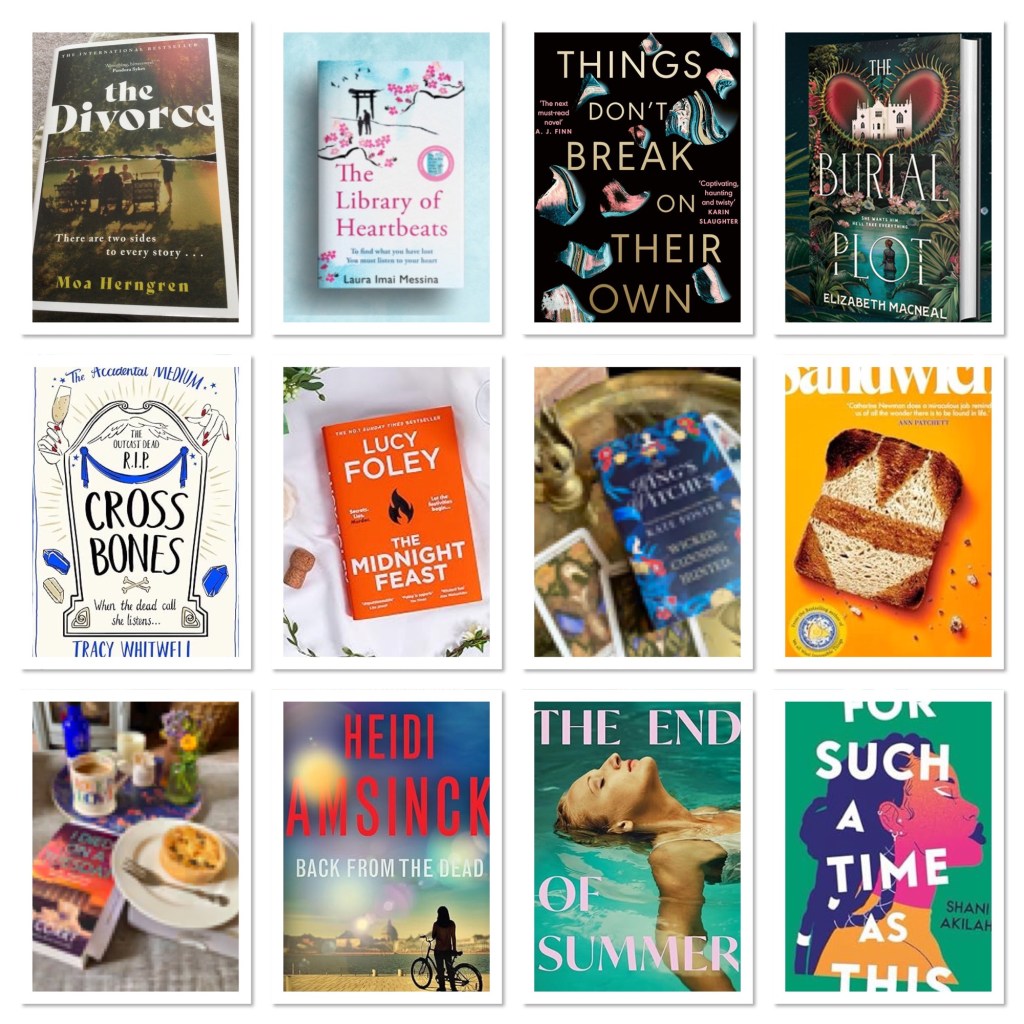
Wow! That was a busy book month. I read so much and enjoyed pretty much every book I read, but these were the stand outs for me this month. I think a combination of having a really painful back and the recent heatwave has meant a lot of resting and time to read. In fact I’ve read so much this month I’m slightly behind on reviews. My NetGalley account is looking seriously neglected though and one of my priorities for next month is to get some of those choices reviewed and tidied away. I hope you’re all enjoying the weather. I’m surgically attached to my new Shark fan which is so quiet I don’t feel like a jet engine is taking off next to the bed! Multiple Sclerosis and heat don’t mix well so I try and keep cool with cold drinks, a cooling mat, cooling spray and frozen strawberries or iced fruit lollies. I’m pretty much guaranteed to be having an afternoon nap each day too. I’m expecting similar conditions next month so lots more reading time. Here are some mini reviews of my June reading:
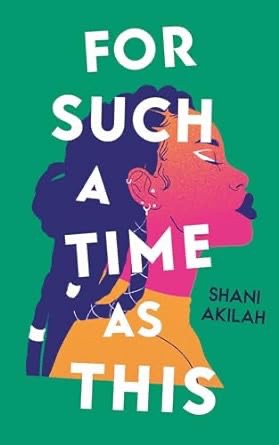
This excellent contemporary short story collection features an interlinked group of young Black British people. It opens strongly with an introduction to one woman’s tube ride to work and the emotions that arise when she sees an eligible man reading her favourite book. It sets the tone for the whole book with a narrative voice that’s immediate and modern. Reading this as a 50 year old in my rural village opens up a much younger generation to me and reminded me of the way my stepdaughters communicate – across so many social media apps I can barely keep up. There are bittersweet feelings of regret and love, the realisation that sometimes love isn’t enough. I loved the way that each story bled into the next, so while we meet a character like Jonathon in the context of the girl who’s always loved him in a later story we can see him visit Ghana with friends discussing how hard it is to be a young black man in Britain. So we know there’s so much more to him than at first appearance. I also love that these stories come full circle in an unexpected way within the final story. This beautiful writing is so immediate with no superfluous words or descriptions. My full review will be up this week.
I’ve never read a Jane Cory novel but was intrigued by the premise of this story revolving around a historic case. Janie tells us ‘on the day I died the sea was exceptionally flat’. She’s a young girl on the verge of exciting life changes, she’s been offered a publishing job in London. It’s something she has always wanted to do and she’s had a last early morning swim. Afterward she starts to cycle home when a 4×4 hurtles round the corner and knocks her off her bike causing horrendous injuries. Janie survives but is severely disabled, struggling to even communicate until she realises that although she can’t speak, she is able to sing. Years later, music legend Robbie is arrested for the offence. The clean living band member, then solo artist, wants to plead guilty but his solicitor is sure there’s something he’s not saying. Victim support volunteer Vanessa is assigned to Janie throughout the court process. Now a widow, she has spent most of her life unwittingly controlled by her husband. Her secret heartbreak is that she couldn’t have children because after a fall when pregnant she sadly had a stillborn baby that didn’t see due to being so unwell. So when a young man turns up claiming to be her grandson it throws her whole life into confusion. Luckily she has Judge, who she’s built up a friendship with after meeting at court, but he has his on secrets too. There are so many tangled threads in the stories of these people who revolve around a single court case. I was compelled to keep reading as the questions started to pile up and revelations came thick and fast. This was an interesting thriller with four narrators taking us into their own inner worlds and slowly revealing it’s darkest secrets.
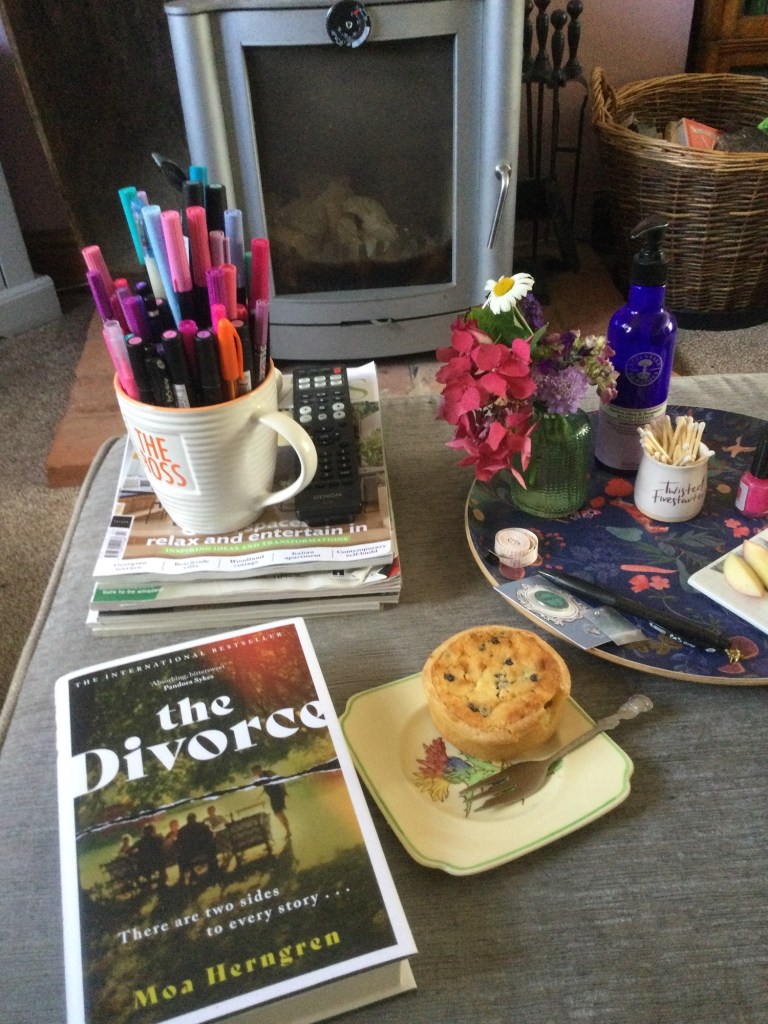
I loved this story of a marriage gone wrong from Moa Herngren, set in Stockholm. Our narrator is Bea, the wife in this divorce, who is angry with husband Niklas because he forgot to buy the ferry tickets to take them on holiday. Bea does everything else so why couldn’t he remember this one thing? Now they’ll be stuck in the city for another week in the heat or they’ll have to take a car and drive to a different ferry. Bea is sometimes exasperated with her husband who has started a new job as doctor in a maternity department, in fact she even picked out the job for him knowing that he would happily stay working in paediatrics in their local hospital for life. If she didn’t push him he wouldn’t fulfil his potential and they’d never have a new kitchen. Niklas and Bea met as teens when Bea’s brother Jacob started to hang out with him. When Jacob killed himself both of them were grieving and he felt a natural pull towards Bea, wanting to look after her. They’ve been together for thirty years and have two teenage daughters Alexia and Alma. Niklas suddenly distances himself from Bea saying he’s not coming home, saying he needs some space. Bea is bewildered by his behaviour. Is it a mid-life crisis? He gets a tattoo and starts to rent an apartment belong to the Ericssons down the road. Bea doesn’t know what she’s done wrong and he won’t communicate, but she’s terrified because if she loses him she loses His family too – the only family she’s known. We’re team Bea at this point and then the author switches to Niklas’s point of view at the half-way point. This is a clever and subtle story of something many of us experience, but shown from two different and fascinating perspectives.
I loved The Phonebox at the Edge of the World and the idea of a place to go and talk to your lost people. It’s a ritual. A point and place of connection where all your anger and grief can be expressed. Then when you put the phone down and leave the box, you leave those feelings behind. Catharsis is very important, but as time goes on so is containment. It allows people to grieve, but at a time and place of their choice. Shuichi is an artist who returns to her home town of Kamakura after the death of her mother to do carry out the administrative tasks that follow a death, but also to sort her belongings. As she starts to sort the contents of her mother’s house into boxes in the garage, she isn’t expecting to find a young boy in there, going through the boxes and taking items out. As a friendship grows between Shuichi and this boy called Kenya, Shuichi’s parental feelings are stirred up by this new child in her life. Children are very healing, because they’re a beginning rather than an end, experiencing the world for the first time with joy and wonder. This book is about the inner journey and the human process of change. There are moments of exquisite descriptions and a philosophical element. It’s one of those books where you find yourself going back to re-read a sentence that’s so beautiful it stops you in your tracks. Although it starts with a feeling of sadness, I felt uplifted at the end. There’s nothing overwrought it sentimental about it either, and it’s because the writer has such a gentle touch that the full impact of the emotions really surprise you. I felt changed by this story and that’s how powerful literature can be.
It seems a long time since I last accompanied Jensen on her investigative adventures, so I was very pleased to receive a proof for this third instalment. As usual this was a complex plot involving politics, organised crime, hackers and headless bodies being fished out of the water. Jensen fears that one of the bodies might belong to a Syrian refugee named Aziz who was working as security for MP Esben Nørregaard, one of her friends. Esben asks Jensen and her assistant Gustav to look into it for him as he doesn’t yet want to involve the police. Meanwhile, detective Henrik Jungersen and his team try to find out who the bodies belong to and where their heads have gone. This complicated investigation means that Jensen and Henrik are going to cross paths. Jensen is in a good place, after a round of redundancies at her newspaper Dagbladet she has become chief crime reporter. Also, she has just moved in with her tech billionaire boyfriend Kristoffer Bro. Henrik can’t believe that Jensen has left him behind for good. He’s still married, just barely, and is due to go on holiday to Italy with his family when the first body is found. Guiltily he can’t imagine anything worse than the holiday, but if he doesn’t go he knows it’s probably the last straw for his long suffering wife and that’s before she knows Jensen is involved in his case. Jensen still feels slightly odd in Kristoffer’s flat and when she starts to look for something of Kristoffer’s that’s personal I could understand why, even if it is an invasion of his privacy. Jensen’s investigative urge could come between them and up until now this is the healthiest relationship she’s ever had. Henrik has never made himself available, but that attraction is still there. The story is compelling, well-structured and there were revelations I wasn’t fully expecting. What’s fascinating about Jensen is that by instinct she’s a lone wolf, suspicious of everyone and very headstrong. Yet she seems to be slowly collecting people in her work and private life. I think these ties make her feel vulnerable, but she’s starting to realise that without them she’d be in a much worse place. The ending was tooth-clenchingly tense and I’m already looking forward to their next adventure.
It seems to be a year of incredible debuts and this one is definitely going to stay with me. We open at a dinner party. Robyn and her wife Cat are hosting an evening for their friends Willa and Jamie, Robyn’s brother Michael and his partner Liv, and Cat’s brother Nat and his new girlfriend Claudette. It’s the first time the group will meet Claudette and Robyn hopes to make it a chilled, relaxed evening. Robyn had a scholarship for a private girl’s school and she ‘buddied’ with Willa who was a new sixth former. Robyn soon learns that Willa’s life is overshadowed by the disappearance of her sister Laika. Michael’s girlfriend Liv is a psychologist and she begins a discussion about implicit and explicit memories. Our explicit memories include times, dates and places and they tend to be from older children. Implicit memories are usually from unconscious emotional recollections and can be an amalgamation of several memories, as well as a few bits of what others have told us. These are memories created when we’re very small, usually pre-school age. Jamie isn’t convinced and Liv’s assertions seem to unsettle the party. As Jamie gets louder, Willa tells a memory of being tickled until she wets herself. She has always hated being tickled. However, someone in the party knows this isn’t actually Willa’s memory. It’s her sister Laika’s. The psychological dynamics of the dinner party are explored within narratives from Robyn, Willa and Laika. We each carry hidden histories within us and these ones are complex and affected by loss and trauma. While the compelling psychological thriller aspect is concerned with finding out what happened to Laika, I was fascinated with the upbringing of the characters and how they became the adults they are. I loved the analogy of the natural pool where Robin’s parents take everyone to bathe. It’s a direct contrast to the sterile and man made pool at Willa’s childhood home. The natural pool at Robyn’s family home is filled with this self-made family that includes their friends too. Robyn and Michael’s family have so much love that it can easily take in others, old friends and new generations. Their love is like the natural spring that feeds the pool, constantly flowing and endlessly replaced.
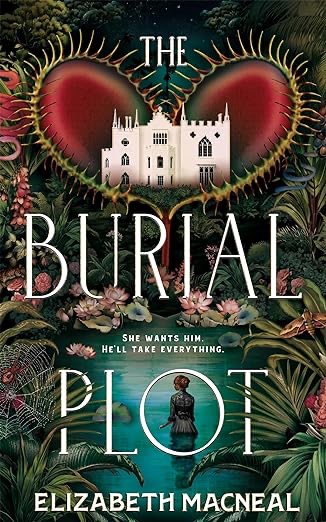
I love historical thrillers and this one really is bristling with menace. This novel pulls together so many things I love in one incredible story: the Victorians; a touch of the macabre; a spooky and unique house; a heroine who has her consciousness raised and a simmering tension that builds to a heart hammering conclusion. Bonnie is our heroine, a young woman who resides in St Giles and earns a living running a scam with her lover Crawford and their friend Rex. The trio hang around public houses looking for a man that Bonnie can lure to a quiet alley for sex, only for Crawford and Rex to appear, rough him up and steal anything they can sell on. However, one night as Bonnie lures a red-headed man to their usual place, Crawford and Rex don’t appear. Pressed up against the wall while the man tries to haul up her skirt, she has to fight him off herself. Bonnie knew as soon as head hit brick, he was dead. Crawford tells her lie low and shows her an advert for a lady’s maid at Endellion – a labyrinthine Gothic house on the outskirts of London. Bonnie goes to meet the owner, a Mr Montcrieffe. He’s a widower with a teenage daughter Cissie who desperately misses her mother. Bonnie gets the job and looks forward to working with Cissie. Yet there is so much more to these unrelated events than she knows and so much about Crawford that’s been hidden by her love for him. Now events are set in motion, Bonnie is caught in a spider web of lies, betrayals and the very darkest of intentions. I loved Bonnie’s development through the book, Crawford has definitely underestimated her. She feels trapped by Crawford but he doesn’t have the hold on her he once did. She wants to remove deceit from her life at Endellion. The revelations keep coming in the latter half of the book, some expected and others a complete shock to Bonnie and to us. I felt a physical sensation of holding my breath in parts and I devoured the final three sections in one afternoon, desperate to find out what happened. Bonnie has to be super-resourceful to survive and create a better life for herself. I was desperate for her to succeed! This novel is a brilliant thriller with an atmospheric and beautiful backdrop. We also have a resourceful heroine with more strength and intelligence than she realises. This is an absolute must read for those who love Gothic and historical fiction.
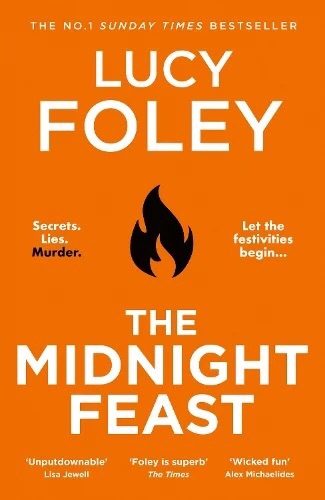
I started this book in bed at night, which turned out to be a big mistake because I didn’t want to go to sleep once I’d started. We’re introduced to the village of Tome (pronounced ‘tomb’ by the locals just to add a sense of foreboding) and the new wellness retreat created there by Francesca Woodland who inherited The Manor and it’s land from her grandfather. Her husband Owen has created woodland ‘hutches’ for guests, featuring outdoor showers and luxurious linens. The Manor itself is the central hub with classes in meditation and yoga, a spa and breakfast area. The opening weekend looms and while there’s a hint of anxiety Fran is sure she has everything under control. On the final night she has planned a mini-festival with live music, a meal out in the woods and crowns fashioned from twigs creating the look and feel of a pagan celebration. While the music is at it’s loudest she has given Owen the go ahead to start digging the foundations for the tree houses, in the hope the music drowns out the noise. However, that’s not the only problem on the horizon because when Owen arrives the workmen are confused by new symbols on the trees. They look like seagulls in flight. By the morning there’s a burned effigy and a body on the beach, a wrecked Aston Martin with blood inside and the manor has been rased to the ground by a ferocious fire. Everyone in Tome knows the local saying- ‘Don’t disturb the birds’. Could Francesca’s dream be over when it had only just begun? The book also goes back twenty years, when Francesca was a teenager living at the manor with her grandparents and twin brothers.
There are several narrators, but there are others who have reason to hate The Manor and some exact their revenge in amusing ways, while others want to end the retreat and Francesca for good. I loved the folk ritual element, reminiscent of Thomas Tryon’s Harvest Home mixed with a dose of Hitchcock’s killer birds. Except these birds are the size of a human, covered in black feathers and under their cloak is the huge beak. The villagers take them seriously, even the contractors who turn up to remove the trees don’t want to mess with those marked by the birds, they’d rather give the money back. Are the birds a simple folk tale that keeps Tome safe or are they real? Tome’s forest and it’s beaches are for the villagers and not to be fenced off for the use of rich visitors. As we countdown to what happened on the big night, two parties twenty years apart reveal their secrets and the birds will have their final say. The ending is terrifyingly final for some, while others will wake up hungover and wondering what exactly they witnessed. As for me, the final page reveal really made me smile.
One week in Cape Cod. The perfect family holiday. What could possibly go wrong…?
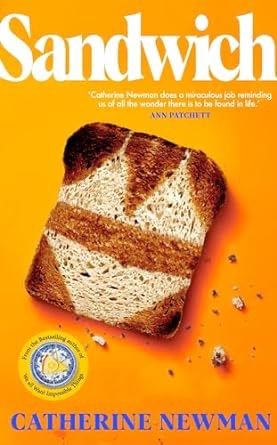
Rocky and her husband Nick have reached that middle point in life where adults seem to be at their most stretched. They’re coping with children who have left home or are living at university as well as increasingly elderly parents who need more help than they have before. Rocky is a great narrator because I was comfortable and believed in her world. In fact the book flowed so beautifully that I finished it in a day. The family trip to the Cape Cod holiday home they’ve rented since the children were small throws Rocky’s three generation family under one roof. Eldest child Tim is there with girlfriend Maya and student Willa has travelled from her college and meets them there. Later in the week grandma and grandad will join them for two days and of course there’s the ancient cat. They are rather piled in on tap of one another but they couldn’t come here to a different, bigger rental because so many of their memories have been made in this house. During the week Rocky will learn and divulge some secrets, all of them filtered through her anxiety and what husband Nick jokingly calls a hint of narcissism. Rocky is a passionate and emotionally intelligent mother, the sort of mum you might go to with a secret. She also happy to be schooled where she gets it wrong, especially where daughter Willa is concerned. She might use the wrong pronouns and need to check her privilege occasionally but largely she’s the sort of mum you want. She feels things almost too deeply and I understood that in her. I think Catherine Newman is brilliant when it comes to trauma and intergenerational family dynamics and every family has them. Rocky reminisces about the time she miscarried, the unresolved emotions are clear and perhaps stirred up by menopause symptoms and having her babies under one roof. I loved Rocky and Nick’s marriage too because it’s not perfect – they haven’t really connected for a while, physically or mentally. When he stumbles on a long held secret it throws their dislocation into the spotlight and gives them the opportunity to talk. He still loves her, despite the secrets and narcissism. She recognises that throughout the holiday Nick has been cooking, organising, driving and just quietly looking after everyone. They’ve been in their mum and dad roles for so long they’ve forgotten how to be Rocky and Nick. It’s something of a relief for Rocky to know that Nick still desires her, despite the expanding waistline and loss of libido. Each generation has it’s own issues: the grandparents are facing health issues, brought into sharp focus when grandma faints at the beach: Rocky’s son and girlfriend are facing some huge life choices; Willa is listening and helping where she can. Catherine Newman has once again written a novel about family that is truthful, funny and life-affirming. I can easily see this being on my end of year list because it’s raw, emotional and relatable.
If you haven’t had the pleasure of meeting Tracy Whitwell’s character Tanz yet, you’ve been missing out. This bold, sweary Geordie actress and accidental medium is a delight and this is her third adventure in the series. Tanz is being torn in two directions as she reluctantly agrees to do a fringe play in London, but is also suddenly ‘activated’ as her spirit guide Frank explains. She is sent a new guide who she calls ‘Soft Voiced Lass’ and her flat is suddenly teeming with visions and apparitions, including a nurse who is on duty and walks through into Tanz’s bedroom which is quite a feat when you don’t have any legs! Luckily she has friend and fellow medium Sheila to rely on, but there’s a lot of sleeping with the light on. Tanz is guided down to Southwark and a cemetery known as Cross Bones, the burial place of the prostitutes licensed by the Bishop of Winchester. However, Tanz is greeted by a horrific vision of the burial ground in the Victorian period, when overcrowded tenements spread diseases like wildfire and deaths from cholera, typhus and consumption were the daily norm. What Tanz sees isn’t an ordinary graveyard though. The smell hits her first; death, smoke and sewage creates a miasma that seems to cling to your clothes. In the yard Tanz can see a grave digger with a woman screaming at him, when she looks down she can see some fingers and a skull where he has been digging a body up to make room for more. She is overwhelmed and doesn’t really know what her purpose is here, just that it isn’t going to be easy.
I love Tanz because she’s one of the most real people I’ve ever met in a book, despite the spooky stuff that surrounds her. She’s very down to earth, independent and has a few vices. She thinks her visions relate to several generations of the same family. Between the spooky action there’s an injection of dark humour that I really appreciated. I love Tanz’s slightly prophetic phone calls from her ‘mam’ who strangely seems to know when her daughter’s up to something. Thank God she doesn’t find out about the black faced woman, the homeless man and the knife! There’s also a side order of romance in this novel, with a younger police officer stirring up rather unexpected feelings for Tanz. She’s developed some boundaries and her self-worth enough to accept that someone like this could like her. She’s also stopped the habit of keeping her eye on the exit in her romantic affairs. She’s also taking her gift seriously, starting to accept that it’s this type of work that she finds fulfilling. Although, she also makes a radical move in her acting career too. It’s lovely to see Tanz in such a strong position in life, she’s ready to take on the world and I can’t wait for her next adventures.
Judy left England as a teenager and lived with her aunt In New York City. Judy’s mother drummed it into her that it was wise for a woman to have her own money and never rely solely on a man. This lesson was well learned, but without any real qualifications or means of making money Judy has to be more creative. She’s a grifter, stealing here and scamming there. So when she sees a story in a newspaper about a rich resident of Cape Cod becoming a widower, she decides on her next mark. Judy finds her way to a vineyard in the same area, taking a job there and making herself known until the inevitable happens and she meets Rory. She plays it clever, doesn’t ask for anything and is never pushy or monopolises his time. She’s playing the long game because she wants him to fall for her, hook line and sinker. What she didn’t bank on was falling in love with him. When they marry she has access to some of the wealthiest people in the area so she’s easily sneaking the odd item from their home and from other society people to sell on through a fence. When Rory’s asked to hold the local Wine Appreciation Society ball at their chateau in France, Judy is left with a dilemma. Her fence in London is blackmailing her, asking her to provide details of the ball including exits and entrances of the chateau and a guest list of who’s attending. She doesn’t want to help, but when he threatens to tell husband Rory about her past she has no choice. When one of the robbers dies she laments that a young man has died because of her and can’t shake it off. It’s in her French home that Judy receives the phone call, the one she’s dreaded and expected all at the same time. The police are looking into a murder, but is the victim the man in France?
When Judy’s daughter Francesca gets a visit from the police and journalists it’s like a bolt from the blue. She’s a lawyer, in London and is aghast when police inform her that her mother seems to have fled the country and is wanted for murder. Francesca is left bewildered and unsure what to do. The author is very adept at giving out just enough information, drip feeding little clues here and there that keep you reading and keep you guessing. Then, suddenly, she wrong foots you with a different direction. I found Judy so fascinating that Francesca suffered a bit in comparison. She’s the female equivalent of the ruggedly handsome rogue, with a habit of stealing from the rich like a modern day Robin Hood. There is only one woman who suspects Judy might not be all she seems and she won’t let go of her suspicions, even taking them to the grave. I loved the allusions to Lady Audley’s Secret a Victorian ‘sensation’ novel based around the fact that Lady Audley is living a lie. It had pace and excitement just like a contemporary thriller and this book is in that tradition, except the heroine has less to lose, thanks to never relying solely on a man. I was pretty sure that Judy would try her hardest to find a cunning way out. Is it wrong that the thought of her getting away with it made me smile?
This novel is historical fiction, based during the reign of Elizabeth I and James VI of Scotland (James I of England). I knew of James VI’s obsession with witches after studying the Malleus Malificarum at university, the bible for witch finders, describing all the behaviour and characteristics of possible witches. It’s a guide to James VI, who was alarmed by news of witch hunts in Germany. His proposed bride, Princess Anna of Denmark, set sale for Scotland in 1590 and was driven back by catastrophic storms. The storms were blamed on witches in Denmark and when James travelled to meet her in Norway he heard allegations of witchcraft first hand. Around the same time, in North Berwick, a housemaid called Geillis Duncan was accused of sorcery and when tortured she implicated several other witches, allegedly conspiring with the Earl of Bothwell to take the throne from the King. Kate Foster has taken this history and weaves a story from three women’s points of view, giving a feminist slant on the witch trials that killed thousands over the next two centuries. As Kate points out in her historical notes, the majority of these were women over forty. There are three narratives in the book, from women in different positions of society. Princess Anna of Denmark was a young girl of fourteen when he was betrothed to James VI and attempted to reach Scotland with an enormous pressure on her shoulders. They will have a Scottish hand-fasting, if she should please him within the next year he will marry her. If not, she will be ruined for any other marriage and her future looks set to be a life within an abbey. Adding to the pressure, there is a witch burning just before they leave and Anna is compelled to watch, because burnings are a warning to all women.
The renowned witch finder Dr Hemmingsen from Copenhagen assures the king that he has a unique way to identify witches, using a bodkin to prick them and find the devil’s mark on their body. He also sends the king a golden amulet for protection, carved by a man who knows how to ward off evil. It seems signs and charms are only witchcraft when a man says they are. In fact Anna has never heard so much about the practises of witches as she does from the king, regaling her with tales of baby-killing and orgies with man, woman and beast. Her maid Kristen tells Anna that James is becoming a danger, his fervour is a kind of madness and a licence to abuse and degrade women. Anna has a realisation that a woman’s body is never truly her own, no matter what their position in society. Whether you’re a housemaid whose master decides you’re his property, a witch who can be stripped and examined by men who call themselves god-fearing, or a princess whose family hand-fasted her to James Stuart and didn’t ask her if it was what she wanted. Women must work together if they want to survive. These women are strong, but are they intelligent enough to try and outsmart a king? Kate is brilliant with twists and turns, so I wasn’t surprised to find a few revelations towards the end. I was driven to finish to know what happened to all three women and whether any of them would achieve the freedom they craved. This is historical fiction at it’s best.
That’s a lot of fiction for one month. I read around fifteen books in June and had to be choosy, but this tells me there’s a wealth of fantastic fiction out there, especially if you enjoy various different genres as I do. I’m behind in my Squad Pod reading so that’s the focus for July and catching up on my NetGalley reads too. I’m hoping to get my percentage up to 70% over the next couple of months. Here’s a little preview of what I’m hoping to read in July.
What a year it’s been for debuts!! This is another excellent read that I’d put on the back burner because I had over committed myself to blog tours. I’m so sorry I didn’t read it sooner because I absolutely LOVED it. This is my absolute favourite genre – gothic, historic fiction – but when added to the elements of spiritualism, transgressive females and dysfunctional families this would definitely come up on Goodreads as highly recommended. In Paris, 1866, a couple of sisters are living very separate lives; Sylvia who is now Baroness Devereaux and Charlotte Mothe, the sister she left behind with a drunken, violent father. When Charlotte pays a heavily disguised visit to Sylvie’s home she assumes their father is ill, but it’s a different aspect of her past she’s bringing to her sister’s door. Their mother had a business as a spirit medium, but Sylvie promised to put such shady dealings in the past when she married the Baron. Charlotte needs her sister for one last con, to pay her father’s medical bills. The aristocratic de Jacquinot family think they are being haunted by an aunt killed in the revolution. They will need to use all their tricks to frighten money out of this family, but they didn’t bank on being absolutely terrified too.
The Perrault fairy tale underpinning this story is ‘The Fairies’ but the sisters don’t necessarily agree on the interpretation. One sister is asked a favour by an old crone, a glass of water from the well, but she ignores her and is cursed to expel toads every time he opens his mouth. On the next day the other sister is commanded to provide a glass of water by a young beautiful woman and grants her the favour. The second sister opens her mouth and gold coins spill out. Perrault says one sister is good and one is bad and Sylvie accepts this, but Charlotte thinks changing her disguise was a mean trick.
“The test is rigged from the start – even before the fairy turned up, when Perrault labelled one sister good and one bad on the very first page, before either got a chance.”
However, by the end Sylvie has changed her perspective. She muses that if she had a daughter would she be toads or gold? She decides not to read her Perrault; ‘I think I will let her decide for herself how a girl should be.”
The de Jacquinot family are dysfunctional and have narrowed all their problems down to the daughter, Josephine. They are clearly struggling to stay afloat, with clear spaces on the wall where there used to be paintings. Yet none of them are working or making any money, still living like the aristocrats they once were. The grandfather seems grumpy but is convinced they have a visiting spectre – Aunt Sabine who died in the revolution when her throat was cut. Brother Maximilien is cynical, in his book there is no such thing as spirits and his sister is suffering from a prolonged bout of lunacy brought on by a dalliance with a once trusted friend of his. Josephine is absolutely convinced there’s a spirit. Charlotte and Sylvie started their routine and I’d not expected them to be charlatans! I loved the details of their routine – the snuffing out of candles, the ring of salt. I thought that the story of creating waxed spectral hands with their mother was a brilliantly quirky childhood memory! Charlotte adopts the patter again straight away, talking about “penumbral disturbances” and “liminal spaces”. Sylvie almost admires her sister as she weaves a tale around the de Jacquinot home and their errant daughter.
However, everyone is shocked when Sabine appears to possess her niece. Josephine has become a different person, babbling about something being taken from her and spitting with anger at her grandfather. Then she’s overcome, with ectoplasm pouring from her mouth. This is something they’ve heard of but have never seen spontaneously like this. That night the library walls are trashed and the ancestral paintings are slashed to pieces, all expect Sabine’s. The family suspect a poltergeist but how could they have slept through such destruction? After this even Maximilien is on board, yet Sylvie suspects something isn’t what it seems. Charlotte was vociferous in her defence of Josephine, almost as if she actually cares. Sylvie knows that her sister has become unnaturally attached to young women before. Before they can go any further Sylvie’s husband confronts her at home. He’s had her followed and suspects an affair with Maximilien de Jacquinot who is closer to Sylvie in age. Sylvie tries to protest her innocence, but it’s difficult when she has betrayed her husband, just in a different way. She can’t reason with him and can only do what he asks, to leave. Now she is back in her miserable childhood home, listening to her father snoring as she lays awake and bereft.
Here the author pulls a brilliant ‘Fingersmith’ style twist, with a change of narrator and perspective of the same events. This narrative is what happens to the girl who spews toads and doesn’t conform. Charlotte is the daughter who stayed behind and still nurses the father who she suspects of killing her mother. In Charlotte’s story, instead of the aristocracy we meet an interesting set of characters who live and love outside the norms of society. I loved meeting Mimi who could fill a book of his own! The atmosphere and settings in the book are brilliant and give a very varied look at the city of Paris, from the poverty Sylvie and Charlotte come from to the remaining aristocrats and their crumbling mansions. This is a society recovering from the shock of revolution and a shift in the existing hierarchy. The de Jacquinot family are like their mansion, falling apart. I loved the dual staircase too, with Josephine and Charlotte using the servant’s exit together when surely they should use the main stairs? There’s are further tantalising hints of people who live outside the rules, quite lavishly if Mimi’s quarters are the example. I could see why Sylvie had opted to disappear into the money classes, because the difference between her rooms and the home she came from is stark. She also truly loves her husband and hasn’t married him for a comfortable life as her sister thinks. Charlotte does feel the dice was loaded when it came to their differing fortunes and I think she sees the Perrault fairy tale as an allegory for her sexuality. Sylvie is able to conform in this way and Charlotte can’t, she’s born the way she is into a world that doesn’t accept her. I was also sympathetic to her situation at home, trying to care for a man who is hard to love and has been violent towards them all. This was an amazing read, genuinely spooky but also a novel about families. Those who fit into their family and those who don’t. This is a fabulous ghost story with an unexpected twist and a wonderful glimpse of a society in flux.
Meet the Author
Carmella Lowkis grew up in Wiltshire and has a degree in English literature and Creative Writing from the University of Warwick. After graduating, she worked in libraries, before moving into book marketing. Carmella lives in North London with her girlfriend. You can follow her on social media @carmellalowkis. Spitting Gold is her first novel.
I was so lucky to be offered a proof for this book after waxing lyrical about the author’s work on social media and I loved it so much that I’ve already splurged on the Goldsborough Books special edition with the most gorgeous spredges, for my collector’s cabinet. This novel pulls together so many things I love in one incredible story: the Victorians; a touch of the macabre; a spooky and unique house; a heroine who has her consciousness raised and a simmering tension that builds to a heart hammering conclusion. Bonnie is our heroine, a young woman who resides in St Giles and earns a living running a scam with her lover Crawford and their friend Rex. Crawford is handsome and a bit of a dandy as far as their limited means allow. The trio hang around public houses looking for their latest mark, a man that Bonnie can lure to a quiet alley with the promise of sex, only for Crawford and Rex to appear just in time to rough him up and steal anything they can sell on. However, one night as Bonnie lures a red-headed man to their usual place, Crawford and Rex don’t appear. Pressed up against the wall while the man tries to haul up her skirt, she realises they’re not coming and has to fight him off herself. As the mark falls and hits his head, the men suddenly appear but far too late. Bonnie knew that as soon as head hit brick, he was dead. Crawford tells her to leave and lie low, he and Rex will tidy this away. In the aftermath, Crawford shows her an advert for a lady’s maid at Endellion – a labyrinthine Gothic house on the outskirts of London. Maybe she could apply for this job and stay out of sight for a while? Bonnie goes to meet the owner, a Mr Montcrieffe. He’s a widower with a teenage daughter who desperately misses her mother and spends rather more time alone with her scrapbook than is healthy. To her surprise, Bonnie gets the job and looks forward to working with Cissie. Yet there is so much more to these unrelated events than she knows and so much about Crawford that’s been hidden by her love for him. Now events are set in motion, Bonnie is caught in a spider web of lies, betrayals and the very darkest of intentions.
I’ve already read one book this month that deals with this part of London and a burial ground known as Cross Bones where the prostitutes of the Southwark district were buried. Known as the Winchester Geese, due to being licensed by the Bishop of the parish, upon their deaths they were still banned from a burial in consecrated ground. The burial ground then became a place for the poor of the surrounding area to be buried, but in an area overrun with diseases like typhus and cholera it was soon over subscribed. Half decayed bodies were disinterred to make way for the new, with grave diggers losing their respect for the dead and using their bones as skittles and their skulls as balls! When Bonnie sees Mr Montcrieffe’s sketches of a mausoleum for his late wife, she encourages him to build it on an empty patch of land on the edge of the gardens of Endellion. She knows that the rich would pay to take their eternal rest in such beautiful surroundings and away from the miasma of death and sewage in the city. Between them they sketch out a cemetery, with Bonnie creating a planting scheme for the project. She’s inspired by the old greenhouse where she’s been spending her few hours of leisure potting up abandoned orchids and other cuttings. Bonnie also makes a difference with Cissie, who seems happier to have a mother figure in the house and spends more time outdoors. Her scrapbook of imaginary love letters sent from Lord Duggan are left aside for a time. Bonnie even enjoys her time spent with the kitchen maid Annette, building a female friendship that’s been missing from her life. Then there is news from Mr Montcrieffe that he’s received a letter from a man who worked on the cemetery at Highgate recently. He claims to know all the administrative loopholes and potential investors to benefit their endeavours at Endellion and he’s invited to stay. As soon as Bonnie enters the office she knows who their new guest is and the smell of peppermint and aftershave she knows so well fills the room. Crawford is keen to establish himself in the house, like a cancer at it’s centre. Although he claims to wish for Bonnie back in his life, she knows that isn’t the only reason. He wants Endellion and he doesn’t care about the chaos and pain he might cause to achieve his aim.
Horace Walpole’s Strawberry Hill
The setting is beautifully drawn by the author and modelled on Strawberry Hill, Horace Walpole’s gloriously gothic mansion near Twickenham. It’s a very fitting choice for this story, considering that Horace Walpole was the writer of the very first Gothic novel The Castle of Otranto. With it’s crenellated roof and romanticised interiors Endellion was extended and decorated to the taste of Mr Montcrieffe’s first wife Josephine who drowned in the garden pond. The house is labyrinthine in design with plenty of places to hide out, in fact Bonnie spends a lot of time looking for Crawford and wandering through these rooms following the scent of cigarette smoke or his distinctive aftershave but never quite seeing him. The redecoration of the Montcrieffe’s marital bedroom is done by Cissie but very in her mother’s style with it’s overblown and romantic pink. Only to be expected from a girl who writes imaginary love letters to herself in an ornately decorated scrap book. Bonnie prefers working in the earth, transforming the greenhouse and the cemetery with her more natural planting schemes when compared with Josephine’s fondness for cultivating pineapples. The gardener shows Bonnie the exotic plants grown before, including a Venus fly trap, which he opens up to reveal a partially digested beetle. There’s no more fitting metaphor for the situation Bonnie finds herself in, or for the house itself and it’s ability to draw someone like Crawford in and inspire envy.
Crawford is a classic abuser. He sought out Bonnie, as a girl with no prospects, money or family and using his romantic wiles has love bombed her into depending on him for everything. The death of the man in the alley has allowed him to hold something over her, using her fear of the hangman’s noose and of losing him to manipulate her. The pace of the novel changes when he joins her at Endellion; the fear and excitement of snatching moments together and his desire for her are like a drug. He tells a story of his early years, living in poverty on a barge just down the river from this house and an injustice linked to his parentage. This invokes pity in Bonnie and he hopes it gives him a sentimental Robin Hood feel – he wants to take things that aren’t his legally, but argues that morally he has every right to them. The risky behaviour builds and when Bonnie won’t go along with what he wants he suggests she doesn’t love him, that she’s falling in love with Mr Montcrieffe and when neither of those work he threatens, becoming more menacing than Bonnie has ever seen. He takes the household apart bit by bit, removing those who might oppose him, charming those who are taken in by his looks until his dirty boots are carelessly marking the floors and the furniture as if he owns them.
When he proposes a scheme to Bonnie that will make their situation more permanent and tells her his history with the house she believes that this is the reason he came here and feels obliged to help. However, he reckons on the Bonnie he knows from St Giles not expecting that her time at Endellion might have changed her. I loved Bonnie’s development through the book and Crawford has definitely underestimated her. She has developed self-worth from having the raised status of a steady job, earning honest money and using her skills on the cemetery project with Mr Montcrieffe. His belief in her abilities is touching and improves her self-esteem. She starts to feel a loyalty to him and to Cissie who has brought out strong maternal feelings in Bonnie and mothers always protect their cubs. Yes she feels trapped by Crawford but she’s unhappy with his plans, she wants to remove deceit from her life at Endellion and the constant feeling of being on edge is killing her. I started to wonder whether Crawford didn’t have the same hold over her he once did, she’s questioning his plan and his motives and decides to do some digging of her own. The revelations keep coming in the latter half of the book, some expected and others a complete shock to Bonnie and to us. I felt a physical sensation of holding my breath in parts and I devoured the final three sections in one afternoon, desperate to find out what happened. The scales fall from our eyes at the same time as Bonnie as bit by bit the revelations about Lord Duggan and the scrapbook, Crawford’s nocturnal adventures and even the red- headed man in the alley make us see everything in a new light. Bonnie will have to be super-resourceful to survive and create a better life for herself. I was desperate for her to succeed! This novel is a brilliant thriller with an atmospheric and beautiful backdrop. We also have a resourceful heroine with more strength and intelligence than she realises. This is definitely in my top five books of the year so far and an absolute must read for those who love Gothic and historical fiction.
Out now from Picador
Meet the Author
Elizabeth Macneal is the author of two Sunday Times-bestselling novels: The Doll Factory, which won the 2018 Caledonia Novel Award and has been adapted into a major TV series on Paramount+, and Circus of Wonders. Her work has been translated into twenty-nine languages. Born in Scotland, Elizabeth is also a potter and lives in Twickenham with her family. She can be found on instagram @elizabethmacneal.
Judy left England as a teenager and is lived with her aunt In New York City. Looking for ways to survive she starts scamming and stealing. Judy’s mother drummed it into her that it was wise for a woman to have her own money and never rely solely on a man. This lesson was well learned, but without any real qualifications or means of making money Judy has to be more creative. She’s a grifter, stealing here and scamming there. So when she sees a story in a newspaper about a rich resident of Cape Cod becoming a widower, she decides on her next mark. Judy finds her way to a vineyard in the same area, taking a job there and making herself known until the inevitable happens and she meets Rory. She plays it clever, doesn’t ask for anything and is never pushy or monopolises his time. She’s playing the long game because she wants him to fall for her, hook line and sinker. What she didn’t bank on was falling in love with him. When they marry she has access to some of the wealthiest people in the area so she’s easily sneaking the odd item from their home and from other society people to sell on through a fence. Every summer they spend in their chateau in France and one summer Rory’s asked to hold the local Wine Appreciation Society ball. Judy is left with a dilemma. Her fence in London is blackmailing her, asking her to provide details of the ball including exits and entrances of the chateau and a guest list of who’s attending. She doesn’t want to help, but when he threatens to tell husband Rory about her past she has no choice. As the burglary takes place, Judy is locked in a toilet cubicle listening to the melee. She’s devastated to hear shots and when she runs to look for Rory she finds herself in the aftermath with a man bleeding out on the floor who turns out to be one of the robbers. When he dies she laments that a young man has died because of her and she can’t shake it off. Years later, it’s in her French home that Judy receives the phone call, the one she’s dreaded and expected all at the same time. The police are looking into a murder, but is the victim the man in France?
When Judy’s daughter Francesca gets a visit from the police and journalists it’s like a bolt from the blue. She’s a lawyer, in London and is aghast when police inform her that her mother seems to have fled the country and is wanted for murder. Francesca is left bewildered and unsure what to do. Yet she knows she must protect her mother, after all her mother has always protected her. This is a smart thriller, that doesn’t fall into cliché territory. The two women’s narratives are layered over each other, with some in the present and others set in the past, taking us from the 1960s in Cape Cod, the 1980s in the South of France and the 2000s in Kensington, London. The author is very adept at giving out just enough information, drip feeding little clues here and there that keep you reading and keep you guessing. Then, suddenly, she wrong foots you with a different direction. I found Judy so fascinating that Francesca suffered a bit in comparison. Not only is Judy beautiful, she’s a smart cookie. She can think on her feet and gets out of the tightest spots, her adrenaline running so high that my heart raced on occasions. She’s the female equivalent of the ruggedly handsome rogue, with a habit of stealing from the rich like a modern day Robin Hood. I love that the author gives her this free-spirited autonomy. She wears a mask at times, but after several years with Rory has relaxed a bit, only for a person from the past to find her. There is only one woman who suspects Judy might not be all she seems and she won’t let go of her suspicions, even taking them to the grave. I loved the allusions to Lady Audley’s Secret a Victorian ‘sensation’ novel based around the fact that Lady Audley is living a lie and may be found out. It’s a book I read at university and I was so shocked by how easy to read it was. It wasn’t slow and ponderous like other Victorian novels, it had pace and excitement just like a contemporary thriller. This is in that same tradition, but Judy has more freedom and status in today’s society. There’s less to lose, thanks to never relying solely on a man, but I was pretty sure that Judy would try her hardest to find a way out anyway. Is it wrong that the thought of her getting away with it made me smile?
Out on 20th June from The Borough Press
Meet the Author
Charlotte worked as a newspaper reporter and editor for years before moving into magazines, and then turning her hand to fiction after having her third baby. As a journalist, her work varied from undercover investigations to celebrity interviews – but what really interests her is seemingly ordinary people who do extraordinary things. This is definitely the springboard for the ideas in her novels, which she hopes are as pacey and entertaining as they are transportive. She’s inspired by favourite books including Apple Tree Yard by Louise Doughty, Restless by William Boyd, Alys, Always by Harriet Lane, The Secret History by Donna Tartt and The Constant Gardener by John Le Carre, but she’s also inspired by (and unashamedly addicted to) compelling TV drama, with favourite series including The Night Manager, True Detective, and The Honourable Woman. After spending time exploring the legacy of her grandfather, the double agent Kim Philby, she became interested in spy fiction and decided to write the books she longed to read: female-led stories that are twisty, stylish and multi-layered, tying together global espionage with haunting domestic noir.