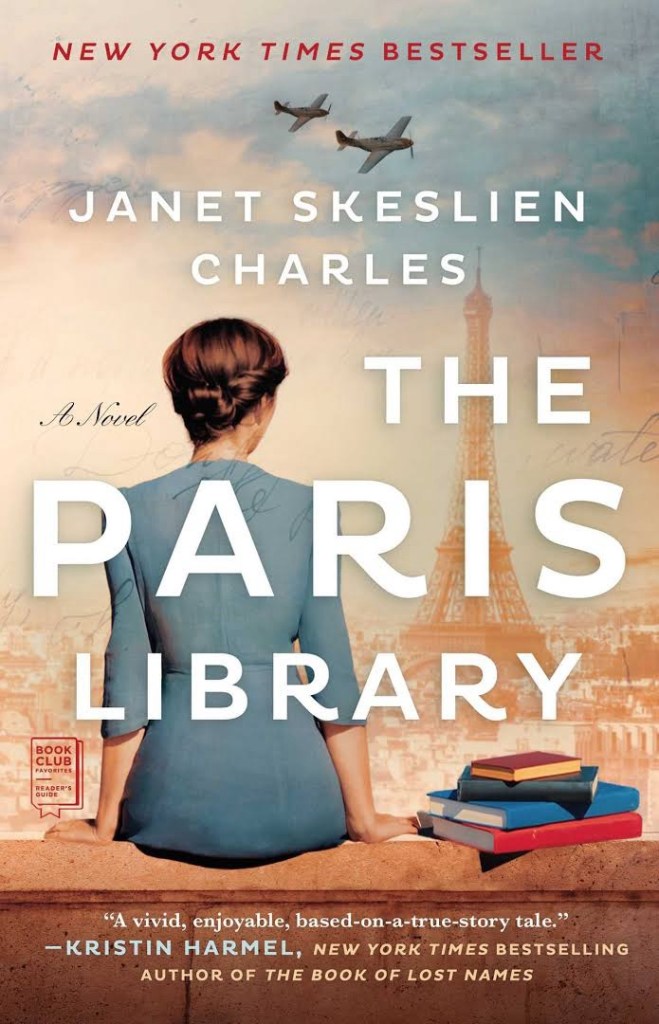
Posted in Monthly Wrap Up

Best Reads April 2025

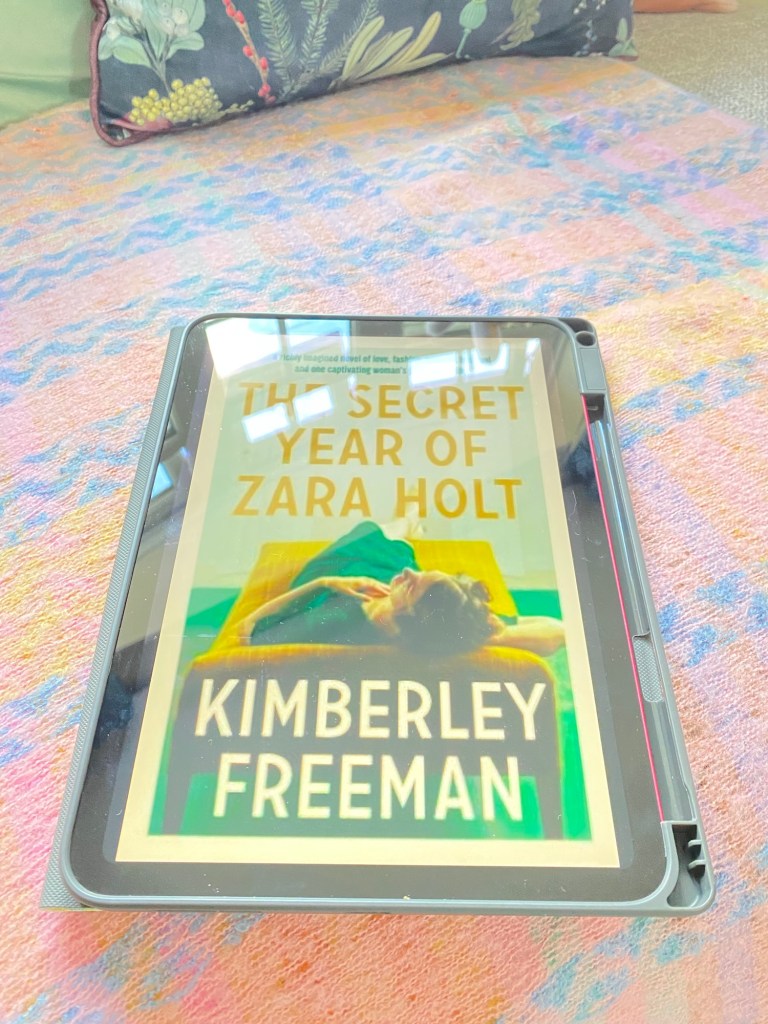
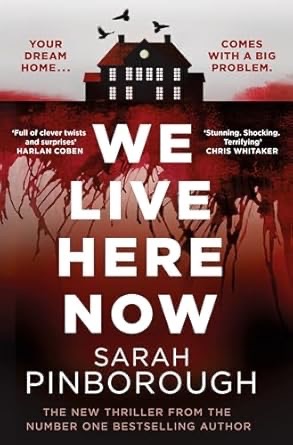
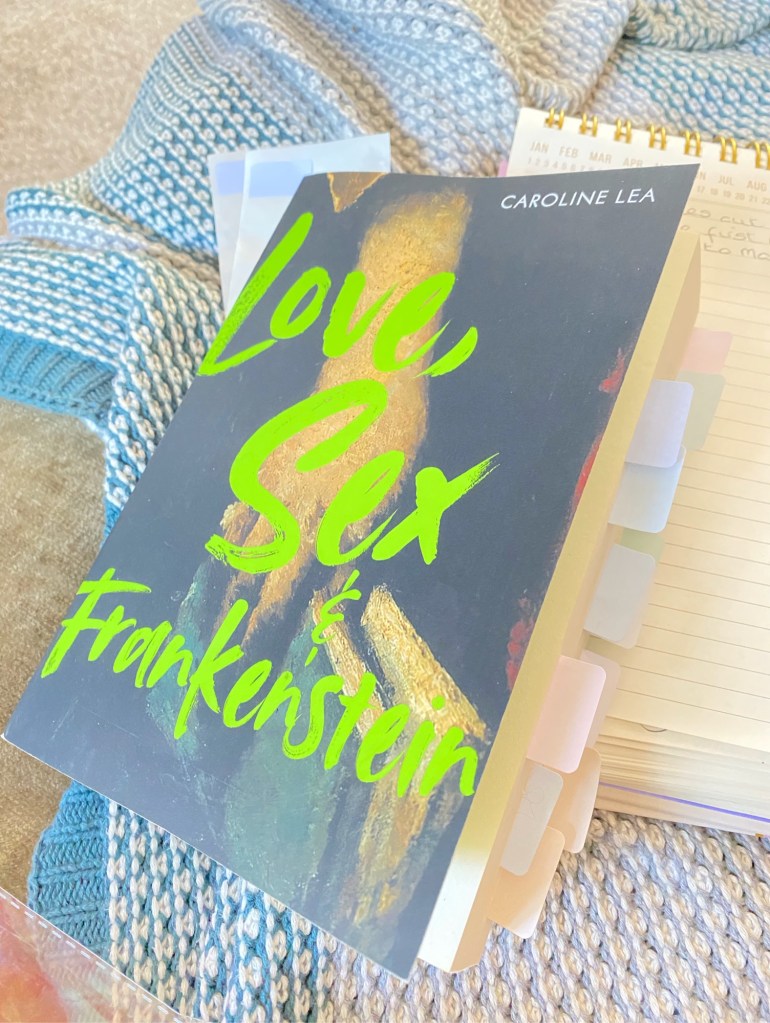
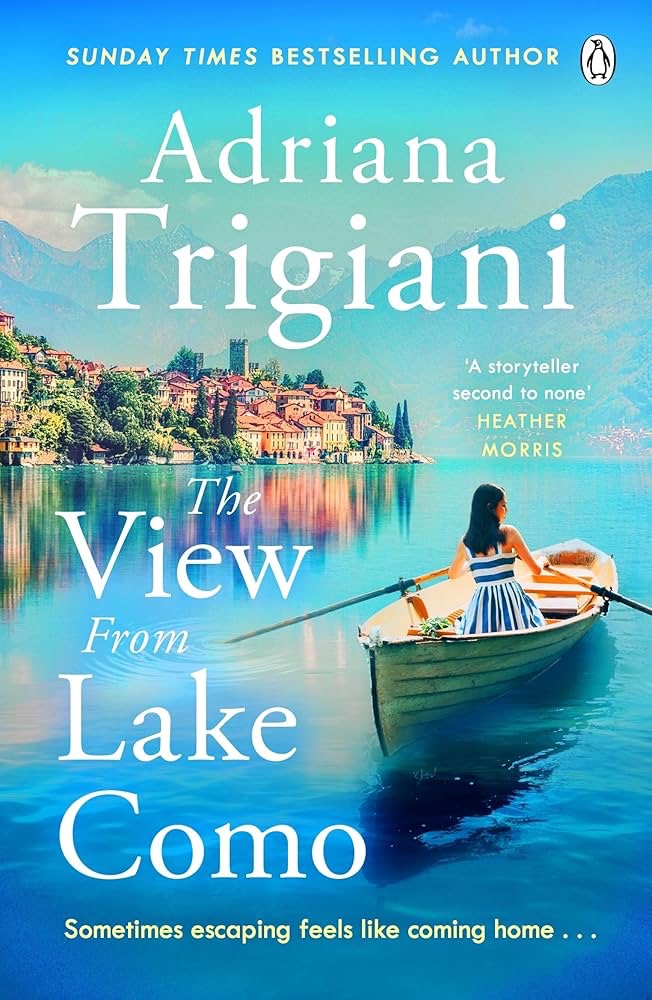
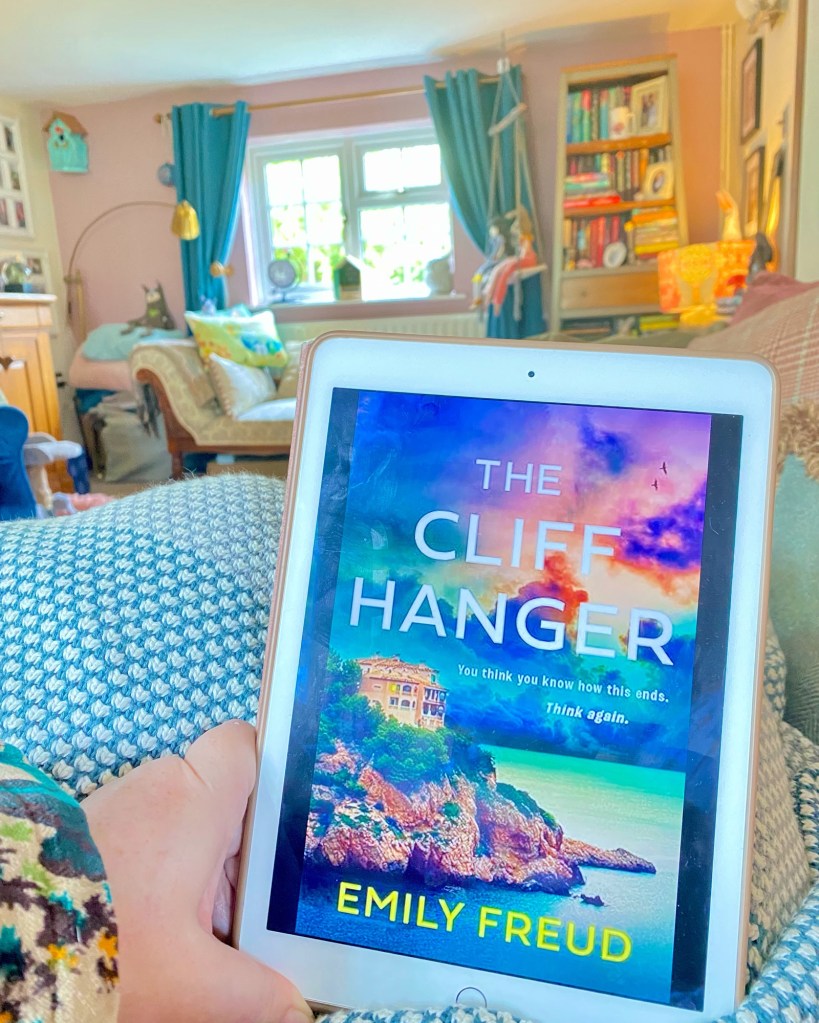
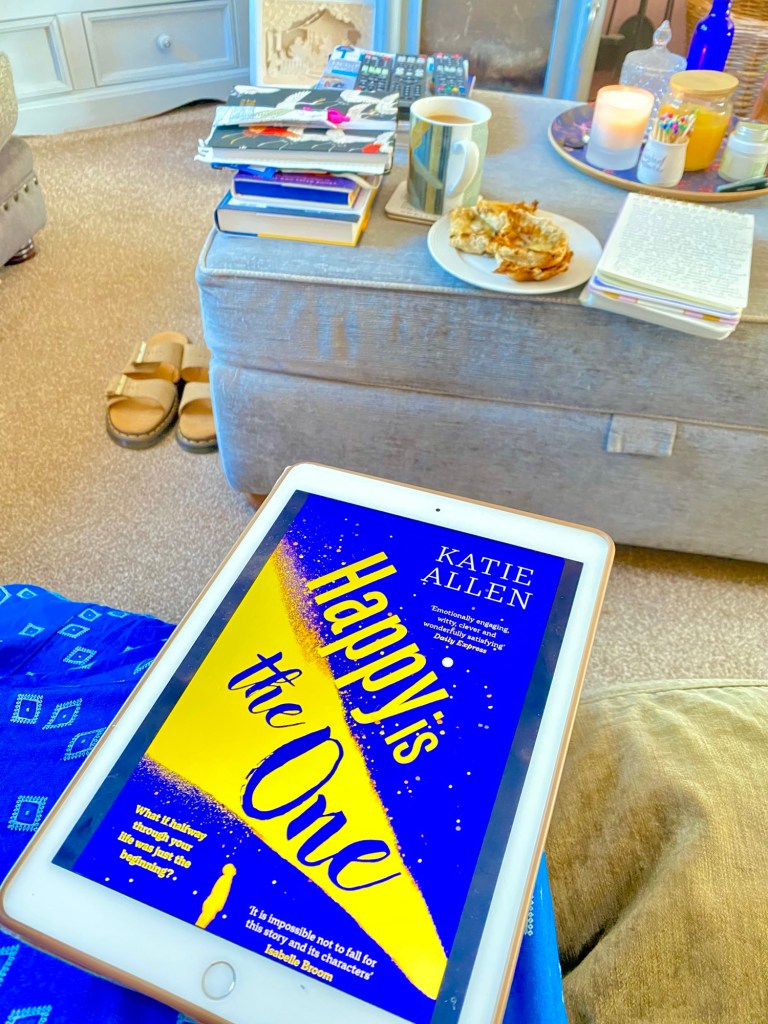
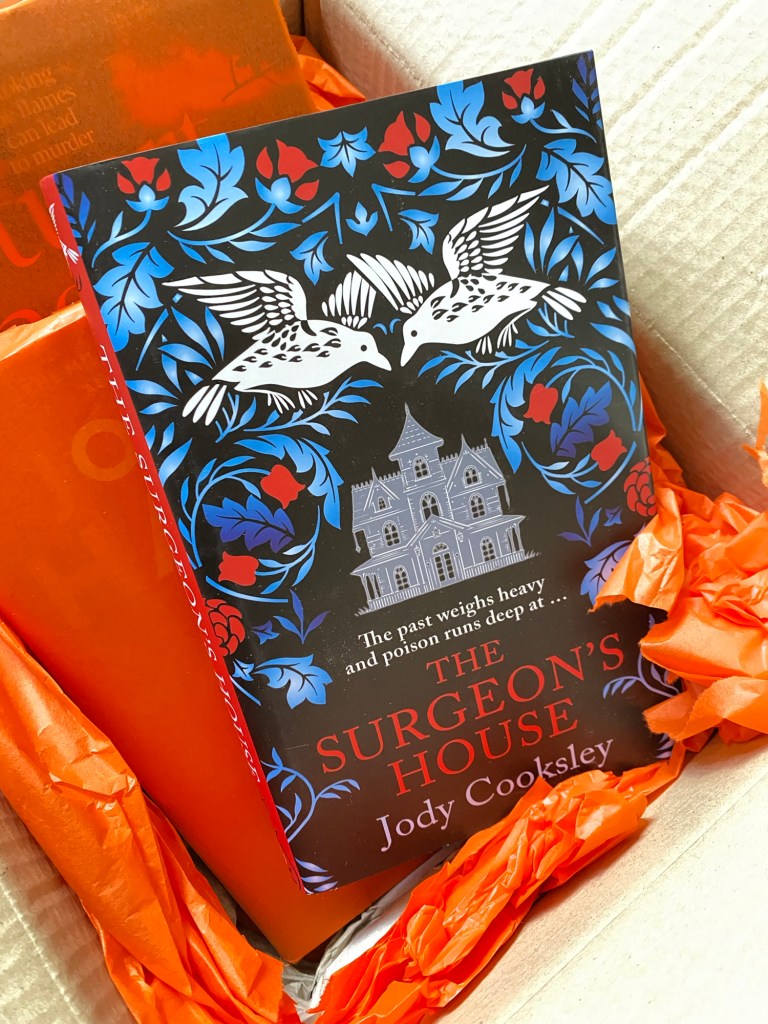
It’s been a busy month at home so there’s been a little bit less reading, but what I have read I’ve really enjoyed. As is often the case it’s a straight split between historical fiction and crime. Weirdly it’s also a straight split between debuts and books that are the third in a series. There are some definite contenders for my favourite books of the year too. I hope to be reading a bit more in May, getting back into my stride with a couple of blog tours and a read with my squad ladies too. One things for sure, I’ve enjoyed mood reading so much that I’m not going to overload myself with tours going forward. I’d forgotten the joy of picking up whatever suits, rather than having a rigid schedule, My bank holiday is going to be quiet with plenty of reading and journaling. We’re planning to spend some of it outdoors, accompanying my other half fishing. Just us, the dog, my comfy camp bed and outdoor cooking. Usually I end up sharing my bed with the dog because it’s so comfy. I’ll also be taking a book of course. ❤️📚

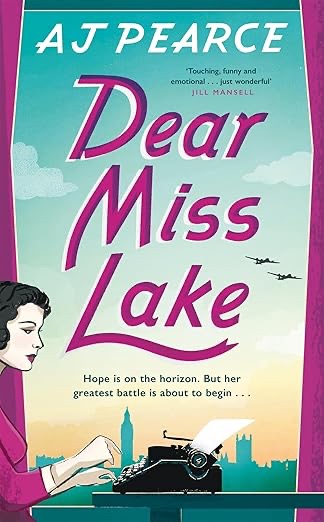
I really do enjoy my time spent in Molly the Maid’s world. It’s one of those books where I find myself smiling as I read. It only takes a couple of sentences for me to feel like I never left her world. In some ways her life could be seen as unchanged. She’s still Molly, as wholly herself as ever, living in her late grandmother’s flat with her fiancé Juan, chef at the Regency Grand. In other ways things have changed, Molly manages the maids and has become ‘Events Manager’ so she’s definitely gone up in the world at work. Two events loom in the near future – Molly and Juan’s wedding at City Hall is on the horizon – but today the two darlings of the antique world are filming an episode of their TV show in the tearoom of the hotel. Beagle and Braun, known jointly as the Bees, are the married presenters of ‘Hidden Treasures‘. A show runs like our own Antique Roadshow where people queue to have their valuables appraised. Before they leave the flat that morning, Juan suggests Molly takes her grandmother’s box of treasures, including a highly decorated egg. When the Bees see this particular treasure their eyes light up. They seem to know immediately that this is very special and they must have it on camera. As the cameras roll they tell Molly that this looks like a lost Russian imperial egg, the prototype for all the ones that follow. It’s one of a kind, decorated with rubies and emeralds by Faberge himself. Now worth several million dollars. Molly doesn’t seem to take the news in and wants to carry on as normal, but as the clip is shared online that becomes impossible and Mr Preston has to take them home. Will life ever be the same again? Things go from bad to worse when during an auction at the hotel the egg disappears, despite being on a plinth and glass case in the middle of the stage. Now Molly must work with Detective Stark to find it, but this is a search that will take us back into the past. Molly really does prove in this novel that she’s a ‘good egg’, pardon the pun. No temptation lures her from the things she values – her job, Juan, Mr Preston and her flat. It was interesting to get some back story on her grandmother too and understand why she brought Molly up the way she did. This is a charming and heartwarming novel and a brilliant trilogy to delve into if you haven’t already.

The Show Woman has been on my TBR since January and I was delighted to be accepted for a NetGalley ARC. I love all things circus, fairgrounds, mediums and freak shows so I was drawn straight away but this was so much more than I expected and has a lot in common with The Eights. Set in 1901 we meet Lena who has lost her father and after his death was left with his carousel and their caravan. She sells the carousel and has the idea of creating the first all-female show with herself as a ringmaster. The only female show woman is Serena Lind and she’s a hard, bitter and vengeful woman who rules her circus with a rod of iron. So when Violet meets with Lena about leaving Lind’s and becoming a trapeze artist for the new show, it sets a scene for what follows. With Rosie and her pony Tommy they have a bareback rider and Carmen the dancer and acrobat makes their four. With an old tent they start to practice and be ready for the next season and with a bit of help from Violet’s brother Harry, they start to become known. This is a story of revenge, friendship, love and women making their own way in the world. I loved how the women bond, living together in the caravan and travelling from show ground to show ground. Lena has the makings of a brilliant show woman but first she needs to find out who is trying to sabotage their circus. Lena becomes the head of this a community that fully supports each other, who listen and understand the circumstances and pain that has brought them here. I was rooting for all of these women and not just the show, but their new found independence and friendships. It was those evenings where they were talking in the caravan after a show, too full of adrenaline to sleep. Or the warm and sunny days when they got chance to swim in a local lake or river, to wash their hair. Then there were the joint efforts to save Rosie’s pony. It’s these moments that are just as magical for these women as the seconds before Violet lets go and flies through the air. 

This was another novel set in the early part of the 20th Century, this time just after WWI. It also features four young women but these meet in the hallowed halls of Oxford University where they will be the first female cohort to be awarded a degree for their studies. Nicknamed the ‘Eights’ because of the room numbers on their corridor, Beatrice, Ottoline, Marianne and Dora are very different, but soon become firm friends as they navigate their first year. Beatrice is political, has a feminist and suffragette mother and is used to being noticed, as she’s usually the tallest woman in a room. Marianne is a scholarship student, but she seems to have secrets, including why she returns home every other weekend. Ottoline (Otto) comes from a wealthy family, but is haunted by her war experiences in a nursing role. She’s had symptoms of PTSD ever since, but also feelings of shame that she couldn’t do her duty. Dora also struggles with the consequences of war, having received the dreaded letter from her fiancé Charles’s regiment to inform her he’d been killed. Just two weeks later her brother George also lost his life. Being so close to Charles’s university only serves to keep him at the forefront of her mind. This seemingly random allocation starts strong friendships as the girls help each other negotiate their university work, their memories of the war and being taken seriously by their male counterparts. I loved every one of these characters and it was wonderful to watch them grow and help each other navigate the choppy waters of academic problems, financial worries, matters of the heart and the terrible experience of loss. I was so sorry to turn the final page and leave their world.

I’ve been re-reading Stig Abell’s Jake Jackson series after winning the latest instalment, The Burial Place, in a Twitter giveaway by the author. This is book number three and while Jake and his ‘team’ tangled with an international criminal gang in the last book, The Burial Place is more of a home grown mystery. There has been an archaeological dig close to Little Sky and a hoard of treasure found nearby. The ownership of this treasure is in dispute because it’s unclear who owns the land where it was found. Meanwhile, work carries on for the archaeologists, academics and local enthusiasts who have been working on the site but when a body is found it must shut down. It’s hard for new DCI McAllister to understand the motive and being new to the area he enlists Jake’s help, both for his investigative skills and his local knowledge. The community are aware that several nuisance letters have been sent to the dig office and various people who’ve worked on the site. They’re a strange mix of threats, Bible verses and ancient prophecies signed off by Wulfnoth – an ancient Briton from the area. They promise a terrible end for the dig and whoever benefits from the treasure found. Can Jake find the killer before anyone else is hurt? Looking at themes of belonging and sacred land, this is a quieter novel but no less deadly. A definite team have formed around Jake, a family of sorts who both work and relax together. There’s also the continuation of the romance between Jake and local vet, Livia and an appearance from his ex-wife Faye that brings about much soul searching and healing. Thankfully he has Little Sky as his sanctuary when things get too noisy and stressful. The home left to him by his Uncle Arthur, shows he clearly knew his nephew very well.

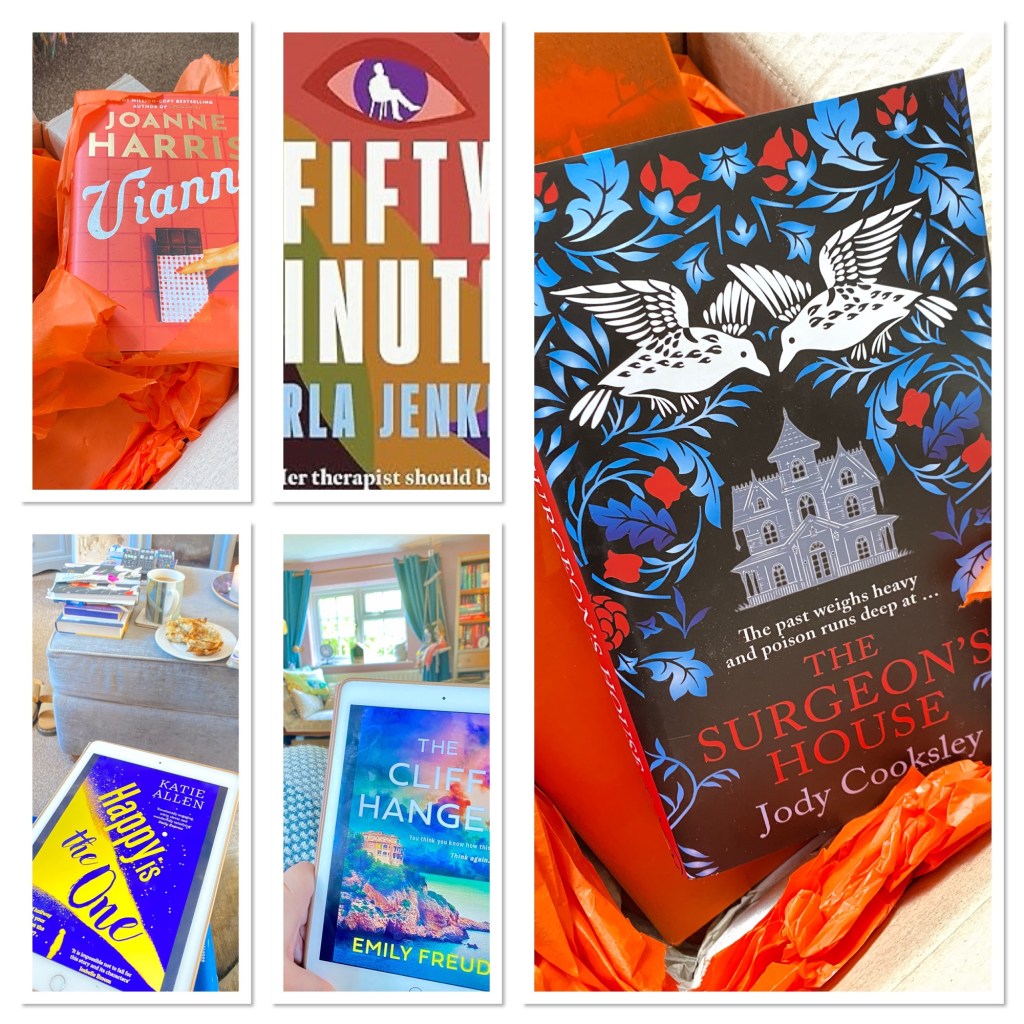
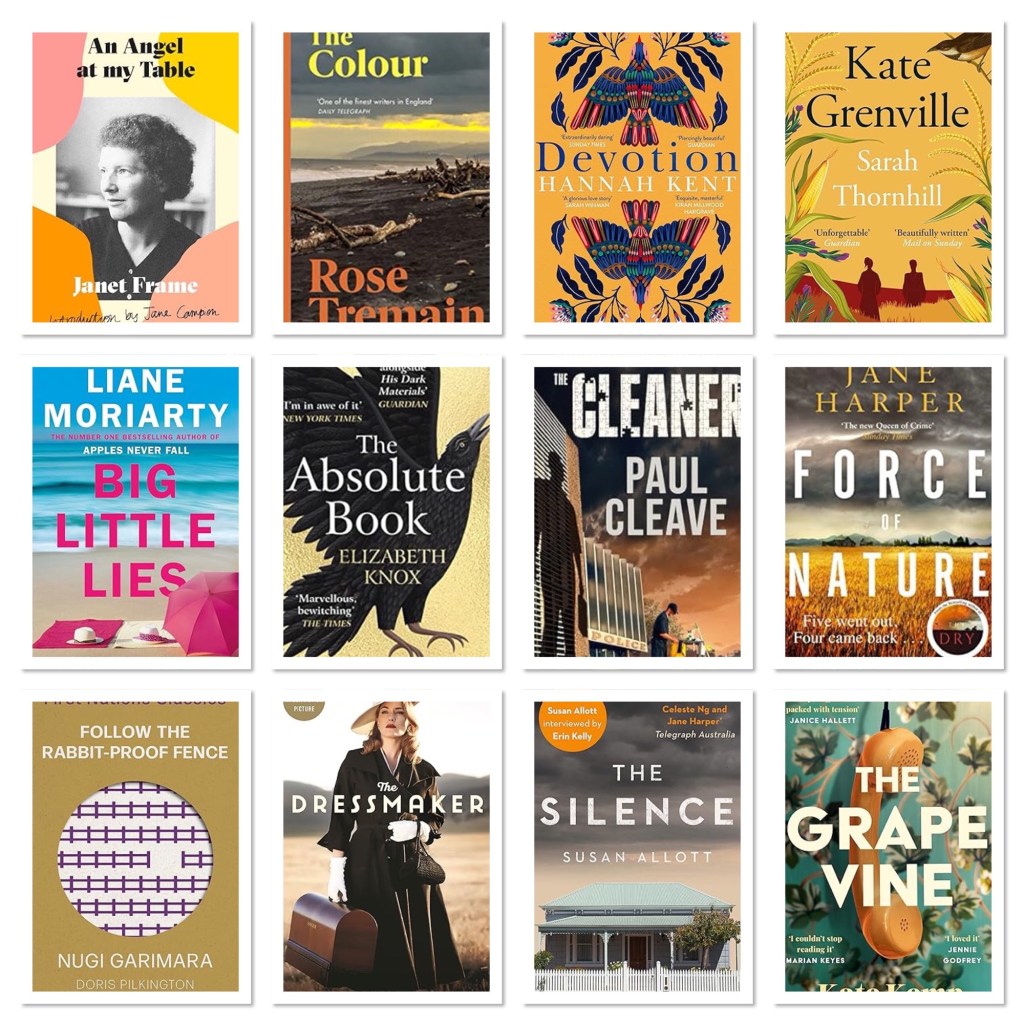
Here’s some of the fiction on my TBR trolley.

Posted in Netgalley

The Show Woman by Emma Cowing 

I loved this book about four women brought together creating an all female mini circus. Lena is the show woman of the title and as well as managing all their finances and planning, she is the ring mistress. Violet escapes another circus to become their trapeze artist. Rosie is their bareback rider, while Carmen can be a musician, acrobat and dancer whose costume is a swirling rainbow of ribbons. Set in 1910, we meet the Grand Dame of the show circuit in Scotland – Serena Linden. Serena is the show woman behind Linden’s Circus renowned throughout Scotland and the only circus to perform at Balmoral for Queen Victoria and the royal family. Serena is the old guard who has inherited her circus from her father. She is old, arthritic, bitter and quite capable of settling scores with trickery and violence. She particularly likes to thwart those who flee her employ and move to other shows or even worse,start their own. 

Lena has always been at the background of the circus and fair ground scene she has lived in all her life. Her mother disappeared a long time ago and she doesn’t remember her. Now her father has died and has left just their caravan and his carousel. She is told she’d better it sell it if she wants to have a life, because her only other options are to find a husband or a factory job. That’s until Violet arrives with a proposition. Violet is known for her flame red hair and her talent on the trapeze, she is known by fairground people as the greatest trapeze artist that’s ever lived, but also for being outspoken and a bit of a loner. What if they started their own show? They’re both outcasts and have nothing to lose. When they start to look for performers they find two more women on the run. Rosie has practiced her bareback riding with her pony Tommy for years. In fact she never imagined escaping her abusive father, but couldn’t stand it any longer. Finally there’s Carmen, a beautiful Spanish girl with luscious black hair and a lot of secrets. She dances and performs acrobatics in her rainbow ribbons. With Lena as ringmaster and an old but serviceable tent can they last the season? 

I loved spending time with these wonderful women. I wanted to mother Rosie who desperately needs to let the truth out about her father and the after dark fumbling in the laundry cupboard. Her relationship with Tommy the pony is so beautiful because of the trust they have in each other, so when he fell ill I was so worried. Her burgeoning feelings for Violet are so pure and totally separate from the shame she’s holding onto. Violet is brilliantly herself and never tries to be anything else. She has a preference for women and has years of experience in this world, knowing how careful she must be. She knows that leaving Linden’s was risky so when their show is sabotaged she wonders if it might be Serena’s goons. Especially when they wreak the ultimate revenge on her specifically. Violet doesn’t know how she’ll cope if she ever can’t fly. Carmen keeps her cards close to her chest but somehow finds a home with the other women. She holds a lot of shame, for the years she spent on the streets, destitute and selling the only thing she has left. It’s this past that threatens her place in the show, when a misunderstanding comes between her and Lena. 

I really enjoyed Lena, who’s strong and old, perfectly capable of organising three women and travelling from place to place iin season. It’s Lena who gets up early, has a dip in the river or stream then sets up the camp fire and cooks breakfast for the others. I could imagine her in her usual ‘ringmaster’ outfit, with the combination of the masculine clothes her long hair and red lipstick bringing a sass and sexiness to her role. Love is her undoing. It’s an instant attraction between her and Violet’s brother Harry, who no longer works on the shows but has become a music hall singer. He offers advice on the show and protection when a couple of men lurk around the caravan, seeing four women as sitting ducks. When the women’s luck changes and Violet is angry and frustrated she lets slip a secret that breaks Lena’s heart. The women come apart. Can Lena find out about the sabotage and her family history by visiting Serena Linden? 

Lena is determined to understand her past , uncovering a kinship between her and one of the others that has been hidden for years. She is also determined to find out who committed the act of sabotage against Violet. Was it about the show or was it more personal? She becomes the head of this family, determined to bring them all back together. A community that fully supports each other, who listen and understand the circumstances and pain that has brought them here. I was rooting for all of these women and not just the show, but their new found independence and friendships. It was those evenings where they were talking in the caravan after a show, too full of adrenaline to sleep. Or the warm and sunny days when they got chance to swim in a local lake or river, to wash their hair. Then there were the joint efforts to save Rosie’s pony. It’s these moments that are just as magical for these women as the seconds before Violet lets go and flies through the air. 

Out May 1st 2025

Meet the Author

Emma Cowing is a journalist and author. She was shortlisted for the 2023 Cheshire Novel Prize, and longlisted for the 2023 Bath Novel Award and Blue Pencil First Novel Award. She lives in Glasgow with her husband Jonathan and their cat, Moses. The Show Woman is her first novel.

Posted in Netgalley

The Eights by Joanna Miller 

I pre-ordered this book as soon as I read the blurb. I could see myself falling in love with this story of four pioneering women who attend Oxford University as part of the first cohort to gain an actual degree. The four women arrive at Oxford in a time of great upheaval. The First World War has ended and women have just been awarded the vote. Women have experienced more freedom during war time, by working to replace enlisted men, volunteering for the war effort. Beatrice comes from a progressive family, with a suffragette mother who attended Oxford herself. Beatrice is very political, obviously a feminist and is used to being noticed, as she’s usually the tallest woman in a room. Marianne is a scholarship student, but she seems to have secrets. She returns home every other weekend and struggles financially but she is determined to get what education she can. Ottoline (Otto) comes from a wealthy family, but is haunted by volunteering for a nursing role during the war. She found it so distressing, she was redeployed as a driver giving patients transportation rather than working on the front line. She’s had symptoms of PTSD ever since, but also feelings of shame that she couldn’t do her duty. Dora also struggles with the consequences of war. She received a letter from her fiancé Charles’s regiment to inform her he’d been killed, then only two weeks later her brother George also lost his life. She still sees Charles wherever she goes and being so close to his university only serves to keep him at the forefront of her mind. These four girls are assigned to a corridor where the rooms start with the number eight, giving them their affectionate nickname. This seemingly random allocation starts strong friendships as the girls help each other negotiate their university work, their memories of the war and being taken seriously by their male counterparts. 

Oxford University is the oldest English- speaking university in the world, having and I was amazed to read it was founded in the 11th Century. The first colleges for men were fully established 200 years later and the Bodleian Library opened in 1602. Women were only starting show interest in an Oxford education in the late 1800s and four women’s colleges were established, however even after years of negotiation to do the same courses as men, women had to be chaperoned to lectures. I was also amazed that despite doing exactly the same exams, women could not be awarded degrees and dons would still refuse to teach them. I couldn’t imagine doing all that work, then having nothing tangible to show for it. It must have been soul-destroying. The author’s story begins after women got the vote and it took until 1920 for women to become fully enrolled at the university as men had been, a ritual called matriculation. The author lays out this facts at the beginning of the novel, which is brilliant for setting the scene generally but also allows us into what is an exclusive world with it’s own language and culture. She separates her book into the named terms – such as Michaelmas or Hilary – and lays out the dress code and rules, different for men and women. She also lets us into what the exams are called and has a glossary at the back in case you get lost. Finally she splits her first chapter between the four girls so we get a really good sense of who they are and where they’re from.

This is a real character led novel from Joanna Miller, creating a similar feel to those novels I loved as a girl such as the Little Women series or What Katy Did At School. With both of those novels I felt like I knew the characters and they would be great fun to be friends with. I loved the secret societies, the scrapes they got into and the character building lessons learned. This has all that, but with great emotional heft and real, gritty issues from that time period. I loved how the characters developed over time and how each of the friends supported but also changed each other with their different backgrounds and perspectives on the world. I felt Marianne’s predicament strongly, in that she’s landed with three friends who are reasonably comfortable financially. I felt it when they all swapped presents for Christmas, but Marianne couldn’t afford to buy for each of them, so instead created a framed favourite poem each. Her offerings are always from the heart and she’s definitely the most thoughtful and most serious of the girls. She also has the hurdle of illness to climb over, as well as whatever takes her home on weekends. The others notice that she’s never managed her reading so what is she doing? She has the constant fear of not passing the year and losing her scholarship, so she’s mentally preparing herself for the eventuality of only spending one year studying. Ottoline is probably her opposite, in fact if it wasn’t for her love of maths she might be tearing about London with her sister and the rest of the Bright Young Things. There’s the rather imperious side to Otto, such as the way she’s always scuttling into tearooms and the nickname ‘Baroness’ that she earned in the war. However, there’s a softer side too and that terrible sense of failure she still feels. Yet she definitely comes through for Marianne when she contracts flu. Otto proves capable of dealing with bodily fluids, cooling Marianne in the bath and even washing her down with a damp cloth. She is even the first to uncover Marianne’s secret and guards it ferociously. 

Beatrice is living with the weight of her mother’s success, both as a student of Oxford and a suffragette. She is a woman of ‘considerable reknown’ and this has given Beatrice an interesting childhood. She now has several hobbies – writing letters to politicians and watching debates in the commons, propagating orchids and being able to read Ancient Greek. She seems the perfect fit for Oxford but has never really lived in close proximity to other young women or lived anywhere but the family home in Bloomsbury. Two key events in the book seem to shape her future. She meets a young woman called Ursula who is outspoken, political and wears men’s clothing, which is much more comfortable than women’s. Beatrice is bowled over by her new acquaintance and is determined to wear men’s shirts and ties from then on. There is also the ceremony for her mother who will finally be awarded an Oxford degree. There’s a constant push and pull between who Beatrice is and where she has come from; does she accept and enjoy the legacy of her mother, or does she move away from it? Through her we learn about some of the most harrowing aspects of the suffragette’s fight, particularly the way the women were treated as protestors and prisoners. Dora is a delightful girl from the country, who comes to university seeming rather old-fashioned. Her longer skirts and waist length hair seem incongruous when hemlines are rising and hair is being shingled shorter than ever. Yet she’s weighed down with the early throes of bereavement and has come to Oxford in the hope of feeling closer to the memory of her fiancé who should have come to Queen’s College. She wants more from life than to pour tea, play whist and prop up her mother whose grief is inconsolable. Dora will perhaps change the most and with a terrible shock to come, she may have to make a decision between the new life she has created or her old one. 

I loved every moment I spent with these young women. They are all equally interesting and important so I couldn’t pick one I gelled with most. I loved Beatrice’s awakening, her straight forward manner and her bravery. Otto made me laugh and became so much more nuanced than the spoiled rich girl she could have been. Dora’s gentle strength is admirable, especially when it is tested. Marianne is the dark horse of the group, but she’s surprising and has a strong sense of what is right for her. This is a favourite time period for me so I loved the clothing, the outings, the rising tide of women wanting more from life than a ring and motherhood. These women are the birth of who we are now and I think the author was really successful in portraying issues that are still relevant. As we see women’s rights being eroded and the misogyny on social media, the novel is also about how men treat women. It can even be seen in small ways, such as the pranks played on the women by male students. However, it’s also the control wielded by a father figure or professor, the deception and double-standards men use to manipulate women, the sexual predator or abuser who finds a chance moment or a position of power to commit violence. I believe that just the chance to pursue their education with the freedom men take for granted, is a huge step for the women in terms of status but also self-confidence. However, it is the friendship of these four women, first and foremost, that helps them grow. Their unflinching support and understanding of each other is beautifully drawn and brings to mind something I’ve always said to women on my ‘authentic self’ workshops; men may come and go, but it’s the women in your life who will hold you up’. 

Out now from Fig Tree

Meet the Author

Joanna has always loved stories – even from an early age, when the Headteacher complained to her parents that she had read all the books in the school library. Joanna went on to study English at Exeter College, Oxford and later returned to the University to train as a teacher.

After ten years in education, she set up an award-winning poetry gift business. During this time, she wrote thousands of poems to order and her rhyming verse was filmed twice by the BBC.

Unable to resist the lure of the classroom, Joanna recently returned to Oxford University to study for a diploma in creative writing. THE EIGHTS is her debut novel and is inspired by her love of local history and historical fiction.

When Joanna is not writing, she is either walking her dog or working in the local bookshop. She lives with her husband and three children near the Grand Union Canal in Hertfordshire, UK.

Posted in Throwback Thursday

The Giver of Stars by Jojo Moyes.

When I first read The Giver of Stars I felt it was a totally different type of Jojo Moyes novel. Using the historical setting of the Great Depression, she takes us to a town in rural Kentucky., where most people work in the Van Cleeve family’s mines and levels of rural poverty are high. In Kentucky, African-Americans are still subject to segregation and middle class women are expected to stay home and know their place. Women in poorer families are working hard while trying their best to feed and look after ever-growing families. Into this setting comes Alice, the English bride of the heir to the mining fortune, Bennet Van Cleeve. Bennet is handsome and considerate, and their marriage seems to start well but once they reach the family home things change. Bennet has lived with his father, following the death of his mother and the house is still being run to her exacting standards. Alice finds she has little to do, with a house is full of her late mother-in-laws ornaments and china dolls, especially since Mr Van Cleeve doesn’t like anything to be out of it’s normal place. More worrying is the change in Bennet now they are home. Despite showing some desire at the beginning, the proximity to his father is affecting their sex life. Several months down the line their marriage is still unconsummated and Mr Van Cleeve keeps hinting about grandchildren, adding to the pressure.

When a town meeting is called to discuss President Roosevelt’s initiative to get the rural poor reading, Alice senses an outlet for her energy. Margery O’Hare will head up the initiative, a wonderfully outspoken and self-sufficient women who doesn’t listen to the opinion of anyone else, particularly men. She opens a door for Alice, out of the claustrophobic Van Cleeve household and into the wild forests of Kentucky. Alice learns to ride a mule, and along with Margery and two other local women she sets out as a librarian for the Packhorse Library. At first, rural locals are suspicious of an Englishwoman coming to the door offering them books, but soon Alice finds a way in and starts to be trusted. She also finds she likes the open air, the smells of the forest and singing of the birds. There is also the freedom to be in more casual dress and the camaraderie she is building up with her fellow librarians. She is close to Margery and when she confides about her marriage, Margery loans her a book she has been sneaking out with the novels and recipes. It is an instruction book on married love and Margery has been loaning it to poor women on her rounds who are inundated with children and need educating about sex. Alice takes the book home and a series of events are set in motion that will change not only the Van Cleeve household, but the whole town.

Mr Van Cleeve is determined to deal with Margery O’Hare once and for all, as he vows to destroy the Packhorse Library altogether. Margery is sure that a devastating flood had more behind it than high rainfall and suspects the mines. She has left herself vulnerable though, with what Van Cleeve sees as transgressive behaviour: she is exposed as having a relationship out of wedlock, she has hired an African-American woman who used to run the coloured library and she is encouraging townswomen to take control of their own lives. She seems impervious to other people’s disapproval so what lengths will he have to go to in order to stop her?

This was a beautifully written book and was on holiday when reading. I encouraged my other half to go fishing so I could stay in the holiday cottage to read it. It is so well researched, with real and authentic characters I fell in love with. Moyes manages to capture the tensions and societal changes of the Depression, depicting rural poverty, domestic abuse, and the rise of feminine power. We can see new attitudes towards race and feminism particularly where marriage and sex are concerned. Progressive attitudes come up against old money and old values in a tragic way. It was interesting to re-read it with the backdrop of Trump’s America where such traditional values are being forced on women in many states. I found myself desperate for the progressive characters and attitudes to prevail and it was this that built the tension and kept me reading till 2am! This was real, romantic and simply great storytelling. It’s an absolute must read and one of her best novels to date.

Posted in Netgalley

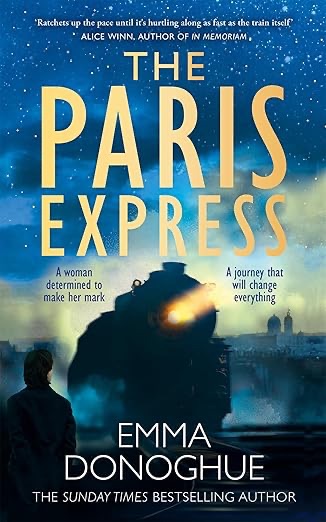
The Paris Express by Emma Donaghue

When I first started reading The Paris Express, I had a strange feeling of deja vu. It wasn’t that I thought I’d read the book before. In fact I was a bit disoriented at first, wading through a lot of characters I didn’t know and who didn’t all fit together was a lot to take in. It was more that I had a sense of when I was. The books that immediately came to mind were Dubliners by James Joyce and Mrs Dalloway by Virginia Woolf. Both books have passages on public transport, but it was the drifting quality of the writing and the ‘democratisation’ of people being pushed together in a small space. They are forced to exist together for the time of that journey and even though this Paris train has First, Second and even Third Class, there is such a mix of generations, classes and genders that there’s potential for desire, tension, friction and misunderstandings. However different they may seem, the fate of one of them, is the fate of all. 

What Woolf achieved beautifully in Mrs Dalloway, is that experience of being in the same place and looking at the same thing, but seeing it completely differently. The much loved Cognitive Behavioural Therapy, works on the basis that two people can witness exactly the same event but view it differently. They experience the event through a filter of their own past, their general well-being and mood that day, even whether they’re in a rush or feeling hungry. Woolf shows us that a car backfiring in the street is just a car backfiring to some, they hear it, recognise it and file it away to be forgotten. Whereas, Mrs Dalloway who is slightly anxious and focused on getting things done for her dinner that evening, actually flinches against the noise and immediately her brain starts questioning what it might have been? She will remember it and possibly even comment later that she jumped out of her skin. Septimus Smith hears a bang and is immediately back in the trenches, surrounded by death and destruction. It might even send him over the edge. I felt like Emma Donoghue really achieved that feel here. We can hear the conversation in each carriage and even go into the minds of some of the train’s passengers, but each one is reacting differently to everything that’s going on. Gradually I was compelled to keep reading because the tension was rising with every new passenger and because the reader is omniscient. Donoghue gives her reader the full story and we know the potential fate of every one of them.

Set in 1895 on a train journey to Montparnasse, Donoghue places us within the fin de siecle, with every little detail. It isn’t just her description of the train, it’s the character’s clothing and their attitudes. One passenger muses on the very idea of the fin de siecle, debating whether the closing of a century does cause a decadence of behaviour and fear of the coming century. There’s certainly evidence of a shift in attitudes to the Victorian ideals that have held firm throughout the 19th Century. In one journey we can see women being more outspoken, having a definite sense of purpose, and a need to determine their own destiny. Women are travelling alone or for work, in the case of Alice she is travelling with her boss as the secretary for his photographic business, but she is enterprising. She takes the opportunity to talk to him about moving pictures, looking for permission to make a short film. She has researched the subject and thinks it could be a new market for the firm. Marcelle is researching in the field of science and huge fan of Marie Curie who is so work focused that she went to get married in an everyday blue dress and spent their gifted money on two bicycles so they could ride to the lab every day. Marcelle knows it isn’t just her gender that may hold her back, it’s her race: ‘a pair of twits in her anatomy class once asked her to settle a bet as to whether she was a quadroon or an octoroon.’
Blonska has a variety of skills, but she’s also incredibly perceptive and quickly reads the other passengers in her carriage. I was absolutely fascinated with Mado. She stands out more than she realises, with her androgynous clothing and short hair, not to mention the lunch bucket she’s clutching as if her life depends on it. She’s a feminist, an anarchist and like Blonska seems to have an interest in reading other people. Her own internal struggle is so vivid that I could feel the tension in her body as I read. She seems contemptuous of many of her fellow passengers, particularly the men, knowing that the Victorian feminine ideal is simply a role women are forced to play. To step outside of the norm is brave and a deliberate outward show of her inner strength and determination to change women’s place in the world. 

‘That’s the price of wearing a tailored jacket with short, oiled-down hair. Even back in Paris, where quite a few young women go about à l’androgyne, sneers and jeers have come Mado’s way ever since she scraped together the cash to buy this outfit at a flea market last year. Her hair she cuts herself with the razor that was one of the few possessions her father had when he died. She’ll take sneers and jeers over lustful leers any day. Bad enough to have been born female, but she refuses to dress the part.’

Throughout the novel there were complex relationships and interesting vignettes, sometimes no more than a line that made me rethink the people I’d been journeying with. There’s a grandad who hops off the train at the last stop to have a furtive and erotic moment with a stranger. As we spend time with the train crew, I learned a lot about their working conditions – having to relieve themselves by hanging over the side of the engine. They struggle amongst the chaos to read tickets and make sure people are in the right carriage, some actually choosing to downgrade their journey for some peace and anonymity. I was faced with my own assumptions near the journey’s end as I learned something about two of them that turned their relation to each other upside down. Of course they’re not the only ones who are pretending to be something they’re not. The author takes us far beyond the beautiful period costumes and shows the reality of train travel – ladies having to relieve themselves in a handy receptacle while the men look away, the inconvenience of a heavy period on a long journey, the strange contents of some traveller’s picnic bags as duck legs and creamed leeks made an appearance! The birth scene brings home the indignities of bringing life into the world, especially in a small train carriage. It is Blonska and Mado who have to help the poor woman, who is desperately trying to convince her baby that now is not the time. Mado has experience with midwifery too: 

“Nothing ever came of all that labour—no more little Pelletiers, nothing but stains on the floorboards. Ever weeping,Madame Pelletier blamed the devil. But Papa taught Mado that her mother’s losses and his own paralysis— such broken health among the hungry and worn out—could be no accident. Employers, politicians, and capitalists were to blame for the sufferings of the working classes.“

This was one of those novels that becomes much more than you expect at the beginning, although I should have known that since Donoghue has never let me down yet. I loved how she ended the novel and the journey because it was such a surprise, along with the afterword. I don’t read the blurb or reviews of a novel I’m about to read and come to it completely fresh, so I didn’t expect it and appreciated it all the more. Donoghue’s ability to see the unexpected, the downtrodden, the extraordinary and the silenced voices, of both a story and it’s place in time, is at it’s peak here. These anonymous and ordinary train carriages are made fascinating and unique by the character’s inside and their intentions. Through them she drives the story along faster and faster, until you simply have to go with it and read through to the end. 

Meet the Author

Born in Dublin in 1969, Emma Donoghue is a writer of contemporary and historical fiction whose novels include the international bestseller “Room” (her screen adaptation was nominated for four Oscars), “Frog Music”, “Slammerkin,” “The Sealed Letter,” “Landing,” “Life Mask,” “Hood,” and “Stirfry.” Her story collections are “Astray”, “The Woman Who Gave Birth to Rabbits,” “Kissing the Witch,” and “Touchy Subjects.” She also writes literary history, and plays for stage and radio. She lives in London, Ontario, with her partner and their two children.

The Paris Express is out this week from Picador

Posted in Random Things Tours

Madame Matisse by Sophie Haydock 

This is the story of three women – one an orphan and refugee who finds a place in the studio of a famous French artist, the other a wife and mother who has stood by her husband for nearly forty years. The third is his daughter, caught in the crossfire between her mother and a father she adores.

Amelie is first drawn to Henri Matisse as a way of escaping the conventional life expected of her. A free spirit, she sees in this budding young artist a glorious future for them both. Ambitious and driven, she gives everything for her husband’s art, ploughing her own desires, her time, her money into sustaining them both, even through years of struggle and disappointment.

Lydia Delectorskaya is a young Russian emigree, who fled her homeland following the death of her mother. After a fractured childhood, she is trying to make a place for herself on France’s golden Riviera, amid the artists, film stars and dazzling elite. Eventually she finds employment with the Matisse family. From this point on, their lives are set on a collision course….

Marguerite is Matisse’s eldest daughter. When the life of her family implodes, she must find her own way to make her mark and to navigate divided loyalties.

Based on a true story, Madame Matisse is a stunning novel about drama and betrayal; emotion and sex; glamour and tragedy, all set in the hotbed of the 1930s art movement in France. In art, as in life, this a time when the rules were made to be broken…

Almost eleven years ago my lovely arty friend Mandy wanted to visit the Matisse exhibit at Tate Britain. I really hope I didn’t ruin it for her. I probably did. I confess I’m not a lover of modernist art. We went to the Guggenheim in New York and I proclaimed it disappointing. We had to go across to the MET and see their collection of Impressionists to cheer me up. My loves are the Pre-Raphaelites and the Art Nouveau/ Arts and Crafts period so we’re a long way away from each other in preference. Art is her subject so I’m happy to own that she certainly knows a lot more than me. I was interested to read in her afterword that the author has always had an interest in Matisse, with a black and white postcard of him on her notice board for several years. I have one of Gustav Klimt wearing an artist’s smock and clutching a cat, with a look of devilment on his face. It makes me smile whenever I see it so I understand how a particular artist can inspire your imagination. Sophie’s first novel, The Flames, was about a protégé of Klimt. It was narrated by the women in the life of Egon Schiele, the subjects of four of his paintings. Here she takes a similar look at the women who surrounded Henri Matisse, showing how they advised, supported and sustained him in his endeavours, but remained completely in the background to his talent. 

The story starts with Amélie, an incredibly brave young woman who takes a chance on marrying an artist rather than a more conventionally acceptable partner. She sees something in Matisse’s paintings, recognising the way his work could be at the forefront of modernism. Previously his colourful style has been rejected for exhibition in Paris, but Amélie knows that innovative artists often take a while to break through. In fact it is a painting of Amélie that is the catalyst for Henri’s career to take off. Woman in a Hat is exhibited in Paris and bought by siblings Gertrude and Leo Stein, a bohemian pair central to the art world throughout the early 20th Century. This is where Amélie makes the bravest and most important decision of her husband’s career. The Stein’s offered only two thirds of the asking price. Eager to make a sale to the influential pair, Henri is willing to give the discount but Amélie advises him to wait and hold out for the asking price. He takes her counsel and they go and meet the Steins, convincing them that Henri is central to the next great artistic movement. The Steins pay the full price. The couple are a great team with Amélie making all the household and business decisions, freeing Henri to paint and become a famous member of the Fauvist Movement. She also brings Henri’s daughter Marguerite into their growing family, when her own mother is struggling to care for her. Yet, not everything about their relationship runs smoothly. Once they are able to afford a family home with a garden and studio for Henri, Amélie’s help is no longer needed. Henri takes on a series of young assistants and Amélie has the more traditional wife’s role which doesn’t suit her. It’s fascinating to read about the changes, once their joint struggle is over they cease to become a team and the problems begin. 

Woman in a Hat

Another section of the novel is devoted to Marguerite, Henri’s illegitimate daughter. Once Amélie has brought her to live within their family, Marguerite seems to blossom under the care of her stepmother. She also makes herself useful to her father, tidying his studio and anticipating his needs. It is interesting to hear about Amélie and Henri’s relationship from her perspective and her anxieties that the family she’s been brought into, stays together. She shares a lot of Amélie’s suspicions about some of the assistants who breeze in and out of their lives. She’s also a strong advocate for her stepmother, even into her parent’s old age. Yet there were times when I felt she was taken advantage of by Amélie and her father. There’s a sense in which, despite seeming kind, loyal and trustworthy, Matisse does use the women around him. The household was entirely groomed to anticipate his needs and the women are sacrifices for his artistic genius. 

Most interesting to me was Lydia Delektorskaya, born in Tomsk, Russia, in the tumultuous period after the revolution. After the murders of the Royal family, Lydia has just lost her mother when her father decides she must leave the country. He gives her a gun with three bullets left in their chambers and sends her to China on the Trans-Siberian Express with her Aunt Berthe. After building a life there Lydia must make a choice between the Sorbonne in Paris or to marry her lifelong friend and stay. Lydia takes neither choice and instead aims for the South of France, a place that couldn’t be more different to the place she was born. She spends time working in a bar but when she sees a job with the Matisse family she decides to apply. The job is to look after Henri’s wife Amélie who has a chronic illness and is confined to their apartment. Lydia has experience of working with her mum and her aunt and felt fulfilled by her caring role. Once she starts work though, some of her duties are to assist Henri in his studio, eventually sitting for portraits and sketches. Amélie eyes their relationship with suspicion despite there being no evidence of impropriety. This is more than an affair, it’s a meeting of souls and when ultimatums are made they have terrible consequences. 

Marguerite Asleep

I loved reading about these fascinating women, all of which step outside the traditional role of most women of the time. Sophie beautifully situates Matisse within his peer group, especially his great rival Picasso. She situates each woman perfectly within their history, the most in depth being Lydia’s Russian background and Marguerite’s incredible bravery in WW2. Both are fascinating to read and show us the extreme cruelty and playbook of totalitarian regimes. She also shows us how incredibly brave and resourceful each woman is, more involved in the world and bigger risk takers than Matisse. Lydia’s realisation of what her father truly sacrificed to stay in Russia happens when she is older. First they came for the royal family and aristocracy, then those with intelligence and  the ability to challenge them, just as the Nazis did in Poland. This perhaps has more resonance thanks to current world events. I thoroughly enjoyed looking up the paintings mentioned and seeing Matisse’s representation of the three women who were closest to him and I found myself reading articles about him and Picasso. It left me with a sense of anger and empathy for how much women sacrifice so that men can excel at what they do, realising their ambitions while their wive’s ambitions are forgotten or buried under a suffocating mental load – still the thing women in my group talk about most. These women never take the limelight away from Matisse, even while stripped bare for people to view. The focus is always on the painter, their brush strokes, choice of colour and artistic decisions. I love that in this novel they are more than body parts, they’re shown as the vital, brave, complex and generous women they clearly were.  

Lydia Delectorskaya

Meet the Author


Sophie Haydock is an author, editor and journalist (Sunday Times, Financial Times, Guardian), based in Folkestone, Kent, where she is curator of Folkestone Book Festival. Her debut, The Flames – about the women who posed for the scandalous artist Egon Schiele in Vienna a century ago – was named by the Times as one of the Best Historical Fiction Books of 2022. It was longlisted for the HWA Debut Crown Award, and the Italian translation, Le Fiamme, won the Premio Letterario Edoardo Kihlgren for debut novels. She worked for the Sunday Times Short Story Award and is associate director of the Word Factory. Her Instagram @egonschieleswomen has 110,000 followers. Visit: sophie-haydock.com

Posted in Sunday Spotlight

Sunday Spotlight – The Perfect Society: Novels About Eugenics

Eugenics is described by National Human Genome Research Institute as

“an immoral and pseudoscientific theory that claims it is possible to perfect people and groups through genetics and the scientific laws of inheritance”.

It’s a word that’s been floating around social media for some time, mainly in connection to those behind the new US administration. There are concerns that people with physical disabilities, those of different ethnic origins and those with mental ill health or learning disabilities, might be considered less desirable in society. There are people with disabilities fighting against the introduction of assisted dying, because it could be interpreted to mean disabled lives have less value. We’ve all probably asked at one time or another, how could ordinary German citizens sleep walk into the Final Solution? The answer is slowly. There is evidence that children with disabilities were being removed and institutionalised as early as 1933. We like to think the Holocaust couldn’t happen again, but there is evidence of eugenic policies affecting the lives of ordinary Americans until the 1970s. Of course the Nazis are the ultimate and extreme example of eugenic policies being enacted, but both European countries and the US were using eugenicist policies on their own citizens across the 20th Century. This is what happens when we demonise the disabled, the poor and the destitute. The rise of the far right across the world is driven by eugenicist thinking, that some people are inherently better than others. This is why eugenicist policies affected those with learning difficulties, Native Americans, African Americans and people with long term disabilities. I try not to be political on the blog, but here I’m not advocating particular political parties. All I want to do is share novels that show how eugenics affected real communities and individuals.

From the outside, Eleanor and Edward Hamilton have the perfect life, but they’re harbouring a secret that threatens to fracture their entire world. 


London, 1929. 
Eleanor Hamilton is a dutiful mother, a caring sister and an adoring wife to a celebrated war hero. Her husband, Edward, is a pioneer in the eugenics movement. The Hamiltons are on the social rise, and it looks as though their future is bright. When Mabel, their young daughter, begins to develop debilitating seizures, they have to face an uncomfortable truth: Mabel has epilepsy – one of the ‘undesirable’ conditions that Edward campaigns against. Forced to hide their daughter away so as to not jeopardise Edward’s life’s work, the couple must confront the truth of their past – and the secrets that have been buried. Will Eleanor and Edward be able to fight for their family? Or will the truth destroy them? 

Many will have read this heart-rending novel or seen the film, beautifully performed by Andrew Garfield, Carey Mulligan and Keira Knightly. This perfectly encapsulates that head in the sand mindset humans are so good at. We can ignore terrible injustices when they’re not happening to us, or people like us. We can always think it doesn’t apply to us. Until it does. Kazuo Ishiguro imagines the lives of a group of students growing up in a darkly skewed version of contemporary England. Narrated by Kathy, now thirty-one, Never Let Me Go dramatises her attempts to come to terms with her childhood at the seemingly idyllic Hailsham School and with the fate that has always awaited her and her closest friends in the wider world. A story of love, friendship and memory, Never Let Me Go is charged throughout with a sense of the fragility of life and is utterly terrifying.

From the New York Times bestselling author of The Good House, the story of two friends, raised in the same orphanage, whose loyalty is put to the ultimate test when they meet years later at a controversial institution—one as an employee; the other, an inmate.

It’s 1927 and eighteen-year-old Mary Engle is hired to work as a secretary at a remote but scenic institution for mentally disabled women called the Nettleton State Village for Feebleminded Women of Childbearing Age. She’s immediately in awe of her employer—brilliant, genteel Dr. Agnes Vogel. Dr. Vogel had been the only woman in her class in medical school. As a young psychiatrist she was an outspoken crusader for women’s suffrage. Now, at age forty, Dr. Vogel runs one of the largest and most self-sufficient public asylums for women in the country. Mary deeply admires how dedicated the doctor is to the poor and vulnerable women under her care. 

Soon after she’s hired, Mary learns that a girl from her childhood orphanage is one of the inmates. Mary remembers Lillian as a beautiful free spirit with a sometimes-tempestuous side. Could she be mentally disabled? When Lillian begs Mary to help her escape, alleging the asylum is not what it seems, Mary is faced with a terrible choice. Should she trust her troubled friend with whom she shares a dark childhood secret? Mary’s decision triggers a hair-raising sequence of events with life-altering consequences for all. Inspired by a true story about the author’s grandmother, The Foundling offers a rare look at a shocking chapter of American history. This gripping page-turner will have readers on the edge of their seats right up to the stunning last page…asking themselves, “Did this really happen here?”

Since the death of his fiancée Aimee, Ross Wakeman has been unable to fill the hole she has left in his life. Seeking to end his pain, he becomes a ghost hunter, despite never having seen a ghost.

However, when his job leads him to the town of Comtosook, it becomes apparent that Ross isn’t the only one haunted by the past. When he meets the mysterious Lia, who brings him to life for the first time in years, redemption seems around the corner. But the discoveries that await him are beyond anything he could dream of – in this world or the next. Second Glance takes a look at how American eugenicist policies affected the lives of Native Americans with a programme of sterilisation. It’s not her usual court based drama, but still has her themes of injustice, identity and a lesser known part of American history.

Montgomery, Alabama. 1973. Fresh out of nursing school, Civil Townsend has big plans to make a difference in her community. She wants to help women make their own choices for their lives and bodies.

But when her first week on the job takes her down a dusty country road to a tumbledown cabin and into the heart of the Williams family, Civil learns there is more to her new role than she bargained for. Neither of the two young sisters has even kissed a boy, but they are poor and Black, and for those handling their welfare benefits, that’s reason enough to have them on birth control. When Civil discovers a terrible injustice, she must choose between carrying out instructions or following her heart and decides to risk everything to stand up for what is right.

Inspired by true events and a shocking chapter of recent history, Take My Hand is a novel that will open your eyes and break your heart. An unforgettable story about love and courage, it is also a timely and uplifting reminder that one person can change the world.


1911: Inside an asylum at the edge of the Yorkshire moors, where men and women are kept apart by high walls and barred windows, there is a ballroom vast and beautiful. For one bright evening every week they come together and dance. When John and Ella meet it is a dance that will change two lives forever.

Set over the heatwave summer of 1911, the end of the Edwardian era, THE BALLROOM tells a rivetting tale of dangerous obsession, of madness and sanity, and of who gets to decide which is which. It is a love story like no other, showing how eugenics affected those deemed mentally ill.

In a sleepy German village, Allina Strauss’s life seems idyllic: she works at her uncle’s bookshop, makes strudel with her aunt, and spends weekends with her friends and fiancé. But it’s 1939, Adolf Hitler is Chancellor, and Allina’s family hides a terrifying secret—her birth mother was Jewish, making her a Mischling. 

One fateful night after losing everyone she loves, Allina is forced into service as a nurse at a state-run baby factory called Hochland Home. There, she becomes both witness and participant to the horrors of Heinrich Himmler’s ruthless eugenics program. 

The Sunflower House is a meticulously-researched debut historical novel from Adriana Allegri that uncovers the notorious Lebensborn Program of Nazi Germany. Women of “pure” blood stayed in Lebensborn homes for the sole purpose of perpetuating the Aryan population, giving birth to thousands of babies who were adopted out to “good” Nazi families. Allina must keep her Jewish identity a secret in order to survive, but when she discovers the neglect occurring within the home, she’s determined not only to save herself, but also the children in her care. 

A tale of one woman’s determination to resist and survive, The Sunflower House is also a love story. When Allina meets Karl, a high-ranking SS officer with secrets of his own, the two must decide how much they are willing to share with each other—and how much they can stand to risk as they join forces to save as many children as they can. The threads of this poignant and heartrending novel weave a tale of loss and love, friendship and betrayal, and the secrets we bury in order to save ourselves.

In rural 1930s Virginia, a young immigrant mother fights for her dignity and those she loves against America’s rising eugenics movement – when widespread support for policies of prejudice drove imprisonment and forced sterilizations based on class, race, disability, education, and country of origin – in this tragic and uplifting novel of social injustice, survival, and hope.

When Lena Conti—a young, unwed mother—sees immigrant families being forcibly separated on Ellis Island, she vows not to let the officers take her two-year old daughter. But the inspection process is more rigorous than she imagined, and she is separated from her mother and teenage brother, who are labeled burdens to society, denied entry, and deported back to Germany. Now, alone but determined to give her daughter a better life after years of living in poverty and near starvation, she finds herself facing a future unlike anything she had envisioned.

Silas Wolfe, a widowed family relative, reluctantly brings Lena and her daughter to his weathered cabin in Virginia’s Blue Ridge Mountains to care for his home and children. Though the hills around Wolfe Hollow remind Lena of her homeland, she struggles to adjust. Worse, she is stunned to learn the children in her care have been taught to hide when the sheriff comes around. As Lena meets their neighbors, she realizes the community is vibrant and tight knit, but also senses growing unease. The State of Virginia is scheming to paint them as ignorant, immoral, and backwards so they can evict them from their land, seize children from parents, and deal with those possessing “inferior genes.”

After a social worker from the Eugenics Office accuses Lena of promiscuity and feeblemindedness, her own worst fears come true. Sent to the Virginia State Colony for the Feebleminded and Epileptics, Lena face impossible choices in hopes of reuniting with her daughter—and protecting the people, and the land, she has grown to love.

If you want to read more background on eugenics here are a few links:

https://www.genome.gov/about-genomics/educational-resources/timelines/eugenics

https://www.english-heritage.org.uk/visit/blue-plaques/blue-plaque-stories/eugenics/

https://www.nytimes.com/2022/06/08/magazine/eugenics-movement-america.html

Posted in Netgalley

Sycorax by Nydia Hetherington

Seer. Sage. Sorceress.

“I know the power of stories and of voices. Even silenced ones. So let me end mine with what I have seen of Sycorax, and assure you again that once, she had a voice, and it was loud and melodious and filled with magic”. 

I was entranced by this beautifully lyrical tale of the unseen sorcerous of Shakespeare’s The Tempest. This is my favourite Shakespeare play because I love its atmosphere and the use of musical sounds to conjure up this enchanted island, ruled by the magician Prospero. Sycorax isn’t even present in the play, but is mentioned as a sorcerous and mother of Caliban, who is depicted as a monster and a slave to Prospero. The author wants to give Sycorax a voice, one that she doesn’t have in the play, to tell us in her own words what it was like to be treated with suspicion and cruelty. Sycorax’s story is an emotional one as she wrestles with her identity, her powers and the loneliness of being an outcast. Each time her powers grow the more isolated she becomes.The author is clearly so passionate about this book and giving her central character a voice and I think she achieves it beautifully. 

The story unfolds slowly while the author immerses us in the world Sycorax inhabits, at first with her parents. Taking her cue from Shakespeare her prose is lyrical and poetic. I really felt like I was in the presence of a magical being and it was the sounds that really grabbed me – the tinkle of sea shells on her mother’s anklets, the sounds of the sea, the lazy buzz of the honey bees they keep. I felt as if I was cocooned on a Caribbean island and strangely relaxed too. Everything is so aligned with nature and nothing interrupts, because even the market is just laying a blanket at the side of the road and selling in the open. By creating this mindful and harmonious background the author makes sure that when something does interrupt, it tears through this idyll and comes as a shock. So when Sycorax goes down to the marina and sailors are unloading goods, the noise is a huge contrast and the roughness of these men who are filthy and covered with lice makes us realise what a feminine energy the rest of the book has. This assault on her senses is violent and the unmistakably male. Despite the beauty of it’s language there are tough subjects here, that are based in misogyny and how women with healing skills are misunderstood by society. There’s also an element of colonialism here, over women’s bodies as well as where they live. 

“Women are used as an instrument of war. Our bodies are another land to be invaded, destroyed and conquered.”

There’s a big hint that her mother was aware of men’s need to conquer and control. In fact, her mother blindfolds Sycorax from a young age, covering the incredible violet colour – I imagined them like Elizabeth Taylor’s amazing eyes. Yet she doesn’t hide them because something is wrong with them, but more because they are extraordinary and it might draw male attention. This could mean a sexual possession, such as the attention Sycorax experiences from Afalkay the Beautiful. However, nothing makes men more fearful than a woman with knowledge and if she won’t behave or remain hidden might they attempt to silence her? In spite of everything she faces, Sycorax remains strong, a strength that could be attributed to her upbringing with her tenacious and otherworldly mother. Sycorax’s ongoing inner strength and determination to find her own identity in a world that shuns her, is something to truly admire. Because of this she is vehemently hated among the townsfolk, especially men because she won’t disappear.

I admired Sycorax’s strength, just her ability to keep getting up each day and going on. Everything they try to be rid of her just doesn’t work. Described as born of the sun and moon and shaped by fire and malady gives us a sense of her resolve, she’s hard as forged iron. Of course my main interest would be disability and chronic illness, being a fellow sufferer. I wrote my English Lit dissertation on disability representation and my Renaissance literature exam on Caliban and a potential reading of his character as someone with a disability. Yet somehow I hadn’t picked up on his mother and here we see her as stiffened, bent over and in chronic pain. This is Nydia’s purpose in writing this story, she beautifully dedicates her book to readers with chronic illness. This is so moving to me because we’re so rarely seen these days in an empathic or positive way. We’re so rarely seen at all. I mean really seen by someone who knows our struggle. It’s important to point out that Sycorax is a woman with chronic illness and this is a very different experience to a man – it’s shown in research that women’s pain is taken less seriously when presenting at A and E. Even when when women visit multiple times, doctors are slower at ordering tests or referring to a consultant. 

There’s a constant sense of give and take between Sycorax and her universe. Strangely the more she’s affected by illness, the more powerful she becomes. The power comes in the shape of wisdom, because people with chronic illness understand things about life that other people won’t get in a lifetime. It’s also about resilience, something that comes with time and getting to know how your illness affects you. By working with it, Sycorax knows what her body can do and how much activities will take out of her. Everything is a bargain and when she has to take to her bed she counts rest as an activity. I love that Nydia puts her own wisdom into the character, in the need to measure out energy daily and live with constant pain. Everything Sycorax goes through and learns about her illness, we follow and it was moving to hear words that have gone through my own head. I’ve woken up in agony, out of nowhere, trying to work out what tasks are absolutely necessary and which can wait. I was moved when Sycorax was taken to a woman in labour by a friend of her mother’s, teaching her how to help and support. The woman is screaming and thrashing, so Sycorax goes and kneels by her head, holding it gently and singing a song in a rhythm. She slows down the woman’s breathing and draws her attention to the ebb and flow of the pain. It calms the woman and allows her to work with contractions rather than fight them. This is something I do when in pain and something I’ve taught clients with chronic pain. Even severe pain is rarely continuous agony. It has a pattern, a shift, an ebb and flow. If you tune into the ebb and flow of pain you can go with it rather than fight it. That’s what I’m going to take away from this beautiful book, to remind myself of the ebb and flow in life and in my own body. Nydia has written a beautiful piece of work that takes us full circle to The Tempest. She’s managed to bring 21st Century injustices to the forefront without losing any of the magical beauty of the original play.

Meet the Author

From Leeds — although born on Merseyside and spending the first few years of life on the Isle of Man — Nydia Hetherington moved to London in her early twenties to embark on an acting career. Later she moved to Paris where she created her own theatre company. When she returned to London a decade later, she completed a creative writing degree graduating with first class honours.


Posted in Personal Purchase

The Undoing of Violet Claybourne by Emily Critchley 

This was my read for over Christmas week and having started a couple of novels only to put them down again, I was beginning to think I’d lost my reading mojo. I was crying out for something that would draw me in quickly so I went for a tried and tested genre. A genre that maybe has a title, but I don’t know it. A preference I blame on reading Jane Eyre as a very imaginative ten year old. The formula is: huge rambling country house; time period from Victorian – 1930’s; young unsure girl/woman; aristocratic families with huge secrets. This fantastic novel from Emily Critchley fit the bill perfectly and was the only thing that drew me away from watching Black Doves all in one go! Our heroine is Gillian Larking, a rather invisible girl at boarding school who does her best to fit in but has no real friends. Gillian has lost her mother and with her dad working in Egypt feels very much alone. However, when she gets a new roommate that feeling starts to change. Violet is a bright, lively girl whose first goal is to break school rules and sneak up onto the school roof to check out the view. Despite her mischievous and seemingly confident nature, Violet is anxious and has a series of rituals to perform that help her cope: 

“She had to do certain things at certain times, like twirl around on the spot before she flushed the lavatory or touch a door handle twice before she opened a door. I often caught her whispering certain words to herself three times or counting to fifty on her fingers. When I asked her why she had to do these things, she struggled to tell me. For protection, was all she would say, or so that nothing bad will happen.”

She is also prone to emotional outbursts when things become overwhelming. Gillian is seemingly more aware that as young ladies of the middle and upper classes they must manage their emotions. She herself has had moments of despair and loneliness but has kept her tears for under the covers late at night. She also aware that girls in packs tend to sniff out weakness or odd behaviour and worries whether Violet’s rituals or ‘undoings’ as she calls them, could affect both their positions at school. Yet the other girls don’t seem to bother Violet and Gillian wonders whether that’s because she’s from a wealthy family. As Christmas approaches Gillian is delighted to receive an invitation from Violet to spend the holidays with her family at Thornleigh Hall. There she is dazzled by their slightly shabby country home, being waited on by the servants and Violet’s rather beautiful older sisters. Emmeline, the oldest and definitely in charge, wafts around in old Edwardian gowns whereas Laura is a rather more modern and fragile beauty. Both girls accept Gillian as one of their own, but their new friendship is tested by an incident on Boxing Day that will reverberate through the years. 

I have a soft spot for books set between the two World Wars and this had a lot of the themes pertinent to aristocratic families of the time. Thornleigh Hall is badly in need of repair but has a faded grandeur that is still impressive to Gillian. They’re a family living a way of life that ended twenty years before. They clearly don’t have the funds to maintain their estate, but Gillian notices the lavish breakfasts laid out every morning under silver dishes. Emmeline, the eldest sister, is the family’s great hope. She must find a suitor with money and secure the family’s fortunes with a sensible marriage. She has a candidate in mind, much older than her but definitely of the right class and enough money to save the hall for another generation. Gillian is enthralled by the sister’s unique style and confidence and realises that to some extent her friend Violet is the odd one out. Her nervous rituals, like her need to read Peter Pan over and over, suggest a deep insecurity in her character and even a fear of growing up. She warns Gillian that her sisters are not all they seem to be, but Gillian feels accepted for the first time in her life. There was an element of L.P. Hartley’s The Go-Between in her relationship with the sisters because she is naive and doesn’t realise when she’s being manipulated. On that fateful Boxing Day, Emmeline takes charge as always, instructing Gillian and Laura to lie or even pass blame onto a man who lives in the lodge house. Gillian feels obliged to go along with the plan because they’ve been kind to her. Again there are shades of another book here, Ian McEwan’s Atonement, where naivety and misunderstanding could lead to a terrible end for an innocent man of a lower social status. The full implications of these lies are utterly life changing for Violet, but almost no one escapes unscathed.

The novel is structured into four parts, taking us to different points in the life of Gillian and her relationship to the events of that Christmas in 1938. I’ve already mentioned L.P.Hartley’s The Go-Between and the first section has echoes of it’s opening page, from the naivety and social position of Gillian to the sense of delving into a past that’s long dead with it’s own social codes; “the past is a foreign country – they do things differently there’. We start the novel in 1999 when Gillian visits Thornleigh Hall, now under the guardianship of the National Trust. Over a slice of lemon and poppy seed cake, she ponders life from her time as a guest here to the recent death of her husband and the diary from 1938 that she’s come across while clearing out cupboards. This 1999 visit to Thornleigh is like travelling into the past as she strolls the rooms now on show and sees Lord and Lady Claybourne in the dining room complaining about their eggs and Laura in her stockinged feet reading a book on the library sofa. There is so much about this first chapter that draws us in: the suggested tragic circumstances of some members of the family; the emotional state of Gillian as a young girl who has lost her mother and is desperate for a role model; there’s also the hint of darker secrets lurking underneath the surface of this beautiful stately home. In the other three parts we’re taken to the aftermath of that fateful day in 1938 and then to London in 1942 where Gillian bumps into Laura’s husband Charlie. 

Finally part four brings us to the 1990s when Gillian and the Claybourne sisters are old women, taking us full circle to the beginning of the book. In each part there shocking revelations that leave Gillian in no doubt that the secrets from all those years ago are still having their effect. She has received a letter from Henry Cadwallander who has written to Gillian at his Aunt Violet’s request. Will she meet Violet and let her know that with the wisdom of experience she now understands her warning about the older sisters? I wondered if there would be closure or whether Gillian is always fated to be a horrified observer of the Claybourne’s family dynamics? This was an enthralling and fascinating look at a tumultuous time in history and it’s effects on one aristocratic family, observed through the eyes of a naive visitor. The author has created an incredible atmosphere that drew me in so strongly I felt like I was there. This is an amazing debut from Emily Critchley and I look forward to reading more of her work. 

Out now from Zaffre Books

Meet the Author

Emily Critchley has an MA in Creative Writing from Birkbeck, University of London. She currently lives in Hertfordshire in the UK. 

Posted in Books of the Year 2024

My Top 20 Books of 2024 – Part 1

For the last four years I’ve been choosing my favourite books of the according to the year – Top 23 of 2023. I realised that would have to stop, otherwise I’d be doing my top 30 in a few years and that would be ridiculous. So I’ve limited myself to 20 and it’s been so hard. I’ve had to be ruthless. I enjoyed every one of these books, despite their different genres, because of the psychological elements: anxiety about the state of the world; relationship dynamics; becoming radicalised; events from the past marring the future; what makes someone kill; growing up with loss. Also, as you’d perhaps expect considering everything we have to worry about in today’s world, there are allusions to climate change, anti -vaxxers, pandemics, war, misogyny and violence against women, the wellbeing industry and psychological problems. There’s so much to wrap your reading brain around here so I’m going to whet your appetite…

This Squad Pod read from early 2024 kept me on the edge of my seat throughout. It was like a breath of fresh air. Cole is a great husband to wife Melanie, in fact he would definitely say he’s one of the good guys. So when his marriage ends he can’t understand what he’s done wrong. In the aftermath he moves to an isolated coastal area and meets artist Lennie who lives in the cottage on the cliff. Soon they’re tentatively embarking on a relationship, but when two activists go missing during their coastal walk to publicise violence against women it disrupts everything and the police are starting to ask questions. The twists in this book are brilliantly executed and totally unexpected. It’s daringly different and left me so much to think about.

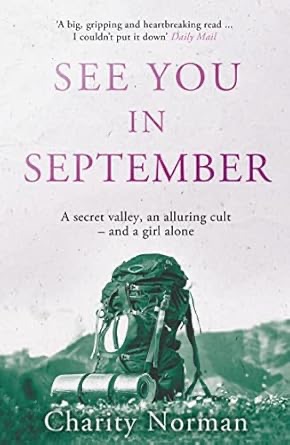
Charity Norman always leaves us with a lot to think about, but this latest novel was particularly thought provoking. Scott and Livia have two children and are always on call to help Scott’s brother, who has Down’s Syndrome. It’s Scott’s inability to help his brother one Saturday morning followed by his sudden death that starts a downward spiral. One careless comment about his brother’s care sets Scott on a search for answers, branching into medical conspiracy theories and the dark web. So when son Noah falls ill, Scott has an online community ready to feed into his distrust and his grip on reality starts to slide, dragging his family with him. As their marriage begins to fall apart, Livia can’t support or even understand her husband’s perspective. In fact he’s become a danger to his children and she must protect them, whatever it takes. This is a brilliantly drawn study of how social media can lead to obsession and allow sinister, unscrupulous people to take advantage of those who are vulnerable. It’s also a painfully accurate depiction of marriage breakdown and a perfect book club choice.

This was another book where marriage breakdown is depicted in painstaking detail. It reads like a thriller where different perspectives and revelations constantly change our perceptions of a situation. It’s like a whodunnit, except the death we’re mourning is the death of a relationship. Bea and Niklas have been together for thirty years and live a comfortable life in Stockholm with their children. Yet one night, after what feels like a trivial argument Niklas walks out and doesn’t come home. Weeks pass where Niklas takes a break and Bea is constantly pushing for answers, but when he returns to their flat he stuns Bea by asking for a divorce. For Bea this has come completely out of the, but is it as unexpected as she claims? Bea narrates the first half of this novel and halfway through the narrative returns to the beginning and Niklas tells us his version of events, which is very illuminating and may change the readers mind about their marriage. This is a simple device that works to devastating effect. I felt genuinely sad for this couple, because neither of them are bad people. It explores boundaries and the unhealthy reasons people can end up together. It’s also a response to grief, beautifully played out over decades. Utterly brilliant.

This is the fifth instalment of Will Dean’s Tuva Moodysson series and it was an absolute cracker. Tuva is investigating further north from Gavrik to an even more isolated town on the edge of the arctic circle. Essleburg is a town where everyone knows everyone else and there’s only one way in or out. A huge tunnel under a mountain provides access to the town, but closes down at night. Once you’re in, you’re in for the night and so is everyone else. From her hotel room at the sun-bed store Tuva sets out to look for a missing teenage boy, drawn by the fact that he is also deaf. But when bodies are found Tuva must face facts, the boy could be one of the victim and if not, could he be the killer? With it’s usual quirky characters and alien landscape, Tuva’s world is as isolating as it is disorienting. As usual Will Dean knows when to ratchet up the tension and when Tuva is in danger it’s absolutely heart-racing stuff.

As all of you know I’m a massive Skelf fan and this addition to the series was brilliant. Every Skelf novel begins with a funeral and they rarely go off without a hitch. This one is no exception, with a drone buzzing the ceremony and it’s guests. Could it be to do with the deceased or has someone got it in for the Skelf women? Jenny’s case follows on from the last book and the cops they investigated for sexually abusing young girls in the travelling community. Both are inexplicably out on bail and Jenny likes to know where they are at all times. Daughter Hannah’s case concerns Brodie the new recruit to the undertaking business. Brodie finds strange scrabbled marks around his baby son’s grave and Hannah sets up a camera, but when told that Brodie hears voices she wonders if he might have gone to the grave and acted subconsciously. Dorothy’s case comes from her involvement with a community choir that includes some Ukrainian war widows. One of the women, Yanna, has gone missing. Her husband Fedir was killed over a year ago and now she’s left her two small children with her mother-in-law. Could she have returned to Ukraine to fight, or has something happened to her? Each of the Skelf women feel vulnerable this time and I felt like the author was playing on my emotions a little. I could sense we were on the verge of a huge change and it left me on tenterhooks throughout.  

I absolutely loved this book. From the very first line – ‘there is someone in the house’ – this book grabs you and never lets go. Our narrator is at her secluded home with her two small children in a blizzard. The sound she hears is a familiar one, a tread on the stairs to her room, but it’s unusually heavy and slow. She has a split second to make the decision – does she hide, try to run or stay and fight. Will all three of them get out alive and if they do will anyone believe her? The first thing that hit me about this book was the unique the narrator’s unique voice. We see everything through her eyes and experience everything her body goes through – the heart-stopping tension of that first night with it’s immediate threat renders everything else unimportant. I should trust what she is experiencing. It’s just so incredibly odd. This tall intruder seems to have two voices: one is harsh and angry the other is soft, wheedling – a voice you might use for children as he asks them to ‘come out little pigs, little pigs are more delicious’. Her little girl identifies him as ‘Corner Man’ from her nightmares. Often sitting in the corner of her bedroom at night whispering to her. My heart was in my throat at this point! Was he real or something supernatural? Could he possibly be real if this is true? Yet I wondered if this overwrought mother is imagining this person, but that opens up a more frightening prospect – is she hallucinating and terrorising her own children with her delusions. The author plays with the reader beautifully from start to finish.

Surprisingly this was my first Peter May novel and is a sequel to his crime novels set in the Hebrides. Once a detective and now retired, Fin is drawn back to Lewis by family, when Caitlin Black’s body is discovered on a remote beach. Only eighteen years old, Caitlin was a student at the Nicholson Institute. When it emerges that she was having an illicit affair with Fionnlagh McLeod, her teacher and a married man twenty years her senior he becomes the prime suspect and is arrested on suspicion of her rape and murder. He is also Finn’s son. He must return to Lewis to support his daughter-in-law and granddaughter. He must also, despite the evidence against him, that he must try to clear his son’s name. As Fin travels around the island, he is drawn into past memories and soon realises this crime has echoes back into his own teenage past on the island. A terrible accident at a salmon farm caused two deaths, just as they started to expand on the island and become a multi-million pound industry. This is Finn’s journey, of family ties, secret relationships and the bleak and unforgiving landscape, where violence, revenge and old loyalties converge.

Frances McGrath is your typical All American teenage girl, living with her family on Coronado Beach, California. She has memories of growing up on that beach, swimming and surfing with her brother Finley. She is from a good family and expectations are that she will have the ‘right’ marriage and become a mother. However, things change when Finley makes a huge decision; he decides to enlist for Vietnam. It’s no surprise that he might go into military service at some point. Frankie’s dad has a wall in his office called the ‘Hero’s Wall’ where every family member’s military service is celebrated with cuttings, photos and medals. All the men, anyway. Yet not many of their friends and family members have sons who’ve voluntarily enlisted for Vietnam. There are ways of avoiding the draft, depending on who you know. Yet Finley enlists of his own accord, possibly believing the American government’s assertions that they must fight communism in Vietnam, lest it become even more widespread. Within weeks there’s a knock at the door; Finley has been killed in action. In a whirlwind of grief Frankie starts looking into her options. She wants to honour her brother and become a hero worthy of her father’s wall. Both the Air Force and Navy need a nurse to complete a long period of training before they’re posted to work in the field. However, if she enlists in the US Army, they’ll post her out to Vietnam after basic nursing training. Much to her parent’s shock Frankie is soon on her way to Vietnam. This is an incredible story about the horrors of war, falling in love and giving voice to the women forgotten in military history.

There have been some incredible historical novels this year, but I really was blown away by this story set just after WW1 and progressing to the mid-twentieth century. Two German sisters, Leni and Annette, live in Berlin and when we first meet them they’re in dire straits, living in a makeshift shelter in an abandoned garden. Thanks to war and the influenza epidemic they’ve lost their family. Leni gets a chance to earn some money at a notorious and rather seedy cabaret club called Babylon Circus. The naive and rather shy Leni becomes a cigarette girl in a second hand and pinned costume that just covers her modesty, but she is at first shocked by what she sees. With shades of the musical Cabaret the author creates a club that is a mirage of clever lighting, fairground mirrors and risqué musical numbers. It’s enchanting by dark and unwelcoming by day, but it doesn’t matter because this is the type of fun that can only be had at night. Everything is overseen by owner Dieter, a man with his own disguise having left half his face on a battlefield. When pianist Paul arrives, he and Leni start to gravitate towards each other. But Paul has a plan to leave Berlin and he would like to take Leni with him. We then move forward to the Cold War and a divided Berlin, where Annette has travelled from America to visit her sister and niece. The tensions and secrets of the Babylon Circus years still hang over the sisters, can they come to terms with the choices they made back then? Can Leni find a second chance of happiness? The author depicts her characters and the time period perfectly, with so much atmosphere. It’s an absolute must read.

Another amazing story set in Berlin is Josie Ferguson’s The Silence In Between. Imagine waking up and a wall has divided your city in two. Imagine that on the other side is your child…

Lisette is in hospital with her baby boy. The doctors tell her to go home and get some rest, that he’ll be fine. When she awakes, everything has changed. Because overnight, on 13 August 1961, the border between East and West Berlin has closed, slicing the city – and her world – in two.
Lisette is trapped in the east, while her newborn baby is unreachable in the west. With the streets in chaos and armed guards ordered to shoot anyone who tries to cross, her situation is desperate. Lisette’s teenage daughter, Elly, has always struggled to understand the distance between herself and her mother, but perhaps she can do something to bridge the gap between them. What begins as the flicker of an idea turns into a daring plan to escape East Berlin, find her baby brother, and bring him home. The author takes us effortlessly back and forth in time to understand this family and  my heart kept breaking for them over and over for. While I struggled to read it at first, I’m so happy that I went back to it because it was breathtaking. It was as if someone had bottled both moments in time and simply poured them onto the page, raw and confronting. This is an absolute must read for historical fiction fans and a book I will definitely go back to in the future. 

Thanks for reading part one. Part 2 is coming tomorrow.