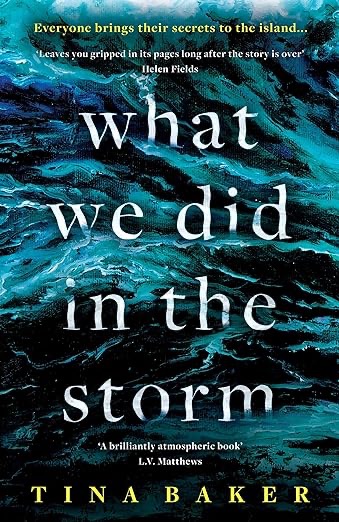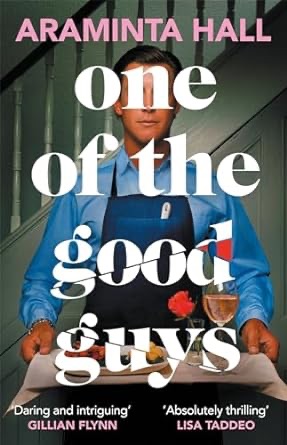
At five a.m. one summer’s morning, police diver Jen Harper wakes to find herself submerged in the silt of a river with no memory of how she got there.
Forty-eight hours later, she’s called to dive in the same river in search of a missing woman, Claudia Franklin.
But for Jen, this is no ordinary job. Her and Claudia’s families were entangled for decades – there is unresolved resentment between them, unspoken secrets.
Jen hasn’t seen Claudia for twelve years now. Or has she?
This was an interesting and complex novel that feels part thriller and part family drama. From the mysterious opening, this is a book full of secrets and lies. It’s a slow burner and I wasn’t sure at first. I found myself more drawn in by the characters involved in the story. Told through Jen, a police diver, it was a perspective I’d never come across before in crime novels. My brain immediately went back to 2023 to the disappearance of Nicola Buller, who went to walk her dog as usual one morning and never came home. The unusual circumstances- her dog left alone, her phone left on a bench on an open work call – caused a media frenzy and people spread wild theories on social media. A diver, who was contracted for searches in waterways by other police forces, offered his services direct to the family saying ‘if she’s in there, I will find her’. He didn’t. Sadly she was found days later. Water behaves in unusual ways and that mysterious movement of tides can take bodies and conceal them for days. Jen’s work was a fascinating backdrop to the disappearance of local woman Claudia Franklin from the small town of Bourne. After two days with no sign of her, police divers are called to search the river – Jen included. However, Jen doesn’t disclose her family’s complicated relationship with the Franklins, or that where a member of the public has reported seeing something in the water is exactly where she woke up after sleepwalking.
Jen is intriguing and it was interesting to experience what could be seen as quite a macho job, from a woman’s perspective. Jen is definitely one of the boys, she doesn’t expect special treatment and even changes into her dive gear with the men, in the back of the van. There are also parts of the job where Jen has an advantage, she is a slimmer build and has smaller hands for tight spaces like drainage pipes. Jen’s also a mum and that makes such an interesting and varied job harder. She only has two people she can trust to step in and look after her little boy when she gets the call, her brother and her best friend. The men in her team just see her as one of them, but they can do the job they love without the mental load of running a household and arranging child care. Jen has to do both and I had some admiration for her courage and resilience, while never being completely sure of what she’s capable of. That ambiguity in Jen’s character, plus the strange unsolved nature of her sleepwalking left her so open to interpretation.
I found the best way of reading this story is not to try and solve things. I let it wash over me and when the twists happened, they were a revelation. From a slow start, the author did let the tension build beautifully, and the revelations don’t stop coming. What I loved was how the author kept our knowledge of the case within limits. Unlike some protagonists in crime fiction, Jen stays within her role. We only know what the police divers know and it kept us with the hard evidence rather than speculation. It brought authenticity to the case and we could be sure of what had happened, showing a depth of research into diving and forensics. In the background we are building up a picture of life in a small town, where everyone knows everyone else and pasts are intertwined and complicated. Having lived in a small Lincolnshire town since I was nine years old, I know how this works. I thought the author had created a great balance between the professional and the personal, the crime and the characters. Emotions of guilt, rivalry and obsession swirl around alongside the theme of protection, especially of those we love most. This is a story that slowly takes hold of you, it’s multiple strands like the weeds in a river that wind themselves around you and pull you under.
Published by Mountain Leopard Press 22nd June 2023
Meet the Author
For over ten years L V Matthews worked both in domestic and international sales for major UK publishing houses, before leaving to pursue a career in writing.
SILENT WATERS is her newest thriller novel (out July 2023)
“The entrance to Hotel Beresford is art deco. Strict lines, geometry and arches showing cubist influence. The monochrome carpet screams elegance as it leads towards the desk that stretches the length of one wall, marble with chrome embellishments. Or, at least, it once looked that way. Back when writers and poets and dignitaries roamed the hallways and foyer. It still feels lavish. Glamorous, even. But faded. And a little old-fashioned.”
Ever since I read The Beresford I’ve been wondering what was going on through the other entrance. The entrance merely hinted at in one of it’s scenes. If what was going on up there was more weird or dangerous than the apartments at the front, I dreaded to think! In my review for the first book I wrote about the Dakota Building in New York City, because my mind kept drifting towards it while reading. It has just the atmosphere for this particular den of iniquity, it has a brooding sense of menace or presence of evil. Yet inside it reminds me of the Chelsea Hotel, a NYC landmark where in the mid Twentieth Century writers, musicals and artists lived. Arthur Miller, Bob Dylan, Arthur C. Clarke, Andy Warhol and Edie Sedgwick all inhabited the hotel in the 1960’s.
“Each floor looks the same yet somehow has its own unique landscape; it’s known for something particular. A celebrity affair. A mysterious death. A legendary party. Rumours that a serial killer crashed there between sprees. Rock stars smashing up rooms. Writers creating their masterpieces. Some is legend, much is true. All is talked about. With fondness, fascination and morbid curiosity.”
The author tells his story through a series of fascinating characters who live or work in the building. A young boy called Otis who lives on the seventh floor with his parents, who are constantly at war. Sam is an angry man who lets everyone feel his displeasure, often taking out his anger on wife Diane and son, Otis. Diane is turning tricks while Sam is at work in order to have an escape fund, often leaving Otis hanging round the building trying to avoid what’s going on. His favourite place to hang out is at their neighbours, but knows his mum would go crazy if she found out. Neighbour Danielle is a jazz singer with a voice so smokey it immediately conjures up exactly the kind of bar that would employ her. She likes to sit on her couch, under the window with one leg dangling out into the street. Along the corridor are the Zhaos, a sweet Chinese couple who also like to dangle out of their window, smoking something a little stronger than Danielle. Then, living in the penthouse on the top floor, is Mr Balliol. He owns the building and has the disconcerting ability to know everything that’s going on in the rooms he rents out and often sidles up to guests and his staff with no warning or sound. His unique staff are working on a business conference which will keep the hotel busy for a couple of days, but today is going to be an unusual day. Many different rumours swirl around the Beresford Hotel, some more fantastical and darker than others. It’s had more than it’s fair share of deaths, some accidental and some less so. Today is going to test the people who dismissed those darker rumours as impossible. Anything is possible at The Beresford Hotel.
“Peeling paint and faded hopes. Much like Carol. Carol seems to age with the building. For every strip of wallpaper that gets ripped or falls away, Carol gets another wrinkle. When the front facade gets uplifted with a new paint job or some detail on the masonry, Carol turns up with a Botoxed forehead or facelift. But not from a reputable surgeon. From somebody she saw advertising in the back of a magazine.”
Of all the characters I was absolutely transfixed by hotel manager Carol who seems like part of the building. She is that wonderful mix of unobtrusive, but yet ever present when needed, that all the best hotel employees have. No one notices the person who quietly sits in her office or on reception, but Carol has an uncanny way of knowing most things that go on in the hotel. She can probably guess at the rest, but doesn’t share Mr Balliol’s seemingly supernatural abilities. She has the world weariness of having seen it all before; most guest’s behaviour is not as unique as they would like to think. So she’s adept at covering up minor indiscretions all the way up to the accidentally dead: the husband who’s beaten his wife for years and finally gets his comeuppance, a solo sex game gone wrong or prostitutes- who end up accidentally dead more than most. Nothing much surprises Carol, even if a business conference does turn into a wild party or bacchanalian orgy. Yet behind the secret door to her inner office we see a softer Carol, perhaps the real woman beneath he hard nosed employee. It’s clear she’s suffered a loss. One guest who has spied Carol’s profile on a website has noticed this crack under the surface:
“He remembers Carol’s profile among the twenty that he settled on. He could see her former beauty, but this isn’t about going deeper than the surface, it isn’t some outreach programme. It isn’t benevolence or sensing someone’s spirit. Danny can see that Carol is broken. And he likes that. She had loved somebody so completely and then they died, and she has never recovered.”
Her soulmate and husband Jake is almost fatally injured in an accident and hasn’t come out of a coma since and as the weeks go on she begins to realise that the Jake she knew and loved was gone. His body was here, but not his mind, and the more time that passes the more it dawns on her that he is going to need help with his most basic human functions – he will have to be fed and piss into a bag for the rest of his life, if it can be called that. In desperation she calls on God, she will do anything if it will save the man she loves. God doesn’t answer. Yet bargaining is her only hope and if God won’t answer ……
Will Carver is one of the most unique writers I’ve ever read and this latest novel is no exception. He understands human nature. Not that all of us are checking into hotels and choking the life out of prostitutes, but he gets the smallest most innocuous and innocent thoughts as well as the darker side of our nature. His narrative voice is conspiratorial, it lets us into every corner of the hotel and also gives us curious little asides about the world we live in. Many of the speeches are recognisable as things we’ve thought and said about the absurdities and horrors of our world.
I loved his insight into writing through the character of I.P. Wyatt who also lives on the seventh floor and is struggling with that difficult second novel after a very successful first. His words are probably self-reflexive – where an author writes their own experience of writing the novel into their novel – although I do hope Carver isn’t applying Wyatt’s method.
“Some days he writes without breathing for hours, others he spits four perfectly formed words onto the page. And each evening, he deletes everything. He can’t stay in love with his words. He had it so perfect. Anything less than that and he will be chewed up by the press and readers and strangers online who just want to vomit vitriol with no personal consequence. Even if he can replicate the quality of that last book, it won’t be that book, that surprise success. And too much time has passed now. It will never live up to the hype. He should have just churned something out quickly. Something that could be torn apart that he wouldn’t care about.”
Carver has taken the age old tale of the Faustian pact and brought it up to date, into the 21st Century where despite all the advances in science and technology there are still terrible events we can’t control. As we all know, especially if we’ve watched Peter Cook and Dudley Moore’s film Bedazzled, making that sort of bargain or deal rarely benefits the desperate petitioner. The brilliance of Carver is that when we think we’ve worked out what’s going on, just like the twelve elite businessmen at their conference find out, a whole new level opens up before us. This is a daring novel, with a deep vein of human emotion at the centre. Yet it’s also playful, thrilling and dangerously dark indeed. If you’re not convinced by me then I’ll let Carver persuade you in his own words.
“When you watch a television soap opera, things are hyperreal. It’s unfathomable to have that many murderers and fraudsters and adulterers living on one street as part of one of three largely incestuous families. Life isn’t like that. Things don’t happen in that way. Hotel Beresford makes television soap operas look like a four-hour Scandinavian documentary about certified tax accountancy.”
Published 9th November 2023 by Orenda Books
Meet the Author
Will Carver is the international bestselling author of the January David series and the critically acclaimed, mind-blowingly original Detective Pace series, which includes Good Samaritans (2018), Nothing Important Happened Today (2019) and Hinton Hollow Death Trip (2020), all of which were ebook bestsellers and selected as books of the year in the mainstream international press. Nothing Important Happened Today was longlisted for both the Goldsboro Books Glass Bell Award 2020 and the Theakston Old Peculier Crime Novel of the Year Award. Hinton Hollow Death Trip was longlisted for Guardian’s Not the Booker Prize, and was followed by four standalone literary thrillers, The Beresford, Psychopaths Anonymous, The Daves Next Door and Suicide Thursday. Will spent his early years in Germany, but returned to the UK at age eleven, when his sporting career took off. He currently runs his own fitness and nutrition company, and lives in Reading with his children.
THE BERESFORD is currently in development for TV.
If you would like to get in contact, I can usually be found on TWITTER/X @will_carver but who knows how long that will last..?
You could always check out my website where you can join the MAILING LIST to stay updated with deals and competitions and which EVENTS I will be attending throughout the year. (There are also many hidden easter eggs within the site, just as there are in my books. Feel free to click around and see what you find.)
Recently, I have also become a podcaster and present the LET’S GET LIT podcast with fellow writer SJ Watson, where we discuss books and writing each week while sharing a drink. (Find us wherever you get your podcasts from.)
Oh, and just in case TWITTER implodes, I can also be found here…
All I could say after reading the final sentence of the book was WOW! I couldn’t stop reading, the housework is completely neglected and I even forgot to eat lunch! Yes, I read this in 24 hours. This is the absolute best of her novels and I’ve enjoyed them all.
Dominique is making her way through Iceland to an old whaling ship called the Ormen. Stranded in a bay, the ship is going to be sunk out at sea and Dom wants to document it before it disappears from view together. Ormen was an unusual whaling ship being a sail and steam hybrid that became beached in the early days of the 20th Century near the small village of turf houses called Skúmaskot. When she reaches the ship she sets about turning the cabin into a base to explore from and puts up her tent. There’s one door in the ship that she wonders about, it’s made of carved oak and when she touched the handle it emitted such a feeling of evil she was taken aback. As she settles, she hears someone walking about on deck and she realises she’s not alone. Three more explorers join her – Jens, Samara and Leo. They have more up to date equipment and soon the four are documenting the ship and their discoveries as well as Leo’s parkour sessions. The questions start to mount though, is she wrong or are the other three suspicious or even slightly scared of her? What are the strange noises she can hear – banging could be gunfire or chains banging against the ship? There’s also a strange mix of footsteps and dragging something heavy in a steady rhythm. Who is the woman in the dress that she’s seen standing in the shallows? This is a strange place where light is limited, the village is deserted and there is a strange stone throne by the beach, said to be a Mermaid’s Throne. These are not Disney mermaids though, these mermaids have teeth and a song that will lure a man to his death.
There are different types of haunting in this tale. I could see examples of my own theory of hauntings in the woman seen by the edge of the sea. She feels like an imprint on the landscape. A place where heightened emotion and terrible events have left such a strong imprint that defies time. The sounds also seem to come from another place, a repetitive echo from time past. This is what I call a proper ghost story. It isn’t gory or a slasher’s tale, it’s old-fashioned creepy and blended beautifully with local folklore. The ship is from Scotland and this is where the folklore of selkies comes from, a race of seal women who have a dual nature. They can be nurturing and helpful, such as saving a child who’s in trouble in the sea. They can communicate with other aquatic creatures and assume a human form when on land. However, selkies can also be seductive luring men to her and often having hybrid children. At their worst Selkies can be violent and vengeful, but their need for revenge gives us a clue about why; people seeking revenge have usually been wronged in some way. Mermaids are also depicted as sirens, luring ships and men with their singing and often thought to lure ships onto the rocks. However, there is also a terrible element of coercion in their mythology, stories where a man steals an item from the mermaid and while he has that item in his possession she belongs to him and lives as his wife. If she finds the object the spell is broken and she can return to the sea. Of course in the fairy tale we have a mermaid who has to choose between her land and sea lives, she can have love but to have legs she must suffer excruciating pain and she can never use her voice. It’s a hard price to pay. Icelandic mermaids have all these qualities, but use their seductive charms to lure sailors to their deaths – a nice reversal of their capture by human men. The author describes Icelandic mermaids as having rows of pointed teeth too. There’s a sense of devouring their enemies, particularly those who have wronged them. Is this Nicky’s end?
I loved the tension between the group of four on the Ormen. Samara seems fine with Dom, but then she overhears a conversation with Leo where Samara seems terrified of her. She talks about ‘this time’ being different, but Dom can’t remember meeting them before. I loved this mix of psychological tension, the real dangers of the landscape around them and then the truth of what has happened to the previous crew of the ship and previous explorers who’ve also left their echoes here. I sensed a possible kinship between Jens and Dom, almost as if he already knew her. I was scared of Leo. There’s so much nervous energy in him, a rage running just under the surface that I feared might ignite at any point. Yet they’re also dependent on each other for their survival creating what feels like a truce between them, but how can a truce exist if they’ve never met? There are so many strange happenings, such as Dom’s dream of ponies running off a cliff followed by finding the skeletons of Icelandic ponies in a deep cave. I loved the bits of magic realism, such as Nicky’s leg. Everything about the voyage from Scotland is historically accurate and gives us such an incredible sense of place I can see it. However, Nicky’s broken ankle and wound start to heal in an usual way. She notices the grey colour of her newly healing skin and thinks she has an infection. The sensation is altered too, feeling rubbery and a little cold. As time goes on this patch of skin grows and she’s aware that the gap between her legs is becoming webbed. Could her legs be joining together? This could be a magical sort of protection against the assaults she suffers on a daily basis. It could also be a transformation. As the past starts to inform Dominique’s present I couldn’t leave the story and I was left with the worst kind of book hangover where I was stuck in the world and the feeling of the ending. It’s taken me two days to start another book but I can’t stop thinking about this one. In fact I’m already thinking about reading it again, a bit like watching The Sixth Sense again once you know the twist. This is a dark, disturbing ghost story of hauntings but also about the worst things human beings can do to one another, particularly men against women and the extraordinary ways they exact their revenge.
Out in Hardback now from Harper Collins
C J Cooke (Carolyn Jess-Cooke) lives in Glasgow with her husband and four children. C J Cooke’s works have been published in 23 languages and have won many awards. She holds a PhD in Literature from the Queen’s University of Belfast and is currently Senior Lecturer in Creative Writing at the University of Glasgow, where she researches creative writing interventions for mental health. Two of her books are currently optioned for film. Visit http://www.cjcookeauthor.com
I was introduced to Jane Jesmond’s writing by a blog tour and I thoroughly enjoyed her series, the most recent of which was Cut Adrift – a novel I reviewed earlier this year. A Quiet Contagion is an inventive stand-alone thriller that brings together dark history and medical ethics for a fast paced and well-researched mystery. Phiney’s grandfather Wilf, committed suicide after an incident at the pharmaceutical company where he worked. Using a dual timeline narrative and six different narrators we jump between 1957 and 2017 to uncover the truth around work to find a vaccine during the polio epidemic. The author combines the tension of a thriller with extensive historical research to unearth the secrets of the past and ask questions about healthcare ethics in public health emergencies, never forgetting the human cost of the choices made.
There are obviously parallels to the the COVID pandemic here, including many lessons that still haven’t been learned. In contrast to the modern parallels, the author has grounded her narrative very successfully in the historic sections, creating a great balance. Having had oxygen therapy for MS, I’m very aware of the use of hyperbaric chambers and the antiquated ‘iron lungs’ that were used to treat polio patients in the 1950s. I thought the descriptions of the epidemic were outstanding, really bringing home to the reader the terrible truth of a disease most people younger than me have ever seen. I’ve met people with post-polio syndrome and there’s no denying the life-long disabling effects of this awful disease. The author’s medical knowledge brings the realities of the epidemic to life, but also brings an authenticity to the characters whether they’re affected by this disease or treating it.
I thought the challenges created by a real medical crisis were well-presented and illuminating. There’s a range of voices to represent the medical/scientific outlook and these resonated particularly with contemporary issues around the COVID pandemic, such as the race against time to produce a vaccine and get as many vulnerable people vaccinated as soon as possible. We can see the origins of ‘big pharma’ with profit becoming the main goal, rather than public health. I don’t know if the author used the recent pandemic to inform her character’s thoughts and feelings, but the anxiety and panic felt very real and timely. The novel’s characters were well-developed and at home in their world, but I connected particularly to Phiney and her determination to unravel the mystery of happened to her beloved grandfather. I admired her. but worried that she was taking too many risks in her search for the truth and this kept me hooked. I enjoyed the moral dilemmas faced by her friends and family too. The struggles of each character added so much depth to the novel and their individual perspectives, created some thought provoking contrasts. I love it when I find myself thinking about a book days later and I this one has stayed with me. Sometimes, thrillers are full of action and tension but feel empty because they stick to one perspective or the characters just aren’t developed enough. This story still had tension, but it was also intelligent and full of emotion. This combination made the book hard to put down and equally hard to forget once it was back on the shelf.
Out 7th November 2023 from Verve Books
Meet the Author
Jane Jesmond writes psychological suspense, thrillers and mysteries
Her debut novel, On The Edge, the first in a series featuring dynamic, daredevil protagonist Jen Shaw was a Sunday Times Crime Fiction best book. The second in the series, Cut Adrift, was The Times Thriller Book of the Month and The Sunday Times Crime Book of the Month. Her latest novel, Her, a psychological thriller will be published in May 2023.
Although she loves writing (and reading) thrillers and mysteries, her real life is very quiet and unexciting. Dead bodies and danger are not a feature! She lives by the sea in the northwest tip of France with a husband and a cat and enjoys coastal walks and village life.
Stay connected to Jane and receive news about her books and giveaways by signing up for her newsletter – https://jane-jesmond.com/contact/
As you all know I’m quite happy to admit so called ‘guilty pleasures’ and glaring omissions from my library. You also know I like nothing better than discovering someone I haven’t read before, who has along back catalogue to enjoy. I am absolutely thrilled that the Squad Pod chose Val McDermid for our October book club. This is probably sacrilegious in crime reading circles, but I haven’t read a single book by the Queen of Tartan Noir. She is definitely deserving of the title and after reading Still Life I’ve purchased all the Karen Pirie series so I can read from the beginning and start my Val McDermid journey. Next month we have her new novel in the series Past Lying so my October is going to be pretty much dedicated to her.
Our story is a complicated combination of current and historic case that Pirie is set to investigate from the Historic Cases Unit. A trawler pulls a body from the Firth, eventually identified as a man called James Auld. His brother, Iain Auld, worked in the Scottish Office in Westminster and also disappeared, ten years ago. Even more odd, James had been living as Paul Allard and working in a jazz band in Paris. Two other events come up when researching the two men. Firstly, the paintings chosen from the National Collection for the Scottish Office, were found to be barely passable fakes when the government changed. Secondly, when a fire that destroyed an art gallery in Brighton appears in the press, a photograph seemed to show Iain Auld. An old school friend swears it was Iain, but he was already declared dead by this point. DCI Pirie’s starting point will have to be Iain’s widow Mary, who lives alone and has stayed in touch with brother-in-law James ever since Iain disappeared. Their second case seems less urgent and regards historic remains found in the camper van in the garage of an empty house. The van might have belonged to a young silversmith called Dani, a free spirited and bohemian girl in a relationship with a slightly older accountant called Andrea. Could this body be one of those women?
Both cases were intriguing and grabbed the attention. The story that emerges from their investigation into the camper van skeleton is one of opposites attracting. Opposites can attract, but can they co-exist over time? Dani was clearly the more bohemian of the pair and a bit younger too. She wanted to travel, design her jewellery and perhaps gain inspiration from staying at an artist’s commune. Andrea was more conservative, happy to stay in the same home and go to the same job. Andrea’s parents are abroad, could she have killed her partner and left the country? However, when they visit Dani’s father his first reaction is to ask what his daughter has done this time? So the weight of suspicion falls on her. Then they find a lead, a possible art collective where Dani is mentioned, over near Manchester. Karen sends her sergeant Jason to check things out, putting him in terrible danger. The visit quickly goes from being slightly comical (an elderly person’s painting class) to absolutely filled with tension and deadly. The case of the Auld brothers had so many facets to it and opened up the characters for me. It covered the issue of finding yourself in love with someone of the same sex after years of being heterosexual. The art and political elements were so interesting too. The criticism of the old Lib/Con coalition and the way Westminster works in general was something that chimed with my own views. The musing on Scottish independence and the way Scottish people feel about England really did interest me, but it also firmly sets a character in their place and time.
These subjects showed the reader how forthright and decisive Karen is, something we see in her professional life too – sometimes to her detriment. She had so many sneaky ways around her boss, known as the ‘Dog Biscuit’ thanks to her surname being the same as a brand of dog treats. It might not always be appreciated by her superiors but she does it to get results, out of a desire to help those affected by the crime and also because she has a disgust for unwanted bureaucracy and procedures. When she needs a European arrest warrant she goes direct to a contact who can organise it immediately, not through the boss. Often though, these short cuts do get the job done. She knows it pisses the boss off, but she’s willing to take the flak and smooth it over later. She’s a maverick whose not afraid to take a risk or spend money if it brings results for the victims of crime. I found her intelligent, determined, rebellious and competitive. She would probably drive me crazy in reality, but as a character I loved her. I also loved the way she’s trying to cope with ongoing grief for her partner Phil, while starting a new relationship with Hamish. I’ve been there so I understand the conflicting emotions, the guilt and the desire to move forward. This was so well written. She’s asserting her boundaries and trying not to jump in with both feet? There’s something she’s uncomfortable with about the relationship, but she talks herself round to the positives. Hamish’s business and the Croft in the Highlands keeps him busy and sometimes absent which I think suits her. It gives a distance to the relationship that she needs for now.
Her dogged determination and that of her team can lead to taking risks, but they don’t hesitate. Karen gives Jason his own tasks showing trust and confidence in him. She keeps her borrowed recruit Daisy close to her, they’re very different but there’s definitely an attention to detail in Daisy that echoes Karen’s. She instils in both of them her philosophy that just because it’s a cold case doesn’t mean they do half a job, or a slow one. She holds these mispers and victims of crime in high regard and expects the same from her team. As the COVID pandemic starts to move across the world there’s a further sense of urgency to their work. While the case of the body in the camper van starts to resolve, the Auld brothers case takes many unexpected turns. As the trail moves over to Ireland, using the art world to unravel some clues, it was great to see that Karen is happy to get her hands dirty and isn’t the sort of boss who hands that stuff to her juniors. Here she’s sitting in vegetation, watching a house for suspects and deftly deploying a tracker. She’s just as deft when walking into a small gallery and questioning an art dealer. Whatever it takes to uncover the next steps. When talking about her cold cases, Karen articulates something that crime readers often feel. She knows there’s an explanation that solves all these clues and exposes a pattern, but she just can’t see it yet. You have to let it wash over you, read more and hope that all will become clear. The difficulties solving this one kept me reading and kept me thinking about the case when I was doing other things. As COVID worsens and starts to lock down the country, decisions have to be made about how the team work and live. Karen makes a choice I didn’t see coming and I would be interested to read how it works out moving forward. This was one of the best crime novels I’ve ever read, with a fascinating central character that I can’t wait to read more about.
Meet the Author
Val McDermid is a number one bestseller whose novels have been translated into more than forty languages, and have sold over eighteen million copies. She has won many awards internationally, including the CWA Gold Dagger for best crime novel of the year and the LA Times Book of the Year Award. She was inducted into the ITV3 Crime Thriller Awards Hall of Fame in 2009, was the recipient of the CWA Cartier Diamond Dagger in 2010 and received the Lambda Literary Foundation Pioneer Award in 2011. In 2016, Val received the Outstanding Contribution to Crime Fiction Award at the Theakstons Old Peculier Crime Writing Festival and in 2017 received the DIVA Literary Prize for Crime, and was elected a Fellow of both the Royal Society of Literature and the Royal Society of Edinburgh. Val has served as a judge for the Women’s Prize for Fiction and the Man Booker Prize, and was Chair of the Wellcome Book Prize in 2017. She is the recipient of six honorary doctorates and is an Honorary Fellow of St Hilda’s College, Oxford. She writes full-time and divides her time between Edinburgh and East Neuk of Fife.
I wouldn’t have imagined back at the beginning, that we would get this many books down the line with private investigators Cormoran Strike and Robin Ellacott. In fact after the last book I thought the author had hit a wall with ideas or was trying to hard to be up to the minute with technology and new trends. I was pleased to find that this was a much better investigation. Full of tension and very dark in tone, this book delves into a church that’s really a cult, every bit as huge and secretive as Scientology. This is a tale of abuse: financial, physical, sexual and spiritual. In parts it is hard to read but compelling and fascinating to see how it’s teaching affect the people who follow it, but also our investigative duo. Sir Colin Edensor approaches Strike to try and bring his son home from the United Humanitarian Church’s compound in Norfolk. Chapman Farm claims to be self-sufficient, growing fields of vegetables and keeping animals, as well as undertaking evangelical work on the streets of Norwich. Sir Colin’s son Will has been part of the UHC for several years and would seem completely indoctrinated. He’s failed to get him out before, but desperately wants him home to see his mother who is dying of cancer. How will Strike and Robin go about their task?
The best way to discredit the church and get close to Will would be for someone to go in undercover. It would be better if that was a woman and Robin volunteers. Strike is reluctant to agree, but can’t come up with a sensible reason for that instinct, knowing his reluctance is probably down to his growing feelings for his partner. However, their other female investigator Midge is covering a famous actress who has a father and son stalker team who want to kidnap her. Robin is adamant it should be her and creates a persona called Rowena, who visits their London base for a ‘service’ with just the right clothes to suggest she has money, borrowed from Strike’s half-sister Prudence. It’s agreed that Robin will go to Chapman Farm for an induction period but they pick a place on the perimeter fence to leave a fake rock. Every Thursday Strike will leave a letter under the rock for Robin to find and she will leave a reply, if she wants to come out she can let them know and they will use blot cutters on the fence and bring her out.
As regular readers will know, Strike and Robin are one of my favourite literary couples, but I’ve been wondering during the last two novels how long she can keep them apart? There’s also a trend for putting Robin in danger to evoke feelings in her partner. Here I was genuinely worried for Robin before she even went into the farm. I could understand her wanting to assert her ability to go undercover and her authority as partner to make the choice – it shouldn’t have to be okayed by Strike. Yet as a person Robin has certain life experiences that a church like this could see as weaknesses to exploit: the rape she suffered at university, the knife attack on her first case that left her with PTSD, there’s also the fall out from her marriage to Matthew and her undisclosed feelings for Strike. These chinks in her armour will be seen by people used to exploiting others. I think there are times when asserting your authority and taking a feminist stance are admirable, but not at the expense of your own safety. ‘Rowena’ is noticed straight away by recruiters at the London temple and after a few attendances, Rowena is taken to Chapman Farm and starts at the bottom of the pile, working in the fields and mucking out the animals. In between there are services or talks about the church’s purpose, bombarding new recruits with images of everything that’s wrong in the world until their current place seems like one of safety. Then a process of breaking recruits down begins – lack of sleep, restricted food or fasting, manual labour and strange interventions and group therapy where the individual is broken down mentally. All of this starts to have a detrimental effect on Robin, but the most disturbing practices are around familial relationships. Children are taken to a dormitory and school so they are no longer a family unit but belong to everyone. Family groupings outside the UHC are rubbished as false attachments that should be broken immediately. Then there’s the spirit bonding. On the farm there are pods called ‘retreat rooms’ there expressly for the purpose of when someone approaches you and asks for sex. Emotional bonding is not the norm, sex is just another form of service, given freely with no ties. What will Robin do if approached?
There were times when I found myself a bit lost on who was who because the cult has so many members and their relationships are complex. There are also complications about the names they have for themselves. I think the author could have achieved the same effects and build up of tension within the farm with less characters and a shorter process of indoctrination. I also felt that Robin would have struggled to come out more than she did. The PTSD seemed mild considering what she’s seen and heard. The experience of looking after a disabled child who isn’t receiving the medical care he should was horrifying and was the main experience she struggled to shake off. The neglect was terrible and Robin desperate wanted him found by the police. However, she was cornered in the retreat room by a naked Will Edensor and was sexually assaulted by the church leader, but once she’s out it’s never mentioned and she doesn’t even tell Strike or Detective Murphy, her boyfriend. I wondered if this might be revisited in the future but it did seem odd to leave it hanging. I also started to be confused by the ex members that Strike was interviewing and where they’d fit into the hierarchy. There was so much detail surrounding the doctrine of the cult and it’s different prophets that I felt the other cases disappeared into the background. In fact one case seemed to be there only to serve as a distraction for Strike at a strategic point. Nevertheless, the tension built as Strike started to unravel the truth and Robin was still inside.
All that being said this was a much better novel than the last in the series. I was totally engrossed in it by half way through and barely surfaced till the end. Of course there is the question of Robin and Strike’s relationship. Ex-girlfriend Charlotte comes to the fore again, trying to lure him back in with an unforgivable lie. I was hoping he would see the manipulation, especially since he’s on his own and can’t run anything past his best friend. He’s wrestling with risking all that he’s built in terms of his business and their friendship if he tells Robin that Charlotte has been right all along, he does love her. Can he find the courage to tell her?
Meet the Author
Robert Galbraith’s Cormoran Strike series is classic contemporary crime fiction from a master story-teller, rich in plot, characterisation and detail. Galbraith’s debut into crime fiction garnered acclaim amongst critics and crime fans alike. The first three novels The Cuckoo’s Calling (2013), The Silkworm (2014) and Career of Evil (2015) all topped the national and international bestseller lists and have been adapted for television, produced by Brontë Film and Television. The fourth in the series, Lethal White (2018), is out now.
Robert Galbraith is a pseudonym of J.K. Rowling, bestselling author of the Harry Potter series and The Casual Vacancy, a novel for adults. After Harry Potter, the author chose crime fiction for her next books, a genre she has always loved as a reader. She wanted to write a contemporary whodunit, with a credible back story.
J.K. Rowling’s original intention for writing as Robert Galbraith was for the books to be judged on their own merit, and to establish Galbraith as a well-regarded name in crime in its own right.
Now Robert Galbraith’s true identity is widely known, J.K. Rowling continues to write the crime series under the Galbraith pseudonym to keep the distinction from her other writing and so people will know what to expect from a Cormoran Strike novel.
I quickly became fascinated with this mix of historical fiction, psychological suspense and the paranormal. We meet Annie Jackson as she tentatively starts her new job in a nursing home in the West End of Glasgow, hoping to get her life back on track. Annie suffers with terrible nightmares where she’s stuck in a car underwater. She also has the sensation that someone is holding her head under water until her lungs feel ready to burst. She also has debilitating headaches and she can feel one threatening as her new manager introduces her to resident Steve. Then something very odd happens, as a blinding pain in Annie’s head is followed by Steve’s face starting to shake, then reform. A whispering sound begins in her head and she sees Steve as a skull, followed by a vision of him falling in his room and suffering a debilitating stroke. She desperately wants to tell him but how can she without seeming like a lunatic? He becomes agitated and upset, as Annie starts to describe the layout of Steve’s bathroom and he asks her to stop. As she’s sent home from another job she starts to think back to her childhood and the first manifestations of her debilitating problem. Annie survived the terrible car accident that wiped her childhood memories and killed her mother. This strange supernatural phenomenon is why Annie is alone and struggles to make friends. These are ‘the murmurs’.
I felt so much compassion for Annie, as the story splits into two different timelines: we are part of Annie’s inner world as a child, but also 0in the present as fragments of memory slowly start to emerge. We also go back even further to the childhood of Annie’s mother Eleanor and her two sisters Bridget and Sheila. We experience their lives through other people’s stories and written correspondence, especially that of a nun who also works in a residential home. I enjoyed how this gave me lots of different perspectives and how the drip feed of information slowly made sense of what was happening in the present day. Different revelations have a huge effect on the adult Annie and because her memories have been buried for so long she experiences the shock and surprise at exactly the same time as we do. This brings an immediacy to the narrative and I felt like I was really there alongside her, in the moment. With my counselling brain I could see a psyche shattered by trauma, desperately looking for answers, she is piecing herself back together as she goes.
Teenage Annie had a similar vision about a girl called Jenny Burn, who went missing never to return. The murmurs awakened when her mum’s sister Aunt Sheila came to visit them. She tried to openly discuss an Aunt Bridget who also had a ‘gift’ but has ended up in a home. Eleanor, Annie’s mother, asks Sheila to leave, but it’s too late because Annie has already seen that her aunt is dying of cancer. Annie evades her mum and makes her way to the hotel, the only place Sheila can be staying. Unfortunately, Jenny is working on reception. Annie can see her climbing into a red car and she desperately wants to warn her, but she knows she’ll come across as a crazy person. Eleanor is desperately looking for a way to deal with her daughter, she’s a person of importance in the church and she can’t be seen to have a daughter who has visions. Pastor Mosley has Eleanor exactly where he wants her. There’s a control and fanaticism in him that scared me much more than Annie’s murmurs. When Eleanor takes Annie to the pastor, he demonstrates his control by holding her head firmly under his head as he prays for her. When she almost faints, he’s convinced there’s a demon in her. Annie is scared of him, she gets a terrible feeling about him but doesn’t know why. Religion is portrayed as sinister and controlling, with fervent followers who never question, but live in the way they’ve been instructed is Christian? story takes an interesting turn when Annie’s brother Lewis, a financial advisor, becomes involved with the church once more and it’s new pastor Christopher Jenkins, the son of their childhood neighbour. He’s revolutionised the church and through the internet he’s turning it into a global concern. He’s not just interested in saving souls though, he’s also amassing money from his internet appeals. He also seems very interested in meeting Annie.
As the book draws to a close the revelations come thick and fast as both past and future collide. The search for Aunts Bridget and Sheila seems to unearth more questions than answers. Annie finds out that Jenny wasn’t the only woman who went missing in Mossgaw all those years ago. As she starts to have suspicions about her childhood home, Chris seems very keen to draw her back there. Might he be planning a huge surprise? I was a bit confused at first with all these disparate elements, but as all the pieces started to slot together I was stunned by the truths that are unearthed. Then as Annie’s childhood memories were finally triggered I felt strangely terrified but also relieved for her all at once. I hoped that once she’d regained that past part of herself she would feel more confident and free, despite the strange gift she seemed to have inherited. Maybe by facing the past and leaning in to her relationship with her brother, she might feel more grounded and strong enough to cope with her ‘gift’. I thought the author brought that compassion he’s shown in previous novels but combined it with a spooky edge and some intriguing secrets. I really loved the way he showed mistakes of the past still bleeding into the present, as well as the elements of spiritual abuse that were most disturbing. This book lures you in and never lets go, so be prepared to be hooked. Michael Malone is a natural storyteller and the fact this is billed as Annie Jackson Number One makes me think there may be others. I certainly hope so,
Out Now from Orenda Books.
Meet the Author
Michael Malone is a prize-winning poet and author who was born and brought up in the heart of Burns’ country. He has published over 200 poems in literary magazines throughout the UK, including New Writing Scotland, Poetry Scotland and Markings. Blood Tears, his bestselling debut novel won the Pitlochry Prize from the Scottish Association of Writers. Other published work includes: Carnegie’s Call; A Taste for Malice; The Guillotine Choice; Beyond the Rage; The Bad Samaritan; and Dog Fight. His psychological thriller, A Suitable Lie, was a number-one bestseller, and the critically acclaimed House of Spines and After He Died soon followed suit. Since then, he’s written two further thought-provoking, exquisitely written psychological thrillers In the Absence of Miracles and A Song of Isolation, cementing his position as a key proponent of Tartan Noir and an undeniable talent. A former Regional Sales Manager (Faber & Faber) he has also worked as an IFA and a bookseller. Michael lives in Ayr.
He took you and you have been his for five years. But you have been careful. Waiting for him to mess up. It has to be now.
Reading this novel was quite an experience! I didn’t want to put it down, I was reading so fast to get to the next bit that I sometimes had to go back and re-read a paragraph. I had to tell myself to read slower and take it in, because the urge to devour this story is so strong. The writer has chosen an interesting viewpoint, that of the women in a killer’s life. I loved that contrast to other serial killer novels where a male serial killer and a male detective often narrate the story. Where the only women are the dead ones. Women are not expendable here. Even the murdered ones.
This is still the story of Aiden, a serial killer, but told from the perspective of the women in his life: his daughter, the woman he has abducted and imprisoned in a shed, and the bartender who is infatuated with him. There are also small sections from the women he imprisoned before, now dead. Each woman’s narrative gives the reader a different side to this hidden monster. It’s an intimate reading experience, because I felt like I knew everything about this woman: how she thinks, how she feels and even the details of her dreams. It feels like you’re with her in that tiny space, sharing her experience. It’s a very tense existence, knowing that you’re here at the whim of a man who’s already killed so many times you mean nothing to him. As someone who gets claustrophobic it felt almost too close and I felt her fear that it might just take one wrong move for him to kill again.
Aiden’s wife has just died, so he and his daughter Cecelia need to move house and his captive moves with them. She goes from her place in the garden shed to being chained to a radiator in the house. If she puts a foot wrong he will kill her and somehow he does know everything she’s doing even while he’s out of the house. How is he watching her? Incredibly, he has a daughter in the main part of the house as well as a souvenir stash in the basement. This only adds to the tension. What is hard to understand is how he rationalises his killing of women when he’s father to a daughter.– to a place with no shed. After years of isolation, Rachel is allowed inside a house again, and meets her captor’s child. I had so many questions though. Why is she still alive? It’s been five years now and he’s always killed his victims. He also seems to be out stalking a new victim, Emily, a local restaurant owner. Is this good news for the captive, or is he looking for a replacement?
Since the book Rebecca I’ve always been intrigued by characters that we don’t see, but even more so, by characters without the right name or a name at all. We know this woman as Rachel, but the choice not to use her own name makes you think. It seems common sense that he wouldn’t use it, he’s trying to distance himself. To make her an object rather than a human being. Yet she doesn’t mention her name either. Maybe even she can’t remember it or maybe every one of his captives is ‘Rachel’. This is part of the mystery that I wondered about when I was going about my day. It has allowed the author to place emotion and the victims at the centre of this thriller, making it stand out. As others have noted there’s a hint of Emma Donoghue’s Room here, where the four walls you’re in become your whole world and you become whatever you’re called. Rachel is a complicated character, and it’s clear that she’s suffered at the hands of Aiden. There are moments where I was rooting for her escape. She has time and opportunity, but can’t take it out of fear. From reading cases of abductions and long captivity, this isn’t unrealistic. Yes, she’s a strong woman, but she’s been manipulated and terrorised by this man so has to be sure before she takes a chance.
In the local area Aiden is seen as a good husband and father, in fact there’s probably an element of hero worship. So, local restaurateur Emily is aware of him already and might even be a little into him. She’s also young and alone, so it doesn’t take long for till she’s under his spell completely. Through these three narratives, Aiden’s captive, his daughter and the new love interest, Aiden’s dark truths are unravelled. This is not about considering his motivation or perspective, all of this story is about his victims and the mess the man like this leaves in his wake. I loved how the style of the author’s writing, which is mesmerising and poetic contrasts strongly with the dark subject matter. I doesn’t rush like thrillers often do. The contrast shows us that life can be beautiful, but what Aiden does is twisted and sadistic. I was desperately hoping that Rachel would survive and we might know who she really is.
Meet the Author
Clémence Michallon was born and raised near Paris. She studied journalism at City University of London, received a master’s in Journalism from Columbia University, and has written for The Independent since 2018. Her essays and features have covered true-crime, celebrity culture, and literature. She moved to New York City in 2014 and recently became a US citizen. She now divides her time between New York City and Rhinebeck, NY.
Two strangers, travelling alone, on the train from Belgrade to Istanbul. Except this isn’t the first time they have met. It’s the 1960s, and Louise is running: from her past in England, from the owners of the money she has stolen―and from Henri, the person who has been sent to collect it. Across the Continent―from Granada to Paris, from Belgrade to Istanbul―Henri follows. He’s desperate to leave behind his own troubles and the memories of his past life as a gendarme in Algeria. But Henri soon realises that Louise is no ordinary traveller.
As the train hurtles toward its final destination, Henri and Louise must decide what the future will hold―and whether it involves one another. Stylish and atmospheric, The Continental Affair takes you on an unforgettable journey through the twisty, glamorous world of 1960s Europe.
All the way through the novel I kept thinking of The Thomas Crown Affair, the glamorous and seductive 1960’s film starring Faye Dunaway and Steve McQueen as a rich playboy suspected of stealing a priceless painting and the insurance investigator sent in to catch the thief. The Continental Affair had that same mix of incredible style, plot twists and wonderful locations. I mustn’t forget the sexual tension – that chess scene alone is a masterclass in seduction! Christine Mangan’s third novel is similarly alluring, from the Hitchcock-esque cover design to the incredible cat and mouse tale within.
The story is told through a dual timeline narrative, enhancing the sense of cat and mouse between the characters. Yet they have more in common than we might initially think. Yes, the chase has this cat and mouse running in the same direction but it’s not just about the chase, they’re both trying to escape their past as well. From the moment they ‘meet’ in a train compartment on the way to Istanbul they’re playing a game. They might be acting as if they’ve never met, with their polite conversation, but Henri knows who she is because he’s been tracking her from country to country. Similarly, Louise knows exactly who Henri is and why he’s there. She first ventured into Europe as an escape from a cruel and restrictive family life in England. Then, in Granada she stole from a criminal gang and went on the run. Henri was related to the criminal gang who sent him to collect an amount of money, only to witness Louise stealing it right in front of him. Yes, he’s been sent to retrieve the money but he’s also driven by a fascination in Louise and the more he follows her, the more fascinated he is. Interestingly, Henri worked in Algeria as a gendarme and this past plays on his mind constantly, yet once he starts pursuing Louise he’s distracted from his own demons. This is a police officer who finds himself on the wrong side of the law. Henri is the first narrator and once I got to know him I expected to be on his side. Then I heard Louise’s back story and I felt sorry for her, struggling with her disabled father after her mother left the family home. The only joy and escape she had was in books and I was torn between my understanding for her and my knowledge that she’s taken someone else’s money.
Reading this book felt like the Saturday afternoons I spent with my grandad watching old black and white films, where he’d teach her me who all the actors and actresses were. This could have been the gentleman Cary Grant pursuing Grace Kelly with her sleek, sophisticated glamour. I’m now waiting for a gap in reads so I can go back and read the author’s previous novels on the strength of this one. I enjoyed all the settings, the incredible landmarks, the food and the two intriguing people I was travelling alongside. I was glued to this tale wondering whether Henri would overcome his fascination and retrieve the money or whether this developing relationship would take our pair to becoming friends, or even more. I’d had this book on NetGalley for quite a while and I can’t believe I left it until the Squad Pod got the chance to read and review? It’s the sort of book I love to get lost in because it combines such evocative descriptions of European destinations and the 1960’s era. I felt like I was there for every moment and I when I was away from the book, I missed it. I loved the journey, the actual and the emotional one. Henri and Louise want the same things and it was delicious watching them realise this and become ever closer. I was transfixed, waiting to see if Henri would actually complete his mission to retrieve the family money, or whether he’d forget their game of cat and mouse. Christine Mangan has created two such intriguing characters who despite their mistakes are incredibly likeable and memorable. This a wonderful escapist read full of both style and substance.
Meet the Author
Christine Mangan has a PhD in English from University College Dublin, where her thesis focused on eighteenth-century Gothic literature, and an MFA in fiction writing from the University of Southern Maine. Tangerine is her first novel
Ever since the final page of Miss Aldridge Regrets I’d wondered what would happen next to Lena, who had managed to escape the clutches of a murderer, find her birth mother and become the lover of band leader Will all on board ship. She was sailing to New York to audition for a new musical on Broadway, but became embroiled in the life of a rich NYC family after being placed with them for dinner. Now in New York, what would become of her relationships – both with her mother and with Will? Would she be able to find work after finding out the Broadway job was a ruse to get her on the voyage? I was shocked when the novel began with a woman, sprawled on the sidewalk after failing from a high rise window. As the police arrived and start to look at the body they notice she’s clutching something in her hand. It’s a passport in the name of Lena Aldridge. The author then takes us back to Lena’s arrival in NYC nine days earlier, when Will had taken her to stay with friends of his until the return voyage. What could possibly have gone so wrong?
Lena has found herself dragged into Will’s world, perhaps a little sooner than would be expected in a conventional relationship. As Will takes leave she wonders if this will give them time to test their relationship out and whether they could have a future. His friends Claudette and Louis are a lovely couple who live in a good neighbourhood in Harlem. Claudette is a librarian and she settles Lena into their spare bedroom, telling her about how long they have known Will and that they’re looking forward to getting to know her. Will’s only family is his sister Belle and niece Joey, who he stays with when the ship’s on a fortnight turnaround. The five are pretty close knit, apart from the obvious tension between Will and his sister, despite which he absolutely adores his niece. Even though she’s wary, Lena and Belle get along enough to go out shopping and have cocktails in a fancy bar. I started to feel this creeping sensation that Lena was on the outside of something. The three friends have secrets and so does Belle, is it because Lena is new to the group and maybe not quite trusted yet? Is there something about her being British that makes them think she won’t get it? She is surprised to find out That despite their animosity, Will does go to any lengths to protect his sister. Lena is patient though, she has concerns about her own situation and doesn’t want to delve too far into their secrets, without knowing what’s going to happen between her and Will. It’s too early to say love or talk about permanence. She doesn’t even know if she could find herself living in Harlem. Lena’s also looking for people who knew her father to learn about his early life and if there’s family that Lena’s never met. There are also financial and emotional issues in her relationship with her mother that must be resolved. It’s a huge crossroads to negotiate and the tension builds as we start rooting for her future and worrying she’s plummeted to her death.
I love this combination of historical crime mystery, especially those set in such a stylish city and time period. I think in a lot of ways this was a more successful novel than the first and I definitely felt the time period in the social life of Harlem and the contrasting Sunday church going. The glamour of New York was set beautifully against those less fortunate and I was interested in the way colour had some bearing on this; Lena and Belle can ‘pass’ as white enough to get into a fancy bar, but the much darker skinned Will would have struggled. I enjoyed these deeper looks into racial divisions, class and privilege, as well as how they differed in the earlier timeline. Lena being bi-racial didn’t seem to have the same complexity in London as it did in New York, but she is reminded a few times that it would be worse in the south. There are references to lynchings, the prejudice around mixed race relationships (both for Alfie and his daughter) and the exploitation of black women by wealthy white men. In this earlier timeline I enjoyed this exploration of young black women’s lives as well as the contrast with the relative freedom Lena and Belle are enjoying. Have things changed or is it their lighter skin?
I thought the historical element really came to life and I enjoyed these sections that went back even further to 1908, when her father Alfie suddenly fled New York for London. As both of these storylines started to reveal their secrets, the novel became intense and gripping. I had suspicions around both Claudette and her husband, because although they were there for Lena in a practical sense they didn’t give much of themselves emotionally. There were also certain morals to their way of life, such as Will not staying with Lena at their flat. I wasn’t sure that they actually liked her, but wanted to do a favour for Will. The central mystery really held my attention and remained tense even with the flashbacks in-between. The more building blocks we had to construct Lena’s, the more I felt I knew her and the hope she’d have a happy ending grew for me. I would suggest reading the first novel before this one as there are links and recurring characters throughout. There was an open ended feel to the final chapter so who knows we may be able to spend time with Lena again. I’d be more than happy to join her.
Meet The Author
Louise Hare is a London-based writer and has an MA in Creative Writing from Birkbeck, University of London. Originally from Warrington, the capital is the inspiration for much of her work, including This Lovely City, which began life after a trip into the deep level shelter below Clapham Common. This Lovely City was featured on the inaugural BBC TWO TV book club show, Between the Covers, and has received multiple accolades, securing Louise’s place as an author to watch.