Author of the bestselling #NoHonour @AwaisKhanAuthor returns with an exquisite, heart-wrenching, eye-opening new novel #SomeoneLikeHer
And LOOK at this jacket!
The blurb:
A young Pakistani woman is the victim of an unthinkable act of vengeance, when she defies tradition … facing seemingly insurmountable challenges and danger when she attempts to rebuild her life.
Multan, Pakistan. A conservative city where an unmarried woman over the age of twenty-five is considered a curse by her family.
Ayesha is twenty-seven. Independent and happily single, she has evaded
an arranged marriage because of her family’s reduced circumstances. When she catches the eye of powerful, wealthy Raza, it seems like the answer to her parents’ prayers. But Ayesha is in love with someone else, and when she refuses to give up on him, Raza resorts to unthinkable revenge…
Ayesha travels to London to rebuild her life and there she meets Kamil,
an emotionally damaged man who has demons of his own. They embark on a friendship that could mean salvation for both of them, but danger stalks Ayesha in London, too. With her life thrown into turmoil, she is forced to make a decision that could change her and everyone she loves forever.
Exquisitely written, populated by unforgettable characters and rich with
poignant, powerful themes, Someone Like Her is a story of love and family, of corruption and calamity, of courage and hope … and one woman’s determination to thwart convention and find peace, at whatever cost…
Awais Khan is a graduate of the University of Western Ontario and Durham University. He has studied creative writing with Faber Academy. His debut novel, In the Company of Strangers, was published to much critical acclaim and he regularly appears on TV and Radio. The critically acclaimed No Honour was published in 2021. Awais also teaches a popular online creative writing course to aspiring writers around the world. He is currently working on his third book. When not working, he has his nose buried in a book. He lives in Lahore.
The memory of that day is a part of me now, tough like hardened skin. You never forget your first. You hope and pray it will be the last you ever see. You already know. Deep down. It’ll happen again and you will have to watch. The screaming, the waiting, watching her body tied down, the boat rocking and shunting, capsizing. Drowning. The point where you can see with your own eyes what it means to be a woman.
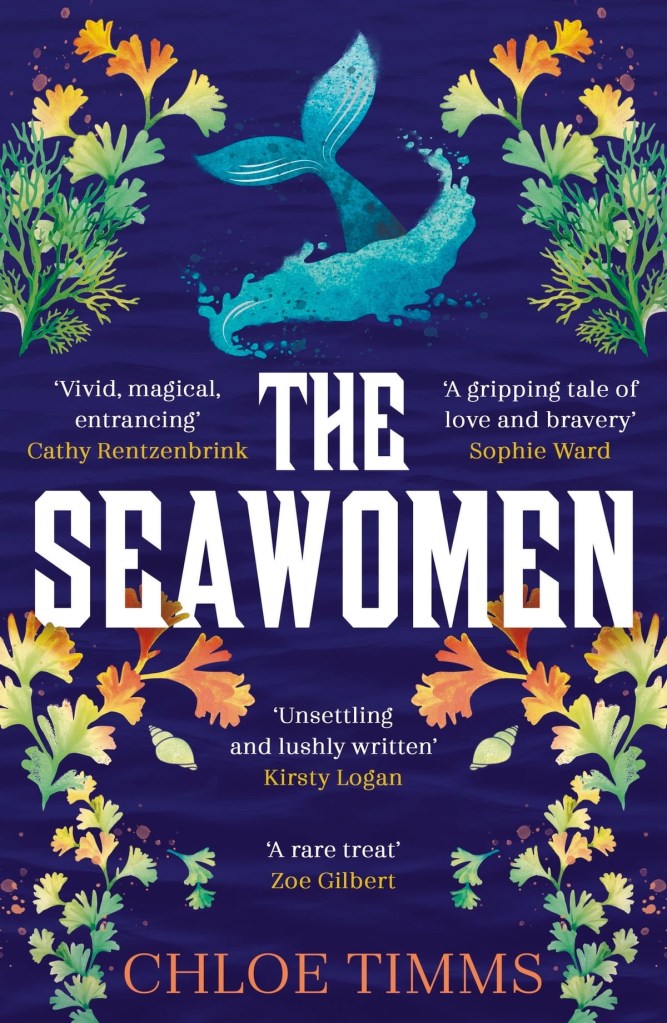
Wow! This book was so evocative, from the author’s descriptions of the island’s landscape to the way of life followed by it’s inhabitants. It felt oppressive and bleak, but also strangely mystical. On an isolated island with no access to the ‘Otherlands’ beyond, a religious community observes a strict regime policed by male ‘Keepers’ and female ‘Eldermothers’ under the guidance of their leader Father Jessop. There were shades of The Handmaid’s Tale in this community, that polices it’s borders and it’s women. Women must not go near the water, lest they be pulled into the wicked ways of the Seawomen, seemingly a species of Mermaid. The water can breed rebellion in the women and cause bad luck for the islanders. Any woman could be singled out by the Eldermothers, so they must learn to keep their heads down and stay away from the water. Any bad luck – crop failure, poor fishing quotas, storms, pregnancy loss – all can be blamed on the community’s disobedient or disloyal women, influenced by the water. Each girl will have their husband picked out for them and once married, the Eldermothers will assign her a year to become a mother. If the woman doesn’t conceive she is considered to be cursed and is put through the ordeal of ‘untethering’ – a ceremonial drowning where she is tethered to the bottom of a boat. Esta is a young girl who lives with her super religious grandmother, but often asks questions about the mum she has never known. Her grandmother insists she sees a darkness in Esta and is constantly praying and fasting so that Esta doesn’t go the same way as her mother. The sea does call to Esta and she goes to the beach with her terrified friend Mull, to feel the water. There they see something in the waves, something semi-human, not a seawoman, but a boy. Will Esta submit to what her community has planned for her or will she continue to commune with the water?
The book opens with a description of an untethering ceremony, throwing us directly into the brutality of the Keepers and the terror of the drowning woman. It’s a visceral opening and cleverly leaves the reader very aware of the fate our heroine could face. I felt this really added to the atmosphere of the book, raising the tension and our trepidation for this bold and intelligent young woman. We don’t want to see her life mapped out for her with all the restrictions it implies, but we equally don’t want to see her become the next victim of this barbaric, patriarchal society. I also felt strangely unmoored by the setting. I saw in my mind’s eye, a rugged and weather beaten Scottish isle, miles from it’s neighbours, yet I couldn’t pinpoint it’s place in history. The clothing and the attitudes are strangely old-fashioned. The religion is very puritan in tone: a personal relationship with God is encouraged, along with modesty, industry, male domination and of course obedience. Having been brought up in an evangelical church I can honestly say these attitudes and expectations, especially the pressure on young women, is still alive and well in those types of communities. So we could be in the 19th Century or it could be yesterday. Father Jessop’s preaching is that that Otherlands are toxic, their land contaminated and their ability to produce wholesome food curtailed by their inability to listen to their God. This gave me the sense of a dystopian future, where perhaps global warming has decimated most of the planet and only these remote outposts survive. Adding to this sense of disorientation are the islander’s names, more like surnames than forenames the men have names like Morley or Ingram whereas the women have names like Seren and Mull. I felt genuinely uneasy about the island and felt something evil lurked under the piety and the fatherly control, something far uglier, that a rebel like Esta might awaken.
Esta’s questing mind is what drives the story forward. There are too many secrets in her background. She knows that the burn scarring on one side of her face happened when she was a baby and the house burned down killing her mother and whoever else was inside. Only Esta survived and her grandmother’s negativity surrounding her only daughter is excessive and this doesn’t allow Esta to ask questions or hear about a different side to her mother. She knows that there’s more to her history than she’s been told. Another conundrum is her grandmother’s cousin Barrett, a fisherman who lives by the harbour, as close to the water as he could be. He lives alone after the death of his wife and is possibly the only islander to have come across a Seawoman up close and was injured in the process. However, he doesn’t talk about his wife or where he went in the sea after her death. There are too many questions for a girl who’s already unsure whether she believes in the dark myths of the Seawomen, or the darkness she is potentially harbouring at her centre. Despite her upbringing there is a part of Esta that does question, that challenges and most importantly can accept that those in authority might be wrong. It’s a self belief and confidence that will stand her in good stead for what’s to come.
I had so many suspicions and theories of my own as the story unfolded, not just about Esta’s past, but about the patriarchal society itself. The last third of the book really did pick up the pace and we see the iron will of Father Jessop and the cruelty he is prepared to inflict in order to stay in control. I was so deeply pulled in by Esta’s will and her instinct to get away, that I felt anxious. I wanted her to have something in life that most of us take for granted, another person who truly cares for her and loves her. This feeling intensified as she is promised in marriage and goes to live with her husband’s family; a family who have a very low opinion of her and a husband who loves someone else. The way the author opens up the truth of the island is by using one of the older women who has some of the answers and also shows Esta that there are others who think the way she does, they just fly under the radar so they remain safe. To Esta this is unthinkable, to know the truth but continue to live under the false tyranny imposed on them feels cowardly to her. What will happen when the Esta’s story reaches its conclusion, when she might face the very ceremony she feared so much at the beginning? Will these free thinking individuals stand up for her? Even more important to me, was whether or not Esta reaches the Otherlands and the freedom she longs for, or whether she is fated to be forever one with the sea.
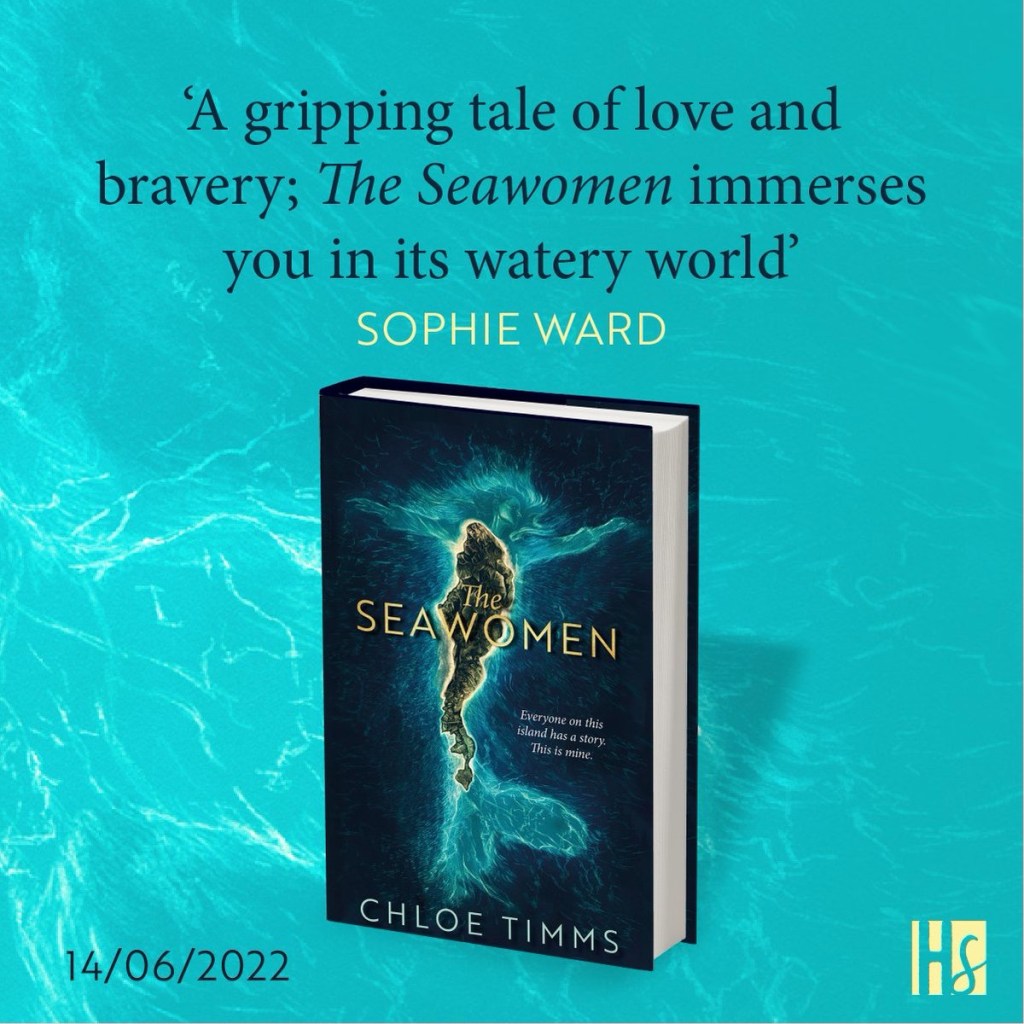
Published 14th June 2022 by Hodder Studio
Meet The Author
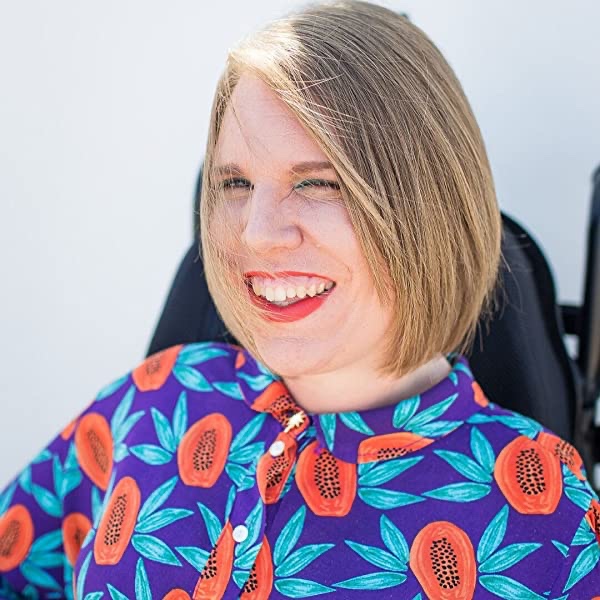
Chloe Timms is a writer from the Kent coast. After a career in teaching, Chloe studied for an MA in Creative Writing at the University of Kent and won a scholarship for the Faber Academy where she completed their six-month novel writing course. Chloe is passionate about disability rights, having been diagnosed with the condition Spinal Muscular Atrophy at 18 months old, and has campaigned on a number of crucial issues. The Seawomen is her first novel.
It’s been a strange month and I haven’t read very much so I thought I’d share a very quick wrap-up for April. I’ve had a viral infection on top of my usual MS health issues so it’s not been easy to concentrate at all. Basically I had one of those months where all the wheels fell off! I’ve missed blog tours, forgotten publication day posts and have read about half of what I expected to. I also forgot my MOT was due, missed my mobile payment and got locked in a toilet! I felt like a disaster zone. I felt like a really bad blogger too. I hate letting people down, so I had to give myself a stern talking to. Although I know it’s important to keep our obligations and post about the books I’m lucky enough to be sent, there are times when I get overwhelmed and need to give myself a break. Of course I let tour organisers and publicity teams know when I can’t or haven’t met a date or tour asap, but I had to give myself a break. So that’s what I’ll be doing this week, checking through my diary and being realistic about what dates I can meet, and those I will be a little late on. I’m so grateful for all the books I’m sent and I know they’re sent for a reason, but I think it’s ok to sometimes admit to having taken on too much or that everyday life or health has cut into the reading time I usually have. I find that most tour organisers are lovely and kind about these difficulties. I have to remember that I’m not superwoman and I can’t do everything.
Someone Else’s Shoes is the latest novel from Jojo Moyes and follows two very different women as they accidentally end up with each other’s shoes after an accidental bag swap at the spa. One lives in the penthouse of the spa hotel, whereas the other is a print company salesperson who’s using a spa voucher before it runs out. As one woman, in cheap borrowed pumps, finds her life starting to implode the other finds that her borrowed Christian Laboutins are giving her confidence as well as contracts. This is a great look at how the other half live, but also a wonderful tale of female friendship and how powerful the support of other women can be.
Every Happy Family is a great novel about family, but written like a thriller. This is the first time in years that Minnie and Bert have had their three children under one roof for Christmas. Lizzie, Jess and even their eldest son Owen has come over from Australia. However, Owen’s teenage girlfriend Nora is also in the village, organising the clearance and sale of her mother’s house after her death. Owen became estranged from his parents after his break-up from Nora. Would it be wrong to invite her to share Christmas with them? Using flashbacks, the author slowly reveals what happened all those years ago and why the family are still feeling the fallout to this day.
Thirty Days in Paris was a brilliant escapist read where we follow Juliet as she rents a loft apartment in Paris to spend thirty days writing her book. She has been working for years as a ghost writer, but now she wants to write her own story. With an empty nest and newly divorced, she makes her way towards her future. But Juliet has been keeping a secret for the last two decades and she needs to resolve the past, before any more time passes. This is a romantic story, filled with beautiful French food, fashion and all the sights. I found myself quite lost in it’s pages and craving a city break as I turned the final page.
The Gin Palace is the second outing for Tracey Whitwell’s character Tanz who I fell in love with in her first novel The Accidental Medium. Tanz can talk to ghosts, but it’s a gift she didn’t want and she finds their constant chattering exhausting. When she’s offered an acting job in Newcastle, a new image starts to haunt her of an old Gin Palace with a very sinister figure guarding the door. With a little bit of detective work, Tanz starts to piece together the history of the building she’s seeing. The closer she gets though, the sinister figure takes the form of a poltergeist and he’s determined to keep his secrets hidden. He’s used to scaring people away, but he’s never met someone like Tanz before. This is a brilliant series, spooky but modern and seriously funny.
Strange Sally Diamond was an incredible read and another truly original novel from Liz Nugent. Sally can’t understand why people are so upset with her. When she asked her dying father about his final wishes he told her to put him out with the rubbish. So why are people angry that she put his body in the incinerator? Now Sally is in the glare of the village, the national press and has a strange watcher from the other side of the world. She finds out her childhood was not what she thinks, but can she overcome the horrors of that time and live as an independent adult? Maybe make friends, own a house and get a job? Do we ever escape our childhood? This is a brilliant psychological thriller, with a fascinating central character.
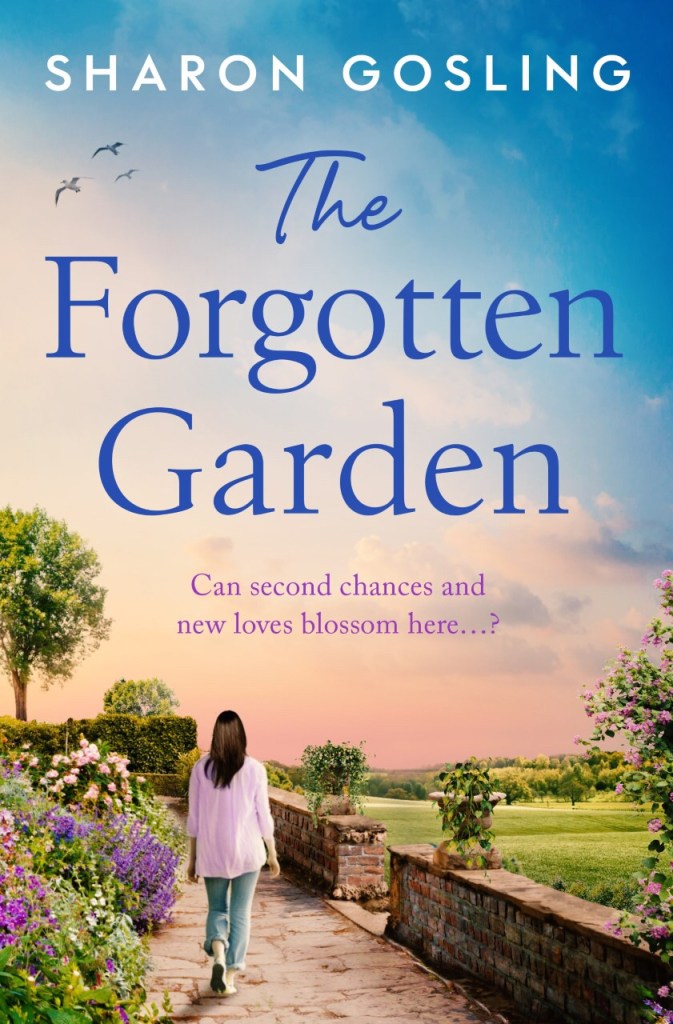
Thanks to enjoying the blog tour for Sharon Gosling’s first novel, The House Beneath the Cliffs, she became an author I kept an eye on. I was on the look out for her next and The Lighthouse Bookshop confirmed for me that if I’m looking for an escapist read, she is one of my go-to authors. She seems to effortlessly blend a mix of sadness and heartache, secrets, warmth and potential romance into an engrossing read that’s so enjoyable. Our main character, Luisa McGregor, has allowed herself to become stuck. A life that once felt safe, secure and predictable is now starting to stifle Luisa and she needs more, a new challenge perhaps. Then into her lap falls great opportunity. Her friend Oliver presents a daunting, but tantalising proposition. Instead of carrying on as a gardening assistant to a woman she feels increasingly out of step with, she should check out an opportunity to build a whole new garden at a site near the Cumbrian coast. There’s a pot of money available to build a community garden on wasteland next to a gym and youth club. Luisa agrees to visit the site and is daunted by the amount of work needed, but also inspired by what could be achieved there. As we meet the people of this disadvantaged area of Collaton, we can see what a community garden could mean to these people. There’s teacher Cas, who is pouring all of his energy and spare time into the young people of the area. Harper is a teenager with a lot on her plate, but determined to find a way out of Collaton towards a different future. Can Luisa design a garden that brings both healing, inspiration and a stronger sense of community for the residents?
I did connect with Luisa and the position she has become stuck in. She has had to recover from the terrible trauma of losing her husband in an accident. She has dragged herself up from the darkest and most difficult days following her husband’s death, to a point where she feels she has rebuilt her life. She’s working in garden design, even if she doesn’t like her boss, she has a nice home and great support in her sister. Really though, she’s just treading water and terrified of stretching herself or reaching for something that she could lose. I loved the way the author shows Luisa coming alive again as she works on the new garden. She literally blooms alongside her plants and seems to gain something from working with others and passing on her skills. Without trying too hard, the garden draws in those who need it including a woman who’s been her husband’s carer since an accident paralysed him. He’s initially sceptical and annoyed that his wife’s attention has been captured by Luisa’s plans, but just a few hours a week gaining respite from her caring role has transformed her. It’s not long before he’s creating bespoke benches for the garden, adapting the way he uses his joinery skills to his disability. Harper is a character who really stands out, she’s a young girl brimming with potential, but struggling to escape the difficult circumstances of her life. She is the main caregiver for her younger brother, now that their mum has died and their father has escaped into the bottle. Harper has a skill for mechanics, engineering and invention. She spends her spare time either at the club with Cas or helping at the local garage where she’s doing up a battered old Mini that Cas has gifted to her. Harper’s story shows us how hard it can be for someone to escape where they live and their family circumstances. Her cousin Darren is out of prison and is back dealing drugs in the area again, Harper is devastated when he preys upon her younger brother, Max. Max is easily influenced, especially when it comes to friendships. He struggles to make friends and has been subjected to bullying, so when someone older and seemingly cool pays him attention it’s an easy conquest. Darren wants him as a drug runner or lookout, but Harper puts her foot down and offers herself up instead. I was on tenterhooks, knowing that this decision would have consequences in the future.
There are a few powerful scenes that really stand out. Max has a secret that he’s been working on in Harper’s absence, inspired by the garden and when it was unveiled I almost held my breath. I loved the idea for his garden and the description was so lush and vivid I could almost smell the vegetation and feel the warmth. I could imagine sitting there, early on a sunny morning and enjoying a coffee. I also kept thinking what an incredible wedding venue it would be. It’s clear as soon as Cas and Luisa meet that there is potential for romance, but I wondered if both of them were too hurt by their pasts to take the chance. I was sure it needed a catalyst and the author certainly gives us one. The scene where Darren’s thugs get into the garden was heartbreaking and heart-stopping. I could actually feel the fear of the volunteers and residents as Darren shows his true colours and the bad boy reputation he’s trying to create for himself in the community. However, the gang don’t expect to be challenged, with devastating results. I was rooting for Cas and Luisa, with their endeavours in the community and their potential romance too. I read to the end quickly, determined to see the garden succeed and whether Luisa would overcome her fear of love and inevitable loss. I took the book on holiday with me and it was an enjoyable and emotional read, with an ending that was truly satisfying. This is an author who understands that life has seasons and that women have an amazing capacity to accept life’s changes, as well as the resilience to reinvent themselves and start over again.
Published by Simon and Schuster UK 27th April 2023
Meet the Author
I’ve been writing since I was a teenager, which is now a distressingly long time ago! I started out as an entertainment journalist – actually, my earliest published work was as a reviewer of science fiction and fantasy books. I went on to become a staff writer and then an editor for print magazines, before beginning to write non-fiction making-of books tied in to film and television, such as The Art and Making of Penny Dreadful and Wonder Woman: The Art and Making of the Film.
I now write both children’s and adult fiction – my first novel was called The Diamond Thief, a Victorian-set steampunk adventure book for the middle grade age group. That won the Redbridge Children’s prize in 2014, and I went on to write two more books in the series before moving on to other adventure books including The Golden Butterfly, which was nominated for the Carnegie Award in 2017, The House of Hidden Wonders, and a YA horror called FIR, which was shortlisted for the Lancashire Book of the Year Award in 2018.
My debut adult novel was published by Simon & Schuster in August 2021. It was called The House Beneath the Cliffs and it was set in a very small coastal village in Scotland. The idea for it had lodged in my head years before. I have a love for unusual dwelling places and I came across a tiny house that completely captured my imagination. My adult fiction tends to centre on small communities – feel-good tales about how we find where we belong in life and what it means when we do. Although I have also published full-on adult horror stories, which are less about community and more about terror and mayhem…
I was born in Kent but now live in a very small house in an equally small village in northern Cumbria with my husband, who owns a bookshop in the nearby market town of Penrith.
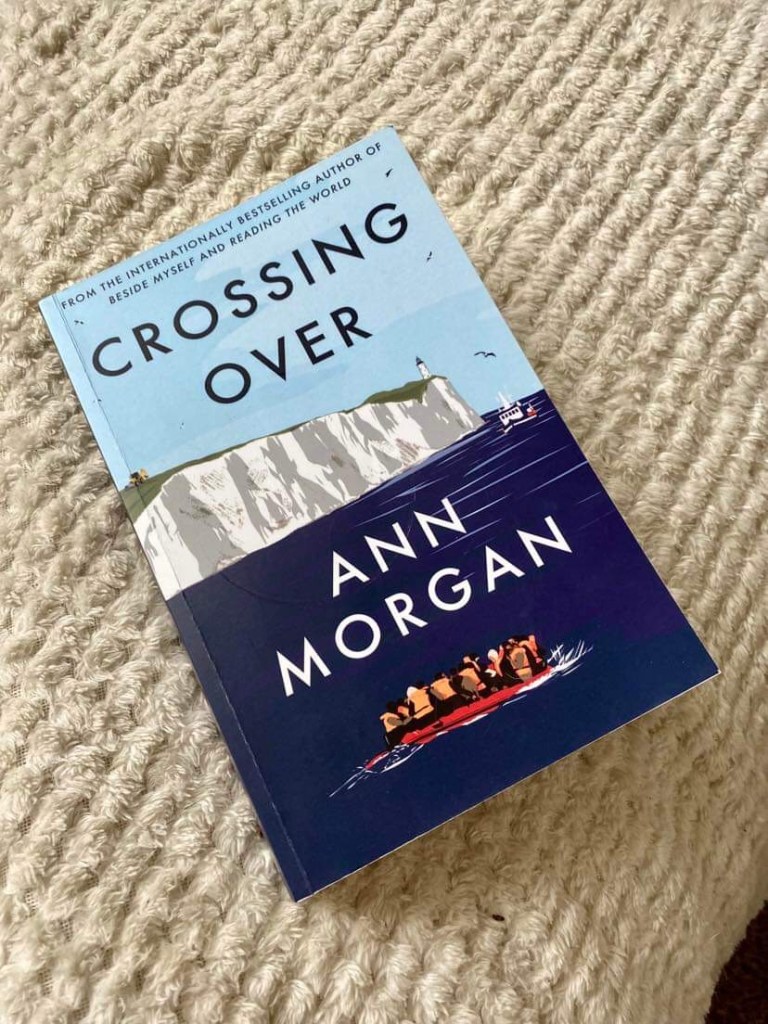
Edie is finding the world around her increasingly difficult to comprehend. Words are no longer at her beck and call, old friends won’t mind their own business and workmen have appeared in the neighbouring fields, preparing to obliterate the landscape she has known all her life. Rattling around in an old farmhouse on the cliffs, she’s beginning to run out of excuses to stop do-gooders from interfering when one day she finds an uninvited guest in the barn and is thrown back into the past.
Jonah has finally made it to England where everything, he’s been told, will be better. But the journey was fraught with danger and many of his fellow travellers didn’t make it. Sights set firmly on London, but unsure which way to turn, he is unprepared for what happens when he breaks into Edie’s barn.
Haunted by the prospect of being locked away and unable to trust anyone else, the elderly woman stubbornly battling dementia and the traumatised illegal immigrant find solace in an unlikely companionship that helps them make sense of their worlds even as they struggle to understand each other. Crossing Over is a delicately spun tale that celebrates compassion and considers the transcendent language of humanity.
My Review
My Review
As I started to read Crossing Over I was knocked backwards by how incredibly innovative the narration was, but also how incredibly brave. Edie’s inner world is fractured and of course we don’t know why or what’s going on at first. The author trusts her reader to carry on, to make sense of what’s happening and never underestimates us. We’re plunged headlong into Edie’s world and her desperate attempts to communicate her place in it. The timeless farmhouse she seems to have known all her life, the villagers and her routine of church or WI events all seem to be constants. What’s changing is Edie, as she drops backwards through time, forgets commitments and even visitors or why they are there. As we get to know her, the narrative works on two levels. We are with Edie in whatever time and circumstance her mind places her, but also with Edie as she becomes painfully aware that there’s a way she should be behaving, but even when she’s sure of the proper behaviour it’s often in the wrong context. She’s just on the edge of awareness most of the time, just about recognising from people’s response or facial expressions that she’s not quite hit the mark. Her brusqueness and artificial bonhomie only faintly cover the confusion and fear underneath. The chaos is brilliantly written, in jagged prose that contrasts the inner truth of how much Edie is struggling and the world’s response as it becomes more and more obvious that all is not okay. As Jonah comes into the narrative, also operating at fight or flight level, things become even more confused and complicated. Edie thinks he’s there to spy on her and he’s baffled by the way she communicates, her poor memory and her lapses into the past. Can they come to an understanding of each other and somehow help each other move forward?
This could have been one of those really sentimental novels, designed to be uplifting, but the author avoids that with these complex characters. Not everything about them is sympathetic, they are real and flawed. Edie isn’t a cosy little granny and through her time lapses we start to realise she has experienced traumatic events in her younger years. She has also made bad choices in life. There’s a deeply ingrained sense that there’s one correct way to be and her standards are slipping. Some of the muddled events are a strange mix of humorous and heartbreaking. The cake sale springs to mind, where she has lapsed back to being younger and wears an outfit that’s far too colourful and revealing for an elderly lady with varicose veins to cover. She then offers to keep track of the money and ends up making mistakes, as well as eating a whole batch of highly prized cakes. These types of escapades made me giggle and I loved the way she keeps her head high and won’t bow to their concerns or questions. Yet the fear and anxiety running underneath this forceful front made me feel for her, perhaps because I have a life limiting and degenerative illness I could understand her desperation to stay independent and deny what’s happening to her. Fear makes her angry and lash out, imagining the embarrassment of the vicar and other do-gooders if she let slip some of the secrets she holds about them. I could sense that the past held the clues to Edie’s character and I was waiting for something quite dark to be revealed.
Jonah also holds some dark secrets and memories deep inside, things he has experienced on the journey and from his life before. I read that the author had been very careful writing his character, with a great awareness of the sensitivities involved in writing a black character without that lived experience. She has used sensitivity readers and has revised the novel several times. Yet Jonah isn’t a stereotype or a cardboard cut-out, he has real depth. No one can go through what Jonah has and remain untouched and all credit to the author for not following an easier, and potentially more lucrative, redemption narrative. As a result this might not be to everyone’s taste, but I thoroughly enjoyed delving into two such complex and damaged characters and the disjointed way their stories are told. Have patience with it, get used to the complicated and unreliable narration and you will be rewarded with a rich and thoughtful read about people society increasingly sees as problems to solve, rather than human beings.
Thank you to Renard Press for my proof copy in exchange for an honest review.
I found this historical fiction debut absolutely captivating from the beginning. It begins with Lord and Lady Rayne who live in the big house, Oakburne Hall, with just enough room to avoid each other as much as possible. In fact since he returned from the war, Stephen has slept in a small room in the servant’s quarters while Alice lays alone in their marital bed. She finds refuge in their garden, hoping that even in these dark post-war years some seeds of hope will grow.
‘Some secrets are too terrible to tell. And in 1946 Britain is a country where most keep silent. What you witnessed during the war, what you sanctioned, what you are still afraid of, is left unsaid. For those bitter years of conflict and separation you buoyed yourselves up on sentiment, crooning ‘We’ll Meet Again’. And we did meet again, thinks Alice Rayne, only to discover we have nothing to say to one another.‘
No one survives war unscathed and though bodies are healing, their psychological wounds run deep. Those who were left behind are just as scarred as those who left to fight. Stephen Rayne was once sweet and gentle and his wife Alice truly loved him. Yet he has returned a man that she doesn’t recognised. He is bitter and angry, destroyed emotionally by what he has seen and done, holding on to secrets Alice can only guess at. She is lonely and although she hates to admit it, she is increasingly afraid of the man her husband has become, Alice is struggling to put together the pieces of her marriage and save Oakbourne Hall from total collapse. After two lots of death duties, money is incredibly tight so she begins with the walled garden and, as it starts to bear fruit, she finds the seeds of a new and forbidden love being sown.
I had so much empathy for Alice and all women who longed for the man they loved to return, only to find their relief and joy cut short when a stranger came home in their place. I’ve read a lot of novels set post-WW1, but not many set after WW2, but the same social changes come up in 1946. People are struggling financially, at the big house two world wars have taken two heirs in quick succession and the family can’t afford to repair or develop the hall. The villagers are coping with grief, poverty and rationing, and still waiting for men who’ve not yet returned. Women have once again stepped into the breech and taken on men’s jobs, giving them even more freedom and an unwillingness to be pushed back into their traditional roles. In this village, it’s not only Stephen and Alice who are suffering and as they come up against other people’s trauma the results are profoundly moving. The social change is well explored through the character of the village GP, another changed man whose longing for social justice leads to arguments with his wife and children, not to mention Stephen. Clergyman George holds so much guilt, because his ill health meant he didn’t go to fight. How can he minister to these men who’ve been through so much, things he can’t even imagine? As Stephen isolates himself more from his wife, Alice finds solace restoring the walled garden and in talking to George with whom she strikes up a friendship. He is learning about gardens and she is learning about his love of classical music.
As the friendship between George and Alice deepens, she has to think about what she wants. She has loved Stephen for so long, but his angry and violent outbursts are scaring her. Can she love this new person? George listens and appreciates her opinions, in a way she hasn’t had for a long time. When she takes a break from Oakbourne and visits her sister in London, she meets with George in a pub where his beautiful singing voice is in demand at the piano. This interlude is like a time outside of reality, where all worries and cares are set aside. With the late hour and room for George to stay at her sister’s flat will emotion boil over? In all this time, George is struggling with his ministry and his feelings for Alice. When Stephen also confides in him he has a terrible choice to make, does he guide Stephen towards speaking to his wife and saving his marriage? On the other hand, he could advise him in a way that would benefit his feelings for Alice. It’s a terrible choice to have to make, even worse he knows that his lungs are deteriorating and if he doesn’t take up the GP’s offer of treatment abroad he has only months to live. Will he follow his heart or will he sacrifice his own feelings to minister to this couple as their spiritual guide?
This is such an emotional crescendo, especially since we’re also sent back into the war and Stephen’s time infiltrating the french resistance and helping them to fight against the Germans. There, he has to make a horrible choice in order to save someone from a worse fate. His choice haunts him, although in reality he is forced to act by his knowledge of the barbarity of the German soldiers. The Maquis hail him a hero and now want to give him an honour, setting off terrible flashbacks, insomnia and guilt. Even if he tells Alice everything, can their marriage recover? I was so involved with these characters, they were so incredibly real and full of complex emotions. I loved the walled garden as a symbol of hope for the future and Alice’s work there is an act of faith, planting her hope in a symbolic gesture to her marriage and the country as a whole. I think the most moving thing about the whole novel is that this is a war that my grandparents lived through. We are so used to seeing this generation as an example, even recently our actions through Covid and the current cost of living crisis are meant to resemble their grit and determination. I believe the famous David Cameron quote is ‘we’re all in it together’ evoking the stiff upper lip of this very generation. I think because of this nostalgic view on WW2 we forget that this generation had the same emotions and complicated relationships that we do now. This book stopped me from thinking of that generation as a whole and instead to think about individuals and what they went through, how it affected them and their families and the emotional turmoil wrought by couples being apart for years. It was the wartime sections of Andrea Levy’s Small Island that first made me think about these issues and this novel woke those thoughts up again, just in a more rural setting. No generation is better than any other when it comes to trauma, we are all human. This is a stunning debut from Sarah Hardy and I’d love to read her work again.
Meet the Author
Sarah Hardy has lived for the last 10 years on the Suffolk coast which is where her novel is set. Before that she lived in London, Dublin and the Hebrides. She has worked on national magazines and newspapers.
It is 1923 and a country is in mourning. Thousands of husbands, fathers, sons and sweethearts were lost in the war, millions more returned home wounded and forever changed.
Beatrice Cade is an orphan, unmarried and childless. London is full of invisible women who struggle to find somewhere to work through their grief. But Bea is determined to make a new life for herself. She takes a room in a Bloomsbury ladies’ club and a job in the City. Just when her new world is taking shape, a fleeting encounter threatens to ruin everything.
Kate Ryan is an ordinary wife and mother. Following the end of the war, she has managed to build an enviable life with her husband and young daughter. To anyone looking in from the outside, they seem like a normal, happy family. But when two policemen knock on her door one morning and threaten to destroy the facade Kate has created, she knows what she has to do to protect the people she loves. And suddenly, two women who never should have met are connected for ever . . .
I can’t say enough great things about this incredible novel, but I’m going to try and do it justice. It’s a historical mystery, extraordinarily clever psychologically and made me think about feminism, sisterhood and the difference between what society expects women’s lives to look like and the life decisions we make for ourselves. Flint has told her story through the eyes of the Kate and Bea, two women who are strangers, but connected by one man. Bea was an orphan and is now an unmarried woman in her late thirties. She’s the book-keeper for a firm in London who has pretty much resigned herself to being a career girl and living in a woman’s hostel. All this changes when she meets the handsome and charming Tom Ryan, a salesman at her firm. Bea struggles to believe that this man, with his movie star looks, would be interested in a woman like her. She expects him to chat up the young women, who have noticed him and are giggling, but he makes a point of stopping at her desk. He comments on her name, telling her that Beatrice was the great love of a poet. Bea is smitten and agrees to meet him, despite the fact that he is married. She is mentally aware of his wife’s presence, the third person always standing between them. Despite this, will Bea allow herself to succumb to Tom’s advances and can it end any other way but heartbreak or disaster?
Flint’s setting is vitally important to this story. We can draw parallels between contemporary women and these two characters, but they are also very much products of their time. This is a post-war Britain and everything has been changed by a war so terrible it is known as the Great War. Men have come home destroyed by what they’ve experienced physically and mentally.
‘There were empty sleeves and eye patches that one must not stare at or draw attention to; there were crutches and bandages and dreadful ridges of thick pink skin; and sometimes there was simply an absence in a face where a man had left a part of himself – the brightest and most vital part – in a muddy foreign field.’
Whereas women could be said to have flourished. Yes, there’s the ever present weight of grief and loss, but some of the changes in women’s lives had been positive. Both Kate and Bea are working women, and represent the many women who became wage earners during the Great War, plugging the gap in the employment market as more men joined up to fight. This was liberating for many women, who were then reluctant to move back to the domestic sphere after the war. There were also a shortage of men in the marriage market, some women had lost their fiancé or husband but there were others who came of age just after WW1 for whom eligible men were scarce. Having the option of throwing themselves into an absorbing career instead proved very fulfilling for some, like Morley’s office manager who clearly expected Bea to be left on the shelf and had marked her out as a potential replacement. Women being outside the domestic sphere meant that the pre-war rigid barriers of social class started to be breached. Different classes of people mingled in work places and matches that would have been impossible a few years before became more common. Bea still longs for love, but as her personal life becomes complicated and painful she does muse on what she has lost. As a single working woman she had women friends and lived in a vibrant city where she could take herself to the theatre, to a museum or for tea with friends. Now that she can see the reality of a relationship, she wonders was she better off before?
Bea knows there is a difference between herself and the girls who have young men to wait for. These are carefree girls, full of life, ‘neat and slender – sleek hair, dainty ankles, flickering glances and quicksilver laughter.’ She’s of a different sort, in looks and class. Where her married sister Jane looks on career girls as modern, smart and fashionable Bea looks a little closer and sees
‘frizzed modern hairstyles that they’d seen in advertisements and that didn’t suit them; women with lines around their eyes that no amount of cream or powder would cover. And women who, despite the well-cut clothes, had red rough hands and nails cut to the quick.’
Bea is well aware she is plain and there are references to Jane Eyre in the way she sees herself. After talking to Tom, she sees herself in the bathroom mirror and is shocked at the difference between her tumultuous, rich inner life and this pale, plain outside. She feels such overwhelming emotions that she disassociates from her rather normal body; ‘how can all these feelings come out of this plain face and body?’ It immediately took me to the conversation between Jane and Rochester when she challenges him for underestimating her:
‘Do you think, because I am poor, obscure, plain, and little, I am soulless and heartless? You think wrong! I have as much soul as you, and full as much heart!…’
In fact Tom uses the comparison to flatter her, praising her strength and courage in living such a lonely life. Patronised by her sister too, she is full of anger inside and expresses the creeping fear that not only is she without a husband, she’s noticed younger, smarter girls starting to come into the workplace. Bright, young things who might be better at her job and quicker. She admits to being afraid of the day when the axe falls, her clothes become shabbier and she gets more desperate. Yet is it any better to be at the mercy of a man? As Kate’s story unfolds we can see that the state of being a wife, is just as unstable and scary, because where Bea has all the responsibility and makes decisions for herself Kate is powerless, entirely dependent on the whims of her husband. A husband who is capable of terrible things. The more Kate starts to learn about her husband, tiny jigsaw pieces start to slot together in her head. She has to admit to herself that she has always known there was something hidden underneath:
‘Hadn’t I known – hadn’t I always known – that he had something terrible inside him, something that lay rotting under the smooth surface of our normal life? I saw glimpses of it sometimes. I thought of his face as he persuaded me, sweet-talked me, into doing things I did not want to do. I thought of how dirty, how shamed, I felt afterwards.’
Set in the 1920’s, this story is based on the true case of Emily Kaye and her married lover Herbert Mahon. The novel’s aim was to give voice to Mahon’s wife and so Kate’s voice came to life, creating a brilliant interplay between her narration and Bea’s. I loved how well the pace was controlled, from relatively slow at the beginning to a breakneck pace towards the end as Kate makes sense of what has happened and holds the key to solve the mystery. I loved how the author showed us the truth of contemporary attitudes to women, that a man can do something terrible, but it will always be the woman’s fault. How Bea is simply disregarded as shameless, getting old and desperate, brazen and responsible for enticing Tom, despite him being married. It’s quite shocking, but then when I thought about our tabloid’s attitudes to women, I realised that women are judged every day for their appearance, their sexuality, their life choices and if ever there is a marital affair in the papers the ‘other woman’ is always blamed. It’s scary to think how little some people’s attitudes have changed, but thank goodness we can earn for ourselves, own property and have bank accounts. I loved the sense of sisterhood the author brings into the story and it made me think about how it’s the women in my life who have held me up when I couldn’t manage alone. I was on tenterhooks wondering whether Kate would realise that to choose the sisterhood is to change things for her own daughter. To make a decision towards a better world for women. This book was a brilliant piece of historical fiction, an addictive mystery that stirred up the emotions and had me completely hooked. As soon as I’d finished, I wanted to read it again.
Published by Picador 23rd February 2023
Meet The Author
Emma Flint was born and grew up in Newcastle upon Tyne. She graduated from the University of St Andrews with an MA in English Language and Literature, and later completed a novel-writing course at the Faber Academy. She lives and works in London.
Since childhood, she has been drawn to true-crime stories, developing an encyclopaedic knowledge of real-life murder cases from the early 20th century. Her first novel, Little Deaths, was longlisted for the Women’s Prize for Fiction, for the Desmond Elliott Prize, for the Crime Writers’ Association Gold Dagger Award, and for The Guardian’s Not the Booker Prize.
The drinks glass and flashes of almost neon colour on this book’s cover were striking on NetGalley. To me they signified city living, the bar scene and potential for glitz and glamour – I’ve probably watched too much Sex and the City. However, the women depicted here were a long way from flashy, fashionista, New York City Girls. In fact there are only a couple of nights out in the whole book. This is a different NYC, where real people live and work day to day, just trying to get by in a city that’s exciting, but expensive and tough. In a split narrative, set partly in 1955 and partly in 1975, this is a novel that writes back to women’s history. It opened my eyes to a time when women were persecuted for the way they choose to live their lives. In 1955 Dovie Carmichael and her friend Gillian work together as teachers and share an apartment. The friends have a lot in common: they love jazz, a glass of whiskey at night and lazy Sundays at home. The pair guard their private time very carefully, until one day when the wrong person gets a glimpse into their lives, changing everything. Twenty years later teenager Ava Winter lives in the same apartment with her Mum and her Dad, when he’s around and not with his mistress. Ava’s mum is not well mentally and Ava is struggling to live a normal teenage life, preferring to stay home to keep an eye on her. She becomes fascinated with a mysterious box and letter sent to their address from France. Inside are letters, a butterfly necklace and a photograph with LIAR scrawled across a woman’s face. Ava wants to know the story behind the box. Who was this woman, that lived in her home and what do the letters say?
The theme that stood out to me more than anything was loneliness. I felt a contrast between the huge open city and the small private spaces where secrets are kept. The characters I felt most connection with were Ava and Dovie, both struggling to keep secrets about their living situation. The mistake Dovie and Gillian make allows a very manipulative woman to take advantage of them. Judith works at the same school and does come across as a lonely woman, but has allowed her situation to develop bitterness and envy in her character. In the guise of struggling to find an affordable apartment, she inveigles her way into Dovie and Gillian’s home and relationship. It’s clear she wants friends, but seemingly can’t stand to see two people who are happy in each other’s company and if she can’t have it for herself she might just set out to destroy it. Ava is also lonely and I think she senses a similar feeling in the box of keepsakes she discovers, it’s that connection with the sender’s loneliness that makes her so determined to find the person this box was meant for. It’s also a distraction from how miserable her own life is. With her mum and dad estranged she is often solely looking after her mother who seems severely depressed and liable to harm herself. It’s almost a role reversal, with Ava looking after her welfare instead of the other way round. I felt deeply for this young girl going through the usual teenage phases of a crush on a boy in the neighbourhood, a worry about how she looks and fitting in, and both the anticipation and fear of what comes next in life. On top of this her father uses his precious time with Ava to chat up the waitress in their favourite diner. Her mother is deteriorating, screaming and muttering through the night and Ava is so worried about the neighbours hearing her or her friend finding out what home is really like since her dad left. The scenes of her alone in their cold apartment, willing her mum to settle for the night and wishing her dad was there, were vivid and moving.
Whether in New York or Paris the settings are beautifully evoked and I could feel the change in time period from just a few well written sentences. Even the usually romantic Paris has it’s downsides because this is the reality of living there, rather than the dream. I felt the author really got under the surface of these cities and showed me what it was like to be a New Yorker. I found the LGBTQ+ scene so interesting and the contrast between women who kept their relationships secret, with more openly gay women in NYC or Paris, was beautifully portrayed. Dovie has never ventured into meeting other women and the scene where she visits a club stayed with me. There’s an innocence about Dovie that contrasts sharply with the sophisticated women she sees there, some of whom are scathing of Dovie’s lack of knowledge about being openly lesbian in 1955. I don’t think she really understood the danger she faced which could be anything from losing her job to being arrested or put into an asylum. I was just as shocked to realise that women who were open about their sexuality, or discovered, were subject to arrest and even ECT treatment to curb their ‘unnatural’ activities or desires. The nightclub raid where Dovie is helped to escape through a bathroom window is unbelievably tense and so poignant when we realise it’s link to 1975. The way police manhandle and sexually assault the women reminded me of how the suffragettes were treated so many decades earlier. The idea was to break the women’s resolve and remind them what they were really for – the amusement, desires and dominance of men. Reading these women’s experiences made me so angry, but also opened a door into a world I am ashamed to say I knew little about. At heart this is a love story and all the way through I wanted to know what had happened in that apartment in 1955 and I also hoped that Ava would find the intended recipient of the box from Paris. For me this book had a similar impact to the television series It’s A Sin. This was an emotionally captivating story that’s sure to stay with me and has inspired me to read more about the history of sexuality and the fight LGBTQ+ people still have for equal rights across the globe. It left me with a lump in my throat, thinking about how love can last a lifetime, even beyond separations and loss. I really look forward to reading more from this talented author in the future.
Meet The Author
Julie Owen Moylan is a writer whose short stories and articles have appeared in New Welsh Review, Horizon Literary Review, and The Voice of Women in Wales Anthology
She has also written and directed several short films as part of her MA in Film. Her graduation short film called ‘BabyCakes’ scooped Best Film awards at the Swansea Film Festival, Ffresh, and the Celtic Media Awards. She also has an MA in Creative Writing, and is an alumna of the Faber Academy’s Writing a Novel course.
Her debut novel THAT GREEN EYED GIRL was published by Penguin Michael Joseph on May 12 2022.
She is currently working on her second novel SPANGLELAND
I don’t tend to read a lot of science fiction and dystopian novels, often because I find them depressing and life is tough enough at the moment. I often I feel as if the author has become so carried away with world building that they forget the human element of their story. Almost like watching one of those films where the special effects are amazing, but the characters and their dialogue is an afterthought leaving me with an empty feeling. This book sounded intriguing though and once I started reading it I was completely blown away. This is science fiction with a heart and a lot to say about the human experience. Our narrator John is an awkward 17 year old, from a dysfunctional family and with deeply personal body issues. He also happens to be a coding genius, talented in quantum code and greatly in demand by tech companies. He is spending some time in Tokyo while signing a deal with Sony and comes across a small cafe that offers ear cleaning. Inside he finds a huge Japanese man working behind the counter, a quirky dog with a spherical head and his owner, a pretty and rather enigmatic young girl called Neotnia. This chance meeting develops into an incredible journey that will take them from the neon city of Tokyo, to the tragic past of Hiroshima and finally the beautiful mountains of Nagano.
Michael Grothaus also takes us on a journey of genre, starting the novel with a chilled travelogue style, interwoven with a tender story of first love, via body shame and finally becoming a dystopian thriller. The author knows how to build a world that feels dislocated and distant from us with just one simple sentence, such as the description of the night sky with three objects visible from earth. The moon’s light picks out the twin space stations being built by the world’s two superpowers; China and the USA. The author’s journalism background and research into the world of fake video production has helped in creating a believable and brilliant backdrop of warring superpowers in a daily information war. ‘Deep Fake’ videos are used to produce fake news, meaning people must question, not just everything they read, but everything they see. Warfare has become a barrage of misinformation and cyber attacks, at their worst disrupting every aspect of daily life. He also weaves in social issues that are already evident worldwide for us, such as the rapidly ageing population in Japan. People are now routinely living into their nineties, but need care for longer and there simply aren’t enough young people to pay for or provide the care needed. This is a world that’s ours, but not as we know it. I loved how I would be relaxing in a park, looking at a familiar landscape of trees and pagodas and then I’d be blindsided by a tourist information bot. When the group all go on a car journey I couldn’t work out who was driving; the answer was no one. Often I didn’t know where we were going next but I was so bewitched by his writing that I’d have followed him anywhere.
I loved the relationship that builds slowly between Neotnia and John. She has a quiet, calming manner that seems to soothe him and a caring nature that John has never really experienced before. They seem to connect on a deep level very quickly, but there are people around her who are very protective. Goeido is a disgraced sumo wrestler and owns the cafe where Neotnia both lives and works. He doesn’t speak much, but John is aware of his concern because of the barely concealed scowling and head shaking. Neotnia takes John to a nursing home where she volunteers, to meet an elderly American man she has a friendship with. John enjoys meeting him, but also gets a feeling this meeting was some sort of test. Why are these men so protective of her? His relationship with Goeido only improves when they drink sake together and next morning John wakes up still in the booth where they had dinner. They seem to have connected, but John is very confused by a disturbing dream involving a bath and a toaster! Despite this John and Neotnia’s relationship does deepen and I was so drawn into their tender love story. There is something they’re both hiding and strangely it’s the biggest thing they have in common. Then comes the massive twist that I really didn’t see coming. The clues are there but the idea is so fantastical it’s quickly dismissed.
The beautiful backdrop of Japan really brought the place alive for me and made me think deeply about some aspects of it’s history. The city of Tokyo is wonderfully varied with it’s neon signs, bubblegum fashions, restful gardens and kamii shrines dotted everywhere. I learned more about Japanese belief systems, the differences between Buddhism and those who believe in kamii. The history around Hiroshima was so devastating, as was the knowledge that any advance in science seems to be harnessed for the purposes of war. The full impact of the bomb on the population of Hiroshima was devastating as the author tells us about those damaged by the blast, but left with terrible injuries. That complete change of abilities, identity and living standards could be seen as a more terrible end than those at the bomb’s epicentre who were simply vaporised. I loved how philosophies of life were discussed too. In conversation with Neotnia, John explains that her age group’s concerns and anxieties about the space stations and cyber attacks haven’t affected younger generations because they’ve never known anything different. This is probably something we’ve all experienced and it’s interesting to think that a small child now will grow up with the cost of living, climate change and hybrid vehicles as their norm. Whereas someone like me who has lived half their life really feels the changes and is more likely to find them unsettling. I found the end so emotional and I was moved by John’s thought that the common thread of humanity is suffering. It’s something I’ve thought about a lot, both in my personal life and in my therapy work. My brother says that I think everyone needs counselling, because I’m a therapist. I always reply that everybody needs counselling at some point in their life. Yet, John’s experience makes him rethink his original statement and this took me from heartbreak to a glimpse of hope. This is a beautifully written story that’s definitely science fiction, but is also a deeply felt love story about difference and human connection. If this isn’t your usual genre, please give it a go. I’m so glad that I did.
Published by Orenda 16th March 2023.
Meet The Author
Michael Grothaus is a novelist, journalist and author of non-fiction. His writing has appeared in Fast Company, VICE, Guardian, Litro Magazine, Irish Times, Screen, Quartz and others. His debut novel, Epiphany Jones, a story about sex trafficking among the Hollywood elite, was longlisted for the CWA John Creasey (New Blood) Dagger and named one of the 25 ‘Most Irresistible Hollywood Novels’ by Entertainment Weekly. His first non-fiction book, Trust No One: Inside the World of Deepfakes was published by Hodder & Stoughton in 2021. The book examines the human impact that artificially generated video will have on individuals and society in the years to come. Michael is American..
When Katy’s mother dies, she is left reeling. Carol wasn’t just Katy’s mum, but her best friend and first phone call. She had all the answers and now, when Katy needs her the most, she is gone. To make matters worse, the mother-daughter trip of a lifetime looms: two weeks in Positano, the magical town where Carol spent the summer before she met Katy’s father. Katy has been waiting years for Carol to take her, and now she is faced with embarking on the adventure alone.
But as soon as she steps foot on the Amalfi Coast, Katy begins to feel her mother’s spirit. Buoyed by the stunning waters, beautiful cliffsides, delightful residents, and – of course – delectable food, Katy feels herself coming back to life.
And then Carol appears, healthy and sun-tanned… and thirty years old. Katy doesn’t understand what is happening, or how – all she can focus on is that somehow, impossibly, she has her mother back. Over the course of one Italian summer, Katy gets to know Carol, not as her mother, but as the young woman who came before.
But can we ever truly know our parents? Soon Katy must reconcile the mother who knew everything with the young woman who does not yet have a clue.
I enjoyed Rebecca Serle’s last novel rather unexpectedly, as it became so much more than the simple romance I was expecting. Her new novel One Italian Summer also had some unexpected elements and was an interesting look at the relationships between mothers and daughters, the endurance of long term relationships and coping with grief. As the book opens Katy is married to Eric and has just lost her Mum to cancer. Katy is broken as her Mum has been her best friend, her shopping buddy, her sounding board, her arbiter of taste and so many other things and now she doesn’t know what to do without her. In a strange way she sees her mother as her partner in life, rather than her husband. Eric is also grieving, having been a part of Katy’s family since they were at college. However, when her mother started receiving end of life care, Katy went to live at her parent’s home sleeping on a sofa to keep her mother company while her father slept in a chair next to his wife. As the couple meet again at her mother’s funeral, Katy still feels unsure about their marriage. She wonders if her mother was right and they married far too soon. Katy needs some space, to grieve her mum and think about her marriage and an obvious opportunity presents itself. When her mother was younger she spent a summer living on the Amalfi coast at the picturesque town of Positano renovating a hotel. To surprise her mother Katy had bought them tickets to spend a week in there and the thought comes into her head. What if she went ahead and travelled to Italy by herself?
Katy finds herself in a beautiful hotel where she feels immediately embraced by the family who run it. She meets a man at breakfast called Adam who works for the large luxury hotel chain. He would love to acquire the hotel and his bosses would like a piece of this beautiful coastline for their portfolio. He charms Katy and offers to show her around a little, he has been coming to Positano for many years in his time off and can suggest some great places to eat and explore. Katy has felt totally cut off from her mother, but here she feels closer to her as if part of her mother’s spirit has always been here waiting for her. One morning as she wanders through reception she sees a woman who has brought a parcel to put into the hotel’s outgoing post. She looks strangely familiar and as she turns around Katy can’t believe her eyes. This is her mother Carol, full of life and only thirty years old. I loved the way the author creates this strange time loop in such a magical setting. I never once questioned it, because I was so involved with Katy’s feelings that she might just turn the corner and see her mum as if she’d never left. It was such an interesting chance for her to meet her mother as a young woman and understand more about her. This Carol is young, carefree and full of passion for her goal of becoming an interior designer. There’s so much that Katy wants to know, but is this going to change her view of her mother and their relationship?
I loved the Italian setting of this novel, having just read Adriana Trigiani’s new novel also set on the Tyherrenian Sea I am now dying to visit this beautiful coastline. The way the town is nestled into the cliff side and every balcony makes you feel you’re hanging over the sea. I could literally feel the sunshine and the warm sea on my skin. The descriptions of food had my mouth watering and I found myself longing for Italy. Meeting her Mum at this age was always going to throw up things Katy didn’t know. Carol doesn’t recognise her, so her actions are completely unguarded, whereas Katy has the knowledge of who Carol is. I wondered how long she would be able to keep it to herself. It was interesting to see Katy starting to question whether all aspects of their relationship were positive. Carol has always been so opinionated and matter of fact about how things should be done. As a couple, Katy and Eric have always gone to her for advice when making decisions and she is the family’s anchor, keeping them grounded and safe. However, was this safety always a positive thing? Katy starts to see that she’s never been left to make her own decisions, that she and Eric have rarely made their own choices as a couple. Carol has always weighed in on everything from what clothes to buy and whether they should have children yet. She always seemed so sure of what to do and Katy has felt inadequate to an extent, unable to weigh up the options and make her own mistakes. There is a bit of anger and resentment here; if she’s never been allowed to stand on her own two feet, no wonder Katy feels lost. As her mother’s story unfolds, will Katy get the answers she’s looking for? Why does this Carol seem so ‘go with the flow’ when her mum always planned everything, even a family picnic, with military precision?
This was another beautiful book from Rebecca Searle, concentrating on the relationships between women and perhaps the most complex female relationship we have. This shows beautifully the effect our parents have on our development as people and how one mistake can change the way someone approaches life forever. All set in the beautiful Italian sun, with a lot of personal reflection and even a little bit of romance thrown in. I loved how the space and the experience gives Katy a chance to re-evaluate her life and the way she’s been living it. This is the perfect summer getaway book and if you’re not going anywhere this year I definitely recommend it for vicariously enjoying Italy.
Rebecca Serle is an author and television writer who lives in New York and Los Angeles. Serle developed the hit TV adaptation of her YA series Famous in Love, and is also the author of The Dinner List, and YA novels The Edge of Falling and When You Were Mine. She received her MFA from the New School in NYC. Find out more at RebeccaSerle.com.