Posted in Random Things Tours

Fleishman Is In Trouble by Taffy Brodesser-Akner. #RandomThingsTours #blogtour #FleishmanIsInTrouble

I really enjoy books with psychological insight and no one does psychological self-exploration like rich New Yorkers. Fleishman is a forty-something hepatologist, recently divorced from ambitious wife Rachel and discovering a whole new world of dating options. It sounds like a Woody Allen film, and there is some humour in his situation. Still as short and pathetic as he was in his teenage years full of romantic rejection, he was starting to ask himself whether he could actually be attractive? Or was it more the case that looks were not sexual currency any more and being a newly divorced doctor in NYC was enough to warrant the attention he was receiving, from the dating apps downloaded to his phone by a work colleague. He was being sent side-boob, aubergine emojis, ass crack and devils with little horns from women who were available right now, and for nothing more than ‘no strings’ sex. However, despite this huge change in how women date he is still processing what went wrong in his marriage to Rachel, a woman he describes as having the perfect geometric hair of a blonde Cleopatra. As the novel opens, Toby Fleishman wakes up to find a text message from his ex-wife to say she has used the emergency key he gave her, to drop the children at his flat in the night because she had to go on a work trip. This is a huge imposition, although he loves being with his children, because he has things to do, work to go to and social plans in place. Rachel may as well have left a note saying ‘welcome to being a woman’.

It soon becomes clear that the author has reversed the gender roles in Toby’s marriage. He has a great job, but he is the one who takes the children to school and changes his schedule to accommodate pick ups, but this only makes sense. Toby has a lack of ambition that drives Rachel to distraction, while she travels all over the world for her job as a PR consultant and also has a busy social life. Even though Toby, and our narrator, are quite scathing about her, I could understand her trying to live up to that ideal of having it all. Isn’t it what the media tells us all women want? This is a common misconception for both men and women; having it all is possible, just not all at the same time. Rachel comes across as quite a negative character, but perhaps that’s down to the people narrating and analysing her. I didn’t find Toby a very sympathetic character either. I think this was a bias in me, it’s hard to sympathise with Upper East Side New Yorkers who are high earning professionals, when you’ve been brought up in council houses.

These characters can do anything they want. They’ve forgotten that where they are in life is a series of choices made; Rachel has chosen to pursue her ambitions and become a Mum. Toby has an incredibly rewarding career, but he has also chosen to have children and be the one who leaves work early to accommodate that. They could make different choices, but don’t seem to know this. Maybe this is the downside to being at the top of Maslow’s Hierarchy of Need, because once you’ve self-actualised there’s a lot of space for introspection. However, despite the level of introspection and analysis these characters do, they’re not very self-aware. I found this novel so psychologically astute when dissecting modern marriage, parenthood and divorce. There are beautiful passages early on where our narrator discusses the deterioration of marriage and trying to move on. Toby keeps meeting people who want to know when the rot set in:

‘These questions weren’t really about him; no they were questions about how perceptive people were and what they missed and who else was about to announce their divorce and whether the undercurrent of tension in their own marriages would eventually lead to their demise’.

More people divorce these days and there is still a value judgement made, because older generations seemed to stay together. Were they immune to the misery of marriage difficulties? If a marriage is struggling, how do we make the decision to leave?

‘How miserable is too miserable?’

In a discussion with his old friend, and our narrator Libby, Toby talks about how hindsight and perspective can change our views of the whole marriage. Does the fact the marriage ended, mean it was wrong right from the start? He likens it to a game of Othello where you start out with a board full of white discs, but they slowly become black:

‘Now you look at the marriage, even the things that were formally characterised as good memories, as tainted and rotten from the start’.

His therapy sessions ring very true, his therapist Carla is working with him on sitting with uncomfortable feelings. So, when having conversations with people who are mining him for information he tries to pass that lesson on:

‘He was working on trying not to fill in this pause; he was working on letting the discomfort of the silence be the property of the person who was mining him for dirt.’

A further awakening comes about after Rachel leaves and doesn’t return, leaving Toby to cope with work, their children Solly and Hannah, and the maelstrom of remembering the children’s heavy schedule, plus the age of social media and mobile phones with a surly teenager. This leads to a certain understanding of Rachel’s position as his career starts to suffer and he realises the full responsibilities of modern parenthood.

Then the author switches to Rachel’s perspective and we see their marriage in a totally different light. She feels that Toby is intent on being unhappy. He sees her success as the reason for his failure, when actually her success allowed him to do exactly what he wanted for a living. From his perspective, Rachel does nothing but work and neglect him and the children. He never asks whether she’s happy. When she gets home he regales her with his problems, and never lets her put her feet up and relax for a minute. She doesn’t consider divorce:

‘She never once thought she deserved happiness. She never once wondered if there was something better out there. This was their marriage; this was their family. It was theirs, they owned it, they made it. If there was one thing she’d learned from her grandmother, it was an understanding that life isn’t always what you want it to be’.

It’s hard to believe this novel was a debut, because it was so insightful and contains a wisdom about the 21st Century attitude to relationships, marriage and divorce as well as the differences between men and women. It sheds a light on unacknowledged differences between men and women in society. It’s sharply observed and describes life in upper class New York beautifully. These people are so remote from me that it was almost like having the habitat and behaviour of a rare animal presented as a study. Fleishman is the subject of the book, but the main perspectives I took away were those of Rachel and Libby. The author presses home the idea that we never truly know the inner world of those we are most intimate with. He sees Rachel as this strong bossy career woman, when actually she’s incredibly fragile. I couldn’t help but think that if Fleishman is in trouble, then Rachel is on the edge.

Posted in Random Things Tours

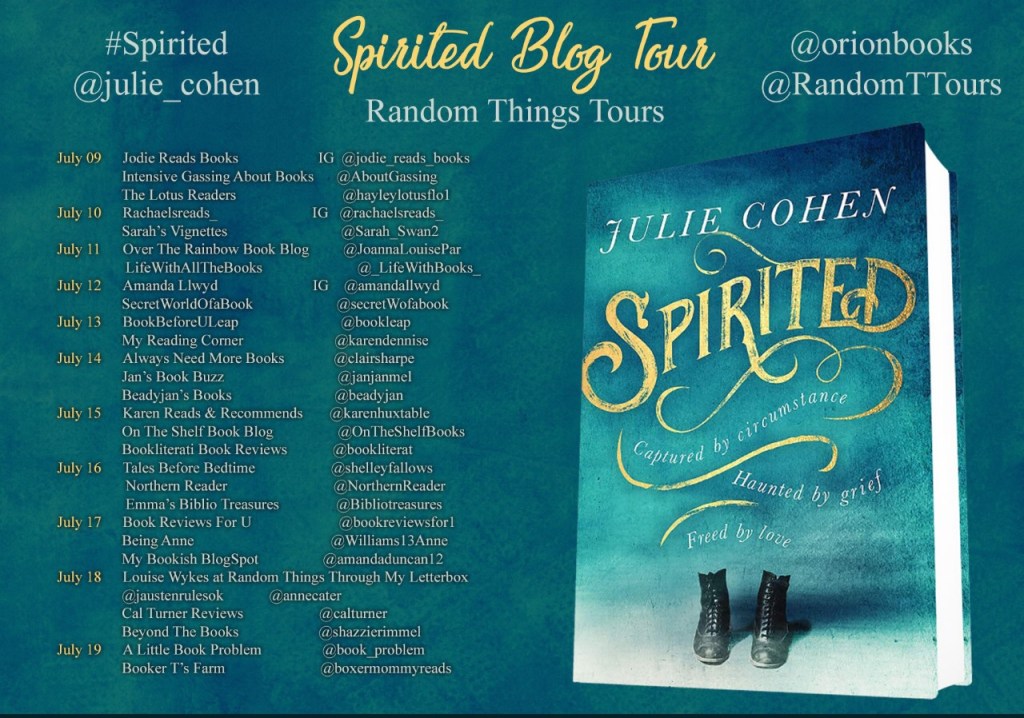
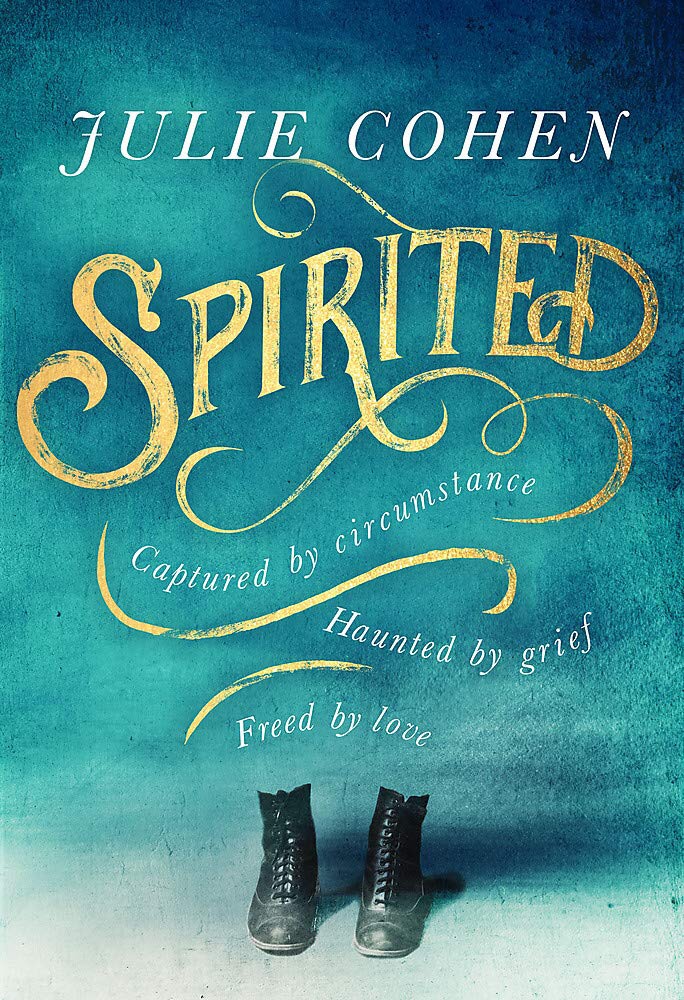
Spirited by Julie Cohen. #RandomThingsTours #blogtours #Spirited

I had never read Julie Cohen’s work before so I didn’t know what to expect from her writing. Only a few weeks ago on Twitter I was discussing when a new Sarah Waters novel would be appearing and Spirited by Julie Cohen has definitely filled that gap. It’s also made an impact on me that’s all it’s own. Viola Worth has grown up cared for by her clergyman Father, as well as his ward, a little boy called Jonah. Viola and Jonah are the best of friends, spending their childhoods largely inseparable. As we meet them in adulthood, they are getting married, but in mourning. A lot has happened during the period of their engagement. Jonah had been out to India, staying at his family’s haveli and checking on his financial interests. For Viola, it’s been a tough time nursing, then losing, her father. He encouraged her in his own profession as a photographer and she has become accomplished in her own right. Viola’s father wanted her to marry Jonah, and they are still the best of friends, but the time apart has changed them and neither knows the full extent of the other’s transformation. As they try to settle into married life on the Isle of Wight, Jonah spends his time sketching fossil and bone finds with his scientific a friend. Viola feels cut adrift and without purpose, as we find out later she doesn’t even feel she is fulfilling her role as Jonah’s wife. Through new friends the couple meet a visiting spirit medium, although as daughter of a clergyman, Viola would never normally enjoy this type of entertainment. Little do they know, this woman will change their lives.

The author slips back and forth in time to tell us about Henriette, who worked her way in life from being a servant to a respected spirit medium. She is a woman who started with no advantage in life, and as a young servant models herself on the governess in the house, a French woman known as Madame to the family. Henriette diligently listens to the children’s French lesson and nurses a hope of a future where she doesn’t clean up after other people or have to wish for a roommate so she isn’t sexually assaulted in the night. Her attacker labels her a whore and one early morning, after there’s been a house party, she stumbles on a group of men in the stables betting. They are playing cards for money, but once they see Henriette they become intent on a different sport. It is Madame who interrupts the attackers and she gives Henriette advice from one woman surviving alone in the world to another. The author also takes us back to Jonah’s time in India. We discover that in social circles Jonah is a hero, because during a massacre he rescued a young girl who lived in his haveli after all her family are killed. Viola wonders if it is this experience that has changed Jonah. They live as if they are brother and sister, Jonah spends less time with her than before and at bedtime they still go to their separate bedrooms and sleep apart. Viola knows there is more between husband and wife but doesn’t really know what and has no idea who to talk to. Through Henriette, Viola is asked to take a photograph of a child who has died so the parents have an image to keep. No one is more stunned than Viola when she develops the image and sees a blurred figure standing next to the bed, the likeness to their child shocks and comforts the parents; they feel reassured that their child lives on in spirit. This experience, and her experience of her first proper female friendship, is like a floodgate opening for Viola. She starts to question the limits of her faith, whether there is more in life she would like to try and as time goes on, whether the burgeoning feelings she has for Henriette are friendship or something else.

I loved the feminist threads running through this novel. The central women in the novel are each in liminal spaces, different from the conventional Victorian women we see like Mrs Newham. Henriette is a self-made woman, unmarried and travelling from space to space offering her spiritualist services for enough to survive on. She has moved from bar girl, to servant, to nursing and losing her elderly husband, and now into a semi-respected occupation. She gets to visit the homes of those she might have once waited upon, but isn’t tied by their social rules and conventions. In India we meet Pavan, who has made the exceptional choice within her societal rules to become educated and has made huge sacrifices in order to achieve that. Love was not on her agenda, and when it comes she experiences a painful separation between her intellectual choice and her emotions. Viola may seem the most conventional of these women, but her relationship with her father has set her apart from others of her class. He believed in educating Viola the same way as Jonah, then teaches her the art of photography too, usually considered a male pastime. Viola is respectful of many conventions, but finds herself emboldened by Henriette and the new experiences she brings to her life. She tries bathing in the sea and is bold enough to start accepting her ‘gift’ of capturing spirits. Behind them all is the french governess Madame. The role of Victorian governess is the very definition of a liminal space: she works in the home but is not a servant, educated and unmarried, respectable, but not on the same level as the family she works for. She has power in that she works for herself, has and controls her own money and can choose to leave her position and join another family, in a different place. Her acknowledgment of Henriette’s fate, as a pretty face in the power of men, inspires Henriette to be more. It gives her aspiration, although she may never be a gentlewoman, with careful decision making she could be more like Madame.

It is within the physical liminal spaces where there are beautiful passages of writing from the author. The scene where Henriette and Viola go bathing is absolutely exquisite because I could feel everything. The strangeness of undressing in a darkened box on wheels, the feel of the swimming dress, the rough and tumble of being pulled into the sea by a horse, then opening the door to see nothing but the ocean in front of you. This is a play on conventional baptism for Viola. She fully immerses herself in the water, supported by Henriette, and feels a rebirth. The heaviness in the uncoiling of her hair and letting it float free signifies a freeing from the constraints of Victorian fashion, as is the unlacing of the corsets. As they trundle back up to the sand after their swim, Viola wishes they could stay in this space in the dark for the intimacy with Henriette, and the knowledge of the freedom she will feel as she opens the door and sees nothing but ocean. When the women share Viola’s room the writing is so tender. Viola worries what the servants might think, but Henriette frees her thinking again. Love between women does not exist, she tells her, there are laws and conventions regarding love between a man and a woman, and even the love between men. What they are to each other is beyond the thoughts of most people, the servants will see two friends staying together and nothing more. Pavan and Jonah, don’t meet in the main haveli but in an ancient old temple in its grounds, a space no longer used for its purpose and outside the family structure inside the house. They meet as two people of different cultures and beliefs, but find a connection so powerful that each would put their lives on the line for the other. Jonah wonders whether he could live a different life to the one laid out for him back in England. He’s seen other English men here who have married Indian women and had children. They’re neither totally respectable, but are not shunned either. This is a novel of people, particularly women, learning to live in the spaces between; the places that promise more freedom.

This was an original, emotional and beautifully written novel that weaves a powerful story from a combination of painstaking historical research and imagination. Each character is fully fleshed out and has a rich inner life. Where real events such as the 1857 Siege of Delhi are used in the novel, they are deeply powerful and the author treats them with respect. The elements of spiritualism and spirit photography are well researched and based on a real fascination for the paranormal in Victorian society. Cohen acknowledges that this is a novel about faith: religious faith, faith in the paranormal and that the ties to those we love don’t end in death; faith in romantic love and the promises we make to each other; even the faith she has in herself. In the acknowledgements to this novel Julie Cohen says ‘I wrote the first draft of this book when I thought my writing career was over’. Judging by this book, it’s far from over. However, by allowing herself to think of that possibility, she gave herself the space to write something truly extraordinary.

Posted in Random Things Tours

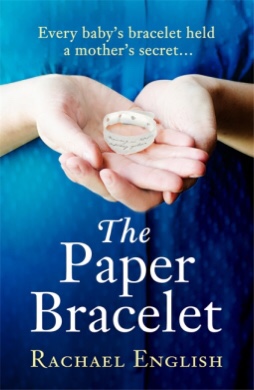
The Paper Bracelet by Rachael English. #RandomThingsTours #blogtours #ThePaperBracelet #Headline

Rachael English tells a very powerful story about a shameful part of Ireland’s history; the Catholic Church’s homes for ‘wayward girls’. We meet a young girl who has an affair with a married man from her village and becomes pregnant. Her devout parents send for the parish priest and follow his advice to send her to Carrigbrack, a home run by nuns for unmarried mothers. This was one of the now infamous Magdalene Laundries or Asylums that housed upwards of thirty thousand women from the late 18th to the late 20th centuries. The scandal around these institutions broke in the late 1990s when a mass grave was found at one home containing approximately 155 bodies. Since then a formal apology has been given by the Irish government to the women who survived and a compensation scheme set up to acknowledge the damage done by allowing the practice to continue unchallenged for so long. The stories of some of these women have made it into incredibly powerful films such as Philomena where Judi Dench plays a woman trying to find the son taken from her and given to an American family. However, what Rachael English has done incredibly well is create multiple characters showing varied experiences within this history, but also how these institutions affected the women’s families for generations.

There are two timelines across the novel: a present day setting where a retired nurse has a hidden box of paper bracelets, but also flashbacks to the mid-20th Century where we follow the young girl sent into Carrigbrack. In the present day, Kate is recently widowed and when attempting to tidy her husband’s things from the wardrobe comes across a box of tiny paper bracelets. Her niece Beth is staying with her and for the first time Kate tells another member of her family about the origin of all these bracelets. She explains being a nurse in an institution called Carrigbrack, and how saving the baby’s identity bracelets was her small way of preserving the only proof they existed. With them is a tiny notebook where she has recorded any small detail she can remember of their birth mother, date and given name. Beth becomes our equivalent in the book, the modern reader placing 21st Century values onto the past. She is very shocked that her aunt would have anything to do with a practice that now seems barbaric.

Kate describes a very different Ireland, where obedience to the church was paramount and people were more deferential and trusting of those in authority. Then, in a small community, it would be perfectly normal to ask the parish priest to intervene in family matters. More often than not it would have been unthinkable not to take his advice. Beth can’t imagine a country being so judgemental on it’s young women. For some of the youngest girls sex would have been non-consensual and their pregnancy a product of rape or abuse. Yet they were still treated as ‘fallen women’ and punished with heavy work, often right up to their due date. Many girls were kept for up to six months after giving birth to pay the home back for the care they’d received. Then, even if they’d formed a bond, their baby would be adopted, often illegally, and with no warning. Meanwhile, their rapist could still be a pillar of the community back home, maybe enjoying their legitimate family and still going to church with the very same parish priest who placed his victim in these institutions.

In order to portray a breadth of experience, the author has created many, very memorable, characters. My heart belongs to Winnie. Freckled, funny and incredibly mischievous with beautiful curly black hair, she is Patricia’s first real friend at Carrigbrack. Together, when they’re allowed to, they can share experiences and really laugh like the young girls they are. Even having her hair hacked off for insubordination doesn’t dull her spirit, but it tragically means that her cries that she’s in labour go ignored by the nuns while she’s working in the laundry. The consequences are heartbreaking and genuinely made me cry. I found myself desperately hoping that despite being broken with grief, Winnie would find her spirit again and we’d meet her in the later parts of the book. I did struggle a little bit with people’s names on occasion as we went back and forth. The women’s names were changed by the nuns so might have reverted to their own name. Nuns change their names when they join an order. The babies were named by their mother, often renamed by the nuns and again by their adoptive parents. I did get a sense of the bureaucratic nightmare these women faced to find their children again and why many survivor’s of the institutions might struggle with their identity. I found myself being drawn into solving this mystery of which characters belonged to each other. I was also more than a little intrigued by Katie herself. What had led her to work in such a place? Why did she feel so strongly about keeping the bracelets? Beth’s mother is very reticent to talk about the years Katie spent there. Does she simply still subscribe to the old ways and believe that the scandal was best left, swept under the carpet? I couldn’t stop thinking there was more to this frosty relationship.

The children who are found also have very varied experiences and are in different places in life, yet all have felt this yearning to find their roots. Some have been blessed in their adoptive families and are well supported in their search. Others have always felt rudderless and a little bit lost in life; without that sense of being grounded. I was interested in the story of Brandon whose wife Robyn has been urging him to follow up on Katie’s post. What he finally finds explains his lifelong sense of someone or something being missing from his life. He is very conflicted about his birth family, because it comes with what he sees as complications. Ailish is also memorable as she illustrates one possible result of a lifelong lack of self-confidence, borne from the knowledge she was an ‘unwanted’ baby. There is room to heal when these characters find out the truth: they were very much wanted, but stolen; their origins were complicated; or their mothers were forced into accepting they couldn’t care for a child. The reunion is only a beginning. I loved that these characters didn’t just find their birth family. These survivors start to form a network, another type of family, that can only be borne out of shared experience. Now a set of roots intertwined and grown strong from those terrible events that happened to them as young women or babies.

Posted in Random Things Tours

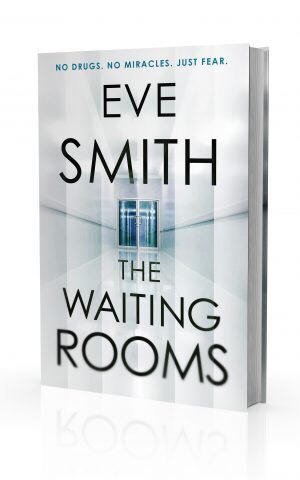
The Waiting Rooms by Eve Smith #OrendaBooks #TheWaitingRooms

Wow! This was a tough read in lockdown. There was one point where I was really sweating because it was making me so anxious. Last week I went out for the first time in eight weeks. It was a beautiful sunny day. With the windows down and the music on, it felt like any other summers day. Then we reached the medical centre. The queue outside the pharmacy was ten people deep, all of them were wearing masks. It was so disorientating. Eve Smith creates a world like this. It’s ours, but not quite. There’s a sense of the uncanny. It’s familiar, yet changed completely. This is a world ‘post-Crisis’ and three different women tell the story.

Lily is an older woman, living in a nursing home facility. She is nearing her 70th birthday and this is a huge milestone. After the ‘Crisis’ an act was passed to reduce access to antibiotics for the over 70s. The world became overrun with a resistant form of TB, seemingly spread at a series of large concerts where thousands were exposed to the virus. Life has now changed completely. People no longer keep cats, just in case they are scratched or bitten. Pets were declawed or simply put down. If they have money, elderly people can be cared for well and in comfort. If not or if they get infection they can be bundled off to dormitories of the dying. The author’s description of these wards and how they treat those who die there had me in tears it was so powerful. This is what happens when certain groups in society are devalued. Our treatment of them becomes less humane. They become objects, not people capable of being loved.

Kate is a nurse, working within this changed healthcare system. She works with people who are terminally ill and palliative care is very different to what we’re used to. If someone is over 70 and has a terminal diagnosis they have a choice; they can take their chances in an imperfect system with no interventions possible or they can come to a room with their family and end their life. Again, the author describes such a powerful scene when a man comes with his daughter and son-in-law to die. Kate is so professional, talking his choice through with his devastated daughter and explaining why treatment isn’t available for his cancer. Once he’s ready Kate hands him a glass of whiskey flavoured drug and waits until he’s ready to drink it. Only minutes pass before his pulse slows down and he peacefully passes away. Kate carries this out efficiently and with empathy. In fact it’s preferable to the alternative. No matter how humane it seems, it’s still chilling and sterile. We find out that Kate was adopted, and since the death of her adoptive Mum she’s been looking for her birth mother in her spare time. She’s looking for a woman over 70, who knows if she’s still alive.

Mary takes us back to pre-crisis times and her post-graduate days in South Africa. Mary is a botanist with an interest in finding new species of plant that may have medical applications. She meets Piet in a close call with a rhinoceros and he introduces her to the growing TB crisis in South Africa. He explains that AIDS has suppressed people’s immune systems to the point that they’re vulnerable to other infection. This form of TB is resistant and American drug companies aren’t queueing up to help. Could her research help him find a plant suitable for TB drugs? Piet has talked about radical ways of making the world look at what is going on. They spend more time together and have a trip out to his lookout where you can hear and see incredible wildlife. This is where their affair begins.

Every single thread of this story is compelling. I knew they were connected, but kept reading to find out how and why they were all separated. There was the added mystery of who was targeting Lily with newspaper cuttings, and cards. The eventual reveal was a surprise, but it was the revenge that was particularly devastating. The research that must have gone into the medical and scientific aspects of this novel is staggering. The short, factual sections that are either news reports, or scientific articles feel almost real. Every so often I needed to take my head out of the book and see the world as it is, not that it was much better once I turned on the news. I had to take a few deep breaths in the garden from time to time. This author created a credible dystopia, one that’s closer to the truth than a lot of people would like to think. Within that world we follow three interesting and intelligent women, trying their best in an imperfect system. The cold, sterile present contrasts sharply with the lush descriptions of South Africa. It scared me, made me think about my old age and the way we treat those older and sicker than us. I think it is a staggering work of genius, delicate and detailed, but inside a huge vision. I found it incredible.

Posted in Random Things Tours

The Girl from Widow Hills by Megan Miranda. #blogtour #CorvusBooks #RandomThingsTours #TheGirlFromWidowHills

Taking the missing child narrative and turning it into something different and new is quite a challenge, but I think this author is successful in exploring what happens beyond the initial drama, where most novels end. Arden Maynor disappeared when she was six years old. Thought to have left the house while sleepwalking, she is washed away by a flash flood and isn’t found till three days later, hanging onto the grate of a storm drain. In those moments, absolutely everyone in Widow Hills is focused on her and everyone is affected. From her and her mother, to the man who finds her, the journalists and photographers, rescue teams, police officers and those who treat her terrible shoulder injury at the hospital. There’s a flurry of publicity for all those concerned. Arden’s mother gets a book deal and a fund is set up to support Arden into the future. Then the next crisis happens and the Maynors are forgotten.

Twenty years on and Arden is renamed Olivia Meyer. She has used the remains of her fund to buy a house on the edge of a new town near the woods. She also has a job in administration at the local hospital and lives a fairly quiet life. She has a routine of work, dinner, a small glass of wine while watching TV and then bed. On Fridays she goes for a drink in a local bar with her friend from work, Bennett, and a new nurse called Elyse. She also has a friend in Rick, an older guy who lives next door, and they keep an eye on each other. This routine is unsettled when she receives a phone call telling her that her mother died seven months before and they need an address to send her belongings to. When the box arrives and she opens it, a cascade of memories come out with the objects. There isn’t much, but Olivia is most touched by the small bracelet with a silver ballet slipper charm attached. It’s something good she remembers from her childhood. She doesn’t remember much of the three days she was missing, apart from the dark, cold and wet. Afterwards, she feels her mother frittered money away, mainly into drug abuse and they drifted apart. That very night Olivia starts to sleepwalk again.

I enjoyed the author’s depiction of someone who is post-trauma. I understood Olivia’s need for quiet, security and routine. I did start to have questions as I read further. It seemed that Olivia’s narrative of her childhood and the trauma was very rote and something she’s defensive about. When she visits the sleep clinic about her sleepwalking, she can’t elaborate on it more than repeating her mother’s description. It’s almost as if she can’t recall the trauma from her own point of view. Even her memories of being missing seem strangely one note. She was missing for three days, but can only remember a small proportion of it. She couldn’t have been in the same place for three days, because the team searched there, so why can’t she remember where she was? As the stress builds, the big wall Olivia has around her memories and feelings starts to crumble and it’s interesting to see her start to question herself. Especially as the bodies start to appear.

I loved that the author showed us the flip side of Olivia’s experience; what it’s like to witness a trauma. Olivia meets the son of the man who found her and while she’s not sure if she can trust him she does listen. Nathan saw his Dad do something heroic, be plunged into a whirlwind of publicity, then left with nothing. There was no fund for the rescuer, no fund for his children, and there is a bitterness that Olivia might have had it easier with her funded education. Similarly, she meets one of the journalists who was there and helped with her mother’s book. She has adopted a lifestyle very like Olivia’s – quiet, and tucked away where she can’t be found. Olivia starts to see how a trauma she thought was hers, exclusively, has affected others like ripples on a pond. All the people she meets ask questions, till she can see there’s something about her experience that’s missing, and even goes as far as revisiting Widow Hills to remember. I had my suspicions, but the final revelation did surprise me. The author taught me that when reading thrillers I can’t trust anything I’m told, from the opening chapter, right up to the final page.