Posted in Random Things Tours

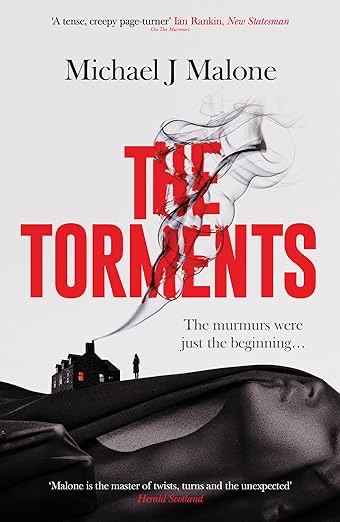
The Torments by Michael J. Malone

I was bowled over by the first novel in the Annie Jackson series – The Murmurs. I already knew that Michael was an incredible writer, able to bring great compassion and intelligence to his characters while delivering a page turning thriller. The added elements of the paranormal and Scottish folklore really grabbed my attention and fulfilled my craving for all things weird and gothic. Here we find Annie living in her little cottage with a view of the loch, the only place that gives her peace from ‘the murmurs’ that can strike at any time beyond the walls of her home. The murmurs are sibilant whispers letting her know that someone close by is near to death. A vision of a skull appears over the person’s face, followed by a horrible premonition of how they meet their fate. One day, while working a shift in the local coffee shop, Annie can hear the whispers and feel the rising nausea. This vision is for a young local man called Lachlan. Annie sees a terrible car accident and Lachlan’s vehicle wrapped around a tree. Torn between warning him and drawing attention to herself, or walking out and ignoring the vision, Annie chooses a middle ground. She tells him his tyres are bald and he really should change them. Even this course of action backfires as only hours later she is berated by a man who comes to tell her Lachlan is dead and she could have prevented it, but didn’t. The rumours about her powers go into overdrive as people realise Annie is the woman who found the bodies of several murdered women. 

Annie can’t win. She’s either dismissed as sinister or even mad or she stays quiet and is blamed for whatever ensues. Desperately wanting to hide from the world, she hopes her little cottage will continue to protect her from the murmurs, but hadn’t banked on how angry locals would be. They break her windows and target her house with red paint. Thankfully, her twin brother Lewis arrives to stay and help just as their adoptive aunt visits, hoping that Annie’s gift might help someone in need. She wants them to look into a missing person case; a young man called Damian has disappeared and she suspects something sinister has happened to him. Damian has had a very complicated past, including ending up in prison on one occasion, but in recent months he had calmed down due to the birth of his son Bodhi. While Annie is keen to explain that she isn’t a medium and can’t find people on command, Lewis thinks they might be able to help. Why not research and interview people like a private investigator? Then during their investigation if anything comes up for Annie they can act on her ideas. What awaits them is a surprising and complex puzzle, that seems to include the dark arts and a woman with the ability to ‘glamour’ others. This time Annie could be in serious danger. 

Michael moves us through different timelines and perspectives, from Annie and Lewis’s investigations to new characters called Ben and Sylvia who are pupils at a private school several years earlier. I found their tutor very disturbing, almost grooming both of them into his fascination with the occult. He’s chosen exactly the right students to draw into his web, students who are distanced or estranged from family and potentially vulnerable. His name is Phineas Dance – an awesome name for the villain of the piece! He gives them a reading list including Alastair Crowley and other proponents of the dark arts and they take to his teaching very well, particularly Sylvia who we watch become more obsessive as she matures. Their training involves ritualistic sacrifice, as well as the attainment of wealth and success – using their new powers to ensnare other followers of celebrity and influence. This leaves them both free rein to operate where they live, having local dignitaries in their pocket. Every few years they have a chance of ensnaring the Baobhan Sith, a mythical female deity who can unleash havoc. All they need is a sacrifice and who better than Annie? The author excels at creating a nail-biting game between Sylvia and Annie’s powers, with Sylvia drawing Annie towards her beautiful home and Annie’s murmurs being suppressed then surging again. Annie is confused by this strange sensation, that feels as if her brain is dialling in and out of a radio station! I was mentally begging her to resist Sylvia’s strange abilities and stay with her brother who is in a battle of his own. He’s using detective work to find out about their missing man Damien and unearthing a possible link to a terrible fatal accident that happened when he was only a teenager. Could this incident be behind Damien’s reckless and addictive behaviours? I loved his interactions with the detective working the missing person’s case, Clare is deeply suspicious of the brother and sister team at first. However, when she has an inkling that corruption might be at play she works in tandem with Lewis and they make a formidable team. I even detected a a bit of chemistry between them. This is a fast moving case, especially when Annie is targeted, meaning you won’t be able to put the book down until you know if she can be found before the ritual sacrifice begins. 

When you finish this book you’ll feel like you’ve been on a fairground ride! The author has a brilliant way of engaging the reader’s emotions, drawing us into the character’s inner lives in a depth that can be rare in thrillers. It’s his ability to make us root for this brother and sister pairing that drives this novel. I feel so much for Annie, who hasn’t asked for this strange ability she has but has to live with the consequences and it’s a lonely life. She’s misunderstood and shunned by people who really don’t understand how powerless and frightened she feels. It was great to see her with the back up of her brother, who accepts her abilities without question and doesn’t judge. Their bond felt very real and setting aside the paranormal elements of their quest, they did remind of the close bond I have with my own brother. When you add these characters to a great case, full of drama and danger, it makes for a very satisfying reading experience. I absolutely raced to the conclusion, never expecting the outcome and enjoying the twists along the way. It left me hoping for more from Annie and Lewis, with a hope that Annie gets a little bit of respite from the murmurs first.  

Published by Orenda Books 12th September 2024

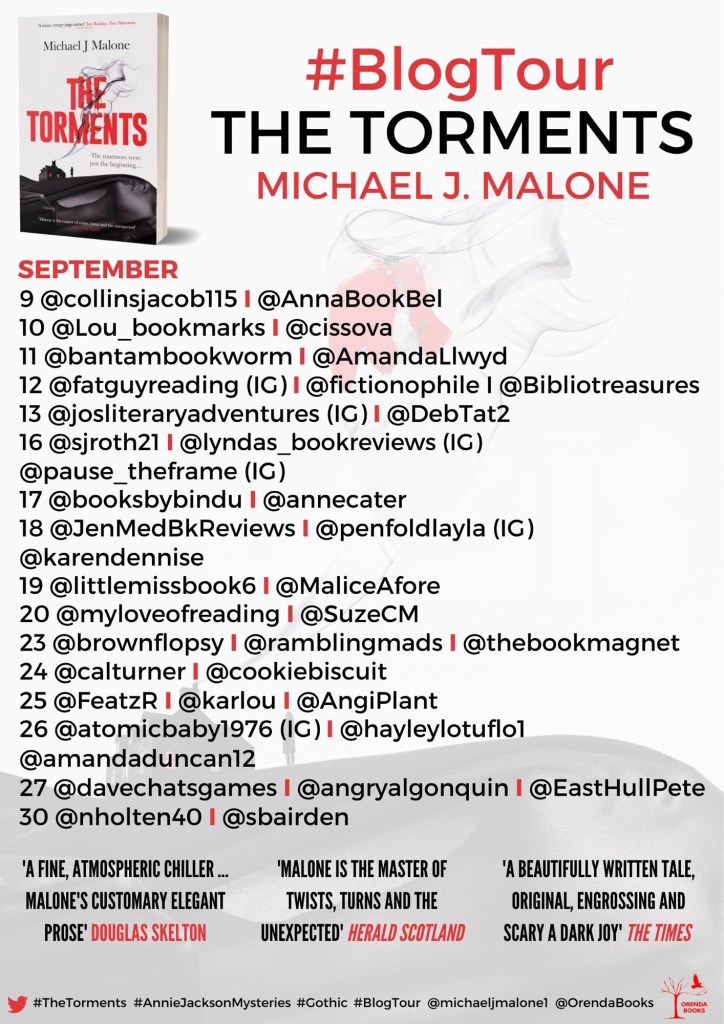
For more reviews check out these bloggers on Septembers blog tour.
Meet the Author
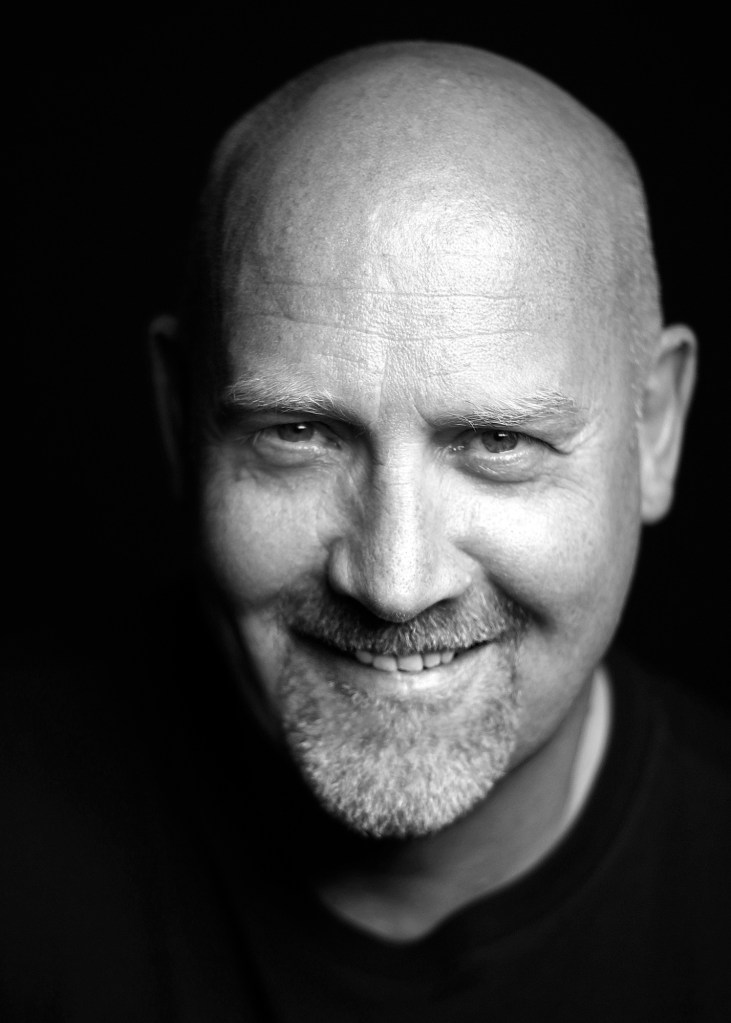
Michael Malone is a prize-winning poet and author who was born and brought up in the heart of Burns’ country. He has published over 200 poems in literary magazines throughout the UK, including New Writing Scotland, Poetry Scotland and Markings. Blood Tears, his bestselling debut novel won the Pitlochry Prize from the Scottish Association of Writers. His psychological thriller, A Suitable Lie, was a number-one bestseller, and the critically acclaimed House of Spines, After He Died, In the Absence of Miracles and A Song of Isolation soon followed suit. A former Regional Sales Manager at Faber & Faber, he has also worked as an IFA and a bookseller. Michael lives in Ayr.
Posted in Netgalley

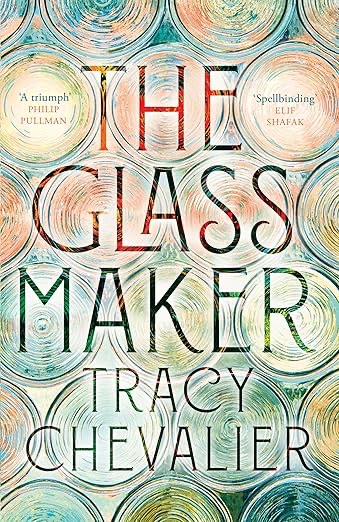
The Glass Maker by Tracey Chevalier

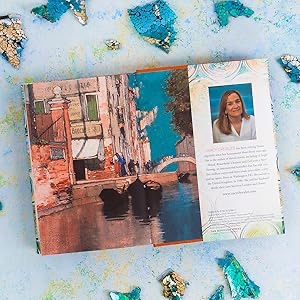
Orsola is the spirited teenage daughter of the Rosso family, all glassmakers from the tiny Venetian island of Murano. She’s very young when she sees her father bleed out in the workshop after he’s struck in the neck by a shard of glass while making pieces for a chandelier. Out of his two sons, the youngest is quiet, solid and dependable and would have made the perfect maestro, while his eldest Marco is loud, egotistical and very proud of his skill with glass. Now the entire family’s fortunes lie on his shoulders as the eldest always inherits the title of maestro from their father. He needs to support everyone from his widowed mother Laura and her youngest daughter Stella. His promotion leaves room for another servente to become the apprenticed glassmaker, second only to the maestro. In an unusual move Marco employs Antonio, originally a fisherman he has always wanted to work with glass. For Orsola it is love at first sight. Meanwhile, she is looking for ways to supplement the family’s income and visits their patron and merchant, a Dutchman called Klingenhorn. He suggests that she approach the only female glassmaker in the city to teach her how to make glass beads over a heated lamp. Once her beads are of the right quality, Klingenhorn agrees to place an order and she sets to work with determination. Orsola is our window on the Rosso family and she imparts both their history and the history of the island with it’s amazing glassmaking heritage. It is a history filled with love, passion, duty, tragedy and ingenuity, plus a little touch of the magic that Venice has in abundance. 

It’s hard not to fall in love with Orsola because she’s so brave and independent, attacking life with a fearlessness that aligns her with the most important woman working in glass, Maria Barrovier. The family business is run by the men of the family, leaving the women powerless. Her mother has a great business brain and younger brother Giacomo would have definitely been a safer pair of hands, churning out the same simple glassware for daily use. Yet thanks to a circumstance of birth they are all at the mercy of the mercurial Marco. He is so dissatisfied with their usual output of plates and goblets that have been the Rosso’s bread and butter, he wants to make more ornate and decorative glass, but misses the fact that it still has to be functional.  Orsola keeps her own business dealings with Klingenhorn a secret from her family, telling them her bead making is merely a hobby. Her budding romance with Antonio is intoxicating, but she knows immediately that he wouldn’t be her brother’s choice for a husband. They spend moonlit nights marooned on Antonio’s boat dreaming of a life where they can be together, away from the rivalry his presence has caused in the workshop. The Rosso’s business is a rollercoaster and they have to face hardship, change focus and rebuild several times. The author takes us from the 17th Century plague that hit Venice hard, all the way through to the COVID pandemic. While centuries pass in the real world, somehow everything happens within Orsola’s lifetime. When I visited Venice for the first time, particularly in the evening, I had a strange feeling I might turn a corner and be in another century. Orsola rarely leaves Murano and Venice, only once venturing to the mainland, rowed by Klingenhorn’s slave. I felt that if Orsola actually set foot on the mainland she would suddenly age by decades. 

The time difference felt strange at first, but it soon felt completely normal. We get to experience the city’s heyday as a bustling port, filled with merchants and people of all races and places. We see that dwindle as time goes on and slowly native Venetians leave and tourists move in. The author explores issues that are important to the island today: the worsening of the acqua Alta; the building of flood defences in the lagoon; cruise ships dwarfing the city and disgorging hundreds of tourists into San Marco at once; the shops selling cheap Chinese versions of local crafts such as mask makers, leather workers and glass makers, undercutting local artists; the changing flora and fauna, illustrated by the dolphins reported in the lagoon during COVID when only residents were left in the city. The author explores that conundrum of the negative impact of tourism on the city, while also acknowledging the city’s absolute dependence on it’s visitors. The endless lament that Venice is sinking, only serving to heighten people’s desire to see it. There are those who feel Venice has become a theme park of of it’s original self. I utterly adore Venice and I’m going next year for what will probably be the last time as it is difficult for a disabled person to get around. The author mentions a Las Vegas hotel where a microcosm of Venice has been created, with some visitors thinking they no longer need to travel to see the city. Yet it’s picture perfect bridges and clean canals are miles away from the real Venice. Of all my memories of Venice, the most important are those that are far from perfect. It’s the churn of the mud in the Grand Canal and silty smell of the mud, the washing hanging above your head, meeting locals and their dogs walking after dinner and the sound of squeaking rubber against the dock as the vaporetto leaves it’s stop. We always laugh about the old man we met crossing a bridge into Castello who farted loudly, before laughing uproariously! I feel that spooky sensation I had walking round the back of La Fenice after dark and the smell of candles and incense as we heard mass in an unexpectedly beautiful church. It was watching everyday things that gave me an idea of living in Venice: the grocery deliveries; being rushed to hospital or having the rubbish collected by boats. It’s all these things that make Venice real and not a film set. 

Of course I was longing for Orsola to reunite with her one love Antonio and I won’t ruin your enjoyment by telling all, except to say that just like the real Venice, real life is rarely a romantic novel. However, what I enjoyed most was Orsola herself because she is a pioneer and an incredible business woman. In fact she succeeds precisely because she is a woman. While Marco inherits the business, his ego and inability to change could have derailed the whole family. The women in this novel ‘manage’ the men, working around them and often slowly drip feeding ideas and solutions to the men until they adopt the idea as their own. Whereas Marco never asks for advice and rarely takes it, Orsola recognises the shortcomings of the business or when a crisis is looming. She knows who to ask, consulting with Klingenhorn and his replacement Johnas, Maria Barovier and the women of Cannaregio about threading and stacking seed beads. Even as the novel comes up to date she’s still diversifying, opening a second shop in a busy tourist Calle of Venice itself and employing someone to crate the glass balloons and trinkets that are easily packaged and stowed in a suitcase. She survives by being pragmatic, recognising when to challenge and when to do her duty, even if her temper does get the better of her at times. The depth of research that’s gone into her story and the author recommends many sources in her brilliant afterword. She creates a Venice I recognise, full of beauty and history but also a real and imperfect place, reliant on the very thing that destroys it. She captures the soul of the island and of Murano too and the people who feel themselves as Muranese first and foremost. I loved the magic of these places and how it attracts the eccentric and eclectic characters who have made it their home over the years. From Casanova, to Peggy Guggenheim and the previous owner of her home, the Marchessa and her pet Cheetahs. It is a moving, vibrant and intelligent novel that I know I will want to read again and again.  

The Borough Press 12th September 2024

Meet the Author

Tracy is the author of 11 novels, including the international bestseller GIRL WITH A PEARL EARRING, which has sold over 5 million copies and been made into an Oscar-nominated film starring Scarlett Johansson and Colin Firth. American by birth, British by geography, she lives in London and Dorset. Her latest novel, THE GLASSMAKER, is set in Venice and follows a family of glass masters over the course of 5 centuries.

Posted in Netgalley

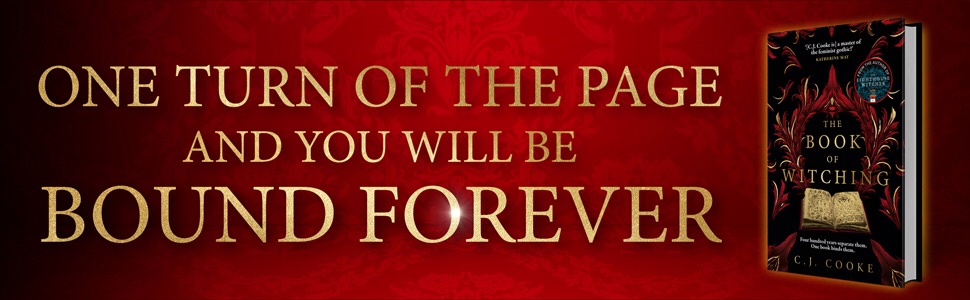
The Book of Witching by C.J.Cooke

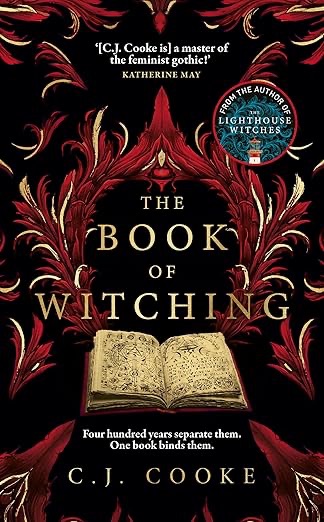
On a small uninhabited island off Orkney, the body of a young man is found burned alongside a girl who is barely alive. She has suffered terrible burns to her arms and hands. When Clem receives the call that her daughter Erin is in the burns hospital in Glasgow, she races to her bedside and is horrified to find her in a coma with her damaged eyes stitched shut. Erin had been on a trip to Orkney with her boyfriend Arlo and a new friend Senna, leaving her daughter Freya with Clem. Arlo has been found dead, but Senna is missing. Erin desperately looks for clues as to how this has happened and is startled by a sudden vision of a strange book, with a bark cover and black pages that appear to be blank. Searching her daughter’s room she finds a note that reads ‘Arlo’s hands will need to be bound’. Could Erin have harmed her friends? We’re taken back to 16th Century Orkney as Alison Balfour wakes up and finds both of her children missing in the middle of the night. She tracks them to a clearing where masked and robed figures are holding a ceremony, initiating her children into the Triskele, just as she once was. Her own mother steps forward with the Book of Witching, inviting her grandchildren to ‘sign’ the book with a primal scream. Only a few weeks later she is approached by a nobleman when visiting her husband, who is working as a stone mason on the cathedral. He asks if Alison could create a powerful hex that would end the life of a powerful Earl. She refuses, so it’s a huge shock when she is arrested for practising witchcraft and thrown into a dungeon. Alison knows she has only ever used herbs and charms to help people with their ailments, particularly women. However, she knows what will follow; interrogation, violation and torture unless she confesses to something she didn’t do. Then she faces burning, with her only hope that she is strangled before the fire takes hold. Alison’s story is interwoven with Clem’s story, set in present day Glasgow where she lives with her daughter Erin. Clem is devastated when out of the blue she receives a call from the city’s burns unit. Erin has been admitted to the unit with serious burns and is in an induced coma. Clem is confused because Erin was on a trip to Orkney with her boyfriend Arlo and her friend Savannah. Now Arlo is dead, Savannah is missing and Erin has terrible burns to her arms and hands. She was found on the beach of Gunn, an uninhabited island off Orkney. Why were they in such a remote place and why is Clem had a vision of a blackened, bark covered book which opens to reveal a woman burning at the stake? 

C.J. Cooke combines these two stories into a narrative about Scottish heritage, the history of witchcraft and of women. She creates an eerie atmosphere where supernatural abilities abound, based within a breadth of research around the 17th Century moral panic about witches spearheaded by King James himself. These earlier sections are an unusual mix that ground us within the history of a place, but also creates a sense of unease. Alison renounced the Triskele years before and is angry with her mother for going behind her back, so when she’s arrested for witchcraft it’s a shock. The period where Alison is interrogated is incredibly accurate and hard to read in parts. She is entirely at the mercy of the powerful men who keep her in a filthy dungeon, restrict food and water, then use intimidation, violation and torture to elicit a confession. The historical background to the witch trials in Scotland has come up in a couple of novels this year and it might seem strange to the reader that such a belief in witchcraft existed. King James VI of Scotland had a marriage contract with a Danish princess, but her voyage to Scotland is threatened by fierce storms. Witch burnings had already swept across Germany and into Scandinavia and there are rumours that a witch had cursed the princess’s voyage. The North Berwick trials started a wave of panic over witches who might be accused of something as silly as causing a farmer’s cows to stop giving milk. King James voyaged across the North Sea to collect his bride, but does become obsessed with witchcraft using the Malleus Maleficarum as his witch finder’s bible. It includes the idea that witches will have a mark on their body where the devil has left his mark. One of the men interrogating Alison uses a pin to test marks on her naked body, looking for one that doesn’t produce pain when stabbed by the needle. He claims to have found the mark under Alison’s tongue, but also perceives the outline of a hare that turns into a shadowy figure. They are so sure of what they’ve seen that Alison almost thinks she’s seen it herself, but she’s starving, dehydrated, filthy and exhausted from being walked up and down all night to prevent her sleeping. Yet every time she denies their accusations, until they start hurting the people she loves. 

Clem meanwhile is horrified by the state of her daughter who is on a ventilator to protect her airway. She’s so vulnerable that she’s even grateful for the presence of her ex-husband at Erin’s bedside. She’s devastated for Arlo’s parents and for those waiting to hear news of Savannah. They’d only become friends very recently and there had been no red flags. Now the police are sniffing around the ICU, waiting for Erin to wake up and give them her account of what happened. When Clem pops home she goes into Erin’s room to feel her daughter. As she looks around she finds a slip of paper and written in Erin’s hand is he instruction that ‘Arlo’s hands must be bound ‘. That is exactly how Arlo was found. Instinctively, Clem pockets the evidence before the police ask to search their home. She must protect her daughter. Yet when Erin wakes up she claims to be someone else. Someone called Nyx. Clem only has to hear her voice to know that this is not her daughter. For me Alison’s narrative is more compelling, possibly because we’re in the midst of the action and everything is so immediate as we experience it through her eyes. By contrast we come into Clem’s story after the terrible event has happened. She’s in the dark, desperately trying to work out what has happened to her daughter. This only gets more complex as Erin wakes up different and she isn’t sure whether it is a case of ICU psychosis as her nurse suggests. This is a psychiatric response to the strange environment where sleep deprivation, being dependent on others and the sensory overload from the various machines and lights being on constantly. It’s also disorientating to wake up and find part of your life is missing. Yet there’s clearly a paralysing fear that something much worse is wrong. Erin has been through something so traumatic she’ll never recover or never be Erin again. The more Clem uncovers the more she feels something paranormal is at play. 

I was so impressed with the historical detail put into this novel and how real it made Alison’s experience. The punishments she and her family go through are more horrific than any of the paranormal stuff. We might fear the unexplained and the unknown but the things humans do to each other are far worse. I’ve loved this writer since her first novel and this one had me utterly gripped because she captures the fear of being labelled, noticed as different and blamed for things you haven’t done. Many witches served a purpose in their community, particularly for fellow women and I think she captured the complexity of that position. What’s the difference between giving a herbal remedy, a harmless charm or a spell and who makes that decision? Certainly not women and not those who are powerless or living in poverty. Even the most altruistic intention can be misconstrued or twisted by someone malicious. This was a dangerous time to be a wise woman. I also loved how the author based her story in a magic that was so powerful it could still wreak havoc today. This is another solid read from a fascinating author who has rapidly become a favourite of mine and a ‘must buy’ writer.

Published by Harper Collins 10th Oct 2024

Meet the Author

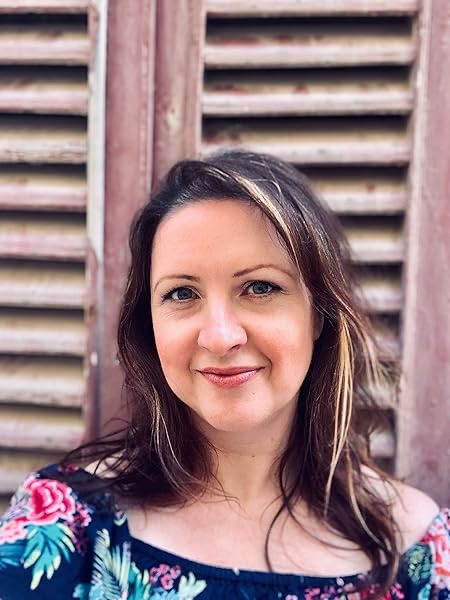
C J Cooke (Carolyn Jess-Cooke) lives in Glasgow with her husband and four children. C J Cooke’s works have been published in 23 languages and have won many awards. She holds a PhD in Literature from the Queen’s University of Belfast and is currently Senior Lecturer in Creative Writing at the University of Glasgow, where she researches creative writing interventions for mental health. Two of her books are currently optioned for film. Visit http://www.cjcookeauthor.com

Posted in Netgalley

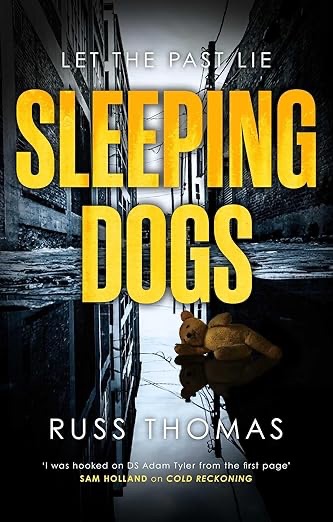
Sleeping Dogs by Russ Thomas

It’s a very brave author who spends three novels establishing a fascinating and complex character, then chooses to leave him out of the fourth novel in the series. We’re back in Sheffield where Adam Tyler is searching an old cinema when he’s hit from behind and falls from a high gantry. He reaches the Northern General in a coma and the strange thing is that his team have no idea what he was investigating. None of their current cold cases even mention the place, but it’s not unusual for Tyler to investigate an avenue of enquiry alone. As Tyler clings onto life, with his old boss Diane by his side, we follow DC Mina Rabbani as she tries to cover the CCRU’s open cases, while surreptitiously looking into Tyler’s movements and locking horns with DC Doggett who is the official investigator of Tyler’s attempted murder. Meanwhile, at an artist’s event, Mina meets an awkward young woman called Ruth. She also stands out in this group of yummy mummies who’ve been taking a pottery class. She suggests they meet for coffee and Mina agrees half-heartedly, knowing it’s likely her job will prevent it from going ahead. As Mina and Doggett find a barely literate note, written in Sheffield dialect on Tyler’s desk they’re sure that this is what he’s been chasing. The note is a strange confession to a potential murder, but holds none of the details that might give them something to work with. More to the point, what is it about this note that made Tyler keep it to himself, especially from Mina who felt they’d developed trust. Our case splits into two timelines; the present investigations told through Mina’s eyes and a flashback to six months ago where we follow in Tyler’s footsteps. Each timeline inches forward slowly, drip feeding clues to the reader and ensuring we keep turning the pages. 

There’s also a third narrative voice following Ruth, the young woman from Mina’s arty party. Both had felt out of place at the event and this could be the innocent reason she sought Mina out for conversation. However, when she bumps into the same woman in the street a short while later I started to wonder if this was the coincidence it seemed. Mina is still unsure but does agree to coffee, feeling sorry for the young woman who seems a little awkward and unsure of herself. As Ruth’s circumstances begin to unfold I felt sorry for her. She lives in the home where her father recently died, but he still feels very present, both in the fixtures and fittings but also in Ruth’s mind. His chair still seems to embody him, marked forever by his hair oil and a halo of yellow nicotine. It’s clear that he was a huge presence, a domineering father who bullied his daughter. His need for care and to control her have kept her indoors and alone for so long that she’s scared to meet people. The scene where a group of girls befriend her in a bar and mooch drinks from her is particularly sad because she’s clearly vulnerable. Her desperation is written all over her face, so when a much younger man takes an interest in her I was immediately suspicious. I had a strange sensation of feeling protective of Ruth, but very wary at the same time. Mina really does develop into an excellent investigator in this novel. She’s always had great instincts, but here she steps out of Tyler’s shadow and really shines. She is shocked when the ACC puts her in temporary charge of the cold case unit in his absence, but determined to prove herself. Doggett warns her that her loyalty to Tyler is admirable, but could also hold her back. He wonders if the ACC is testing her and that a possible promotion could be on the cards. She has some interesting chemistry with the new uniformed liaison officer Danny that made me smile. We also see a lot more of her family and community in Sheffield, giving us insight into how determined and independent she has been to get where she is. This case will have her questioning every part of her world, even those closest to her. 

As for Tyler, even though his insular and secretive ways have carried on there have been some changes since the revelations of the last novel including his difficult childhood. The crime ring known as The Circle were shown to have influence even inside South Yorkshire police. We see again how protective he is of those he’s come to trust – such as bringing ex-ACC into the CCRU. As usual he doesn’t mind rattling even the most gilded of cages; he comes into conflict with previous local MP Lord Beech, who warns him off digging into the kidnap of his first wife. As soon as he reaches hospital Diane is by his side, but so is Scott. Tyler met Scott in the last novel, but we see in the flashbacks the ups and downs of their tentative relationship. It’s good to see Adam being more vulnerable with someone and Scott’s training as a counsellor might help him understand this complex man. I read late into the night to finish because I was desperate to see all those puzzle pieces slot into place. As the complex truth is finally revealed it’s life changing for one of the team and has implications for every character we meet in the course of the investigation. The Lord, a schoolteacher, a lawyer and a carer can all be traced back to a crime that isn’t what it seems. I wanted to know how far Tyler had come with his enquiries and most of all who met him at the disused cinema of the opening pages. This was a tense, intelligent and complex thriller that had so much emotional depth too. 

Published by Simon and Schuster 24th October 2024

Meet the Author

Russ Thomas was born in Essex, raised in Berkshire and now lives in Sheffield. After a few ‘proper’ jobs (among them: pot-washer, optician’s receptionist, supermarket warehouse operative, call-centre telephonist and storage salesman) he discovered the joys of bookselling, where he could talk to people about books all day. His highly acclaimed debut novel, Firewatching, is the first in the DS Adam Tyler series and published in February 2020. Nighthawking and Cold Reckoning, the second and third books in the series, followed in 2021 and 2022.  To find out more, visit his website or follow him on Twitter:  https://russthomasauthor.com T: @thevoiceofruss

Posted in Netgalley

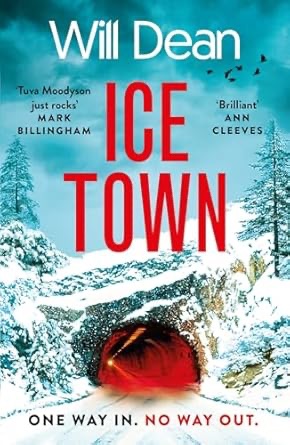
Ice Town by Will Dean

I’m convinced that I’m fated to never meet Will Dean. Despite booking to meet him twice this year both COVID and MS relapses have had ridiculously accurate timing and I didn’t manage either event. It’s so frustrating because I really am such a Tuva fangirl. I really enjoyed this trip back into her world, even if at times it was tense, threatening and claustrophobic. Will’s intrepid reporter is enticed to a town further north than Gavrik because her instinct is telling her there’s a story. Dubbed ‘Ice Town’ it’s a minor ski resort with only one upscale and very empty hotel. Stuck in its mid-century heyday it is now losing out to the bigger resorts and the hotel must be on its knees. Tuva can only access the town via a tunnel through a mountain. Traffic queues at the tunnel mouth as drivers are alternately let through. It then closes at night leaving residents cut off from the outside world. Tuva has been drawn by a missing person’s report, a teenager called Peter has disappeared. Nothing unusual in that, but Peter is deaf and Tuva is imagining how isolated he must feel. She worries that his hearing aid batteries have run out of battery life. She imagines him stuck somewhere in the dark, in freezing temperatures and not even able to hear the search teams shouting his name. Tuva packs up her Hilux and heads north hoping to find out more about Peter and maybe help the search. She’s heading for the only B & B in town, but when she gets there it’s clear they should have dropped the second B – something Tuva points out with her usual tact! It’s actuality two bedrooms in the back of the a sunbed shop with very thin walls, but Tuva does not need luxury and expenses are scrutinised carefully by her boss Lena. As she starts to acclimatise she starts to realise that, if possible, this is a quirkier town than Gavrik. She’s also without the long-standing relationship she usually has with the police. Can she find Peter without their help? Without her usual support system to call on, might she find herself in danger? 

She rounds out that Peter lived with his grandmother and seems quite isolated in then community. Kids at school thought he was weird and girls mention that he made them uneasy, always staring at their mouths. Tuva is quick to point out that this isn’t sexual, he’s just trying to lip read. The church seems to be the gathering point for the community, with the Deacon organising the search parties. Instead of the police, once the tunnel is closed at night, the residents are protected by the Wolverines, a local biker gang. Tuva meets one of them at the only watering hole in town and finds out he’s actually a poet, an unexpected hobby for a huge mountain of a man dressed in leather. Tuva has managed to shack up next to the only other outside journalist, a girl called Astrid who has the other room beyond the sun beds. Tuva feels an urge to find Peter quickly and when a body is found near the tunnel she fears the worst. When news comes through that the body isn’t Peter, the search is based on two possibilities: either Peter and another resident have gone missing at around the same time and died from exposure, or Peter is in hiding, because he is the killer. This change from victim to possible perpetrator worries Tuva, she knows how disorientating it is to have no hearing out in the wilderness. She also worries that if the police do catch sight of him he won’t be able to hear their commands and they’ll shoot him. She asks the police chief to remind her officers that Peter can’t hear them. 

It’s not long before Tuva is plunged into disorientating situations herself, in one scene when she’s staying at the resort hotel her isolated lobby falls into darkness and she can’t find the right bedroom door. For a moment she’s terrified and knocks a picture off the wall in her panic. It made me very jumpy because it seemed targeted because she’d been placed in such a remote part of the building. When waking up one night after a dream she feels around the bedside table and can’t find her hearing aids or her phone. As she feels her way around the unfamiliar room, I had the uncanny sense that she might be being watched. Anyone could be lurking in the dark. Who has moved her stuff and is someone in the dark watching her panic? That definitely had my heart racing. Then she finds them on the desk, remembering she’d had one too many at the pub and must have left them in the wrong place. Another scene that kept me glued to the book was when she took the ski lift down to the town and for some reason the power goes out. She hears what she thinks is a shot and the overhead light goes out. Now she’s just swinging silently in the dark and in the cold. She knows it doesn’t take long for frostbite to set in and she tries to protect her face. She is so vulnerable at this moment and I was scared for her. I felt like someone was playing with her, like a cat does with a mouse. I had to finish this scene before I could get up and do anything else. 

Will writes the quirkiest characters and here there are a few. There’s Ingvar who comes across like a college professor and lives halfway down the slope with his dogs. Could he have tampered with the ski lift, after all he might seem respectable now but he has served a sentence for murder. The poet bouncer is another surprise, especially when Tuva unexpectedly wakes up in his house. There’s a pod-caster who is becoming quite well known, but his listeners don’t know that he keeps the slopes smooth by day and keeps large numbers rabbits in his basement for food. Once it becomes clear that they have a spree killer on their hands, the odds are a lot more serious. Could Tuva end up being a target due to her snooping around the town and asking too many questions? Maybe Peter’s position as an outsider has created resentment and a desire for revenge? For some reason Tuva doesn’t think he’s the killer, although he still hasn’t been found and bodies are starting to pile up. The claustrophobic feeling of the town isn’t helped when the killer’s methods become known. They disarm people with bear spray, several times more powerful than ordinary pepper spray which is banned in Sweden. Other items they use are military grade so could this be someone who served in the army? The victims are asphyxiated with a tourniquet used on the battle field that has a clever gadget attached. It can be turned to create the necessary pressure, even if you can only use one hand? It’s an unusual piece of kit and Tuva wonders whether the killer is a medic or has used one on the battlefield. Or is it the ability to adjust the pressure that’s key? To allow a few breaths then cut the victim off again, playing God. 

I enjoyed the realisations Tuva has about her own life. She recognises that Lena and Tammy have kept her on track since her partner Noora died. To the extent of making sure she’s eating and getting some sleep. Despite losing her mum she certainly has some substitutes. I loved how Will lets thoughts of Noora just wander across her mind from time to time, sometimes happy memories and sometimes deeply sad ones. I’m glad that she gets to hear Nora’s heart beat from time to time. There is a strange coincidence that may have a huge impact on her personal life going forward. The tense few chapters that bring us to the finale are so confusing! My suspicion was running back and forth constantly and the clues come thick and fast here. I really didn’t know who to believe. We’re on tenterhooks and I remember thinking why does Tuva put herself and us through this? The ending coming in time for the Santa Lucia festival was beautifully done and those of us who’ve been reading since the beginning and love the weirder members of the Gavrik community will love a little cameo towards the end. When will someone pick this up for TV or a film series? It’s a fabulous franchise and it just gets stronger all the time. 

Out on 7th November from Point Blank.

Meet the Author

Will Dean grew up in the East Midlands, living in nine different villages before the age of eighteen. After studying law at the LSE, and working many varied jobs in London, he settled in rural Sweden with his wife. He built a wooden house in a boggy forest clearing and it’s from this base that he compulsively reads and writes.

Posted in Netgalley

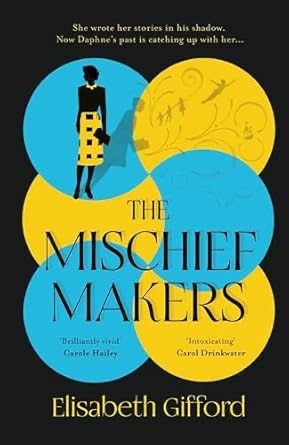
The Mischief Makers by Elizabeth Gifford


The Mischief Makers tells the story of author J.M Barrie’s relationship with the du Maurier family, including their daughter Daphne. I had a vague idea there was a connection between he two but hadn’t realised what the connection actually was. The film Finding Neverland always makes me cry, especially where the boy’s mother dies and makes her way into heaven/ Neverland. I knew that all the brothers were adopted by J.M.Barrie but I’d not realised that the boys were Daphne Du Maurier’s cousins. Their mother Sylvia was Gerald du Maurier’s sister, so my first thought was why weren’t the boys adopted by their own family? The author tells the story from Daphne’s perspective from her childhood all the way to middle-age. It’s a psychological study in a lot of ways, because Gifford really takes us into Daphne’s inner world as her life unfolds. Daphne herself filters the world through her psychological readings of Jung and Adler. We move back and forth in time as she examines incidents from her childhood with the benefit of experience and new discoveries she makes. We gain insight into her character and her process as an author, which was wonderful for me because I’m a huge fan of her work. 

Daphne grows up in a very complicated situation where she has a very attentive father and a cold, distant mother. This is something she examines closely later o with her adult knowledge of what’s appropriate and her father’s philandering ways with young actresses he starred with in theatre productions. The boys and J.M. Barrie are constant presence too, particularly in the nursery where Daphne would be waiting for the writer to weave stories. She is an imaginative child and Barrie teaches her to use her imagination, conjuring her ‘shadow self’ very like his most famous creation, Peter Pan. Tomboy Daphne is his real life principle boy and their play gives her space to sword fight, climb and take to the high seas in a way that’s frowned upon for girls in her class. There’s a fluidity to Daphne, in terms of both her gender and sexuality. In adulthood her pirate side becomes the bold, beautiful and sexually adventurous Rebecca de Winter. This was a character I’d always associated with Jane Eyre’s Bertha Mason – the original madwoman in the attic. Similarly, the second Mrs de Winter also represents Daphne but the quiet side that’s rarely seen in London. This is the side that craves time alone in Cornwall where she dresses in men’s tweeds and romps through the countryside or goes out sailing from their home in Fowey. As I was reading about this side of her character I was reminded of the young Mrs de Winter’s tweed skirts and her new sister-in-law’s observation that she couldn’t give a fig what she looks like. Fowey is where she goes to be herself, o hunker down with her children and husband Tommy. It’s where she writes and is most at home. 

I was very interested in the methods Barrie used to visualise the scenes from his books and plays. It also unlocks the imagination of his young charges, as the boys act out certain scenes such as hanging certain characters in the woods. With Daphne he has an almost hypnotic way of getting her to imagine an island rising from the lake. Could his techniques, which could be seen as hypnotism, have caused Daphne constant sense of being split. What effect did Uncle Jim’s imagination and techniques have on the boys in his care? Daphne remembers Michael being plagued by night terrors about drowning and a stubborn aversion to learning to swim. Are they all too imaginative? It’s clear that mental illness has run in the family, but is this an innate problem or unintentionally learned behaviour? 

I loved how Daphne comes across as a very new type of woman, especially in her own society and class. She epitomises the ‘flapper spirit’ but her progression goes much further than the drinking and dancing of the Bright Young Things. She’s different from previous generations of women in her very own way. She wants to write, to live alone in Cornwall and earn her own money. She has never fancied the idea of a husband and children, and has chafed against all the rules of being a young lady set by a mother she refers to as ‘Edwardian’. We get what she means in one sentence – the generation gap is huge. There’s also her fluid sexuality , something that I’ve always suspected as an undercurrent in her most famous novel Rebecca. Mrs Danver’s obsession with her mistress, telling her new mistress about Rebecca’s lustrous hair and showing her the sheer lace of her nightdress. When Daphne visits New York for a plagiarism case about the novel she meets Ellen, the wife of her publisher. She is immediately struck by her hostess’s resemblance to the character both in looks and her ability to look after a guest and put them at their ease. Daphne is overwhelmed by feeling and interprets it as desire, but I could see the second Mrs de Winter gazing out at Rebecca wishing she could be like her. Wouldn’t life be easier if she was this smart, perfect hostess and Tommy’s trophy wife? Although, Tommy largely accepts his rather less organised and talented wife.

Elizabeth Gifford brought Daphne to life for me and having visited the du Maurier home at Ferryside and Menabilly, I could easily imagine her there.  It was fascinating to take a trawl through her upbringing and how she ended up down in Cornwall writing. There is also this brilliant sinister edge to the story, with odd psychosexual tension and the questions around J.M. Barrie’s motives in adopting the du Maurier boys. Despite her mother’s wishes, her parents are generous enough to let her live down in Fowey as a young woman. Through her own journals we can see that she is troubled, constantly torn between the self she wants to be and the self she feels she should be. This is the gap between Rebecca and the second Mrs de Winter who is young, inexperienced and not equipped to run a great household in the same way as her predecessor. She questions herself constantly when the truth is that much like Maxim de Winter, her husband loves her for all the qualities she sees as faults. I thoroughly enjoyed this novel, that filled in the gaps in my knowledge about a brilliant writer and the psychological place her work came from. 

Meet The Author

Elisabeth Gifford studied French literature and world religions at Leeds University. She has an MA in Creative Writing from Royal Holloway College. She is married with three adult children and lives in Kingston upon Thames.

Posted in Personal Purchase

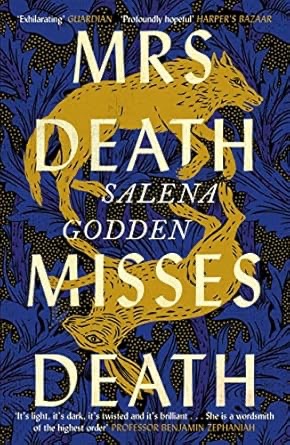
Mrs Death Misses Death by Salena Godden

Wow! I loved this book! It’s been sitting on my shelf for a while. I’d bought it instinctively but hadn’t got round to reading it yet and our new local book club gave me the chance. The club is a brilliant combo of meeting other bookish people, talking about books and eating pudding. It’s like my fantasy night out. I found the book incredibly lyrical and philosophical and totally blew my mind. It also made me take a long hard look at myself. It’s hard to explain the story, except to say that it’s a journey. I am a total sucker for books that address the reader directly and here we’re addressed by Death herself. Yes, I did say ‘her’. She explains herself like this: 

‘The greatest trick man played was making you believe I was a man […] Surely only she who bears it, she who gave you life, can be she who has the power to take it. The one is she. And only she who is invisible can do the work of Death. And there is no human more invisible, more readily talked over, ignored and easy to walk past than a woman, a poor, old black woman.”

She weaves another narrative through Death’s monologues and that’s the story of Wolf. He is charmed by an old antique desk he sees through a shop window, not realising when he buys it that it belonged to Death. He is drawn to writing and feels this desk might unlock his discipline and creativity. As he writes, Death perches on the edge of the desk and talks to him. They met when he was very small, during the fire that killed his mother. Between this story, Death delivers monologues on modern life: our ridiculous preoccupations, the way our lives are moulded by society and those terrible events that are an indictment on us and our world. The description of the fire that kills Wolf’s mother is surely based on Grenfell. There are multiple deaths and the residents have been campaigning to be heard for some time, claiming that the tower block was a death trap. I read this as the enquiry was in the news and the injustice resonated so strongly. The lives lost were cheap. The issues in the block were never addressed because those in power don’t listen to the poor, the downtrodden, or the immigrants. They were unwanted in an area that was becoming gentrified and no one seems accountable. There were no alarms and no sprinklers and the fact that Wolf survived us a miracle. This brush with Death connects them both, a deep sense of injustice and grief. I found Death’s monologues wise and started to think of her voice as that of the author coming into the fictional world. Her description of grief felt right: 

“It’s like having a stone in your centre;  time smooths the edges like a pebble in a river, but it’s always there – a stone is a stone”. 

We’re given a glimpse of Wolf’s ancestry through the prism of death. Wolf’s mother is the latest in a long line of violent and terrible deaths: hanging, gunshot, fire, drowning. Does this ancestral history mark Wolf out as Death’s obvious companion? 

Mrs Death’s monologues on society are brilliant, whether it’s child abusing celebrities using their money, fame and even religion to disguise their misdeeds or social media moguls allowing spurious and fake news stories to mislead us about what is real. I loved her take on sexism and misogyny, starting off with our perceived surprise that she’s a woman. The misogyny begins at the beginning of time, with Eve and the garden of Eden. Women in creation myths and legends are always the trickster. They’re the person who draws men towards their deaths, like the Sirens. There’s Eve, Medusa, Kalima – all are the architect of man’s misfortune. She lists the crones, witches, hags and wicked stepmothers of fairy tales. We sound incredibly powerful in those terms, but women only lead people to their deaths and don’t have the power to end life, despite having the power to give birth to it. Perhaps it’s that power to create life that scares men so much. If you listen to right wing politicians, we’ve excused and accepted way too much in the name of tolerance. Yet, women are still openly viewed in these terms, think about Trump’s running mate J.B. Vance and his dig at childless, cat ladies. Being a slave to her womb is the only thing that makes a woman natural or fulfilled. 

‘It is exhausting how much space men want and how much credit and control man wants for mankind”. 

There were parts of Death’s monologues that made me take a look at myself and particularly how I consume. Even publishing comes under her scrutiny as she talks about the stories chosen for publication. It’s not necessarily the stories that are most creative, but those that sell. She posits a story about the struggles of poor people, the literary equivalent of a Ken Loach film. She wonders about whether it would sell without a hook? Vampires are popular these days aren’t they? Let’s set it in Sheffield. It’s like I, Daniel Blake but with vampires. That will sell. The Christmas monologue really hit home, because I’d spent three days moaning that my usual place for Christmas wrapping paper had changed their website and it wasn’t working properly. It was designed for America and had stopped recognising some UK post codes and I was fuming. They were going to sell out before I got mine. Talk about first world problems. 

“It’s not a proper Christmas without the deep fried pork-whip nutmeg balls. Quick! Shop! Consume!” 

We all have our favourite Christmas foods, but Christmas will still happen without them. We will still have those we love round us. Yet every year I drag myself to Sainsbury’s because I just have to get my supply of Ecclefechan tarts. While it’s good to have our own traditions and things that make our Christmas, wouldn’t it be okay if the wrapping paper didn’t match the tree? It made me thoroughly ashamed of myself.

What I found most profound was Death’s ideas around ageing and changing. Humans are not meant to stand still. We change constantly. At those times when I’m worrying about how I look and my weight, which has increased considerably over the last few years while I’ve been unwell. I tell myself that this is the best I’m ever going to look. When I look back to pictures from twenty years ago I realise how pretty I looked,  but I have to remember that in twenty years I’ll be seventy years old and I’ll probably do the same. I need to stop feeling inadequate. Stop the self- criticism. As Mrs Death says, it’s the love that matters. Even though our outsides change, inside you’re still you. Even when I’m old and wrinkled in my nursing home, with others doing the washing and caring, deep inside I’m still me. I can visit a lifetime of memories and imaginary palaces in my mind that have always been there. That never leaves. It reminded of some work I did in a nursing home. I planned it for two reasons. I wanted to talk residents through their memories and help them make a memory box. I also wanted to created a collage for each resident to put outside their rooms so that carers could see it and hopefully realise that the residents are people. They’re not just empty bodies to be serviced, because once they had busy, full lives just like their carers do. It makes a massive change to the standard of care because they can now relate to residents and talk to them, instead of over them. I loved doing it because it changed how carers related to the residents.

I loved how the book changed as I came towards the end. The prose starts to break up and poetry starts to take hold, firstly in- between longer prose sections but then longer verses. The prose becomes shorter, more statements than sentences. It’s like the descent into madness or dementia. Meaning becomes more difficult to decipher with only brief moments of lucidity. Wolf stays at a writing retreat and he seems to lose time. There are periods of unconsciousness. He wanders and rambles. It’s still beautifully lyrical but more instinctive. It comes from the soul. 

Ultimately this book won’t be for everyone but those that do like it, will love it. I came away feeling uplifted. I didn’t expect a book about death to be so life-affirming. Wolf realises that time is a man made form of control. It’s something man created to place structure on life. Without time how could we create ‘work’, regulated to certain hours of the day and measured in units for which we are paid. Time is control. He examines the words we use, such as ‘time of death’. Death seems overwhelmingly final, so much so that we might avoid thinking (or reading) about it. There’s only one time of death, but we do have the time of life every single day. It’s down to the way we look As Mrs Death says ‘it’s all in the phrasing’. 

Meet the Author


Salena Godden FRSL is an award-winning author, poet and broadcaster of Jamaican-mixed heritage based in London. In 2021 Canongate published her highly acclaimed debut novel ‘Mrs Death Misses Death’. It won The Indie Book Award for fiction and The Peoples Book Prize and was also shortlisted for The British Book Awards and The Gordon Burn Prize. 

Salena Godden’s work has been widely anthologised and broadcast on BBC radio and TV and film. Her essay ‘Shade’ was published in award-wining anthology ‘The Good Immigrant’ (Unbound, 2016). She has had several volumes of poetry published including ‘Under The Pier’ (Nasty Little Press, 2011) ‘Fishing in the Aftermath: Poems 1994-2014’ (Burning Eye Books, 2014) ‘Pessimism is for Lightweights – 13 Pieces of Courage and Resistance’ (Rough Trade Books, 2018) and also the childhood memoir ‘Springfield Road’ (Unbound, 2014). Her self-produced poetry album ‘LIVEwire’ (Nymphs and Thugs, 2016) was shortlisted for The Ted Hughes Prize. The Royal Society of Literature inducted Godden as a fellow FRSL in 2022. She is also a patron of Hastings Book Festival and an Honorary Fellow of West Dean, Sussex.

A new hardback edition of ‘Pessimism is for Lightweights – 30 Pieces of Courage and Resistance’ was published in February 2023 by Rough Trade Books, featuring revised and new material, an introduction by John Higgs and an Old English translation of the title poem by Emily Cotman. The poem ‘Pessimism is for Lightweights’ is on permanent display at The Peoples History Museum, Manchester. 

Salena Godden is currently working on three new books for Canongate: Literary childhood memoir ‘Springfield Road – A Poets Childhood Revisited’ and full poetry collection ‘With Love, Grief and Fury’ will be published together in May 2024. Plus an eagerly anticipated 2nd novel set in the ‘Mrs Death Misses Death’ universe will be published by Canongate in spring 2025.

Posted in Publisher Proof

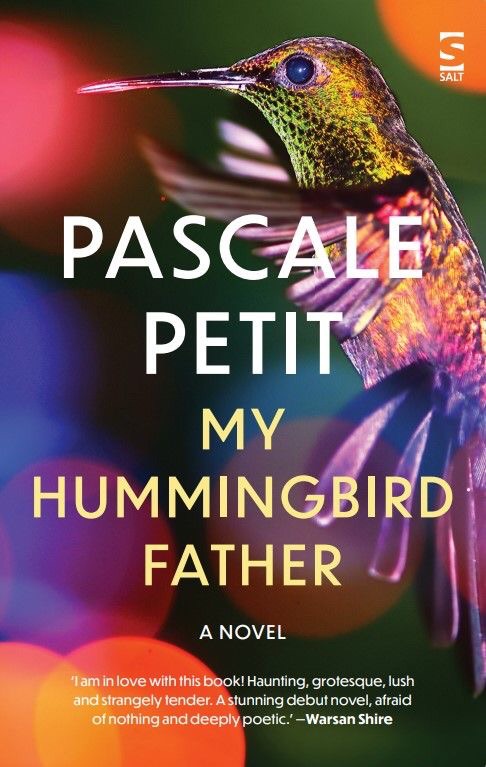
My Hummingbird Father by Pascale Petit

This extraordinary novel weaves a mystical and hypnotic spell around the reader, using the flora and fauna of our heroine’s home in Venezuela and slowly unravelling the truth about her childhood. Dominique is an artist who receives a vision of her father in her dream, so powerful she is able to recreate it on canvas. She hasn’t seen him since her early childhood, so it’s a surprise when he gets in touch and asks her to come to Paris. He is dying and wishes to reconcile with his daughter. Longing for paternal love Dominique travels to Paris, on a physical and spiritual journey to recover that part of her early childhood she spent in Paris with both her parents. There she uncovers repressed memories that reveal the truth of her parent’s marriage and her own birth. She also visits the Venezuelan Amazon where she meets Juan, a mystic and shaman who guides her journey. A gentle and tender love story emerges between them as Dominique tries to heal from what she has uncovered. 

I would have known this writer was a poet and an artist from the very beginning because she writes lyrically and creates such striking visual imagery. At first it’s an assault on the senses, a maelstrom of imagery from the Amazonian jungle filled with colour and fantastical animals. A beautiful example of magic realism, the author’s vivid imagery tells of jaguars, birds of paradise and in one case a very disturbing anteater I expected to see in my nightmares. It’s almost hypnotic and I was so overwhelmed and beguiled by the beauty of her words that I didn’t realise the pain and devastation underneath. It’s through her artwork, which is almost shamanistic at times, that she processes her trauma. Her childhood was tainted by her father leaving, seemingly without explanation when she was six years old. She then experienced abuse and resentment from her mother. The process of recovery from trauma is a major theme in the book and we can see how Dominique’s reintroduction to her father triggers the emotions that she hasn’t resolved. In fact his presence triggers nightmares and the re-emergence of events she’s kept locked away in her subconscious. She wants answers to the mystery of her father’s disappearance, but I feared she would be re-traumatised by the truth.These are dark, harrowing memories in parts but it’s clear that the beauty of nature really does have a healing effect on her. 

Her descriptions of Venezuela and the incredible Angel Falls made me want to see it for myself! Here things become more mystical as we see Dominique’s beautiful connection to this place and a man she meets from the Pemon community, indigenous to Venezuela. Juan helps her to go deeper inside herself and face whatever unresolved feelings lurk there. He is a shaman to the community and can ward off malevolent spirits, including the type of dark and disturbing emotions that can haunt people who’ve experienced abuse. This is an incredibly personal journey and her time in Venezuela, the rediscovery of her childhood home in Paris as well as reading her father’s correspondence all contribute to her recovery. I found her story deeply moving and challenging to read at times. However, I recognised the catharsis in Dominique’s artistic expression and the importance of documenting traumatic experiences. She needs others to bear witness to the truth of her childhood, because only then can she achieve acceptance and healing. This is a beautifully written novel, that’s lyrical and treads a line between poetry, visual art and prose. I was touched by it and by the deep connection Dominique has with the natural world. There she can be her true self, an imperfect human woven back together by animals who always accept us as we are.

Meet the Author


Pascale Petit’s eighth poetry collection, Tiger Girl (Bloodaxe, 2020), was shortlisted for the Forward Prize and for Wales Book of the Year. A poem from the book, ‘Indian Paradise Flycatcher’, won the 2020 Keats-Shelley Poetry Prize. Her seventh collection, Mama Amazonica (Bloodaxe, 2017) won the inaugural Laurel Prize in 2020, the 2018 Royal Society of Literature’s Ondaatje prize, was shortlisted for the Roehampton Poetry Prize and was a Poetry Book Society Choice. Her sixth collection, Fauverie, was her fourth to be shortlisted for the T. S. Eliot Prize and a portfolio of poems from it won the 2013 Manchester Poetry Prize. T. S. Eliot shortlisted What the Water Gave Me: Poems after Frida Kahlo (Seren, 2010), was also shortlisted for Wales Book of the Year. Salt published her debut novel, ‘My Hummingbird Father’, in 2024 and her ninth poetry collection, Beast, is forthcoming from Bloodaxe in 2025, and is awarded the Arthur Welton Prize.

Posted in Publisher Proof

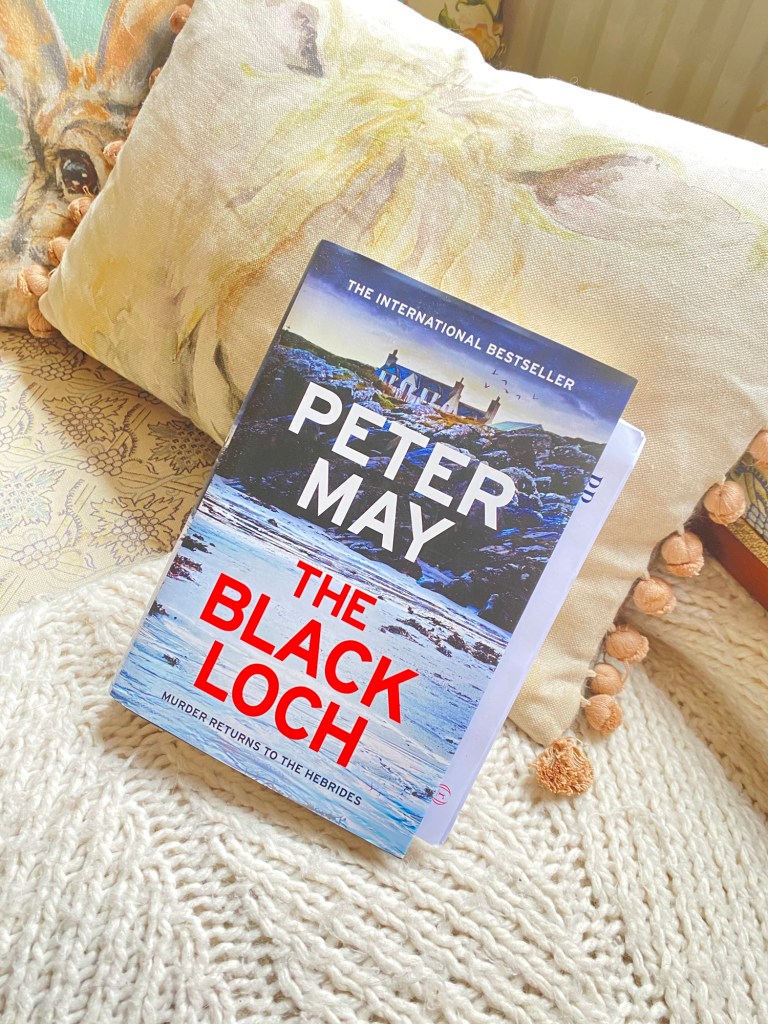
The Black Loch by Peter May

Readers probably won’t believe this but this is my first Peter May novel. I’ve had his books on my ‘authors to explore’ list for when I’m second hand book shopping, but something always gets in the way of me reading them. So, when I was offered this blog tour I jumped at the chance to finally read one. I love books set in Scotland and I am a particular fan of Tartan Noir – crime novels and mystery novels from authors like Doug Johnstone and Val McDermid. I was immediately drawn into the incredible scenery and atmosphere of the Isle of Lewis. This is the fourth in a trilogy, so I’ve definitely got some catching up to do where Fin McLeod is concerned. Once a detective and now retired, Fin is drawn back to Lewis when Caitlin Black’s body is discovered on a remote beach. Only eighteen years old, Caitlin was a student at the Nicholson Institute. It emerges that she was having an illicit affair with Fionnlagh McLeod, her teacher and a married man twenty years her senior. Fionnlagh soon becomes the prime suspect and is arrested on suspicion of her rape and murder. He is also Finn’s son. Finn knows he must return to Lewis to support his daughter-in-law and granddaughter. He also knows, despite the evidence against him, that he must try to clear his son’s name. As Fin travels around the island, he is drawn into past memories and soon realises this crime has echoes back into his own teenage past on the island. A terrible accident at a salmon farm caused two deaths, just as the industry started to expand on the island and become a multi-million pound concern. This is a journey of family ties, secret relationships and a bleak and unforgiving landscape, where violence, revenge and revelations converge. 

Fin and his wife Marsaili both grew up on the island, so it holds echoes of their relationship over the years. It’s strange for them to be back on Lewis after a ten year absence and awkward to turn up on Fionnlagh’s doorstep where his wife Donna is devastated by the possibility that her husband has killed his teenage lover. Their daughter Eilidh is happy to see her grandparents and currently oblivious about her father’s fate, but it’s clear to see the damage Fionnlagh’s exploits have had on Donna. These early chapters felt like being sucked down into a whirlpool of memories. There’s such an incredible sense of place and the use of Gaelic words and names feels foreign, strange and somehow magical at the same time. There are tourists enjoying the white sandy beaches, but we’re taken down below the surface to the realities of living somewhere so remote and bleak. Then further down to the horrors underneath where salmon are eaten alive by lice in their cages, where beached whales gasp their last agonising breath on the sand and a beautiful girl with her whole life ahead of her can be thrown over a cliff like rubbish.

“He finally reached the Black Loch just before seven-thirty. He parked above the beach as sunlight fanned out towards him across cut-crystal water, revealing the secret colours that concealed themselves on the shore, among rocks and boulders and the seaweed washed up to dry along the high-tide mark. To his right, cliffs of Lewisian gneiss rose steeply out of the water and he could just see the gables and chimneys of the house that stood above them overlooking the bay. He cast his eyes down again to the water’s edge and left footprints in the wet sand as he followed the curve of the day towards the looming black of the cliffs. Somewhere here Caitlin’s body had been washed ashore.”

Peter May has portrayed the environment, whilst also showing the extent to which climate change and the eco- industry have impacted the surroundings he’s known for his whole life. The old cottages are damp and battered, some being refurbed by incomers with money either as family homes or holiday cottages. New houses are squat, one-storey dwellings built to blend with the sand and the heather with large  windows giving uninterrupted views of the landscape. Younger islanders are focused on eco-activism with Caitlin Black and her friend Isobel starring in a programme about the island’s ecology. They care about fish farming practices driven by the market across the globe for salmon. Practices that prevent wild salmon from swimming up river to spawn as well as terrible conditions for the farmed salmon too. Huge cages that once held a few hundred salmon now hold a hundred thousand, with such a high mortality rate they’re having to take them from the cages and dump them into rock crevices formed from by the tide. They lay there rotting until the sea washes them away.

“The activist’s aerial shots exposing the illegal dumping of dead fish, and the zombie salmon, half eaten by sea lice, swimming listlessly around in cages where anything up to twenty-five percent of fish were already dead. She listened in horror as he conjured up an image of the stinking, maggot-ridden morts […] and the 1000-litre containers of formaldehyde that a desperate Bradan Mor was using to try to kill the sea lice.”

Fin’s narrative takes us on his investigations around the island, trying to find evidence to disprove the police’s theory that his son is a killer. A task made much more difficult when his DNA matches samples taken from Caitlin’s body. Why would he rape someone he’s been sleeping with for months? This is according to locals who’d noticed their clandestine comings and goings from a derelict cottage by the sea. Despite the urgency of the present moment, Fin is also pulled inexorably into the past, because this island has a huge hold and power. I felt centuries of history in the land it’s people and their relationships. This is sometimes positive, as Fin remembers beach parties where he first met Masaili as a teenager and they make love on the beach in the present, grasping a tiny moment of happiness and connection in the hurt and devastation. The most terrible memories involve a scheme to steal fish from the fish farm and pass them off as wild salmon, for a ghillie from the estate to sell on. Fin goes along with it despite his misgivings, but the scheme is originally suggested by Niall. A group of teenagers meet and drive to the fish farm several times, but one night there’s an awful storm and a sense of foreboding. This enterprise leads to two deaths and creates a suspicion in Fin about his friend Niall. If he is willing to steal from his own family and brush aside the death of a friend, is he capable of murder? Niall’s surname is Black and Caitlin is his daughter.

It feels as if the island has a consciousness. It sees your past and your future as clearly as the present, almost as if they’re happening simultaneously. I felt it when Finn walked across the very place he stood with Masaili when they were first meeting at six years old and she had two pigtails. She also called him Finn for the first time, christening him with a nickname he still uses. This is a thin place, unchanged for centuries. It also said something about how we experience the world. We are rarely solidly who we are in the present, with past and future forgotten. We are simultaneously all the selves we’ve ever been. In this way Fionnlagh can be a good father, a talented teacher and a suspect in a murder. There are also darker moments from Fin and Marsaili’s past that come alive here. Her narration is a rare moment in the novel but she relives a night in Glasgow from their university years, when she found Finn in bed with another girl in their student flat? It makes us realise that Finn isn’t wholly the upstanding man we think he is, he was also the cause of so much hurt, rather like his son. 

There’s a sense in which this trauma is generational, not just in individual families but in the island itself. The environment has always been harsh and people have found it to survive. It’s a hunting and fishing community and other nearby islands, like St.Kilda, became uninhabitable in the early Twentieth Century due to the difficulty of growing and catching enough food for the islanders. Fin takes us back to a conversation he had with his grandfather about the whaling industry, brutal tales of harpooning these majestic creatures and turning the sea red. It links to the beached whales in the bay, possibly drawn off course by one of them being unwell and in distress. As the vet assesses these giant creatures and people desperately try to save them he talks about a tradition in the Faroe Islands where they draw whales to the shore then hack them to pieces. Fin has violent memories of being forced to join a seasonal slaughter. In his last summer before university, Fin felt like a black cloud had descended because he and his friend Artair had been chosen to join the guga hunters. This was a four hundred year old tradition where twelve men would travel to An Sgeir, an island no more than a rock in the middle of the ocean. A guga was a young gannet, once hunted in a desperate need for food, their slaughter was now a rite of passage. Hunters killed two thousand birds in a fortnight, then they would be plucked and salted. Fin felt disgusted by the idea, but it seemed unavoidable and it would be dishonourable to give up your place.

“Neither Artair nor I wanted to spend two weeks on that bleak and inhospitable rock, scrambling among the blood and shit that covered the cliffs, slaughtering defenceless birds.”

This was a tense and complex case with so many possible suspects, and Peter May also keeps us guessing about Fionnlagh. Perhaps he could be the killer, after all he does confess. In a way this created a crime novel that didn’t revolve completely on whodunnit, but on the tensions between different characters and also their environment. He also creates a compelling picture of the beautiful and intelligent victim, Caitlin Black. A girl as embedded in the island as Fin, with a deep passion for the island’s environment and it’s flora and fauna. She epitomises the gap between generations, but also between those who want to protect the island and those who are making a generous living by exploiting and polluting it. I loved how deep the island and it’s history ran in these people, something I can understand having lived right next to the River Trent for most of my life. In fact the first thing I did when moving into my last village twelve years ago was go to the river bank and take off my sandals to feel the river bank under my feet. The river and it’s daily tidal bore, the smell of fresh cut hay, the cool of the forest, the crunch of dry pine needles underfoot as well as the smell of straw bales in the sun and freshly turned earth are all in my soul. They make up part of who I am and although I moved away for study, I have returned and unknowingly into the same village where my great-great grandmother is buried. Our ancestors call to us and this is definitely what Fin and Marsaili are feeling, as well as need to be close to Fionnlagh, Donna and Eilidh. This is something he couldn’t have imagined ten years ago, but now he wonders if it’s where they belong. Perhaps this means future additions to the series and on the basis of 5is novel, I’ll be the first in the queue if it does.

“He leaned over to kiss her and remembered that little girl with the pigtails who had walked him up the road from the school to Crobost Stores giving him the nickname that had stuck for the rest of his life.”

Out on 12th September from RiverRun Books, an imprint of Quercus.

Meet the Author

Peter May was born and raised in Scotland. He won Journalist of the Year at twenty-one and was a published novelist at twenty-six. When his first book was adapted as a major drama series for the BBC, he quit journalism and became one of Scotland’s most successful television dramatists. He created three prime-time drama series, led two of the highest-rated series in Scotland as a script editor and producer and worked on more than 1,000 episodes of ratings-topping drama before deciding to leave television and return to his first love, writing novels.

Posted in Squad Pod

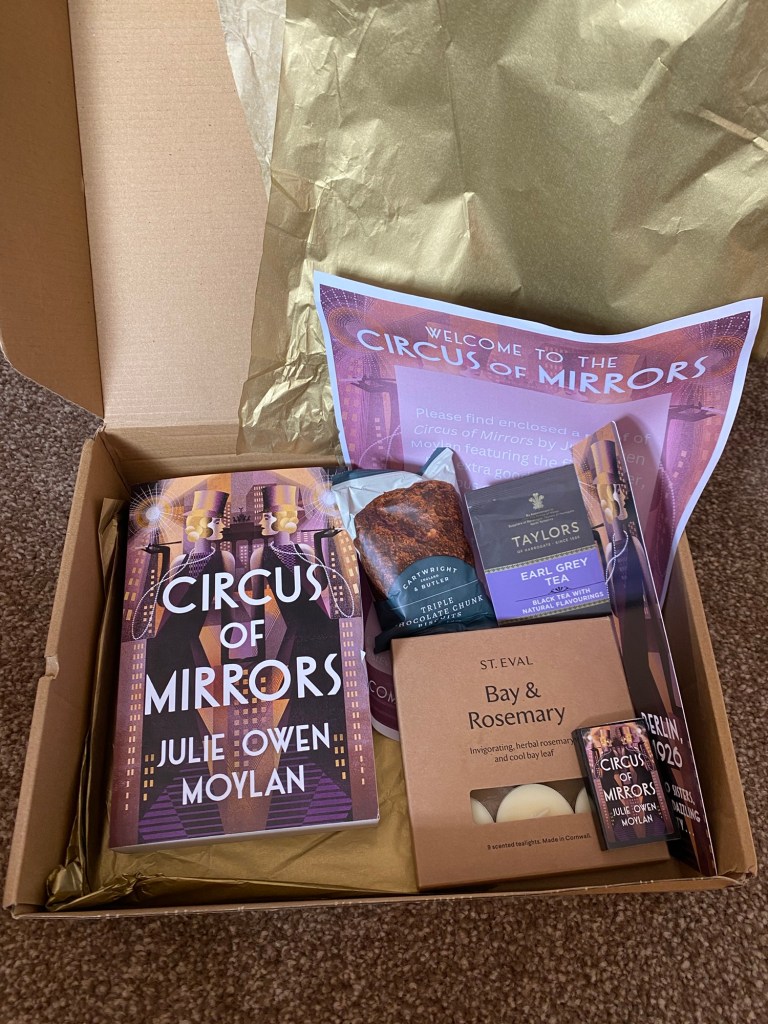
Circus of Mirrors by Julie Owen Moylan

I really have been blown away by this story set just after WW1 and progressing to the mid-twentieth century. Our characters are two German sisters Leni and Annette who live in Berlin and are the last living members of their family. When we first meet them they’re in dire straits, living in a makeshift shelter in an abandoned garden. Thanks to war and the influenza epidemic they’ve lost their family, so are totally reliant on each other. Leni, the older sister, gets a chance to earn some money at a notorious and rather seedy cabaret club called Babylon Circus. There the naive and rather shy Leni becomes a cigarette girl in a second hand and pinned costume that just covers her modesty, but she is at first shocked by what she sees. With shades of the musical Cabaret the author creates a club that is a mirage of clever lighting, fairground mirrors and risqué musical numbers. It’s enchanting by dark and unwelcoming by day, but it doesn’t matter because this is the type of fun that can only be had at night. The girls are shameless on stage and nudity is everyday in the dressing room, but Leni sees something attractive in their boldness, bawdy gossip and loud raucous laughter. They have a freedom she’s never seen before in women, they’re not afraid of taking up space. The illusion extends to the girl’s costumes, covered at first glance but offering a cheeky glimpse here and there. This is what the crowd turn up for, but one girl manages to shock the audience by crouching on the table of a misbehaving customer and pissing in his face. Everything is overseen by owner Dieter, a man with his own disguise. He rarely enters the cabaret room, but sits in his office with it’s resident cat. Having left half his face on a battlefield he wears a tin mask which chafes at his wounds and leaves his expressions slightly lopsided. This gives a certain sense to the fairground mirrors, if everyone is distorted then no one stands out. 

It’s Paul the pianist’s good looks that capture Leni; his talent, his smile and the lock of hair that escapes onto his forehead. When he starts to walk her home she’s evasive, how can she tell him he doesn’t have one? She invents a family, but then has to keep Annette out of her business. Paul’s also in trouble, as his brother has run up debts he can’t repay and the lenders are leaning on him to pay instead. After a warning in the form of a beating he knows he must leave, but what will he do about Leni? Leni and Annette now have rooms, with a landlady who doesn’t mind watching Annette in the evenings while Leni works. I had so many questions. Would Paul ask Leni to go with him? Does he even feel that strongly about her? Where would Annette fit into this? Even after all these questions are answered, jealousy and fate intervene changing everything. 

In our second timeline we’re in the midst of the Cold War and a middle-aged Leni is living in Berlin with her teenage daughter, following the death of her husband. She’s surprised by a sudden visit from her sister Annette who now lives in the USA. She seems agitated and anxious, spending all her time in flat brooding and smoking. Leni’s daughter is in the throes of first love, using the guise of drama rehearsals to meet her boyfriend. With nowhere to go they find solace in a strange old cabaret club where there’s a fairground mirror amongst the ruins. This is the perfect place for secret assignations. Leni is concerned that with her sister here the past seems closer than it’s been for years. So many secrets are being kept between these women and when Leni sees a face from the past, it could all come tumbling down like a pack of cards. 

Julie writes mid-century women like no one else. I feel like I know them. This is my grandmother’s generation and my grandad actually went to Germany after WWII to help rebuild the country. I remember being shocked by the utter devastation of German cities when they were depicted in the film The Aftermath. I was haunted by a woman getting her daughter ready for school, brushing her hair in their normal routine, but with the outer wall blown away. It was like looking into a doll’s house. The author made me feel the contrast of that wild decadence in the 1920’s with the Cold War period where everything feels grey and routine with nothing to look forward to. The bleakness of Leni’s flat really comes across as it seems to echo the desolation of Annette. Even the once rowdy and colourful club is now derelict and abandoned. I love the way the author plays with place and identity in this way, as well as how the characters see themselves. Their internalised sense of how they look forming part of their identity, but is often at odds with how we see them. Dieter and the girls at the club are almost gaudy grotesques, using appearance and performance to mask true feelings. As for Dieter, I kept thinking about his inability to express emotion in his face and how that affected his ability to connect with others. If we can’t express what we feel what effect does that have on our identity? Dieter can’t look at his new face because it doesn’t reflect the image he has of himself in his mind. It’s only once everyone else becomes distorted that he fits in, only the cat accepts him utterly as he is. 

The secrets between the sisters are beautifully constructed. Annette’s adult behaviour is a faint echo of her childhood feelings. Her jealousy and fury when she discovers Leni with Paul is the fear of a child who has almost lost everything and everyone she knows. She only has Leni and what if she leaves her too? As an adult, pulling secrets or feelings from her is almost impossible. She has been holding the past inside herself so tightly and for so many years I was unsure if she would bring it’s truths to the surface without breaking. Towards the end, as another terrible event outside their control looms over Berlin, my heart was in my mouth! Not knowing whether the ending would be what I wanted had my heart racing. I couldn’t bear either sister to suffer any more heartache and this is the beauty of Julie’s writing. She makes you believe in this world and these characters so much, that you’re able to shed real tears for them. This novel is easily one of the best I’ve read this year and I’m in no doubt it will feature in my end of year list too. I’ve loved Julie’s first two novels, but this is certainly Julie’s best novel so far. 

Published by Penguin on 12th September. Thanks to Julie and the Squad POD Collective for including me in this month’s book club.

Meet the Author

Her debut novel That Green Eyed Girl was a Waterstones’ Welsh Book of the Month and the official runner up for the prestigious Paul Torday Memorial Prize. It was also shortlisted for Best Debut at the Fingerprint Awards and featured at the Hay Festival as one of its TEN AT TEN debuts.

73 Dove Street was recently named as a Waterstones’ Book of the Year and Daily Mail Historical Fiction Book of the Year with the paperback still to come in April 2024.

As a filmmaker Julie won the Celtic Media Award for her graduation film “BabyCakes” before going on to win Best Short Film at the Swansea Film Festival.

Her writing and short stories have appeared in a variety of publications including Sunday Express, The Independent, New Welsh Review and Good Housekeeping.

She has a Masters in Filmmaking and an additional qualification in Creative Writing & English Literature. Julie is an alumna of the Faber Academy. Circus of Mirrors is the third novel.