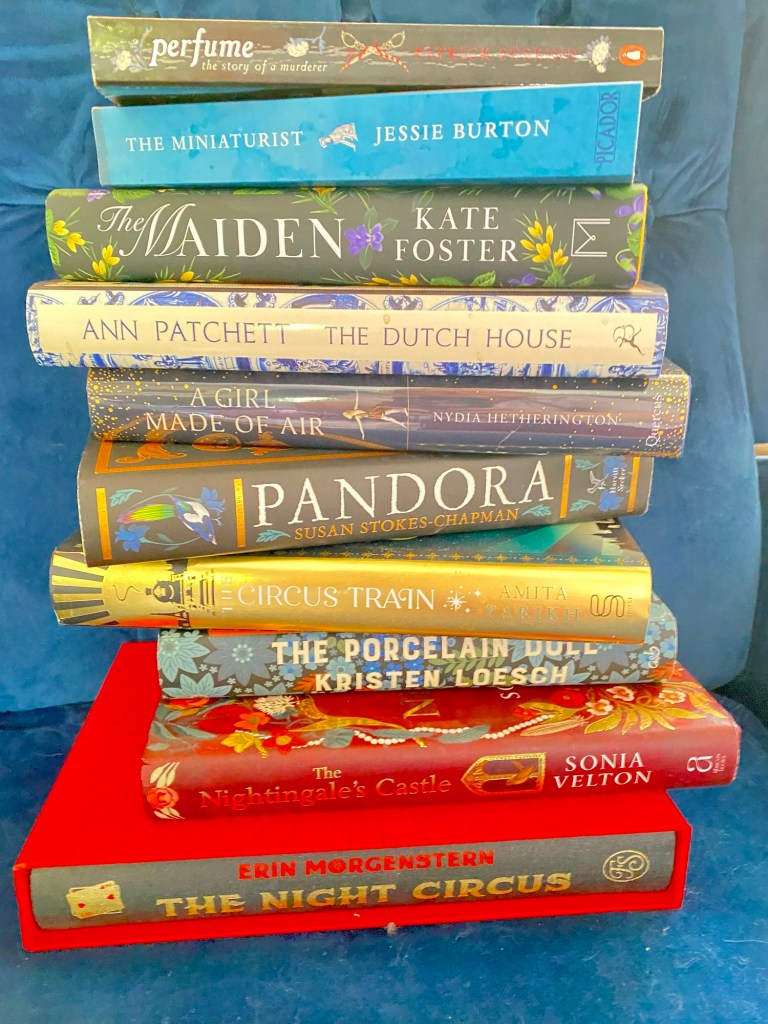
Well, as usual with me, this has turned from a quick and simple share of beautiful book covers into a wealth of research on symbols in art. I noticed a few common symbols as I was photographing these beautiful books and realised exactly why I’d ended up buying them. Book covers are an absolute art form and I do have certain ones as posters or cushions at home, particularly early 20th Century examples with an art nouveau or art deco feel to them. The symbolist art movement emerged towards the end of the 19th Century and moved away from realistic depictions to using symbols that would express certain emotions or communicate hidden meanings. This is exactly what a book cover is supposed to do, somehow in art form it must communicate to the buyer in a single image what that book is about. Realistic book covers that depict characters or a scene from the story don’t seem to do it for me and often I’m totally put off by depictions of people. I’d noticed a long time ago, when I first dipped my toe in bookstagram and didn’t know a flat lay from a spredge,that I couldn’t complete bookstack challenges that focused on cover because my books don’t often have pink, blue or bright covers, they’re more likely to be dark, bold and full of gold lettering. They also have certain symbols in common. That’s not to say I’ve looked and consciously thought about it, they’re symbols that have subliminally communicated something about the book that has forced me into picking it up. Here are ten examples.
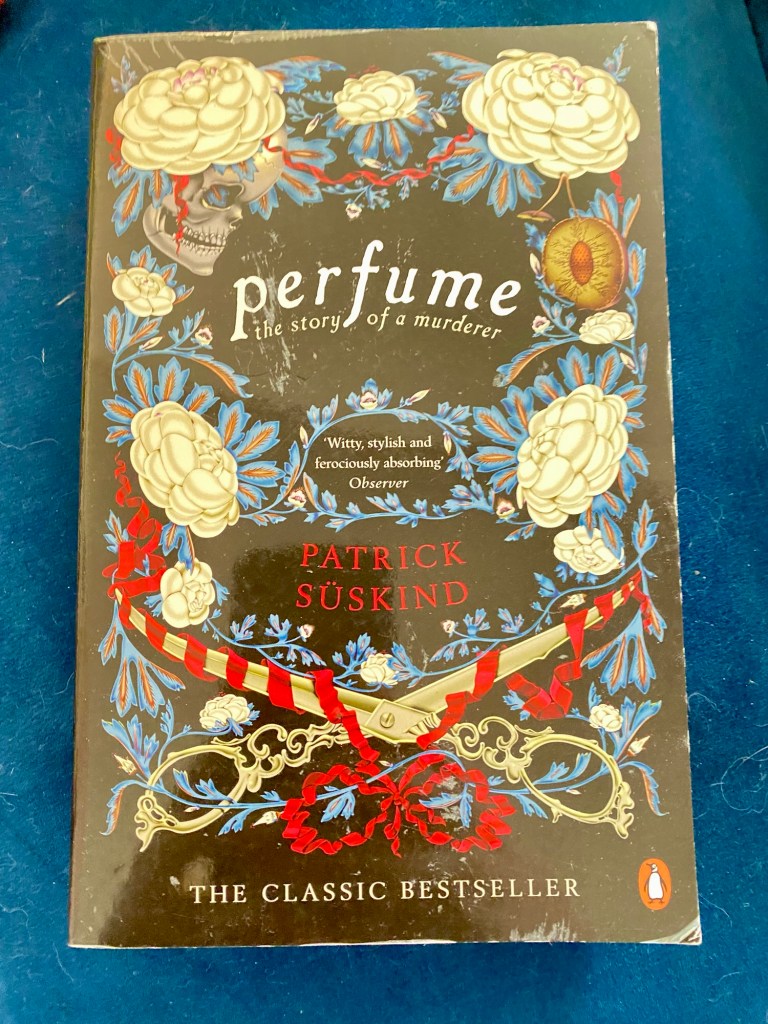
I love this stunning cover. I bought this second hand and didn’t mind the creases because the front was so beautiful. Perfume focuses on a character who is born with no smell. Everyone has their own distinctive smell, it’s why other people’s houses smell different to our own. This is a combination of personal scent, but also our animals, the detergents we choose, the scented candles and our cooking smells. However, no one can smell Jean Baptiste Grenouille and it makes people uncomfortable around him. His wet nurse says that her children smell like normal human children but she can’t smell Jean-Baptiste at all. He must be a child of the devil. When he’s older, he realises his own sense of smell goes beyond the normal. He can’t just smell the general disgusting stench of a city in the 18th Century, he can separate it into hundreds of strands each one subtly different from the next. Then he meets a young woman with a scent that is so intoxicating, he deems it the scent of true beauty. How can he replicate that scent? What follows is the quest of a man possessed by perfume and the lengths he will go to in order to obtain the essence of this young woman. I was drawn to the cover because of the beautiful floral pattern of either roses or peonies and the memento more of a human skull. The red ribbons that weave in and out of the flowers symbolise passion, love and intense emotion. Ribbons are worn by young girls and the red can also be seen as a symbol of wealth. The ribbon is caught at the bottom of the cover in pair of ornate silver scissors, which symbolises the cutting of ties but in a way that’s final. These symbols of beauty and death perfectly encapsulates Suskind’s story and obviously appealed to my love of rather decadent and horrific stories.
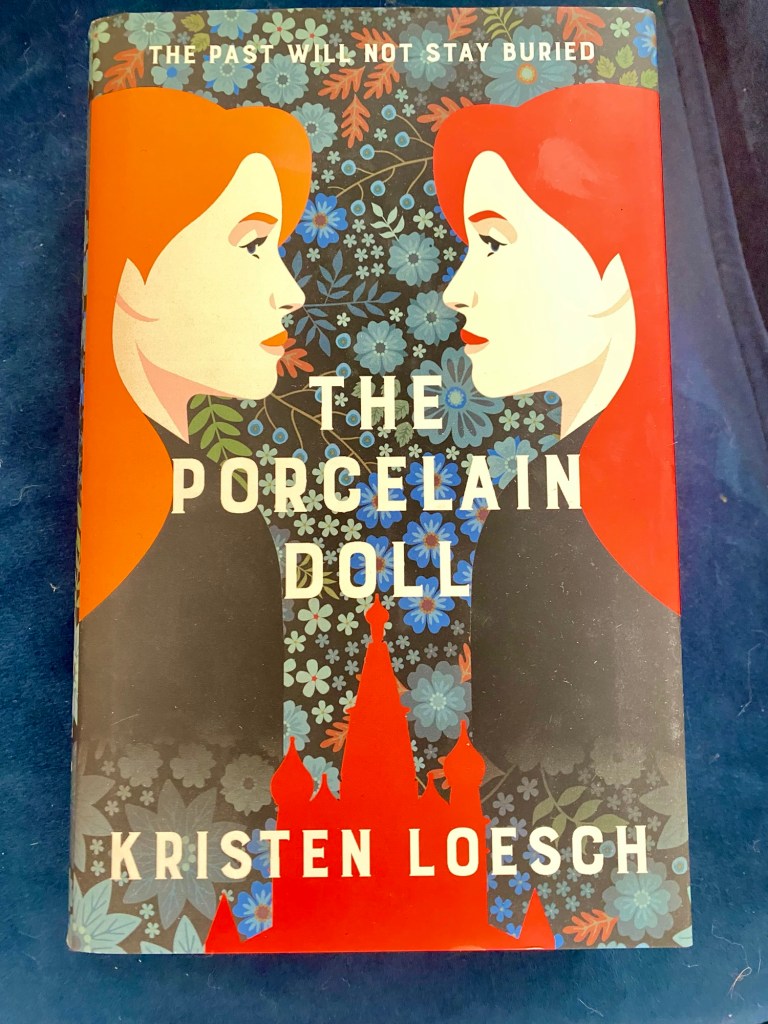
When I saw this displayed on a table in a small bookshop I was drawn to pick it up immediately. The beautiful blue floral background is striking and the bold red/orange silhouette of St. Basil’s Cathedral told me it must be set in Russia. The two women on the cover are almost identical, except one has slightly lighter hair and they both have porcelain white skin. This depiction screams ‘uncanny’ at me straight away. Are they dolls or living women? This brings with it all those connotations of twinning, doppelgängers and the horror of old porcelain dolls. It also evokes childhood nostalgia and when I read a prologue that started like a fairy tale I knew I’d picked up the right book for me. Our main character Rosie faced a terrible trauma in her childhood when her father and sister were killed, bringing an ended to a childhood dominated by her mother’s storytelling. In fact, all Rosie has of her family is her mother’s notebook where her handwritten tales seem to hide a deeper meaning. While a student at Oxford she decides to travel back to Moscow and research her ancestors, finding a devastating family history spanning the revolution, the siege at Leningrad and Stalin. She also finds a young woman called Tonya, described as being pretty as a porcelain doll whose actions span across the century.
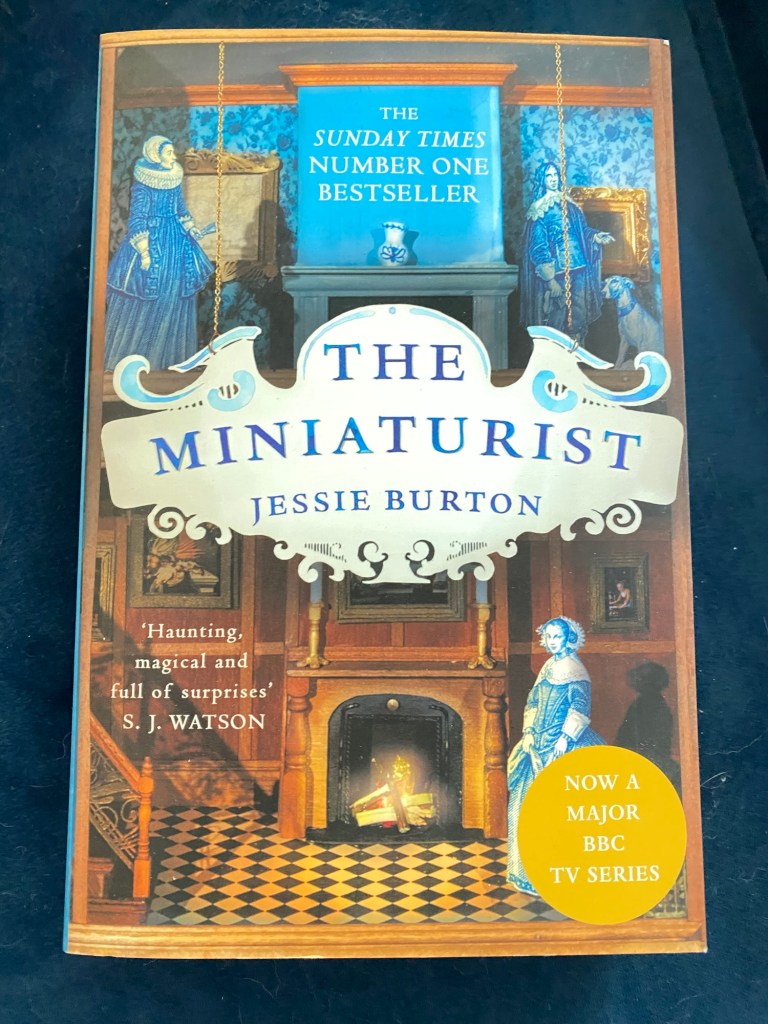
This was a book I picked up in my local bookshop while browsing and was Jessie Burton’s debut novel. This continues the theme of dolls, with a cover depicting a miniature household with what look like cut out people in blue and white, against the colours of the interiors. This is more historical fiction, with our main character Petronella Oortman being a real Dutch woman whose husband gifted her a miniature replica of their own house. Called cabinet houses at the time, this one is displayed at the Riijksmuseum in Amsterdam and seeing it in person is on my bucket list. The cover gave me a feeling of a stage set, a house where everyone has their set roles and expectations. However, they are only paper cut outs suggesting these traditional roles are flimsy and perhaps not what they seem. I researched the symbolism of doll’s houses and they suggest a doll-like existence, the facade of a traditional and happy family. Its size conveys claustrophobia and secrecy. So this cover definitely fits with our story, which follows Petronella into the first months of her marriage to wealthy merchant Johannes Brandt in the 18th Century. Petronella receives small parcels, meant to contain miniatures for her house, but they also contain miniature people – replicas of the residents and their servants. As Petronella starts to uncover the secrets within her new family she feels as if the miniaturist knows the truth and holds their future in her hands. This is a great mystery and commentary on the societal expectations of 18th Century Amsterdam and its wealthier residents.
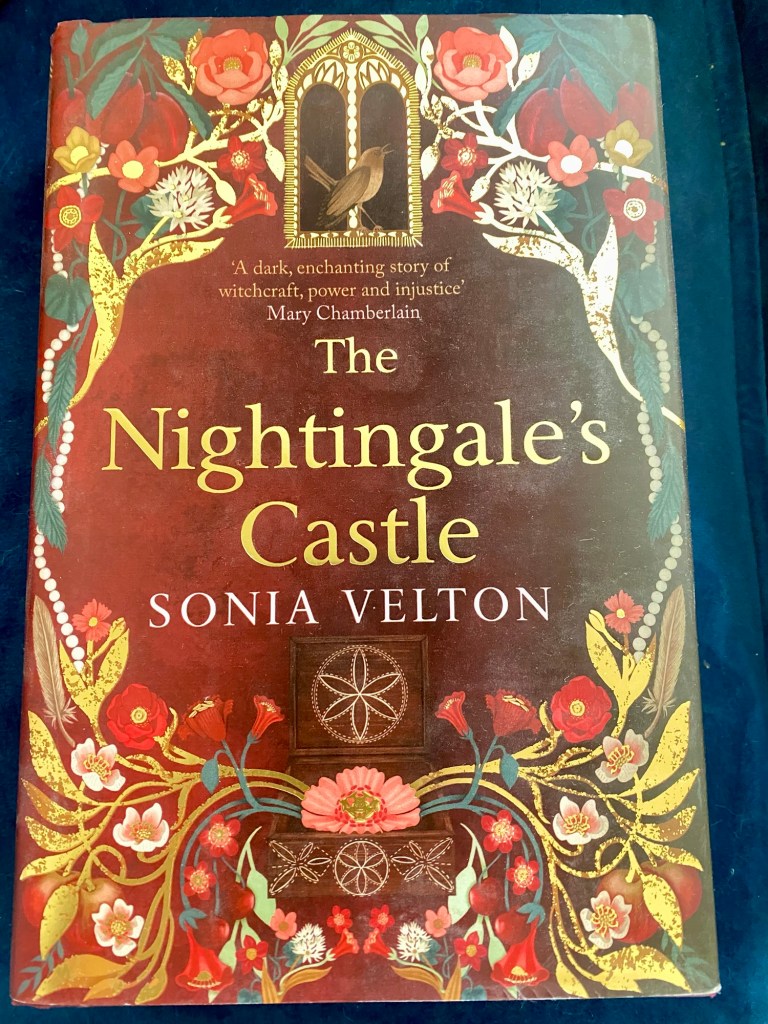
This beautiful burgundy, pink and gold cover called to me across a crowded bookshop, it’s ornate but with a darkness running underneath. The nightingale is a motif that is carried on inside the book and while I knew birds signify freedom and flight I was sure the nightingale had a specific meaning. For me they bring up a memory of leaving church after midnight mass, in the crisp, dark early hours. In the garden of the manse were a lot of trees and as clear as anything in the stillness came this beautiful birdsong. It was a magical moment that Christmas morning because I’d never heard one before. Nightingales symbolise artistic expression which is a freedom of sorts and they apparently symbolise love, particularly of an unrequited or melancholy kind. There’s a sense of yearning in its symbolism that could be interpreted as lost love. This cover was simply made for me. The story is set in the 16th Century in Roumania’s Carpathian Mountains, where a countess gives birth to an illegitmate daughter. The girl is given to a peasant family and brought up in one of the villages surrounding her mother’s castle. Boróka has been protected, but around her fifteenth birthday word is sent that castle representatives are looking for a new intake of serving girls. Unable to refuse, her father watches Boróka taken from the only home she has known to serving at Cachtice Castle, the home of her mother. It’s a cruel life and she is terrified of the countess who is said to murder young girls. When plague comes to the castle, these two women are thrown together and become closer. Sadly though, Countess Bathory is a marked woman, whose wealth threatens the king. As she’s accused of killing hundreds of girls and named the Blood Countess can she trust the women who are close to her? This reads as a dark fairy tale but unbelievably has a basis in fact with the Countess known as the most prolific female serial killer of all time.
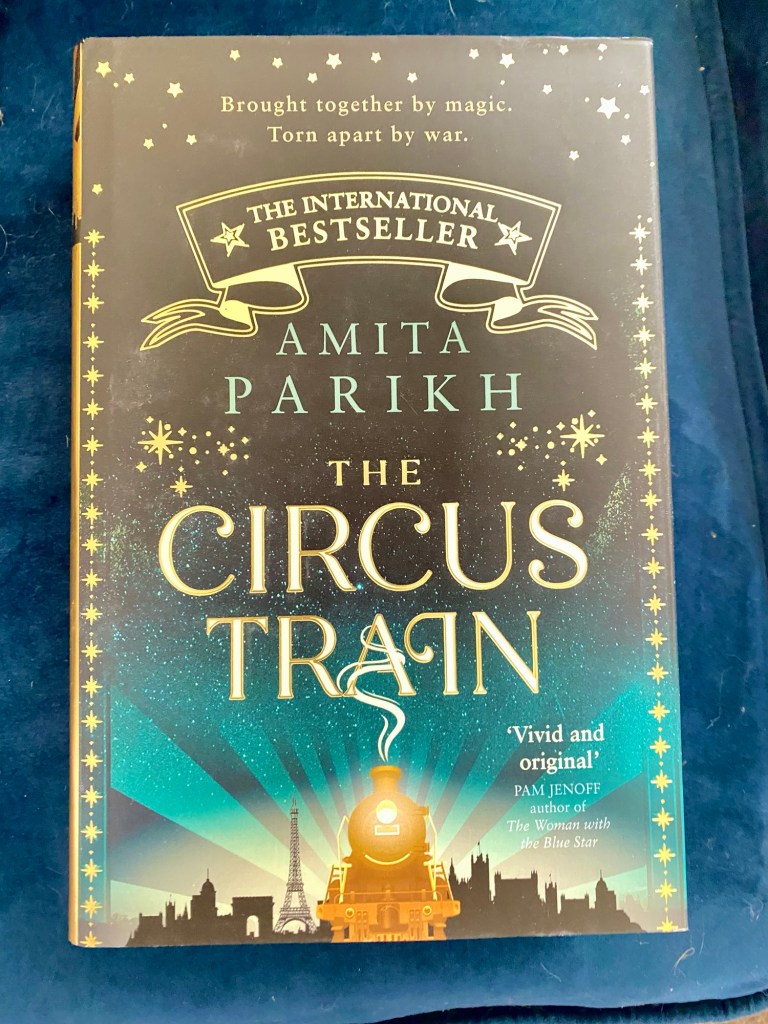
I’m a sucker for stars, city skylines and vintage train travel and this has all of them combined. I picked this up knowing nothing about the author or her writing, but it couldn’t have been more apt. As many of you know I am interested in disability and how it’s written about in fiction, so I was really excited to read the blurb when I got home and find that the heroine has a disability. This isn’t a surprise considering that both circuses and fairgrounds signify the ‘other’ in fiction. If you consider its overlap with travellers, showmen and women, freak shows it attracts people who want or have to live outside the norms of society. This makes them such thrilling characters. This cover with its steam train suggests a specific time and history, but also journeys whether physical or emotional. The circus element brings showbiz, glitz and glamour, but also magic and adventure. Visually the city skylines, particularly Paris, are always shorthand for romance but they mean much more in this novel. It’s 1938 and Lena has not really found her place in the World of Wonders circus that travels Europe by steam train. Even with a famous illusionist for a mother, Lena yearns for a different sort of magic – the world of science and medicine. She’s the total opposite of running away with the circus, but she feels the limitations of her wheelchair. Then Alexandre arrives bringing some wonder and magic to Lena’s life for the first time. Outside the circus world though, Europe is darkening and war will shatter everything. I definitely judged this debut novel by its cover and I wasn’t disappointed.

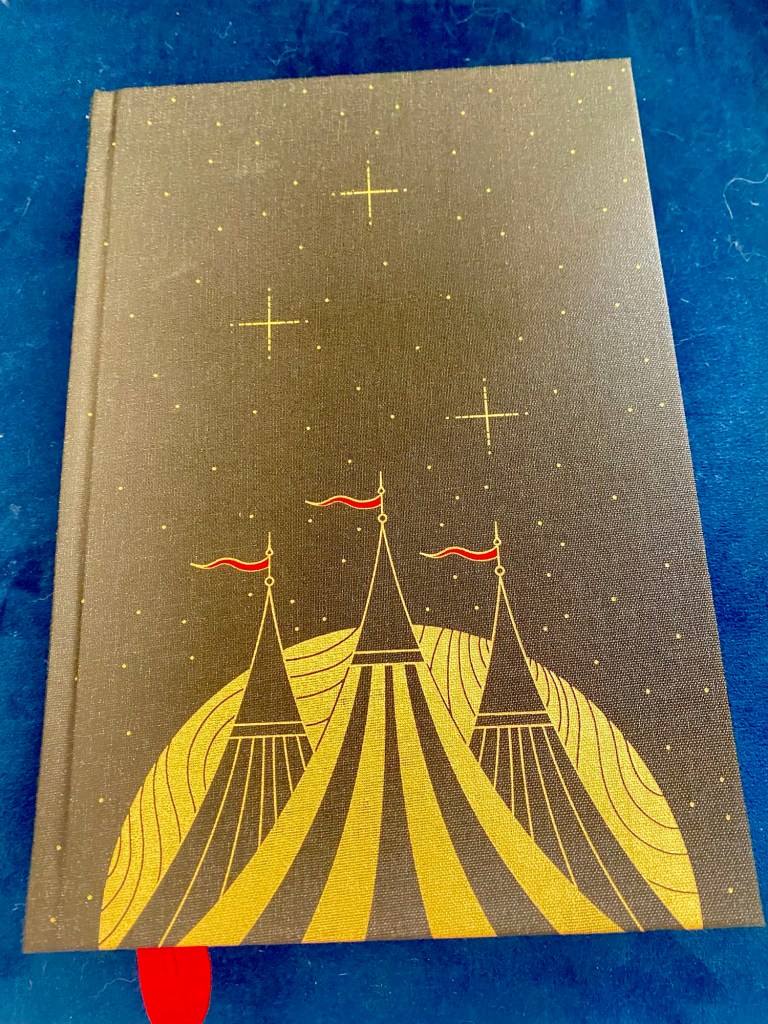
This is one of my favourite books of all time and here I’m showing my precious folio society copy of the novel. I did originally buy the book in my local Waterstones. I walked in and saw the cover across a crowded room. There’s a reason that Etsy and other sites have so much art and gifts inspired by the artwork of this book. The monochrome cover with its stylised Victorian style pair of illusionists is stunning, but this copy is another level! The red sleeve has a simple ticket on the cover indicating the Cirques de Reves and the colours chosen – deep red, black, white and gold – are so stylish. The circus theme suggests wonder, spectacle and a temporary escape from a dreary everyday world. It’s a place where social norms are challenged, where male and female performers have equal status and even the laws of physics are challenged. Our narrator at the beginning notes that a circus has appeared where there was nothing and this copy definitely indicates something magical and secretive. The suggestion of secrets sets the reader slightly on edge, wondering if there is something more to this place than meets the eye. Are the magical illusions a trick or real magic? What power do these illusionists hold? This delicious edition is the perfect package for such a wondrous and dark story.
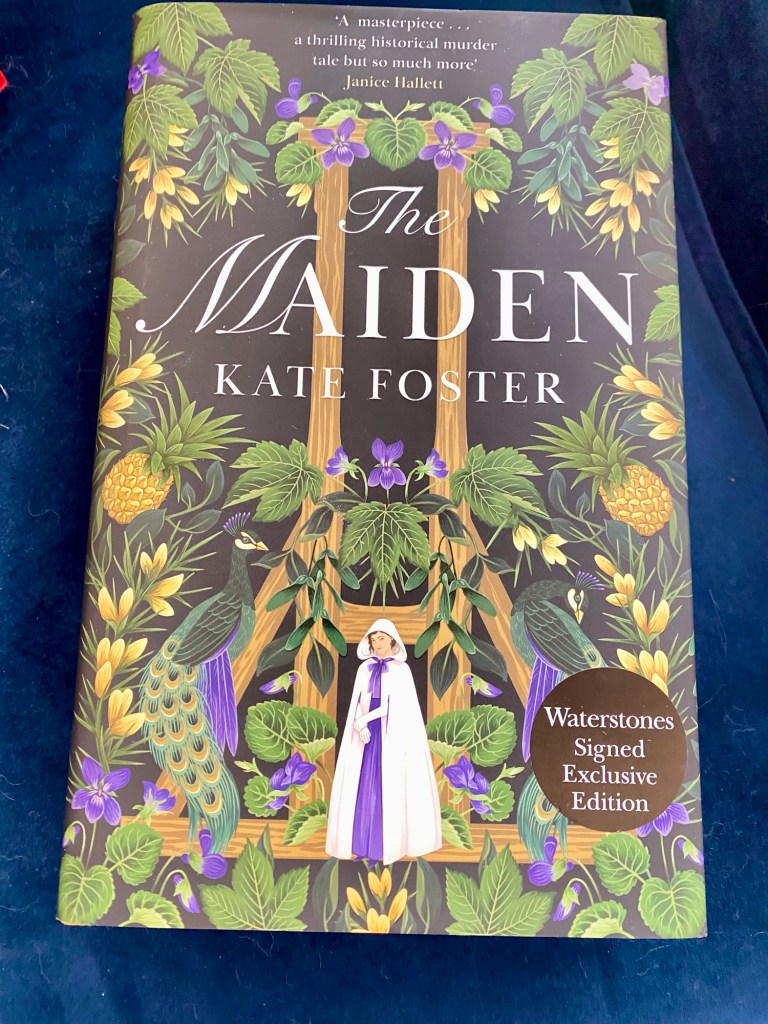
This is one of the most beautiful books I own and I was drawn to pre-order this debut for its spredges alone! There are so many symbols on this cover and I’m always drawn in by flowers, which have a language of their own. Here there are stunning purply blue violets that signify modesty, faithfulness and spiritual wisdom – qualities you might find in the ideal wife. Pineapples are prominent too representing hospitality and welcome, but they’re also a social signifier. If your host is serving pineapple they are definitely wealthy. Peacocks are one of my favourite symbols and have meanings ranging from beauty and immortality to vanity. However, the eye of the peacock’s tail feather was thought to represent the ‘all-seeing’ eye of God. The white cloak on our maiden is the bridal colour associated with innocence and sexual purity. All these symbols combine to tell us so much about this book, where Lady Christian has been arrested for the murder of her lover James Forrester. Newspaper headlines are screaming out Adulteress! Whore! Murderess! Of course now that Kate Foster is releasing her fourth book we know that appearances are rarely what they seem, but when I ordered this I had no idea what to expect. The cover gives up the story of a woman married to someone determined to show their wealth and status, with items including Christian herself. Christian’s own vanity and her history of growing up in a family of women financially dependent on James Forrester, creates a backdrop more complicated than those headlines suggest. Through the peacock symbolism we can imagine the tension between her character and the power of the church, its teachings written by men and used by men to control women. This is a beautiful cover that’s so well thought out and represents the novel perfectly.

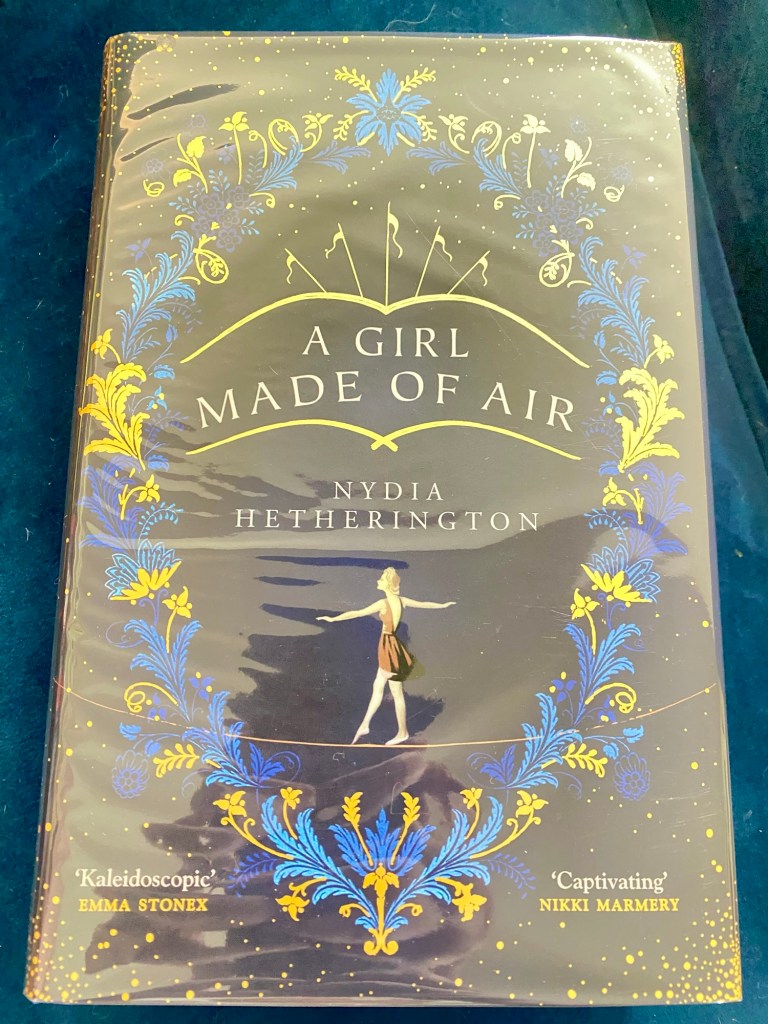
Drawn again to circuses, I bought this copy of Nydia Hetherington’s first book from Goldsboro Books and is a signed edition. Again the circus imagery caught my eye, but focusing completely on the high wire brings other elements into play. Once on the tightrope, the funambulist is there alone dependent on their own skill and judgement. A young girl out on that wire alone put across a feeling of loneliness, but also self determinism. Her ability is what pays the bills and keeps her under the circus’s protection, but she seems alone and vulnerable. The highwire itself is a metaphor for life, how risky it is and how much courage it takes to keep going. It’s also associated with artistic expression and this midnight blue cover with gold botanical surround certainly suggests opulence and wonder. I wasn’t surprised that our heroine was abandoned at the circus, so her life is as precarious as her art. Our opening is written from a child’s point of view watching her mother perform in the big top and becoming spellbound by the colour of her costume, the fear and excitement of the audience. Our heroine is haunted by an incident where a child was snatched from the circus and she tells her story through folklore, circus legends and reality. This is a beautiful book and a great debut from this author who has released her second novel, Sycorax, earlier this year.

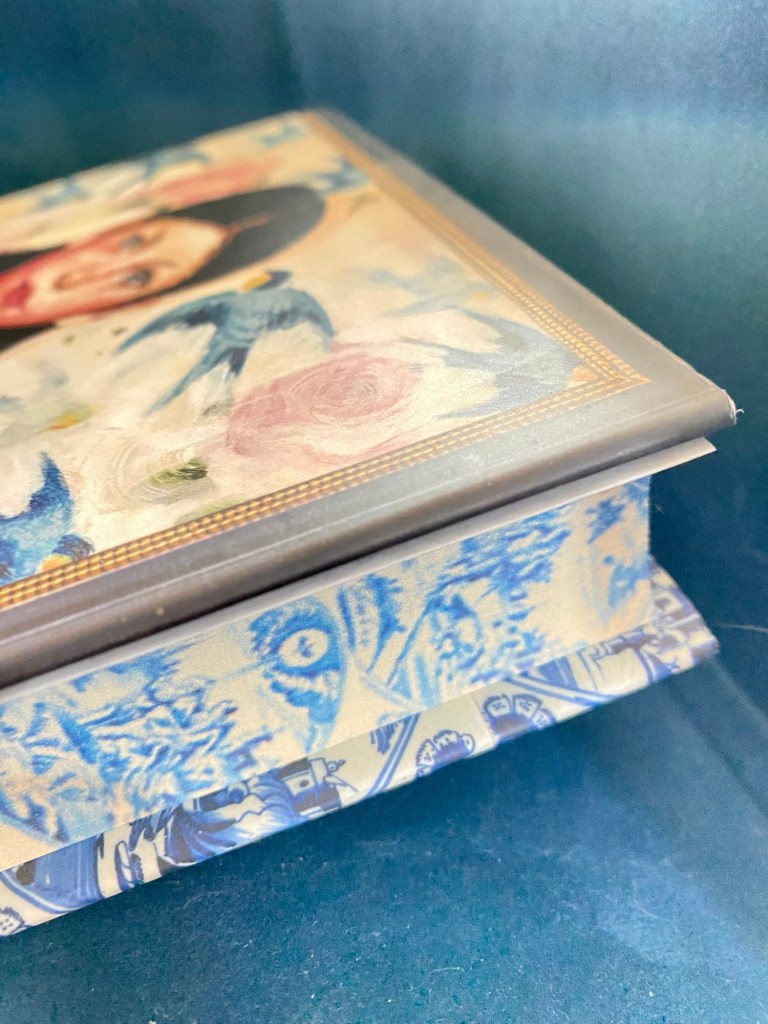
This author wasn’t totally new to me, I’d read one of her books before, but this beautiful cover sold this book before I’d read a word of the blurb. The stunning blue and white spredges are reminiscent of Dutch porcelain and the girl depicted on the front is a beautiful painting. On the blue and white background is a painting of a young girl by Noah Saterstrom and she seems young with her hair in bunches. She wears a red dress with belled sleeves and the depiction is different to what we’re used to in photographs and selfies, there’s no pout and no smile. She gazes out at the painter, very direct and with a serious expression. Her hands rest in her lap, together but empty. The novel references this portrait heavily and the girl is Maeve, one of our own main characters, when she’s ten years old. There’s a wallpaper background and there is a base of flowers next to her, suggesting a wealthier house, perhaps the Dutch House of the title. I have to say at this point that my attraction to this book could be personal. I looked around a Dutch house around twenty years ago, when I was moving back up north after four years in Milton Keynes. It was a cottage, dating from the 15th Century with the characteristic overhanging gables and curved lines. I didn’t buy it, it was too small, but I found out years later that we had some Dutch ancestry most likely from the workers who came to Lincolnshire under the engineer Vermuyden to dig the waterways that drained the land. Even weirder my dad has spent most of his life as a land drainage engineer in the county and we’ve lived at pumping stations that bring in water for farmers who need to irrigate crops and let out water when the land is under the threat of flooding. This may explain my draw to this cover but I’d also noticed the swallows on the wallpaper. Swallows are such a popular motif, particularly in tattoo art and now on clothing. They symbolise love, loyalty and homecoming because they’re a migrating bird. This is perfect for a story heavily based within one house and the lives of Dan and his older sister Maeve who grew up there.
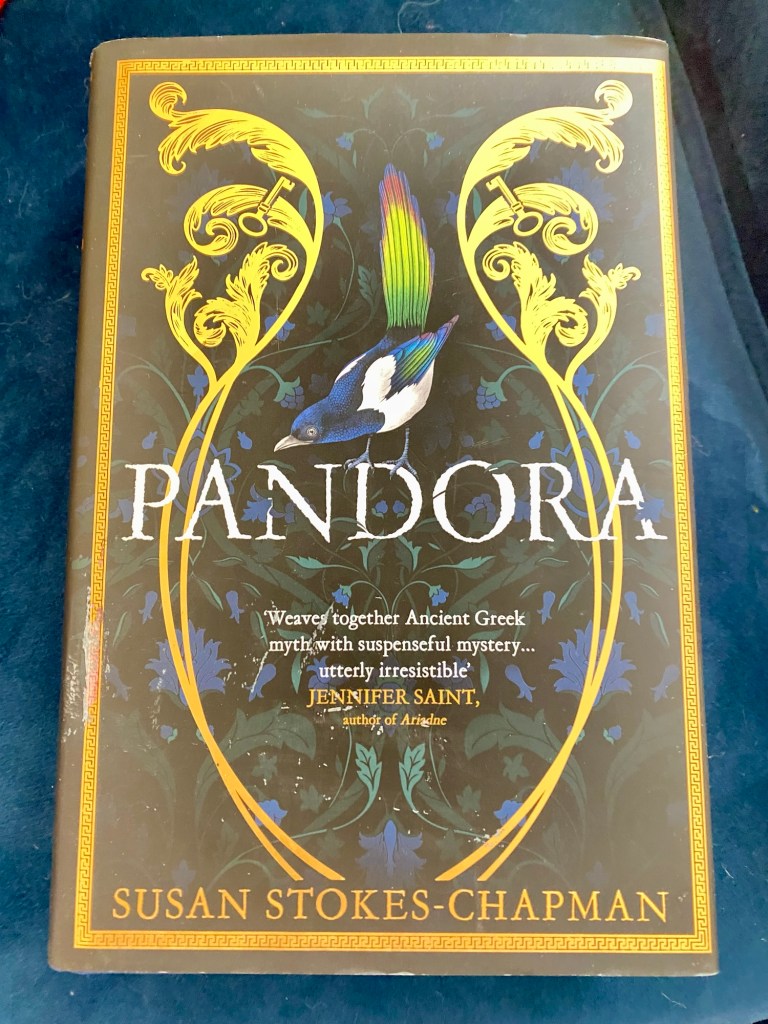
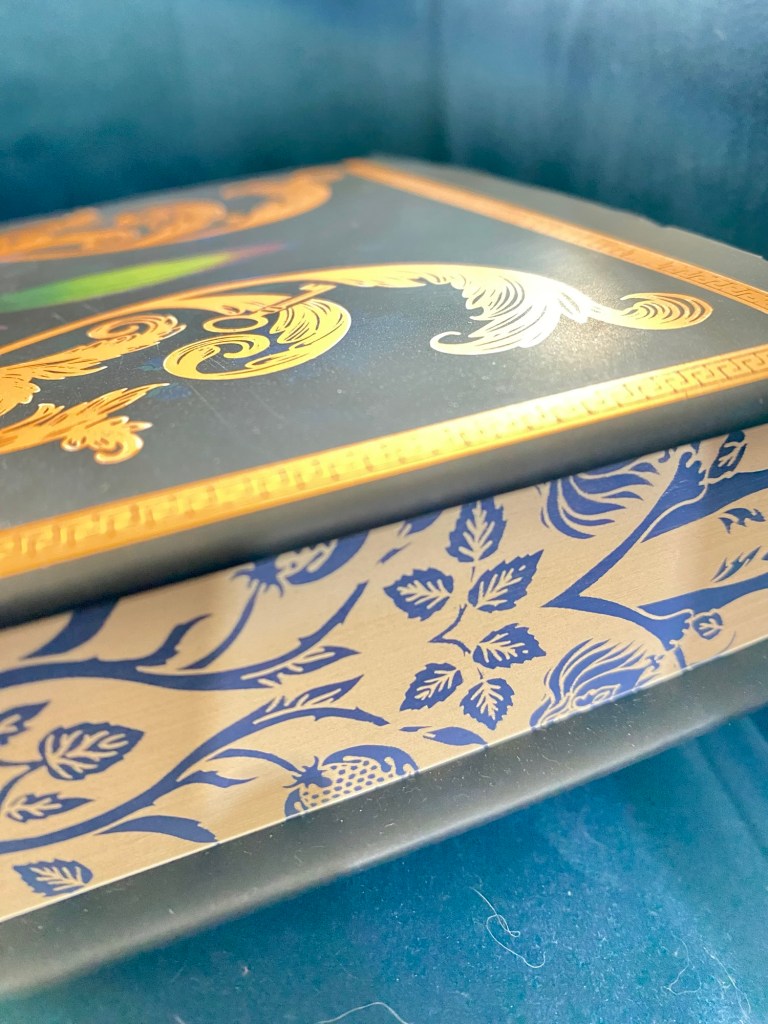
I picked this novel up at Barter Books in Alnwick. It’s a special edition copy and is signed, but it was the cover that grabbed me. Again it has the colour scheme I love, black and gold with hints of jewel-like green and blue. The scrollwork to the front cover is in the shape of a Greek vase with keys, letting us know that this is a book with secrets. The spredges are blue Greek vasesThe huge magpie is all this cover needs and there are so many parallels between the bird and the story of Pandora. Magpies are always seen as omens or messengers and in England there’s a balance in how their skills are viewed – the rhyme that goes one for sorrow, two for joy explains this. Similarly Pandora is described as ‘beautiful evil’ suggesting the same duality of purpose. Magpies bring change for good or bad, but across the world they represent curiosity and mischief. We see them as drawn to shiny things and even as thieves, keeping hoards of treasure in their nests. Scandinavian folklore also links them with witches and playing tricks, something I’ve noticed myself when I’ve had a ginger cat. Both my cats Chester and Baggins were plagued by magpies who shouted at them and would even pair up to peck their tails. Of course the consequences of curiosity are high and Dora Blake has a feeling about a vase that turns up in the antiquities shop that once belonged to her parents. It’s 1797 and Dora now lives there with her uncle, developing her skills in the hope of becoming a jewellery artist. Dora thinks there’s something suspicious about her uncle and she calls in an antiquarian scholar called Edward Lawrence to check out the vase. She sees it as a way of escaping her uncle and Edward sees the vase as the key to his academic career. What he discovers upends everything Dora has believed about her life and her family, leaving her asking whether some secrets are better left buried.

 The Lotus Readers
So interesting and yes, some gorgeous covers there!
LikeLiked by 1 person
Thank you Joanne, I’m a sucker for a pretty book x
LikeLiked by 1 person