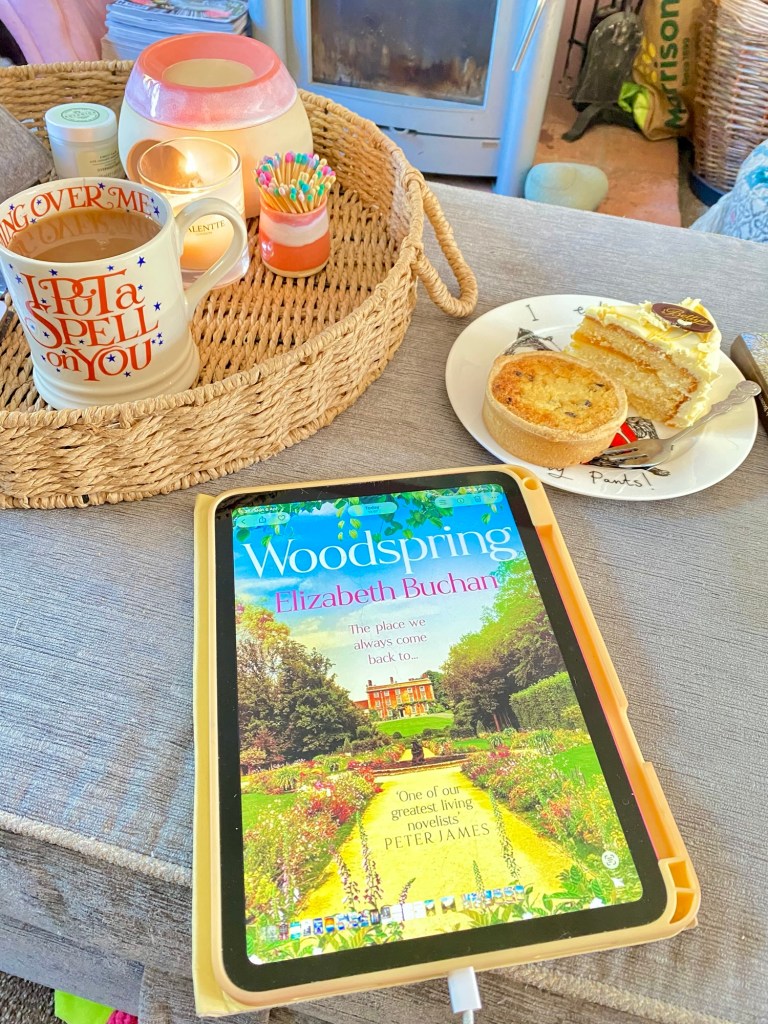
It was the place they all knew best – the elegant light-filled rooms in the house, plus its niches and nooks in which they took refuge, the wood which sheltered the wildlife, the fields over which they walked. Whatever happened at Woodspring, and whether they lived there or not, the notion of it remained constant. Since the house was built in 1810, the Danes have always lived at Woodspring. Over the generations it has given them shelter, solace and joy.
War brings change, and the next three generations of the family will lead very different lives. Peace is shattered, pain is unavoidable, loves are found and lost, but Woodspring is constant, and will always draw them back….
A tender novel of love, refuge and the question of where we call home when life takes us on unexpected paths, Woodspring is a beautiful ode to the countryside, to family, and to our timeless connection to place.
This novel is told through three chronological sections, each covering a generation of the Dane family who own Woodspring, a small but grand country house. Built at the turn of the century, it’s a house that never seems to change substantially while the world races forward. We see those changes through the people who live there: Harry is the owner of the house in the 1930s in the lead up to WW2; Nell becomes the owner in the latter part of the 20th Century; Joey owns the house and estate in the present. Through them we see massive changes in class, affluence, and women’s rights but also the far reaching consequences of the Second World War. Each section feels like a vignette of that time, but in the second and third sections we can see how the choices Harry made affect future generations. All the while, Woodspring sits as a sort of haven and seems steadfast while our character’s lives feel transitory and fragile.
I was deeply drawn in by Harry and Faith’s story in the first section, made more powerful by the backdrop of war and the risks taken by both of them. Harry is married as the book begins, the perfect match in his parent’s eyes for the duty of looking after the estate. They have a daughter called Nell who is just a toddler. Their relationship was never a grand passion and a rather old fashioned marriage in terms of her being the right sort, but her family connections are in the USA. If the truth is told she has never taken to Woodspring, finding it a bit quiet and gloomy. There’s also very little to do in such a small village. As war approaches and Harry puts himself forward for active duty, Wendy wonders whether she and Nell would be safer returning to family in the USA. No promises are made from either of them, not even an assumption that their lives will resume as normal afterwards. No one knows what afterwards will look like. Harry departs for the Highlands and training for the Commandoes. It’s in the midst of this tough training period that his wife writes that she would like a divorce. She has met a man who is wealthy and can keep her and Nell provided for. I was amazed at the lack of shame in her openness about marrying this man for his money, but she’s also seemingly oblivious about Harry’s feelings for his daughter. However, when Harry meets Faith he knows deep within and for the first time, that he is in love. They make no promises, but give themselves wholly over to each other in an incredibly tender meeting at a secluded bothy. Each knows the other might not survive this war, but in case they lose track of each other he gives her a name in London. Suggesting that if her employment finishes in Scotland, she can contact them for lodgings and work. Would they ever find each other again? Meanwhile, as Harry’s younger brother also joins the same regiment, Woodspring waits patiently for their return.
Our second section follows Nell, Harry’s daughter, who has lived her early life in America, but now works in Geneva in a very high stress job for an NGO. She implements the response to humanitarian crises around the globe and lives alone. It’s a total shock when she receives news that she has inherited Woodspring from her largely absent father, Harry. Nell negotiates a few weeks away from work to travel to England and decide what she must do with the house and land. She’s shocked to find a largely unchanged house, complete with a couple who work as housekeeper and all round maintenance man. It’s weird for this very modern woman to be treated as the mistress of the house, who eats at certain times and always in the dining room. The housekeeper explains that although her father died years ago, he had made provision for her Uncle Robert to live there until his death. He had sustained a brain injury in the war and was often very childlike, keeping a strict routine helped and the time he spent with his huge model railway in the attic. It’s when she goes up to investigate the attic that she meets Joey and falls in love, but not in the way you might expect. Her feelings start to change as she sees what this house represents – home, stability, a memorial to her family and a huge project to work on. Will she sell and move back to Geneva or will her heart keep her here?
Finally we come to the present and meet a girl called Mia who works for MI5. Independent and determined, she is utterly focused on her career when Joey walks into her life. Joey is a vet, working in London and living in a small apartment. However he tells Mia about a family home and land he owns, left by his mother. One weekend they drive to Woodspring and for the first time Mia sees the huge responsibility Joey has been carrying. The main house is now a nursing home, while Joey lives in the flat over the stables that used to be home to the housekeeper and her husband. It’s the land he has to come to some decisions about, with offers from developers on the table, Joey doesn’t know whether to sell the whole estate and commit to life in London, but there’s something about being on this land. It’s a sense of security and connection with the land that I understood. I have lived most of my life next to the River Trent, literally having the bank in our back garden as a child to my first flat where the bank was only a field away and to my last home, a little barn conversion on the Lincs/Notts border where a short lane took me to the bank in ten minutes. The first thing I did was walk down there, take off my shoes and stand at the top of the bank. Whenever I want to feel that security and connection I do the same thing, grounding myself.
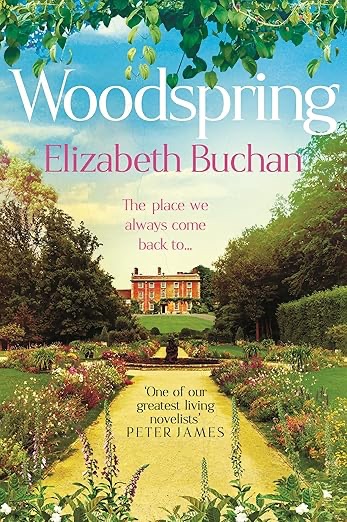
I felt that the last section suffered a little in comparison to the first two, perhaps because of their more dramatic events or circumstances. WW2 tears people apart, forcing them to live an alien existence, often alone and in very different parts of the world. We see the hardship of Harry’s training and his incredible resilience in being able to survive when it’s put to the test at Dunkirk. The war definitely heightens those tender feelings between Harry and Faith, so when he’s is back in London and goes to look for her my heart was racing. The dramatic events of that night are written so vividly that I knew the outcome would determine the rest of their lives. The horrors of the Blitz are depicted so well a I felt like I was there. Nell’s story shows her work is once removed from her father’s but still vital, organising a response to terrible events around the world means she doesn’t get to be there in person to see the devastation. We can also see the impact of her mother’s choice to remarry in the USA and having a mostly absent father. Nell’s mother is as self absorbed as a I suspected, pursuing the preservation of her looks with plastic surgery and pushing Nell to accept a job with her stepfather and come home – an offer that Nell rejects with so much vigour I sensed some tension around their relationship. Joey changes everything for her and she has to face her own childhood demons, her decision not to have children and a growing love she never expected. Her instinct to shelter and protect Joey is almost instinctual and I felt like the time she spends at Woodspring brings her closer to understanding the man her father was.
As for the final part I was expecting it to come from Joey’s perspective so I was a bit surprised to meet a completely new character. Mia is an interesting woman, in some ways like Nell in her independence and determination to do well in what is still a bit of a man’s world. We are taken into a case she’s working and the complexities of that job and meeting someone who she could build a life with. Joey is a calm, solid and patient presence in her life which tells us a lot about his background. If they’re to build a life together they also have to factor in the ownership of the Woodspring estate, which overwhelms Mia when she first sees it. They are left with land, including a wood, and Mia can see potential in it but how will they make it work. I felt sad to imagine it broken up into parts, but it may be the only way to keep some of it. What’s never in doubt through, is Joey’s connection with this land that’s exactly the same as my connection to the River Trent. I was desperate for him to retain some part of it because he belongs there and we can see it in the way he’s replenished after going back to visit. It’s his connection to Nell, to her father and mostly Robert who he came here to play trains with when he was a little boy. Woodspring is his constant in a world that is often frightening and overwhelming: each generation’s touchstone. This is a touching and gentle novel, exploring our connections to each other but also the places we call home.
Out Now from Atlantic Books

 The Lotus Readers