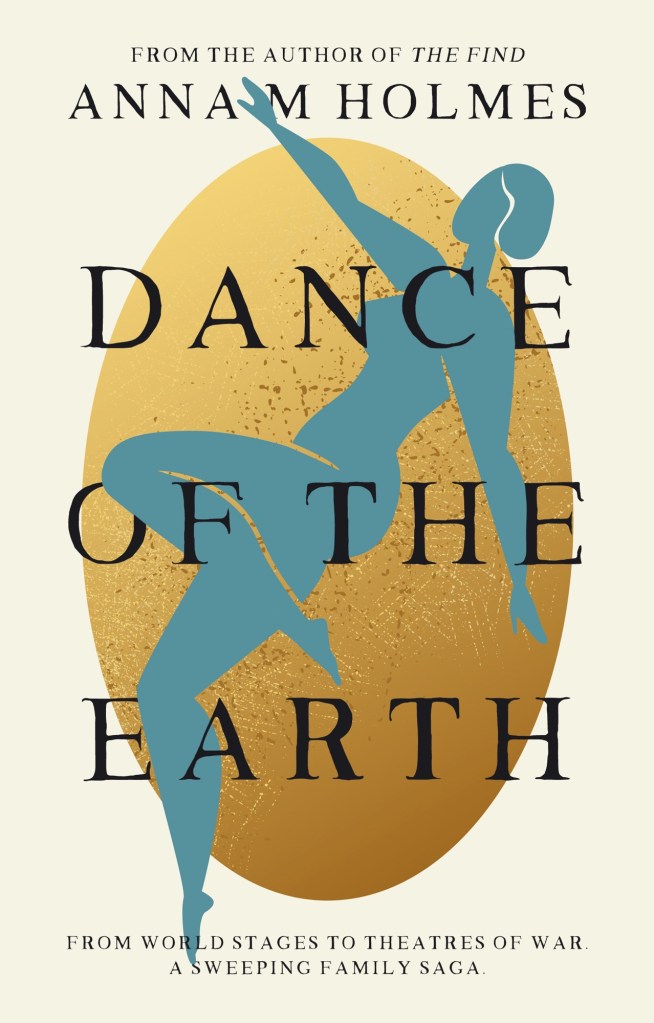
London, 1897. Nobody, least of all Molly, knows why she ends up taking the foundling home from her job at the Alhambra Theatre. Molly is a seamstress, creating costumes for ballerinas who perform within the music hall tradition. She loves dance but with her built up shoe and awkward gait she is as close to the stage as she can get. When a baby is discovered on the steps of the theatre everyone discusses who could be the mother, but they’re at a loss. It’s hard to hide a pregnancy in a shared dressing room and with seamstresses who note the tiniest change on a tape measure. She takes Rose home, but her upbringing is also at the theatre where everyone takes an interest in this little girl who grows up enjoying the colours, fabrics and feathers of the sewing room but reserves her love for the ballerinas. When she’s old enough she wants to learn and grows into a role in the chorus very quickly. Rose is determined to succeed and keeps pushing for that breakthrough that will give her the starring role. Molly knows Rose is pregnant before she tells her, the result of an affair with a wealthy married man, but the abortion they arrange is abandoned when Rose changes her mind. Rose’s twins are born backstage at the theatre, where life starts and then life ends as Rose’s dancing dreams die. So the boy, Walter, is sent to live with his father and stepmother and Nina stays with Molly. This decision means that Nina has the same upbringing as Rose and becomes even more determined than her mother to be the best dancer she can be. The younger generation pursue their ambitions, loves and dreams in a new world shaped by the pioneering Diaghilev and his dazzling Ballets Russes, Stravinsky’s dissonant music, and the devastating First World War.
I asked to read and review this book because I enjoy ballet, particularly the more lyrical modern ballets by Mathew Bourne and the brilliant Northern Ballet based in Leeds who often do literary adaptations such as Wuthering Heights and The Great Gatsby. I’m also fascinated with this period of history, particularly when it comes to the huge impact of WW1 and the way it affected class structures and the lives of the women left behind. The author weaves her story into this time and society beautifully and with such care over every detail. Even the cover shows her themes of rebirth and regeneration with its large golden egg and a female figure as if drawn by Matisse, non-sexualised and not constricted by the corsets and crinolines of earlier generations. Her shape reminded me of the new ballets produced by Diaghilev and choreographed by Fokine that also showed more freedom in their movements and looser costumes. Rose and Nina have a very different upbringing from the average Edwardian woman, the music hall theatre wouldn’t be considered respectable by the middle and upper classes. Molly has no choice but to work so both Rose, and later her daughter Nina, fell asleep to the sound of sewing machines and have clothes that are colourful and unique, thrown together from fabric remnants. Both are dazzled by the dancers and want to be on the stage and both are successful to different extents. Nina is utterly determined and visits all the ballets she can while training, because she’s aiming beyond the music hall and into the world of modern ballet. She hears of the Ballet Russes and Diaghilev’s new approach, she identifies herself with his ‘Firebird’ – another symbol of renewal and regeneration:
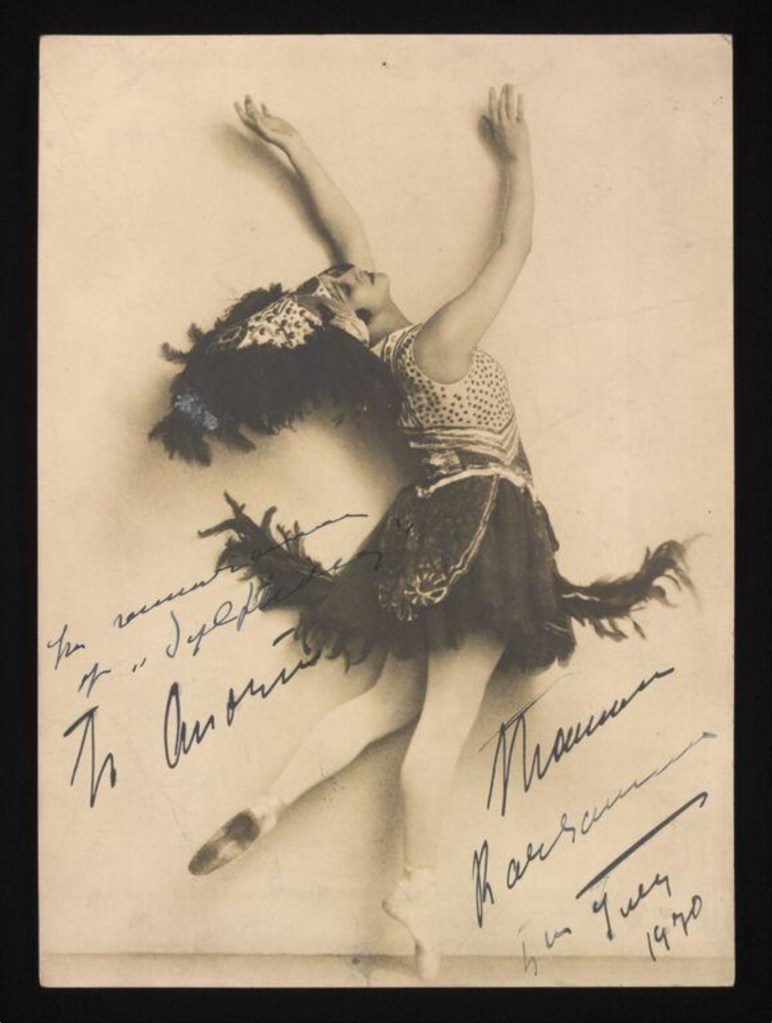
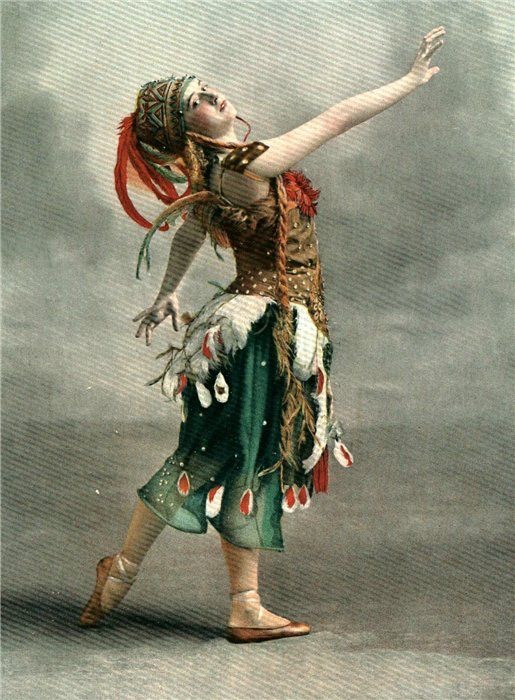
‘Tamara Karsavina wore a magnificent head dress – long flaming feathers quivering – a bodice of brilliant reds and oranges […] she adored the exotic creature”.
The premiere of this ballet was in 1910 at the Opera de Paris and showed off the choreography of Diaghilev’s collaborator Fokine which was ground breaking. This dancer had to represent an element, with all the wildness of fire, something we think of as hard to contain and dangerous to be near. It’s definitely a force that’s in Nina and represented the changing roles of women in the early 20th Century: women who wanted to go to university, to have a career, to have the vote. Imagine how strange it must have been to see a woman on stage who’s a rebel and has power, especially with its incredible costume and free expressive dancing.
‘This firebird was her – Nina – aflame, all sharp angles radiating determination’.
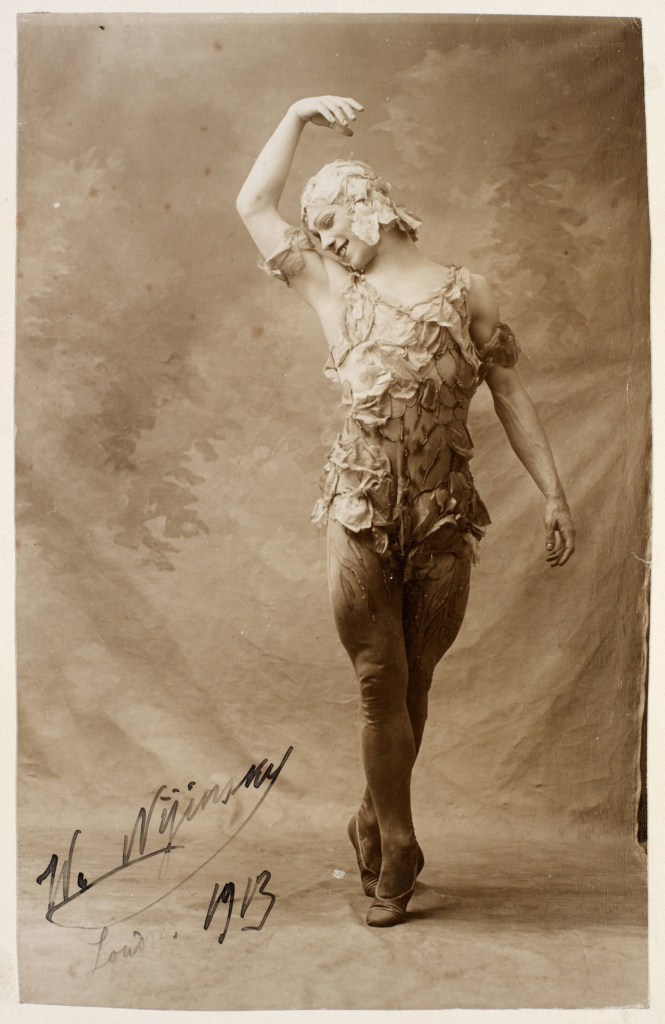
Walter is almost his sister’s opposite, a person you could easily miss in a room and caused by his upbringing. Brought up by his mother’s lover Arthur and his wife Beatrice, he is rich in every sense except the one we most need – love. Beatrice was cold, although it is hard to imagine what it felt like to meet the proof of her husband’s infidelity at the breakfast table each morning, especially when she couldn’t have children of her own. I was intrigued by the differences between the twins and what it said about the nature/nurture debate. Nina has been brought up by the entire theatre community of women from Molly’s fellow seamstresses to the dancers, which gives her so much confidence, drive and inspiration. She sees women making their own money and in a creative career, so she knows women can make it on their own in this world. All Walter seems to learn at home is to stay as small as possible and not upset anybody, something he takes to boarding school with him. His masters at school are trying to turn out traditional middle class men, who go on to university and have a profession. The assumption is they will have a career that can support a family, but Arthur’s only love is music but he doesn’t have the confidence or self-worth to make that happen. When Arthur died I thought Beatrice was particularly brutal in dismissing Walter, making it clear he will liaise with his father’s solicitor from now on. When children are rejected they don’t think something is wrong with the parent, they internalise the rejection and are left feeling something is wrong with themselves. For Walter this is compounded at boarding school where he is not athletic or competitive, he is teased, bullied and never stands up for himself. As he discovers his Grandmother and Nina he’s also having feelings that seem natural, but must be kept secret. When they all go to see the Rite of Spring he watches Nijinsky mimicking an ecstatic and sensual moment on stage and becomes aroused. He’s mortified and has to leave immediately. I kept wondering how he would cope with war on the horizon and the huge pressure on young men to enlist. I couldn’t imagine how he would survive the brutality of the experience.
This fascinating family story feels absolutely real and that is down to the incredible amount of research the author has undertaken. She wholly embeds these characters into the history of the time, weaving social, cultural and political history around them, along with her incredible knowledge on dance history. I loved the vividness of the theatre, the backstage bustle and the magic that is produced for the audience especially when what they’re seeing is groundbreaking. She applies equal care to the war sections of the novel too. It feels like you are in those trenches because there’s an immediacy to them. These sections are also graphic and raw, which makes them hard to read about war when you’re invested in the characters. It had to be strong and true to life for us to understand how and why this war tore straight through the lives people had known before. Although changes were already happening at the turn of the century, WW1 was the first mechanised war and the sheer number of casualties were hard to comprehend. It wiped out a generation of men and afterwards there’s an acceleration of modernism that’s visible in the arts and everyday people’s lives. The aristocracy struggle to hold on to property and land as they are tied up with death duties, sometimes more than once. Middle class women who have always relied financially on men have to face life alone and discover ways of making money – less servants, taking in lodgers and finding jobs. If men came back, they came back changed forever due to shell shock (now PTSD) or physical injury and couldn’t work. Women didn’t want to give up jobs they’d done throughout the war and a freedom they’d never had before. Also contraception becomes more freely available and this was the earliest stages of some women not having to choose between career and relationships. As Nina joins the Ballet Russes she becomes more independent, travelling all over the world and living the life her mother had dreamed of. When we see her reach her first stop in the south of France she is utterly in her element and it’s no surprise that she enters into a controversial mixed race relationship, something more acceptable in that time within the bohemian and arty circles she inhabits. It’s almost as if the war curtailed the freedom of men, especially when conscription began, but emancipated women.
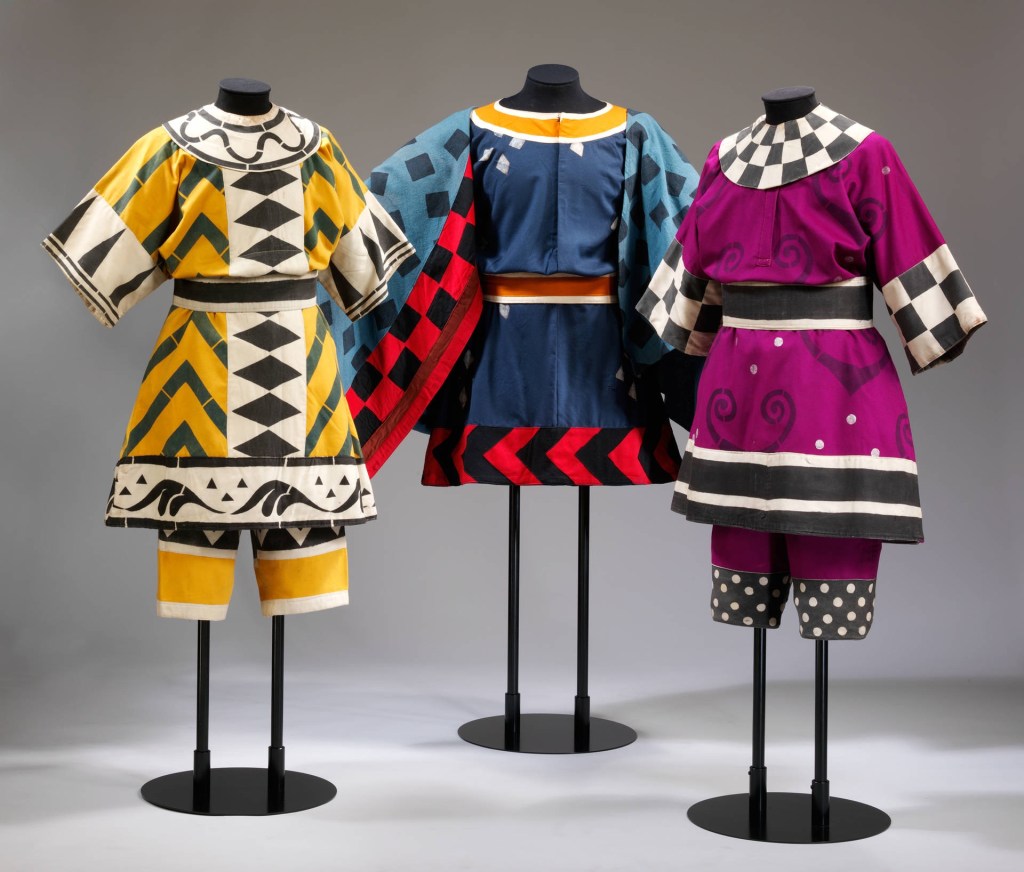
In 2010 I visited an exhibit at the Victoria and Albert Museum in London, called Diaghilev and the Ballet Russes which focused on costume and design including collaborations with artists like Picasso and the music of Stravinsky These sketches and costumes were like nothing I’d ever seen, seeming both weirdly modern but archaic at the same time. There’s nothing pretty about them and no tulle in sight, they’re loose with strong colours, geometric shapes and sharp zig-zags. I could see the point being made – by being so aggressively modern it almost forces change and expectation of what a ballet is. I could see how they matched Stravinsky’s music because there was a segment of the Rite of Spring with its themes of growth, fertility and desire. I could see why audiences found this piece so shocking because it has that same aggressive feeling with unusual rhythms and sudden loud bursts of sound. It’s harsher on the ear than the usual score for ballets and the sets were purposely sparse. The dancing had a primitive feel and the subject matter of a young woman sacrificed to the spring is like a modernist version of the contemporary horror film Midsommar. It was reported that people rioted at the premiere, which is probably an exaggeration, but I can imagine an audience finding it strange and confronting when we think of the opulence and beauty they were used to in ballet. It’s such an important piece in the history of dance and without it we wouldn’t have contemporary dance. I came away from the novel feeling I’d learned so much about dance and the early 20th Century in general. While all the characters touched me in different ways I did have a soft spot for Molly, who stands out within these themes of fertility and desire. I thought she was the most incredible mother, yet had never given birth to either of her children. She has a disability but spends her time within a world where bodies are pushed to their limit, creating beauty in their movement. Her love of dance is built into every one of the costumes she lovingly creates and the colourful outfits she makes for her daughters. She provides stability and love for Rose and Nina, plus she never judges their mistakes. She is the earth, grounding these fiery women and eventually Walter, for the rest of her life. She is the heart of this novel for me and Nina can only be what she is because of her. I could imagine her as the central character in an incredibly lush and powerful period drama with the war breaking through everything in its brutality. This is a must read for both lovers of dance and historical fiction.
Meet the Author

Stories with big themes written as page-turners are Anna M Holmes’s speciality. With an extensive background in dance and theatre, Dance of the Earthis a story she has longed to write. Her novels- The Find, Wayward Voyage, and Blind Eye-are all typified by deep research. Anna worked as a radio journalist before embarking on a career in arts management. Originally from New Zealand, she now lives in South-West London.

 The Lotus Readers