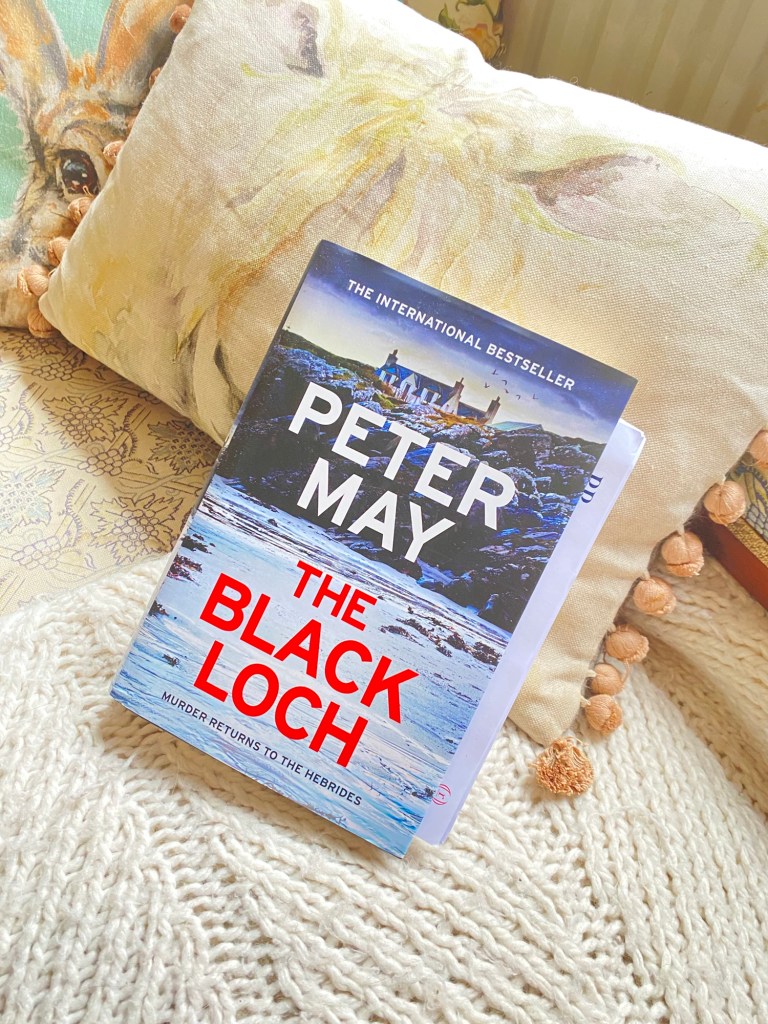
Readers probably won’t believe this but this is my first Peter May novel. I’ve had his books on my ‘authors to explore’ list for when I’m second hand book shopping, but something always gets in the way of me reading them. So, when I was offered this blog tour I jumped at the chance to finally read one. I love books set in Scotland and I am a particular fan of Tartan Noir – crime novels and mystery novels from authors like Doug Johnstone and Val McDermid. I was immediately drawn into the incredible scenery and atmosphere of the Isle of Lewis. This is the fourth in a trilogy, so I’ve definitely got some catching up to do where Fin McLeod is concerned. Once a detective and now retired, Fin is drawn back to Lewis when Caitlin Black’s body is discovered on a remote beach. Only eighteen years old, Caitlin was a student at the Nicholson Institute. It emerges that she was having an illicit affair with Fionnlagh McLeod, her teacher and a married man twenty years her senior. Fionnlagh soon becomes the prime suspect and is arrested on suspicion of her rape and murder. He is also Finn’s son. Finn knows he must return to Lewis to support his daughter-in-law and granddaughter. He also knows, despite the evidence against him, that he must try to clear his son’s name. As Fin travels around the island, he is drawn into past memories and soon realises this crime has echoes back into his own teenage past on the island. A terrible accident at a salmon farm caused two deaths, just as the industry started to expand on the island and become a multi-million pound concern. This is a journey of family ties, secret relationships and a bleak and unforgiving landscape, where violence, revenge and revelations converge.
Fin and his wife Marsaili both grew up on the island, so it holds echoes of their relationship over the years. It’s strange for them to be back on Lewis after a ten year absence and awkward to turn up on Fionnlagh’s doorstep where his wife Donna is devastated by the possibility that her husband has killed his teenage lover. Their daughter Eilidh is happy to see her grandparents and currently oblivious about her father’s fate, but it’s clear to see the damage Fionnlagh’s exploits have had on Donna. These early chapters felt like being sucked down into a whirlpool of memories. There’s such an incredible sense of place and the use of Gaelic words and names feels foreign, strange and somehow magical at the same time. There are tourists enjoying the white sandy beaches, but we’re taken down below the surface to the realities of living somewhere so remote and bleak. Then further down to the horrors underneath where salmon are eaten alive by lice in their cages, where beached whales gasp their last agonising breath on the sand and a beautiful girl with her whole life ahead of her can be thrown over a cliff like rubbish.
“He finally reached the Black Loch just before seven-thirty. He parked above the beach as sunlight fanned out towards him across cut-crystal water, revealing the secret colours that concealed themselves on the shore, among rocks and boulders and the seaweed washed up to dry along the high-tide mark. To his right, cliffs of Lewisian gneiss rose steeply out of the water and he could just see the gables and chimneys of the house that stood above them overlooking the bay. He cast his eyes down again to the water’s edge and left footprints in the wet sand as he followed the curve of the day towards the looming black of the cliffs. Somewhere here Caitlin’s body had been washed ashore.”
Peter May has portrayed the environment, whilst also showing the extent to which climate change and the eco- industry have impacted the surroundings he’s known for his whole life. The old cottages are damp and battered, some being refurbed by incomers with money either as family homes or holiday cottages. New houses are squat, one-storey dwellings built to blend with the sand and the heather with large windows giving uninterrupted views of the landscape. Younger islanders are focused on eco-activism with Caitlin Black and her friend Isobel starring in a programme about the island’s ecology. They care about fish farming practices driven by the market across the globe for salmon. Practices that prevent wild salmon from swimming up river to spawn as well as terrible conditions for the farmed salmon too. Huge cages that once held a few hundred salmon now hold a hundred thousand, with such a high mortality rate they’re having to take them from the cages and dump them into rock crevices formed from by the tide. They lay there rotting until the sea washes them away.
“The activist’s aerial shots exposing the illegal dumping of dead fish, and the zombie salmon, half eaten by sea lice, swimming listlessly around in cages where anything up to twenty-five percent of fish were already dead. She listened in horror as he conjured up an image of the stinking, maggot-ridden morts […] and the 1000-litre containers of formaldehyde that a desperate Bradan Mor was using to try to kill the sea lice.”
Fin’s narrative takes us on his investigations around the island, trying to find evidence to disprove the police’s theory that his son is a killer. A task made much more difficult when his DNA matches samples taken from Caitlin’s body. Why would he rape someone he’s been sleeping with for months? This is according to locals who’d noticed their clandestine comings and goings from a derelict cottage by the sea. Despite the urgency of the present moment, Fin is also pulled inexorably into the past, because this island has a huge hold and power. I felt centuries of history in the land it’s people and their relationships. This is sometimes positive, as Fin remembers beach parties where he first met Masaili as a teenager and they make love on the beach in the present, grasping a tiny moment of happiness and connection in the hurt and devastation. The most terrible memories involve a scheme to steal fish from the fish farm and pass them off as wild salmon, for a ghillie from the estate to sell on. Fin goes along with it despite his misgivings, but the scheme is originally suggested by Niall. A group of teenagers meet and drive to the fish farm several times, but one night there’s an awful storm and a sense of foreboding. This enterprise leads to two deaths and creates a suspicion in Fin about his friend Niall. If he is willing to steal from his own family and brush aside the death of a friend, is he capable of murder? Niall’s surname is Black and Caitlin is his daughter.
It feels as if the island has a consciousness. It sees your past and your future as clearly as the present, almost as if they’re happening simultaneously. I felt it when Finn walked across the very place he stood with Masaili when they were first meeting at six years old and she had two pigtails. She also called him Finn for the first time, christening him with a nickname he still uses. This is a thin place, unchanged for centuries. It also said something about how we experience the world. We are rarely solidly who we are in the present, with past and future forgotten. We are simultaneously all the selves we’ve ever been. In this way Fionnlagh can be a good father, a talented teacher and a suspect in a murder. There are also darker moments from Fin and Marsaili’s past that come alive here. Her narration is a rare moment in the novel but she relives a night in Glasgow from their university years, when she found Finn in bed with another girl in their student flat? It makes us realise that Finn isn’t wholly the upstanding man we think he is, he was also the cause of so much hurt, rather like his son.
There’s a sense in which this trauma is generational, not just in individual families but in the island itself. The environment has always been harsh and people have found it to survive. It’s a hunting and fishing community and other nearby islands, like St.Kilda, became uninhabitable in the early Twentieth Century due to the difficulty of growing and catching enough food for the islanders. Fin takes us back to a conversation he had with his grandfather about the whaling industry, brutal tales of harpooning these majestic creatures and turning the sea red. It links to the beached whales in the bay, possibly drawn off course by one of them being unwell and in distress. As the vet assesses these giant creatures and people desperately try to save them he talks about a tradition in the Faroe Islands where they draw whales to the shore then hack them to pieces. Fin has violent memories of being forced to join a seasonal slaughter. In his last summer before university, Fin felt like a black cloud had descended because he and his friend Artair had been chosen to join the guga hunters. This was a four hundred year old tradition where twelve men would travel to An Sgeir, an island no more than a rock in the middle of the ocean. A guga was a young gannet, once hunted in a desperate need for food, their slaughter was now a rite of passage. Hunters killed two thousand birds in a fortnight, then they would be plucked and salted. Fin felt disgusted by the idea, but it seemed unavoidable and it would be dishonourable to give up your place.
“Neither Artair nor I wanted to spend two weeks on that bleak and inhospitable rock, scrambling among the blood and shit that covered the cliffs, slaughtering defenceless birds.”
This was a tense and complex case with so many possible suspects, and Peter May also keeps us guessing about Fionnlagh. Perhaps he could be the killer, after all he does confess. In a way this created a crime novel that didn’t revolve completely on whodunnit, but on the tensions between different characters and also their environment. He also creates a compelling picture of the beautiful and intelligent victim, Caitlin Black. A girl as embedded in the island as Fin, with a deep passion for the island’s environment and it’s flora and fauna. She epitomises the gap between generations, but also between those who want to protect the island and those who are making a generous living by exploiting and polluting it. I loved how deep the island and it’s history ran in these people, something I can understand having lived right next to the River Trent for most of my life. In fact the first thing I did when moving into my last village twelve years ago was go to the river bank and take off my sandals to feel the river bank under my feet. The river and it’s daily tidal bore, the smell of fresh cut hay, the cool of the forest, the crunch of dry pine needles underfoot as well as the smell of straw bales in the sun and freshly turned earth are all in my soul. They make up part of who I am and although I moved away for study, I have returned and unknowingly into the same village where my great-great grandmother is buried. Our ancestors call to us and this is definitely what Fin and Marsaili are feeling, as well as need to be close to Fionnlagh, Donna and Eilidh. This is something he couldn’t have imagined ten years ago, but now he wonders if it’s where they belong. Perhaps this means future additions to the series and on the basis of 5is novel, I’ll be the first in the queue if it does.
“He leaned over to kiss her and remembered that little girl with the pigtails who had walked him up the road from the school to Crobost Stores giving him the nickname that had stuck for the rest of his life.”
Out on 12th September from RiverRun Books, an imprint of Quercus.
Meet the Author
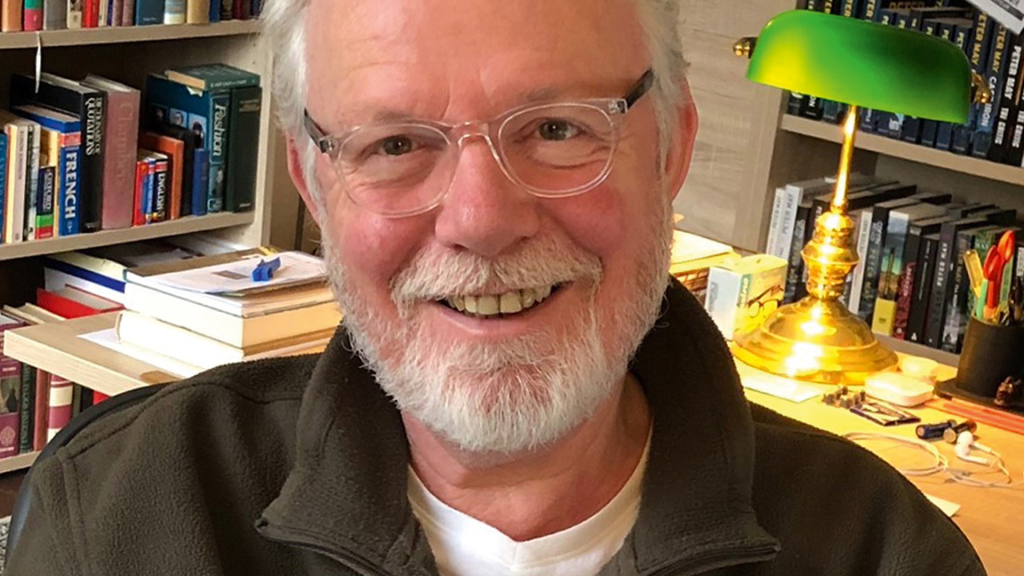
Peter May was born and raised in Scotland. He won Journalist of the Year at twenty-one and was a published novelist at twenty-six. When his first book was adapted as a major drama series for the BBC, he quit journalism and became one of Scotland’s most successful television dramatists. He created three prime-time drama series, led two of the highest-rated series in Scotland as a script editor and producer and worked on more than 1,000 episodes of ratings-topping drama before deciding to leave television and return to his first love, writing novels.

 The Lotus Readers
I love this series – have this coming up soon on the tbr! Of course, reading it will make me want to go back to Lewis. Great review!
LikeLiked by 1 person
Thankyou. I loved it so much I’ve bought the first three x
LikeLiked by 1 person