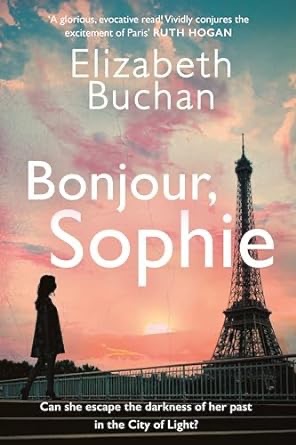
Can she escape the darkness of her past in the City of Light?
It’s 1959 and time for eighteen-year-old Sophie’s real life to start. Her existence in the village of Poynsdean, Sussex, with her austere foster-father, the Reverend Osbert Knox, and his frustrated wife Alice, is stultifying. She finds diversion and excitement in a love affair, but soon realizes that if she wants to live life on a bigger canvas she must take matters into her own hands.
She dreams of escape to Paris, the wartime home her French mother fled before her birth. Getting there will take spirit and ingenuity, but it will be her chance to discover more about her family background, and, perhaps, to find a place where she can finally belong.
When Sophie eventually arrives in the Paris arising from the ashes of the war, it’s both everything she imagined, and not at all what she expected…
Most readers will know I have a fascination for the period directly after WWI, but recently I’ve been looking at books and films that have explored the aftermath of WW2. Originally I watched a film called The Aftermath starring the brilliant Jason Clarke and Alexander Skaarsgaard that followed a British colonel posted out to Nuremberg after the war ends. His job is to help rebuild and I remember being shocked that people were living in homes where their outer walls were missing, almost like looking into a doll’s house. Since then I’ve read novels set in the occupied countries like Poland and France and gaining other viewpoints makes you remember that the majority of people are caught up in a war they don’t want to fight, are tormented with memories of things they’ve done to survive and are still waiting for the return of those they love. I think we imagine that once the war was over, everything went back to normal, but that was far from the truth. Prisoners of war were kept, by us, for several years after the war ended, rationing only ended in 1954 and we were still rebuilding London till the mid 1970’s. It’s in this aftermath that we meet our heroine Sophie, just finishing boarding school in England with her friend Hettie. Sophie has a complicated past and her school years have been a temporary period of fun and friendship. Now she must return to the home and parish of clergyman Osbert Knox, an English village where her French mother ended up in dire straits during the war. Camille was pregnant and had fled Paris during the occupation, leaving behind Sophie’s father who was fighting in the Resistance. Lucky for the Knoxes, Camille had great housekeeping skills and she repaid their kindness in cooking, cleaning and implementing a household system that enabled them to concentrate on their parishioners. Sadly, Camille died and now the Knoxes are expecting Sophie to return from school and pick up where her mother left off, learning to keep house and support the couple. Sophie needs to earn back her keep and education, only then will Osbert return her mother’s precious savings book. This was money that Camille managed to save from her meagre allowance, knowing that Sophie would need something to restart her life with. Sophie dreams of returning to Paris, the home of her parents, but there’s only problem. She is sure that money is being taken from her mother’s savings. So she makes a decision to bring her escape forward, to find the savings book and flee with whatever is left to France and look for her father.

Sophie is a resilient girl, intelligent and able to read people. She doesn’t trust Osbert, but is still horrified to find that he expects her thanks to extend to much more than cooking and cleaning. Now she must escape and sooner rather than later. Sophie wants to build an independent life for herself, full of new experiences. She isn’t afraid about change, she’s quite matter of fact about those experiences she wants to try. She has a friendship with Johnny from the nearby farm and plans to lose her virginity with him, rationalising that it’s something she wants to get out of the way. This ability to single out what she wants and succeed in getting it will stand her in good stead once she gets to Paris. She has a deep yearning to connect with her history, even if her father hasn’t survived, she wants to know what he did during the war. Was he the hero that her mother painted him to be? Sophie knows that the scars of war run deep, that her father might have done terrible things to survive. The author writes about the moral compromises people make in war without judgement, allowing the reader to make their own decisions, but also reinforcing the point that no one knows what they’re capable of until they’re under duress. Finding her father isn’t easy though. She takes work in an art gallery and uses her wage to hire a private investigator. She finds out about the paintings looted from Jewish families during the occupation, removed by the Germans as the owners were transferred to concentration camps. However there were French collectors and gallery owners who collaborated in these deals, using a terrible atrocity as a business opportunity. She also finds that there are so many people looking for someone: husbands who never returned from the battlefield but are not amongst the dead; resistance fighters executed and thrown in a shallow grave; women killed for their collaboration with German soldiers during the war. There are vendettas and grudges still playing out and Sophie is warned that she might not like what she finds. Some secrets should remain buried. The buildings in Paris echo the the trauma still felt by the people, from a distance they look okay but close up it’s clear that there’s been no maintenance. The paintwork is peeling and the stone is damaged, but there is still beauty.
I really enjoyed the friendship between Sophie and Hettie, who has returned home to constraints of her own. She is trapped in within the expectations of her parents and her class. Hattie is expected to be a ‘deb’ and be presented for the London season. If she shines she might attract the right sort of husband. Her only route is marriage and children, no independence or career path. She has to be engaging but not appear too clever and put suitors off. Neither girl has any type of sex education, is not allowed her own bank account or make decisions about her own fertility. It’s scary to me that a lot of these restrictions lasted into my mother’s lifetime! Thankfully Hettie has a belated rebellion. I loved that the girl’s friendship lasts a lifetime and they give each other support and strength. This feel like a transitional period in time, where the world is trying to recover from war and it was a huge realisation to me that it took this long. I remembered reading that it was Ed Balls who, as chancellor, paid the final debts from WW2 and being so shocked. It takes people a lot longer to heal and return to themselves. My own father in law took many years after WW2 moving from the Siberian forest through the Middle East and North Africa and into Europe. He eventually settled in London, but his wartime experience still haunted him when he lived with us in the 2000s. I think Elizabeth Buchan has a way of writing about how we come to terms with generational trauma like this. Here she has mixed a thoughtful and complex historical period with a coming of age story. Just as Sophie is becoming a woman, the country she escapes to is also in the midst of a change. It is by finding out about WW2 and the terrible stories of living in Paris under occupation that she starts to understand her parent’s story and the courageous choices they made. Despite the pain and loss, Sophie’s experiences have a joy about them as she attempts to build herself a life with resilience and happiness. Buchan’s writing always has a melancholic, bittersweet feel. There’s a sense that life and the greater world are imperfect, even dangerous, but we can still live happily within it.
Out now from Corvus Books
Meet the Author
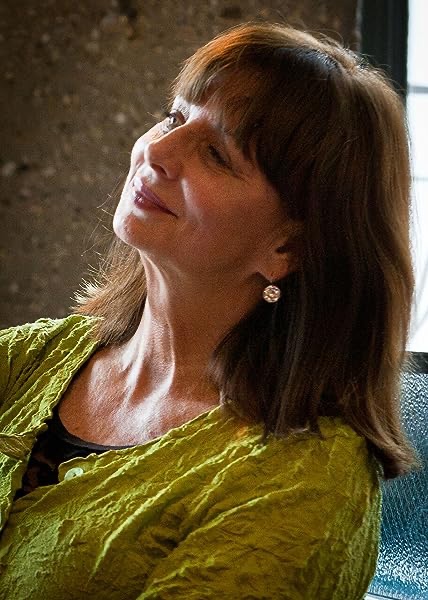
Elizabeth Buchan was a fiction editor at Random House before leaving to write full time. Her novels include the prize-winning Consider the Lily, international bestseller Revenge of the Middle-Aged Woman, The New Mrs Clifton and Two Women in Rome. Buchan’s short stories are broadcast on BBC Radio 4 and published in magazines. She has reviewed for the Sunday Times, The Times and the Daily Mail, and has chaired the Betty Trask and Desmond Elliot literary prizes. She was a judge for the Whitbread First Novel Award and for the 2014 Costa Novel Award. She is a patron of the Guildford Book Festival and co-founder of the Clapham Book Festival.

 The Lotus Readers