
I wouldn’t have imagined back at the beginning, that we would get this many books down the line with private investigators Cormoran Strike and Robin Ellacott. In fact after the last book I thought the author had hit a wall with ideas or was trying to hard to be up to the minute with technology and new trends. I was pleased to find that this was a much better investigation. Full of tension and very dark in tone, this book delves into a church that’s really a cult, every bit as huge and secretive as Scientology. This is a tale of abuse: financial, physical, sexual and spiritual. In parts it is hard to read but compelling and fascinating to see how it’s teaching affect the people who follow it, but also our investigative duo. Sir Colin Edensor approaches Strike to try and bring his son home from the United Humanitarian Church’s compound in Norfolk. Chapman Farm claims to be self-sufficient, growing fields of vegetables and keeping animals, as well as undertaking evangelical work on the streets of Norwich. Sir Colin’s son Will has been part of the UHC for several years and would seem completely indoctrinated. He’s failed to get him out before, but desperately wants him home to see his mother who is dying of cancer. How will Strike and Robin go about their task?
The best way to discredit the church and get close to Will would be for someone to go in undercover. It would be better if that was a woman and Robin volunteers. Strike is reluctant to agree, but can’t come up with a sensible reason for that instinct, knowing his reluctance is probably down to his growing feelings for his partner. However, their other female investigator Midge is covering a famous actress who has a father and son stalker team who want to kidnap her. Robin is adamant it should be her and creates a persona called Rowena, who visits their London base for a ‘service’ with just the right clothes to suggest she has money, borrowed from Strike’s half-sister Prudence. It’s agreed that Robin will go to Chapman Farm for an induction period but they pick a place on the perimeter fence to leave a fake rock. Every Thursday Strike will leave a letter under the rock for Robin to find and she will leave a reply, if she wants to come out she can let them know and they will use blot cutters on the fence and bring her out.
As regular readers will know, Strike and Robin are one of my favourite literary couples, but I’ve been wondering during the last two novels how long she can keep them apart? There’s also a trend for putting Robin in danger to evoke feelings in her partner. Here I was genuinely worried for Robin before she even went into the farm. I could understand her wanting to assert her ability to go undercover and her authority as partner to make the choice – it shouldn’t have to be okayed by Strike. Yet as a person Robin has certain life experiences that a church like this could see as weaknesses to exploit: the rape she suffered at university, the knife attack on her first case that left her with PTSD, there’s also the fall out from her marriage to Matthew and her undisclosed feelings for Strike. These chinks in her armour will be seen by people used to exploiting others. I think there are times when asserting your authority and taking a feminist stance are admirable, but not at the expense of your own safety. ‘Rowena’ is noticed straight away by recruiters at the London temple and after a few attendances, Rowena is taken to Chapman Farm and starts at the bottom of the pile, working in the fields and mucking out the animals. In between there are services or talks about the church’s purpose, bombarding new recruits with images of everything that’s wrong in the world until their current place seems like one of safety. Then a process of breaking recruits down begins – lack of sleep, restricted food or fasting, manual labour and strange interventions and group therapy where the individual is broken down mentally. All of this starts to have a detrimental effect on Robin, but the most disturbing practices are around familial relationships. Children are taken to a dormitory and school so they are no longer a family unit but belong to everyone. Family groupings outside the UHC are rubbished as false attachments that should be broken immediately. Then there’s the spirit bonding. On the farm there are pods called ‘retreat rooms’ there expressly for the purpose of when someone approaches you and asks for sex. Emotional bonding is not the norm, sex is just another form of service, given freely with no ties. What will Robin do if approached?
There were times when I found myself a bit lost on who was who because the cult has so many members and their relationships are complex. There are also complications about the names they have for themselves. I think the author could have achieved the same effects and build up of tension within the farm with less characters and a shorter process of indoctrination. I also felt that Robin would have struggled to come out more than she did. The PTSD seemed mild considering what she’s seen and heard. The experience of looking after a disabled child who isn’t receiving the medical care he should was horrifying and was the main experience she struggled to shake off. The neglect was terrible and Robin desperate wanted him found by the police. However, she was cornered in the retreat room by a naked Will Edensor and was sexually assaulted by the church leader, but once she’s out it’s never mentioned and she doesn’t even tell Strike or Detective Murphy, her boyfriend. I wondered if this might be revisited in the future but it did seem odd to leave it hanging. I also started to be confused by the ex members that Strike was interviewing and where they’d fit into the hierarchy. There was so much detail surrounding the doctrine of the cult and it’s different prophets that I felt the other cases disappeared into the background. In fact one case seemed to be there only to serve as a distraction for Strike at a strategic point. Nevertheless, the tension built as Strike started to unravel the truth and Robin was still inside.
All that being said this was a much better novel than the last in the series. I was totally engrossed in it by half way through and barely surfaced till the end. Of course there is the question of Robin and Strike’s relationship. Ex-girlfriend Charlotte comes to the fore again, trying to lure him back in with an unforgivable lie. I was hoping he would see the manipulation, especially since he’s on his own and can’t run anything past his best friend. He’s wrestling with risking all that he’s built in terms of his business and their friendship if he tells Robin that Charlotte has been right all along, he does love her. Can he find the courage to tell her?
Meet the Author
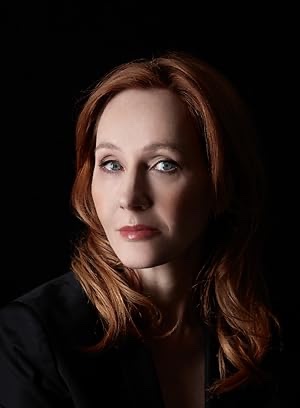
Robert Galbraith’s Cormoran Strike series is classic contemporary crime fiction from a master story-teller, rich in plot, characterisation and detail. Galbraith’s debut into crime fiction garnered acclaim amongst critics and crime fans alike. The first three novels The Cuckoo’s Calling (2013), The Silkworm (2014) and Career of Evil (2015) all topped the national and international bestseller lists and have been adapted for television, produced by Brontë Film and Television. The fourth in the series, Lethal White (2018), is out now.
Robert Galbraith is a pseudonym of J.K. Rowling, bestselling author of the Harry Potter series and The Casual Vacancy, a novel for adults. After Harry Potter, the author chose crime fiction for her next books, a genre she has always loved as a reader. She wanted to write a contemporary whodunit, with a credible back story.
J.K. Rowling’s original intention for writing as Robert Galbraith was for the books to be judged on their own merit, and to establish Galbraith as a well-regarded name in crime in its own right.
Now Robert Galbraith’s true identity is widely known, J.K. Rowling continues to write the crime series under the Galbraith pseudonym to keep the distinction from her other writing and so people will know what to expect from a Cormoran Strike novel.

 The Lotus Readers