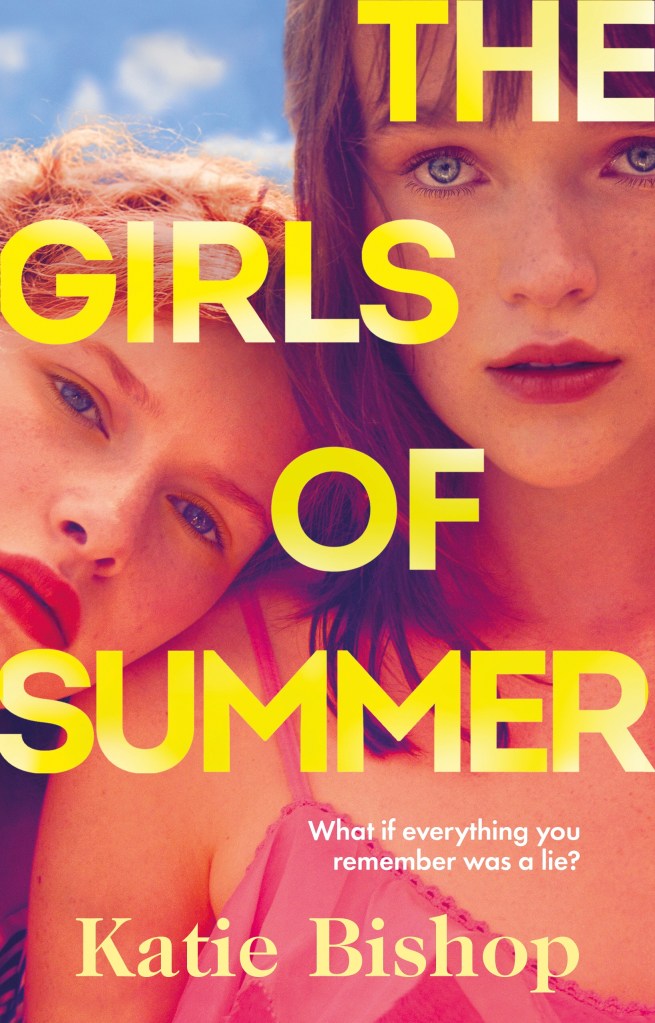
Rachel has loved Alistair since she was seventeen.
Even though she hasn’t seen him for sixteen years and she’s now married to someone else.
Even though she was a teenager when they met.
Even though he is almost twenty years older than her.
Now in her thirties, Rachel has never been able to forget their golden summer together on a remote, sun-trapped Greek island. But as dark and deeply suppressed memories rise to the surface, Rachel begins to understand that Alistair – and the enigmatic, wealthy man he worked for – controlled much more than she ever realized.
Rachel has never once considered herself a victim – until now.
I devote a lot of my time to reading, but there are times when a book makes me drop everything. I carry it in my bag to read while waiting for appointments. It takes precedence over Netflix and all the other streaming channels that lure us into watching the screen every evening. I spent my whole morning in pyjamas reading, because I needed to finish this novel in one greedy gulp. I was completely transfixed by this story of a young girl taking a holiday to Greece that completely changes her life. Rachel is a naïve seventeen years old when she sets out to the island for a holiday with her friend Caroline. She sells it to her worried parents as being no different to a gap year, just a year earlier than normal. Once on the island they meet a group of girls who work in a local bar, belonging to entrepreneur Harry Taylor. When Rachel meets his right hand man Alistair she feels an immediate attraction but does he feel the same way? Surely she isn’t going to capture the attention of a handsome and sophisticated older man. She does notice him looking at her and it sends a shiver through her. Rachel has never thought of herself as beautiful, especially next to the other girls here, but as Alistair singles her out for attention she feels special. They have a connection, so strong that she makes a huge decision. She isn’t going to return to England with Caroline at the end of the holiday. She is going to work in the bar alongside the girls she’s made friends with and share their rather chaotic house nearby. Why would she return to her parent’s suffocatingly ordinary semi and her A’Levels when she can be on this golden island with Alistair and frequent the glamorous parties held by his mysterious boss at his enormous villa in the hills?
The structure of the book is interesting, because usually in time slip novels we have a protagonist in the here and now trying to solve a mystery interspersed with glimpses into the past that make sense of the present. Here the author turns that on it’s head. Rachel, now in her thirties and married to Tom, knows what happened in the past. She holds her relationship with Alistair up on a pedestal, their love was special and those months with him on a beautiful Greek island have been her benchmark of how love should be. It’s a revisit to the island with Tom and bumping into Helena that starts to unravel the rather idealised past she’s been narrating to us. The present actually deconstructs her past. As each new revelation washes over Rachel in the present it takes us into a past that’s changed a little, becoming murkier and more sinister. Rachel is still friends with Jules, a friend she made on the island who was separate to the bar. In fact it’s Jules who gives seventeen year old Rachel a warning, the locals think there’s something ‘off’ about the bar and perhaps it would be best to stay away. In the present Jules and her husband have Rachel and Tom over for dinner. They’re chatting about having a family, but Rachel and Tom have been trying for around a year without success. Tom mentions that they’ve talked about seeing a doctor to have a few things checked out when Rachel responds angrily that he wants to see a doctor, she hasn’t agreed to anything. Her harsh responses change the night and seem out of character. She’s told us about how easy it was to fall in love with Tom and how they’d taken steps to move in together almost without realising it, when she’d stayed for a few days while some work was being done on her flat. Of course by now we know that Rachel has Alistair’s number and has made plans to see him again. Could that have made her less invested in her future with Tom? Later we see that she’s stashed her contraceptive pills in a box of sanitary towels under the bathroom sink, she’s still been taking one regularly every day.
IT’S TOO HOT to be outside for long. Sweat is starting to dampen my scalp, thickening in the roots of my hair and pooling in the crevices of my collar bone. My t-shirt sticks to my spine and my arms are tinged pink, an ungainly line of skin beginning to blister along the top of my thigh in the almost unseasonable blaze of sun. I curl my toes into the damp sand and feel the sharpness of a small shell against the sole of my foot.
Our setting so powerful, that beautiful sun soaked island with the sound of boats rocking rhythmically in the harbour and that incredible opening line that took me straight back to standing in the sea and feeling that sharp edge of a sea shell. She captures that push and pull between the tourists and the locals who, even thought they’re in exactly the same place, see it completely differently – rather like Rachel and the other girls. I could see the slightly scruffy house they all share and the chaos and fun of getting ready together, sharing clothes and cheap bottles of wine. Harry’s house in the hills is another contrast, sleek and modernist with contemporary art on the walls. Even the sea looks different from high in the hills, appearing flat and smooth like a lake on the surface, but with dangerous riptides underneath. The present sections mainly take place in London and the author shows us the city as visitors probably don’t see it. She describes a rather special Sunday evening feel to the tube when it’s almost empty and strangely quiet, as if having a rest before the Monday morning commuter rush. She describes sudden rain showers and people having to improvise and use their handbag to shield their hair from the downpour. Rachel loves living in the capital, compared to her parent’s suburban family home. There’s an energy and unpredictability to it’s rhythms, a sense that there are so many options, anything could happen. Whereas home has a particular tameness and routine that Rachel finds stifling. Could Rachel’s decision to stay on the island and even her attraction to Alistair have something to do with the way she views her mum and dad’s life? We see Rachel fighting something similar in her marriage, the ordinariness igniting that constant yearning for something more, something others can’t see:
She was ‘hoping this trip would reignite some of the heat that has been missing from my marriage. Instead, I look across at my husband and feel faintly repulsed. His underarms are damp and staining the shirt he put on especially for our last night here. He’s staring out at the sea, but I know he isn’t seeing it the way I do. To him it could be anything. Any view, anywhere. To me the swell of the tide speaks of secrets, the salty air smelling irrevocably of promise.’
It’s very easy to understand the teenage Rachel. I fell in love at seventeen and had my heart broken. For years I idealised that relationship, using it as a benchmark for subsequent relationships that in hindsight had much more potential. She is so naïve that she can’t see what’s happening and how much she is being controlled. It’s almost apt that the book should come out in the light of the Phillip Schofield scandal, because it struck me how the responses to what happened are very different to the responses we might have had when I was seventeen in the early 1990s. Our gradual understanding of coercive control, grooming and power imbalances in relationships have coloured the way we view all relationships completely. An affair with a much older man probably wouldn’t have raised much of an eyebrow then, it’s only with hindsight that it becomes worrying. It’s only once the affair is viewed through the prism of our later experiences, such as having our own daughters, that our perspective changes. The #MeToo movement has changed how we see things. When I watched the film Bombshell I talked with friends I’ve had since I was a teenager and as the author writes in her afterword, we’ve all had experiences: of being groped without consent while waitressing or working behind a bar; having a boss who was a bit ‘handsy’ or made inappropriate comments; being touched an a crowded dance floor at a club. One of the most disturbing stories I have ever heard was from a woman who had known ‘wrestling’ between boys and girls in the school playground turn into sexual assault. I love that my stepdaughters are so much better informed than I was and are very conscientious about keeping each other safe when out with friends, although it frustrates me that they have to be so vigilant just to go out on a Friday night.
The Girls of Summer was born out of this strange and sometimes conflicting intersection between nostalgia and trauma, memories and the truth, power and sexuality. It explores the grey areas of consent, deepening a debate that has shifted and broadened since the #MeToo hashtag first took social media by storm. It interrogates what it means when we are forced to reframe a narrative that is so central to who we are that we aren’t sure who to be when that narrative turns out to be false. Is it better to face up to this truth, and all of the pain that comes with it, or to keep it hidden in the dark?
The Girls of Summer, Afterword
Watching the teenage Rachel walk into danger is upsetting because this reader was ahead of the narrative and knew something was very wrong with the island set-up, particularly the extravagant parties. There was no explanation for all the male party guests and the mysterious Harry rarely appeared. On her way to a party, Rachel is excited and hopes Alistair loves her dress, she’s grateful that the girls have been invited never realising that they are the reason for the party. The gaslighting afterwards was painful to read – ‘you had fun didn’t you?’ Or ‘don’t feel bad about what happened, it’s okay, you enjoyed it.’ When they’re in the middle of that level of pressure, manipulation and controlling the narrative how would they be able to see through it and understand what’s truly going on? Even for an adult Rachel it’s hard. Her relationship with Alistair and it’s veracity is part of who she is, how she views men and relationships and determines her friendships with the very women who might understand her most. When the truth of everything is revealed, the horror of the Full Moon party and further painful revelations, it’s so hard for her to absorb and accept it. I found it deeply sad that even towards the end of the book, Rachel has still held a tiny shred of hope that her version of the relationship with Alistair will prove to be the love story she wanted.
When the truth is so deeply painful and damaging, isn’t it understandable that she would want to sugar coat things a little? To push away the truth and not have to confront what happened to you. To not feel like a victim. I could truly understand the women coming together to confront the past and I found myself thinking about how powerful men frame the narrative. They talk about a cabal or coven of women coming together to destroy them. Women who have been taking drink or drugs and having an encounter they bitterly regret in the morning. I can only imagine what effect it must have on the individual, to hear comments like Prince Andrew’s ‘I have absolutely no memory of ever meeting that woman’. For Rachel, who lost absolutely everything that summer, the denial of her experience actually brings the first chink of light into her situation. I felt hopeful that with the help of this group of women, friends like Jules and an acceptance of the truth she could start to rebuild. The fact that I’m talking about Rachel like this, as a real person, is testament to the brilliant writing of Katie Bishop. She has created a real, flesh and blood woman in Rachel and I found myself almost wishing I could see her as a client, I so wanted a recovery for her. This is a powerful story, that may trigger some people who’ve had similar experiences, but it’s important for stories like this to be told. I could really see this as a television series, with some reviewers seeing a similarity with The White Lotus – a beautiful setting, a luxury resort and the dark truths lurking underneath all that perfection. I loved the ending though, a return to that beautiful place but with the ability to see the reality instead of a fantasy. I wanted her visit to the island to be different to the one she had with Tom at the beginning of the book. To accept that she will never feel the excitement and promise she felt all those years ago, but that she will experience new feelings that are every bit as worthwhile.
I had thought I could recapture something of how I felt all those years ago by coming back here, but it has only served to remind me how slippery and impossible it is to summon the past. Perhaps this is simply the nature of growing up. Of growing older. Perhaps I will never feel the same again.
Meet The Author

Katie Bishop is a writer and journalist based in the UK. She grew up in the Midlands before moving to Oxford to work in publishing in her early twenties. Whilst working as an assistant editor she started writing articles in her spare time, going on to be published in the New York Times, Guardian, Independent and Vogue.
Katie started writing The Girls of Summer during the first UK COVID lockdown, after becoming increasingly interested in stories emerging from the #MeToo movement. The novel is inspired by her own experiences of backpacking, and by her interest in how our personal narratives can be reshaped and understood in light of cultural and social changes.
In 2020, Katie moved back to the Midlands, and now lives in Birmingham with her partner. She is a full-time writer.


 The Lotus Readers