Posted in Personal Purchase

The Invisible Hour by Alice Hoffman

After a few years building on the Practical Magic series, I was looking forward to seeing what Alice Hoffman would come up with next. She has based her story around the writer Nathaniel Hawthorne and his classic novel The Scarlet Letter and introduces us to two young women facing difficulties. Ivy is from a rich Boston family and when she finds herself pregnant at 16, she truly expects support. The father of her baby retreats into his wealthy family and the elite university he’s due to attend, taking no responsibility for the predicament they’re both in. Facing her pregnancy alone she talks to her parents who also wash their hands of her, not wanting the stigma or embarrassment. Ivy decides to leave home and climbs out of the bedroom window, setting out to see a friend who she knows will have an idea. She suggests they leave together and make their way out to a religious community she’s heard of in Blackwood, Massachusetts, with a charismatic leader called Joel Davies. When her father decides to look for her several months later he finds the worst, Ivy has a little girl called Mia and has become the leader’s wife. Mia grows up in Joel’s community and he decides who is in favour and what is a transgression. Everyone is punished, but the women particularly so – they might have their hair cut off or even be branded with a letter. Women are not allowed reproductive rights, but nor do they get to keep their children. Children belong to everyone and after a few days with their mother, sleep in dormitories. Books are not allowed and as she grows up books are Mia’s particular downfall. She finds her way to the public library and starts to read American classics like Little Women and Huckleberry Finn. Then she finds a copy of The Scarlet Letter, beautifully bound and very old. On the fly leaf is a dedication:

To Mia. You were mine and mine alone.

Is it perhaps her mother, who does show her special attention despite the rules. She tucks the book into her dress and keeps it. Reading in the barn, where she has loosened a board to keep her treasures behind. She has a small landscape painting of the view from the community’s buildings. Land that was left to Joel by his first wife Carrie. Carrie was also a rich girl, but one who had assets to bring to this Puritan community. Carrie was a great painter, but was often punished lest she become too vain about it. On the back of this painting is an inscription about the lands she owns and a promise that Joel will get to keep it ‘as far as the eye can see’.
One day during the apple harvest, a terrible accident happens and Ivy is killed. Mia is distraught, but as her mothers body is carried away she grabs the red boots that Joel uncharacteristically bought for her mother to have as a keepsake. She knows that now it’s either run or stay forever. Grabbing The Scarlet Letter and the painting she takes a leap, out of the bedroom window and across the fields to the library. The librarian had noticed Mia lurking in there, reading in the warmth. She had a feeling the girl was in trouble so she gave her a key and invited her to let herself in if she is ever in danger. She understands that to keep Mia safe they must move quickly, so she packs up the car and takes her somewhere he won’t know, because nobody knows. She has a long-term partner, a woman she doesn’t live with but trusts implicitly. She knows that with them, Mia should be able to thrive without the community breathing down her neck, to go to school and read to her heart’s content and have the life she has dreamed up for herself.

She also sensed that Joel was a man who wouldn’t give up Mia without a fight.

Of course it wouldn’t be an Alice Hoffman without something magical happening and here Mia experiences a time slip and finds herself in the same time and place as her hero Nathaniel Hawthorne. He hasn’t yet written The Scarlet Letter, in fact he’s on the verge of giving up writing altogether. When he meets Mia their connection is instant despite the centuries between them. They start a love affair, but what will the consequences of that be? Anything they do will change the future. Could her presence in his world mean that the very book that brought her here, no longer exists? In fact the consequences of their love could be even more life changing for both of them. Can she stay in his world? Is there any way he could come into hers? Mia is becoming aware that Nathaniel may have to sacrifice his writing for them to be together and she’s not sure she can let him do that. All the while, her father Joel is still watching and waiting.

I loved the play on The Scarlet Letter here because it shows us how powerless women have been across the centuries. I loved how Alice Hoffman creates this magical setting. The landscape, particular the woods and river, feel like something out of A Midsummer Night’s Dream. It would be easy to dismiss her work as whimsical and romantic, but underneath is a fierce feminist manifesto and an equally fierce defence of the written word. I was aware as I read the novel that it could go the same way as other books that have supported women’s reproductive rights and end up banned. The way the religious community prevent women from controlling their own fertility is a representation of what’s happening in some states of America. Abortion has always been a controversial topic in the US and the rights of women in some areas have reverted back to the early 20th Century. Jodi Picoult often cites Alice Hoffman as her favourite writer and a huge influence on her own work. In some states of America Jodi Picoult’s work is banned from libraries and schools because it concerns issues like abortion, teenage pregnancy, fertility treatment and same sex marriage. Here Hoffman is hugely critical of a community that doesn’t value women’s education, burns books and leaves them with no rights over their own bodies. There’s a part of her magical landscape where desperate women have taken matters into their own hands. They’ve taken herbs or potions to end their pregnancies and have created a burial place for the children they’ve lost and those they can’t bear to have.

Mia’s surrogate parents are the antithesis of Joel’s community. They are intelligent and progressive women who actively encourage questioning and reading. They remind Mia that no matter how moral and righteous a community might seem, if it restricts education, burns books and controls women, believing them to be inferior to men, then it is on the way to being fascistic. It’s so sad that Joel won’t let women read but then uses letters to punish them and control their behaviour, by literally branding them into the skin in a ceremony. Instead of wearing a scarlet letter, an adulteress would be branded on the upper arm with a letter ‘A’. Words and books are the source of our knowledge and that scares men like Joel. This is a brave book and will probably be underestimated, but women have been speaking their truth in ways that fly under the radar for centuries; films or books dismissed as ‘chick lit’ or ‘rom coms’; jingly, bright pop music with dark or subversive lyrics; pretty pink fashion branding the wearer as stupid, like Elle in Legally Blonde. I think there are people who will see the beautiful landscape, the time travel and magical feeling of this nook and underestimate it. I’m hoping readers look for the deeper themes here and see what Alice Hoffman was doing when choosing to use The Scarlet Letter. It’s a much beloved classic that she clearly loves, but it’s also a perfect basis for a story about these women. The ending is perfect for the autumn in that it’s bittersweet. We love the beautiful fall colours, particularly in the part of the USA where the book’s set. Those brightly coloured leaves bring us joy, but they’re also signalling an ending. The beauty of loss. 🍂
Published on 17th August by Scribner

Meet the Author

Alice Hoffman is the author of thirty works of fiction, including Practical Magic, The Dovekeepers, Magic Lessons, and, most recently, The Book of Magic. She lives in Boston. Her new novel, The Invisible Hour, is forthcoming in August 2023. Visit her website: http://www.alicehoffman.com
Posted in Throwback Thursday

Throwback Thursday: Fiction About the Tudors

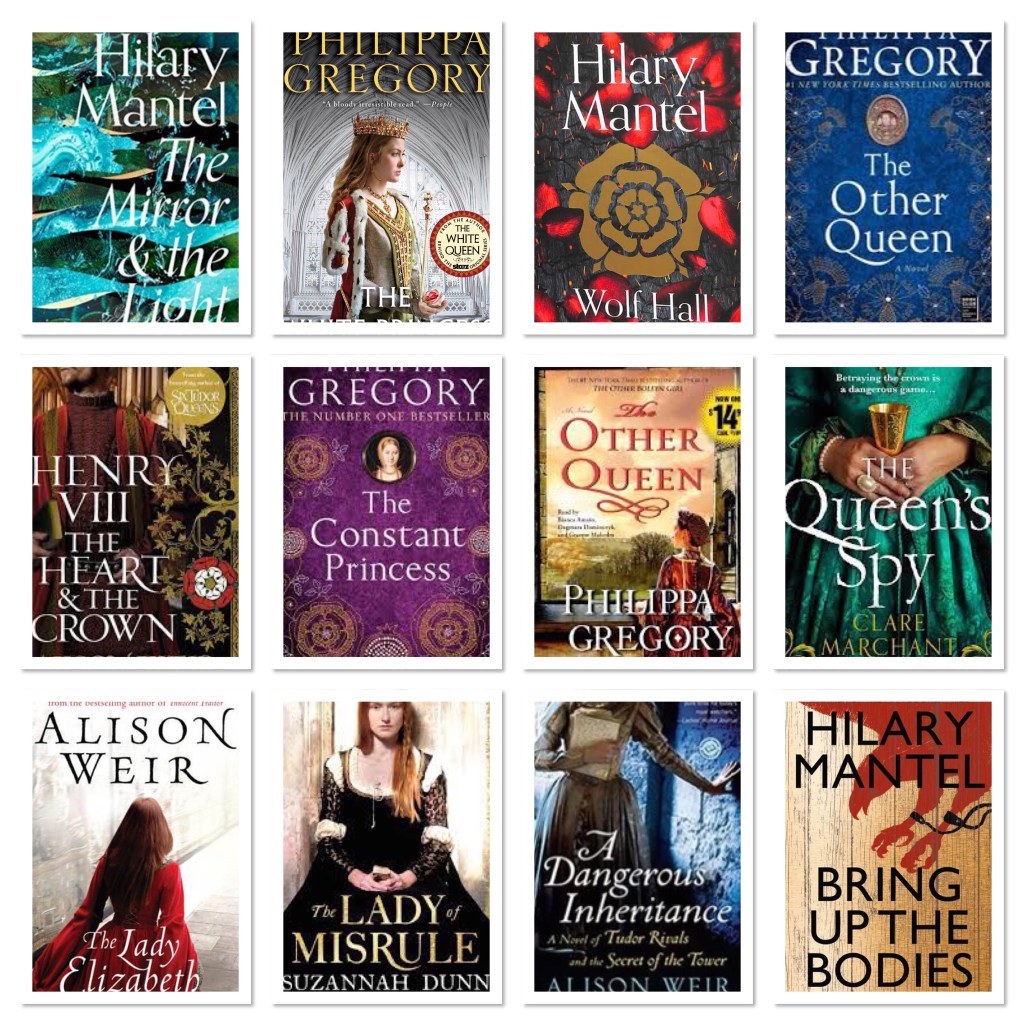
I’ve had this fascination with Henry’s wives and the whole Tudor dynasty since primary school, as I wrote about earlier in the week. It was my introduction to Philippa Gregory when I was in my twenties that really started the ball rolling. I started to learn about the women’s perspective behind these historical facts we all learn. I’d never known that Henry VIII had an affair with Anne Boleyn’s younger sister Mary or that it’s possible she had the King’s children just like Bessie Blount. I learned more about the political and religious machinations that hide behind the six marriages and their tragic ends. I hadn’t known about the uneasiness within Henry’s aristocratic courtiers and advisors about the commoners he was bringing in to advise him, such as Cardinal Wolsey and Thomas Cromwell. There were aspects of the Queen’s roles in events that opened up to me, such as their religious allegiances and how the marriages cemented Henry’s beliefs at the time and signalled his intentions to the rest of the world. I’d never known about how ladies in waiting were chosen or trained, often shipped to grand houses with aristocratic women overseeing their education. I’d also become fascinated about women on the periphery like Jane Rochford, who’d been married to Thomas Boleyn and had to give evidence against her own husband, then years later oversee the young Queen Katherine Howard only to be drawn into treachery yet again. I’d become interested in Bess of Hardwick after buying a book about her at Chatsworth House then going to an exhibition about her, including the household accounts written in her own hand. I knew that Chatsworth had been one of the houses where Mary, Queen of Scots was held, but not what her captivity did to her marriage and her reputation with Elizabeth I. There is such a rich seam of Tudor fiction in these areas, but I’m going to recommend some of my favourites that you will probably know, then some you might not as well as those still sitting on my TBR.

Great for Beginners

This is a great beginning because it’s outside the Queen’s series and deals with characters outside the actual court. Set in 1568, Elizabeth I has been on the throne for ten years, but hasn’t married and won’t choose a successor. Mary Queen of Scots has been forced to flee her own lands, due to rebellions and rash actions in her choice of husband. Her enemies have used her weaknesses and their perceptions of women to unseat her, leaving her on the mercy of her cousin, Elizabeth I. However, Mary is Catholic and advisors to the Queen don’t want to risk their already weak position against Catholic France and Spain. They also worry about her infant son James, another threat to the throne. Elizabeth’s advisor and spy master William Cecil comes up with a plan, Mary will be kept under house arrest, living with all the luxury a Queen should expect but unable to leave. He has to find a suitable couple to house Mary and decides upon Bess of Hardwick and her new husband George Talbot, who reside at Chatsworth House. Mary does not accept her house arrest though, bringing George Talbot under her spell and plotting to regain her throne in Scotland. Bess sees her husband’s deference to the young Queen and knows that if they are linked to her plotting, William Cecil will make sure they face the Tower or even the block. This is an interesting angle on Mary as we see her through the eyes of another woman, a very shrewd and intelligent woman who has managed to amass her own fortune along with estates and land left to her by her previous husband. I felt pulled into Mary’s story and despite feeling very sympathetic towards her I also felt angry on Bess’s behalf. Neither woman wanted to be in this position and I felt that frustration.

Set in 1539. It’s time for Henry to find a fourth wife after the tragic death of Jane Seymour. He has the heir and now he needs to have a spare. Since he is head of the church in England, it seems wise to take a Protestant Queen and Anne of Cleves fits the bill. Chosen from the painted likeness on the book’s cover and organised by Thomas Cromwell. The marriage falters immediately, when Henry dresses as a commoner to surprise his newly arrived wife to be she doesn’t even recognise him. Aggrieved, Henry tells Cromwell he finds her undesirable because she has too much flesh and smells unpleasant. His advisors are asked to pay court to the teenage Katherine Howard while a divorce agreement is reached. Anne Boleyn’s sister-in-law Jane Rochford returns to court and becomes close to the new Queen, desperately trying to cope with a young naïve and rather silly girl on one hand and the tyrannical Henry on the other. When Katherine starts to play dangerous games with Henry’s servant Thomas Culpepper, will Jane be able to avoid the block a second time? I love this period of the wives’s story because I think Anne of Cleves is the shrewdest of his wives, accepting his terms to live alone like his sister immediately and setting up home in palaces vacated by Wolsey and the Boleyn family. In fact the King got along very well with Anne and often joined her for dinner or to play chess in the evening. By contrast Katherine Howard’s tale is tragic and her eventual death is desperately sad as her courage fails her and she begs for her life.

Wider Reading

I have so much sympathy for this poor girl who is caught in a power play between political and religious factions. Jane Grey was the great niece of Henry VIII, a descendent of his closest friend Charles Brandon, Duke of Suffolk and Princess Mary – Brandon didn’t seek permission to marry Henry’s sister and their friendship faltered. Jane was actually the cousin of Edward IV, Mary I and Elizabeth I. At only 16 years old she is forced to marry into a powerful family – the Dudleys – as part of a plan to usurp the throne. When Edward IV dies, they decide to install Jane and her husband Guildford Dudley on the throne before Edward’s sister Mary can travel to London. The book is fascinating even if you do know the story of this nine day Queen and adds that human element behind the facts. Weir presents Jane as manipulated and physically abused by the powerful men who were desperate for her to take power on their behalf. There was the religious concern about having a Catholic queen on the throne and her allegiances with Spain. Would Mary return England to the Catholic faith? Might she seek a Catholic marriage with one of her European allies? Jane was a devout Protestant to the end, in fact it sustained and strengthened her when held in the Tower of London. I felt her dread towards the end and I felt so sad for her because she had so little control or peace in her short life.

The woman who outlived Henry VIII still had a tragic end. Her true love was Thomas Seymour and she expected after her first husband had died that she would have a husband of her choosing. Unfortunately Henry got there first with a surprise proposal and no one is allowed to refuse the King. Clever and sensible, she is known for being able to appease an increasingly cantankerous Henry. However, there is so much more to Katherine Parr than being a nursemaid to elderly husband. She published a religious text and proved a great stepmother to all of Henry’s children who joined them at court. It seemed as if love and motherhood had passed this woman by. After Henry’s death Thomas Seymour does jump in, determined not to miss the moment but with almost unseemly haste. Katherine thinks that finally she can have a husband of her choosing and love is on the cards. However, does Thomas have other plans? Could it be that Katherine’s house guest, the very young and spirited Elizabeth, is the reason he’s so keen on a quick marriage? As they marry and live together, Katherine soon becomes pregnant but her age and health are against her. With a wife on bed rest, Thomas has plenty of time on his hands and too little to do. Will Katherine know the happy family she always wanted? This book sticks closely to historical fact and is a fascinating read about one woman’s hopes and dreams dashed by duty.

The Tudors in Context

Hilary Mantel’s incredible Tudor trilogy starts with this introduction to Thomas Cromwell, set in the 1520’s when he was clerk to Cardinal Wolsey. His rise from lowly blacksmith’s son is a fascinating one and his eventual succession to Wolsey’s role as chief advisor to Henry VIII was not liked by aristocratic courtiers. Usually appointments like this were filled by dukes or earls, often from very specific families who traditionally held senior roles at court such as the Seymours. Wolsey is removed from office for failing to secure an answer to the King’s ‘Great Matter’, his divorce from Katherine of Aragon based on a biblical verse that states if a man should marry his late brother’s wife they will be childless. Henry did receive a special dispensation to marry Katherine when she was his heart’s desire, but several miscarriages later and only one daughter to succeed him, Henry is desperate for a male heir. Thomas is ambitious. He’s also a bully, with the ability to charm and manipulate to get the result he wants. He handles the King’s vacillations between romantic desire and murderous rage. He is pursuing Anne Boleyn who is not succumbing to his offer to be his exclusive mistress. She’s seen many women discarded by Henry, including her own sister and she’s playing a different game. Thomas is keen to install Anne as Henry’s wife because she shares his Protestant leanings and has a reformer’s agenda. Can Thomas secure Henry’s divorce and set in motion the English reformation? This is a different viewpoint on Henry and the turbulent moods that are starting to control both him and the court.

Elizabeth is a fascinating woman who grows up in the most tumultuous period in royal history: the Wars of the Roses or the Cousin’s War as it’s also known. She was the daughter of Edward IV and his wife Elizabeth Woodville, sister of the two lost princes in the tower, courted by her own uncle Richard III, but eventual wife of Henry VII and mother of Henry VIII. As Henry VII takes the throne from Richard III in battle, Elizabeth and her family are in a very precarious position. Her father’s death left the family fleeing to sanctuary as allegiances changed all around them. There are rumours she has been the mistress of Richard III. There is still no sign of her two younger brothers, Edward IV’s rightful heirs who were placed in the tower by her uncle and thought to be dead. As the Lancaster side take the throne she expects to live in sanctuary again, but her mother Elizabeth Woodville is a survivor and is in correspondence with the new King’s mother, the formidable Margaret Beaufort. She knows that her son’s reign is controversial and he needs to create a more peaceful England in order to secure the throne for his successors. Lancaster and York need to unite and Elizabeth is the last York princess. Their marriage is a symbol of peace an to represent that the white rose and the red rose are combined to create the symbolic Tudor rose, visible in many Royal palaces and historic buildings. Elizabeth presents a united front to the country, but their union was difficult. Henry was a paranoid man who dreaded Elizabeth’s brothers being found and was often suspicious of her mother too. This novel takes us into that marriage and sets the scene for Henry VIII’s unexpected reign, after the death of his brother Arthur, Prince of Wales. See also Philippa Gregory’s novel The White Princess.

My Tudor TBR

This is the third and final book in Hilary Mantel’s trilogy on Thomas Cromwell and takes us into his final years as Henry’s advisor. The book starts in 1536 when Anne Boleyn is decapitated with a french sword when Cromwell’s fortunes may be at their peak. Henry is settled with Jane Seymour who is expecting a baby. Calm reigns at court. Behind the scenes, Cromwell still has much to think about: rebellion, traitors and spies both at home and abroad. Can the nation shake off it’s Catholic past and move on? Or do the dead continually return to haunt us? The execution of Thomas More is playing on Henry’s mind particularly at this time. For Cromwell, the Spanish ambassador whispered something in his ear. A though that will not go away. Henry will turn on him too. As he always does in the end. With no family, title or private army behind him, Thomas has no one to defend him. It’s a lonely place to be, reliant solely on your own cunning to survive. This thought comes to life as the Queen dies and the lives of predator and prey move to their inevitable end. I know what happened to Thomas Cromwell, in fact I had to close my eyes when watching The Tudors and seeing his fate. That doesn’t stop me from wanting to read this book though, because Mantel’s research is extensive and she has an almost spooky ability to get inside a character’s mind and portray what those dry historical facts felt like. I must admit to being a little daunted by the size of this, so I think I’m going to separate it into readable sections and make it a daily reading goal.

I have this on the pile of books by the bedside, mainly paperbacks I’ve picked up from charity shops and second hand bookshops. It seems to provide or imagine a back story for Henry’s fifth wife that makes her plight even more tragic. Katherine is only twelve when she is sent to the home of the Duchess of Norfolk, a place where girls from aristocratic families go to train as ladies in waiting. As a member of the Boleyn family, this is a normal placement but she must have been aware of the terrible end her cousin met at Henry’s hands. Cat Tilney, another girl living in the house, is suspicious of Katherine. She thinks she’s only interested in clothes and boys, but is eventually drawn in by the young girl and they become close confidantes. When Katherine is called to court and drawn into the King’s orbit, Cat becomes her lady-in-waiting. Henry has set aside Anne of Cleves and despite Katherine only being 17 his advisors present the young girl as a possible successor. Henry is charmed by this charming young girl and at first married life is enjoyable on his side. However, Katherine is married to a much older man who is now in ill health and has a permanent leg ulcer that smells terrible. A rumours start to filter through the ladies-in-waiting that Henry can’t perform in the marital bed, whispers start to reach courtier’s ears about Katherine’s conduct. Girls that came from the Duchess of Norfolk’s home may have been entertaining much older men. In fact her present conduct is worse, because she’s already having an affair with King’s manservant Thomas Culpepper. Katherine is terrified and implicates others, including her childhood sweetheart Francis. Unknown to her though, Francis is now in a serious relationship with Cat Tilney. With Francis in the tower, Cat could save him, but but only by implicating the Queen and ensuring her death. I’m fascinated in reading this take on Katherine’s early life, which seems to show how vulnerable young women were at court and how they were always blamed for men’s actions.

I hope this gives you some ideas about where to start with historical fiction about The Tudors. It isn’t an exhaustive list and there’s plenty of non-fiction from various historical that’s equally fascinating, not to mention the debate on how male and female historicans often interpret material very differently and with potential bias. I do think Henry is more understandable when put in the context of his father’s reign. Henry wasn’t meant to be King and was allowed to spend time carousing with friends like Charles Brandon rather than learning about the constitutional obligations of the crown. Henry was an intelligent young man in terms of history, philosophy and religion, but wasn’t schooled in duty and service in the same way as his brother Arthur. He was also left at court with women: his mother, both grandmothers and his sisters were said to have spoiled him. His relationship with his father was complex considering he was the spare, but he was at court to see his father’s paranoia, his alleged affairs and his vacillating over whether Henry could marry Katherine of Aragon.

I’m interested in research that looks at the Tudor’s medical history. Henry’s jousting accident during his relationship with Anne Boleyn was a bad one, with Henry knocked out for some time afterwards. It is very possible he sustained a head injury at that time, not to mention the leg injury which became ulcerated and impossible to heal. The pain and restrictions of this ulcer certainly contributed to his obesity and terrible mood swings in later years. It is likely he was also impotent after his marriage to Jane Seymour, providing more insight into his comments on Anne of Cleves’s desirability; there was nothing wrong with him, she was too unattractive. I have also read about possible chromosomal abnormalities that might explain why both his first wives were unable to produce a male heir, with all male babies being miscarried or dying within a few days or weeks of their birth. Edward IV was a sickly child and died very young too, while his sisters Mary and Elizabeth lived into adulthood. All of this adds to our understanding of the Tudor’s reigns, but can’t fully excuse a man who was cruel and tyrannical. It does however give us insight into the experiences of the Tudor Queens and their daughters, most of whom met tragic ends either wholly or in part caused by men.

Posted in Q and A

Q & A with Clemmie Bennett Author of The Apple and the Tree.

Monday’s review of Clemmie Bennett’s book was interesting to write and brought up a lot of questions for me and I was lucky enough to be able to pose some of them to the author.

Q. I was inspired to read about the Tudors after seeing a copy of the Hans Holbein portrait of Henry VIII at Chatsworth House. What do you think first inspired you to be interested in the Tudor Court?

A. I watched the Showtime series The Tudors . In France, where I grew up, we do not learn about King Henry VIII and his wives at school. It was for me a completely new world and it compelled me. After each episode, I found myself researching on the true people behind the characters. I figured out quite quickly that the show was taking liberties with history, big ones even, but the deed had been done: I was hooked. Before I even finished watching the show, I was reading non-fiction books on Henry and his wives… I haven’t stopped yet!

Q. How does it feel to send a character back to one of the most tumultuous times in history, especially for women? ere you worried for her or did you know she was going to be okay?

A. I knew she would be okay, at least physically. It was always in the plot to make her survive Henry, maybe as some sort of revenge for the formidable women who did not. What was unexpected however, was Ella’s moral and psychological evolution. Without getting into too much detail, there were times when she was writing herself, giving herself an arc that I had not planned for. I am glad that she did. In the end, it does go back to your question: sending a character, especially a woman, in this tumultuous time in history is so dangerous that it was never likely that she would remain unscathed.

Q. Did you decide Ella would break the golden rule of time travel – don’t change anything in the past?

A. It was always the plan. One of the goals in the novel, was to show that some events in history were meant to happen, even if not necessarily in the same way. To a certain degree, I believe in determinism. The English Reformation was always going to happen, whether or not Ella changed the past. Besides, to me, the golden rule of time travel takes all the fun out of writing a time travel novel.

Q. Taking into account the legacy of the Wars of the Rose, the death of his brother and his uneasy relationship with his own father. Do you have empathy for Henry?

A. I use to. But now, not really. The way I see it, his main problem was the education he received. He was very intelligent and skilled in many things, but never learned to cope with the frustration of not getting what he wanted. During his childhood, the blame fell on the women who raised him ( as the second son he was not raised with his own, predominantly male household, but with his mother, sisters and female attendants) but as he grew older, one could have also expected him to also grow in control of himself and his desires. He did not, and it is the people closest to him who paid the price. Not only his wives, but also the men he loved, like Sir Thomas More, cardinal Thomas Wolsey or Thomas Cromwell. It is difficult to have empathy for someone who destroyed so many lives as a result of his tantrums, whether they had legitimate foundations or not. I do sympathise with his quest for a son, considering the threat of civil war, but this is overshadowed by the way he behaved for it.

Chatsworth House Portrait of Henry VIII

Q. Which of Henry’s wives do you identify with most? And which do you most empathise with?

A. Katherine Parr is the one I identify with most. She was, after all, the only one of them to publish a book. Under her name and written with her own hand! She was also the only one to survive Henry and even managed to marry the man she truly loved, Thomas Seymour. He was a questionable man, but that is another debate.

Queen Katherine of Aragon is the one for whom my heart breaks, because I believe she was the only one of the six, who actually loved her husband. The humiliation to be rejected by him would have probably have hurt her less than the rejection itself. Picture yourself in her shoes: married for over fifteen years to the man you love, only for him to unilaterally decide that your marriage has been a sham this whole time. If this was not cruel enough, his reasoning was: she had not given birth to a healthy boy, a male heir. Even in a world where losing a child was common, she had lost five of them and her grief was common knowledge. Henry used it, played on it, deciding that the death of their – born or unborn – children was God’s judgement on their marriage. Katherine had first been married to prince Arthur, Henry’s elder brother. When he died shortly after the wedding, the Pope granted a dispensation for her to marry Henry, on the basis that the marriage had not been consummated. By choosing to believe that God was punishing their union for it, Henry humiliated and dishonoured his wife; se was accused of lying for over a decade about her virginity, blamed for the death of her own children, separated from her daughter and exiled from court. I see her fate as the most tragic, most painful of the six.

Q. There are details about living in the sixteenth century that I have not found in other books, like people relieving themselves on the floor and even in the fireplaces. What made you include them?

A. I once read that Katherine of Aragon asked for male courtiers to stop relieving themselves in the fireplaces. I remember being appalled, thinking about the tench this would have created. It was important to me to include this aspect of Tudor life in the story. Very often, when we think about Royal Courts of Kings and Queens of the past, we picture the dances and the beautifully dressed women, dripping in jewels. I myself am guilty of this. I wanted Ella to remind the readers that hygiene was a real issue underneath the velvets and the diamonds. It was also a way for me to show a historical setting, peopled with historical characters that we only see portraits of, in a more human light.

Q. Was it important for you to represent the daily struggle of the women in the court? Ella finds the underwear situation weird and there are details of dealing with bodily functions too, like when Ella gets her period.

A. Absolutely. Ella’s character had to be the most relatable possible, so that when she would be sent five hundred years to the past, she would have concerns and struggles that would be understandable to the reader. Any woman reading a novel set before tampons were invented once asked herself how women used to go through their period – or am I the only one? I even did the last time I watched the Disney cartoon Mulan. Besides the most obvious difficulties that would come with time travelling to Tudor times, I honestly believe my most burdensome would be very trivial – sanitary products, underwear, shampoo etc.

Q. I was surprised when Queen Katherine’s lady in waiting gave birth to Henry’s last wife, Katherine Parr, during the book. It really made me notice the differences in age and power. Was it a conscious choice to highlight inequalities like this?

A. When I wrote the scene when Ella finds out about Maud parr’s daughter, I gave her my own reaction. A man marrying the goddaughter (Katherine Parr) of his first wife (Katherine of Aragon) was to me, quite surreal. I sometimes think people forget about the age differences between Henry and his wives. He was six years younger than his first one, but twenty-one years older than his last one … and thirty-three years older than the previous one, Katherine Howard! For time, and for his contemporaries, it was not necessarily shocking. I was once told that Katherine Parr had made some sort of choice in accepting the King in marriage, but I disagree; the choices that could be made as a woman were in a completely different category to the choices that could be made as a man – especially the King of England. This imbalance is reflected later on in the novel, in the very limited life choices presented to Ella.

Henry’s wives from left to right. Top: Katherine of Aragon, Anne Boleyn, Jane Seymour. Bottom: Anne of Cleves, Katherine Howard, Katherine Parr

Q. Ella’s grandmother Lolly says we can’t judge people from the Tudor period by our 21st Century values. Do you agree?

A. Yes. This was the main reason why I wanted a main character born in the 21st century. She had to be relatable to the reader, in a way that her thinking process would be more similar to them than the other characters in the story. As time passed, she would understand more their point of view, and her own thinking would change on certain topics. It is the duality that I wanted to show.

On a personal note, I think it is unfair to judge sixteenth century people with twenty-first century lenses. The world changes, people evolve. What would be shocking now could have been perfectly normal five centuries ago. And vice versa. However, I still maintain my judgement on Henry’s treatment of his wives, considering that even his contemporaries were divided by it, to say the least.

Q. I know a lot of book bloggers are aspiring writers so can you tell e a little bit about your writing routine and your route to getting published?

A. I actually do not have a writing routine. In the past I tried to follow other writers’ routines and pieces of advice – anything to feel in my heart that I was ‘doing it right’. It never really worked for me. i write when I can, mostly on evenings and weekends. I do try to write every day, but I work full-time so it is not always possible. When I have enough energy and inspiration, I usually pour myself a cup of tea and a sugary drink and I write. No music for me, as I end up focusing on the lyrics instead of my words. My current favourite spot is on my armchair by the window, but it can also be at my desk, my bed or even on the floor. It really depends on my mood.

The route to getting published was rocky. I queried many literary agents and publishing houses, hoping I would be traditionally published. It did not work out. It also brought to my attention the existence of something called a vanity press, which was an oddity to me, and I declined several of their propositions. In the end, I decided to use some of my savings to self-publish. I found lovely professionals on Reedsy: Matthew Kilburn for editing, Danna Mathias Steele for cover design and interior formatting, andJaime Witcomb as a publicist. It allowed me to keep complete control over my story and I am very happy with the final version.

Q. What are you writing next?

A. I am writing the sequel to The Apple and the Tree. I am not entirely sure yet if Ella’s story will be a duology or a trilogy, but it will be followed by a prequel on Lolly’s upbringing.

Clemmie Bennett

With Thanks to Clemmie Bennett and her P.R. Assistant Jaime Witcombe

Posted in Publisher Proof

The Apple and the Tree by Clemmie Bennett

For her debut novel Clemmie Bennet has chosen to write something so complex I have to take my hat off to her. Ella has recently lost her beloved grandmother, Lolly. They used to spend a lot of time together, exploring stately homes and royal residences, particularly those from the Tudor period. Lolly left her granddaughter a beautiful gold and sapphire ring, one that’s very precious to Ella as she remembers her grandmother wearing it every day on a chain around her neck. However, it’s when Ella puts the ring on her finger that something very strange happens. Ella feels dizzy and passes out, waking up in a field next to what looks like Eltham Palace. As a man walks towards her, Ella thinks she’s fainted in the middle of an historical reenactment. He’s dressed in the rich robes of a member of the Tudor court and his manners are impeccable, offering to let Ella rest in the palace until her memory returns. As Ella finds herself in the court, becoming one of Katherine of Aragons ladies, she is a fly on the wall for some of the most dramatic events in royal and religious history. Is it possible to remain an observer, or will Ella find herself tempted to intervene and perhaps change the course of history.

I’m fascinated by Tudor history, ever since I a painting (that was after Hans Holbein) of Henry VIIII in the Chatsworth library when I was a child. Henry seemed like a curiosity in our royal history with so many wives and scandals to his name. Once I’d read the David Starkey books and Phillipa Gregory’s novels from The Other Boleyn Girl onwards. I was also drawn to the glamour and dubious historical content of the Showtime series The Tudors, with Jonathon Rhys Meyers Henry and his best friend the Duke of Suffolk, as portrayed by the rather delicious Henry Cavill. What all these sources brought home to me was how uneven his marriages were – he was married to Katherine of Aragon for as long as he was to every other wife combined. That’s without noting his devotion to her from the moment she reached England for her marriage to Henry’s elder brother Arthur, a devotion that survived his teenage years, their marriage and his brother’s death. They were in love, he wasn’t faithful but Kings were not expected to be faithful. The idea of a character time travelling to that period threw up all sorts of questions and I was so impressed by the bravery of the writer. Writing historical fiction means researching your period throughly, so to do that and put your character in the middle of such a well- known series of events is brave.

I also applaud the author’s bravery in ripping up the rule book on time travel – we all know that it is important not to change anything in the past, but Ella ignores that rule. It’s a great choice because it gives her character more freedom, but I also think it makes an historical point too. I have always said that had I been in the Tudor court, I would do a Mary Boleyn and marry someone of little importance and get the hell out of there. I have always wondered while reading about the wives and friends of Henry why you would involve yourself in the political and religious machinations of the time. Wouldn’t a life in the country as a nobody be preferable? I think that the author allows Ella to get involved because she’s making the point that it would be impossible to live in that court and not become involved. It’s a game of survival and women are both marginalised and limited in their choices. They have a choice, to withdraw for a quiet life like Mary Boleyn or fight for their place and power like her sister Anne. Ella’s choices certainly raise the tension level! She’s playing a living game of chess, trying to keep within the rules but think three steps ahead of her opponent. Of course she has the benefit of hindsight and all the Tudor history her grandmother Lolly taught her, so she might be able to win.

I thought the book really brought to life the difficulties of the time period and being a subject of Henry VIII, particularly for women. We know there are ladies in waiting, but they’re often portrayed as companions the Queen and possible lovers of the King, but here we see more of their day to day activities and their emotional lives. Ella is a 21st Century woman and because of that we can see these women as being just like us. I loved the way she formed friendships and how the women supported each other. They are portrayed as emotionally open about their marriages and the dangers they face, whether from men or from their own bodies. Fertility plays a major part in the huge decisions of this court, in fact it still does today if we think of Prince Harry’s book Spare and the importance placed upon his father to marry and have both heir and spare. It’s always a huge part of the ‘King’s Great Matter’ that Katherine had not produced a male heir, but here the author explores what these struggles were like for the ordinary women at court. There’s a moment where Ella has to cope with getting her period in a time where underwear isn’t worn and she’s having all the same worries I remember having when starting my periods, all over again. It made me realise how vulnerable women were to sexual assault as well. It broke my heart to see how terrified women were of becoming pregnant, then dreading childbirth or losing their child. Having Ella there as a 21st Century comparison really heightened how different a woman’s lot really was and how the aristocratic practice of handing your child to someone else to look after caused such pain and grief.

I came away from this book with a different understanding of both the time and the court, even Henry himself. This Henry was intelligent, tender and seductive. Despite his shortcomings, there’s a compassion in Henry that seems missing from his actions in later years. It’s interesting to see how different the course of history might have been with just a few small changes. As Ella builds a friendship with Henry, I wondered how far her influence might reach and what might happen if she ever returned to her own time. This kept me reading and there was also a huge twist I didn’t expect! This was such an interesting premise and had me intrigued enough to keep me reading to the end. I recommend this to anyone who enjoys this time period and maybe thinks they know all there is to know about the court.

Independently Published and available on Kindle and in paperback.

Meet the Author

Clemmie Bennett is a writer, author of the historical fantasy “The Apple and the Tree.” A professional London-based French nanny, Clemmie has been working on her debut novel for over three years, but writing a book has been on her bucket list for as long as she can remember. When she is not writing or reading, she can be found wandering about ancient royal palaces or abbey ruins, most likely despairing that time travel is not a reality – like it is for her main character.

Posted in Sunday Spotlight

Spotlight: Fiction and the Tudors

Sometimes as book bloggers we struggle with maintaining our blogs, for many different reasons. Illness, bereavements, family issues, working lives, caring duties, mental ill health are just a few reasons – most of which I’ve encountered over the past four years – but there are others. Most book bloggers, have at various points in their reviewing journeys, had a complete crisis and felt imposter syndrome. We might question our abilities, feel burned out or just wonder why we spend so much of our time pursuing a hobby that can be thankless. Recently I’ve struggled with the double whammy of undergoing hospital treatment, feeling unwell and experiencing a loss so some authors and publicists perhaps didn’t get everything they’d asked for. I’ve been going back over my work and trying to fill in those gaps and now that my brain’s firing again, some of these books have inspired me to spotlight a review again and take them a bit further. So this week, thanks to going back over my review of Clemmie Burton’s The Apple and the Tree, I realised I needed to publish my Q and A with this lovely author and perhaps highlight a little bit about my favourite books set in the Tudor period, one of the biggest collections of books I have. So this week on The Lotus Readers blog it’s Tudor week!

We’ll be starting with a second look at Clemmie’s first novel in what will be a series, following 21st Century Ella when a piece of jewellery seems to transport her back to the Tudor court. This is a familiar place to Ella because her grandmother Lolly had spent time walking around Hampton Court with her, talking about Henry VIII in particular and all his wives. You will see from my Q and A with Clemmie tomorrow, that her inspiration for this time period came from watching Showtime’s The Tudors. For me, my interest came very early on a family day out to Chatsworth House where a portrait of Henry VIII stands in their library. I thought it was a copy of the Hans Holbein portrait, but the artist is Hans Eworth and it’s thought to be painted around 1560. In style it’s exactly like the famous Holbein painting, the stance and richness of the clothing is so similar. It exudes power, strength and wealth. I knew from school that he had six wives, but being primary school age I didn’t know any details about that. However, being a rather macabre child I did think a lot about ghostly Tudors wandering around with their heads under their arm. Living near to Gainsborough’s Old Hall with it’s resident Grey Lady, ghostly women were definitely on my radar.

I began to read historical fiction when I was a little older and a friend decided to lend me The Wise Woman by Phillipa Gregory. This interesting and slightly disturbing novel is set in Tudor England rather than the court, but Henry VIII’s policies directly affect the events of the story. Our heroine is Alys, a wise woman expelled from her sanctuary in a nunnery by the Reformation. Without a penny to her name, Alys has to return to the old cottage where she lived before and with only her own skills to support her, she returns to the magic and healing that are her natural gifts. However, when she falls for Hugo who is a feudal Lord and already someone else’s husband. She is tempted to use her gifts in a darker way, to remove her rival and secure the object of her desire. This then took me into reading her Wideacre series and eventually The Other Boleyn Girl, thought of as the start of her Tudor novels. While I was consuming the Phillipa Gregory series, I was also reading non-fiction by authors such as David Starkey and Alison Weir, giving me the facts behind the fiction. I loved the amount of reading that Philippa Gregory did to make her novels as authentic as possible, but it was also fascinating to read about those events where even historical researchers differ on their interpretation of primary sources like Henry VIII’s own letters. When Alison Weir moved into fiction I began to read her novels too, starting with a novel about Lady Jane Grey Innocent Traitor. I found myself enjoying these novels that gave voice to the women in and around the Tudor court. These novels explored what events must have been like from their point of view, bringing the human side of these, often silent, women to life. As Philippa Gregory moved into the years before Henry, exploring events of the Cousin’s Wars, it was interesting to follow the thread of events – to surmise who and what laid the groundwork for the Tudors and how their reign had stabilised England even though many noblemen resented Henry VIII and his father.

I will be talking about my favourite historical novels set in Tudor England later in the week. However, I can’t deny that I was also fascinated by television and film that portrayed this time period and controversial monarch. Like the author Clemmie Burton I was glued to The Tudors and yes, a lot of my fascination was down to Henry Caville as Charles Brandon, Duke of Suffolk. In the late 1990s there were so many great films that fired up public interest in the reign of Henry’s daughter Elizabeth. Shakespeare in Love was something widely used at university when looking at the Tudor theatre and Shakespeare in particular. It’s essentially a romance, but it’s period detail was brilliant and it was perfect for presenting post- modern representations of Shakespeare at university. For me Cate Blanchett’s turn as Elizabeth I in two films about her life that was more Oscar worthy. Again, they were largely inaccurate, but glorious to look at and with an incredibly strong performance from Blanchett especially in The Golden Age. A similarly strong performance was Anne Marie Duff as Young Elizabeth following the years before she became Queen and her love of Robert Dudley. I was so glad I’d done the reading when it came to Renaissance Literature at university, I had so much background knowledge in my head that I was easily able to place a poem or play within it’s historical context. It was like I’d done half the work already. Later in the week I’m going to list my favourite novels set around the Tudor period and perhaps inspire you to delve into this turbulent historical period a little more.

Posted in Random Things Tours

In Bloom by Eva Verde

‘This is my family story. From all I’ve sown together, through all I couldn’t ask. I want to be the bud who makes it.’

In Blooms tells of strength, survival, forgiveness, resilience and determination, and the fierce love and unbreakable bonds between mothers and daughters.

Ever since Sol’s untimely death left her pregnant and alone at twenty-two, Delph’s kept herself small as a form of self-protection. Now, over a decade later, she lives with their daughter Roche and her new partner Itsy, a kind and protective cabbie, on the fourteenth floor of Esplanade Point on the Essex coast.

But Delph’s protective bubble bursts when Roche moves in with her estranged nan, Moon. Feeling on the outside of the bond between her fierce-yet-flaky tarot-reading mother and volatile martial-arts-champion daughter, Delph begins questioning her own freedom. And when Roche’s snooping into her grandmother’s past unearths a familial line of downtrodden women; a worrying pattern emerges. Has keeping small and safe truly been Delph’s choice all these years…?

I don’t believe in trigger warnings, despite their intended purpose to flag up material that may ‘trigger’ difficult emotions in the reader, I feel that they might stop someone experiencing a connection with a text. It might well be a trigger, but that doesn’t always have to mean it’s a negative one. It might be a trigger that starts a healing process. If anyone should have avoided this book it was me, because I was Delph. I lost the love of my life in my early thirties and then sleepwalked into a coercive and damaging relationship. Yes, it was a hard read at times, but it wasn’t remotely negative. Moon, Delph and Roche are three generations of a family. Each woman has her own issues, but they all stem from one place. Right back at the beginning. As the book opens Roche can no longer live with her mother and Itsy, the man she’s been living with for most of Roche’s life. So she decamps to her grandmother Moon’s house. Roche can’t stand Itsy, he dislikes her and wishes she wasn’t there. In fact what he wants is Delph all to himself, it’s easier to control someone who’s isolated. Delph has had a glazed over look ever since he arrived in her life and she doesn’t seem like her mum anymore. Delph has done everything she can to keep Itsy happy. She’s changed how she dressed, made herself less beautiful, stayed at home and stopped going out with friends. Every day she makes herself smaller to make more space for him and Roche can’t watch it anymore. However, things are changing slowly. Delph has a job she enjoys at B & Q, new connections with her colleagues and today she has made a choice. Delph is pregnant and she knows deep down in her soul that ‘the thought of more years, more life, tied to him’ is more than she can bear. She goes secretly on her own for an abortion, the quietest but most powerful act of rebellion she can make. Then comes her opportunity, Itsy receives a phone call from Jamaica to tell him his mother is dying. He must jump straight on a flight, so Delph lets him go alone, knowing that now she has several weeks to herself. She doesn’t stop Roche from moving out and accepts this as her time to heal, time to be the parent that so often Roche has to be for her. However, this isn’t the only recovery needed in the three generations of this family thanks to the actions of men.

I felt at first that I was slowly piecing together the story of a client. Being a person- centred therapist means letting the client choose what they want to talk about. I would use my counselling skills to tease out that story and ask questions where it needs to be clarified or where I might only be getting one perspective. Here the story has it’s own pace and each woman narrates her own section. We flit back and forth between the women, also delving into the past here and there. It’s like doing a jigsaw puzzle but only being handed one piece at a time, then another from a different place. It takes some time to perceive the whole and that was definitely the case here. Only we the reader can see where they all are in relation to one another. The reality of being a woman in today’s world is explored fully, there is no doubt that these women’s lives would have been immeasurably better had they not encountered the men they do. It takes Roche to articulate this properly with the words and wisdom of her generation.

“Roche knows, remembers, how her life changed at around the time she started secondary, and her bubble of invisibility popped. How, despite the school uniform screaming otherwise, she very suddenly became the inhabitant of a woman’s body, complete with a depressing self-awareness that this was now Roche’s life until one day men deemed her invisible again. In fairness, it’s not her contemporaries who usually do the perving – no, it’s men, grown–ass men who have always done the bulk of the wolf–whistling, the innuendoes and basic compliments that they expect her to ‘smile, love’ and be grateful for.”

As a middle aged woman I now know the power of that invisibility and how, in many ways, it’s a blessing.

I love how carefully the author drew the threads between generations, those behaviours that create a pattern of intergenerational trauma. There are moments in her journey where Delph needs her daughter by her side, but she recognises that it’s a selfish need. Delph’s lived experience stops her; “is not for a child to fix the parent. Nor is Roche the ointment to Delph’s current troubles”. She’s spent enough time trying to help Moon. Then we go back into Moon’s early years, when her grandmother is in hospital, suffering from mental ill health. Her name was still Joy back then and her job is to dispense sunshine to a women who can’t even remember her name. ‘Come on,’ Ma says, in a giddy-up way. ‘You know how happy your little face always makes her.’ This a learned behaviour, people pleasing and exactly what Delph is trying to avoid for her own daughter, three generations later. By sitting with her own pain, Delph is avoiding instilling that behaviour in Roche, she’s actively breaking the cycle. Yes, there are traumatic moments in these women’s lives, Moon’s story being particularly harrowing, but we can also see the women’s determination to change. It’s that change and what it means for Roche that brings such an uplifting feeling to the book. For me it’s Delph’s struggle that touched me deeply. The loss of Sol, who’d been there her entire life, is devastating. So moving out of Itsy’s orbit and the mental paralysis she’s been living with means opening up her emotions. That’s all of the emotions including her grief, but it’s a process that needs to happen so that Roche can talk about her father openly and in a joyful way. I found myself more engrossed in the later stages of the book as I had to see whether these women could heal together. This is beautifully written and manages to be funny, moving and hopeful.

Meet the Author

Eva Verde is a writer from East London. Identity, class and female rage are recurring themes throughout her work and her debut novel Lives Like Mine, is published by Simon and Schuster.

Eva’s love song to libraries, I Am Not Your Tituba forms part of Kit De Waal’s Common People: An Anthology of Working-Class Writers. Her words have featured in Marie Claire, Grazia, Elle and The Big Issue, also penning the new foreword for the international bestselling author Jackie Collins Goddess of Vengeance.

Eva lives in Essex with her husband, children and dog.

In Bloom will be published in August 2023.

Twitter @Evakinder

Instagram @evakinderwrites

Posted in Publisher Proof

Fayne by Ann-Marie MacDonald

Fayne by Ann-Marie Macdonald

‘I do not wish to be a woman.’

‘My dear. I’m afraid we none of us has the choice.’

I do not wish to be a lady, then.’

‘I cannot blame you.’

The vast estate of Fayne lies to the southern border of Scotland, ruled by the Lord Henry Bell, Seventeenth Baron of the DC de Fayne, Peer of Her Majesty’s Realm of the United Kingdom of Great Britain and Ireland. The mysterious Lord Bell keeps to his rooms by day, appearing briefly at night to dote over his beloved and peculiarly gifted child. But even with all her gifts – intelligence, wit and strength of character – can Charlotte overcome the violently strict boundaries of contemporary society and establish her own place in the world? Fayne is the page-turning queer story of longing and belonging you’ve been waiting for.

I must admit to being slightly daunted when this novel came to the door. I say ‘to the door’ because it wouldn’t fit through the letterbox or into our postbox. It’s an absolutely brick of a novel, so much so that I had trouble holding it. Feeling a little overwhelmed I spoke to a fellow blogger who suggested that I mark it off into readable sections of about 150 pages. It was great advice and I’m glad I persevered with the novel, because it really was intriguing and original. Set in the late 19th Century and written in a similar style to a Victorian novel, Fayne is the story of Charlotte Bell. Charlotte is a precociously intelligent young woman with an insatiable curiosity that is starting to overcome the bounds of what her father and the estate’s library can teach her. This could be a dream existence, but there are shadows in her childhood. Charlotte’s mother died giving birth to her and her brother, the heir to Fayne House died at the age of two. Her father makes a break with tradition on her twelfth birthday, when a young woman would usually have a governess, he hires her a tutor instead. Lord Bell gives him one command for the education of his daughter, to teach her ‘as you would my son, had I one’. Charlotte’s only restriction up till now has been staying within the bounds of the estate. This is because she has a mysterious condition that may make her prone to catching illnesses from others. However, when she takes her tutor out to the bog, they find an unexpected artefact and take it home. Lord Bell suddenly announces he has arranged for her to be cured of this condition, turning Charlotte’s world completely upside down.

There is a feyness to her character, with her love of the boggy moorland and it’s mysterious mists that envelop walkers. She has learned both the ways of the bog and local folklore from Bryn, an elderly servant who seems to come with the estate. Yet the artefact she finds seems to be a mystery. The other mystery that confused me from the outset was the nature of Charlotte’s condition. Also, despite her curiosity about everything else, Charlotte seem strangely unaware of what it is and how it manifests. Her old nurse tells her there are all manner of miasmas and droughts that might carry off her ‘darling pet’. I kept waiting for her to ‘feel’ ill but that never seemed to happen. Another curiosity was her mode of dress, at a time when women were terribly restricted by their clothing which would have included a corset, possibly a bustle, and long cumbersome skirts and petticoats. Yet Charlotte is leaping around the moor, seemingly wearing a form of trousers, that she describes as a scarlet tunic and leggings. I was totally intrigued, imagining a type of female Robin Hood. In fact Charlotte herself says that if she did miss her footing in the bog and was discovered years later, she might be mistaken for a Roman centurion complete with a cape! She’s such an interesting and completely different Victorian female character I was fascinated with her. While still wondering what the mystery around her was, I became beguiled by her wit, intelligence and her endless wonder. As the answers started to come I was rooting for her to escape the rigid gender boundaries of her time and fulfil her potential. The author’s assertion that Charlotte is normal, it’s the world that’s trying to impose it’s order upon her, chimed very strongly with my disability theory background. The social model of disability asserts that all bodies are normal, but the way society is organised creates the disability. For example, if all exits and entrances to a building were ramped everyone can use it. It doesn’t matter if you’re sitting or standing.

It’s clear that the landscape at Fayne and Charlotte are inextricably linked. Despite eventually travelling away from it’s borders, it stands out as the one place she was allowed to be her true self with no restrictions or arbitrary boundaries. She didn’t have to choose who she was at Fayne, she could just be Charlotte. Fayne is a liminal space, existing somewhere between mythology and reality, between England and Scotland. I loved the way the author positions Fayne and the estate’s old folklore as authentic, as natural as Charlotte is before she moves to Edinburgh, which is a sharp contrast to the wilds of her childhood. I was desperate for Charlotte to retain this authenticity, but everything about a city imposes order – the signs, the roads, the hard surfaces. Then there’s ‘society’ and it’s arbitrary rules about gender. There are so many rigid ideas about how a woman should look and behave. The imprisonment of a Victorian woman’s clothing is so stifling that when we think of Charlotte’s tunic and leggings, it feels like being restrained. Yet there are other ways of being, even here, you just have to know where to look. It was great to be on that journey with Charlotte, as she finds that other people also defy expectations. There is so much more to the novel, different viewpoints and characters as well as some plot twists and turns. However, I was always happy to come back to the ever curious and irrepressible Charlotte. It will take all of Charlotte’s ingenuity and intelligence to unearth her family’s secrets and discover her own identity. In some ways I was reminded of another novel with an intersex character delving into her family history, Middlesex by Jeffrey Eugenides. I enjoyed both character’s journeys to find themselves, but also each book is so rich and full of history. I have read Middlesex more than once and Fayne will also benefit from a re-read, hopefully at a slower pace, as I’m sure there’s so much I missed or didn’t fully appreciate on first reading. Ann-Marie MacDonald is an extraordinary storyteller and I’m now interested to explore her other novels.

I knew from a very young age that I was wrong in the world. And the idea of looking through the eyes of somebody who’s born with an intersex trait has been quite compelling to me for a very long time. It’s not an exotic quality. That’s why I’ve decided not to treat it as a “spoiler.” That’s just who Charlotte is, that’s her body. That’s normal. It’s the world that has a problem and is going to make it a problem for her’.

Ann-Marie MacDonald Press Release from Tramp Press.

Meet the Author

Ann-Marie MacDonald is a novelist, playwright, actor and broadcast host. She was born in the former West Germany. After graduating from the National Theatre School of Canada in Montreal, she moved to Toronto where she distinguished herself as an actor and playwright. In 1996 her first novel Fall On Your Knees became an international bestseller, was translated into nineteen languages and sold three million copies. It won a Commonwealth Prize, the People’s Choice Award and the Libris Award. In 2002 it was an Oprah’s Book Club choice. In 2023, The Way the Crow Flies appeared and in 2014 Adult Onset, both of which had international success. In 2019 she was made an Officer of the Order of Canadafor her contribution to the arts and her LGBTQ25+ activism. She is married to theatre director Alisa Palmer with whom she has two children.

Posted in Squad Pod

Lowbridge by Lucy Campbell

This story really crept up and took hold of me. It’s a slow burn, dual timeline mystery set in small town Australia. Katherine has moved to her husband James’s hometown of Lowbridge, a town with a very clear line between ‘the haves and have-nots’. Katherine is struggling with her mood and self-medicating with drink. James is hoping that the move will help her and has made it clear that they can’t continue as they are. He encourages her to get dressed and leave the house or go for a run like she used to. It’s clear something momentous has happened and their lives have imploded, but they are each dealing with it in different ways. In fact their teenage daughter Maggie was killed in a car accident, where the designated driver had been drinking. When Katherine does leave the house she accidentally stumbles across the town’s historical society and shows an interest in the exhibition they’re putting together. It’s something she can potentially help with and it’s enough to get her motivated. However, when she comes across a thirty year old mystery, problems start to arise. The disappearance of a young girl called Tess during the summer of 1987 has remained unsolved and Katherine thinks it may be time to highlight the case and perhaps jog people’s memories. She knows she must involve Tess’s family in the decision, but she doesn’t expect opposition from anyone else. It’s James’s opposition that surprises her most. He tells her to leave the mystery alone, that it will stir up trouble and it’s would be unhealthy for her to become wrapped up in another family’s grief. Katherine is determined though and with Tess’s family on board she starts to research what happened in 1987.

From the beginning, the author really gives us the sense of what it’s like to live in a small town where everyone knows each other. Having grown up in a small market town I know it’s rare for me to run errands without seeing someone I know. I still have friends that I had when I was thirteen and when I was sixteen a friend of mine was murdered, a few days before Christmas. A death like that sends a shockwave through the whole town and I could clearly imagine the collective grief and anger that Katherine would unearth as she investigates what happened. In the summer of 1987 the town was already at odds over a women’s clinic being proposed by a local doctor. This has enraged the anti-abortion lobby leading to protests and appeals to the locals authorities to stop the development. Three teenagers from the ‘right side’ of town are reaching an age where they’re asserting their independence and finishing their leaving certificates at school. Tess and Sim are friends with the slightly younger Luisa who is from an Italian family. The girls try to keep the clinic out of their conversation because it is Sim’s mother fighting to get the clinic open and Luisa parents are Roman Catholics, utterly opposed to abortion. Because they’re from the more middle class part of town they tend to keep separate from the ‘Pitsville’ kids, the area mainly inhabited by miners and their families. The author has really captured what it’s like to be a teenage girl on the cusp of womanhood. In the girl’s conversations there are all those insecurities about how they look and what they wear, their popularity and how boys view them. All three acknowledge that one girl at school really does capture the boy’s attention.

Jac is thought of as ‘easy’ by other girls, mainly because of the attention she receives from boys but also because of her sexy clothes. A lot of the derision also comes from the fact she’s a miner’s daughter from Pitsville, but they rarely think about what her life is actually like. The author takes us into her home, with a father who works and drinks heavily, often bringing other miners back to the house to continue drinking late into the night. Unbeknownst to anyone it’s on one of these nights that something terrible happens to Jac, setting in motion a sequence of events that will change her life. As Tess disappears off the face of the earth, Jac also goes missing but no one notices. I enjoyed this angle on the story very much, because it injects a element of social injustice into the mystery. We know that when girls go missing, even now, there are all sorts of social factors that play into the way the police investigate and the media report on the story. Often girls from black british and other minority communities go missing and don’t even make the evening news. Sim and Tess take Luisa to a house party after drinking a lot of home made ‘punch’. When they lose sight of their friend they go searching and find a brawl going on in an upstairs bedroom. Luisa is on the bed and two boys are fighting, each one claiming to be the knight in shining armour who’s found Luisa being attacked. It’s such a big story that everyone at school knows by Monday morning. It’s a big story because it’s Luisa. If it was a Pitsville girl would the popular kids get to know? Would they even care?

Katherine is a complicated heroine. She’s trying to avoid grief by drinking and I had a huge amount of empathy for her. Yet in a vicious argument with husband Jamie, he tells her a few home truths that made me think about it a different way. She wants him to grieve the same way she does, but he points out that he’s never been able to. It’s not that he doesn’t want to cry and shut the world out, it’s that he’s never had the luxury of falling apart. When their daughter Maggie was killed Katherine was able to keep her wonderful memories. She can imagine their daughter’s beautiful face when she thinks of her, but only because he had to see her broken and bleeding. He identified Maggie so that Katherine could keep her memories intact. He went to the inquest, so she didn’t have to hear the horrific details. She has felt alone, but so has he. I found this really powerful and I could understand why he thought involving herself in another family’s grief was unwise. Yet that’s not the full story, because Jamie has been keeping something from Katherine. That last summer when Tess disappeared, Jamie was secretly in a relationship with her. Maybe it’s in Jamie’s interest to stop Katherine from digging up the past. Could it be that he knows more than he’s letting on? The story dragged me in different ways, as each revelation came to light. I loved that the more we found out about Tess, the more special she became. It was wonderful to see her offer support and practical help to others, even to people others might have overlooked. She’s aware of the popular crowd’s opinion, but doesn’t let it sway her. She makes her own decisions and sets aside judgement. I had to have an early night to finish the book in one go, because I didn’t want to miss anything. This is a fascinating mystery, with a powerful theme running throughout about women’s rights over their lives and their own bodies.

Thank you to the Squad Pod Collective and Ultimo Press for my copy of this book.

Posted in Netgalley, Publisher Proof

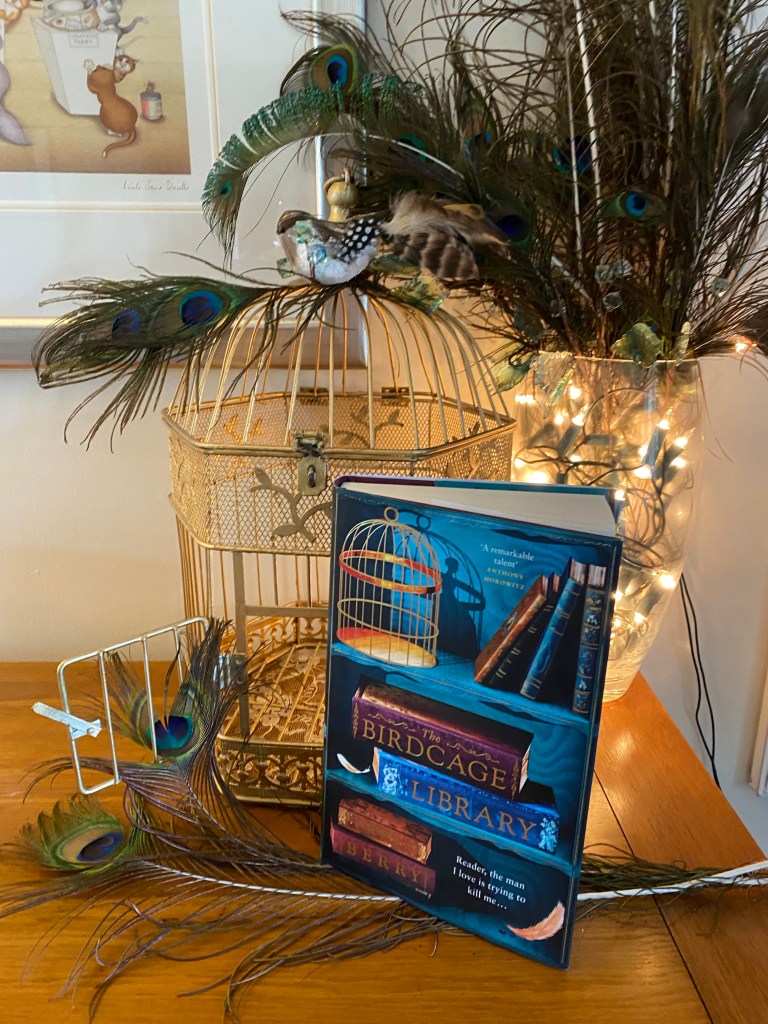
The Birdcage Library by Freya Berry

Dear Reader, the man I love is trying to kill me ….

In 1932 Emily Blackwood, an adventurer and plant collector, is employed by Heinrich Vogel to solve a puzzle. A treasure is hidden in his remote Scottish castle and he has employed her to find it. Her excavations take us back several years to New York and a young woman called Hester caught between two brothers and the family business of supplying rare animals to society homes and show business. As Emily follows the clues she discovers torn out clumps of pages from their hiding places around the castle. These tell Hester’s story in her own words and Emily starts to piece together this part of the Vogel’s family history. However, the discovery means she also starts to question her host, the isolated place she’s staying and whether or not she is safe within it’s walls. As Emily solves the clues and we race towards her final conclusions I found myself anxious and thoroughly addicted to Freya Berry’s intriguing and puzzling mystery.

I also found myself rather spellbound by the a book because it features one of my more macabre favourite things – I have to admit that vintage taxidermy has a strange fascination for me and the quirkier it is the better. Victorian tableaux with their anthropomorphised animals really do make my heart flutter. Rationally, I know it’s horrible and undignified for these beautiful creatures but I can’t resist a squirrel tea party. This book is set at a time when killing these beautiful living creatures and posing them for the collections of rich men is huge business. The Scottish castle has it’s owncollection, but we are also taken back a few years to Heinrich Vogel’s youth when he and his brother were the source of all these wondrous creatures. In one example, sourcing a vast collection of hummingbirds to be the talking point of an exotically themed gathering for the great and good of New York Society.

Emily rather reminded me of another incredible heroine, botanist Alma Whittaker in Elizabeth Gilbert’s wonderful novel The Signature of all Things. Like Alma she is intelligent, curious and forges her own path in the world of scientific discovery. I loved that Emily wasn’t like other women in society, usually depicted in fiction as diverted by dances and adorning themselves for the marriage market. She is an academic and sets foot in places across the world that many men haven’t yet reached, never mind the supposed fairer sex. That said, her biggest adventure and challenge is trying to be acknowledged for her expertise within an academic system that’s firmly a patriarchy. It is a lack of funds that put Emily in Vogel’s orbit, when he hears of her employment cataloguing the Rothschild’s butterfly collection. He feels that only the intelligent and ingenious Miss Blackwood will do as he wishes to catalogue his own incredible collection of taxidermy creatures. It doesn’t take long for Emily to discover there’s a more intriguing task though. Heinrich Vogel’s sister-in-law Hester famously threw herself to her death from the Brooklyn Bridge. From an old book entitled The Birdcage Library, Emily deciphers clues that lead her to the remains of Hester’s diary and her words pull Emily into a past filled with clues, explaining all that happened to the Vogel brothers and Hester’s relationship with them.

The highest form of love is indistinguishable from liberty.

Freya Berry uses her historical knowledge perfectly. It grounds the story within it’s time, using real people and places to anchor Hester’s account until it feels like part of history rather than fiction. The world she describes is so rich, alive with sound and colour, creating an all round sensory experience for the reader. I felt like I knew this world inside out. As many of you know, the birdcage is a potent symbol for me, one that I have tattooed on my body as a reminder to never let anyone put me inside one again. Here Freya Berry uses it as a metaphor for the way high society and wealth keep women from living the fullest lives they could. A cage is a cage, even if it’s a gilded one. The women in New York society may have money enough to adorn themselves with the feathers of birds of paradise, but they would never have the freedom that Emily has had to travel abroad and see these birds living in their native habitat – something infinitely more valuable than wearing them as a hat. Despite having a central role in the Vogel’s business operations, Hester is soon relegated to the parlour when her brother-in-low returns to New York. The business is going in a different direction, as her husband pursues the kind of fame and fortune earned by Barnum. Her creativity, business acumen and financial know how are sidelined and she finds herself bored and dissatisfied. Her distraction from the boredom and bewilderment of being relegated to the parlour, is a destructive one.

As Emily gets closer and closer to the final parts of Hester’s diary, she realises that the repercussions of what happened in New York are still playing out, but now she is in the middle. I was actually starting to be scared for her safety. The arrival of Vogel’s nephew Yves made me wonder if Emily could find an ally in this isolated castle? Or is she doomed to live out Hester’s life, caught between two Vogel men? The novel is the perfect combination of historical novel and mystery, with just the right edge of gothic darkness. There are echoes of both Jane Eyre and Rebecca here, two of my all time favourites. Freya Berry has created two interesting and intelligent heroines in Hester and Emily, and I was enthralled by their stories till the final page. I think you will be too.

I am no bird; and no net ensnares me

Jane Eyre by Charlotte Brontë

Meet the Author


Freya Berry always loved stories, but it took several years as a journalist to realise she loves the kind of truth that lies in fiction, not reality. (Or, to put it another way, making stuff up is more fun.) 

Her second novel, The Birdcage Library, is out now, a gothic mystery and literary treasure hunt packed with twists. A 1930s adventuress discovers an old book containing clues about the disappearance of a woman who vanished 50 years before. Set between a Scottish castle in the 1930s and an exotic animal emporium in Gilded Age New York, it’s a gothic tale of secrets, obsession and murder. Oh, and taxidermy. 

Her first novel The Dictator’s Wife, a high-stakes exploration of power, glamour and complicity, was published in 2022. It was shortlisted for the Authors’ Club First Novel Award, a pick for the BBC’s flagship book show Between The Covers, and The New European’s novel of the year. 

Freya lives in London and graduated with a double first in English from Cambridge. She spends more time reading smutty fantasy novels than she likes to admit.

Posted in Squad Pod

73 Dove Street by Julie Owen Moylan

What an incredible writer Julie Owen Moylan is, because within a few pages of starting her new novel I was absolutely immersed in 1950’s London. This is a London I haven’t visited too often in literature, the haunted and broken post-WW2 period rather than the supposed glory or the drama of the the war itself. Here the war has a ghostly presence, shown by children climbing piles of rubble or an incomplete street that looks like a mouth with one of it’s teeth missing. The story is told through three women; Edie, Tommie and Phyllis. It’s Edie we follow to 73 Dove Street where she hopes to look at a room, with just a single suitcase and an envelope full of cash. Edie is almost put off by the mattress and pile of men’s clothes burning fiercely just outside the yard, but a voice summons her from an upstairs window and she recognises a place she can lie low. What is she hiding from? Tommie lives in the room below and works for an eccentric socialite who was once wealthy and popular. Outside work Tommie is lured to the seedy nightlife of Soho and the man she can’t quit. Phyllis is the landlady of 73 Dove Street, burning her husband’s belongings in the street after she discovered a terrible betrayal. She puts on a good front, an armour that she needs to cope with a past she won’t talk about.

This author is absolutely brilliant at creating a feeling and time period, from the dark and depressing post-war London to the interiors of both No 73 and the more upmarket house where Tommie works.

“It was one of those London streets that had become a canvas of tatty boarding houses: windows filled with crooked pieces of cardboard saying ‘Room to Let’. The houses all looked the same: bay-fronted with scruffy front gardens filled with dustbins, and children loitering on doorsteps with their runny noses and scraped knees.“

She makes a beautiful observation about these streets, that where once there were hints of colour, London is now bombed back to dreary black and white. People are trying to drag their lives out of wartime monochrome, but fail every time. There are houses with the front ripped off and the contents still inside, looking like a grotesque full-size doll’s house. Through Tommie’s childhood experiences we can see what it was really like to be in one of those houses as she remembers a direct hit on her family home and being sat in the suffocating dark rubble until a hand breaks through to save her. These memories are so powerful and evocative, they really bring the reality of the Blitz to life. It’s clear that one of the reasons why London is so bleak is that it’s people are traumatised and numb. As well as the lack of money, rationing and their surroundings, these people haven’t even begun to recover. They’re vulnerable and in the case of our main characters, they’re trying to battle on alone.

I was immediately on board with Edie and loved the way the author built up her relationship with Frank. It was one of those situations where I could clearly see what was going to happen and I was mentally screaming at Edie to walk away. This is a man who knows how to choose the right woman, the one who will fall for his charms and become hooked on the way he operates. He likes to keep a woman on edge, waiting for his affection and easily moulded to what he wants by withholding that affection. Sadly it’s a pattern that’s only noticeable when you’ve been through it and Edie is a quiet, inexperienced girl who’s bowled over by his subtle manipulations. She’s so unformed and brought out such a protective mode in me. In a typical pattern he follows any glimpse of anger or violence with apologies and huge gestures.

“Frank’s pale blue eyes never left Edie’s face. Pleading with her without saying a word, desperate to make everything right between them. ‘Will you marry me, Edie? Say you will . . .’ The words tumbled out before Edie could stop and think about them. ‘Yes, of course I will.’ Her arms wrapped around his neck; her good wrist covering the bruises on the other one. His mouth felt tender and warm on hers and for that moment she couldn’t hear the daft comments or applause from the pub, it was just her and Frank”.

The abuse Edie suffers is a hard read, but such an authentic representation of domestic violence in all it’s forms. I am from a working class family, with some very strong women on both sides especially in those aunties old enough to get married during the war. They often comment on how the generations beneath theirs are too quick to split up or divorce and that marriages in their generation tended to stay together. Yet, when I hear the reality of some of their marriages – the drinking, gambling, physical and sexual violence, financial abuse and infidelity – I wonder what’s the point of a long marriage that has only left them grieving and traumatised? The author shows how economic and psychological difficulties prevented women from leaving terrible relationships. I was interested to read the author’s comments about her own family and how the strong women in it had given her inspiration for the book.

I haven’t spoken about Phyllis much, although towards the end of the book it was her experience that had tears pouring my down my face. At the beginning we see through Edie’s eyes the burning pile of men’s clothes outside No 73 and we could guess at what had happened in her marriage. She’s full of anger at her husband, but as the story develops we get the feeling there is something more underlying her feeling of being wronged. We get the picture of a marriage rather like the bombed out houses – a facade remains but it’s been empty for some time. When we hear the full story it is so emotional, I found it deeply moving and could identify with this woman whose abrupt manner is simply the amount of protection she needs to get through each day. It isn’t just the bombed houses that are missing. There are people locked in wartime, trying to carry on by avoidance, distraction or stepping around something there’s only one way through. I found this part of the book so beautifully rendered and deeply felt. Julie has dedicated this book to her grandmother and the strong, working class women in her family. She has really done them proud with this wonderful historical novel.

Published by Michael Joseph 20th July 2023

Meet the Author

Julie Owen Moylan was born in Cardiff and has worked in a variety of jobs, from trainee hairdresser and chip shop attendant at sixteen to business management consultant and college lecturer in her thirties.

She then returned to education to complete her Master’s degree in Film before going on to complete a further Master’s degree in Creative Writing. Julie is an alumna of the Faber Academy’s Writing a Novel course. She lives in Cardiff with her husband and two cats.

Julie can be found on Twitter: @JulieOwenMoylan