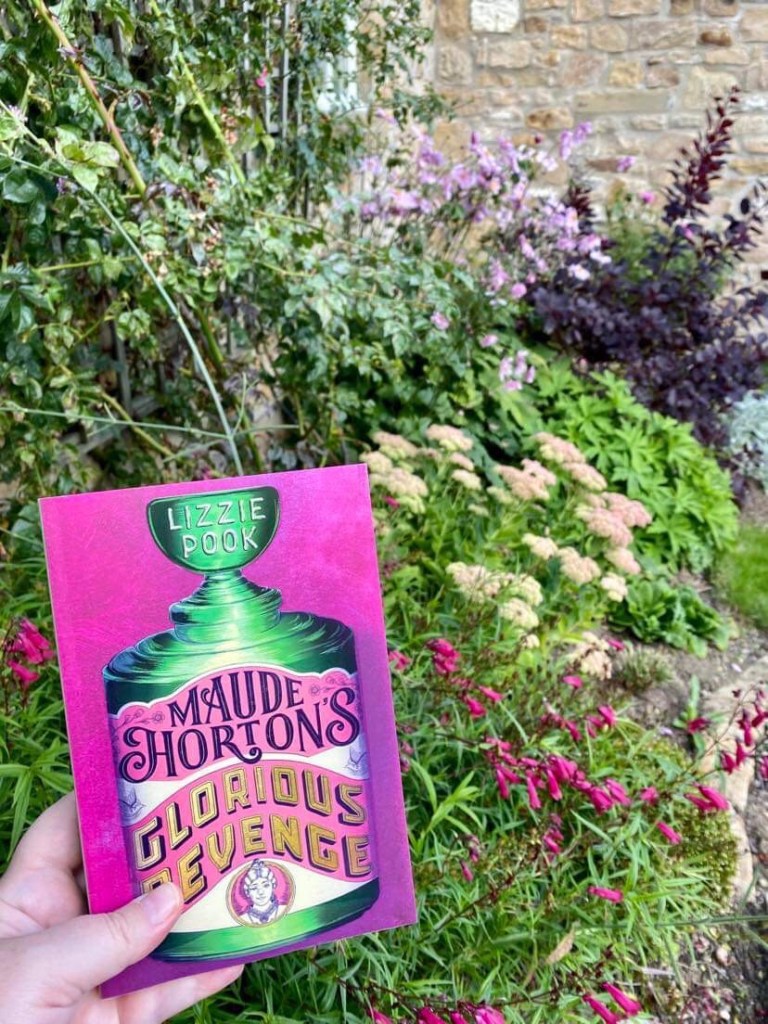
Maud’s sister Constance is on a ship sailing to the Northern Passage, on a mission to find Franklin’s expedition ship. She has always craved adventure and climbed out of her bedroom window, taking the disguise of a cabin boy called Jack Aldridge. Does she really comprehend the dangers that could befall her should the men on board discover a woman on their vessel? On the same voyage is the rather strange and macabre Edison Stowe who has managed to get aboard as a scientific officer – mainly involving the killing and gathering of animals, as bone specimens or in jars. When Constance is lost on the voyage, the rather quiet and timid Maud is determined to find out what has happened to her sister. She devises a plan to get close to and expose Edison Stowe. Telling her grandfather she’s on a trip to the country, she embarks on a rather ghoulish steam train journey. Stowe has a money making scheme to turn various public hangings into a tourist attraction and Maud becomes one of his tourists. The author uses three different narrative voices to tell her story. A diary written by Constance on the voyage was returned to her family and gives us a front row seat for the horrors but also the wonders of the voyage complete with edible arctic creatures, ‘esquimaux’ women and the northern lights playing overhead. Then in the present day there’s Edison Stowe’s narrative of his day to day life, living in Mr Inchbold’s bone shop and dodging debt collectors. His debts being the reason behind his execution tourism. Finally, there’s Maud, whose narrative hangs everything together and provides context with memories of the sister’s lives and her own relentless quest for the truth.
Maud and Constance are fascinating characters, both sisters with the hearts of lions and nerves of steel. It just takes Maud longer to realise she is every bit as adventurous and brave as her sister. Maud has the disarming advantage of beauty and a composed, modest manner that makes her seem the ideal ‘Angel in the House’. Her knowledge of pharmacy and toxicology is honed by years of helping her grandfather in his shop. She is proud of her sister and has never believed the official version of her death, but we never realise the extent of her plotting and planning until the final few chapters. What an opponent she has in the villainous Edison Stowe! Not since Uriah Heep have I felt so uncomfortable while reading about a character. He constantly made me want to wash my hands. He’s a strange contradiction in all sorts of ways: dressed like a gentleman but absolutely penniless; seemingly genteel but capable of moments of extreme violence against those weaker than himself, people or animals. He seems oddly unmoved by inflicting violence, but has strange fits of illness, where he appears to pass out as well as seeing and hearing things, including people long dead.
I was absolutely fascinated by this novel from start to finish. I love books that subvert what we think about the supposedly straight laced Victorians, especially women. She doesn’t downplay the dangers women faced, especially those that try and move outside of their boundaries. It was interesting that it was far more successful for Maud to use her strengths as a woman, than to try and be like a man like Constance. I enjoyed the more macabre and decadent tastes of the Victorians such as Mr Inchbold having a shop full of animal skeletons and a bear welcoming people at the door, the popularity of the gruesome murder room at Madame Tussaud’s and the fascination with collecting such ghoulish souvenirs as Staffordshire figures of the people they’ve just watch hang. Lizzie always creates such a fabulous sense of place and I was feeling the arctic cold and really smelling the crowds, both at the hangings and in the pub at the quay where sailors come unwashed and straight off the boats and monkeys are racing round the tables. These little extra details keep you immersed in her worlds. We even get an unexpected love story that further breaks the image people have of the Victorians. This is such an incredible story and a must for people who love their historical fiction to surprise and compel them.
Published by Picador, Hardback and Kindle Editions 1st Feb 2024.
Meet the Author
Lizzie is an award-winning writer and journalist. She is the author of Moonlight and the Pearler’s Daughter, a STYLIST and WOMAN & HOME ‘Best Books of 2022’ pick.
Lizzie began her career in women’s magazines, covering everything from feminist motorcycle gangs to conspiracy theorists, before moving into travel writing, contributing to publications including Condé Nast Traveller, Lonely Planet and the Sunday Times.
Her assignments have taken her to some of the most remote parts of the world, from the uninhabited east coast of Greenland in search of polar bears, to the trans-Himalayas to track snow leopards. She was inspired to write Moonlight and the Pearler’s Daughter, her debut, after taking a road trip through Australia with her twin sister after the death of their father. A chance visit to the Maritime Museum in Fremantle led her to an exhibition about a family of British settlers involved in the early pearl diving industry. Thus began an obsession and a research journey that would take Lizzie from the corridors of the British Library to isolated pearl farms in the farthest reaches of northwest Australia.
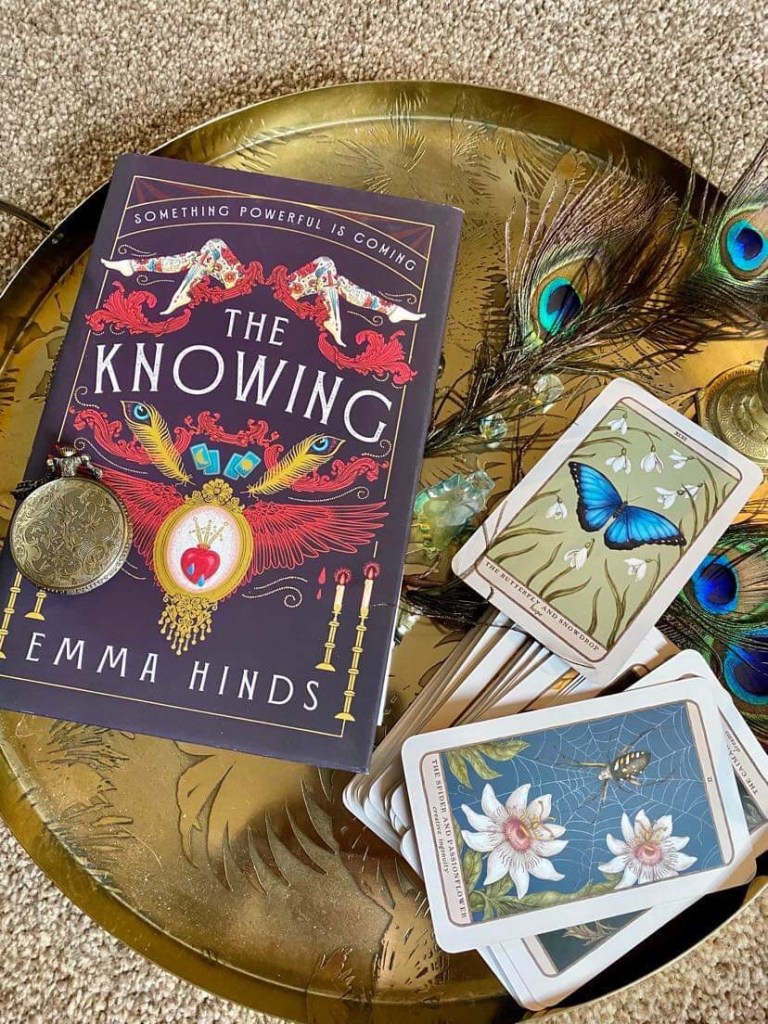
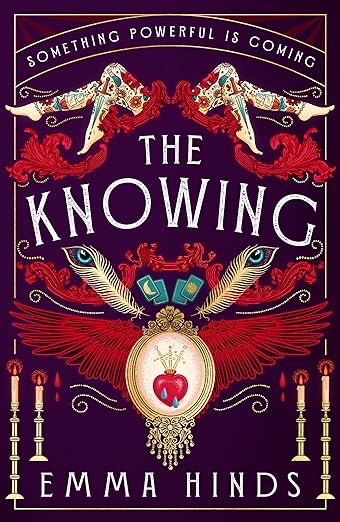
If this author had a certain readership in mind when writing this debut novel, she might as well have had a picture of me. I would have picked this book up on the strength of the cover alone. Three of my all time favourite books are: The Crimson Petal and the White set in the seedier areas of 19th Century London with a heroine is a prostitute called Sugar; The Night Circus that appears without warning, held together by real magic and the result of an epic battle between two magicians; The Museum of Extraordinary Things where our heroine is a mermaid, exhibited in a freak show at Coney Island. See what I mean? It’s perfect for me. The blurb promised me a tattooed mystic, a show run by a prostitute with dwarfism and real life New York gangs and Barnum as their contemporaries. It’s quite a heady mix and I was enthralled from page one. Flora is a tattoo artist and mystic, in an abusive relationship with a tattooist called Jordan, a member of an Irish gang the Dead Rabbits. She longs for escape from the slums of Five Points and the degrading relationship she’s been in since she was a teenager. Then she meets Minnie, a beautifully dressed woman whose dwarfism has led her to a career as a circus and freak show performer. Minnie promises Flora a career and life in an opulent town house uptown, not to mention her freedom. However, the freedom she’s promised comes with certain conditions.
Flora stays with Minnie, in her palatial bedroom and bathroom within the townhouse that belongs to her lover, Chester Moreton. Avoiding Chester’s advances seems to be one condition of Flora’s freedom, along with constant worry about being found by Jordan’s friends in the Dead Rabbits gang. She’s to earn her keep as a mystic, with her tattoos and tarot cards the centre of attention. Minnie knows that Flora’s skills run deeper, although she’s always been warned to hide them and ‘tell nuthin’. Flora’s gift is ‘the knowing’ an ability to summon the dead that’s always on the periphery of her performances, but kept at bay by Flora’s willpower. It’s when she’s pushed into allowing her spirit guide to break through that the trouble begins. At the Hotel du Woods she exposes the abuser and killer of a young boy, setting in motion a chain of events including suicide, murder and madness. Flora and Minnie escape and voyage to Manchester, where they try to survive on what they can earn from sex work and Flora’s tarot readings, but the past is never far behind and once again Flora finds herself at the centre of a love triangle where obsession and betrayal are medicated with drugs and alcohol and a tragic end seems inevitable.
I felt fully immersed in the novel immediately as the author creates an incredible sense of place. Five Points is grimy, deprived and controlled by gangs. I loved how the author used the grotesque throughout the novel and particularly where she’s describing the slums of New York and Manchester, filled with rats, unwashed bodies and an ever present grime that’s sticky on the skin. This took me straight back to university and Kristeva’s theory of abjection. The things that women’s bodies can do are magical or monstrous. Flora’s body is a conduit, allowing the dead to speak through her. Minnie’s body is seen as grotesque by others, but she wears angel’s wings and when she’s in bed with Flora it’s the softness of her skin that’s noticed first. All women have a transformative power to produce another life, when their pregnancy isn’t terminated by the men in their lives. The author doesn’t hold back when describing the reality of life for women, particularly women like Flora who haven’t had choices. Bodies seem divorced from minds when it comes to sex with men, as torsos become slabs of meat, breaths are whisky sour and skin is raw, red and broken. Sex is rarely consensual and always comes with violence. It’s a grim world so any chance to escape into a better future is welcome. The gentle and pleasurable attentions of Minnie are a promise of things to come, where Flora could have choices and sexual experiences that come from a loving place instead of a place of ownership.
No one here is perfect. Each character is morally grey and I loved that complexity in their personalities and the ambiguity it brought to their actions. I was also transfixed by the sheer power of Flora’s ‘knowing’. Mediumship has become something of a joke these days, a formulaic stage show where people are picked out of the audience and told that Grandad left the priceless clock in the attic or under the floorboards. It’s always benign and a little bit boring. Flora’s spirits are not there to guide her and they’re definitely not benign. They want to expose truths, tell the subject’s darkest secret and even mete out punishment where necessary. The first seance at Hotel du Woods is successful from one viewpoint – the spirits do come through – but a disaster from the other side when a vengeful spirit talks a man into killing himself. No one will be booking them again! Flora will have to learn how to control the spirit’s power and keep the vengeful ones at bay. Strangely, for a story where our main character is prevented from carrying children, this felt like a story about mothers too. It’s about the lack of a mother when growing up and how the lack of motherly love and protection feels, but it also shows the people who fill that void and become mother figures. This could be a difficult read for some, especially the sexual violence, but it would have been the daily reality for women living in 19th Century slums and for some women in upper Manhattan townhouses. I desperately wanted Flora to survive and have the right people around her, to give her the feeling of being loved and wanted. This is an addictive read of vengeance, betrayal and obsessive love and I couldn’t stop reading until I knew the truth of Flora’s fate.
Meet the Author
Emma Hinds is a queer novelist and playwright from Manchester. She focuses on untold historical Queer narratives and her debut novel, The Knowing, from Bedford Square Publishers is coming in January 2024.
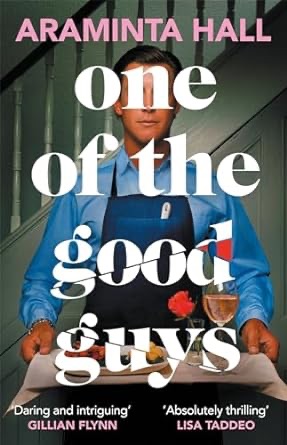
Cole is the perfect husband: a romantic, supportive of his wife, Mel’s career, keen to be a hands-on dad, not a big drinker. A good guy.
So when Mel leaves him, he’s floored. She was lucky to be with a man like him.
Craving solitude, he accepts a job on the coast and quickly settles into his new life where he meets reclusive artist Lennie.
Lennie has made the same move for similar reasons. She is living in a crumbling cottage on the edge of a nearby cliff. It’s an undeniably scary location, but sometimes you have to face your fears to get past them.
As their relationship develops, two young women go missing while on a walk protesting gendered violence, right by where Cole and Lennie live. Finding themselves at the heart of a police investigation and media frenzy, it soon becomes clear that they don’t know each other very well at all.
This is what happens when women have had enough.
Wow! This blows your eyes wide open. I warn you not to start reading at night, unless like me you have a total disregard for tomorrow. Even if I wasn’t actively reading it, I was thinking about it. Cole has moved to a remote part of the coast for a total life change after the collapse of his marriage. Cole considers himself one of the good guys. In fact he would probably call himself a feminist. So the marriage breakdown and Mel’s reasons are inexplicable to him. He was proud of Mel, who was launching her own business, but as they crept towards their late thirties he was starting to wonder if they were leaving it a bit late to start the family they both wanted. After trying for a while, they’d decided on IVF which he knows was more gruelling for Mel than him, but was she really giving their embryos their best chance? Always working late, not eating properly and popping back to work after implantation were all endangering their chances of a viable pregnancy. Despite cooking and caring for her, and supporting her business dreams, Cole is now facing a pile of legal papers on the kitchen table – divorce papers, financial settlements and perhaps most hurtful, a form agreeing to destruction of their final three embryos. What can he have done to deserve this?
As he slowly heals he notices someone is living in the old coastguard’s cottage, a woman he can’t stop watching. She seems so feminine, but yet grounded enough to put her wellies on with her dress while she’s gardening. She is an artist and when they meet a party she introduces herself as Lennie. When he asks what it’s short for she tells him it’s Leonora. No one calls her that but Cole insists. It suits her better he tells her, softer and more feminine. Could the two of them strike up a friendship, or even more? In the background, getting air time on radio and television, are two young women in their twenties who have decided to take on a challenge – a fitting continuation of the work done by women’s movement in the 1970’s. They want to highlight the daily misogyny and violence against women that’s endemic in society. So they plan to walk over 300 miles of the coastal path, camping out each night in a tent. They know that this is dangerous but they want to support a domestic violence charity and raise as much awareness as possible for those women and girls living in daily fear of violence. However as the girls go missing one night it seems they may have fallen victim to their own cause. Could they have become lost and died from exposure? Could they have misjudged their steps and fallen from the cliffs? Or has something far more sinister happened – one of their online trolls following through on comments like ‘you deserve to be raped’.
I loved the way the author put her story together, using fragments from lots of different stories and different narrators. Just when we get used to one and start to see their point of view, the perspective shifts. I thought this added to the immediacy of the novel, but also reflected life and the constant bombardment of information and misinformation we sift through every day. As well as Cole we have narration from Lennie and Mel interspersed with transcripts of radio shows and podcasts, Twitter threads and TV interviews. All give their perspective or commentary on the casual misogyny and violence against women that almost seems like the norm these days. Just like real life the book sometimes felt like a merry-go-ground of opinion, counter argument and trolling. Sometimes I was left so twisted around I wasn’t sure what I thought any more. The only thing I was sure about was much I disliked every single character, but I couldn’t stop reading them either. I would believe one narrator, but then later revelations would blow what I thought right out of the water. As the missing person’s case continues, everyone is weighed up then torn apart on social media and in the press. It made me ask questions: about the nature of art and it’s ethics; about whether all men truly hate women; to what lengths do we go to protest; when is enough, enough? It’s been over a week since I finished this extraordinarily controversial story and I still can’t stop thinking about it. Is it too early to predict a book of the year? I don’t think so.
Thanks to Macmillan and The Squad Pod Collective for my proof copy of this amazing novel.
Meet The Author
Hello, I’m a writer of thrillers and a lover of stories.
My latest book, ONE OF THE GOOD GUYS, was inspired by a groundswell of anger I’ve been feeling myself and amongst the women I know. Because if we don’t feel safe in the world, then it’s still a very unequal world. This is my answer to what happens when women have had enough of being scared.
I hope you enjoy this tense story set in a remote seaside location. I’d love to know if you guess the twist – I’m on instagram and X @aramintahall
And, if you do enjoy this one, I’ve published five other novels, EVERYTHING & NOTHING (2011), DOT (2013), OUR KIND OF CRUELTY (2017), IMPERFECT WOMEN/PERFECT STRANGERS (2019) & HIDDEN DEPTHS (2021
‘Holding her robust infant, Beatrix murmured a prayer in her native Dutch. She prayed that her daughter would grow up to be healthy and sensible and intelligent, and would never form associations with overly powdered girls, or laugh at vulgar stories, or sit at gaming tables with careless men, or read French novels, or behave in a manner suited only to a savage Indian, or in any way whatsoever become the worst sort of discredit to a good family; namely, that she not grow up to be een onnozelaar, a simpleton. Thus concluded her blessing — or what constitutes a blessing, from so austere a woman as Beatrix Whittaker.’
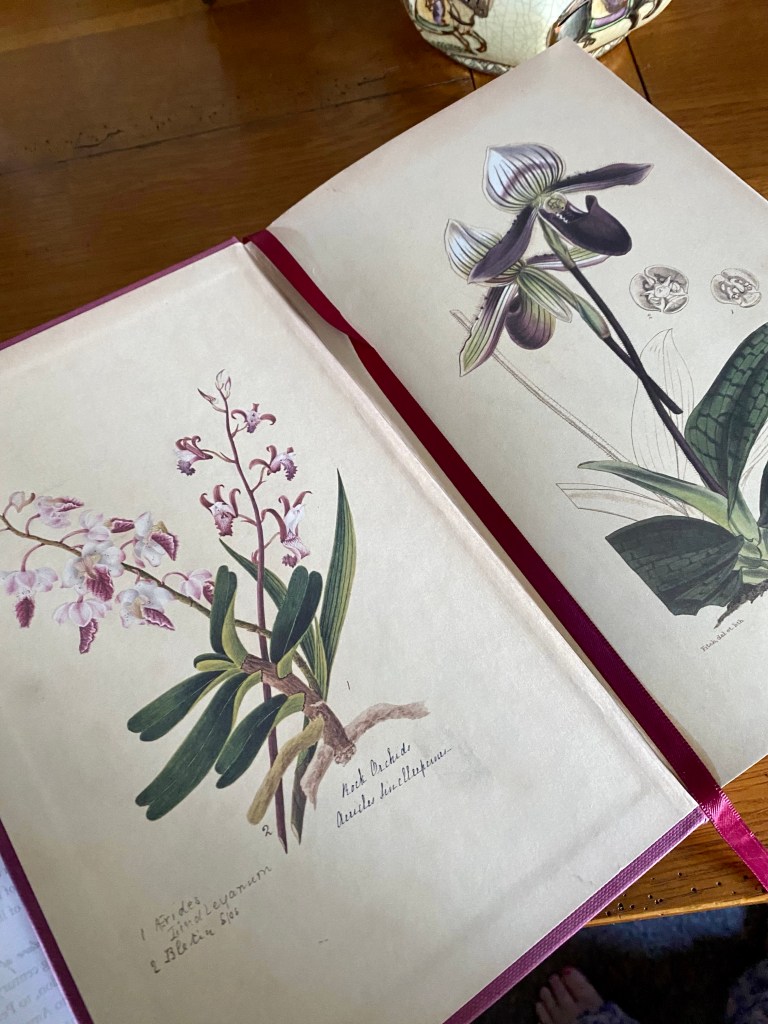
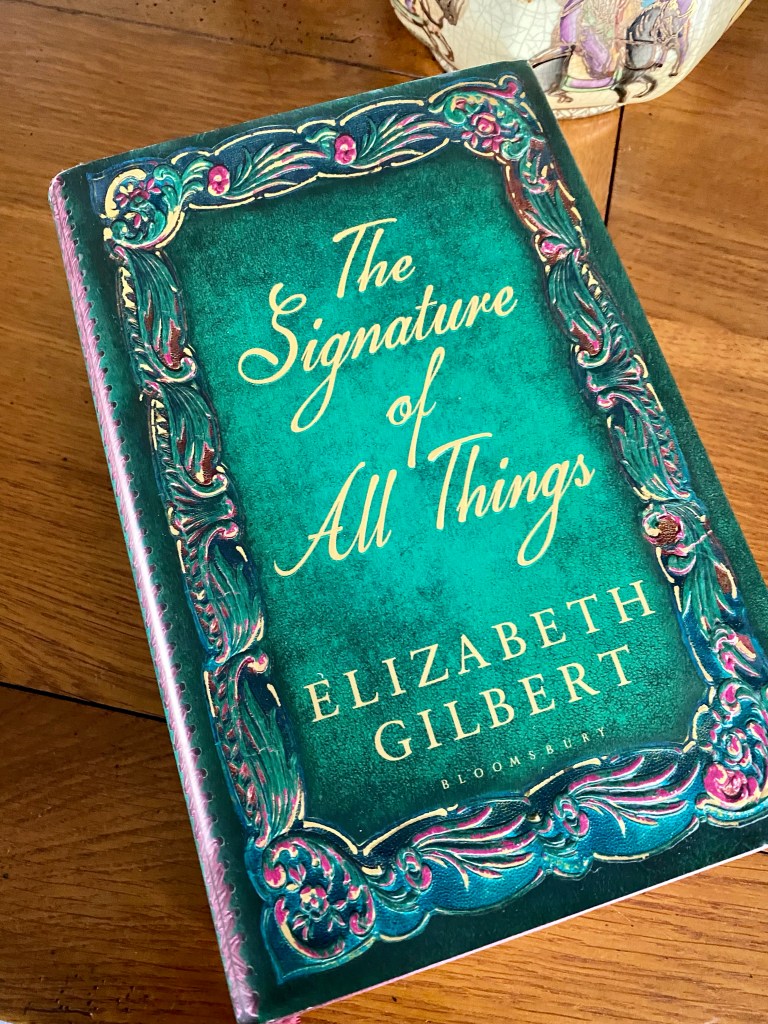
Some people didn’t know Liz Gilbert until the film ‘Eat, Pray, Love’ came out, in fact I was surprised to learn how many people hadn’t known about or read the book. I’d really enjoyed the book and found the film ok, but thought it didn’t dwell enough on the psychological and spiritual aspects of her journey. It had a mixed reception at my book club where some really identified with her character, but others were screaming how lucky she was to have a publisher willing to fund her trip of a lifetime during her divorce as many have to continue getting the kids to school, going to work and only having the millisecond before sleep hit them to have anything resembling a spiritual or self-aware thought. I’d not expected the anger and jealousy that it evoked in some readers. So it was with trepidation that I approached her novel The Signature of all Things. If I’m honest I probably wouldn’t have sought it out, but I was in one of my favourite bookshops while on holiday in Wales and I saw it in the second hand section. It was such a beautiful book that I had to buy it and I flicked through it back at the holiday cottage, then was sucked in very quickly and all my planned reading went out of the window. I was stunned to be sailed around the globe from London to Amsterdam, Peru and Tahiti. Even more exciting was the heroine, Alma Whittaker, daughter of a famous explorer, plant hunter and botanist. I was drawn to her intelligence, her busy mind, her assertion that she is the equal of any man and the depths of her feelings.
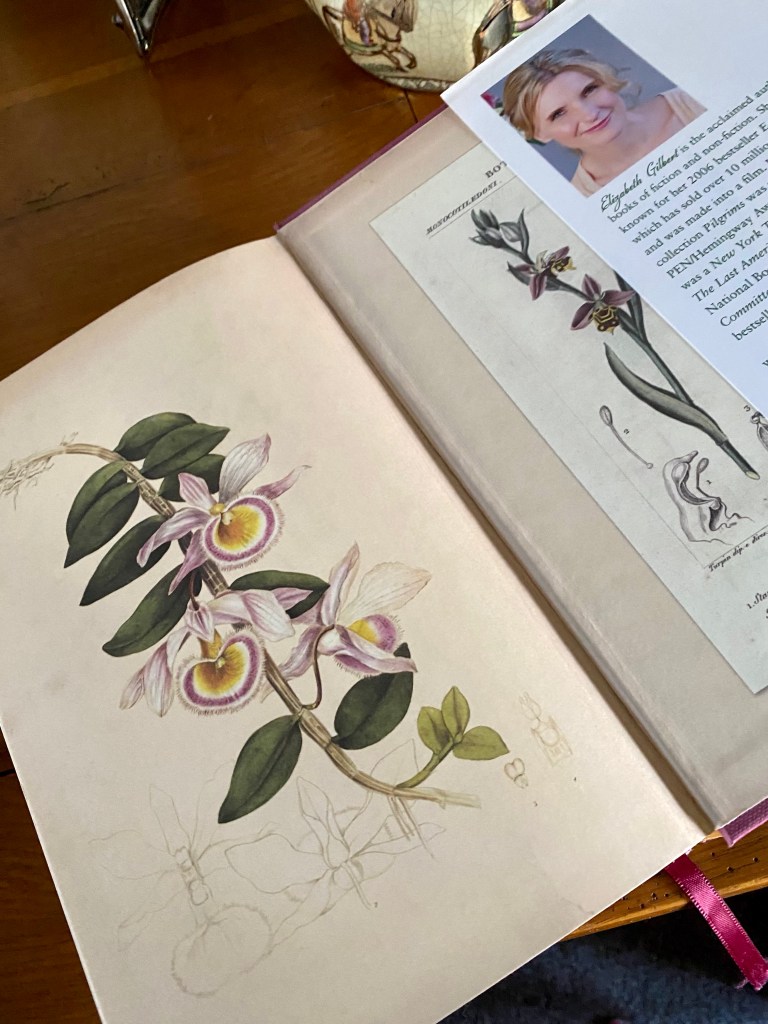
The book begins be setting up Alma’s early life and family situation, so we meet her father and his beginnings in botany as a boy apprentice to a plant hunter- actually a punishment for some very sneaky thefts from Kew Gardens. His incredibly enterprising ideas mean that by the time Alma is born he is a very rich man, with a mansion in Philadelphia. His fortune has been made in the quinine trade, a medicine extracted from the Cinchona tree found in Peru then traded and grown around the world to produce a drug for malaria. At his home, White Acre, he and his wife have two daughters: Prudence their adopted daughter who follows an extraordinary path into abolitionism and Alma. Alma is a tall, large-boned girl who is described as ‘homely’, but is intelligent, determined and secretly contains well pools of sexual curiosity, all qualities that seem unusual for her gender in this time period. Her father’s belief that all people should be given the opportunities that enable them to manage others and excel in their own chosen field governs the household. ‘All’ really does mean all in William’s case and his daughters are given a thorough education at home, rivalling any man. Both he and his Dutch born wife are clearly progressives and Alma flourishes with the opportunities they give her to become a very accomplished botanist in her own right and perfectly able to develop her own projects and command the voyages necessary to hunt for the plant she has set her heart on. Unexpectedly, at an age when scholarly spinsterhood is expected to be her path, a painter visits White Acre and Alma falls deeply in love. This painter believes Joseph Boehme’s philosophy that all of nature contains a divine code, every flower and every creature – such as the Fibonacci sequence. Their two interests combine and while Ambrose is a utopian artist, often found to be painting orchids rather than studying them in a lab, they do have the same passion for nature. Where he saw life as divine and a guardian angel watching over him, Alma saw a life as a struggle where only the fittest survived, something she found out for herself when exploring:
“Then — in the seconds that remained before it would have been too late to reverse course at all — Alma suddenly knew something. She knew it with every scrap of her being, and it was not a negotiable bit of information: she knew that she, the daughter of Henry and Beatrix Whittaker, had not been put on this earth to drown in five feet of water. She also knew this: if she had to kill somebody in order to save her own life, she would do so unhesitatingly. Lastly, she knew one other thing, and this was the most important realization of all: she knew that the world was plainly divided into those who fought an unrelenting battle to live, and those who surrendered and died.“
Of course, this love is not the end of Alma’s story. Liz Gilbert isn’t going to let a man eclipse Alma or create a sappy rom-com ending to such a strong, feminist story. Alma and Ambrose represent two great schools of thought in the 19th Century, that of the spiritual and the scientific. These two schools of thought had equal status and often intermingled to this point, but as the century progressed a complete separation occurred where spirituality became a belief without reason and science became fact without a divine sense of wonder. Could the common ground that Ambrose and Alma thrive upon at first, survive the divide between their two disciplines? Make no mistake though, Alma is the protagonist here and she’s one of my favourite characters ever. I loved her drive (sadly lacking in this writer) and her preservation of it, no matter what. She can speak five languages at five years old! Oh and two dead ones. Her educational achievements aside, it was her confidence and self-belief that stood out to me. Yet here we are two centuries later in a crisis of confidence, with an epidemic of imposter syndrome and doubts about how to be women. Alma is wholly herself, even when at times that might seem steely, reserved and abrupt. She believes that everyone is the master of their own self, including women. It is sad that the introduction of Prudence to their family is the catalyst for Alma experiencing negative self- thoughts. She wishes to keep Prudence, who has been staying with the Whittakers since a family tragedy, but her presence is an opportunity for comparison – the ultimate thief of joy. Alma realises for the first time that she is not beautiful. She retreats into her work at moments of doubt or unhappiness, even extreme heartbreak and loss. It is her refuge and the one area of life that she can control and that she continues to be confident in. I truly admire her ability to continue. To live.
The research that Liz Gilbert must have undertaken for the verisimilitude of this novel is colossal. She writes with a 19th Century sensibility, keeping Alma completely grounded in her place and time. The first rule of creative writing – show, don’t tell – is so strongly in place that I felt like I was with Alma, only seeing or hearing things at the same moment she does. This brings such an immediacy to the novel that it gallops on at quite a right, especially considering this is the story of a 19th Century dowdy and academic spinster. It’s a book that a lot of people might not consider reading from the blurb, which is why it needs to be highlighted in this way. It ranges across biology, exploring, business, philosophy, science, the mystical and yes, the sexual. There are secrets kept all the way to the end that I really didn’t expect at all. I have to say that my favourite review of this book is a negative one. Mainly because it made me laugh out loud, but also because it unwittingly makes you want to read it.
“I was actually enjoying this and then at 49% a spinster has a spontaneous orgasm from holding hands with a dude in a closet.”
left by Goodreads Member, Sylvia, October 2nd 2015
I don’t know about you, but I’d want to read that book!
Meet the Author
Elizabeth Gilbert is the #1 New York Times bestselling author of Eat, Pray, Love, as well as the short story collection, Pilgrims—a finalist for the PEN/Hemingway Award, and winner of the 1999 John C. Zacharis First Book Award from Ploughshares. A Pushcart Prize winner and National Magazine Award-nominated journalist, she works as writer-at-large for GQ. Her journalism has been published in Harper’s Bazaar, Spin, and The New York Times Magazine, and her stories have appeared in Esquire, Story, and the Paris Review.
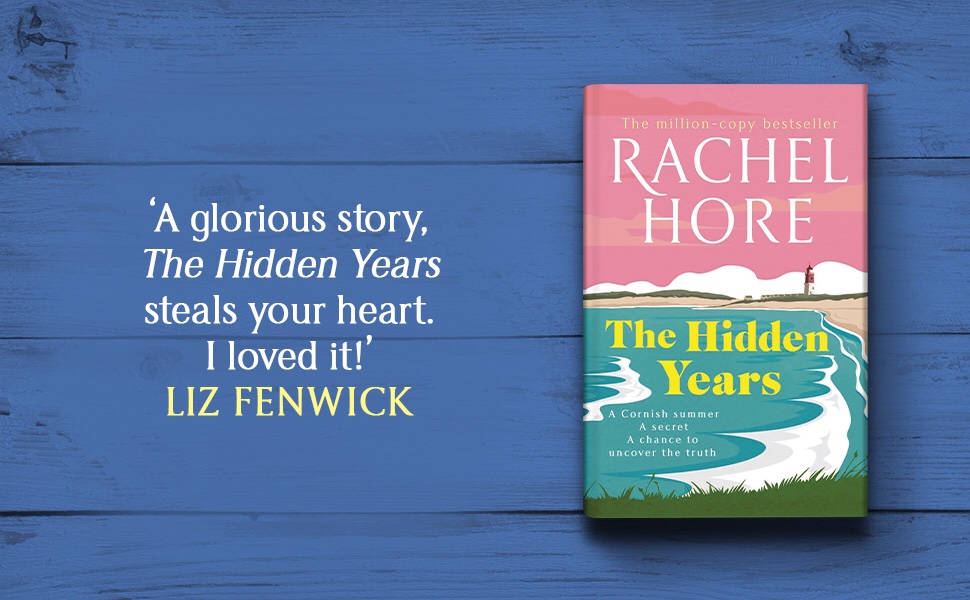
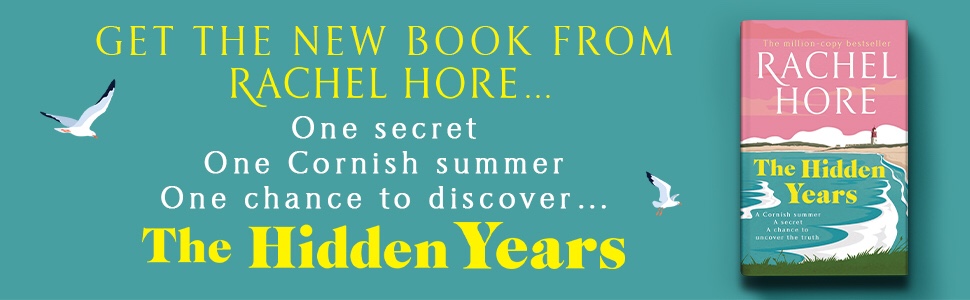
The Hidden Years is a tender-hearted and bitter sweet tale about how life can take unexpected turns. In fact John Lennon was right, life is what happens when you’re busy making other plans. She also explores how patterns emerge in life: we might find ourselves unconsciously choosing a path that repeats a pattern or takes us to somewhere that has a hidden importance in our lives. Belle has done something very impulsive. From the moment she met Gray they had a connection and now he’s invited her to Silverwood, a mansion next to the Helford River, where a group of his friends are living a different life. They are a creative collective, living as self-sufficiently as possible but dependent on the kindness of the house’s owner. Luckily he’s very fond of his nephew Arlo, one of the residents at Silverwood. As she leaves university and misses her exams for this uncertain life she has no idea that Silverwood holds secrets and some of them are quite close to home.
The author tells her story through a dual timeline; Belle’s story set in the 1960’s and then Imogen’s story, a young woman who visits Cornwall in the 1940’s. Imogen has been working for an agency that secures placements for young women who work with children. It’s mid- WW2 and Imogen is tasked with taking two young brothers down to Silverwood, a boy’s boarding school in beautiful and relatively safe surroundings. She soon finds out that life can change in an instant when she’s asked to temporarily for the school’s Matron who has fallen ill. Imogen takes the booking and finds she loves working with the young boys in the sick bay, feeling unwell and far from home. So, when she’s offered the chance to stay on she decides to take a chance and loves her work. She also makes friends with one of the teachers, Ned. They explore Cornwall on their days off and as the war comes ever closer Imogen makes the huge choice to serve her country, by training in nursing at a hospital in Truro. A bomb narrowly missing the school pushes her to use the skills she’s gained for the war effort. Meanwhile in the 1960’s Belle settles into life at Silverwood with Gray’s friends, trying to help out where she can and joining in with meditation sessions where the incense is more than a bit potent. She’s drawn naturally to Mrs Kitto, a lady of her parent’s generation who lives in a cottage on the estate. She’s slightly taken aback by Belle, because she reminds her of someone she once knew. Their afternoon visits become story sessions as Mrs Kitto tells Belle about a woman she used to know, back in the war.
I enjoyed both sections of this lovely story. Often with dual timelines the novel suffers because one narrative is much stronger than the other. Here I thought the author got the balance just about right. Since Imogen’s story is set during WW2 there’s obviously heightened drama and the decisions made can be life and death. However, I think the differences in the timelines complimented each other. The difference in moral expectations and behaviour is huge. There’s also a difference in how people make choices, creating a huge generation gap like the one between Belle and her parents. The fact that she leaves uni with her lover and is clearly living with him at Silverwood is difficult for her parents to understand and would have been unthinkable in the 1940’s when they were Belle’s age. It would be understandable to think that the 1960’s characters have it so much easier compared with their parents. Yet I could empathise with Belle, in fact without WW2 her generation wouldn’t have the freedom to make choices in the same way. Her father has high expectations for her and he wants her to buckle down and make life choices. After all, his generation had to lay their lives and their hearts on the line with often very little understanding of the person they were making promises to. Belle’s not quite ready to make a choice. Should Belle follow duty, when she could be an idealist and follow her heart? Singing with Gray’s folk band The Witchers comes very naturally to her when she’s got over her nerves. There are so many opportunities, how do you know which is the right path?
Imogen is doing her duty in her working life, but her heart is torn. She has a best friend in Ned. They love the same things, they’re comfortable together and have a similar outlook in life. She knows he’s starting to feel more for her than friendship, but also teaching at Silverwood is the rather enigmatic Oliver Dalton and there’s an immediate frisson between them. Although they don’t spend any time together, the pull towards him is hard to resist. When they finally do get a chance to spend time together during her work in Truro, could their spark develop into something more lasting? I found myself rooting for Ned, because he’s so kind and supportive. I thought they’d make a great team. There’s no denying her attraction to Oliver, but he’s more of a closed book and I felt life with him might be more turbulent. Which way would she choose?
I know this area of Cornwall well and it was very easy to imagine myself there as the author explores the scenery. The area was a Mecca for artists in the 1960’s and I loved the ideas that the Silverwood residents had for the place. It’s ripe to be an artistic retreat, offering creative and self- care workshops such as meditation. It’s such a now idea that I wanted to do it myself. I thought it was interesting how Belle reacted to these ideas, making decisions about which parts she’s supports and which isn’t for her. She’s intervened with one resident’s treatment of her son and calls an ambulance rather than watching her continue with homeopathic medicines and see the boy suffer, or perhaps die. That takes bravery and faith in her own convictions. When her family turn up in Cornwall will she get the space she needs to work out what’s best for her. As to Mrs Kitto, how does her story connect to Belle and what impact will this wartime story have on her choice? The historical detail shone through and seeing through Imogen’s eyes the arrival of the American soldiers, the preparations along the Cornish coastline for the D-Day landings and the bombing of Truro really does bring it alive. There’s a realisation that we’re all the product of our experiences and trauma can take a long time to heal, even several generations. I thought this was such such a bittersweet ending and it left me feeling a bit autumnal, sort of melancholy but glad for the experiences of love both women had known.
Out now in hardback from Simon and Schuster U.K.
Meet the Author
I came to writing quite late, after a career editing fiction at HarperCollins in London. My husband and I had moved out to Norwich with our three young sons and I’d had to give up my job and writing was something that I’d always wanted to try. I originally studied history, so it was wonderful finally to put my knowledge to good use and to write The Dream House, which is partly set in the 1920s in Suffolk and London.
Most of my novels are dual narrative, often called ‘time slip’, with a story in the present alternating with one set in the past. I love the freedom that they give me to escape into the past, but also the dramatic ways in which the stories interact. My characters are often trying to solve some mystery about the past and by doing so to resolve some difficulty or puzzle in their own lives.
The books often involve a lot of research and this takes me down all sorts of interesting paths. For The Glass Painter’s Daughter I took an evening class in working with coloured glass. My creations were not very amazing, but making them gave me insight into the processes so that my characters’ activities would feel authentic. For A Week in Paris I had to research Paris in World War II and the early 1960s through films and books and by visiting the city – that was a great deal of work for one novel. Last Letter Home involved me touring a lot of country houses with old walled kitchen gardens in search of atmosphere and to explore the different kinds of plants grown there.
Places often inspire my stories. The Memory Garden, my second novel, is set in one of my favourite places in the world – Lamorna Cove in Cornwall – which is accessed through a lovely hidden valley. A Place of Secrets is set in a remote part of North Norfolk near Holt, where past and present seem to meet. Southwold in Suffolk, a characterful old-fashioned seaside resort with a harbour and a lighthouse, has been a much loved destination for our family holidays and has made an appearance in fictional guise in several of my novels, including The Silent Tide and The Love Child.
Until recently I taught Publishing and Creative Writing part-time at the University of East Anglia, but now I’m a full-time writer, which felt like a bit step. My boys are all grown up now and finding their way in the world, but we still see a lot of them. My husband David is a writer, too (he writes as D.J. Taylor), so we understand each other’s working lives.
I find I have to have a regular routine with my writing, not least to keep the book in my head. My aim is to sit down at 9am every morning and write till lunchtime, then again the afternoon, but there is often something ready to interrupt this, not least our Labrador girl Zelda, so I go with the flow.
I hope that you are able to find my books easily and enjoy them – I am always happy to hear from readers!
Taken from Rachel’s Amazon author page on 18th Oct 23.
All I could say after reading the final sentence of the book was WOW! I couldn’t stop reading, the housework is completely neglected and I even forgot to eat lunch! Yes, I read this in 24 hours. This is the absolute best of her novels and I’ve enjoyed them all.
Dominique is making her way through Iceland to an old whaling ship called the Ormen. Stranded in a bay, the ship is going to be sunk out at sea and Dom wants to document it before it disappears from view together. Ormen was an unusual whaling ship being a sail and steam hybrid that became beached in the early days of the 20th Century near the small village of turf houses called Skúmaskot. When she reaches the ship she sets about turning the cabin into a base to explore from and puts up her tent. There’s one door in the ship that she wonders about, it’s made of carved oak and when she touched the handle it emitted such a feeling of evil she was taken aback. As she settles, she hears someone walking about on deck and she realises she’s not alone. Three more explorers join her – Jens, Samara and Leo. They have more up to date equipment and soon the four are documenting the ship and their discoveries as well as Leo’s parkour sessions. The questions start to mount though, is she wrong or are the other three suspicious or even slightly scared of her? What are the strange noises she can hear – banging could be gunfire or chains banging against the ship? There’s also a strange mix of footsteps and dragging something heavy in a steady rhythm. Who is the woman in the dress that she’s seen standing in the shallows? This is a strange place where light is limited, the village is deserted and there is a strange stone throne by the beach, said to be a Mermaid’s Throne. These are not Disney mermaids though, these mermaids have teeth and a song that will lure a man to his death.
There are different types of haunting in this tale. I could see examples of my own theory of hauntings in the woman seen by the edge of the sea. She feels like an imprint on the landscape. A place where heightened emotion and terrible events have left such a strong imprint that defies time. The sounds also seem to come from another place, a repetitive echo from time past. This is what I call a proper ghost story. It isn’t gory or a slasher’s tale, it’s old-fashioned creepy and blended beautifully with local folklore. The ship is from Scotland and this is where the folklore of selkies comes from, a race of seal women who have a dual nature. They can be nurturing and helpful, such as saving a child who’s in trouble in the sea. They can communicate with other aquatic creatures and assume a human form when on land. However, selkies can also be seductive luring men to her and often having hybrid children. At their worst Selkies can be violent and vengeful, but their need for revenge gives us a clue about why; people seeking revenge have usually been wronged in some way. Mermaids are also depicted as sirens, luring ships and men with their singing and often thought to lure ships onto the rocks. However, there is also a terrible element of coercion in their mythology, stories where a man steals an item from the mermaid and while he has that item in his possession she belongs to him and lives as his wife. If she finds the object the spell is broken and she can return to the sea. Of course in the fairy tale we have a mermaid who has to choose between her land and sea lives, she can have love but to have legs she must suffer excruciating pain and she can never use her voice. It’s a hard price to pay. Icelandic mermaids have all these qualities, but use their seductive charms to lure sailors to their deaths – a nice reversal of their capture by human men. The author describes Icelandic mermaids as having rows of pointed teeth too. There’s a sense of devouring their enemies, particularly those who have wronged them. Is this Nicky’s end?
I loved the tension between the group of four on the Ormen. Samara seems fine with Dom, but then she overhears a conversation with Leo where Samara seems terrified of her. She talks about ‘this time’ being different, but Dom can’t remember meeting them before. I loved this mix of psychological tension, the real dangers of the landscape around them and then the truth of what has happened to the previous crew of the ship and previous explorers who’ve also left their echoes here. I sensed a possible kinship between Jens and Dom, almost as if he already knew her. I was scared of Leo. There’s so much nervous energy in him, a rage running just under the surface that I feared might ignite at any point. Yet they’re also dependent on each other for their survival creating what feels like a truce between them, but how can a truce exist if they’ve never met? There are so many strange happenings, such as Dom’s dream of ponies running off a cliff followed by finding the skeletons of Icelandic ponies in a deep cave. I loved the bits of magic realism, such as Nicky’s leg. Everything about the voyage from Scotland is historically accurate and gives us such an incredible sense of place I can see it. However, Nicky’s broken ankle and wound start to heal in an usual way. She notices the grey colour of her newly healing skin and thinks she has an infection. The sensation is altered too, feeling rubbery and a little cold. As time goes on this patch of skin grows and she’s aware that the gap between her legs is becoming webbed. Could her legs be joining together? This could be a magical sort of protection against the assaults she suffers on a daily basis. It could also be a transformation. As the past starts to inform Dominique’s present I couldn’t leave the story and I was left with the worst kind of book hangover where I was stuck in the world and the feeling of the ending. It’s taken me two days to start another book but I can’t stop thinking about this one. In fact I’m already thinking about reading it again, a bit like watching The Sixth Sense again once you know the twist. This is a dark, disturbing ghost story of hauntings but also about the worst things human beings can do to one another, particularly men against women and the extraordinary ways they exact their revenge.
Out in Hardback now from Harper Collins
C J Cooke (Carolyn Jess-Cooke) lives in Glasgow with her husband and four children. C J Cooke’s works have been published in 23 languages and have won many awards. She holds a PhD in Literature from the Queen’s University of Belfast and is currently Senior Lecturer in Creative Writing at the University of Glasgow, where she researches creative writing interventions for mental health. Two of her books are currently optioned for film. Visit http://www.cjcookeauthor.com
The word Vene would have used to describe her mother was ‘cold’ because they’ve always been at odds, even in childhood. So when news of her terminal illness comes, Vene wonders what to do. Is a reconciliation out of the question? She returns to Napa only to find that Olivia is as harsh as she always was. Yet, when Vene finds a cookbook belonging to her mother, it’s like a window on a different woman. Upstairs her dying mother is judgemental and snappy, but between the pages of the cookbook she’s a young woman full of romance and longing, but also duty and a terrible heartache. This is the mum she’s never met and she wants to go on an emotional journey, to connect with the ‘real’ Olivia before it’s too late.
Using a dual timeline, half a century apart Vene tries to unearth the secrets and sacrifice of two different women. I loved the use of food as a medium to communicate emotion and nostalgia. We all have these tastes that rocket us back to childhood in one mouthful. In fact one of my favourite memoirs is Nigel Slater’s Taste which conjures up so many memories of his mother. We don’t always see our parents as people in their own right, especially when there are secrets and we don’t know the truth of everything they’ve endured. Mothers don’t always fully see their daughters, often because they’re so busy trying to protect them from a similar harm to the one they suffered when they were a young woman. In trying not to repeat our youthful mistakes and create a pattern, we make new ones. I thought there was so much insight into women’s emotional history here. There was a running theme of service and sacrifice that reminded me of Virginia Woolf’s A Room of One’s Own. Are women now able to make life choices completely for themselves or do they sacrifice this freedom to look after the needs of others? As an artist can we ever be fulfilled if we don’t write, paint or create? I thought the setting really emphasised the idea of food and nostalgia too, because just reading it I could imagine myself on holiday there. The place was beautifully described and the recipes with their accompanying wines between the chapters conjured up so many tastes and smells. Don’t read this when hungry! I love Italian food so it was wonderful to read those colours and tastes brought to life.
Emotionally and psychologically the author presents heartbreak in such a raw and honest way. Olivia’s past is full of loss and the pain of that has informed the way she brings up her daughter. The hurt of the past always affects our future relationships in some way, but is it possible to acknowledge that hurt and stop it shaping our future and that of our children? If not, a destructive pattern emerges and there is definitely trauma between these two generations. As our trips into Olivia’s past start to explain more about her present, I was hoping that Vene’s newly found knowledge of her mother’s motivations would open up a space for them to communicate honestly and truly know each other as women. I felt more involved in the past timeline, which often happens to me in dual timeline stories, and found the young Olivia a more engaging character. However, it was the dynamic between the two of them I loved and the sense that women have a lot to learn from each other when they communicate honestly. I wondered about how we value the older women in our families and whether we’ve lost that ability to prize them? Is there a collective wisdom we’re missing out on when we stop seeing our older relatives as people. Every so often it’s good to remind ourselves that these people who happen to be our parents, had lives long before they had us and I wondered whether there were incredible stories buried within the past generations of my own family.
Meet the Author
Born and raised in Los Angeles, Jennifer Hamm graduated with a BA in English at UCLA and began her writing career developing screenplays for movies and television. As a travel writer, she has covered the globe on assignment for various magazines and brands. She also writes It’s Only for A Year, a long-running blog chronicling her adventures raising her four boys in two countries. Hamm currently splits her time between London and Los Angeles. OneFriday in Napa is her first novel.
After a few years building on the Practical Magic series, I was looking forward to seeing what Alice Hoffman would come up with next. She has based her story around the writer Nathaniel Hawthorne and his classic novel The Scarlet Letter and introduces us to two young women facing difficulties. Ivy is from a rich Boston family and when she finds herself pregnant at 16, she truly expects support. The father of her baby retreats into his wealthy family and the elite university he’s due to attend, taking no responsibility for the predicament they’re both in. Facing her pregnancy alone she talks to her parents who also wash their hands of her, not wanting the stigma or embarrassment. Ivy decides to leave home and climbs out of the bedroom window, setting out to see a friend who she knows will have an idea. She suggests they leave together and make their way out to a religious community she’s heard of in Blackwood, Massachusetts, with a charismatic leader called Joel Davies. When her father decides to look for her several months later he finds the worst, Ivy has a little girl called Mia and has become the leader’s wife. Mia grows up in Joel’s community and he decides who is in favour and what is a transgression. Everyone is punished, but the women particularly so – they might have their hair cut off or even be branded with a letter. Women are not allowed reproductive rights, but nor do they get to keep their children. Children belong to everyone and after a few days with their mother, sleep in dormitories. Books are not allowed and as she grows up books are Mia’s particular downfall. She finds her way to the public library and starts to read American classics like Little Women and Huckleberry Finn. Then she finds a copy of The Scarlet Letter, beautifully bound and very old. On the fly leaf is a dedication:
To Mia. You were mine and mine alone.
Is it perhaps her mother, who does show her special attention despite the rules. She tucks the book into her dress and keeps it. Reading in the barn, where she has loosened a board to keep her treasures behind. She has a small landscape painting of the view from the community’s buildings. Land that was left to Joel by his first wife Carrie. Carrie was also a rich girl, but one who had assets to bring to this Puritan community. Carrie was a great painter, but was often punished lest she become too vain about it. On the back of this painting is an inscription about the lands she owns and a promise that Joel will get to keep it ‘as far as the eye can see’.
One day during the apple harvest, a terrible accident happens and Ivy is killed. Mia is distraught, but as her mothers body is carried away she grabs the red boots that Joel uncharacteristically bought for her mother to have as a keepsake. She knows that now it’s either run or stay forever. Grabbing The Scarlet Letter and the painting she takes a leap, out of the bedroom window and across the fields to the library. The librarian had noticed Mia lurking in there, reading in the warmth. She had a feeling the girl was in trouble so she gave her a key and invited her to let herself in if she is ever in danger. She understands that to keep Mia safe they mustmove quickly, so she packs up the car and takes her somewhere he won’t know, because nobody knows. She has a long-term partner, a woman she doesn’t live with but trusts implicitly. She knows that with them, Mia should be able to thrive without the community breathing down her neck, to go to school and read to her heart’s content and have the life she has dreamed up for herself.
She also sensed that Joel was a man who wouldn’t give up Mia without a fight.
Of course it wouldn’t be an Alice Hoffman without something magical happening and here Mia experiences a time slip and finds herself in the same time and place as her hero Nathaniel Hawthorne. He hasn’t yet written The Scarlet Letter, in fact he’s on the verge of giving up writing altogether. When he meets Mia their connection is instant despite the centuries between them. They start a love affair, but what will the consequences of that be? Anything they do will change the future. Could her presence in his world mean that the very book that brought her here, no longer exists? In fact the consequences of their love could be even more life changing for both of them. Can she stay in his world? Is there any way he could come into hers? Mia is becoming aware that Nathaniel may have to sacrifice his writing for them to be together and she’s not sure she can let him do that. All the while, her father Joel is still watching and waiting.
I loved the play on The Scarlet Letter here because it shows us how powerless women have been across the centuries. I loved how Alice Hoffman creates this magical setting. The landscape, particular the woods and river, feel like something out of A Midsummer Night’s Dream. It would be easy to dismiss her work as whimsical and romantic, but underneath is a fierce feminist manifesto and an equally fierce defence of the written word. I was aware as I read the novel that it could go the same way as other books that have supported women’s reproductive rights and end up banned. The way the religious community prevent women from controlling their own fertility is a representation of what’s happening in some states of America. Abortion has always been a controversial topic in the US and the rights of women in some areas have reverted back to the early 20th Century. Jodi Picoult often cites Alice Hoffman as her favourite writer and a huge influence on her own work. In some states of America Jodi Picoult’s work is banned from libraries and schools because it concerns issues like abortion, teenage pregnancy, fertility treatment and same sex marriage. Here Hoffman is hugely critical of a community that doesn’t value women’s education, burns books and leaves them with no rights over their own bodies. There’s a part of her magical landscape where desperate women have taken matters into their own hands. They’ve taken herbs or potions to end their pregnancies and have created a burial place for the children they’ve lost and those they can’t bear to have.
Mia’s surrogate parents are the antithesis of Joel’s community. They are intelligent and progressive women who actively encourage questioning and reading. They remind Mia that no matter how moral and righteous a community might seem, if it restricts education, burns books and controls women, believing them to be inferior to men, then it is on the way to being fascistic. It’s so sad that Joel won’t let women read but then uses letters to punish them and control their behaviour, by literally branding them into the skin in a ceremony. Instead of wearing a scarlet letter, an adulteress would be branded on the upper arm with a letter ‘A’. Words and books are the source of our knowledge and that scares men like Joel. This is a brave book and will probably be underestimated, but women have been speaking their truth in ways that fly under the radar for centuries; films or books dismissed as ‘chick lit’ or ‘rom coms’; jingly, bright pop music with dark or subversive lyrics; pretty pink fashion branding the wearer as stupid, like Elle in Legally Blonde. I think there are people who will see the beautiful landscape, the time travel and magical feeling of this nook and underestimate it. I’m hoping readers look for the deeper themes here and see what Alice Hoffman was doing when choosing to use The Scarlet Letter. It’s a much beloved classic that she clearly loves, but it’s also a perfect basis for a story about these women. The ending is perfect for the autumn in that it’s bittersweet. We love the beautiful fall colours, particularly in the part of the USA where the book’s set. Those brightly coloured leaves bring us joy, but they’re also signalling an ending. The beauty of loss. 🍂
Published on 17th August by Scribner
Meet the Author
Alice Hoffman is the author of thirty works of fiction, including Practical Magic, The Dovekeepers, Magic Lessons, and, most recently, The Book of Magic. She lives in Boston. Her new novel, The Invisible Hour, is forthcoming in August 2023. Visit her website: http://www.alicehoffman.com
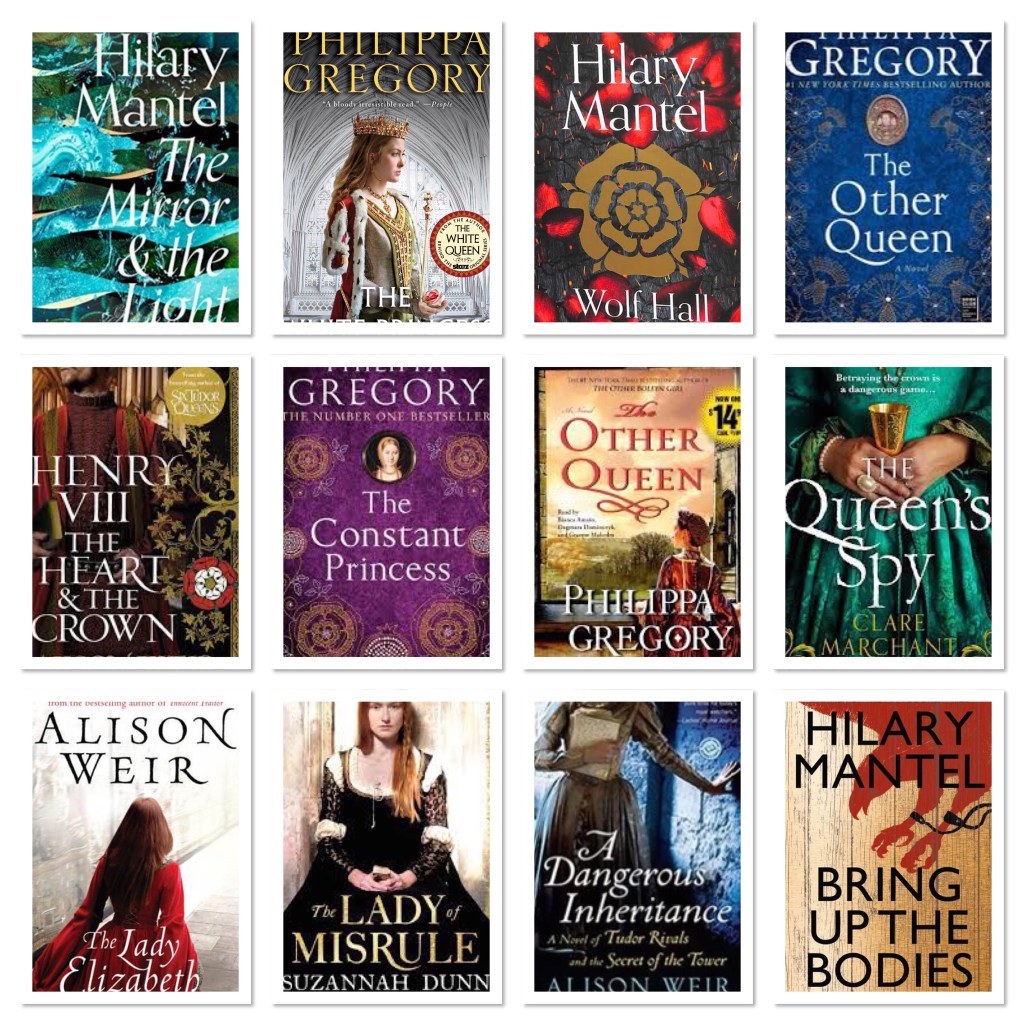
I’ve had this fascination with Henry’s wives and the whole Tudor dynasty since primary school, as I wrote about earlier in the week. It was my introduction to Philippa Gregory when I was in my twenties that really started the ball rolling. I started to learn about the women’s perspective behind these historical facts we all learn. I’d never known that Henry VIII had an affair with Anne Boleyn’s younger sister Mary or that it’s possible she had the King’s children just like Bessie Blount. I learned more about the political and religious machinations that hide behind the six marriages and their tragic ends. I hadn’t known about the uneasiness within Henry’s aristocratic courtiers and advisors about the commoners he was bringing in to advise him, such as Cardinal Wolsey and Thomas Cromwell. There were aspects of the Queen’s roles in events that opened up to me, such as their religious allegiances and how the marriages cemented Henry’s beliefs at the time and signalled his intentions to the rest of the world. I’d never known about how ladies in waiting were chosen or trained, often shipped to grand houses with aristocratic women overseeing their education. I’d also become fascinated about women on the periphery like Jane Rochford, who’d been married to Thomas Boleyn and had to give evidence against her own husband, then years later oversee the young Queen Katherine Howard only to be drawn into treachery yet again. I’d become interested in Bess of Hardwick after buying a book about her at Chatsworth House then going to an exhibition about her, including the household accounts written in her own hand. I knew that Chatsworth had been one of the houses where Mary, Queen of Scots was held, but not what her captivity did to her marriage and her reputation with Elizabeth I. There is such a rich seam of Tudor fiction in these areas, but I’m going to recommend some of my favourites that you will probably know, then some you might not as well as those still sitting on my TBR.
Great for Beginners
This is a great beginning because it’s outside the Queen’s series and deals with characters outside the actual court. Set in 1568, Elizabeth I has been on the throne for ten years, but hasn’t married and won’t choose a successor. Mary Queen of Scots has been forced to flee her own lands, due to rebellions and rash actions in her choice of husband. Her enemies have used her weaknesses and their perceptions of women to unseat her, leaving her on the mercy of her cousin, Elizabeth I. However, Mary is Catholic and advisors to the Queen don’t want to risk their already weak position against Catholic France and Spain. They also worry about her infant son James, another threat to the throne. Elizabeth’s advisor and spy master William Cecil comes up with a plan, Mary will be kept under house arrest, living with all the luxury a Queen should expect but unable to leave. He has to find a suitable couple to house Mary and decides upon Bess of Hardwick and her new husband George Talbot, who reside at Chatsworth House. Mary does not accept her house arrest though, bringing George Talbot under her spell and plotting to regain her throne in Scotland. Bess sees her husband’s deference to the young Queen and knows that if they are linked to her plotting, William Cecil will make sure they face the Tower or even the block. This is an interesting angle on Mary as we see her through the eyes of another woman, a very shrewd and intelligent woman who has managed to amass her own fortune along with estates and land left to her by her previous husband. I felt pulled into Mary’s story and despite feeling very sympathetic towards her I also felt angry on Bess’s behalf. Neither woman wanted to be in this position and I felt that frustration.
Set in 1539. It’s time for Henry to find a fourth wife after the tragic death of Jane Seymour. He has the heir and now he needs to have a spare. Since he is head of the church in England, it seems wise to take a Protestant Queen and Anne of Cleves fits the bill. Chosen from the painted likeness on the book’s cover and organised by Thomas Cromwell. The marriage falters immediately, when Henry dresses as a commoner to surprise his newly arrived wife to be she doesn’t even recognise him. Aggrieved, Henry tells Cromwell he finds her undesirable because she has too much flesh and smells unpleasant. His advisors are asked to pay court to the teenage Katherine Howard while a divorce agreement is reached. Anne Boleyn’s sister-in-law Jane Rochford returns to court and becomes close to the new Queen, desperately trying to cope with a young naïve and rather silly girl on one hand and the tyrannical Henry on the other. When Katherine starts to play dangerous games with Henry’s servant Thomas Culpepper, will Jane be able to avoid the block a second time? I love this period of the wives’s story because I think Anne of Cleves is the shrewdest of his wives, accepting his terms to live alone like his sister immediately and setting up home in palaces vacated by Wolsey and the Boleyn family. In fact the King got along very well with Anne and often joined her for dinner or to play chess in the evening. By contrast Katherine Howard’s tale is tragic and her eventual death is desperately sad as her courage fails her and she begs for her life.
Wider Reading
I have so much sympathy for this poor girl who is caught in a power play between political and religious factions. Jane Grey was the great niece of Henry VIII, a descendent of his closest friend Charles Brandon, Duke of Suffolk and Princess Mary – Brandon didn’t seek permission to marry Henry’s sister and their friendship faltered. Jane was actually the cousin of Edward IV, Mary I and Elizabeth I. At only 16 years old she is forced to marry into a powerful family – the Dudleys – as part of a plan to usurp the throne. When Edward IV dies, they decide to install Jane and her husband Guildford Dudley on the throne before Edward’s sister Mary can travel to London. The book is fascinating even if you do know the story of this nine day Queen and adds that human element behind the facts. Weir presents Jane as manipulated and physically abused by the powerful men who were desperate for her to take power on their behalf. There was the religious concern about having a Catholic queen on the throne and her allegiances with Spain. Would Mary return England to the Catholic faith? Might she seek a Catholic marriage with one of her European allies? Jane was a devout Protestant to the end, in fact it sustained and strengthened her when held in the Tower of London. I felt her dread towards the end and I felt so sad for her because she had so little control or peace in her short life.
The woman who outlived Henry VIII still had a tragic end. Her true love was Thomas Seymour and she expected after her first husband had died that she would have a husband of her choosing. Unfortunately Henry got there first with a surprise proposal and no one is allowed to refuse the King. Clever and sensible, she is known for being able to appease an increasingly cantankerous Henry. However, there is so much more to Katherine Parr than being a nursemaid to elderly husband. She published a religious text and proved a great stepmother to all of Henry’s children who joined them at court. It seemed as if love and motherhood had passed this woman by. After Henry’s death Thomas Seymour does jump in, determined not to miss the moment but with almost unseemly haste. Katherine thinks that finally she can have a husband of her choosing and love is on the cards. However, does Thomas have other plans? Could it be that Katherine’s house guest, the very young and spirited Elizabeth, is the reason he’s so keen on a quick marriage? As they marry and live together, Katherine soon becomes pregnant but her age and health are against her. With a wife on bed rest, Thomas has plenty of time on his hands and too little to do. Will Katherine know the happy family she always wanted? This book sticks closely to historical fact and is a fascinating read about one woman’s hopes and dreams dashed by duty.
The Tudors in Context
Hilary Mantel’s incredible Tudor trilogy starts with this introduction to Thomas Cromwell, set in the 1520’s when he was clerk to Cardinal Wolsey. His rise from lowly blacksmith’s son is a fascinating one and his eventual succession to Wolsey’s role as chief advisor to Henry VIII was not liked by aristocratic courtiers. Usually appointments like this were filled by dukes or earls, often from very specific families who traditionally held senior roles at court such as the Seymours. Wolsey is removed from office for failing to secure an answer to the King’s ‘Great Matter’, his divorce from Katherine of Aragon based on a biblical verse that states if a man should marry his late brother’s wife they will be childless. Henry did receive a special dispensation to marry Katherine when she was his heart’s desire, but several miscarriages later and only one daughter to succeed him, Henry is desperate for a male heir. Thomas is ambitious. He’s also a bully, with the ability to charm and manipulate to get the result he wants. He handles the King’s vacillations between romantic desire and murderous rage. He is pursuing Anne Boleyn who is not succumbing to his offer to be his exclusive mistress. She’s seen many women discarded by Henry, including her own sister and she’s playing a different game. Thomas is keen to install Anne as Henry’s wife because she shares his Protestant leanings and has a reformer’s agenda. Can Thomas secure Henry’s divorce and set in motion the English reformation? This is a different viewpoint on Henry and the turbulent moods that are starting to control both him and the court.
Elizabeth is a fascinating woman who grows up in the most tumultuous period in royal history: the Wars of the Roses or the Cousin’s War as it’s also known. She was the daughter of Edward IV and his wife Elizabeth Woodville, sister of the two lost princes in the tower, courted by her own uncle Richard III, but eventual wife of Henry VII and mother of Henry VIII. As Henry VII takes the throne from Richard III in battle, Elizabeth and her family are in a very precarious position. Her father’s death left the family fleeing to sanctuary as allegiances changed all around them. There are rumours she has been the mistress of Richard III. There is still no sign of her two younger brothers, Edward IV’s rightful heirs who were placed in the tower by her uncle and thought to be dead. As the Lancaster side take the throne she expects to live in sanctuary again, but her mother Elizabeth Woodville is a survivor and is in correspondence with the new King’s mother, the formidable Margaret Beaufort. She knows that her son’s reign is controversial and he needs to create a more peaceful England in order to secure the throne for his successors. Lancaster and York need to unite and Elizabeth is the last York princess. Their marriage is a symbol of peace an to represent that the white rose and the red rose are combined to create the symbolic Tudor rose, visible in many Royal palaces and historic buildings. Elizabeth presents a united front to the country, but their union was difficult. Henry was a paranoid man who dreaded Elizabeth’s brothers being found and was often suspicious of her mother too. This novel takes us into that marriage and sets the scene for Henry VIII’s unexpected reign, after the death of his brother Arthur, Prince of Wales. See also Philippa Gregory’s novel The White Princess.
My Tudor TBR
This is the third and final book in Hilary Mantel’s trilogy on Thomas Cromwell and takes us into his final years as Henry’s advisor. The book starts in 1536 when Anne Boleyn is decapitated with a french sword when Cromwell’s fortunes may be at their peak. Henry is settled with Jane Seymour who is expecting a baby. Calm reigns at court. Behind the scenes, Cromwell still has much to think about: rebellion, traitors and spies both at home and abroad. Can the nation shake off it’s Catholic past and move on? Or do the dead continually return to haunt us? The execution of Thomas More is playing on Henry’s mind particularly at this time. For Cromwell, the Spanish ambassador whispered something in his ear. A though that will not go away. Henry will turn on him too. As he always does in the end. With no family, title or private army behind him, Thomas has no one to defend him. It’s a lonely place to be, reliant solely on your own cunning to survive. This thought comes to life as the Queen dies and the lives of predator and prey move to their inevitable end. I know what happened to Thomas Cromwell, in fact I had to close my eyes when watching The Tudors and seeing his fate. That doesn’t stop me from wanting to read this book though, because Mantel’s research is extensive and she has an almost spooky ability to get inside a character’s mind and portray what those dry historical facts felt like. I must admit to being a little daunted by the size of this, so I think I’m going to separate it into readable sections and make it a daily reading goal.
I have this on the pile of books by the bedside, mainly paperbacks I’ve picked up from charity shops and second hand bookshops. It seems to provide or imagine a back story for Henry’s fifth wife that makes her plight even more tragic. Katherine is only twelve when she is sent to the home of the Duchess of Norfolk, a place where girls from aristocratic families go to train as ladies in waiting. As a member of the Boleyn family, this is a normal placement but she must have been aware of the terrible end her cousin met at Henry’s hands. Cat Tilney, another girl living in the house, is suspicious of Katherine. She thinks she’s only interested in clothes and boys, but is eventually drawn in by the young girl and they become close confidantes. When Katherine is called to court and drawn into the King’s orbit, Cat becomes her lady-in-waiting. Henry has set aside Anne of Cleves and despite Katherine only being 17 his advisors present the young girl as a possible successor. Henry is charmed by this charming young girl and at first married life is enjoyable on his side. However, Katherine is married to a much older man who is now in ill health and has a permanent leg ulcer that smells terrible. A rumours start to filter through the ladies-in-waiting that Henry can’t perform in the marital bed, whispers start to reach courtier’s ears about Katherine’s conduct. Girls that came from the Duchess of Norfolk’s home may have been entertaining much older men. In fact her present conduct is worse, because she’s already having an affair with King’s manservant Thomas Culpepper. Katherine is terrified and implicates others, including her childhood sweetheart Francis. Unknown to her though, Francis is now in a serious relationship with Cat Tilney. With Francis in the tower, Cat could save him, but but only by implicating the Queen and ensuring her death. I’m fascinated in reading this take on Katherine’s early life, which seems to show how vulnerable young women were at court and how they were always blamed for men’s actions.
I hope this gives you some ideas about where to start with historical fiction about The Tudors. It isn’t an exhaustive list and there’s plenty of non-fiction from various historical that’s equally fascinating, not to mention the debate on how male and female historicans often interpret material very differently and with potential bias. I do think Henry is more understandable when put in the context of his father’s reign. Henry wasn’t meant to be King and was allowed to spend time carousing with friends like Charles Brandon rather than learning about the constitutional obligations of the crown. Henry was an intelligent young man in terms of history, philosophy and religion, but wasn’t schooled in duty and service in the same way as his brother Arthur. He was also left at court with women: his mother, both grandmothers and his sisters were said to have spoiled him. His relationship with his father was complex considering he was the spare, but he was at court to see his father’s paranoia, his alleged affairs and his vacillating over whether Henry could marry Katherine of Aragon.
I’m interested in research that looks at the Tudor’s medical history. Henry’s jousting accident during his relationship with Anne Boleyn was a bad one, with Henry knocked out for some time afterwards. It is very possible he sustained a head injury at that time, not to mention the leg injury which became ulcerated and impossible to heal. The pain and restrictions of this ulcer certainly contributed to his obesity and terrible mood swings in later years. It is likely he was also impotent after his marriage to Jane Seymour, providing more insight into his comments on Anne of Cleves’s desirability; there was nothing wrong with him, she was too unattractive. I have also read about possible chromosomal abnormalities that might explain why both his first wives were unable to produce a male heir, with all male babies being miscarried or dying within a few days or weeks of their birth. Edward IV was a sickly child and died very young too, while his sisters Mary and Elizabeth lived into adulthood. All of this adds to our understanding of the Tudor’s reigns, but can’t fully excuse a man who was cruel and tyrannical. It does however give us insight into the experiences of the Tudor Queens and their daughters, most of whom met tragic ends either wholly or in part caused by men.
Monday’s review of Clemmie Bennett’s book was interesting to write and brought up a lot of questions for me and I was lucky enough to be able to pose some of them to the author.
Q. I was inspired to read about the Tudors after seeing a copy of the Hans Holbein portrait of Henry VIII at Chatsworth House. What do you think first inspired you to be interested in the Tudor Court?
A. I watched the Showtime series The Tudors . In France, where I grew up, we do not learn about King Henry VIII and his wives at school. It was for me a completely new world and it compelled me. After each episode, I found myself researching on the true people behind the characters. I figured out quite quickly that the show was taking liberties with history, big ones even, but the deed had been done: I was hooked. Before I even finished watching the show, I was reading non-fiction books on Henry and his wives… I haven’t stopped yet!
Q. How does it feel to send a character back to one of the most tumultuous times in history, especially for women? ere you worried for her or did you know she was going to be okay?
A. I knew she would be okay, at least physically. It was always in the plot to make her survive Henry, maybe as some sort of revenge for the formidable women who did not. What was unexpected however, was Ella’s moral and psychological evolution. Without getting into too much detail, there were times when she was writing herself, giving herself an arc that I had not planned for. I am glad that she did. In the end, it does go back to your question: sending a character, especially a woman, in this tumultuous time in history is so dangerous that it was never likely that she would remain unscathed.
Q. Did you decide Ella would break the golden rule of time travel – don’t change anything in the past?
A. It was always the plan. One of the goals in the novel, was to show that some events in history were meant to happen, even if not necessarily in the same way. To a certain degree, I believe in determinism. The English Reformation was always going to happen, whether or not Ella changed the past. Besides, to me, the golden rule of time travel takes all the fun out of writing a time travel novel.
Q. Taking into account the legacy of the Wars of the Rose, the death of his brother and his uneasy relationship with his own father. Do you have empathy for Henry?
A. I use to. But now, not really. The way I see it, his main problem was the education he received. He was very intelligent and skilled in many things, but never learned to cope with the frustration of not getting what he wanted. During his childhood, the blame fell on the women who raised him ( as the second son he was not raised with his own, predominantly male household, but with his mother, sisters and female attendants) but as he grew older, one could have also expected him to also grow in control of himself and his desires. He did not, and it is the people closest to him who paid the price. Not only his wives, but also the men he loved, like Sir Thomas More, cardinal Thomas Wolsey or Thomas Cromwell. It is difficult to have empathy for someone who destroyed so many lives as a result of his tantrums, whether they had legitimate foundations or not. I do sympathise with his quest for a son, considering the threat of civil war, but this is overshadowed by the way he behaved for it.
Chatsworth House Portrait of Henry VIII
Q. Which of Henry’s wives do you identify with most? And which do you most empathise with?
A. Katherine Parr is the one I identify with most. She was, after all, the only one of them to publish a book. Under her name and written with her own hand! She was also the only one to survive Henry and even managed to marry the man she truly loved, Thomas Seymour. He was a questionable man, but that is another debate.
Queen Katherine of Aragon is the one for whom my heart breaks, because I believe she was the only one of the six, who actually loved her husband. The humiliation to be rejected by him would have probably have hurt her less than the rejection itself. Picture yourself in her shoes: married for over fifteen years to the man you love, only for him to unilaterally decide that your marriage has been a sham this whole time. If this was not cruel enough, his reasoning was: she had not given birth to a healthy boy, a male heir. Even in a world where losing a child was common, she had lost five of them and her grief was common knowledge. Henry used it, played on it, deciding that the death of their – born or unborn – children was God’s judgement on their marriage. Katherine had first been married to prince Arthur, Henry’s elder brother. When he died shortly after the wedding, the Pope granted a dispensation for her to marry Henry, on the basis that the marriage had not been consummated. By choosing to believe that God was punishing their union for it, Henry humiliated and dishonoured his wife; se was accused of lying for over a decade about her virginity, blamed for the death of her own children, separated from her daughter and exiled from court. I see her fate as the most tragic, most painful of the six.
Q. There are details about living in the sixteenth century that I have not found in other books, like people relieving themselves on the floor and even in the fireplaces. What made you include them?
A. I once read that Katherine of Aragon asked for male courtiers to stop relieving themselves in the fireplaces. I remember being appalled, thinking about the tench this would have created. It was important to me to include this aspect of Tudor life in the story. Very often, when we think about Royal Courts of Kings and Queens of the past, we picture the dances and the beautifully dressed women, dripping in jewels. I myself am guilty of this. I wanted Ella to remind the readers that hygiene was a real issue underneath the velvets and the diamonds. It was also a way for me to show a historical setting, peopled with historical characters that we only see portraits of, in a more human light.
Q. Was it important for you to represent the daily struggle of the women in the court? Ella finds the underwear situation weird and there are details of dealing with bodily functions too, like when Ella gets her period.
A. Absolutely. Ella’s character had to be the most relatable possible, so that when she would be sent five hundred years to the past, she would have concerns and struggles that would be understandable to the reader. Any woman reading a novel set before tampons were invented once asked herself how women used to go through their period – or am I the only one? I even did the last time I watched the Disney cartoon Mulan. Besides the most obvious difficulties that would come with time travelling to Tudor times, I honestly believe my most burdensome would be very trivial – sanitary products, underwear, shampoo etc.
Q. I was surprised when Queen Katherine’s lady in waiting gave birth to Henry’s last wife, Katherine Parr, during the book. It really made me notice the differences in age and power. Was it a conscious choice to highlight inequalities like this?
A. When I wrote the scene when Ella finds out about Maud parr’s daughter, I gave her my own reaction. A man marrying the goddaughter (Katherine Parr) of his first wife (Katherine of Aragon) was to me, quite surreal. I sometimes think people forget about the age differences between Henry and his wives. He was six years younger than his first one, but twenty-one years older than his last one … and thirty-three years older than the previous one, Katherine Howard! For time, and for his contemporaries, it was not necessarily shocking. I was once told that Katherine Parr had made some sort of choice in accepting the King in marriage, but I disagree; the choices that could be made as a woman were in a completely different category to the choices that could be made as a man – especially the King of England. This imbalance is reflected later on in the novel, in the very limited life choices presented to Ella.
Henry’s wives from left to right. Top: Katherine of Aragon, Anne Boleyn, Jane Seymour. Bottom: Anne of Cleves, Katherine Howard, Katherine Parr
Q. Ella’s grandmother Lolly says we can’t judge people from the Tudor period by our 21st Century values. Do you agree?
A. Yes. This was the main reason why I wanted a main character born in the 21st century. She had to be relatable to the reader, in a way that her thinking process would be more similar to them than the other characters in the story. As time passed, she would understand more their point of view, and her own thinking would change on certain topics. It is the duality that I wanted to show.
On a personal note, I think it is unfair to judge sixteenth century people with twenty-first century lenses. The world changes, people evolve. What would be shocking now could have been perfectly normal five centuries ago. And vice versa. However, I still maintain my judgement on Henry’s treatment of his wives, considering that even his contemporaries were divided by it, to say the least.
Q. I know a lot of book bloggers are aspiring writers so can you tell e a little bit about your writing routine and your route to getting published?
A. I actually do not have a writing routine. In the past I tried to follow other writers’ routines and pieces of advice – anything to feel in my heart that I was ‘doing it right’. It never really worked for me. i write when I can, mostly on evenings and weekends. I do try to write every day, but I work full-time so it is not always possible. When I have enough energy and inspiration, I usually pour myself a cup of tea and a sugary drink and I write. No music for me, as I end up focusing on the lyrics instead of my words. My current favourite spot is on my armchair by the window, but it can also be at my desk, my bed or even on the floor. It really depends on my mood.
The route to getting published was rocky. I queried many literary agents and publishing houses, hoping I would be traditionally published. It did not work out. It also brought to my attention the existence of something called a vanity press, which was an oddity to me, and I declined several of their propositions. In the end, I decided to use some of my savings to self-publish. I found lovely professionals on Reedsy: Matthew Kilburn for editing, Danna Mathias Steele for cover design and interior formatting, andJaime Witcomb as a publicist. It allowed me to keep complete control over my story and I am very happy with the final version.
Q. What are you writing next?
A. I am writing the sequel to The Apple and the Tree. I am not entirely sure yet if Ella’s story will be a duology or a trilogy, but it will be followed by a prequel on Lolly’s upbringing.
Clemmie Bennett
With Thanks to Clemmie Bennett and her P.R. Assistant Jaime Witcombe