Posted in Publisher Proof

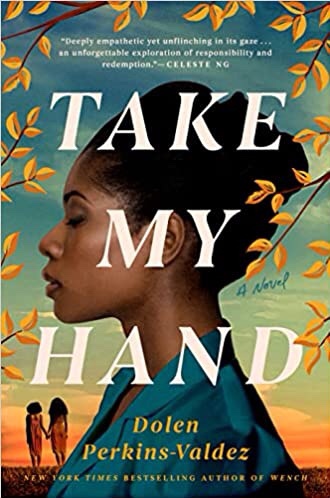
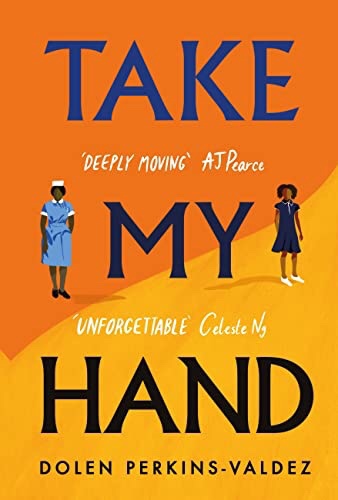
Take My Hand by Dolen Perkins-Valdez

“A year never passes without me thinking of them. India. Erica. Their names are stitched inside every white coat I have ever worn. I tell this story to stitch their names inside your clothes, too.”

Wow! This novel absolutely blew me away. In fact I loved it so much that my other half kept asking whether I was ok and I couldn’t understand why, until I looked at the clock and three hours had gone past without me speaking. I was three quarters of the way through the book and even went to bed early so I could finish the story. This writer pulled me in from the very first page and Civil was as real to me as my poor other half. I’ve been interested in eugenics since I wrote my undergraduate dissertation on disability and 20th Century literature. I knew a lot about the movement in the U.K., US and Germany in the lead up to WW2, but this book shocked me because I had no idea that forced sterilisations were still happening in the 1960s and 70s. I knew this had happened in earlier in the century with Native American communities, so I shouldn’t have been surprised that it was still happening to African American women, especially where the woman has a disability too. I think this jumped out at me, because people with disabilities are having a very hard time currently, something that able-bodied people aren’t always aware about. For example, the University of York published research in the BMJ Open that concluded the joint impact of cuts to healthcare, public health and social care since 2010 caused at least 57,550 more deaths of disabled people than would normally have been expected between 2010 and 2014. Disability groups place the figure at 120,000 deaths over a seven year period and some activists even think that the government’s COVID policies were based on herd immunity and eugenics. It seems like eugenics never really goes away.

This novel shows how our biases and emotions feed into the work we do within the caring professions. Having worked in mental health and disability as a support worker, advocate and counsellor, I did identify strongly with Civil and the way she became involved with the Williams family. As a nurse, Civil is professional and is aware of things like codes of practice and ethics, but we are never the finished article and Civil’s naïvety plays a huge part in how she works. Civil has been brought up to care for and look after others as part of her Christian faith. However, there are other personal circumstances that she isn’t aware of taking into work with her. Civil’s mother struggles with depression and events that took place in her personal life have also left her vulnerable, particularly where it comes to her nurturing instincts. Her very name brings to mind civil rights, equality and fairness, so it’s not a surprise that where she sees injustice she’s willing to fight. The Williams girls are her very first patients and she is sent out on a home visit to give them a Depo Provera injection, a long term method of contraception. When she notices that India is only 11 years old her brain immediately starts questioning, who put this little girl on this injection, has anyone asked if she has a boyfriend or worse, is she being preyed upon? We are privy to her thoughts and her shock at the way the family are living is evident. Her first thought is that she must do something for them, get them away from the dirty shack where their clothes seem to be stored on the floor. What she does notice is that the girls smell and when she finds out they don’t have sanitary towels, she decides to buy some for them from her own money. This is the first line crossed and although Civil’s actions are generous and could change the family’s lives for the better, it’s a boundary crossed. This makes it so much easier to cross even further as time goes on.

I thought the author grasped the complexity of Civil’s feelings and her role in the girl’s lives beautifully. Civil knows that she should be following instructions, asking her supervisor the questions that have come to mind, and advocating for the girls. Yet she knows that just by talking to the right people and calling in a few favours she could get the girls some clothes, find a job for their father, perhaps get them a new flat in town. What she doesn’t realise is that she’s acting from a bias, not racism but a classism of sorts. Civil’s parents are a doctor and an artist, they live in a nice home and have a certain status. She has walked in to the Williams’s home and assumed they want to move, go to school, and have better things. She’s looking at them through her own world view, instead of moving into theirs and then takes their agency away by filling in forms on their behalf. Her heart is in the right place, but she’s mothering the girls; the girls have lost their mother and Civil has maternal feelings to spare. It’s a co-dependent dynamic that could get complicated and painful on both sides. Her nursing instinct is to gain the girl’s trust and find out who put them on contraceptive injections, especially when India hasn’t even started her period. There are no boys around where they live and neither girl goes to school. As she confides in fellow nurse Alicia and friend Ty, they start doing some research. There are many conclusions they could draw: the federal government could be experimenting on poor black communities; there could be a programme of stopping certain groups in society from reproducing; the government are leaving local employees to make decisions based on their own biases about poor communities; their supervisor believes the Williams girls aren’t safe and could be open to abuse from within the family. All are based on so many assumptions, but what was angering me was that no one had sat down with the family and asked the questions about the girl’s development, access to the opposite sex, or India’s ability to make decisions. Life changing decisions are being made, based on judgments made with no real evidence.
Judgement is at the heart of this terrible case, I won’t reveal more about the decisions made, but it does lead to a court case and repercussions for everyone involved. The colour of the family’s skin, their poverty and the death of the girl’s mother has led to assumptions about the girl’s morals and safety but also the possibility that a black man is not safe, even around his own children. India is non-verbal, but whether that’s through trauma or a learning disability is not clear. Civil’s superiors have decided that it would be disastrous to bring a child into this family, but it’s amazing to see how much the Williams do change over the course of the novel. Civil has taken the decision to act on behalf of the girls, rather than making suggestions and motivating them to advocate for themselves. The changes we see in them, just from having different surroundings, is incredible. Civil believes that we adjust our standards according to where are in life, so once their home becomes a clean, dry space they start to look after it. Civil’s happiness when she sees the girl’s grandmother has bought guest towels for the bathroom is so funny, because these are her standards, what she sees as the correct way to do things, without question. I could see her attachment to the girls growing, the way she brings her support network into their lives also leaves their lives further enmeshed with hers. How will they separate themselves? If Civil takes their part in their court case, she may lose everything, so what happens when the Williams start to have confidence to make their own decisions? What if Mace meets a woman – a potential stepmom for the girls? I wondered if Civil would cope were these girls taken away from her, whether by her work or by changes in the Williams’s circumstances.

The author weaves fact into fiction so seamlessly here, with contemporary medical research questioned and the family’s meeting with real life senator Teddy Kennedy. This grounds the book beautifully and it feels even more true to life; the girls aren’t real, but I’m guessing that this story could be the reality for many poor, young, African American women. I thought Civil’s home life was really interesting, especially when her Aunty arrived and talked plainly about her Mum’s depression. Even in a household where there are always guest towels, there are struggles and issues that are overlooked, either due lack of understanding or through avoidance of something too painful to acknowledge. In fact there’s a way this whole episode is fuelled by avoidance, because if Civil buried herself in this family’s trouble she could avoid her own loss. The present day sections are evidence of that avoidance, because we see Civil finally having to confront and process feelings long buried. She’s close to retirement, yet is still haunted by what happened back then. There are positives in her visit back home, in that her relationships have adjusted so there’s more equality with some people than there was back then. I was left with a sense of how incredible women are, the strength we have to survive life altering circumstances and what can be achieved when we support each other.

Meet The Author

Dolen Perkins-Valdez is the New York Times bestselling author of WENCH, BALM, and the forthcoming TAKE MY HAND. *USA Today* called WENCH “deeply moving” and “beautifully written.” *People* called it “a devastatingly beautiful account of a cruel past.” *O, The Oprah Magazine* chose it as a Top Ten Pick of the Month, and NPR named it a top 5 book club pick of 2010. Dolen’s fiction has appeared in The Kenyon Review, StoryQuarterly, StorySouth, and elsewhere. In 2011, she was a finalist for two NAACP Image Awards and the Hurston-Wright Legacy Award for fiction. She was also awarded the First Novelist Award by the Black Caucus of the American Library Association. Dolen received a DC Commission on the Arts Grant for her second novel BALM. Publishers Weekly writes “Her spare, lyrical voice is unsentimental yet compassionate.” Library Journal writes “No sophomore slump is in evidence here. Readers who were captivated by Perkins-Valdez’s first novel, Wench, will be intrigued by the post–Civil War lives of three Southern transplants to Chicago.” Dolen is an Associate Professor of Literature at American University. A graduate of Harvard and a former University of California President’s Postdoctoral Fellow at UCLA, Dolen lives in Washington, DC with her family.


Posted in Netgalley

The Whalebone Theatre by Joanna Quinn

This book feels like an epic. A familial version of The lliad, the very first play that Cristabel puts on in the family’s theatre by the beach, formed from the jawbones of a whale. It washed up on the beach and was claimed for the Seagraves by Cristabel who is the orphan cousin of the family. Cristabel doesn’t really fit anywhere. She loves adventure, activity, and endeavours, climbing, running and conquering the Seagrave estate rather than being the lady her stepmother would expect, if she could be bothered. The Seagrave children are an odd bunch, brought up by staff and each other, while their parents stay in bed late, are never without houseguests and like to drink as early as it is socially acceptable to do so. This is the story of the heir and the spare. Jasper Seagrave brings his new wife home to the Chilcombe Estate and Rosalind is thrown into being mistress of the house and stepmother to his daughter Cristabel. There are definite vibes of Rebecca in this beginning, with a much younger wife slightly overawed by her new home and struggling to find her place. The ghostly presence in this case being Cristabel, creeping round corridors and the attic, having ‘boy’s own’ adventures with imaginary friends. Rosalind is happy to have bagged an aristocratic husband, considering they’re in very short supply since the war. That is until the ‘spare’ arrives. Willoughby is everything his elder brother isn’t, a dashing war hero fascinated by speed whether it’s a new car or learning to fly. There’s an immediate attraction, deepening when Rosalind is on bed rest in the last stages of pregnancy and Willoughby keeps her company. Is the Chilcombe estate about to lapse into scandal and what will become of Cristabel?

Joanne Quinn’s incredible debut begins at the end of WW1 and takes us all the way through WW2. The attention to detail is incredible and I felt completely immersed in this family’s history and the times they’re living in. This period saw huge changes for the aristocracy, often forced by the loss of two generations and bankruptcy due to death duties. Estates were sold off or had their use changed in order for the family to survive. The class boundaries became blurred as servants and masters fought together and unexpected bonds were created. Women had grown used to different roles, possibly nursing or working in factories or shops, and not all wanted to go back to a domestic role. There were also less men, so the marriage market changed and many society women, like Rosalind, had to be open to marrying men they might have previously overlooked. The author reinforces this sense of change by echoing it in the setting. When Rosalind first arrives at Chilcombe she is disappointed in the old fashioned country decor, all wood panelling and animal heads. She gradually brings the house into the 1920s with glamorous furniture and wallpaper, perhaps more suited to a London house than the country estate. The animals are banished to the attic, including a stuffed baby elephant on wheels intended as a gift to Cristabel from her mother. In fact Cristabel herself is treated rather like an unwanted piece of decor, stuffed into the attic with only the maid Maudie for company, her tomboyish ways out of step with her elegant and ethereal stepmother. As war looms again, the estate changes accordingly, with its garden turned over to vegetables and the people left behind pulling together as a team whether they are a Seagrave or the servants. They find themselves communing together in the kitchen, with all the elegant furniture sitting around like a piece of jewellery that’s too dressy for everyday wear.

The Seagrave children are the main focus of the novel, Cristabel, Flossie and Digby, each one a cousin or half-sibling they cleave together tightly due to parental neglect. Flossie is the child of Jasper Seagrave and Rosalind and I did find my heart warming to her. Nicknamed ‘The Veg’ thanks to an unfortunate resemblance to a vegetable when she was a baby, I sensed Flossie’s vulnerability. Her mother is beautiful and willowy, a perfect shape for her time, rather like an Art Deco statuette, but Flossie hasn’t inherited that elegance or poise. She’s rather like her father Jasper, a little bit awkward and not very good at asserting herself. WW2 tests Flossie’s metal and she responds with duty, grit and determination. It’s as if by pulling on her old clothes, mucking in with the servants and creating her garden at the whalebones she finds herself and becomes okay with who she is. Her friendship she cultivates with the German prisoner of war is so touchingly beautiful and fleeting. She’s a good person who can see the best traits in someone and bring them out. With both siblings away on special operations, it’s Flossie who has to find a way of keeping Chilcombe and run the estate. Digby, the son of Rosalind and Willoughby Seagrave, has the advantages of being the son and heir, but also seems like the one Seagrave who was wanted. Cristabel, belonging to Jasper and his first wife, is almost invisible. The chapter where her parents meet is unbelievably touching and I found myself bereft for Cristabel, because she would never know how much she was loved and wanted. Flossie is perhaps a reminder of those months when Rosalind was Jasper’s wife, something she seems to view with distaste. Digby could have been resented by his siblings, but both girls adore him. His love for acting shines through from being a little boy, when the theatre has a profound effect on him. So much so, that he’s still on the stage years later. To some extent, Cristabel is his parent and he looks up to her, happy to follow on in whatever escapade she has planned next.

It is Cristabel who is the hero of this book, from the child who has to crawl in bed with one of the maids for comfort and affection, to a special operative in occupied France, she is a survivor. Full of ideas, her determination to claim the beached whale is almost comical, couched in the very male language of expedition and discovery. Once only the bones are left, it takes someone equally creative and energetic to help establish the Whalebone Theatre. A visiting artist, scandalously living in the cottage with his wife and identical twin lovers, imagines walking through the creatures jawbone to reach the theatre (a space repurposed for Flossie’s vegetable garden during WW2). They create a script from Homer’s work and utilising Rosalind’s skills and interest in design, make a seating area and light the way to a stage that has the sea as a backdrop. Their plays succeed in bringing everyone together in the endeavour, each with a part to play whether it’s on stage, setting up, or making flyers for the village. These happy parts of her childhood take on such a nostalgic element, especially years later when she’s crouched in a ditch in occupied France trying to survive. There’s a sense in which the whole ensemble and even the villagers bring up this little girl and I loved the knowing way people would assume some daring escapade was the work of Miss Cristabel. I felt most sorry for her when we learn that her story could have been so different. Jasper is knocked off his feet by this woman who wants to talk to him at the hunt and appears immune to the charms of his notorious brother. The paragraph where Jasper recalls how in tune they both were and how brilliant and capable she was of running the estate with him. I can see a great deal of her mother in Cristabel and I was moved by the joy they felt in finding out they were going to be parents. The stuffed baby elephant they install with wheels for their baby shows that they imagine her like a little Maharaja, riding her elephant around the house.

Cristabel’s war years are incredibly intrepid and there are scenes where I was scared for her. The languid inter-war years seem decadent by comparison with these more sparse and disjointed episodes showing all three Seagraves in different parts of the world. I thought the pace really picked up as we followed Cristabel on her missions, parachuting into occupied France as a messenger, often with German soldiers a hair’s breadth away from discovering her. One scene with a German officer is so real I felt sick for her! She proves that her ‘adventures’ were not just an affectation. She is willing to put herself on the line, proving her aptitude for work as a operative, but also such incredible bravery. The final days of Nazi rule in Paris are tense, nail-bitingly so, but I didn’t fear for her. I had a sense Cristabel would survive no matter what. I thought this was an incredible depiction of life through the war, whether from Flossie’s more domestic side including service as a land girl to Cristabel and Digby’s seemingly more dashing exploits. His sister’s determination to find Digby showed that these children loved and cared for each other so deeply, probably because they had been left to their own devices. For Cristabel, it is servant Maudie who shows her what a mother’s love should look like and she in turn, mothers her little brother and sister. The author shows what a toll both wars took on people and the rapid changes they forced on society. I won’t reveal whether any of our characters survive, but Cristabel remembers a saying, that war can bring out the best in people. There are those who shine through difficult days and in their own ways I think the Seagrave children all stepped up to the mark. Most importantly the loving bond they had as children, stood firm and could not be broken.

Published 9th June 2022 by Fig Tree (Penguin)

Meet The Author

Joanna Quinn was born in London and grew up in Dorset, in the South West of England, where her “brilliant, beguiling” debut novel The Whalebone Theatre is set. 

Joanna has worked in journalism and the charity sector. She is also a short story writer, published by The White Review and Comma Press among others. She teaches creative writing and lives in a village near the sea in Dorset.

Posted in Netgalley

Memphis by Tara M. Stringfellow

Joan can’t change her family’s past.
But she can create her future.

Joan was only a child the last time she visited Memphis. She doesn’t remember the bustle of Beale Street on a summer’s night. She doesn’t know she’s as likely to hear a gunshot ring out as the sound of children playing. How the smell of honeysuckle is almost overwhelming as she climbs the porch steps to the house where her mother grew up. But when the front door opens, she does remember Derek.

This house full of history is home to the women of the North family. They are no strangers to adversity; resilience runs in their blood. Fifty years ago, Hazel’s husband was lynched by his all-white police squad, yet she made a life for herself and her daughters in the majestic house he built for them. August lives there still, running a salon where the neighbourhood women gather. And now this house is the only place Joan has left. It is in sketching portraits of the women in her life, her aunt and her mother, the women who come to have their hair done, the women who come to chat and gossip, that Joan begins laughing again, begins living.

Memphis is a celebration of the enduring strength of female bonds, of what we pass down, from mother to daughter. Epic in scope yet intimate in detail, it is a vivid portrait of three generations of a Southern black family, as well as an ode to the city they call home.

There’s a point in this book where Miriam remembers her mother Hazel waking her up, leaving her little sister August asleep in bed, then she fixed her a breakfast fit for a king. There were green tomatoes and grits, spicy pork and scrambled eggs, and they were chatting like a normal day. Miriam was distracted by the delicious meal and didn’t notice her mother running the tap. Then suddenly she threw a whole jug of cold water over her daughter. Miriam thought her mother had lost her mind. All she said was ‘you ready’ and that afternoon took her to her first activist’s sit in. Miriam’s experience is similar to the one I had reading this incredible book. I’d just settled into the story when suddenly something was revealed that was so momentous I would have to take a moment, blind-sided by what had just happened. Memphis is the home of three generations of African-American women from grandmother Hazel, her two daughters Miriam and August, and Miriam’s daughters Myra and Joan. Their personal lives are set against a backdrop of American history from the early 1950s through to the 2000s, taking in world-changing events like the Kennedy assassinations and 9/11. Told in sections from each woman’s viewpoint, Stringfellow takes us back and forth across the 20th Century. Each step back in time informs the present, showing us where Joan has come from and each day forward moves Joan into her future.

I loved the earliest years where grandmother Hazel meets Myron and they fall in love. Their courtship is so sweet and has an innocence about it and I think that’s what makes later events such a shock. The fact that Myron has come so far and become part of law enforcement in those times feels like such an incredible achievement. Your fellow officers are supposed to be your brothers, but despite working alongside him, this all white squad don’t count him as one of them. We don’t see the lynching, but we don’t need to. Our place is with the women of this story. Hazel is nine months pregnant, filled with grief, anger and a frustration borne from knowing that whatever you achieve, however loud you scream, your achievement and voice mean nothing. The author managed to deeply touch me with that sense of powerlessness. There’s such a maelstrom of emotions when she gives birth: knowing this little girl will never know her daddy; wishing Myron was there to support her; the fear of knowing she’s alone as a parent and her girls depend on her; the joy of this new life coming into the world. These women feel so real because Stringfellow cleverly evokes the complexity of human emotions, it’s rare that we only feel one at a time. In grief we can still feel moments of joy and even if we are happy, there can be moments of doubt or fear. Such moments of inner conflict follow us into the second generation of women, sisters Miriam and August. When Miriam escapes domestic violence, returning to the house Myron built in Memphis, she’s torn in two directions. She really has nowhere else to go and she longs for home and the consolation and support of her sister, but Joan has a moment of recognition. Have they been here before? The truth is they have.

The women in this family are strong and they need to be. Some of what happens to them over their three generations is terrible and you will probably have a good cry like I did. I was touched by what Hazel, Miriam and Joan go through, but there were also quieter struggles that touched me such as August’s decision to care for her mother, the loneliness she must feel with both her mum and sister gone, the fear she feels for her son Derek, growing up as a black man in a place where shootings and gangs are commonplace. Her mixed feelings of guilt, anger and love that come with being a mother of a son who does things that are unforgivable. I also loved the camaraderie of her salon and the strength she gets from the women who are her customers and her community. I was touched by her ability to take pleasure and solace when it’s offered, despite it not being the love and companionship she craves – from the women in her life. The pain these women go through makes the good times even more enjoyable and I really felt the joy and relief when they came out of a tough time. The author manages to capture that sense of peace I have seen in my counselling room, when the long held fear, anger and shame that comes from trauma is finally let go. That need for revenge finally silenced. The chance for joy and celebration to fill the void left behind and communing with others who know your journey.

“𝘛𝘩𝘦 𝘧𝘳𝘢𝘮𝘦𝘥 𝘳𝘦𝘤𝘰𝘳𝘥 𝘤𝘰𝘷𝘦𝘳𝘴 𝘰𝘯 𝘵𝘩𝘦 𝘸𝘢𝘭𝘭𝘴 𝘴𝘩𝘰𝘰𝘬 𝘸𝘪𝘵𝘩 𝘵𝘩𝘦 𝘭𝘢𝘶𝘨𝘩𝘵𝘦𝘳. 𝘓𝘢𝘶𝘨𝘩𝘵𝘦𝘳 𝘵𝘩𝘢𝘵 𝘸𝘢𝘴, 𝘪𝘯 𝘢𝘯𝘥 𝘰𝘧 𝘪𝘵𝘴𝘦𝘭𝘧, 𝘉𝘭𝘢𝘤𝘬. 𝘓𝘢𝘶𝘨𝘩𝘵𝘦𝘳 𝘵𝘩𝘢𝘵 𝘤𝘰𝘶𝘭𝘥 𝘣𝘳𝘦𝘢𝘬 𝘨𝘭𝘢𝘴𝘴. 𝘓𝘢𝘶𝘨𝘩𝘵𝘦𝘳 𝘵𝘩𝘢𝘵 𝘤𝘰𝘶𝘭𝘥 𝘶𝘱𝘭𝘪𝘧𝘵 𝘢 𝘧𝘢𝘮𝘪𝘭𝘺. 𝘈 𝘤𝘢𝘤𝘰𝘱𝘩𝘰𝘯𝘺 𝘰𝘧 𝘉𝘭𝘢𝘤𝘬 𝘧𝘦𝘮𝘢𝘭𝘦 𝘫𝘰𝘺 𝘪𝘯 𝘢 𝘭𝘢𝘯𝘨𝘶𝘢𝘨𝘦 𝘱𝘳𝘪𝘷𝘢𝘵𝘦 𝘵𝘰 𝘵𝘩𝘦𝘮.”⁣

Meet the Author

Former attorney, Northwestern University MFA graduate, and Pushcart Prize nominee Tara M. Stringfellow’s debut novel Memphis (Dial Press, an imprint of Penguin Random House) is a multi-generational bildungsroman based on the author’s rich Civil Rights history. A recent winner of the Book Pipeline Fiction Contest, Memphis was recognized for its clear path to film or TV series adaptation and is due out in 2022. Third World Press published her first collection of poetry entitled More than Dancing in 2008. A cross-genre artist, the author was Northwestern University’s first MFA graduate in both poetry and prose and has been nominated for two Pushcart Prizes, as well as Best of the Net. Her poems have appeared in Collective Unrest, Jet Fuel Review, Minerva Rising, Women’s Arts Quarterly, Transitions and Apogee Journal, among others.

If she isn’t writing, she’s gardening. If she’s isn’t in Memphis, she’s in Italy.

Posted in Monthly Wrap Up

Books Of The Month! April 2022.

It’s been another bumper book month at The Lotus Readers and it looks like 2022 is going to be an amazing reading year, in fact I’m already worrying about how I’m going to choose between these books when it comes to my end of year list. Can I really do 22 books this year? It’s also a year of fantastic debuts with another four debut novels being top of my list this month. There’s been a few tears shed over some of the stories and characters within these pages, but I’ve been uplifted too by these stories of overcoming. Surviving trauma and recovering through the support of others, particularly where women are supporting women, has been a theme here too. Its been the first month where I’ve been able to sit in the garden with a book, so most of these have accompanied me outside and onto my recliner, usually ending with me falling asleep under a dog and a cat! So here are some shortened reviews, to whet your appetite for these wonderful novels,

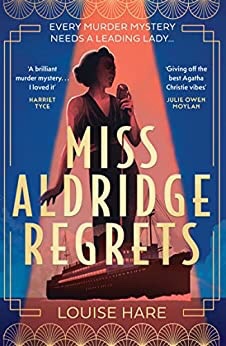
Reminiscent of those stylish novels of the great Agatha Christie, this was a brilliant mystery with a glamorous location, wealthy passengers and sumptuous clothes and jewellery. The period detail is spot on whether it’s the latest bathing suit or 1930’s politics. It’s not just a whodunnit either, because woven within are themes of identity, belonging, family and class division. It’s gripping without being showy or depending on shocks, or endless twists and turns. It’s elegant and allows it’s secrets to unfurl slowly. Lena is a sympathetic character, who has sacrificed starting her career to care for her father Alfie who has recently died. To pay the bills Lena has been singing in a club band, but she has always wanted to work on the West End or Broadway. Her chance comes in the aftermath of a death at the club. A favour from a an old friend of her father. She’s found by theatre producer’s assistant, Charlie Bacon, whose boss is offering Lena the chance of a lifetime, a part on Broadway in a new musical. As they set off across the Atlantic in their first class accommodation, they make the acquaintance of a very wealthy family with an ailing patriarch. What follows is intrigue, murder, mayhem and the realities of being a black performer. Lena is now caught up in a murder plot, and doesn’t know if she’ll be the next suspect, or victim.

Incredibly strong women, three generations of a Memphis family, are the focus of this amazing debut by Tara Stringfellow that made me angry, made me cry and somehow helped me feel uplifted all at the same time. Grandma Hazel is the first resident of the house in Memphis, a house her sweetheart Myron builds for their family. When he is lynched by his own police squad, Hazel is nine months pregnant and left heartbroken, angry and scared. Her daughters, Miriam and August, then call this place home and it also becomes August’s place of work. When Miriam leaves home, travelling with her husband Jax who is in the military, August turns the back of the house into a hair salon for a community of black women who gather there to laugh, to support each other and to plan activism. When Miriam returns with her own daughters, Joan and Myra, she has mixed feelings. She needs a roof over her head, she loves where she grew up, but something happened here that daughter Joan can’t quite remember. Yet she feels I’ll, deep down. There’s fear and shame in this place, but she doesn’t know why and we follow her quest to process and heal from this hidden trauma. With a backdrop of the biggest events of the 20th Century from the Kennedy and Martin Luther King assassinations to 9/11, this is a story of what it means to be a black woman in 20th Century America. Simply outstanding.

Ethan Joella’s novel was perfect for this moment in life. Set in an idyllic Connecticut town over the course of a year, our story follows the intertwining lives of a dozen neighbours as they confront everyday desires and fears: an illness, a road not taken, a broken heart, a betrayal. Freddie and Greg Tyler seem to have it all: a comfortable home at the edge of the woods, a beautiful young daughter, a bond that feels unbreakable. But when Greg is diagnosed with a rare and aggressive form of cancer, the sense of certainty they once knew evaporates overnight. Meanwhile, Darcy Crowley is still coming to terms with the loss of her husband as she worries over her struggling adult son, Luke. Elsewhere, Ginger Lord returns home longing for a lost relationship; Ahmed Ghannam wonders if he’ll ever find true love; and Greg’s boss, Alex Lionel, grapples with a secret of his own. We are all familiar with the hashtag #BeKind and through these stories, what seems like a platitude, is brought home to the reader. Our characters touch on each other’s lives, sometimes without knowing what each other are coping with just under the surface. Despite taking us through every experience from infidelity to loss, the book never feels overwhelming or melancholy. Yes I wanted to shed tears from time to time, but somehow there is always a ray of hope. It reminded me that things like community, friendship, shared experiences and compassion can change everything. The author doesn’t hold back on how difficult and painful life can be, but yet always finds some element of joy that reminds us what a gift it is too. This book is poetic, achingly beautiful and full of empathy for the human condition.

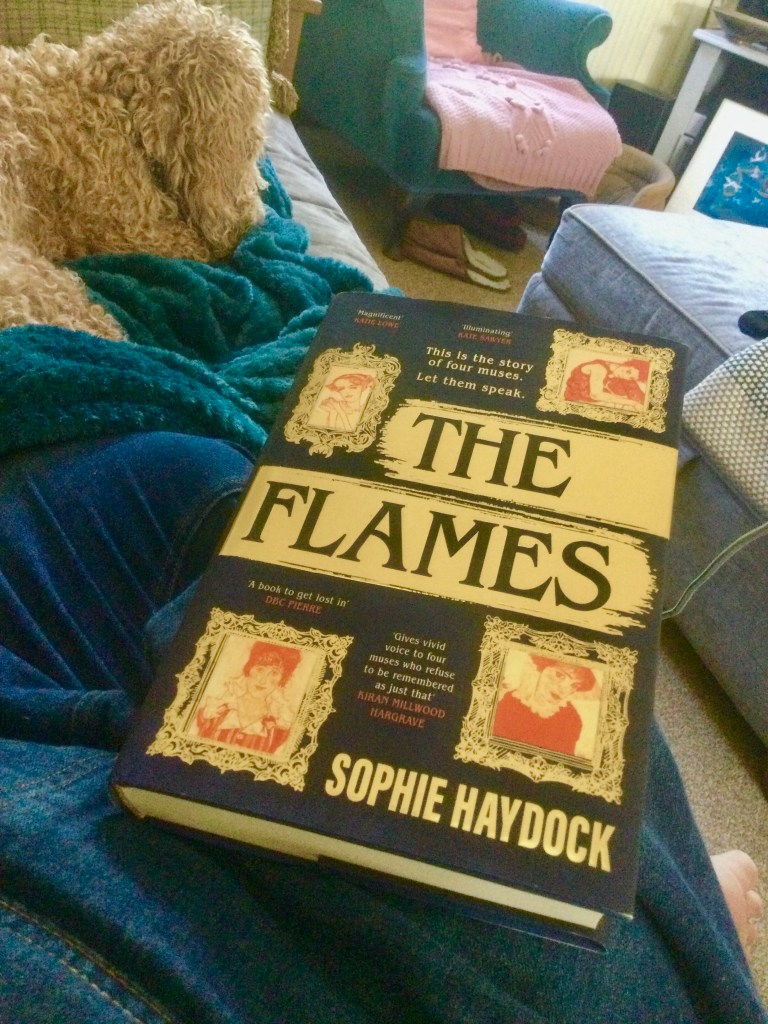
I knew this book would be one I enjoyed, after all it encompasses some of my favourite things: History between the World Wars; the Vienna Secession and Gustav Klimt; Art Nouveau; a feminist narrative. However, I didn’t expect it would grab hold of me in the way it did! I sat down with it in the garden one Sunday afternoon and read two thirds straight away. When duty and blog tours called that week I had to set it aside, but I kept glancing over at it like a lost lover all week. Haydock takes four of Egon Schiele’s portraits and explores the women depicted – society sisters Adele and Edith, artists model Wally and his younger sister Gertie. Schiele’s portraits are not life-like reproductions of his model and while they might shed light on aspects of their characters, they can only ever be the artist’s view of that woman with all the prejudices and biases of his time. Haydock is challenging Schiele’s representation of these women and here we get to hear the women’s stories, how they see themselves and their relationship with Schiele. Some of his life choices felt like betrayals to those women who risked everything by literally laying themselves bare before him and the world, for his sake and for the sake of art. I thought Haydock beautifully captured this sacrifice and it’s consequences, something she picks up beautifully in the short interludes from the 1960’s where an elderly woman searches for a painting she’s glimpsed of someone she loved. Desperate to give an apology she never heard in life. Haydock beautifully captures a rapidly changing Vienna between two World Wars where barriers of class and gender are breaking down. She also captures the complexities of the barriers for women and those who have the pioneering spirit to break them. She gives a voice to their silent gaze. This is one of the best books I’ve read so far this year and I read it greedily in just two sessions. I’m already looking forward to entering Haydock’s world and savouring these wonderful women again.ok”

My interest in 19th Century freak shows, Sarah Baartman (the Hottentot Venus), disability and difference, made Lianne Dillsworth’s debut novel a perfect fit for me. Our setting is a theatre and a performing troupe including singers, magicians and dancers who perform a variety show under the watchful eye of Mr Crillick. His current headline act is Amazonia – a true African tribeswoman, dressed in furs and armed with a shield and spear, her native dancing brings down the house in Crillick’s show. The audience watch, transfixed with fear and fascination, never realising that she is a ‘fagged’ act. Zillah has never set foot in Africa and is in fact of mixed race heritage, born in East London. She is making her money by pretending to be what the, largely white, audience wants to see. It doesn’t sit well with Zillah, but she is alone in the world and does need to make money. Besides it’s better than the other options for a young woman who finds herself in poverty. She’s used to slipping between worlds on stage and in her private life, renting a room in the rough St Giles area of the city, but regularly making her way to a more salubrious area and the bed of a Viscount by night. However, when Crillick brings a new exhibit to his London home, dubbed the Leopard Lady, Zillah’s eyes are opened to the politics and misogyny of displaying difference. A meeting with an activist forces her to think about her own performance, but also the danger that Crillick’s new exhibit might be in, especially his ‘private’ audiences complete with medical equipment. Can Zillah help this woman and what does her own future hold, because in good conscience she can no longer perform? This is a brilliant novel, doing for race and disability, what Sarah Water’s novels did for the representation of sexuality in the 19th Century.

I’d never read a novel by Dolen Perkins-Valdez and she pulled me into her story from the very first page, with Civil seeming real almost immediately. I’ve been interested in eugenics since I wrote my undergraduate dissertation on disability and 20th Century literature. I knew a lot about the movement in the U.K., US and Germany in the lead up to WW2, but this book shocked me because I had no idea that forced sterilisations were still happening in the 1960s and 70s. I knew this had happened in earlier in the century with Native American communities, so I shouldn’t have been surprised that it was still happening to African American women, especially where the woman had a disability too. The writer shows how our biases and emotions feed into the work we do within the caring professions. Having worked in mental health and disability as a support worker, advocate and counsellor, I did identify strongly with Civil and the way she became involved with the Williams family. The Williams girls are her very first patients and she is sent out on a home visit to give them a Depo Provera injection, a long term method of contraception. When she notices that India is only 11 years old her brain immediately starts questioning, who put this little girl on this injection, has anyone asked if she has a boyfriend or worse, is she being preyed upon? Is this an assumption that young African-American women are promiscuous or that African- American men can’t be trusted, even within their own families? The judgement that bringing a child into this family would be disastrous comes from a lack of knowledge around India Williams’s learning disability, but is also an assumption about race too. The fall out from Civil’s discoveries is huge and life-changing, not just for the Williams family but for Civil too. This book sheds light on an important hidden history and took me through a rollercoaster of emotions.

I fell utterly in love with Dot Watson, a rather abrupt and persnickety member of the staff at London Transport’s lost property office. It took me about five pages to be drawn into Dot Watson’s quirky world and her love for the lost property office where honest people bring their found items. Dot is like the backbone of the office and the other workers would be lost without her. A lover of proper procedure and organisation, Dot is the ‘go to’ employee for anyone starting work with the team, or just to answer a question about an item. Dot thinks lost things are very important, almost like an extension of that person. Their lost item can tell her a lot about the person they are and she fills the lost luggage tags with as much detail as possible so that they have the greatest chance of locating it. Dot believes that when we lose a person, their possessions can take us right back to the moment they were with us. When Mr Appleby arrives at the office to find his lost leather hold-all it is what the case contains that moves Dot. Inside is a tiny lavender coloured purse that belonged to his late wife and he carries it everywhere. Something inside Dot breaks for this lonely man and she is determined she will find his hold-all. Her search becomes both the driving force of Dot’s story and the key to unlocking her own memories. I loved our journey into Dot’s past, her relationship with her father and the trauma that she’s tried to lock away for so long. This book has difficult emotions, but also glimpses of humour and is ultimately an uplifting journey with an unforgettable woman.

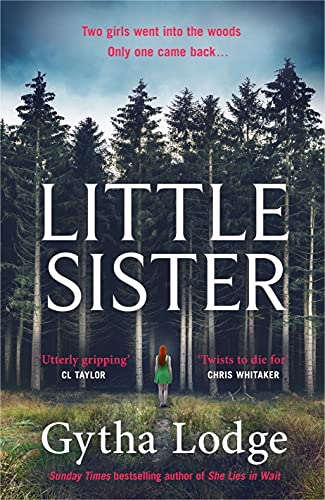
A teenage girl wanders out of the woods. She’s striking, with flame-red hair and a pale complexion. She’s also covered in blood. She appears in the pub’s beer garden as Jonah is enjoying a beer after a walk with his baby son. Detective Jonah Sheens quickly discovers that Keely and her sister, Nina, disappeared from a children’s home a week ago. Now, Keely is here – but Nina’s still missing. Keely knows where her sister is – but before she tells, but first she wants Jonah’s full attention. Is she killer, witness, or victim? The opening scene is absolutely brilliant, vivid and shocking at the same time. As the girl’s history starts to unfold, they hear about several failed placements and a long stay in a children’s home. The girls made complaints about two of their homes, but were thought to be troublemakers. Jonah and his excellent team have to tread a very fine line. Keeley comes across as cold and calculating one moment, but then like a broken little girl the next. Which is an act? There are some very dark stories here and they could be distressing for people who’ve gone through a similar experience, but it’s that darkness that keeps the reader wanting the truth and to see those responsible punished. If Keeley has planned how to elicit sympathy from the police, she certainly knows what she’s doing. As readers we are pulled along with Jonah, from distress and empathy to disbelief and a sense that something is very, very wrong either with Keeley or the system. This is a great mystery, with huge twists in store and a police team I enjoyed getting to know. Now I’m looking forward to going back to the first novel in this series and filling in the gaps in my knowledge, while enjoying even more of this talented writer’s incredibly creative plots and dark, brooding atmosphere.

So these were my favourite reads in a very busy reading month. I read seventeen books which surprised even me! Next month I’m looking forward to a slightly quieter month with some great thrillers to read, some historical fiction from another of my favourite historical periods – the beginnings of the Tudor dynasty, and hopefully a few choices from NetGalley too so I can keep on beating that backlog. I hope you enjoy these choices as much as I did and i’ll see you again next month.

Posted in Personal Purchase

The Flames by Sophie Haydock

I knew this book would be one I enjoyed, after all it encompasses some of my favourite things: History between the World Wars; the Vienna Secession and Gustav Klimt; Art Nouveau; a feminist narrative. However, I didn’t expect it would grab hold of me in the way it did! I sat down with it in the garden one Sunday afternoon and read two thirds straight away. When duty and blog tours called that week I had to set it aside, but I kept glancing over at it like a lost lover all week. Despite recognising the featured portraits, I didn’t know much about Egon Schiele, other than he was a protégée of Klimt. I have only seen one of the paintings, Portrait of a Woman modelled for by his sister Gertrude Schiele because it was at the Metropolitan Museum of Art in NYC. Schiele is described as a figurative painter and as an artist under the banner of the Vienna Secession he was pushing the boundaries, trying to create something completely new or ‘art nouveau’. This was the time of a rebirth in painting, writing and all other art forms towards a new way of describing the world – the birth of Modernism. The unusual shapes and colours in his work is reminiscent of writers like Virginia Woolf who were throwing out the rule book and wrote novels with unusual timelines, streams of consciousness and complex characters whose inner world was often more important than events outside it. Haydock’s book uses some of these devices and a way of ‘writing back’ to art history and challenging Schiele’s representation of these women. Schiele’s portraits are not life-like reproductions of his model and while they might shed light on aspects of their characters, they can only ever be the artist’s view of that woman with all the prejudices and biases of his time. Here we get to hear the women’s stories as they see themselves and their relationship with Schiele.

We start with Adèle, one of a pair of sisters living opposite Schiele in an upmarket district of Vienna. Adele is transfixed on Schiele as soon as he arrives on moving day and is glued to the window seat every day in the hope of catching his eye. However, both Adèle and her sister Edith are from a very well respected family and there isn’t a chance that their father would accept Schiele as a choice for his daughter. Adèle is persistent though and soon the sisters meet Schiele on the street outside, alongside the woman they see coming and going from the flat, Wally. Although there is a part of her who knows the relationship between Wally and Schiele must be a complex one, she tucks it to the back of her mind, and begins to feel she might be making headway with him. Surely Wally is a maid, someone who cleans and models for him? Using Edith as her foil they do have a cinema outing, a very awkward foursome, and Adèle is so glad to have a sister that’s quiet, in the background, and goes unnoticed. She’s the perfect chaperone for this relationship she’s building in her head. She’s in love with Schiele and he must be in love with her, in fact she never has a moment’s doubt. Haydock writes a brilliant opening section here, with a perspective that we’re never fully sure of and a course of action that could be leading to disaster. It’s almost painful to be inside the mind of this highly strung young woman, whose class and status keeps her in a constant waiting position. There’s so much she’s dreamed of doing, but can only do them when she is a married woman. Women of Edith and Adèle’s class can’t make decisions for themselves, don’t get up and go travelling, or go to university or even go to the theatre alone. There are times, imprisoned behind her window when she envies Wally’s freedom to come and go as she pleases. Adèle is bored and I feared some of her reality was little more than the daydreams of an under stimulated mind. There’s a sense that an emotional storm is brewing.

The second section of the book is focused on Gertrude Schiele, Egon’s younger sister who started posing for his sketches when they still lived at home. Through Gertrude we experience Schiele’s early years, with her perspective as the filter. Born to a man who worked on the government railways, the family were respected, although the shadow of mental health does fall here too. We see the germination of an unusual relationship between brother and sister, with hints of impropriety on both sides where her modelling for him is concerned. It’s clear to see Schiele’s incredible artistic drive, thriving in limited circumstances and with a father who wishes his son wanted to follow him into a respectable job on the railways. Art is no way to make money, but there is a sense it’s more than that driving his father, possibly the praise that would come his way for having such a loyal son who wants to follow in his father’s footsteps. However, when his father’s behaviour becomes erratic what will happen to them all? As for Gertrude we see a strange dynamic when Schiele uses other models or is in a relationship? There is jealousy there which is interesting to watch as we move through the next few years. In the third section we meet Wally, artist’s model for some of Schiele’s best work and a partner to him in every way. I loved this section, because I found Wally inspiring in her choice to live in the way she wants despite the consequences. Wally is probably his most professional model, with an energy and intensity that leaps off the canvas. She openly lives with Schiele, travelling with him to a couple of country houses before settling in Vienna near her family. Wally knows where the line is and in the years she is with Schiele his behaviour gets them noticed in all the wrong ways, including with the authorities who label him a pornographer. She does not leave his side. There’s a core of steel in this woman, who will not hear him talk of love – possibly because she knows what verbal declarations are worth – and will never ask him to stay. However, I wanted him to stay with this woman, who I felt understood what he needed better than anyone, but didn’t ask for the usual protections her gender would be afforded, like marriage. I wondered whether, as she watched Wally from the window of her gilded cage, Adèle truly understood the responsibilities and the cost of being as ‘free’ as Wally seems?
Finally we come full circle, back to Schiele’s arrival in Venice and moving in opposite Adèle and her sister, but this time from Edith’s perspective. It was fascinating to see the same events play out through a different pair of eyes and we soon realise that despite her quiet demeanour and acquiescence to the rules her parents lay down, Edith is not as passive as she has appeared up to now. In fact she has the determination and deceptive skills her sister does, but the difference is that it’s not expected of Edith. As a result she has more freedoms than her sister and doesn’t get caught. She too is mesmerised by Schiele, but by the man rather than what he represents. Adèle wants freedom, to challenge boundaries, to scandalise society. Whereas Edith just wants the man, but does she truly know him and will she risk losing her sister to get him? We do get a sense of Schiele through these women, particularly Gertie because she’s there for the formative years. I often found him infuriating, because I felt he wanted to be a modern man, unrestricted by society’s rules and expectations on one hand, but then showed a total disregard for the women who were willing to break rules with him. There was a slight Madonna/Whore complex at work here, where women were compartmentalised into those to have fun with and those acceptable for marriage. Some of his choices felt like betrayals to those women who risked everything by literally laying themselves bare before him and the world, for his sake and for the sake of art. I thought Haydock beautifully captured this sacrifice and it’s consequences, something picked up beautifully in the short interludes from the 1960’s where an elderly woman searches for a painting she’s glimpsed of someone she loved. Desperate to give an apology she never heard in life. Haydock beautifully captures a rapidly changing Vienna between two World Wars where barriers of class and gender are breaking down. She also captures the complexities of the barriers for women and those who have the pioneering spirit to break them. She gives a voice to their silent gaze. This is one of the best books I’ve read so far this year and I read it greedily in two sessions, but I’m already looking forward to entering Haydock’s world and savouring these wonderful women again.

Meet The Author

Sophie Haydock is an award-winning author living in east London. Her debut novel, The Flames, is about the four muses who posed for the artist Egon Schiele in Vienna more than 100 years ago. She is the winner of the Impress Prize for New Writers.Sophie trained as a journalist at City University, London, and has worked at the Sunday Times Magazine, Tatler and BBC Three, as well as freelancing for publications including the Financial Times, Guardian Weekend magazine, Arts Council, Royal Academy and Sotheby’s. She has interviewed leading authors, including Hilary Mantel, Maggie O’Farrell, Bernardine Evaristo, Sally Rooney and Amy Tan. Passionate about short stories, Sophie also works as a digital editor for the Sunday Times Audible Short Story Award and is associate director of the Word Factory literary organisation. She judges writing competitions and hosts her own short story club.Her Instagram account @egonschieleswomen – dedicated to the women who posed for Egon Schiele – has a community of over 100,000 followers. For more information, visit: sophie-haydock.com

Published 17th March 2022 by Doubleday

Posted in Netgalley

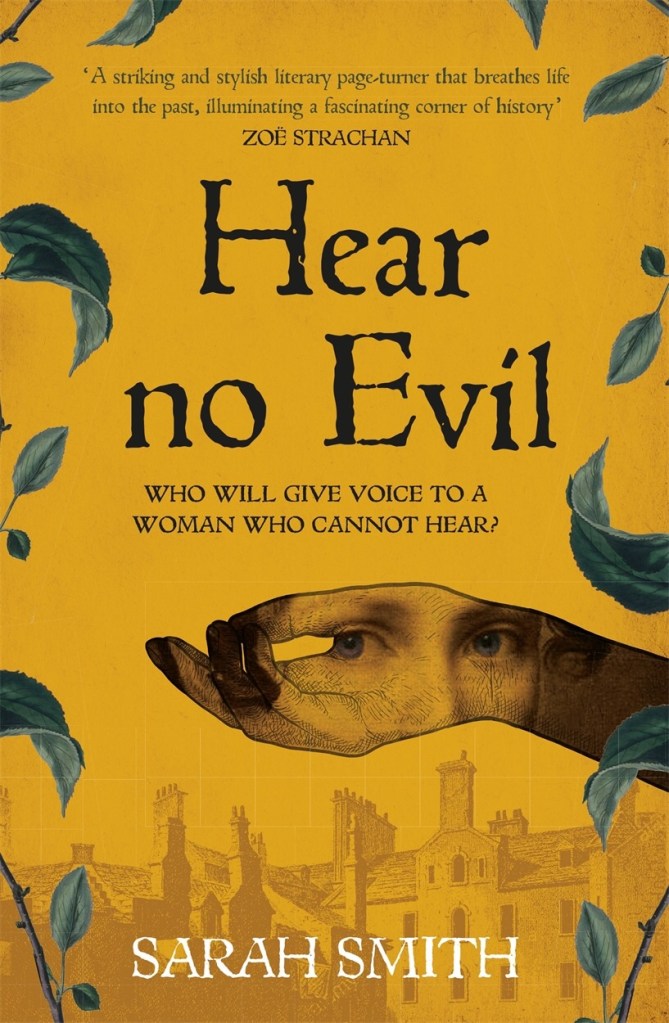
Hear No Evil by Sarah Smith.

It’s 1817 and a young woman is witnessed throwing a child into the River Clyde from the Old Bridge in Glasgow, the authorities are told. Based on a real case, this is a powerful piece of historical fiction from Sarah Smith and an interesting look into the 19th Century attitude to disability, and specifically deafness. The authorities are unable to communicate with their prisoner and as nothing is found at the river, Jean is taken to the Edinburgh Tolbooth in the hope of getting the truth. The High Court asks Robert Kinniburgh if he will communicate with their silent prisoner, to work out whether Jean is deaf or even fit for trial. Robert teaches at the Deaf & Dumb Institution and might be able to form a way of interpreting for the authorities. Jean only has two choices if a court finds her guilty, neither of which are desirable; death by hanging or imprisonment in an insane asylum. As Robert and Jean manage to construct a simple way of communicating, he starts to gains her trust, Jean starts to confides in her interpreter, imparting the truth. As Robert treads a fine line between interpreter and investigator, he becomes absolutely determined to clear her name before it is too late.

The novel’s basis in Scottish legal history means that Smith has researched her period deeply, wanting to tell her tale sensitively and with respect for these real-life characters. It is a perfect mix of fact, atmospheric setting, strong characters and an understanding of what life was like for someone with a disability in the early 19th Century. Kinniburgh has the difficult task of unravelling Jean’s story, immersing himself in the legal machinery of the Edinburgh court, and retracing Jean’s life up till that moment on the bridge. He is a teacher, not a lawyer, so he really has his work cut out. He is our eyes and ears in the story, following Jean’s life in the poverty stricken slums of Glasgow, experiencing her difficulties and finding out what happened in the final days before she came to be alone on the Old Bridge with her baby. He is a very humane main character, full of intelligence and compassion for others. Yet it us Jean Campbell who really made her way into my head and heart.

Obviously, the real Jean Campbell isn’t well known, but it felt like Smith really got under the skin of this girl. The details of her existence are brought vividly to life and Smith shows us that she was strong and full of dignity despite being so disenfranchised. Jean has gone through traumatic experiences, badly used by unscrupulous people only too happy to take advantage. Campbell’s deafness is central pillar of this book, it’s the reason for her poverty, the ordeals she has been subjected to and possibly the court case itself. How far were police officers influenced by her inability to speak. Just as there are now, there were prejudices and assumptions made about the Deaf community at the time, and we get some insight into how sign language evolved when it becomes the key by which Kinniburgh begins to earn Jean’s trust and unlock her story. I love that her story is reaching so many people through this novel.

I loved the settings, particularly the incredibly atmospheric opening which really set the scene for the rest of the novel. Smith’s period locations took me on a journey through time across two beautiful Scottish cities. The most vivid being Edinburgh’s dank and grimy Tolbooth prison which evoked claustrophobia for me. Equally vivid are Kinniburgh’s visits to the filthy poverty of Jean’s Glasgow home. I think that lovers of historical fiction will really enjoy this but I’d like to see it read by a wider audience, considering it’s message is sadly still relevant. We cannot judge fellow human beings until we have understood what has brought them to that point. We also need to make more effort to communicate with those who have a disability. It seems that we can revere them as Paralympians or military heroes, but many don’t pass the time of day with real people with disabilities in their daily life. Smith highlights this by taking us to this earlier time where, for those who were silenced, their disability could mean paying a very high price indeed. Jean could see this discrepancy and the way she was underestimated every day of her life:

‘She was aware of much more than people gave her credit for. Always had been…Not once did any hearing person treat her like she was the same as them.’

Published by Two Roads 3rd Feb 2022.

Posted in Back of the Shelf

Back of the Shelf! The Dressmaker’s Secret by Lorna Cook.

1941, Nazi-occupied Paris: In the glamorous Ritz hotel there is a woman with a dangerous secret…

As Coco Chanel’s assistant, Adèle lives side by side with German officers in the splendour of The Ritz hotel. But Adèle has a secret. She is working for the resistance, right under the Germans’ noses. As occupied Paris becomes more and more dangerous, Adèle will have to decide if she can risk everything to save innocent lives and protect the man she loves…

Present day: Chloé’s grandmother has never spoken about the war and avoids questions about the legendary designer she once worked for. Now Chloé has come to Paris, to uncover the truth about Adèle’s life. But is she prepared for what she will find? And for the power of her grandmother’s secrets to change her family forever…

Chloé has travelled to Paris after the breakdown of her marriage in order to help a friend with their vintage shop. She knows her grandmother worked for Chanel in the 1940’s so when she hears about an auction taking place at the Ritz she decides to have a look. The Ritz is selling some wartime items which grab her interest and when she meets Etienne, who is an art dealer and war historian, he is a great source of knowledge. He tells her about recently unearthed information that Chanel was sympathetic to Hitler’s cause and had visited Berlin several times. Like many people who survived the war, her grandma has been very reticent about sharing her experiences for that? As Chloé starts to look in the archives, she begins to worry. What will she feel if she finds out her grandmother collaborated.

The historical research undertaken for this novel is undeniable and before reading this I had no idea of Coco Chanel’s stance in WW2 or the stories of her collaboration with the Nazis. I think now that history has shown us the full extent of the Holocaust and Hitler’s belief in a master race, we can’t conceive of anyone who doesn’t see him and his actions as unremittingly evil. However, it’s clear that during the war, for both Germans and occupied citizens the distinction wasn’t so clear. With our own aristocracy hiding many who were enthralled by Hitler’s planned genocide, it shouldn’t be a surprise that in France, Greece and Italy allegiances and the reasons for them were very complicated. If you had a bakery in the occupied Greek islands would you rather see bread go to waste or would you sell to the occupying force? For Chanel, living in the Paris Ritz alongside German soldiers it must have been hard to live next door and keep up a secret campaign of hatred. This is where Adèle’s story shines a light, as Chanel’s PA she can come very close to them, but still want them dead and gone from France. So with great bravery she resists under their very noses.

Adèle’s wartime story is so engrossing, that I think it makes the book a little lopsided. The dual timeline, as in the present Adèle’s granddaughter Chloé researches her family history, is definitely the weaker end of the story. It’s almost there as a device and although it gives present day interest, I think the book would be just as strong without it. It’s possibly just that the tension and drama need to be high for the WW2 setting, so anything would have seemed quiet in comparison. Prior to the war, Adèle grew up in an orphanage, taught by nuns. She had worked for Chanel before war broke out and is lucky to be chosen as her personal secretary when the atelier is closed, because all the other staff are let go. Adéle is in charge of her correspondence, packing her luggage when she travels and organises any meetings she has. However, she does not enjoy living at the Ritz, especially when the German soldiers move in and Chanel starts to socialise with them, dating a much younger man at the same time. It’s the guilt that’s so hard to deal with, especially when Adèle sees other people going hungry. When she first sees a Jewish woman being arrested, she’s stunned and feels sick that this is happening in her country. As she goes for her routine blood donation to the Red Cross she meets Theo, a doctor who is a member of the resistance. Can Adèle continue to watch others suffer or will she have to help?

I think that this writer takes a piece of history and weaves a great story, full of intrigue and drama especially in the WW2 sections. Chloé needs to move forward from her divorce and find her confidence again and there is something about filling in the gaps of her family history that does this. Learning the truth about her grandmother is nerve-wracking considering her employer’s history, but if it shows she was a hero then Chloé will filled buoyed up by it. Knowing you’re from a line of strong women, can help you find your own strength and I think that’s the essence of Chloé’s journey. Adèle is a courageous woman in a very tough situation and I thoroughly enjoyed getting to know her and the full history of one of France’s most famous collaborators.

Published on 22nd January 2022 by Avon Books.

Meet The Author

Lorna Cook is the author of the The Girl From the Island, The Forbidden Promise and the Kindle Number 1 Bestseller ‘The Forgotten Village’, which was her debut novel, staying in the Kindle Top 100 for four months. It has sold over 150,000 copies, has eleven overseas/foreign language editions, won the Romantic Novelists’ Association Katie Fforde Debut Romantic Novel of the Year Award and the RNA Joan Hessayon Award for New Writers. Keep up with all her news and bookish chat at:www.lornacookauthor.com www.facebook.com/LornaCookWriterwww.instagram.com/lornacookauthorwww.twitter.com/LornaCookAuthor

Posted in Throwback Thursday

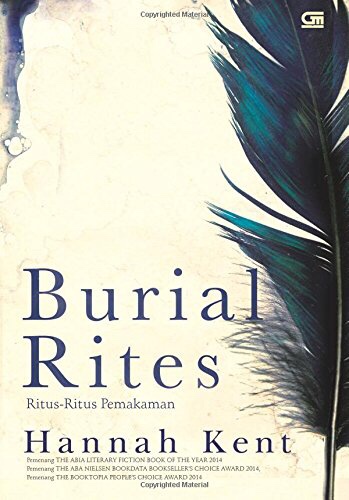
Throwback Thursday! Burial Rites by Hannah Kent.

In the wake of this talented writer’s new novel Devotion, for this week’s Throwback Thursday I decided to look at her debut novel Burial Rites. Set in Iceland in 1829 and based on a true story, we follow the final days of Agnes; a young woman accused of the murder of her former master. Housed at an isolated farm until her execution, Agnes is accompanied by Tóti, a priest she has mysteriously chosen as her spiritual guardian. The family are horrified to be housing a murderer, but as time goes on and her death looms closer, they start to listen to Agnes and hear a different side to the sensationalised story they’ve accepted as truth. How can Agnes cope with her impending death and the realisation that history will define her: as a murderess, a monster, a woman without mercy?

The first thing that comes to mind when I think about this book is the stark scenery and the way it’s linked to Agnes’s emotions. She reminded me of my favourite literary heroine Jane Eyre, in that she’s so passionate, with every emotion unfiltered, raw and open for the reader to see. Jane is condemned as too passionate when she’s a child, but even though she learns to rein her emotions in as an adult, there are glimpses of her true nature in her eerie paintings and her feelings for Rochester. Jane’s warning of what happens when a women’s passions are unbound, comes in the shape of Bertha Mason, Rochester’s wife and the madwoman in the attic. Bertha acts on her feelings immediately; her anger leads to the burning of Rochester’s bed and the wounding of her brother Richard. However, in his explanation after their abandoned wedding, Rochester tells Jane of mood swings and childlike behaviour, but also hints at an unladylike lust that’s unbecoming in a wife. This is certainly implied strongly in Jean Rhys’s impressive post-colonial prequel Wide Sargasso Sea, where his wife’s enthusiasm in the bedroom feels unchaste and his claims of being duped by her family might relate more to her virginal state than her potential for insanity. Agnes is similarly passionate about her lover:

“I cannot think of what it was not to love him. To look at him and realise I had found what I had not known I was hungering for. A hunger so deep, so capable of driving me into the night, that it terrified me.”

Just as Jane’s heartbreak and spiritual battle after her flight from Thornfield is characterised by the biting wind and lack of shelter of the bleak moorland, Agnes seems so deeply in tune with her Icelandic surroundings. The claustrophobic atmosphere of her final days is heightened by being sequestered in someone else’s space and marooned in the middle of an Icelandic winter. There is nothing soft here. The relentless freezing air and sparse vegetation echo the frozen glares of the women in the family, the barren and friendless days that count down slowly without joy or pleasure to make them bearable. Both the landscape, and Agnes herself, are haunting and have stayed with me way beyond the final pages.

I love how the author plays with the idea of self and it’s construction in fiction. She takes a real person, with a real criminal case against them and starts to give them thoughts and feelings. The Agnes Magnússdóttir she could read about in records and news reports is a distant, lifeless, individual. In fact any contemporary writing about her that gives more than the bare facts, is only one person’s idea of who she was and what her motivations might have been. It’s a false self and what Kent tries to do is breathe life into Agnes, to create a real person with thoughts and feelings, someone we can perhaps start to understand and empathise with. I love though how Agnes has an awareness of this and how even in Kent’s story, she isn’t real. She explains that people will think they have a sense of who she is through her perceived actions, but that isn’t her. She knows she will be labelled and for some people that will forever define her, but only she knows her true character and her true motivations. How can a woman hope to survive when her very life is dependent on the stories told about her by others, rather than her own word?

“They will see the whore, the madwoman, the murderess, the female dripping blood into the grass and laughing with her mouth choked with dirt. They will say “Agnes” and see the spider, the witch caught in the webbing of her own fateful weaving. They might see the lamb circled by ravens, bleating for a lost mother. But they will not see me. I will not be there.”

Paperback Published by Picador 27th Feb 2014

Meet The Author

Hannah Kent’s first novel, the international bestseller, BURIAL RITES, was translated into over 30 languages and won the ABIA Literary Fiction Book of the Year, the Indie Awards Debut Fiction Book of the Year, the Prix Critiqueslibres Découvrir Étranger, the Booktopia People’s Choice Award, the ABA Nielsen Bookdata Booksellers’ Choice Award and the Victorian Premier’s People’s Choice Award. It was shortlisted for the Women’s Prize for Fiction and the Guardian First Book Award, the Stella Prize and the International IMPAC Dublin Literary Award, amongst others. It is currently being adapted for film by Sony TriStar. 

Hannah’s second novel, THE GOOD PEOPLE, was translated into 10 languages and shortlisted for the Walter Scott Award for Historical Fiction, the Indie Books Award for Literary Fiction, the ABIA Literary Fiction Book of the Year and the Readings Prize for New Australian Fiction. It is currently being adapted for film by Aquarius Productions. 

DEVOTION, Hannah’s third novel, will be published in November 2021 (Australia) and February 2022 (UK & Ireland) by Picador.

Hannah’s original feature film, Run Rabbit Run, will be directed by Daina Reid (The Handmaid’s Tale) and produced by Carver and XYZ Films. It was launched at the Cannes 2020 virtual market where STX Entertainment took world rights. 

Hannah co-founded the Australian literary publication Kill Your Darlings. She has written for The New York Times, The Saturday Paper, The Guardian, the Age, the Sydney Morning Herald, Meanjin, Qantas Magazine and LitHub.

Hannah lives and works on Peramangk country near Adelaide, Australia.

Read More

https://www.panmacmillan.com/blogs/literary/burial-rites-iceland-photos-hannah-kent-setting

https://www.theguardian.com/film/2017/dec/13/jennifer-lawrence-to-star-in-film-adaptation-of-hannah-kents-burial-rites

Posted in Random Things Tours

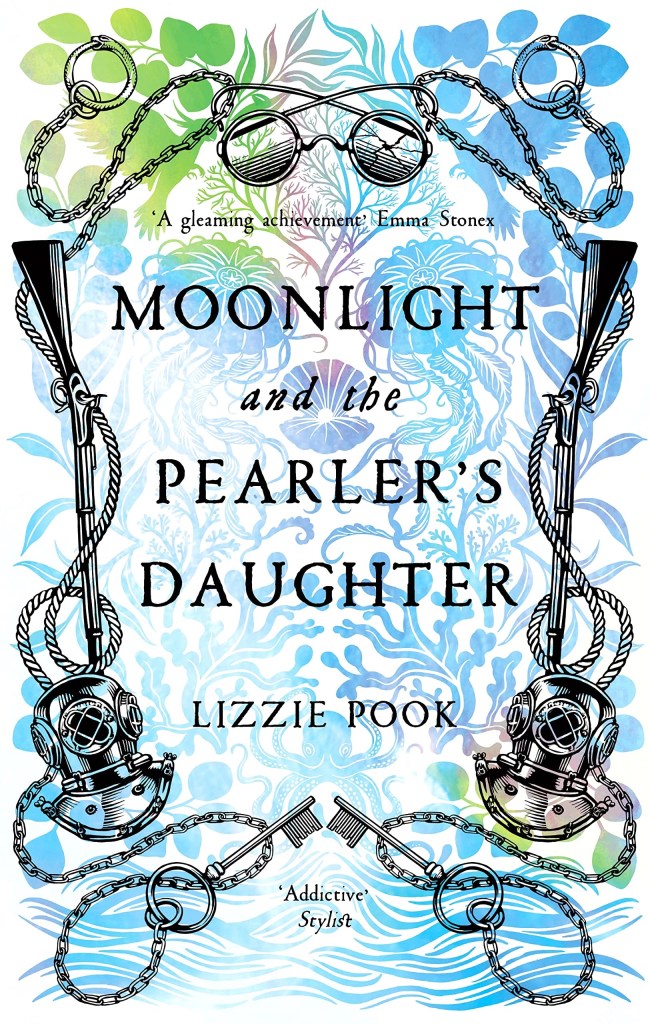
Moonlight and the Pearler’s Daughter by Lizzie Pook.

Fortune favours the brave . . .

It is 1886 and the Brightwell family has sailed from England to make their new home in Western Australia. Ten-year-old Eliza knows little of what awaits them in Bannin Bay beyond stories of shimmering pearls and shells the size of soup plates – the very things her father has promised will make their fortune. Ten years later, as the pearling ships return after months at sea, Eliza waits impatiently for her father to return with them. When his lugger finally arrives however, Charles Brightwell, master pearler, is declared missing. Whispers from the townsfolk point to mutiny or murder, but Eliza knows her father and, convinced there is more to the story, sets out to uncover the truth. She soon learns that in a town teeming with corruption, prejudice and blackmail, answers can cost more than pearls, and must decide just how much she is willing to pay, and how far she is willing to go, to find them.

This incredible debut is richly atmospheric from the get go, throwing us straight into the strangeness of 19th Century Western Australia as if it is an alien landscape. In fact that’s exactly what it is for the Brightwell family, particularly Eliza whose childhood eyes we see it through for the the first time as, in a particularly disgusting parody of baptism, a bucket of fish guts is thrown into her face. Of course the fisherman apologises for the accident, but we’re left wondering if it’s anything but as he says the words ‘welcome to Bannin Bay’. It foreshadows that immediate imbalance between those who do the work and those who aim to make the money. Eliza’s father has been full of dreams, not just of pearls, but the pearl shells to be turned into buttons, hat pins and pistol handles. Yet their unsuitability for this rough and ready environment can be seen as soon as they arrive in the fine clothing they must keep lifted away from the red earth, especially when compared to the stevedores dirty vests and cut off trousers. Eliza describes her mother as ‘a dragonfly, once resplendent, marooned in a bucket of old slop water.’ Delicate Victorian ladies are not built for this environment that stinks of sweat, fish guts and the mineral tang of sea kelp. With this alien landscape the author creates a vivid backdrop for the incredible historical detail of her story, whilst also creating a mythic, almost fairy tale quality to the story.

Only ten years after the prologue we meet an older Eliza, who’s wiser to the ways of the Bay and has developed into a interesting character. Women are either categorised as polite society -‘white glove wearers’ – or harlots and it’s a source of irritation to most women in the community that Eliza refuses to be either. She is ploughing her own furrow and whereas her friend Min’s childhood dreams develop, from escapades on the high seas to the type of sailor she might marry, Eliza still craves the adventure. She can see no use for a husband, although she doesn’t deny an interest in men, which is quite a scandalous notion even if her main interest is the contents of his library. Eliza’s knowledge of sailing and pearl diving is forensic in its detail and through exploring with her father she has developed a keen interest in the areas flora and fauna too. She is quite unlike the respectable women who still look like wedding cakes in the impossible heat. Her father has been on a voyage for the past three months and a lonely Eliza has been looking forward to his return, but as she sits and waits doubt starts to set in about whether the ship is returning. The light is fading as his lugger appears on the horizon, but her stomach fills with dread when she realises something is wrong. The ship’s flag is at half-mast. When her brother Thomas emerges she learns that her father is gone. While Thomas rushes to secure the business Eliza is left to find out the truth and while she’s told he went overboard, there are also tales of mutiny and murder. Eliza has to visit the sergeant to convince him that she suspects their father’s death was not an accident. Sergeant Archibald Parker is an unpleasant racist and his immediate action is to arrest aboriginal man Billy Balaari, but Eliza is told that Billy wasn’t even on the boat. When Billy escapes, the sergeant is completely focused on finding him, leaving Eliza to do the detective work herself. She finds her father’s diary and eventually sets sail on Father McVeigh’s lugger Moonlight with Axel Kramer and an aboriginal boy called Knife, determined to find the truth of what happened.

I wasn’t surprised to find a very seedy underbelly to the trade where Eliza’s father had hoped the build the family fortune. Where incomers make large amounts of money, there is always exploitation and in this case the workers have a very tough working life. Of course it’s the native Australians who are exploited the most and the author doesn’t pull her punches when it comes to portraying the terrible treatment they receive. Aboriginal families are torn apart as the strong are enslaved for labour on the Pearler’s boats, usually as pearl divers, the most dangerous job on board. The sheer weight of their gear is terrifying as they don lead boots and copper chest plates. It felt so claustrophobic to imagine them sinking slowly to the bottom of the sea, with only a line connecting them to the ship above. The relief of being winched back to the surface must have been tempered by the danger of the bends, caused by the pressure of resurfacing too quickly, forcing organs upward in the body leaving the diver dead or ‘agonisingly crippled’. It made me feel a little bit anxious as I was reading their potential fates. If this wasn’t enough, aboriginals were treated as worthless, beaten and even killed without consequence. Eliza has to negotiate her way through the community’s corruption, violence, blackmail and the criminal elements of the pearling business. All the while reading her father’s diary for clues and guiding us to a cast of fascinating characters, some of which are based on historical figures. I loved Eliza’s early feminist stance and her sense of adventure, not to mention the gripping twists and turns that pull you even deeper into the story. This is a fantastic debut full of life and death, just like it’s setting. The richness and depth of her storytelling marks Lizzie Pook out as a talented writer I’ll keep watching out for in the future.

Published by Mantle Books 3rd March 2022

Meet The Author

Lizzie Pook is an award-winning journalist and travel writer contributing to The Sunday
Times, Lonely Planet, Rough Guides, Condé Nast Traveller and more. Her assignments have taken her to some of the most remote parts of the planet, from the uninhabited east coast of Greenland in search of roaming polar bears, to the foothills of the Himalayas to track endangered snow leopards.
She was inspired to write Moonlight and the Pearler’s Daughter, her debut novel, after spending time in north-western Australia researching the dangerous and fascinating pearl-diving industry. She lives in London.
You can find Lizzie on Twitter and Instagram: @LizziePook.

Posted in Throwback Thursday

Throwback Thursday! Breath, Eyes, Memory from Edwidge Danticat


At the age of twelve, Sophie Caco is sent from her impoverished Haitian village to New York to be reunited with a mother she barely remembers. There she discovers secrets that no child shouldever know, and a legacy of shame that can be healed only when she returns to Haiti – to the women who first reared her. What ensues is a passionate journey through a landscape charged with the supernatural and scarred by political violence.

In her stunning literary debut, Danticat evokes the wonder, terror, and heartache of her native Haiti – and the enduring strength of Haiti’s women – with vibrant imagery and narrative grace that bear witness to her people’s suffering and courage.

Reading this incredible debut novel at university sparked a lifelong interest in the history of Haiti and its people. The republic shares the island of Hispaniola with the Dominican Republic and despite only occupying three eighths of the island, it has a staggering population of 11.4 million making it the most populated island in the Caribbean Sea. However, there is a huge Haitian diaspora with many residents relocating to the USA, probably due to the fact that Haiti has the lowest Human Development Index in the world. The indigenous Taino people seem to have been the original residents of the island, but the first European settlers landed in the 1400’s claiming the island for Spain and it remained part of the Spanish Empire until the 17th Century. The French then laid claim to the most westerly point of the island and they brought the first slaves to Haiti for labour on their new sugar plantations. It has the incredible honour of being the first island in the Americas to abolish slavery after a successful slave revolt led by Toussaint Louverture and eventually declared sovereignty on Jan 1st 1894 under his successor Dessalines. As the country slowly united there were attempts to declare the whole island as Haiti, but eventually they recognised the Dominican Republic as a separate state. Haiti has been notoriously unstable due to crippling debt owed to France, the dearth of resources left by the French and Spanish, as well as political volatility. The USA took control of the island in the early twentieth century, until Haitian leader Francois ‘Papa Doc’ Duvalier took power in 1956 and it is this period that is explored in the novel. Papa Doc’s reign and the following rule of his son known as ‘Baby Doc’, was characterized by state-sanctioned violence, against any political opposition and it’s own civilians, corruption, and economic stagnation. It was only after 1986 that Haiti began attempting to establish a more democratic political system.

Danticat’s story is about the women of Haiti, particularly the three generations of Sophie’s family, and how this period of history impacted upon the women of Haiti. Sophie has been brought up by her Tante Atie and this is a beautifully warm relationship that really grounds Sophie in her Haitian identity. They are also incredibly close to her Grandma Ifé who tells Sophie stories passed down orally about people who could carry the sky on their heads. Atie is beautifully conveyed as a loving but slightly abrupt woman, conflicted between the needs created by her own motherlessness and her love for this child who has been left behind. Both Sophie and Atie have a void that each other can fill, but Atie is honour bound not to replace Sophie’s mother and to be sure that her mother’s wishes are carried out. This comes to a head one Mother’s Day when Sophie takes a Mother’s Day card home from school clearly wanting to give it to her aunt, not the woman living thousands of miles away who she’s never met. Danticat is very adept at evoking her homeland with recipes and descriptions of mouth watering food. It’s not been a wealthy upbringing, but it is rich in stories, colour, warmth and nourishment. So when Sophie is sent to live with her mother in New York City the contrast is stark and confusing. Whereas Tante Atie seems comfortable in her skin, Sophie’s mother is shown to diet and use skin lightening creams, showing an obvious discomfort about her body and possibly even her identity as a black Haitian woman.

Men are largely absent in this novel, but their impact is enormous. Maxine lives in an apartment with her boyfriend and Sophie hears her mother’s nightmares through the wall. Left alone for long periods, Sophie forms a friendship with a male neighbour in the apartment block. This seems to trigger Maxine and the truth of Sophie’s family starts to come to light, as her mother becomes obsessed with protecting her. She begins the horrific practice of ‘testing’ her daughters virginity – something apparently passed down from her own mother – causing shame, confusion and trauma. Sophie learns she is a child of rape and we travel back to the Haiti of Maxine’s teenage years where she is spotted by one of the ‘Tonton Macoutes’ – Papa Doc’s foot soldiers and the bogeymen of every Haitian child’s nightmares. He drags Maxine into the sugar cane field and assaults her. It will take a return to Haiti, for both Sophie and her Mother, to bring about healing. Danticat beautifully portrays inter generational trauma and the oppression of women that’s caused by the patriarchal system, but enacted by mothers on their daughters. Daughters who were virgins kept their value in the marriage market, just as in other cultures the men want wives who have undergone FGM. It takes rebellion and refusal from the women to create change. Sophie must also face the the ghosts of slavery, represented by the sugar cane her ancestors were brought from Africa to cut. Danticat paints a vivid, colourful but painful picture of a country created by trauma that is still felt many centuries later. She explores how each new generation must find some way to live with that past, whether by leaving the country of their birth for something different or by staying to face the past and break the chain of hurt each generation has passed on to the next. This is an emotional, evocative and difficult read in parts, but is a beautiful debut from an author whose love of her homeland shines through.

This edition published by Abacus 7th March 1996

Meet the Author

Edwidge Danticat picture from Fresh Air Archive

Edwidge Danticat was born in Haiti in 1969 and came to the United States when she was twelve years old. She graduated from Barnard College and received an M.F.A. from Brown University. She made an auspicious debut with her first novel, Breath, Eyes, Memory, and followed it with the story collection Krik? Krak!, whose National Book Award nomination made Danticat the youngest nominee ever. She lives in New York.