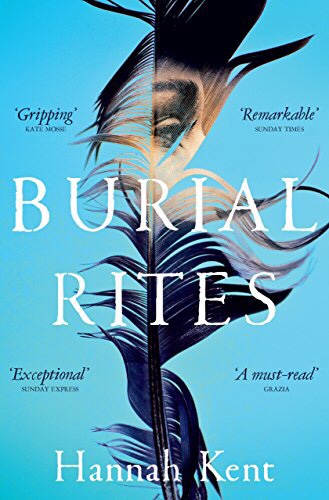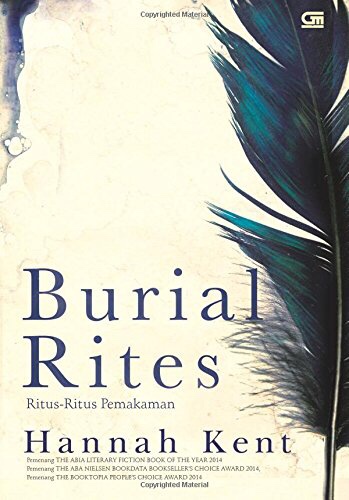
In the wake of this talented writer’s new novel Devotion, for this week’s Throwback Thursday I decided to look at her debut novel Burial Rites. Set in Iceland in 1829 and based on a true story, we follow the final days of Agnes; a young woman accused of the murder of her former master. Housed at an isolated farm until her execution, Agnes is accompanied by Tóti, a priest she has mysteriously chosen as her spiritual guardian. The family are horrified to be housing a murderer, but as time goes on and her death looms closer, they start to listen to Agnes and hear a different side to the sensationalised story they’ve accepted as truth. How can Agnes cope with her impending death and the realisation that history will define her: as a murderess, a monster, a woman without mercy?
The first thing that comes to mind when I think about this book is the stark scenery and the way it’s linked to Agnes’s emotions. She reminded me of my favourite literary heroine Jane Eyre, in that she’s so passionate, with every emotion unfiltered, raw and open for the reader to see. Jane is condemned as too passionate when she’s a child, but even though she learns to rein her emotions in as an adult, there are glimpses of her true nature in her eerie paintings and her feelings for Rochester. Jane’s warning of what happens when a women’s passions are unbound, comes in the shape of Bertha Mason, Rochester’s wife and the madwoman in the attic. Bertha acts on her feelings immediately; her anger leads to the burning of Rochester’s bed and the wounding of her brother Richard. However, in his explanation after their abandoned wedding, Rochester tells Jane of mood swings and childlike behaviour, but also hints at an unladylike lust that’s unbecoming in a wife. This is certainly implied strongly in Jean Rhys’s impressive post-colonial prequel Wide Sargasso Sea, where his wife’s enthusiasm in the bedroom feels unchaste and his claims of being duped by her family might relate more to her virginal state than her potential for insanity. Agnes is similarly passionate about her lover:
“I cannot think of what it was not to love him. To look at him and realise I had found what I had not known I was hungering for. A hunger so deep, so capable of driving me into the night, that it terrified me.”
Just as Jane’s heartbreak and spiritual battle after her flight from Thornfield is characterised by the biting wind and lack of shelter of the bleak moorland, Agnes seems so deeply in tune with her Icelandic surroundings. The claustrophobic atmosphere of her final days is heightened by being sequestered in someone else’s space and marooned in the middle of an Icelandic winter. There is nothing soft here. The relentless freezing air and sparse vegetation echo the frozen glares of the women in the family, the barren and friendless days that count down slowly without joy or pleasure to make them bearable. Both the landscape, and Agnes herself, are haunting and have stayed with me way beyond the final pages.
I love how the author plays with the idea of self and it’s construction in fiction. She takes a real person, with a real criminal case against them and starts to give them thoughts and feelings. The Agnes Magnússdóttir she could read about in records and news reports is a distant, lifeless, individual. In fact any contemporary writing about her that gives more than the bare facts, is only one person’s idea of who she was and what her motivations might have been. It’s a false self and what Kent tries to do is breathe life into Agnes, to create a real person with thoughts and feelings, someone we can perhaps start to understand and empathise with. I love though how Agnes has an awareness of this and how even in Kent’s story, she isn’t real. She explains that people will think they have a sense of who she is through her perceived actions, but that isn’t her. She knows she will be labelled and for some people that will forever define her, but only she knows her true character and her true motivations. How can a woman hope to survive when her very life is dependent on the stories told about her by others, rather than her own word?
“They will see the whore, the madwoman, the murderess, the female dripping blood into the grass and laughing with her mouth choked with dirt. They will say “Agnes” and see the spider, the witch caught in the webbing of her own fateful weaving. They might see the lamb circled by ravens, bleating for a lost mother. But they will not see me. I will not be there.”
Paperback Published by Picador 27th Feb 2014
Meet The Author
Hannah Kent’s first novel, the international bestseller, BURIAL RITES, was translated into over 30 languages and won the ABIA Literary Fiction Book of the Year, the Indie Awards Debut Fiction Book of the Year, the Prix Critiqueslibres Découvrir Étranger, the Booktopia People’s Choice Award, the ABA Nielsen Bookdata Booksellers’ Choice Award and the Victorian Premier’s People’s Choice Award. It was shortlisted for the Women’s Prize for Fiction and the Guardian First Book Award, the Stella Prize and the International IMPAC Dublin Literary Award, amongst others. It is currently being adapted for film by Sony TriStar.
Hannah’s second novel, THE GOOD PEOPLE, was translated into 10 languages and shortlisted for the Walter Scott Award for Historical Fiction, the Indie Books Award for Literary Fiction, the ABIA Literary Fiction Book of the Year and the Readings Prize for New Australian Fiction. It is currently being adapted for film by Aquarius Productions.
DEVOTION, Hannah’s third novel, will be published in November 2021 (Australia) and February 2022 (UK & Ireland) by Picador.
Hannah’s original feature film, Run Rabbit Run, will be directed by Daina Reid (The Handmaid’s Tale) and produced by Carver and XYZ Films. It was launched at the Cannes 2020 virtual market where STX Entertainment took world rights.
Hannah co-founded the Australian literary publication Kill Your Darlings. She has written for The New York Times, The Saturday Paper, The Guardian, the Age, the Sydney Morning Herald, Meanjin, Qantas Magazine and LitHub.
Hannah lives and works on Peramangk country near Adelaide, Australia.
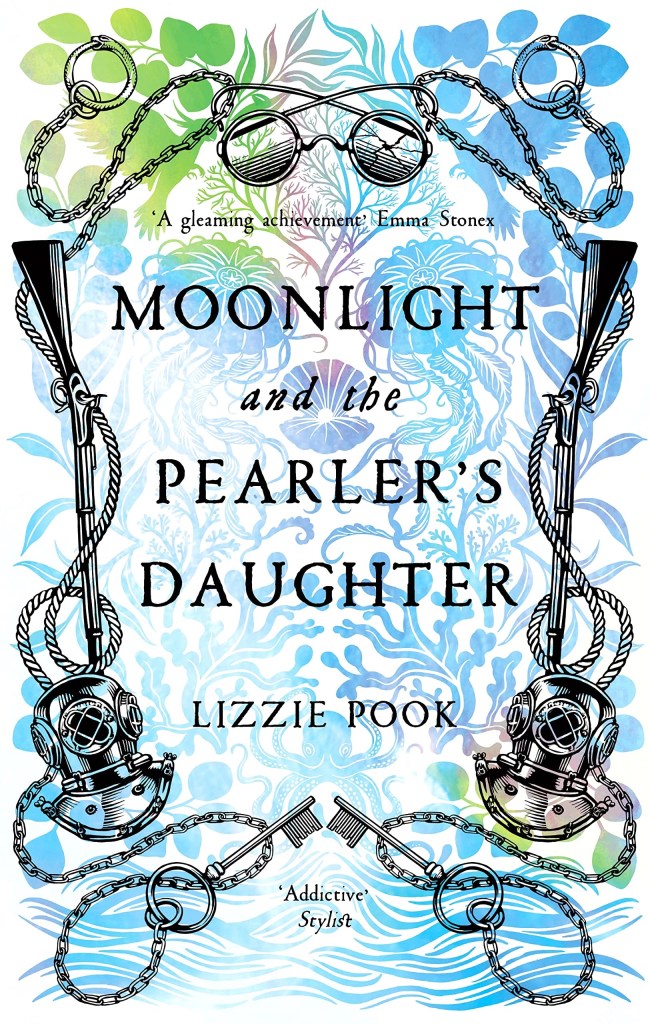
It is 1886 and the Brightwell family has sailed from England to make their new home in Western Australia. Ten-year-old Eliza knows little of what awaits them in Bannin Bay beyond stories of shimmering pearls and shells the size of soup plates – the very things her father has promised will make their fortune. Ten years later, as the pearling ships return after months at sea, Eliza waits impatiently for her father to return with them. When his lugger finally arrives however, Charles Brightwell, master pearler, is declared missing. Whispers from the townsfolk point to mutiny or murder, but Eliza knows her father and, convinced there is more to the story, sets out to uncover the truth. She soon learns that in a town teeming with corruption, prejudice and blackmail, answers can cost more than pearls, and must decide just how much she is willing to pay, and how far she is willing to go, to find them.
This incredible debut is richly atmospheric from the get go, throwing us straight into the strangeness of 19th Century Western Australia as if it is an alien landscape. In fact that’s exactly what it is for the Brightwell family, particularly Eliza whose childhood eyes we see it through for the the first time as, in a particularly disgusting parody of baptism, a bucket of fish guts is thrown into her face. Of course the fisherman apologises for the accident, but we’re left wondering if it’s anything but as he says the words ‘welcome to Bannin Bay’. It foreshadows that immediate imbalance between those who do the work and those who aim to make the money. Eliza’s father has been full of dreams, not just of pearls, but the pearl shells to be turned into buttons, hat pins and pistol handles. Yet their unsuitability for this rough and ready environment can be seen as soon as they arrive in the fine clothing they must keep lifted away from the red earth, especially when compared to the stevedores dirty vests and cut off trousers. Eliza describes her mother as ‘a dragonfly, once resplendent, marooned in a bucket of old slop water.’ Delicate Victorian ladies are not built for this environment that stinks of sweat, fish guts and the mineral tang of sea kelp. With this alien landscape the author creates a vivid backdrop for the incredible historical detail of her story, whilst also creating a mythic, almost fairy tale quality to the story.
Only ten years after the prologue we meet an older Eliza, who’s wiser to the ways of the Bay and has developed into a interesting character. Women are either categorised as polite society -‘white glove wearers’ – or harlots and it’s a source of irritation to most women in the community that Eliza refuses to be either. She is ploughing her own furrow and whereas her friend Min’s childhood dreams develop, from escapades on the high seas to the type of sailor she might marry, Eliza still craves the adventure. She can see no use for a husband, although she doesn’t deny an interest in men, which is quite a scandalous notion even if her main interest is the contents of his library. Eliza’s knowledge of sailing and pearl diving is forensic in its detail and through exploring with her father she has developed a keen interest in the areas flora and fauna too. She is quite unlike the respectable women who still look like wedding cakes in the impossible heat. Her father has been on a voyage for the past three months and a lonely Eliza has been looking forward to his return, but as she sits and waits doubt starts to set in about whether the ship is returning. The light is fading as his lugger appears on the horizon, but her stomach fills with dread when she realises something is wrong. The ship’s flag is at half-mast. When her brother Thomas emerges she learns that her father is gone. While Thomas rushes to secure the business Eliza is left to find out the truth and while she’s told he went overboard, there are also tales of mutiny and murder. Eliza has to visit the sergeant to convince him that she suspects their father’s death was not an accident. Sergeant Archibald Parker is an unpleasant racist and his immediate action is to arrest aboriginal man Billy Balaari, but Eliza is told that Billy wasn’t even on the boat. When Billy escapes, the sergeant is completely focused on finding him, leaving Eliza to do the detective work herself. She finds her father’s diary and eventually sets sail on Father McVeigh’s lugger Moonlight with Axel Kramer and an aboriginal boy called Knife, determined to find the truth of what happened.
I wasn’t surprised to find a very seedy underbelly to the trade where Eliza’s father had hoped the build the family fortune. Where incomers make large amounts of money, there is always exploitation and in this case the workers have a very tough working life. Of course it’s the native Australians who are exploited the most and the author doesn’t pull her punches when it comes to portraying the terrible treatment they receive. Aboriginal families are torn apart as the strong are enslaved for labour on the Pearler’s boats, usually as pearl divers, the most dangerous job on board. The sheer weight of their gear is terrifying as they don lead boots and copper chest plates. It felt so claustrophobic to imagine them sinking slowly to the bottom of the sea, with only a line connecting them to the ship above. The relief of being winched back to the surface must have been tempered by the danger of the bends, caused by the pressure of resurfacing too quickly, forcing organs upward in the body leaving the diver dead or ‘agonisingly crippled’. It made me feel a little bit anxious as I was reading their potential fates. If this wasn’t enough, aboriginals were treated as worthless, beaten and even killed without consequence. Eliza has to negotiate her way through the community’s corruption, violence, blackmail and the criminal elements of the pearling business. All the while reading her father’s diary for clues and guiding us to a cast of fascinating characters, some of which are based on historical figures. I loved Eliza’s early feminist stance and her sense of adventure, not to mention the gripping twists and turns that pull you even deeper into the story. This is a fantastic debut full of life and death, just like it’s setting. The richness and depth of her storytelling marks Lizzie Pook out as a talented writer I’ll keep watching out for in the future.
Published by Mantle Books 3rd March 2022
Meet The Author
Lizzie Pook is an award-winning journalist and travel writer contributing to The Sunday Times, Lonely Planet, Rough Guides, Condé Nast Traveller and more. Her assignments have taken her to some of the most remote parts of the planet, from the uninhabited east coast of Greenland in search of roaming polar bears, to the foothills of the Himalayas to track endangered snow leopards. She was inspired to write Moonlight and the Pearler’s Daughter, her debut novel, after spending time in north-western Australia researching the dangerous and fascinating pearl-diving industry. She lives in London. You can find Lizzie on Twitter and Instagram: @LizziePook.
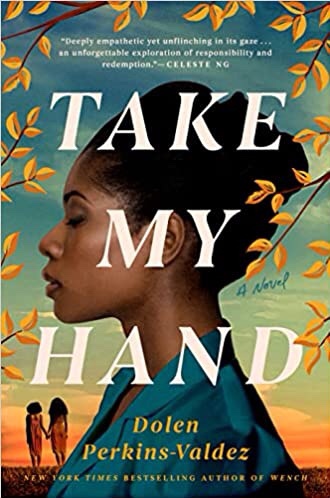
At the age of twelve, Sophie Caco is sent from her impoverished Haitian village to New York to be reunited with a mother she barely remembers. There she discovers secrets that no child shouldever know, and a legacy of shame that can be healed only when she returns to Haiti – to the women who first reared her. What ensues is a passionate journey through a landscape charged with the supernatural and scarred by political violence.
In her stunning literary debut, Danticat evokes the wonder, terror, and heartache of her native Haiti – and the enduring strength of Haiti’s women – with vibrant imagery and narrative grace that bear witness to her people’s suffering and courage.
Reading this incredible debut novel at university sparked a lifelong interest in the history of Haiti and its people. The republic shares the island of Hispaniola with the Dominican Republic and despite only occupying three eighths of the island, it has a staggering population of 11.4 million making it the most populated island in the Caribbean Sea. However, there is a huge Haitian diaspora with many residents relocating to the USA, probably due to the fact that Haiti has the lowest Human Development Index in the world. The indigenous Taino people seem to have been the original residents of the island, but the first European settlers landed in the 1400’s claiming the island for Spain and it remained part of the Spanish Empire until the 17th Century. The French then laid claim to the most westerly point of the island and they brought the first slaves to Haiti for labour on their new sugar plantations. It has the incredible honour of being the first island in the Americas to abolish slavery after a successful slave revolt led by Toussaint Louverture and eventually declared sovereignty on Jan 1st 1894 under his successor Dessalines. As the country slowly united there were attempts to declare the whole island as Haiti, but eventually they recognised the Dominican Republic as a separate state. Haiti has been notoriously unstable due to crippling debt owed to France, the dearth of resources left by the French and Spanish, as well as political volatility. The USA took control of the island in the early twentieth century, until Haitian leader Francois ‘Papa Doc’ Duvalier took power in 1956 and it is this period that is explored in the novel. Papa Doc’s reign and the following rule of his son known as ‘Baby Doc’, was characterized by state-sanctioned violence, against any political opposition and it’s own civilians, corruption, and economic stagnation. It was only after 1986 that Haiti began attempting to establish a more democratic political system.
Danticat’s story is about the women of Haiti, particularly the three generations of Sophie’s family, and how this period of history impacted upon the women of Haiti. Sophie has been brought up by her Tante Atie and this is a beautifully warm relationship that really grounds Sophie in her Haitian identity. They are also incredibly close to her Grandma Ifé who tells Sophie stories passed down orally about people who could carry the sky on their heads. Atie is beautifully conveyed as a loving but slightly abrupt woman, conflicted between the needs created by her own motherlessness and her love for this child who has been left behind. Both Sophie and Atie have a void that each other can fill, but Atie is honour bound not to replace Sophie’s mother and to be sure that her mother’s wishes are carried out. This comes to a head one Mother’s Day when Sophie takes a Mother’s Day card home from school clearly wanting to give it to her aunt, not the woman living thousands of miles away who she’s never met. Danticat is very adept at evoking her homeland with recipes and descriptions of mouth watering food. It’s not been a wealthy upbringing, but it is rich in stories, colour, warmth and nourishment. So when Sophie is sent to live with her mother in New York City the contrast is stark and confusing. Whereas Tante Atie seems comfortable in her skin, Sophie’s mother is shown to diet and use skin lightening creams, showing an obvious discomfort about her body and possibly even her identity as a black Haitian woman.
Men are largely absent in this novel, but their impact is enormous. Maxine lives in an apartment with her boyfriend and Sophie hears her mother’s nightmares through the wall. Left alone for long periods, Sophie forms a friendship with a male neighbour in the apartment block. This seems to trigger Maxine and the truth of Sophie’s family starts to come to light, as her mother becomes obsessed with protecting her. She begins the horrific practice of ‘testing’ her daughters virginity – something apparently passed down from her own mother – causing shame, confusion and trauma. Sophie learns she is a child of rape and we travel back to the Haiti of Maxine’s teenage years where she is spotted by one of the ‘Tonton Macoutes’ – Papa Doc’s foot soldiers and the bogeymen of every Haitian child’s nightmares. He drags Maxine into the sugar cane field and assaults her. It will take a return to Haiti, for both Sophie and her Mother, to bring about healing. Danticat beautifully portrays inter generational trauma and the oppression of women that’s caused by the patriarchal system, but enacted by mothers on their daughters. Daughters who were virgins kept their value in the marriage market, just as in other cultures the men want wives who have undergone FGM. It takes rebellion and refusal from the women to create change. Sophie must also face the the ghosts of slavery, represented by the sugar cane her ancestors were brought from Africa to cut. Danticat paints a vivid, colourful but painful picture of a country created by trauma that is still felt many centuries later. She explores how each new generation must find some way to live with that past, whether by leaving the country of their birth for something different or by staying to face the past and break the chain of hurt each generation has passed on to the next. This is an emotional, evocative and difficult read in parts, but is a beautiful debut from an author whose love of her homeland shines through.
This edition published by Abacus 7th March 1996
Meet the Author
Edwidge Danticat picture from Fresh Air Archive
Edwidge Danticat was born in Haiti in 1969 and came to the United States when she was twelve years old. She graduated from Barnard College and received an M.F.A. from Brown University. She made an auspicious debut with her first novel, Breath, Eyes, Memory, and followed it with the story collection Krik? Krak!, whose National Book Award nomination made Danticat the youngest nominee ever. She lives in New York.
Teenager Alice has escaped a terrible accident that left her friend Ella dead, hit by a lorry and killed outright. Her mum Carla worries about her so much and noticed a huge change in her daughter’s behaviour, even before the accident, but is unsure how to broach the subject and too nervous to push her into moving on in life. Carla doesn’t know how Ella’s parents have coped with her death, but she does know that if Alice had been take from her, she would have fallen to pieces. Constrained by their grief and anxieties, both mum and daughter are too scared to fully live. Then Alice ends up walking Flo’s dog. Flo is in her eighties and knows a thing or two about choosing to live life. She rues spending years married to a man she didn’t love, scared of taking a leap into the unknown till years later when his affair ended the marriage. Alone and free to do anything for the first time, Flo thought back to the example of her friend Lilli at finishing school and decided to take more chances. She’s had a long life with times of pure happiness, but some incredible lows too. Now she lives with her dog, Ernie, and earns a living creating lino prints in her garden studio to sell in local outlets. She can feel the anxiety in Alice and convinces her to try printing. Flo can see that she needs to learn mistakes don’t matter – in fact it’s the mistakes that often make the picture. She encourages Alice into applying for art college, but when that plan is pushed aside for a safer option, Flo knows she needs time with both mum and daughter. So she invites Alice and Carla to travel to France with her and meet her friend Lilli. They have been apart for 60 years, will they still know each other and will that friendship be there after what Flo did?
Flo has been inspired to find Lilli because of a book she wrote based on the girl’s shared past. Through each chapter the author takes us back to when the girls were roommates at finishing school in Lyon. Their families were of a similar class and had only one expectation of their daughters – that they marry well and be ready to run a household. However different Flo and Lilli were on the surface, both were stifled by the minutiae of table settings (three forks on the left of the plate must not be more than one inch from the edge of the table) flower arranging and party planning. Yet only one of them had the courage to risk her family’s wrath for some freedom and adventure. When Lilli meets a young man named Hugo there’s a spark between them, but the school would never allow them to meet. She uses her brother to write a letter, granting permission for her to be taken out once a week by their cousin. The couple are now allowed out more easily and spend their stolen afternoons in bed more often than not. A young woman called Celeste who is in the same circles, takes Lilli aside and warns her that Hugo might not be as in love as he seems. A warning that Lilli brushes aside, thinking Celeste is perhaps jealous. It isn’t long before she finds out that men can often walk away from an affair unscathed and women are left with the consequences.
I loved how these fundamental inequalities in society are picked up in the novel – that women are held to account, while men can simply move on and pick their next mark. I felt the fear of Flo and Lilli, terrified to step outside the rigid lines that their society dictates, but also full of regret for the time they wasted being conventional. I thought the author had a brilliant grasp of human psychology, showing beautifully how mental ill health can be passed on to the next generation. Carla is so fearful I sometimes found myself wincing as she spoke to her daughter, because I could see the damage her words would do. She’s so intent on protecting her daughter that she’s actually harming her. The sense of place created, whether in the surroundings of the artist studio or the incredible heat of the South of France, is incredible and so evocative. The stunning setting of Lilli’s home is idyllic and made me want to visit France. Aside from the character of Hugo, this is a novel peopled by women and it was great to see such a celebration of female friendship. Even Celeste, in her way, had tried to be a friend to Lilli and share some female wisdom. I loved how the author showed, with the benefit of hindsight, how important that shared wisdom is. Often we only see the benefits of learning from the women around us when we’re older. I also enjoyed the age difference between these friendships. This allowed the older friends learn about things that are current and new. Whereas the wisdom and past experience of the older friend filters down and supports the younger. Flo wants to make sure that neither Carla or Alice live in fear of their future, like she did. What she most admired about her friend Lilli was that she always took responsibility for her actions, even when the outcome was going to cause difficulty or even change her life forever. She simply embraced every challenge that came along. I read this so quickly, because I simply couldn’t tear myself away from the story of these four women. This book is beautifully written, moving and really celebrates the joy of female friendship.
Meet The Author
Caroline Bishop began her journalism career at a small arts magazine in London, after a brief spell in educational publishing. She soon moved to work for a leading London theatre website, for which she reviewed shows and interviewed major acting and directing stars. Caroline turned freelance in 2012 and a year later moved to Switzerland, where her writing veered towards travel and she has contributed to publications including the Guardian, the Independent, the Telegraph and BBC Travel, writing mainly about Switzerland, and co-wrote the 2019 edition of the DK Eyewitness Guide to Switzerland. For two years Caroline was editor of TheLocal.ch, an English-language Swiss news site, and it was during this time that she became fascinated with aspects of Swiss history and culture, particularly the evolution of women’s rights.
When Tartelin Brown accepts a job with the reclusive Marianne Stourbridge, she finds herself on a wild island with a mysterious history. Tartelin is tasked with hunting butterflies for Marianne’s research. But she quickly uncovers something far more intriguing than the curious creatures that inhabit the landscape. Because the island and Marianne share a remarkable history, and what happened all those years ago has left its scars, and some terrible secrets. As Tartelin pieces together Marianne’s connection to the island, she must confront her own reasons for being there. Can the two women finally face up to the painful memories that bind them so tightly to the past?
I found the last chapter of this new novel incredibly moving and I was smiling through tears as I closed the book.
Polly Crosby you ruined me for other books, for at least a couple of days!
Marianne’s memories of the island take us back to the years between WW1 and WW2, when she lived in the same family home with her mother and father. The Stourbridges were the guardians of the island, through her mother’s side of the family. However, it was Marianne’s father who had taken control of the island and it’s resources. Her family were rich, relying on herrings and pearls to keep their fortunes buoyant and providing work for the islanders. Under Mr Stourbridge’s control the businesses were losing money so he needed to diversify, and settled on silk-making as a way out of difficulty. Mulberry trees and silkworms arrived on the island and Marianne was researching to find out how to produce the best silk thread, but didn’t know that her father had hired a silk girl to come and start things. Nan came to live in their house and although the girls built a friendship, Marianne missed time with her father which was now being sacrificed for Nan and the silk worms. I had so many thoughts and questions in my head by this point. How had the family’s fortunes changed so drastically? How sad it must be for Marianne’s mother to watch her family businesses taken from her and mismanaged simply because she was a woman. Who was Nan and why was she dominating so much of Mr Stourbridge’s time? The author drip feeds these memories into the present day story, answering some questions but leaving others so I was always waiting for the next memory to know what happened next. There was a growing tension in the house that led me to believe an explosion was coming, something that would change Marianne”s life forever. Each section shed light on something in the present day, but I wanted the whole story of why Marianne was so alone in her old age, when did her family leave the island but most of all why was the island requisitioned?
I loved the sense of the uncanny that the author created; a feeling that life on the island was like real life, but not quite. There are strange, unfinished or half destroyed buildings, eroded cliffs and houses that have been literally swallowed up by the sea. Tartelin’s island has a feel of dilapidated grandeur in it’s buildings. They must have once been extravagant and beautiful, like the pavilion where Tartelin meets the peacock, but slowly being broken down and reclaimed by the sea. This is a strong theme throughout the novel, the idea that nature will always find a way, like a flower growing from a tiny crack in the pavement. I found Marianne a fascinating character with the manner of someone very intelligent and far too busy to be bothered with trifles. Her exterior as this grumpy old woman probably brushes most people off, but Tartelin is more persistent than most. Watching these two women slowly learning to trust and understand one another was a joy. Marianne’s story, as it is revealed, moved me beyond words. Even though there’s a fantastical, dream-like quality to her recollections the emotions ring true and are devastating to witness. However, I also felt an incredible sense of joy over the ending too. This novel is evocative and bittersweet, full of rich detail and interesting women. I have no hesitation in recommending all of Polly Crosby’s writing, but this is extraordinary and will stay with me forever.
Published by HQ on 6th Jan 2022
Meet The Author
Polly Crosby grew up on the Suffolk coast, and now lives with her husband and son in the heart of Norfolk. Her debut novel, The Illustrated Child (The Book of Hidden Wonders in the US and Australia) is out now. Polly’s second novel, The Unravelling will be published in January ‘22.
In 2018, Polly won Curtis Brown Creative’s Yesterday Scholarship, which enabled her to finish her novel. Later the same year, The Illustrated Child was awarded runner-up in the Bridport Prize’s Peggy Chapman Andrews Award for a First Novel. Polly received the Annabel Abbs Creative Writing Scholarship at the University of East Anglia, and is currently working on her third novel.
This has been one of my most anticipated novels for this year, then it’s publication date was changed to January 2022 and I was going to have to wait a bit longer. I finally snagged a copy on NetGalley last week, and its no surprise that I started to read it straightaway. Was it worth the wait?
This is the fourth and final book in Hoffman’s Practical Magic series and it really does come full circle. We have three generations of Owen’s sisters in this tale: Franny and Jet, Gillian and Sally, and finally Sally’s daughters Kylie and Antonia. In fact this really does take us full circle, rather like the symbol of the Ourobos, a snake swallowing its own tail which is, rather aptly, the symbol of dark magic. So, here we have those Owenses who have dabbled as practitioners of the dark arts, such as Franny and Jet’s brother Vincent. Could one of the younger members of the family be heading down that dark route and what would call them there?
Regular readers will know that the curse of the Owens family is lodged in the love part of their lives. This was a curse placed by Maria Owens who knew the truth of how women might become undone by men. The various family members have found their own ways of circumventing the worst of the curse, after Jet lost her true love as a teenager. Gillian is married, but she doesn’t live with Ben or wear a wedding ring. Sally has lived with a man but lost him very young and the heartache has closed her to that part of life. Now all she cares for are books. Antonia is married to her work as a doctor, but is having a baby with her gay best friend. However, for their youngest, Kylie, love has been part of her life for a long time. She is inseparable from her best friend Gideon but they have never spoken of their love for each other. Till now. Two losses happen to Kylie at once. The death watch beetle is clacking in the walls of the house on Magnolia Street where Sally, Kylie and both elderly aunts reside still. They have barely said their goodbyes, when Kylie’s Gideon is in a terrible accident and is so badly injured he is in a coma.
Kylie takes matters into her own hands and is drawn to a hidden Grimoire in the Owens Library. A Grimoire is a witches personal journal and book of magic. Kylie believes this book has the answer to ending the Owen’s curse, but the final pages are stuck together and she can’t enact the spell. Kylie returns to where the Owens story starts, in the original Essex county in England. Here she hopes to find the secret to opening the last pages of the book, but there are two warnings attached to her quest. She mustn’t trust the wrong person and if she is the one to overturn the curse, she must be prepared to lose everything. However, when Kylie is in danger, it will take Franny, Sally and her uncle Vincent to join the quest. Which one of them is the key to end the curse? And what price will they need to pay?
I struggled with the first few chapters of the book, but that might have more to do with me trying to read it Christmas week, when having a prolonged time to sit and read is impossible. Once I could spend some time with the story I really started to enjoy it. I welcomed the cross generational aspect to the story, and those reminders of everything that had gone before. From Levi Willard’s teenage love for Jet, Vincent’s years in NYC as a musician and all the way back to Maria Owens and her difficulties accepting the love of Samuel several centuries earlier. There are seeds of hope, as new life comes into the family, as Antonia’s love for Ariel takes her by surprise and new familiars seek out their human counterparts. Sally has always been interesting to me and her continued tightrope walk between the magic that is her birth right and her need to stay under the radar and keep her girl’s safe. The women are always treading a line between the future they are born with, shown on the right palm and the future they choose, shown on the left. I loved how her story ended, it felt satisfying and even full of hope, given the heartache that went before.
What stood out loud and clear was, that despite being cursed in love, the love the women have for each other is a blessing. In particular, Franny and Jet’s love for Sally and Gillian. Brought to the crooked house as small orphans, the aunts loved their nieces as their own and taught them everything they needed to be safe and understand the magic they were born with. Any trouble or danger brought both aunts running to help and protect them, even into their old age and especially in this story. This love stands out stronger than any other in all four books and never dies. Everything I love about Hoffman is there, her wonderful descriptions of nature and the women’s links to the natural world. Her descriptions of spells and their effects are fantastical and so vivid, especially the menacing red rain poisoning a whole community. I love that the books celebrate strong women, who support each other and their right to be individuals. This is a fitting end to a series that begins chronologically with persecution, betrayal and death. It ends with a sense of the Owens family being part of a community, playing a bigger part in the world and learning how to utilise their magic in harmony with the world.
Published by Scribner U.K. 6th Jan 2022.
Meet The Author.
Alice Hoffman is the author of thirty works of fiction, including Practical Magic, The Red Garden, The Dovekeepers and, most recently,The Museum of Extraordinary Things. She lives in Boston. Visit her website: http://www.alicehoffman.com
There are just so many books coming out next year that I’m really looking forward to reading, with some really gorgeous cover designs too. I. Lucky enough to have early access to all of these bar two, so I’ll be reading and reviewing in the coming weeks. Keep your eyes peeled and get some of these crackers on your TBR list.
House of Fortune by Jessie Burton.
I fell in love with Burton’s debut novel The Miniaturist at first page and I am in awe of her imagination and skill. As other readers of the novel will know, many questions remained unanswered at the end of the story, and while I don’t mind books having loose ends, when I heard a sequel was coming I let out a little squeal. We are still in the golden city of Amsterdam, but now it is 1705. Thea Brandt is turning eighteen, and she is ready to welcome adulthood with open arms. At the city’s theatre, Walter, the love of her life, awaits her, but at home in the house on the Herengracht, all is not well – her father Otto and Aunt Nella argue endlessly, and the Brandt family are selling their furniture in order to eat. On Thea’s birthday, also the day that her mother Marin died, the secrets from the past begin to overwhelm the present.
Nella is desperate to save the family and maintain appearances, to find Thea a husband who will guarantee her future, and when they receive an invitation to Amsterdam’s most exclusive ball, she is overjoyed – perhaps this will set their fortunes straight. And indeed, the ball does set things spinning: new figures enter their life, promising new futures. But their fates are still unclear, and when Nella feels a strange prickling sensation on the back of her neck, she remembers the miniaturist who entered her life and toyed with her fortunes eighteen years ago. Perhaps, now, she has returned for her . . . I can’t tell you how excited I am to find out how Nella is getting on. Maybe the mystery of who the miniaturist is, and what they want, might be solved?
Published by Picador 7th July 2022
Sundial by Catriona Ward
When writers like Alex Michaelides and Emma Stonex are giving rave reviews of a book, it’s always worth a look. Last year’s novel, The Last House on Needless Street, was incredibly unusual and original. That alone would make me want to look at Ward’s second novel.
You can’t escape the desert. You can’t escape Sundial.
Rob fears for her daughters. For Callie, who collects tiny bones and whispers to imaginary friends. For Annie, because she fears what Callie might do to her. Rob sees a darkness in Callie, one that reminds her of the family she left behind. She decides to take Callie back to her childhood home, to Sundial, deep in the Mojave Desert. And there she will have to make a terrible choice.
Callie is afraid of her mother. Rob has begun to look at her strangely. To tell her secrets about her past that both disturb and excite her. And Callie is beginning to wonder if only one of them will leave Sundial alive…
Published by Viper 10th March 2022.
Insomnia by Sarah Pinborough.
In the dead of night, madness lies…
Emma can’t sleep. CHECK THE WINDOWS. It’s been like this since her big 4-0 started getting closer. LOCK THE DOORS. Her mother stopped sleeping just before her 40th birthday too. She went mad and did the unthinkable because of it. LOOK IN ON THE CHILDREN. Is that what’s happening to Emma?
WHY CAN’T SHE SLEEP?
This is an absolutely brilliant domestic noir that keeps you on the edge of your seat to the very end.
Published by Harper Collins March 31st 2022.
Absynthe by Brendan P. BelleCourt.
The Great War has been over for years, and a brave new world forged. Technology has delivered the future promised at the turn of the century: automata provide, monorail trains flash between mega-cities, medicine is nothing short of magical.
Liam grew up poor, but now working for one of the richest families in Chicago, he reaps the benefits of his friendship with the family’s son and heir. That’s why he’s at Club Artemis. It’s a palace of art-deco delights and debauchery, filled to bursting with the rich and beautiful – and tonight they’re all drinking one thing. Absynthe. The green liquor rumoured to cause hallucinations, madness, even death.
While the gilded youth sip the viridescent liquid, their brave new world is crumbling beneath its perfect surface. Their absynthe is no mere folly. Some it kills, others it transforms. But in Liam something different has taken place. A veil has lifted and he can see the world without its illusion – and it isn’t the perfect world the government want the people to believe. As soon as I read the premise of this novel I was hooked and I’ve just been accepted on NetGalley I’m itching to get to it.
Published – Head of Zeus 9th Dec 2021
Outside by Ragnar Jónasson.
Four friends. One night. Not everyone will come out alive . . .
In the swirling snow of a deadly Icelandic storm, four friends seek shelter in a small abandoned hunting lodge. Miles from help, and knowing they will die outside in the cold, they break open the lock and make their way inside, hoping to wait out the storm until morning.
But nothing can prepare them for what they find behind the door . . .
Inside the cabin lurks a dangerous presence that chills them to their core. Outside, certain death from exposure awaits. So with no other option, they find themselves forced to spend a long, terrifying night in the cabin, watching as intently and silently as they are being watched themselves.But as the evening darkens, old secrets are beginning to find their way to the light. And as the tension escalates between the four friends, it soon becomes clear that the danger they discovered lurking in the cabin is far from the only mystery that will be uncovered tonight. Nor the only thing to be afraid of . . .
I love Nordic Noir and this author builds his literary worlds so carefully and his characters are multi-dimensional, complex and real. Once I’m a few chapters in it feels so real to me that I’m utterly immersed. This appeals to my psychologist brain. I’m dying to dissect these characters and their dynamic as they are trapped together.
Published by Michael Joseph 28th April 2022.
Miss Aldridge Regrets by Louise Hare.
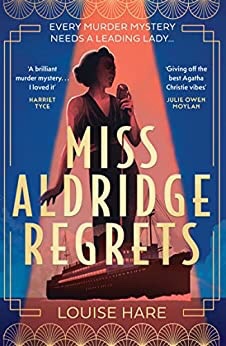
I’ve been waiting to see what Louise Hare would write next after loving her novel The Lovely City. This looks like a fantastic second novel and I adore that cover too. Opening in London in 1936, Lena Aldridge is wondering if life has passed her by. The dazzling theatre career she hoped for hasn’t worked out. Instead, she’s stuck singing in a sticky-floored basement club in Soho and her married lover has just left her. She has nothing to look forward to until a stranger offers her the chance of a lifetime: a starring role on Broadway and a first-class ticket on the Queen Mary bound for New York. After a murder at the club, the timing couldn’t be better and Lena jumps at the chance to escape England. Until death follows her onto the ship and she realises that her greatest performance has already begun. Because someone is making manoeuvres behind the scenes, and there’s only one thing on their mind…Murder.
Miss Aldridge Regrets is the exquisite new novel from Louise Hare, the author of This Lovely City. A brilliant murder mystery, it also explores class, race and pre-WWII politics, and will leave readers reeling from the beauty and power of it.It’s next on my TBR so I’ll be reviewing soon.
Published by HQ 28th April 2022.
The Paris Apartment by Lucy Foley.
Welcome to No. 12 Rue des Amants. This book has been popping up all over #BookTwitter and I feel very privileged to have an early copy. I love a good thriller, it tends to be the genre I go to when I’m very busy with my MA or just have a lot on at home. For some reason, that I’m not prepared to look at too closely, I find thrillers relaxing. This one is set in a beautiful old apartment block, far from the glittering lights of the Eiffel Tower and the bustling banks of the Seine. Where nothing goes unseen. And everyone has a story to unlock. Our characters are the watchful concierge, the scorned lover, the prying journalist and the naïve student. But there’s also an unwanted guest. Something terrible happened here last night. A mystery lies behind the door of apartment three.Only you – and the killer – hold the key . . . I’m sure I’m going to be bleary eyed one morning from reading this till 2am.
Published by Harper Collins 3rd March 2022.
Saint Death’s Daughter by C.S.E Cooney
Nothing complicates life like Death. I noticed this book about two months ago and begged the publisher for a proof! Sometimes I have no shame. As soon as I read the short blurb I knew I wanted to read it and I’m excited at the thought that this is only the first in a new series. Lanie Stones, the daughter of the Royal Assassin and Chief Executioner of Liriat, has never led a normal life. Born with a gift for necromancy and a literal allergy to violence, she was raised in isolation in the family’s crumbling mansion by her oldest friend, the ancient revenant Goody Graves. When her parents are murdered, it falls on Lanie and her cheerfully psychotic sister Nita to settle their extensive debts or lose their ancestral home―and Goody with it. Appeals to Liriat’s ruler to protect them fall on indifferent ears… until she, too, is murdered, throwing the nation’s future into doubt. Hunted by Liriat’s enemies, hounded by her family’s creditors and terrorised by the ghost of her great-grandfather, Lanie will need more than luck to get through the next few months―but when the goddess of Death is on your side, anything is possible. I am always surprised by the amount of fantasy I read and while I don’t consider myself an expert on the genre, out of the books I love, a good third are fantasy novels. I’m hoping this one might join them.
Published by Solaris 14th April 2022.
The Unravelling by Polly Crosby.
This one is coming very soon, in early January in fact, since the publication date was pushed back from this year. I fell completely in love with her writing when I finally read The Illustrated Child a few months ago. The only reason it didn’t make my books of the year was because I was so late reading it; it was published in 2020. My anticipation for this one has been building and I hope to get to read it over the Christmas holidays. Also when the author of The Binding gives a book a great review, I know I’m going to love it.
’Like a surreal cabinet of curiosities – haunting, eerie, evocative’ Bridget Collins, Sunday Times bestselling author of The Binding
When Tartelin Brown accepts a job with the reclusive Marianne Stourbridge, she finds herself on a wild island with a mysterious history. Tartelin is tasked with hunting butterflies for Marianne’s research. But she quickly uncovers something far more intriguing than the curious creatures that inhabit the landscape. Because the island and Marianne share a remarkable history, and what happened all those years ago has left its scars, and some terrible secrets.As Tartelin pieces together Marianne’s connection to the island, she must confront her own reasons for being there. Can the two women finally face up to the painful memories that bind them so tightly to the past?
Published by HQ 6th Jan 2022.
The Christie Affair by Nina de Gramont.
I’m currently writing a review for this interesting novel and I can honestly say it’s a cracker. I loved the mix of factual events and fictional story, as well as the way the novel veered from historical, to romance and to murder mystery. You won’t want to put it down.
In 1926, Agatha Christie disappeared for 11 days. Only I know the truth of her disappearance. I’m no Hercule Poirot. I’m her husband’s mistress.
Agatha Christie’s world is one of glamorous society parties, country house weekends, and growing literary fame. Nan O’Dea’s world is something very different. Her attempts to escape a tough London upbringing during the Great War led to a life in Ireland marred by a hidden tragedy. After fighting her way back to England, she’s set her sights on Agatha. Because Agatha Christie has something Nan wants. And it’s not just her husband. Despite their differences, the two women will become the most unlikely of allies. And during the mysterious eleven days that Agatha goes missing, they will unravel a dark secret that only Nan holds the key to . . .The Christie Affair is a stunning novel which reimagines the unexplained eleven-day disappearance of Agatha Christie in 1926 that captivated the world.
Published by Mantle, 20th Jan 2022.
Peach Blossom Spring by Melissa Fu.
I have to say that the cover of this beautiful proof sung out to me when it dropped through my letterbox. This is one of those novels where I’ve already pre-ordered the finished copy even though I have this one. It’s quite simply stunning.
With every misfortune there is a blessing and within every blessing, the seeds of misfortune, and so it goes, until the end of time.
It is 1938 in China, and the Japanese are advancing. A young mother, Meilin, is forced to flee her burning city with her four-year-old son, Renshu, and embark on an epic journey across China. For comfort, they turn to their most treasured possession – a beautifully illustrated hand scroll. Its ancient fables offer solace and wisdom as they travel through their ravaged country, seeking refuge. Years later, Renshu has settled in America as Henry Dao. His daughter is desperate to understand her heritage, but he refuses to talk about his childhood. How can he keep his family safe in this new land when the weight of his history threatens to drag them down? Spanning continents and generations, Peach Blossom Spring is a bold and moving look at the history of modern China, told through the story of one family. It’s about the power of our past, the hope for a better future, and the search for a place to call home.
Published by Wildfire 17th March 2022.
The Book of Magic by Alice Hoffman.
This is my current read and it’s not surprising that I’m enjoying it, since Hoffman is one of my favourite authors. The Owens family started their literary lives in Practical Magic as we followed orphaned sisters Sally and Gillian as they are sent to live with their eccentric aunts Jet and Franny. There are rumours about the aunts. They live in a crooked house on the edge of town, with a well-stocked herb garden and a light above the door that alerts local women to when they are available for consultation. This might be for women’s health problems, but more often for reasons of love. This is ironic since the Owens women are born in a genetic line that’s cursed in the pursuit of love. Every woman in the family has tried a way round the curse, but if ever love is found, it can just as easily be lost. In this fourth and final book in the series we move forward, after two prequel novels, to Jet and Franny’s old age. When the deathwatch beetle starts clicking in the family home, one of the Owens women knows that their time is up. As the generations gather, Sally’s daughters have to face the truth of the family curse. So a quest begins to change this generation’s luck in love, but do the girls have the power within them or will they venture into darker magic?
Published by Scribner 6th January 2022.
The Key in the Lock by Beth Underdown.
I was a little bit giddy to open my book mail a couple of days ago and find an unexpected copy of this book. I’ve been talking about it since Halloween so it’s definitely time I read it.
I still dream, every night, of Polneath on fire. Smoke unravelling from an upper window, and the terrace bathed in a hectic orange light . . . Now I see that the decision I made at Polneath was the only decision of my life. Everything marred in that one dark minute.
By day, Ivy Boscawen mourns the loss of her son Tim in the Great War. But by night she mourns another boy – one whose death decades ago haunts her still. For Ivy is sure that there is more to what happened all those years ago: the fire at the Great House, and the terrible events that came after. A truth she must uncover, if she is ever to be free. But once you open a door to the past, can you ever truly close it again?From the award-winning author of The Witchfinder’s Sister comes a captivating story of burning secrets and buried shame, and of the loyalty and love that rises from the ashes.
Published by Viking 13th January 2022.
A Lady’s Guide to Fortune Hunting by Sophie Irwin.
This novel has quite recently appeared on the radar but looks like a really enjoyable read. I’ve just had NetGalley approval and it’s taking all my willpower to read my January blog tours first! The season is about to begin and there’s not a second to lose. Kitty Talbot needs a fortune. Or rather, she needs a husband who has a fortune. This is 1818 after all, and only men have the privilege of seeking their own riches. With only twelve weeks until the bailiffs call, launching herself into London society is the only avenue open to her, and Kitty must use every ounce of cunning and ingenuity she possesses to climb the ranks. The only one to see through her plans is the worldly Lord Radcliffe and he is determined to thwart her at any cost, especially when it comes to his own brother falling for her charms. Can Kitty secure a fortune and save her sisters from poverty? There is not a day to lose and no one – not even a lord – will stand in her way…
Published by Harper Collins 12th May 2022
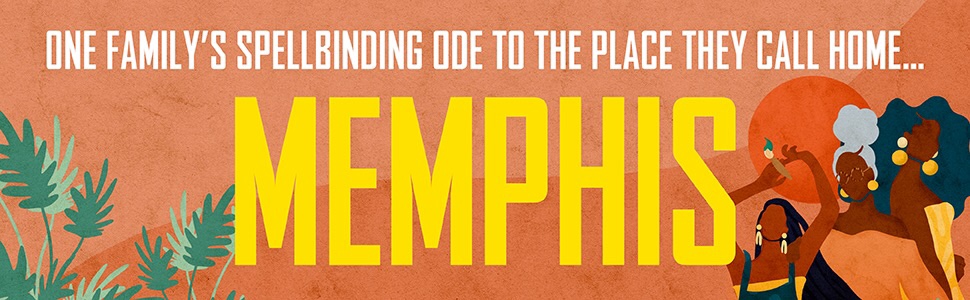
Memphis by Tara M. Stringfellow.
Joan can’t change her family’s past. But she can create her future.
Joan was only a child the last time she visited Memphis. She doesn’t remember the bustle of Beale Street on a summer’s night. She doesn’t know she’s as likely to hear a gunshot ring out as the sound of children playing. How the smell of honeysuckle is almost overwhelming as she climbs the porch steps to the house where her mother grew up. But when the front door opens, she does remember Derek. This house full of history is home to the women of the North family. They are no strangers to adversity; resilience runs in their blood. Fifty years ago, Hazel’s husband was lynched by his all-white police squad, yet she made a life for herself and her daughters in the majestic house he built for them. August lives there still, running a salon where the neighbourhood women gather. And now this house is the only place Joan has left. It is in sketching portraits of the women in her life, her aunt and her mother, the women who come to have their hair done, the women who come to chat and gossip, that Joan begins laughing again, begins living. Memphis is a celebration of the enduring strength of female bonds, of what we pass down, from mother to daughter. Epic in scope yet intimate in detail, it is a vivid portrait of three generations of a Southern black family, as well as an ode to the city they call home.

When I was asked if I’d like to join the blog tour for a book about a suffragette I thought I pretty much knew what to expect. When I received my copy and I read the blurb on the inside cover I was really excited. First of all she was a Northerner like me and even better, she threw a black pudding at an MP. That’s about as Northern as it gets. Everything we’re taught about the movement focuses on the Pankhurst’s and the rallies based in London. What this author does is reframe the movement to the North West, where Edith Rigby founded the Preston branch of the Women’s Social and Political Union. In doing this, the author reminds us that this was a nationwide movement, but also introduces us to a fascinating woman who was ahead of her time.
This is a well written and well researched autobiography about a fascinating woman who wouldn’t be told what her place was. Born to a lower middle class family in Preston, Lancashire, they lived in a dual purpose house which was part home and part doctor’s surgery where her father was doctor to the local mill working community. I enjoyed learning about how Edith grew up, because it was possibly this stable and happy environment that influenced her thirst for knowledge, individuality and equality. She saw how gender, and particularly class, affected children’s future circumstances and because she was so caring she went out of her way to help – even saving up her pennies to give gifts to local children on Christmas morning. While her actions within the Suffragette movement were fascinating reading, I really found the other aspects of her life interesting too. She was the first woman in her area to ride a bicycle and persisted in riding it, despite being heckled and pelted with vegetables, and even preached against by the local vicar. She liked the freedom her own transport gave her. Luckily, she found a man who enjoyed her vivacious and free spirit because she set out her stall from the wedding day. She was also adamant she was keeping her Christian name, so that instead of being named Dr and Mrs Charles Rigby they became Dr Charles and Mrs Edith Rigby. Having kept my own surname when married I felt a kinship with Edith and I also share her love of North Wales. Her determination to live by her principles was inspiring and it’s clearly this that informed her work with the school for young women that she founded. It also inspired the lengths she went to for the suffragette cause including arson, planning a bombing in Liverpool and going on hunger strike in prison. I applaud the author for bringing this incredibly strong woman to our attention and I recommend the book highly.
This was a complicated and fascinating book about art, but also how difficult the relationship can be between mothers and daughters.. I really believed in this story and it’s portrayal of the difficulties in making art. I was not surprised to read that the author had been an art writer, because of the detail and truth in the process of creating. Set in the art world of NYC, Lisa is a painter in the Abstract Expressionist era of the 1950s. She starts to be sidelined when she becomes pregnant, but truly believes she can be a mother and still create great art. Studying in NYC is a dream and I think she really felt she’d found her people, her tribe. Fellow artist and lover Hank, goes up against her for an exhibition and is surprised when it’s Lisa’s work that really gets noticed. We then jump to 1966.
When her daughter Rouge was born, Lisa found herself butting up against the male dominated art world, surprised to find it quite conventional after all. I loved the feminist take on what we imagine to be a fairly free and bohemian world. It was an area of life that I’d imagined had less barriers. I really felt for Lisa and understood her disillusionment when her ex-lover is suddenly a new darling of the movement. Especially considering how similar their work is. The psychological effects of this realisation include resentment building between mother and daughter. The resentment is felt, even where it isn’t knowingly expressed or acknowledged. Lisa ends up teaching in college to pay the bills, she also starts to drink more heavily and take risks. Years later, when her daughter Rouge takes an interest in art she chooses photography as her medium. She looks for a mentor and finds Ben Fuller, who happens to be one of Lisa’s old lovers. This acknowledgment, and from a male member of the art world, adds another layer of resentment between mother and daughter. If Rouge’s photography is going to be noticed, how will Lisa cope and what lengths will she go to in order to deal with these negative feelings? Would she consider sabotage?
When she was pregnant Lisa could have chosen another road, she could have walked through a door of her choosing and be living a different life. She hasn’t intentionally made Rouge feel unwanted, but the choice to stop creating art held within it so much self-sacrifice, that it’s some unconscious negativity and even anger has come through to her daughter. Now her daughter is going to take the acclaim that Lisa feels is rightfully hers. However, Rouge is also angry, about the drinking and the revolving door of lovers who come in and out. She is so dismissive of her mother’s choices that she’s very surprised to find one of these lovers had anything useful to teach her. If her photography is good enough, she can imagine doors opening for her. It could be an escape from home and her mother.
I loved that all those elements and difficulties of a woman creating are expressed through Lisa’s world and it’s likely the author has felt similar constraints herself – they haven’t really gone away half a century later. I still feel guilty if I’m writing instead of doing the housework, or doing something for the family. I even find it hard to tell friends I can’t see them because I’m writing. Writing isn’t seen as real work until you’re published, but if you can’t write that never happens. Everyone thinks it can just be moved to tomorrow, and I know I’m not alone in putting it off. Some of that could be imposter syndrome, but it’s also saying it out loud. If I tell people I’m writing, then it’s real with all it’s chance of failure. However, the difference between the 1950s and the 1960s is a huge one culturally, There’s the pill for a start, leaving women in developed countries in charge of their own fertility. Between that and the more permissive attitudes in society it’s clear to see why Lisa would feel there is a huge gap between her generation and her daughter’s. Rouge is free to network and really sell herself. She can curate her own image as an artist, whereas mothers already have one. The author depicts the artistic journey so well – that imposter syndrome, the dreams, the crushing reality and self-sabotage are all seen in these two women. The author shows, quite beautifully, how mothers and daughters misunderstand each other: not knowing the cultural differences between their generations; not even understanding, never mind appreciating, the sacrifices made and the love behind them. This book is about that distance between mothers and daughters, a distance that can only be bridged through openness and honesty, as well as space and time. This was a fascinating and psychologically complex read.
Meet The Author.
Lis Bensley is a writer living in Santa Cruz, CA. She has worked as a journalist at The New York Times and The International Herald Tribune, when she lived in Paris and studied cooking at the Cordon Bleu. Subsequently she wrote The Women’s Health Cookbook. To entertain her children, she wrote The Adventures of Milo & Flea about the antics of their cat and dog. She is currently hoping to publish her novel The Glimpse and is working on sequels to the Milo and Flea story.
I hadn’t heard of Cecily Neville and wasn’t exactly sure where she was within the characters I already knew in the period just before the cousin’s wars better known as The Wars of the Roses. I was familiar with women like Jacquetta Rivers, Elizabeth Woodville and Warwick, The Kingmaker, from my reading of Philippa Gregory. I was also aware of Anne Neville and Isobel Neville, Warwick’s daughters, who married the Duke of Clarence and Duke of York, later to become Richard III. I hadn’t realised that Cecily Neville was the mother to both those boys and King Edward IV. I was only a few chapters in before I realised that Cecily and I share a grandmother (well to me a great-grandmother goodness knows how many generations ago) Katherine Swynford. In fact Katherine lived around five miles from me, at both Torksey Castle and Kettlethorpe Hall in Lincolnshire. She was mistress, then wife of John of Gaunt and for a short period was Queen of England. One of her daughters, Joan, is the mother of Cecily Neville. The pair, Katherine and Joan, are buried not ten minutes from where I write this, in Lincoln Cathedral. There is something very exciting in reading about your ancestor, so it did change the experience of the book for me.
The opening scene, at the burning of Joan of Arc, is one of the most powerful I have ever read. Cecily narrates in the first person:
‘It’s no easy thing, to watch a woman burn. A young woman, who has seen only three more summers than yourself and claims the voice of God compels her actions. But there it is; the day’s work. And she must harden herself to it.’
It sets the scene for the rest of the novel perfectly, it gives us a jolt and prepares us for how brutal this period of history was. It gives us a sense of how women are treated, especially those who explicitly disdain the rules of society. Joan of Arc didn’t play by the rules. Cecily is determined to shape her own future, but though words and ideas instead of action. Court is a deadly game of chess and Cecily is always on her guard. Make no mistake this is a woman’s side of court life. Where her ideas and beliefs are put across, whether at the King’s council or on the battlefield, only men are present. We hear about battles through messengers, and the men left standing afterwards. We hear about the King meeting his council through Cecily’s husband Richard. Yet the idea starts when both of them talk last thing at night or out hunting, just the two of them so no one else can hear. Cecily campaigns through letters, befriending influential women and petitioning the Queen – although in this case she believes the Queen is truly the one in charge anyway.
Without her husband Richard though, Cecily would have no avenue to pursue her plans. This is an arranged marriage, as we see in the book the family are already marrying off their eldest daughter at the age of 10. After the ceremony, the young bride and groom go back and live with their families until the age of fourteen or fifteen when the bride and groom go to live in their marital home together. So, Cecily would have had the same rules apply to her match. Luckily it appears to have been a good match, in business and pleasure. Most importantly for Cecily, Richard regards her as an equal and listens to her in courtly and political matters. His respect for her, which seems unusual for the time, means that the men of her household and her sons listen to her as well. They value her judgement and her ability read a situation and the people involved. However, being a courtier isn’t an easy life. I won’t reveal the plot, but I will say that when you’re at the beck and call of a King, you have to hope that King is of good judgement and sound mind.
One aspect that really stood out to me, was that all the women are deeply affected by their fertility, or lack of it. Cecily and Richard have been married for eight years at the start of the book, but still haven’t had a living child. In fact by the end of the book, I couldn’t keep up with how many times she had been pregnant. There is a period in the middle of the book where she realises she’s been pregnant for the majority of the last few years. I was also surprised by the breadth of the families, with mothers still being pregnant at the same time as their elder daughters. When any woman in the book delivers a son I could feel their relief. Everything must be inherited by a son, who continues that aristocratic line. These years of wrangling over who has the strongest claim to the throne, as well as the death of his own elder brother, make sense of Henry VIII’s obsession to produce an heir. I think the author captures beautifully the pressure these women feel. Their sense of loss, even though infant mortality rates must have been quite high, runs deep. Giving birth is very much women’s work, and the blame for what they do or don’t produce sits squarely with them. It’s hard to imagine not being able to control your fertility; to decide when to start or when to stop having children.
The story flowed well, and for me could have benefitted from being slightly longer. There were large time jumps in a couple of places and I did have to keep looking people up, checking family trees and names as opposed to titles. That was me trying to make complete sense of it, to fit this piece in to the larger jigsaw I was more familiar with. This was a fascinating piece of history, bringing to life another incredible woman from this time period. She sits with Joan of Arc, and her contemporaries Jacquetta Woodville and Margaret Beaufort, as women who know how to fight a war of words. Like present day spin doctors they weave the tale they want the court and the country to see – Cecily suspects the Queen of weaving the most audacious tale of all. I was left with the sense that courtly life is a living game of chess, with human pieces. Those close to the throne could be lucky enough to remain in favour, but more likely are only two moves away from ruin. As for the ending, those with historical knowledge will be aware that Cecily’s schemes are only successful to a point and there is even more turmoil beyond the book’s final pages.
She is remembered as the mother of two Kings of England and grandmother to a Queen, but the painful truth is she outlived all of her sons. Even worse, she had to witness their treachery and betrayals of each other, including the disappearance of her eldest grandsons (and heirs to the throne) from the Tower of London, never to be found. Six years before Cecily’s death, her granddaughter Elizabeth married Henry VII finally uniting the houses of York and Lancaster. She even lived to see the birth of her great-grandson Henry VIII. Annie Garthwaite has fictionalised the life of a very powerful and intelligent woman, who has a much bigger hand in history and my own ancestry than I’d realised. Her work is well-researched, creating a book that is horrifying in places, but ultimately a compelling piece of historical fiction.
Published by Penguin, 29th July 2021
As part of the blogger group The Squad Pod, Cecily has been our book club choice for August. You can see our read-along chat at @Squadpod3 on Twitter.
Meet The Author
Annie Garthwaite turned to fiction after a 30-year international business career, fulfilling her lifelong ambition to write an account of Cecily Neville, matriarch of the House of York during the Wars of the Roses and mother of Edward IV and Richard III. Her obsession with Cecily and her family began in school and never left her. Setting off in the world of work, she promised herself that, at age 55, she would give up the day job and write. She did just that, completing her novel while studying for a creative writing MA at the University of Warwick. CECILY is her debut novel and, even before it’s publication, was named a ‘top pick’ by The Times and Sunday Times.