Posted in Throwback Thursday

Throwback Thursday! Mr Wroe’s Virgins by Jane Rogers.

‘The Lord has instructed me to take of your number, seven virgins for comfort and succour.

In 1830, as he thought the end of the world approached, the charismatic, hunchbacked prophet of a religious sect settled in Lancashire heeds the biblical injunction and chooses seven virgins ‘for comfort and succour’. Basing her novel on the life of the real John Wroe, a leader of a group called the Christian Israelite Church, Rogers crafts an impeccable narrative, interweaving the diverse mindsets of some of the chosen women and the prophet during the nine months of complex interaction. Part morality tale, part history, packed with accurate details of early 19th century life, the stories of Leah, Joanna, Hannah and Martha unfold as they cope with the hypocrisy, blind beliefs and idealism of the sexually threatening prophet.
Told with humour, irony and a generosity that embraces even the sinister Wroe, this is a compelling story of astonishing depth, elucidating religious idealism, the beginnings of socialism and the ubiquitous position of women as unpaid labourers.

I came across this novel, even before the BBC TV series of the same name. Having seen/read both, I can recommend them equally, although I think the novel is slightly more successful in a few different ways. The way the book is structured into four different narratives allows the women’s characters to develop fully, as over nine months, the story of their lives unfold. Through them we come to experience all seven women: a pious believer; two sisters, still too young to understand their place in the world; a disabled woman; a beautiful, but egotistical woman; a mute and badly beaten woman; a girl donated by her aunt and uncle, who doesn’t believe in the prophet or his religion. It is only through the women that we experience the prophet, a clever reversal of power. In fact these narratives are the only power the women have at first, these are their only words free from restriction or religious dogma. This power shift is especially interesting when it comes to Martha, who is mute. When I first encountered her narrative I thought I’d bought a book with pages missing. However, it’s just Martha trying to express herself the only way she knows – depicted in staccato monosyllabic language, Martha writes about what she knows, eating and sleeping in the first instance. Yet instead of cutting off her narrative, Rogers leaves a blank page. This is the space into which Martha can develop and come to know herself. One of the most powerful parts of the book is watching this transformation.

We hear that Mr Wroe is a powerful speaker, and we can hear his preaching and religious teaching. However, we don’t fully come to know and understand the man. He doesn’t get to construct himself through language. So, we know something of his belief system and his interpretation of the Bible, but nothing personal. This could be because he is a conduit of God, simply meant to deliver God’s teaching. It also leaves him as something of an enigma. Why and when did he become the person he is today? The belief system he has is very selective, patriarchal and seems to benefit him more than his congregation. He sees no problem in allowing Leah to bring her illegitimate child to live with them. He accepts Hannah into the fold despite her lack of faith, and her doubts allow him to admit his own. He uses all the women as unpaid domestic servants and the exploitation doesn’t end there. He seduces the pious Joanna by convincing her that they will beget the new Messiah. For each woman his approach is different, but it works. I found his exploitation of Martha particularly difficult to read and his ability to take Joanna’s faith and use it against her in such a manipulative way is despicable. I don’t want to ruin the ending, so I’ll reserve any more detail, but such an arrangement can’t last and I kept reading hoping for the women’s emancipation.

I have always enjoyed this book and further reading shows it has stood the test of time. The historical detail is so accurate and the scene she sets is vivid – Martha’s time in the pig sty with the animals really sticks in my memory. It may seem hard to believe that any parent would willingly give up their daughters to this man. However, I understand how religious fervour can sweep through a community. Having family on my Dad’s side from the Isle of Axeholme, I know my ancestors would have experienced the Methodist revival started by John Wesley who hailed from Epworth. The real life Mr Wroe’s congregation firmly believed he was a holy man. Maybe they felt that God would look favourably upon them if they supported his vision. There were of course monetary reasons too; offloading a disabled or mute woman who would never earn money or marry could have helped a family who were stretched financially. Also, the stigma of having a disabled daughter, an old maid still living at home or a a girl who has a child out of wedlock could be wiped out by their inclusion in the prophet’s household, This can be a challenging read in parts, but worth the work as you become pulled in by the voices of these women. Little is known about the real ‘virgins’, but here Rogers gives them a voice and a power they clearly didn’t have in life.

Meet The Author

Jane Rogers has written 10 novels ranging from historical to contemporary to sci fi. Books include Mr Wroe’s Virgins (which she dramatised as an award-winning BBC drama serial), Island, and The Testament of Jessie Lamb (ManBooker longlisted, winner of the Arthur C Clarke Award 2012). Her short story collection Hitting Trees with Sticks was shortlisted for the Edgehill Award.
She also writes radio drama and Classic serial adaptations (most recently of John Wyndham and R.L. Stevenson).
Jane has taught writing to a wide variety of students, and is Professor Emerita at Sheffield Hallam University. She’s a Fellow of the Royal Society of Literature. Her latest novel, Body Tourists, is a dystopia set in 2040.

Posted in Throwback Thursday

Throwback Thursday! The Illusionists and Daughter of the House by Rosie Thomas.


My experience of finding these two novels by Rosie Thomas shows that the old cliché ‘never judge a book by its’ cover’ does sometimes apply. I was browsing on my kindle (a lethal pastime) and looking through my recommendations when I came across Daughter of the House. The cover had a magical, ‘circus’ feel that I loved so I had to discover more. It had an historical setting pre- WWI onward; a period I’d been drawn to that year. It also promised a brave, enlightened woman at the centre of the story about growing up in an unconventional musical hall family. I bought it based on cover alone, then realised it was the second in a series of books.The first was The Illusionists and I knew from the cover of top hats, decks of cards and magic wands that this was the series for me. It’s rare for me to find a magical novel set in the late Victorian period that I haven’t read. The title seemed familiar though and it was only the next morning that I found (among the many piles of books that litter the corners of my house) I had a hardback copy of the same novel, but had never picked it up to read. The cover was very different, depicting a bridge over an almost impressionistic river scene, that told me nothing about the contents inside. A friend had bought me the book when it first came out, but due to that cover and the lack of a synopsis on the back it kept being recycled to the bottom of the TBR pile. It showed me a difference between buying physical books and kindle copies. I am often alerted to unusual and highly enjoyable novels via kindle store or apps like Goodreads that I wouldn’t necessarily pick up in a book shop due to the cover. Of course the bonus was that I now had two great novels to read back to back and I was not disappointed by either of them.

Set in 1885 the first novel follows the story of Eliza who is a young woman limited by lack of money whose only choices for the future seem to be the domesticity of an advantageous marriage (an idea she finds suffocating) or a degrading downward spiral towards life on the streets. Despite the massive social changes happening in fin de siècle London, women have less chance of making their fortune and living life on their own terms. Then she meets the charismatic and ambitious illusionist Devil Wix. Devil is haunted by traumatic events in his childhood, but is determined to become a household name and successful entrepreneur in the theatre world. We follow Devil’s mission as he puts together a band of quirky misfits to put on the greatest show London has ever seen in the run down Palmyra Theatre. During the 12 years covered by the novel Devil is by turns alluring, brilliant and often comical. However, from his friend’s and Eliza’s point of view he can be elusive, maddening and deceptive when he wants to be. Somehow though, the reader is able to forgive him anything. Perhaps this is because we are charmed by him in the same way Eliza is. Two friends work alongside Devil. His magician friend Carlos and set/props designer Jasper. Carlos is a dwarf in stature, but has mighty magical ambitions of his own and with Devil creates new and memorable illusions to stun audiences. Jasper is more of a scientist who tinkers away in his workshop creating the props for the illusions, but has also designed an automaton he names Lucy. As soon as Eliza comes into their world it is as if the circle of friends is complete and they work together to create a magical show. Although it seems inevitable that they will be together, Devil and Eliza’s courtship is a slow dance. Their budding relationship sees Eliza step outside what is thought to be respectable for a Victorian woman and embark upon an alternative life she never thought possible. For Devil the relationship brings him the stability he has never had and a partner in work and life who can match him for determination, ambition and creativity.

The magical and more supernatural elements of the novel are balanced beautifully with the historical period detail. Eliza chooses to live in a women’s hostel and work for a living even before she becomes involved with the theatre crowd. This is a bold, modern choice that tells us a lot about her character. The author uses Eliza’s sister as the contrasting Victorian ideal of ‘The Angel in the House’. Eliza’s visits to her sister’s home show us that traditional Victorian domestic life, but while Eliza loves her nieces and nephews she doesn’t envy her sister’s position in society and often seems relieved to return to her unconventional life. She treads a very fine line between what is and isn’t respectable by socialising in bars with Devil, Carlos and Jasper, staying alone with Devil in his flat, becoming a life model at the art school and performing on the stage. She is confounded by her need for Devil to be faithful and exclusive to her.


We also see economic change and social mobility throughout the novel. Devil promotes his shows in a way that has never been done before. First he utilises Eliza’s art student friends to create mysterious adverts across the city, that develop a buzz about his show. He then creates street illusions that are easy to transport and perform, then performs these ‘pop-up’ illusions in the street, handing out leaflets to stunned onlookers. By choosing his streets carefully he attracts wealthy audiences who are happy to spend money and this ensures the theatre is packed night after night. Due to this method of promoting his theatre, and the different audience he attracts, Devil changes what is acceptable as entertainment in upper class circles. Whereas music hall was thought to be low culture and only for the working classes, Devil exploits the human need to ‘keep up with the Joneses’ and makes his theatre the place to be seen.. His entrepreneurial skills result in an upward mobility for his family so they can live in a beautiful area of London and have more opportunities that he had. This is where the story develops into the second novel and into a background of even more turbulent times in the early 20th Century.

Daughter of the House centres on Devil and Eliza’s daughter Zenobia (known to the family as Nancy) against the backdrop of WWI, the Suffragette movement and the decline of music hall. The novel opens as the family embark upon a boat trip and tragedy strikes when the captain decides they must return to port because of a storm. The boat crashes into the marina and it is a fight for survival for Devil and Eliza and all of their children. Thomas creates a beautiful metaphor here in Nancy’s fight to stay above the water as her large Victorian skirts and petticoat become water-logged and start dragging her under. This foreshadows Nancy need to live a different life and break free of Victorian expectations of women, perhaps even more radically than her mother did. In the struggle Nancy not only saves herself, but her brother too and it is here we see the beginnings of her resilience and determination. It is also here that we see the first glimpse of what she calls her ‘Uncanny’ – the ability to see beyond the physical world. Nancy fights against this unique gift and doesn’t want anyone to know about her ability. Yet it is because of this accident that family friend Mr Feather does become aware of her abilities. As his beloved sister is lost in the accident, he begs Nancy to foresee where she is and this episode sets off an obsession that never goes away.


The Palmyra theatre is struggling and Devil has been hiding the true extent of their financial difficulties from his family. Eliza’s growing role as a mother has meant taking time away from managing the theatre and Devil does not have her administrative or financial skills. Eliza loves her children, but is frustrated in the very role she never really wanted. Meanwhile Devil flounders in his management of the Palmyra, making bad financial decisions and failing to provide what modern audiences want to see. As the crisis deepens Nancy becomes aware that her gift, hidden until now, might be the only answer to her family’s problems. The late Victorian appetite for mesmerism, hypnosis and spiritualism has continued into the 20th Century and Nancy’s gift soon begins to fill the theatre. So, as WWI draws to a close, the Palmyra is once again playing to packed houses as grieving families in their thousands want to find their lost sons, fathers and husbands still lying unfound in the battlefields of France. Thomas shows the social and historical change of three difficult decades so cleverly especially the wake of WWI as women become more in control of their lives and a country grieves a generation lost. For those who survived, the need for to forget the horrors of war can be seen at the raucous country house parties of Nancy’s theatre friends. The breakdown of class barriers becomes apparent as Nancy’s brother transcends his family’s social class, becoming an officer in the army and attracting a wife from an aristocratic family. Alternative ways of living are explored as the author shows us more women living alone, and Nancy’s gay best friends who have openly set up home together. Yet, we also see what post-war living could be like for the lower classes who acquired injuries, but can’t afford adequate care or rehabilitation. Nancy’s brother returns home with shell-shock and finds coping with the outside world beyond his capabilities, instead finding solace in his garden.

The book explores Nancy’s struggle with a rare and beautiful gift that can also be terrifying and unexpected. Her rivalry with Mr Feather highlights the darker side of clairvoyance and ultimately ends in unwanted confrontation. We see the need in people who desperately want to hear from their lost loved one only to be disappointed. A disappointment that can develop into an obsession and an inability to move forward in the grieving process. Nancy wrestles to maintain the purity and honesty of her gift; never pretending or creating hope where there is none. Audiences fail to realise that she is unable to control her gift. It isn’t like picking up a telephone, she doesn’t know who or what will come through. However, audiences want the reassurance that they were seeking, or the guarantee their loved one lives on somewhere in the afterlife and is waiting for them. Nancy tries to give no promises and does not want to offer false reassurance, if forced to give the exact promise they seek, she feels she has betrayed herself and her gift. This is the difference between true clairvoyance and show business and for Nancy they are uneasy bedfellows. What she sees is not always spectacular nor the happy ending an audience might be hoping for. This dilemma rang true for me as something all people with these gifts might face and it shows that making money from her ‘Uncanny’ is not as going to be as easy as her father’s magic tricks; if she is going to do it with integrity.


I would recommend reading both of these books, but they do stand-alone too. The Wix family are entertaining and intriguing, the historical backdrop is well researched, and even the smaller characters are well written and memorable. Carlos’s determination to overcome his disability is inspiring and his friendship with Devil, like all showbiz partnerships, is full of ups and downs. Eliza’s sister and brother-in-law are there to provide a contrast to the Wix’s unconventional relationship, but their characters are still well-rounded and the relationship between the sisters feels real. Eliza’s realisation that having children is all consuming and life-changing creates an unexpected affinity with her sister. She recognises that even if you want an alternative way of life, children always create a need for a strong family network and support around you. In the early 20th Century women’s lives are changing, but not that much. Eliza’s daughter, Nancy, realises that even though she is more accepted as a strong independent woman she is still hampered by her class and bohemian background. Despite feeling free to pursue her love for a married man, she finds that this freedom is not all she imagined it would be and yearns for more. If you want page turning story-telling with a supernatural and magical twist then these are the books for you.

Posted in Throwback Thursday

The World That We Knew by Alice Hoffman

This was a much anticipated read for me as Alice Hoffman is probably my favourite writer. Most people know her for Practical Magic, but I think her more recent novels have been remarkable. The World That We Knew stands with them. It was sad, unflinchingly honest and strangely magical.


We join Hanni Kohn and her daughter Lea in Berlin at the beginning of WWII.The verbal propaganda against German Jews is now turning into action and after Lea is attacked by a soldier on her way home, Hanni intervenes with terrible consequences. Now Hanni knows she must get Lea out of Berlin, but how can they both leave when Hanni is looking after her elderly mother. Desperately looking for some way of protecting Lea, Hanni falls on the idea of a Golem – a mythical Jewish creature animated from clay. First she approaches the rabbi, who turns her down, but the rabbi’s daughter Ettie is listening and spies a chance to escape home. She assures Hanni she has the necessary power and learning to create such a creature, programmed to protect Lea, but only on the basis that Ettie and her sister can travel with them. They gather river clay, water and blood to create Ava, a strong woman with dark eyes and hair, who will travel as Lea’s cousin. However, all Golems must be destroyed once their purpose is done, so Hanni leaves instructions in Lea’s locket to ensure she can carry this out. Hoffman’s story blends historical fact, outlining the fate of Jews in Berlin and France while the world claimed ignorance, with the fictional story of the four girls. One is lost before they leave the country leaving behind a loved one intent on getting their revenge.

There are other characters in the novel bringing their own story and perspective to the story. Despite having their own narrative Hoffman cleverly weaves their stories together so that they encounter each other at some time during the war. On Lea and Ava’s travels in France we meet Julien, his brother Victor and their parents. As a Jewish family resident in Paris their parents imagine themselves safe from the fate of Jewish refugees like Lea and Ava. At huge personal risk they let Lea and Ava join the household, because their servant Marianne has left that morning. Ava takes to kitchen work while Lea forms a friendship with Juliet. Victor has been mourning for Marianne as we follow her home to her father’s farm in the mountains bordering Switzerland. Victor decides to leave soon after, but his travels take him into the Resistance first where he meets a certain young woman hellbent on revenge. Julien is left behind, when Ava and Lea leave, and he watches as his parent’s assumptions are all proved wrong and they are lead to a stadium in burning heat. They are stripped of their jewellery and other valuables and kept without sanitation or food until they can be transported to the death camps, bewildered and broken. Julien hatches a last minute plan and manages to slip out of the stadium and into the labyrinth of streets until a special messenger gives him an idea of where Lea might be.

We follow these various characters through Germany, to Paris, to a convent where silver roses bloom, and a farm in the mountains where over three thousand Jews are walked to the mountains and freedom. In between the many horrors of war sits the beauty of nature, strangely incongruous and almost mystical in that it carries on without or even in spite of us. I love the audacity of Hoffman’s magic realism in juxtaposing the Holocaust with a mysterious heron who dances in the moonlight, at the river’s edge, with a very unusual woman.
This beautiful novel weaves together the realities of a terrible war, with an element of ancient magic. Hoffman creates a story about the lengths people will go to in order to survive, protect those they love and fight for what they believe in. We also see the amazing healing power of love and forgiveness. Most of all, against a backdrop of the most evil and inhumane act of the 20th century, Hoffman uses the character of Ava to make us truly think about what qualities make us human.

Meet The Author.

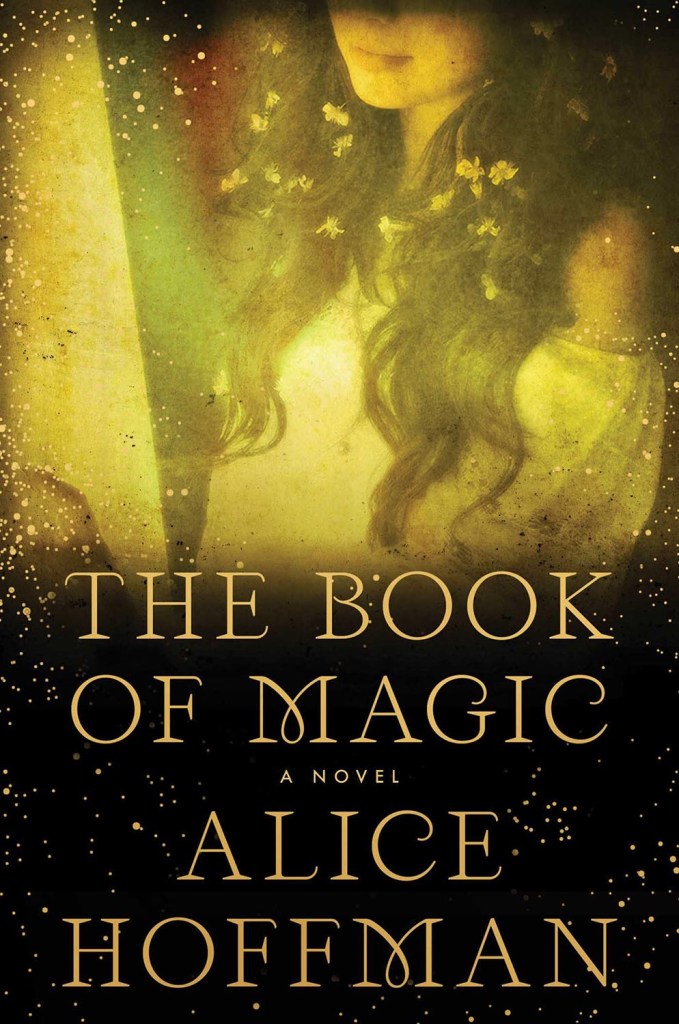
Alice Hoffman is the author of thirty works of fiction, including Practical Magic, The Dovekeepers, Magic Lessons, and, most recently, The Book of Magic. She lives in Boston. Visit her website: http://www.alicehoffman.com

The Bookstore Sisters

I usually expect a new Alice Hoffman novel in the autumn as she’s so prolific, but this year it’s a short story to keep us ticking over until her new novel arrives.

Isabel Gibson has all but perfected the art of forgetting. She’s a New Yorker now, with nothing left to tie her to Brinkley’s Island, Maine. Her parents are gone, the family bookstore is all but bankrupt, and her sister, Sophie, will probably never speak to her again. But when a mysterious letter arrives in her mailbox, Isabel feels herself drawn to the past. After years of fighting for her independence, she dreads the thought of going back to the island. What she finds there may forever alter her path—and change everything she thought she knew about her family, her home, and herself. I’m a lover of books about books, and since the words I keep hearing are ‘relationships, charm and magic’ I’m really looking forward to a long bath with this story.

Published by Amazon Original Stories on 1st Nov 2022.

Posted in Random Things Tours

The Second Marriage by Gill Paul.

#RandomThingsTours #TheSecondMarriage #BlogTour @gillpaulAUTHOR

Published in UK: 24th August 2020

Publisher: Avon Books

ASIN: B084WS53XZ

Synopsis: From the internationally bestselling author of The Secret Wife comes a tale of love, sacrifice and betrayal, available now.

Published in the US as Jackie and Maria.

JACKIE | When her first marriage ends in tragedy, Jackie Kennedy fears she’ll never love again. But all that changes when she encounters…

ARI | Successful and charming, Ari Onassis is a man who promises her the world. Yet soon after they marry, Jackie learns that his heart also belongs to another…

MARIA | A beautiful, famed singer, Maria Callas is in love with Jackie’s new husband – and she isn’t going to give up.

Little by little, Jackie and Maria’s lives begin to tangle in a dangerous web of secrets, scandal and lies. But with both women determined to make Ari theirs alone, the stakes are high. How far will they go for true love?

My Thoughts | I was drawn to this book because I’ve always had an interest in the Kennedys and have read a lot of fiction and biography around Jackie and JFK. However, I didn’t know a lot about her marriage to Aristotle Onassis or how their relationship started considering he was in a long term relationship with opera star Maria Callas. I was interested to read a story I knew, but from the perspective of the two women involved rather than the men. I was quickly drawn into the narrative told in alternate chapters from both women and starting when they were still in their first marriages. Jackie is trying to cope with marriage into the politically obsessed Kennedy clan as well as grieving over a lost child and Jack’s indiscretions. Maria is married to Battista Menighini who manages her career, but feels unfulfilled without a child and misrepresented as a diva by the press. Both women have met Onassis and been invited to his yacht, since he likes to entertain the most famous people in the world. I wondered if either woman ever imagined in only a few years they would be rivals.

Both women’s characters were well drawn and I felt I really did get to know the real them, although I felt more of an affinity with Maria – possibly because she was led more by her emotions than Jackie. Although not the diva she was often portrayed as in real life, Maria acts on her emotions and seems more in touch with what she needs. As soon as she falls in love with Ari (Onassis) she acts on it, breaks the news to her husband and risks her reputation to be true to her heart. I also felt a kinship in her grief over struggling to be a mother, something she does have in common with Jackie who has had a miscarriage and loses a daughter at the beginning of the novel. In fact the women have more in common in their backgrounds than I realised, mainly in their relationships with their mothers.

Litsa Callas was a cold and distant mother, in fact such was her disappointment that Maria wasn’t a girl she didn’t even look at her baby daughter for four days. Throughout the novel we see her engage in manipulation, abuse and betrayal of her daughter including selling details of her relationship with Onassis to the world’s press and eventually writing a ‘tell-all’ book about her daughter. In a radio interview Callas recalls the lack of confidence she had in her looks, especially her weight, compared to her mother who was very slim. Callas felt ‘ugly and unwanted’ as a girl, added to this her mother pressed her into relationships with occupying Italian and German soldiers in order to gain money and food during the Axis occupation. Some sources claim that Maria came to no harm, but she sees it as a form of prostitution and the author writes about Maria telling Onassis that she was manhandled by soldiers and on one occasion was almost raped. In a moving account Maria claims her mother had no warmth or sympathy for her daughter on her return from this assault, just continued to put them at risk to earn money.

I was saddened by the scene where Jackie’s daughter is stillborn, adding to her pain Jack is on a flight and she only has her mother for support. Janet Auchincloss was authoritarian and austere, believing in money, beautiful homes and status rather than love and insisting on this for her daughters, regardless of the man. Jackie adored her father ‘Blackjack’ Bouvier who showered her with affection and presents. After her parents divorce, her mother was left short of cash until her remarriage and this left a big impression on Jackie. It was impressed upon her that security was more important than love, but there was still a touch of idealism in Jackie who thought she’d found both love and security in Jack. The author does a great job of showing the reader the differences that open up between Jackie and her in-laws. Jackie is a big reader, intelligent and interested in culture whereas the Kennedys live and breathe politics. She’s more of an introvert, who wouldn’t normally court the limelight and often wishes that Jack’s ambition could be curbed. She worries about the type of First Lady she will be, feeling under constant scrutiny from the Kennedys who think Jack’s wife should appeal more to the average American woman. Jackie’s interest in fashion is shown as a way she expresses herself and I felt this was maybe her only means of expression. Her mother stifles any emotion and she’s encouraged to ignore Jack’s indiscretions too. She isn’t allowed to be honest with anyone about how heartbroken she truly feels. I felt for her so much in the scene where she takes a call from Marilyn Monroe who makes it quite clear she is involved with Jack. Jackie recognises that Marilyn is very fragile and could damage his career irreparably, even in her heartbreak she is thinking of him. Even worse is the part where Jackie overhears a conversation that brings his indiscretions closer to home than she ever imagined in a double betrayal.

This is an immersive piece of historical fiction that completely transported me to the 1960s and the rich elite of the period. Using fashion, interiors and an in-depth knowledge of her characters Gill Paul drew me into a world of privilege I could never have imagined. She drew parallels between these two extraordinary women, but also between families who were as cursed as they were wealthy and powerful. I felt that both women’s upbringings drew them to men who were rich and powerful, but also controlling and possessive. There was no question of Maria or Jackie enjoying the sort of affairs that Kennedy and Onassis conducted. The intense control of their mothers almost groomed them for the lives they chose as women. Although it might have appeared more respectable, it’s not hard to draw parallels between Janet pushing the Bouvier sister towards rich husbands and Litsa pushing her daughters towards occupying soldiers. There was also a connection between their dislike of the limelight, and the ability to have their voices heard – ironic in the case of Callas with her incredible sound. I found myself feeling sad for both of them throughout. This is a great read, with interesting supporting characters and a series of beautiful settings such as Venice, the Greek Islands and the Kennedy Bouvier estates. I felt like one of the jet set while reading and the author added to my knowledge of these women with newly discovered evidence, such as the revelation that Onassis and Callas may have had a son, Omero, who died at birth. Using a depth of background research, the author has created an accessible, enjoyable and enlightening novel about two of the most famous women in the 20th Century.

The Author

Gill Paul’s historical novels have reached the top of the USA Today, Toronto Globe & Mail and kindle charts, and been translated into twenty languages. They include THE SECOND MARRIAGE (titled JACKIE AND MARIA in the US), two bestselling novels about the Romanovs – THE SECRET WIFE and THE LOST DAUGHTER – as well as WOMEN AND CHILDREN FIRST, which was shortlisted for the 2013 RNA Epic Novel of the Year award, NO PLACE FOR A LADY, shortlisted for a Love Stories award, and ANOTHER WOMAN’S HUSBAND, about links you might not have suspected between Wallis Simpson and Princess Diana.

Gill is also an author of historical non-fiction, including A HISTORY OF MEDICINE IN 50 OBJECTS. As well as writing, she speaks at libraries and literary festivals on subjects ranging from the Titanic to the Romanovs. Gill lives in London, where she is working on her tenth novel, and she swims daily in an outdoor pond.

 Follow the Author: 

www.gillpaul.com

Twitter @GillPaulAUTHOR

Instagram @gill.paul1

Do have a look at the other stops on the blog tour.