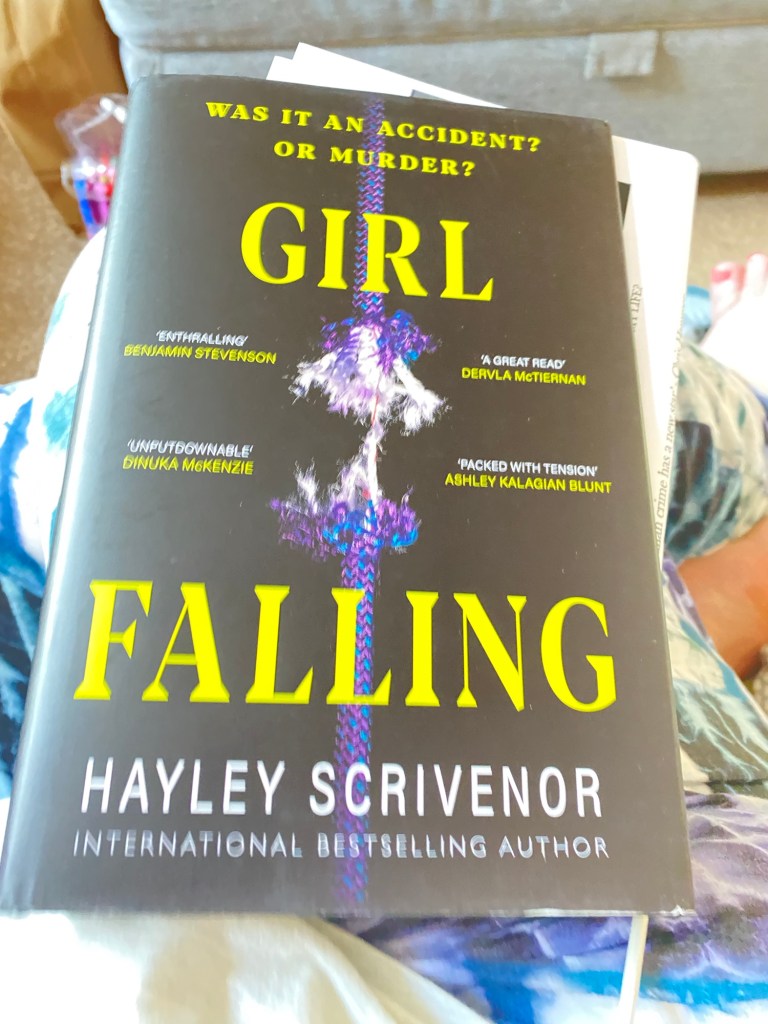
Finn is taking her girlfriend Magdu climbing for the first time. Magdu is nervous about heights so Finn is taking extra special care to explain everything about the abseil they’re attempting. As Finn lowers herself over the edge to control the descent from beneath, she is sure she has Magdu ready and composed on the blue rope, with friend Daphne on the red rope. She’s waiting to feel the weight of someone lowering them selves over the edge, but is surprised when it seems to be the wrong side. Magdu was meant to come over first but this is the red rope so it must be Daphne. The next thing Finn sees is Magdu hurtling towards her and then towards the ground, with a haunting scream. As both Finn and Daphne are taken in to the police station for questioning, Finn starts to think of an earlier time in her life when someone else she loved fell to their death. The truth of that day is something she’s only ever shared with Daphne. This time it’s a potential murder investigation so she’s going to have to protect herself, but might that mean the end of her friendship with Daphne?
My goodness this was a deliciously toxic friendship to get my therapist’s mind whirring. Finn and Daphne meet at school after a very traumatic occurrence in Finn’s family life. Finn is so vulnerable and hasn’t shared with anyone what truly happened when her little sister Suzy lost her life on a family camping trip. Suzy fell from a cliff edge in the night, but is that all there is to it? Daphne, who has also suffered the loss of a sibling, so knows exactly what to do with someone in that state of mind. She can’t change anything but she can sit with Finn and share her sadness and guilt. Finn is our narrator and we see everything through her eyes and she’s also been struggling with her sexuality, until Magdu comes along. However, I could also see how the combination of Finn’s kindness and fear of being exposed, left her open to exploitation. I didn’t fully bond with Finn as a narrator, I was unsure whether to trust her or not. She did set off my maternal streak though, because I wanted to see her safe and protected. She’s kind and cares about the environment, her family and climbing. My instinct was that she needed to be as far away from Daphne as possible. She’s manipulative, knowing exactly what and how much to tell Finn to draw her into her confidence and keep her beholden. I wasn’t even sure whether it was the truth.
I felt, very early on, that Daphne wanted Finn all to herself. When Finn first introduces her to Magdu at a club, its not long before Daphne finds a way to get Magdu alone. She lets slip a secret, making sure Finn doesn’t know exactly how much of the story she’s revealed. As Magdu leaves after the confrontation, Daphne tells Finn it’s her own fault. If she’d wanted Daphne to lie she could have just told her. I was unsure whether Daphne and Finn’s relationship is platonic or romantic, but I was sure about it’s complexity. There’s no room for a third person. Finn tells us about Daphne’s hair and how beautiful she is, there’s clearly an attraction but Daphne also likes to flirt with the male climbers in front of Finn. On the day of the accident there’s a very handsome climber hanging around at the top of the cliff with a huge hunting knife and Daphne makes a bee line for him. She’s used Finn’s grief and guilt and their shared loss of a sibling, to keep her constantly on a tight rein. I felt like Daphne was absolutely capable of harming Magdu. She potentially harms their relationship then reminds Finn that she is the only person who truly knows her, that it’s the two of them against the world. Yet Finn isn’t innocent in this toxic mix, she is complicit by not telling Magdu the same secrets that Daphne knows. Finn is a troubled soul, plagued with insomnia and often going for midnight walks. I thought she needed to choose between her friend and her lover, but I also wondered what Daphne was capable of doing if Finn chose Magdu. In amongst all the psychological machinations and flashbacks the author keeps bringing us back to the present and the more precise methods of the police investigations.
The flitting back and forth between the narrators gives rise to the tension that keeps you reading. Both are utterly unreliable and untrustworthy, especially when we think about the enormity of their secrets. The two are bonded and no one else could come between them, it’s as if Finn has been in a relationship with Daphne all along without realising. I craved some input from Daphne’s perspective because I imagined her version of events would look very different, although not necessarily true. They would also be a fascinating insight into her mind. I kept coming back to personality disorders and the way people portray their lives to the rest of the world. Daphne genuinely struck me as a person with potential narcissistic personality disorder. She has a version of the long held friendship she’s had with Finn and she’s keen on putting that version in front of others, especially Magdu. To use an inelegant phrase it’s like a dog marking their territory. The question is, how much of that version is actually true? One of the markers of NPD is the person’s manipulation of both people and events, but it isn’t a conscious action. They believe in their truth wholeheartedly, sometimes repeating a made-up narrative over and over until it actually becomes a the truth in their mind. When they first meet, Daphne and Finn discuss their shared experiences and Daphne explains how she chose to rewrite her story as an ancient myth, invoking Greek gods and particularly epic poetry. She has taken the heightened and exaggerated heroism of these stories to spin her own life narrative and has rewritten her personality to match. I wasn’t sure about the ending I would get, but there was a twist and it was a satisfying conclusion. My only criticisms of the book would be that it was slow in parts and I felt the author could have used the setting more, because apart from a mention of the Blue Mountains I didn’t feel the characters connected with it enough, especially Finn. However, this was a very character driven thriller which really enjoy and it’s deep delve into the motivations and desires of Finn and Daphne were absolutely compelling.
Meet the Author
Hayley Scrivenor is the author of DIRT TOWN, which published internationally in 2022 (published as DIRT CREEK in the U.S., where it was a USA TODAY bestseller) and quickly became a #1 Australian bestseller. The novel has been shortlisted for multiple national and international awards. In 2023, it won a Lambda Literary Award and General Fiction Book of the Year at the Australian Book Industry Awards. DIRT TOWN has been translated into several languages. GIRL FALLING, described as “a remarkable exercise in complex storytelling written in Scrivenor’s idiosyncratic, metaphorically vivid prose”, is her second novel.
Hayley has a PhD in Creative Writing from the University of Wollongong and lives on Dharawal country, on the east coast of Australia.
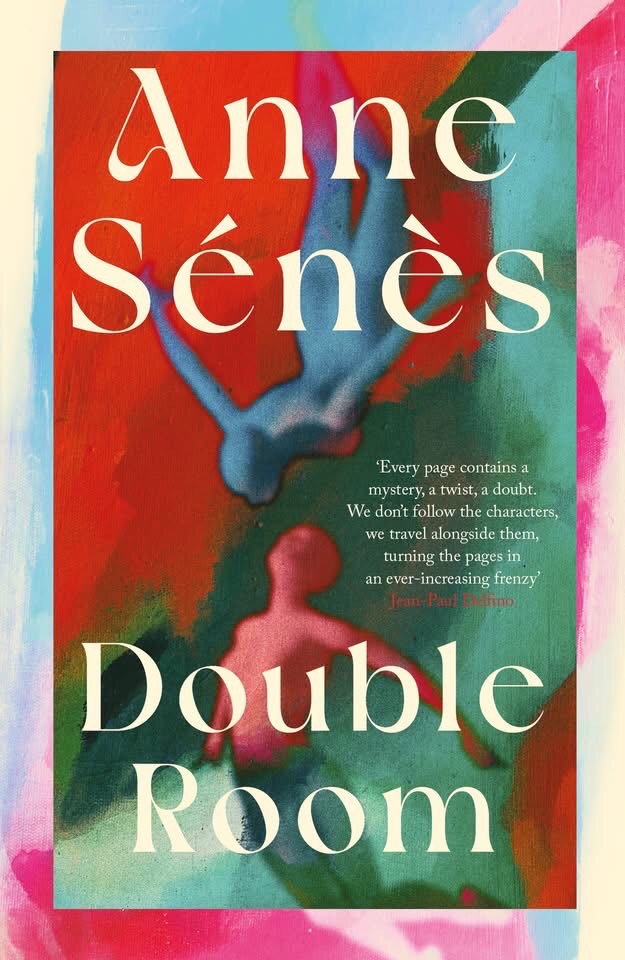
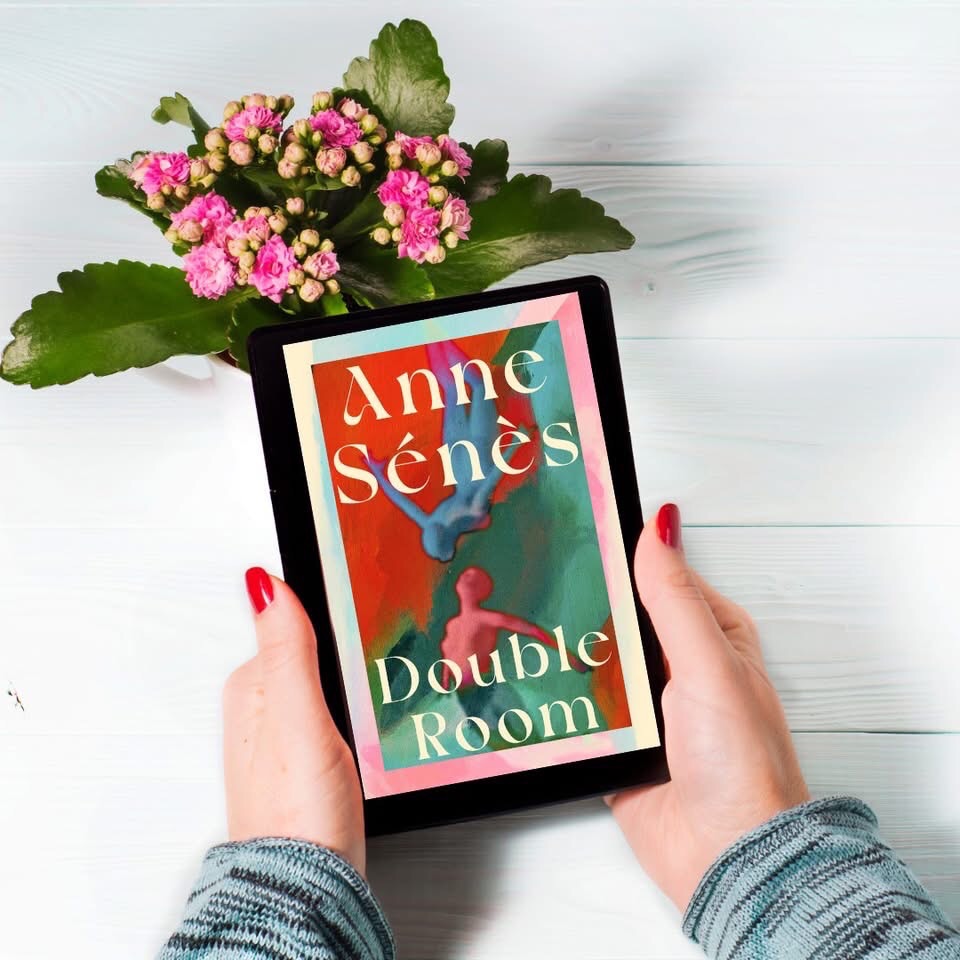
London 1990s – An up and coming French composer called Stan is invited to arrange music for a stage production of Dorian Gray. Although the play is never staged, he does meet Liv and she becomes the love of his life. They live together, joined by a daughter called Lisa. Their happiness fuels his senses with vibrant colours and melodious music.
Paris, Present Day – Stan lives in France at the Rabbit Hole, a house left to him by his aunt. He now shares his life with Babette, a lifeguard and mother of a teenage boy of Lisa’s age. They also share their home with Laïvely, a machine built by Stan and given Liv’s voice. As Stan becomes more engrossed in his past Laïvely starts to take on a life of her own. His life is about to implode.
This is, at heart, a love story. Told in flashbacks Stan reminisces over a golden period of his life when he and Liv fall in love. It’s no accident that they meet through a production of Dorian Gray because the author does bring it’s style and it’s moral into her novel. The first thing I noticed was the fact that Stan has synaesthesia, a fascinating neurological condition where colours or images evoke tastes or smells. The opening of Dorian Gray is so heady with scent it could conjure a symphony:
“The studio was filled with the rich odour of roses, and when the light summer wind stirred amidst the trees of the garden, there came through the open door the heavy scent of the lilac, or the more delicate perfume of the pink-flowering thorn.”
Some of Stan’s descriptions, as colour turns to scent and then turn to melodies, bring the senses alive in a similar way. For Stan, music is simply an extension of his sensory abilities, like a form of ESP. There is also the doubling aspects of both novels, captured in the book’s title. Dorian Gray’s portrait is the sum of his dissolute lifestyle, freeing him to experience more and more without it showing on his face. Stan presents his life in two narratives, the present in France and the past where he was at his most creative, happy and in love. His relationship with Liv is almost idyllic. They seem to be naturally suited, in total harmony and without a cloud in the sky. Anything he relates of his present can only suffer in comparison. We learn that he and Babette are compatible, but there is none of the life and vivid colour that comes from his reminiscence. We are all nostalgic about the past, but no relationship can be perfect especially when cramped into the average London apartment with a small baby. While it is touching and romantic, the cynic in me wondered was this a true picture? As for Liv, she is in technicolour in Stan’s flashbacks with her vivid red hair. However, all that life is now reduced to a communication device and no matter how Stan cuddles Laïvely to him, she is inanimate, merely a machine. In what way is this a fitting representation of the love of his life? It seems like, in the present, neither Stan or Liv is truly alive. When Stan trips one morning the giggle that comes from the device is strange, a laugh he’s not a encountered before. Could it be there is a hint of malice?
The other book mentioned heavily is of course Alice in Wonderland, inspiration for the name of Stan’s home in France. Another book where there are versions of the self and a blurring between what is real and unreal, something the author has carried into this novel successfully. Stan’s past has all the colour that his present is missing, but there’s something equally unreal about his present. It’s not that there isn’t a fulfilling life to be had. It’s just that Stan isn’t fully engaged. I felt as if the rest of his family had a life, but Stan has started to detach from it. The author’s layers of description evoke the 1990s in a nostalgic way, something I’m apt to do from time to time because it was my era. Laïvely is meant to bring Liv into the here and now, but it feels more like a conduit to the past dragging Stan further and further away from reality. He rarely mentions his or Babette’s child, until he and Téo have a row. He tells us Babette organises everything: celebrations, days out and holidays. Is this a natural division of their lives or is it simply that if Babette didn’t do it their life would run aground? Their relationship seems more about companionship and choice rather than love. It’s as if he has found a calm, steady presence who won’t overpower his senses.
The author cleverly fragments things, very slowly. When I turned a page and realised Stan had been injured by a cupboard door, I had to go back and work out how this had happened. The story continues in past and present chapters but the past starts to feel more coherent and real. Loss is a strange thing, even when you’ve moved on in life because the previous one is still there, haunting you. It becomes a parallel existence where you think about what life would be like now if you hadn’t lost that person. Stan can tell us long detailed passages about what Liv was wearing, the colour of her hair barrettes. He can relate details of their friend Henry’s visits, the eccentric musician has a good relationship with Stan’s daughter Lisa and is there to the end of their relationship. At Rabbit Hole Stan is becoming as inanimate as Laīvely. He’s eating and playing music, often in the same room as his family without hearing a word they say. At times he seems almost catatonic, unable to answer Babette when she knocks at his door. Then she tells him she has booked a holiday without him, choosing to take her son. Stan says nothing, the tension rising. I felt we were building towards something with our past timeline catching us up to why he and Liv are no longer together. I could understand him coming apart a little as he relives his story but this is complete disassociation. I was ready to be heartbroken for him and his daughter, but things are not always as they seem.
The author brings the truth to light brilliantly and I feared Stan’s mind was splitting. He has always remembered his and Liv’s relationship as an ideal. Often when we lose someone the tendency is to rewrite history and paint them as a good person who everyone loved, even glossing over addictions, criminality and all manner of bad behaviour. I’ve occasionally been to a funeral and wondered if the speaker and me knew different people. I can’t see the point of remembering something that isn’t real. Stan seems to imagine that he and Liv would have lived in this harmonious way forever, then as the truth emerges Stan’s perception of himself starts to shatter. Babette finds him catatonic and soaking wet, having to place him in a hot bath and slowly bringing him back to himself. It’s the most nurturing, selfless and loving part of the book and it’s all the more sad that he hasn’t before recognised or rewarded her love and loyalty.
“My partner has behaved like a mother, a loving and devoted wife. She had cared for me, comforted me, given me all the tenderness she could muster”.
He also realises that there were times he was too distant and distracted with Liv, that he stopped paying her attention. It was as if he had imagined them always walking towards a common goal but truthfully, he knows they were out of pace with one another. As the ‘tick, tock’ of the clock at the Rabbit Hole reminds us that the end is approaching we fully comprehend this heartbreaking story. This is no ordinary loss and it’s clear that Stan has never faced the truth of their final days until now. This is an emotional end that has one final twist to impart and it is devastating. It seems that Stan has always held on to Liv’s portrait, but is was a ‘painting turned against the wall’, keeping it’s secrets until that final terrible reveal.
Out Now From Orenda Books.
Meet the Author
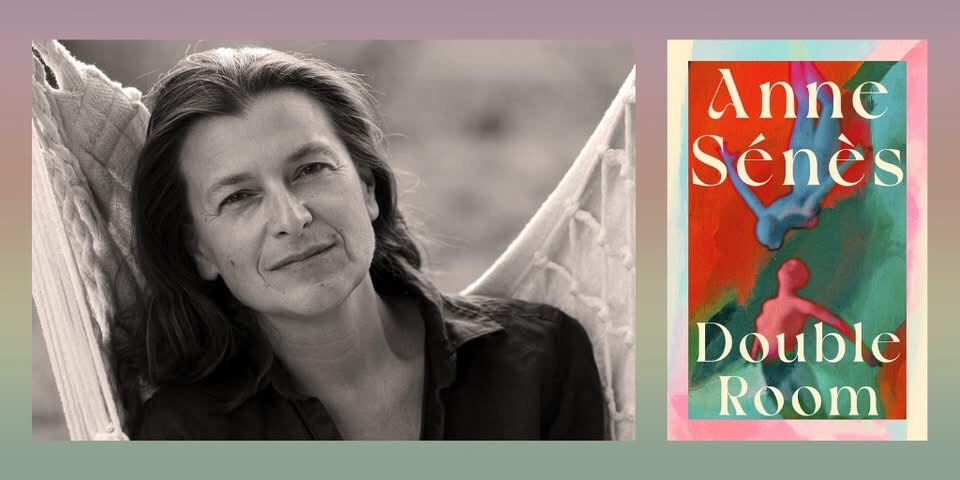
Anne Sénès is a writer, translator and former journalist. She was born in Paris and studied at the Sorbonne, where she obtained a PhD in English studies. Her passion for Anglo-Saxon literature and culture has taken her all over the world, from London to Miami, via the south of France. She is currently based on the French Mediterranean coast. Chambre Double (Double Room) is her first literary novel.
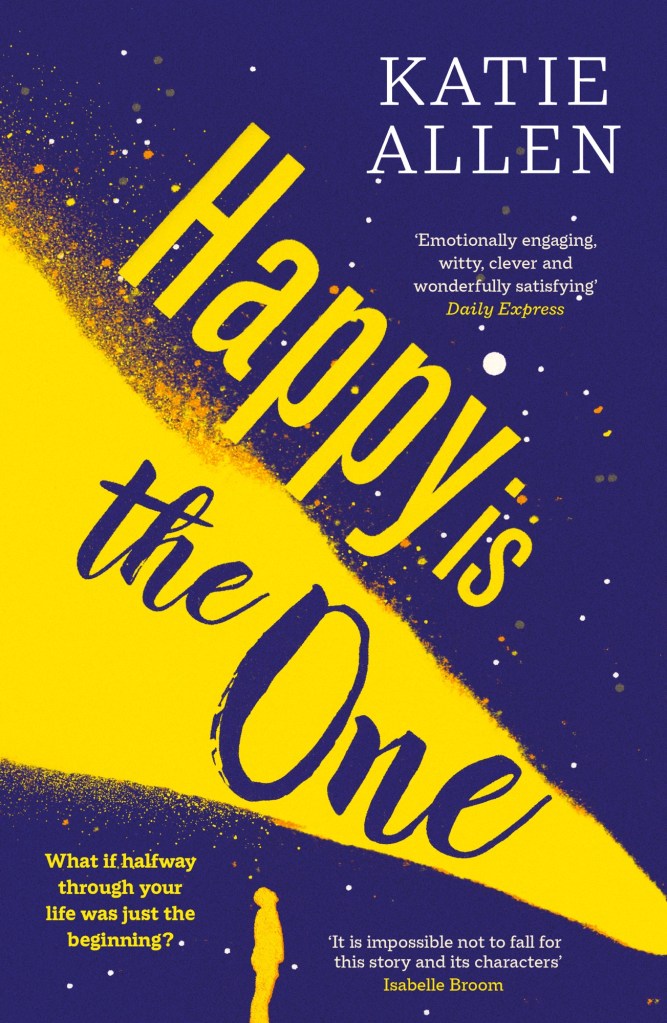
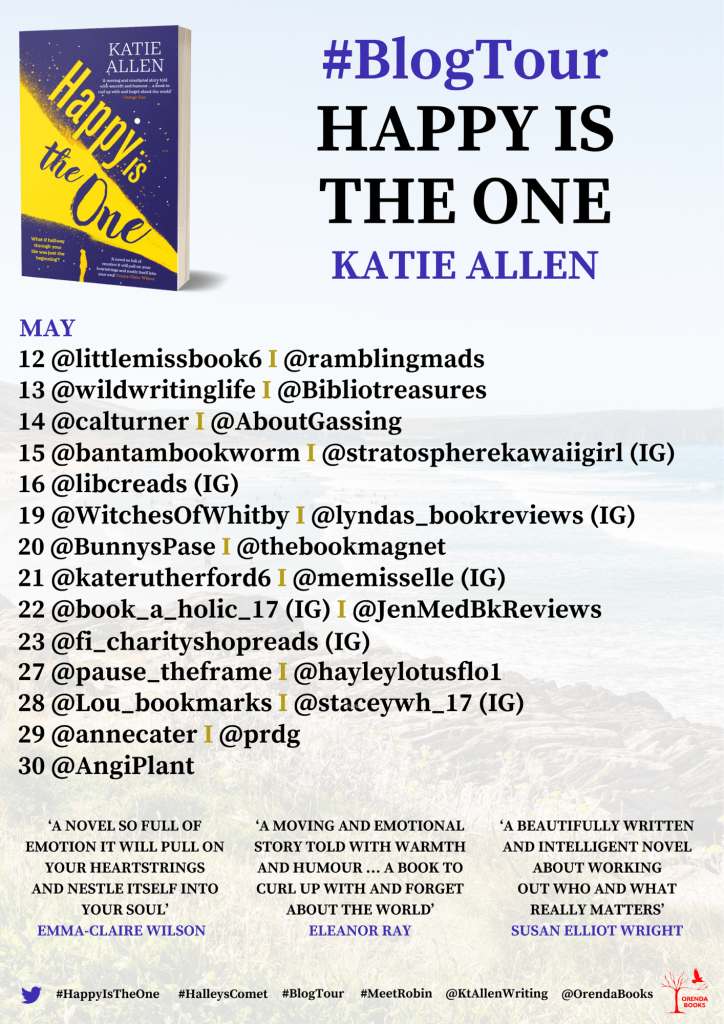
Robin is exactly half way through his life. Like Mark Twain before him, Robin came into the world with Halley’s Comet in 1986 and fully expects to go out again when it returns in 2061. Recently he’s had a huge life change. He’s moved back to his home town of Eastgate to care for his sick father, who due to a disability has had one accident too many. Robin had a well-regimented life in London with girlfriend Gemma. He also had a boring well-paid job as an accountant. Now everything has been thrown up in the air and he’s living in a tiny bedroom surrounded by boxes he hasn’t unpacked. He’s trying to forge a relationship with a father who can’t communicate and who he never connected with as a child. There are childhood ghosts to face and a new connection with Astrid, fellow outsider and professor at a nearby university. She’s brutally straightforward and Robin has never met anyone like her. She’s also hiding something, but he’s hiding even more from her. Can Robin make friends, help his father and accept this is the next chapter of his life?
This was a great book that’s simply joyful to read, even while addressing some really difficult themes. Robin is a great character to spend time with. I found myself feeling quite protective of him, despite his rather pernickety ways. I could honestly feel his anxiety and he copes by planning for eventualities that might never happen. He ekes out money, setting a daily amount for a minimal food plan and then bulk shopping at Costco. He’s worked out how long his savings will last, trying to keep Dad’s care to a minimum so he can afford it for longer. He seems at odds with everyone; not communicating with his father, bickering with Jackie who is his father’s man carer, and not even trying to find old friends. I’ve been a carer and I felt how overwhelmed he is by everything when he climbs up on the roof for some peace. He has to connect in order to get this new chapter of life started. However, to do that he has to accept that this is his life for now. The daytime telly shows, the sorting of meds and lifting his dad off the loo is life. He doesn’t seem to realise that while he fights it, he remains standing still. If he accepts Astrid’s friendship, unpacks the boxes and breathes, life will get better.
My two favourite characters are the forthright Astrid and Jackie. Astrid is a strong character and has a lot to say, but enough quirks to humour Robin and push him just a little into enjoying life. She embraces and accepts where he is in life, happily trawling Costco for savings. His relationship with her little boy is lovely too. No one can go through life as an island though and Eastgate is a small place. It’s almost inevitable that these new relationships are uncomfortably entangled with others he’s been trying to avoid. Jackie is wise and more of an asset than Robin realises as he spends weeks trying everything to avoid her – even climbing onto the roof. She’s brilliantly written because I’ve met carers like this and they’re worth their weight in gold. Nothing phases her and she is soon onto Robin’s ways. She reminded me of an incredible carer called Barbara who worked in a pair looking after my late husband. She was wider than she was tall and smoked like a chimney between calls. She was also matter of fact, never allowing him to be embarrassed about any aspect of his care. Barbara had seen it all and her stories had him in fits of laughter. I knew he was in safe hands with her, an incredible weight off my mind when I had to go in to University. Barbara passed out one day at work and died only a few days later, from a brain tumour she didn’t know she had. She was caring for people at the end of their lives, not knowing she was close to her own.
The wonderful relationship between Robin and old friend Danny felt so genuine and the way they talked to each other felt exactly like people who’ve known each other from childhood. There’s a shorthand and we start to realise some of Robin’s quirks have been there a while. You get the sense that if they were going on a bike ride Robin would spend so long getting prepped with wet weather gear and a puncture repair kit that they’d run out of time. Danny on the other hand would set off as is and get soaking wet, then tell everyone the story for years. Danny is full of life and has a great business idea to run past Robin, but can he be tempted to take the risk? Robin is eking out an existence that goes way off into the distant future, but our futures change all the time and one day he’ll start living yet another chapter. Living is right now! It’s not when we have money, or have lost weight, or when we have better health. It’s now, when we’re skint, fat and feeling ill. Whatever life looks like right now, we absolutely must live. Many people don’t get the time to waste. Of course, when we find out why Robin is so adamant about his comet theory – while being forced to evaluate his choices by a strident Astrid – it all becomes clear. A heart-breaking tale emerges, just as Robin is faced with yet another loss. He’s forced to admit why he jumped off a cliff into the water when he was a child. He thinks he can’t die, because once he survived something and can’t make sense of it. In fact immortality is the only explanation that does make sense to him. He’s doing what humans do, we subscribe meaning to events that have none. It’s just messy, terrifying, random and heart-breaking life. Katie infuses this difficult truth with beauty, humour and hope because life is beautiful and joyous too, if you let it be.
Out 22nd May from Orenda Books
Meet the Author
Katie Allen was a journalist and columnist at Guardian and Observer, starting her career as a Reuters correspondent in Berlin and London. Her warmly funny, immensely moving literary debut novel, Everything Happens for a Reason, was based on her own devastating experience of stillbirth and was a number-one digital bestseller, with wide critical acclaim. Katie grew up in Warwickshire and now lives in South London with her family.
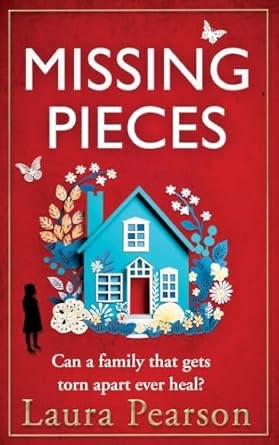
I’ve read a little bit of Laura Pearson before, so I did come to this expecting a moving and powerful story. It didn’t disappoint. When Bea is born it should have been a healing, new chapter for the family – mum, dad and older sister Esme. However, Bea was born to a family struggling in the aftermath of a tragedy. Esme was only seven years old when her sister Phoebe died suddenly and unexpectedly. It hits Esme hard because she was supposed to be looking after her sister. Their dad Tom feels an immense weight of guilt because he shouldn’t have stayed out later than expected. Esme’s mother is also wrestling with guilt and blame, she’d briefly popped next door to help a neighbour knowing that Tom would be home imminently. This is a story of a family, years later, struggling with unimaginable loss. How can they learn to forgive each other, or themselves?
Laura splits the story into two sections: the first months after Phoebe’s death interspersed with a narrative where Bea is trying to understand what happened to her family a couple of decades later. These feelings are coming to the surface because she herself is pregnant. I really enjoyed the section in the present day as Bea searches for the truth when her parents won’t ever talk about it. It reminded me of something my mum has recently done. Her first sister, Teresa, died on Bonfire Night 1959 and although she doesn’t remember everything she does have a memory of a tiny coffin that my grandad was carrying and putting in a black car. Mum tracked down a community group who were looking for the resting place of their stillborn babies in the same area where she grew up. Back then, if there was no money for a funeral or a grave plot then a baby might have been buried in a coffin with someone else or in a grave for several bodies. Three years ago she was able to take my grandma to a ceremony at the graveyard in Liverpool where a memorial was finally in place for babies lost and buried in a pauper’s grave on the site. It’s easy to underestimate how much the death of a baby affects other children in the house and i think we all underestimated how it still affected my grandma who is now 91.
Bea feels like she’s lost part of her identity. This loss is part of their joint family history and no one is addressing or memorialising it. Of course this is tough for other family members, all of whom blame themselves. The loss for Bea and her older sister Esme is threefold: they lost a sister, they lost the relationships and life experiences they would have had as three sisters and they lost the happy family life they might have had if their parents hadn’t been carrying the weight of all that grief and guilt. As for the other characters in the book, I did find Linda a bit of a struggle. It’s clear she’s never fully connected with Bea and when we go back in time we can see her conflicting emotions over being heavily pregnant. She is buried by her grief for Phoebe and feels bad for being pregnant again. She doesn’t want to replace Phoebe and sometimes wishes she wasn’t pregnant. A combination of fear, guilt, sadness and anger take over and she really wasn’t there for Esme or Bea, once she’s born. In the past sections there’s an oppressive atmosphere that hasn’t fully lifted, even in the girl’s adulthood. Esme can’t talk with her father so Bea doesn’t stand a chance when wanting to ask questions. It would mean delving back into the pain and communicating honestly, but no one wants to go back into the raw grief and horror of that day. Bea wonders how she can be a good mother when she has no relationship with her own. Will the family be able to rally around her, find a way to talk and become a united family again?
It’s a trademark of Laura’s books that characters are forced to talk about difficult and frightening experiences or situations they find themselves in. I love the openness and honesty these issues need and it is like a counselling process if people can start sharing and healing. I did shed some tears at times. I thought the author’s depiction of the parent’s grief was realistic and raw. We’re let into every aspect of a characters mind, no matter what their thoughts might be. I could genuinely feel these character’s emotions and pain. Yes, this is intense. Somehow through, this isn’t off-putting. We’re given just enough glimpses of hope to lift the story, personified by the new start Bea’s baby brings to the family. I found myself gripped, willing these people to give themselves a break and stop being angry with themselves and each other. This is an emotional but satisfying novel that shows healing is possible, if we’re willing to do the work. Beautifully written, emotional and ultimately hopeful.
Out now from Boldwood Books
Meet the Author
Laura Pearson is the author of five novels. The Last List of Mabel Beaumont was a Kindle number one bestseller in the UK and a top ten bestseller in the US. Laura lives in Leicestershire, England, with her husband, their two children, and a cat who likes to lie on her keyboard while she tries to write.
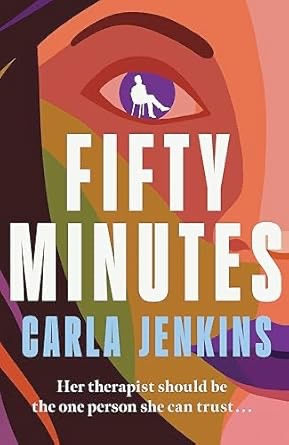
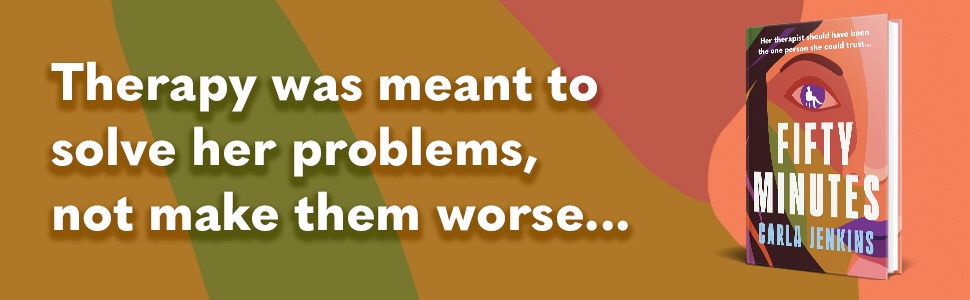
Therapy was meant to solve her problems, not make them worse…
Smart twenty-year-old Dani is desperate to overcome her eating disorder, leave her dead-end job and return to her hard-won place at university. Using her limited earnings, she decides to start seeing a psychotherapist.
Richard Goode is educated, sophisticated and worldly-everything Dani aspires to be. As he intuitively unpicks her self-loathing, Dani assumes the fantasies she’s developing about him live only in her head. That is, until things take a shocking turn…
Descending into a maelstrom of twisted desire, manipulation and mistrust, the power struggle between Dani and Richard escalates until she’s forced to make a decision that might finally give her the freedom she deserves.
Dani has hit rock bottom. Her eating disorder is out of control and her declining mental health has meant suspending her place at university where she was studying English Literature. She’s now living in a flat with her sister Jo and her boyfriend Stevie, having to share with his daughter Ellie when she’s there for weekends. She’s working as a pot-washer to pay the bills, but longs to go back to university. Despite having very little money, she decides to see a therapist and has a session with Richard. She feels at home in Richard’s room, in the quiet with the smell of books and furniture polish. She feels like he listens and he seems perceptive, noticing her low self-esteem and anxiety. So she takes the decision to continue therapy with him, although he’s expensive. She starts to feel more positive, greatly reducing her bingeing and purging cycle.
This was a setting I was very familiar with and although Richard has all the right certificates, counselling spiel and does detect Dani’s self-loathing, I kept feeling something wasn’t right. I couldn’t pinpoint anything in detail but I was concerned for Dani. She is so vulnerable. Her attraction to him wasn’t surprising. To have a man listen and understand her might be a first. He also embodies all the things she wants for her own life; qualifications, respect from others, a better standard of living. She has attachment issues so I was sure Richard would have expected some element of transference to creep into the relationship. I was also unsure about Dani’s home life. Her sister’s boyfriend, Stevie, seems like he’s easy going, tv loving, stay at home partner. He’s a good dad to Ellie, but with Dani I wondered if he wasn’t overstepping the mark. He likes things kept neat and tidy, the rent paid on time and Ellie to be safe and happy. There are a couple of occasions when he goes in quite hard on Dani for not being fit for work in the morning or for leaving her room in a state. I wasn’t sure whether this was concern or control? The author cleverly makes the reader unsure and with Dani in such a vulnerable place I was on high alert, like a mum of fledgling baby birds.
The author also keeps us unsure about Dani, not in the sense of believing her narrative, but as to whether she can genuinely break out of the cycle she’s in. As the book begins she’s still bingeing and purging as a means of managing her emotions, in fact this process is like a metaphor for how she manages her whole life. She wants her needs met, to feel emotionally filled or satiated. Then she needs to rid herself of it, to push it away before it gets taken away perhaps? She longs to be loved, but self-sabotages; something that Richard is very aware of and points out. Neither of the sisters have had that feeling of being loved or that they can feel safe within it, sure it won’t be taken away. They have been, at the very least, neglected by both parents. The girls are close, but are not as bonded as sisters can be within a loving family. There are times when Jo acts without realising what effect that behaviour might have on Dani. Thank goodness for Pat from work, who is steadfast in her care of Dani. Even in a complete crisis it is Pat who’s there for her, not her sister who’s busy making her own mistakes. Even when she’s been rebuffed or Dani has lashed out, Pat gives consistent care in a very motherly way and we see that best when Dani is ill. Dani doesn’t know she is beautiful. She knows men are attracted to her red hair and blue eyes, but never knows deep down that she’s worth anything. Besides, it’s always desire rather than love and care. However, she is adamant that she wants more from life. She wants to get better and study again. She knows this will help her get a better future, but she also thinks she’ll gain respect from others. She says that education is the only thing that can’t be taken away from her. I really understood that.
The attraction to Richard is so complicated, but is bound up in her wanting a better life. There is an initial jolt of chemistry too. It’s something that should be talked about in the room, using the transference to work on Dani’s real needs for affection and worth. There is also counter-transference and both should be easy to recognise by a therapist who has Richard’s level of experience. She loves the way he reinforces her positive behaviours and finds ways forward, but she doesn’t realise she’s doing the work. He’s guiding her, but the achievements are hers. The author places clever little ‘lightbulb’ moments, such as Dani realising the picture she has of Richard in her mind, where he’s sitting in an armchair reading by lamplight, is actually an amalgam of an image she has of her father. It’s also very telling that when she’s sees him in casual rather than professional clothing, she feels let down and that attraction fades. It’s interesting that as boundaries start to break down, the last person she wants to confide in are Pat and Stevie, suggesting that she sees them as parental figures in her life. She knows if she tells them that they’d be angry and she wants to avoid that. She doesn’t like them being angry with her, but also they’d be angry on her behalf and might demand action. I thought it was interesting that she recognises Stevie in a parental role, when talking to her sister. Jo complains that he’s a homebody and they don’t really have fun together any more, but Dani points out that Stevie has always been a homebody. She tells her that this is the type of man she needs, even conceding that when he gets cross she doesn’t mind because at least he cares.
Of course as counselling boundaries start to be overturned Dani starts to spiral. It’s a really tough part to read, because I was feeling parental towards her. She puts herself in some incredibly dangerous situations, trying to find experiences that fulfil her needs. I was hoping that she’d realise she’d pressed the self-destruct button before it was too late. She has the resources to succeed, but can she utilise them when she feels so unstable? Honestly, my heart ached for this girl and that tells you a lot about my issues with clients! I wished she’d gone to a female counsellor. She needed that female nurturing, a mother’s care and love. When it comes to a need and parents like Dani’s the only answer is to choose our family. There are further behaviours and revelations I won’t go into for fear of ruining the suspense and eventual outcome, but I was genuinely scared that Dani couldn’t pull back from the mess she was in. When someone has listened to your innermost thoughts they are a formidable agent for change and an even more powerful opponent. I had everything crossed that I’d underestimated Dani and that she could find those reserves to get through to the other side. This was a fantastic debut novel, full of suspense and stirring the emotions of the reader with real finesse.
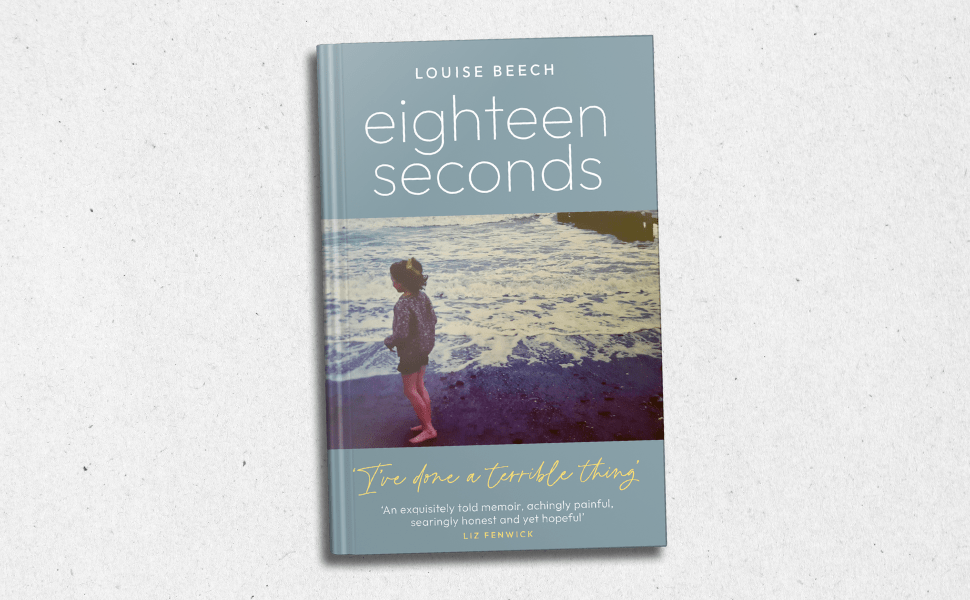
My mother once said to me, ‘I wish you could feel the way I do for eighteen seconds. Just eighteen seconds, so you’d know how awful it is.’
I was reading this raw and painful memoir to discuss at my local book club Pudding and Pages. Sadly, my health wasn’t great that day and I wasn’t able to go. So I decided to tell all of you about it instead, because I love Louise’s writing and I identified very strongly with some of her experiences. This is such a psychologically astute story, from someone who has done a lot of work on their childhood trauma, even while being traumatised anew with the shock that comes on an ordinary morning. Normally, Louise would take her children to school and then have a walk along the path at the side of the River Humber and underneath the bridge itself. Her husband asks if she will take her walk earlier than normal as he has a package being delivered later and needs her to be home. She agrees, completing her walk earlier than usual, and returning home to a call from one of her sisters. Their mother has thrown herself off the Humber Bridge, it’s only by changing her schedule that Louise didn’t witness it. This call hits the reader like a punch to the gut and I’m sure that’s how she must have felt. If you’ve ever had a similar call you’ll know it hard to communicate the force of that moment. Your mind is still at home holding the phone while your body is grabbing the car keys and scrambling to reach A+E as soon as possible.
Honestly, the siblings are shocked to find their mother alive when they reach the hospital. She landed, not in the water but on the path, causing multiple broken bones, internal bleeding and head injuries. As they navigate those first few hours Louise contrasts them with inserts that are flashbacks to their childhood. Their mum’s first suicide attempt flashes through her mind. The three girls were placed with grandma for several month, but Baby Colin had to be taken into foster care. Although losing their mum was terrifying for Louise’s younger twin sisters it must have been desperately traumatic for Colin who lost his whole family that day. She describes these months with grandma as the safest and most loved she ever felt. Their return to their mother heralded the worst years of their childhood, the abuse ranged from neglect to prioritising her own needs and emotions over that of her children. New relationships always came first, placing them in grave danger as she plunged headfirst into alcoholism. For Louise, as the eldest, it meant being a second mum to the other three while mum partied. In a way Louise became the identified problem of the family – she’s miserable, no fun and constantly moaning according to her mother and her male friends. It was an immense struggle to keep the younger ones happy, especially the girls who worried every time the door closed that their mother would ever come back. The didn’t know she was choosing to be in the pub. Louise’s attempts to get her mother to see what effect her alcoholism was having on the twins were met with either silence or insults, depending on which friend was drinking with her at the time. She just wants her mum to be responsible for her own children.
This is such a hard read in parts but it isn’t without humour and hope. Once her mum is recovered enough to talk again, her sense of humour is restored and she is remarkably charming when she wants to be. I loved how the siblings handled her, with a patience and humour she barely deserves at times. I loved the sibling’s family WhatsApp group, including their Uncle Edwin who’s in Australia. Their ability to share gallows humour, even in the worst of circumstances reminded me a little of my family. Their discussions about her underwear and accusing Colin of sneaking it away, descends into uproar when he tells them it looks better on him. ‘Well you haven’t seen it on Edwin’, one of his sister’s hits back. My family and I used gallows humour all the time when my husband was dying. From my own experience I recognised the bulldozing that happens in MDT Discharge meetings, where everyone is agreeing to a plan you haven’t said yes to. Once I was told by an NHS Continuing Care nurse that my opinion didn’t really count because I wasn’t a nurse. No consideration to the fact that the care was happening in my house and I was the only full-time carer. In fact I was carrying out medical tasks such as pump feeding, suction and catheterising, so to all intents and purposes I was nursing him. The horror of realising there was nowhere for my husband to die broke me, because he didn’t have cancer so couldn’t go to a hospice. He wanted to come home but I couldn’t do it alone, Louise writes about similar issues in a very matter of fact way, because that’s the only way to be at times like this – blunt and forthright. Then in between the family uses humour to deal with a hurt that can’t heal and can’t change.
I read this at a difficult time for my family, because my mum and her two sisters are dealing with care for my 90 year old grandmother, who has been a very difficult woman. My mum has felt completely overlooked by her mother, often left out of decisions or not considered when it comes to family memories or possessions. As the only daughter with any memory of her grandma (always referred to as Mother) she had hoped to be given her engagement ring when the time came, with her sisters receiving the wedding and engagement ring of their own mum. She was really upset to find her middle sister had been given Mother’s ring, with the other two going to her youngest sister. It wasn’t the item as much as the memory, not helped by my grandma saying ‘well the others really wanted them and I knew you wouldn’t make a fuss’. This total lack of consideration opened a Pandora’s box of hurt, including a terrible decision made when the family returned from a spell in Australia in the late 1960s. Having to accept housing away from their home city of Liverpool, they settled in Scunthorpe but both of my grandparents needed to work. My mother was twelve and her two sisters were pre-school age, so my grandma didn’t register my mum for school and left her at home caring for the younger children. This lack of education was devastating for my mum who felt like she was sacrificed for the good of her sisters and also felt ashamed that she had few qualifications. It affected her opportunities but also her confidence, leading to life long mental health issues. Despite this my mum shows incredible intelligence, is well-read and has had a lot of psychotherapy. I think that at the age of 72 she is very in touch with her authentic self and knows that she needs to ration the time spent with her mother, place careful boundaries around herself and us and accept a relationship that’s very one sided. I recognised a lot of my mum in Louise’s personal growth and that motherly relationship with her younger siblings. This book made me realise there are families like ours where intergenerational trauma is a very real part of life. I think the book holds out a lot of hope that with boundaries, solid friendships, somewhere to express the negative emotions and a lot of humour it’s possible to survive narcissistic parenting. Lastly, I admire Louise’s honesty and openness in writing this memoir so beautifully and I hope it has proved both cathartic and healing for her too.
Meet the Author
Louise Beech lives in East Yorkshire and grew up dreaming of being a writer but it took many years and many rejections for her to finally get a book deal in 2015, aged 44. Her debut, How to be Brave, got to No4 on Amazon and was a Guardian Readers’ Pick; Maria in the Moon was described as ‘quirky, darkly comic and heartfelt’ by the Sunday Mirror; The Lion Tamer Who Lost was shortlisted for the Popular Romantic Novel of 2019 at the RNA Awards and longlisted for the Polari Prize 2019; Call Me Star Girl was Best magazine’s Book of the Year 2019; I Am Dust was a Crime MagazineMonthly Pick; and This Is How We Are Human was a Clare Mackintosh Book Club pick. In 2023 her new novel, End of Story, will be published under the pen name Louise Swanson. Louise regularly writes short stories for magazines, blogs, and talks at universities and literary events.
I have a fascination for the idea of ‘thin places’ – where there’s only a thin veil between our world and the spirit world, or possibly passages to another time or dimension. I am swayed towards the idea that it’s where something traumatic happened and left an imprint on a place, so that however much time passes, the events of that day can break through and be replayed almost like an echo of the original event through time. Ava Brent is a journalist who is investigating one such place. The Overtoun Estate is a strange and looming presence over town and no one seems to know it’s specific history, but it’s rumoured to be a thin place, steeped in myth. The legend is about a bridge where it’s claimed many dogs have thrown themselves to their deaths. The locals steer clear and when Ava begins to ask questions the warm welcome she received at first becomes a cold shoulder. When she discovers that a sick young girl lived there, the sadness that surrounds the building starts to make sense. Ava is expecting her first child so is maybe susceptible to this tale, but a message scratched into a windowsill fills her with horror. What happened here and is she really prepared for what she may discover? What might her fascination with this place cost? As her life begins to unravel, she knows she should cut her losses and walk away. Then threats start to arise, but Ava can’t deny that despite the fear she is compelled to return.
This was an excellent slow burn gothic novel from an author that was completely new to me. I am interested in tales of motherhood and the paranormal, brought to my attention at university where I was influenced by Frankenstein and Rosemary’s Baby on my Gothic, Grotesque and Monstrous course. There’s something about the extraordinary changes in the body and the idea of another person growing inside you that’s open to the world of monsters; rather like a human set of Russian nesting dolls. I think it’s also horrifying when a horror exploits that moment when both mother and baby are at their most vulnerable. Ava is drawn to the specific bridge on the property, despite the strange and eerie feelings that congregate there. Ava is taken in by it’s ’otherworldliness’ and slowly it takes over her life. The author lets us into Ava’s inner world by devoting some of the narrative to her journal entries where page after page is devoted to her ramblings about the place. Her home life starts to become disrupted, self-care goes out of the window and even her pregnancy can’t compete with her drive to discover the truth.
In between Ava’s story we’re taken back to the historic occupants of the house. In the 1920s it’s Marion who lives there, a newly wed who feels lonely as her husband is away a lot for work. Then twenty years later it’s Constance, the sick little girl who is almost a prisoner, kept inside by her over anxious mother. Is she really the sick one in her family? Or is there some other motivation keeping her life so limited? We never know during these narratives whether what we’re being told is the truth. Are the women seeing events truthfully or skewed through the filter of their own experience? We all the view the world through our own learning, experience and emotional state so we have to question whether Ava’s state of mind is colouring her judgement? Is Marion’s loneliness affecting how she views the house? Could Constance’s illness and solitary existence have left her vulnerable to suggestion? All three could be unreliable narrators and the atmosphere can’t help, a sense of unease that settles over them and us. The darkness and mood seem to follow Ava like a miasma, created by every bad thing that’s happened there. It’s this that envelops her and draws her back again. Some historic events are appalling and I was affected by the scenes of animal abuse, as well as pregnancy trauma that’s also depicted. The scenes detailing pregnancy complications left me needing a few deep breaths and a cup of tea. That just underlines how well written the book is. I swear that as the book went on my blood pressure was climbing along with Ava’s. I was also left with a disoriented feeling sometimes and I think it’s a clever writer who can echo the character’s experiences with the feelings she evokes in the reader.
The supernatural elements were very subtly and gently done, with the mere suggestion of the paranormal being enough. The way I felt while reading proved that this was the type of gothic horror I really enjoy. It felt like a classic horror that creeps up on you woven in with the sort of historical background that really grounds the characters in their time. The author uses the supernatural elements and the terrible story of the dogs, to tell us something about mothers and daughters – daughters being an echo of every woman who has come before them in the family line. It’s also about how the women fit into their world and I loved how the author explored the expectations on women and pressure placed on them by others and society in general. The author’s notes at the end are so interesting too, especially the elements of the book based on a true story. Overall this was a great combination of gothic storytelling and a compelling historical thriller.
Out Now from Thomas and Mercer
Meet the Author
C. D. Major writes suspenseful books inspired by strange true stories. Alongside her thrillers she writes big love stories as Cesca Major, rom coms under the pseudonym Rosie Blake and emotional women’s fiction as Ruby Hummingbird. All information about her books, Book Club Questions and more are over on her website http://www.cescamajor.com. Cesca lives in Berkshire with her husband, son and twin daughters. She can be found on Twitter, Facebook and Instagram and enjoys connecting with readers.
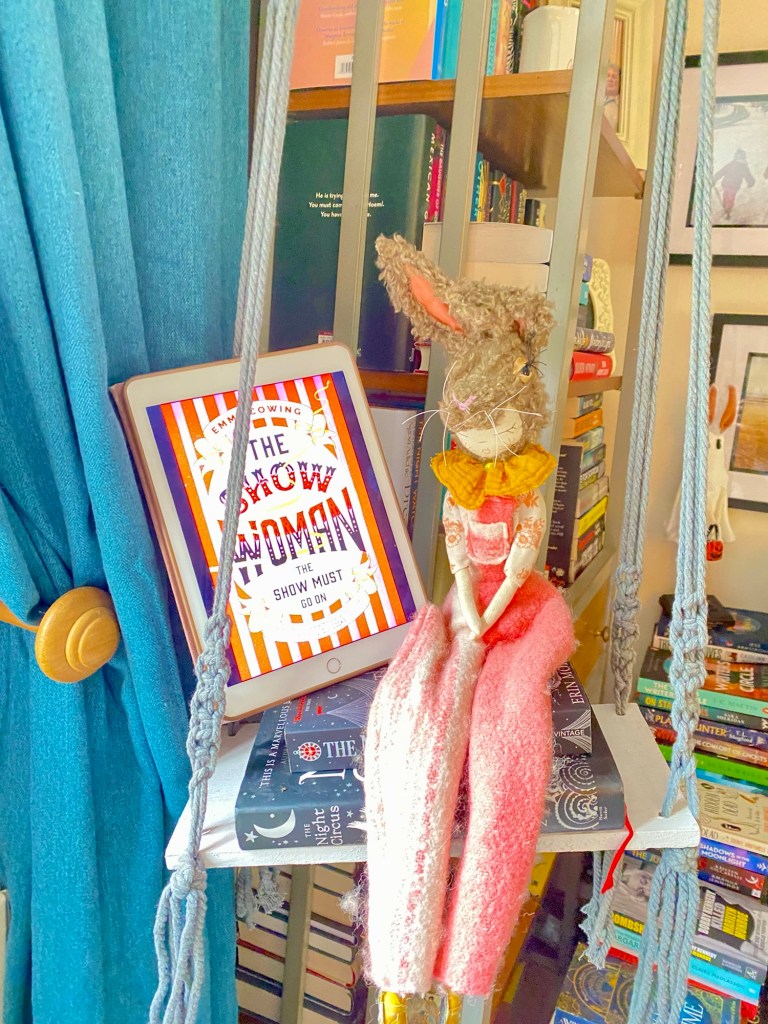
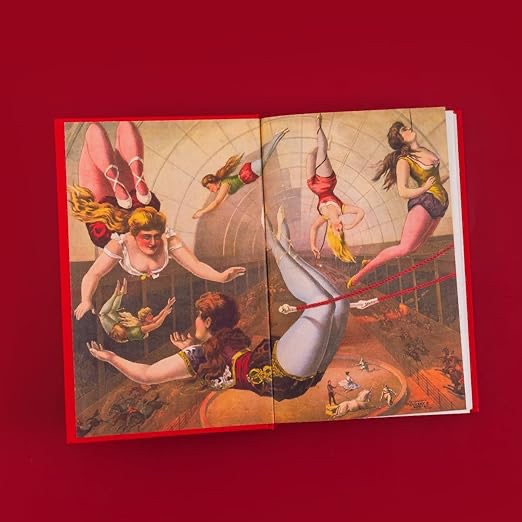
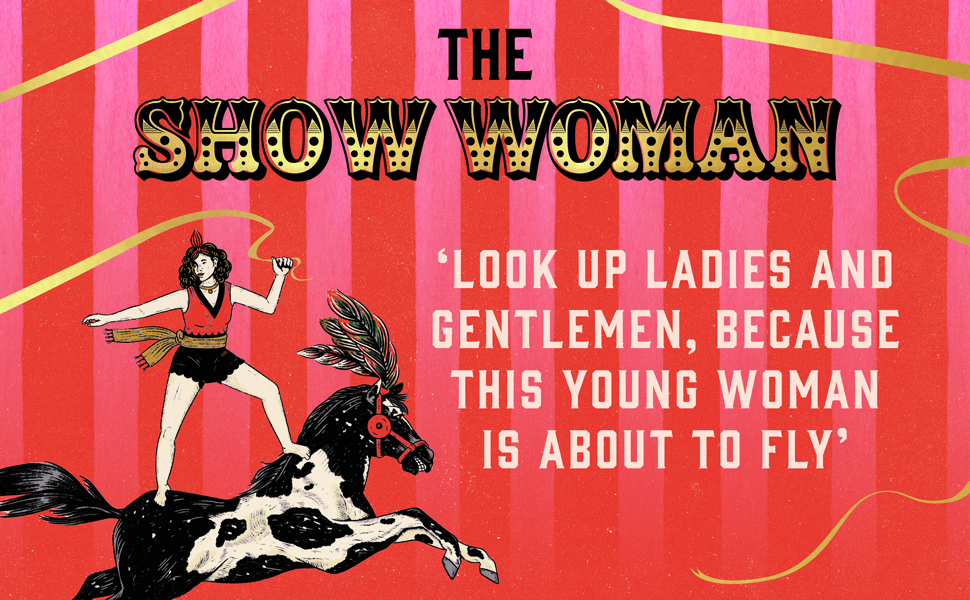
I loved this book about four women brought together creating an all female mini circus. Lena is the show woman of the title and as well as managing all their finances and planning, she is the ring mistress. Violet escapes another circus to become their trapeze artist. Rosie is their bareback rider, while Carmen can be a musician, acrobat and dancer whose costume is a swirling rainbow of ribbons. Set in 1910, we meet the Grand Dame of the show circuit in Scotland – Serena Linden. Serena is the show woman behind Linden’s Circus renowned throughout Scotland and the only circus to perform at Balmoral for Queen Victoria and the royal family. Serena is the old guard who has inherited her circus from her father. She is old, arthritic, bitter and quite capable of settling scores with trickery and violence. She particularly likes to thwart those who flee her employ and move to other shows or even worse,start their own.
Lena has always been at the background of the circus and fair ground scene she has lived in all her life. Her mother disappeared a long time ago and she doesn’t remember her. Now her father has died and has left just their caravan and his carousel. She is told she’d better it sell it if she wants to have a life, because her only other options are to find a husband or a factory job. That’s until Violet arrives with a proposition. Violet is known for her flame red hair and her talent on the trapeze, she is known by fairground people as the greatest trapeze artist that’s ever lived, but also for being outspoken and a bit of a loner. What if they started their own show? They’re both outcasts and have nothing to lose. When they start to look for performers they find two more women on the run. Rosie has practiced her bareback riding with her pony Tommy for years. In fact she never imagined escaping her abusive father, but couldn’t stand it any longer. Finally there’s Carmen, a beautiful Spanish girl with luscious black hair and a lot of secrets. She dances and performs acrobatics in her rainbow ribbons. With Lena as ringmaster and an old but serviceable tent can they last the season?
I loved spending time with these wonderful women. I wanted to mother Rosie who desperately needs to let the truth out about her father and the after dark fumbling in the laundry cupboard. Her relationship with Tommy the pony is so beautiful because of the trust they have in each other, so when he fell ill I was so worried. Her burgeoning feelings for Violet are so pure and totally separate from the shame she’s holding onto. Violet is brilliantly herself and never tries to be anything else. She has a preference for women and has years of experience in this world, knowing how careful she must be. She knows that leaving Linden’s was risky so when their show is sabotaged she wonders if it might be Serena’s goons. Especially when they wreak the ultimate revenge on her specifically. Violet doesn’t know how she’ll cope if she ever can’t fly. Carmen keeps her cards close to her chest but somehow finds a home with the other women. She holds a lot of shame, for the years she spent on the streets, destitute and selling the only thing she has left. It’s this past that threatens her place in the show, when a misunderstanding comes between her and Lena.
I really enjoyed Lena, who’s strong and old, perfectly capable of organising three women and travelling from place to place iin season. It’s Lena who gets up early, has a dip in the river or stream then sets up the camp fire and cooks breakfast for the others. I could imagine her in her usual ‘ringmaster’ outfit, with the combination of the masculine clothes her long hair and red lipstick bringing a sass and sexiness to her role. Love is her undoing. It’s an instant attraction between her and Violet’s brother Harry, who no longer works on the shows but has become a music hall singer. He offers advice on the show and protection when a couple of men lurk around the caravan, seeing four women as sitting ducks. When the women’s luck changes and Violet is angry and frustrated she lets slip a secret that breaks Lena’s heart. The women come apart. Can Lena find out about the sabotage and her family history by visiting Serena Linden?
Lena is determined to understand her past , uncovering a kinship between her and one of the others that has been hidden for years. She is also determined to find out who committed the act of sabotage against Violet. Was it about the show or was it more personal? She becomes the head of this family, determined to bring them all back together. A community that fully supports each other, who listen and understand the circumstances and pain that has brought them here. I was rooting for all of these women and not just the show, but their new found independence and friendships. It was those evenings where they were talking in the caravan after a show, too full of adrenaline to sleep. Or the warm and sunny days when they got chance to swim in a local lake or river, to wash their hair. Then there were the joint efforts to save Rosie’s pony. It’s these moments that are just as magical for these women as the seconds before Violet lets go and flies through the air.
Out May 1st 2025
Meet the Author
Emma Cowing is a journalist and author. She was shortlisted for the 2023 Cheshire Novel Prize, and longlisted for the 2023 Bath Novel Award and Blue Pencil First Novel Award. She lives in Glasgow with her husband Jonathan and their cat, Moses. The Show Woman is her first novel.
Spring is here!! Finally. Today is warm -ish, but sunny with daffodils and jasmine brightening up the garden. My other half is cutting the lawn and washing is going on the line for the first day this year. I’ve had a lot of chances to read this month as I still can’t move far, so I’ve taken on some new and some older reads too. My favourites of the new books I’ve read this month are a balanced mix of historical fiction and crime novels. Our historical offerings take us to the South of France and the home of Henri Matisse, to Paris on a train that might be lucky to arrive and a Scottish island that’s closer to Norway. The crime novels are set in two of my favourite places, Snowdonia and Northumberland, while the final one is a Scandinavian setting, written by two talented authors it’s an unforgettable novel.
Hope you’re all enjoying this beautiful weekend.
When in Northumberland I visit a couple of bookshops, Barter Books in Alnwick for second hand finds and Cogito Books in Hexham for their non-fiction and new releases. Last time I had some book vouchers so I went to Hexham and was recommended Mari Hannah’s Stone and Oliver series. I bought the first one then found more of the series in charity shops, but hadn’t got round to reading them yet. So when a publisher offered this I wondered whether I should, but I can’t resist and now Im setting aside time to read the rest of this series.
Frankie Oliver and David Stone have been working together in the same MIT for the a few years, but this book starts in a much darker place when another detective was called to a body found on some waste ground. Horrified, he drops to the floor unable to contain his devastation. The body on the ground is his daughter. It’s such a powerful and emotive opening, leaving us in no doubt that this is a defining event for the loved ones of this girl. An absence that the Oliver family feel every day. It’s arguable that this case is the very reason that Frankie Oliver became a detective. She and David Stone are an incredible team at work and have the potential to take their relationship further. It’s clear there’s been some ‘will they won’t they’ over the course of the previous novels. Now Frankie is taking a break from the team in Newcastle, a promotion to DI means she must fill a post back in uniform based out of the most northerly police station in the county, Berwick-Upon-Tweed. Frankie accepts and the team organise a leaving ‘do’. It’s there that Dave overhears an argument that immediately propels him back to the murder of Joanna, Frankie’s sister. What’s said between the two men outside the venue sparks an idea in Dave’s mind. He has had an idea of how to investigate the cold case, but knows that he doesn’t want to bring more pain to the family. Hopefully Frankie’s secondment to Berwick means they won’t have to.
Meanwhile Frankie’s first job is an RTC on the A1 and in the total chaos she finds a little boy handcuffed in the back of a van. The driver and passenger are dead and the van is a write off so Frankie can’t believe this little boy has survived. As she rescues him, an onlooker tells her that a man escaped out of the back doors straight after the crash. This opens up a trafficking case that might take her straight back out of uniform again. The boy, Amir, takes to Frankie. Possibly the first person in a long time who has made him feel safe. As for the relationship between Frankie and Dave, I was very much invested despite not knowing everything that’s gone before. The setting is beautifully captured in it’s contradictions: the modernity and buzz of Newcastle with the contrast of the wild countryside and beautifully rugged coastline. This really is a nail-biting story, written in very short chapters that are easy to devour very quickly. So many have a brilliant cliff-hanger ending too. I can’t wait to read more.
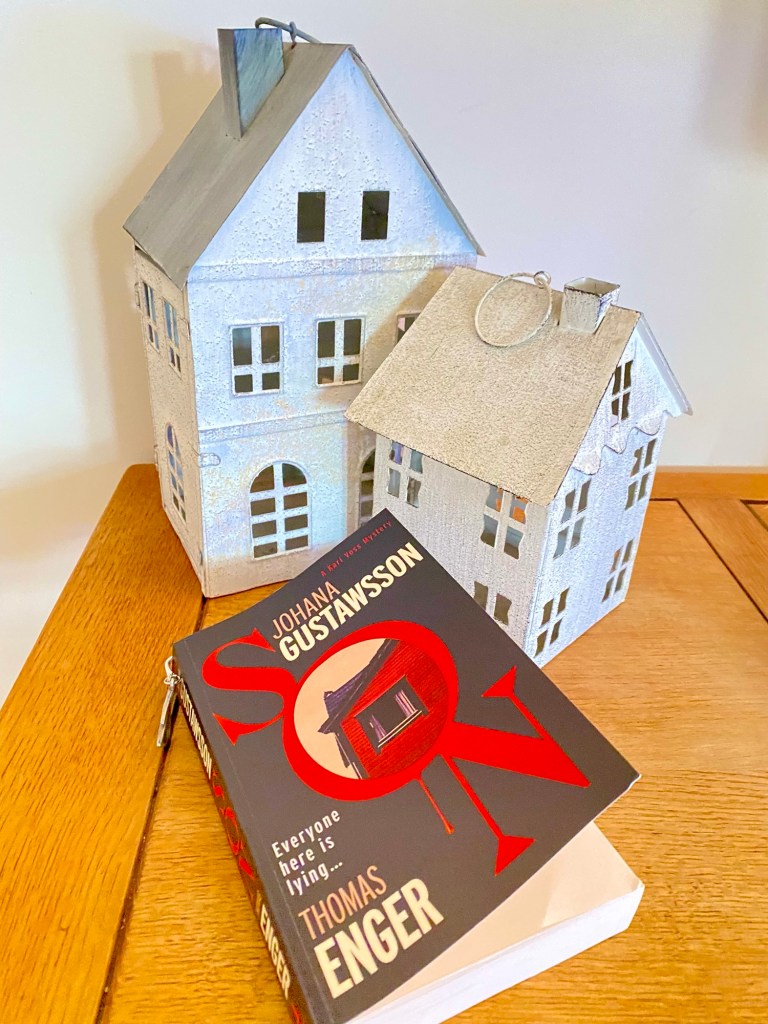
The blurb on the back of this novel promises an electrifying blockbuster that will be the start of a ‘nerve shattering’ new series. So there’s a lot to live up to, but Son definitely delivers. To use a rather inelegant phrase, this novel is a therapist’s wet dream of a novel – hidden characters, unexplained black outs, grief, trauma and an investigator who is dubbed The Human Lie Detector. I was definitely in my element here. Kari Voss is the centre of this tangled web, a psychologist who specialises in memory and body language and acts as a consultant to Oslo’s police force. When two girls are brutally killed in a summer house in the village of Son, it’s a crime that’s closer to home than she would want. The girls, Eva and Hedda, were best friends with Kari’s son Vetle when they were younger. In fact it was while on a holiday seven years ago that Vetle disappeared in nearby woods and was never found. The girls are now teenagers and were planning a Halloween party for their friends, but were found tied to dining chairs with their throats cut. They were found by a third friend, Samuel Gregson, when he turned up to start the festivites and it is also an old friend of Vetle’s that police chief Ramona Norum arrests and starts to question. When Kari is asked to consult she knows this will be difficult, not only is she friends with the girl’s families, their lives are inextricably linked to her missing son. How will she negotiate all the emotions this case will unleash and find the girl’s killer?
No one is what they appear here. As Kari starts to ask questions about Eva and Hedda, it turns out that they aren’t always the polite children or young teenagers they appear to be. The authors are very clever about the amount of introspection they use, creating a hidden layer to the crimes and a breathing space between the character driven chapters and the ones filled with nail-bitingly intense action. There’s even subterfuge in the title, Son is a place slightly north of Oslo, steeped in Nordic history and full of that unsettling atmosphere that I find Nordic Noir is so good at. Yet it’s also a person, so missed by those who love him and inextricably linked to this landscape, that has potentially become his final resting place. I was compelled to read this to the end, taking it everywhere with me on holiday so I could grab a chapter in a coffee shop or even in the car. This is an engrossing and addictive start to a promised new series and I’m already craving the next instalment.
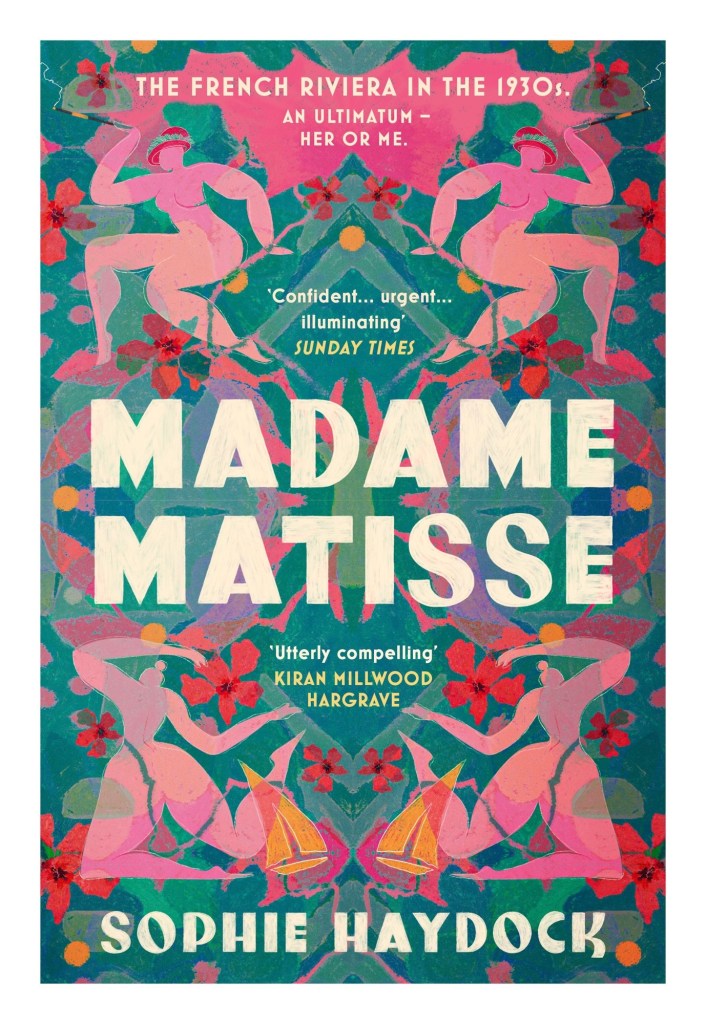
This is the story of three women – one an orphan and refugee who finds a place in the studio of a famous French artist, the other a wife and mother who has stood by her husband for nearly forty years. The third is his daughter, caught in the crossfire between her mother and a father she adores. Amelie is first drawn to Henri Matisse as a way of escaping the conventional life expected of her. A free spirit, she sees in this budding young artist a glorious future for them both. Lydia Delectorskaya is a young Russian emigree, who fled her homeland following the death of her mother. After a fractured childhood, she is trying to make a place for herself on France’s golden Riviera, amid the artists, film stars and dazzling elite. Eventually she finds employment with the Matisse family. From this point on, their lives are set on a collision course. Marguerite is Matisse’s eldest daughter. When the life of her family implodes, she must find her own way to make her mark and to navigate divided loyalties.
Based on a true story, Madame Matisse is a stunning novel about drama and betrayal; emotion and sex; glamour and tragedy, all set in the hotbed of the 1930s art movement in France. In art, as in life, this a time when the rules were made to be broken. I loved reading about these fascinating women, all of which step outside the traditional role of most women of the time. Sophie beautifully situates Matisse within his peer group, especially his great rival Picasso. Then situates each woman perfectly within their history, the most in depth being Lydia’s Russian background and Marguerite’s incredible bravery in WW2. I thoroughly enjoyed looking up the paintings mentioned and seeing Matisse’s representation of the three women who were closest to him and I found myself reading articles about him and Picasso. It left me with a sense of anger and empathy for how much women sacrifice so that men can excel at what they do, realising their ambitions while their wive’s ambitions are forgotten or buried under a suffocating mental load – still the thing women in my group talk about most. These women never take the limelight away from Matisse, even while stripped bare for people to view. The focus is always on the painter, their brush strokes, choice of colour and artistic decisions. I love that in this novel they are more than body parts, they’re shown as the vital, brave, complex and generous women they clearly were.
Set in 1895 when a train did crash onto the platform at Montparnasse, Donoghue places us very definitely in the fin de siecle, with every little detail. It isn’t just her description of the train, which I could picture very clearly, it’s the character’s clothing and their attitudes. There’s certainly evidence of a shift in the Victorian ideals that held firm throughout the 19th Century. In one journey we can see women being more outspoken, having a definite sense of purpose, and a need to determine their own destiny. Women are travelling alone or for work, in the case of Alice she is travelling with her boss as the secretary for his photographic business. She takes the opportunity to talk to him about moving pictures, she has researched the subject and thinks it could be a new market for the firm. Marcelle is researching in the field of science and huge fan of Marie Curie who is so work focused that she went to get married in an everyday blue dress and returned to the lab.I was absolutely fascinated with Mado. She stands out more than she realises, with her androgynous clothing and short hair, not to mention the lunch bucket she’s clutching as if her life depends on it. She’s a feminist, an anarchist and seems to have an interest in reading other people. Her own internal struggle is so vivid that I could feel the tension in her body as I read. She seems contemptuous of many of her fellow passengers, particularly the men, knowing that the Victorian feminine ideal is simply a role women are forced to play. To step outside of the norm is brave and a deliberate outward show of her inner strength and determination to change women’s place in the world. How far might she go to show her resolve?
Gradually I was compelled to keep reading because the tension was rising with every new passenger and because as the reader I was omniscient: Donoghue gives her reader the full story and we know the potential fate of every character on this train. Brilliant as always!
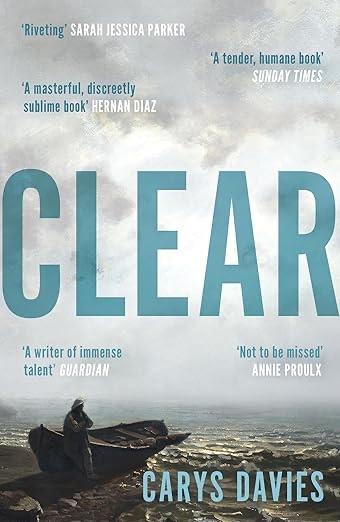
1843. On a remote Scottish island, Ivar, the sole occupant, leads a life of quiet isolation until the day he finds a man unconscious on the beach below the cliffs. The newcomer is John Ferguson, an impoverished church minister sent to evict Ivar and turn the island into grazing land for sheep. Unaware of the stranger’s intentions, Ivar takes him into his home, and in spite of the two men having no common language, a fragile bond begins to form between them. Meanwhile, on the mainland, John’s wife, Mary, anxiously awaits news of his mission. Against the rugged backdrop of this faraway spot beyond Shetland, Carys Davies’s intimate drama unfolds with tension and tenderness: a touching and crystalline study of ordinary people buffeted by history and a powerful exploration of the distances and connections between us.
Clear is so beautifully set within some very significant events. In the 19th Century evangelical worshippers moved away from the Church of Scotland to form the Free Church of Scotland. Also, there was a second wave of Scottish landowners driving their tenants from the land, choosing to make a better profit grazing sheep. This was just one part the Highland Clearances. Our characters are deeply involved with these events. This is such a gentle story that contains so much. Instead of pushing an agenda or viewpoint, the author just lets it play out naturally. Ivar is part of this island, a bear of a man with only his animals for company. There’s a purity to his life that’s almost spiritual, an interesting contrast to John’s organised religion. There’s so much under the surface of the story, told in the tiny details of everyday life: their gestures, the intimacies they share and how those connections change as a language is formed between them. It’s interesting to see the established dynamic of John and Ivar affecting how Mary settles into the cottage. The men’s connection brings the three of them into a unit, so that they don’t feel like a married couple and a lone man any more. Each of them forms a strong connection with each other and the landscape. I found reading this an almost meditative experience, because it’s so slow and calm, until the sudden end.
Living and working in Snowdonia was always retired detective Frank Marshal’s dream. Until a phone call asking for his help turns it into his worst nightmare. Retired detective Frank Marshal lives in a remote part of Snowdonia with his wife Rachel who is suffering from dementia. Working as a park ranger, Frank gets a phone call from close friend Annie, a retired judge. Her sister Meg has gone missing from a local caravan park and she needs his help to find her.
As Frank and Annie start to unravel the dark secrets of Meg’s life, it seems at first that her disappearance might be linked to her nephew and a drug deal gone wrong. In a shocking twist, their investigation leads them to a series of murders in North Wales from the 1990s and a possible miscarriage of justice. Can Frank and Annie uncover the sinister truth so they find her sister in time to save her? Or will a brutal serial killer add Meg to his list of victims?
I’m always complaining about thrillers and crime novels that rely on their twists and turns without any depth to the characters or the story. I couldn’t complain at all here. There are twists, including one I only started to suspect few pages before it was revealed. This book was full of emotion: Frank and his wife sitting in bed and looking at old photos was so poignant since both know her dementia is progressing and she is slowly forgetting it all; the beautiful relationship between Frank and his grandson; Annie’s grief over her sister’s disappearance and her nephew’s accident. All felt like fully realised people, even those only in the novel a short time. I could see Frank locking horns with police chief Dewi in the future or the scouse drug dealers. I loved the setting too, the author has managed to capture it’s beauty and it’s bleakness. This was a cracking mystery that crept up on you slowly then didn’t let you put it down. I’m looking forward to many more adventures with Frank Marshal.
So that’s all for March, but next month’s reading is busy as always. Here are a few books still lurking on my TBR for April. It’s going to be a great month.
Living and working in Snowdonia was always retired detective Frank Marshal’s dream. Until a phone call asking for his help turns it into his worst nightmare.
Retired detective Frank Marshal lives in a remote part of Snowdonia with his wife Rachel who is suffering from dementia. Working as a park ranger, Frank gets a phone call from close friend Annie, a retired judge. Her sister Meg has gone missing from a local caravan park and she needs his help to find her.
As Frank and Annie start to unravel the dark secrets of Meg’s life, it seems at first that her disappearance might be linked to her nephew and a drug deal gone wrong. In a shocking twist, their investigation leads them to a series of murders in North Wales from the 1990s and a possible miscarriage of justice.
Can Frank and Annie uncover the sinister truth so they find her sister in time to save her? Or will a brutal serial killer add Meg to his list of victims?
I love Snowdonia and have visited at least once a year since I was a child, even now staying in or close to the farmhouse we’ve booked since I was 12 years old. I also enjoy crime fiction so I can’t believe I haven’t come across Simon McCleave before. This is the start of a new series so I have the joy of going straight to the beginning of his other novels and devouring them. Frank Marshal is an interesting man, the ex-detective and mountain ranger lives in Snowdonia with wife Rachel who has dementia. For most of the novel their daughter Caitlin lives in the annexe with her son after fleeing an abusive relationship. It was quite a slow start to the novel but I could see what the writer was doing, setting the scene of the awe-inspiring landscape and also sowing seeds for future novels. I could see family issues and heartbreaking choices ahead for Frank, as well as some future rivals in the force and the criminal world. Annie was an interesting character too, an ex-judge and described as a close friend of Frank’s, he definitely shows his commitment and loyalty to that friendship as he puts himself in danger to find her sister Meghan. In a lot of ways Frank reminded me of my own father who has spent his life climbing all over Welsh mountains as a youth worker and climbing instructor. Frank’s desire to protect his family, as well as forgetting his age in the process was very familiar to me. Thank goodness my dad doesn’t have his guns anymore, but he’s not afraid to put his bare knuckle fighting and boxing skills to use when necessary. He’s a real worry. So I could imagine being Frank’s daughter and I recognised his determination when he realises half way through a fight that he’s feeling almost all of his 71 years.
The story really picks up speed after the first few chapters and as it became more addictive, I admit I stayed up until 1am this morning to finish. I had a hunch and I had to see how it played out. Frank and Annie’s investigation starts as Meghan goes missing and her son Callum turns up in hospital with amnesia. Annie doesn’t want to think that her nephew has anything to do with this, but at first they make a couple of discoveries that seem to point in his direction. However there are other potential avenues. The murky world of a 1990s serial killer, convicted when Frank was still on the force and a drug boss who dresses like a Boden model but is a Scouse gangster underneath. Frank’s police connections get them places most people couldn’t, including visiting a serial killer. They have a couple of nasty skirmishes too and I had to keep reminding myself that this was a couple of OAPs! Annie is equally ballsy and has some connections of her own, including a youth offender who now works in IT so he can care for his elderly mum. I’m fascinated with cold cases, in terms of the science we now use to convict offenders decades later, but also because of the things that are missed and dismissed. There’s a detail that’s so important to finding the truth that was completely dismissed by officers due to the witness being a sex worker. I watched a documentary about the Yorkshire Ripper where the police’s attitude to first killings was almost a shrug of the shoulders because they were sex workers. Yet when he killed a young woman on her way home after a night out both police and press said it was his first ‘innocent’ victim which made my blood boil. Frank and Annie find the witness, who has two very pertinent clues ignored for thirty years that could be the key to the case.
I’m always complaining about thrillers and crime novels that rely on their twists and turns without any depth to the characters or the story. I couldn’t complain at all here. There are twists, including one I only started to suspect few pages before it was revealed. However, the book was also full of emotion: Frank and his wife sitting in bed and looking at old photos was so poignant since both know she is slowly forgetting it all; the beautiful relationship between Frank and his grandson; Annie’s grief over her sister’s disappearance and her nephew’s accident. All felt like fully realised people, even those only in the novel a short time. I could see Frank locking horns with police chief Dewi in the future. I felt totally creeped out by Meghan’s rather unsettling neighbour at the caravan park. I was even interested in the scouse drug dealers and could imagine them finding their way into future storylines. I loved the setting too, the author has managed to capture it’s beauty and it’s bleakness, plus I look forward to visiting the Barmouth chippy when I go there later this year. This was a cracking mystery that crept up on you slowly then didn’t let you put it down. I’m looking forward to many more adventures with Frank Marshal.
Out now from Stanford Publishing
Meet the Author
Simon McCleave is a multi million-selling crime novelist who lives in North Wales with his wife and two children.
Before he was an author, Simon worked as a script editor at the BBC and a producer at Channel 4 before working as a story analyst in Los Angeles. He then became a script writer, writing on series such as Silent Witness, The Bill, EastEnders and many more. His Channel 4 film Out of the Game was critically acclaimed and described as ‘an unflinching portrayal of male friendship’ by Time Out.
His first book, ‘The Snowdonia Killings’, was released in January 2020 and soon became an Amazon Bestseller, reaching No 1 in the UK Chart and selling over 400,000 copies. His twenty subsequent novels in the DI Ruth Hunter Snowdonia Series have all been Amazon bestsellers, with most of them hitting the top of the digital charts. He has sold over 3 million books to date.
‘The Dark Tide’, Simon’s first book in an Anglesey based crime series for publishing giant Harper Collins (Avon), was a major hit in 2022, becoming the highest selling Waterstone’s Welsh Book of the Month ever.
This year, Simon is releasing the first in a new series of books, ‘Marshal of Snowdonia’ with several more planned for 2025.
Simon has also written a one-off psychological thriller, Last Night at Villa Lucia, for Storm Publishing, which was a major hit, The Times describing it as ‘…well above the usual seasonal villa thriller…’ with its ‘…empathetic portrayal of lives spent in the shadow of coercion and abuse.’
The Snowdonia based DI Ruth Hunter books are now set to be filmed as a major new television series, with shooting to begin in North Wales in 2025.












 The Lotus Readers