One by one, she undid each event, each decision, each choice. If Davy had remembered to put on a coat. If Seamie McGeown had not found himself alone on a dark street. If Michael Agnew had not walked through the door of the pub on a quiet night in February in his white shirt.
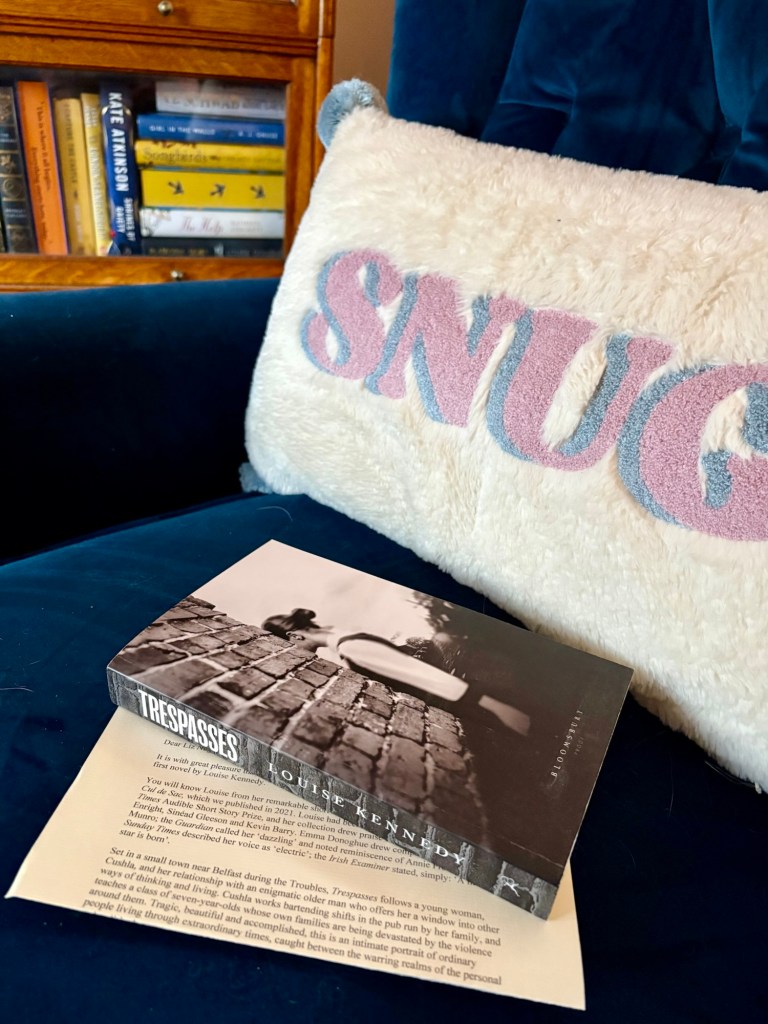
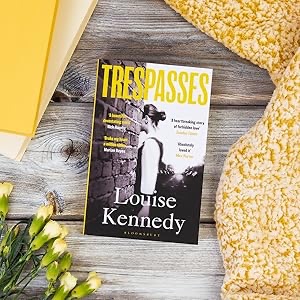
I came late to this incredible story of love set in Ireland, a story that reaches across the barriers of age, religion and fidelity. I was first sent it in 2022 and read it once, then decided to read it again before watching the television series. On an ordinary day Michael Agnew walks into the pub belonging to Cushla’s family and a chain of events is set in motion that can’t be undone. Cushla teaches seven year olds who already know phrases like rubber bullet and petrol bomb, everything is upside down so why wouldn’t the married, Protestant barrister lock eyes on the Catholic schoolteacher half his age. As Cushla tries to help her pupils, particularly Davey McGeown, and deal with her alcoholic mother, she conducts a secret love affair, but there are forces moving beyond her control. As she desperately tries to keep all the disparate parts of her life under control and apart, they are on a collision course. I couldn’t stay away from this brilliant book, feeling so much for this young woman who simply falls in love in a place that’s far from simple. Her relationship with her mother is fascinating and as she moves in very different circles with Michael we feel her self-consciousness and doubt about herself. This is a place and time with very different rules to ours and their impact is utterly devastating.
We experience everything through Cushla, a young girl who works as a schoolteacher by day and struggles with boundaries. She goes above and beyond for Davey McGeown, with lifts home from school and loaning books to him and his teenage brother Tommy. When their father is severely beaten by paramilitaries she continues to help, at a potentially huge cost to her family’s safety. I loved her instincts to help but also understood her brother’s warning. Her home life can be a struggle, her mother Gina made me hugely angry with her drinking and self-pity. Sometimes she’s fit for nothing but bed, then on other occasions she can pull it together, especially if there’s a situation where she can be the centre of attention. It is this formative relationship that makes Cushla a ‘rescuer’ and leaves her open to being exploited. We see her relationship with Michael through her eyes only, the attraction is instant and mutual but only develops when he asks if she’ll teach him and his friends the Irish language. At first she feels a fool, taking her school books to people with advanced qualifications who are so much older than her. We never know Michael’s motivations, although he does seem to fall in love with Cushla we don’t know if the lessons are a manipulation. A means of spending time with her. I was watching to see if he was practised in adultery, is he a serial seducer of young women? No one mentions his wife in the small circle of friends she meets. There’s a huge power imbalance between them and Cushla never really thinks about his other life, until it’s right in front of her.
Love of any sort seems gentle and tender when placed against the backdrop of the troubles. Beatings and bombs are a regular occurrence. Violence is never far away. Killing is mentioned with regret and reverence, but still more casually than you’d expect. However, it is devastating to those left behind. As Cushla’s love affair with Michael intensifies so do political tensions in the town. Cushla’s attention is drawn by dramatic events close to home, totally unaware of where the real danger lurks, with tragic results that left me heartbroken. I loved the naivety of Cushla and her wish to make other people’s lives better. She’s less good at looking after herself and the secrets she keeps mean that when tragedy does strike she cannot share it and is utterly alone. It is only with the backdrop of this tragedy that Cushla sees how fragile peace and love can be. Her life is like a hall of mirrors, with events looking different depending on which position they’re viewed from. If Michael hadn’t stopped by the bar that night. If she’d never helped Davey McGeown. A photograph she finds in the bar shows that night and to those people drinking in the bar this is as close as she and Michael are, only she knows different
“Michael standing at the counter […] Cushla’s hands were just in the frame, slipping a beer mat under his whiskey, his outstretched fingers almost touching her wrist.”
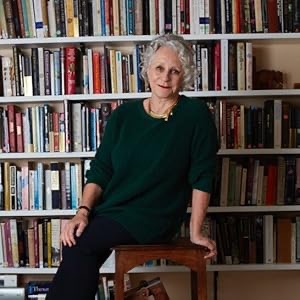
This is an incredible debut from Louise Kennedy that captures the naivety of youth while also exploring infidelity, betrayal and complicated raw grief. This may be a secret love but is no less powerful for that.
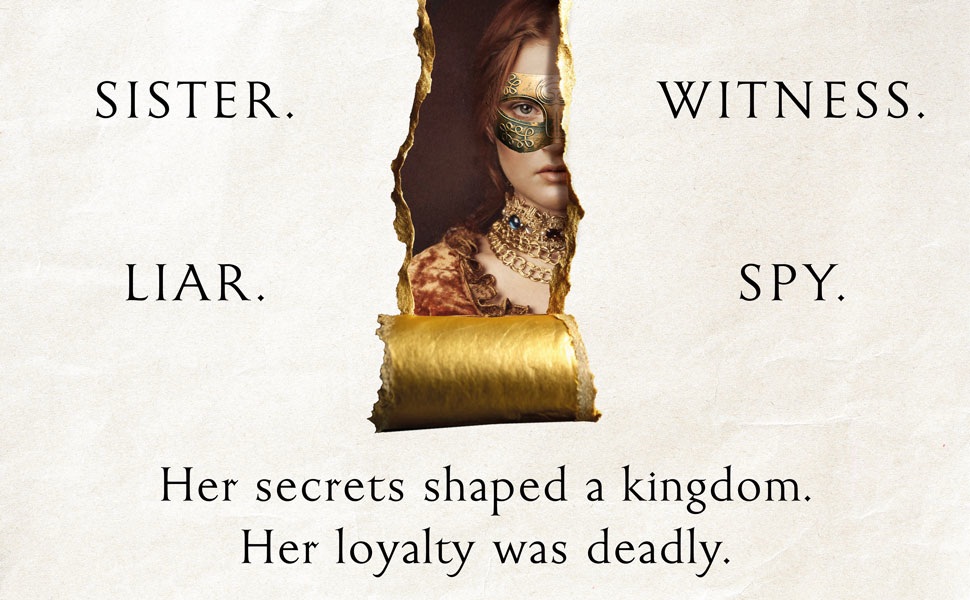
She survives four queens. Will she fall to a tyrant?
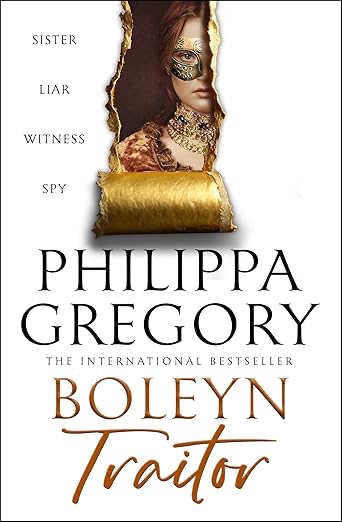
Philippa Gregory brings the Boleyn traitor into the light in an explosive story of one woman’s survival in the treacherous heart of the Tudor court.
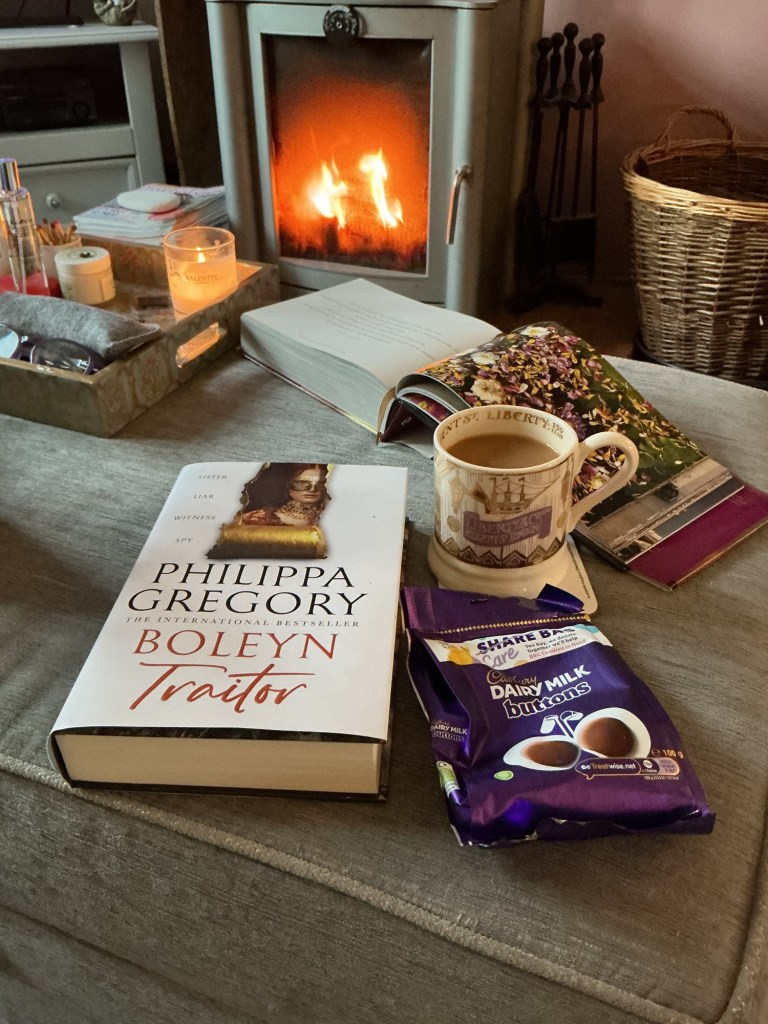
It’s been a while since author and historian Philippa Gregory delved into the lives of the Tudors, but what a character to come back to. I’ve always been interested in those women who survived Henry VIII, not just Katherine Parr but Mary Boleyn, who was the subject of Phillipa’s first book and managed to spurn court and live in the countryside with her husband and children. There’s Anne of Cleeves who had the common sense to take an annulment and lived the rest of her life as a wealthy woman. Then there’s Jane Boleyn, one of those fascinating people who seems in the background and very unimportant. In fact when I first read about Anne Boleyn her sister-in-law was no more than a functionary, a lady-in-waiting with no bearing on the main story. However, the more I read, the more interesting little snippets occurred to me. She’s named as someone who betrayed their own husband in the trial Henry VIII held against Anne and three men who were close to her, including her brother and Jane’s husband, George Boleyn. I wondered why he wanted to prove incest against Anne, when her adultery was treason anyway. This was a claim that had anger and spite behind it, that wanted to taint and bury the name Boleyn and with Jane surviving the fall it seemed likely that she had provided this salacious claim, perhaps jealous of her husband’s close relationship with his sister. Maybe she was just lucky, but Jane survived four queens, serving as lady in waiting from Katherine of Aragon to Katheryn Howard. That shows she was accomplished at court and able to weather the changes under a very unpredictable king. She survived the change from Roman Catholicism to the Church of England and the huge change in Henry’s court when he became less dependent on the opinions of his dukes and more on the commoner Thomas Cromwell. So I was really looking forward to reading more about this woman and her perspective on a story we know very well.
Of course there was a certain amount of repetition, but that’s my fault for having read everything there is to know about Henry’s court. Even though we’re firmly in Henry’s time, this book felt strangely contemporary in its themes. As it goes along we start to see Henry the tyrant emerge from the sought after and enlightened prince he once was, possibly due to the blow on the head he suffered while jousting. Now America is in the grip of a similar man, they’re both petty, vindictive, vengeful and willing to manipulate the truth to get the outcome they want.
“Pity about the horse” my father says […] “the King had him beheaded”.
By the time we reach Cromwell’s search for a new wife, after the death of Jane Seymour, Henry seems on the brink of insanity and no one can say no to his demands. A whole court revolves around his wishes, no matter how irrational they may be.
“The King kills those closest to him […] he loves them at first, calling them to his side to make himself shine and then he cannot tolerate that they eclipse him.”
Philippa writes a brilliant scene based on what we know of Anne of Cleeve’s arrival in the country. We know she spoke very little English or French, but she also had no experience of Henry. One of his foibles was dressing up and fooling people with his appearance. He failed to realise that his sheer size, not to mention his gait which was affected by the wound on his leg, meant he was likely to be identified whatever mask or disguise he wore. Used to the pandering of his courtiers who would pretend not to know him, he was horrified when he burst into Anne’s room dressed as a beggar and she failed to recognise him, even flinching at his touch. It’s was an appalling first impression and Philippa writes Jane as desperately trying to stop it from happening. Jane had spent time with the German bride and knew she wouldn’t get the King’s humour, pleading with Cromwell to stop him. However, it was too late and this woman’s reaction to him would have been a huge dent to his pride. This rejection doomed their relationship before it started, with Henry claiming she was overweight, her breasts were slack and she had a strange smell – a rather bold claim considering Henry’s persistently infected leg and his courtiers having to hold perfume to their noses to disguise the smell. The annulment was swift and Henry’s eye was drawn to a new girl at court, the fifteen year old Katheryn Howard.
Of course, there is also a contemporary parallel between Katheryn Howard’s past at her aunt’s home and Epstein scandal. She was supposedly being trained as a lady-in-waiting but Gregory’s past novel about Katheryn’s short time as Queen reveals that this finishing school in Norfolk is a magnet for the men of the area who are allowed to visit the girls at night. Katheryn has always been portrayed as promiscuous and it is thought by more recent historians that she was sexually active from a very young age of about twelve to thirteen. We would now consider this grooming of a minor for sexual exploitation and it’s worth remembering that she was executed for treason due to her infidelity with Thomas Culpepper, who had been the King’s favourite, but also for adultery with young men she met before she’d ever come to court. Henry changed the law specifically to charge her with this when he had the evidence to sign her death warrant anyway. He’s not alone in his predilection for young women. His best friend Charles Brandon, Duke of Suffolk, has a young ‘ward’ who lives at Grimsthorpe Castle in my home county of Lincolnshire. As a middle aged man he thinks nothing of marrying her as soon as she’s of age and taking her property as his own. He’s also a lot less appealing when I’m not imagining Henry Cavill who played him in The Tudors. I found the scenes where Henry is brought to Katheryn’s bedchamber almost unbearable to read, but I can’t deny that they are well written. Henry is described as bloated, sweating and leaning upon his courtiers who have to heave him into bed with this young girl. We know he is likely to be impotent at this point in his life, but the fact that this tiny girl has to try and initiate sexual activity with him made me feel sick. I felt a tremendous pity for her and a hope that she found some moments of happiness and love in her short life.
Gregory writes Jane as a woman who lost her husband, her status and her role as a mother to serve this tyrant King’s court. It’s so fascinating to read how she stays within the King’s good graces for such a length of time. Here the author writes an alliance that might explain that, but we can see she’s intelligent in her own right, speaks several languages, is good at reading people and has a shrewd ability to sense which way the King might drift next. I found myself admiring her quick thinking and felt she could have easily been a politician or spin doctor in modern times. Something that stood out strongly in this novel was the misogyny, which wasn’t surprising but still felt desperately unfair. After Henry suffers his jousting accident he is unconscious for anything from 45 minutes to a couple of hours, with Anne distraught and by his side. Later she miscarries and as awful as that experience is, having been there more than once, what struck me was the shame and guilt she was made to feel. The rush to clean her up and change the bed, making sure it’s all presentable and the Queen looks well enough to accept a visit from the King. Her brother George is the only man who goes to bring comfort, not caring what state she is in. This belief that women are unclean and should come to a marriage bed untouched, no matter how experienced her new husband may be, does breed a resentment and fury into those women. That can start to question in their own mind but it can’t be voiced yet. This is about little rebellions and pushing the boundaries of the powers they do have and Jane is very good at this, knowing which powerful men to trust and those to placate. I found the book gripping even though I knew the outcome would not change and I think that’s a great skill to have. Gregory takes people we know from school and history books and makes them into living breathing humans, with wants and needs that are no different from ours. I felt Jane’s loneliness and this was perhaps why she helped Katheryn in her love affairs. Both have had very little love in their lives and for Jane living this vicariously was so tempting, but very dangerous. This was an interesting look at the Tudor court from the viewpoint of a character whose position makes her almost invisible but also a very compelling witness.
Meet the Author
Philippa Gregory is an internationally renowned historian and novelist. She holds a PhD in eighteenth-century literature at the University of Edinburgh and is a fellow of the Royal Historical Society and the Universities of Sussex and Cardiff, an honorary research fellow at Birkbeck University of London and she was awarded a CBE in the Queen’s Birthday Honours for her services to literature and to charity. Her novels have been adapted for stage and screen and in 2023 she published her groundbreaking history book, Normal Women – 900 Years of Making History, which was also released as a podcast, a teen edition and a series for young children.
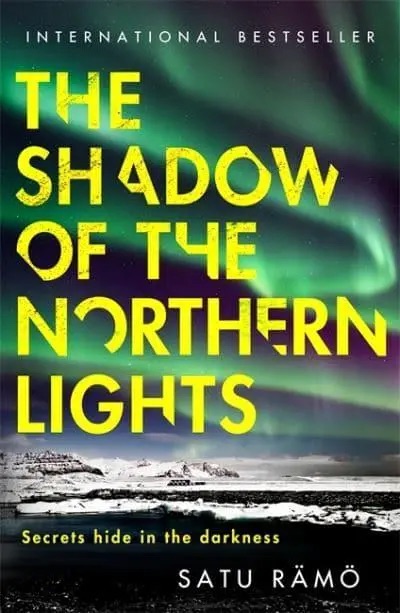
As Christmas comes to the west cost of Iceland, a corpse is found in a fish farming pond. Detective Hildur Rúnarsdóttir and trainee Jakob Johanson barely have time to start their investigation before another body is discovered. And soon a third.
While investigating the case, Hildur’s lost sister weighs heavy on her mind. Meanwhile, Jakob travels to Finland for the hearing of his fraught custody battle, that leaves him facing dire consequences. As the number of deaths continues to grow, Hildur and Jakob are desperate to catch the killer before they strike again.
If I said to you ‘horse vampire crime spree’ you’d probably think I’d gone bonkers, but that’s just a small part of what might be going on in this Icelandic thriller from Satu Rämö. When a body is found suspended by hooks in an Icelandic fish farm in the run up to Christmas, Detective Hildur is put in charge of the investigation, by her objectionable boss Jonas. Hildur’s partner Jakob’s mind isn’t on the job but on his custody battles, so she’s working alone a lot of the time and we’re in it with her, party to her thoughts and theories. So when a second victim has her hair burned off with a candle, a strange idea starts to form. Could the attacker be basing their methods on the Icelandic tradition of the Yule Lads? I’m an avid QI fan and without it I would have known nothing about this particular tradition of thirteen mischievous troll-like creatures who come down from the hillsides and play tricks on people. The translations of their names include Spoon Licker, Pot Scraper and Sausage Swiper, something I have never forgotten since. The case is interesting psychologically, but there’s a lot more going on here and I found myself sidetracked by the lives of the detectives. I did find it a bit slow to get going and I think it was when these family stories developed that I became gripped.
Jakob is rather fascinating – a taciturn character who has the unlikely hobby of knitting. In fact he’s so compelled to knit, that he’s able to do it in the car while Hildur is driving and in waiting rooms. It’s clearly displacement activity and we learn that Jakob has a son with his estranged partner Regina who has taken him out of the country to Finland. Although Jakob is fighting this, he’s now at the mercy of a foreign legal system and is having to fly over to attend court which affects his job and leaves Hildur coping alone. In the midst of her investigation Jakob calls Hildur to give her some shocking news, he has been arrested on suspicion of murder. Regina and the new man in her life have been shot dead in their vehicle while in a car park. Worse than this, a witness has described someone who looks remarkably like Jakob as being in the vicinity before the shooting. He has access to a gun and is in a contentious court battle with the deceased, he knows his chances aren’t good and asks for Hildur. Surely, if she had even the smallest suspicion of Jakob being guilty, Hildur wouldn’t fly to his aid without question?
Underneath everything, this is a novel about family. The estrangement between Hildur and her sisters is so painfully believable and we can see the effects of generational trauma in the family. Their mother was an alcoholic, leading to neglect and one sister being very badly burned. We’re reminded of those small traditions families have that make celebrations personal and bind us together. Yet the story is also full of secrets people are keeping from each other and things they can’t talk about, until the right person comes along to unlock that emotion.
“She knew from experience that she had a hard time forming attachments with anyone who hadn’t known grief.”
This was such an eloquent description of how grief feels, almost like living on a different plane of existence to others. I felt this deeply when in the depths of grief and ever since I’ve been unable to do small talk and my tolerance levels for certain people and activities have lowered significantly. Some doors can only be opened with experience. What kept me reading was Jakob’s situation and the incredibly difficult opening flashback of three boys playing by a lake, a quietly devastating scene with ripples that must have spread through the community for years. The haunting and secretive nature of that event sets the tone for the rest of this novel, a perfect reading choice for those who like their Christmas nostalgic and a little bleak.
Translated by Kristian London
Meet the Author
Hæ hæ! My name is Satu Rämö, I’m a Finnish-Icelandic author of bestselling nordic blue crime series called HILDUR. International rights are sold to 20+ countries and d during the first 2,5 years HILDUR books have sold over one million copies worldwide.
I was born in Finland in 1980 and moved to Iceland twenty years ago as an economics exchange student. Instead of macroeconomics I ended up studying Icelandic culture, literature and mythology.
Living in Iceland, I have written extensively about Nordic culture and life in the North Atlantic, blending my firsthand experiences into my novels.
I live with my family in the small town of Ísafjörður in northwest Iceland. I love ice cream, rye bread and sparkling wines. I drink my coffee with cream as often as possible.
My crime fiction debut Hildur (2022) changed the game for me as an author, totally. HILDUR-series is Icelandic-Finnish nordic blue crime fiction that takes place in a small village in the Westfjords of Iceland. Nordic blue is similar to nordic noir but more human. The stories are from the darker sides of the Nordic society but they also follow how people are dealing with each other in life in general.
Finnish Take Two Studios will shoot the HILDUR series in Iceland with an Icelandic co-production.
Turku City Theather stages HILDUR on their Main Stage in autumn 2024–2025.
I just love writing!
You can chat me your thoughts in Instagram at @satu_ramo I hope to hear from you 🙂
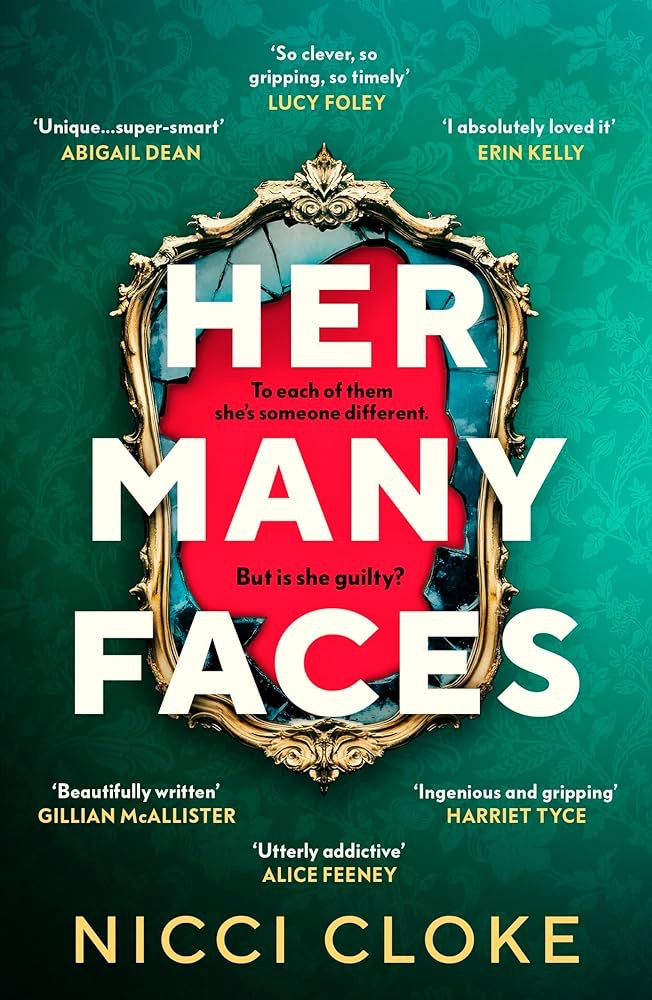
ONE TRIAL. FIVE TRUTHS. BUT ARE THEY READY FOR HERS?
When a waitress is charged with murdering four men at an exclusive private club, her personal life and upbringing are thrust into the spotlight. During the trial, people closest to Katie start to question what they know about her.
Her father remembers the sweet schoolgirl.
Her childhood friend misses her kindness and protection.
Her lover regrets ever falling for her.
Her lawyer believes she is hiding something.
A journalist is convinced she is a cold-blooded killer.
To each of them she’s someone different. But is she guilty?
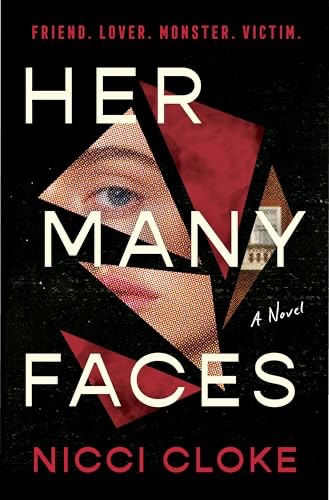
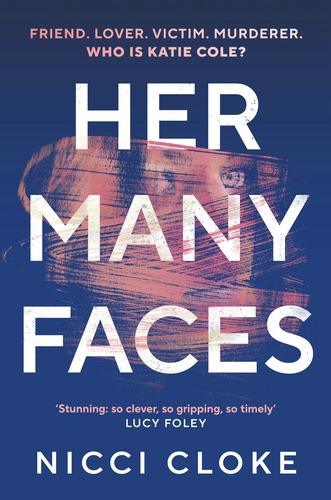
This thriller grabbed me straight away and never let go! The pace was fast, with short punchy chapters containing the narratives of five men each linked in some way to a woman called Katie. Each man has his own name for this woman and their narratives tell us her story as they see it. John is her father, Gabe is her childhood friend, Conrad is her lover, Tarun is a lawyer and Max is a journalist. Each one thinks they know her, each one presents a different face. But who is she and which is her real identity? Is she a combination of all five or nothing like this at all. It’s a timely, compelling and addictive story that you’ll want to finish in one go.
The murder that has taken place at March House has killed four very important men at once. Lucian is a businessman and owner of March House, a private members club for the richest and most influential men in the UK and their guests. His guests that night were Harris Lowe, Lucian’s new right hand man, Dominic Ainsworth MP and Russian millionaire Aleksander Popov. They appear to have been poisoned with an incredibly expensive bottle of brandy laced with poison. Only one person has been serving the party all evening and that is waitress Katie. She is soon under arrest, but what possible motive could she have had to kill these men? Yet when police apprehend her not long after she’s left work for the evening she is reported as saying ‘they got what they deserved’. Is this an admission of guilt or an acknowledgment that whoever killed them, did the world a favour?
It’s hard to get to know Katie because she is simultaneously a wildcat, a conspiracy theorist, a squatter, a farmhand, a waitress or the accused. These are just some of the descriptive words used to label her by the men in her life, but we have to remember that they are viewing her through their own lens. How much can we trust their impressions of her and do we accept that they’re telling the truth? She’s clearly beautiful, even without the ‘right’ clothes she has something that men desire. Conrad feels this when she’s helping out with the pigs on her uncle’s farm but then is shocked when she turns up at his club and his boss Lucien clearly desires her too. Both of them see a sex object rather than the young, troubled woman in front of them. John still sees his little girl, unable to equate the terrible crime she’s accused of with his daughter. However, we learn that she’s always been sympathetic and perhaps a little soft where his daughter is concerned whereas her mother sees her as a naughty child who grew up still getting into trouble. If anyone sees a more rounded Katie it’s her childhood friend Gabe, even if he is in love with her. She pulls him into her internet wormhole of conspiracy theories and he follows her down to London, ready for direct action to change everything that’s wrong with society. Yet when he gets there, Katie is living in a squat and has moved on in her belief system. Gabe has fallen under the spell of the elusive Mr E who appears in the comments under YouTube videos, disparaging the rich and the corruption within the system. He’s saddened to find her working at March House, the centre of online rumours about secret cabals and the ‘real’ people who run the world. He sees the Katie who had these beliefs as the real Katie and now she doesn’t believe or belong to him anymore. Similarly, Conrad sees her as this beautiful, innocent farmhand:
“You’d taken on a hazy, pure quality, a perfume ad of a person. In the cafe you looked ordinary.”
Every so often a book comes along that captures a moment and this definitely does. It isn’t the first book I’ve read where online radicalisation is part of the story and how dangerous it can be to become drawn in by conspiracy theorists. We tend to use the word grooming when it refers to children, but young adults and people with learning disabilities are also vulnerable and political or conspiracy theories seem to be changing the way people view the world without them even leaving the house and experiencing it for themselves. The echo chambers created when we look at certain subjects means people can be left thinking they have the majority viewpoint, no matter how crazy or extreme the ideas. Conspiracy theories are popular because it gives explanations for events that are incredibly complex and totally outside of our control. The realisation that a small group of individuals could hijack a few planes and attack the most powerful cities in the USA is almost too scary. People didn’t want to feel that their country was that vulnerable and open to attack, so they created stories that their own government must have been involved. Mr E directs his followers to March House as the real seat of power and their list of members could easily feed into that narrative. There is no doubt that some dodgy deals and introductions go on there, but the difficulties facing the country are international and much more complex than a few smoking men in a private room, but for some, life being random chaos is a scary prospect.
At the centre of all this is Katie, a lost young woman unsure of who she is and what she wants from life. With no plan or purpose, she lurches from one crisis to the next never feeling safe or grounded. The novel made me angry, especially with Conrad and Max who want to use and exploit Katie. Conrad has the audacity to suggest his connection to her was flimsy at best:
“I could barely even remember your real name. You had come onto me so hard, when I looked back, that in a way it was embarrassing. I was embarrassed for you”.
I was furious and desperately wanted him pulled apart in court by her barrister Tarun. It reminded me of how women who are seen as controversial, such as Caroline Flack or the Duchess of Sussex, are presented and packaged by the media. There’s misogyny at the root of this and it’s the same with the male characters in the book who package Katie into roles and personalities that absolves them for the harm they cause and assuages their guilt. This is brilliantly done by the author who doesn’t put a foot wrong in her characterisation and the pace of this novel. It’s fast moving and she doesn’t waste a single word, keeping you gripped by what might happen next. We’re never sure on what has happened or who is responsible and the courtroom scenes are brilliant meaning it was impossible to put down – there was one late night where I completely wrote off the following day for anything useful. This is powerful and will make you angry, but you won’t be able to stop those pages turning.
Meet the Author
Nicci Cloke is an author and editor based in Cambridgeshire. Her novels have been published in twelve languages, and she has previously worked as a nanny, a cocktail waitress and a Christmas Elf. Before being published, she was a permissions manager, looking after literary estates including those of Sylvia Plath, Ted Hughes and T. S. Eliot, and was also communications manager at the Faber Academy.
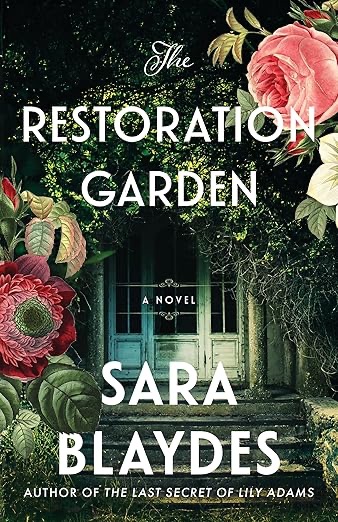
I love spending time in beautiful gardens. One of my favourite childhood places was Chatsworth House, mainly because I had delusions of grandeur and wanted people to ask ‘have you seen Hayley?” “This morning she was in the library.” I also loved the garden because it has such an incredible mix: cozy hiding places (I think I’ve always been Jane Eyre hiding in the window seat), highlights like a bronze willow tree that sprinkles water and creates rainbows, huge tropical conservatories and grand vistas that open up to reveal incredible views of the Peak District. My favourite place was The Grotto, a stone building next to a large pond that was like a bandstand with a pointed roof and open sides. I imagined sitting there and reading, able to look out over the valley below. Gardens are powerful places that can evoke so many different emotions and I was fascinated with our heroine Julia who is a garden restorer. This means having all the landscaping skills and plant knowledge of a gardener with an emphasis on the history of the place. It gives Julia’s job an added emotional element whether the client is trying to recreate a garden from their ancestral past or a garden that existed within the client’s lifetime, potentially bringing up the feelings it once evoked and whatever led to it’s destruction or decline. Here it is WW2 that interrupted the garden’s original beauty, particularly the moonlit garden that was repurposed as a kitchen garden to supplement rationing. Based mainly around greenery and white flowering plants, the emphasis was placed on plants the would reflect moonlight or only flowered at night. Julia’s client Margaret does remember the garden from before the war, but is struggling to convey to Julia the details. The 92 year old lady of the manor is rather enigmatic, but steadfast in her instructions that it should be exactly as it was. So Julia must do some digging into the family’s historical documents and photos so she can hopefully give Margaret those feelings once again. However, digging into the archives will unearth more than plants as family secrets come to light.
“Moon gardens were often believed to be deeply spiritual places, where the barrier between the dead and the living thinned.”
The author tells the story in a dual timeline with two narrators. In the present day timeline we follow Julia’s perspective and her strange position of living in Havensworth Manor with her nephew while she fulfils her contract. It’s a slightly awkward situation, with Julia worrying about the disruption of the house’s quiet, slightly stifling atmosphere. Margaret is her client, but she is often restricted from seeing her by Andrew, Margaret’s nephew who is also a GP. Bringing a curious and excited child into the mix does bring its moments, but there’s a sense of these newcomers bringing the manor back to life again. Sam bursts into this careful and structured home with all the innocence, excitement and curiosity you’d expect from a small boy and he’s a delightful character. Where Julia feels she has to be careful around Margaret, Sam asks the questions that Julia can’t, having been steered away from certain topics like the war by Andrew. More specifically the family don’t talk about Margaret’s sister Irene, but it’s clear that Irene and the garden have a strong link. When Julia finds a sketchbook filled with botanical drawings she is fascinated. In fact the book is a florilegium – where specific flowers are drawn together with their meanings underneath. The Victorians were fascinated by the language of flowers and this artist had a gift for expressing meaning through her flower drawings. We learn that Margaret’s elder sister Irene was the artist, but the two became estranged during the war when Irene fled the family home and brought disgrace on her family. Having both lost a sister, Julia and Irene could connect, with Julia still unable to separate the disparate emotions of grief and anger. Might this common experience help her with the garden?
I felt like the book was a little slow to reveal things in the first third and I didn’t connect with Julia, who sometimes felt more like the catalyst for Irene’s narrative than a fully rounded character in her own right. However, Irene’s story immediately grabbed me as we heard how her life unfolded in her own words as compared to the family version in which she never saw her family or the manor again. All Irene wanted to do was go to art college but her parents refused, even though she was talented enough to be accepted. Art was a pastime for a lady, not a profession. Irene’s life at Havenworth is limited, leaving her both naive and frustrated. This is the perfect combination for James Atherton, a handsome RAF officer to sweep her off her feet, when he comes to stay with her brother. She has her head turned by his flattery, especially when it’s about her work and the romantic symbolism and sentiment of flowers and gestures. When he asks her to run away to London and marry him she only pauses to think about how hard it will be leaving Margaret. She’s soon in the thick of London nightlife, meeting new friends and shopping in Selfridges never stopping to wonder where the money is coming from. London is now in the thick of the Blitz and Irene will have to face the reality of her new life, especially when she’s asked to make a choice she could never have imagined. Her narrative gives the book its urgency and drama as WW2 slices through the life of this family like a knife. The author brings home the differences between life before and during the war, both at Havenworth and in the city, particularly for women. There’s a sense in which Julia and Sam’s presence thaws this family riven with secrets, they bring life into a largely silent house and although Julia worries that Sam might be too much, he seems to work his charm on Margaret and Andrew. As the garden starts to come back to life so do they, actually connecting as a family when it finally gives up its secrets.
Out now from Lake Union Publishing
Meet the Author
Sara Blaydes has been obsessed with books ever since she demanded her parents teach her to read at four years old so she could steal her older brother’s comic books. It was only natural she start crafting stories where she, a perpetual daydreamer, could escape into worlds of her own creation. She currently lives in British Columbia with her handsome husband, two amazing children, and an overly anxious Boston terrier. She believes books are magic, summer is the best season, and parsley is never optional.
As autumn deepens into darkness in Lidingö, on the Stockholm archipelago, the island is plunged into chaos: in the space of a week, two teenagers, the son of the island’s mayor and that of a powerful businessman, are brutally murdered. Their bodies are left deep in the forest, dressed in white tunics with crowns of candles atop their heads, like offerings to Saint Lucia. Maïa Rehn has fled Paris for Lidingö, where her husband grew up, trying to come to terms with the death of their only child in a car accident. But when the murders shake the island community, the former police commissioner is drawn into the heart of the investigation, joining Commissioner Aleksander Storm to unravel a mystery as chilling as the Nordic winter. As they dig deeper, it becomes clear that a wind of vengeance is blowing through the archipelago, unearthing secrets that are as scandalous as they are inhuman. But what if the victims weren’t who they seemed? What if those long silenced had finally found a way to strike back? How far would they go to make their tormentors pay? And you – how far would you go?
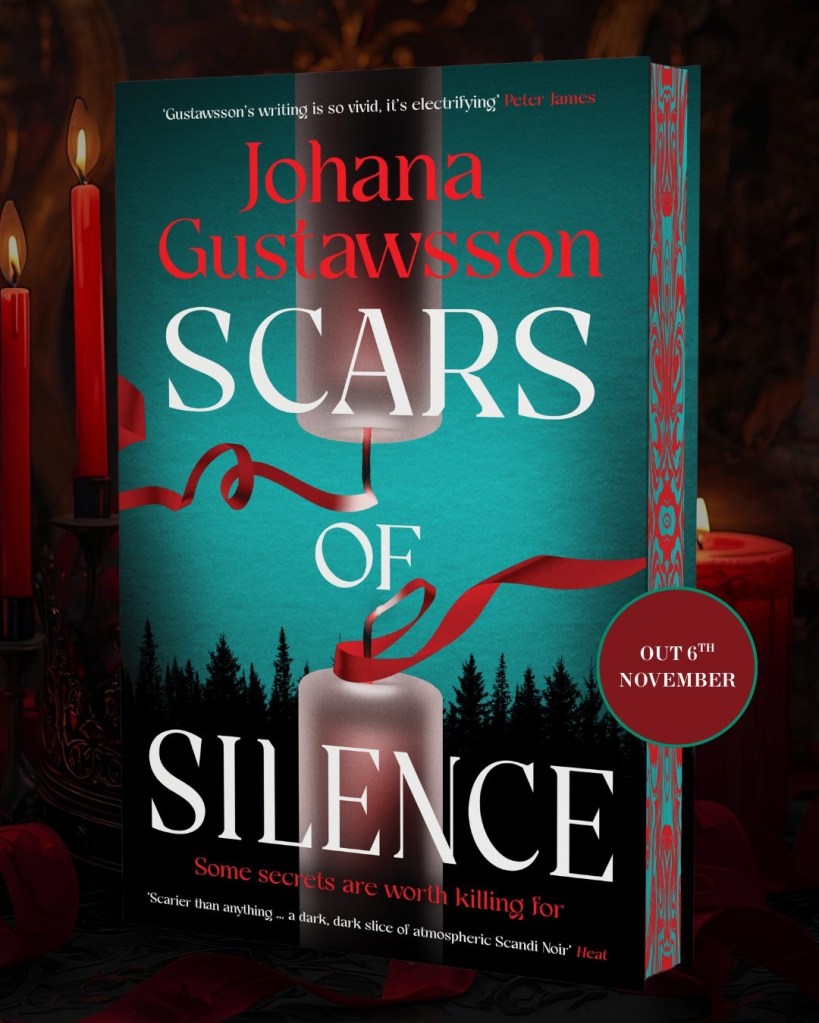
I loved the timing of this novel from Johanna Gustawsson, her second set on the island of Lidingö in the cold, dark run up to Christmas. Here she bases her murder mystery around the feast of St Lucia and it begins when a body is found in the traditional dress of the festival. The victim is wearing a white tunic that’s been slit up the back, with a red sash and a crown of candles representing the festival of light. It reminded me of the locally held Christingle services, where small children in white hold a symbolic orange with a lighted candle in it and a red ribbon meant to symbolise Christ’s blood and his role as the Light of the World. It was something I’d never encountered before, being Catholic it wasn’t part of our tradition, but it fits into the many festivals that bring light to the winter months such as Hanukkah and Diwali. The festival and the victim’s clothing make the scene of the crime even more dramatic and hard to forget. It also throws up immediate questions about whether the date or the costume is a message from the killer. Visiting French detective Maia Rehn offers her help to local commissioner Aleksander Storm and they begin to investigate together. It soon becomes clear that the killer isn’t finished with the island community and the pair must work very fast, prizing secrets from people who are reluctant to talk and digging up long buried events that will devastate and destroy lives.
One of the things I love most about this series is the atmosphere that the author builds. This is not the average crime novel, it definitely has a more Gothic feel that I would normally associate with folk horror.
“It was hardly an ocean this mere strip of sea. A moat more like – cutting Lidingo off from the life of the Stockholm mainland. A ghost infested moat, surrounding a poisoned island”.
This killing takes the community back several years to the murder and rape of a young woman dressed in her St Lucia costume. The victim is Jennifer, a well known and liked teenager in the community whose white dress and crown gives the impression of a angel in the snow. Jennifer was the daughter of Sophie Ackerman who bonds with Maia at a party, when they realise that both of them have lost a child. The pain and confusion of these unexpected and sudden losses have no descriptive word in the Swedish language, only the Sanskrit word ‘vilomah’ comes close, meaning ‘against the natural order.’ Motherhood and who we become when we lose a child is a theme of the novel and drives home that violent deaths affect a whole community. In fact, following the death of Jennifer Ackerman suspicions fell on her friend Gustav who found her body. The way the community treated Gustav, as well as the grief, caused him to commit suicide. It’s such an important theme that the novel’s opening takes us to a classroom on the island where Gustav’s mother holds everyone at gunpoint, blaming them for the death of her grief stricken son. These events and the darkening winter days hang heavy over the tiny island. Maia describes the loss of her son with such beautiful and haunting words that let us know he is still so present in her thoughts she almost expects him to materialise:
‘He’s everywhere around me, so I’m always waiting for […] a word, a sound, the slightest caress from him. I find myself sniffing the air for the scent of him’.
Sophie talks about her daughter Jennifer in the words of Cyrano de Bergerac, showing that she is still ever present for her too. It’s such a beautiful way of describing grief that comes in waves, some days it seems far away and other days it feels as if the loss was yesterday. I identified with this so much, knowing that even ten or twenty years on there are days when the grief feels painfully fresh. How much worse it must be with violent deaths where there are feelings of anger, guilt, resentment and so many questions left unanswered.
‘Her name is in my heart like a bell. Every time I think of her it’s like I can hear that bell ringing and ringing and the memories and feelings resurface every time’.
As the investigation unfolds it is clear that Maĩan and Aleks work quite differently, but complement each other. He is more of a facts person, whereas she picks up on emotion and her own feelings, heightened by tragedy, seem to have honed this skill. As an outsider she also seems more effective at getting people to talk, something that can be a struggle when a detective lives in the community they’re investigating. Their discoveries are both haunting and horrifying – especially a ‘trophy’ find that absolutely turned my stomach. Some of the themes were very timely, aside from the normal teenage themes of peer pressure, relationship angst and experimentation, there are also more up to date themes of incels, grooming and consent. I found it fascinating that Swedish law reform in 2018 placed the emphasis on positive consent so that rape was no longer defined by saying no, but the absence of actively saying yes. It recognises that when backed into a corner, freezing and becoming unresponsive are normal survival instincts and not consent, so threat and physical force don’t have to be present for an incident to be defined as rape. When we are finally taken to the night Jennifer Ackerman died it is hard to read, but that’s how it should be. This first incident is like a veil of darkness triumphing over light. It’s as if the island loses its innocence. I loved that the answers don’t come easily and the tendrils of the aftermath are everywhere. This is a vivid, symbolic and haunting crime story and the truth is devastating – a gradually revealed horror that has echoed down the generations of this isolated community.
Out now from Orenda Books
Meet the Author
Born in Marseille, France, and with a degree in Political Science, Johana Gustawssonhas worked as a journalist for the French and Spanish press and Her critically acclaimed Roy & Castells series, including Block 46, Keeper and Blood Song, has won the Plume d’Argent, Balai de la découverte, Balai d’Or and Prix Marseillais du Polar awards, and is now published in nineteen countries. A TV adaptation is currently under way in a French, Swedish and UK co-production. The Bleeding was a number-one bestseller in France and is the first in a new series. Johana lives in Sweden with her Swedish husband and their three sons.
While I was in the water swimming ‘gainst tides we′re taught to
Take it in our stride, laugh it off, take it on the chin just right
Don’t be too loud or too quiet, but I got all this fight
And now I see it clear with every passing of each year
I deserve to be here
And every time I fall, I crawl back like an animal
My focus is powerful.”
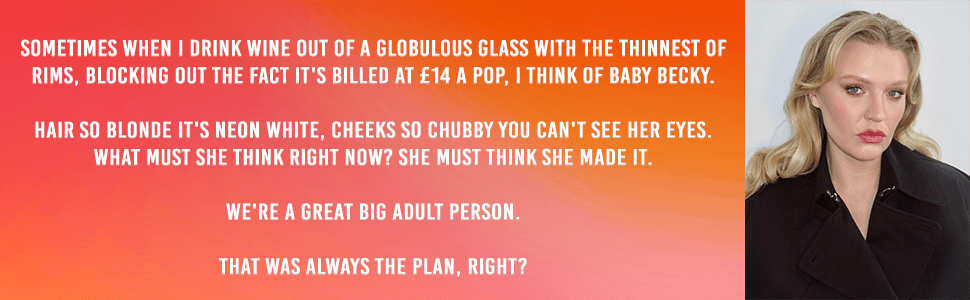
I knew I was going to love Self Esteem when I first caught her set at Glastonbury a few years ago, referencing 1990 Madonna with her black suit and corset. What made me stop and watch was that instead of the iconic John Paul Gaultier conical bra each breast was covered with the dome of Meadowhall Shopping Centre in Sheffield. At that point I didn’t know that Rebecca Lucy Taylor was born there but I could see she had a sense of humour, a sense of where she was from and had something very powerful to say as the above lyrics from her song Focus to Power show. In the intervening years Self Esteem has become a creative force with three solo albums, including A Complicated Woman this year. She had a Mercury Prize nomination for her album Prioritise Pleasure in 2022 and was the BBC Music Introducing act in 2021. She is not just a singer, she’s a multi-instrumentalist and has composed for theatre and became a West End lead in 2023/24 playing Sally Bowles in Cabaret. She’s been awarded an honorary doctorate in music from the University of Sheffield and a portrait of her hangs in the National Gallery. Now she has written a memoir, bringing together notes and lyrics, journal entries and observations on life as a woman in the 21st Century, referencing relationships, abuse, self-worth, creativity and living under the weight of the impossible expectations we impose on young women. The blurb refers to it as a ‘subversive anti-Bible’ and a ‘cathartic scream of a book’ and it is raw, emotional and so incredibly exposing. I will be buying it for my stepdaughters.
The narrative is jagged and feels unfinished, a structure that underlines the theme of being the ‘finished’ article something that applies to both the professional and personal self. Creative work never feels fully done. I always imagined that when writing a book I would know when it was complete and I would feel satisfied that it was finished. A piece of writing is always open to change, but we have to let it go at some point and finishing is a collaborative process with mentors, agents, editors and might end up looking different to what you expected. Similarly as people we are never finished, the self is not one fixed thing and can be influenced by mood, something we watched, whether we slept well or not and interactions with others. I think we imagine as children that there’s a point where we become an adult and our self is a fixed thing, but the self is fluid and open to change until the last day we’re alive. The author writes that she wakes up knowing it’s going to be a day when her brain is against her. So out of all the options open she decides on the middle ground:
‘Ultimately doing nothing garnished by a little of what I as a child imagined being an adult would be. A coffee in a cafe, walk to the cinema, watch an art house film alone, walk home.’
It’s almost a fake it till you make it idea. The self is just a raw block of clay but we still go out there, pretending to do what we think adults should.
Self Esteem at Glastonbury 2022
Toxic relationships are also a huge part of the book and it’s clear there was one in particular that was coercive and damaging. Tiny little snippets of information are dropped about him and I identified strongly with how she feels at these times. She addresses him remembering that: ‘ he made sure to take at least two pieces of jigsaw and hide them so it could finish it himself.’ It made me shiver with recognition. My heart broke for her in this paragraph:
“I’ll never forget the first time it cracked and he became someone else. I spent that night trying to sleep on the floor and reaching back up to him in his single bed, sleeping soundly. Offering my hand over and over through the night. – And forever he held back. Each tendon in his fingers finally gracing me with tension. And in that moment the sickness in my stomach was gone and the addiction to his acceptance began.”
She clearly spent years trying to please this person, to be enough but not too much. Enough in the right way that was acceptable to him. A rollercoaster of arguments followed by apologies to make things nice again, a blissful few weeks when he’s happy because she made herself smaller, then a withdrawal of affection, hurtful comments and arguments. It’s a place I’ve been and it only ended when I accepted I was enough, just as I was. I still feel sick to my stomach when something takes me back there and this really hit home. As she says, ‘tell me anyone who left when they should have.’ She also addresses the inevitable question of children, something women are always asked and I have noticed that I make a lot more sense to some friends now I have stepdaughters. The author wishes she could just have one, now, not because she wants one just because it would be done and people would stop asking. They ask as if you’ve forgotten to do it. There’s a point in the book though where change begins and it’s in a letter, because unsent letters have such power. It’s a letting go leaving the path clear to be whatever.
We get the sense of a person who has a huge and imaginative inner world, but is hampered by her own mind throwing out options, constantly questioning whether this or that is the right thing to do. There’s a very busy internal critic here and while the author may be an over-thinker and struggle with anxiety, I think this second-guessing herself is a habit many women have. It starts with parental pressures of what a girl should be, educational expectations influenced by gender, societal expectations of what an adult woman should want and how successful she should be. It’s as if feminism succeeded in giving women more choice, but also more expectations rather than equality. Yes of course we can have a career, but then you must go home and more than a fair share of housework, cooking, laundry and having the mental load of who eats what, which week a friend is coming to stay and an encyclopaedic knowledge of where every object belonging each family member might be found. On top of that are grooming standards, the endless opinions on whether women should age naturally or have surgery, when they should stop wearing short skirts and how to keep their sex lives spicy. No one asks a man when he’s going to fit in having a child or whether he should sacrifice his career for his family. This pressure is described beautifully here as it runs throughout the narrative alongside the extra pressures of being creative and a famous woman. Everyone talks about America Ferrarra’s speech in the Barbie film about what a woman is but I find the author’s words much more affecting as she writes a poem about herself as the woman she feels society wants her to be. A woman who eats the right things, who makes money but stays generous and humble, who is modern and desirable, but above all things maternal. It reads like a modern fairy tale.
‘I had one thousand friends and each and every one was happy with me, and felt I had given them enough time and attention’.
It feels like slicing yourself into a thousand different pieces to be everything and keep everyone happy and they all think you’re amazing, but you’re still slicing yourself. It takes therapy, age and self-acceptance to throw off these expectations and doubts. In amongst this torrent of emotions there is a down to earth feel and a sense of humour that comes out a lot in lists – ‘things I should have said no to’ being one. There are also blunt truths that she clearly can’t say to the person but records in her diary – ‘I want to be fucked like that but not have to hear about your Edinburgh show.” I loved this directness, tempered with humour. It also shows how hard it can be for some women to say what they want and don’t want without judgement.
She gives us an insight into how those judgements are magnified in the music industry, where you’re trying to get your creative work out there but are being told you’d sell better if you wrote a certain way or were a bit more attractive. If she’d compromised she’d have a record deal by now, she’s told, why is she so difficult? This is a tale we’ve heard again and again in the music industry but it has to keep being said till something changes. We’ve heard it from the incredible Raye who wrote for other people for years because her own stuff didn’t fit in a specific box, or Cat Burns who writes about how difficult it is to know how to be the human everyone expects. Paloma Faith is an incredible inspiration and I watched a clip of her speaking to students at the university graduation. She has delved into music, fashion, writing, broadcasting and art and she passed on an incredible bit of advice – she has always been brimming with ideas and would worry that she couldn’t fix on one way to get these thoughts and ideas out there. She remembered a conversation with one of the tutors who said she didn’t have to fit all of her ideas into one mould. One idea might be a brilliant book, rather than trying to condense it into a song but another might be better suited to fashion or art. She didn’t have to fit into one mould. I think Rebecca is the embodiment of that idea, brim full of ideas and happy to range across music gigs, theatre shows, dance, tv appearances and memoir writing. The point is the creativity, not the medium.
I can think of so many women who can take something from this book and it will sit happily up on my shelf with writing from Caitlin Moran and Paloma Faith, hugely creative and intelligent women with a lot to say. It renewed something I’ve been wrestling with in my own head now I’m hitting menopause and middle age – it’s ok not to ‘grow up’ but take joy in every new incarnation of yourself and the changes it brings. It’s subversive in a world where we’re told we should be striving to stay young and relevant. to be unhappy getting older. I found so much inspiration in this memoir, both personal and creative, as well as a wonderful feeling of being seen.
London, 1897. Nobody, least of all Molly, knows why she ends up taking the foundling home from her job at the Alhambra Theatre. Molly is a seamstress, creating costumes for ballerinas who perform within the music hall tradition. She loves dance but with her built up shoe and awkward gait she is as close to the stage as she can get. When a baby is discovered on the steps of the theatre everyone discusses who could be the mother, but they’re at a loss. It’s hard to hide a pregnancy in a shared dressing room and with seamstresses who note the tiniest change on a tape measure. She takes Rose home, but her upbringing is also at the theatre where everyone takes an interest in this little girl who grows up enjoying the colours, fabrics and feathers of the sewing room but reserves her love for the ballerinas. When she’s old enough she wants to learn and grows into a role in the chorus very quickly. Rose is determined to succeed and keeps pushing for that breakthrough that will give her the starring role. Molly knows Rose is pregnant before she tells her, the result of an affair with a wealthy married man, but the abortion they arrange is abandoned when Rose changes her mind. Rose’s twins are born backstage at the theatre, where life starts and then life ends as Rose’s dancing dreams die. So the boy, Walter, is sent to live with his father and stepmother and Nina stays with Molly. This decision means that Nina has the same upbringing as Rose and becomes even more determined than her mother to be the best dancer she can be. The younger generation pursue their ambitions, loves and dreams in a new world shaped by the pioneering Diaghilev and his dazzling Ballets Russes, Stravinsky’s dissonant music, and the devastating First World War.
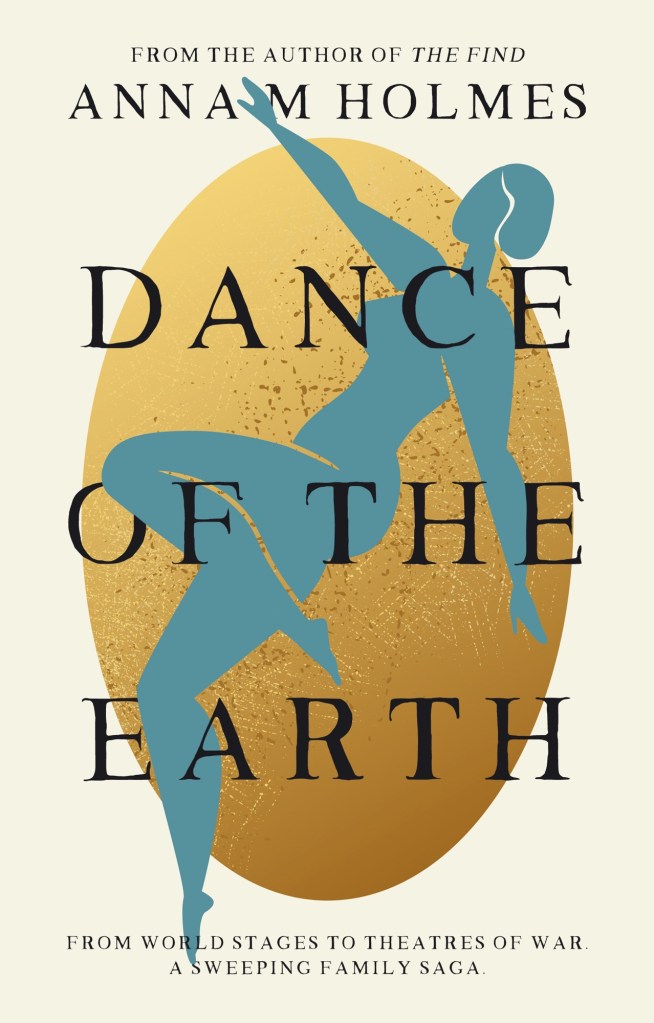
I asked to read and review this book because I enjoy ballet, particularly the more lyrical modern ballets by Mathew Bourne and the brilliant Northern Ballet based in Leeds who often do literary adaptations such as Wuthering Heights and The Great Gatsby. I’m also fascinated with this period of history, particularly when it comes to the huge impact of WW1 and the way it affected class structures and the lives of the women left behind. The author weaves her story into this time and society beautifully and with such care over every detail. Even the cover shows her themes of rebirth and regeneration with its large golden egg and a female figure as if drawn by Matisse, non-sexualised and not constricted by the corsets and crinolines of earlier generations. Her shape reminded me of the new ballets produced by Diaghilev and choreographed by Fokine that also showed more freedom in their movements and looser costumes. Rose and Nina have a very different upbringing from the average Edwardian woman, the music hall theatre wouldn’t be considered respectable by the middle and upper classes. Molly has no choice but to work so both Rose, and later her daughter Nina, fell asleep to the sound of sewing machines and have clothes that are colourful and unique, thrown together from fabric remnants. Both are dazzled by the dancers and want to be on the stage and both are successful to different extents. Nina is utterly determined and visits all the ballets she can while training, because she’s aiming beyond the music hall and into the world of modern ballet. She hears of the Ballet Russes and Diaghilev’s new approach, she identifies herself with his ‘Firebird’ – another symbol of renewal and regeneration:
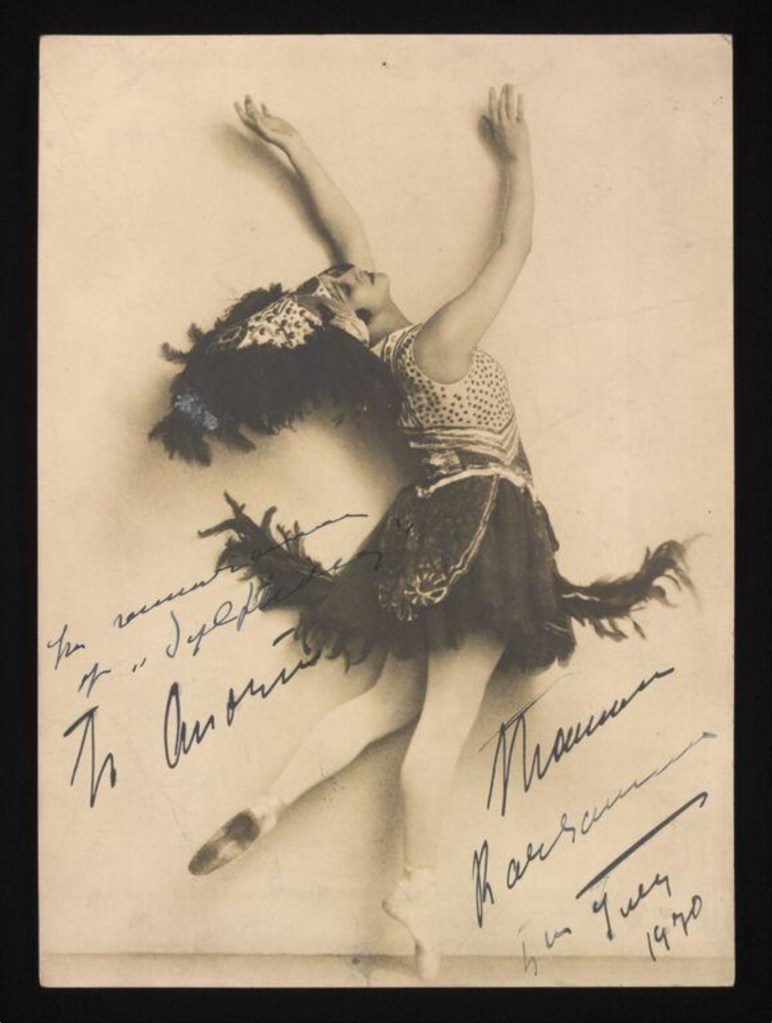
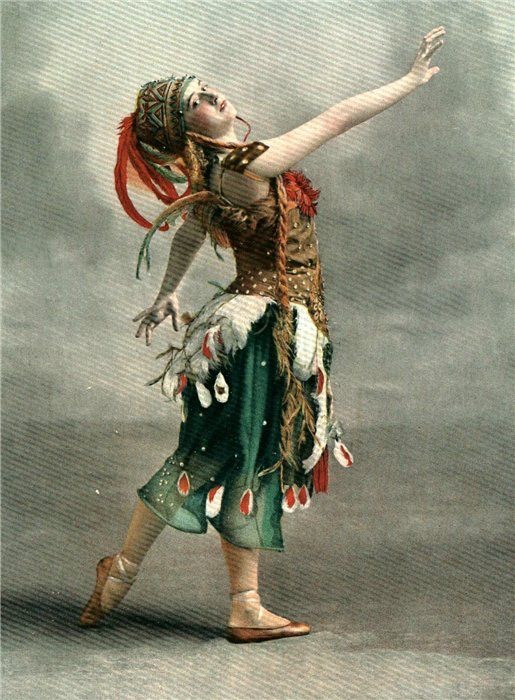
‘Tamara Karsavina wore a magnificent head dress – long flaming feathers quivering – a bodice of brilliant reds and oranges […] she adored the exotic creature”.
The premiere of this ballet was in 1910 at the Opera de Paris and showed off the choreography of Diaghilev’s collaborator Fokine which was ground breaking. This dancer had to represent an element, with all the wildness of fire, something we think of as hard to contain and dangerous to be near. It’s definitely a force that’s in Nina and represented the changing roles of women in the early 20th Century: women who wanted to go to university, to have a career, to have the vote. Imagine how strange it must have been to see a woman on stage who’s a rebel and has power, especially with its incredible costume and free expressive dancing.
‘This firebird was her – Nina – aflame, all sharp angles radiating determination’.
The Firebird from V and A archive
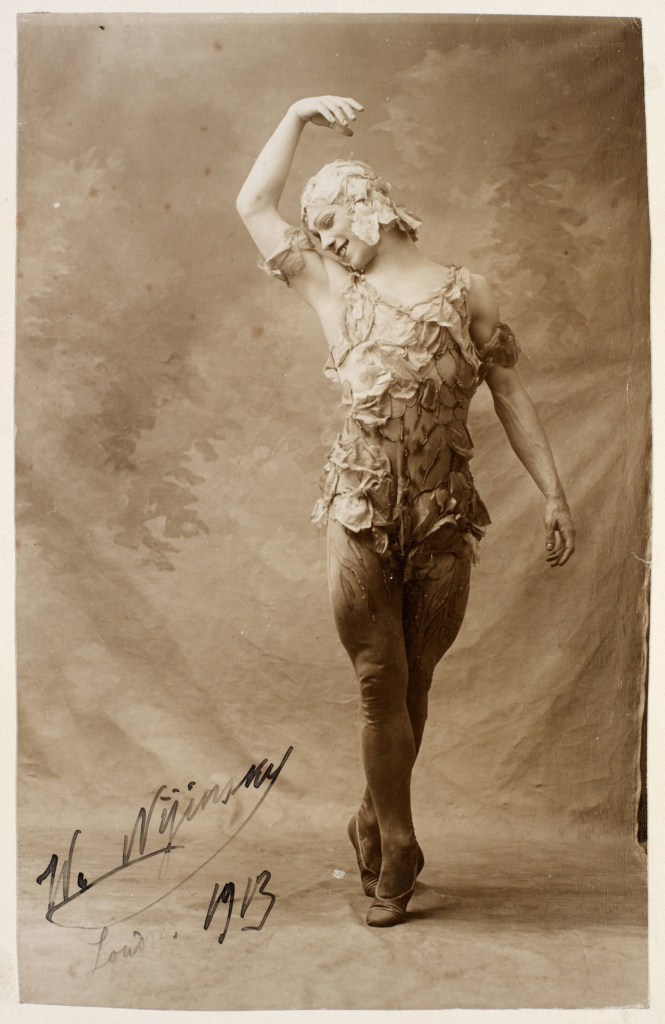
Walter is almost his sister’s opposite, a person you could easily miss in a room and caused by his upbringing. Brought up by his mother’s lover Arthur and his wife Beatrice, he is rich in every sense except the one we most need – love. Beatrice was cold, although it is hard to imagine what it felt like to meet the proof of her husband’s infidelity at the breakfast table each morning, especially when she couldn’t have children of her own. I was intrigued by the differences between the twins and what it said about the nature/nurture debate. Nina has been brought up by the entire theatre community of women from Molly’s fellow seamstresses to the dancers, which gives her so much confidence, drive and inspiration. She sees women making their own money and in a creative career, so she knows women can make it on their own in this world. All Walter seems to learn at home is to stay as small as possible and not upset anybody, something he takes to boarding school with him. His masters at school are trying to turn out traditional middle class men, who go on to university and have a profession. The assumption is they will have a career that can support a family, but Arthur’s only love is music but he doesn’t have the confidence or self-worth to make that happen. When Arthur died I thought Beatrice was particularly brutal in dismissing Walter, making it clear he will liaise with his father’s solicitor from now on. When children are rejected they don’t think something is wrong with the parent, they internalise the rejection and are left feeling something is wrong with themselves. For Walter this is compounded at boarding school where he is not athletic or competitive, he is teased, bullied and never stands up for himself. As he discovers his Grandmother and Nina he’s also having feelings that seem natural, but must be kept secret. When they all go to see the Rite of Spring he watches Nijinsky mimicking an ecstatic and sensual moment on stage and becomes aroused. He’s mortified and has to leave immediately. I kept wondering how he would cope with war on the horizon and the huge pressure on young men to enlist. I couldn’t imagine how he would survive the brutality of the experience.
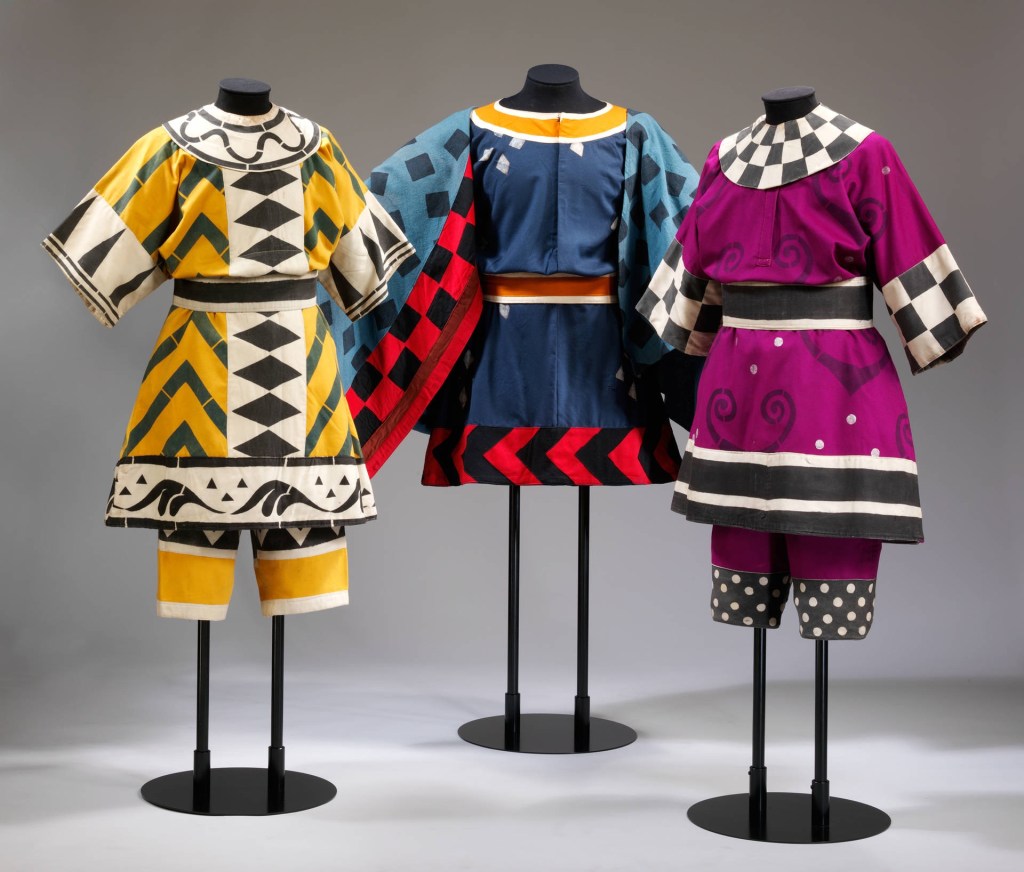
Costumes from the Ballet Russes
This fascinating family story feels absolutely real and that is down to the incredible amount of research the author has undertaken. She wholly embeds these characters into the history of the time, weaving social, cultural and political history around them, along with her incredible knowledge on dance history. I loved the vividness of the theatre, the backstage bustle and the magic that is produced for the audience especially when what they’re seeing is groundbreaking. She applies equal care to the war sections of the novel too. It feels like you are in those trenches because there’s an immediacy to them. These sections are also graphic and raw, which makes them hard to read about war when you’re invested in the characters. It had to be strong and true to life for us to understand how and why this war tore straight through the lives people had known before. Although changes were already happening at the turn of the century, WW1 was the first mechanised war and the sheer number of casualties were hard to comprehend. It wiped out a generation of men and afterwards there’s an acceleration of modernism that’s visible in the arts and everyday people’s lives. The aristocracy struggle to hold on to property and land as they are tied up with death duties, sometimes more than once. Middle class women who have always relied financially on men have to face life alone and discover ways of making money – less servants, taking in lodgers and finding jobs. If men came back, they came back changed forever due to shell shock (now PTSD) or physical injury and couldn’t work. Women didn’t want to give up jobs they’d done throughout the war and a freedom they’d never had before. Also contraception becomes more freely available and this was the earliest stages of some women not having to choose between career and relationships. As Nina joins the Ballet Russes she becomes more independent, travelling all over the world and living the life her mother had dreamed of. When we see her reach her first stop in the south of France she is utterly in her element and it’s no surprise that she enters into a controversial mixed race relationship, something more acceptable in that time within the bohemian and arty circles she inhabits. It’s almost as if the war curtailed the freedom of men, especially when conscription began, but emancipated women.
Nijinsky
In 2010 I visited an exhibit at the Victoria and Albert Museum in London, called Diaghilev and the Ballet Russes which focused on costume and design including collaborations with artists like Picasso and the music of Stravinsky These sketches and costumes were like nothing I’d ever seen, seeming both weirdly modern but archaic at the same time. There’s nothing pretty about them and no tulle in sight, they’re loose with strong colours, geometric shapes and sharp zig-zags. I could see the point being made – by being so aggressively modern it almost forces change and expectation of what a ballet is. I could see how they matched Stravinsky’s music because there was a segment of the Rite of Spring with its themes of growth, fertility and desire. I could see why audiences found this piece so shocking because it has that same aggressive feeling with unusual rhythms and sudden loud bursts of sound. It’s harsher on the ear than the usual score for ballets and the sets were purposely sparse. The dancing had a primitive feel and the subject matter of a young woman sacrificed to the spring is like a modernist version of the contemporary horror film Midsommar. It was reported that people rioted at the premiere, which is probably an exaggeration, but I can imagine an audience finding it strange and confronting when we think of the opulence and beauty they were used to in ballet. It’s such an important piece in the history of dance and without it we wouldn’t have contemporary dance. I came away from the novel feeling I’d learned so much about dance and the early 20th Century in general. While all the characters touched me in different ways I did have a soft spot for Molly, who stands out within these themes of fertility and desire. I thought she was the most incredible mother, yet had never given birth to either of her children. She has a disability but spends her time within a world where bodies are pushed to their limit, creating beauty in their movement. Her love of dance is built into every one of the costumes she lovingly creates and the colourful outfits she makes for her daughters. She provides stability and love for Rose and Nina, plus she never judges their mistakes. She is the earth, grounding these fiery women and eventually Walter, for the rest of her life. She is the heart of this novel for me and Nina can only be what she is because of her. I could imagine her as the central character in an incredibly lush and powerful period drama with the war breaking through everything in its brutality. This is a must read for both lovers of dance and historical fiction.
The Firebird
Meet the Author
Stories with big themes written as page-turners are Anna M Holmes’s speciality. With an extensive background in dance and theatre, Dance of the Earthis a story she has longed to write. Her novels- The Find, Wayward Voyage, and Blind Eye-are all typified by deep research. Anna worked as a radio journalist before embarking on a career in arts management. Originally from New Zealand, she now lives in South-West London.
Whoever fights monsters should see to it that in the process he does not become a monster. And if you gaze long enough into an abyss, the abyss will gaze back into you.
1938. Stella Fry is walking home from her job at the film institute and surprised to find a crowd gathered near her home. It’s clear there’s been an accident, but when Stella enquires she’s shocked at the reply. ‘It’s someone called Stella Fry’ a woman whispers and with great presence of mind she doesn’t identify herself. She simply turns and walks away, thinking that Harry Fox is involved. After a night on the sofa at her friend’s flat she’s deciding what to do next when she’s called in for an assignment with Harry Fox, who she’s worked with before. This is a very sensitive case, looking into the death of a man at the POW camp at Trent Park. A man wearing Luftwaffe uniform was found dead in the grounds with a gunshot wound. It’s vital to know what’s happened because Trent Park isn’t just a POW camp, it’s a huge intelligence gathering centre and one of their listeners has gone missing. Stella is enrolled in the ATS to become a ‘listener’ at Trent Park. She will join other German speakers, listening to cellmates through state of the art microphones. The women are recording and transcribing anything of interest and sending it up the chain. It’s an important tool to learn about Nazi positions, their plans to invade Western Europe and their treatment of Jewish communities. However, Stella must also listen to her colleagues, because they have no idea where the murder weapon came from and there is a possibility that the missing operative has been turned. There’s also intelligence about three German spies living within the immigrant community close by. Harry will be on the trail of the spies which brings Lieselotte Edelman into his path, a beautiful young Jewish woman who fled her own country before war broke out. Could she be a spy and could Harry’s desire for her cloud his judgement about her true purpose?
This is an interesting thriller based on true events and the second to feature Harry and Stella as a team, although this time they’ll be working different lines of enquiry on the same case. Stella comes across as the ideal operative, she blends in well and seems to secure people’s confidences very easily. She’s competent and able to keep secrets, even from those closest to her. As for her own feelings, they’re a little more complicated. She has feelings for her best friend’s brother but he’s become engaged to an American he met through the Kennedy family. Harry also has complex feelings. I wondered how he felt about Stella, but would he ever be able to admit to it? He seems to enjoy his bachelor lifestyle and never gets caught up with one woman. Both take comfort from people they meet in the course of their investigation, but these are war time affairs belonging to people who pass in the night never to be seen again.
I found the psychological dynamics at Trent Park really interesting. The POWs are treated very well, but that’s designed to lull them into a false sense of security. If they’re treated well and have some freedoms they’ll never imagine that their every word is being scrutinised. One man observes that Stella’s job reminds him of the Nietzsche quote that’s the book’s preface – when we look into the abyss the abyss also looks into us. It’s easy to think their inmates are just ordinary men forced into fighting for their country and some are, but others are sadists and enjoy exerting their power over civilians. The stories of beatings, rapes, casual slaughter and the mistreatment of Jews is horrifying. It shows how people’s basest instincts are woken up and distorted by power. Listening to this everyday must chip away at the transcribers as they process these horrors from German into English. I was utterly drawn into this because it’s a very heightened version of working with in the mental health sector, listening to the worst things that have happened to people takes its toll and it’s vital to take breaks and even extended leave in order to do the job well. I wondered how people coped with the roles they were forced to take during the war and whether we would be equally selfless. My grandad missed the war but did his National Service in Germany in the aftermath and I know what he saw affected him. I can’t imagine how a country heals after such horrific events. Those ordinary people who turned on their Jewish neighbours must suffer from terrible guilt when the full truth emerges, whether they believed the propaganda or participated to save their own skin. I was sure that the truth lay somewhere in this sea of human suffering and I was sure Stella would find it.
I found Stella’s narrative more compelling than Harry’s, possibly because the historical detail and background were so brilliant. Harry js delving into the criminal underworld on the trail of a gun as well as the spies but Stella’s narrative takes us to Paris as the Nazis are on the verge of invading and taking control. The author really captures the sense of fear and disbelief combined, there’s a sense of unreality as if it could never happen to them. It’s something I feel personally with the rise in far-right politics. We always think it couldn’t happen again or it couldn’t happen here, but it can. It’s very tense as Stella gets closer to the man she needs to bring in, but also make sure she gets out of Paris in time. Another feeling the author captured beautifully was the nostalgia for a time before the war, for Stella it’s a party she attended at Trent Park as she is falling in love with her friend’s brother. Since then they’ve both had roles to fulfil and perhaps sacrificed happiness for duty, it’s the story of many people who missed their chance or passed only briefly, never to see each other again. When Harry and Stella are together they’re a formidable team and there is just a tiny hint of chemistry. This was a great historical mystery and I’m very curious to know where this team go next.
Meet the Author
Jayne has a passion for historical fiction and loves the research that involves. The first in her Clara Vine series, Black Roses, became a number One Kindle Bestseller. In the UK the series is published by Simon & Schuster. Outside Britain, my novels have been translated into French, German, Greek, Russian, Polish, Romanian, Turkish and Italian. In France the series is published by J.C Lattes and in Greece by Kedros. In the US and Canada the series is published by Random House. The TV rights have been optioned by Hillbilly Films who are producing the pilot for an eight part series.
The Words I Never Wrote is published in the US by Ballantine and in the UK by Sharpe Books.
I have also written two alternative history novels under the pen name C.J. Carey, Widowland and Queen High (published in the US by Sourcebooks as The American Queen). I chose that pseudonym because it’s a reversal of my own initials, coupled with my mother’s maiden name. In the UK, the novels are published by Quercus and in France by J C Lattès.
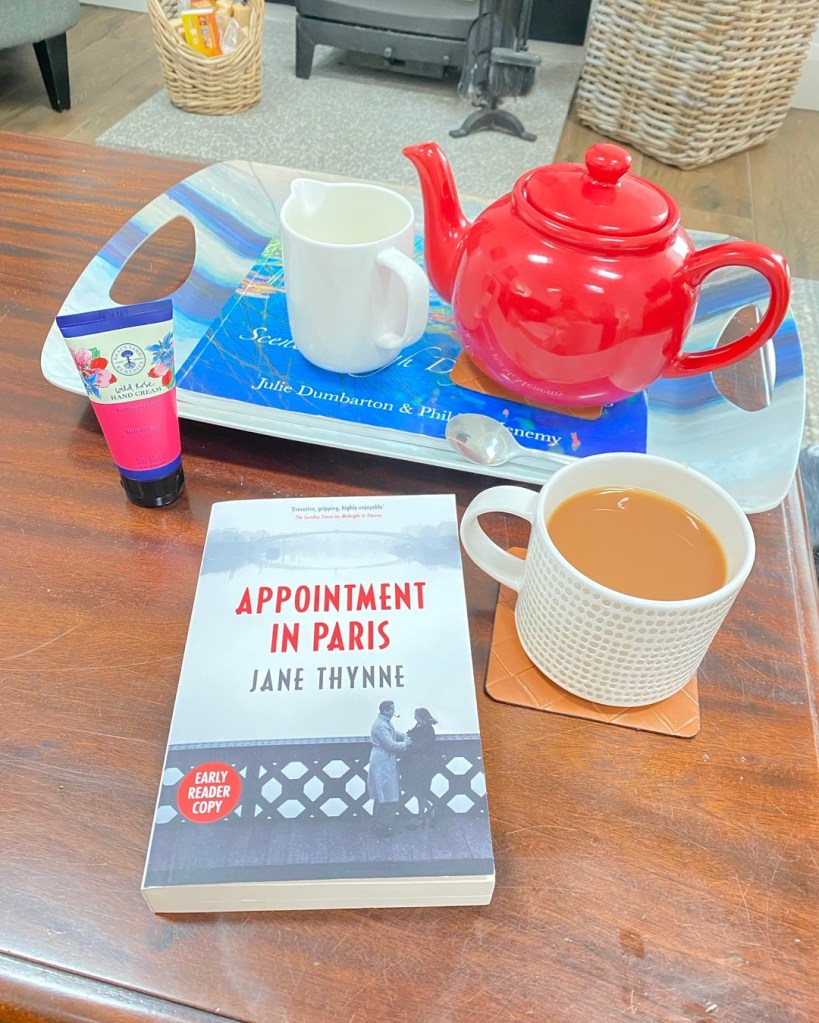
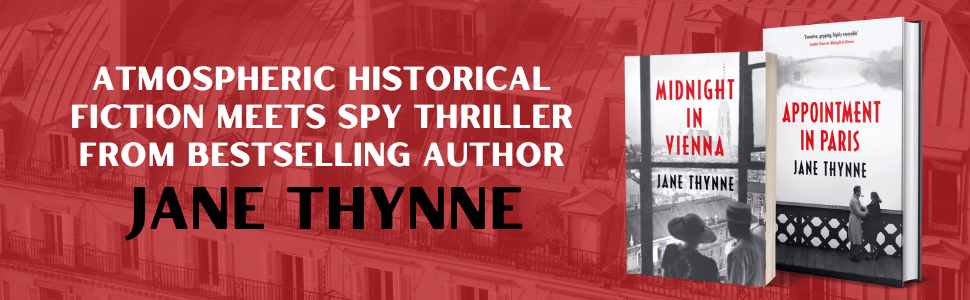
My most recent novels, the Fox and Fry series, feature Harry Fox, a suspended MI5 surveillance operative, and Stella Fry, a former tutor, who are thrown together to solve mysterious murders on the eve of WW2. Midnight in Vienna and Appointment in Paris are both published by Quercus.
As well as writing books I freelance as a journalist, writing regularly for numerous British magazines and newspapers, and also appear as a broadcaster on Radio 4 and Sky. I have been a guest reader at the Arvon Foundation and sat on the broadcasting committee of the Society of Authors. I’m a patron of the Wimbledon Bookfest and live in London.
The haunting final chapter to an award-winning series…
And a final reckoning…
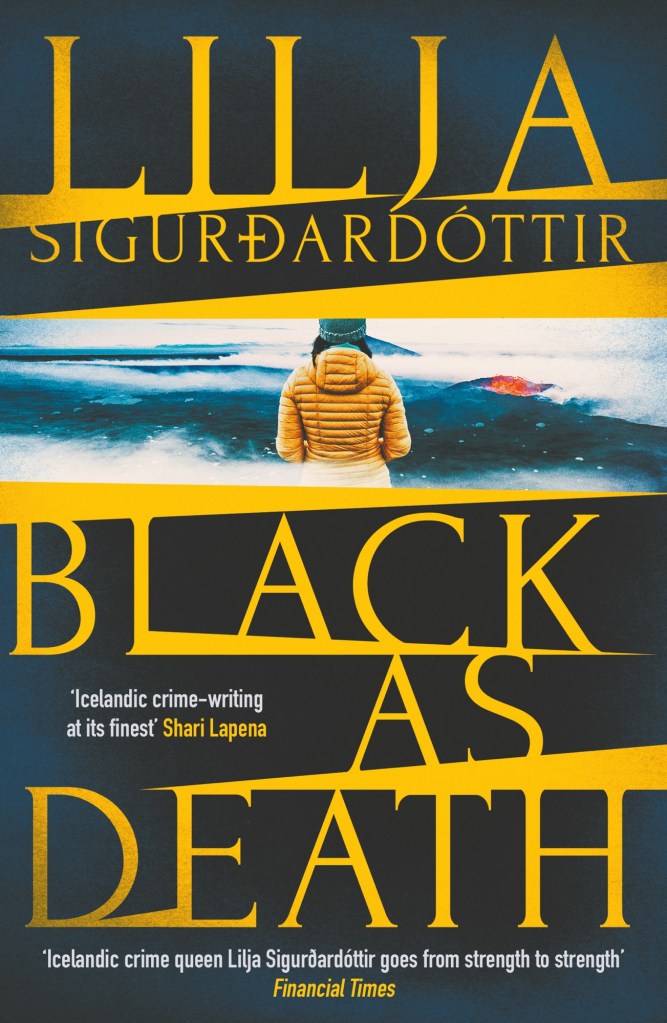
With the fate of her missing sister, Ísafold, finally uncovered, Áróra feels a fragile relief as the search that consumed her life draws to a close. But when Ísafold’s boyfriend – the prime suspect in her disappearance – is found dead at the same site where Ísafold’s body was discovered, Áróra’s grip on reality starts to unravel … and the mystery remains far from solved. To distract herself, she dives headfirst into a money-laundering case that her friend Daníel is investigating. But she soon finds that there is more than meets the eye and, once again, all leads point towards Engihjalli, the street where Ísafold lived and died, and a series of shocking secrets that could both explain and endanger everything…
I’ve been hooked on the story of Áróra and the case of her missing sister Ísafold for a few years now and the tension has slowly gripped me ever tighter as each novel has brought its revelations. With her disappearance being the reason Àrora is in Iceland, it’s always been the over-arching narrative, with other cases running alongside. The combination of Áróra’s skills as a financial investigator plus the skills and powers of Daniel and Helena who are detectives, means complex cases are profiled and attacked from different directions, making them a formidable team. We’re back with everyone after the discovery of Ísafold’s body in a suitcase deep within a fissure in a lava field. They were directed to it by an unusual little girl who claimed to be the reincarnation of Ísafold, something that was difficult for Daniel to accept. As Áróra’s boyfriend, his hackles were raised particularly with her parents who he suspected of feeding ideas and information to their daughter with the aim of deceiving them. But what possible motive could they have? As we meet our characters again, Áróra occasionally has the urge to go back and visit the family, but there’s been nothing new from her reincarnated sister for some time as if the thread that bound them has broken or the little girl’s age means the channel that was open between this life and the next has now closed. With Bjorn found in the same fissure as Ísafold many new questions are thrown up. Not least the one aspect of Ísafold’s death has remained a secret up till now. Daniel doesn’t know how to tell Áróra that her sister’s body was found without a heart.
There’s so much to understand here and we get the narrative through different viewpoints, not just from Áróra, Daniel and his colleague Helena. One narrator named Felix has fallen into working for a local dealer and we see his fear as the bag he was sent to collect disappears from the car while he’s getting some food. This theft draws his ties to this man ever closer, with no real chance of escape. There are also flashbacks to the last few months Ìsafold was alive and we finally hear the story in her own voice, which I loved. There’s a lot of crossover between these two narratives in terms of control and manipulation. The means used to tie Felix to the drugs gang are diabolical, making sure he ‘owes’ the boss and keeping him firmly onside. On one hand the boss demands total loyalty from its operatives but on the other he uses treachery to keep everyone in their place. Bjorn’s treatment of Ísafold feels even worse, because this is someone is supposed to love her. We have always known that Ísafold’s partner was violent, in fact Áróra’s guilt about her sister is based around their last phone call when for the first time Áróra decided not to run to her sister’s aid. The downstairs neighbour Grimur had also testified to the violence his neighbour suffered, but hearing it from the victim adds another layer to the narrative. We can feel how vulnerable Ísafold is and the tenderness Bjorn treats her with from time to time, that glimmer of a meaningful connection he drip feeds to her guarantees her forgiveness again and again. Almost more than the violence I hated that he took away her only bit of independence by making her leave the job she loved, to work with elderly people. At first it’s a suggestion, then he flatters her by saying how good she would be in a caring role, but the truth is he wants to coerce her into stealing their drugs. There’s a realisation that Bjorn is a low level dealer, just doing enough to get by but slowly coming to the attention of the bigger players who feel their territory has been encroached upon. Could this be the beginning of the end for the couple?
The tense and twisty parts narrative also follows Daniel’s investigation into a local coffee chain, where every barista seems to tell customers that their other sites are busier. What he finds is a company with a large turnover but no real evidence of where that money is coming from. None of their shops are in tourist areas and they seem to take a large amount in cash, an unusual thing these days. He also finds a couple of complaints from the director’s home of criminal damage, that they later chose not to pursue. This seems like a case where Áróra’s financial skills could be utilised and she throws herself into it, with dangerous consequences. This is where the couple work so well together, although there’s a recklessness to Áróra that Daniel finds difficult. He would never get in her way, she’s tough and quite capable of looking after herself physically but it’s in his nature to worry about those he cares for. He knows that her weight training and work are her ways of sublimating her frustration that she still doesn’t have all the answers about her sister. With Helena currently working the case he has a choice to make, if answers come does he let Helena break the truth to her, or does he choose to do that himself? Although he could have the chance to comfort and support her as he’s wanted, will she let him? Or will he always be the man who told her the harshest and most painful truth she will ever hear?
We’ve always had suspicions but have never known who killed Ísafold. The novel is gripping and of course we want this mystery resolved, but I didn’t feel any of that racing tension or triumph that I often get from thrillers when the killer’s revealed. This was just so desperately sad. I found myself taking a moment for this under confident woman who was so far out of her depth. A woman whose emotions dictated her life decisions. I was horrified and had that strange empty feeling of loss. A loss I knew Áróra would feel. The question is, if she does get all the answers she needs, what will Áróra do next? Unlike her sister Áróra has a clear sense of what she wants and needs in order to be happy and fulfilled. She makes decisions based on self-knowledge and it remains to be seen whether Daniel is a part of that eventual happiness. This has been an incredible series from the author, combining a good mystery with real intelligence and depth of emotion played out on a bleak and forbidding landscape.
Out now from Orenda Books
Meet the Author
Icelandic crime writer Lilja Sigurðardóttir was born in the town of Akranes in 1972 and raised in Mexico, Sweden, Spain and Iceland. An award-winning playwright, Lilja has written eleven crime novels, including Snare, Trap and Cage, making up the Reykjavík Noir trilogy, and her standalone thriller Betrayal, all of which have hit bestseller lists worldwide. Snare was longlisted for the CWA International Dagger, Cage won Best Icelandic Crime Novel of the Year and was a Guardian Book of the Year, and Betrayal was shortlisted for the prestigious Glass Key Award and won Icelandic Crime Novel of the Year. The film rights for the Reykjavík Noir trilogy have been bought by Glassriver. Cold as Hell, the first book in the An Áróra Investigation series, was published in the UK in 2021 and was followed by Red as Blood, White as Snow and Dark as Night. TV rights to theseries have been bought by Studio Zentral in Germany. Lilja lives in Reykjavík with her partner and a brood of chickens.