Wendy is lonely but coping. All nineteen-year-old Wendy wants is to drive the 255 bus around Uddingston with her regulars on board, remember to buy milk when it runs out and just to be okay. After her mum died, there’s nobody to remind her to eat and what to do each day. And Wendy is ready to step out of her comfort zone. Each week she shows her social worker the progress she’s made, like the coasters she bought to spruce up the place, even if she forgets to make tea. And she even joins a writers’ group to share the stories she writes, like the one about a bullied boy who goes to Mars.
But everything changes when Wendy meets Ginger. A teenager with flaming orange hair, Ginger’s so brave she’s wearing a coat that isn’t even waterproof. For the first time, Wendy has a real best friend. But as they begin the summer of their lives, Wendy wonders if things were simpler before. And that’s before she realizes just how much trouble Ginger is about to get them in…
I’ve worked for 25 years in mental health and one thing I’ve learned is that there are almost always reasons people behave the way they do, but also that there is no such thing as a ‘normal’ life. I love books that relate the extraordinary lives of ordinary people and Wendy certainly lives a simple life. She’s happy driving the 255 bus through Uddingston, reading books and having a good go at writing her own. Concerned that her social worker thinks she’s stagnating a little, since the death of her mother, Wendy makes a decision to reach out. She joins a writing group to build her confidence and starts to make friends with some of her passengers, but then Ginger comes along. Ginger is going to push Wendy completely out of her comfort zone.
This is a great novel that shows how mental health issues can creep up on young girls and when they’re as alone as Wendy is, there’s no one to notice things going wrong. Life is hard for her, because she feels like she doesn’t fit anywhere. She can see that society has rules, but she doesn’t understand them and her ignorance of the rules means she’s socially awkward. Instead of upsetting others, it sometimes seems easier to withdraw altogether. There is a sense in which Wendy’s being failed by the system, plus the double bereavement of losing her mum and dad has left her especially vulnerable. Being stepmum to two teenage girls I know only too well how problems can suddenly escalate and be made worse by social media. This is a gritty story and I knew very early on that something bad has happened to Wendy, so I did have a certain amount of suspicion most of the time. It felt to me like Wendy was heading down a dark road, but the addition of the rather wild Ginger seems to accelerate the downfall. I felt immediately protective of this girl, because it felt like she was out in the world with a layer of skin missing. I wanted to give her a big hug and have a heart to heart over a mug of tea. I found myself thinking about her long after the book finished, so bravo to the author for creating such an incredible character in her debut novel.
Following a long-standing feud and looking to settle the score, a woman decides to dismantle her home – alone and by hand – and move it across a frozen pond during a harsh New England winter in this mesmerizing debut. Home is certainly not where Del’s heart is. After a local scandal led to her parents’ divorce and the rest of her family turned their backs on her, Del left her small town and cut off contact. Now, with both of her parents gone, a chance has arrived for Del to retaliate.
Her uncle wants the one thing Del inherited: the family home. Instead of handing the place over, and with no other resources at her disposal, Del decides she will tear the place apart herself – piece by piece. But Del will soon discover, the task stirs up more than just old memories as relatives-each in their own state of unravelling – come knocking on her door.
This spare, strange, magical book is a story not only about the powerlessness and hurt that run through a family but also about the moments when brokenness can offer us the rare chance to start again.
I spent much of yesterday afternoon in the attic searching for Christmas decorations and our tree, but inevitably raving through boxes unearthed an awful lot of history. As usual I found myself poring over my old high school yearbook, reminiscing on other lives such as the time I spent in Milton Keynes with my late husband, and having that strange bittersweet feeling. It’s smiling about memories of the past but also a pang of sadness because it’s so long ago and there was the realisation that I’ve now spent more years without him than with him. When I return to Milton Keynes that feeling of nostalgia is even stronger and I even get the feeling I might bump into him, having a coffee and living a life that carried on without me. It’s these feelings we have when we return to a place that has huge significance in our lives and for Del that’s her home town and the family home she’s now inherited. Fate seems to be laughing at her though, because she’s never wanted to return to the small town in Maine where she grew up but she has nowhere else to go. Her friend and room mate Tym would like his boyfriend to move in and since Del has been sacked she can’t pay the rent anyway. Her uncle wants to buy the house and develop the plot, but with no other choice Del finds herself on a bus back to a place she’d left behind long ago and holds some of the worst memories of her life.
After dreading the house for a long time, Del is surprised that although it’s in a terrible state of repair, the house is conjuring up some good memories too. All relate way back, to the time before the scandal that forced her parent’s divorce. She’s surprised to find that she’s loathe to give the house up, even though she’s desperate for the money. Her uncle has inherited a lot of land around the house, but the house itself was the only thing her mother inherited from Del’s grandparents. Then an idea presents itself, what if she sells the site but keeps the house? To me, Del’s idea feels like an act of protest at first. However, as time goes on, I can see that the physical exertion seems to illicit a change in Del. I loved her grit and determination in taking the house apart, especially during the Maine winter. Her family can’t believe that she will succeed, fully expecting her to abandon the project and disappear again. Del surprises them all, but she also surprises herself. The house is almost a metaphor for the wall Del has built up to cope with mental anguish. With clients I always equate our ‘selves’ as wall built up of bricks, each one represents something about our development or experience. Here and there, are bricks that represent a trauma and they are often unstable. If we continue to build on top of that trauma without dealing with it, the foundations of the wall will be unstable. It’s only by dismantling the wall, brick by brick, that we can go back to the trauma and process the pain. Then the wall can continue on a strong base that will last. Del’s dismantling of her family home is the equivalent of therapy. Each brick represents a memory and Del needs to make peace with each one before she can move on.
I really enjoyed Del as a character. She’s beautifully written and is a bit of a ‘hedgehog’ person – covered in prickles, not to hurt others but to protect herself. She’s not great at sharing her feelings, with Tym being her only friend she’s effectively isolated herself. I really enjoyed Tym, who is a wonderful friend to Del despite his own sadness and tragedy. I thought the author depicted the physical and mental struggle that comes with working on ourselves really well. It’s wonderful to watch as Del puts down these huge burdens she’s been carrying and sloughs off those prickles and extra skins she’s used as a defence. I loved how more people started to form relationships with Del as she becomes more approachable and open. Her determination to move the house and move on in her emotional life touches other people. This is a quiet book, but don’t mistake that as a criticism. I love quiet books that follow the pace of life, that takes us into the heart of real life and how we make human connections. What I loved more than anything, after the reality of hard psychological graft, were the little glimmers of hope. It made me think of a couple of my favourite lines of poetry.
‘Hope is a thing with feathers, that perches in the soul,
When a photographer witnesses war crimes, will she have to abandon her calling to save herself?
As Lena and Kojo work in conflicts across East and Central Africa, there is immense psychological pressure, and it’s not certain if their relationship will survive.
Eighteen years later, Bene walks the gritty back streets of Paris for one night in a music festival. He is on his way to meet his father in Kenya, a man he’s never met.
Ahead of the Shadows is about the intense relationships that come from work in war zones, the transmission of trauma from one generation to the next, and how one unconventional boy might be able to break the cycle.
It’s such a pleasure to close the blog tour for this small but powerful book about the dangers and struggles of working in conflict zones. I had a period in my teens where I wanted to be a journalist and was in awe of Kate Adie and Feargal Keane. My life didn’t go that way, but I remember reading Feargal Keane’s memoir and a long piece by Italian correspondent Janine di Giovanni that really impressed upon me the life long effects of being and working surrounded by danger. There are the effects of what they’ve seen such as PTSD and a terrible restlessness left over from living such an adrenaline fuelled existence. Many can’t overcome that restlessness and choose to live a peripatetic existence, endlessly wandering from one crisis to the next, using drink to avoid the worst of their memories. It destroys people and their relationships. So, when I saw the blurb for this novel I was interested to read it.
I think the author really captured how adrenalin fuelled these jobs can be as we follow Lena into the Democratic Republic of Congo. With her group she settles into their temporary accommodation for the night, only to be woken by the sound of a dozen phone alarms going off raised voices and activity. With very quick thinking she pushes a piece of furniture across her door and sits against it, eventually falling asleep on the floor. It shows the reader how alert Lena is to the possibility of violence at a moment’s notice. With no clear sides in the country’s conflict, as well as soldiers for hire, child soldiers and rape regularly used as a weapon, Lena doesn’t know from which side danger might come. There’s no clear wrong or right and danger could come from local bandits, not just men engaged in conflict. The next day, with most of her party having left in the night, Lena rings her lover Kojo for advice on what to do. He advises her to walk to the border and cross to Kigali in Rwanda where he can send someone to meet her. As she walks alone towards to border my heart was in my throat. The author creates so much tension and our own knowledge of corruption and violence in these regions adds to our fears for Lena. It seems to take forever for her to cross the no man’s land between the two countries and she seems so defenceless. Hours later in Kojo arms, she is awake as he sleeps, aware that she feels so much safer with him present, but she still has adrenaline coursing through her body.
When writing about such dramatic events and heightened emotions in one timeline of the book can leave the present day sections feeling flat by comparison. However, as we go to Paris with Bene who is on his way to meet his father for the first time in Kenya, the author doesn’t try to compete. She lets Bene’s world seem almost dreamlike in comparison, at least on the surface. As he wanders in Paris he meets a beautiful young woman called Fatima who takes him on a tour of her city. These sections are like a dream sequence within the harsh realities of Africa from almost two decades before. There’s a sense of going with the flow as Bene goes out with Fatima into the evening. This stop has been a hiatus in his journey out to Kenya to meet his father for the first time. He should be carefree, but here and there we get traces of anxiety. When she takes him to a party at her ex-boyfriend’s place he doesn’t look forward to being with strangers, especially if they’re fakes. Most are out on the apartment balcony, watching a singer in the square below. It’s not his type of party. He goes to find Fatima as he wants to leave and steps onto the heaving balcony and wonders at how easy it would be to throw oneself over the railings and what it would take to turn that urge into a reality? I wondered where these dark thoughts and anxieties came from in such a young man. As if he’s only just running one step ahead of the shadows.
Lena’s time in Sudan is a tough read, but an important one. There was a period of time when family and friends were fed up of hearing me ask why news programs and governments had forgotten what was happening in Sudan. I remember George Clooney funding a satellite to view areas where rumours abounded about the mysterious ‘Janjaweed’. The UN seemed reluctant to use the word genocide but it was happening. The author captures the fear these masked murderers on horseback generated in the villages. They were thought to be mercenaries, appearing with no warning, except for the sound of pounding hooves. They left no time for people to flee and showed no mercy. Men were killed, young boys rounded up and recruited or killed, young girls and women gang raped. Then the survivors rounded up and placed in camps. Lena travels there as an NGO worker, trusted to bring back her clear observations for Kojo’s project.
Kojo has trusted Lena to see exactly what’s happening, she has experience of travelling through conflict regions and knows how to find the truth. Even he is taken aback by her phone call, when she tells him that no other place they’ve travelled to holds the amount of fear expressed by survivors. She tells him there’s something more going on here, that even the workers are scared and the people to scared to speak. They’re petrified. Kojo has never known Lena use hyperbole, so when she suggests people are being rounded up, Kojo suggests they talk in person. The longer Lena spends in Darfur the more she thinks about her friend Stefan, another photographer, the one who killed himself. Kojo notices when they’re reunited, a mental distance, and a physical one too – as if she’s constantly on alert and ready to flee. It takes a catalyst to set, what has only been a feeling up till now, into reality. Something to force her into taking flight. The author brings all these strands together beautifully, a full eighteen years since Lena and Kojo were in Sudan. Will Kojo come to understand her urge to flee and find safety all those years ago? Will he forgive her for keeping secrets? This is a beautiful book about the horrors humanity is capable of and what it means to bear witness to these atrocities. It is about being broken down with no joy in life and a sense of despair that can kill and how those responses to trauma can pass to the next generation. However, it’s also about those things that happen to bring us back to ourselves. The things that help us to see the future again with a sense of joy and hope.
Meet The Author
A.B. Kyazze is a British-American writer and photographer. She spent two decades writing and taking photographs around the world in conflicts and natural disasters – in the Democratic Republic of Congo and Darfur, Sudan, where Ahead of the Shadows takes place, and other parts of Africa, Asia and the Balkans. Her photographs and non-fiction work have been published in travel magazines, The Huffington Post, The Washington Times, The International Review of the Red Cross, and by Oxfam, Save the Children, and the British Red Cross.Into the Mouth of the Lion, A.B. Kyazze’s debut novel, was published in May 2021. She has also published the Humanity in the Landscape photography book series, and a number of short stories, articles and book reviews. Today, she lives in southeast London with her young family. There she writes, mentors other writers, runs a freelance editing business, and facilitates creative writing workshops in schools and libraries. She serves as a Trustee for the Oxford Centre for Fantasy, a creative writing charity. For more information go to http://www.abkyazze.com
This was one of those books where it only took a couple of pages for me to be ‘in’ the author’s world and completely convinced by her main character. Meredith hasn’t left her house for more than a thousand days, but her inner world is so rich and full. She was absolutely real to me and I could easily imagine having a coffee and a catch up with her. We meet her at a crossroads in life. She’s trying to make changes. Her daily life is quite full, she works from home as a writer and between work she bakes, exercises by running up and down the stairs, reads and fills in jigsaws of amazing places from all over the world. The jigsaws are the key. Meredith doesn’t stay inside from choice, just standing outside her front door gives her a wave of rising panic. Meredith feels a terrible fear, her heart starts hammering out of her chest, her throat begins to close and she feels like she’s going to die. However, as she looks at yet another jigsaw of something she’d love to travel and see in person, she becomes determined to live a fuller life. Meredith has sessions with an online counsellor and a new addition to her weekly calendar is a visit from Tom, who is a volunteer with a befriending society. With this support and that of her long time best friend Sadie, can Meredith overcome her fear and come to terms with the events behind her phobia?
The author tells Meredith’s story on a day by day basis, with the amount of days she’s spent indoors at the beginning of each chapter. There are also flashbacks that take us to Meredith’s childhood, living at home with her mum and sharing a room with big sister Fi. Underpinning her childhood is such a well-constructed tale of psychological dysfunction. Of course all families are dysfunctional in their own way, but Meredith’s broke my heart. Her mother is inconsistent in the way she treats her daughter, as Fi later says, their mother was horrible to both of them, but saved her fiercest venom for Meredith. She would insult her youngest daughter’s dark hair and withheld medical attention when Meredith developed eczema. She tells her itchy, uncomfortable child that she has faulty genes and it takes Fi to engineer a visit to the GP without their mother knowing. Meredith can remember happy times or at least times where she felt safe, such as a memory of being freshly bathed and drying off in front of the fire with hot chocolate. Fi and Meredith lie in bed at night conjuring up a future where they leave home and get a flat together, finally leaving their Mum to her bitterness and the alcohol. If it’s true that our self image is made up of those rules our parents tell us about ourselves and life, then Meredith is left with low self-esteem, no sense of security and the sense that she is strange or tainted in some way. It’s a recipe for mental ill health and it’s amazing that Meredith grows into such an intelligent and kind-hearted woman. It’s even more amazing that it’s Meredith who has the strength to leave.
I truly enjoyed the friends Meredith manages to make along the way and the resourceful way she tries to make herself part of the outside world from her living room. She chats in a forum of people struggling with their mental health and Celeste becomes a particular friend, even going as far as visiting Meredith and cementing their friendship in person. I loved how her befriending visits with Tom develop, because at first Meredith is slightly suspicious of his motives and keeps the extremities of her condition to herself. They have a drink together and stay in the kitchen doing one of her jigsaws, but soon they’re baking together and the relationship is becoming more of a two way street. Less befriending and more of an actual friendship. They share and Meredith realises that other people around her struggle too in their own ways. She even strikes up a friendship with a little boy who comes to ask if she wants her car washed. The upsurge of positivity in her current life is exhilarating to read, but it’s also necessary because I knew that I was also getting closer to finding out what had brought Meredith home one day, close her door and not go out again. Claire Alexander balances this beautifully and where many authors might have gone for the schmaltzy ending, she doesn’t. She keeps it realistic and in doing so made me aware of everything that Meredith has had going for her all along. She’s so self-aware, independent and knows who she is. Above all, even as she starts to overcome her demons she’s determined to do it on her own two feet. She appreciates support, but gives it as well. She doesn’t want to become dependent on an emotional crutch. Meredith is perfectly ok. Alone.
Published by Penguin 9th June 2022
Meet the Author
Claire Alexander lives on the west coast of Scotland with her husband and children. She has written for The Washington Post, The Independent, The Huffington Post and Glamour. In 2019, one of her essays was published in the award-winning literary anthology We Got This: Solo Mom Stories of Grit, Heart, and Humor. When she’s not writing or parenting, she’s on her paddle board, thinking about her next book.
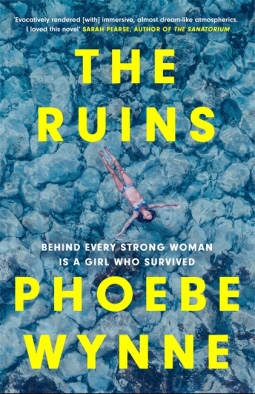
At about 40% into the kindle version of this book it started to become very uncomfortable reading. I’d no idea where it was going to go and I wasn’t sure if I wanted to be along for the ride. I was glad I stayed with it, because of the truth it shows about the effects of trauma. They are life long. Now I’m finding it very difficult to review in my usual way. It felt like reading a client’s journal work, the sort I might ask them to write as part of their counselling journey. There was something prurient about reading Ruby’s account, because it was so intimate and harrowing who could gain pleasure from reading it? Perhaps this is exactly the effect that Phoebe Wynne was hoping to evoke in the reader? Not all reading is pleasurable, sometimes it has a different purpose. To educate, to shock, to show people they are not alone in their experience. In the author’s first novel Madame we were introduced to some of the same themes: the super rich who are above the law and practice exploitation like a religion; young teenage girls being groomed to become Stepford wives to the millionaire class; a creepy gothic school where the girls are educated; the complicity of women in this continuous cycle. Yet with that book the creepy undertones suggested a supernatural element and the malice of some of the pupils was just enough for dislike to creep in. Both help us look past the true horror of what is going on. Once I’d finished the book I felt like I’d glimpsed behind life’s curtain to see the decadent and corrupt inner workings of society. This book felt different. The girls were younger, the setting perhaps more realistic, so the flashbacks to what should have been a blissful summer for three girls at a French château, felt claustrophobic, exploitative and very dark indeed.
Ruby and her family are spending the summer at their Château in France, as usual they are joined by her father’s two best friends; Harley and Angus, with his daughter Imogen. However, added to their party this year are the Fullers and their daughter Annie, plus a woman called Georgina and her teenage daughter Ned (Edwina). Their normal equilibrium is disturbed immediately when one of the Fullers drives back to the château after a few drinks and hits a child in the village. With their combined power and influence, the men ‘handle’ the problem, but Mrs Fuller is not so easily silenced. Was she driving or is she reacting to her husband’s callous disregard for life? Whatever the reason she returns to the château screaming and crying. She has to be sedated and removed back to England as soon as possible. From there the holiday descends into decadence – heavy drinking becomes the norm, little jibes and full blown arguments ensue.
Make no mistake these men are in charge and however they choose to behave, no one will rebuke them. The author creates a sense of powerlessness in the women of the party, from the hysterical Mrs Fuller to the passivity of Ruby’s mum. Within this patriarchy, women are policing the borders. Whether it’s because they believe in the system or because they are keeping quiet to stay safe, every woman here is reacting to male dominance. Ruby’s mum is a walking list of instructions – keep up your flute practice, stay quiet at the table, don’t ask questions and above all don’t read books. Ruby’s love of Agatha Christie is frowned upon by the men and that disapproval is acted on by her mother who eventually stops her. At first her reading is tolerated and admired by Angus. Harley cruelly ruins the end of Murder on the Orient Express, making the point that reading fiction is not the best use of Ruby’s time. Then a seemingly kind birthday present of Death on the Nile becomes tainted – it’s intentions called into question by later events. Events that suggest someone might have been using her love of reading as a way to groom this young girl. Then eventually, the book becomes part of a terrible traumatic memory. I don’t have any personal experience of what Ruby and Imogen go through that summer, but it’s still shocking to read. It was the neglect that bothered me most, the fact that none of these mothers, except perhaps Ned’s mother Georgina, are on their daughter’s side. Not only do they seem curiously detached from how their husbands behave – until it’s in front of other people – they don’t intervene with their daughters, spend time with them or speak up when they are treated badly. Their silence makes them complicit. As a reader I felt powerless to stop what was happening.
In between the flashes of that summer we follow another trip to France, many years later, with Mrs Cosgrove. She’s come to visit the château that’s for sale along with the coast, the venue of childhood memories and events that still haunt her today. Some locals seem to recognise her but she denies being here before, claiming to be taking a holiday. Yet Mrs Cosgrove is jumpy, looking out for particular cars and appearing frightened when two men appear also claiming a link to the château. Does this place and it’s memories still have power over her? Or is she hoping to finally breathe, so that what happened here is no longer such an influence on her life? She might not be the only one who has ghosts to lay here. I found the mood of these sections very different from the tension and seedy atmosphere of the past. Mrs Cosgrove is tense, but curiously I wasn’t even though her story takes us back into the truth of that summer. Maybe because I knew the worst had already happened. Maybe because the after effects of trauma are something I’m more used to, where I have some power to help. Considering the scandals that haunt the headlines these days, whether it’s Harvey Weinstein, Jimmy Saville, Jeffrey Epstein and Ghislaine Maxwell, no one can be surprised by a constructed reality in which the rich and entitled behave as if anything they want they can take. Perhaps my reluctance to read about it says a lot about why these abusers were free to commit crimes against those less powerful for so long – no one wants to face the reality that people can and do act this way. The men in this novel are grotesque, we want to think of them as monsters in order to distance them from ourselves, but sadly they are not. The author wants us to see and not look away, otherwise we are complicit too. In the blurb, Phoebe Wynne says that very little is made up and with my twenty years experience of working in mental health I sadly confirm that childhood abuse is more common than most realise. Perhaps my struggle with reading it is because I’ve seen what abuse does to people and witnessing the effects of trauma is hard to forget. The author also says she wrote the book so that it might ‘provide some consolation for the darkest moments of female experience’ and I truly hope it does that.
Meet the Author
Phoebe Wynne worked in education for eight years, teaching Classics in the UK and English Language and Literature in Paris. She left the classroom to focus on her writing, and went on to hone her craft in Los Angeles and in London. She is both British and French, and currently spends her time between France and England.‘Madam’ is her debut novel, and ‘The Ruins’ is her second.
My other half was worried when he saw my bookmark.
Twelve-year-old Sophie and her mother, Amelia-Rose, move to London from Massachusetts where they meet the charismatic Matty Melgren, who quickly becomes an intrinsic part of their lives. But as the relationship between the two adults fractures, a serial killer begins targeting young women with a striking resemblance to Amelia-Rose.
When Matty is eventually sent down for multiple murder, questions remain as to his guilt — questions which ultimately destroy both women. Nearly twenty years later, Sophie receives a letter from Battlemouth Prison informing her Matty is dying and wants to meet. It looks like Sophie might finally get the answers she craves. But will the truth set her free — or bury her deeper?
I found this a truly compelling read, shot through with moments of fascination and revulsion. I don’t think I’ve ever read a book that looks at serial murder from this perspective. I remember reading one of Sue Townsend’s first Adrian Mole books, set in the early eighties they cover a period when Peter Sutcliffe, the ‘Yorkshire Ripper’, was eventually caught. Adrian observed in his diary that his wife must have known what her husband was. Or did she think ‘Peter home covered in blood, says he was run over by an offal cart’. Humour aside, we often think this when serial killers are caught and it turns out they’ve been a ‘normal family man’ at home. We want our killers to be monsters, strange looking loners, men who have always ‘kept to themself’. It’s unimaginable to think they might have murdered, then gone home and had a family barbecue. This is such rich territory to exploit and Victoria Selman has done it beautifully here in her narrator Sophie and in her creation of Matty Melgren.
I’m going to share a personal response to one of the aspects of the book I found so beautifully constructed that it rang completely true. My ex-partner was emotionally and psychologically abusive. We were together five years and I had therapy for several years afterwards to feel completely myself again. I’d been gaslighted for so long that my sense of self was broken and I didn’t even trust my own judgement anymore. People always ask why you stay with someone like this and the answer is always that they weren’t like this at first. People like this know how to manipulate, to love-bomb you at first and charm everyone around you. The change is subtle, barely noticeable. Then if you do notice, it was a joke or it came out wrong. By the time they really show their true colours you’re so nervous, under confident and broken that you see yourself differently. Maybe you deserve this? Maybe this is just what relationships are like. The author captures this perfectly in Matty Melgren’s relationship with Sophie’s mum, Ams. Told from Sophie’s perspective, Matty dances her mother round the living room and leaves her loving little Post-It notes, surprises her with flowers and takes her breakfast in bed. Sophie describes the change:
“Things started to change; gradually, the way the tide comes in. Inching closer so you don’t notice it until your shorts are wet and your sandcastle’s a shrinking mound.’
We see Ams start to doubt herself. One scene that really unsettled me for being exactly what my ex would do concerned Ams getting dressed for a works drink party. She puts on a red dress that’s off the shoulder and Sophie thinks she looks pretty. Matty agrees, but wonders whether she might want to wear something ‘less showy’ for a party her boss is attending. She has a black tunic, but it’s a bit frumpy. She puts on the black and leaves for her party and once she’s gone Sophie challenges him. She thought her mum looked pretty in the red. ‘Me too’ Matty replied, commenting that she ought to have more confidence in herself. It’s subtle, but it has Ams doubting her judgement and is driving a wedge between her and her daughter. He encourages Sophie in rebellion and cheeky come backs. Sophie’s fear that he will leave like her father, is a easy thing to exploit and he does. He uses Sophie to pile shame on her mother when she’s ‘demanding’ which translates as Ams asking for her needs to be met. I found his manipulation of Sophie uncomfortable reading, but Sophie presents it differently. She blames her burgeoning hormones and admits it might have been an unconscious desire to draw him to her and isolate her mother. It’s perhaps the success of this bonding process that makes Matty think he can push the boundaries; to exploit her age and natural curiosity in an uncomfortable and completely inappropriate way.
In between Sophie’s story, are contemporary opinions of Matty Melgren and those around him. There are also the terrible facts about the murders and the female victims who are otherwise eclipsed by the fascination into how the killer’s mind worked. I loved the way the author would juxtapose events to place a spotlight on the killings. It brought up a feeling of revulsion, even though the two events are really unrelated. What Sophie and Ams were doing while these murders took place has no connection, but somehow we feel it and it’s a technique many newspapers use to push their agenda. Ams is creaming butter and sugar to make a birthday cake, with the radio playing in the background reporting that two more bodies had been found strangled by their underwear and one almost decapitated by a shovel. Sophie connects the timing years later. Matty suggested that they celebrate Sophie’s birthday properly and make a fuss. Ams thinks that she’s creating patterns that weren’t there, but it’s easy to see why. She’s remembering them, obliviously celebrating her birthday, while two women lay brutalised and their killer was sat charming her school friends.
Sophie couldn’t possibly have known, but she’s heard so much criticism over the years that she’s internalised it. Why didn’t she know? They must have been stupid not to see it. She’s still being manipulated and gaslighted, this time by the press and general public. The tension builds, compelling the reader on towards a resolution to Sophie’s musings and to her scheduled prison visit. It’s an insight into how murder destroys two families, that of the victim but also that of the murderer. Being left with all these internal questions and a sort of survivor’s guilt. I wondered whether it is ever possible to go through an experience like this and trust a man again. Would Sophie have been able to live a normal life after this experience in her formative years? Victoria Selman has written a novel that made me feel so many different things and had enough psychological trauma to keep a counsellor like me thinking long after the book was closed. She also deserves congratulations for concluding it in a way I never saw coming.
Published by Quercus 7th July 2022
Meet The Author
Victoria Selman is the author of the critically acclaimed Ziba MacKenzie series. Her debut novel, Blood for Blood, was shortlisted for the prestigious CWA Debut Dagger Award and an Amazon Charts #1 bestseller for five weeks, selling over half a million copies.
Victoria has written for the Independent, co-hosts Crime Time FM with critics, Barry Forshaw and Paul Burke, compiles the Afraid of the Light charity anthology series and was shortlisted for the 2021 CWA Short Story Dagger Award.
Her first standalone thriller, TRULY DARKLY DEEPLY, is being published by Quercus in July 2022.
Ever since reading Lisa Jewell’s novel The Family Upstairs I’ve been hoping she’d write a sequel. The book was certainly satisfying as a standalone, but the characters were so complex and their situation so traumatic I was certain it would bubble up to the surface sooner or later. Detective Samuel Owusu thinks the same, when human remains are found washed up on the banks of the Thames by a mud lark. When he sends the bones for forensic examination it’s clear that she was murdered; there’s an injury to the skull that could only have come from blunt force trauma. The other clue from the bag is a mulch of leaves, unusual ones for London, taking him to a mansion house in Chelsea. There, thirty years ago, three people were found dead in a kitchen and upstairs was an unharmed baby girl with a rabbit’s foot tucked into her cot. The clues are pointing to two missing teenagers, Henry and Lucy Lamb, belonging to two of the deceased. Yet, neighbours had said they hadn’t seen the children for years. We follow DCI Owusu’s investigation, but also this missing brother and sister who are doing some investigating of their own. They’re looking for a third teenager, Phinneas Thomsen, son of the third deceased adult and also a resident of the Chelsea mansion, hoping he can make sense of their childhood. Why was the Thames body separate from the other three and what was her link to the adults living there? The house has just sold for over seven million pounds and it’s owner is a young woman called Libby, so she must be their first port of call. This is just the first step in untangling a very dark web of trauma, murder and a family who have tried to bury secrets that just won’t stay dead.
Lisa Jewell really is the master of this domestic noir genre. She could have plodded along, unravelling secrets from long ago and it would still have been a very good book. However, she doesn’t take the easy option, she chooses to introduce new characters and storylines that are equally compelling and link into to the Cheyenne Walk mystery. As well as Samuel, Henry and Lucy narrating the story, we have a woman called Rachel narrating a present day storyline too. Rachel is a jeweller, just waiting for a big store to pick up her designs and thrust her work into the limelight. After years of dating and not finding the one, she meets a man called Michael who seems almost perfect for her. He is attractive, attentive, wealthy and seems available emotionally, which makes a change from other men she’s dated. He’s been married before, to a woman he met while she was busking in France and he was staying at his home in Antibes. Rachel doesn’t really pry into his past and all Michael volunteers is that she was musical and ‘a nightmare.’ Her name was Lucy. In a whirlwind, Rachel and Michael get married and she’s of an age where people don’t tend to take you aside and ask if its all moving a bit fast. Perhaps friends are just glad that this has finally happened for her and her father seems happy for her too, believing Michael to be that rare thing – an older, unmarried, great bloke. On honeymoon, amongst the rose petal strewn sheets and days spent reading by the ocean, Rachel thinks she might suggest a bit of fun in the bedroom. She’s happy with vanilla sex, but wonders if some light BDSM games might bring variety. She unpacks some special underwear, some ties and a leather whip and is looking forward to a fun night, but Michael looks embarrassed, then furious. He flies into a rage, accusing her of having no class, sleeping around and ruining their honeymoon. Rachel is bewildered as he storms off to sleep separately and refuses to talk about it. All she can hope is that he calms down, but she is starting to feel like she must apologise, although she doesn’t really know why. How can she return from her honeymoon and tell anyone her husband is disgusted by her?
I loved how these four narratives were interwoven, because they cleverly show us how abuse in all it’s forms leaves it’s legacy. Whether it’s self-hatred and body dysmorphia, a deep seated rage thats ready to boil over, or a desperate need for love and a tendency to repeat the patterns of childhood. I thought Rachel’s story was particularly compelling, because I’ve experienced that pattern of abuse – the love bombing, rejection, gaslighting and fits of rage. I hated Michael and really understood her need to find Lucy and talk to her. It felt like she’d lost the ability to trust her own judgement, so if there was someone else he was abusive to, she could start to accept and own her own truth. Her confidence had sunk so low she was struggling to fight for herself, but as soon as Michael’s behaviour affected someone else she loved she was able to stand up to him. Henry is also struggling with what happened in childhood, his twisted and confused emotions surrounding Phinn were complex. Phinn was held up as an example of what a boy should be, with Henry receiving punishments and neglect for not being more like him. We might expect Henry to feel hatred and even harbour harmful thoughts about Phinn, and to an extent he does feel these things. There’s a part of him that never wants to see Phinn again. However, there is a part of him that is still the little boy who wants to please, so he has changed the way he looks and now looks at Phinn in the mirror every morning. There’s definitely an element of hero worship and sexual desire too. I was actually scared of what Henry might do if he ever found Phinn, who is thought to be working on a game reserve in Africa. Lucy is living with her brother at the start of the book, along with her two children. Henry’s upmarket flat with it’s high thread count sheets and all the right TV packages is the height of luxury to her two children. They have slept in some terrible places while homeless and they don’t want to be on the run again. Lucy is scared and not just about the events in her childhood, because she’s been replicating the pattern of abuse she learned to endure at Cheyne Walk, into her adult relationships. She’s also used to running from people she owes money to. She hopes that now the house is sold, she can find a secure and happy home for her children close enough to keep in touch with her brother. She knows that Henry is more fragile than he seems, but also that there’s a darkness at his centre and she doesn’t know what might happen if he ever lets it come to the surface.
The pace of the novel is pretty fast and I almost read it in one sitting. Short chapters mean it’s very easy to get caught by that little voice that goes ‘just one more chapter won’t hurt’ when it’s gone midnight and you have to be up in the morning. The tension is builds, then decreases, then builds again by using clever tactics like finding something out at the end of a chapter, then the next chapter going back in time or dismissing what you’ve just found out. Although the storyline seems clear she throws in little curveballs like a spot of blackmail here or an unexpected murder there, to take us off the main track. I found some dark humour in two people turning up to murder the same person. I thought that the author also managed to inject some hope for the future too, in what has been a very dark and painful story. If you’ve been through childhood abuse, domestic violence and sexual violence there are some tough paragraphs here and there. I must admit I found some of the coercive control and verbal abuse difficult, and I found myself holding my breath in parts, but that’s how I knew the author had got it absolutely right. This was a fantastic sequel, that I would say needs to be read after the first novel and not as a stand-alone. It really stands up to the power of the first novel with it’s tension, darkness and psychological game playing but also offers some measure of healing too. A fantastic sequel from an author at the top of her game.
Meet The Author
Lisa Jewell has written and published another sixteen books, since her debut Ralph’s Party, from the ‘curry and flatmates’ novels of the nineties and noughties like Thirtynothing, One Hit Wonder, A Friend of the Family and Vince & Joy, to more family-themed novels like After The Party, The Making of Us and The House We Grew Up In and more recently, psychological thrillers such as I Found You, Then She Was Gone, Watching You and The Family Upstairs, which charted in the summer of 2019 at number one in the hardback charts.
Lisa lives in London with her husband, two daughters, two hairy cats, two nervous guinea pigs and a lovely auburn dog. She writes every day, a minimum of one thousand words, in a cafe, with no access to the internet, in two to three hour sessions
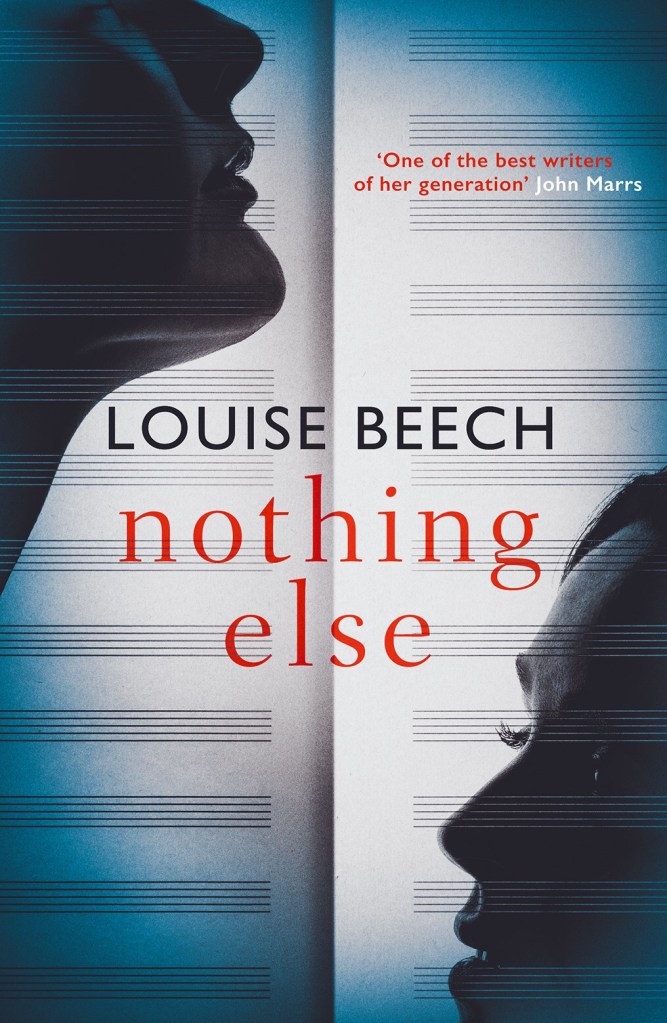
Louise Beech’s new novel, pulls us into the emotional and traumatic life of Heather, a pianist who lives in Hull. She teaches and plays in local bars, then relaxes in her harbour front flat looking out to the Humber Estuary and the North Sea. Heather has a quiet life and quite a solitary one too. She has no family and relies more on her strong connections with friends. In fact it is one of them that encourages her to try out for a job on a cruise ship, something she would never have imagined doing. She would be scheduled to play in different bars on the ship through the day, but as her friend says, she can enjoy the facilities and gets to travel. This particular cruise is stopping in New York then on to the Caribbean before doing it all again in reverse. There’s something lonely and a bit melancholy about her and we learn that Heather and her sister have grown up in the care system, after their parents were killed. Music was the girl’s escape, once their mother had convinced their father it wouldn’t hurt for them to learn on the piano they were given. They both had an aptitude for music, but it was Heather’s salvation, the only place she could fully express her emotions. With their father unwilling to pay for lessons, their mother secretly sent them to piano teacher Mr Hibbard who lived a few doors away. When their parents died, both girls were taken into a children’s home together, but one morning her sister Harriet was taken to see the staff in the office and Heather never saw her again. She could only hope that a kind family had adopted Harriet, but for some reason hadn’t been able to take her too. When the girls had most needed to express themselves they would play a duet they had composed called Nothing Else. It was this piece of music that stayed with Heather all her life, instantly taking her back to the piano and her little sister.
Heather’s chapters follow her current life and the piano job she applies for on a cruise ship. Here and there the author takes us back in time to her childhood, where their father was a controlling and violent man and Heather felt responsible for keeping her little sister Harriet safe. Like all children who have traumatic home lives, Heather had become attuned to the slightest hint of tension. She knew when her father was going to explode and on those nights where the sounds downstairs were terrifying, Heather would keep Harriet out of earshot and they felt safe when they were tucked up in just one bed. She was also aware that their father preferred cute and cheeky Harriet, so knew to stay quiet and keep her head down. These sections from the past are traumatic and very moving. The author maintains the tension in these flashbacks, until we too are on edge, always waiting for something to happen. The author moves deftly between the experiences of Heather as a child in the middle of this situation, and a grown up Heather commenting on what happened with the clarity and insight of an adult. There were brilliant present day sections onboard the cruise ship where Heather befriends a writer who is also working aboard, teaching sessions in creative writing. Heather joins her morning sessions and finds them much deeper than she expected. I could recognise this from the writing therapy sessions I’ve facilitated – the prompt is always just a starting point and eventually you start writing what you need to write about. This definitely happens to Heather and is one way of processing the care records she applied for before the trip, dipping into them little by little, like a reluctant bather dipping her toe into the cold, deep water. She doesn’t want to be overwhelmed.
Harriet has her own section of the book, again split into her current life and the past she doesn’t fully understand. Now living in America, Harriet has a daughter whose left home and case of empty nest syndrome. Her flashbacks into the past remind us that Heather’s story is only part of this family’s history and Harriet may have a very different tale to tell. We learn most when their narratives overlap and we see a subtly different side of the events Heather describes, like two sides of the same coin. Again, it’s psychologically very clever and gives the perspective of the younger sibling, the one who is cared for and shown love by her big sister. I was longing to know what had happened at the children’s home. Where did Harriet go and how was she persuaded to go without her sister? Thanks to all of these questions and my curiosity over whether the sisters would ever meet again, I was totally gripped by the story and immersed into the worlds of these sisters. I enjoyed their different characters, developed by their separate upbringings, as well as their different experiences with their parents due to their ages. There are secrets that neither child was aware of, so there are some rewarding revelations to be found. I was eager to know if the sisters were somehow able to find each other. Mainly though, I was moved to read their tales of childhood trauma and wanted to understand the adults they became in light of that experience. Which of their characteristics could be explained by the past? There’s a cautiousness in Heather, because her ability to trust others is affected, leading to a quiet and lonely life. It was lovely to watch the cruise atmosphere, and proximity to others, forcing her into being sociable and to make friends. There’s a sense that she’s coming alive in these moments, which felt hopeful and uplifting. This was an addictive read that beautifully captured how childhood trauma and it’s effects can follow us into adulthood. The author showed, so beautifully, that it’s only by sharing and in this case, playing out that experience that we begin to heal.
Published by Orenda Books 23rd June 2022
Meet The Author
All six of Louise Beech’s books have been digital bestsellers. Her novels have been a Guardian Readers’ Choice, shortlisted for Not the Booker Prize, and shortlisted for the RNA Most Popular Romantic Novel Award. Her short fiction has won the Glass Woman Prize, the Eric Hoffer Award for Prose, and the Aesthetica Creative Works competition, as well as shortlisting for the Bridport Prize twice. Louise lives with her husband on the outskirts of Hull. Follow her on Twitter @louisewriter
It’s been an odd month here, because I went into the month full of energy and looking forward to a busy blog month. Then I felt very unwell and sadly had to let blog tour organisers and publishers which I hate. Thankfully I’d written this ahead of time as I read each novel, so all I had to do was write this little intro. My favourite books this month were mainly dual narrative novels, a structure I really enjoy especially when it’s done as well as these authors. I hope you all have a lovely Jubilee weekend, whether you are a royalist or are just looking forward to a long weekend off work. My carer and other half are helping me with a stall at our village jubilee celebrations. I’m at our book exchange with a box full of old proofs to swap, book suggestions and a tombola with books from the Jubilee Big Read as prizes. All the books are from Commonwealth writers so I’m looking forward to introducing people to a different perspective on our Queen’s long reign. Photos to follow!
I enjoyed this book much more than I’d expected to. It’s not that there was anything wrong with the blurb or the cover, but I thought it might be just another ‘stately home + mystery’ novel with no huge surprises. However, the depth of characterisation and complexity of the story drew me in and kept me reading for two straight days. Ellie is our present day narrator and she’s having to take leave from work as an investigative journalist after trying to expose an important businessman ended badly. So she returns to her family home in County Kerry, Ireland to spend time with her mother. Trying to keep a low profile is a lost cause in a small Irish village. It’s only because she’s desperate for reading material that she braves the charity shop to collect a box of books that have come from the large stately home nearby, Blackwater Hall. Ellie is grateful to see a few Agatha Christie novels on the top and takes the whole box. Inside is a mysterious letter, addressed only to ‘T’ but clearly belonging to the Rathmore family. It ignites a spark in Ellie and she tries to do the right thing and return it, but is bitten by the mystery surrounding the family. Charlotte Rathmore disappeared during the early part of WWII leaving a broken string of pearls by the lake. The official version is that Charlotte killed herself, but Ellie senses a story and starts to seek out other remaining members of the family. Can she solve the mystery of Charlotte’s disappearance and what changes will the truth bring to Blackwater Hall and the Rathmore family? Despite wanting all the answers, I didn’t want this book to end and there’s no better compliment than that.
Another dual timeline novel here, with another mysterious set of letters. This was our Squad Pod read for May and as usual my review is late, but it’s no secret that I LOVED this book. I even made Chocolate Mojito cupcakes to celebrate the fact. I was unsure where this book was going to go, considering the rather modern looking cocktail cover. However, it’s story was deeper and more moving than I expected. In the 1970’s Ava Winters lives in a New York apartment with her mother and a father who seems to wander in and out. Her mother shows signs of mental illness and seems haunted by something in her past. With both parents AWOL Ava is lonely and becomes fascinated by a box sent to her apartment addressed to a woman called Gillian. It’s from Paris and holds letters as well as a butterfly necklace and a photo with LIAR scrawled across it. In the same apartment, but twenty years earlier, teachers Dovie and Gillian are roommates. However, they’re very private and guard their home lives fiercely until one unguarded moment exposes the wrong person to the truth. This novel showed me a side of life I knew nothing about. A time where ‘unnatural activities’ and desires could lead to a loss of everything from your job to your liberty. I will save the rest for my review, but don’t miss this one. It’s an incredible debut from a very talented writer.
This beautiful novel covers the early Twentieth Century in the lives of one family, from WWI to WWII. This book feels like an epic. A whale washes up on the beach of the Chilcombe Estate and is claimed for the Seagrave family by Cristabel who is the orphan cousin and doesn’t really fit anywhere. She loves adventure, activity, and endeavours, conquering the Seagrave estate rather than being the lady her stepmother would expect. The Seagrave children are an odd bunch, brought up by staff and each other, while their parents stay in bed late, are never without houseguests and like to drink as early as it is socially acceptable to do so. This is the story of the heir and the spare. Jasper Seagrave brings his new wife home to the Chilcombe Estate and Rosalind is thrown into being mistress of the house and stepmother to his daughter Cristabel. Rosalind is happy to have bagged an aristocratic husband, considering they’re in very short supply since the war. That is until the ‘spare’ arrives. Willoughby is everything his elder brother isn’t; a dashing war hero fascinated by speed whether it’s a new car or learning to fly. There’s an immediate attraction, deepening when Rosalind is on bed rest in the last stages of pregnancy and Willoughby keeps her company. Is the Chilcombe estate about to lapse into scandal and what will become of Cristabel? As the family grows to include a half-sister and brother for Cristabel we follow them towards WWII. The author shows what a toll both wars took on people and the rapid changes they forced on society. I won’t reveal whether any of our characters survive, but Cristabel remembers a saying, that war can bring out the best in people. There are those who shine through difficult days and in their own ways I think the Seagrave children all stepped up to the mark. This is a beautiful piece of historical fiction and I would happily read it all over again.
This book is my only thriller this month and it’s a cracker. This is perfect summer holiday reading whether you’re somewhere exotic or lounging in your own back garden. Hot in every sense of the world and set in picturesque Italy with a sense of growing menace all the way through. I read this one in the garden, with a Pimms in hand and with every chapter became more convinced of the old saying; the grass is never greener on the other side. Laura and Nick have been through a lot. Back in London they were struggling with infertility and Laura hadn’t felt like herself for a long time, the fertility drugs pumping her full of hormones and the grief of miscarriage left her feeling broken. When she discovers a betrayal, after Nick accidentally leaves his phone at home, she’s angry and resentful too. In his eagerness to make it up to her, Nick suggests they do what Laura has always wanted, move to Italy and create a holiday hideaway for couples. They discovered Luna Rossa on a visit to Italy several months ago, after which Laura suffered a third miscarriage. It is in the Marche region, a largely unknown area of Italy next to Tuscany but less expensive. Luna Rossa is isolated, includes a pool, a small cottage and beautiful grounds that fall away steeply gifting the house with incredible views across the countryside. Only a few months later they are preparing to welcome their first couple for a three week stay. It seems idyllic, but they’re taking a risk in welcoming complete strangers into their home. Laura has stalked her guest Madison on social media and she seems very outgoing and glamorous. Laura and Nick could be underestimating how disruptive it can be to have strangers living in your home, especially these strangers…. This is a real sizzler of a novel! My full review is coming next week.
This book is a beautiful example of writing back in history to give a voice to someone who was silenced. Celestine Babbington is recorded for history in a silent form, photographed wearing clothes he didn’t choose and posing with a man whose relationship to him is very problematic. The man, Richard Babbington, is a rich explorer who has a love for Africa and a large mansion house in England. Yet by 1907, Celestine is being kept in the attic of the house, only allowed out to work as a domestic slave. Years later, a young girl called Lowra is suffering the same fate. Locked in the attic as punishment for any transgression, when her fate has been left in the hands of her resentful stepmother. While locked in the attic she finds an unusual necklace with clawed hands, unlike anything she’s seen before. There’s also an old-fashioned porcelain doll and a sentence on the wall, written in an unfamiliar language. These are her only comfort, because she feels as if the person that owned them is with her in some way. As an adult, her stepmother’s abuse still affects her and she’s conflicted when she inherits Babbington’s house. People seem to think she’s lucky and the town is proud of this intrepid explorer. Looking into the house’s history leads her to an exhibition of Babbington’s life, where she sees photographs of Babbington and a young black boy wearing an African wrap and what looks like her necklace, the one from the attic. However, the thing that keeps Lowra transfixed, is the young boy’s eyes. Lowra sees someone filled with sorrow, a fellow sufferer of the darkness inside that house. His name is Celestine Babbington. Lowra wants to find out more about this boy, how he came to be in England and what happened to him after Babbington’s death. This book was moving and had me in it’s grip straight away. It takes me back full circle to the beginning of my post and hearing voices from the Commonwealth countries and from Black British writers. I’ll be taking a copy of this book to my stall at the weekend and I’m looking forward to sharing it with new readers.
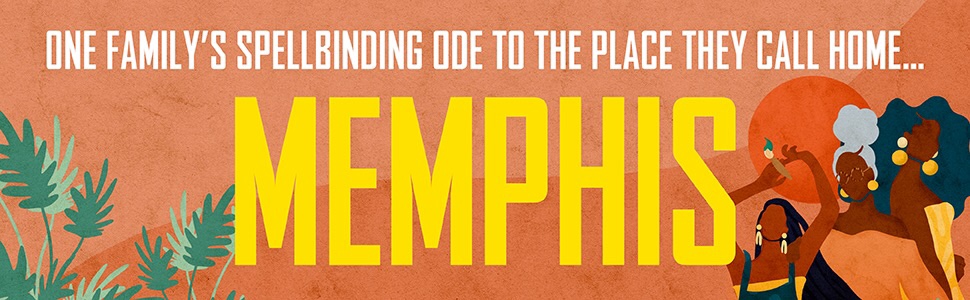
Joan can’t change her family’s past. But she can create her future.
Joan was only a child the last time she visited Memphis. She doesn’t remember the bustle of Beale Street on a summer’s night. She doesn’t know she’s as likely to hear a gunshot ring out as the sound of children playing. How the smell of honeysuckle is almost overwhelming as she climbs the porch steps to the house where her mother grew up. But when the front door opens, she does remember Derek.
This house full of history is home to the women of the North family. They are no strangers to adversity; resilience runs in their blood. Fifty years ago, Hazel’s husband was lynched by his all-white police squad, yet she made a life for herself and her daughters in the majestic house he built for them. August lives there still, running a salon where the neighbourhood women gather. And now this house is the only place Joan has left. It is in sketching portraits of the women in her life, her aunt and her mother, the women who come to have their hair done, the women who come to chat and gossip, that Joan begins laughing again, begins living.
Memphis is a celebration of the enduring strength of female bonds, of what we pass down, from mother to daughter. Epic in scope yet intimate in detail, it is a vivid portrait of three generations of a Southern black family, as well as an ode to the city they call home.
There’s a point in this book where Miriam remembers her mother Hazel waking her up, leaving her little sister August asleep in bed, then she fixed her a breakfast fit for a king. There were green tomatoes and grits, spicy pork and scrambled eggs, and they were chatting like a normal day. Miriam was distracted by the delicious meal and didn’t notice her mother running the tap. Then suddenly she threw a whole jug of cold water over her daughter. Miriam thought her mother had lost her mind. All she said was ‘you ready’ and that afternoon took her to her first activist’s sit in. Miriam’s experience is similar to the one I had reading this incredible book. I’d just settled into the story when suddenly something was revealed that was so momentous I would have to take a moment, blind-sided by what had just happened. Memphis is the home of three generations of African-American women from grandmother Hazel, her two daughters Miriam and August, and Miriam’s daughters Myra and Joan. Their personal lives are set against a backdrop of American history from the early 1950s through to the 2000s, taking in world-changing events like the Kennedy assassinations and 9/11. Told in sections from each woman’s viewpoint, Stringfellow takes us back and forth across the 20th Century. Each step back in time informs the present, showing us where Joan has come from and each day forward moves Joan into her future.
I loved the earliest years where grandmother Hazel meets Myron and they fall in love. Their courtship is so sweet and has an innocence about it and I think that’s what makes later events such a shock. The fact that Myron has come so far and become part of law enforcement in those times feels like such an incredible achievement. Your fellow officers are supposed to be your brothers, but despite working alongside him, this all white squad don’t count him as one of them. We don’t see the lynching, but we don’t need to. Our place is with the women of this story. Hazel is nine months pregnant, filled with grief, anger and a frustration borne from knowing that whatever you achieve, however loud you scream, your achievement and voice mean nothing. The author managed to deeply touch me with that sense of powerlessness. There’s such a maelstrom of emotions when she gives birth: knowing this little girl will never know her daddy; wishing Myron was there to support her; the fear of knowing she’s alone as a parent and her girls depend on her; the joy of this new life coming into the world. These women feel so real because Stringfellow cleverly evokes the complexity of human emotions, it’s rare that we only feel one at a time. In grief we can still feel moments of joy and even if we are happy, there can be moments of doubt or fear. Such moments of inner conflict follow us into the second generation of women, sisters Miriam and August. When Miriam escapes domestic violence, returning to the house Myron built in Memphis, she’s torn in two directions. She really has nowhere else to go and she longs for home and the consolation and support of her sister, but Joan has a moment of recognition. Have they been here before? The truth is they have.
The women in this family are strong and they need to be. Some of what happens to them over their three generations is terrible and you will probably have a good cry like I did. I was touched by what Hazel, Miriam and Joan go through, but there were also quieter struggles that touched me such as August’s decision to care for her mother, the loneliness she must feel with both her mum and sister gone, the fear she feels for her son Derek, growing up as a black man in a place where shootings and gangs are commonplace. Her mixed feelings of guilt, anger and love that come with being a mother of a son who does things that are unforgivable. I also loved the camaraderie of her salon and the strength she gets from the women who are her customers and her community. I was touched by her ability to take pleasure and solace when it’s offered, despite it not being the love and companionship she craves – from the women in her life. The pain these women go through makes the good times even more enjoyable and I really felt the joy and relief when they came out of a tough time. The author manages to capture that sense of peace I have seen in my counselling room, when the long held fear, anger and shame that comes from trauma is finally let go. That need for revenge finally silenced. The chance for joy and celebration to fill the void left behind and communing with others who know your journey.
Former attorney, Northwestern University MFA graduate, and Pushcart Prize nominee Tara M. Stringfellow’s debut novel Memphis (Dial Press, an imprint of Penguin Random House) is a multi-generational bildungsroman based on the author’s rich Civil Rights history. A recent winner of the Book Pipeline Fiction Contest, Memphis was recognized for its clear path to film or TV series adaptation and is due out in 2022. Third World Press published her first collection of poetry entitled More than Dancing in 2008. A cross-genre artist, the author was Northwestern University’s first MFA graduate in both poetry and prose and has been nominated for two Pushcart Prizes, as well as Best of the Net. Her poems have appeared in Collective Unrest, Jet Fuel Review, Minerva Rising, Women’s Arts Quarterly, Transitions and Apogee Journal, among others.
If she isn’t writing, she’s gardening. If she’s isn’t in Memphis, she’s in Italy.