Posted in Random Things Tours

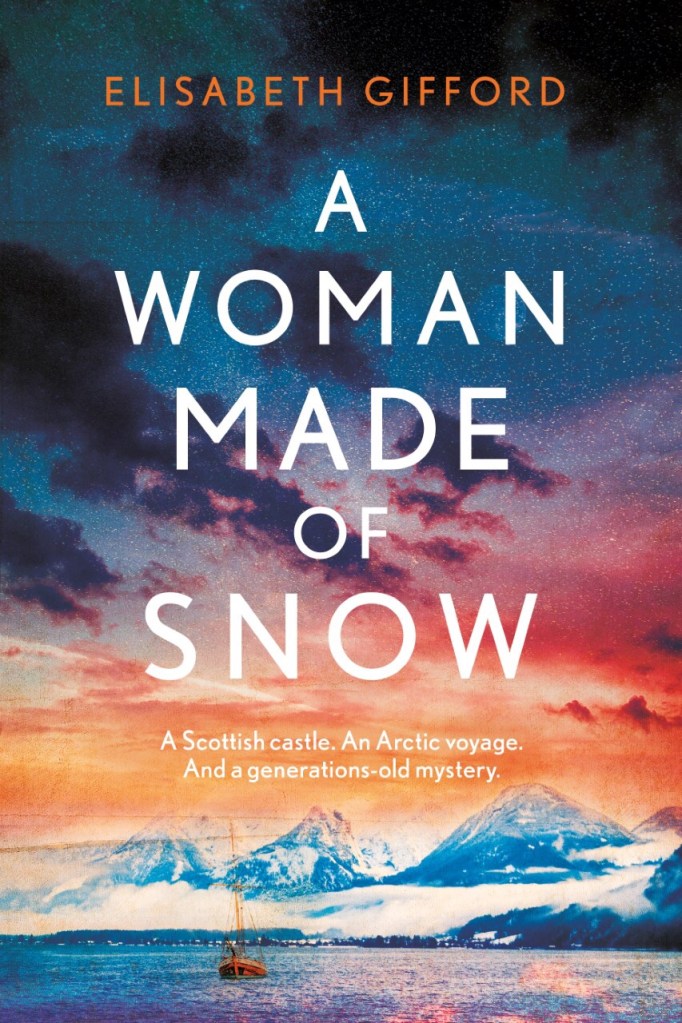
A Woman Made of Snow by Elizabeth Gifford.

I slowly became more and more intrigued by Elizabeth Gifford’s new novel. Even the title whetted my appetite for more of the same beautiful writing that made The Lost Lights of St Kilda such a memorable book. We’re still in Scotland, this is the late 1940’s and our heroine Caro lives with her husband Alasdair and baby Felicity in the Laundry Cottage situated in the grounds of his ancestral home. They met at Cambridge University and married less than six months later much to his mother Martha’s surprise. She was expecting him to marry someone of their class, maybe even their family friend Diana who’s valuing heirlooms at the family’s castle. Caro’s mother-in-law wanted her and Alasdair to live at the castle with her, but Caro wanted a little bit of privacy and distance. At Laundry Cottage she can still be in her dressing down at lunchtime or having a sleep while baby Felicity has a nap. Yet, the past is about to make it’s way into the present both physically and mentally. Caro is asked to research the family archives for a mysterious, missing member of the family. A great-grandmother seems to have been scrubbed from the archives, along with a missing diary from her husband Oliver’s trip to the Arctic. When the Laundry Cottage floods suddenly and workers inspect the Victorian drainage system they find a body of a woman. Could this be the missing bride?

It seems formidable mothers are the norm at Castle Kelly, because when I read the second narrative it took me back to the late Victorian period and tension between Oliver and his mother. From early childhood Louisa and Charlotte Strachan have been summer visitors to the castle and Oliver’s playmates. However, as they get older it’s clear that feelings have developed between Oliver and Louisa. Could she be the missing grandmother from the archives and the body found in the grounds? How come Oliver ended up in the Arctic? What effect will Caro’s findings have on the family and her marriage? With so many questions I was compelled by the story and some of the characters caught up in these dramatic circumstances. Also the historical shifts behind these stories was fascinating too, showing how much the world changed over two world wars.

Caro is such a sympathetic character and I felt immediately on her side in this very difficult situation she finds herself in. She’s an intelligent woman and understands a lot about how the world is changing. Her expectation of life after the war is that she and Alasdair will live in London as lecturers at one of the city’s universities. She didn’t bank on having Felicity so quickly or for Alasdair’s only offer of employment coming from St Andrew’s university. She describes feeling ‘ambushed’ by her own fertility, but she loves Felicity and wants to be a good Mum. I understood her need to be separate from the castle – it’s a compromise between his obligations and the total freedom they expected in London. I also empathised with her feelings of struggling as a new mum and being isolated from everyone and everything she knows. It’s a huge leap from being organised, full of energy, totally independent and career minded, to living in a cottage with a new baby feeling tired and slightly inadequate. She can’t understand why looking after Felicity seems so arduous and exhausting, when she’s always been so lively and alert. She also finds her emotions difficult; she’s struggling to understand why she wants to keep mother-in-law Martha at bay, or why she feels threatened by the presence of Diana. Her interest in the missing grandmother is linked to these emotions, maybe they were both outsiders in this family. It’s painful to her when she hears Martha say she’d hoped Alasdair would marry someone of his own class, surely those barriers don’t exist any more?

When I started to compare it with the 1940’s I could see that there is change, but within the Gillan family it has been minimal compared to the rest of society. Early in the novel Caro remarks that ‘she was secretly rather proud of her ability to make good friends across the classes’ because ‘once the war was over, class was not going to mean anything after all the country had been through together’. This was probably true in more metropolitan areas, but it hasn’t reached the upper class residents of rural Scotland. Martha is trying, but her true feelings are old-fashioned. The mistress of Kelly Castle in the Victorian period is Sylvia and she resents her husband’s adherence to an old obligation. He invites the daughters of old family friends, Charlotte and Louisa Strachan, to the castle every summer. Whereas Louisa tries desperately to fit in, Charlotte is a more fiery and independent character and I fell in love with her. As soon as she cut her own hair off I knew I would enjoy her way of being in the world.

To Sylvia’s disgust, Charlotte brings a young girl called Mary into the children’s circle. They run wild in the grounds and don’t seem to notice the differences between them. This changes as they get older until one summer Mary’s aunt asks Charlotte not to run in and out of Laundry Cottage where they live, tempting Mary to play when this year she had to work. As far as Sylvia’s concerned the girl is lucky to be merely helping her aunt, because the true destiny of the poor girls of Dundee is in the jute mills that pay for Kelly Castle. When Charlotte defies her, bringing Mary along on an outing to see the family’s new whaling ship and dinner in the Castle Hotel. When Sylvia asks Charlotte to remove her beret at dinner, she sees her unseemly cropped hair. Charlotte knows a punishment is coming, but what her aunt does next makes her sick and heartbroken. Without any emotion she tells the driver to take them home via the jute mill. There, she ushers Mary into the office as a new mill girl for the foreman to set to work. Sylvia has wanted Mary in her proper place for some time, but the opportunity to put Charlotte in her place at the same time was too good to miss. Charlotte is devastated. Sylvia now has to find a way of dealing with the Strachan girls, she has her eye on a young lady for Oliver and she doesn’t want her plans scuppered by a crush on someone unsuitable.

I found it interesting how patterns seemed to have formed down the generations. Some brides were suitable to be the next mistress of Kelly Castle, and others were not. Caro’s mother-in-law kept her misgivings and disappointment over her son’s choice to private conversations. Sylvia had been so determined and cruel in her treatment of Charlotte and Louisa that I wondered what fate awaited Oliver’s unsuitable bride, whoever she was. Since there are family rumours surrounding the Arctic voyage with hints of cannibalism, I was worried for this unnamed woman.

This author always creates an incredible sense of place and the beautifully atmospheric opening is reminiscent of Daphne Du Maurier’s Rebecca and the ghostly walk up the drive of Manderley. A woman sees Caro and tries to call out to her from her place beneath the earth.

‘Wrapped in darkness beneath the trees I watch rain falling on the earth where I have slept for so long. Light from the Cottage windows stretches across the lawns, but it does not reach me. Find me, I whisper. Give me my name.’

Her need for Caro to hear her showed a spirit undimmed by death. I was really interested in this and the theme of women being controlled or even erased by forces or expectations beyond their control. As the unnamed woman sits beneath the earth, Caro feels removed from the life she wanted by motherhood. Mary is taken from a carefree childhood to the responsibilities and restrictions of adulthood overnight. It had been hoped that she might be given a maid’s position in the castle, but her destiny is at the jute mill. Charlotte isn’t even allowed to cut her hair, and she hates the prissy dresses she’s expected to wear as a guest of the Gillan family. She doesn’t understand why her friendship with Oliver has to change, just because she’s older.

‘Angry tears pricked her eyes.While they were away at school that year it seemed that someone had decreed that childhood was over, a closing down of what a girl may or may not do – and a forewarning of the hardening of roles to come that she saw in the lives of the adults around her. Well, Charlotte was not going to accept it. She would stay true to herself and true to the things she loved.’

I was sad for her, and her sister Louisa. It’s interesting to see how both girls react to the effects of being from a poorer and lower class background. I was compelled to read on and find out about these girls in adulthood, not just their relationship with Oliver, but how they were making their way in the world. I wanted Charlotte to have retained that fire and attitude and hoped that circumstances hadn’t tamed her. There is just so much to love about this novel: the well written characters; the intriguing mystery of the unnamed woman; the depth of research into the two time periods especially into societal changes, class difference and the lives of women. I heartily recommend it to all lovers of historical fiction, women’s lives and family secrets. This is one of those books that I loved so much, I will be buying a finished copy, despite having the proof. It’s so atmospheric, romantic, and deeply poignant.
Meet The Author.
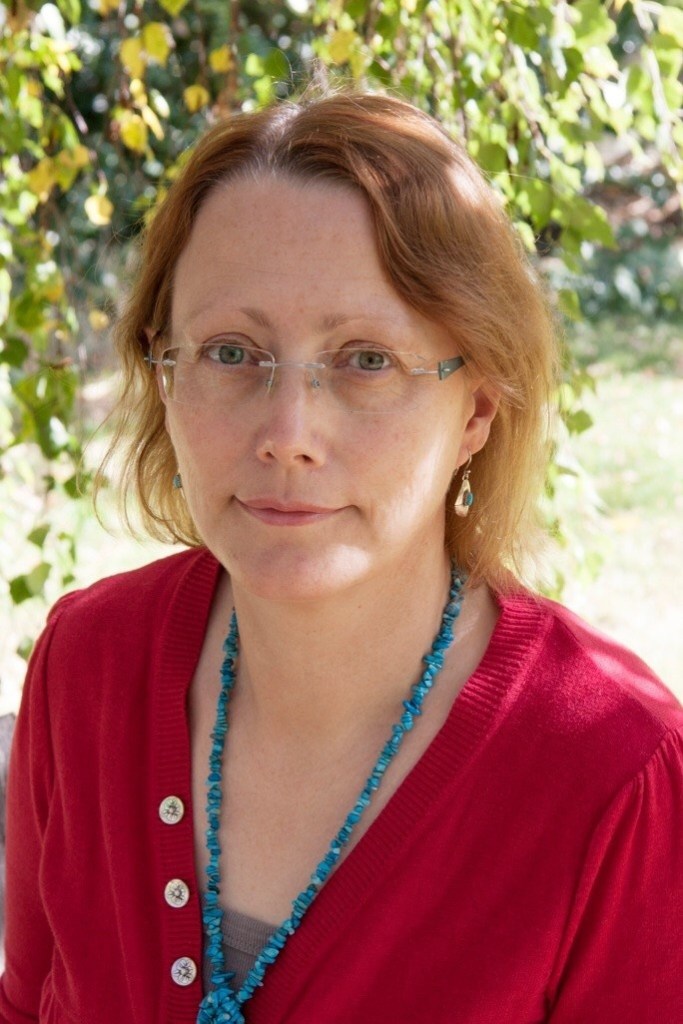
Elisabeth Gifford grew up in a vicarage in the industrial Midlands. She studied French literature and world religions at Leeds University. She has a Diploma in Creative Writing from Oxford OUDCE and an MA in Creative Writing from Royal Holloway. She is married with three children, and lives in Kingston upon Thames. A Woman Made of Snow is her fifth novel.

Posted in Throwback Thursday

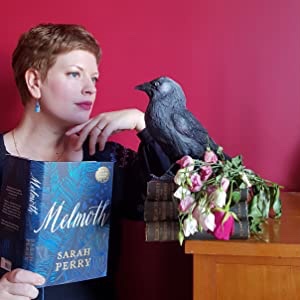
Throwback Thursday! Melmoth by Sarah Perry.

‘Oh my friend, won’t you take my hand – I’ve been so lonely!’

This week for Throwback Thursday – which has rolled onto Friday since I’m in a remote part of Wales with poor internet access – I’m going to take a spooky turn and tell you about one of the most terrifying and gloriously gothic novels I have ever read. Melmoth the Witness is a figure from mythology, or is she? Known as one of the woman who witnessed the tomb on the morning that Christ resurrected, she is now an eternal traveller. Wandering the centuries she lures people into following her, whereupon they too become damned to an eternity of itinerant, solitary wandering.

Set in the beautifully, atmospheric city of Prague we meet a woman called Helen who finds a manuscript. It tells of a winter in Prague, with all the darkly gothic details of cobbled streets, shadowy corners, and jackdaws patrolling the city walls. One winter night in Prague, Helen Franklin meets her friend Karel on the street. Agitated and enthralled, he tells her he has come into possession of a mysterious old manuscript, filled with personal testimonies that take them from 17th-century England to wartime Czechoslovakia, the tropical streets of Manila, and 1920s Turkey. All of them tell of being followed by a tall, silent woman in black, bearing an unforgettable message. Helen reads its contents with intrigue and some scepticism, but everything in her life is about to change. We follow Helen’s story, but within it are all the other stories and lives, creating a Russian doll style tale, but where each incarnation has the same sense of menace and impending doom.

This is based on an 1820 novel by Charles Robert Maturin called Melmoth the Wanderer, that very few people will have read. I studied a wonderful module at university entitled The Gothic, Grotesque and the Monstrous and I know from experience that early gothic novels can be long winded and difficult to read. What was found terrifying in 1820 does not necessarily translate today. In the original novel, Melmoth is a man who makes an almost Faustian pact, in this version she is one of the women who visits Christ’s tomb. She could have borne witness to the resurrection, but lied and is now damned to wander the world forever. She’s like a Sybil, heralding evil and disastrous events, but never listened to and doomed to witness the worst humans can do to each other over and over. I love the ambiguity of her pleas to ‘take her hand and follow her’ because she’s lonely, is she friend or foe? Her pleas are all the more tempting because she’s a woman and we associate that with gentleness, nurturing and perhaps even needing protection. There’s also the element of seduction and persuasion that might make a gentleman take her lonely hand. I think Sarah Perry made this choice because of those qualities. How much more effective could a woman be in gathering souls?

I love how Prague is turned into a haunted city and it’s history certainly might have drawn the wanderer to it’s cobbles. The city is the book’s second biggest character, dark and mysterious with magical landmarks like the astronomical clock. Perry’s descriptions of night in the city are haunting, and if I ever visit the capital I might well look over my shoulder when out in the evening in the same way I do in Venice. It is the perfect backdrop for the modern section of the novel, with every inch of the city steeped in history and the endless pull between light and darkness. Perry brings to life fears we have all had, as Helen draws the curtains at night, because she fears looking up at the window and seeing that lonely, beseeching face. The most terrifying thought is that Melmoth bears witness to anything we have ever done, including those awful things we hope no one witnessed or found out about.

I think an important aspect of the novel for me is something any sort of ‘listener’ has to think about. It’s the toll witnessing takes on a person. This book is brief compared to the original novel, but still takes in the breadth of the horrors experienced in Prague throughout the 20th Century. It made me imagine being present to witness the trenches of WW1, the Holocaust, and so many other atrocities and personal tragedies. I’ve worked in mental health for twenty years and I’m taking a break at the moment to study. I know the emotional toll that listening to people’s stories can take on the listener or observer. For Melmoth, this would be so much worse because she has to sit back and witness all of humanity’s horrors. Even worse, she has no power to change anything, but is doomed merely to witness. No wonder she wants other souls to witness with her, she must feel the weight of the horrors yet to come.

Posted in Netgalley

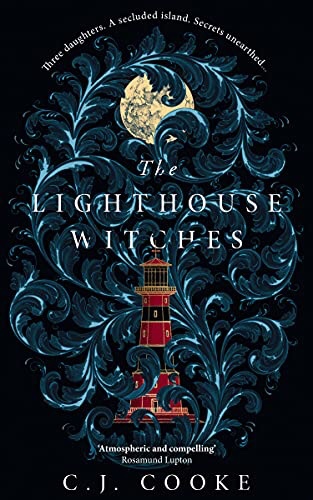
The Lighthouse Witches by C.J. Cooke

This book has been one of my most anticipated reads of 2021, because I loved the blurb of course, but also because I’ve had a lot of luck this year with fantastic books that have a lighthouse on the cover. The Lighthouse Witches was even darker than I expected and I enjoyed it immensely. In the late 1990s, artist Liv Stay finds herself homeless and without work so travels all the way up to Scotland and an island called Lòn Haven where a friend has recommended her to paint a mural. She travels to the coast, with her three daughters Saffy, Luna and Clover. There she meets Isla, caretaker of the bothy they’ll be staying in next door to the sea lashed lighthouse where she’ll be painting the mural. The mural is planned out on a large roll of paper and Liv is bemused to see a diagram of sorts, full of runic symbols she doesn’t understand. Getting this accurate in a circular building is her first challenge, and the second is to inject some of her own creativity in the design to make it beautiful. The girls are a bit shell-shocked to be brought to this remote and wild place, and there are certainly some unanswered questions as to why and how they ended up somewhere so remote and creepy. Liv carries a huge secret inside her, but the family are about to find out that Lòn Haven holds its share of secrets and ancient beliefs too, causing the whole family to disappear.

The story is told through different characters in three main time zones. Liv narrates the main section in the 1990s, then we meet her grown-up daughter Luna twenty years later, but we also go back into the history of the island and the witch trials of the 17th Century. The grown-up Luna is drawn back to the island when her sister Clover is found. However, to Luna’s shock, her contact Eilidh the social worker takes her to a little girl. Clover should be around thirty years old. Yet, Clover recognises her childhood toy and his name; she immediately squeezes Gianni the Giraffe like an old friend. Luna can’t understand why the social services haven’t noticed the anomaly in Clover’s date of birth, but her instinct is to protect her sister. So when asked, Luna fudges her date of birth and takes Clover away with her to the Air BNB she’s booked. At times, once they’ve settled, Luna does wonder if everything is okay with her sister. There’s the strange marking like a brand on her skin, which has four tiny numbers inscribed. There’s also a look she has, as if she isn’t present in her body and doesn’t recognise Luna. Over a couple of days she also displays some disturbed behaviour. Luna finds Gianni with his insides pulled out and his head cut off and then Clover floods the bathroom on purpose. Luna is desperately trying to find some sort of disease or syndrome that might have regressed her sister’s age. The only other explanation is a supernatural one and Luna isn’t sure she’s ready to accept the the local folklore she heard when she went missing all those years ago. However, she’s pregnant and alone with Clover in the middle of nowhere, so what if she isn’t her sister?

The author creates a brilliant atmosphere across all three time periods, starting with the name of the lighthouse, The Longing. Rather than full on horror, it’s a sense of the uncanny that starts to unsettle the reader. We all know that sense of rising tension when we feel so on edge, that anything would scare us. Here, it’s glimpsing a baby in the water that’s flooding the floor of the lighthouse, when it’s just a doll; a small child’s arm reaching out from behind Liv’s art materials; or opening a door to see your own double standing there. As we delve into the past and the history of The Longing, we are faced with the real-life horror of the 17th Century witch trials encouraged by King James, the first joint King of England and Scotland who ascended the throne after Elizabeth I died without an heir. Women with skills such as herbalism or midwifery could come under suspicion, but more usually local disputes and grudges led to women being branded a witch. In this case the local midwife, her friends and their daughters have all been accused and in matters like this the islanders stick to the rule ‘thou shalt not suffer a witch to live’. Accused women in this time period were often checked for the Devil’s mark – a mole, birthmark or blemish of any kind – had their hair shorn, were stripped, humiliated and then burned. The history of the island shows that a burning happened on the very rock, that now serves as a foundation to The Longing. I wondered how the old beliefs, in the fae or fairies, witches, and strange children called wildlings still held sway in the present day. In the 1990’s narrative there is still a definite undercurrent of ancient beliefs, with their followers having enough reach to influence both the police and the richest man on the island, owner of the bothy and lighthouse. Liv comes up against the reach of these believers when she reports seeing a small boy who looks like he’s been living wild. The police don’t want to know when she reports him missing, and it feels as if they view her as a nuisance, someone who doesn’t understand the island’s ancient way of life. When you visit Lòn Haven, as Luna does years later, there’s a sense of the ancient past existing alongside the present, as if time isn’t linear but looped upon itself.

I did get a little confused at times, especially with the elements of time being manipulated, through the cave known as the Witches Hide. There is old magic here. I was trying to understand the marks and numbers branded on Clover and others, and match them to the different time frames. In the end I gave up and decided to just go with it. I found this quote, in a letter from mother to daughter, very apt:

‘I’m not sure if I’ll make it, Luna. I’m not sure I’ll be able to hang on long enough to see you one last time. I’m going to try. But if not, if I slip away before I get the chance to hold you again, I wanted to write down the story of what really happened on Lòn Haven. As you’ll see, Cause and Effect in this tale do not fit easily together. The pieces are odd and mis-shaped because truth is messy and porous’.

I enjoyed the ending, despite feeling it was untidy. I thought it was a great story of women, and how their power and position changes over time. It also has a lot to say about mothers and daughters, how they communicate and the stories they tell each other to help navigate a world that can be set against women. I felt so much for Saffy, a very confused 15 year old who, in the midst of all the supernatural activity, is dealing with the usual teenage angst. Unsure of herself and this new place, she is lured into sexual activity and sending explicit pictures to one of the local boys. This is a girl who desperately needs her Mum, and isn’t getting any support or advice. There’s one occasion where Liv honestly has no idea where Saffy’s been for the last 24 hours. I wanted to give this girl a massive cuddle and help her set boundaries that she’s comfortable with instead of being coerced. The author mixes the present day perfectly with ancient folklore, supernatural happenings, and time travel, which is not an easy feat. Not to mention the depth of historical research that underpins the more fantastical elements. So, it seems my attraction to books with lighthouses on the cover, has paid off once again.

Meet The Author

C J Cooke (Carolyn Jess-Cooke) lives in Glasgow with her husband and four children. C J Cooke’s works have been published in 23 languages and have won many awards. She holds a PhD in Literature from the Queen’s University of Belfast and is currently Senior Lecturer in Creative Writing at the University of Glasgow, where she researches creative writing interventions for mental health. Two of her books are currently optioned for film. Visit http://www.cjcookeauthor.com

Posted in Throwback Thursday, Uncategorized

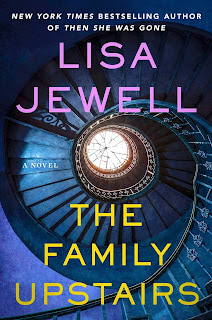
The Family Upstairs by Lisa Jewell.

As some of you may know, reviews can get very personal for me. Probably because I’m a therapist and used to lots of self-reflection. When a book hits me emotionally I really think about why and this book had me scurrying to my journal. Lisa Jewell is a master of these domestic thrillers and the psychological suspense created when groups of people are in conflict. Here the conflict is controlled within one house 16 Cheyne Walk in Chelsea, overlooking the river. That is until it’s secrets explode and the truth of the mystery is scattered across the world.


Three narratives weave in and out of each other to tell the story. We meet twenty five year old Libby with her little garden flat and her job at the kitchen design company where she’s worked for five years. Everything about Libby says organised, professional and quiet. That is until a bombshell is dropped on her life. Woven with this is the story of Lucy – if that is her real name. She is living in France but at the moment we meet her is homeless along with her two children and the dog. The family are reduced to sneaking in to the beach club to get showered but that doesn’t happen everyday. Lucy is at rock bottom. She can’t husk for money but needs money to collect her violin. They have nothing left to sell. Does she go and ask her violent but rich ex-husband for help? Or does she let the children stay with their grandparents? Either way she needs her violin and once she sees the date, she develops an urgent need to make her way back to London and a certain house in Chelsea.

Our third narrator is Henry, relating what happened at the house back in the early 1990s. Henry just about remembers family life when things were normal and it was just the four of them: mum, dad, Henry and his sister. He has vivid memories of going to private school in his brown knickerbockers and sitting drinking lemonade while his Dad read the newspaper at his club. The house was filled with curiosities such as animal heads, ceremonial swords and red thrones. It’s so distinctive in style that when the money starts to run out the house is scouted as a location for a music video. The fiddle player in the band is Birdie and she loves the house. So much so that when she needs a roof over their head, she and her partner, Justin, come to stay in the upstairs room. Henry’s father has had a stroke and doesn’t have the same strength and power he used to have. He seems to sit by and watch as Birdie and Justin take up residence.
Later another couple join the group. David Thomsen is a man Henry dislikes almost instantly because he seems to sense what his Dad and Justin fail to see. David has charisma and seems to have an effect on every woman in the house. His wife Sally and two children, Phin and Clemency, also join them. It starts to feel like they’re living in a commune but the only consolation is Phin. To Henry, Phin is beautiful with floppy hair, cheekbones and a distinctive style. When Phin takes him shopping, Henry develops a crush and trails after him, wanting to be like him. When it is suddenly announced at the dinner table that David and Birdie are now a couple Henry senses this is the start of something evil. They bring out the worst elements of each other and start to assume a power in the house that goes unchallenged by his parents or the other adults. They are told what they will eat, do and even wear. Henry knows this is out of control and this is only the beginning of the damage this man will inflict in the house.
Libby has been set a letter by a group of solicitors telling her she has been left a house. When the solicitor walks her round to the house she realises she is rich. The house is abandoned, but huge and in prime position. It could be worth millions. The solicitor also gives her a newspaper cutting describing the strange events that took place there exactly twenty five years before. Libby has always known she was adopted, but this tells her she was the lone survivor in the house, tucked in her cot with a lucky rabbits foot under the mattress. Downstairs were three people, dressed all in black and dead from poisoning themselves with belladonna. One was David Thomsen. The news story talks of a cult forming within the house and aside from Libby, whose real name is Serenity, all the children living at the house were missing. Libby feels there is more to this story and wants to meet the journalist who wrote the article. What is the answer to how this happened? And who is sneaking in and out of the attic space at the house?


There are so many questions that I won’t answer for fear of ruining the book, but I will tell you about the effect it had on me. When I was 12, the same age as Henry, my parents joined an evangelical church that became all-consuming and took over our lives for a few years. Up until then we’d been part-time Catholic’s and I’d gone to Catholic school for a while through my first confession and communion. These new people felt weird. They were so fervent and all that speaking in tongues was odd. But it got worse. My parents started to have no other social life from church. We were forced into church activities for kids. My dad lit a bonfire and they burned their secular music and all of my mum’s ‘inappropriate ‘ books like the Judith Krantz and Jackie Collins novels. I was scared by this. I started to wonder who my parents were as I was more restricted on what I wore, listened to and read. I couldn’t go to anything where there was a sniff of boys and from what I could see there was a lot of coercive control over women and girls particularly. I felt Henry’s fear when reading this book. I know what it feels to be a kid, looking at your parents and thinking they’ve been taken in by something dangerous. That beliefs are being forced on you and you can’t live like other kids. To feel like all of your security is being taken away.


Of course my solution wasn’t as dramatic as Henry’s but I did have to create coping mechanisms. There are times now when we can laugh about it, because as my brother and I have grown older we have become one of those families that openly discuss everything. However, I still occasionally have dreams where my parents can’t see or hear me and I think it has also bred a lifelong mistrust of authority. So I can understand the seismic effect the arrival of Dave Thomsen had on these children, with repercussions way into adult life. Whether it’s changing who you are to escape, or bouncing from one failed relationship to another or being unable to move on, even geographically, they are all responses to trauma. With a brief nod to the future at the end of the book the author does leave a tiny seed of hope that in future generations a type of healing can be reached. This is a dark, disturbing, look at how sometimes home is the most dangerous place to be.

Posted in Throwback Thursday

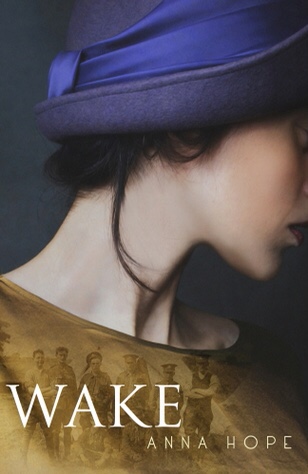
Throwback Thursday! Wake by Anna Hope.

She misses him. Fraser. Here in the shrunken hours of the night. She misses him still so much. Who is there to share her thoughts with? They wither inside her. She cannot even write them to him as she used to, can’t take a cup of tea back to bed and sit with a candle in the blackoutand think of him, trying to imagine where he is, what he sees. She cannot imagine where he is, because he is nowhere, he is nothing. All of the many tiny things that he was – the way he turned his head towards her, the slow breaking of his smile, the laughter in him, the roll of his voice; the way that he eased her, eased her – these are all gone. These are all dead.

Last year I couldn’t move on Twitter without seeing that someone was reviewing and reading Anna Hope’s Expectation. I’ve had such a ridiculous TBR that my copy is still languishing on the pile, but I wasn’t surprised to see the book become a runaway hit. I’d already fallen in love with her writing in 2014, when I read her novel covering the aftermath of WW1. Wake is a brilliant piece of historical fiction based around the real historical event, the creation of the Tomb of the Unknown Soldier. As he is taken from the fields of France, on his journey towards London, three women are linked by a mystery that is starting to unravel. As the Unknown Soldier is meant to provide closure to the war for the British people, these three women can’t look into the future while they are still inextricably linked to the past. Hetty’s wounded brother won’t speak, Evelyn grieves for her lost lover and Ada waits for confirmation of her son’s death, every day that she doesn’t get a telegram is another day he feels alive. We follow these three women over five days, while the selection of the Unknown Soldier is made and his journey towards Westminster Abbey begins. Slowly, a tragic tale of war’s aftermath emerges and links them all.

Hetty lives with her mother still, and her mute, shell-shocked brother. He can no longer work so Hetty has taken a job as a dance instructor at the Palais. It is there she meets an educated, wealthy, man who she quickly falls for. Every indication she has, makes her think he feels the same. However, there’s something she can’t put her finger on, a distance or sense of being unreachable that he has. Where does he go in his mind, when he seems distracted? Evelyn comes from a wealthier background, but feels equally lost. She’s working at the Pensions Exchange, where men returning from the front pass through, claiming benefit for their physical or mental wounds. Evelyn’s own loss is still raw and she feels detached from her parents who can’t understand her experience. She starts to become closer to her brother instead, because he is of her generation, also altered forever by his experience at the front. Ada is haunted by visions of the son she’s lost. She still sees him on the street and for a few moments she’s convinced he is alive. She also feels like she’s struggling alone, because her husband is grieving in his own way, becoming increasingly withdrawn. A door to door salesman attracts her attention and it’s so clear he has suffered from his war experiences and has struggled to find work. He exhibits some worrying symptoms but Ada recognises shell-shock. During one of his disturbed episodes he says the name of Ada’s son. Can she find out what happened to him? The tension really builds as the public spectacle comes closer, the ceremonial internment of this unknown young man can be a catalyst, allowing people to grieve for those whose bodies are lost forever on the fields of France or Belgium.

This is a very interesting part of history for me, because of the tumultuous social change that took place, especially for women. This period is where we saw huge adjustments and change within the aristocratic class. Some families had lost two generations, father and son or the ‘heir and spare’. This led to an estate crippled by death duties and having to be sold, or the new heir forced into reducing costs and servants, or searching for a more advantageous match – marrying American heiresses was sometimes the answer. These changes often brought less formality to the family. Women had worked throughout the war, in jobs usually done by men. There was tension on their return to the workforce, some women didn’t want to return to the home and men who couldn’t find work were reduced to begging or selling door to door. Crime was on the up and families were coming apart at the seams. There was a sense of the old order being overturned and old values like manners, morality and knowing your place being lost.

Finally I loved the significance of the title ‘Wake’ and it’s several meanings: to rouse from sleep; a ritual for the dead; the consequence or aftermath. All of these meanings are apt to the women in the book and their circumstances. This is the moment that the 20th Century finally dawned on people, and society woke from the Victorian era. Victoria’s reign had been so long that some people had never known another monarch, now there would be change from that Victorian order. The ritual refers to the Unknown Soldier, a representative of every man lost, but also representative of that death of the old order, and it’s sensibilities. The consequences of WWI were seismic, we had just fought the first mechanised war and it was hell on earth. Society did not know how to cope with the wounded who returned, whether the ranks of the physically disabled using wooden legs or metal masks to cover burns, or the shell-shocked, constantly trembling and lashing out when feeling threatened. Many ended up in institutions, because they were constant reminders of something younger people wanted to forget. The following few generations would be changed, with the war hanging over them like a giant monolith casting a long shadow. Why couldn’t people be allowed to forget? As the Unknown Soldier passes by someone comments ‘is this supposed to make it all okay?’ This is such a moving read and captures it’s era so perfectly it felt like being there, which isn’t an easy thing to achieve. I felt for each woman, but Evelyn particularly moved me. This is an exceptional piece of writing and a great introduction to this author’s work.

‘I’ll remember you he thinks, and as the gun carriage with it’s coffin and it’s dented helmet passes him by, he closes his eyes. Nothing will bring them back. Not the words of comfortable men. Not the words of politicians. Or the platitudes of paid poets.’

Meet The Author.

ANNA HOPE studied at Oxford University and RADA. She is the internationally prizewinning and bestselling author of Wake and The Ballroom. Her contemporary fiction debut, Expectation, explores themes of love, lust, motherhood, and feminism, while asking the greater question of what defines a generation. She lives in Sussex with her husband and young daughter.

Posted in Publisher Proof, Random Things Tours

Girls Who Lie (Forbidden Iceland Vol 2) by Eva Björg Aegisdottir

I was meant to be reading this for the recent Random Things Tour, but have been taking a break for family stuff and my health. However, I did read Vol 1 of this series last year so found it very difficult to see the next novel on my TBR and not dive in. So here are my thoughts, a little late, but surely it’s always good to hear someone praise your work? No matter how late they are.

The author opens the novel on a freezing cold day and a bleak volcanic crime scene, immersing us straight into both the story and the landscape. Two boys, wandering on the local lava fields have found a body in a small cave. They frightened themselves at first into thinking they’d found a black imp, the body was so dark. However, our heroine and police investigator Elma, believes it may be the body of Marianna, a single mum who disappeared from town seven months previously. Thought to have committed suicide, Marianna left a short and cryptic note on the kitchen table for her daughter Hekla, then was never seen again. Now, it’s clear that this is a murder, and as Elma reviews the files from the previous year, when this started as a missing person investigation, she finds the work less than satisfactory. She can see so many unanswered questions to follow up. Hekla is now in foster care, with a couple who have fostered her many times, before when Marianna was struggling or disappeared. Now Elma’s team will have to wade into the previous investigation, social services files and the difficult life of a children whose parent simply struggled to cope.

I loved the complex psychology behind this story of teenage pregnancy, family expectations and how to be a parent. Added to that is othe challenge of preventing emotional pain passing to another generation. Our investigation is interspersed with a narrative of a young teenage girl who tells us about her life as the mother of an unwanted child. Her identity is not revealed and we don’t know this girl’s connection to the main plot, but her narrative is sad and traumatic to read both for her and her baby daughter. Meanwhile Elma is beginning to understand the difficult and disconnected relationships that surrounded Marianna and her daughter. Hekla was first placed with foster parents at the age of three when Marianna left her home alone while she went on a drug binge. Hekla’s foster parents were a wealthy, stable couple who made no attempt to hide how much they would have loved to take Hekla on permanently, but Child Protection Services had a policy of trying to keep children with their birth families as much as possible. Elma can see the theory behind this, but starts to wonder whether it’s a policy that actually fails children in practice. So, Hekla leads a life of moving back and forth between Marianna, who was harsh and belittled her daughter, and a foster mother who wanted to be more than her support family. If Hekla had been given the choice, she would have chosen to stay with her support family, but instead was pulled between them, both literally and emotionally. She describes how she feels:

It’s strange to be six years old and feel as if you’re a black stain on a white sheet. As if the world is in headlong flight and all you can do is grab hold and try not to fall off.’

Trying to act as gently as possible, Elma must speak to both Hekla and her support family about inconsistencies in their stories. She doesn’t want to cause more distress, but Hekla is a girl of secrets and perhaps lies too. There are parts of this story that might be upsetting for someone who has been through the care system or had a dysfunctional parent. Marianna is barely able to cope with her own life, never mind being a parent. I love that we are party to Elma’s thought processes around the case, and on her private life. As she reflects at the end of each day, the author hints strongly at unresolved trauma in Elma’s own past. There’s also the dilemma in her private life, where the loss of her partner to suicide has affected her more than she lets on. She’s not ready to have real, deep feelings for someone, preferring no strings encounters. Yet she does have feelings for someone, and if she doesn’t act on them, will it be too late? The proximity of her family, and the support she receives from them, is both helpful and irritating by turns. This is her home town, so she knows all the allegiances and quirks of the community, something which can have its own problems when investigating such an emotive crime.

The first half is slower and more thoughtful, giving the reader time to soak up the atmosphere and Hekla’s experiences. In the second part, the pace quickens and the past also catches up as our mystery narrator is revealed – a reveal that had me reassessing everything I’d thought before. In a world where every thriller boasts twists and turns galore, this one packed a punch, was truly clever and had played with my misconceptions of who it might be. Another thing that really hit home for me, as the stepmum to two teenage daughters, was just how damaging the constant wrangling between co-parents becomes. I thought the character of Hekla was pitched perfectly, with a deep understanding of being a teenage girl. She showed that need to belong, to be accepted, whilst also feeling complete isolation – that nobody in the world understood her or had felt what was going in on her head. This is an age where being singled out as different is painful, it takes time to work out that your originality is your super power. This was a tense and compelling read, with undercurrents of deep melancholy that seemed to come from Elma and the forbidding landscape. This was a psychologically astute murder mystery, with deep empathy and a strong sense of place. I would recommend it highly.

Meet The Author

Born in Akranes in 1988, Eva moved to Trondheim, Norway to study MSc in Globalisation when she was 25. After moving back home having completed her MSc, she knew it was time to start working on her novel. Eva has wanted to write books since she was 15 years old, having won a short story contest in Iceland. Eva worked as a stewardess to make ends meet while she wrote her first novel, The Creak on the Stairs. The book went on to win the Blackbird Award, was shortlisted (twice) for the Capital Crime Readers’ Awards, and became a number one bestseller in Iceland. Eva lives with her husband and three children in Reykjavík, and she’s currently working on the third book in the Forbidden Iceland series.

Posted in Personal Purchase

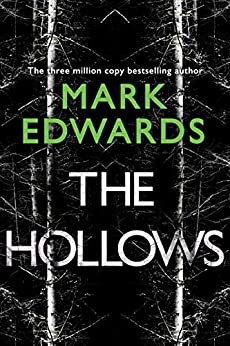
The Hollows by Mark Edwards.

Mark Edwards has become one of my favourite authors over the last few years. His books are fascinating, addictive thrillers where an ordinary domestic situation is subverted or even blown wide open. There’s maybe a new person brought into the situation who upsets the dynamic or a massive life change that makes a character question their life. This was a slightly different premise, but still based around a modern family, with more than a nod to another of my favourite authors – Stephen King. The title reminded me of the wooded area where the kids would meet in King’s novel It, there are allusions to burying a live cat that brought to mind Pet Semetary, the backwater town has the feel of Salem’s Lot and the passing drunk who helps Tom at the end has the feel of the janitor at the Overlook Hotel. As soon as Tom arrived at the cabins it reminded me of the secluded cabin in Bag of Bones. This gave me the sense we might be getting a supernatural element to this thriller and there’s definitely a pagan or Wiccan aspect to the tale.

With his marriage over and his career in freefall, journalist Tom decides to reconnect with his fourteen-year-old daughter, Frankie. Desperate to spend precious time together now that they live an ocean apart, he brings her to Hollow Falls, a cabin resort deep in the woods of Maine.

From the outset there’s something a little eerie about the place—strange whispers in the trees, windchimes echoing through the forest—but when Tom meets true-crime podcasters David and Connie, he receives a chilling warning. Hollow Falls has a gruesome history: twenty years ago this week, a double slaying shut down the resort. The crime was never solved, and now the woods are overrun with murder-obsessed tourists looking to mark the grim anniversary.

It’s clear that there’s something deeply disturbing going on at Hollow Falls. And as Tom’s dream trip turns into a nightmare, he and Frankie are faced with a choice: uncover the truth, or get out while they still can. There were times in the book when I was screaming at Tom to just pack the car up and leave without looking back! The killing from twenty years ago is a heavy influence on the story. Two teachers on a field trip with their students, sneak away at night to a clearing in the forest and start an illicit affair. Both are married and it is a double shock to their spouses to find out they’ve been cheating and murdered. The bodies are posed in a symbolic way with Wiccan symbols painted in their blood. The suspect is a local teenager with an interest in death metal and all things pagan. He disappeared at the same time as the murders, and Tom’s daughter Frankie is spooked by tales of him still living wild in the woods to this day. She forms a friendship with Ryan, son of the true crime enthusiasts David and Connie. They take a walk into the local town, Penance, which is a real backwater with locals who are openly hostile to those at the holiday village. The teenagers run into some other kids, but they’re not friendly. The way the author describes brother and sister duo Buddy and Darlene, standing together, arms by their sides and completely motionless – is creepy and reminiscent of the twin girls from The Shining. Ryan takes pictures and lampoons the locals on Instagram using hashtags they’re going to find, putting himself and Frankie in danger.

The author really ramps up the tension to great effect. Little creepy incidents like a dead rabbit at the cabin door, Tom thinking he’s seen a horned goat man, as well as Connie’s hints about a big surprise for her true crime followers on barbecue night, keep camp residents on edge. Then more serious incidents start to occur – Frankie and Ryan are pelted with rocks, an unlucky guest with a heart condition sees what she thinks is Satan. The stakes are getting higher, building towards the Saturday event. Tom makes friends with local bookshop owner Nikki, there’s an instant charge between them, but can he trust her? As he starts to look into the murders and myths surrounding the Hollows, using his investigative skills, he realises that Nikki was about the same age as suspected murderer Everett. Everybody seems to know each other in such a small town so did she know him? Suspicions reach boiling point, and when Frankie and Ryan go missing in the midst of the party preparations Tom has no idea who to trust and how to find his daughter.

Mark Edwards never lets me down. His thrillers are always well thought out, psychologically unsettling and paced beautifully. I didn’t work out the whole mystery, and the eventual reveal developed in an unexpected and rather grisly way. There was something slightly comical, as well as horrifying, about people wandering the woods in animal masks – particularly when the horned goat happens upon a very religious woman with a very weak heart. I must admit to a rather dark sense of humour because that made me laugh. I enjoyed the friction between locals and holiday makers, because it’s true of many beautiful places. The locals need tourists, but it’s an uneasy partnership. The pagan backstory to the forest being sacred ground, that should remain wild, linked in to this and felt very apt in a time when humans have ruined their habitat. I think the prurience of true crime fans was also timely with many of my friends glued to crime documentaries on Netflix. I’m also a Stephen King fan so I enjoyed the nods to his creations and the whole ‘townie versus country locals’ vibe that permeates a lot of his work. I devoured this so quickly that I’m already thinking about thr next book from this ‘must buy’ author.

Meet The Author

Mark Edwards writes psychological thrillers in which scary things happen to ordinary people.

He loves hearing from readers and always responds. Mark can be contacted in the following ways:
Email: mark@markedwardsauthor.com
Twitter @mredwards
Facebook/Instagram: @markedwardsauthor

You can download a free box set of ‘Short Sharp Shockers’ by visiting http://www.markedwardsauthor.com/free

Mark has sold over 3.5 million books since his first solo novel, The Magpies, was published in 2013 and has topped the bestseller lists numerous times. His other novels include Follow You Home, Here To Stay and The House Guest. He has also published six books co-authored with Louise Voss. His latest book is The Hollows, published in July 2021.

Mark lives in the West Midlands, England, with his wife, their three children and two cats.

Posted in Random Things Tours

The Beresford by Will Carver.

This was my first introduction to the work of Will Carver. My fellow bloggers and Squad Pod members kept telling me about how great his writing is, but I’d not taken the plunge till now. I started the book last night and finished at lunchtime today, because I was hooked from the end of the first chapter.

Abe Schwartz lives in a one-bed furnished flat. An apartment building called The Beresford. The bell rings and he’s the one opening the front door to a stranger. Before that, he’s dragging a dead body into his room, mopping up blood and asking himself, What the hell just happened?

Maybe I’m a bit weird, but a cracking beginning like that really is so darkly delicious I can’t help but read on. I was then blown away by the originality and inventiveness of the writer and the explosion of historic and popular culture references the book created in my mind.

The Beresford is an old forbidding looking building in the city. In my imagination this first conjured up the Gothic towers of the Dakota Building, where John Lennon lived and was killed back in 1981. Inside The Beresford are a number of apartments, bigger and better appointed than you would expect for the money. They even have large roll top baths. The perfect size to dismember and dissolve a body. The building is presided over by a lovely old lady called Mrs May, who starts every day the same way. By brewing a coffee while the taps run, then enjoying a bath with bubbles, followed by eggs with her cold coffee. She has a routine, and is found at the same time every day pruning the roses in the front garden. As any fan of the film The Ladykiller’s knows, you should never underestimate sweet looking, little old ladies. Of course she has time to pray each day, but to whom and for what? In fact when I first encountered Mrs May praying, I hoped there would never be a film version of the book. She knows everything that happens at the Beresford because the same thing happens over again – some people leave and some people just disappear. Occasionally they stay. For a price.

The atmosphere is strangely claustrophobic and reminiscent of Rosemary’s Baby. I loved the tone of our narrator, who is quite matter of fact, and cleverly combines both horror and humour. I also loved the sense of history the author creates about this quirky building. These stories and urban myths reminded me of a documentary I’d watched about the Chelsea Hotel, again in New York, showing how each generation of residents impacted on it’s history: from the original collective of 1920’s writers; 1960’s musicians and artists like Janis Joplin and Leonard Cohen; from the death of Dylan Thomas in the 1950’s to Sid Vicious killing Nancy nearly thirty years later. It’s legends are almost bigger than the hotel itself and it’s often claimed as the most haunted hotel in NYC. It’s somehow bigger than just a building, it’s almost an instant portal to the past. The Beresford is described in a similar way is as if it could only belong on old news reels or sepia photographs. Yet there it is, still standing on the sidewalk in the 21st Century. The myths about The Beresford give the place a sense of longevity – it was there before you and sure as hell will be there after you. Sid Vicious told the Associated Press that the Chelsea Hotel “…is a vortex – an artistic tornado of death and destruction and love and broken dreams”. I think second floor Beresford resident Sythe, artistic impressionist and sometime pyromaniac, would probably say the same thing.

Interspersed with the comings, and often darkly humorous, goings of the residents are sections entitled ‘What do you Want?’ We don’t know who the speaker is, although I will admit I imagined a few of these monologues in the voice of Laurence Fishburne as Morpheus from The Matrix. It’s as if we are having our world explained to us, but in a way that lifts the scales from our eyes. This is what’s really going on. These sections address beauty pageants, social media usage and even the way we buy our books. We like to think we ‘discover’ something in a bookshop, but we’re directed to it by placement, marketing, and demographic. Or perhaps by book bloggers? They know so much more about us than we think they do. Ever talked briefly about a subject at home then found an advert for the very same thing on your iPad? It’s listening. In a piece that I loved because it’s unsettling and so close to the truth, our narrator tells us:

You are being told what to watch, who to vote for, which team to support and which God to believe in. You want the truth? All of these things serve to obscure the greatest lie of all. The fruit and vegetables are placed at the front of the supermarket because the colours draw you in. Everything behind is bad for you. But you just see the colours. You buy into them. You believe them. It’s easy to do as you are told.

You are not where you think you are.

Finally, when lovely, peppy, young Christian Blair joins the residents she strikes up a friendship with Abe. Mrs May thought they might get along, just like Mrs May knows a lot of other things. There’s nothing she doesn’t know about the residents of her building. He takes her to the building’s side entrance where they get into the Art Deco lift to access other apartments and convention suites. The side where they live is just two floors with it’s own front entrance, but this is bigger, especially at the top, where apparently a couple fell to their death on the sidewalk. Abe calls this side the ‘bad side’. There’s a man who sees them and calls out. The couple break into a run for the old elevator and hope he doesn’t get there before the slow mechanism starts to move. They then burst out into the street laughing. Maybe one day the author will venture further into the other side of The Beresford? If so, I’ll be waiting – but I’ll probably stick to reading in the daylight hours.

Meet The Author


Will Carver is the bestselling author of the January Series – Girl 4 (2011), The Two (2012), The Killer Inside (2013), Dead Set (2013) – and the critically acclaimed Detective Pace series, which includes Good Samaritans (2018), Nothing Important Happened Today (2019) and Hinton Hollow Death Trip (2020), all of which were selected as books of the year in mainstream international press. The books in this series have also been longlisted/shortlisted for the Amazon Readers Independent Voice Award, Goldsboro Books Glass Bell Award, Not The Booker Prize and the Theakston’s Old Peculiar Crime Novel of the Year Award. Will spent his early years living in Germany, but returned at age eleven. He studied theatre and television at King Alfred’s Winchester, where he set up a successful theatre company. He currently runs his own fitness and nutrition business and lives in Reading with his children.

Posted in Random Things Tours

The Lost Girls by Heather Young.

This slow, but sinister tale concerns three generations of the Evans family. The Evans women that is. In 1935, Emily Evans vanishes from her family’s summer cottage, set by a lake in a Minnesota backwater. The woods are searched, the lake is dredged, but there is no sign of Emily – the child their mother dotes on the most. Unable to leave the place their sister vanished, Lucy and Lilith Evans go through their father’s subsequent suicide and nurse their mother till she too dies,

Sixty years later, Lucy the quiet middle sister, starts to write the story of that summer, when everything changed. She writes for her Great-Niece Justine and hopes she will understand what happened and set things right. She knows Justine will find it, because she chooses to leave her the house in her will and it comes at the right time. Justine has two daughters and lives with her boyfriend Patrick, but of late his behaviour has worried her. Does he just care about where she is and what she’s doing, or is he controlling her? The house on the lake becomes their refuge, their only neighbour is a taciturn old man who lives at the lodge.

The author tells her story through Lucy and Justine, across the two timelines, as the old mystery and the new drama play out. It’s a structure that works because the past always illuminates the present. The story starts out slowly, setting the scene and giving the reader a deep understanding of these characters and their motivations. The early chapters are almost hypnotic, then the pace builds. By the time both stories reached a crescendo, I was completely drawn in and my partner had to keep me supplied with of tea. I simply didn’t want to move till I finished it.

There’s an incredible sense of place in the novel. We see the lake at different times. In 1935 it’s summer and the family are there all week, with their father joining them from town at the weekend. We see the place as a child would see it: pools to swim in, trees to climb, forests to explore and under one of the cottages some kittens to play with. The place has a warmth and benign feel to it on the surface, that is at odds with an undercurrent that keeps bubbling up. Lilith wants to be more grown up than she is, dressing up a little and sitting with the slightly older kids. Lucy’s voice is anxious constantly where her sister’s antics are concerned, but it’s not clear where the fear comes from. Is she just afraid of her older sister leaving her behind or is something more sinister at play? There’s also a definite ‘middle child’ feeling to her observation that Lilith is catching her parent’s attention by pushing their religious boundaries, and baby Emily is never away from their mother’s side. Emily is definitely the favoured child, but again there’s something odd about the way their mother clings to her, sleeps with her every night and becomes hysterical if she slips out of sight.

By comparison, when Justine and her girls arrive at the lake house it is winter. Instead of feeling like a place to holiday, the landscape is bleak and the remoteness feels threatening. There’s constant talk in town of storms to come, people preparing to be snowed in and getting their supplies. Instead of being a welcoming family home, the cottage has definitely seen better days and there is a haunted quality to it. It’s not just the portrait of Emily set above the mantle with two candles under it. It’s not just that Justine feels like the child’s dark eyes follow her round the room, there’s a sadness and a sense that something terrible happened here, like an imprint left on the air. Matthew at the lodge house also seems a little scary on the surface, but he does plough the drive for the girls to get to school and Justine finds he’s left her a brand new snow shovel just before a blizzard hits. It felt like the remaining Evans girls has needed a place to heal together, without a man in tow. However, the place itself needed to heal and only this generation of the Evans girls could do it.

There are clues everywhere, and different characters hold separate parts of the puzzle. Justine doesn’t want to be like her mother is, always running to the next place and never feeling settled and at peace. She doesn’t want it for her girls either. When danger does come to the lake for a second time, will Justine be the Evans girl who makes the right choices? This was a slow burning tale, that crept up on me and drew me into this sixty year old mystery. I was compelled to read to the end and find what secrets were buried at the lake, and what sort of closure the remaining Evans girls could find.

Meet The Author

Heather is the author of two novels. Her debut, The Lost Girls, won the Strand Award for Best First Novel and was nominated for an Edgar Award for Best First Novel. Her second novel, The Distant Dead, was nominated for an Edgar Award for Best Novel and named one of the ten best mystery/suspense books of 2020 by Booklist. A former antitrust and intellectual property litigator, she traded the legal world for the literary one and earned her MFA from the Bennington Writing Seminars in 2011. She lives in Mill Valley, California, where she writes, bikes, hikes, and reads books by other people that she wishes she’d written.

Posted in Personal Purchase

Both of You by Adele Parks.

Adele Parks is one of those authors whose books I tend to buy without reading any blurb or hype. I always enjoy her books and this was no exception, being addictive and unsettling from the start. Two women go missing in the same week. Leigh, married to Mark Fletcher and step-mum to his two boys, goes missing on Monday. Only days later Kai Janssen is reported missing by her distraught husband Daan, a wealthy Dutch businessman. Leigh Fletcher usually works away for part of the week and then returns to family life. It is as if she dropped the boys at school and vanished into thin air. This is so out of character for Leigh that her friend Fiona is also devastated. She saw how Mark and Leigh met, when she was picnicking in the park with her friend. When Mark’s youngest boy had a fall, a strange instinct seemed to take over Leigh and she made a dash to comfort him and give first aid. The four went to hospital together as if they were a family, and have been one ever since. Mark’s first wife Frances died a year earlier, and Leigh who couldn’t have children had stepped firmly into the step-mum role, fulfilling a part of her that had been crying out to care for someone. She and Fiona were like family, since Leigh didn’t have contact with her own, and she can’t think of any reason she would willingly leave Mark and the boys.

When the police visit Daan, in his large penthouse apartment, he is devastated by his wife’s disappearance. For part of the week, Kai would go back to her hometown and look after her mother who had dementia. Daan had more than enough money to ensure her mother had adequate care, but Kai wouldn’t hear of it and part of him admired her for wanting to look after her mother personally. Their separation each week hadn’t seemed to harm their relationship. They missed each other, but were very independent and their time apart seemed to put fire into their relationship. DC Clements is tasked with investigating both missing person’s cases and she’s concerned for both women. Leigh seemed devoted to her family, but she knows more than anyone, that if anything bad has happened to these women, it is likely to be solved close to home. The chance of two women being abducted by a stranger in the same week seems unlikely. She keeps a close eye on the two husbands. Daan seems a passionate and emotional man, it’s possible he has a quick temper. Mark, on the other hand, has already lost one wife. It seems careless that he should lose another.

The tension between these two investigations is heightened by the chapters in-between, from Leigh’s point of view. She is shackled by the ankle in a room with only a bucket to relieve herself and a small supply of snacks and water. She has no recollection of arriving there and is terrified about what might come next. Who could possibly hate her so much that they would do this to her. The author really captures the fear of the unknown in these passages and the indignity of her situation. Not knowing who has brought her there keeps playing on her mind. Could this be the work of her husband? Surely not. If it is a stranger though, she has no idea what might come next. Her fears are heightened when the snacks change to ones she would like – a very specific tea and her favourite nibbles. This has to be someone who knows her, but who?

I was a little disappointed that I worked out what was going on very early in proceedings, although it was still fascinating to watch it all play out. Themes of jealousy, deceit and greed run throughout. However, from a psychological point of view my interest was caught by the idea of not knowing who we really are and how dangerous that can be. It was also heartbreaking to see how the disappearance of their step-mum affects two boys who have already had the worst happen to them – the loss of their mother. What sort of damage might this cause for them down the line? The husbands are both interesting men with secrets of their own, that come to light through the investigation. Do we ever really know the person we’re sharing a life with? This wasn’t my favourite book from this author, but it was a great thriller all the same and is definitely a diverting holiday read to summer.