Posted in Netgalley, Personal Purchase

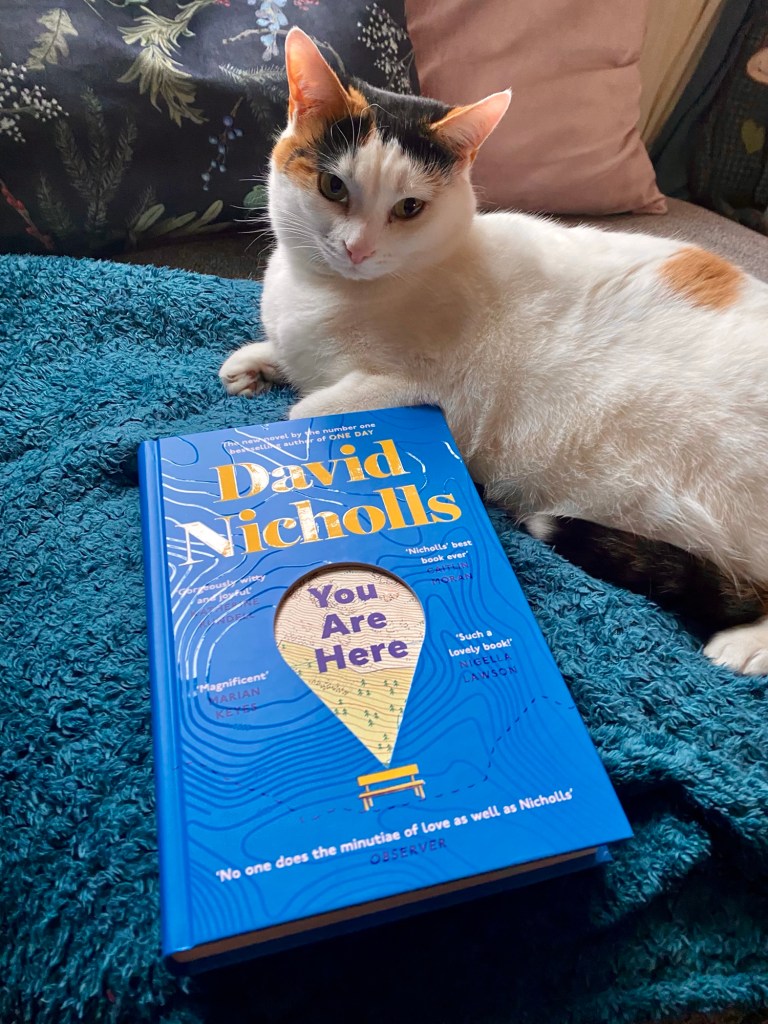
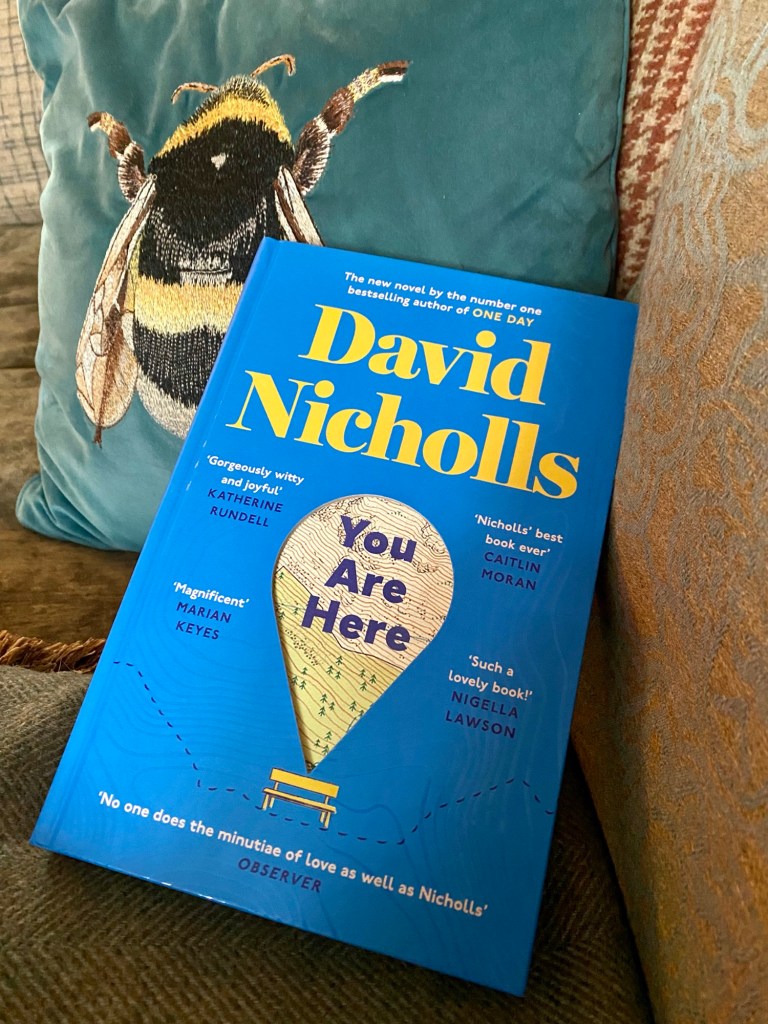
You Are Here by David Nicholls

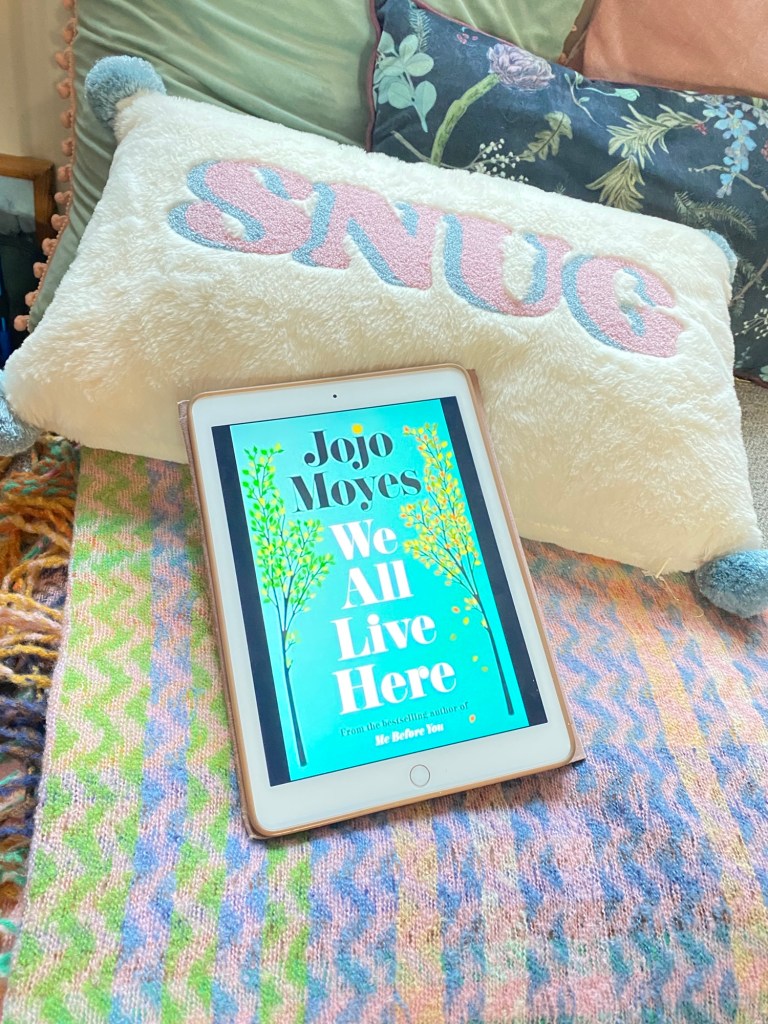
I have had the joy of reading two books, each by one of my favourite authors, back to back on my holidays and I have genuinely loved it. David Nicholls has been a household name thanks to the new production of One Day on Netflix. The beauty of Nicholls’s novel about friends Emma and Dex makes it one of my favourites of all time and I’m definitely not alone. There was a time back in the 2000s where if you were on a train journey most of the people in your carriage were reading One Day. It was a book that utterly broke my heart because I believed in those characters so much and the shock of what happened is still with me, to such an extent that I haven’t been able to watch the last two episodes of the series. I can’t bear what’s coming. Similarly, both the book and BBC adaptation of his novel Us was deeply moving but utterly real. With the wonderful Tom Hollander as his lead, we become so emotionally invested in this couple, then just as they’re ready set to out for a once in a lifetime trip his wife asks for a divorce. Their plan, to spend all summer travelling around Europe, would be their last trip as a family, before their son leaves home for university. Can they set aside this bombshell and continue with their holiday? The set up in both these earlier novels is so simple and You Are Here is no different. A group of friends travel from London to the Lake District to walk some of Wainwright’s routes through Cumbria towards the Pennines. Cleo has invited four single friends; Conrad is meant for copy editor Marnie and Tessa is intended to get on with geography teacher and dedicated walker Michael who is extending his trip to walk the entire coast to coast, ending in Robin Hood’s Bay. Michael is still getting over separating from his wife so finds these social occasions difficult, much preferring solitude. Marnie spends much of her time alone too, so this will be a step out of their comfort zone for both of them. When the others bail out after a day of endless rain, Marnie and Michael are left to walk together. Can they both strike up a friendship?

David Nicholls has this amazing ability to articulate the minutiae of conversation and communication between the opposite sexes. He’s also brilliant with those tiny moments of shared humour, stolen glimpses and the body language of love. It may seem strange that a whole book is about two people walking across the country, but everything happens within that time spent together. After a couple of days Michael can see that Marnie is an inexperienced walker but determined, intelligent and well-read. She has been in relationships that eroded her confidence, has a keen sense of humour but tends to lose it a little when tired and hungry. Marnie is surprised by Michael. Although she knows little about geography she can appreciate how passionate he is about his subject, he wears his beard as a mask so that people keep their distance, is perfectly comfortable in his own company and is hurt very badly by the break-down of his marriage. This isn’t two young people swept up in the blind passions of love at first sight. This is a slow burn. It’s a potential romance that grows slowly and unexpectedly for both of them. It’s lovely to read a ‘real’ love story about people who are older and have been kicked about a bit by love in the past. Nicholls has alternated each character’s chapters, so we’re also taken into Marnie and Michael’s inner worlds. Within these chapters we have flashbacks through their lives and their past relationships, slowly learning what has built these people who are in front of us, trying to bring their lives together. We are also privy to private thoughts that let us know this couple could be perfect for each other. When bullied into social activity by friends we can see that they’re both introverts. Michael agrees to a plan just to make Cleo shut up. She means well, it’s just that for her the answer to a empty weekend is the presence of others, while it’s their absence that floats his boat. Similarly Marnie knows that a bit of socialising is expected, however…

‘She had become addicted to the buzz of the cancelled plan […]for the moment no words were sweeter to Marnie than ‘I’m sorry, I can’t make it.’ It was like being let off an exam that she expected to fail.’

I understood Marnie. I was the kid at school who was so excited to have finished the reading scheme by age eight, because while everyone else was reading to the teacher I had free library time. I would pull up a beanbag and disappear into the world of the Little Women or Jane Eyre, loving that I was alone, out of the hustle and bustle of the classroom I was free to be anywhere just by opening a book and stepping through a wardrobe. Marnie gives a similar description of her early reading years to mine, the weekly library visits and the devouring of anything I could find and making no distinction between what was deemed literature and what wasn’t. My only criteria was that I enjoyed it. I learned to enjoy activities with friends – ice skating, horse riding, cinema – but nothing beat that thrill of knowing a delicious book was waiting in my room.

‘Private, intimate, a book was something she could pull around and over herself, like a quilt.’

Reading is a little like Michael’s walking in that it takes me on a journey, but also helps me unplug from the stress of daily life. If I’m reading a physical book it’s even more separate from the world because it’s not alerting me to things on social media, emails or messages from friends with cat videos. Marnie wonders if her reserve and need for alone time comes from her upbringing with parents she’d describe as cautious and timid:

‘At no point did her parents move house, gamble, use an overdraft, change jobs, have affairs, go abroad, shout in public, park illegally, eat on the street or get drunk, and while they must have had sex at some point, this was covered up as carefully as a past murder. Marnie was the only evidence.’

Michael is taking in the world around him, but at a totally different pace. He can stop and concentrate slowly on a beautiful bird song or the reflection of the hills in a still lake. He is a Romantic with a capital ‘R’, perhaps not a flowers and surprise trip to Paris sort of man, but he can see poetry in the everyday. As they stroll the hills he truly does understand the Romantic poets, engaging Marnie in conversation about routes that William Wordsworth and his sister Dorothea might have taken. He tries to feel the state of the sublime and thinks he often finds it in a spectacular view that couldn’t have been seen any other way than walking off the beaten track. He is still so caught up in the breakdown of his last relationship, still to some extent thinking as part of a couple although it’s clear to his friends that his wife has definitely moved on. He’s been so disconnected from his wife, for so long that he didn’t know anything was wrong and the shock of the split was seismic. This is why Cleo invites him on the weekend in the first place, to try and point him forwards, rather than backwards. This is a spiritual and mental journey for him, as well as a physical one. Michael has that symptom of depression where you feel like you’re looking at the world through a thick pane of glass, removed from reality. This is a protective barrier too, he keeps his pain so deep inside himself he thinks no one can see it. It stops him from being able to express himself and he finds Marnie so performative at first. She rails against her sore feet, the weather, the mud – all things that are so part and parcel of hiking it wouldn’t occur to him to do the same. Her humour does break through occasionally.

‘You’re funny, but I’m the one with the lighter rucksack so who’s laughing?’ ‘That is true. I’ve got twelve pairs of pants in here, for three nights.’ ‘Why?’‘I don’t know. Maybe I worried I might shit myself four times a day.’ ‘Has that ever happened?’ ‘Not since my honeymoon.’

By the end my heart was breaking for these fledglings. I so wanted them both to be happy, even if they simply ended as friends. David Nicholls throws in one last obstacle that takes us by surprise, even while my heart was racing I could see how much it was needed for that character to have a final epiphany. He’s brilliant at creating that bittersweet feeling that comes as we’re older and have romantic baggage. At first when we lose someone the shock and pain is everything, then after time and doing a little bit of work on ourselves a day hopefully comes where we can look back and it not hurt. We can acknowledge the pain but not let it overwhelm us. In fact, eventually, we can look back and smile about the good times, the love that was shared and how glad we are that we experienced it. That we’re able to move forward and enjoy new adventures. I really understand this from my own life and I genuinely closed the book with a smile on my face, knowing that both Marnie and Michael have so much life to look forward to whether together or apart on their journey.

Out now from Hodder & Stoughton (Sceptre)

Meet the Author

David Nicholls is the bestselling author of Starter for Ten, The Understudy, One Day, Us, Sweet Sorrow and now You Are Here. One Day was published in 2009 to extraordinary critical acclaim: translated into 40 languages, it became a global bestseller, selling millions of copies worldwide. His fourth novel, Us, was longlisted for the Booker Prize for Fiction.

On screen, David has written adaptations of Far from the Madding Crowd, When Did You Last See Your Father? and Great Expectations, as well as of his own novels, Starter for Ten, One Day and Us. His adaptation of Edward St Aubyn’s Patrick Melrose, starring Benedict Cumberbatch, was nominated for an Emmy and won him a BAFTA for best writer.

He is also the Executive Producer and a contributing screenwriter on a new Netflix adaptation of One Day. His latest novel, You Are Here, is out now in hardback.

Posted in Author’s Choice

Maybe It’s About Time by Neil Boss

This is Neil’s first novel and fulfils a long held ambition, possibly fuelled by the exact same crisis that hits all of his characters. It’s clear that there’s going to be some sort of social awakening for Marcus at this mid-point in his life. He’s been totally immersed in The Firm’s culture until recently and he’s only just realising how blinkered he’s been as he starts to see people in difficulties all around him – like the homeless man he shares a coffee with on the bench outside St. Paul’s Cathedral. His narration is alternated with that of Claire, who also has a huge landmark building dominating the skyline, Grenfell Tower. This is the south of Kensington and a place where gentrification is slowly pushing poorer and ethnic minority residents out of the area. Claire’s flat is social housing, it’s small but is also cozy and quite quirky especially her reconditioned egg chair that she worked on herself. Her children Alexa and NAME are well looked after and we get the sense that despite the shoplifting Claire is a great mum, just struggling to get by on the universal credit that’s supposed to keep her and her family fed. Claire relies on Gavin quite heavily for emotional support. She’s estranged from her family and friends fell by the wayside long ago. She’s happy to be offered a coffee by one of the new mums at school, Beverley who’s been living in Hong Kong and lives in a home straight out of an interiors magazine. Gavin also brings a little luxury into her life, with his Fortnum’s teas and now offering to come and cook a meal for her in the flat with his neighbour Marcus. For Claire it’s a chance to put on one of her dresses and have someone else cook for a change, something a step up from pasta and cottage pie. For Marcus it’s a chance to have something different from his wife and daughter’s relentless descent into veganism, something he doesn’t remember signing up for.

Marcus’s sections do have some financial jargon but it’s fairly easy to get a grasp of the type of company he works for and he certainly has some fun at their expense. His sections are laced with humour; training sessions in communicating without micro-aggression, joyless drone employees who ditched having fun before university, unhelpful departments like TOOL who seem guaranteed to take a financial pitch and turn it into a pantomime. I particularly loved his lock-down game ‘Through the Zoomhole’ complete with erotic paintings. His home life isn’t short of comic moments either, with his son’s contraband scotch eggs hanging out of his bedroom window advertising entirely the wrong sort of supermarket for their area. He hears about the mystery virus in China at the beginning of the year and his regular attempts to draw people’s attention to it fall on deaf ears. He becomes increasingly anxious as it draws nearer, incredulous that nothing is being prepared but still never realising the shattering personal impact it will have on his life. For Claire, who has asthma, and other residents of the flats it could be even worse. Mr Mahoney who pops in for cake and The Chase every afternoon is very elderly, neighbour Ian who has motor neurone disease and both could succumb to the virus. There’s a great contrast made in how the virus hits those in poverty hardest: Marcus’s boss Kelvin scoots down to his second home in Cornwall just before the lockdown starts whereas Claire and two children are locked down in a tiny flat with no outdoor space of their own. Those who can afford to bulk buy can hoard basic household items and food, whereas universal credit keeps claimants hand to mouth and if the shelves are empty on payday the only answer is to go without. As the circumstances really bite and Gavin is shut away on his parent’s estate in Scotland, it is Marcus who steps up for Claire in altruistic ways he might never have expected before.

I was lucky enough to have a discussion about the book with the author and I mentioned feeling conflicted about the balance of the story. There were long passages describing Marcus’s job where perhaps just a couple of scenes would have given us a flavour of working at The Firm and why Marcus was falling out of love with his role. I think it was an area where the author’s wealth of experience meant the writing flowed and more judicious editing could have cut some of that back. Neil felt the book needed this amount of focus on The Firm because he wanted to satirise the work culture and the corporate world in general. We discussed character and I observed that we had narration from Marcus and Claire throughout but nothing from Gavin’s perspective until the very end. He has some interesting anomalies in his life. He’s wealthy enough to have grown up on an estate in Scotland and while he isn’t the heir, he isn’t short of money. His flat next to Marcus would be unaffordable on a social worker’s pay and his extravagant taste in tea, wine and food is that of someone with an independent source of income. His lifestyle is possible due to a large inheritance from his grandfather, but this has dwindled a little – something explored briefly at the end of the novel and Neil promised there is more focus on this in his next instalment. I worried about Gavin because he seems such a solitary character and I found myself wondering what he did on those evenings when he wasn’t having dinner with Marcus. He has no significant other and dating or previous relationships are never mentioned. I wondered whether he had a lifestyle that wouldn’t have fit in with his wealthy and traditional family, hence the distance between his life and theirs. He is the most intriguing of the three main characters and these questions were never answered, so it was great to discuss them with Neil. I told him how much I wanted to hear Gavin’s perspective and live for a while inside his head so felt this was a wasted opportunity. Neil was happy that I was so involved with his character and told me that he deliberately left the question of Gavin’s sexuality ambiguous. He felt that Gavin was attracted to Marcus, but wanted the reader to think and make their own minds up. It’s a surprise when we do have a section narrated by him and witness something that came completely out of the blue and made me worry about his future. We discussed how, on the whole, I thought the novel made it’s point well and I really enjoyed the social justice aspects of the story as Marcus came ever closer to possibly changing his life. I was intrigued as to whether his wife Alice would be open minded enough to go with him and make radical changes to their lives. I certainly hoped so.

Out Now

I retired from a career in the corporate world in November 2019 with three objectives. To travel around the world and fly fish in the most exotic locations, to play my electric guitar better than I do and to write a novel that I could be genuinely proud of. The pandemic and lockdown in March 2020 put my first two objectives on hold leaving me no option but to start writing. Two and half years later, ‘Maybe It’s About Time’, my first novel, was published.

As a piece of work, I am incredibly proud of it. It makes me laugh and cry in equal measure. I am even more proud that readers seem to be enjoying it just as much and it is getting great reviews. 

Travel and fly fishing has now started again, my guitar playing is improving and a sequel to ‘Maybe It’s About Time’ is planned to start in 2023!

Posted in Paperback Publication, Squad Pod Collective

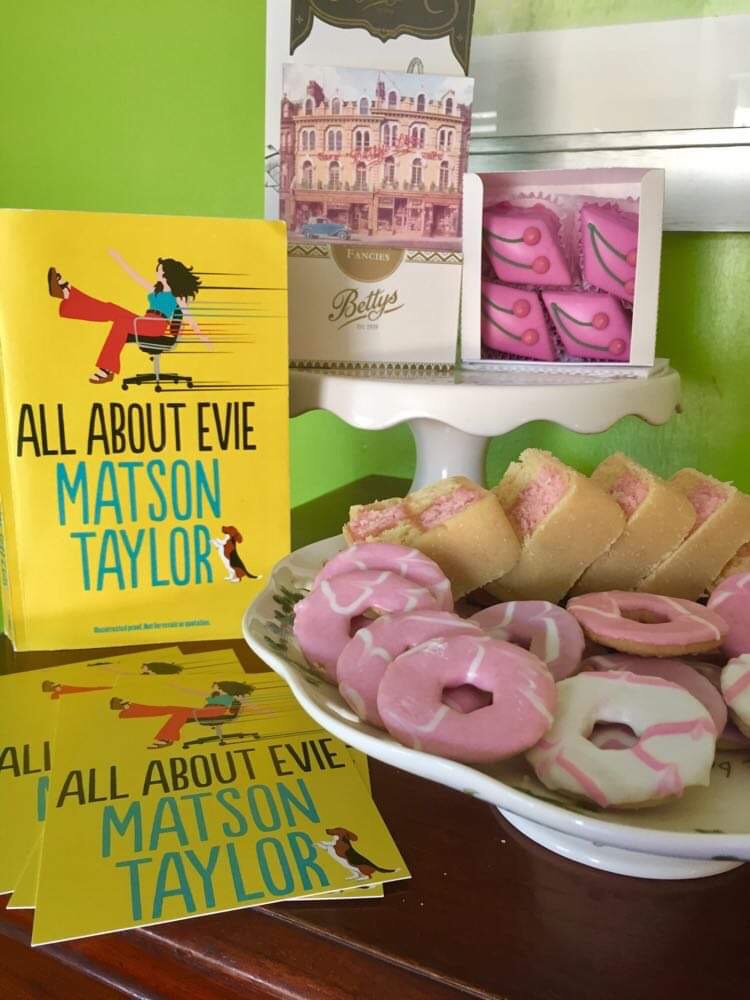
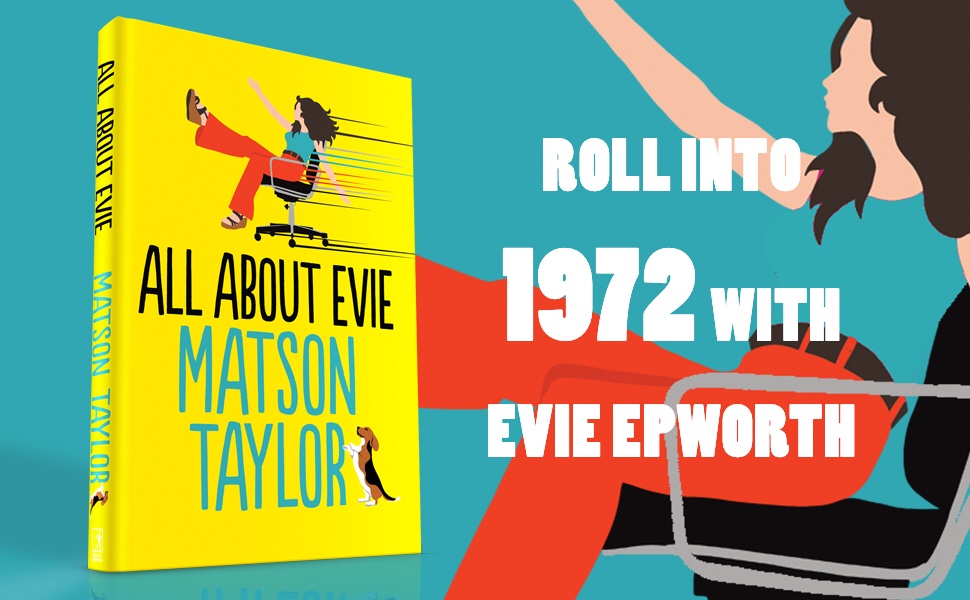
All About Evie by Matson Taylor

This novel is the second in Matson Taylor’s series following Evie Epworth (Yorkshirewoman, Fashion Lover, List Maker). So now, I can categorically say that each time I finish a book about Evie I have a big sunny smile on my face. Of course all books make us feel things, even if it’s to throw them out of the nearest window, but it’s a rare book that gives us a real physical reaction such as the spooky ones that give us goosebumps on the arms or lift the hairs on the back of our neck. I’ve only spontaneously burst into tears once, thanks to David Nicholls’s One Day and that twist none of us saw coming. Not only is Matson is great at those laugh out loud moments, such as the ‘cow incident’ that precipitated her car accident in the first book. As I finished All About Evie I found myself unable to stop smiling. This book feels like liquid sunshine being poured into your veins.

Our previous book ended as Evie is being waved off to an adventurous new life in London, alongside mentor Caroline, the unconventional and glamorous daughter of Evie’s lifelong neighbour and baking partner Mrs Scott-Pym. All About Evie starts ten years later in 1970’s London, where Evie is working in a junior role on BBC Radio Four’s Women’s Hour. Previously, we met Evie at time of great change and this novel is no different. Thanks to a terrible incident with a visiting Princess Anne and the misuse of a mug Evie is sacked from the BBC. Does this mean her life in her little London flat is in jeopardy? Caroline thinks this is an opportunity to try something new so Evie tries working in an art gallery. When it turns out art, particularly the modern variety, isn’t for her she lists things she’d like to do and falls upon the idea of writing for a magazine. She finds the magazine Right On in an office above a sex shop – handy windows for checking one’s hair before walking into the office – and asks for a job. Assuming she’s been a journalist at the BBC, NickStickUpBum and NickWithCollars agree to give her a trial on the listings pages, essentially long lists of what’s on in London across the arts from opera to poetry evenings. With the offer of help from Lolo (Radio Three producer, homosexual, basset owner) on the classical music listings, Evie decides to give it a go and sprinkle some sunshine over her work, in her own inimitable way.

In between Evie’s story there are a couple of flashbacks to other character’s lives. Evie’s neighbour Mrs Scott-Pym has died recently and we see her packing a case for Evie, with little artefacts to remind Evie of their time together – including a pestle and mortar wrapped in a tea towel of Bolton Abbey. Evie is grieving for her old friend, but the reminiscences become even more emotional when we realise that Mrs Scott-Pym was, aside from Dad Arthur, the only link back to Evie’s mum Diana. Preserving her memories of their friendship for Evie is so poignant and it does make Evie think about her future. Can she keep dating totally unsuitable men, who she carefully and comically lists for us, or does she want to meet someone she can share her life with? I thoroughly enjoyed the tension between Evie and her rather hippy dippy workmate Griffin. Griffin is a proponent of high culture and wants the magazine to remain intellectual rather than popular. So to try something a little more highbrow, Evie accepts Lola’s invitation to her first opera. Afterwards, NickWithCollars suggests she write a review for the magazine. This infuriates Griffin who thinks Evie is definitely low culture and would rather they published one of her own poems. When the men are out of the office, Griffin places herself in charge and gives Evie petty tasks to fulfil, often creating a mistake to trip Evie up or keep her working late. Evie tries to take the high road, but her yoga chant trick is absolutely brilliant and well deserved. I couldn’t wait for Griffin to receive her real comeuppance! Meanwhile, there’s a lovely friendship forming between Evie and Lolo, as well as his basset hound.

Yet underneath the humour, there’s so much more going on. A beautifully poignant thread running through the novel is that of motherhood. There are memories of Evie’s mum of course and we’re aware of all the life experiences Evie would have loved to share with her. Evie’s mum never got to see her grow and all that promise is encapsulated in one little throwaway object from the suitcase. Evie has many mother figures though, obviously Mrs Scott-Pym and her friend Mrs Swithenbank who gives Evie a call every week just to check in. Caroline and her lover Digby are disagreeing over the possibility of becoming parents, particularly as Caroline would have to carry the child and believes she doesn’t have that maternal instinct. However, both women have been invaluable to Evie, she even loves popping in and watering their plants while they’re away. Their house gives her the sense of having a family in the city, an anchor that keeps her from being swept away amongst the crowds. We see Evie draw on all these maternal figures when Mrs Swithenbank’s daughter Genevieve turns up in London in search of a fashion career. Genevieve carries just one suitcase, but is full of ideas and her outlandish outfits were so funny – one inflatable hoop dress brought back terrible memories of being stuck in a dress in Laura Ashley’s changing rooms and having to ring my Mum to get me out. Evie feeds Genevieve, lets her stay and starts introducing her to the right people. Every day she comes home, dejected from receiving lots of knockbacks, despite her inventive fashion portfolio. Every time Evie props her up and brings her spirit back. It was lovely to see Evie in this life stage, being the mentor and feeling so confident. As much as I love London, it was also nice to see her at home on the farm with old friends reunited and new ones being introduced, plus a very exciting finale which gives us a nod towards what Evie might do next. I can’t wait to celebrate this fantastic novel with a 1970s party. I’m hoping for a cheese and pineapple hedgehog and Babycham to toast this joyful new stage in the Evie story.

Published 21st July 2022 by Scribner UK

Meet The Author

Matson Taylor grew up in Yorkshire (the flat part not the Brontë part). He comes from farming stock and spent an idyllic childhood surrounded by horses, cows, bicycles, and cheap ice-cream. His father, a York City and Halifax Town footballer, has never forgiven him for getting on the school rugby team but not getting anywhere near the school football team.

Matson now lives in London, where he is a design historian and academic writing tutor at the V&A, Imperial College and the Royal College of Art. Previously, he talked his way into various jobs at universities and museums around the world; he has also worked on Camden Market, appeared in an Italian TV commercial and been a pronunciation coach for Catalan opera singers. He gets back to Yorkshire as much as possible, mainly to see family and friends but also to get a reasonably-priced haircut.

He has always loved telling stories and, after writing academically about beaded flapper dresses and World War 2 glow-in-the-dark fascinators, he decided to enrol on the Faber Academy ‘Writing A Novel’ course. All About Evie is his second novel.

Posted in Romance Rocks!

Valentine’s Reads – Jilly Cooper’s Rutshire Novels.

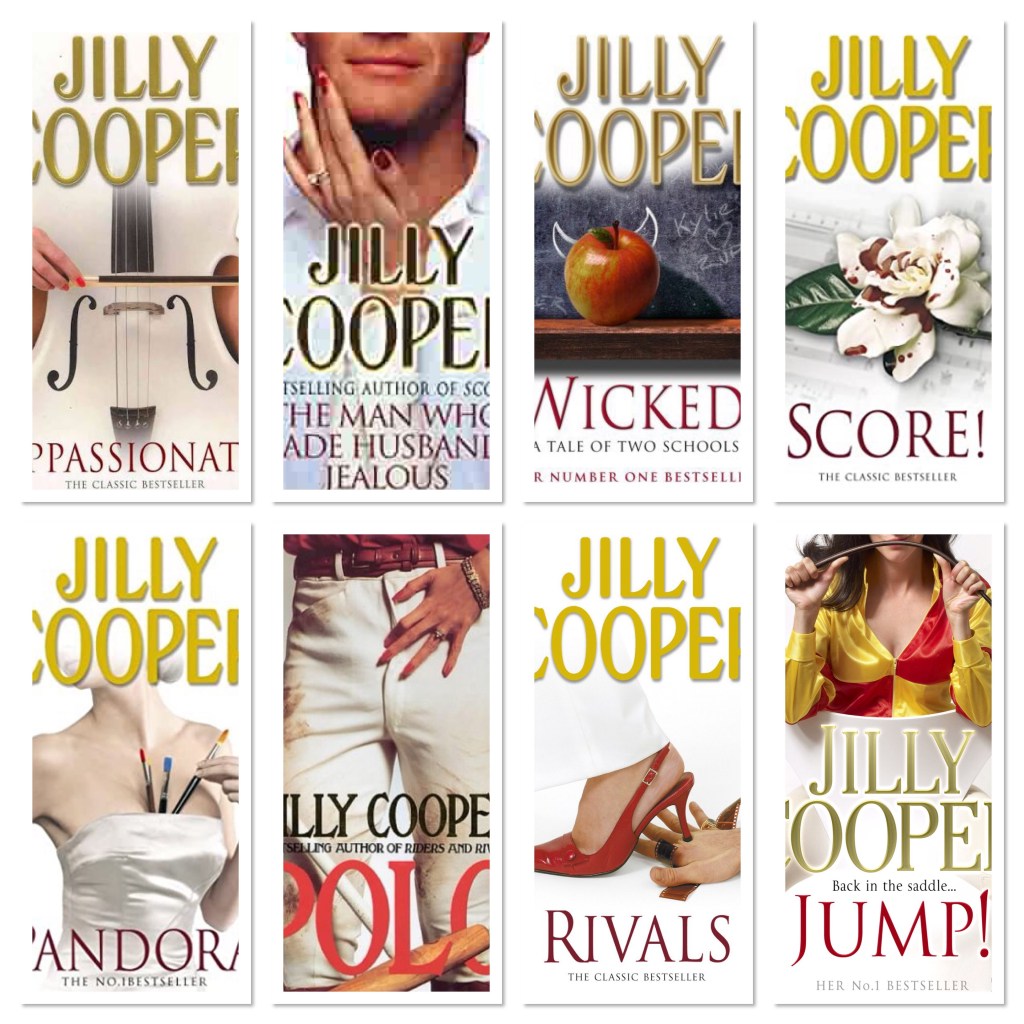
This month I’m supporting my fellow Squad Podders by highlighting writers of romance, whether that is their specific genre or just a part of their books mingled with fantasy, humour or mystery. If you want completely escapist romance with a side order of sexy, rich, characters cavorting around the English countryside then Jilly Cooper is your author. My first introduction to Jilly Cooper was finding her earlier 1970’s books on mum’s bookshelves. These weren’t the romances, but the humorous and witty digs at society found in her books on class and feminism. I remember very clearly my mum reading to me from one of them and as a working class family we found the middle classes utterly tragic so she would read descriptions of the Teale family. I’ll never forget Jen Teale who was so demure she wore six pairs of knickers. When mum was a bit low we would get a book down and I would read or act out the funnier bits and we’d all fall about laughing. It wasn’t until I was in sixth form that I encountered her handsome hero, Rupert Campbell-Black. One girl had brought Rivals into the common room and was reading out the filthy bits – ‘tit fault’ could be heard ringing round the tennis courts for weeks that summer term. I bought a copy of Riders and realised her work had so much story, as well as those famous rude bits. What I loved about Riders was the description of Penscombe and it’s jumble of treasures, dogs, books and grounds full of beautiful horses. Then as the rivalry became apparent between Rupert the school bully and his victim, the gypsy Jake Lovell I was completely caught up in the story. Her characters were well fleshed out and Rupert’s disastrous marriage to the American hunt saboteur Helen, was a fascinating clash of cultures, class and personality. I was soon utterly gripped by the world of showjumping, the bed hopping and the relationships sacrificed to ambition.

I think characters are a strength of Cooper’s even though some are almost caricatures and her rendering of Northern accents is hilariously wide of the mark. Each book tends to have a virtuous or kind woman – Taggie O’Hara, Kitty Rannaldini, Daisy or Lucy – who are perhaps not conventionally attractive, slightly shy and a bit downtrodden. It gives us someone to root for. On the other hand there are absolute horrors as well like narcissistic opera diva Hermione Harefield, the wicked but talented Roberto Rannaldini, or the chaotic and faithless Janey Lloyd-Foxe. It doesn’t matter that they’re not realistic, this is a romp through the upper classes – a part of society that Jilly Cooper knows more about than me. There’s always a lusty man to fall in love with too, someone tortured and secretive like the director Tristan de Montigny in Score, a bumbling innocent with looks to die for like Lysander Hawksley in The Man Who Made Husbands Jealous, or the gorgeous Luke Alderton in Polo, who loves the spoiled young polo player Perdita even when she chooses his brother Red. From showjumping, to television, to gigolos, polo players, orchestras, film making and horse racing Jilly takes us through each world with great knowledge and detail, often making the animals just as strong in character as the humans. I’m particularly fond of the labradors Mavis and Badger, and Taggie’s faithful little mongrel Gertrude.

Then there are the romances! There are several in every book and of course the over-arching love story of all – Rupert and Taggie. In Riders I felt so sad for Fenella whose hero worship of Billy Lloyd-Foxe becomes an unrequited crush, then a doomed love affair. In Polo I was rooting for Daisy, the mother of our heroine, who had been so focused on looking after others that she couldn’t believe the dashing polo player Ricky France-Lynch would be interested in her. I followed the fortunes of Rupert and Helen’s daughter Tabitha very closely. She’s impulsive and makes a passionate, but very difficult marriage to Isa Lovell, the eldest son of Rupert’s enemy Jake Lovell. Any chance she had of a more stable and loving relationship, through the novel Score particularly, had me keeping my fingers crossed. Of course it’s Rivals where the best and most beguiling love story begins and to see the bed-hopping Rupert Campbell-Black falling head over heels for the shy, dyslexic and unconventionally beautiful Taggie was deeply enjoyable. I was a similar age to Taggie when reading Rivals and still very romantic. Now I look at their relationship a little differently, but every few years I re-read a couple of the novels and I still feel a little starry eyed about them. They pop up in all the novels after Rivals and their relationship is probably the most successful in Cooper’s fictional Gloucestershire.

Cooper gives the reader a glimpse into a glamorous and wealthy world most of us would never know about. The hotels are 5 star, the fashion is designer, and the travel is first class. This is a world of elite sport and the game of kings – yes the Prince of Wales does pop up in Polo. There’s the world of classical music following the Rutshire orchestra in both Appassionata and Score, where the countryside becomes a backdrop for a twentieth century update to Don Giovanni. Pandora takes us into the art world and her latest Jump and Mount we’re back with horses, but in a horse-racing capacity rather than show jumping. Her only mis-steps for me are when she steps outside of this privileged world and tries to write about the working classes or a Northern character. Her book Wicked focuses on a struggling state school being mentored by the local public school where some of our usual suspects pop up, such as Rupert and Taggie Campbell Black’s children. I found her working class and city dwelling characters stereotypical and I inwardly cringed to such an extent I didn’t keep the book. Watch out for the accent of George Hungerford in Score for an example of how Northerners speak too. These are small quibbles though in a series of novels full of humour, bedroom romps, glamour, money and total escapism. The countryside is stunning and characters live in the most picturesque surroundings you’ll feel you’ve been on a holiday. Mainly though you’ll keep coming back for the love stories: hoping that the plump, bespectacled Kitty Rannaldini will escape the clutches of her evil husband with the handsome Lysander Hawksley; whether dog loving, shy, make-up artist Lucy will ever be noticed by the glamorous and mercurial Tristan de Montigny. Cooper uses all of the romantic conventions to her advantage. There are always obstacles to the couple’s love, distractions and conventions that can’t be crossed. There might be an age barrier, a man whose a confirmed bachelor, families that are locked into a bitter feud or a difficult marriage to negotiate. There are so many of these obstacles, that you’ll wait with your heart in your mouth as Taggie drives to collect Rupert Campbell-Black from his trip aboard, hoping desperately that he’ll overlook them and let her fall into his arms.

Meet the Author


Jilly Cooper is a journalist, author and media superstar. The author of many number one bestselling novels, she lives in Gloucestershire.

She has been awarded honorary doctorates by the Universities of Gloucestershire and Anglia Ruskin, and won the inaugural Comedy Women in Print lifetime achievement award in 2019. She was appointed CBE in 2018 for services to literature and charity.

Posted in Netgalley

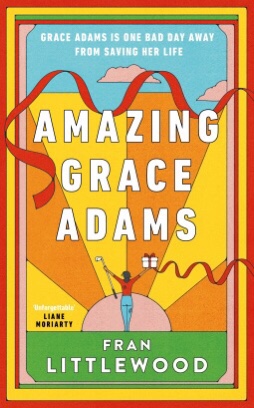
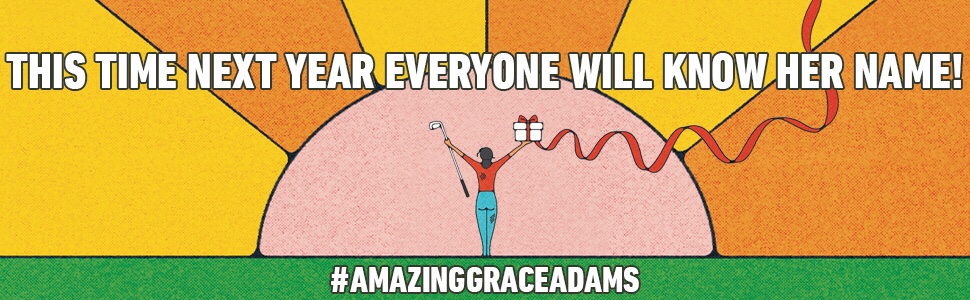
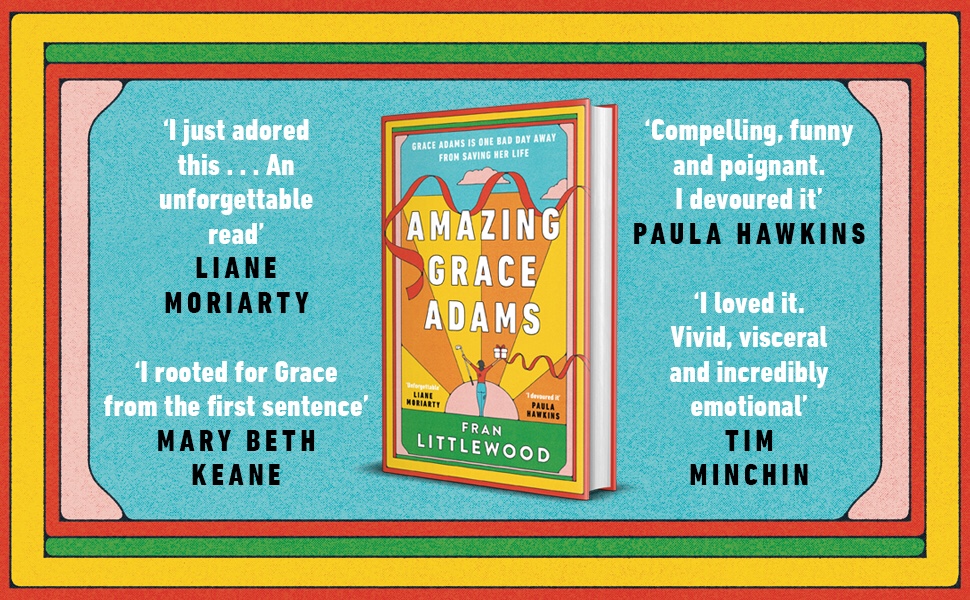
The Amazing Grace Adams by Fran Littlewood

It’s possibly way too early to start picking candidates for favourite books of 2023 – I’m still deliberating over 2022 – but I think this book is certainly going to be in contention. Grace is one of those characters that you fantasise about having cocktails with and you already know you’d have the best time. Grace is stuck in traffic, it’s a boiling hot day and she’s melting. All she wants to do is get to the bakery and pick up the cake for her daughter’s birthday. This is one hell of a birthday cake, not only is it a Love Island cake; it has to say that Grace cares, that she’s sorry, that will show Lotte she loves her and hasn’t given up on their relationship. It’s shaping up to be the day from hell and as Grace sits in a tin can on boiling hot tarmac, something snaps. She decides to get out of the car and walk, leaving her vehicle stranded and pissing off everyone now blocked by a car parked in the middle of a busy road. So, despite the fact her trainers aren’t broken in, she sets off walking towards the bakery and a reunion with Lotte. There are just a few obstacles in the way, but Grace can see the cake and Lotte’s face when she opens the box. As she walks she recounts everything that has happened to bring her to where she is now.

When we first meet Grace she’s living alone, estranged from husband Ben and even from her teenage daughter Lotte. She’s peri-menopausal, wearing trainers her daughter thinks she shouldn’t be wearing at her age and she’s had enough. There’s that sense of the Michael Douglas film Falling Down except when the meltdown comes all she has is a water pistol filled with river water, an embarrassingly tiny Love Island cake and a blister on her heel. Then in flashbacks we can follow Grace all the way back to the start, to when she and Ben met at a competition for polyglots. We also get Ben’s point of view here too, so we see her through his eyes and fall in love with her too. He describes her as looking like Julianne Moore, her hair in a messy up do with the odd pencils tucked in. She suggests that, should she win the prize of a luxury hotel break in Cornwall, they should go together. It’s a crazy suggestion, but deep down, he really wants to go with this incredible woman. Once there, the first thing she does is dive into the sea to save a drowning woman. Ben has never met anyone so free and fearless. Yet on their return four months pass before Grace tracks him down and they meet at the Russian Tea Room. There Grace tells him that he’s going to be a father, he doesn’t have to be in, but can they come to an agreement? Of course Ben is in, he was never out. There love story is touching and yet honest at the same time, it’s not all schmaltzy romance – for example after coming together in Cornwall, Grace’s bed is full of sand. It’s so sad to contrast these early months with the distance between them now, what could possibly have brought them to this place.

I eagerly read about Grace and Lotte’s relationship because I’m a stepmum to a 13 and 17 year old girl. I thought this was beautifully observed, with all the ups and downs of two women at either end of a battle with their hormones. There’s that underlying sadness, a sort of grief for the child who called out for her Mum, who let Mum play Sutherland her hair and would lie in an entwined heap on the sofa watching films. Grace aches to touch her daughter in the same way she did when she was a toddler, but now Lotte watches TV in her bedroom and shrugs off cuddles and intimacy of the physical or emotional life. Pulling away is the normal process of growing up and reminds me of the ABBA song ‘Slipping Through My Fingers’. In the film Mamma Mia, Meryl Streep plays Donna as she helps her daughter get ready for her wedding. In the cinema with my Mum I could see she was emotional and now with my own stepdaughters I can understand it. I just get used to them being a certain age and they’ve grown, with one going to university next year I’m going to be so proud of her, but I’m going to miss her terribly. There’s also a terrible fear, as Grace sees her daughter’s behaviour at school deteriorate and her truant days start to add up, she’s desperate to find out what’s wrong, but Lotte won’t talk. She’s torn between Lotte’s privacy and the need to find the problem and help her daughter, but some mistakes have to be made in order to learn. Grace might have to sit by and watch this mistake unfold and simply be there when it goes wrong. No doubt, she thinks, Grace is involved with a boy and it will pass, but the reality is so much worse.

The truth when it comes is devastating, but feels weirdly like something you’ve known all along. Those interspersed chapters from happier times are a countdown to this moment, a before and after that runs like a fault line through everything that’s happened since. As Grace closes in on Lotte’s party, sweaty, dirty and brandishing her tiny squashed cake, it doesn’t seem enough to overturn everything that’s happened, but of course it isn’t about the cake. This is about everything Grace has done to be here, including the illegal bits. In a day that’s highlighted to Grace how much she has changed, physically and emotionally, her determination to get to Lotte has shown those who love her best that she is still the same kick-ass woman who threw caution to the wind and waded into the sea to save a man she didn’t know from drowning. That tiny glimpse of how amazing Grace Adams is, might just save everything.

Published by Michael Joseph 19th Jan 2023.

Posted in Sunday Spotlight

Sunday Spotlight! Memoirs and Non-Fiction

I’m continuing my look at the books that have had a huge effect on me personally or helped me to make a difference in my life. If I’m facing a difficulty, challenge or setback in life I usually look for something to read about it. My late husband used to say that knowledge can’t be taken away from you and that the more knowledge you have, the more options you have too. I’m looking at four books today, all of them memoirs in different forms, but each quite different in how they communicate to the reader. Each one did make me think and I can honestly say I came out of each book feeling changed a little: whether it was energised and inspired; feeling less alone in the world; learning how to face life’s obstacles or reaching an emotional catharsis.

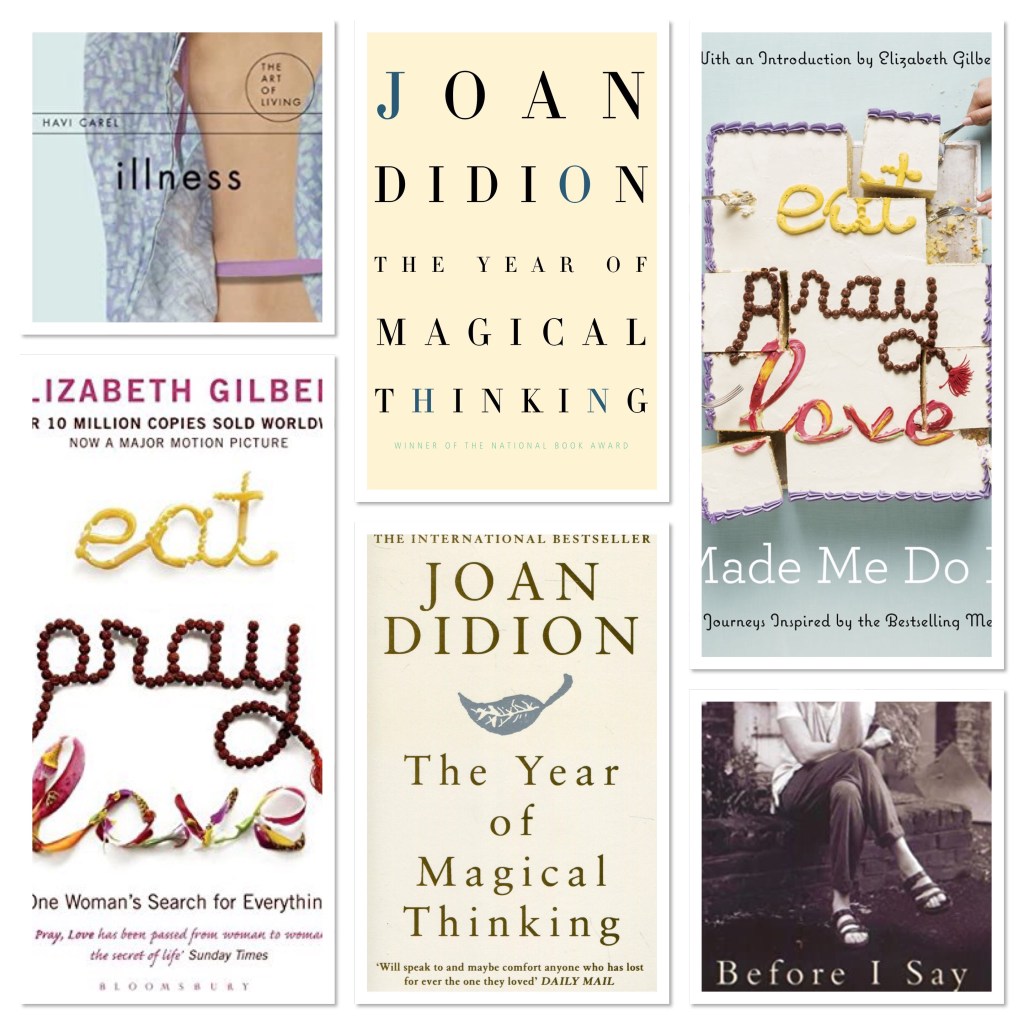
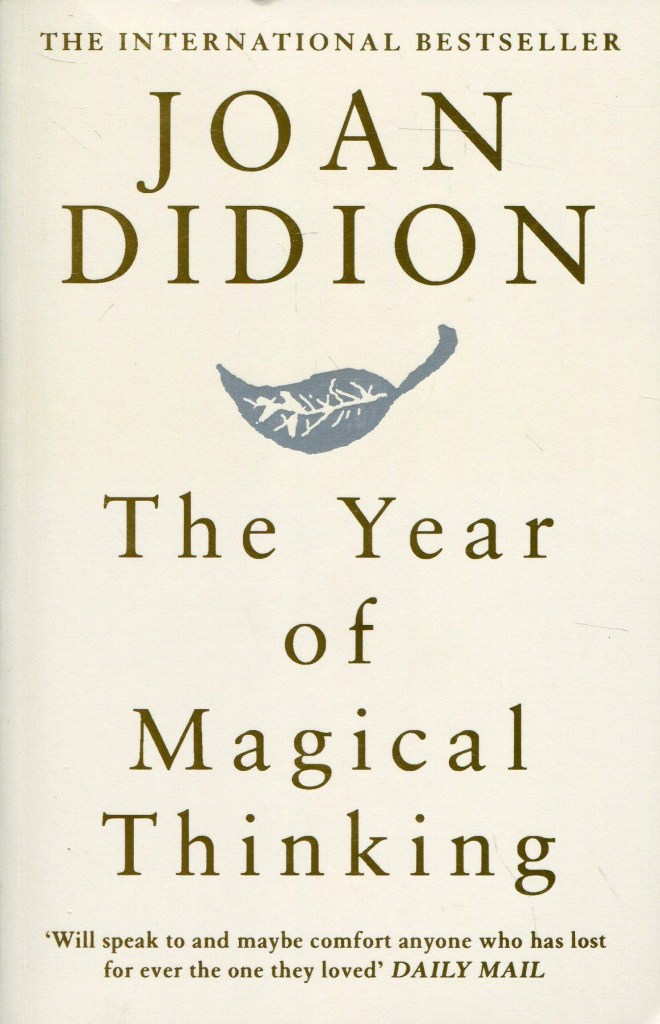
The Year of Magical Thinking by Joan Didion.

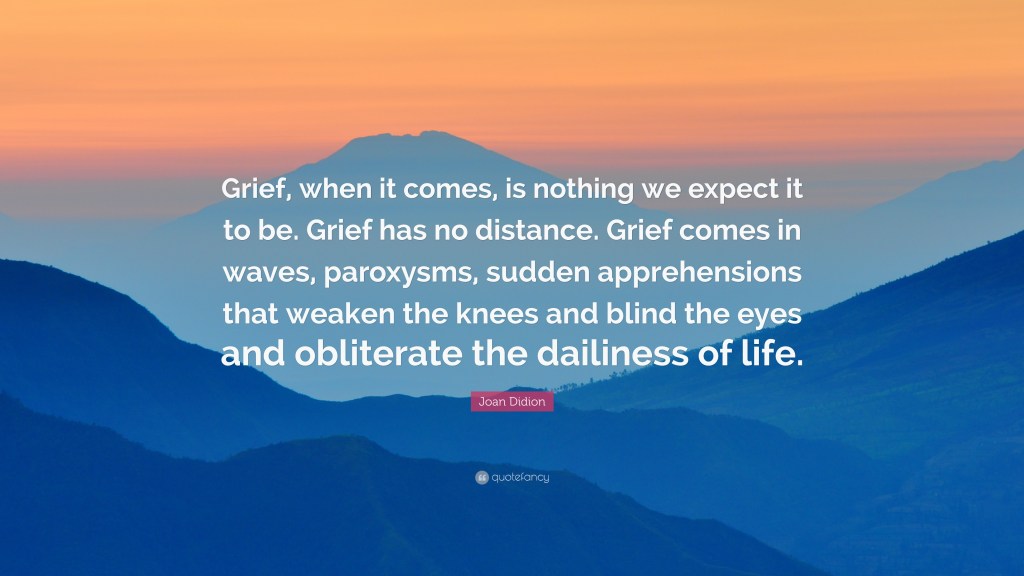
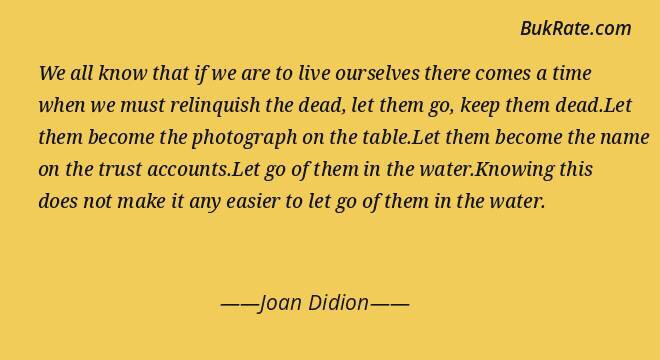
Joan Didion’s memoir is award winning for a reason. I found it a dense read in parts, but then my intelligence is probably far below Ms Didion’s level. However, there’s no denying the power of her opening chapter as she and her husband are preparing the table for dinner. Joan and her husband John had already been given the terrible news that their daughter had been placed on life support. Quintana had been suffering with flu symptoms, that became pneumonia and eventually septic shock. In the throes of grief, they are preparing for dinner when with no warning John collapses. John died from a heart attack instantly. In the maelstrom of emotions surrounding his death, Joan writes to make sense of what she’s thinking and feeling.

I found her writing raw and painful. I read this in my own grief and I recognised so much of the past year of my life in her descriptions. The way mind and body become disconnected; one carrying out the duties and routines of everyday life while the other is in another place. I felt like the bit that’s me, my ‘self’ had hunkered down deep inside the shell of my body, unable to cope with the shock of what happened. We were now in a world without my husband, where he didn’t exist. I think my ‘self’ was still in the one where he did. With her beautiful choice of words, Didion articulated a grief I didn’t have words for yet.

Illness by Havi Carel.

I came across this lesser known book when I was researching for a PhD. I was interested in the gap between a person’s perspective of their illness and the self presented in disability memoirs. My argument being that people write about their disability using certain tropes and archetypes – such as Christopher Reeve still presenting himself as superman. There is often a narrative of redemption or triumph that doesn’t relate to someone whose illness or disability is lifelong. I didn’t know whether these tropes were so ingrained in our society, there was only one acceptable way of writing about disability experience, or whether the truth simply doesn’t sell so publishers pressure writers to frame their disability this way. My supervisor suggested I needed to read Havi Carel’s book, because not only was she a professor in philosophy, she also had a long term illness that affects her lung function. What I was floundering around trying to describe was the phenomenology of illness – the ‘lived experience’ to you and me.

In some ways this is a text book, as Carel looks into what is illness? Is it a physiological dysfunction, a social label, or a way of experiencing the world? How do the physical, social, and emotional worlds of a person change when they become ill? Can there be well-being within illness?Carel explores these questions by weaving together the personal story of her own illness with insights and reflections drawn from her work as a philosopher. Carel’s fresh approach to illness raises some uncomfortable questions about how we all – whether healthcare professionals or not – view the ill, challenging us to become more thoughtful. A scene where Carel is devastated during a test of her lung function, because the result shows a decline, is so much worse because of the cold, unfeeling, practitioner. I had tears in my eyes reading it. Illness unravels the tension between the universality of illness and its intensely private, often lonely, nature. It offers a new way of looking at a matter that affects every one of us, because every one of us can become ill or disabled in our lifetime.

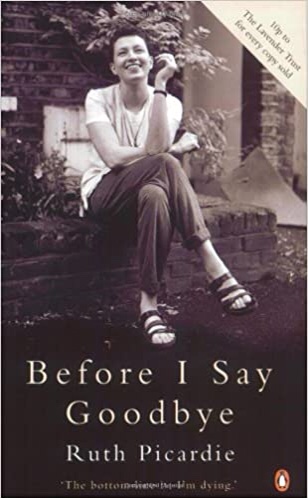
Before I Say Goodbye by Ruth Picardie.

Back in 1998, way before Dame Deborah James and You,Me and the Big C, there was Ruth Picardie. Her column in The Observer was read by millions and it was the cancer experience laid bare. Searingly honest and raw about her illness one minute and the next the day to day routine of being a Mum to two small babies. I loved how Picardie debunked those myths and archetypes of illness. How people still associate being ill with the old Victorian consumptive idea of wasting away. Those who are ill should at least be thin. However, as a result of steroid treatment for a secondary brain tumour, Picardie gains weight and has the characteristic ‘moon face’ that I remember from my own steroid days. She is angry with herself for being shallow, especially when she has to dress up for a wedding and nothing fits. She expected that being faced with death, she might be able to let go of the small stuff that doesn’t matter. It does matter though and she goes to Ghost to buy one of their flowy maxi dresses to make herself feel beautiful. She documents the progress of her cancer without holding back and when she can no longer do so, around two days before she died, her husband and sister Justine conclude.and put a frame around this collection of diary events from The Observer. This is a tough one, because I know the context is needed, but losing her narrative voice and hearing her sister Justine’s still chokes me up today. Ruth died from complications following the misdiagnosis of breast cancer in September 1997, leaving a young husband and two-year-old twins.

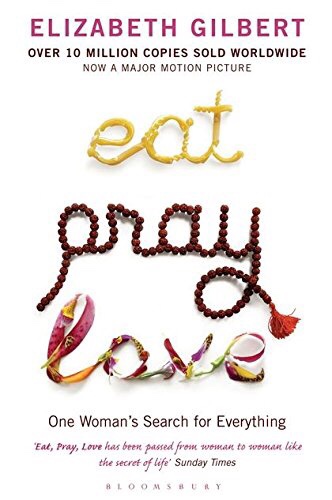
Eat, Pray, Love by Elizabeth Gilbert

I read Gilbert’s book before all the hype and the film version. I’d been on holiday and picked it up as an easy read and I was hooked by page one. Liz Gilbert has a way of writing that makes the reader feel like it’s just you and her, two friends having a catch up after a long time apart. It’s an intimate and honest account of how she found herself again after a marriage breakdown and a long term relationship that wasn’t healthy. She decided to take a long trip and broke it into sections, each one to feed part of her: body, spirit and heart. First she went to Italy for the eating part, then India for spirituality, then Bali which sounds like an absolute paradise and the perfect place to conclude a healing journey. If you read this as a simple travelogue you won’t be disappointed. Her descriptions of the food in Rome and Naples made me want to book a plane and the warmth in the friends she made there were really heartwarming. I found the discipline and struggle of ashram inspiring, it was her time to really go inside and work things out. She needed to confront what had happened in her marriage, forgive her husband and herself, then remember the parts that were good.

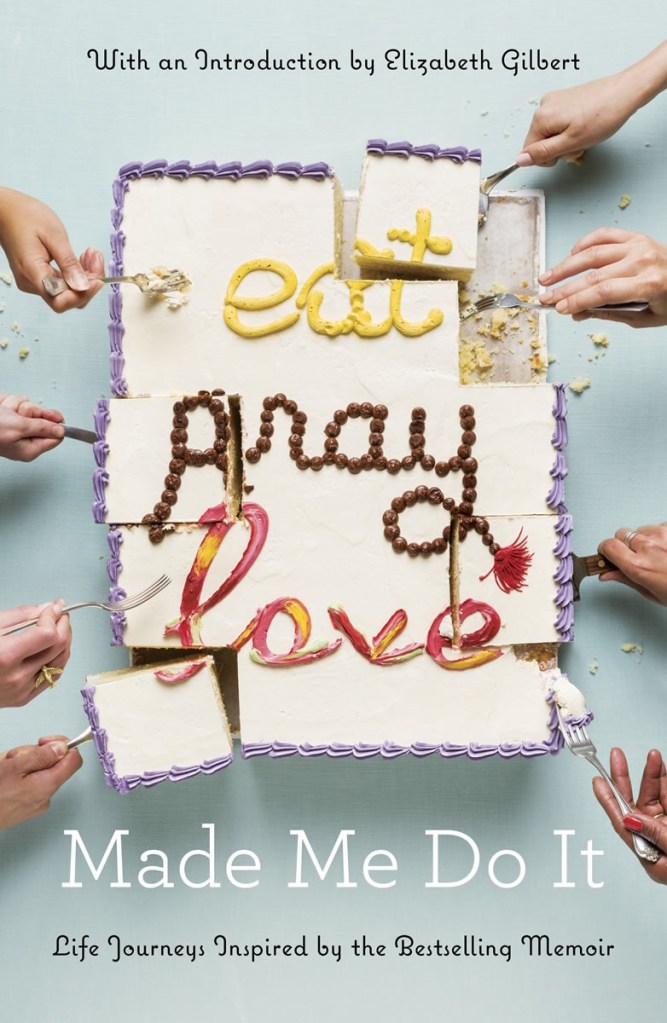
Bali is a like a warm place to land after all that mental work, where the people are welcoming and Liz finds work with a holy man transcribing his prayers and wisdom to make a book. Here she learns to love again and there was something that really chimed with me, when Liz meets a man at a party and they have a connection, she’s absolutely terrified about what it might lead to. She has worked hard and found her equilibrium and now her emotions are stirred up and unpredictable. She felt safe and grounded before, so she doesn’t want to lose it. I’d spent six years on my own, after the death of my husband I’d ended up in an abusive relationship and it had taken me a long time to recover. Then I met my current partner and I remembered back to this book and the wise friend who advised Liz to think of her life as a whole, it could only be balanced if it has periods of imbalance. Sometimes we have to throw ourselves into life. I used meditation a lot to keep grounded and it has changed my life in terms of improving mood and helping me cope with life’s difficulties. However, we can’t avoid life and stay in neutral all the time. When I read this with my book club there were mixed responses, the most negative being ‘it’s okay for some, able to swan off round the old and get paid for it’. It’s a valid point, but I never felt that. I thought she was in need of something drastic to get her life back on track and I didn’t begrudge her a moment of it. You might also like to try Eat, Pray, Love Made Me Do It. A series of stories about women’s journeys inspired by the book.

Posted in Throwback Thursday, Uncategorized

Throwback Thursday! Stuart: A Life Backwards by Alexander Masters.

Hardback with Masters’s original drawings.

I enjoy reading memoirs, especially when they’re innovative and try to show life in a different way. This fantastic biography does both. It’s unique in it’s subject – a homeless man the author meets while volunteering at a charity. It’s also unique because it’s told backwards- a device that has a massive emotional impact. Despite it’s subject, this isn’t a misery memoir. I’m not a fan of them myself, although I accept their therapeutic value, both as catharsis for the writer and as a powerful shared experience for the reader who’s survived similar experiences. I always feel prurient reading such personal and traumatic testimony. Although Stuart’s life is undeniably traumatic I never get that uncomfortable feeling when reading.

Stuart Shorter is a homeless, ex- junkie and possible psychopath. Alexander Masters first met Stuart out begging, then continues to spend time with him after securing a role as a fundraiser for Wintercomfort. His job is to make funding applications to different benefactors to keep the charity providing a day centre for homeless people in Cambridge. Set up in 1989 the charity worked with some of the worst cases living rough, giving them somewhere with supportive staff to spend time in. The founder was hoping to help individuals and reduce anti social behaviour in the city. However, when the main staff members, Ruth and John, were arrested for allowing drugs to change hands on the premises, Masters found himself at the centre of a protest movement. He also had to be more ‘hands on’ with the centre’s many users. This was when he met and formed a tentative friendship with Stuart Shorter. They were paired up to give talks around the country about the values of the charity and the campaign to free Ruth and John. They were the only people who had the time and Masters becomes intrigued with Stuart, who more often than not received a standing ovation after speaking – even if he did let out a stray ‘fuck’ from time to time. Stuart is intrigued to spend time with middle class people. ‘I thought middle class people had something wrong with them’, he says ‘but they’re just ordinary.’

This I think is the key to Master’s tale. Stuart, and some of the situations he finds himself in are genuinely funny. I also felt as if Stuart was looking at me as much as I was looking at him. The jarring contrast of Stuart’s everyday life to that of Masters, or to the reader really does hit hard. He’s a person whose life would be described as chaotic by social services or a mental health team. One or the other have been a constant in Stuart’s life, an amorphous mass of middle class do-gooders he calls ‘The System’. He’s had one service or another observing or judging his life since he was twelve years old. Like most homeless people he despises the system, because agencies that are supposed to support and help those who are struggling, are actually duplicitous. Using their observations to record and relay information to other agencies in a carrot and stick approach. Most people would assume the system is there to help, but it patronises, damages and blames too. There are welfare benefits and back to work schemes, but if the person doesn’t cooperate in come the police and prison. We learn that Stuart has been bounced round the care system, has been placed in a group home run by paedophiles, then placed into a brutal juvenile detention centre when he strays from their control. It’s easy to see why homeless people even become suspicious of things that are supposed to help, because once one part of the system comes in, everything else follows. He knows he was placed with paedophiles unwittingly, but as he points out, that doesn’t really matter when you’re 14 years old with a ‘grown man’s dick in your throat.’

It’s a brutal read in parts, but it has to be. I didn’t realise how dysfunctional the lives of my clients were, until I tried to describe to someone what my job entailed while at a ball. I was starting my career as a mental health support worker and my everyday was working with people like Stuart. I would help them with day to day tasks like shopping and budgeting, cleaning the house, and even just getting out of bed if they were struggling. People at my table couldn’t believe there was a job that entailed these things. It’s when I realised that there was a class of people more successful than me, who never learned about these incredible people and their difficult lives and I was proud to be someone who did know. The book is honest about what it was like to be a friend and supporter of Stuart. Sometimes it was frustrating, moving, devastating and other times it felt incredible. Yet we really hear Stuart’s voice too. Really the book is written by both of them. Masters never takes over or forgets that this is a collaborative effort. It’s not sugar-coated and at the beginning it’s Stuart who first reads Master’s manuscript and says he could do better. He needs to make it more readable, Stuart says, because people should want to read it, like a Tom Clancy novel.

‘Do it the other way round’ he tells Masters, ‘make it more like a murder mystery. What murdered the boy I was? See? Write it backwards’.

The BBC film starring Benedict Cumberbatch and Tom Hardy
Posted in Netgalley

A Lady’s Guide to Fortune-Hunting by Sophie Irwin.

This book really was fun with a capital F! If you enjoy Jane Austen or Bridgerton then this is a book you’ll love. It has that clever ability to be frothy and witty, while actually bringing up some important issues, especially about the woman’s role in Regency society. It takes a look at class and what is really expected of those in the very highest society, or the ‘ton’ as they are dubbed here – I’ll be honest and say I’ve watched two whole series of Bridgerton and wondered what ‘ton’ meant, now I’ve finally looked it up! This brilliant debut rackets along at a fantastic pace, with glorious balls and luxurious fashions one minute, then adventurous rescues the next. Our heroine is Kitty Talbot, eldest of five girls who live in the Dorset countryside. As the book opens Kitty is responsible for her sisters, since both of their parents have died. Mr and Mrs Talbot were ostracised from high society before the girls were even born and the family have lived a relatively quiet life. Unfortunately, Mr Talbot had kept a taste for the gaming tables and while his debt grew he also turned to drink. On their death Kitty was left in charge of four sisters, a badly trained dog, a leaking roof and a threat from the debt collectors that payment must be made soon. Luckily, four years ago Kitty secured a proposal of marriage from Mr Linfield, a local squire with a reasonable fortune. Horrifyingly though, a few months before their debt is due, Mr Linfield withdraws his offer of marriage, leaving Kitty solely responsible for her sister’s home and their future. There is only one solution; Kitty needs a fortune and she needs it fast. So, she pawns the last of their mother’s jewellery for costs and decides that she and her sister Cecily will visit their Aunt Dorothy in London where they may be able to gain introductions into society. The season has begun and every eligible bachelor with a fortune will be in attendance. Can Kitty find her fortune before her time runs out, or the secrets about their parent’s departure from London are made known?

As with Austen, there are serious issues and themes underneath the glamour and witty repartee. There’s an absolute honesty in what Kitty is trying to do, both with her family and herself, if not with her potential suitor. She soul searches about whether she can live with the decision to marry purely for financial protection, but when she thinks of her sisters she finds she can live with it quite comfortably. She knows each of them so well, that she can imagine their future needs – the one who wants to learn, the one who needs to marry for love and the one who might never marry. She’s happy as long as her sacrifice means they can have what they need and I found that an admirable quality. Yet, polite society and certainly those of the ‘ton’ find this deceitful and vulgar. The author is highlighting the double-standard here, it’s only Kitty’s gender and class that make her actions vulgar. Men in high society can pick the most eligible woman based on her looks, her age, her child-bearing possibilities and even her fortune, should his be lacking. Should a society gentleman, even a Duke, chooses a young woman of a lower class to him then his actions are accepted. There may be gossip, but whether it’s for love, lust, money or breeding ability no one truly cares as long as she is of good character and virtue. Kitty is simply doing the same, there’s a commodity she needs and marriage is her only means of achieving it. In the ballrooms and salons of London, all young women in the act of finding a match are sparing with the truth. They are making the best of their looks, inventing accomplishments and laughing at awful jokes. They make themselves less: less intelligent, less witty, less feisty. They have to flatter, make the man seem superior in all these things. So, why is Kitty’s plan any different? Her class is the deciding factor, breeding being all important for men of the peerage particularly, it is desirable to meet a woman of a similar class and not marry down. It is Kitty’s dishonesty about her class and lack of money that condemn her.

Once settled at her Aunt’s house, they ‘accidentally’ meet the de Lacey family, one of the most respected families here for the London season. It is the younger son Archie that Kitty thinks might be a suitable candidate and since Cecily went to school with his younger sister Amelia they have a connection. However, it’s with Archie’s elder brother that Kitty can be truly open and honest. James is now Lord Radcliffe after the death of his father but has spent most time at their country seat in Devon. He is in hiding, alongside fellow officer Captain Hinsley, with whom he shared the experience of fighting at Waterloo. He’s superior, intelligent and doesn’t suffer fools, but he’s also holding a lot of emotions in check and felt he wasn’t ready to be the head of his family. Once alerted to the possibility of an alliance between Archie and a young woman who appears to have no breeding or family fortune, he rides back to London determined to sever the connection. He and Kitty’s exchanges are probably the most honest and equal in the book, as well as making me laugh. He can see her ability to charm and once they’ve been honest with each other they seem to relax in each other’s company and Kitty grows in confidence. She makes it clear that no matter what he may see her as – a fortune hunter – her only other choice is to let the family home go and for the sisters to look for paid work that will separate them. I admired her honesty and her ability to see the objections to fortune hunters as hypocrisy. The whole London season is about making matches, sometimes for very similar reasons to Kitty’s own.
I thoroughly enjoyed the ups and downs of her mission and her determination to become an integral part of the season. The setting is beautifully described, especially the culture shock of a dirty and sooty London as compared to the country. I loved the image of higgledy-piggledy buildings that are bowed or look ‘haphazardly drawn as if by a child’. The detailed description of the latest fashions and how the girls have to craftily accessorise so they look like they’re wearing something new. Even so, Kitty is outed in the mind of Lady Radcliffe who notices a shoe with a wooden button that marks them out as from Cheapside. There are also other plot lines that feed into the central premise that work very well too: the story of Kitty and Cecily’s parents and why they were unwelcome in polite society; the identity of Aunt Dorothy and her reluctance to follow Kitty’s forays into high society; Kitty’s insistence that Cecy isn’t looking for a husband while her sister has her own plans; Archie’s discovery of gambling clubs and the predatory lords who frequent the clubs looking for young, inexperienced men who are about to come into their fortunes. I felt the author had the balance just right between humour and frivolity and the darker sides of the story. It gallops along at a jolly pace and it’s very easy to keep on reading into the night. The excitement peaks one evening as two very different rescue missions are undertaken; one to save a reputation and the other to save a fortune. These missions are taken at a breakneck pace and it’s impossible to put the book down once you’ve reached this point – you will simply have to keep reading to the end. The author has written a wonderfully satirical and deceptively light novel, with plenty of intrigue and some darker undertones. I enjoyed the Talbot sisters and wondered whether we’d be seeing more of them in the future, if so they’ll definitely be on my wishlist.

Published by Harper Collins 12th May 2022

Meet The Author

Sophie has spent years immersed in the study of historical fiction, from a dissertation on why Georgette Heyer helped win World War Two, to time spent in dusty stacks and old tomes doing detailed period research when writing this book. Her love and passion for historical fiction bring a breath of fresh air and a contemporary energy to the genre. Sophie hopes to transport readers to Regency London, where ballrooms are more like battlegrounds.

A Lady’s Guide to Fortune-Hunting is Sophie’s debut novel and it has already sold in twenty territories worldwide.

Twitter @SophieHIrwin

Instagram @sophie.irwin

Posted in Publisher Proof, Sunday Spotlight

Sunday Spotlight: All About Evie by Matson Taylor

So I’m having a book blogger’s dilemma. The arrival of this book through the door made me do a little Snoopy dance! There are a few books I’ve earmarked as my most anticipated summer reads, but this is right up there as my mostest anticipated novel. I know, we bloggers do love to throw out superlatives here and there, but I’ve honestly been waiting for this book ever since I finished The Misadventures of Evie Epworth two summers ago. Now I’m in an awful quandary. I want to devour it in one go, but once I do, the moment will have passed and Evie is gone again. I don’t know whether Evie’s story ends this time, or whether there’s more to come, so I’m trying to hang on for a little while, at least until my fellow Squadettes are reading so we can talk about it.

If you haven’t read Matson Taylor’s first novel then where have you been? I think this is one book where reading the previous instalment of Evie’s adventures is really helpful. You have a whole new literary heroine to meet and I think knowing where Evie comes from is vital in understanding her. I’m not going to use spoilers so it’s safe to read on. In book one we met Evie in the 1960’s, the summer after O’Levels and before A Levels. Her only plans for the summer are reading, helping their elderly neighbour with her baking and, most importantly, getting rid of her dad’s girlfriend who would like to see Evie working through her summer at the local salon. Christine has moved in and is slowly trying to erase everything Evie loves about the farmhouse, including her Adam Faith wall clock and that won’t do. Evie and her dad would like things to stay as they were when her Mum was alive. They love their Aga and old country kitchen, but Christine wants Formica and a new cooker that’s easier to clean. Her wardrobes are wall to wall pink, synthetic fabrics and she colonises the kitchen with her Mum and lumpen friend, who’re usually in tow. Her dad can’t seem to see that his girlfriend and daughter don’t get along, there’s quite a lot of avoidance practised here, he’s often got his head in the newspaper or listening to the cricket scores, or just popping out for a pint. Whatever the tactic, it means he hasn’t heard anything. This problem needs another woman to solve it. So, when her neighbour has an accident and her daughter Caroline arrives to look after her, the three women put their heads together to deal with the problem, just in time for the village fete and baking competition.

All About Evie starts ten years on from the previous novel with Evie settled in London and working at the BBC. She has all the things a 70’s girl could wish for – including an Ozzie Clark poncho. Then disaster hits. An incident with Princess Anne and a Hornsea Pottery mug means she must have a rethink about her future. So what can she do next? Will she be too old to do it? Most importantly, will it involve cork soled sandals? I have no qualms in saying this is my most anticipated book of the summer. I think I’ll have to compromise and as soon as I have a two week gap from blog tours I’ll be delving in to find out what happens next….

I’ll keep you informed.

Published by Scribner U.K. 21st July 2022.

Posted in Throwback Thursday

Throwback Thursday! The Final Testimony of Raphael Ignatius Phoenix by Paul Sussman.

Something very strange happened while I was reading Paul Sussman’s book. I was up at night feeling unwell and made it half way without even taking a break. I had never read any of his books so as far as I knew this could have been a debut novel or one of hundreds. I launch straight into books without reading introductions, forewords or acknowledgements because I don’t like to be swayed by them. I don’t want someone else to tell me how to read a book, or in what context; I like to make up my own mind and read them later. I must admit on this occasion I was drawn in by the cover, but beyond that and the back cover blurb I knew nothing.


I realised half way through that I was reading with a smile on my face, despite feeling physically grotty! It made me smile because of the dark subject matter, the humour and sheer ingenuity of Raphael. I put it to one side and thought ‘I really wish my husband Jez had been around so I could read this to him’. He died 7 years before I found this novel and prior to his death he couldn’t read himself. He couldn’t hold a book and couldn’t see to read for himself. He could get listening books but there were certain, funny, books that we liked to share so we could fall about laughing together. They would usually be ingenious, darkly comic and just a little bit bad – rather like this. This was definitely one of those books. I then turned to the foreword and noticed it was written by Paul Sussman’s wife Alicky. I was so sad to read that she had been through the same loss I had, but amazed by the parallel. I contacted her and she was lovely, sharing about her loss and listening to mine.

The character of Raphael Phoenix is irresistible. A cantankerous old pensioner, living alone in a castle, he decides that 100 years of living is enough. He has a plan and he also has a pill. He has had the pill his whole life since his birthday party with his childhood friend Emily. Emily’s father is a chemist and in his poison cupboard, among the ribbed glass bottles, is an innocuous white pill with a simple nick in one side. It has very particular ingredients that ensure an almost instant and painless death and it is the only thing he wants for his birthday so the pair replace the pill with mint of the very same size, with a nick from the edge to match. Raphael keeps the pill with him through his incredible life either in his pocket, in a gold ring or in more difficult circumstances, sellotaped under his armpit. He trusts his pill and knows that it will deliver the death he wants as he sits in his observatory, with an expensive glass of red wine (over £30 a bottle) watching the millennium fireworks. However, before then he has a story to tell us, several stories in fact, which take us through some of the most important periods of the 20th Century and he has a very peculiar way of splitting these stories into sections. Raphael has had some very singular life experiences, and has a talent for getting into scrapes and challenges. Even more surprising are his ways of getting out of them.
I had no idea what to expect and so I was surprised and charmed by this magical piece of work. It manages to be both, earthy and funny, but also incredibly poignant. The only two things he can depend on through his life are the pill and his friend Emily. Emily isn’t always by his side, but just manages to be there at the right times and seems to set his various destinies in motion. Raphael works backwards with his tales until the reader is desperate to know how all of these incredible twists and turns are set in motion and also whether his trusty pill will work so he gets the end he has been working so hard towards. I would read this if you enjoy dark humour and tall tales and like your narrators to be, ever so slightly, morally ambiguous. It is darkly enchanting and I fell in love with it.

Published by Doubleday 22nd March 2014.