Posted in Random Things Tours

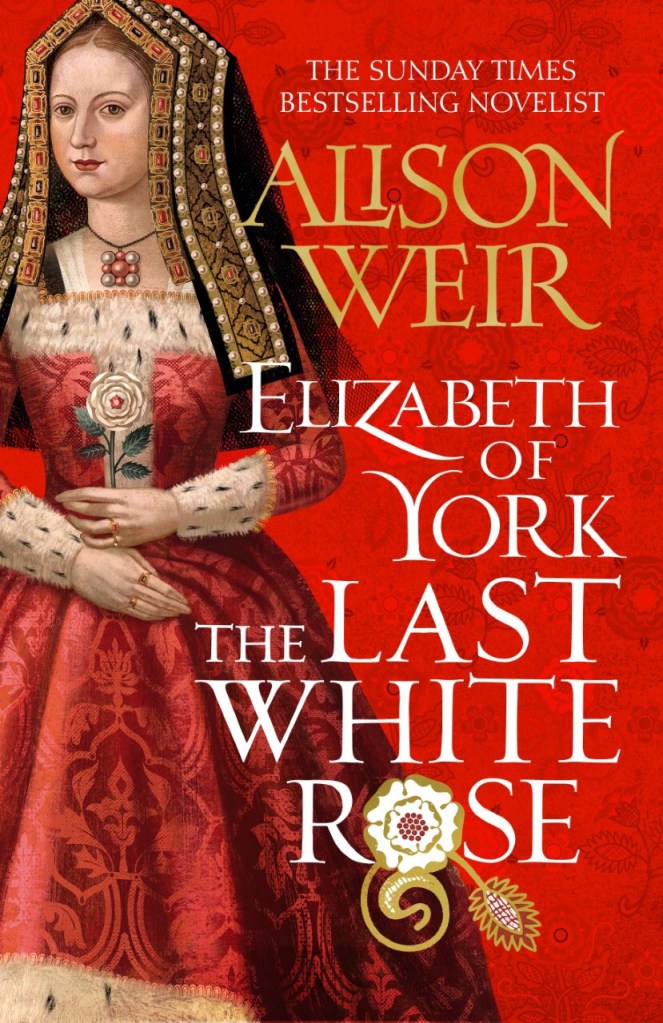
Elizabeth of York: The Last White Rose by Alison Weir

I love novels of courtly intrigue, in fact at my previous home I had shelves placed in the alcoves either side of the fireplace and one whole side was devoted to books on the Tudors and the Wars of the Roses. So the story of Elizabeth of York is familiar to me, but I love Alison Weir’s books and I was interested to see her take on this incredibly important Queen. As Alison Weir states in her afterword, Elizabeth is at the juncture of several important events in England’s royal history. There’s the instability caused by the Wars of the Roses or Cousin’s War, with battles, changes of allegiance and her family’s fortunes rising and falling with every intrigue. There are parts of her life shrouded in mystery and with differing viewpoints from historical researchers and novelists. I have always wondered how her relationship with Richard III changed from niece and uncle, to prospective wife. I have read accounts that suggest an affair between the two, one that took place in front of Richard’s sick wife Anne Neville and was branded scandalous in the court. I wanted to read Alison Weir’s take on this strangely incestuous relationship, whether Elizabeth was complicit and desired the match or whether this was a political match – suggested by Richard who wished to legitimise his rule, above the claim to the crown held by Elizabeth’s brothers and sons of Edward IV. Did Elizabeth, and her mother Katherine Woodville, see this as the only way to secure their family’s safety under Richard’s rule? The other mystery is that of the missing princes in the tower, a subject Alison Weir has looked at closely before. Some accounts suggest a conspiracy drawn up by Henry VII’s mother Margaret Stanley, to advance her son’s claim to the throne and label Richard III forever as guilty of regicide and killing his own nephews. Others lay the blame squarely at Richard’s door, for arranging their murder then forever hiding their remains so they couldn’t even have a proper burial. I was interested in how Elizabeth coped with potential marriages to the very two men who had most to gain from her brother’s killing.

The novel begins at one of life’s terrible downturns for the family, as Edward IV’s wife Katherine is forced to flee to sanctuary with her children, Elizabeth being the eldest. This time shut off from the world and all the comforts they were used to had a huge impression on Elizabeth and could have been enough of a trauma to be an underlying cause of the choices she made in later life. The fear of having nothing, facing poverty and being barred from courtly life is ever present and the privilege of her royal blood, her claim to the crown and her importance to England is drummed into her from a young age. I often think that it was Mary Boleyn who had the right idea, a generation or so later, of leaving court and all it’s intrigues behind and becoming the wife of a farmer. If you are always told you are destined to be a Queen though, does that sort of thought ever enter your head? Court is really the only life that Elizabeth knows. The author really puts across the drama of courtly life, especially during Henry VII’s reign when any whiff of a usurper seems to have him running to her rooms in a panic. The stress seems constant and I did wonder how many of these people died purely from lifestyle.
The feasting was incredible, with weird mixes of courses confusing the eater’s tastebuds and stomach, taking them from brawn, fish in jelly, custard then to peacock. These snippets of courtly life set the scene so well and almost dazzle the reader with such a sense of spectacle. I would find myself distracted from all the stress, and the grief, by the descriptions of week long revels and Christmas celebrations. Just a description of the costumes for a masque or the clothes of the time gave that sumptuous and luxurious feel to the court. I was rather reminded of another Queen Elizabeth and the lavish celebrations planned for the end of this month. Weir captures that element of disguise and distraction that’s still apparent between the royal family’s private and public arenas today. I am largely disinterested in our current royals, but a wedding will dazzle me and I end up watching the whole thing. If told how much it’s cost I get incensed, but then I get sucked in by the whole spectacle. So, in a time when supporting a royal household could mean getting caught up in a costly and dangerous war I could see how the ceremony would have to be even more lavish to gain the public’s attention. Men in the novel don’t have the luxury of choice, so if you were a tenant of the local landowner you were compelled to fight for their cause, no matter whether you agreed or not. Thank goodness that today, royal rivals only parade their discord round the chat shows and not on the battlefield.

Ultimately though, I felt some sympathy for this young woman who was borne of a King who won his crown on the battlefield, then promised in marriage to a man who won his crown in the same way. Like most women of her time, her fate is decided for her, albeit it in a more dramatic way than most. Here she seems to love Henry and the older they get, they mellow and the closer they become. I did wonder whether other novels strayed nearer the truth, that fed up with being constantly touted as the most eligible lady in England, her relationship with Richard was something she was complicit with, a type of rebellion where she was willing to ruin herself just to have some agency in her own life. What I love most about this book was how well written it is, obviously meticulously researched and gave me a slightly different perspective to events I knew well. For example, Margaret Stanley the King’s mother, is described as kind and almost sweet in character for the small ways she tries to look after those around her. I thought that Elizabeth’s relationship with Lord Stanley was interesting and probably gives us the biggest clue to this young woman’s real character and motivations. Stanley is known for changing allegiances when he’s sure which way the battle is turning. At the Battle of Bosworth he rode out with Richard III, only to turn to his stepson’s cause and actually strike down the King, taking his crown and placing it on Henry VII’s head. He and Elizabeth are made of similar stuff, each one watches the way wind blows before committing in order to survive. We can see her as blown about by that prevailing wind or as a politically astute young woman who knows how to secure her children’s future.

Meet The Author

Alison Weir lives and works in Surrey. Her books include Britain’s Royal Families, The Six Wives of Henry VIII, Children of England, Eleanor of Aquitaine, Henry VIII: King and Court, Mary, Queen of Scots and Isabella: She-Wolf of France.

Posted in Random Things Tours

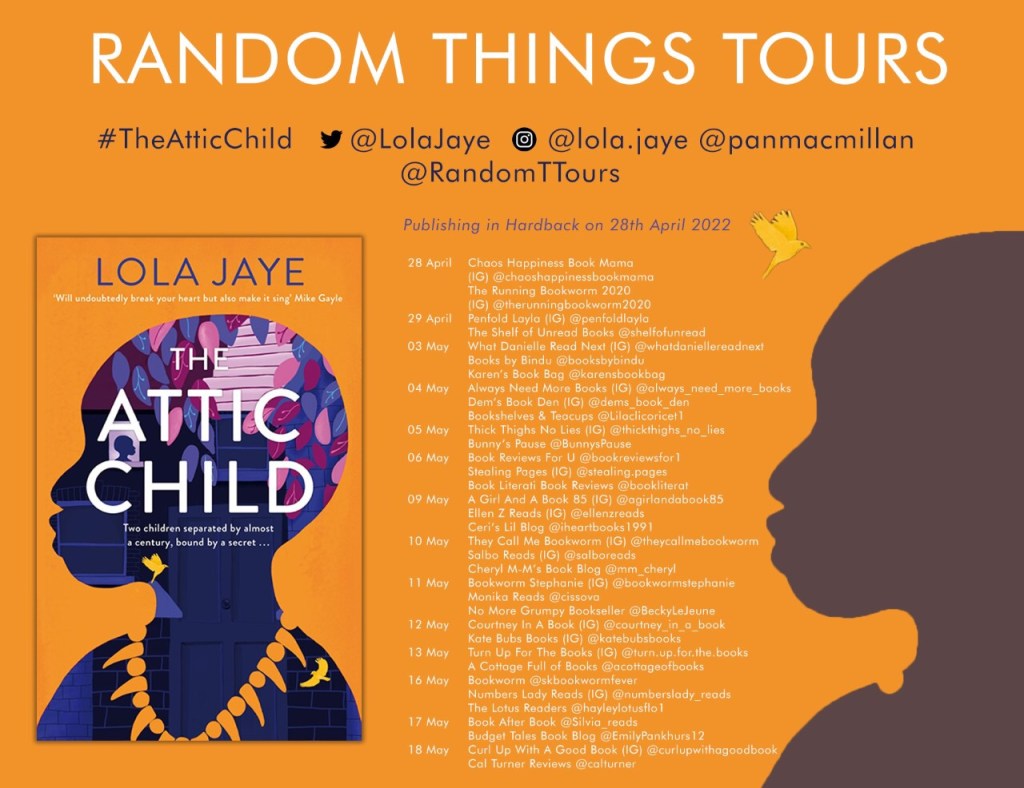
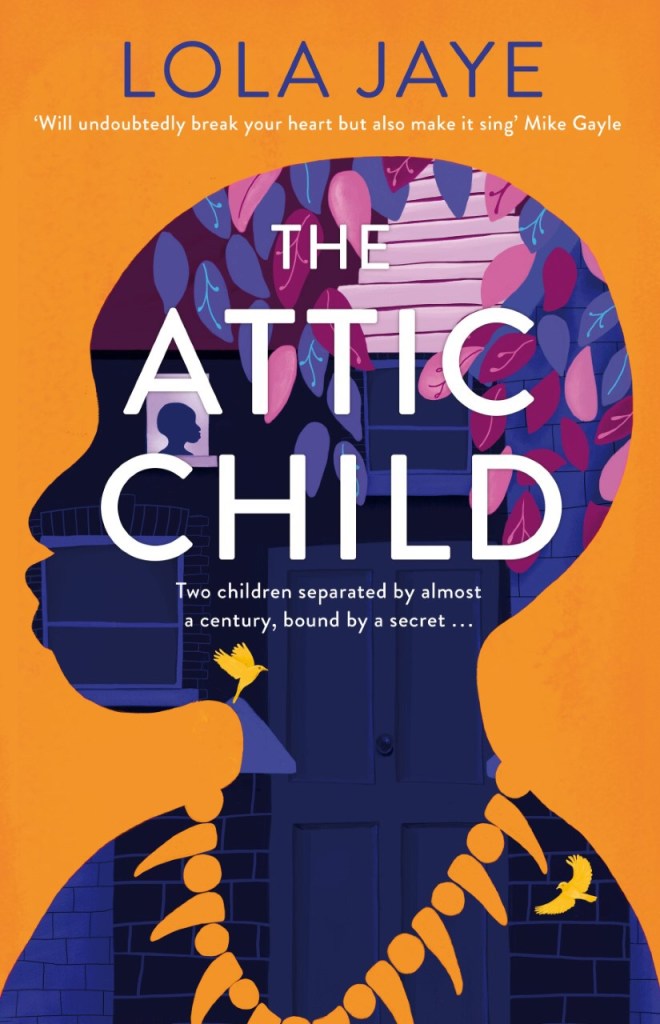
The Attic Child by Lola Jaye

“Until the lions have their own historians, the history of the hunt will always glorify the hunter.”
Chinua Achebe (Author)

I have been gathering books over the last few weeks, from all the countries of the Commonwealth. This is for a book stall on the Platinum Jubilee weekend, at our village celebrations. I run the village book exchange in an old red phone box on the green and I keep unwanted proofs until their publication date and then pop them in there for borrowing. I could have just found books relating to Elizabeth II but I wanted to look at the jubilee from a global viewpoint and include the voices of all the Queen’s subjects. For me that includes voices from countries that were once part of our empire, some of whom are now under the Commonwealth banner. I think these other voices are important; those who are literally silenced, but also those not listened to because were simply not the white, middle class, man that society is used to listening to. This book has a beautiful example of one such voice. Celestine Babbington is recorded for history in a silent form, photographed wearing clothes he didn’t choose and posing with a man whose relationship to him is very problematic. The man, Richard Babbington, is a rich explorer who has a love for Africa and a large mansion house in England. Yet by 1907, Celestine is being kept in the attic of the house, only allowed out to work as a domestic slave.

Years later, a young girl called Lowra is suffering the same fate. Locked in the attic as punishment for any transgression, when her fate has been left in the hands of her resentful stepmother. After her mother died, Lowra’s dad remarried and from that day on her life was punctuated by spells of abuse. While locked in the attic she finds an unusual necklace with clawed hands, unlike anything she’s seen before. There’s also an old-fashioned porcelain doll and a sentence on the wall, written in an unfamiliar language. These are her only comfort, because she feels as if the person that owned them is with her in some way. As an adult, her stepmother’s abuse still affects her and she’s conflicted when she inherits Babbington’s house. People seem to think she’s lucky and the town is proud of this intrepid explorer. Looking into the house’s history leads her to an exhibition of Babbington’s life, where she sees photographs of Babbington and a young black boy wearing an African wrap and what looks like her necklace, the one from the attic. However, the thing that keeps Lowra transfixed, is the young boy’s eyes. Lowra sees someone filled with sorrow, a fellow sufferer of the darkness inside that house. His name is Celestine Babbington. Lowra wants to find out more about this boy, how he came to be in England and what happened to him after Babbington’s death. She enlists the help of a history specialist called Monty, who has an interest in stories that have not been told, particularly those of empire. Together they start their search for the attic child.

I think anyone who talks about the glory of our empire should be encouraged to read this book. It’s fitting that the opening quote of the book is from the incredible author Chinua Achebe, because his novel Things Fall Apart is a perfect companion to this tale. This time the story is partially told by the most innocent victim of our Victorian forays into Africa, a child called Dikembe who is largely ignorant of exactly what atrocities are being carried out by the Belgian forces plundering the natural resources of his homeland. At the time of Dikembe’s childhood, his homeland was named the Belgian Congo, a large area of Africa known as Zaire, then the Democratic Republic of Congo. Very few Europeans had reached this area of Africa, known for tropical diseases like sleeping sickness. King Leopold of Belgium had urged the Belgian Government to colonise the country, but when they stalled their efforts he decided to take charge himself. He took ownership of the country and named it the Congo Free State in 1885, using his private army the Force Publique to press gang Congolese men and boys to work for him in the production of rubber. No one knows the exact population of the country at this time, but due to exploitation and the exposure to new diseases it is estimated that up to ten million native people died during Leopold’s rule of the country. Dikembe is young enough to stay at home each day with his mother, but he envies his brothers who go off to work with their father every morning. His parents keep him ignorant of the way native workers were treated so it is an utter shock when his father is killed one day. Richard Babbington, based on Henry Morton Stanley, expresses an interest in Dikembe. He wants to take him back to England and turn him into a gentleman and his companion. Ridden with grief and terrified about what could happen to her youngest son, his mother agrees, knowing this may be the only way to keep him safe. Although his intentions seem pure, isn’t this just another form of colonisation? He then takes away Dikembe’s name, calling him Celestine Babbington.

I found both children’s circumstances heartbreaking and could see that they might have an affinity, because Lowra sees something in the photographs that is probably echoed in her own eyes. I thought the two character narrative worked really well here, but all of the characters are so well crafted that they pulled me into their stories and didn’t let go till the end. We’re with Lowra and Monty on their quest, finding out more about Dikembe’s story and we experience the effect these revelations have on all the characters. It’s moving to see Monty identifying with Dikembe and feeling emotional pain from the injustices he has gone through. Monty still experiences racism and oppression, just in different ways and Lowra can’t be part of that even though she has empathy for how Monty feels. Lowra can feel an instant kinship with Dikembe over the abuse they’ve suffered and those lonely hours in the dark of the attic. I also liked how Monty and Lowre worked together and slowly come to know each other by being honest about their pasts and what effect their life experiences have had on them mentally. Lola Jaye has managed to engage the emotions, but also educate me at the same time, because I didn’t know much about the Belgian empire or King Leopold’s exploitation and murder of the Congolese population. However, it was those complex issues of identity and privilege that really came across to me, especially in the character of Richard Babbington. His arrogant assumption that he could give Dikembe a better life is privilege in action, as Dikembe soon finds out that he’s a womanising drunk and the companionship he spoke of only works one way. All he does bestow is money, for clothes and school, but what Dikembe craves is the warmth and love of his mother calling him a ‘good child’. The way this need for love and comfort was also exploited made me cry. I was desperately hoping that by the end, these terrible injustices didn’t stop him living his life to the full, including embracing happiness when the chance came his way. We see this play out for Lowra during the novel, can she ever accept that she is worthy of love? I wasn’t surprised to learn that Lola Jaye is a therapist, because she understands trauma and how it can manifest through several generations. The story doesn’t pull it’s punches so I felt angry and I felt sad, but somehow the author has managed to make the overall message one of hope. Hope in the resilience of the human spirit.

Meet The Author

Lola Jaye is an author and registered psychotherapist. She was born and raised in London and has lived in Nigeria and the United States. She has a degree in Psychology and a Masters in Psychotherapy and Counselling. She has contributed to the sequel to the bestseller Lean In, penned by Facebook COO Sheryl Sandberg, and has also written for the Huffington Post, CNN, Essence, HuffPost and the BBC.

She is a member of the Black Writers’ Guild and the author of five previous novels. The Attic Child is her first epic historical novel.

Posted in Publisher Proof

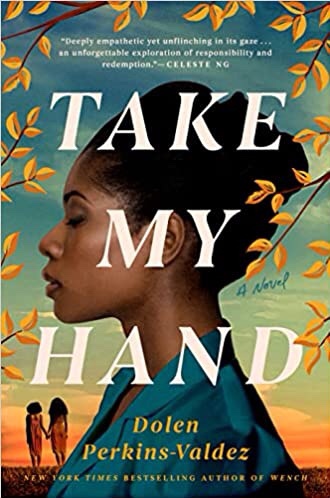
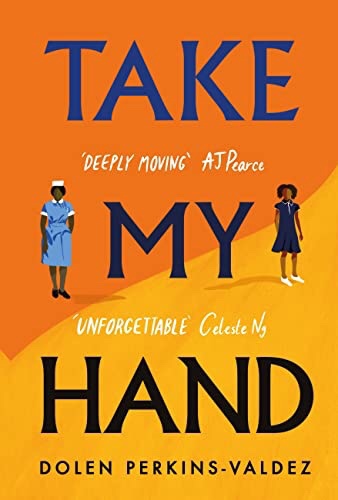
Take My Hand by Dolen Perkins-Valdez

“A year never passes without me thinking of them. India. Erica. Their names are stitched inside every white coat I have ever worn. I tell this story to stitch their names inside your clothes, too.”

Wow! This novel absolutely blew me away. In fact I loved it so much that my other half kept asking whether I was ok and I couldn’t understand why, until I looked at the clock and three hours had gone past without me speaking. I was three quarters of the way through the book and even went to bed early so I could finish the story. This writer pulled me in from the very first page and Civil was as real to me as my poor other half. I’ve been interested in eugenics since I wrote my undergraduate dissertation on disability and 20th Century literature. I knew a lot about the movement in the U.K., US and Germany in the lead up to WW2, but this book shocked me because I had no idea that forced sterilisations were still happening in the 1960s and 70s. I knew this had happened in earlier in the century with Native American communities, so I shouldn’t have been surprised that it was still happening to African American women, especially where the woman has a disability too. I think this jumped out at me, because people with disabilities are having a very hard time currently, something that able-bodied people aren’t always aware about. For example, the University of York published research in the BMJ Open that concluded the joint impact of cuts to healthcare, public health and social care since 2010 caused at least 57,550 more deaths of disabled people than would normally have been expected between 2010 and 2014. Disability groups place the figure at 120,000 deaths over a seven year period and some activists even think that the government’s COVID policies were based on herd immunity and eugenics. It seems like eugenics never really goes away.

This novel shows how our biases and emotions feed into the work we do within the caring professions. Having worked in mental health and disability as a support worker, advocate and counsellor, I did identify strongly with Civil and the way she became involved with the Williams family. As a nurse, Civil is professional and is aware of things like codes of practice and ethics, but we are never the finished article and Civil’s naïvety plays a huge part in how she works. Civil has been brought up to care for and look after others as part of her Christian faith. However, there are other personal circumstances that she isn’t aware of taking into work with her. Civil’s mother struggles with depression and events that took place in her personal life have also left her vulnerable, particularly where it comes to her nurturing instincts. Her very name brings to mind civil rights, equality and fairness, so it’s not a surprise that where she sees injustice she’s willing to fight. The Williams girls are her very first patients and she is sent out on a home visit to give them a Depo Provera injection, a long term method of contraception. When she notices that India is only 11 years old her brain immediately starts questioning, who put this little girl on this injection, has anyone asked if she has a boyfriend or worse, is she being preyed upon? We are privy to her thoughts and her shock at the way the family are living is evident. Her first thought is that she must do something for them, get them away from the dirty shack where their clothes seem to be stored on the floor. What she does notice is that the girls smell and when she finds out they don’t have sanitary towels, she decides to buy some for them from her own money. This is the first line crossed and although Civil’s actions are generous and could change the family’s lives for the better, it’s a boundary crossed. This makes it so much easier to cross even further as time goes on.

I thought the author grasped the complexity of Civil’s feelings and her role in the girl’s lives beautifully. Civil knows that she should be following instructions, asking her supervisor the questions that have come to mind, and advocating for the girls. Yet she knows that just by talking to the right people and calling in a few favours she could get the girls some clothes, find a job for their father, perhaps get them a new flat in town. What she doesn’t realise is that she’s acting from a bias, not racism but a classism of sorts. Civil’s parents are a doctor and an artist, they live in a nice home and have a certain status. She has walked in to the Williams’s home and assumed they want to move, go to school, and have better things. She’s looking at them through her own world view, instead of moving into theirs and then takes their agency away by filling in forms on their behalf. Her heart is in the right place, but she’s mothering the girls; the girls have lost their mother and Civil has maternal feelings to spare. It’s a co-dependent dynamic that could get complicated and painful on both sides. Her nursing instinct is to gain the girl’s trust and find out who put them on contraceptive injections, especially when India hasn’t even started her period. There are no boys around where they live and neither girl goes to school. As she confides in fellow nurse Alicia and friend Ty, they start doing some research. There are many conclusions they could draw: the federal government could be experimenting on poor black communities; there could be a programme of stopping certain groups in society from reproducing; the government are leaving local employees to make decisions based on their own biases about poor communities; their supervisor believes the Williams girls aren’t safe and could be open to abuse from within the family. All are based on so many assumptions, but what was angering me was that no one had sat down with the family and asked the questions about the girl’s development, access to the opposite sex, or India’s ability to make decisions. Life changing decisions are being made, based on judgments made with no real evidence.

Judgement is at the heart of this terrible case, I won’t reveal more about the decisions made, but it does lead to a court case and repercussions for everyone involved. The colour of the family’s skin, their poverty and the death of the girl’s mother has led to assumptions about the girl’s morals and safety but also the possibility that a black man is not safe, even around his own children. India is non-verbal, but whether that’s through trauma or a learning disability is not clear. Civil’s superiors have decided that it would be disastrous to bring a child into this family, but it’s amazing to see how much the Williams do change over the course of the novel. Civil has taken the decision to act on behalf of the girls, rather than making suggestions and motivating them to advocate for themselves. The changes we see in them, just from having different surroundings, is incredible. Civil believes that we adjust our standards according to where are in life, so once their home becomes a clean, dry space they start to look after it. Civil’s happiness when she sees the girl’s grandmother has bought guest towels for the bathroom is so funny, because these are her standards, what she sees as the correct way to do things, without question. I could see her attachment to the girls growing, the way she brings her support network into their lives also leaves their lives further enmeshed with hers. How will they separate themselves? If Civil takes their part in their court case, she may lose everything, so what happens when the Williams start to have confidence to make their own decisions? What if Mace meets a woman – a potential stepmom for the girls? I wondered if Civil would cope were these girls taken away from her, whether by her work or by changes in the Williams’s circumstances.

The author weaves fact into fiction so seamlessly here, with contemporary medical research questioned and the family’s meeting with real life senator Teddy Kennedy. This grounds the book beautifully and it feels even more true to life; the girls aren’t real, but I’m guessing that this story could be the reality for many poor, young, African American women. I thought Civil’s home life was really interesting, especially when her Aunty arrived and talked plainly about her Mum’s depression. Even in a household where there are always guest towels, there are struggles and issues that are overlooked, either due lack of understanding or through avoidance of something too painful to acknowledge. In fact there’s a way this whole episode is fuelled by avoidance, because if Civil buried herself in this family’s trouble she could avoid her own loss. The present day sections are evidence of that avoidance, because we see Civil finally having to confront and process feelings long buried. She’s close to retirement, yet is still haunted by what happened back then. There are positives in her visit back home, in that her relationships have adjusted so there’s more equality with some people than there was back then. I was left with a sense of how incredible women are, the strength we have to survive life altering circumstances and what can be achieved when we support each other.

Meet The Author

Dolen Perkins-Valdez is the New York Times bestselling author of WENCH, BALM, and the forthcoming TAKE MY HAND. *USA Today* called WENCH “deeply moving” and “beautifully written.” *People* called it “a devastatingly beautiful account of a cruel past.” *O, The Oprah Magazine* chose it as a Top Ten Pick of the Month, and NPR named it a top 5 book club pick of 2010. Dolen’s fiction has appeared in The Kenyon Review, StoryQuarterly, StorySouth, and elsewhere. In 2011, she was a finalist for two NAACP Image Awards and the Hurston-Wright Legacy Award for fiction. She was also awarded the First Novelist Award by the Black Caucus of the American Library Association. Dolen received a DC Commission on the Arts Grant for her second novel BALM. Publishers Weekly writes “Her spare, lyrical voice is unsentimental yet compassionate.” Library Journal writes “No sophomore slump is in evidence here. Readers who were captivated by Perkins-Valdez’s first novel, Wench, will be intrigued by the post–Civil War lives of three Southern transplants to Chicago.” Dolen is an Associate Professor of Literature at American University. A graduate of Harvard and a former University of California President’s Postdoctoral Fellow at UCLA, Dolen lives in Washington, DC with her family.

Posted in Netgalley

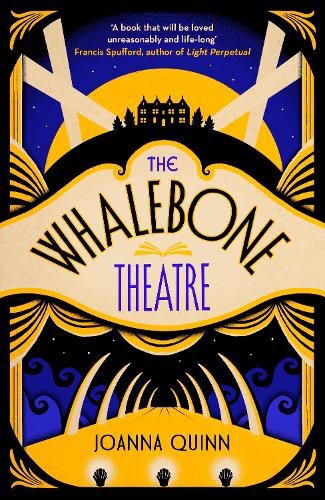
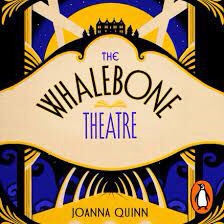
The Whalebone Theatre by Joanna Quinn

This book feels like an epic. A familial version of The lliad, the very first play that Cristabel puts on in the family’s theatre by the beach, formed from the jawbones of a whale. It washed up on the beach and was claimed for the Seagraves by Cristabel who is the orphan cousin of the family. Cristabel doesn’t really fit anywhere. She loves adventure, activity, and endeavours, climbing, running and conquering the Seagrave estate rather than being the lady her stepmother would expect, if she could be bothered. The Seagrave children are an odd bunch, brought up by staff and each other, while their parents stay in bed late, are never without houseguests and like to drink as early as it is socially acceptable to do so. This is the story of the heir and the spare. Jasper Seagrave brings his new wife home to the Chilcombe Estate and Rosalind is thrown into being mistress of the house and stepmother to his daughter Cristabel. There are definite vibes of Rebecca in this beginning, with a much younger wife slightly overawed by her new home and struggling to find her place. The ghostly presence in this case being Cristabel, creeping round corridors and the attic, having ‘boy’s own’ adventures with imaginary friends. Rosalind is happy to have bagged an aristocratic husband, considering they’re in very short supply since the war. That is until the ‘spare’ arrives. Willoughby is everything his elder brother isn’t, a dashing war hero fascinated by speed whether it’s a new car or learning to fly. There’s an immediate attraction, deepening when Rosalind is on bed rest in the last stages of pregnancy and Willoughby keeps her company. Is the Chilcombe estate about to lapse into scandal and what will become of Cristabel?

Joanne Quinn’s incredible debut begins at the end of WW1 and takes us all the way through WW2. The attention to detail is incredible and I felt completely immersed in this family’s history and the times they’re living in. This period saw huge changes for the aristocracy, often forced by the loss of two generations and bankruptcy due to death duties. Estates were sold off or had their use changed in order for the family to survive. The class boundaries became blurred as servants and masters fought together and unexpected bonds were created. Women had grown used to different roles, possibly nursing or working in factories or shops, and not all wanted to go back to a domestic role. There were also less men, so the marriage market changed and many society women, like Rosalind, had to be open to marrying men they might have previously overlooked. The author reinforces this sense of change by echoing it in the setting. When Rosalind first arrives at Chilcombe she is disappointed in the old fashioned country decor, all wood panelling and animal heads. She gradually brings the house into the 1920s with glamorous furniture and wallpaper, perhaps more suited to a London house than the country estate. The animals are banished to the attic, including a stuffed baby elephant on wheels intended as a gift to Cristabel from her mother. In fact Cristabel herself is treated rather like an unwanted piece of decor, stuffed into the attic with only the maid Maudie for company, her tomboyish ways out of step with her elegant and ethereal stepmother. As war looms again, the estate changes accordingly, with its garden turned over to vegetables and the people left behind pulling together as a team whether they are a Seagrave or the servants. They find themselves communing together in the kitchen, with all the elegant furniture sitting around like a piece of jewellery that’s too dressy for everyday wear.

The Seagrave children are the main focus of the novel, Cristabel, Flossie and Digby, each one a cousin or half-sibling they cleave together tightly due to parental neglect. Flossie is the child of Jasper Seagrave and Rosalind and I did find my heart warming to her. Nicknamed ‘The Veg’ thanks to an unfortunate resemblance to a vegetable when she was a baby, I sensed Flossie’s vulnerability. Her mother is beautiful and willowy, a perfect shape for her time, rather like an Art Deco statuette, but Flossie hasn’t inherited that elegance or poise. She’s rather like her father Jasper, a little bit awkward and not very good at asserting herself. WW2 tests Flossie’s metal and she responds with duty, grit and determination. It’s as if by pulling on her old clothes, mucking in with the servants and creating her garden at the whalebones she finds herself and becomes okay with who she is. Her friendship she cultivates with the German prisoner of war is so touchingly beautiful and fleeting. She’s a good person who can see the best traits in someone and bring them out. With both siblings away on special operations, it’s Flossie who has to find a way of keeping Chilcombe and run the estate. Digby, the son of Rosalind and Willoughby Seagrave, has the advantages of being the son and heir, but also seems like the one Seagrave who was wanted. Cristabel, belonging to Jasper and his first wife, is almost invisible. The chapter where her parents meet is unbelievably touching and I found myself bereft for Cristabel, because she would never know how much she was loved and wanted. Flossie is perhaps a reminder of those months when Rosalind was Jasper’s wife, something she seems to view with distaste. Digby could have been resented by his siblings, but both girls adore him. His love for acting shines through from being a little boy, when the theatre has a profound effect on him. So much so, that he’s still on the stage years later. To some extent, Cristabel is his parent and he looks up to her, happy to follow on in whatever escapade she has planned next.

It is Cristabel who is the hero of this book, from the child who has to crawl in bed with one of the maids for comfort and affection, to a special operative in occupied France, she is a survivor. Full of ideas, her determination to claim the beached whale is almost comical, couched in the very male language of expedition and discovery. Once only the bones are left, it takes someone equally creative and energetic to help establish the Whalebone Theatre. A visiting artist, scandalously living in the cottage with his wife and identical twin lovers, imagines walking through the creatures jawbone to reach the theatre (a space repurposed for Flossie’s vegetable garden during WW2). They create a script from Homer’s work and utilising Rosalind’s skills and interest in design, make a seating area and light the way to a stage that has the sea as a backdrop. Their plays succeed in bringing everyone together in the endeavour, each with a part to play whether it’s on stage, setting up, or making flyers for the village. These happy parts of her childhood take on such a nostalgic element, especially years later when she’s crouched in a ditch in occupied France trying to survive. There’s a sense in which the whole ensemble and even the villagers bring up this little girl and I loved the knowing way people would assume some daring escapade was the work of Miss Cristabel. I felt most sorry for her when we learn that her story could have been so different. Jasper is knocked off his feet by this woman who wants to talk to him at the hunt and appears immune to the charms of his notorious brother. The paragraph where Jasper recalls how in tune they both were and how brilliant and capable she was of running the estate with him. I can see a great deal of her mother in Cristabel and I was moved by the joy they felt in finding out they were going to be parents. The stuffed baby elephant they install with wheels for their baby shows that they imagine her like a little Maharaja, riding her elephant around the house.

Cristabel’s war years are incredibly intrepid and there are scenes where I was scared for her. The languid inter-war years seem decadent by comparison with these more sparse and disjointed episodes showing all three Seagraves in different parts of the world. I thought the pace really picked up as we followed Cristabel on her missions, parachuting into occupied France as a messenger, often with German soldiers a hair’s breadth away from discovering her. One scene with a German officer is so real I felt sick for her! She proves that her ‘adventures’ were not just an affectation. She is willing to put herself on the line, proving her aptitude for work as a operative, but also such incredible bravery. The final days of Nazi rule in Paris are tense, nail-bitingly so, but I didn’t fear for her. I had a sense Cristabel would survive no matter what. I thought this was an incredible depiction of life through the war, whether from Flossie’s more domestic side including service as a land girl to Cristabel and Digby’s seemingly more dashing exploits. His sister’s determination to find Digby showed that these children loved and cared for each other so deeply, probably because they had been left to their own devices. For Cristabel, it is servant Maudie who shows her what a mother’s love should look like and she in turn, mothers her little brother and sister. The author shows what a toll both wars took on people and the rapid changes they forced on society. I won’t reveal whether any of our characters survive, but Cristabel remembers a saying, that war can bring out the best in people. There are those who shine through difficult days and in their own ways I think the Seagrave children all stepped up to the mark. Most importantly the loving bond they had as children, stood firm and could not be broken.

Published 9th June 2022 by Fig Tree (Penguin)

Meet The Author

Joanna Quinn was born in London and grew up in Dorset, in the South West of England, where her “brilliant, beguiling” debut novel The Whalebone Theatre is set. 

Joanna has worked in journalism and the charity sector. She is also a short story writer, published by The White Review and Comma Press among others. She teaches creative writing and lives in a village near the sea in Dorset.

Posted in Throwback Thursday

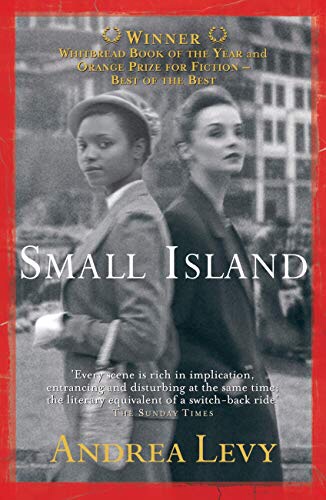
Throwback Thursday! Small Island by Andrea Levy.

I have been looking for second hand copies of this book, because I’m creating a book stall at our village book exchange for the Queen’s Platinum Jubilee. My plan is to include books based in the Commonwealth countries or that represent a definitive moment in the Queen’s reign. This book sits a little early, starting in WW2, but sets a scene for those early years of her reign and shows how the people of the Commonwealth felt about their ‘mother country’. I first read Small Island after university, where I’d become the student obsessed with diversity, disability and all of those words that mark out difference. In my final year I looked closely at Caliban in The Tempest because my heart went out to him. I did a module in the Gothic, Grotesque and Monstrous, and another in Post-Colonial literature. I didn’t realise it at the time, but I was ploughing a very specific furrow and my dissertation in disability earned me a solid first. These studies really did hone my taste in reading and while I read across the breadth of fiction genres and subjects, the books that really get me in the heart have a thread of social justice and characters coping with prejudice. This book appealed to me because I hadn’t read much about the Windrush generation. Andrea Levy won the Orange Prize for Fiction and the Orange Prize ‘Best of the Best’ as well as the Commonwealth Writers’ Prize and the Whitbread for this novel. It was also described as ‘possibly the definitive fictional account of the experiences of the Empire Windrush generation’, when it was selected by the BBC as one of its ‘100 Novels That Shaped Our World’.


It is 1948, and England is recovering from a war. But at 21 Nevern Street, London, the conflict has only just begun. Queenie Bligh’s neighbours don’t approve when she agrees to take in Jamaican lodgers, but with her husband, Bernard, not back from the war, she has little choice in the matter. Gilbert Joseph was one of the many Jamaican men who joined the RAF to fight Hitler. But when he returns to England as a civilian he doesn’t receive the welcome he was expecting, and it’s desperation that drives him to knock at Queenie’s door. Gilbert’s wife Hortense, who for years has longer for a better life in England, soon joins him. But London is far from the golden city of her dreams, and even Gilbert is not the man she thought he was.

Small Island explores a point in England’s past when the country began to change. In this delicately wrought and profoundly moving novel, Andrea Levy handles the weighty themes of empire, prejudice, war and love, with a superb lightness of touch and generosity of spirit.

I loved the slow pace of this novel, allowing each character’s story to unfold fully, and meander across each other. I felt deeply for Queenie, with a father-in-law shell-shocked from the First World War and her husband Bernard still away, even though WW2 has ended. I could understand how her friendship with lodger Michael started, she must have been so lonely. However the consequences of the relationship only serve to isolate her further. Gilbert follows friend Michael to the U.K. for active service, only to return in 1948 when the British Government put a call out to the colonies for workers. Many English men were lost during the war leaving a labour shortage and Gilbert knows he has the skills to help. Hortense has always had a dream of going to England, where she would want to be a teacher like she is in Jamaica. As married couples are more likely to be accepted, Gilbert and Hortense make a pact, to have a marriage that fools the authorities and forge futures for themselves in England. He knows exactly where they’re going to live, 21 Nevern Street, because Queenie’s were the only lodgings that didn’t have a card in the window saying ‘No Blacks.’

I fell in love with Gilbert, who proves himself to be a loyal and trustworthy friend to both Queenie and Hortense, although there are times when the latter would test the patience of a saint. Hortense is so haughty! She made me smile with her airs and graces. I love the way she dresses, with her gloves and handbags strangely reminiscent of Queen Elizabeth’s style. In her mind she has done everything her mother country asked of her. She’s been to a good school and become educated, she has her teaching certificate and is a dedicated Anglophile. When the call comes to the colonies, that England is in need of workers, she thinks she can be useful. Gilbert tries to explain to her that England won’t be what she is expecting, her education will be looked down upon and instead of welcoming, people may be hostile. She tells him he’s wrong. England is a massive shock to Hortense, not just the cold, but the shame of everything she’s worked for being worth nothing. She’s also misjudged their friend Michael, who had passed through during the war. Back in Jamaica, Michael is practically a saint and Hortense is taken in by his good looks and nice manners. Another hard lesson to learn. At least Gilbert is there, faithfully keeping her going, trying to soften the blows and always sleeping on the chair while she takes the bed. I had so much sympathy for Queenie, who is overwhelmed and exhausted. Her father-in-law can be hard work, he doesn’t speak and is prone to wandering. I can feel that she is very fond of him. Her pregnancy is conceived in the spirit of war; a mix of attraction, plus loneliness and a sense that death might not be so far away. Women who conceived while their husbands were away, often hid the pregnancy under the respectability of their marriages. If their husband returned on time they could announce a baby which was then born prematurely. If not, the woman was very reliant on her husband to accept and choose to bring up the child. Sadly for Queenie this choice isn’t open to her and we see what society’s reaction might be to a mixed race child. Would her father-in-law or her husband even accept her baby?

I thought the structure was brilliant, moving back and forth from before and during the war, to post war. It also moves geographically, from England to Jamaica. These changes in structure were helpful to the storyline, because of the perspective it gives us on events. Going to Jamaica shows us the attitude of our characters to England and how that changes once they’ve helped us through a war. Gilbert expected to be treated better. He answered the call to go to war and then goes to England’s aid a second time. It’s a shock to find there isn’t a welcome. In fact a lot of people are downright hostile and it feels so unfair. Hortense thinks her skills and presence will be welcomed too, but they’re not. Why ask them to come if they aren’t welcome? By visiting each character in turn we get to know them intimately, their whole inner world is open to us. We might see reasons for behaviour that had seemed strange before and we might change our mind about a character. The slow pace helps the reader really get to know them and how they change through their experiences. Through these people the author brings to life issues of identity and our cultural heritage, bringing to mind interesting contrasts with today’s attitudes, especially in light of the more recently discovered Windrush Scandal. Levy created characters that years later still feel as real to me as my friends and by the end I cared about them so much that there were tears. I’ve re-read this novel so many times and it’s power doesn’t fade, nor does the impact of the characters, and it’s this that makes Levy’s book a masterpiece.

Meet The Author

After she passed away on the 14th of February 2019, the Bookseller wrote: ‘Andrea Levy will be remembered as a novelist who broke out of the confines assigned to her by prejudice to become a both a forerunner of Black British excellence and a great novelist by any standards.’


Born in England to Jamaican parents who came to Britain in 1948, Andrea Levy wrote the novels that she had always wanted to read as a young woman, engaging books that reflect the experiences of black Britons and at the intimacies that bind British history with that of the Caribbean. She was described by BBC News as ‘a writer who tackled important social issues . . . her writing . . . witty, humane and often moving, and full of richly drawn characters’.


She was the author of six books, including SMALL ISLAND, which won the Orange Prize for Fiction, and the Whitbread book of the Year, and was adapted for TV and for the stage, by the National Theatre. It was selected by the BBC as one of its ‘100 Novels That Shaped Our World’. Her most recent novel, THE LONG SONG, won the Walter Scott Prize and was shortlisted for the Man Booker Prize, and was adapted for TV by the BBC.

Posted in Personal Purchase

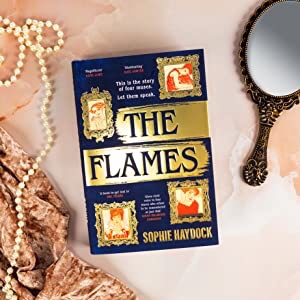
The Flames by Sophie Haydock

I knew this book would be one I enjoyed, after all it encompasses some of my favourite things: History between the World Wars; the Vienna Secession and Gustav Klimt; Art Nouveau; a feminist narrative. However, I didn’t expect it would grab hold of me in the way it did! I sat down with it in the garden one Sunday afternoon and read two thirds straight away. When duty and blog tours called that week I had to set it aside, but I kept glancing over at it like a lost lover all week. Despite recognising the featured portraits, I didn’t know much about Egon Schiele, other than he was a protégée of Klimt. I have only seen one of the paintings, Portrait of a Woman modelled for by his sister Gertrude Schiele because it was at the Metropolitan Museum of Art in NYC. Schiele is described as a figurative painter and as an artist under the banner of the Vienna Secession he was pushing the boundaries, trying to create something completely new or ‘art nouveau’. This was the time of a rebirth in painting, writing and all other art forms towards a new way of describing the world – the birth of Modernism. The unusual shapes and colours in his work is reminiscent of writers like Virginia Woolf who were throwing out the rule book and wrote novels with unusual timelines, streams of consciousness and complex characters whose inner world was often more important than events outside it. Haydock’s book uses some of these devices and a way of ‘writing back’ to art history and challenging Schiele’s representation of these women. Schiele’s portraits are not life-like reproductions of his model and while they might shed light on aspects of their characters, they can only ever be the artist’s view of that woman with all the prejudices and biases of his time. Here we get to hear the women’s stories as they see themselves and their relationship with Schiele.

We start with Adèle, one of a pair of sisters living opposite Schiele in an upmarket district of Vienna. Adele is transfixed on Schiele as soon as he arrives on moving day and is glued to the window seat every day in the hope of catching his eye. However, both Adèle and her sister Edith are from a very well respected family and there isn’t a chance that their father would accept Schiele as a choice for his daughter. Adèle is persistent though and soon the sisters meet Schiele on the street outside, alongside the woman they see coming and going from the flat, Wally. Although there is a part of her who knows the relationship between Wally and Schiele must be a complex one, she tucks it to the back of her mind, and begins to feel she might be making headway with him. Surely Wally is a maid, someone who cleans and models for him? Using Edith as her foil they do have a cinema outing, a very awkward foursome, and Adèle is so glad to have a sister that’s quiet, in the background, and goes unnoticed. She’s the perfect chaperone for this relationship she’s building in her head. She’s in love with Schiele and he must be in love with her, in fact she never has a moment’s doubt. Haydock writes a brilliant opening section here, with a perspective that we’re never fully sure of and a course of action that could be leading to disaster. It’s almost painful to be inside the mind of this highly strung young woman, whose class and status keeps her in a constant waiting position. There’s so much she’s dreamed of doing, but can only do them when she is a married woman. Women of Edith and Adèle’s class can’t make decisions for themselves, don’t get up and go travelling, or go to university or even go to the theatre alone. There are times, imprisoned behind her window when she envies Wally’s freedom to come and go as she pleases. Adèle is bored and I feared some of her reality was little more than the daydreams of an under stimulated mind. There’s a sense that an emotional storm is brewing.

The second section of the book is focused on Gertrude Schiele, Egon’s younger sister who started posing for his sketches when they still lived at home. Through Gertrude we experience Schiele’s early years, with her perspective as the filter. Born to a man who worked on the government railways, the family were respected, although the shadow of mental health does fall here too. We see the germination of an unusual relationship between brother and sister, with hints of impropriety on both sides where her modelling for him is concerned. It’s clear to see Schiele’s incredible artistic drive, thriving in limited circumstances and with a father who wishes his son wanted to follow him into a respectable job on the railways. Art is no way to make money, but there is a sense it’s more than that driving his father, possibly the praise that would come his way for having such a loyal son who wants to follow in his father’s footsteps. However, when his father’s behaviour becomes erratic what will happen to them all? As for Gertrude we see a strange dynamic when Schiele uses other models or is in a relationship? There is jealousy there which is interesting to watch as we move through the next few years. In the third section we meet Wally, artist’s model for some of Schiele’s best work and a partner to him in every way. I loved this section, because I found Wally inspiring in her choice to live in the way she wants despite the consequences. Wally is probably his most professional model, with an energy and intensity that leaps off the canvas. She openly lives with Schiele, travelling with him to a couple of country houses before settling in Vienna near her family. Wally knows where the line is and in the years she is with Schiele his behaviour gets them noticed in all the wrong ways, including with the authorities who label him a pornographer. She does not leave his side. There’s a core of steel in this woman, who will not hear him talk of love – possibly because she knows what verbal declarations are worth – and will never ask him to stay. However, I wanted him to stay with this woman, who I felt understood what he needed better than anyone, but didn’t ask for the usual protections her gender would be afforded, like marriage. I wondered whether, as she watched Wally from the window of her gilded cage, Adèle truly understood the responsibilities and the cost of being as ‘free’ as Wally seems?

Finally we come full circle, back to Schiele’s arrival in Venice and moving in opposite Adèle and her sister, but this time from Edith’s perspective. It was fascinating to see the same events play out through a different pair of eyes and we soon realise that despite her quiet demeanour and acquiescence to the rules her parents lay down, Edith is not as passive as she has appeared up to now. In fact she has the determination and deceptive skills her sister does, but the difference is that it’s not expected of Edith. As a result she has more freedoms than her sister and doesn’t get caught. She too is mesmerised by Schiele, but by the man rather than what he represents. Adèle wants freedom, to challenge boundaries, to scandalise society. Whereas Edith just wants the man, but does she truly know him and will she risk losing her sister to get him? We do get a sense of Schiele through these women, particularly Gertie because she’s there for the formative years. I often found him infuriating, because I felt he wanted to be a modern man, unrestricted by society’s rules and expectations on one hand, but then showed a total disregard for the women who were willing to break rules with him. There was a slight Madonna/Whore complex at work here, where women were compartmentalised into those to have fun with and those acceptable for marriage. Some of his choices felt like betrayals to those women who risked everything by literally laying themselves bare before him and the world, for his sake and for the sake of art. I thought Haydock beautifully captured this sacrifice and it’s consequences, something picked up beautifully in the short interludes from the 1960’s where an elderly woman searches for a painting she’s glimpsed of someone she loved. Desperate to give an apology she never heard in life. Haydock beautifully captures a rapidly changing Vienna between two World Wars where barriers of class and gender are breaking down. She also captures the complexities of the barriers for women and those who have the pioneering spirit to break them. She gives a voice to their silent gaze. This is one of the best books I’ve read so far this year and I read it greedily in two sessions, but I’m already looking forward to entering Haydock’s world and savouring these wonderful women again.

Meet The Author

Sophie Haydock is an award-winning author living in east London. Her debut novel, The Flames, is about the four muses who posed for the artist Egon Schiele in Vienna more than 100 years ago. She is the winner of the Impress Prize for New Writers.Sophie trained as a journalist at City University, London, and has worked at the Sunday Times Magazine, Tatler and BBC Three, as well as freelancing for publications including the Financial Times, Guardian Weekend magazine, Arts Council, Royal Academy and Sotheby’s. She has interviewed leading authors, including Hilary Mantel, Maggie O’Farrell, Bernardine Evaristo, Sally Rooney and Amy Tan. Passionate about short stories, Sophie also works as a digital editor for the Sunday Times Audible Short Story Award and is associate director of the Word Factory literary organisation. She judges writing competitions and hosts her own short story club.Her Instagram account @egonschieleswomen – dedicated to the women who posed for Egon Schiele – has a community of over 100,000 followers. For more information, visit: sophie-haydock.com

Published 17th March 2022 by Doubleday

Posted in Netgalley

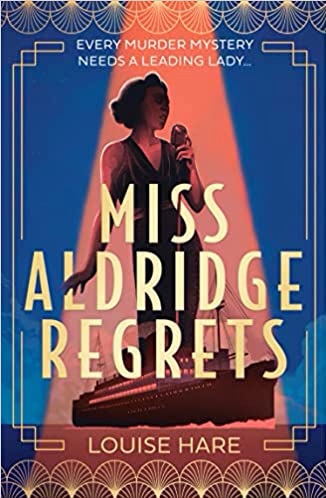
Miss Aldridge Regrets by Louise Hare

London, 1936

Lena Aldridge is wondering if life has passed her by. The dazzling theatre career she hoped for hasn’t worked out. Instead, she’s stuck singing in a sticky-floored basement club in Soho and her married lover has just left her. She has nothing to look forward to until a stranger offers her the chance of a lifetime: a starring role on Broadway and a first-class ticket on the Queen Mary bound for New York.

After a murder at the club, the timing couldn’t be better and Lena jumps at the chance to escape England. Until death follows her onto the ship and she realises that her greatest performance has already begun.

Because someone is making manoeuvres behind the scenes, and there’s only one thing on their mind…

MURDER

Miss Aldridge Regrets is the exquisite new novel from Louise Hare. A brilliant murder mystery, it also explores class, race and pre-WWII politics, and will leave readers reeling from the beauty and power of it.

This is one of my most anticipated books of the year, mainly based on how much I loved her debut This Lovely City, but also because I loved the sound of this mix of historical fiction and murder mystery. It doesn’t disappoint and really has the feel of an Agatha Christie novel, not just the plot either, but the glamorous location, the wealthy passengers and the sumptuous descriptions of their clothes and jewellery. The story has its period detail spot on whether it’s the latest bathing suit or 1930’s politics. Woven within this whodunnit are themes of identity, belonging, family and class division. It’s gripping without being showy or depending on shocks, or endless twists and turns. It’s elegant and allows it’s secrets to unfurl slowly.

Lena is a sympathetic character, who has sacrificed the start of her own career to care for her father Alfie who has recently died after a long illness. In order to pay the bills Lena has worked with the club band, but she has ambition and has always wanted to work in the theatre, preferably the bright lights of the West End or Broadway. We get the sense that she’s good enough too. We meet her first as she embarks on her voyage across the Atlantic with a theatre producers assistant, strangely named Charlie Bacon. Charlie has offered her the chance of a lifetime, a part on Broadway in a new musical. This is a favour from Charlie’s boss who once knew Alfie and felt he owed him for an old transgression. The cabin is first class and Lena has never had such luxury, in fact she has a suitcase of clothes from best friend Maggie because she didn’t own anything grand enough for the first class dining room of the Queen Mary. There’s a sense in which she doesn’t feel like herself, sailing on someone else’s charity, in grand society and in someone else’s clothes. She then finds herself dining with the Abernathy’s. The head of this wealthy family is their father Frank, now disabled due to a stroke (apoplexy) but once an absolute tyrant and still uses the family riches to manipulate his children and grandchildren. Alongside the family are Frank’s assistant Daisy and his own private doctor.

At first Lena is a little intimidated by this entitled and often quite unpleasant bunch. This is a mix of knowing she isn’t of the same class, perhaps opting to gravitate towards Daisy and Dr. Wilding who are the help. However, Lena’s whiff of stardom seems to satisfy the family that she is suitable company and she’s certainly glamorous enough to fit in. However, there’s also the question of race, brought to the fore when Lena encounters one of the ship’s band Will. Will isn’t fooled by glamour or the first class ticket when they meet out on the deck by accident. He doesn’t even ask, simply identifies her as black like him. At first she denies this, not wanting to be found out. Lena has always been able to ‘pass’ because she is so light skinned, but later when she sees Will again she trusts him a little more and owns her identity. It brings home to us the difficulties of being mixed race, perhaps worse for Lena who has never known her mother and didn’t grow up with that side of her identity explored. We can only imagine the taboo nature of a relationship between a black man and a white woman in the early 20th Century, a time when eugenics was gaining a foothold on both sides of the Atlantic. There is discussion at the dinner table of Adolf Hitler and his successes in improving German life after WW1, but this is the run up to WW2 and knowing what comes next in the name of racial purity made this a sobering experience as a reader. Lena isn’t just playing with identity here, in America it may have an impact on her ambitions and her place in society. As Will observes its okay for the black men of the band to entertain the rich and white passengers, but not to fraternise with them and he’s very careful that he and Lena are not seen together. However, when Lena is asked down to steerage for an evening of music in the bar there, it is the most fun she seems to have on the whole voyage. It’s the only time she’s not on tenterhooks and can relax. She feels like she’s with her own kind – people without money and influence, people who scrape by, who play music and really let their hair down.

Yet, she is accepted upstairs and is a hit with both Eliza Abernathy and her daughter Carrie. Lena is invited to tea, asked to go bathing and meets up for drinks. She likes Carrie who seems so young and controlled by her family, desperate for some company of her own age. Eliza is Frank’s daughter, rather aloof at first and seemingly unaware that her husband is seducing Frank’s assistant Daisy when no one is looking. None of the family seem particularly happy, with a lot of sniping at dinner and all the vices of drinking, gambling and … It makes Lena nostalgic for her father and the easy way they got along, and also Maggie who despite her difficult marriage and the terrible drama of her husband Tommy’s recent murder, has always been like a sister to Lena. It’s a huge shock when the rich family patriarch starts to choke at dinner. Dr. Wilding springs into action, but it becomes clear nothing is obstructing his airway and he starts to foam at the mouth. Lena is horrified, he’s acting the same way Tommy did and rather horrifically he dies at the table. An investigation is started immediately and everyone is interviewed. We are privy to Lena’s thoughts and she’s terrified that what happened at the club has happened again here. She didn’t poison him, but maybe someone knows something about Tommy’s murder. Are they taunting her? Is this something to do with her? Surely its too much of a coincidence. The proximity of the group and the inability to get off the boat adds to the tension of the novel. Who will be next?

I thought the mystery was well thought out and unexpected too. There were a couple of moments where I wanted to shake Lena or shout at her not to do something. It really brings home to us that here Lena is alone in this new life. She’s without family and friends to protect or support her. As the bodies begin to pile up I was asking questions of everyone in the party, even Lena herself – could she be an unreliable narrator, committing crimes without really knowing? It all seemed such a big coincidence, but then when the revelations started coming it all made sense. I can honestly say I didn’t have a clue what was coming for Lena’s private life, or who was next in the murderer’s firing line. I thought the pace was perfection and the claustrophobic atmosphere of the Queen Mary, however luxurious, really added to the tension. The opulence of the setting, the fashion and Lena’s new wardrobe are dazzling and so perfectly in tune with the time period. I loved the author’s depiction of difficulties in identity and the distinctions of race and class for these passengers. The contradiction that the band are allowed to entertain first class passengers, but not sit with them, is something that will stay with me. As will the idea of ‘passing’, an interesting part of my own identity as someone with an invisible disability who sits uncomfortably between people with disabilities and the able-bodied. I loved This Lovely City and I think with this novel Louise Hare has repeated her success. I’ve already ordered my special signed copy, because this is definitely a keeper.

Published by HQ 28th April 2022

Meet The Author

Louise Hare is a London-based writer and has an MA in Creative Writing from Birkbeck, University of London. Originally from Warrington, the capital is the inspiration for much of her work, including This Lovely City, which began life after a trip into the deep level shelter below Clapham Common. This Lovely City was featured on the inaugural BBC TWO TV book club show, Between the Covers, and has received multiple accolades, securing Louise’s place as an author to watch. Miss Aldridge Regrets is her second novel.

Posted in Random Things Tours

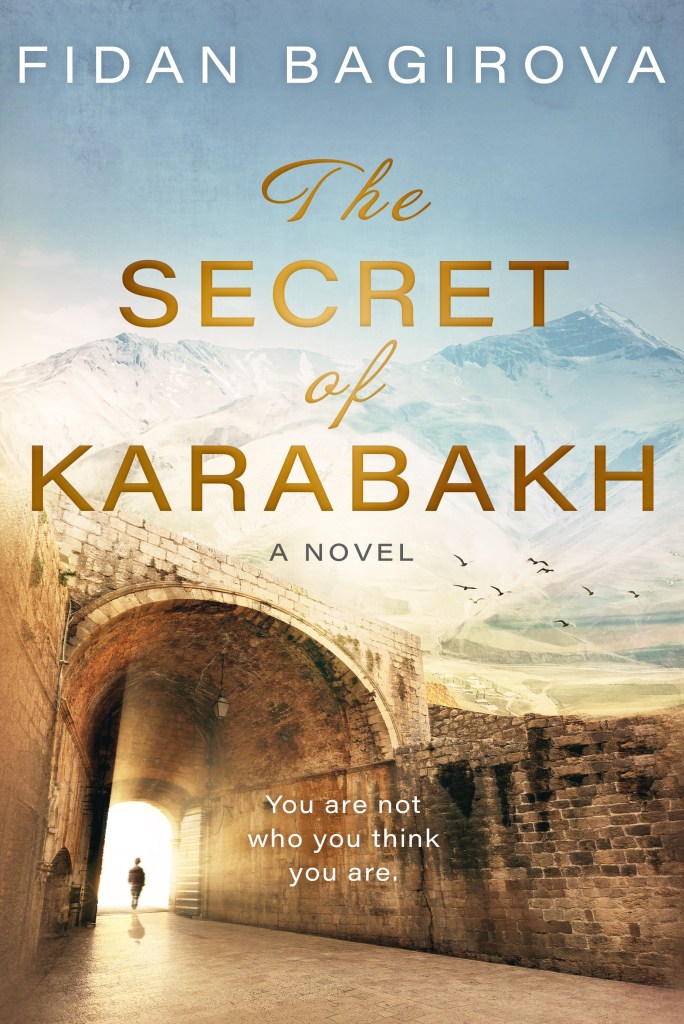
The Secret of Karabakh by Fidan Bagirova

The Secret of Karabakh had a very intriguing blurb and a powerful opening prologue that drew me in. The horrifying image of a child killed by soldiers while trying to flee a war had a deep resonance, due to reports of such atrocities coming out of Ukraine every day. The way the author describes the child’s ‘pink woolen scarf decorated with chocolate-brown rabbits and butter-yellow ducklings’ contrasts the innocence and softness of the child with the rocky terrain, the gunshots and the lack of mercy shown. It’s a vivid and terrible scene that stays with you throughout.

Then we meet Alana Fulton a committed and gifted student of archaeology completing her PhD at Cambridge University. Her background is surprisingly privileged and we see her meeting her mother at the Dorchester Hotel in London. Her parents find it difficult to understand her fervour for her studies when she could have had all the opportunities their wealth offered her. There’s even a film star boyfriend who she’s keeping at bay with her devotion to study, much to her mother’s confusion. Yet this tea with her mother marks the day her life turns upside down. First she notices a strange man staring intently at her on the street and to avoid him she jumps into a cab for Kings Cross station. Her relief as the doors of her train close and they set off for Cambridge, is wiped out when she sees the same man running down the platform after the train. Her fear is compounded when she reaches her university rooms. Usually her college is the place where she finds calm and feels most like the real her, but when she finds her room wrecked she is shaken. Nothing seems missing at first, and it’s only after the police have gone and Alana starts to tidy that she realises her hair brush and toothbrush are missing. The police start investigating, but there are two questions at the forefront of her mind: who was the man asking for her at the porter’s gate? Who sent the anonymous note, telling her she’s not who she thinks she is and warning her she’s in danger?


Alana isn’t sure who she can trust and she’s shocked to find out the identity of the man asking for her at university. Someone she knows well is now the focus of the police. These early sections didn’t gel with me at first, because I didn’t connect with Alana. Despite that I thought the author had paced the action and revelations very well. As Alana and her boyfriend go on the run, there was a very spy film feel to the action, at they take a private jet to Switzerland. The pace doesn’t let up as they are followed by foreign attackers and if this were a movie, Alana would definitely be the star. She doesn’t come across as a damsel in distress type and seems completely capable of rescuing herself. This makes it even more ironic when we find out her boyfriend has accepted payment in diamonds for keeping her safe. But who has made the payment and which side of this unknown conflict are they on? I was most interested in the psychological journey of Alana, arising from her confusion about the message questioning her identity. Like many people she has memories of childhood, but if she tries to think back to her pre-school years it’s not just hazy, there’s a great big blank. Underneath that blackness is an emotion, a combination of ‘bewilderment and simmering fear’ that she can trace throughout her early school years, but gradually fritters away until she hits adolescence, when it’s gone. This is a raw emotion, the result of a base or primal fear, and this kept me invested in the story, because I really wanted to know where that feeling was from.

In-between the action are personal stories from a war I knew nothing about, the Nagorno-Karabakh war between Azerbaijan and Armenia. This is a real life border conflict, but when we look deeper it’s not just about territory, but natural resources and cultural histories too. The conflict has been ongoing since the 1980s, with various flares into full scale war over the years and has only recently been more settled, but with only some of the issues resolved. It was the dissolution of the Soviet Union that sparked rising ethnic tensions between Armenian and Azerbaijani people especially in the Nagorno-Karabakh region – an enclave of South-West Azerbaijan with majority ethnic Armenian people. It seemed clear that this area was linked to Alana, but how?

From Switzerland onwards these questions are answered in a story filled with action and discovery for Alana, and I found this part of the book much more gripping and memorable. I was interested in how Alana copes with these revelations mentally, as her past and present collide. Those vague emotional memories from childhood come to the fore again as she learns the truth of who she is. More terrifying and muddled childhood experiences start to emerge and Alana will have to find reserves of determination and courage to piece everything together. I thought it was great that those qualities Alana’s parents really didn’t understand, came from this history she knew nothing about. It was also interesting how the author showed our emotional memories as stronger and longer lasting – it’s why sometimes a piece of music makes us feel a certain way, but we don’t know why. Alana’s memory still carried emotional trauma, despite her not remembering the details or the place. I thought the author’s use of research really added to the story and helped my understanding of the complex history of the region. I finished the book satisfied with the story, but wanting to know more about Nagorno-Karabakh and other areas left in difficulties as the Soviet Union disbanded. This was a clever mix of historical fiction and action thriller, with an incredibly strong sense of place.

Meet The Author

Fidan Bagirova is a writer, sculptor and multimedia artist. She was born in Geneva, to parents from Azerbaijan. They, like hundreds of thousands of others, lost everything during the Armenian invasion described in The Secret of Karabakh, and for Fidan, writing this novel has been a way of expressing her longing for the Azerbaijani people’s identity and stolen heritage.

Posted in Netgalley

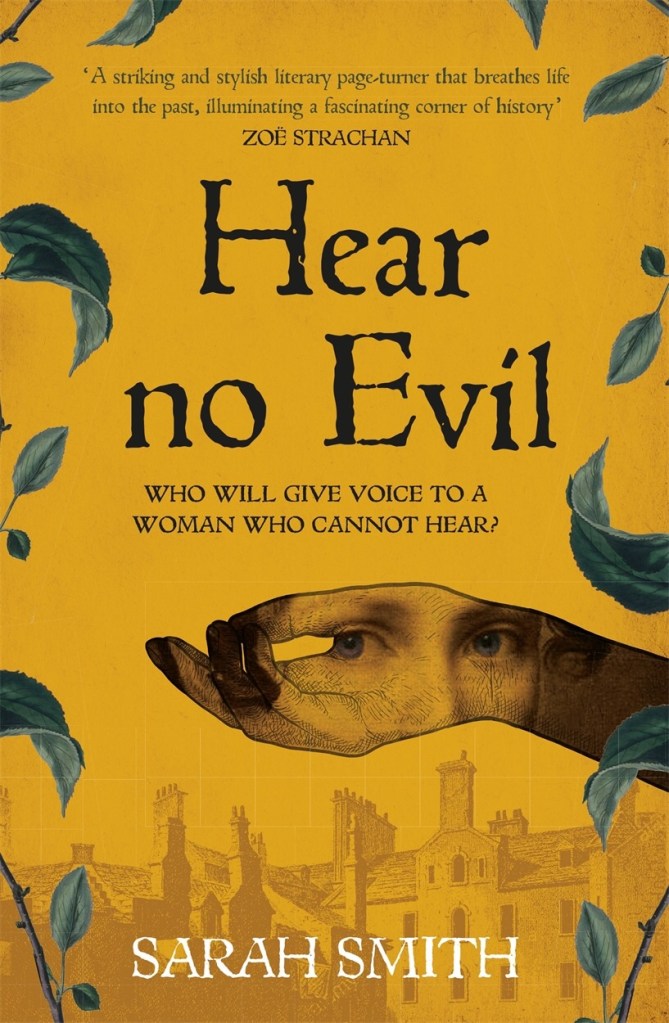
Hear No Evil by Sarah Smith.

It’s 1817 and a young woman is witnessed throwing a child into the River Clyde from the Old Bridge in Glasgow, the authorities are told. Based on a real case, this is a powerful piece of historical fiction from Sarah Smith and an interesting look into the 19th Century attitude to disability, and specifically deafness. The authorities are unable to communicate with their prisoner and as nothing is found at the river, Jean is taken to the Edinburgh Tolbooth in the hope of getting the truth. The High Court asks Robert Kinniburgh if he will communicate with their silent prisoner, to work out whether Jean is deaf or even fit for trial. Robert teaches at the Deaf & Dumb Institution and might be able to form a way of interpreting for the authorities. Jean only has two choices if a court finds her guilty, neither of which are desirable; death by hanging or imprisonment in an insane asylum. As Robert and Jean manage to construct a simple way of communicating, he starts to gains her trust, Jean starts to confides in her interpreter, imparting the truth. As Robert treads a fine line between interpreter and investigator, he becomes absolutely determined to clear her name before it is too late.

The novel’s basis in Scottish legal history means that Smith has researched her period deeply, wanting to tell her tale sensitively and with respect for these real-life characters. It is a perfect mix of fact, atmospheric setting, strong characters and an understanding of what life was like for someone with a disability in the early 19th Century. Kinniburgh has the difficult task of unravelling Jean’s story, immersing himself in the legal machinery of the Edinburgh court, and retracing Jean’s life up till that moment on the bridge. He is a teacher, not a lawyer, so he really has his work cut out. He is our eyes and ears in the story, following Jean’s life in the poverty stricken slums of Glasgow, experiencing her difficulties and finding out what happened in the final days before she came to be alone on the Old Bridge with her baby. He is a very humane main character, full of intelligence and compassion for others. Yet it us Jean Campbell who really made her way into my head and heart.

Obviously, the real Jean Campbell isn’t well known, but it felt like Smith really got under the skin of this girl. The details of her existence are brought vividly to life and Smith shows us that she was strong and full of dignity despite being so disenfranchised. Jean has gone through traumatic experiences, badly used by unscrupulous people only too happy to take advantage. Campbell’s deafness is central pillar of this book, it’s the reason for her poverty, the ordeals she has been subjected to and possibly the court case itself. How far were police officers influenced by her inability to speak. Just as there are now, there were prejudices and assumptions made about the Deaf community at the time, and we get some insight into how sign language evolved when it becomes the key by which Kinniburgh begins to earn Jean’s trust and unlock her story. I love that her story is reaching so many people through this novel.

I loved the settings, particularly the incredibly atmospheric opening which really set the scene for the rest of the novel. Smith’s period locations took me on a journey through time across two beautiful Scottish cities. The most vivid being Edinburgh’s dank and grimy Tolbooth prison which evoked claustrophobia for me. Equally vivid are Kinniburgh’s visits to the filthy poverty of Jean’s Glasgow home. I think that lovers of historical fiction will really enjoy this but I’d like to see it read by a wider audience, considering it’s message is sadly still relevant. We cannot judge fellow human beings until we have understood what has brought them to that point. We also need to make more effort to communicate with those who have a disability. It seems that we can revere them as Paralympians or military heroes, but many don’t pass the time of day with real people with disabilities in their daily life. Smith highlights this by taking us to this earlier time where, for those who were silenced, their disability could mean paying a very high price indeed. Jean could see this discrepancy and the way she was underestimated every day of her life:

‘She was aware of much more than people gave her credit for. Always had been…Not once did any hearing person treat her like she was the same as them.’

Published by Two Roads 3rd Feb 2022.

Posted in Back of the Shelf

Back of the Shelf! The Dressmaker’s Secret by Lorna Cook.

1941, Nazi-occupied Paris: In the glamorous Ritz hotel there is a woman with a dangerous secret…

As Coco Chanel’s assistant, Adèle lives side by side with German officers in the splendour of The Ritz hotel. But Adèle has a secret. She is working for the resistance, right under the Germans’ noses. As occupied Paris becomes more and more dangerous, Adèle will have to decide if she can risk everything to save innocent lives and protect the man she loves…

Present day: Chloé’s grandmother has never spoken about the war and avoids questions about the legendary designer she once worked for. Now Chloé has come to Paris, to uncover the truth about Adèle’s life. But is she prepared for what she will find? And for the power of her grandmother’s secrets to change her family forever…

Chloé has travelled to Paris after the breakdown of her marriage in order to help a friend with their vintage shop. She knows her grandmother worked for Chanel in the 1940’s so when she hears about an auction taking place at the Ritz she decides to have a look. The Ritz is selling some wartime items which grab her interest and when she meets Etienne, who is an art dealer and war historian, he is a great source of knowledge. He tells her about recently unearthed information that Chanel was sympathetic to Hitler’s cause and had visited Berlin several times. Like many people who survived the war, her grandma has been very reticent about sharing her experiences for that? As Chloé starts to look in the archives, she begins to worry. What will she feel if she finds out her grandmother collaborated.

The historical research undertaken for this novel is undeniable and before reading this I had no idea of Coco Chanel’s stance in WW2 or the stories of her collaboration with the Nazis. I think now that history has shown us the full extent of the Holocaust and Hitler’s belief in a master race, we can’t conceive of anyone who doesn’t see him and his actions as unremittingly evil. However, it’s clear that during the war, for both Germans and occupied citizens the distinction wasn’t so clear. With our own aristocracy hiding many who were enthralled by Hitler’s planned genocide, it shouldn’t be a surprise that in France, Greece and Italy allegiances and the reasons for them were very complicated. If you had a bakery in the occupied Greek islands would you rather see bread go to waste or would you sell to the occupying force? For Chanel, living in the Paris Ritz alongside German soldiers it must have been hard to live next door and keep up a secret campaign of hatred. This is where Adèle’s story shines a light, as Chanel’s PA she can come very close to them, but still want them dead and gone from France. So with great bravery she resists under their very noses.

Adèle’s wartime story is so engrossing, that I think it makes the book a little lopsided. The dual timeline, as in the present Adèle’s granddaughter Chloé researches her family history, is definitely the weaker end of the story. It’s almost there as a device and although it gives present day interest, I think the book would be just as strong without it. It’s possibly just that the tension and drama need to be high for the WW2 setting, so anything would have seemed quiet in comparison. Prior to the war, Adèle grew up in an orphanage, taught by nuns. She had worked for Chanel before war broke out and is lucky to be chosen as her personal secretary when the atelier is closed, because all the other staff are let go. Adéle is in charge of her correspondence, packing her luggage when she travels and organises any meetings she has. However, she does not enjoy living at the Ritz, especially when the German soldiers move in and Chanel starts to socialise with them, dating a much younger man at the same time. It’s the guilt that’s so hard to deal with, especially when Adèle sees other people going hungry. When she first sees a Jewish woman being arrested, she’s stunned and feels sick that this is happening in her country. As she goes for her routine blood donation to the Red Cross she meets Theo, a doctor who is a member of the resistance. Can Adèle continue to watch others suffer or will she have to help?

I think that this writer takes a piece of history and weaves a great story, full of intrigue and drama especially in the WW2 sections. Chloé needs to move forward from her divorce and find her confidence again and there is something about filling in the gaps of her family history that does this. Learning the truth about her grandmother is nerve-wracking considering her employer’s history, but if it shows she was a hero then Chloé will filled buoyed up by it. Knowing you’re from a line of strong women, can help you find your own strength and I think that’s the essence of Chloé’s journey. Adèle is a courageous woman in a very tough situation and I thoroughly enjoyed getting to know her and the full history of one of France’s most famous collaborators.

Published on 22nd January 2022 by Avon Books.

Meet The Author

Lorna Cook is the author of the The Girl From the Island, The Forbidden Promise and the Kindle Number 1 Bestseller ‘The Forgotten Village’, which was her debut novel, staying in the Kindle Top 100 for four months. It has sold over 150,000 copies, has eleven overseas/foreign language editions, won the Romantic Novelists’ Association Katie Fforde Debut Romantic Novel of the Year Award and the RNA Joan Hessayon Award for New Writers. Keep up with all her news and bookish chat at:www.lornacookauthor.com www.facebook.com/LornaCookWriterwww.instagram.com/lornacookauthorwww.twitter.com/LornaCookAuthor