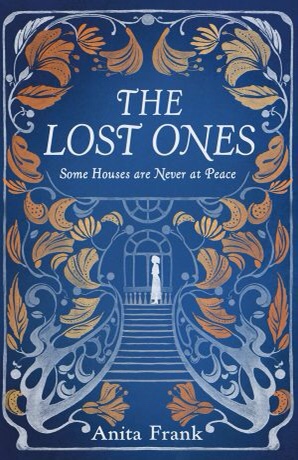
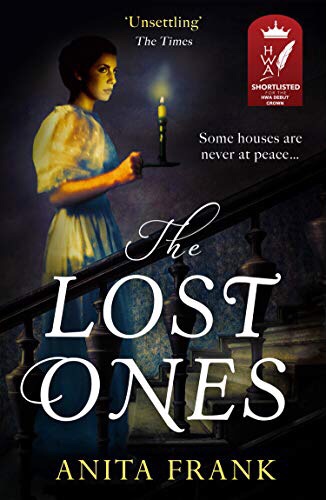
I’m always a real sucker for historical, gothic novels with strong female characters and this is up there with the best. The Lost Ones centres on Miss Stella Marcham and her new lady’s maid Annie Burrows. Stella is still in mourning for her fiancé Gerald who she lost in World War One. She keeps the locket he gave her close to her chest still. When she is invited to stay with her pregnant sister Madeline at her in-laws family home, Greyswick, she looks forward to a change of scenery. She sets out with Annie, who is a new addition to the household staff. Stella is unsure of Annie, but her family’s loyalty to the Burrows is long held and she resolves to get to know the unusual young woman.
Greyswick is a country estate, with formal gardens and ostentatious decor. Madeline is married to the heir of Greyswick, Hector Brightwood, who is away on business in London. At home are his mother Lady Brightwood and her companion Miss Scott, plus their staff, housekeeper Mrs Henge and ‘Cook’ whose name no one uses. However, Stella soon learns that they are not the only residents of her sister’s new home. Madeline confides that she can hear crying in the night and soon Stella finds a toy soldier in her bed. It’s not long before Stella is woken by the crying and follows the sound up the nursery stairs. On the stairs is a vivid portrait of a little boy with a hoop and in the background Stella sees a pile of toy soldiers. The portrait is of Lucien Brightwell, the original heir from Lord Brightwood’s first marriage, who died in a fall down the nursery stairs. This is only one of many secrets being kept by the Brightwood family and Stella senses a mystery to be solved. The creaks, bumps and cries in the night are her only clues.
This book sits in a long tradition and I had thought of Marian from Wilkie Collins’s The Woman in White even before Anita Frank mentions the book, as a reading recommendation from one character to another. When Hector returns home, bringing with him Mr Shears, I could sense tension between that old Victorian ideal of men who are ruled by reason and the women who use emotion, instinct and intuition even more. Frank’s book is set post-WW1 and the tensions of this changeable time are apparent. Women’s roles have evolved and Stella represents this change. She expected to be a married woman by now, but has instead chalked up experience nursing wounded soldiers and like most of the country is mourning a terrible loss. She is intelligent and restless after moving back into her ‘normal’ middle class role. She has also undergone psychiatric treatment following her bereavement, complicated by the fact that her severely wounded fiancé was brought to her hospital and care. She fears being thought of as mad or hysterical, so feels a constant pressure to be measured and rational. Other women in the novel are equally complex and class is another tension. Stella’s family are indebted to the Burrows family after Annie’s father died trying to save the younger sister, Lydia, from a house fire. Annie is acting as lady’s maid, a job beyond her experience, but is also trying to remain under the radar due to her own incredible gift that could mark her out as mad. Since the family lost their main bread winner Annie needs the job and doesn’t want to draw attention to herself, but Stella has her concerns. She has seen Annie talking to empty rooms and knows she saw something on the nursery stairs. Lady Brightwood’s companion Miss Scott lives in a very precarious position too, living with the family but being from a lower class than them. She was once a servant in the house, so how did she become so close to her mistress and does her devotion go beyond that of a companion? Also, what is her relationship with Mrs Henge and why is their contact so secretive?
Finally, the paranormal elements of the book are genuinely scary. The tension ratchets up from small events like the nighttime crying or the marble rolling across the room, both things that could possibly be explained away. Mr Shears tries to find a rational explanation for all of it and I did find myself thinking Annie’s presence was a potential cause. Then slowly, as people start to identify the poltergeist, the ante is upped and more characters experience events that seem impossible. The atmosphere is creepy and unsettling, reminiscent of Susan Hill or Laura Purcell. It also works as a female led detective story and builds to a denouement that doesn’t disappoint. Anyone who loves historical or gothic fiction will enjoy this novel. It’s a great Halloween read that sits beautifully in a genre the Victorians called sensation fiction. Perfectly pitched, beautifully written and full of interesting and complex female characters.
Meet The Author
Born in Shropshire, Anita studied English and American History at the University of East Anglia. She now lives in Berkshire with her husband and three children. Since The Lost Ones Anita has written a second novel, based during and after WW2. Her third novel The Good Liars is another work of historical fiction due out 8th June 2023.
Death came aboard with the cormorant. It arrived on the seventh day of our voyage…
This is the secret report of disgraced former Foreign Office clerk Laurence Jago, written on the mail ship Tankerville en route to Philadelphia. His mission is to aid the civil servant charged with carrying a vital treaty to Congress that will prevent the Americans from joining with the French in their war against Britain.
When the civil servant meets an unfortunate ‘accidental’ end, Laurence becomes the one person standing between Britain and disaster. It is his great chance to redeem himself at Whitehall – except that his predecessor has taken the secret of the treaty’s hiding place to his watery grave.
As the ship is searched, Laurence quickly discovers that his fellow passengers – among them fugitive French aristocrats, an American plantation owner, an Irish actress and her performing bear – all have their own motives to find the treaty for themselves. And as a second death follows the first, Laurence must turn sleuth in order to find the killer before he has an ‘accident’ of his own.
I loved that atmospheric opening. The cormorant sitting there on the bow of the ship, nonchalantly drying it’s wings in the wind and oblivious to the superstitions it’s arousing in the crew. If you ever wanted to know what it was like to take a voyage from Falmouth to Philadelphia in the 18th Century then look no further than this novel from Leonora Nattrass. It is so detailed and grabs the reader immediately, within a couple of pages the ship was as real to me as the cat sitting on my lap. Everything from the period appropriate language to the workings of the ship come together to entice you back into the 1790s. I felt like all my senses were engaged from the feel of cold sea spray to the sound of a passenger throwing up over the stern rail. The discomfort and claustrophobia of being stuck on the ship, at one point for three days near the French coast thanks to the prevailing winds, is very apparent. I loved the little details like the full ‘piss-pot’ sliding up and down the deck, the cacophony of the dog barking incessantly at the turkeys they are transporting, and the bear cub that turned out to have ‘tolerable table manners’. The author also emphasises how cramped the cabins are, with Jago almost able to reach out and touch both walls. At least its his own space though and somewhere he can relax, which he does with a drop or two of laudanum to combat the stress he’s feeling from all the subterfuge.
I hadn’t read Black Drop, the first outing with Laurence Jago, but I think this stands well alone. It’s a clever idea to take your characters and put them into a totally different situation. Laurence is a likeable fellow, a disgraced foreign office clerk, with a few downfalls in his character. Not only does he like a drop of laudanum, he’s a little bit gullible when it comes to a pretty face. He is tasked with helping a civil servant who’s carrying an important treaty to the Americans, to prevent them joining the French in their war against the British. When they come up against a French warship in the channel the treaty needs to be hidden, so when a death occurs on board not only is the treaty lost, but there might be a murderer on board. There’s such a cast of characters on board: two French aristocrats escaping the changes in the run up to the revolution; an Irish actress; a man who is possibly a freed slave; a plantation owner; and a dancing bear! Most of them have a vested interest in the treaty and all of which could be a murderer. Of course Jago can’t rule out one of the crew being involved, perhaps hiding the treaty for financial gain. As for the murder, they are investigating a locked room mystery, it’s just that this room is a cabin.
I loved how the tension built as Jago tries to find the treaty and solve the murder, especially as the stakes grow ever higher and Jago himself could become a target for the murderer. I became more attached to him as the story progressed because I felt he was a bit of an innocent, totally out of his depth and with poor judgement, such as with Lizzie. He’s perpetually confused, which isn’t surprising considering his shipmates and their antics. One of the aristocrats holds a seance, the crew mates are full of maritime stories and superstitions, including the usual giant sea creatures, plus they’re eating slop and feel exhausted. I wasn’t surprised Jago’s brain was muddled!. Aside from the subterfuge and untrustworthy passengers, there’s the constant underlying tension of being unable to get off the boat and knowing that whoever committed the murder is still there too. Once they’ve left the sight of land, these misfits are stuck together for weeks. Oh, and I forgot about the pirates. This is a fabulous adventure, a murder mystery some full on comedy here and there. I’m now looking forward to going back and reading Jago’s first adventure.
In-between a couple of intense crime reads I was so ready for the comforting nostalgia of Caroline Scott’s new novel. Don’t let my description fool you though. Caroline has a wonderful way of keeping her writing light and soft, but the merest peek under that surface reveals themes that delve so much deeper into society and the historical period of our heroine Stella. Set in the fascinating time period between the two World Wars, England is struggling through a depression and Stella has had something of a life change. It’s 1932 and Stella is facing the first Christmas without her mother. With memories of her mother’s frailty last Christmas and the fear of that obvious empty chair, Stella has moved back from London to a small cottage in the West Riding of Yorkshire in order to be near her father. Money is tight, since her first book The Marvellous Mrs Raffald hasn’t done as well as she’d hoped. Celandine Cottage is rather shabby and Stella is surviving on the money she’s paid by a women’s magazine for writing a weekly article with five new recipes. When she’s summoned to London by her publisher, she’s half expecting her novel to be pulped and although she wants to write a biography of 18th Century cookery writer Hannah Glasse, she’s rather gloomy about her prospects. She’s shocked when he tasks her with a new project – a history of English food. He wants a book that will inspire English housewives and remind English men of a nostalgic past. Although as Stella starts to think about her research, she realises that a lot of food people consider to be quintessentially English, is actually from elsewhere. So she sends out a letter:
Sir,
Would any housewife in your region be kind enough to share a traditional recipe with which she may be acquainted? Is there a favourite pie made by your grandmother? A cake that you fondly recall from childhood? A dish that’s particular to your village? Perhaps a great-aunt left you a hand-written book of her recipes?
This knowledge and these flavours have been passed down to us through the generations. But an urgent effort is required to collect and catalogue these dishes. If you are able to assist with this task, you would be doing a great service.
Please correspond with the address below. I will gratefully acknowledge all contributions,
Stella Douglas
However, as she sets off on her planned route to meet food makers and the nation’s housewives her car breaks down. A dashing young man called Freddie comes to her rescue and her plans move in a different direction, perhaps toward something more imaginative.
I enjoyed Stella, mainly because she is very much the modern woman, living alone and paying her own way at a time when women’s lives changed enormously. During WW1 women were encouraged to work, because they were needed to fulfil job roles that men had left behind as they went to fight in the trenches. Women became more used to living alone, making their own way and working outside of the home so when the war ended and men returned, there was tension. Some men wanted their wives back in the home so they could be breadwinners of their family. However, so many men were lost and injured, so the changes did stand and the following generations of women were keen to shape their own destiny. Stella was enormously likeable and intelligent, very measured in her approach to the task and able to see immediately that it was much more complicated than expected. As she listed those foods seen as English she could see the influence of foreign imports in them, as well as in her spice rack. Even the humble potato conjured up images of the Crusader, Tudor explorers and Dutch horticulturist’s sailing off to the Far East for specimen plants. She spots the massive gap between the perception of Englishness and the reality. In her imagination, cricket teas and church spires clash with a colourful collection of influences, speaking more than a dozen languages. Which history does she want to write and which is her publisher expecting?
I was rooting for Stella from the start, especially when her plans started to go awry, and I found her reminiscences of her mother so touching. Caroline taps into that nostalgic aspect of food and the way foods from our childhood hold a particular place in our hearts, with just a whiff or taste bringing up strong emotions of where we were or who we were with. One sniff of a newly opened tin of Quality Street sends me rocketing back to the late 1970s and my Aunty Joan who would buy us one each year along with a goodie bag of colouring pens with colouring and puzzle books. Bread toasted under a gas grill with salted butter takes me to my grandma’s kitchen as she brushed my hair and put a bow in it. The beautifully hand-written notebooks that belonged to her mother are like a time machine for Stella, all the more emotive now her mother is gone after a battle with cancer. They cause tears to well up, but also allow Stella to smile at her precious memories of surreptitiously sharing the first slice of a roasted lamb joint. This is the first time she has been able to think of her mother with joy as well as sadness.
‘As Stella read, the shadows in the room lightened, the gramophone played again distantly and order seemed to return to the world
Another aspect of Caroline’s writing I love is the extensive research that lies underneath a relatively gentle tale. I felt immediately immersed in the 1930’s, with even little asides about fashion like Stella’s felt cloche with a frivolous ostrich feather and her Liberty & Co coat, placing her firmly in time. As Stella reminisces about her time in Paris with her friend Michael, we’re there as she wanders through cellar clubs and tastes cocktails in Montparnasse, it sounds like there’s a hint of romance in her memory of dancing barefoot with him on a warm pavement. Something about their relationship is alluring and it’s as if she’s only just started to really see her friend and his incredibly blue eyes. Her surprise when she finds out he’s in a new relationship is obvious and this isn’t just any woman he’s involved with, it’s Cynthia Palmer, a beautiful model and artist. Where will Stella fit in?
The historical detail of English food is fascinating and it was interesting to hear ideas from the early 20th Century that we still talk about today in terms of sustainability and frugality. When it comes to meat there’s ‘nose to tail’ eating, making sure every part of the animal is used – they clearly had a better stomach for offal than we do today. There’s the concept of eating locally and growing your own food. There were also criticisms that are obviously age old, such as feeling young people have forgotten how to cook from scratch and are becoming dependent on gadgets and what we now call time saving hacks. She seems to sense another trend that I thought was current; the concern that we almost fetishise food with our devotion to baking and other cooking shows, while at home we’re cooking from scratch less and less. When it comes to what and how we eat, and even what we call our mealtimes, there are definitely divides between town and country, between the wealthy and the poor, and variations between North and South. I loved the eccentricity of some of the characters she meets and neighbour Dilys was a favourite of mine. Having a mum who flirted with vegetarianism and haunted the health food shop, Dilys’s devotion to pulses and lentils stirred up a childhood food memory of my own – a terrible shepherd’s pie with no shepherds just acres of lentils, called Red Dragon Pie. The only red thing about it were the acres of ketchup we used to give it some flavour. I loved her bohemian air and she seemed startlingly modern compared to Stella who’s a little more ‘proper’. The roguish Freddie was also rather fun and very charming of course. Caroline has a wonderful way of balancing all this. She tantalises us with period detail and charming characters, throws in some humour, while also showing us the grittier underbelly of life in a depression and those moments of grief for her mother that Stella experiences, which are so beautifully rendered. Caroline makes this look incredibly easy when in reality it’s such a complex juggling act, one that she pulls off beautifully.
Meet The Author
Caroline completed a PhD in History at the University of Durham. She developed a particular interest in the impact of the First World War on thelandscape of Belgium and France, and in the experience of women during the conflict – fascinations that she was able to pursue while she spent several years working as a researcher for a Belgian company. Caroline is originally from Lancashire, but now lives in SouthWest France. Her book The Photographer of the Lost was a BBC Book Club pick.
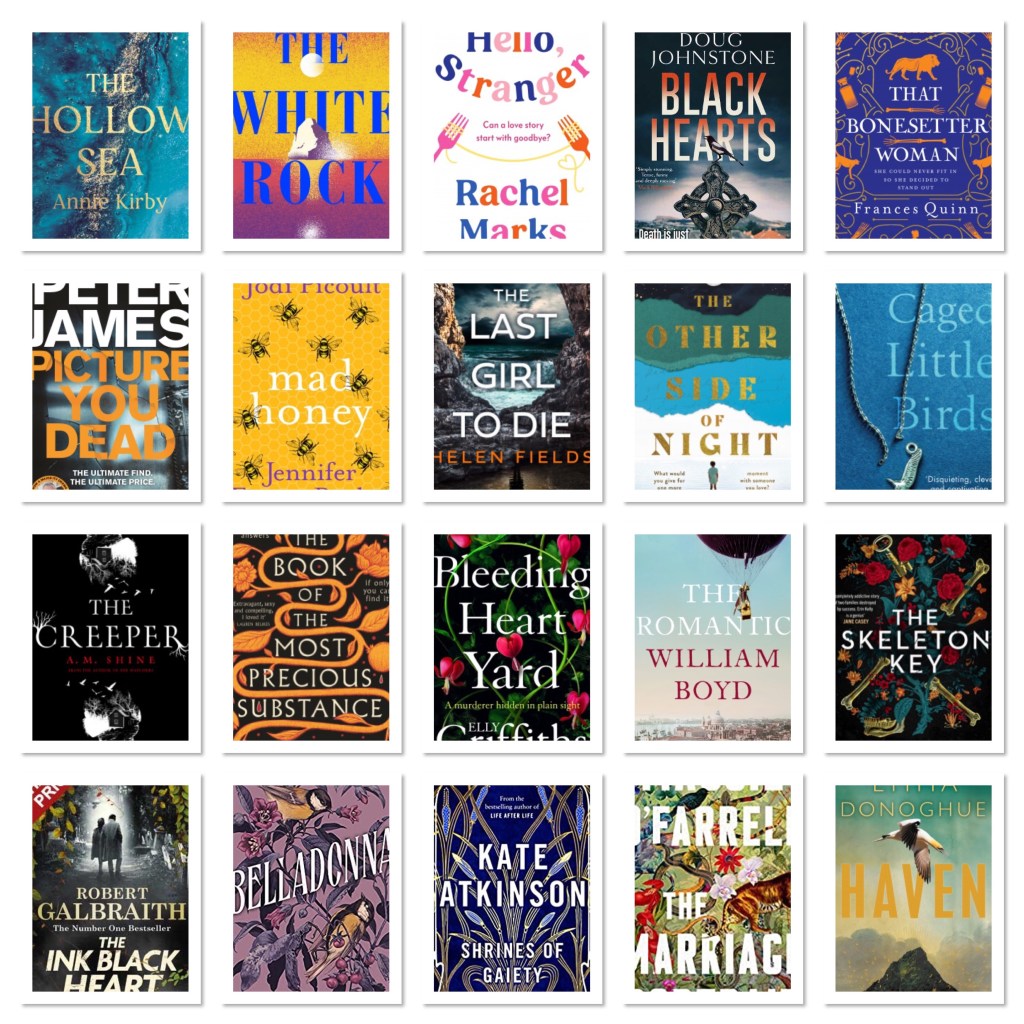
There are so many great books this autumn, but I’ve narrowed it down to those I have and I’m looking forward to reading the most. It’s all here, from spooky Halloween reads to feel-good fiction, thrillers to historical fiction and a splash of horror. Here’s a little preview of these great books.
In the midst of the woods stands a house called Lichen Hall. This place is shrouded in folklore – old stories of ghosts, of witches, of a child who is not quite a child. Now the woods are creeping closer, and something has been unleashed.
Pearl Gorham arrives in 1965, one of a string of young women sent to Lichen Hall to give birth. And she soon suspects the proprietors are hiding something. Then she meets the mysterious mother and young boy who live in the grounds – and together they begin to unpick the secrets of this place. As the truth comes to the surface and the darkness moves in, Pearl must rethink everything she knew – and risk what she holds most dear. I loved this author’s previous book The Lighthouse Witches and I can’t wait to get stuck into this one.
Published on 13th October 2022 by HarperCollins
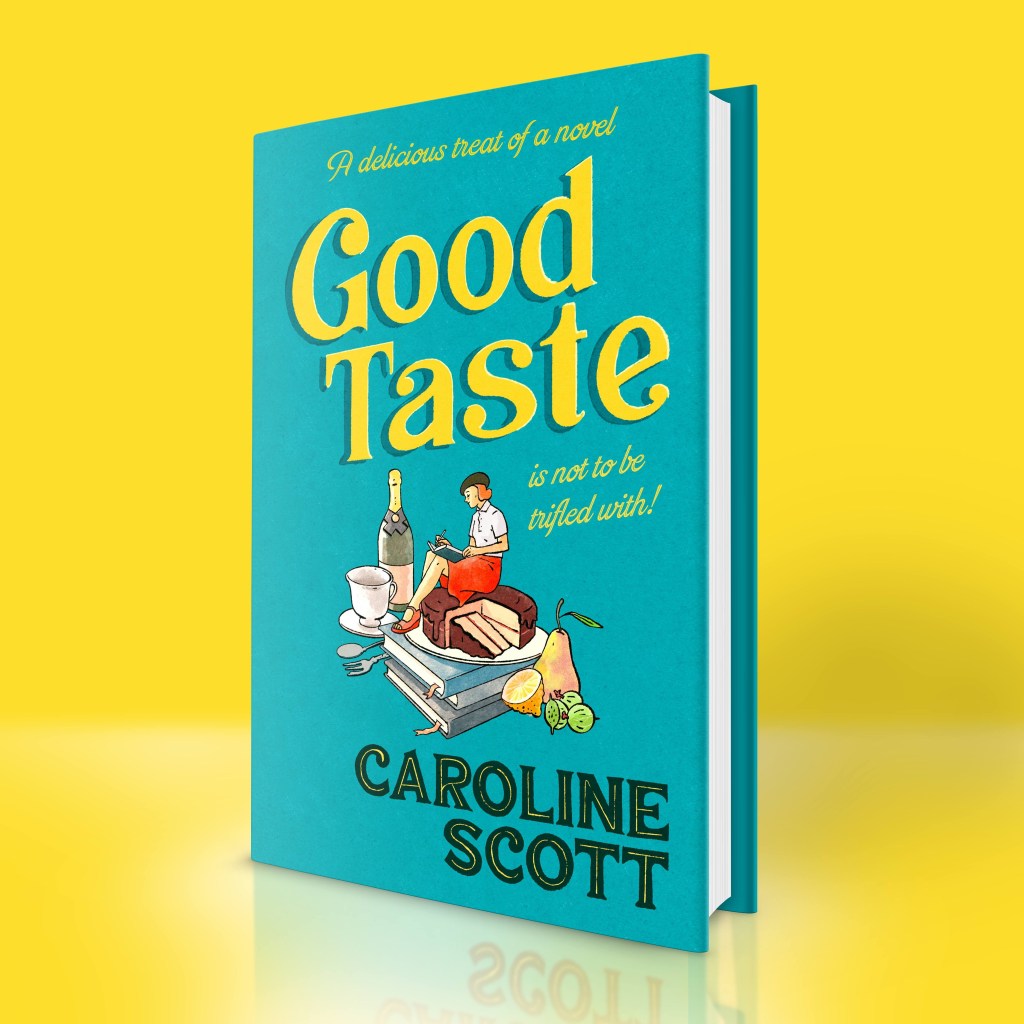
I loved Caroline’s first two novels, both set in the aftermath of WW1 and full of historical detail, characters to empathise with and that chaos that seems to thrive in war’s aftermath. Between the two World Wars the country was in a state of flux, with huge changes in class structure, gender and the finances, both public and personal. This book is set in England, 1932, when the country was in the grip of the Great Depression. To lift the spirits of the nation, Stella Douglas is tasked with writing a history of food in England. It’s to be quintessentially English and will remind English housewives of the old ways, and English men of the glory of their country. The only problem is –much of English food is really from, well, elsewhere and can one cookbook really manoeuvre people back into those pre-war roles?
Stella sets about unearthing recipes from all corners of the country, in the hope of finding a hidden culinary gem. But what she discovers is rissoles, gravy, stewed prunes and lots of oatcakes. Longing for something more thrilling, she heads off to speak to the nation’s housewives. But when her car breaks down and the dashing and charismatic Freddie springs to her rescue, she is led in a very different direction . . . Full of wit and vim, Good Taste is a story of discovery, of English nostalgia, change and challenge, and one woman’s desire to make her own way as a modern woman.
Published on 13th October 2022 by Simon and Schuster U.K.
Rachel Joyce is one of those authors I’ve had lick to meet twice, at book signings, where I’ve been one of the last people to queue with my old books under my arm and her latest in my hand. Her last book Miss Benson’s Beetle was an incredible read about extraordinary women. Now she reverts to a series of books that have celebrated very ordinary people doing extraordinary things and Mrs Fry is no exception. Ten years ago, Harold Fry set off on his epic journey on foot to save a friend. But the story doesn’t end there. Now his wife, Maureen, has her own pilgrimage to make.
Maureen Fry has settled into the quiet life she now shares with her husband Harold after his iconic walk across England. Now, ten years later, an unexpected message from the North disturbs her equilibrium again, and this time it is Maureen’s turn to make her own journey. But Maureen is not like Harold. She struggles to bond with strangers, and the landscape she crosses has changed radically. She has little sense of what she’ll find at the end of the road. All she knows is that she must get there. Maureen Fry and the Angel of the North is a deeply felt, lyrical and powerful novel, full of warmth and kindness, about love, loss, and how we come to terms with the past in order to understand ourselves and our lives a little better. Short, exquisite, while it stands in its own right, it is also the moving finale to a trilogy that began with the phenomenal bestseller The Unlikely Pilgrimage of Harold Fry and continued with The Love Song of Miss Queenie Hennessy.
This is a slender book but it has all the power and weight of a classic.
Published by Doubleday 20th Oct 2022. Kindle Edition available from 5th October.
I have already started this book and had a nightmare of epic proportions the very first night. I’m suggestible and have a wild imagination, but I think the opening to this book is strangely unsettling. I felt uneasy, even though the chapters I read didn’t have any particularly terrifying events. It’s the strangeness that creeps up on you.
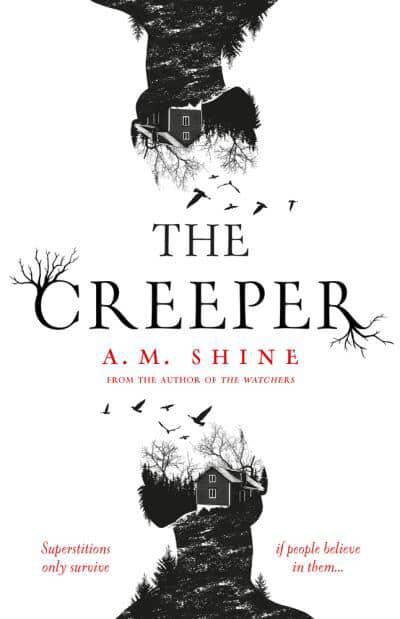
Superstitions only survive if people believe in them… Renowned academic Dr Sparling seeks help with his project on a remote Irish village. Historical researchers Ben and Chloe are thrilled to be chosen – until they arrive. The village is isolated and forgotten. There is no record of its history, its stories. There is no friendliness from the locals, only wary looks and whispers. The villagers lock down their homes at sundown. It seems a nameless fear stalks the streets, but nobody will talk – nobody except one little girl. Her words strike dread into the hearts of the newcomers. Three times you see him. Each night he comes closer… That night, Ben and Chloe see a sinister figure watching them. He is the Creeper. He is the nameless fear in the night. Stories keep him alive. And nothing will keep him away..
Published by Head of Zeus/ Aries 15th September 2022.
I’m a sucker for historical fiction with a gothic edge, so this really captured my imagination as soon as I read the blurb. Obviously my counsellor brain is always ready for tales of supposed madness and hysteria too.
I must pull myself together. I had to find Dr Rastrick and demand my immediate release. My stomach knotted at the prospect, but I knew I was perfectly sane and that he must see reason.
In 1886, a respectable young woman must acquire a husband. But Violet Pring does not want to marry. She longs to be a professional artist and live on her own terms. When her scheming mother secures a desirable marriage proposal from an eligible Brighton gentleman for her, Violet protests. Her family believes she is deranged and deluded, so she is locked away in Hillwood Grange Lunatic Asylum against her will.In her new cage, Violet faces an even greater challenge: she must escape the clutches of a sinister and formidable doctor and set herself free. This tantalizing Gothic novel from Noel O’Reilly tells a thrilling story of duty and desire, madness and sanity, truth and delusion from within a Victorian asylum.
Published by HQ 8th December 2022
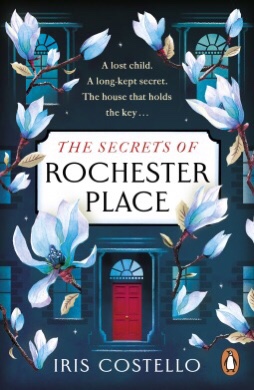
Spring 1937: Teresa is evacuated to London in the wake of the Guernica bombing. She thinks she’s found safety in the soothing arms of Mary Davidson and the lofty halls of Rochester Place, but trouble pursues her wherever she goes.
Autumn 2020: Corrine, an emergency dispatcher, receives a call from a distressed woman named Mary. But when the ambulance arrives at the address, Mary is nowhere to be found. Intrigued, Corinne investigates and, in doing so, disturbs secrets that have long-dwelt in Rochester Place’s crumbling walls. Secrets that, once revealed, will change her life for ever . . .
Who is Mary Davidson? And what happened at Rochester Place all those years ago? Set between the dusty halls of Rochester Place and the bustling streets of modern-day Tooting, this emotive, intricately layered mystery tells the spellbinding story of two people, separated by time, yet mysteriously connected through an enchanting Georgian house and the secrets within its walls.
Published by Penguin 8th Dec 2022
I always look forward to an Orenda book, because I know I’m going to great a fantastic and often thought provoking read. I’m on the blog tour for this in November and I’m looking forward to this one. James Garrett was critically injured when he was shot following his parents’ execution, and no one expected him to waken from a deep, traumatic coma. When he does, nine years later, Detective Inspector Rebecca Kent is tasked with closing the case that her now retired colleague, Theodore Tate, failed to solve all those years ago.
But between that, and hunting for Copy Joe – a murderer on a spree, who’s imitating Christchurch’s most notorious serial killer – she’s going to need Tate’s help … especially when they learn that James has lived out another life in his nine-year coma, and there are things he couldn’t possibly know, including the fact that Copy Joe isn’t the only serial killer in town…
Published by Orenda Books Nov 10th 2022
In between the serial killers, ghostly apparitions and terrifying ‘creepers’ I need some light relief. I was looking for something warm and uplifting and this could be it. Newly installed at All Souls Lutheran, Mallory “Pastor Pete” Peterson soon realizes that her church isn’t merely going through turbulent waters, but is a sinking ship. With the help of five loyal members of the Naomi Circle, the young, bold minister brainstorms fundraising ideas. They all agree that the usual recipe book won’t add much to the parish coffers, but maybe one with all the ingredients on how to heat up relationships rather than casseroles will…
Pastor Pete has her doubts about the project, but it turns out the group of postmenopausal women has a lot to say on the subject of romance. While Charlene, the youngest member at fifty-two, struggles with the assignment, baker-extraordinaire Marlys, elegantly bohemian Bunny, I’m-always-right Velda, and ebullient Edie take up their contributions enthusiastically. After all, their book is really about cooking up love in all its forms. But not everyone in the congregation is on board with this “scandalous” project. As the voices of opposition grow louder, Pastor Pete and these intrepid women will have to decide how hard they’re willing to fight for this book and the powerful stories within—stories of discovery, softened hearts, and changed lives.
Published by Lake Union 6th December 2022
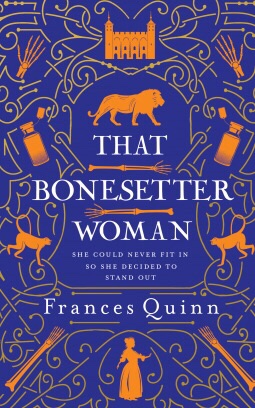
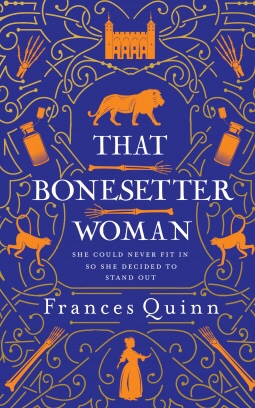
Although this book is already out I’m saving it for the autumn, because it’s one of my Squad Pod’s Book Club reads. I loved Quinn’s debut novel The Smallest Man so I’ve had my eye on this for a while. I also love unusually named heroines, ever since Mary Webb’s Precious Bane, and Endurance Proudfoot is a brilliant invention. It’s usual, they say, for a young person coming to London for the first time to arrive with a head full of dreams. Well, Endurance Proudfoot did not. When she stepped off the coach from Sussex, on a warm and sticky afternoon in the summer of 1757, it never occurred to her that the city would be the place where she’d make her fortune; she was just very annoyed to be arriving there at all.
Meet Endurance Proudfoot, the bonesetter’s daughter: clumsy as a carthorse, with a tactless tongue and a face she’s sure only a mother could love. Durie only wants one thing in life – to follow her father and grandfather into the family business of bonesetting. It’s a physically demanding job, requiring strength, nerves of steel and discretion – and not the job for a woman. But Durie isn’t like other women. She’s strong and stubborn and determined to get her own way. And she finds that she has a talent at bonesetting – her big hands and lack of grace have finally found their natural calling. So, when she is banished to London with her sister, who is pretty, delicate and exactly the opposite to Durie in every way, Durie will not let it stop her realising her dreams. And while her sister will become one of the first ever Georgian celebrities, Durie will become England’s first and most celebrated female bonesetter. But what goes up must come down, and Durie’s elevated status may well become her undoing…
Published by Simon and Schuster 21st July 2022.
There are a few formidable women in my autumn reading and this is another brilliant historical fiction novel for the list. This is billed as a ‘rich and atmospheric’ new novel from prize-winning author Sally Gardner, set in the 18th century between the two great Frost Fairs. Neva Friezland is born into a world of trickery and illusion, where fortunes can be won and lost on the turn of a card. She is also born with an extraordinary gift. She can predict the weather. In Regency England, where the proper goal for a gentlewoman is marriage and only God knows the weather, this is dangerous. It is also potentially very lucrative.
In order to debate with the men of science and move about freely, Neva adopts a sophisticated male disguise. She foretells the weather from inside an automaton created by her brilliant clockmaker father. But what will happen when the disguised Neva falls in love with a charismatic young man?
It can be very dangerous to be ahead of your time. Especially as a woman.
Published by Apollo 10th November 2022.
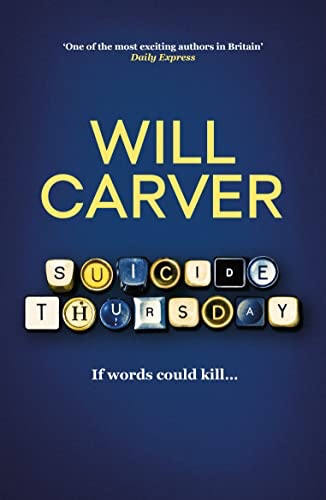
Will Carver is an incredible writer and his imagination knows no bounds. His books are always so completely original.
Eli Hagin can’t finish anything. He hates his job, but can’t seem to quit. He doesn’t want to be with his girlfriend, but doesn’t know how end things with her, either. Eli wants to write a novel, but he’s never taken a story beyond the first chapter. Eli also has trouble separating reality from fiction.
When his best friend kills himself, Eli is motivated, for the first time in his life, to finally end something himself, just as Mike did… Except sessions with his therapist suggest that Eli’s most recent ‘first chapters’ are not as fictitious as he had intended … and a series of text messages that Mike received before his death point to something much, much darker…
Published by Orenda Books 24th November 2022.
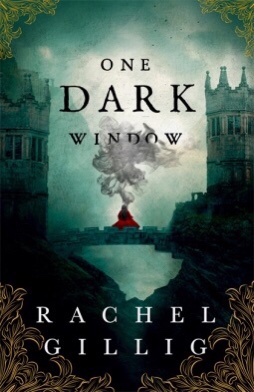
This book sounds like a very dark fairy tale and aren’t they the best ones? An ancient, mercurial spirit is trapped inside Elspeth Spindle’s head – she calls him the Nightmare. He protects her. He keeps her secrets. But nothing comes for free, especially magic.
When Elspeth meets a mysterious highwayman on the forest road, she is thrust into a world of shadow and deception. Together, they embark on a dangerous quest to cure the town of Blunder from the dark magic infecting it. As the stakes heighten and their undeniable attraction intensifies, Elspeth is forced to face her darkest secret yet: the Nightmare is slowly, darkly, taking over her mind. And she might not be able to fight it. This is a gothic fantasy romance about a maiden who must unleash the monster within to save her kingdom.
Published by Orbit 29th September
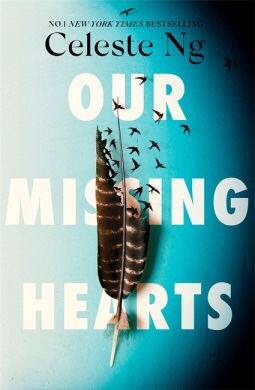
Twelve-year-old Bird Gardner lives a quiet existence with his loving but broken father, a former linguist who now shelves books in a university library. Bird knows to not ask too many questions, stand out too much, or stray too far. For a decade, their lives have been governed by laws written to preserve “American culture” in the wake of years of economic instability and violence. To keep the peace and restore prosperity, the authorities are now allowed to relocate children of dissidents, especially those of Asian origin, and libraries have been forced to remove books seen as unpatriotic—including the work of Bird’s mother, Margaret, a Chinese American poet who left the family when he was nine years old.
Bird has grown up disavowing his mother and her poems; he doesn’t know her work or what happened to her, and he knows he shouldn’t wonder. But when he receives a mysterious letter containing only a cryptic drawing, he is pulled into a quest to find her. His journey will take him back to the many folktales she poured into his head as a child, through the ranks of an underground network of librarians, into the lives of the children who have been taken, and finally to New York City, where a new act of defiance may be the beginning of much-needed change.
Our Missing Hearts is an old story made new, of the ways supposedly civilized communities can ignore the most searing injustice. It’s a story about the power—and limitations—of art to create change, the lessons and legacies we pass on to our children, and how any of us can survive a broken world with our hearts intact. This sounds absolutely epic and I’m so excited to have been granted a copy on NetGalley, so I’ll keep you all informed.
Published 4th October 2022 by Penguin Press
1643: A small group of Parliamentarian soldiers are ambushed in an isolated part of Northern England. Their only hope for survival is to flee into the nearby Moresby Wood… unwise though that may seem. For Moresby Wood is known to be an unnatural place, the realm of witchcraft and shadows, where the devil is said to go walking by moonlight. Seventeen men enter the wood. Only two are ever seen again, and the stories they tell of what happened make no sense. Stories of shifting landscapes, of trees that appear and disappear at will… and of something else. Something dark. Something hungry.
Today, five women are headed into Moresby Wood to discover, once and for all, what happened to that unfortunate group of soldiers. Led by Dr Alice Christopher, an historian who has devoted her entire academic career to uncovering the secrets of Moresby Wood. Armed with metal detectors, GPS units, mobile phones and the most recent map of the area (which is nearly 50 years old), Dr Christopher’s group enters the wood ready for anything. Or so they think. I love the mix of historical fiction and a touch of the supernatural so this one is a definite title for the TBR.
Published on 13th October by S
If someone says gothic, paranormal, romance to me, I’m there with bells on! As a lifelong fan of Wuthering Heights it’s very much my sort of thing. 1813. Lizzie’s beloved older sister Esme is sold in marriage to the aging Lord Blountford to settle their father’s debts. One year later, Esme is dead, and Lizzie is sent to take her place as Lord Blountford’s next wife.
Arriving at Ambletye Manor, Lizzie uncovers a twisted web of secrets, not least that she is to be the fifth mistress of this house. Marisa. Anne. Pansy. Esme. What happened to the four wives who came before her? In possession of a unique gift, only Lizzie can hear their stories, and try to find a way to save herself from sharing the same fate. This sounds to me like a Bluebeard type tale and perfect for a cozy autumn afternoon in front of the log burner.
Published 24th November 2022 by Penguin.
Three women Three eras One extraordinary mystery…
1899, Belle Époque Paris. Lucienne’s two daughters are believed dead when her mansion burns to the ground, but she is certain that her girls are still alive and embarks on a journey into the depths of the spiritualist community to find them.
1949, Post-War Québec. Teenager Lina’s father has died in the French Resistance, and as she struggles to fit in at school, her mother introduces her to an elderly woman at the asylum where she works, changing Lina’s life in the darkest way imaginable.
2002, Quebec. A former schoolteacher is accused of brutally stabbing her husband – a famous university professor – to death. Detective Maxine Grant, who has recently lost her own husband and is parenting a teenager and a new baby single-handedly, takes on the investigation.
Under enormous personal pressure, Maxine makes a series of macabre discoveries that link directly to historical cases involving black magic and murder, secret societies and spiritism … and women at breaking point, who will stop at nothing to protect the ones they love. I’m so excited about this one I’ve ordered a special copy from Goldsboro Books it’s simply stunning and I’m dying to read it.
Published by Orenda Book on 15th September 2022
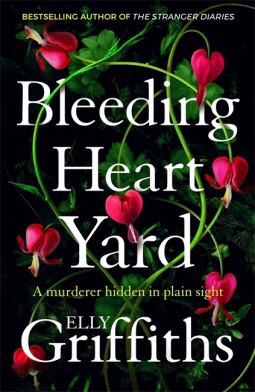
Bleeding Heart Yard by Elly Griffiths
Another stunning cover here. From the author of the Ruth Galloway crime series this is a propulsive new thriller set in London featuring Detective Harbinder Kaur. A murderer hides in plain sight – in the police. DS Cassie Fitzherbert has a secret – but it’s one she’s deleted from her memory. In the 1990s when she was at school, she and her friends killed a fellow pupil. Thirty years later, Cassie is happily married and loves her job as a police officer.
One day her husband persuades her to go to a school reunion and another ex-pupil, Garfield Rice, is found dead, supposedly from a drug overdose. As Garfield was an eminent MP and the investigation is high profile, it’s headed by Cassie’s new boss, DI Harbinder Kaur. The trouble is, Cassie can’t shake the feeling that one of her old friends has killed again. Is Cassie right, or was Garfield murdered by one of his political cronies? It’s in Cassie’s interest to skew the investigation so that it looks like the latter and she seems to be succeeding.
Until someone else is killed…
Published on 29th September 2022 by Quercus
And I can’t believe I forgot…..
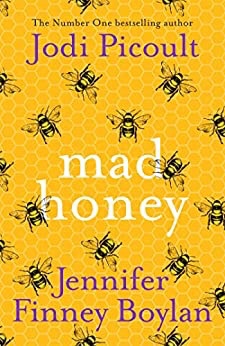
I possibly forgot this one because I’ve already read and reviewed it for NetGalley and it really is a cracker. After going in a slightly different direction with her last two novels, Jodi Picoult is back in her usual territory here. After teaming up with author Jennifer Finney Boylan, from a Twitter conversation, Picoult is back to tackling a controversial issue with a tense legal case at the centre of the drama.
Olivia fled her abusive marriage to return to her hometown and take over the family beekeeping business when her son Asher was six. Now, impossibly, her baby is six feet tall and in his last year of high school, a kind, good-looking, popular ice hockey star with a tiny sprite of a new girlfriend. Lily also knows what it feels like to start over – when she and her mother relocated to New Hampshire it was all about a fresh start. She and Asher couldn’t help falling for each other, and Lily feels happy for the first time. But can she trust him completely? Then Olivia gets a phone call – Lily is dead, and Asher is arrested on a charge of murder. As the case against him unfolds, she realises he has hidden more than he’s shared with her. And Olivia knows firsthand that the secrets we keep reflect the past we want to leave behind - and that we rarely know the people we love well as we think we do. Each author has written the story from a different character’s perspective, sometimes taking us back in time to understand their experiences. I don’t want to ruin your enjoyment so I won’t give you any more of the plot, but I will say it’s a belter of a novel that will make you question your own prejudices.
Published on 15th November 2022 by Hodder & Stoughton
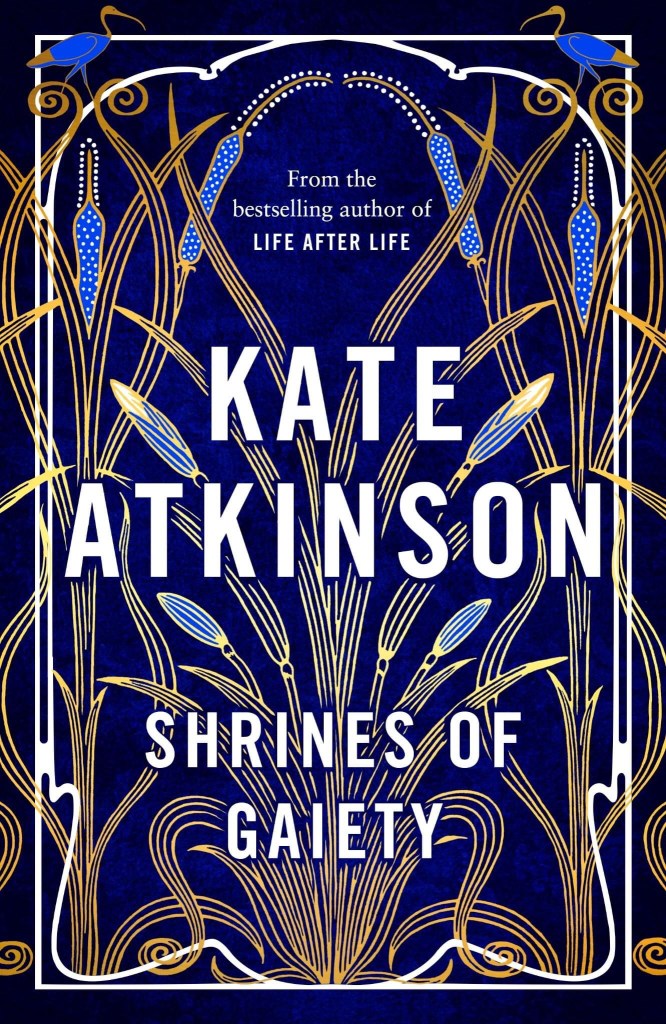
Kate Atkinson transported me right into the centre of that fascinating time between two World Wars: the glittering hour, the roaring twenties, the age of the flappers and the Bright Young Things. It feels like a period of madness, where a generation turns to decadence in their determination to move beyond mourning and death. Gwendolen Kelling travels to London for the first time since the funeral of the Unknown Warrior and she’s shocked by the change of mood. From the ‘enshrouded city’ that was ‘sternly armoured in the breastplate of grief’ to a place invigorated and ‘dressed for spring’. After a war spent nursing those horrifically injured in combat, Gwendolen is ready for anything. She’s down from York on a mission for a friend to find two teenage girls who’ve run away to London to be dancers. Freda and Florence are young and naive with, perhaps, an inflated sense of their own talent. Gwendolen’s search brings her into the orbit of Nellie Coker, matriarch of a family running a series of clubs that are as jewelled as their names – the Amethyst being their first. From time to time she hires dancing girls, hostesses available to dance with the patrons. Nellie is fresh out of prison and needs to stamp her authority on her family and those in the criminal fraternity who have been circling her businesses ever since she went inside. Gwendolen comes into the sphere of DI Frobisher too, someone else keen on observing the Cokers. So far he’s been relying on his officer Maddox to infiltrate the family, but he’s unsure on which side Maddox’s loyalties truly lie. Could the unlikely Miss Kelling be able to walk the tightrope between the police and the Queen of Clubs (and amateur psychic) Nellie Coker? Kate Atkinson explores this period of history through the dark underbelly of London and a gruesome series of murders, whilst also commenting on the act of writing itself.
Atkinson tells her tale through a series of interrelated characters who have no idea of the small world they’re inhabiting. Two of Nellie’s sons show very different ways of operating within this world and their family. Niven is the strong, silent and possibly sinister, elder son. Quietly loyal, he pops up here and there with his equally loyal dog. He has the enigmatic quality of Peaky Blinder’s Tommy Shelby – someone playing so many sides, it’s impossible to know the outcome he’s working for. There is a gentleman underneath, capable of the big romantic gesture, but makes no promises and likes to stay in control. Younger brother, Ramsay, is entirely opposite, out of control in every way he can be – drugs, alcohol and gambling. Unfortunately in the Coker’s world such vices leave you open to manipulation and there are vulture’s circling. Barman Quinn is one such character – obligingly close by when Ramsay is in need of a little pick-me-up or a means of floating away from Nellie and Niven’s disappointment or his own feelings of inadequacy. Ramsay has a dream of writing the great modernist novel, one that chronicles the age and captures the decadence of London’s nightlife. A gritty crime novel is his aim where his detective shines a light on the dope, the gangs, the parties, the fancy-dress, the gambling and even the Bright Young Things. He aims to weave a tapestry of all those threads and even has a title – The Age of Glitter. This clever device, where Ramsay is writing the very book in which he’s a character, is typical Atkinson brilliance.
I loved the character of Freda, the fearless teenager who has run away with her lumpen friend Florence. Blithely sure of her abilities to dance and to survive in the capital. She’s possibly underestimated her talent and the dangers they both face. She’s plucky and I was really willing her to succeed. We know something Freda doesn’t though, raising the tension for the reader. DI Frobisher knows that girls are going missing and many end up being fished out of the Thames in a terrible state. Will Freda be one of them? Gwendolen Kelling is intriguing and the epitome of a modern woman. After being at the tough end of military nursing her eyes have been opened. She has money from her mother’s will, more than she expected since both her brothers were killed in the war. As a woman of means she can now make independent choices and has no one (no man) to stop her travelling to London. She finds a suitable boarding house with a respectable landlady, but once she starts to make enquiries she finds herself treading a very fine line between the Cokers and the Police. She’s on a night undercover with Constable Cobb when a fight breaks out that leaves a gang member on the dance floor with copious amounts of blood pouring from a chest wound. Gwendolen is in her element and takes charge, stemming the blood flow and requesting everything she needs to treat the wound. It brings her to the attention of Nellie and her son, Niven. With Constable Cobb disappearing into the night, Niven treats Gwendolen to a suite at The Savoy and sends her a brand new dress from Liberty to replace the one covered in blood. Gwendolen is almost torn between these two opposing men she’s met – the dashing and mysterious Niven who gives off ‘wounded hero’ vibes or the principled and distinguished Frobisher? However, it’s Nellie who makes a proposal. Could Gwendolen manage the Crystal Club for her? With a beautifully appointed and very pink flat on offer above the club, this could be the best opportunity to spy for Frobisher and to find Freda?
My only gripe with the novel is that sometimes I wanted to spend more time with a character than I could. I wanted to follow where Florence went and I would have loved to spend more time with Niven. The structure isn’t always the easiest to follow, but it does work as a series of threads interwoven to create a tapestry. Each named chapter flits between points of view. Sometimes we go backwards in time such as Frobisher’s war and the meeting of his wife Lottie, who is deranged by grief and mute. We also look into Gwedolen’s painful history with her manipulative mother. We might flit between two different characters whose worlds overlap, but have no real knowledge of each other, then we get two consecutive accounts of the same event. We are slowly building up to knowing the whole picture, but everyone has their own colour to paint. I wondered whether the fractured structure was also a comment on the historical period and massive social change that has occurred since before WWI. It’s a period I’m particularly interested in and Atkinson has really nailed the aftermath of war, especially how it affected each gender differently. Women were pushing forward, pursuing their own dreams and their own means. War has necessitated their move beyond the domestic sphere and into the world of work. Once men returned from war they expected their jobs back and some companies had reserved jobs for returning soldiers, but obviously the great loss of life meant the jobs market still needed women. As it was a lot of men were without work and their expectations of having a wife at home were dashed. Attacks on women were more common, especially where there was unrest around a particular workplace.
I found the blatant misogyny that Freda encounters hard to read at times, especially when it’s clear how young she is. She’s preyed upon by a West End theatre manager, men in clubs and even an on duty police officer when she visits the station to report Florence as missing. The assumption that she’s young and unaccompanied, therefore must be a prostitute, really shocks her. The women in this book are often in danger, not just from the killer, but from any man they encounter. However, Niven and Frobisher could not be further apart in terms of occupation and background, but both treat Gwedolen like a gentleman, even if there’s a assumption underneath that she can’t look after herself. We see social mobility in the Coker’s rise to become wealthy, through the growth of their businesses and Nellie’s understanding that the younger generation want to party and forget. Their wealth lets them rub shoulders with a huge range of people from Maltese gangsters, to wealthy socialites the Bright Young Things. Ramsay attends ‘spielers’ with everyone from the aristocracy to hardened criminals. There’s even mention of a member of the Royal Family brushing shoulders with the Cokers. I found myself making comparisons with the television series Peaky Blinders, both families are caught up in the period’s state of flux, moving them beyond the confines of their class, but do the upper echelons of society truly accept them?
I loved that Atkinson used Ramsay’s writing journey in the beginning and ending of her novel. I found myself smiling at his ambition to write a crime novel that was also ‘a razor sharp dissection of the various strata of society in the wake of the destruction of war’. Shirley, his sister, complains he is trying to shoe-horn too much into the novel and asks why doesn’t he just stick with the crime? Ramsay works as Atkinson’s own doubts and the mental journey she takes while writing, but also echoes those outside criticisms we often hear about crime novels not being literary. I read criticism after Atkinson’s last Jackson Brodie novel that she puts way too much – poetry, philosophy – into a crime novel. As if these things are too high brow for crime readers. Putting aside a book’s need to be marketable, writing can surely be whatever the author wants it to be and shouldn’t have to conform rigidly to a set of genre rules? In the end Atkinson succeeds where Ramsay struggles and has produced a novel as eclectic as the age it represents and just as dazzling, glittering and fascinatingly dark.
Meet The Author
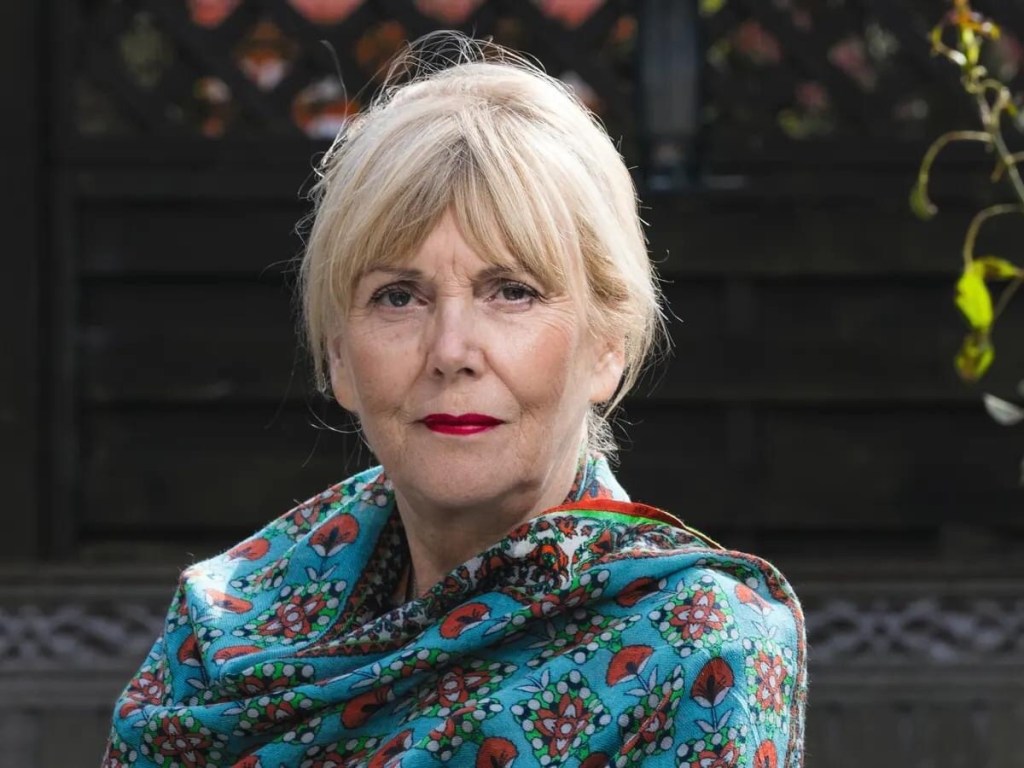
Kate Atkinson is an international bestselling novelist, as well as playwright and short story writer. She is the author of Life After Life; Transcription; Behind the Scenes at the Museum, a Whitbread Book of the Year winner; the story collection Not the End of the World; and five novels in the Jackson Brodie crime series, which was adapted into the BBC TV show Case Histories. The BBC adaptation of Life After Life is on the iPlayer now.
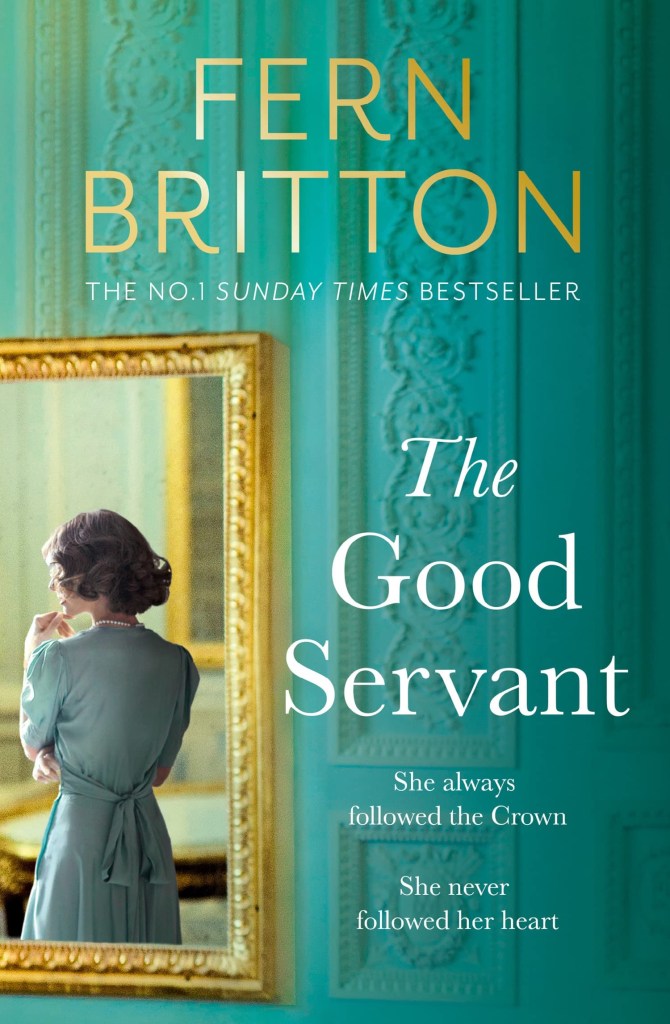
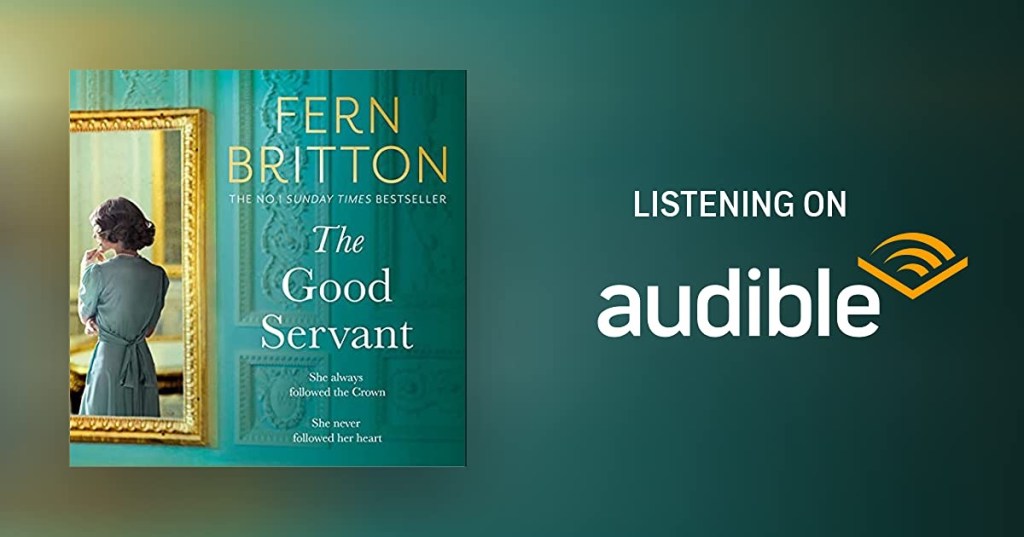
I wrote this review a fortnight ago, before the events of the last week. I’m always torn at times when there’s huge royal news, because I’m caught up between my ideals and the sheer spectacle of the event. It’s a trick that Kings and Queens have used throughout history, knowing that they are unpopular with some elements of society, they use the pomp and ceremony to charm and overwhelm them. I’ve lost count of how many times I’ve heard someone interviewed this week and they’ve said ‘I’m not really a Royalist, but the Queen’s done a great job, or has been a constant presence in my life.’ In a time of recession and a cost of living crisis, I have still seen people subjected to a ‘pile on’ on social media if they’ve dared to suggest that the state funeral will be costing a fortune. Heaven forbid they mention the problematic aspects of Queen Elizabeth’s reign from imperialism to her steadfast support of her son Andrew. I think when someone has lived as long as Queen Elizabeth, there will always be societal changes that cast earlier choices in a bad light. However, I do have a complex relationship with the Royal Family, from really loving Princess Diana when I was a little girl, to learning more about the aspects I find worrying, such as the denial of the Queen’s two Bowes-Lyon cousins who had multiple disabilities and were placed in an institution, but declared as dead. I hate the way Diana and now the Duchess of Suffolk were treated and how the love lives of Princess Margaret and even the now King, Charles III, were meddled with by older family members. I was shocked to realise that Prince Phillip’s sisters were married to members of the Nazi Party. The goings on behind the scenes are always fascinating though. The shadowy men in grey suits who actually run the show, schooled in the constitution and making sure that what comes first is the crown above all. It was this behind the scenes fascination that brought this book to my attention. I’ll admit that I’m usually a bit of a snob when it comes to celebrity books. Comedians and journalists are writing all the time, but when someone’s a presenter I never know what I’m going to get from a novel. I gave this a go because of how interested I am in the history of the Royal Family and I should admit to being an avid watcher of The Crown. I thought the story might be diverting at least, but I was actually pleasantly surprised to find myself truly involved with the story of Crawfie.
Fern Britton’s novel takes us back to London between the wars, a rather turbulent time of constant change; socially, economically and culturally. We travel back and forth between 1932 and 1936. In 1932 Marion Crawford is looking forward to a career as a teacher, when an opportunity presents itself. Unexpectedly, she is offered the role of governess to two Princesses. Elizabeth and Margaret are the granddaughters of George V from his second son, the Duke of York and his wife Elizabeth Bowes-Lyon (our Queen Mum). Just four years later and a huge change rocks the royal household, George V’s death paves the way for his eldest son David to succeed him as King. Choosing the regnal name Edward VIII, he is a rather controversial figure amongst the establishment, often disregarding court protocol and conventions and sometimes appearing too political. Edward causes concerns in his choice of companion too, the twice divorced American Wallis Simpson. His abdication, to marry the woman he loves changes the course of history and everyday life for the princesses and their governess. This unexpected constitutional crisis means Crawfie’s life will change forever. It has already been an adjustment to become part of a royal household and now she finds herself in this new position with new responsibilities – governess to the future Queen. The author really does portray this change well, always relating back to how this feels for our heroine, an ordinary young girl given extraordinary responsibility. Marion Crawford is our representative in this novel; the ordinary person living in the extraordinary. As a result we see familiar events from history made immediate and brought vividly to life, with the same sense of wonder and bewilderment that Crawfie feels.
I felt I was in the hands of an expert storyteller as this novel unfolded and I did feel Crawfie’s trepidation at the changes this brought to her life. It was so refreshing to see a well documented part of history told from the angle of a worker in the household, but someone who is neither upstairs or downstairs, but in that liminal role of governess. She is respectable, but not royal. She works for the family, but isn’t a servant. It’s a unique position, but sometimes a lonely one too. She is at the very heart and the future of the Royal Family, but will never be one of them. The author really brought this home to me, the individual working with the Royals must be available whenever they’re needed, no matter how lowly the position. It’s her future and position in this household that Crawfie must consider when she falls in love with George. He may be the love of her life, but can she choose him over her life with the princesses? I loved the sense of loyalty she feels, both to the Crown and her young charges. If she chooses them, their lives will become her life and they will be her children. Would this loyalty be repaid?
I won’t spoil the book by talking about the reality of Marion Crawford’s decision at this time and how her life played out, but she was torn between George and the royals her entire life. The author has told a story that’s an incredible glimpse into the Royal Family at this turbulent time. I felt like I was there as a fly on the wall! I ended up whipping through the story so quickly, possibly because it flows beautifully. There is no doubt about the extensive research that’s gone into the novel, but it wears this research lightly and never lapses into telling us what happened rather than showing us. This is both charming and thought provoking, giving us a glimpse of what it means to have a sense of duty, whether as a Queen or her governess. This was made all the more poignant this week, when most people who were asked what they admired about our Queen said it was her incredible sense of duty. Of course that duty can be eased by the riches and privilege of being a head of state. It must be so much harder to have such a strong sense of duty and loyalty without those benefits or the companionship of a family. Fern Britton has really brought a minor player in the history of our Royal Family to life with this novel and it would draw me to her writing in the future.
Published by Harper Collins 9th June 2022.
Meet The Author
Fern Britton is an English television presenter and journalist who has worked in current affairs and Newsrooms since 1980. In the 1990’s she hosted Ready Steady Cook for the BBC and through the 2000’s presented ITV’s flagship daytime magazine This Morning. Since then she has discovered the joy of writing novels and The Good Servant is her tenth. It is a breakaway from her usual theme of Cornish village life by the sea. The Good Servant focuses on a real woman who spent her twenties and thirties devoted to Princess Elizabeth and Princess Margaret as children. Fern lives in Cornwall with her four children and three cats.
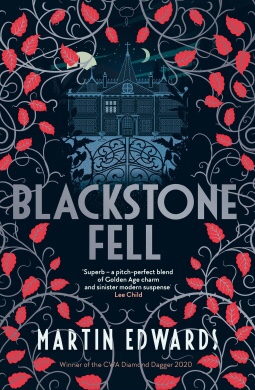
Rachel Savernake investigates a bizarre locked-room puzzle in this delicious Gothic mystery from the winner of the CWA Diamond Dagger.
1930. Nell Fagan is a journalist on the trail of a intriguing and bizarre mystery: in 1606, a man vanished from a locked gatehouse in a remote Yorkshire village, and 300 years later, it happened again. Nell confides in the best sleuth she knows, judge’s daughter Rachel Savernake. Thank goodness she did, because barely a week later Nell disappears, and Rachel is left to put together the pieces of the puzzle. Looking for answers, Rachel travels to lonely Blackstone Fell in Yorkshire, with its eerie moor and sinister tower. With help from her friend Jacob Flint – who’s determined to expose a fraudulent clairvoyant – Rachel will risk her life to bring an end to the disappearances and bring the truth to light.
A dazzling mystery peopled by clerics and medics; journalists and judges, Blackstone Fell explores the shadowy borderlands between spiritual and scientific; between sanity and madness; and between virtue and deadly sin.
It was the female characters that drew me into this interesting mystery that travels from London to the village of Blackstone Fell. Three particular women caught my eye and my imagination throughout the novel: Cornelia ‘Nell’ Fagan, Rachel Savernake, and the minor character of Ottilie Curle. All three women are very different from the usual heroines of Gothic Literature and a world away from their own Victorian mothers. In fact when I compared them with other women in the novel they don’t conform to the average respectable middle class lady one bit. Nell drew me into the story first, perhaps because she’s best described as ‘a bit of a character’. Everyone in Fleet Street knows her and she’s a regular in all the hang outs including the pub. Nell smokes cheroots, drinks like a fish, earns a living as a journalist, is a bit loose with the truth and loves to tell a story. Recently she’s lost her steady job and has been scouting around for stories that might enable her to start freelance work. She stumbles on the mystery of Blackstone Fell and there’s nothing better than a locked room puzzle to get the cogs turning. She bravely decides to undertake research on the ground and where better to stay than the very gatehouse where two men disappeared 300 years apart. She soon gets the message that there are people still living in the village who don’t want this story investigated. Realising it’s more than she can manage alone she begrudgingly asks for the help of Rachel Savernake. Can they solve the mystery together?
Rachel is another independent woman, financially independent and fiercely intelligent. She loves to solve mysteries especially those involving murders. She’s incredibly observant and perceptive, knowing immediately when Nell is spinning a yarn or lying by omission. She has certain standards for those who work alongside her, expecting loyalty and complete honesty. When these standards aren’t met she is ruthless in her decision to dispense with people. There’s a ruthlessness about her investigation technique too. When she finds information or solves a mystery, she doesn’t just hand over what she knows to the police. Sometimes that’s the right thing to do, sometimes she knows of a better way to dispense justice, whatever form that might take. One character suggests she plays God and there is an element of that in her personality; a certain arrogance that she’s right, combined with the self-belief that only she knows the best way for someone to pay for their actions. I was also fascinated by Tilly, the medium first consulted by Nell who reappears in the story. She’s from a background of poverty, using the only gift she has to make a living. I was interested in the way her appearance is depicted. Like Martha, who looks after Rachel, Tilly is a marked woman. Martha has a scarred face from a burn, whereas Tilly has a scarred neck from a thyroid condition. Marked women have quite a history in Victorian fiction and they are often used to make a point, like Rosa Dartle in Dickens’s David Copperfield. Martha’s scars are a contrast, enhancing the beauty of the rest of her face. Tilly’s scars and her obesity are used more like a smoke screen. People’s prejudices around women who are marked or deemed unattractive, can throw them off the truth about a person. The fact that her servant is a ‘Moor’, is another aspect that’s unconventional. I realised that Tilly might be all too aware of how people see her and has used that knowledge to hide behind their assumptions.
I loved the novel’s setting. Blackstone Fell couldn’t be more gothic. Not only does the village have a creepy gate lodge where two men have disappeared: there’s a tower that looks more like a folly rather than a practical home; the river with it’s beautiful, but dangerous fall, where one wrong step could mean being dragged into the water and dashed to death on the rocks below; the endless fog and boggy ground of the moor has it’s own dangers for those who’ve become lost or disoriented. Then there’s the sanatorium, with it’s isolated location, mysterious residents and methods. Finally there’s the vicarage, where the fire and brimstone vicar seems to have a disintegrating relationship with his much younger and highly strung wife. Phew! It was a lot to keep straight in my head at times.
The historical background is fascinating too. We’re between two world wars where so much change has occurred both for individuals and society. The social order has shifted, with more upward mobility, more freedom and improved rights for women. I loved the power dynamics at play here and the sense that these years are an in between space. The vicar and his wife illustrate the old Victorian, traditional idea of a women’s lot in life. It seems archaic when compared to the independent paths that Rachel, Nell and even Tilly have carved out for themselves. Tilly’s success as a medium echoes a societal trend, fuelled by the loss of loved ones, both in WW1 and due to Spanish Influenza. Through the medical men in the story, the author touches on the rise of Eugenics Theory at this time; the idea that there were weaker or lesser races and hereditary disabilities that needed to be eradicated. This could be used as a way to rid oneself of an unstable or inconvenient wife or an old uncle with dementia standing between someone and their inheritance. However, when applied to society at large it became the gateway to Mosley’s ‘BlackShirts’ and Hitler’s Final Solution. The plot itself is an interesting puzzle, although at times I did flounder a bit to remember all the aspects or keep characters in order. I’m willing to accept this might be my brain at fault, so I really welcomed the clue finder at the end of the book that helpfully showed me where to find clues for every thread. There were twists right up to the final page so I defy anyone to work it all out, before Rachel explains her reasoning and unmasks the villains. This was an intelligent mystery, with solid female characters, all set within a period of history that provides an unsettling backdrop to the action.
Meet The Author
Martin Edwards has received the CWA Diamond Dagger, the highest honour in British crime writing, given for the sustained excellence of his contribution to the genre. His recent novels include Mortmain Hall and Gallows Court, which was nominated for two awards including the CWA Historical Dagger. British librarians awarded him the CWA Dagger in the Library in 2018 in recognition of his body of work. His eight and latest Lake District Mystery is The Crooked Shore and earlier books in the series include The Coffin Trail, short-listed for the Theakston’s prize for best British crime novel. Seven books in his first series, featuring Liverpool lawyer Harry Devlin, starting with the CWA John Creasey Dagger-nominated All the Lonely People, have been reissued by Acorn in new editions with introductions by leading writers including Ann Cleeves and Val McDermid.
Martin is a well-known crime fiction critic, and series consultant to the British Library’s Crime Classics. His ground-breaking study of the genre between the wars, The Golden Age of Murder won the Edgar, Agatha, H.R.F. Keating and Macavity awards. The Story of Classic Crime in 100 Books won the Macavity and was nominated for four other awards, while Howdunit, a masterclass in crime writing by members of the Detection Club, won the H.R.F. Keating prize and was nominated for five other awards. His long-awaited history of the genre, The Life of Crime, will be published in May 2022. In addition Martin has written a stand-alone novel of psychological suspense, Take My Breath Away, and a much acclaimed novel featuring Dr Crippen, Dancing for the Hangman. He also completed Bill Knox’s last book, The Lazarus Widow. He has published many short stories, including the ebooks The New Mysteries of Sherlock Holmes and Acknowledgments and other stories. ‘The Bookbinder’s Apprentice‘ won the CWA Short Story Dagger, for which he has been nominated for three other stories. He has edited over 40 anthologies and published diverse non-fiction books, including a study of homicide investigation, Urge to Kill. An expert on crime fiction history, he is archivist of both the Crime Writers’ Association and the Detection Club. He was elected eighth President of the Detection Club in 2015, spent two years as Chair of the CWA, and posts regularly to his blog.
I simply love Historical Fiction and have a large section of my library dedicated to it. My favourite periods of history include the Wars of the Roses, The Tudors, Victorian England, and post-WW1. I’m interested in the Early Twentieth Century too: that shift from the 19th Century brings with it as huge change in women’s fashion, the Arts and Crafts movement, Art Nouveau, WW1 and social change. I love it all. These choices range from the 18th Century onwards all the way up to the present day.
Here it was that the ships sailed to San Francisco and further north. Here the Yoeme prisoners would have disembarked. Here the singer may have stood. Here she stands.
She should never have come.
Anna Hope’s latest novel is wildly ambitious with characters from across the centuries but in the same geographical space. The White Rock stands, ancient and sacred, off the Pacific coast of Mexico. Four people, across four centuries, each navigating ruptures to the world they know, are irresistibly drawn to it.
2020: A British writer travels with her husband to give thanks for the birth of their child. 1969: An American rock star runs from the law in the final act of his self-destruction. 1907: A Yoeme girl is torn from her homeland and taken by force to the coast. 1775: A Spanish naval officer prepares to set sail to continue the conquest of the Pacific coast.
As the White Rock bears witness to the truth that they are not the first to face days of reckoning, is there still a chance they might not be the last?
Published by Penguin Fig Tree on 20th August 2022
Another author whose last book I loved is Francis Quinn and this looks to be brilliant too. So much so that I have pre-ordered a very special copy. She creates such living and breathing characters that I feel they exist outside the novel! This one has such a great name too. It’susual, they say, for a young person coming to London for the first time to arrive with a head full of dreams. Well, Endurance Proudfoot did not. When she stepped off the coach from Sussex, on a warm and sticky afternoon in the summer of 1757, it never occurred to her that the city would be the place where she’d make her fortune; she was just very annoyed to be arriving there at all.
Meet Endurance Proudfoot, the bonesetter’s daughter: clumsy as a carthorse, with a tactless tongue and a face she’s sure only a mother could love. Durie only wants one thing in life – to follow her father and grandfather into the family business of bonesetting. It’s a physically demanding job, requiring strength, nerves of steel and discretion – and not the job for a woman. But Durie isn’t like other women. She’s strong and stubborn and determined to get her own way. And she finds that she has a talent at bonesetting – her big hands and lack of grace have finally found their natural calling.
So, when she is banished to London with her sister, who is pretty, delicate and exactly the opposite to Durie in every way, Durie will not let it stop her realising her dreams. And while her sister will become one of the first ever Georgian celebrities, Durie will become England’s first and most celebrated female bonesetter. But what goes up must come down, and Durie’s elevated status may well become her undoing. I love that the author’s main characters represent difference. Her hero in The Smallest Man, Nat Davey the Queen’s dwarf. Endurance isn’t the delicate, feminine woman we expect in the 18th Century. She’s big in body and personality. More heroines like this please!
Published by Simon and Schuster U.K. 5th October 2022
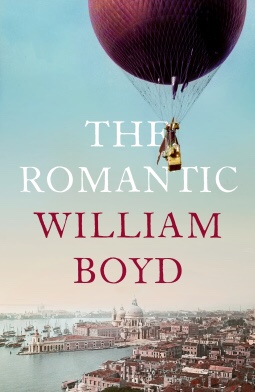
William Boyd’s incredible novel Any Human Heart is one of my favourite books of all time. So I’m always looking out for a new novel. I haven’t yet read The Romantic but I’m looking forward to it as there’s a comparison to be made with one of my other favourite novels, Kate Atkinson’s Life After Life.
Soldier. Farmer. Felon. Writer. Father. Lover. One man, many lives.
From one of Britain’s best-loved and bestselling writers comes an intimate yet panoramic novel set across the nineteenth century. Born in 1799, Cashel Greville Ross experiences myriad lives: joyous and devastating, years of luck and unexpected loss. Moving from County Cork to London, from Waterloo to Zanzibar, Cashel seeks his fortune across continents in war and in peace. He faces a terrible moral choice in a village in Sri Lanka as part of the East Indian Army. He enters the world of the Romantic Poets in Pisa. In Ravenna he meets a woman who will live in his heart for the rest of his days. As he travels the world as a soldier, a farmer, a felon, a writer, a father, a lover, he experiences all the vicissitudes of life and, through the accelerating turbulence of the nineteenth century, he discovers who he truly is. This is the romance of life itself, and the beating heart of The Romantic.
Published by Penguin- Fig Tree 6th October 2022.
For as long as Signa Farrow has been alive, the people in her life have fallen like stars . . .
Described as ‘a deliciously deadly Gothic romance’ by Stephanie Garber, this book feels like a guilty pleasure. Nineteen-year-old Signa, orphaned as a baby, has been raised by a string of guardians, each more interested in her wealth than her wellbeing – and each has met an untimely end. Her remaining relatives are the elusive Hawthornes, an eccentric family living at Thorn Grove, an estate both glittering and gloomy. It’s patriarch mourns his late wife through wild parties, while his son grapples for control of the family’s waning reputation and his daughter suffers from a mysterious illness. But when their mother’s restless spirit appears claiming she was poisoned, Signa realizes that the family she depends on could be in grave danger, and enlists the help of a surly stable boy to hunt down the killer. Signa’s best chance of uncovering the murderer, though, is an alliance with Death himself, a fascinating, dangerous shadow who has never been far from her side. Though he’s made her life a living hell, Death shows Signa that their growing connection may be more powerful – and more irresistible – than she ever dared imagine. This sounds delicious, with all the themes I love – gothic fiction, love, romance, desire and betrayal.
Published by Hodder & Stoughton 30th August 2022.
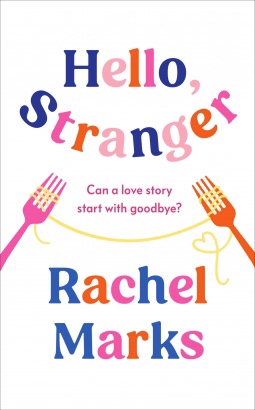
Back to the 21st Century for this new novel from Rachel Marks. I love her novels because they are so well observed and feel real. I feel like I could go to the local supermarket and bump into one of her characters. Her books are a great combination of romance and characters with real human flaws. Our couple this time are Jamie and Lucy, and from their very first date, they know they’ve met THE ONE. They’re as different as night and day. Jamie’s a home bird, while Lucy’s happiest on holiday. He has a place for everything – she can never find her keys. Yet, somehow, they make each other happier than they ever thought possible. So why does their story start with them saying ‘goodbye’? And does this really have to be the end . . . ? Described as relatable, romantic and heartbreakingly real, HELLO, STRANGER proves that the best love stories often have the most unexpected endings. What I love most about her books is the work her characters do on themselves, whether that’s having therapy, visiting AA or just asking someone else for help. She leaves the reader with a sense of hope, that we can change for the better. This is so uplifting and inspiring.
Published by Penguin- Michael Joseph on August 18th 2022.
In 1940, eighteen-year old Juliet Armstrong is reluctantly recruited into the world of espionage. Sent to an obscure department of MI5 tasked with monitoring the comings and goings of British Fascist sympathizers, she discovers the work to be by turns both tedious and terrifying. But after the war has ended, she presumes the events of those years have been relegated to the past for ever.
Ten years later, now a producer at the BBC, Juliet is unexpectedly confronted by figures from her past. A different war is being fought now, on a different battleground, but Juliet finds herself once more under threat. A bill of reckoning is due, and she finally begins to realize that there is no action without consequence.
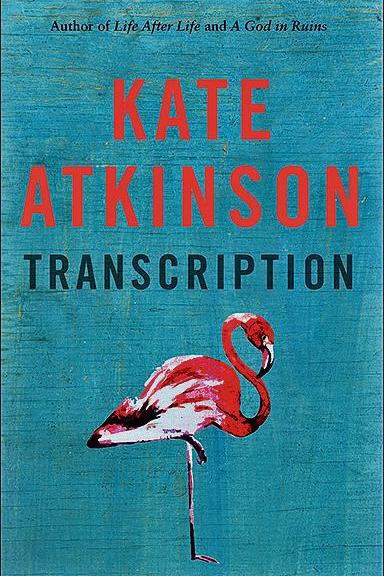
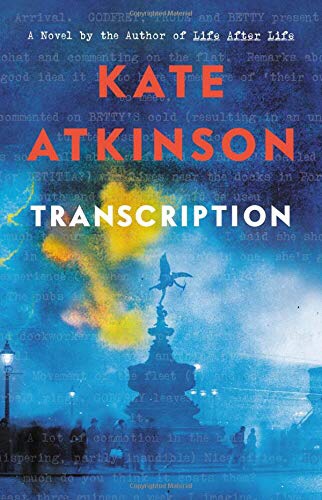
Transcription is a work of rare depth and texture, a bravura modern novel of extraordinary power, wit and empathy. It is a triumphant work of fiction from one of this country’s most exceptional writers.
“No other contemporary novelist has such supreme mastery of that sweet spot between high and low, literary and compulsively readable as Kate Atkinson. I look forward to a new Atkinson book like I look forward to Christmas…what lends the novel enchantment is that patented Atkinson double whammy: gravity and levity. Tragedy and comedy as so skilfully entwined that you find yourself snorting with mirth…brimming with dark wit that reminds you how deeply satisfying good fiction can be.” (Alison Pearson, Sunday Telegraph).
I couldn’t have expressed my thoughts on a new Kate Atkinson novel more clearly than Alison Pearson does above. I’ve been very aware of her new novel Shrines of Gaiety approaching and as a huge fan of her work there is always that push and pull between wanting to read it immediately and being scared of opening it in case I don’t like it. It actually took me well over a year to read Transcription. I think it was because of how much I loved and felt emotionally connected to brother and sister Teddy and Ursula, from Life After Life and A God In Ruins. The latter genuinely made me weep for a character who wasn’t real. When I finally resolved to give it a go it didn’t grab my attention immediately and I worried, but it did impress me with its historical detail and the extreme setting of wartime London. The feel of Juliet’s various workplaces were so well described I could almost smell them – that dusty, old paper smell of offices. There is a strange feeling of truth and fiction overlapping all the time. In interview, Atkinson says that places and characters are complete inventions, but her inventions are informed by the real things. This is the crux of this novel, nothing is what it seems, not even the words on the page.
This is one of those books where I really had to concentrate to follow the story, but I’m not claiming to have picked up all the clues that were there. Other reviewers have claimed to have seen clues quite early on that suggested how Juliet Armstrong’s personal viewpoints were formed and where this placed her allegiances. Concentration is also vital towards the end of the novel where there’s a lot of flitting back and forth and I struggled at times to keep track of who was who. I was reduced to reading sections a couple of times to establish a character in my mind, although their allegiances were another story. Most work for MI5 so none of them are ever what they seem, and just because of where may work, whether for a person or organisation, it doesn’t mean their sympathies are truly with that cause? Everyone is hiding something, whether in their personal or working life. Peregrine Gibbons isn’t just deceiving others, when it comes to his sexuality he’s deceiving himself too. Oliver Alleyne could be working for any organisation and Juliet doesn’t trust him from the off, but isn’t she hiding her true self too? The dog shows the most loyalty, depending on who owns it at the time of course. Again truth and fiction collide as Kate Atkinson references real operatives from within the service, some of which are well known. Those incredibly well-educated Oxbridge men, hiding both their homosexuality and their allegiances towards Russia, possibly based on Philby and McLean.
I feel that Atkinson presents Juliet as a sympathetic character. I think we were supposed to like her, but who is the real Juliet? I found myself admiring her ability to become other characters and her lying is almost a compulsion. She also steals very well. We shouldn’t trust her and if I met her in real life I’d probably dislike her so it’s a strange psychological trick the author is pulling off. Juliet Armstrong is, of course, an orphan recruited by MI5 during WW2. It was her headmistress who recommended Juliet to a man she knew in the service. We are never told whether she was also an agent, but she assured Juliet that “they need girls like you” whether that refers to her orphan status, her education, or her natural deceptive tendencies we are never told. I loved the way her mind worked. Her brain has two specific tics: she automatically finds rhymes for the words she hears; if she hears an expression her mind conjures up the literal meaning, so ‘cat got your tongue?’ becomes a disgusting picture in her brain. When the service moved her away from transcription to infiltration of a right-wing group, I thought they were perhaps based on an Oswald Mosley type figure and his supporters, a subject I’ve lays been interested in. A lot of women were recruited at this time, but from other books I have read recently such as The Whalebone Theatre they usually had excellent bilingual language skills or mathematical abilities. We’re not sure exactly what Juliet brings to the table, but maybe that’s her gift.
The novel moves around in time, from the war to the 1950s and as late as the 1980s. I was constantly wondering if she’d really ever stopped working for MI5. She works for the BBC in schools broadcasting, a section that contained an element of humour, but even so old loyalties and memories of her wartime adventures start to intrude. Could she still be working behind the scenes? Atkinson has used incredible sleight of hand with her ending, showing that nothing is as it seems in the intelligence community. We can never be sure of anyone’s true loyalties and just as Juliet’s typewritten words are merely a representation of what’s happening next door, any book about the Secret Service is merely a representation, no matter how well researched. I felt very aware that I was only reading one version of story, where all the different strands are as complicated as a tapestry. This book is best read in long sessions so as not to lose the threads. It rewards the reader with a heroine as intriguing, complex and intelligent as the story.
Meet The Author
Kate Atkinson is an international bestselling novelist, as well as playwright and short story writer. She is the author of Life After Life; Transcription; Behind the Scenes at the Museum, a Whitbread Book of the Year winner; the story collection Not the End of the World; and five novels in the Jackson Brodie crime series, which was adapted into the BBC TV show Case Histories.
‘Helen leaned close enough to fog the mirror with her breath and whispered, ‘You, my girl, are a qualified medical almoner and at eight o’clock tomorrow morning you will be on the front line of the National Health Service of Scotland.’ Her eyes looked huge and scared. ‘So take a shake to yourself!”
In Edinburgh, 1948. Helen Crowther leaves her crowded tenement for her own office in a doctor’s surgery. She is aware of other people’s opinions and disapproval- ‘Upstart, ungrateful, out of your depth’ – but she’s determined to take part in this incredible new service that will help so many people. She’s not even settled in when she blunders into a murder. Even though Edinburgh is the most respectable of cities, no one wants to stand up for justice, but Helen is determined to find the killer. She’s taken into a world she didn’t know existed, it’s darker than her own as hard as her own can be. Disapproval is now the least of her worries. Helen, known as Nelly, takes on a newly created position within the NHS, as a Medical Welfare Almoner. This was a position based within the free hospitals that is the forerunner to a hospital social worker. The very first almoner in the U.K. was Mary Stewart, appointed at the Royal Free Hospital of central London in 1895. The Royal Free was a charitable hospital and gave free medical treatment to those patients considered morally deserving, but unable to afford medical care. An Almoner would means test patient to ensure that only those deemed “appropriate” received free medical treatment. However, Stewart slowly reshaped her role of and fashioned the position into a medical social worker, referring patients to other means of medical and charitable assistance, visiting patients’ homes, and training almoners for positions at other voluntary hospitals.
Nelly is there in the role’s infancy and while she’s still finding her bearings in her new job she begins to notices that all is not as it should be. Nelly isn’t the type of person to brush things under the carpet, so she starts to investigate. There is so much more there than she expects, especially when a body is found in the garden of the house she’s been living in as part of her employment. Even then her curiosity about cause of death and any motive pushes her to carry on investigating, even if it puts her in danger. I felt like I really understood Nelly. I loved her no-nonsense attitude and her dogged refusal to let things go. She wants to make a difference to the patients she sees at the hospital and it was fascinating to be taken back to the birth of the NHS and see how it was implemented. New patients had no idea what help they were entitled to and no-one, even those working in it, fully knew how it worked. I thought that the title was a clever nod to Aneurin Bevan’s own book of the same name.
The mystery was clever and well paced, it kept me reading and surprised me at times, but it wasn’t my favourite part of the novel. I’m used to Edinburgh based stories taking me to the university and male dominated academia, which also suggests people of a certain class. The author focuses on the blue collar, working people of the city. We see a generation and class still struggling in the aftermath of war. This is the beginning of universal health care; health for everyone, not just those who can afford it. The writer gripped me from page one by bringing to life the sights, sounds, and smells of this point and place in time. As someone who has needed the NHS more than most, I found it so interesting to see how it began from a character working on the frontline and making tough decisions.
Meet The Author
Catriona McPherson was born in the village of Queensferry in south-east Scotland and left Edinburgh University with a PhD in Linguistics. Her historical fiction has been short-listed for the CWA Ellis Peters award and long-listed for Theakston’s Crime Novel of the Year, as well as winning two Agathas, two Macavitys, and four Leftys in the USA. Catriona lives most of the year in northern California, spends summers in Scotland, and writes full time in both.