Posted in Random Things Tours

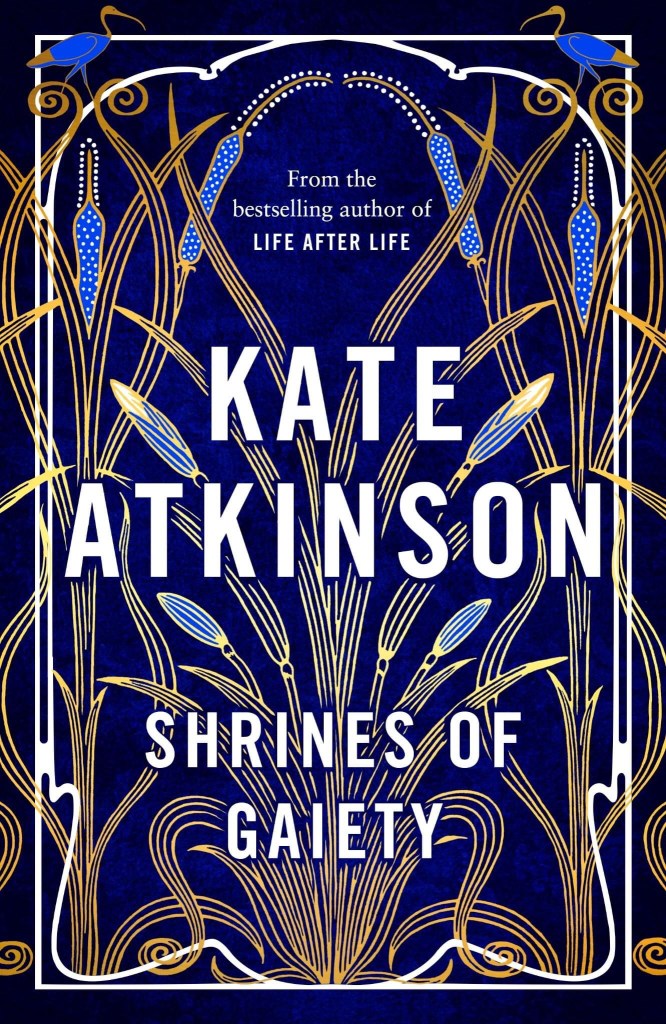
Shrines of Gaiety by Kate Atkinson

Kate Atkinson transported me right into the centre of that fascinating time between two World Wars: the glittering hour, the roaring twenties, the age of the flappers and the Bright Young Things. It feels like a period of madness, where a generation turns to decadence in their determination to move beyond mourning and death. Gwendolen Kelling travels to London for the first time since the funeral of the Unknown Warrior and she’s shocked by the change of mood. From the ‘enshrouded city’ that was ‘sternly armoured in the breastplate of grief’ to a place invigorated and ‘dressed for spring’. After a war spent nursing those horrifically injured in combat, Gwendolen is ready for anything. She’s down from York on a mission for a friend to find two teenage girls who’ve run away to London to be dancers. Freda and Florence are young and naive with, perhaps, an inflated sense of their own talent. Gwendolen’s search brings her into the orbit of Nellie Coker, matriarch of a family running a series of clubs that are as jewelled as their names – the Amethyst being their first. From time to time she hires dancing girls, hostesses available to dance with the patrons. Nellie is fresh out of prison and needs to stamp her authority on her family and those in the criminal fraternity who have been circling her businesses ever since she went inside. Gwendolen comes into the sphere of DI Frobisher too, someone else keen on observing the Cokers. So far he’s been relying on his officer Maddox to infiltrate the family, but he’s unsure on which side Maddox’s loyalties truly lie. Could the unlikely Miss Kelling be able to walk the tightrope between the police and the Queen of Clubs (and amateur psychic) Nellie Coker? Kate Atkinson explores this period of history through the dark underbelly of London and a gruesome series of murders, whilst also commenting on the act of writing itself.

Atkinson tells her tale through a series of interrelated characters who have no idea of the small world they’re inhabiting. Two of Nellie’s sons show very different ways of operating within this world and their family. Niven is the strong, silent and possibly sinister, elder son. Quietly loyal, he pops up here and there with his equally loyal dog. He has the enigmatic quality of Peaky Blinder’s Tommy Shelby – someone playing so many sides, it’s impossible to know the outcome he’s working for. There is a gentleman underneath, capable of the big romantic gesture, but makes no promises and likes to stay in control. Younger brother, Ramsay, is entirely opposite, out of control in every way he can be – drugs, alcohol and gambling. Unfortunately in the Coker’s world such vices leave you open to manipulation and there are vulture’s circling. Barman Quinn is one such character – obligingly close by when Ramsay is in need of a little pick-me-up or a means of floating away from Nellie and Niven’s disappointment or his own feelings of inadequacy. Ramsay has a dream of writing the great modernist novel, one that chronicles the age and captures the decadence of London’s nightlife. A gritty crime novel is his aim where his detective shines a light on the dope, the gangs, the parties, the fancy-dress, the gambling and even the Bright Young Things. He aims to weave a tapestry of all those threads and even has a title – The Age of Glitter. This clever device, where Ramsay is writing the very book in which he’s a character, is typical Atkinson brilliance.

I loved the character of Freda, the fearless teenager who has run away with her lumpen friend Florence. Blithely sure of her abilities to dance and to survive in the capital. She’s possibly underestimated her talent and the dangers they both face. She’s plucky and I was really willing her to succeed. We know something Freda doesn’t though, raising the tension for the reader. DI Frobisher knows that girls are going missing and many end up being fished out of the Thames in a terrible state. Will Freda be one of them? Gwendolen Kelling is intriguing and the epitome of a modern woman. After being at the tough end of military nursing her eyes have been opened. She has money from her mother’s will, more than she expected since both her brothers were killed in the war. As a woman of means she can now make independent choices and has no one (no man) to stop her travelling to London. She finds a suitable boarding house with a respectable landlady, but once she starts to make enquiries she finds herself treading a very fine line between the Cokers and the Police. She’s on a night undercover with Constable Cobb when a fight breaks out that leaves a gang member on the dance floor with copious amounts of blood pouring from a chest wound. Gwendolen is in her element and takes charge, stemming the blood flow and requesting everything she needs to treat the wound. It brings her to the attention of Nellie and her son, Niven. With Constable Cobb disappearing into the night, Niven treats Gwendolen to a suite at The Savoy and sends her a brand new dress from Liberty to replace the one covered in blood. Gwendolen is almost torn between these two opposing men she’s met – the dashing and mysterious Niven who gives off ‘wounded hero’ vibes or the principled and distinguished Frobisher? However, it’s Nellie who makes a proposal. Could Gwendolen manage the Crystal Club for her? With a beautifully appointed and very pink flat on offer above the club, this could be the best opportunity to spy for Frobisher and to find Freda?
My only gripe with the novel is that sometimes I wanted to spend more time with a character than I could. I wanted to follow where Florence went and I would have loved to spend more time with Niven. The structure isn’t always the easiest to follow, but it does work as a series of threads interwoven to create a tapestry. Each named chapter flits between points of view. Sometimes we go backwards in time such as Frobisher’s war and the meeting of his wife Lottie, who is deranged by grief and mute. We also look into Gwedolen’s painful history with her manipulative mother. We might flit between two different characters whose worlds overlap, but have no real knowledge of each other, then we get two consecutive accounts of the same event. We are slowly building up to knowing the whole picture, but everyone has their own colour to paint. I wondered whether the fractured structure was also a comment on the historical period and massive social change that has occurred since before WWI. It’s a period I’m particularly interested in and Atkinson has really nailed the aftermath of war, especially how it affected each gender differently. Women were pushing forward, pursuing their own dreams and their own means. War has necessitated their move beyond the domestic sphere and into the world of work. Once men returned from war they expected their jobs back and some companies had reserved jobs for returning soldiers, but obviously the great loss of life meant the jobs market still needed women. As it was a lot of men were without work and their expectations of having a wife at home were dashed. Attacks on women were more common, especially where there was unrest around a particular workplace.

I found the blatant misogyny that Freda encounters hard to read at times, especially when it’s clear how young she is. She’s preyed upon by a West End theatre manager, men in clubs and even an on duty police officer when she visits the station to report Florence as missing. The assumption that she’s young and unaccompanied, therefore must be a prostitute, really shocks her. The women in this book are often in danger, not just from the killer, but from any man they encounter. However, Niven and Frobisher could not be further apart in terms of occupation and background, but both treat Gwedolen like a gentleman, even if there’s a assumption underneath that she can’t look after herself. We see social mobility in the Coker’s rise to become wealthy, through the growth of their businesses and Nellie’s understanding that the younger generation want to party and forget. Their wealth lets them rub shoulders with a huge range of people from Maltese gangsters, to wealthy socialites the Bright Young Things. Ramsay attends ‘spielers’ with everyone from the aristocracy to hardened criminals. There’s even mention of a member of the Royal Family brushing shoulders with the Cokers. I found myself making comparisons with the television series Peaky Blinders, both families are caught up in the period’s state of flux, moving them beyond the confines of their class, but do the upper echelons of society truly accept them?

I loved that Atkinson used Ramsay’s writing journey in the beginning and ending of her novel. I found myself smiling at his ambition to write a crime novel that was also ‘a razor sharp dissection of the various strata of society in the wake of the destruction of war’. Shirley, his sister, complains he is trying to shoe-horn too much into the novel and asks why doesn’t he just stick with the crime? Ramsay works as Atkinson’s own doubts and the mental journey she takes while writing, but also echoes those outside criticisms we often hear about crime novels not being literary. I read criticism after Atkinson’s last Jackson Brodie novel that she puts way too much – poetry, philosophy – into a crime novel. As if these things are too high brow for crime readers. Putting aside a book’s need to be marketable, writing can surely be whatever the author wants it to be and shouldn’t have to conform rigidly to a set of genre rules? In the end Atkinson succeeds where Ramsay struggles and has produced a novel as eclectic as the age it represents and just as dazzling, glittering and fascinatingly dark.
Meet The Author
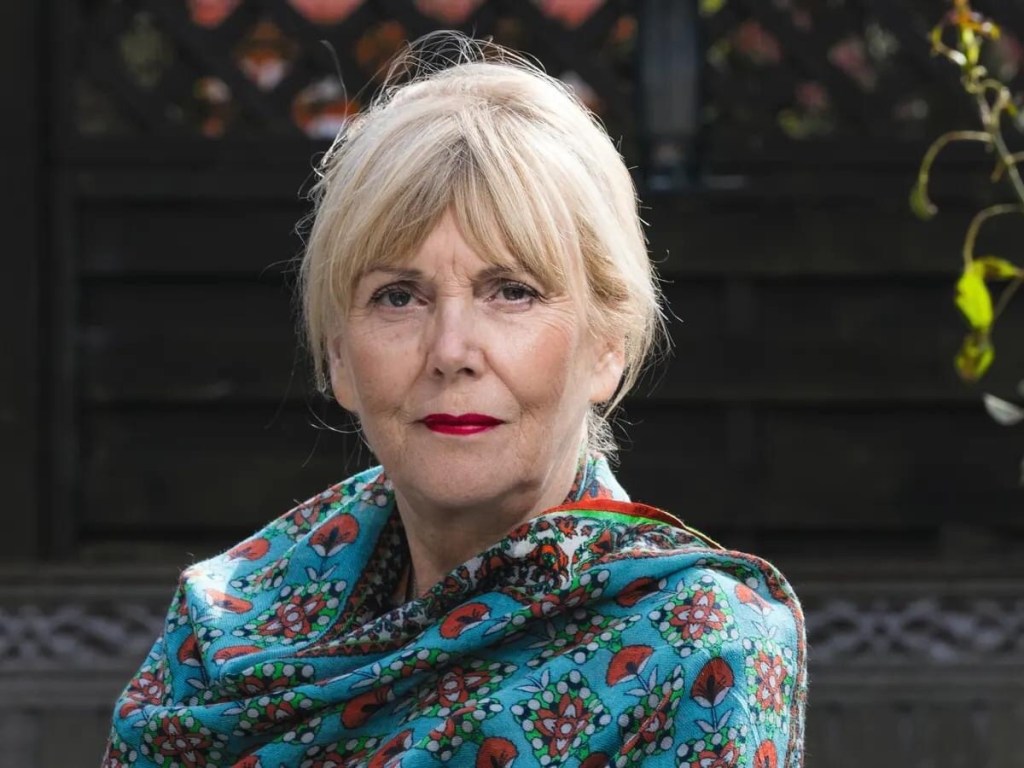
Kate Atkinson is an international bestselling novelist, as well as playwright and short story writer. She is the author of Life After Life; Transcription; Behind the Scenes at the Museum, a Whitbread Book of the Year winner; the story collection Not the End of the World; and five novels in the Jackson Brodie crime series, which was adapted into the BBC TV show Case Histories. The BBC adaptation of Life After Life is on the iPlayer now.
Posted in Netgalley

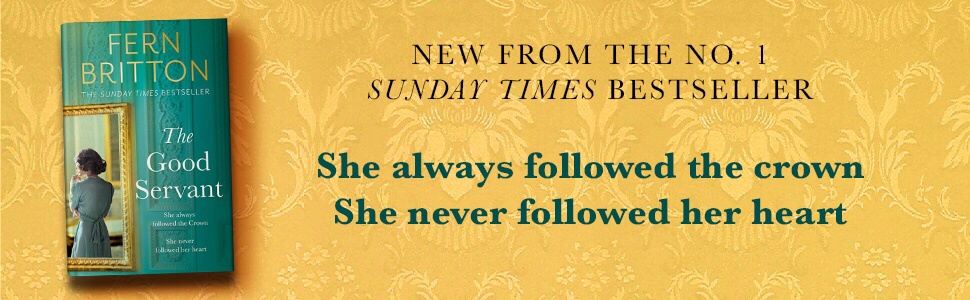
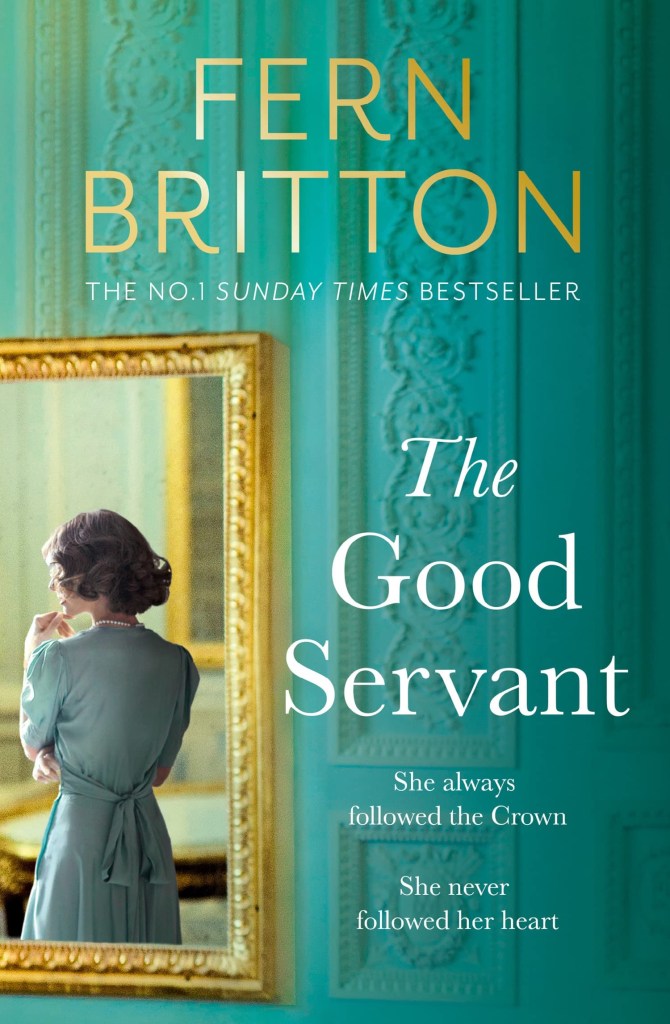
The Good Servant by Fern Britton

I wrote this review a fortnight ago, before the events of the last week. I’m always torn at times when there’s huge royal news, because I’m caught up between my ideals and the sheer spectacle of the event. It’s a trick that Kings and Queens have used throughout history, knowing that they are unpopular with some elements of society, they use the pomp and ceremony to charm and overwhelm them. I’ve lost count of how many times I’ve heard someone interviewed this week and they’ve said ‘I’m not really a Royalist, but the Queen’s done a great job, or has been a constant presence in my life.’ In a time of recession and a cost of living crisis, I have still seen people subjected to a ‘pile on’ on social media if they’ve dared to suggest that the state funeral will be costing a fortune. Heaven forbid they mention the problematic aspects of Queen Elizabeth’s reign from imperialism to her steadfast support of her son Andrew. I think when someone has lived as long as Queen Elizabeth, there will always be societal changes that cast earlier choices in a bad light. However, I do have a complex relationship with the Royal Family, from really loving Princess Diana when I was a little girl, to learning more about the aspects I find worrying, such as the denial of the Queen’s two Bowes-Lyon cousins who had multiple disabilities and were placed in an institution, but declared as dead. I hate the way Diana and now the Duchess of Suffolk were treated and how the love lives of Princess Margaret and even the now King, Charles III, were meddled with by older family members. I was shocked to realise that Prince Phillip’s sisters were married to members of the Nazi Party. The goings on behind the scenes are always fascinating though. The shadowy men in grey suits who actually run the show, schooled in the constitution and making sure that what comes first is the crown above all. It was this behind the scenes fascination that brought this book to my attention. I’ll admit that I’m usually a bit of a snob when it comes to celebrity books. Comedians and journalists are writing all the time, but when someone’s a presenter I never know what I’m going to get from a novel. I gave this a go because of how interested I am in the history of the Royal Family and I should admit to being an avid watcher of The Crown. I thought the story might be diverting at least, but I was actually pleasantly surprised to find myself truly involved with the story of Crawfie.

Fern Britton’s novel takes us back to London between the wars, a rather turbulent time of constant change; socially, economically and culturally. We travel back and forth between 1932 and 1936. In 1932 Marion Crawford is looking forward to a career as a teacher, when an opportunity presents itself. Unexpectedly, she is offered the role of governess to two Princesses. Elizabeth and Margaret are the granddaughters of George V from his second son, the Duke of York and his wife Elizabeth Bowes-Lyon (our Queen Mum). Just four years later and a huge change rocks the royal household, George V’s death paves the way for his eldest son David to succeed him as King. Choosing the regnal name Edward VIII, he is a rather controversial figure amongst the establishment, often disregarding court protocol and conventions and sometimes appearing too political. Edward causes concerns in his choice of companion too, the twice divorced American Wallis Simpson. His abdication, to marry the woman he loves changes the course of history and everyday life for the princesses and their governess. This unexpected constitutional crisis means Crawfie’s life will change forever. It has already been an adjustment to become part of a royal household and now she finds herself in this new position with new responsibilities – governess to the future Queen. The author really does portray this change well, always relating back to how this feels for our heroine, an ordinary young girl given extraordinary responsibility. Marion Crawford is our representative in this novel; the ordinary person living in the extraordinary. As a result we see familiar events from history made immediate and brought vividly to life, with the same sense of wonder and bewilderment that Crawfie feels.

I felt I was in the hands of an expert storyteller as this novel unfolded and I did feel Crawfie’s trepidation at the changes this brought to her life. It was so refreshing to see a well documented part of history told from the angle of a worker in the household, but someone who is neither upstairs or downstairs, but in that liminal role of governess. She is respectable, but not royal. She works for the family, but isn’t a servant. It’s a unique position, but sometimes a lonely one too. She is at the very heart and the future of the Royal Family, but will never be one of them. The author really brought this home to me, the individual working with the Royals must be available whenever they’re needed, no matter how lowly the position. It’s her future and position in this household that Crawfie must consider when she falls in love with George. He may be the love of her life, but can she choose him over her life with the princesses? I loved the sense of loyalty she feels, both to the Crown and her young charges. If she chooses them, their lives will become her life and they will be her children. Would this loyalty be repaid?

I won’t spoil the book by talking about the reality of Marion Crawford’s decision at this time and how her life played out, but she was torn between George and the royals her entire life. The author has told a story that’s an incredible glimpse into the Royal Family at this turbulent time. I felt like I was there as a fly on the wall! I ended up whipping through the story so quickly, possibly because it flows beautifully. There is no doubt about the extensive research that’s gone into the novel, but it wears this research lightly and never lapses into telling us what happened rather than showing us. This is both charming and thought provoking, giving us a glimpse of what it means to have a sense of duty, whether as a Queen or her governess. This was made all the more poignant this week, when most people who were asked what they admired about our Queen said it was her incredible sense of duty. Of course that duty can be eased by the riches and privilege of being a head of state. It must be so much harder to have such a strong sense of duty and loyalty without those benefits or the companionship of a family. Fern Britton has really brought a minor player in the history of our Royal Family to life with this novel and it would draw me to her writing in the future.

Published by Harper Collins 9th June 2022.

Meet The Author

Fern Britton is an English television presenter and journalist who has worked in current affairs and Newsrooms since 1980. In the 1990’s she hosted Ready Steady Cook for the BBC and through the 2000’s presented ITV’s flagship daytime magazine This Morning. Since then she has discovered the joy of writing novels and The Good Servant is her tenth. It is a breakaway from her usual theme of Cornish village life by the sea. The Good Servant focuses on a real woman who spent her twenties and thirties devoted to Princess Elizabeth and Princess Margaret as children. Fern lives in Cornwall with her four children and three cats.

Posted in Publisher Proof

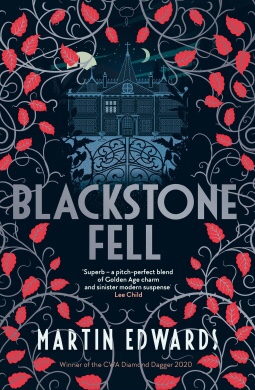
Blackstone Fell by Martin Edwards

Rachel Savernake investigates a bizarre locked-room puzzle in this delicious Gothic mystery from the winner of the CWA Diamond Dagger.

1930. Nell Fagan is a journalist on the trail of a intriguing and bizarre mystery: in 1606, a man vanished from a locked gatehouse in a remote Yorkshire village, and 300 years later, it happened again. Nell confides in the best sleuth she knows, judge’s daughter Rachel Savernake. Thank goodness she did, because barely a week later Nell disappears, and Rachel is left to put together the pieces of the puzzle. Looking for answers, Rachel travels to lonely Blackstone Fell in Yorkshire, with its eerie moor and sinister tower. With help from her friend Jacob Flint – who’s determined to expose a fraudulent clairvoyant – Rachel will risk her life to bring an end to the disappearances and bring the truth to light.

A dazzling mystery peopled by clerics and medics; journalists and judges, Blackstone Fell explores the shadowy borderlands between spiritual and scientific; between sanity and madness; and between virtue and deadly sin.

It was the female characters that drew me into this interesting mystery that travels from London to the village of Blackstone Fell. Three particular women caught my eye and my imagination throughout the novel: Cornelia ‘Nell’ Fagan, Rachel Savernake, and the minor character of Ottilie Curle. All three women are very different from the usual heroines of Gothic Literature and a world away from their own Victorian mothers. In fact when I compared them with other women in the novel they don’t conform to the average respectable middle class lady one bit. Nell drew me into the story first, perhaps because she’s best described as ‘a bit of a character’. Everyone in Fleet Street knows her and she’s a regular in all the hang outs including the pub. Nell smokes cheroots, drinks like a fish, earns a living as a journalist, is a bit loose with the truth and loves to tell a story. Recently she’s lost her steady job and has been scouting around for stories that might enable her to start freelance work. She stumbles on the mystery of Blackstone Fell and there’s nothing better than a locked room puzzle to get the cogs turning. She bravely decides to undertake research on the ground and where better to stay than the very gatehouse where two men disappeared 300 years apart. She soon gets the message that there are people still living in the village who don’t want this story investigated. Realising it’s more than she can manage alone she begrudgingly asks for the help of Rachel Savernake. Can they solve the mystery together?

Rachel is another independent woman, financially independent and fiercely intelligent. She loves to solve mysteries especially those involving murders. She’s incredibly observant and perceptive, knowing immediately when Nell is spinning a yarn or lying by omission. She has certain standards for those who work alongside her, expecting loyalty and complete honesty. When these standards aren’t met she is ruthless in her decision to dispense with people. There’s a ruthlessness about her investigation technique too. When she finds information or solves a mystery, she doesn’t just hand over what she knows to the police. Sometimes that’s the right thing to do, sometimes she knows of a better way to dispense justice, whatever form that might take. One character suggests she plays God and there is an element of that in her personality; a certain arrogance that she’s right, combined with the self-belief that only she knows the best way for someone to pay for their actions. I was also fascinated by Tilly, the medium first consulted by Nell who reappears in the story. She’s from a background of poverty, using the only gift she has to make a living. I was interested in the way her appearance is depicted. Like Martha, who looks after Rachel, Tilly is a marked woman. Martha has a scarred face from a burn, whereas Tilly has a scarred neck from a thyroid condition. Marked women have quite a history in Victorian fiction and they are often used to make a point, like Rosa Dartle in Dickens’s David Copperfield. Martha’s scars are a contrast, enhancing the beauty of the rest of her face. Tilly’s scars and her obesity are used more like a smoke screen. People’s prejudices around women who are marked or deemed unattractive, can throw them off the truth about a person. The fact that her servant is a ‘Moor’, is another aspect that’s unconventional. I realised that Tilly might be all too aware of how people see her and has used that knowledge to hide behind their assumptions.

I loved the novel’s setting. Blackstone Fell couldn’t be more gothic. Not only does the village have a creepy gate lodge where two men have disappeared: there’s a tower that looks more like a folly rather than a practical home; the river with it’s beautiful, but dangerous fall, where one wrong step could mean being dragged into the water and dashed to death on the rocks below; the endless fog and boggy ground of the moor has it’s own dangers for those who’ve become lost or disoriented. Then there’s the sanatorium, with it’s isolated location, mysterious residents and methods. Finally there’s the vicarage, where the fire and brimstone vicar seems to have a disintegrating relationship with his much younger and highly strung wife. Phew! It was a lot to keep straight in my head at times.

The historical background is fascinating too. We’re between two world wars where so much change has occurred both for individuals and society. The social order has shifted, with more upward mobility, more freedom and improved rights for women. I loved the power dynamics at play here and the sense that these years are an in between space. The vicar and his wife illustrate the old Victorian, traditional idea of a women’s lot in life. It seems archaic when compared to the independent paths that Rachel, Nell and even Tilly have carved out for themselves. Tilly’s success as a medium echoes a societal trend, fuelled by the loss of loved ones, both in WW1 and due to Spanish Influenza. Through the medical men in the story, the author touches on the rise of Eugenics Theory at this time; the idea that there were weaker or lesser races and hereditary disabilities that needed to be eradicated. This could be used as a way to rid oneself of an unstable or inconvenient wife or an old uncle with dementia standing between someone and their inheritance. However, when applied to society at large it became the gateway to Mosley’s ‘BlackShirts’ and Hitler’s Final Solution. The plot itself is an interesting puzzle, although at times I did flounder a bit to remember all the aspects or keep characters in order. I’m willing to accept this might be my brain at fault, so I really welcomed the clue finder at the end of the book that helpfully showed me where to find clues for every thread. There were twists right up to the final page so I defy anyone to work it all out, before Rachel explains her reasoning and unmasks the villains. This was an intelligent mystery, with solid female characters, all set within a period of history that provides an unsettling backdrop to the action.

Meet The Author

Martin Edwards has received the CWA Diamond Dagger, the highest honour in British crime writing, given for the sustained excellence of his contribution to the genre. His recent novels include Mortmain Hall and Gallows Court, which was nominated for two awards including the CWA Historical Dagger. British librarians awarded him the CWA Dagger in the Library in 2018 in recognition of his body of work. His eight and latest Lake District Mystery is The Crooked Shore and earlier books in the series include The Coffin Trail, short-listed for the Theakston’s prize for best British crime novel. Seven books in his first series, featuring Liverpool lawyer Harry Devlin, starting with the CWA John Creasey Dagger-nominated All the Lonely People, have been reissued by Acorn in new editions with introductions by leading writers including Ann Cleeves and Val McDermid.

Martin is a well-known crime fiction critic, and series consultant to the British Library’s Crime Classics. His ground-breaking study of the genre between the wars, The Golden Age of Murder won the Edgar, Agatha, H.R.F. Keating and Macavity awards. The Story of Classic Crime in 100 Books won the Macavity and was nominated for four other awards, while Howdunit, a masterclass in crime writing by members of the Detection Club, won the H.R.F. Keating prize and was nominated for five other awards. His long-awaited history of the genre, The Life of Crime, will be published in May 2022. In addition Martin has written a stand-alone novel of psychological suspense, Take My Breath Away, and a much acclaimed novel featuring Dr Crippen, Dancing for the Hangman. He also completed Bill Knox’s last book, The Lazarus Widow. He has published many short stories, including the ebooks The New Mysteries of Sherlock Holmes and Acknowledgments and other stories. ‘The Bookbinder’s Apprentice‘ won the CWA Short Story Dagger, for which he has been nominated for three other stories. He has edited over 40 anthologies and published diverse non-fiction books, including a study of homicide investigation, Urge to Kill. An expert on crime fiction history, he is archivist of both the Crime Writers’ Association and the Detection Club. He was elected eighth President of the Detection Club in 2015, spent two years as Chair of the CWA, and posts regularly to his blog.

Posted in Fiction Preview 2022

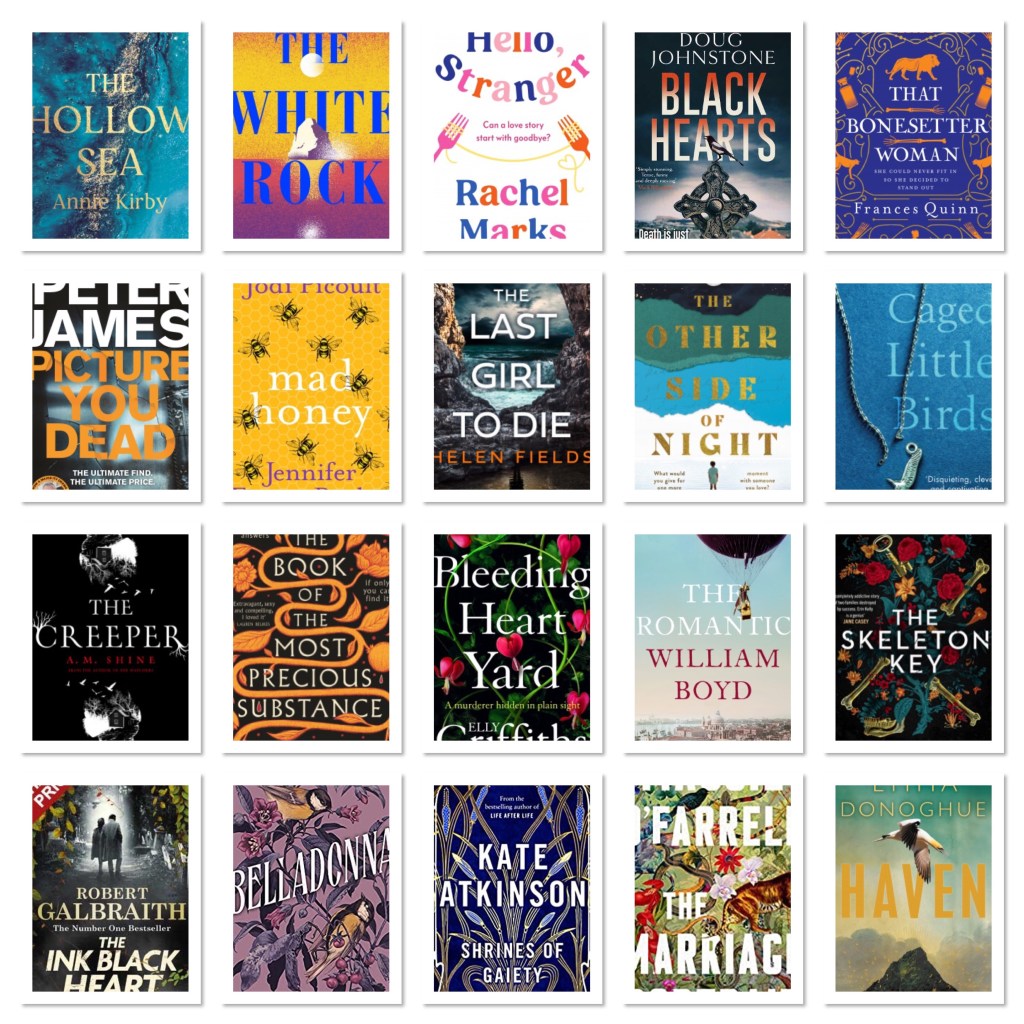
Sunday Spotlight! Autumn Fiction: Historical Fiction and Romance.

I simply love Historical Fiction and have a large section of my library dedicated to it. My favourite periods of history include the Wars of the Roses, The Tudors, Victorian England, and post-WW1. I’m interested in the Early Twentieth Century too: that shift from the 19th Century brings with it as huge change in women’s fashion, the Arts and Crafts movement, Art Nouveau, WW1 and social change. I love it all. These choices range from the 18th Century onwards all the way up to the present day.

Here it was that the ships sailed to San Francisco and further north.
Here the Yoeme prisoners would have disembarked.
Here the singer may have stood.
Here she stands.

She should never have come.

Anna Hope’s latest novel is wildly ambitious with characters from across the centuries but in the same geographical space. The White Rock stands, ancient and sacred, off the Pacific coast of Mexico. Four people, across four centuries, each navigating ruptures to the world they know, are irresistibly drawn to it.

2020: A British writer travels with her husband to give thanks for the birth of their child.
1969: An American rock star runs from the law in the final act of his self-destruction.
1907: A Yoeme girl is torn from her homeland and taken by force to the coast. 
1775: A Spanish naval officer prepares to set sail to continue the conquest of the Pacific coast. 

As the White Rock bears witness to the truth that they are not the first to face days of reckoning, is there still a chance they might not be the last?

Published by Penguin Fig Tree on 20th August 2022

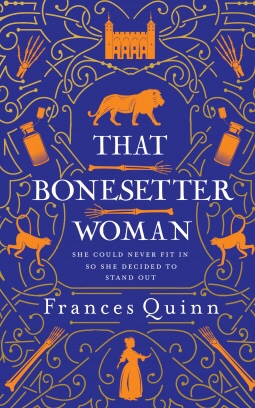
Another author whose last book I loved is Francis Quinn and this looks to be brilliant too. So much so that I have pre-ordered a very special copy. She creates such living and breathing characters that I feel they exist outside the novel! This one has such a great name too. It’s usual, they say, for a young person coming to London for the first time to arrive with a head full of dreams. Well, Endurance Proudfoot did not. When she stepped off the coach from Sussex, on a warm and sticky afternoon in the summer of 1757, it never occurred to her that the city would be the place where she’d make her fortune; she was just very annoyed to be arriving there at all.

Meet Endurance Proudfoot, the bonesetter’s daughter: clumsy as a carthorse, with a tactless tongue and a face she’s sure only a mother could love. Durie only wants one thing in life – to follow her father and grandfather into the family business of bonesetting. It’s a physically demanding job, requiring strength, nerves of steel and discretion – and not the job for a woman. But Durie isn’t like other women. She’s strong and stubborn and determined to get her own way. And she finds that she has a talent at bonesetting – her big hands and lack of grace have finally found their natural calling.

So, when she is banished to London with her sister, who is pretty, delicate and exactly the opposite to Durie in every way, Durie will not let it stop her realising her dreams. And while her sister will become one of the first ever Georgian celebrities, Durie will become England’s first and most celebrated female bonesetter. But what goes up must come down, and Durie’s elevated status may well become her undoing. I love that the author’s main characters represent difference. Her hero in The Smallest Man, Nat Davey the Queen’s dwarf. Endurance isn’t the delicate, feminine woman we expect in the 18th Century. She’s big in body and personality. More heroines like this please!

Published by Simon and Schuster U.K. 5th October 2022

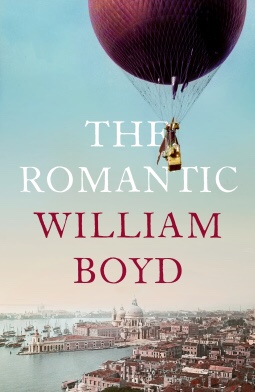
William Boyd’s incredible novel Any Human Heart is one of my favourite books of all time. So I’m always looking out for a new novel. I haven’t yet read The Romantic but I’m looking forward to it as there’s a comparison to be made with one of my other favourite novels, Kate Atkinson’s Life After Life.

Soldier. Farmer. Felon. Writer. Father. Lover.
One man, many lives.

From one of Britain’s best-loved and bestselling writers comes an intimate yet panoramic novel set across the nineteenth century. Born in 1799, Cashel Greville Ross experiences myriad lives: joyous and devastating, years of luck and unexpected loss. Moving from County Cork to London, from Waterloo to Zanzibar, Cashel seeks his fortune across continents in war and in peace. He faces a terrible moral choice in a village in Sri Lanka as part of the East Indian Army. He enters the world of the Romantic Poets in Pisa. In Ravenna he meets a woman who will live in his heart for the rest of his days. As he travels the world as a soldier, a farmer, a felon, a writer, a father, a lover, he experiences all the vicissitudes of life and, through the accelerating turbulence of the nineteenth century, he discovers who he truly is. This is the romance of life itself, and the beating heart of The Romantic.

Published by Penguin- Fig Tree 6th October 2022.

For as long as Signa Farrow has been alive, the people in her life have fallen like stars . . .

Described as ‘a deliciously deadly Gothic romance’ by Stephanie Garber, this book feels like a guilty pleasure. Nineteen-year-old Signa, orphaned as a baby, has been raised by a string of guardians, each more interested in her wealth than her wellbeing – and each has met an untimely end. Her remaining relatives are the elusive Hawthornes, an eccentric family living at Thorn Grove, an estate both glittering and gloomy. It’s patriarch mourns his late wife through wild parties, while his son grapples for control of the family’s waning reputation and his daughter suffers from a mysterious illness. But when their mother’s restless spirit appears claiming she was poisoned, Signa realizes that the family she depends on could be in grave danger, and enlists the help of a surly stable boy to hunt down the killer. Signa’s best chance of uncovering the murderer, though, is an alliance with Death himself, a fascinating, dangerous shadow who has never been far from her side. Though he’s made her life a living hell, Death shows Signa that their growing connection may be more powerful – and more irresistible – than she ever dared imagine. This sounds delicious, with all the themes I love – gothic fiction, love, romance, desire and betrayal.

Published by Hodder & Stoughton 30th August 2022.

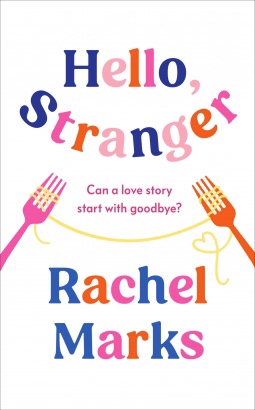
Back to the 21st Century for this new novel from Rachel Marks. I love her novels because they are so well observed and feel real. I feel like I could go to the local supermarket and bump into one of her characters. Her books are a great combination of romance and characters with real human flaws. Our couple this time are Jamie and Lucy, and from their very first date, they know they’ve met THE ONE. They’re as different as night and day. Jamie’s a home bird, while Lucy’s happiest on holiday. He has a place for everything – she can never find her keys. Yet, somehow, they make each other happier than they ever thought possible. So why does their story start with them saying ‘goodbye’? And does this really have to be the end . . . ? Described as relatable, romantic and heartbreakingly real, HELLO, STRANGER proves that the best love stories often have the most unexpected endings. What I love most about her books is the work her characters do on themselves, whether that’s having therapy, visiting AA or just asking someone else for help. She leaves the reader with a sense of hope, that we can change for the better. This is so uplifting and inspiring.

Published by Penguin- Michael Joseph on August 18th 2022.

Posted in Throwback Thursday

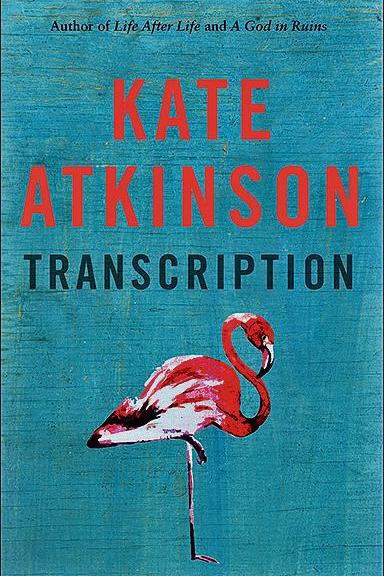
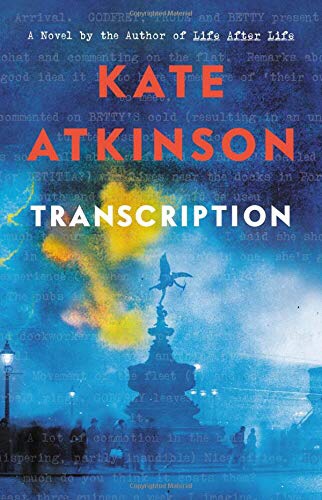
Throwback Thursday: Transcription by Kate Atkinson.

In 1940, eighteen-year old Juliet Armstrong is reluctantly recruited into the world of espionage. Sent to an obscure department of MI5 tasked with monitoring the comings and goings of British Fascist sympathizers, she discovers the work to be by turns both tedious and terrifying. But after the war has ended, she presumes the events of those years have been relegated to the past for ever.

Ten years later, now a producer at the BBC, Juliet is unexpectedly confronted by figures from her past. A different war is being fought now, on a different battleground, but Juliet finds herself once more under threat. A bill of reckoning is due, and she finally begins to realize that there is no action without consequence.

Transcription is a work of rare depth and texture, a bravura modern novel of extraordinary power, wit and empathy. It is a triumphant work of fiction from one of this country’s most exceptional writers.

“No other contemporary novelist has such supreme mastery of that sweet spot between high and low, literary and compulsively readable as Kate Atkinson. I look forward to a new Atkinson book like I look forward to Christmas…what lends the novel enchantment is that patented Atkinson double whammy: gravity and levity. Tragedy and comedy as so skilfully entwined that you find yourself snorting with mirth…brimming with dark wit that reminds you how deeply satisfying good fiction can be.” (Alison Pearson, Sunday Telegraph).

I couldn’t have expressed my thoughts on a new Kate Atkinson novel more clearly than Alison Pearson does above. I’ve been very aware of her new novel Shrines of Gaiety approaching and as a huge fan of her work there is always that push and pull between wanting to read it immediately and being scared of opening it in case I don’t like it. It actually took me well over a year to read Transcription. I think it was because of how much I loved and felt emotionally connected to brother and sister Teddy and Ursula, from Life After Life and A God In Ruins. The latter genuinely made me weep for a character who wasn’t real. When I finally resolved to give it a go it didn’t grab my attention immediately and I worried, but it did impress me with its historical detail and the extreme setting of wartime London. The feel of Juliet’s various workplaces were so well described I could almost smell them – that dusty, old paper smell of offices. There is a strange feeling of truth and fiction overlapping all the time. In interview, Atkinson says that places and characters are complete inventions, but her inventions are informed by the real things. This is the crux of this novel, nothing is what it seems, not even the words on the page.

This is one of those books where I really had to concentrate to follow the story, but I’m not claiming to have picked up all the clues that were there. Other reviewers have claimed to have seen clues quite early on that suggested how Juliet Armstrong’s personal viewpoints were formed and where this placed her allegiances. Concentration is also vital towards the end of the novel where there’s a lot of flitting back and forth and I struggled at times to keep track of who was who. I was reduced to reading sections a couple of times to establish a character in my mind, although their allegiances were another story. Most work for MI5 so none of them are ever what they seem, and just because of where may work, whether for a person or organisation, it doesn’t mean their sympathies are truly with that cause? Everyone is hiding something, whether in their personal or working life. Peregrine Gibbons isn’t just deceiving others, when it comes to his sexuality he’s deceiving himself too. Oliver Alleyne could be working for any organisation and Juliet doesn’t trust him from the off, but isn’t she hiding her true self too? The dog shows the most loyalty, depending on who owns it at the time of course. Again truth and fiction collide as Kate Atkinson references real operatives from within the service, some of which are well known. Those incredibly well-educated Oxbridge men, hiding both their homosexuality and their allegiances towards Russia, possibly based on Philby and McLean.

I feel that Atkinson presents Juliet as a sympathetic character. I think we were supposed to like her, but who is the real Juliet? I found myself admiring her ability to become other characters and her lying is almost a compulsion. She also steals very well. We shouldn’t trust her and if I met her in real life I’d probably dislike her so it’s a strange psychological trick the author is pulling off. Juliet Armstrong is, of course, an orphan recruited by MI5 during WW2. It was her headmistress who recommended Juliet to a man she knew in the service. We are never told whether she was also an agent, but she assured Juliet that “they need girls like you” whether that refers to her orphan status, her education, or her natural deceptive tendencies we are never told. I loved the way her mind worked. Her brain has two specific tics: she automatically finds rhymes for the words she hears; if she hears an expression her mind conjures up the literal meaning, so ‘cat got your tongue?’ becomes a disgusting picture in her brain. When the service moved her away from transcription to infiltration of a right-wing group, I thought they were perhaps based on an Oswald Mosley type figure and his supporters, a subject I’ve lays been interested in. A lot of women were recruited at this time, but from other books I have read recently such as The Whalebone Theatre they usually had excellent bilingual language skills or mathematical abilities. We’re not sure exactly what Juliet brings to the table, but maybe that’s her gift.

The novel moves around in time, from the war to the 1950s and as late as the 1980s. I was constantly wondering if she’d really ever stopped working for MI5. She works for the BBC in schools broadcasting, a section that contained an element of humour, but even so old loyalties and memories of her wartime adventures start to intrude. Could she still be working behind the scenes? Atkinson has used incredible sleight of hand with her ending, showing that nothing is as it seems in the intelligence community. We can never be sure of anyone’s true loyalties and just as Juliet’s typewritten words are merely a representation of what’s happening next door, any book about the Secret Service is merely a representation, no matter how well researched. I felt very aware that I was only reading one version of story, where all the different strands are as complicated as a tapestry. This book is best read in long sessions so as not to lose the threads. It rewards the reader with a heroine as intriguing, complex and intelligent as the story.

Meet The Author


Kate Atkinson is an international bestselling novelist, as well as playwright and short story writer. She is the author of Life After Life; Transcription; Behind the Scenes at the Museum, a Whitbread Book of the Year winner; the story collection Not the End of the World; and five novels in the Jackson Brodie crime series, which was adapted into the BBC TV show Case Histories.

Posted in Netgalley

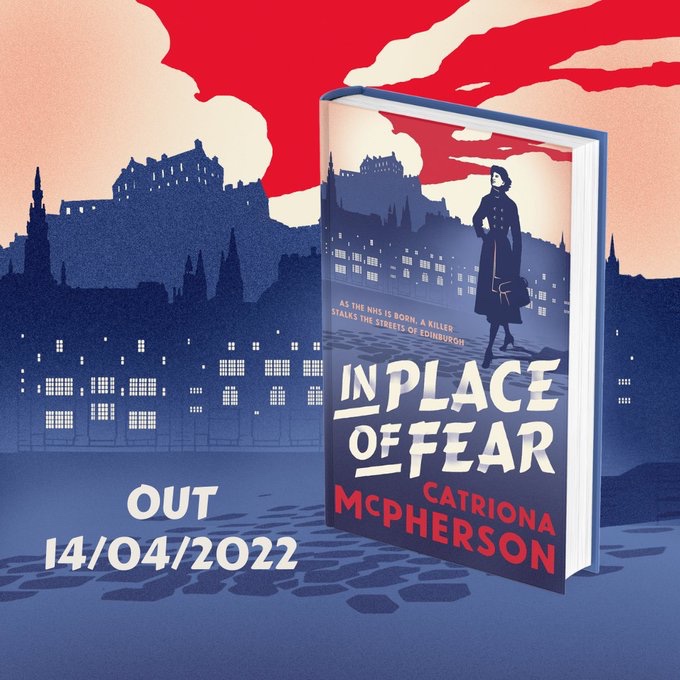
In a Place of Fear by Catriona McPherson.

‘Helen leaned close enough to fog the mirror with her breath and whispered, ‘You, my girl, are a qualified medical almoner and at eight o’clock tomorrow morning you will be on the front line of the National Health Service of Scotland.’ Her eyes looked huge and scared. ‘So take a shake to yourself!”

In Edinburgh, 1948. Helen Crowther leaves her crowded tenement for her own office in a doctor’s surgery. She is aware of other people’s opinions and disapproval- ‘Upstart, ungrateful, out of your depth’ – but she’s determined to take part in this incredible new service that will help so many people. She’s not even settled in when she blunders into a murder. Even though Edinburgh is the most respectable of cities, no one wants to stand up for justice, but Helen is determined to find the killer. She’s taken into a world she didn’t know existed, it’s darker than her own as hard as her own can be. Disapproval is now the least of her worries. Helen, known as Nelly, takes on a newly created position within the NHS, as a Medical Welfare Almoner. This was a position based within the free hospitals that is the forerunner to a hospital social worker. The very first almoner in the U.K. was Mary Stewart, appointed at the Royal Free Hospital of central London in 1895. The Royal Free was a charitable hospital and gave free medical treatment to those patients considered morally deserving, but unable to afford medical care. An Almoner would means test patient to ensure that only those deemed “appropriate” received free medical treatment. However, Stewart slowly reshaped her role of and fashioned the position into a medical social worker, referring patients to other means of medical and charitable assistance, visiting patients’ homes, and training almoners for positions at other voluntary hospitals.

Nelly is there in the role’s infancy and while she’s still finding her bearings in her new job she begins to notices that all is not as it should be. Nelly isn’t the type of person to brush things under the carpet, so she starts to investigate. There is so much more there than she expects, especially when a body is found in the garden of the house she’s been living in as part of her employment. Even then her curiosity about cause of death and any motive pushes her to carry on investigating, even if it puts her in danger. I felt like I really understood Nelly. I loved her no-nonsense attitude and her dogged refusal to let things go. She wants to make a difference to the patients she sees at the hospital and it was fascinating to be taken back to the birth of the NHS and see how it was implemented. New patients had no idea what help they were entitled to and no-one, even those working in it, fully knew how it worked. I thought that the title was a clever nod to Aneurin Bevan’s own book of the same name.

The mystery was clever and well paced, it kept me reading and surprised me at times, but it wasn’t my favourite part of the novel. I’m used to Edinburgh based stories taking me to the university and male dominated academia, which also suggests people of a certain class. The author focuses on the blue collar, working people of the city. We see a generation and class still struggling in the aftermath of war. This is the beginning of universal health care; health for everyone, not just those who can afford it. The writer gripped me from page one by bringing to life the sights, sounds, and smells of this point and place in time. As someone who has needed the NHS more than most, I found it so interesting to see how it began from a character working on the frontline and making tough decisions.

Meet The Author

Catriona McPherson was born in the village of Queensferry in south-east Scotland and left Edinburgh University with a PhD in Linguistics. Her historical fiction has been short-listed for the CWA Ellis Peters award and long-listed for Theakston’s Crime Novel of the Year, as well as winning two Agathas, two Macavitys, and four Leftys in the USA. Catriona lives most of the year in northern California, spends summers in Scotland, and writes full time in both.

Posted in Netgalley

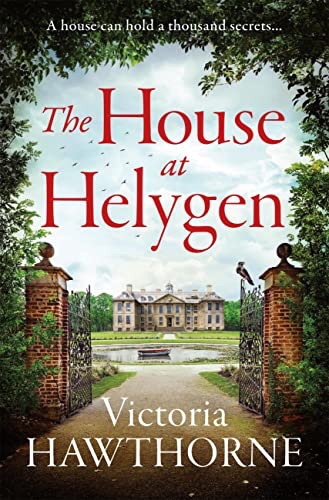
The House at Helygen by Victoria Hawthorne

An atmospheric historical suspense novel rich with familial secrets. The House at Helygen is a twisted tale of dark pasts, murderous presents and uncertain futures.

2019

When Henry Fox is found dead in his ancestral home in Cornwall, the police rule it a suicide, but his pregnant wife, Josie, believes it was murder. Desperate to make sense of Henry’s death she embarks on a quest to learn the truth, all under the watchful eyes of Henry’s overbearing mother. Josie soon finds herself wrestling against the dark history of Helygen House and ghosts from the past that refuse to stay buried.

1881

Eliza is the new bride who arrives at Helygen House with excitement at the new life she’s embarked upon. Yet when she meets her new mother-in-law, an icy and forbidding woman, her dreams of a new life are dashed. And when Eliza starts to hear voices in the walls of the house, she begins to fear for her sanity and her life.

Can Josie piece together the past to make sense of her present, or will the secrets of Helygen House and its inhabitants forever remain a mystery?

1881. Harriet and Edmund Fox were the first owners of Helygen House, a country retreat that, as is the usual in moneyed families, has ever since passed down the to the eldest male heir. From the original owners in 1847, it then passed to Eliza and Cassius Fox in 1881. Eliza has to spend a lot of time alone, because Cassius is away looking after his business interests. Eliza starts to feel lonely and misses her family. Not only that, there’s an eerie feeling in the house and Eliza’s is sure she’s heard voices at night and a baby is crying. Eliza daren’t tell anyone as she thinks she might be going mad.

2019: Henry Fox is found dead at his ancestral home in Cornwall. The police are quick to rule out foul play, because it looks to them like suicide. His wife Josie, who is pregnant, won’t believe Henry has killed himself. Yet his mother Alice is satisfied with the suicide verdict. Josie finds it difficult to deal with this woman, who has always held herself above Josie, as if she wasn’t good enough to be part of the family. She knows how excited Henry was about becoming a father, they had spent so much time getting their apartment renovated and even had plans to start a business together at the house. Something isn’t right and even through her grief Josie is absolutely determined to find the truth. As far as she’s concerned there’s a murderer somewhere at Helygen. Her mother-in-law’s attitude hasn’t helped Josie settle, but she has to admit the atmosphere has always been strange. There’s a strange feeling she can’t place, a haunting perhaps?

I enjoy dual timelines and this is a triple as we alternate between the 1840’s, the 1880’s and the present. It’s important that each timeline is equally interesting so it doesn’t just feel like a narrative device. Here I think they work. It feels as if Eliza and Josie are working together, even though they’re separated by centuries. Both are convinced that Helygen House has a dark past, that still lingers within the walls. The many tragic deaths over the years are starting to look sinister, even if it is just the eerie sensation and the voices driving occupants towards madness. There are enough family secrets to keep the tale moving forward and there is a continuous feeling of suspense to keep the reader wanting one more chapter. I loved the added theme of motherhood and how it might feel to be a new mum in a house like this one, where it really can’t help when sleeplessness and night feeds are brought into the mix. The place feels suitably Gothic whichever timeline you’re in and from the start I believed in this world completely. It does keep the reader guessing and I found myself wanting to know if the storyline resolved itself for both women. It was also interesting to add in the question of women’s rights in past centuries and compare it to the present day. A great, suspenseful and spooky novel with the gorgeous backdrop of Cornwall.

Published 14th April 2022 Quercus

Meet The Author


Victoria Hawthorne is a pseudonym of bestselling psychological suspense author Vikki Patis. She writes atmospheric historical suspense rich with familial secrets and strong female protagonists. THE HOUSE AT HELYGEN will be published in April 2022 by Quercus.

Posted in Netgalley

An Italian Girl in Brooklyn by Santa Montefiore

We all remember that incredible feeling of first love, more than likely with rose tinted glasses, full of nostalgia and novelty. It was on my mind while reading this book, mainly that joyful moment when you realise that they actually love you too. It’s intoxicating. The first time I fell in love, I leapt in feet first and had my heart broken, but I held a candle for him for many years and had it set in my mind as a perfect love. With a lot of years and a bit more wisdom, I can see it differently. However, I was always be grateful for the experience, because it showed me how great my capacity for love was. How much better would this experience be when I was ready for it, if it came my way again? Our novel follows Evelina, a young woman living in a remote part of northern Italy. She lives with her parents, her sister Benedetta and two formidable old ladies, her grandmother and great aunt. Life is peaceful for most of the time, but as WW2 looms closer there are changes both personal and for the whole of Italy. The influence of Hitler and his agreements with Italy’s leader Mussolini, will change all of their lives forever.

The central relationship in the novel illustrates these changes most dramatically. People of the Jewish faith have lived in Evelina’s village for so long they are simply part of the fabric of the place. Evelina has never realised that their village tailors, the Zanotti family, are Jewish, so when she meets their son Ezra she can’t imagine any obstacles to the way she feels, apart from some parental misgivings about his ability to support her. Yet, the outside world is about to come crashing in on the tentative feelings growing between these two young people. Within Evelina’s family circle, it is Benedetta’s new husband who brings the new politics into their midst. A staunch supporter of Mussolini, he is behind Hitler’s initiative to rid Europe of Jewish people. When he brings his views to the breakfast table, Evelina’s father says his views are not welcome in his home. Sadly, Benedetta then leaves dutifully with her husband bringing a rift between them. They’ve heard terrible stories, of Jewish people being taken to a prison camp in the far North of Italy before being placed on a train bound for Auschwitz- Birkenau. Friends start to plead with Ezra’s father to leave and knowing what’s coming. When it does, Ezra evades capture and joins the Resistance. Evelina creates a safe space in their chapel for Resistance fighters to rest and replenish themselves. After a brief and family sanctioned relationship, with a Jewish girl from the village who worked for Evelina’s family, the closeness of war and the threat to his family combine to influence Ezra. He breaks his promise to her and comes to Evelina, assuring her of his long held love for her, despite their religious difference. He wants to be true to his emotions rather than please his parents. Thus far he had seen Evelina as out of reach, now a blissful courtship develops. As summer blooms alongside their love, they create memories neither will ever forget. So, when he is captured, Evelina’s grief is devastating. Yet, she waits until the news confirms the worst; Ezra and his entire family are dead. With the Italy she knows gone forever Evelina makes a huge decision, she will cross the Atlantic and make the voyage to New York to live with her aunty, in Brooklyn.

Evelina’s story is told across two time periods, forty years after the war in Brooklyn, then back in time to WW2 Italy as she has flashbacks. She’a now 63 and married to an older professor called Franklin, with whom she has a family. She has built a lovely, welcoming home for her family and their close friends, usually other immigrants from Italy and the much beloved Uncle Topino and her Aunt Madelina. It’s a loving environment and her relationship with Franklin is a very loving one, even though part of her heart will always belong to Ezra.

And their love for each other had deepened. She loved Ezra still, she would never stop loving him, but she loved Franklin too. It was, indeed, possible to love two men in very different ways. She realized now, in her wisdom, that there were many faces to love.’

This really is a sweeping epic with a central love story that stayed with me, although I had so much respect for Evelina’s husband Franklin too. I didn’t know a lot about Italy’s role during WW2 and the background research did open my eyes to how they ended up drawn into Hitler’s plans for the future. It shows how the Nazi’s ideology broke up previously peaceful communities and even families like Evelina’s. She and her sister are very close, but she has to circumvent Benedetta’s husband to communicate with her. When he’s eventually called up to fight, the sisters are reunited and the family live together through the rest of the war. I loved the connections and help both sisters give to the Resistance, both of them with relationships torn apart by war in very different ways. This was a beautiful story where familial love is concerned, but the central love story is heart rending and has a twist that will truly surprise you. I often find love stories lacking in substance, but this wasn’t one of them. It was my first Santa Montefiore novel, but I’m very sure it won’t be my last.

Published by Simon and Schuster 7th July 2022

Born in England in 1970, Santa Montefiore grew up in Hampshire. She is married to writer Simon Sebag Montefiore. They live with their two children, Lily and Sasha, in London. Visit her at http://www.santamontefiore.co.uk.

Posted in Netgalley, Publisher Proof

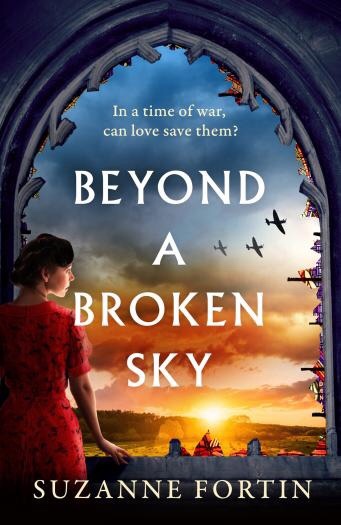
Beyond a Broken Sky by Suzanne Fortin

Beyond A Broken Sky by Suzanne Fortin

I’m a big fan of historical fiction and Suzanne Fortin cemented her place as an author to look out for when I read her debut novel The Forgotten Life of Arthur Pettinger. Her combination of time-slip narrative, history and romance is irresistible. I’m interested in the stories people don’t tell us about themselves and the years spent at war often feel like a parallel dimension where people and stories were lost. People died, became displaced, or were simply too traumatised to relive the events of those years. For many, their ordinary every day lives stopped in 1939 and they lived a completely different life away from friends and family, with a new occupation and a changing sense of self. They could act completely out of character in the high pressure of combat or became worn down by the difficulties of being a civilian in a bombed city, living on rations and making new friendships with the unlikeliest people.To then return and pack everything that’s happened neatly away to restart where you left off seems impossible, but many people did. How often do we hear people say that their father or grandfather never talked about the war? My own father-in-law had been sent to a Russian work camp in Siberia, because his father was in the military. His brother didn’t survive, but he and his Mum escaped and lived in a forest camp with the Polish resistance, gradually walking their way down through the Middle East, across Northern Africa and into Europe and eventually England. I would never have known this incredible story if I hadn’t seen a photo of him as a boy, standing in front of the pyramids. My mother-in-law was a child in the Warsaw Ghetto who escaped through the sewer system. Yet neither dwelled on that life, preferring to look forward where life was less painful. Suzanne’s novels fill that gap, that silence where someone’s experience is perhaps too painful to share. She writes these stories that are often complex and present something new about the war, and about people, that I hand’s thought of before.

It just happened that I’d read Ruth Druart’s The Last Hours in Paris and Joanna Quinn’s The Whalebone Theatre very recently, both of which included characters who were enemy prisoners of war, brought to English camps, but often released into the community to help out farmers or do other work that helped the Allied war effort. Some of these men waited up to three years after the war ended to be returned to their homeland and working within communities led to friendships and relationships with some British people. In Fortin’s latest novel we are taken to Somerset in 2022. Telton Hall is the home of Jack Hartwell, a farmer in his eighties, trying to come to terms with the compulsory purchase of his land and home. Rhoda Campbell is a stained glass expert and restorer, visiting to look at a stained glass window designed by POW Paulo Sartori. She works for a museum that conserves old historic buildings and they hope to move the whole chapel and window to their site. However she finds Jack blocking the driveway in his tractor, in the hope of delaying a little bit longer. It takes Rhoda’s charm and the arrival of his son Nate to get things moving again. As the three of them look at the chapel, Jack’s terrier disappears down a gap between flagstones. Rhoda lays on her front to see where he’s gone and makes a terrible discovery, human bones buried underneath the flagstones. This puts in place a chain of events that reaches all the way back to WW2 and has an effect on Rhoda whose own brother is a missing person.

The story alternates between 2022 with Rhoda’s urge to investigate the mystery she’s uncovered and back to the end of WWII when a young woman called Alice Renshaw finds herself pregnant to an American airman, Brett. As she prepares to marry Brett at the village church, Alice is so happy even though it’s an uncertain future she faces, possibly over in America. However, Brett doesn’t turn up at the church and thanks to his father’s connections he is transferred out of the country immediately. Alice is heartbroken. A few weeks later she’s at Telton Hall, where Louise Hartwell takes on young girls ‘in trouble’ and finds homes for their babies with couples who can’t have children. Louise is also still running the farm, with the help of Jack who is ten, his step-brother Billy, who needs to walk with a stick after being wounded. There are also two Italian POW’s helping with the produce gardens, one of whom is Paolo Sartori. Every time the book delves into the past we hear a little more about the story of Telton Hall, the diverse characters staying there and the connections they form with each other. Each time we go back to WW2, we’re getting closer to the answers and the tension builds, while in the present those that would like Rhoda silenced, come ever closer.

I was gripped by the drama of Telton Hall in the 1930’s and desperate for the hateful Billy to get his just desserts before he can permanently hurt anyone. In the present I was convinced I wouldn’t like the answers to the mystery. I was worried that it would have an impact on characters I’d become attached to, who might have only acted badly due to the extreme circumstances. The ending was a surprise and gave me the answers, as well as putting a smile on my face knowing that there was a happy ending for some. I loved Alice’s ability to trust and love after her experience with Brett. I felt the author really captured that sense of displacement and dislocation that many felt during the war, their separation from ‘normal’ life and the way their actions within that time had repercussions for years to come. Ultimately, the story shows us the amazing ability we humans have to heal, our incredible resilience and capacity to love. This could manifest in holding on to a love that won’t die or in finding we have an endless capacity of love, even when our experiences have shown us a depth of loss that seems insurmountable. For Rhoda it means the possibility of letting love in, despite having no blue print of family life from her own childhood. This book is heartfelt and moving, showing us that like Rhoda’s stained glass we are made up of many parts, each experience and influence adding together to make something uniquely beautiful.

Published on 22nd July by Aria

Meet the Author

Suzanne writes historical fiction, predominantly dual timeline and set in France. Her books feature courageous women in extraordinary circumstances with love and family at the heart of all the stories. 

Suzanne also writes mystery and suspense as Sue Fortin where she is a USA Today bestseller and Amazon UK #1 and Amazon US #3 bestseller. She has sold over a million copies of her books and been translated into multiple languages.

Posted in Throwback Thursday

Throwback Thursday! The Giver of Stars by Jojo Moyes.

I love Jojo Moyes. Like many people I was introduced to her writing with the novel Me Before You. I became immediately attached to Louisa Clark, mainly because I felt that Moyes had created her character by stepping inside my head! My husband was paralysed due to MS and when I fell in love with him he was in a similar wheelchair to Will, with the same interests and charismatic spirit. Sadly, I lost him in 2007 and I have read Moyes’ follow up novels and found her depiction of grief and moving forward intelligent, moving and real.

The Giver of Stars is a different type of novel, more historical fiction than romance. It’s setting is the Depression era and a small town in rural Kentucky where the Van Cleeve family own the mines where most people work. Levels of rural poverty are high, African-Americans are still subject to segregation and while middle class women are expected to stay home and know their place, women in poorer families are working hard while trying their best to feed and look after ever-growing families. Into this setting comes Alice, the English bride of the heir to this mining fortune. Bennet Van Cleeve is handsome and considerate, and their marriage seems to start well but once they reach the family home things change. Bennet lives with his father and the death of his mother still hangs heavy over the house, with everything still being run to her exacting standards. Alice finds she has little to do and the house is full of her late mother-in-law’s ornaments and china dolls. She daren’t change anything because Mr Van Cleeve doesn’t like anything to be out of it’s normal place. More worrying is the change in Bennet now they are home, despite showing some desire at the beginning, the proximity to his father seems to be affecting their sex life. Several months down the line their marriage is still unconsummated and Mr Van Cleeve keeps hinting about grandchildren, adding to the pressure she feels.

When a town meeting is called to discuss President Roosevelt’s initiative to get the rural poor reading, Alice senses an opportunity and an outlet for her unspent energy. Margery O’Hare will head up the initiative. She is an outspoken and self-sufficient women who doesn’t listen to the opinion of anyone else, particularly men. She opens a door for Alice to escape the claustrophobic Van Cleeve household, into the wild forests of Kentucky. Alice learns to ride a mule, and along with Margery and two other local women she sets out as a librarian for the Packhorse Library. At first, rural locals are suspicious of an Englishwoman coming to the door offering them books, but soon Alice finds a way in and starts to be trusted. She also finds she likes the open air, the smells of the forest and singing of the birds. She enjoys the freedom of more casual clothes and the camaraderie she is building up with her fellow librarians. She is close to Margery and when she confides about her marriage, Margery loans her a book she has been sneaking out with the novels and recipes. It is an instruction book on married love and Margery has been loaning it to poor women on her rounds who are inundated with children and need educating about sex. Alice takes the book home and a series of events are set in motion that change not only the Van Cleeve household, but the whole town.

Old Mr Van Cleeve is determined to deal with Margery O’Hare and vows to destroy the Packhorse Library altogether. Margery is shrewd and is sure that a devastating flood had more behind it than high rainfall and suspects the mines. However, she has left herself vulnerable with what Van Cleeve sees as evidence of transgressive behaviour: she is exposed as having a relationship out of wedlock, she has hired an African-American woman who used to run the coloured library and she is encouraging townswomen to take control of their own lives. She seems impervious to other people’s disapproval so what lengths will he have to go to in order to stop her? Meanwhile, Alice starts to fall into a friendship with Frank who helps out at the library by chopping wood, putting up shelves and being a general handyman. They bond over poetry and spend hours talking and working side by side in the library building. The other librarians have seen what’s happening, but Alice doesn’t seem to realise this man is falling in love with her.

I loved this book and writing about it again has made me want to reread it. I was on holiday the first time and I stayed in my holiday cottage for two days to read it cover to cover. As always with Moyes, it is beautifully written and researched, with characters I fell in love with. She writes about relationships with so much insight and emotional intelligence. She captures the tensions of the Depression perfectly, depicting the rural poverty where work is scarcer and poor women really take the brunt of the economic conditions. Stuck at home with ever growing families they must have felt desperate for a break. They had land to grow vegetables and keep livestock, but there was still worry over where the next meal was coming from and hoping and praying that there are no more mouths to feed. Just as in the recent pandemic, money worries and pressure meant more domestic abuse. Margery is determined to educate these women to keep themselves safe and prevent their families growing. The town hasn’t kept up with the national shift in women’s attitudes and opportunities. Moyes shows that feminine power is on the rise and the new attitudes towards feminism, as well as marriage and sex, could end up battling against old money and old values. For the women, the poorer families and those residents who are African-American losing the power struggle could be disastrous, and some characters might pay a high price. I was braced for tragedy, but found myself desperate for the progressive characters and attitudes to prevail. It was this struggle that built the tension and kept me reading till 2am! Moyes achieved something real, romantic and historically significant with this novel, but most of all it is simply great storytelling. This book is an absolute must read and I still think it is probably her best novel to date.