Posted in Personal Purchase

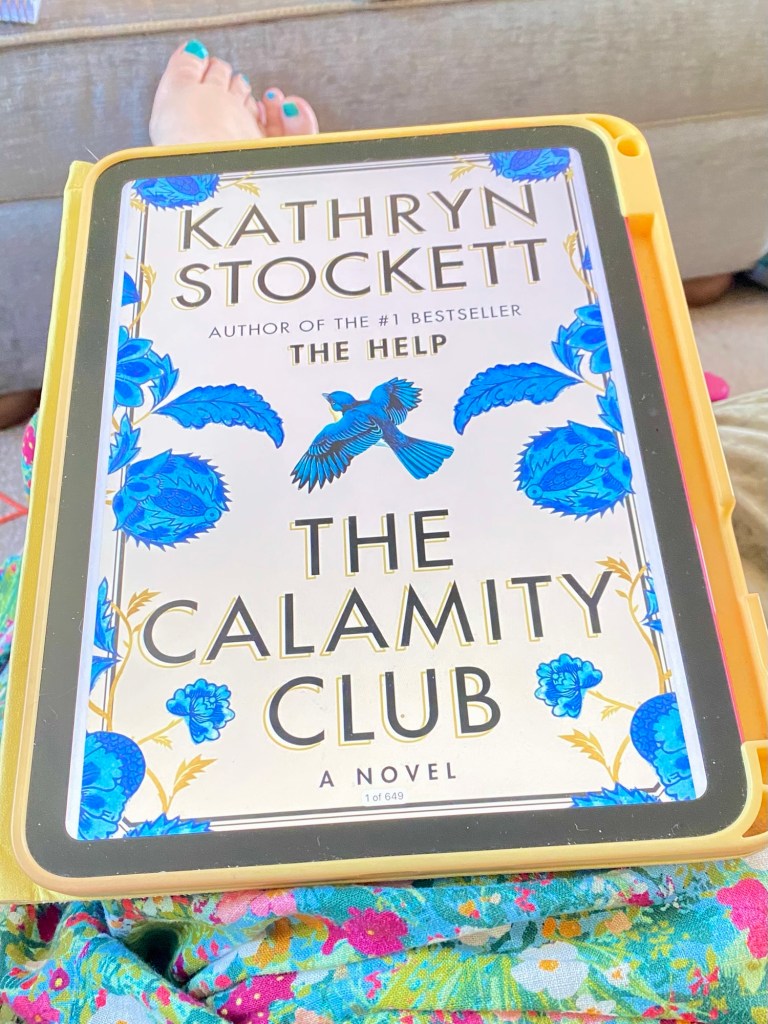
The Calamity Club by Kathryn Stockett

Eleven-year-old Meg Lefleur has learned the hard way to rely on no one.
Ever since her beloved mother failed to come home last Christmas Eve, she’s been one of the ‘unadoptable’ girls at the town’s orphanage, where she fights each day to keep her wits sharp and her spirit unbowed.

When she meets Birdie, a young woman who has come to Oxford determined to remind her socialite sister of the impoverished family she left behind, for the first time in a long while it seems someone else might care about Meg’s future. But as the Depression tightens its grip, Birdie begins to suspect her sister’s charmed life may be founded on a tapestry of lies. Then, Birdie encounters Charlie, a woman haunted by loss who has been pushed to the brink with nothing left to lose. Drawn together by circumstance, they find unexpected kinship among a disreputable, determined band of women.

But in a town steeped in hypocrisy, even the smallest act of defiance can have dangerous consequences …
In our prologue we find Birdie in the pharmacy of a small town in the southern states of America buying ‘Merry Widows’ condoms by the dozens. I then became so engrossed in the story of this fascinating woman and the relationship she makes with a girl called Meg at the orphanage that I forgot all about the question that came to mind; why she would be buying so many? Thankfully all questions are answered in this incredible book that’s moving, infuriating, saddening and hilarious all at once. The plot takes us on a journey as Birdie travels to visit her newly married sister Frances who is living with her in-laws at their house Idlewilde. Frances is at great pains to point out her new family, the Tartts, are well to do and Birdie must try not to show her up. In truth, Birdie can only ever be her glorious self and Mrs Tartt is too much of a Southern lady to show anything but politeness to a guest. Frances’s husband, Rory Tartt, is a good looking man, but to Birdie he seems to have something on his mind. He’s eager to leave in the morning and eager to be in his office in the evenings, even retiring to his own bedroom at the end of the day and not his wife’s. Frances confides in Birdie that there’s been very little in the bedroom department and Birdie starts to worry. One thing she knows is money and if she didn’t know better she’d be concerned about Rory’s business and where he’s going. When asked to book-keep for the local orphanage Frances again gives her a note of warning. The president of the orphanage board, Mrs Garnett, is very influential and is hoping to be the governor of the Anti-Vice Committee. Birdie is unimpressed with this paragon of virtue and lets Frances do the sucking up, instead she puts her energy into the disgusting room she’s working in alongside one of the orphans, Meg. As far as Birdie can see, Meg is in this room by herself every day away from the other girls. She has nothing to read. The walls are mouldy and she’s not allowed to open the window. She’d think it was a punishment, but Meg doesn’t appear to have done anything wrong. With an attentive adult to clean and paint the room, let the air in and ask her interesting questions Meg starts to blossom, much to Mrs Garnett’s consternation. Birdie can find solutions to most problems and is enjoying her time with Meg, but the Tartt’s troubles loom and Birdie will have to come up with a creative way to help. When she meets Charlie, a woman broken down by the system and longing to get her child back, they make a formidable team. 

I absolutely loved Birdie, the sensible person between an anxious mother who thinks the price of canned peaches will put the family over the edge and a sister who is willing to spend every penny they have if it makes her pretty. She is pragmatic, knowing she’s not a beauty she decided she would have to look after herself and got a job bookkeeping at the local store. Frances didn’t even invite her family to her wedding, scared of being found out as poor. Birdie doesn’t believe in trying to be what you’re not and she’s utterly herself which I loved. She’s sensible but also has a loathing of injustice. She has her own moral compass that is based on the Bible, common sense and kindness. She doesn’t believe in people that set themselves up as good in a performative way, just be good because it’s the right thing to do. Meg was fascinating and her story is so deeply sad. She believes her mother left her one Christmas Eve and never came back, so she had to survive on what was in the house until the local doctor found her. She’s absolutely starving for books and learning, even sneaking a Life magazine she finds in the cupboard and gorging on it like a cream cake. She has to some extent accepted her treatment at the orphanage, never expecting to be chosen as one of the eldest there. I found myself hoping Birdie might adopt her, they certainly have an instant affinity. I loved Meg’s sense of humour too, especially when she relates an adoption letter received that states: 

“We need us an older girl, on account of I was chopping cotton and it was hot out and the blade swung out my hand and sliced my wife’s arm clean off so we had a proper funeral for it but she cannot lift a pot now.”

As Meg observes, they had a funeral for an arm? That’s quite a letter. It has people, action and weather, with a bit of gore for interest. She’s a girl with so much to say and no outlet at all. It’s a whole lot different than life with her mum who was a feminist and clearly loves her daughter. She celebrated when Meg was placed in the ‘exceptional learners’ and tells her to remember that most men are placed in the slow learners category. Where could this woman have gone?
The themes in this are very much like The Help, injustice, inequality, the strength of women and what we’ll do to survive. In addition there’s the rise of the eugenics movement in America, something I researched at university and when preparing for my PhD. Eugenics supposes there is a master race, that white able-bodied heterosexuals with European origins are superior. This is such an important topic when we see what’s going on in the US today and when The Sanctuary exists in London – a destination that stays out of the press, but launched the Restore party, houses a eugenics magazine and race scientists. People forget that Germany didn’t start this lean towards wanting a superior race. Birdie finds out that Mrs Garnett’s policies for the Anti-Vice group include eugenic thinking such as imbeciles will give birth to more imbeciles, some ethnic groups should be prevented from having more children and that others should be forced onto contraception from a very young age, especially girls from poor, black families. It’s an evil that’s never really gone away, especially in America where some of these measures were still happening in the 1970s. These policies made it easy to get inconvenient people out of the way, just like Meg’s mum whose story brought me to tears. Birdie starts to realise that doing something considered immoral by society might be the best way to survive and she has to weigh it up in her own mind.

There was just so much I want to say about this book and I’ve had to stop myself rambling! Kathryn Stockett has done it again. I can see this on the big screen and it will be brilliant. It also has the added bonus of chatter about merkins at the breakfast table, which made me laugh out loud. I fell in love with Meg and Birdie, but also the women who form a team to get Birdie’s in-laws out of the mess they’re in. This book has so much to say about female strength, friendship and adaptability in terrible circumstances. Every character is so well drawn I could see them. I know a lot about eugenics and its history in the US and this is an important book right now, going against where Christian Nationalist policy is taking the country. It shows the damage that can be done when someone lives the rigid rules of manmade religion rather than the actual message of love given in the Bible. Often those who want the appearance of goodness most, will do anything to keep it. Birdie finds that friendship and loyalty can be found in the most unusual circumstances and with people you never expected. There’s tragedy and brutality but also lightness, humour and so much love. Utterly brilliant!
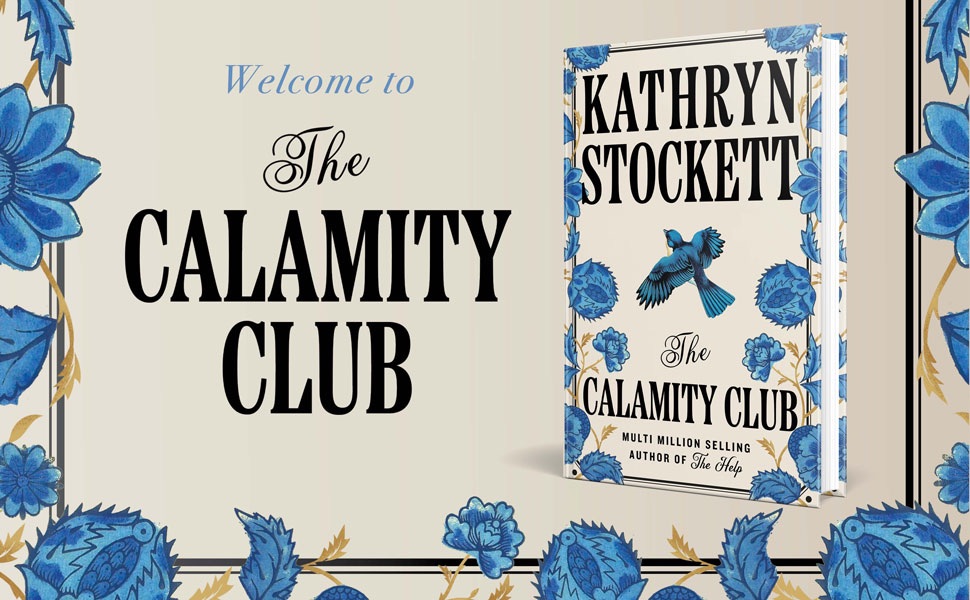
Out now from Penguin Books

Meet the Author
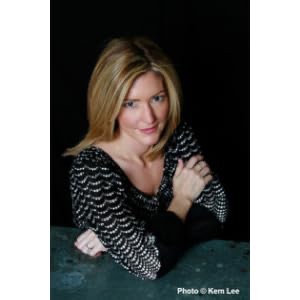
Kathryn Stockett was born and raised in Jackson, Mississippi. After graduating from the University of Alabama with a degree in English and Creative Writing, she moved to New York City, where she worked in magazine publishing and marketing for nine years. The Calamity Club is her second novel.

Posted in Squad Pod Collective

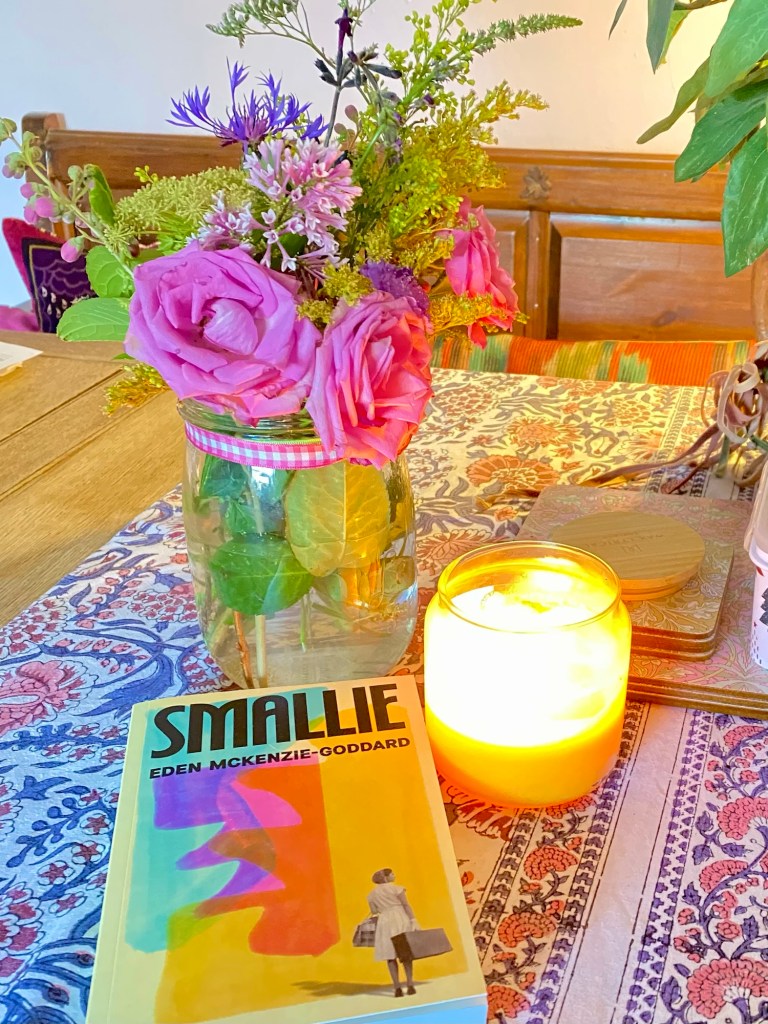
Smallie by Eden McKenzie-Goddard 

Smallie adj. |smal·lie|
Definition: Caribbean (informal). Describing or relating a person from a small island; a small islander.

In 1961, nineteen-year-old Lucinda Brown travels to England in search of her son’s father, Clarence Braithwaite, who left Barbados to join the British army. But aboard the ship to Southampton she meets a man named Raldo who offers her a glimpse of a new life, a freer life. Bound by the memory of her son waiting at home, she chooses Clarence – realizing too late that war has made a stranger out of him.

Nearly fifty years later, Lucinda receives a letter from the Home Office that threatens to tear her world apart. Her children rally together to prove her legal arrival, and to do so they must track down an elusive man from her past, a man she wanted to love but instead lost, a man who now holds the key to her family’s future. Raldo . . . An exhilarating and expansive tale of a family thrown into collision with the Windrush scandal, Smallie shows just how easily the past can spill into our lives, even when – especially when – we think we’ve closed the door on it.

The author splits their timeline so in 2017 we see Lucinda’s children trying to make sense of the letter from the Home Office that states she has no leave to remain in the UK. Then we go back several decades to her early life in Barbados and her trip to the UK. This worked so well because we get to see the huge generation gap in her children’s incredulous response to the letter and Lucinda’s more mured response. They have lived in the UK all their lives and with their education and important jobs they’ve experienced racism but not in the same way their mother has. They don’t know that the system can fail. This is their first real sense of utter powerlessness. Whereas Lucinda has spent most of her life like a leaf in the wind. Her strict religious father would keep her at home with a life that revolved around church, chores and schoolwork. In fact it’s only her friend Sheila that manages to lure her out to a club, where she meets Clarence, a liaison that results in a hidden pregnancy and her son Reggie. Yet still her father calls the shots and when Clarence decides to emigrate to the UK she is only allowed to follow on the proviso that they marry, only then will her father release Reggie to join them. Then, on the voyage across she meets Raldo and their chemistry is immediate, he offers her a way out. When they reach the UK she can leave with him and his friend, avoiding Clarence. Will she make the decision to put herself or Reggie first? I couldn’t stop reading because in the 2017 timeline I was desperate to know whether her children would manage to find enough evidence for their mother to stay, but also I wanted to know who was the father of her children born in the UK? It’s cleverly plotted to keep you guessing, even when their father is present.  

I loved the moments of freedom that Lucinda has with Sheila, nights of jazz, dancing, laughing where she comes alive. Either in clubs or at house parties they forget the one room they share, the lack of money, the family they clean for and the way British people treat them. Sheila is older and wiser. She explains to Lucinda why their employer’s treat them differently. Both girls work for a cleaning company run by a friend and Sheila points out how differently she is treated compared to Lucinda. They speak harshly to Sheila and expect her to steal, whereas Lucinda is treated more politely. She explains what ‘passing’ means, the family treat Lucinda better because of her paler skin. She could pass as a white girl. Even so, neither of them can have bank accounts and decide to use the ‘pardner’ system. Every week they all put their wages into a pot that’s kept by the most trustworthy friend, then once a month they take it in turns to have the lump sum. It’s the only way individuals could buy a house and set down roots here. Strong communities were built from these bonds of trust. The group decide that Lucinda should look after the money, but her trustworthiness is dependent on whether Clarence decides to beat her or not, till she hands it over. She is being brought down by this relationship, but she still clings to the idea of Reggie making his way here to be a family. Yet every so often she sees Raldo, conducting buses or at the same party and that spark is still there. He brings her alive.

It seems inconceivable that someone who has lived in this country for most of their lives could be detained and placed in an immigration facility. Lucinda is placed in Yarl’s Wood and her children are falling apart. She is the foundation that supports them all. While they struggle to come to terms with the situation, Lucinda quietly gets on with it. The Home Office need proof that she arrived on a certain date, with her boarding pass or similar, but then also prove that she didn’t leave for a period of time. They are applying 21st Century rules to a time when paper tickets were damaged or thrown out, where jobs were cash in hand and there was no paper trial. As they desperately look around for people who could corroborate her account, they unearth more of their mother’s story. There’s betrayal, anger and bitterness that’s lasted over fifty years. Will they find this man called Raldo who looked after her boarding pass? As the date for the hearing looms closer, Lucinda starts to wonder whether it’s time to make decisions that suit her, not everyone else leading to an ending I didn’t expect, but that was total perfection. I felt so much reading this book – everything from anger to joy and so much inbetween. Lucinda is a brilliant central character, so used to being pushed around she almost disappears in the cacophony of her children. We know theres so much depth and experience in this woman and I was willing her on to finally make a choice for herself. Beautifully written, this is an emotional account of one woman’s life caught up in the Windrush scandal and it kept me spellbound to the end. 

Out Now From Penguin

Meet the Author

Eden McKenzie-Goddard is a UK-based writer and podcaster, with Barbadian-Jamaican roots. His work sheds light on the lives of the forgotten and bringing their stories to the forefront.

In 2018, Eden co-founded the top 30 music and culture podcast Don’t Alert The Stans – commended by Apple Podcasts, Complex, Beats By Dre and more.

With almost a decade working in publishing and a degree in English Literature and Creative Writing from University of Westminster, McKenzie-Goddard is a student of literary minds Silvia Plath, Hanya Yanagihara and James Baldwin.

Posted in Random Things Tours

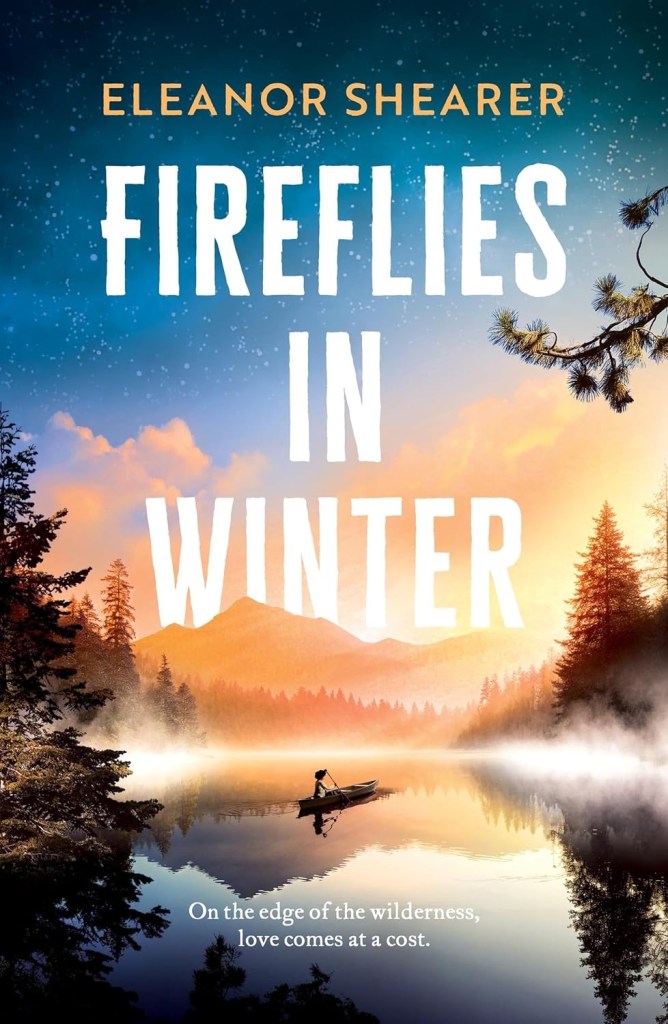
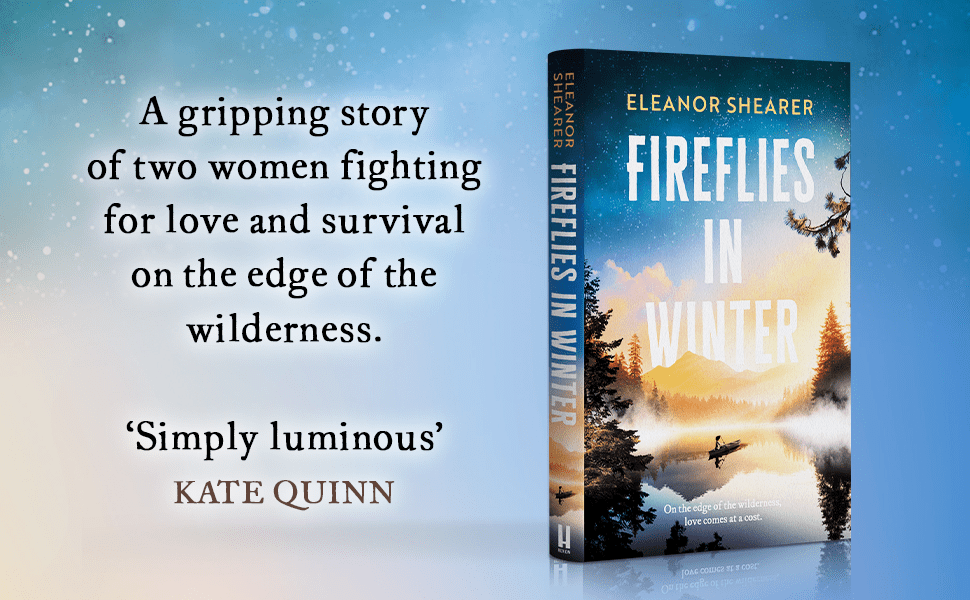
Fireflies in Winter by Eleanor Shearer 

Nova Scotia 1796. Cora, an orphan newly arrived from Jamaica, has never felt cold like this. In the depths of winter, everyone in her community huddles together in their homes to keep warm. So when she sees a shadow slipping through the trees, Cora thinks her eyes are deceiving her. Until she creeps out into the moonlight and finds the tracks in the snow.

Agnes is in hiding. On the run from her former life, she has learned what it takes to survive alone in the wilderness. But she can afford mistakes. When she first spies the young woman in the woods, she is afraid. Yet Cora is fearless, and their paths are destined to cross.

Deep among the cedars, Cora and Agnes find a fragile place of safety. But when Agnes’s past closes in, they are confronted with the dangerous price of freedom – and of love…

Eleanor Shearer tells stories about fictional people in situations I didn’t even know existed and then makes me root for them so hard that I cry real tears. Cora is our central character and we see everything through her eyes, so it’s no surprise I felt close to her. Cora is so vulnerable and thoughtful. She cares for her unusual ‘family’ – Leah who has brought her up and been a substitute mother and Silas and young Ben who’s still a young boy. It’s makeshift but it’s the only family she has known, ever since Leah found her as a baby. They are ‘maroons’, escaped slaves from Jamaica who settled in Nova Scotia, Canada. Many maroons negotiated peace treaties with the British, but part of that treaty forced them to aid the British in capturing any new runaways. However, Agnes’s freedom is more precarious. She’s out in the forest alone, except for her dog Patience, and it’s a harsh existence with the added fear of discovery. I’m not sure Cora fully understands that her presence and connection to the Maroons settlement adds to that anxiety and doubles her chance of discovery. Cora isn’t hardened to winter in the forest and hasn’t had to hone her survival instincts in the way Agnes has. Something she shows by getting into scrapes in the snow, saved by the ever present Patience. There are different types of freedom in terms of gender and sexuality too. Cora knows that Silas has an expectation that they will be together one day and so far she has avoided this. However, it is there in every confrontation they have; the fear of his resentment and the threat of sexual violence is ever present. Cora doesn’t question her sexuality, she just knows she loves Agnes. Will they have the freedom to be together? 

The environment is an incredibly strong part of this story and here the author excels in creating a Nova Scotia that’s harsh but exceptionally beautiful. I found the time Cora spends in the forest incredibly peaceful to read, the animals, the ice and the frosted trees have a romance, a poetry about them. Yet she doesn’t hide the raw reality of living in it. The girls must trap animals, although Cora frees a white hare unable to kill such a beautiful and mystical creature however hungry they may be. One of my favourite scenes is when Agnes takes Cora out on a boat to visit the whales who appear for them as if by magic. As they sit among these huge creatures one of them lifts their head and looks directly at Agnes and she feels seen for the first time in her life. Not as a woman, or a slave, or a Maroon. Just as Cora, another living being. There are also moments where Mother Nature shows its bite and when Cora falls through the ice I was holding my breath. The suspense of those moments are brilliantly pitched and show us that Agnes’s lifestyle may have magical moments, but it can be lethal. 

I love that Eleanor writes people back into history, we can read the historical facts about settled slaves in Canada but she brings their experiences to life in a way that hits the emotions and helps us to understand. We’re also reminded by Cora that women have choices, sometimes marriage is just another form of slavery. It’s something she’s keen to avoid, even if the offer came from a more loving and kind man like her friend Thursday. She knows herself enough to know it is not for her and she’s not willing to sacrifice herself. Luckily, Thursday is a loyal friend and will help Cora without imposing conditions. When Cora finds out the truth about where she comes from, secrets that have been held for years come flooding out and threaten everything that Cora has known about herself. When Agnes faces a similar reckoning it threatens everything in their future. I was emotional about the little details the author puts into her book such as the braiding of Cora’s hair being the only moment where they’re both present and the ‘love can flow between them unimpeded’. Cora’s loss of her sister also hangs over her and I loved the nature metaphors she uses to express those emotions: 

“Cora cannot stop thinking of her life like a tree, with the branches that split and split again until you reach the highest […] that there’s somewhere, the branches not taken – the world where she stayed with Elsy and Elsy would still be living.” 

However, in everything that happens, one loss hit me the hardest and actually brought me to tears. I loved the still moments created, where Cora learned to be in nature. Where they are both present and entirely in the moment. The fireflies are a symbol for Agnes and Cora, in that they are glowing in the darkest and coldest circumstances. Cora and Agnes have a bond that flourishes where many things don’t survive, they are extraordinary like fireflies in winter. 

Out from Headline Review on 10th February

Meet the Author

Eleanor Shearer is a mixed race writer from the UK. She splits her time between London and Ramsgate on the coast of Kent, so that she never has to go too long without seeing the sea.

As the granddaughter of Caribbean immigrants who came to the UK as part of the Windrush Generation, Eleanor has always been drawn to Caribbean history. Her first novel, RIVER SING ME HOME (Headline, UK & Berkley, USA) is inspired by the true stories of the brave woman who went looking for their stolen children after the abolition of slavery in 1834. The novel draws on her time spent in the Caribbean, visiting family in St Lucia and Barbados. It was also informed by her Master’s degree in Politics, where she focused on how slavery is remembered on the islands today.

Her second novel, FIREFLIES IN WINTER, is a love story set in the snow-covered wilderness of Nova Scotia in the 1790s. When Cora, an orphan newly arrived from Jamaica, glimpses a strange figure in the forest, she is increasingly drawn into the frozen woods. She meets Agnes, who is on the run from her former life. As the two women grow closer, they learn more about love, survival and the price of freedom.

Posted in Throwback Thursday, Uncategorized

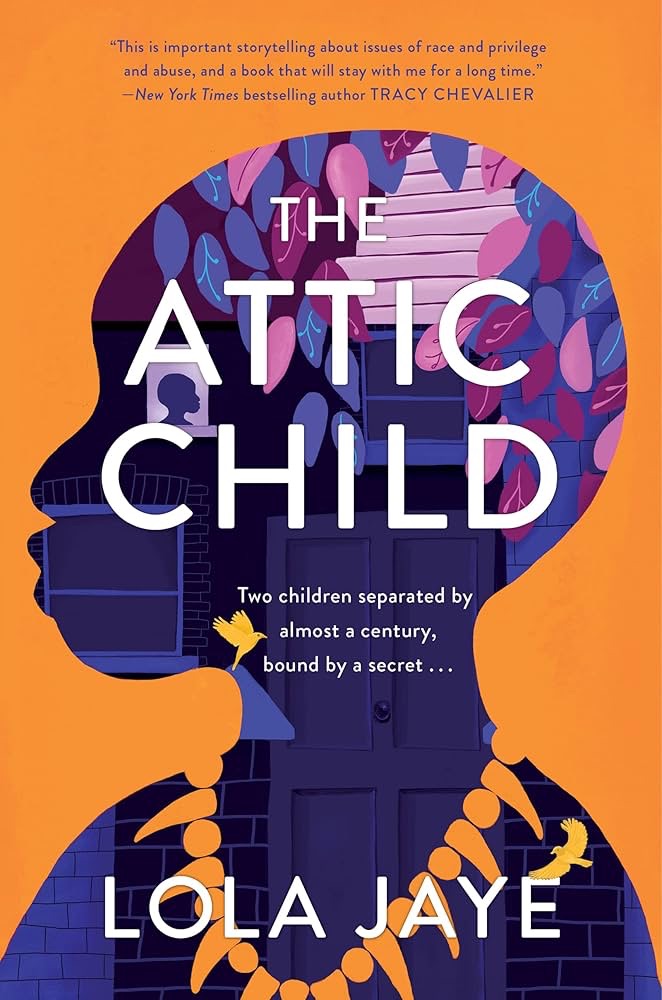
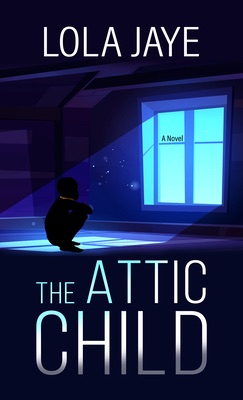
Throwback Thursday: The Attic Child by Lola Jaye 

“Until the lions have their own historians, the history of the hunt will always glorify the hunter.”
                                                                            Chinua Achebe (Author)

When I was gathering books for the Queen’s jubilee stall at our village book exchange, I could have stuck to the British Isles and its experience of life in the reign of Elizabeth II. However, I wanted to look at the jubilee from a global viewpoint and include the voices of all the Queen’s subjects. For me that includes voices from countries that were once part of our empire, some of whom are now under the Commonwealth banner. I think these other voices are important; those who are literally silenced, but also those who were ignored because were simply not the white, middle class, man that society is used to listening to. This book had a beautiful example of one such voice and I was reading it around jubilee time. Celestine Babbington is recorded for history in a silent form, photographed wearing clothes he didn’t choose and posing with a man whose relationship to him is very problematic. The man, Richard Babbington, is a wealthy explorer who has a love for Africa and a large mansion house in England and by 1907, Celestine is being kept in the attic of that house, only allowed out to work as a domestic slave.

Years later, a young girl called Lowra is suffering the same fate. Locked in the attic as punishment for any transgression since her fate was left in the hands of her resentful stepmother. After her mother died, Lowra’s dad remarried and from that day on her life was punctuated by spells of abuse. While locked in the attic she finds an unusual necklace with clawed hands, unlike anything she’s seen before. There’s also an old-fashioned porcelain doll and a sentence on the wall, written in an unfamiliar language. These are her only comfort, because she feels as if the person that owned them is still with her in some way. As an adult, her stepmother’s abuse still affects her and she’s conflicted when she inherits Babbington’s house. People seem to think she’s lucky and the town is proud of this intrepid explorer. Looking into the house’s history leads her to an exhibition of Babbington’s life, where she sees photographs of Babbington and a young black boy wearing an African wrap and what looks like her necklace, the one from the attic. However, the thing that keeps Lowra transfixed, is the young boy’s eyes. Lowra sees someone filled with sorrow, a fellow sufferer of the darkness inside that house. His name is Celestine Babbington. Lowra wants to find out more about this boy, how he came to be in England and what happened to him after Babbington’s death. She enlists the help of a history specialist called Monty, who has an interest in stories that have not been told, particularly those of empire. Together they start their search for the attic child.

I think anyone who talks about the glory of our empire should be encouraged to read this book. It’s fitting that the opening quote of the book is from the incredible author Chinua Achebe, because his novel Things Fall Apart is a perfect companion to this tale. This time the story is partially told by an innocent victim of our Victorian forays into Africa, a child called Dikembe, who is largely ignorant of the atrocities being carried out by the Belgian forces plundering the natural resources of his homeland. At the time of Dikembe’s childhood, his homeland was named the Belgian Congo, a large area of Africa now known as Zaire, then the Democratic Republic of Congo. Very few Europeans had reached this area of Africa, known for tropical diseases like sleeping sickness. King Leopold of Belgium had urged the Belgian Government to colonise the country, but when they stalled their efforts he decided to take charge himself. He took ownership of the country and named it the Congo Free State in 1885, using his private army the Force Publique to press gang Congolese men and boys to work for him in the production of rubber. No one knows the exact population of the country at this time, but due to exploitation and the exposure to new diseases it is estimated that up to ten million native people died during Leopold’s rule of the country. Dikembe is young enough to stay at home each day with his mother, but he envies his brothers who go off to work with their father every morning. His parents keep him ignorant of the way native workers were treated so it is an utter shock when his father is killed one day. Richard Babbington, based on a real man called Henry Morton Stanley, expresses an interest in Dikembe. He wants to take him back to England and turn him into a gentleman and his companion. Ridden with grief and terrified about what could happen to her youngest son, his mother agrees, knowing this may be the only way to keep him safe. Although his intentions seem pure, isn’t this just another form of colonisation? He then takes away Dikembe’s name, calling him Celestine Babbington.

I found both these children’s circumstances heartbreaking and realised that Lowra’s affinity with this boy is because she sees something in his photographs echoed in her own eyes. I thought the two character narrative worked really well here, but all of the characters are so well crafted that they pulled me into their stories and didn’t let go till the end. We’re with Lowra and Monty on their quest, finding out more about Dikembe’s story and we experience the effect these revelations have on all the characters. It’s moving to see Monty identifying with Dikembe and feeling emotional pain from the injustices he has gone through. Monty still experiences racism and oppression, just in different ways and Lowra can’t be part of that even though she has empathy for how Monty feels. They worked together well and slowly become close by being honest about their pasts and what effect their life experiences have had on them mentally. Lola Jaye has managed to engage the emotions, but also educate me at the same time, because I didn’t know much about the Belgian empire or King Leopold’s exploitation and murder of the Congolese population. However, it was those complex issues of identity and privilege that really came across to me, especially in the character of Richard Babbington. His arrogant assumption that he could give Dikembe a better life is privilege in action, as Dikembe soon finds out that he’s a womanising drunk and the companionship he spoke of only works one way. All he does bestow is money, for clothes and school, but what Dikembe craves is the warmth and love of his mother calling him a ‘good child’. The way this need for love and comfort was also exploited made me cry. I was desperately hoping that by the end, these terrible injustices didn’t stop him living his life to the full, including embracing happiness when the chance came his way. We see this play out for Lowra during the novel, can she ever accept that she is worthy of love? I wasn’t surprised to learn that Lola Jaye is a therapist, because she understands trauma and how it can manifest through several generations. The story doesn’t pull it’s punches so I felt angry and I felt sad, but somehow the author has managed to make the overall message one of hope. Hope in the resilience of the human spirit.

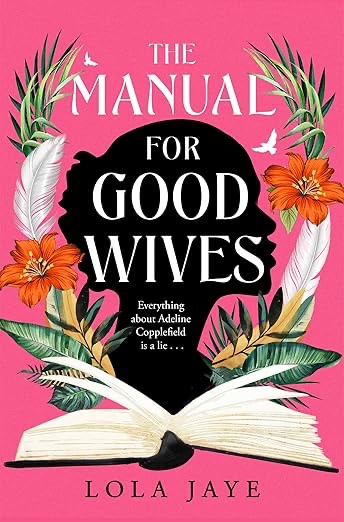
Lola Jayne’s latest novel is The Manual for Good Wives. It came out in 2025 is on my tbr for March. 

Everything about Adeline Copplefield is a lie . . .

To the world Mrs Copplefield is the epitome of Victorian propriety: an exemplary society lady who writes a weekly column advising young ladies on how to be better wives.

Only Adeline has never been a good wife or mother; she has no claim to the Copplefield name, nor is she an English lady . . .

Now a black woman, born in Africa, who dared to pretend to be something she was not, is on trial in the English courts with all of London society baying for her blood. And she is ready to tell her story . . .

Posted in Random Things Tours

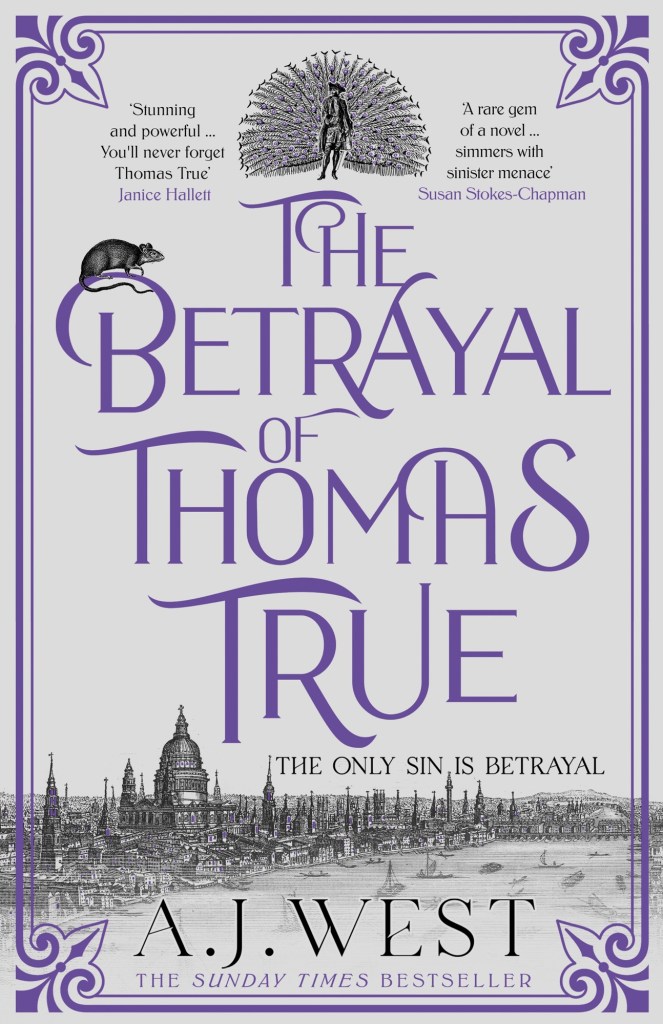
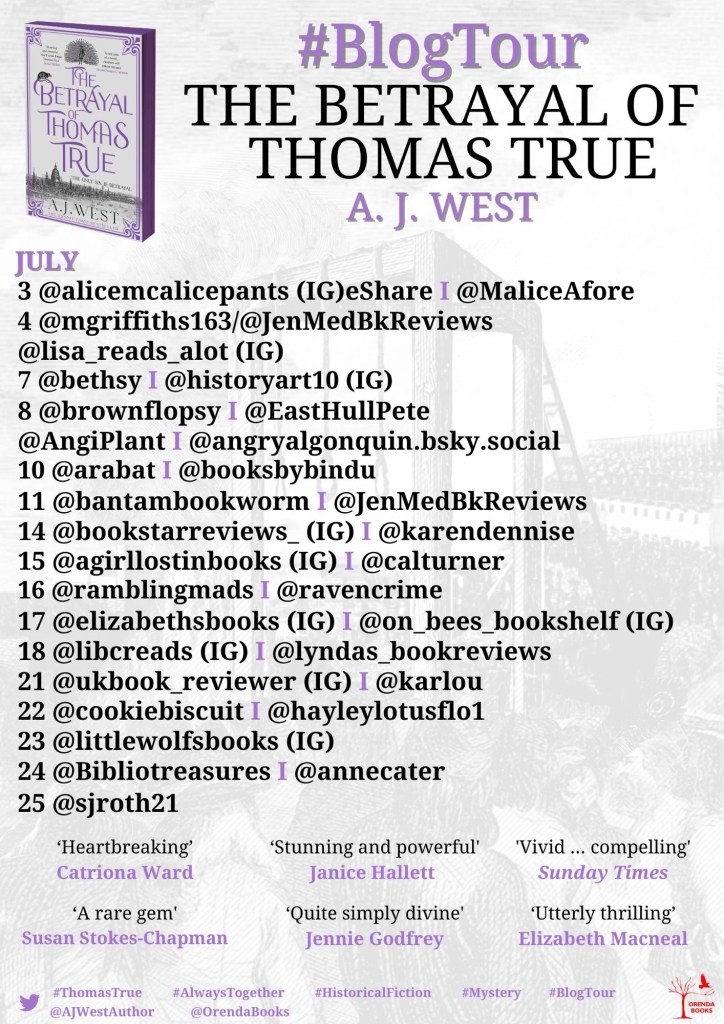
The Betrayal of Thomas True by A.J. West

In simple terms, this fascinating book is a love story. Two people meet in unlikely circumstances and fall in love. However, it’s so much more than that, but that’s what happens when something as simple as love is an act of subversion or rebellion. When I last read a novel like this I was on my 18th Century literature module at university and I had the luck to be taught and supervised for my dissertation by Dr. Ian McCormick who was an 18th Century literature specialist and also taught our Gothic, Grotesque and Monstrous module. He wrote a book called Secret Sexualities, a collection of 17th and 18th Century writing that covered cultural constructions of eunuchs, hermaphrodites, cross dressing, mannish women, female husbands, trials for sodomy and other legal injustices. I was absolutely fascinated because it was an utterly different picture from the 18th Century literature I’d read before. To be honest that was mainly Jane Austen and from her writing you might think that a fellow’s main preoccupation was finding a suitable wife and all women were waiting for Mr Darcy to come along – although I’m a Captain Wentworth girl, all day long. What my tutor’s book did for me was the academic equivalent of Sarah Water’s transgressive novelisation of the 19th Century. Variations in sexual preference is nothing new and taking a marginalised group and placing them firmly within their historical context is what is going in with A.J. West’s novel. Thomas True is well-researched, beautifully characterised and fits perfectly into its time period rather like an 18th Century version of Tipping the Velvet. 
The book that came most to mind, because of its bawdy humour and characterisation of a young innocent seduced into licentiousness on their adventures into the big city, was Moll Flanders by Daniel Defoe. However, I also had Tom Jones in mind by Henry Fielding, a picaresque novel where our hero embarks on a journey and is lured into bawdy and roguish adventures. A picaresque novel is also critical of the society it represents, using satire to make its point usually in the favour of the lower classes. Here our hero is drawn into the ‘Molly’ culture, practiced at Mother Clap’s house and while considered corrupt by some, it turns out to be less judgemental and violent than both the religious and legal communities, both seemingly riddled with cruelty and corruption. In this case they employ a spy known by the mollies as the ‘Rat’, his purpose is to give up individual mollies to the justices who would have them hung. The hangings are a horribly public spectacle with the crowd baying for blood and the selling of candles or other mementoes by shop keepers. This is where the novel sits for me, yes it’s crime fiction, historical fiction and also a love story, but it’s the picaresque novel’s bawdy, episodic and satirical mix that grounds Thomas firmly in the tradition of 18th Century literature. 

Thomas sets off for London to escape a miserable family life, where he’s clearly not the man his father would like him to be. On his journey he is accidentally parted from his coach and luggage, deciding to trust a huge bear of a man who offers him help. What he doesn’t know is that Gabriel is a Molly, one of a group of men who enjoy dressing in women’s clothes and have names for their alter egos. They also prefer the love of another man, something taboo and unnatural in contemporary society. The law would punish them by death. Thomas can’t possibly know how important this moment will be in his life, but it’s pivotal to his journey, his future and his heart. Far from the genteel worlds of Bridgerton and Jane Austen, the author creates a richly imaginative setting that brought all my senses to life – but not in a good way. London is grim, overcrowded and disgusting. One scene where a body needs to be extracted from a ditch full of sewage is revolting. The two rescuers slipping and sliding into faeces and almost losing the body to the depths. Even Mother Clap’s has a grotesque feel. These are not the preened and powdered men you might expect. Gabriel is huge, hairy and spends all day doing a heavy building job. The atmosphere is also dark and threatening, if the mollies are the light then their nemesis belongs in the shadows as do the curious urchins who are so ignored and forgotten they’ve literally become the darkness they inhabit in the menacing surroundings of Alsatia. The ever present fear of not knowing who the Rat is, make even the lighter scenes hum with tension. While the mollies are dancing, wearing their finery or even sneaking off to be ‘married’ – their euphemism for sex – no one knows if the Rat is among them, watching and biding his time. 

How far would the Rat go to gain information or incriminate the mollies? I was intrigued as to what their motive was? Religion, fear, money or more personal motives? Whatever the Rat, or the justice’s motives they mete out terrible violence. As if the public hangings were not enough, the Rat is handy with a knife too. One molly has his tongue cut out and another is stabbed and left in sewage. Being pilloried turned out to be way more violent than being popped in the stocks for the afternoon and being pelted with rotten vegetables. This is all told in the same detail the author describes the London streets running with urine and smelling so bad it takes a few days to become immune to it. It brings a reality into sharp focus, this isn’t just our current climate of punching down against the poorest and most vulnerable or venting hate on social media. This is wanting someone dead for the perceived crime of who they love. Thomas is naive, clumsy, endearing and ripe for the picking. He guides us through most of this in wide eyed wonder at first, but we also have Gabriel’s take on events and he really is the opposite of Tom. He is older, has known who he is for a long time and battles with regret, grief and shame. Gabriel is haunted, emotionally and literally. His profession means he’s in an intensely masculine environment, working on completing St. Paul’s and the chandlers where Tom is learning a trade. He’s drawn to Tom’s naivety and excitement at the new life he’s found and his molly name – Verity True Tongue. They’re so different but have that chemistry. It’s undeniable, but only Gabriel who fully understands the price they may pay for choosing each other. 

I was bowled over by the incredible detail in the setting but also the characters they meet. Every one of the mollies is different are so different from each other. Some are welcoming and nurturing, while others are cynical and suspicious. I have a hatred for people who want to control other’s behaviour through a moral or religious code. Thomas’s family believe they’re doing the right things to save their souls and to lie with a man is a sin against God. The justices are no better than- using the legal code to outlaw sodomy, but then resorting to punishments of horrific violence without irony. It’s inevitable that with such blood lust and religious fervour, we might have to say goodbye to some of the wonderful characters yet it is still devastating when it happens. This group of men, when in their safe environment, are full of joy, fun and laughter. When they are free to be themselves they create an incredible atmosphere. It’s a party I’d love to go to and I honestly can’t wait for it to become a film. The eventual ending might leave you needing a box of tissues, but the journey Thomas and A.J. West takes us on is glorious. 

Meet the Author


A.J. West’s bestselling debut novel The Spirit Engineer won the Historical Writers’ Association Debut Crown Award, gaining international praise for its telling of a long-forgotten true story. His second novel, The Betrayal of Thomas True, is published July 2024.

An award winning BBC newsreader and reporter, he has written for national newspapers and regularly appears on network television discussing his writing and the historical context of contemporary events.

A passionate historical researcher, he writes at The London Library and museum archives around the world.

Posted in Reading Life

Four Indie Bookshops I Visited This Year.

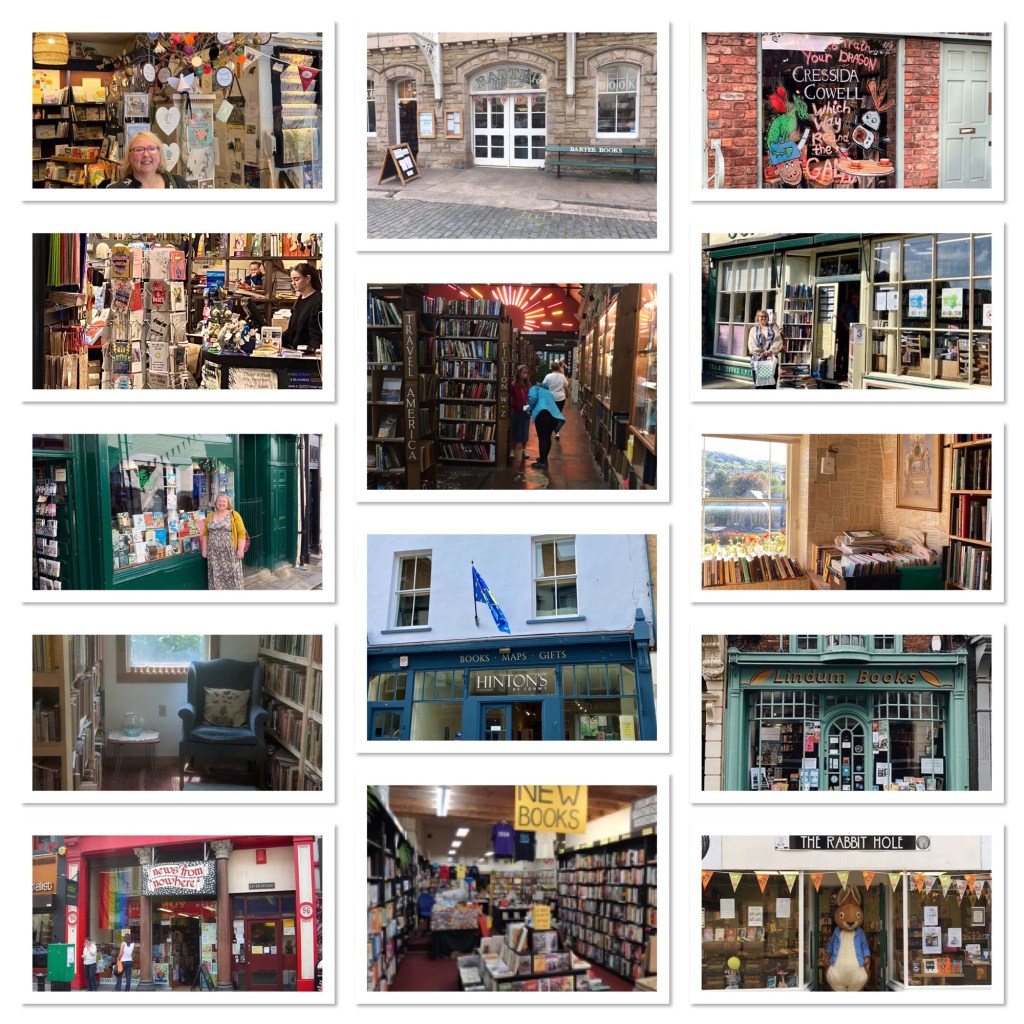
Since this week is Indie Bookshop week I thought I’d share a handful of my favourite bookshops that I’ve visited in the last year. I love all sorts of bookshops from little tiny local bookshops, to themed bookshops and second hand bookshops. There’s something a little bit special about all of these.

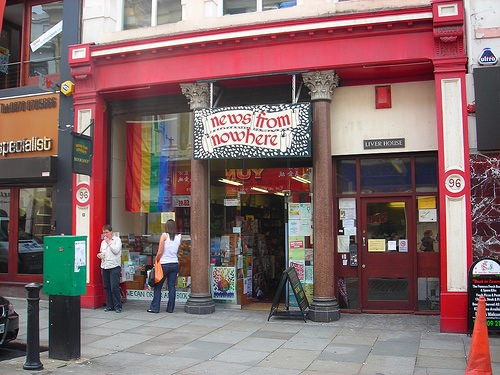
The News from Nowhere Bookshop has been a mainstay of Bold Street in Liverpool and was established in 1974 as a not-for-profit radical and community bookshop. So, there’s no boss and no owner. Everyone who works at the shop shares tasks, responsibilities and decision making. All profits stay in the business to cover stock buying and running costs and each worker is paid the same hourly rate.

Of course these principles also inform the stock choices and it is such an interesting and challenging place to buy books. I come out with things I never expected! Social justice weaves through everything they do so they focus on feminism, anti-racism, LGBT+, worker’s rights, disability rights, sustainability and environmental matters, anti-capitalism, animal rights and veganism. They also stock fiction and I’ve bought some incredible fiction there, as well as I Hate Maggie t-shirts for my father. Because there’s such an interesting range of books I can be lost in there for hours. It’s so important to support shops like this so I pop in whenever I’m in Liverpool and order for my stepdaughter from there, because she’s at university and lives round the corner.

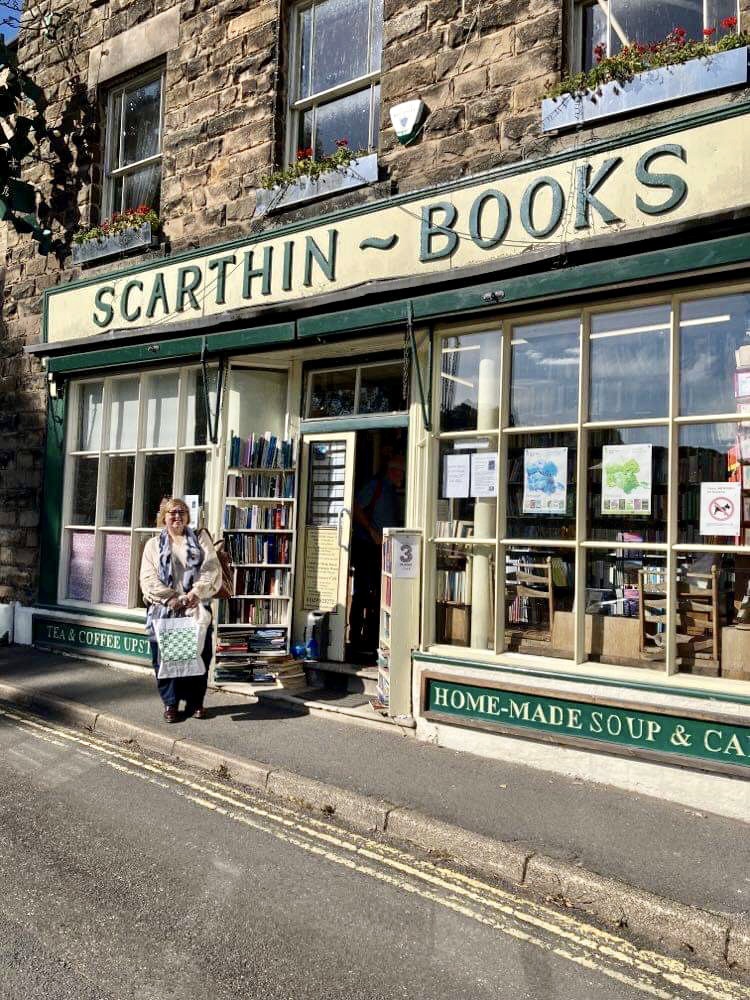
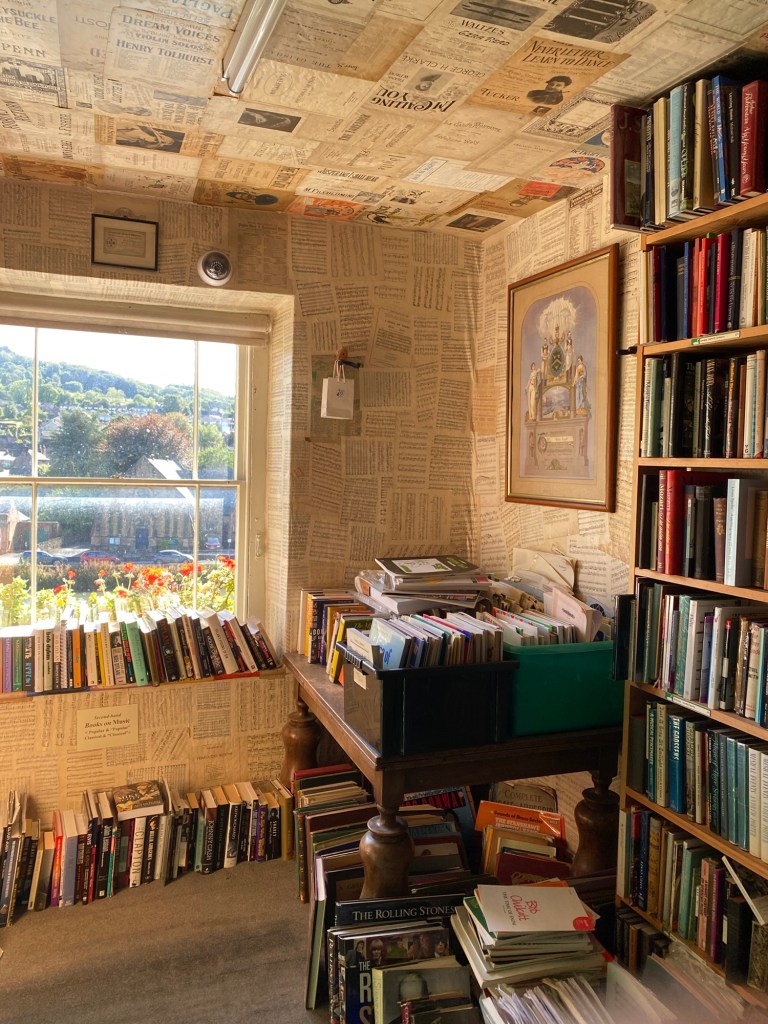
Scarthin Books has been a mainstay of my life since I was about 10 years old. It’s based in Cromford, Derbyshire since 1974 and I used to spend weekends at a static caravan site nearby where my Aunty and uncle had a caravan for several years. I would take pocket money and buy a book, or a notebook for my own poetry. This is such a higgledy piggledy little place I find it a little harder to get around now but downstairs has new fiction as well as second hand finds, upstairs has beautifully themed rooms for art books, music and travel as well as lots of other specialist categories. It’s cafe is great too.

https://www.scarthinbooks.com/

The music room at Scarthin Books

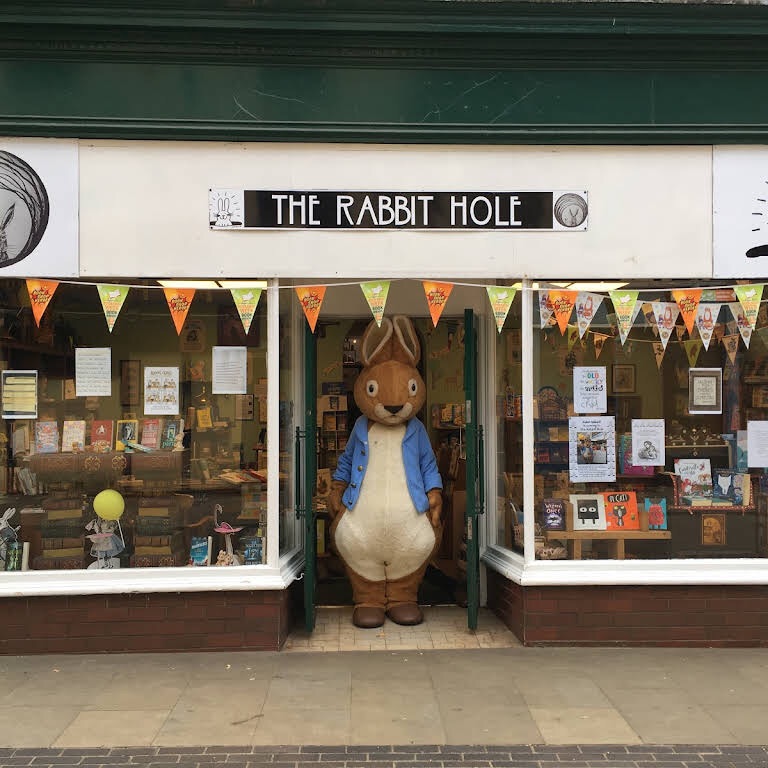
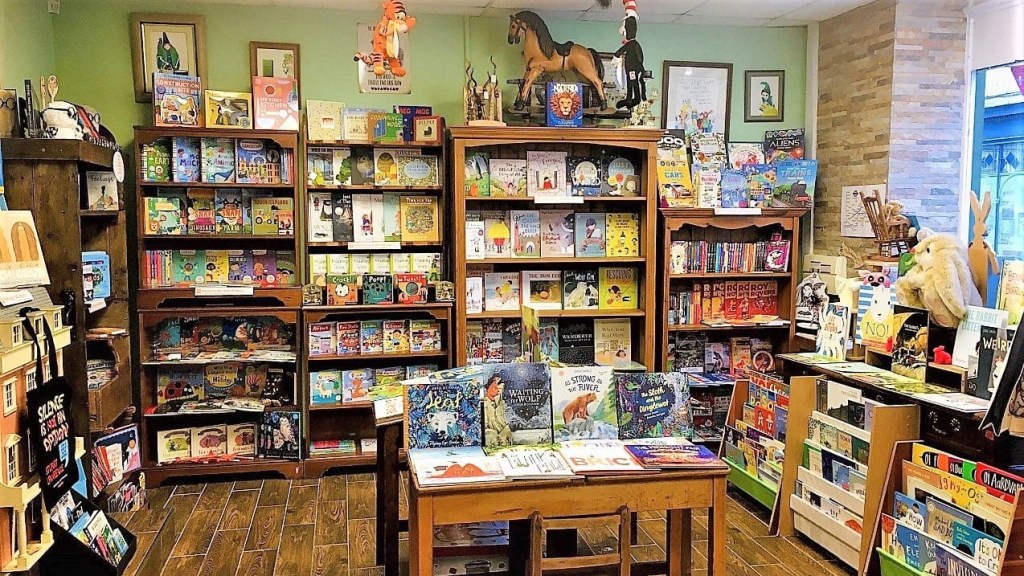
The Rabbit Hole is a brilliant local bookshop to me, in the market town of Brigg, near Scunthorpe. I found them through visiting the town for my Christmas Decorations a couple of years ago. They had a stall on the market and I realised they did adult fiction as well as children’s books. It’s a great place for children because there’s a huge selection but also a great play area,

If you make your way to the rear of the shop you’ll find fiction, including a great selection of indie special editions and signed copies. They pop any new editions on their Facebook page so you can reserve them and drop in to pick them up. They hold great author events too,

https://www.facebook.com/therabbitsbrigg/

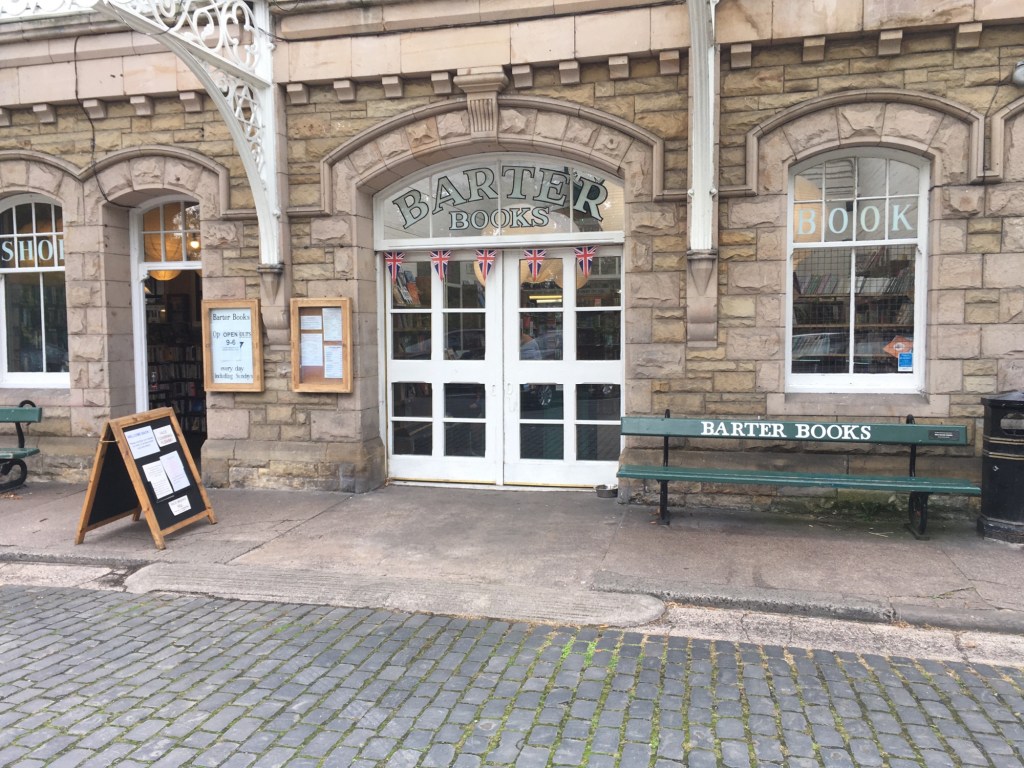
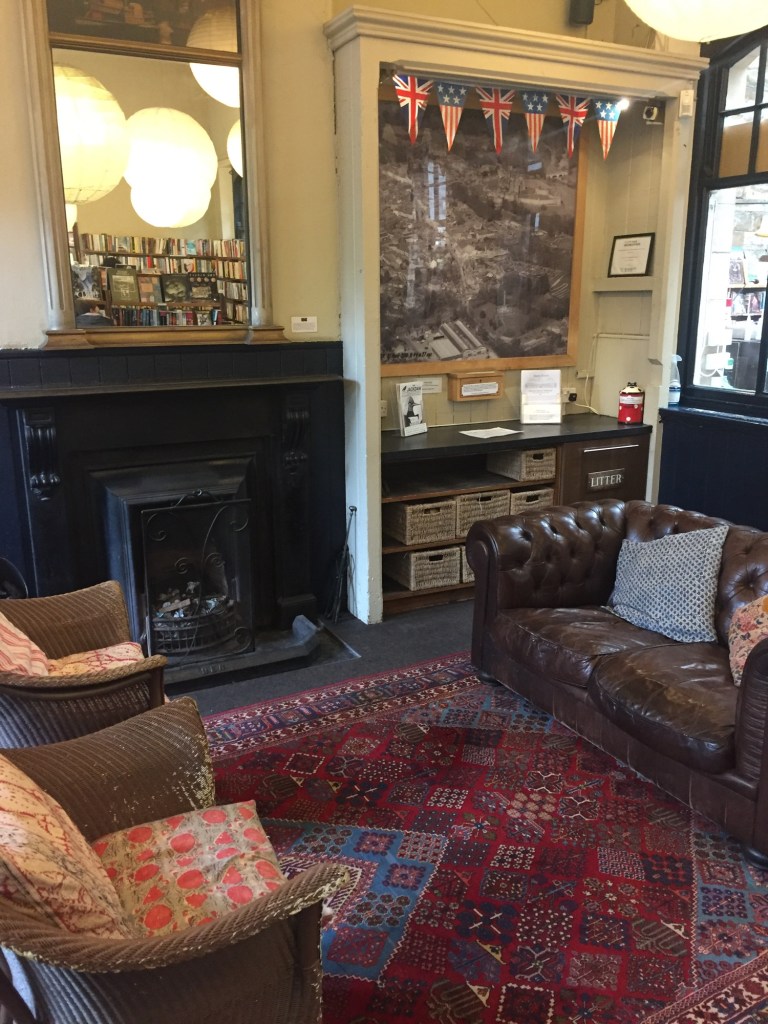
Barter Books in Alnwick is one of my favourite bookshops in the country. I’ve been visiting for over eighteen years and I never come out empty handed. Solely for second hand books, this old station house is huge and covers pretty much every subject you can think of. If we’ve popped up to Northumberland for the weekend, the day we pack up and go is my day at Barter Books. I drop off any books I’m selling then go have breakfast in the cafe. Then I pop back and find out how much I have to spend before browsing. Each section is clearly labelled and the whole place has so much character with all original features on display. There’s a wall mural of famous authors and a mini train set whizzing around above your head. In the paperback section there’s a cozy seating area with an open fire where I’ve met some of the loveliest people. Be warned, it’s very easy to lose hours in there.

https://www.barterbooks.co.uk/

Posted in Sunday Spotlight

Sunday Spotlight: Going Down Under

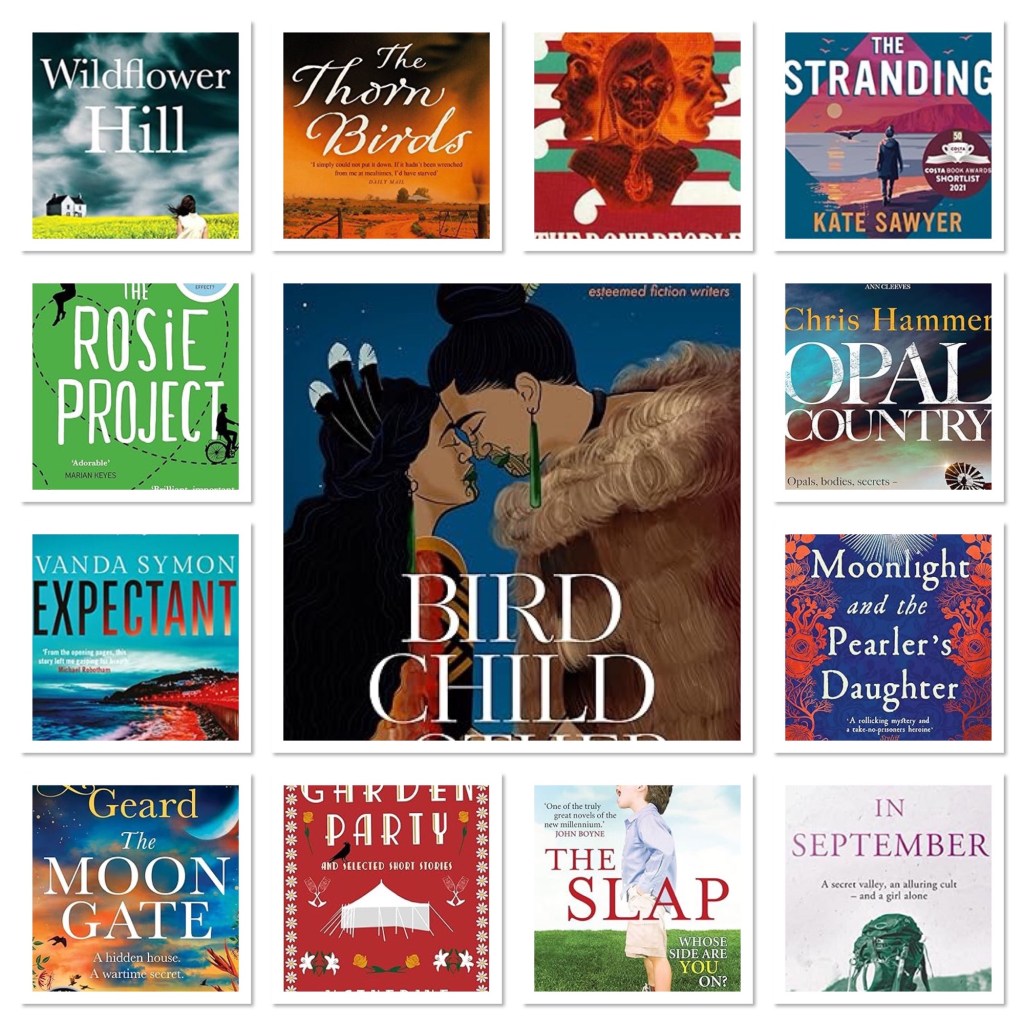
I’ve always been unconsciously drawn to books set in Australia and New Zealand, perhaps because I have family in both countries and want to familiarise myself with their lives. My mum lived there as a ten pound Pom in the 1960’s, leaving Liverpool behind and living in hostels meat Sydney. My grandad loved it out there and would tell us about nature, mostly horrific stories of people having spider’s nest in their ears or brains. My brother-in-law went out to New Zealand to work as a tree surgeon on a huge farm. He met the love of his life out there, Jenny, and although Jan died a few years after my husband I’m still in touch with Jenny and my two nephews. I was also hugely influenced by mum who was an enormous fan of The Thorn Birds – although hated Rachel award as Meggie in the TV mini-series. I’ve always thought that people down under are resilient, rather sweary and very straightforward. They say what they think – something I admire even where I don’t agree. I love the diversity of the cities and fascinated by Aboriginal and Māori. Some of my choices were read on my post-colonial literature course at university, a module that I found so inspiring and forced me to read writers I’d never have picked up as a casual reader. Here are just a few of the books and authors that can take you on a trip round both countries.

Classics

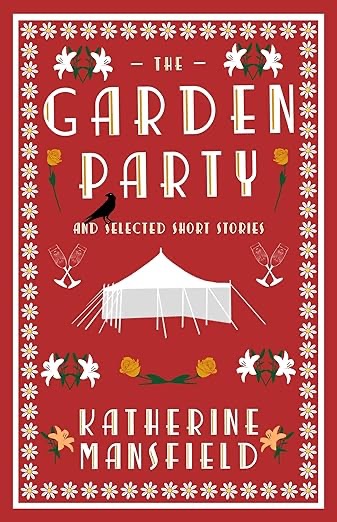
When her wealthy family prepares to host a lavish summer party, the young, hitherto sheltered Laura Sheridan suddenly feels a kinship with the staff and the helpers hired to set up the venue for the festivities. As she learns of the death of one of their working-class neighbours, this burgeoning sense of class consciousness is heightened by a realization of her own mortality. Published in 1922, at the height of literary modernism, ‘The Garden Party’ is now considered one of the key texts of that movement. This volume, which also includes all of Katherine Mansfield’s other published short stories, is an invaluable resource for anyone wishing to discover one of the early twentieth century’s finest writers. I first read this collection at university and I still have it today because it stands up against any short story collection from that period.

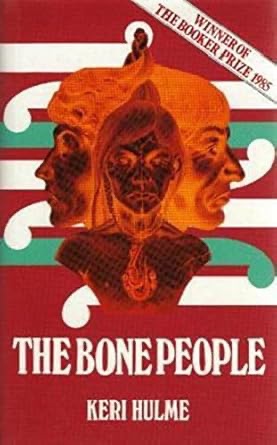
Integrating both Maori myth and New Zealand reality, The Bone People became the most successful novel in New Zealand publishing history when it appeared in 1984. Set on the South Island beaches of New Zealand, a harsh environment, the novel chronicles the complicated relationships between three emotional outcasts of mixed European and Maori heritage. Kerewin Holmes is a painter and a loner, convinced that “to care for anything is to invite disaster.” Her isolation is disrupted one day when a six-year-old mute boy, Simon, breaks into her house. The sole survivor of a mysterious shipwreck, Simon has been adopted by a widower Maori factory worker, Joe Gillayley, who is both tender and horribly brutal toward the boy. Through shifting points of view, the novel reveals each character’s thoughts and feelings as they struggle with the desire to connect and the fear of attachment.

Compared to the works of James Joyce in its use of indigenous language and portrayal of consciousness, The Bone People captures the soul of New Zealand. After twenty years, it continues to astonish and enrich readers around the world.

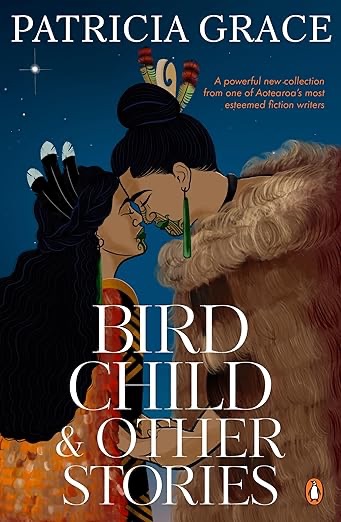
Mythology and contemporary Māori life are woven together seamlessly in this spectacular collection by Aotearoa’s foremost short story writer.

The titular story ‘Bird Child’ plunges you deep into Te Kore, an ancient time before time. In another, the formidable goddess Mahuika, Keeper of Fire, becomes a doting mother and friend. Later, Grace’s own childhood vividly shapes the world of the young character Mereana; and a widower’s hilariously human struggle to parent his seven daughters is told with trademark wit and crackling dialogue.

Moving artfully across decades, landscapes, time and space, with tenderness and charm, Bird Child and Other Stories shows an author as adept and stimulating as ever. This isn’t an easy read but fascinating and the comparison between Māori and other creation myths from around the world was fascinating.

Contemporary Fiction

Cassy smiled, blew them a kiss.

‘See you in September,’ she said.

It was a throwaway line. Just words uttered casually by a young woman in a hurry. And then she’d gone. 


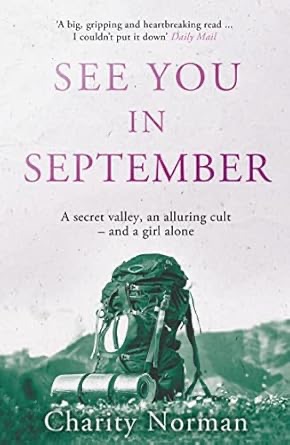
It was supposed to be a short trip – a break in New Zealand before her best friend’s wedding. But when Cassy waved goodbye to her parents, they never dreamed that it would be years before they’d see her again. 
Having broken up with her boyfriend, Cassy accepts an invitation to stay in an idyllic farming collective. Overcome by the peace and beauty of the valley and swept up in the charisma of Justin, the community’s leader, Cassy becomes convinced that she has to stay.

As Cassy becomes more and more entrenched in the group’s rituals and beliefs, her frantic parents fight to bring her home – before Justin’s prophesied Last Day can come to pass. I love Charity Norman’s writing because she gets to the heart of family relationships and shows how families can fracture when placed under stress. I’d recommend any of her books but this one is set in New Zealand. I highly recommend Remember Me and Home Truths.

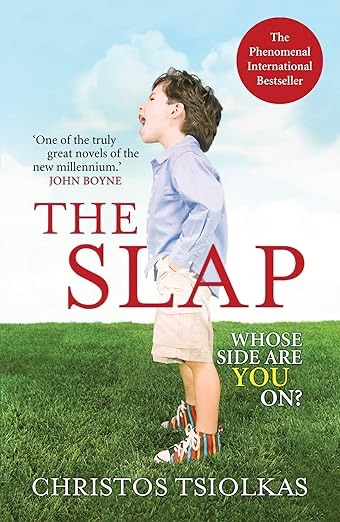
At a suburban barbecue one afternoon, a man slaps an unruly boy

The boy is not his son. 

It is a single act of violence, but the slap reverberates through the lives of everyone who witnesses it happen.

Christos Tsiolkas presents the impact of this apparently minor domestic incident through the eyes of eight of those who witness it. It’s honestly hard to find someone to like here, but it is a fascinating look at contemporary Aussie relationships. It’s an unflinching interrogation of the life of the modern family, a deeply thought-provoking novel about boundaries and their limits…

The Lambert sisters have secrets…

When 15-year-old Cathy Lambert runs away from her Dublin home, she is scared and pregnant. Settled in New Zealand with her new son Conor she believes the secret she carries will never be revealed…

Rebecca Lambert was eighteen when her parents died and she took responsibility for her younger sisters. Years later, she is haunted by fears she hoped she’d conquered.

Freed from family duties, mother of three Julie Chambers is determined to recapture the dreams of her youth.

Married to a possessive older man, Lauren Moran embarks on a frantic love affair that threatens to destabilise her fragile world.

Anxious to make peace with her three sisters, Cathy invites them to her wedding.

But as the women journey together through New Zealand towards their reunion, they are forced to confront the past as the secret shared histories of the Lambert sisters are revealed. I couldn’t put this book down as it’s a great mix of emotions, adventure, secrets and a lot of humour.

EVERY ENDING IS A NEW BEGINNING…

Ruth is ignoring the news. Like most people, she has relationship problems, job stress, friends and family who need her. Ruth has a life.

But the news is about to catch up with Ruth, and her problems are going to be swept away…along with the rest of the world. While on a plane to New Zealand, something starts to happen to the world. Arriving, Ruth makes her way to her coastal destination but never expected to be sharing the inside of a dead whale with a stranger as a world ending event happens. It takes this to change Ruth’s outlook completely. Only when the comforts and complications of her old existence are gone, does she finally realise how she might be able to live to the fullest. This was a mesmerising debut from Kate and I still recommend it constantly. It made me think about something drastic like this happening in my lifetime, but also question why we fall in love with the people we do and how commitments to others are nurtured and lad

Romantic Fiction

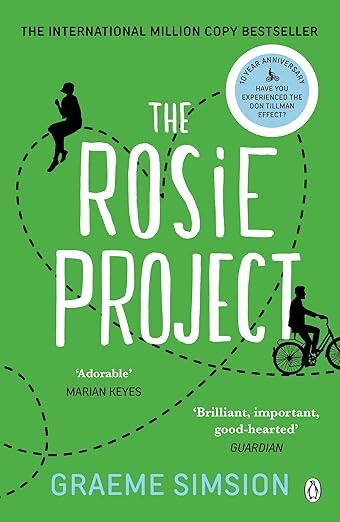
Love isn’t an exact science – but no one told Don Tillman.

A thirty-nine-year-old geneticist, Don’s never had a second date. So he devises the Wife Project, a scientific test to find the perfect partner. Don has a regimented life of work

Enter Rosie – ‘the world’s most incompatible woman’ – throwing Don’s safe, ordered life into chaos.

But what is this unsettling, alien emotion he’s feeling? . . .

This is a deeply funny, but emotional and fascinating in terms of Don’s neuro-divergence. He eats the same meal on the same night every week as part of his rotation of menus. His life felt like a never-ending to-do lust and I knew that he would drive me up the wall. Rosie is a woman of great patience! However, I also knew that my lack of systems and routine would have an equally detrimental effect on his mental health. Watching how these two people try, fail and try again to communicate their needs and feelings within the relationship is a lesson for every couple. It’s also brilliantly funny. There is a trilogy now so treat yourself to all of them.

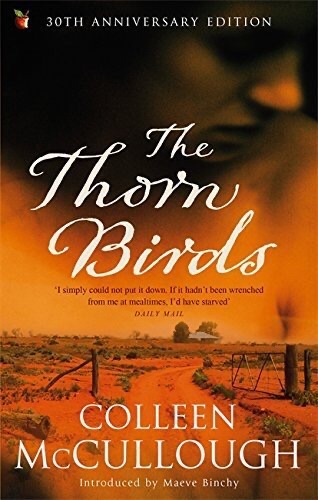
In the rugged Australian Outback, three generations of Clearys live through joy and sadness, bitter defeat and magnificent triumph, driven by their dreams, sustained by remarkable strength of character… and torn by dark passions, violence and a scandalous family legacy of forbidden love.

The Thorn Birds is a poignant love story, a powerful epic of struggle and sacrifice, a celebration of individuality and spirit. Most of all, it is the story of the Clearys’ only daughter, Meggie, who can never possess Ralph de Bricassart, the man she so desperately adores. Ralph will rise from parish priest to the inner circles of the Vatican… but his passion for Meggie will follow him all the days of his life.

What a saga this is and I have to say the book is ten times better than the series, mainly because we get more of the family dynamic and get to know Meggie as a little girl. Her story of slowly growing up with such a harsh mother really builds and we understand more her bond to the young priest who befriends her, noticing that in a family of many sons she is largely ignored. He is her knight in shining armour and the only one, after her eldest brother is gone, who will hug and comfort this lonely girl. Catholic readers will recognise how powerful the religion is for Irish families and the schooling that nuns provide. The book is an epic and covers Father Ralph’s lifetime, but it has an incredible sense of place and time and really is worth a read for that alone.

n 1929, Beattie Blaxland had dreams. Big dreams. She dreamed of a life of fashion and fabrics. One thing she never dreamed was that she would find herself pregnant to her married lover, just before her nineteenth birthday. 

In 2009, Emma Blaxland-Hunter was living her dream. A prima ballerina with the London Ballet, she had everything… Until the moment she lost it all. 

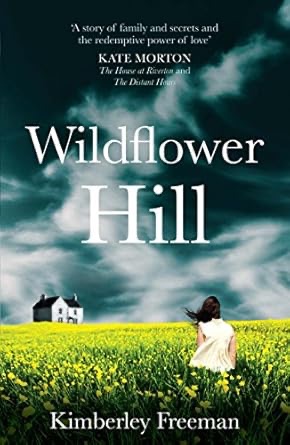
Separated by decades, both women must find the strength to rebuild their lives. A legacy from one to the other will lead to Wildflower Hill, a place where a woman can learn to stand alone long enough to realise what she really wants.

I’d never read this author before so it came as a complete surprise when I enjoyed it so much. It is historical fiction too, but I loved that this was a ballsy woman who was determined to succeed at Wildflower Hill and her love story with an aboriginal worker would have been so transgressive at the time. It’s an unashamedly romantic story and if you enjoy love with a side order of feminism, family secrets and a dual-timeline this is for you.

Historical Fiction

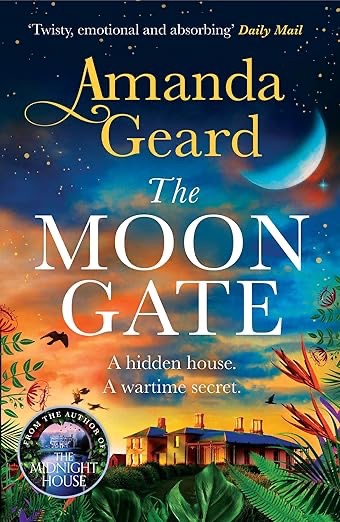
A faded photograph. An abandoned house. A wartime mystery. . .

1939: On the eve of war, young English heiress Grace Grey travels from London to the wilderness of Tasmania. Coaxed out of her shell by the attentions of her Irish neighbour, Daniel – Grace finally learns to live. But when Australian forces are called to the frontline, and Daniel with them, he leaves behind a devastating secret which will forever bind them together.

1975: Artist Willow Hawkins, and her new husband, Ben, can’t believe their luck when an anonymous benefactor leaves them a house on the remote Tasmanian coast. Confused and delighted, they set out to unmask Towerhurst’s previous owner – unwittingly altering the course of their lives.

2004: Libby Andrews has always been sheltered from the truth behind her father Ben’s death. When she travels to London and discovers a faded photograph, a long-buried memory is unlocked, and she begins to follow an investigation that Ben could never complete. But will she realise that some secrets are best left buried . . .?

This gorgeous story that spans the twentieth century was one of my books of the year last year. The mystery of how all these timelines added up, the beautiful setting of Tasmania and the historical context around WW2 drew me in. The love story is simply gorgeous and potentially heart-breaking. I know this is a story I’ll want to read again.

1896, Bannin Bay, Australia. When British pearl-boat captain Charles Brightwell goes missing out at sea, rumours of mutiny and murder swell within the bay’s dens and back alleys. Only his headstrong daughter, Eliza, refuses to believe her father is dead, and sets out on a dangerous journey to uncover the truth.

But in a town teeming with corruption, prejudice, and blackmail, Eliza soon learns that the answers she seeks might cost more than pearls. How much is she willing to sacrifice to find them?

This incredible debut is richly atmospheric from the get go, throwing us straight into the strangeness of 19th Century Western Australia as if it is an alien landscape. In fact that’s exactly what it is for the Brightwell family, particularly Eliza whose childhood eyes we see it through for the the first time. The adult Eliza has to negotiate her way through the community’s corruption, violence, blackmail and the criminal elements of the pearling business. All the while reading her father’s diary for clues and guiding us to some fascinating characters, some of which are based on historical figures. You’ll love Eliza’s early feminist stance and sense of adventure. The twists and turns her journey takes are gripping and pull you deep into the story. It’s a fantastic debut, full of life and death, just like it’s setting.

Crime Fiction

A killer targeting pregnant women.

A detective expecting her first baby…

The shocking murder of a heavily pregnant woman throws the New Zealand city of Dunedin into a tailspin, and the devastating crime feels uncomfortably close to home for Detective Sam Shephard as she counts down the days to her own maternity leave.

Confined to a desk job in the department, Sam must find the missing link between this brutal crime and a string of cases involving mothers and children in the past. As the pieces start to come together and the realisation dawns that the killer’s actions are escalating, drastic measures must be taken to prevent more tragedy.

For Sam, the case becomes personal, when it becomes increasingly clear that no one is safe, and the clock is ticking…

There’s something about Aussie and NZ crime fiction. It’s gritty and immediate. This is the fifth in Vanda’s Sam Shepherd series and I can honestly say they’re all brilliant but this one …. I was on the edge of my seat! It feels like Sam has just let her guard down and accepted what’s next in her life, when everything could be ripped away from her. Even though she’s the one who most understood the killer’s motivations, will she still be shocked by their identity? Sam’s vulnerability is terrifying and I was praying that she would be okay, as if she’s a living and breathing human being. That’s the power of Vanda Symon’s writing and how much of that magic she’s poured into this brilliant character.

Lou O’Dowd travels across the world from Australia to Edinburgh for a job with the organisation SASOL. Her new life will be living with her cousin and working shifts at a halfway house for high risk offenders including two killers, a celebrity paedophile, and a paranoid coke dealer. After orientation, Lou will be on shift alone dealing with these offenders with little more than her own instinct to guide her. What could possibly go wrong?

Lou is a controversial character, living off a sugar daddy for a while she’s had no need to work, but when the relationship ends disastrously she has no choice but to leave. On her first day in Edinburgh she meets a man at a play who has a similar attitude to risk, enjoying mainly outdoor sex. He comes from a rich family, so maybe he could be more than a fling? I loved how the mundane domesticity of the job was mixed with genuine fear and horror of what could happen if residents flare up. There’s an evening ritual of cocoa for each resident, but it has to be to perfectly timed in order to interrupt one resident’s suicide ritual. These are the extremes a job like this entails, but it’s only the beginning….

A few more suggestions:

Posted in Sunday Spotlight

Sunday Spotlight – The Perfect Society: Novels About Eugenics

Eugenics is described by National Human Genome Research Institute as

“an immoral and pseudoscientific theory that claims it is possible to perfect people and groups through genetics and the scientific laws of inheritance”.

It’s a word that’s been floating around social media for some time, mainly in connection to those behind the new US administration. There are concerns that people with physical disabilities, those of different ethnic origins and those with mental ill health or learning disabilities, might be considered less desirable in society. There are people with disabilities fighting against the introduction of assisted dying, because it could be interpreted to mean disabled lives have less value. We’ve all probably asked at one time or another, how could ordinary German citizens sleep walk into the Final Solution? The answer is slowly. There is evidence that children with disabilities were being removed and institutionalised as early as 1933. We like to think the Holocaust couldn’t happen again, but there is evidence of eugenic policies affecting the lives of ordinary Americans until the 1970s. Of course the Nazis are the ultimate and extreme example of eugenic policies being enacted, but both European countries and the US were using eugenicist policies on their own citizens across the 20th Century. This is what happens when we demonise the disabled, the poor and the destitute. The rise of the far right across the world is driven by eugenicist thinking, that some people are inherently better than others. This is why eugenicist policies affected those with learning difficulties, Native Americans, African Americans and people with long term disabilities. I try not to be political on the blog, but here I’m not advocating particular political parties. All I want to do is share novels that show how eugenics affected real communities and individuals.

From the outside, Eleanor and Edward Hamilton have the perfect life, but they’re harbouring a secret that threatens to fracture their entire world. 


London, 1929. 
Eleanor Hamilton is a dutiful mother, a caring sister and an adoring wife to a celebrated war hero. Her husband, Edward, is a pioneer in the eugenics movement. The Hamiltons are on the social rise, and it looks as though their future is bright. When Mabel, their young daughter, begins to develop debilitating seizures, they have to face an uncomfortable truth: Mabel has epilepsy – one of the ‘undesirable’ conditions that Edward campaigns against. Forced to hide their daughter away so as to not jeopardise Edward’s life’s work, the couple must confront the truth of their past – and the secrets that have been buried. Will Eleanor and Edward be able to fight for their family? Or will the truth destroy them? 

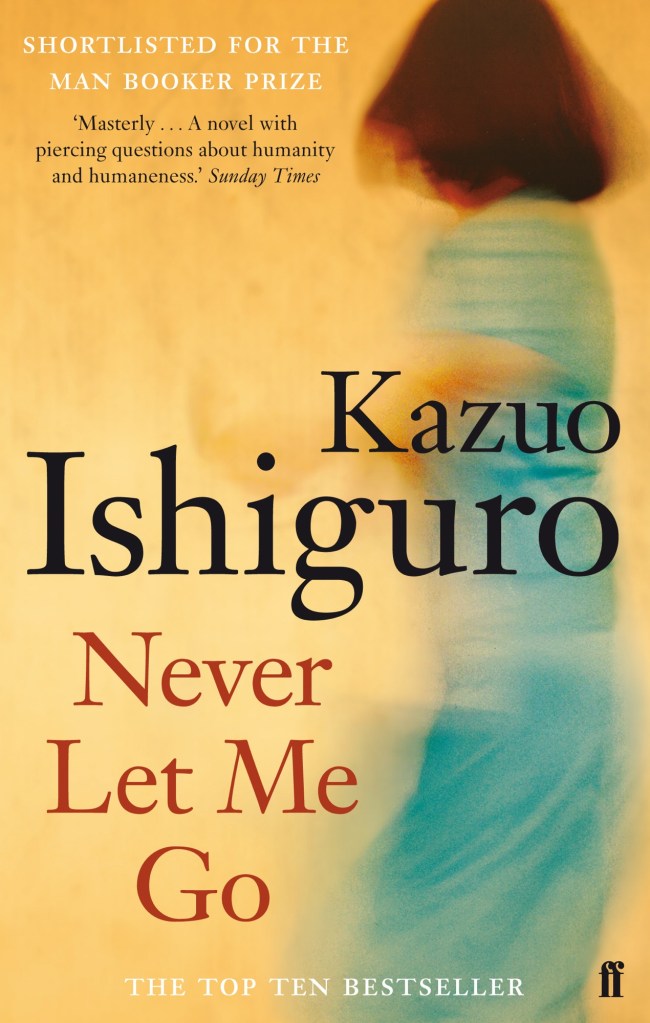
Many will have read this heart-rending novel or seen the film, beautifully performed by Andrew Garfield, Carey Mulligan and Keira Knightly. This perfectly encapsulates that head in the sand mindset humans are so good at. We can ignore terrible injustices when they’re not happening to us, or people like us. We can always think it doesn’t apply to us. Until it does. Kazuo Ishiguro imagines the lives of a group of students growing up in a darkly skewed version of contemporary England. Narrated by Kathy, now thirty-one, Never Let Me Go dramatises her attempts to come to terms with her childhood at the seemingly idyllic Hailsham School and with the fate that has always awaited her and her closest friends in the wider world. A story of love, friendship and memory, Never Let Me Go is charged throughout with a sense of the fragility of life and is utterly terrifying.

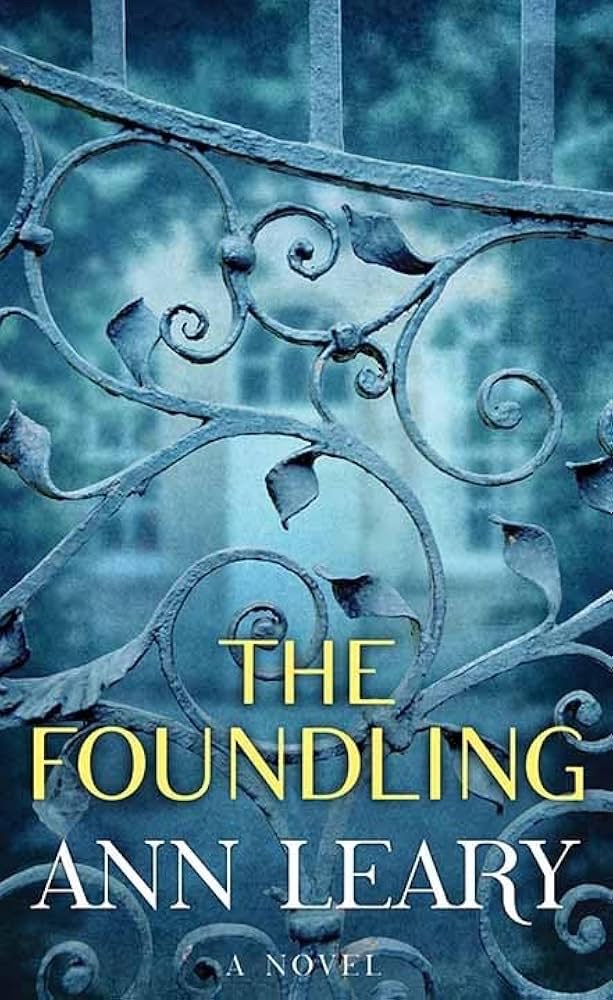
From the New York Times bestselling author of The Good House, the story of two friends, raised in the same orphanage, whose loyalty is put to the ultimate test when they meet years later at a controversial institution—one as an employee; the other, an inmate.

It’s 1927 and eighteen-year-old Mary Engle is hired to work as a secretary at a remote but scenic institution for mentally disabled women called the Nettleton State Village for Feebleminded Women of Childbearing Age. She’s immediately in awe of her employer—brilliant, genteel Dr. Agnes Vogel. Dr. Vogel had been the only woman in her class in medical school. As a young psychiatrist she was an outspoken crusader for women’s suffrage. Now, at age forty, Dr. Vogel runs one of the largest and most self-sufficient public asylums for women in the country. Mary deeply admires how dedicated the doctor is to the poor and vulnerable women under her care. 

Soon after she’s hired, Mary learns that a girl from her childhood orphanage is one of the inmates. Mary remembers Lillian as a beautiful free spirit with a sometimes-tempestuous side. Could she be mentally disabled? When Lillian begs Mary to help her escape, alleging the asylum is not what it seems, Mary is faced with a terrible choice. Should she trust her troubled friend with whom she shares a dark childhood secret? Mary’s decision triggers a hair-raising sequence of events with life-altering consequences for all. Inspired by a true story about the author’s grandmother, The Foundling offers a rare look at a shocking chapter of American history. This gripping page-turner will have readers on the edge of their seats right up to the stunning last page…asking themselves, “Did this really happen here?”

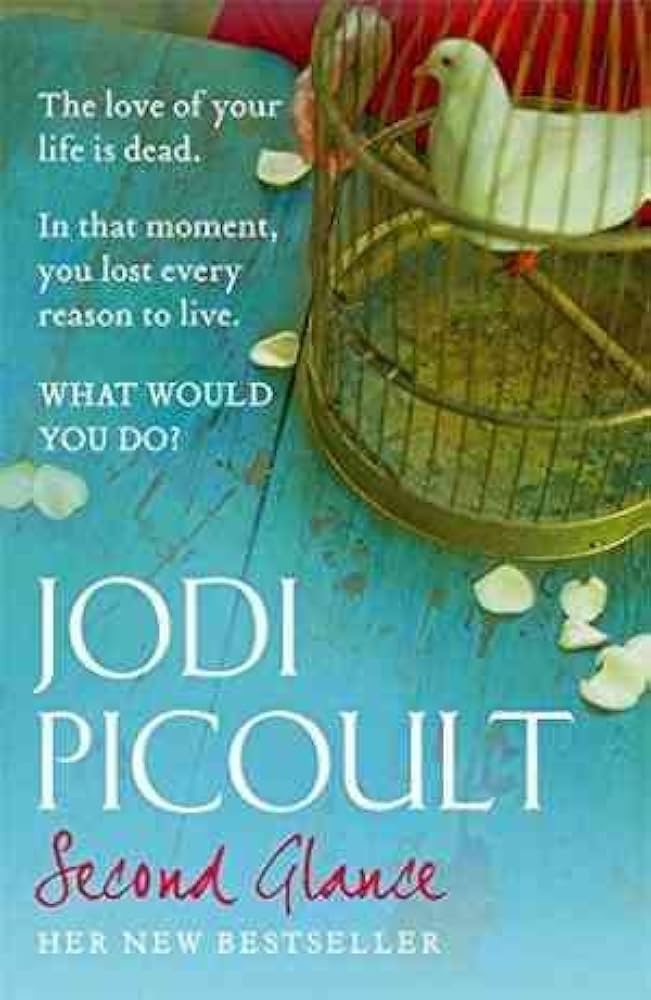
Since the death of his fiancée Aimee, Ross Wakeman has been unable to fill the hole she has left in his life. Seeking to end his pain, he becomes a ghost hunter, despite never having seen a ghost.

However, when his job leads him to the town of Comtosook, it becomes apparent that Ross isn’t the only one haunted by the past. When he meets the mysterious Lia, who brings him to life for the first time in years, redemption seems around the corner. But the discoveries that await him are beyond anything he could dream of – in this world or the next. Second Glance takes a look at how American eugenicist policies affected the lives of Native Americans with a programme of sterilisation. It’s not her usual court based drama, but still has her themes of injustice, identity and a lesser known part of American history.

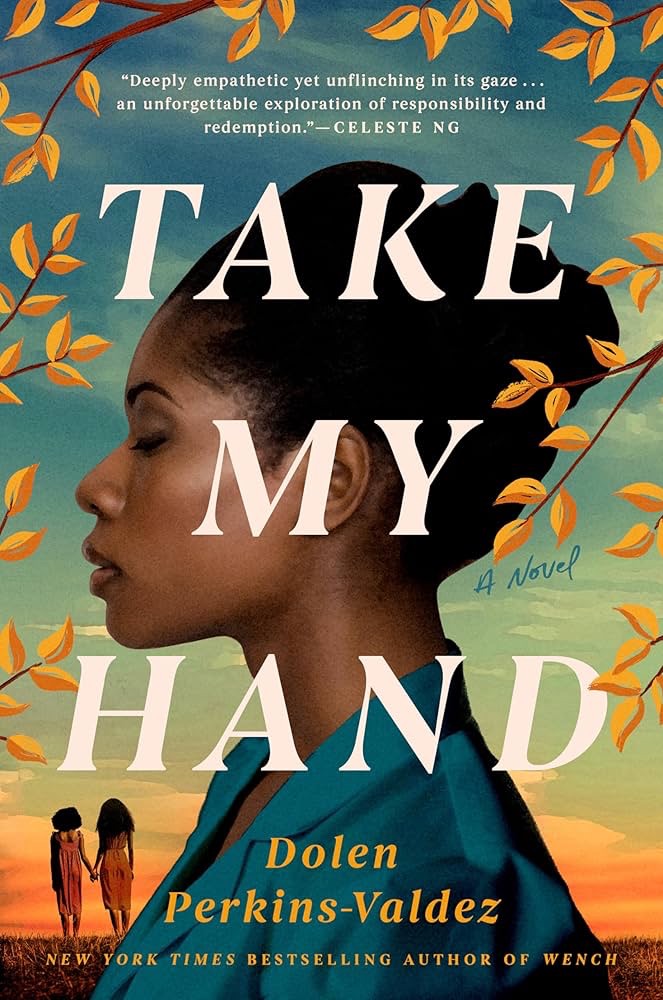
Montgomery, Alabama. 1973. Fresh out of nursing school, Civil Townsend has big plans to make a difference in her community. She wants to help women make their own choices for their lives and bodies.

But when her first week on the job takes her down a dusty country road to a tumbledown cabin and into the heart of the Williams family, Civil learns there is more to her new role than she bargained for. Neither of the two young sisters has even kissed a boy, but they are poor and Black, and for those handling their welfare benefits, that’s reason enough to have them on birth control. When Civil discovers a terrible injustice, she must choose between carrying out instructions or following her heart and decides to risk everything to stand up for what is right.

Inspired by true events and a shocking chapter of recent history, Take My Hand is a novel that will open your eyes and break your heart. An unforgettable story about love and courage, it is also a timely and uplifting reminder that one person can change the world.


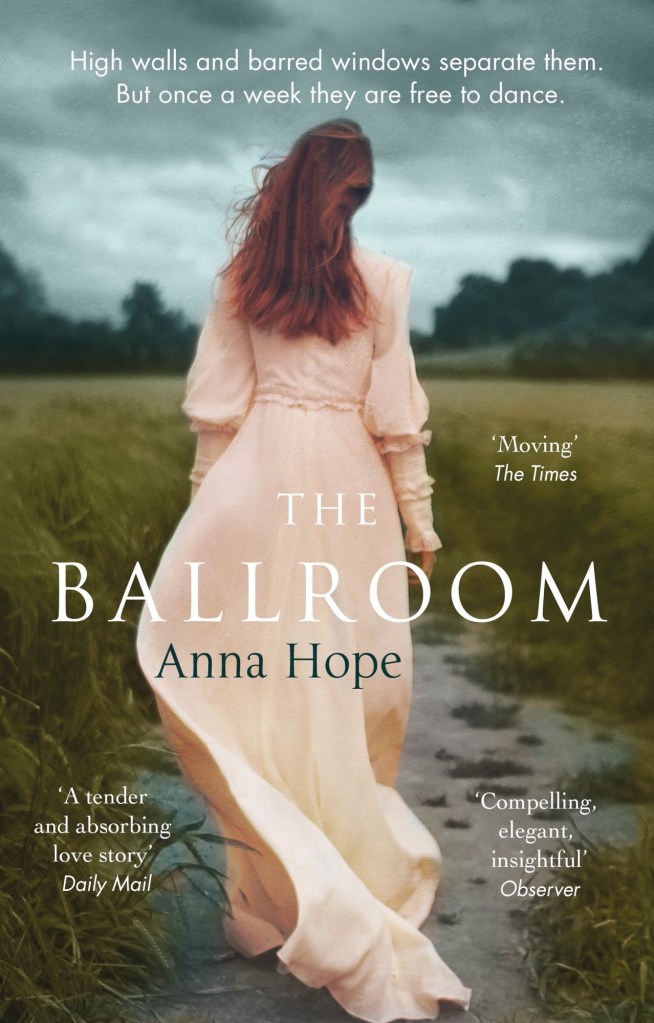
1911: Inside an asylum at the edge of the Yorkshire moors, where men and women are kept apart by high walls and barred windows, there is a ballroom vast and beautiful. For one bright evening every week they come together and dance. When John and Ella meet it is a dance that will change two lives forever.

Set over the heatwave summer of 1911, the end of the Edwardian era, THE BALLROOM tells a rivetting tale of dangerous obsession, of madness and sanity, and of who gets to decide which is which. It is a love story like no other, showing how eugenics affected those deemed mentally ill.

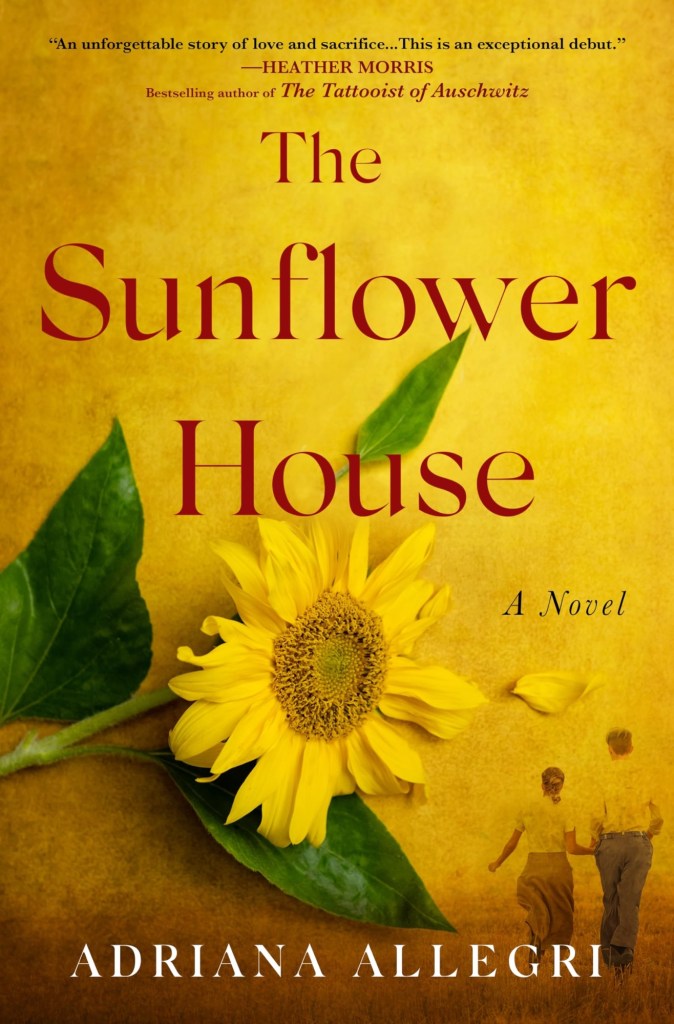
In a sleepy German village, Allina Strauss’s life seems idyllic: she works at her uncle’s bookshop, makes strudel with her aunt, and spends weekends with her friends and fiancé. But it’s 1939, Adolf Hitler is Chancellor, and Allina’s family hides a terrifying secret—her birth mother was Jewish, making her a Mischling. 

One fateful night after losing everyone she loves, Allina is forced into service as a nurse at a state-run baby factory called Hochland Home. There, she becomes both witness and participant to the horrors of Heinrich Himmler’s ruthless eugenics program. 

The Sunflower House is a meticulously-researched debut historical novel from Adriana Allegri that uncovers the notorious Lebensborn Program of Nazi Germany. Women of “pure” blood stayed in Lebensborn homes for the sole purpose of perpetuating the Aryan population, giving birth to thousands of babies who were adopted out to “good” Nazi families. Allina must keep her Jewish identity a secret in order to survive, but when she discovers the neglect occurring within the home, she’s determined not only to save herself, but also the children in her care. 

A tale of one woman’s determination to resist and survive, The Sunflower House is also a love story. When Allina meets Karl, a high-ranking SS officer with secrets of his own, the two must decide how much they are willing to share with each other—and how much they can stand to risk as they join forces to save as many children as they can. The threads of this poignant and heartrending novel weave a tale of loss and love, friendship and betrayal, and the secrets we bury in order to save ourselves.

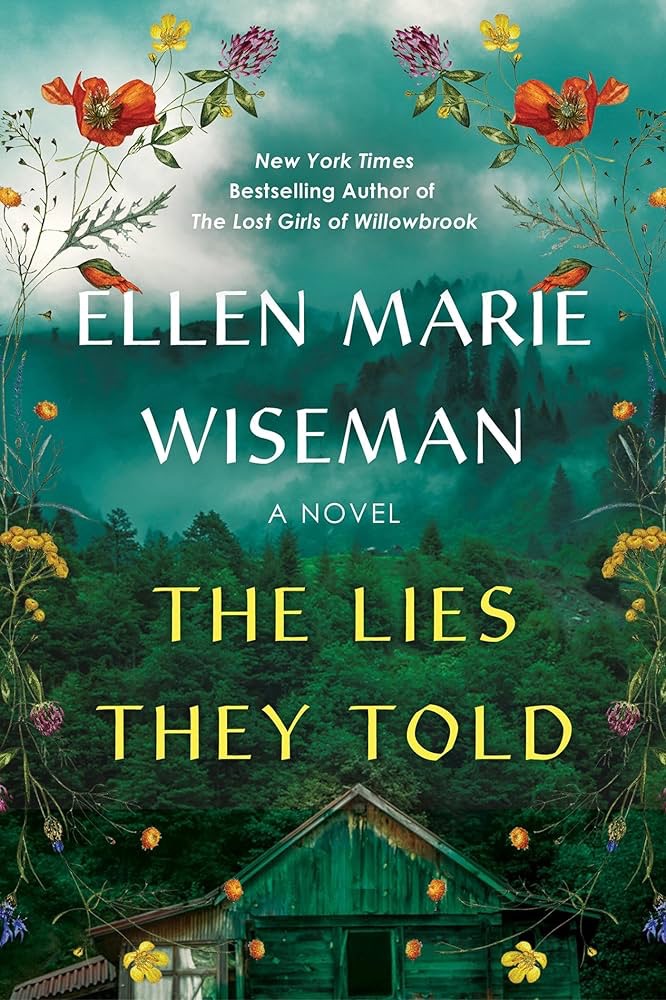
In rural 1930s Virginia, a young immigrant mother fights for her dignity and those she loves against America’s rising eugenics movement – when widespread support for policies of prejudice drove imprisonment and forced sterilizations based on class, race, disability, education, and country of origin – in this tragic and uplifting novel of social injustice, survival, and hope.

When Lena Conti—a young, unwed mother—sees immigrant families being forcibly separated on Ellis Island, she vows not to let the officers take her two-year old daughter. But the inspection process is more rigorous than she imagined, and she is separated from her mother and teenage brother, who are labeled burdens to society, denied entry, and deported back to Germany. Now, alone but determined to give her daughter a better life after years of living in poverty and near starvation, she finds herself facing a future unlike anything she had envisioned.

Silas Wolfe, a widowed family relative, reluctantly brings Lena and her daughter to his weathered cabin in Virginia’s Blue Ridge Mountains to care for his home and children. Though the hills around Wolfe Hollow remind Lena of her homeland, she struggles to adjust. Worse, she is stunned to learn the children in her care have been taught to hide when the sheriff comes around. As Lena meets their neighbors, she realizes the community is vibrant and tight knit, but also senses growing unease. The State of Virginia is scheming to paint them as ignorant, immoral, and backwards so they can evict them from their land, seize children from parents, and deal with those possessing “inferior genes.”

After a social worker from the Eugenics Office accuses Lena of promiscuity and feeblemindedness, her own worst fears come true. Sent to the Virginia State Colony for the Feebleminded and Epileptics, Lena face impossible choices in hopes of reuniting with her daughter—and protecting the people, and the land, she has grown to love.

If you want to read more background on eugenics here are a few links:

https://www.genome.gov/about-genomics/educational-resources/timelines/eugenics

https://www.english-heritage.org.uk/visit/blue-plaques/blue-plaque-stories/eugenics/

https://www.nytimes.com/2022/06/08/magazine/eugenics-movement-america.html

Posted in Throwback Thursday

Throwback Thursday! This Lovely City by Louise Hare

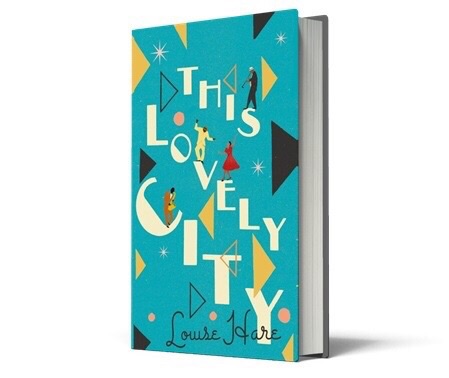
This first of Louise Hare’s novels really stayed with me, it grabbed me early and never let go. When a writer whisks you so convincingly to another time and place it’s such an incredible skill. I found myself in post-Windrush London where new people are making the capital their home and the huge social change is causing friction. As one mixed race character observed ‘she was no longer the odd one out’ as she went to the market. More immigrants are arriving, wandering the streets, weighed down by layers thrown on haphazardly as the reality of a British winter starts to bite. However, as those first pioneers answered the call from the motherland, they’d found London not at all what they were expecting. The British government had put that call out to its colonies. They needed workers, to replace those men lost in WW2 and to rebuild cities recovering from the Blitz. Yet no one seemed grateful, no one said thank you and the living was far from easy.

We follow two main characters: Lawrie and Evie. They are courting in the old fashioned sense. Lawrie sees in Evie a nice girl, a girl who has been well brought up even though she has never known her father. He wants to do things properly, do right by her. So he calls and they go to the cinema or for a walk. Lawrie has come over from Jamaica and works part time as a musician in a local band and full time as a postman, with a sideline in the odd special black market delivery too. Evie has lived in London her whole life with her mother Agnes. They have been Lawrie’s neighbours ever since a rented room opened up at the house next door. The two women understand prejudice, because they too have been victims of it, and live a life kept very much to themselves. Evie is mixed race and Agnes, who is white, has been the subject of gossip and judgement ever since she Evie was born. So, although what transpires in the book may be shocking to us, it barely surprises them, because they know how people feel about any sort of difference from the white British norm. 

The story splits into two time frames approximately one year apart. In one, Lawrie is cutting across Clapham Common at the end of his postal route when he hears a woman shouting. She has found a baby in the pond. Lawrie rushes to help, but they are both too late. The baby becomes the book’s central mystery and because she has black skin, suspicion falls upon the already beleaguered Jamaican community. Rathbone, is the police officer assigned to the case and he relishes causing problems for the community. His suspicions fall on Lawrie, as the first man on the scene, but Rathbone doesn’t just investigate, he sets out to ruin Lawrie’s life. However, there is a secret to this baby’s background that is closer to home than Lawrie imagines.

I found myself rooting for Lawrie and Evie. I wanted them to be able to make marriage plans and live the simple, quiet life they dreamed about. Her mother Agnes has had to be very strong, being an unmarried mother of a mixed race child meant being ostracised. Evie has a childhood memory of her mother having the neighbours for tea when, against her instructions, Evie was caught looking down through the banisters. They never had tea for the neighbours again. It takes Evie several years to make the link; she is the reason her mum has no friends or visitors. This same hostility is now experienced by the men who arrived on the Windrush and it must have been bewildering. To be asked to this country, to fill a shortage of labour and pull a country out of difficulty, then meet nothing but hostility and suspicion from its people seems so unjust. 

A lot of the tension in the novel is around sex and relationships. When the band are booked to play a wedding, the British host is immediately taken aback but decides they can play. All is well until a woman stumbles on the dance floor and one of the band rushes to help. Her husband doesn’t appreciate his wife being touched by a black man and a brawl breaks out causing the band to run for their lives. Provocative women, like the character Rose, stir up tension even more. The men refer to her as Rita Hayworth, the red-haired Hollywood bombshell. When the men first arrive she helps with getting them settled. Then she offers to take Lawrie and his friend to the Lido, dazzling them in her bikini and flirting with Lawrie. She makes it very clear that she wants him with no thought to the consequences if her husband finds out. Interracial relationships are simply not accepted. As Agnes points out, her daughter Evie is far better off in a long term relationship with Lawrie, because although they come from very different places, society will view them as the same due to their skin colour. 

I felt immersed in this world the author has created. From the cold mornings on Lawrie’s postal round, to the smoky nightclubs the band plays into the early hours. This is my grandparents generation so I could also imagine the homes, the struggle of still being on rations and for the women, trying to look nice on a tight budget. It reminded me of stories my grandma and great- aunts told me about going out dancing in post-war Liverpool. I felt so much for Evie, especiallywhen her whole story unfolded towards the end of the novel. There is a whole cast of interesting characters, but Evie and Lawrie are this novel’s heart and I desperately wanted life to work out for them. Louise Hare has written a vibrant book with an incredible sense of place and time, and interesting characters. I loved it. In fact it’s a mark of how much I now love this author that I pre-ordered her next book due in 2026.
Meet the Author

Louise Hare is a London-based writer and has an MA in Creative Writing from Birkbeck, University of London. Originally from Warrington, she has found inspiration in the capital for much of her work, including This Lovely City and Miss Aldridge Regrets.

This Lovely City was featured on the inaugural BBC Two TV book club show, Between the Covers, shortlisted for the RSL Ondaatje Prize, and longlisted for the HWA Debut Crown Award. Louise was selected for the Observer Top 10 Best Debut Novelists list in 2020, securing her place as an author to watch.

Posted in Squad Pod

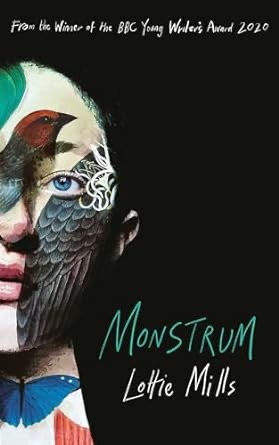
Monstrum by Lottie Mills

This is a very personal review, because when you have a disability it’s impossible to read a collection of stories about bodily difference and it not feel personal. I was diagnosed with Multiple Sclerosis in 1995, but originally broke my back at 11 years old and after years of pain developed Myofascial Pain Syndrome and disc degeneration. Disability and difference have been part of my life for so long but yet I never feel fully part of that world. That’s because my disabilities are usually invisible and I don’t really belong in either world. I even read this while struggling with my health and finally catching COVID. I’m typing up my review while in bed after a radio frequency denervation, where a heated needle is guided towards the compressed nerves and burns them to disrupt the pain messages that refer nerve pain to my legs and lower abdomen. All this goes on behind closed doors because I’m simply unable to get up and out. Then when I can go out, I appear to have very little wrong with me unless I’m using my stick or a crutch. I’m doing what’s called ‘passing’ – able to look like everyone else while having disabilities. So it’s hard to put across how moved I was by this collection portraying ‘otherness’ and how able-bodied people respond to it. Using mythology, fairy tales and a touch of Shakespeare, Lottie Mills has managed to put across so much about life with a disability and what happens when it brushes up against an able-bodied society that’s considered the norm. However, in her world these disabilities become abilities, sometimes magical ones.
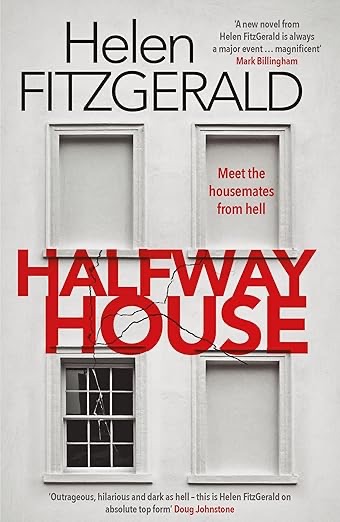
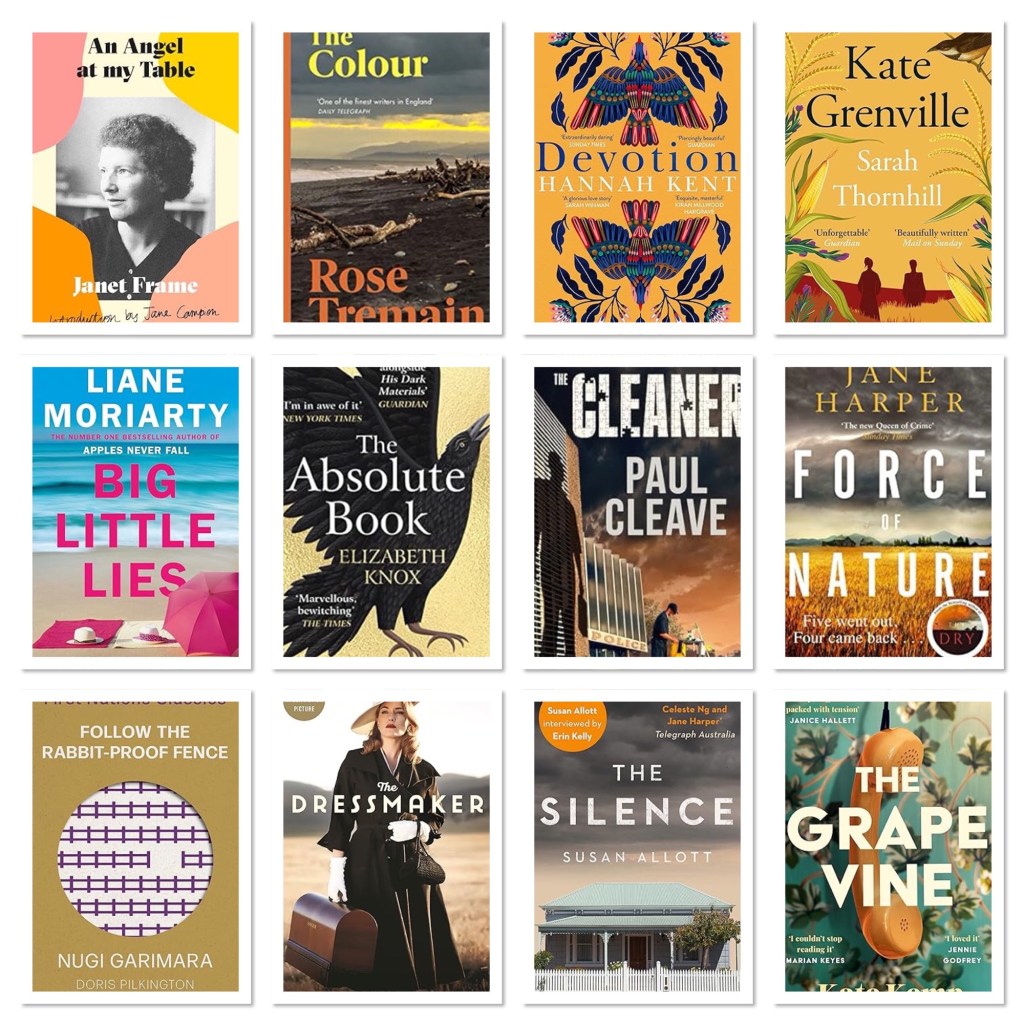
The first story in the collection introduces us to a magical island where Cal and his daughter have a beautiful life of warm sand, sea and a night sky glittering with stars. He tells her stories about bear people and she asks him if they are bear people? Yes they are he says, although her mother wasn’t. She was from a human world that’s about to clash disastrously with theirs. In the human world, there’s so much that Cal can’t do because it isn’t set up like their island. In the human world Cal becomes disabled. We then see what happens when human agencies come up against their little family with disastrous consequences. Instead of concentrating on what he can do, they look at him through the prism of their own abilities and only the things he can’t do. How can he possibly look after his daughter properly when he’s so disadvantaged? Mills takes disability theory here and applied it to her character’s lives, which judging by the name Cal (Caliban) come from the type of magical island Shakespeare describes in The Tempest. Caliban has been more recently portrayed in productions of the play as a black man, a slave, or an asylum seeker rather than a monster. Mills makes the point that Caliban is only a monster when we make him one. The original model of disability is a medical one that assumes there is one ideal healthy body and anything that differs from that is wrong and needs to be fixed. When used in a social context it tells you that the things you can’t do in the world are down to your difference from the norm. However, the social model tells us that it is the way the world is set up that creates the disability. For example if all buildings eradicated stairs, creating ramps and lifts within the normal building model, the environment becomes accessible to all. If Cal is viewed in his own environment, he is capable of looking after his daughter. I was desperate for them to be reunited and I also felt a personal yearning to be part of Cal’s world. This fairy tale explains that while agencies like social services and the NHS might think they are doing the right thing for someone, there is often a better solution. That solution champions individuality and concentrates on what the person can do, rather than what they can’t.

In another story we meet a young disabled woman who craves the perfect pain- free body, something I could definitely identify with right now. However, when her wish is granted she finds it difficult to let go of her disabled identity. This was a fascinating exploration of how disability affects the person psychologically. If a disability is innate then it’s the only body that person has ever known. They know the world’s expectations of that body, their own perception of what they might achieve within that body and how able-bodied people perceive them. If the disability is acquired it can be a long and painful process to come to an acceptance of your new body. You must grieve the body you have lost, as well as all the things you expected to do with that body. I have heard many friends tell me that while they’d happily give up chronic pain or a particular aspect of their disability, they wouldn’t want to go through a reverse change and be able-bodied again. There is even a fear of becoming able-bodied again, with all the expectations that places on a person. This story perfectly encapsulates that fight within the self and how far our disabilities are assimilated into our idea of who we are. I loved Lottie’s use of horror and settings where disability has often found a home such as the circus or fairground. Freak shows were popular in the 19th Century, in both the UK and USA, with different bodies placed on show for entertainment and wonder. In fact Coney Island in New York was a hugely successful venue for such shows, where businessmen and entertainers like Barnum were making money from the display of people with differences and disabilities. It certainly wasn’t the wonderful musical extravaganza portrayed in The Greatest Showman. However, it was a place where someone with a disability could make their own money, live in a community where difference was appreciated and accommodated and achieve a level of fame. She lets us know that these issues are complex and look very different from person to person.

There is a beauty in this world of ‘otherness’ and it’s a world made up of an incredible mix of ingredients. Every person with a disability is different so the variety of experience is endless and hybrid bodies, unusual pairings/families and queer love thrives here. Lottie has found a way of balancing how the world sees us and how we see ourselves. She has used magic realism and alternative communities to show the strength there is in accepting disability and making a life with it, rather than constantly fighting to change yourself and remain in the able-bodied world. What was the most interesting thing to me was her understanding of how these issues affect the world of writing and how there are accepted narrative tropes around disability. I studied for a PhD, sadly never completed, where I was looking at how disability is portrayed in autobiography and memoir and whether this was driven by an author’s internalisation of society’s expectations or whether the publishing industry is biased towards narratives that are acceptable to able-bodied readers and they know will sell widely. The public like people who battle against their disability and illness, preferring words like ‘fight’, ‘overcome’ and ‘survive’. The accepted narrative trope is that of a journey from the dark days of diagnosis towards the rehabilitation and a triumphant ending of cure or a successful life, despite the disability. Often people with disabilities read these narratives and feel inadequate for struggling, for not achieving a similar level of ability and success. Mainly they don’t feel represented. Here Lottie shows us these stereotypes and gives us something different – individuality, community and love. Her narratives don’t follow the accepted tropes, instead focusing on acceptance, owning a disability and living with it in a way that works for the character rather than an able-bodied reader. Lottie’s writing manages to latch onto the reader and not let go, but for me it was her refusal to conform and instead confront people’s perceptions of disability. I’m hopeful for much more from this talented writer and that publishers are starting to see the value of individual and adventurous disability narratives that truly represent such a vibrant and varied community.

Published by Oneworld Publications May 2024.

Meet the Author

Lottie Mills was born in Hampshire and grew up in West Sussex, Hertfordshire, and Essex. She studied English at Newnham College, Cambridge, and contributed to Varsity and The Mays during her time there. In 2020, she won the BBC Young Writers’ Award for her short story ‘The Changeling’, having been previously shortlisted in 2018. Her work has been broadcast on BBC Radio 1 and BBC Radio 4, and she has appeared on programmes including Look East, Life Hacks, and Woman’s Hour to discuss her writing. Monstrum is her debut book.