Posted in Netgalley

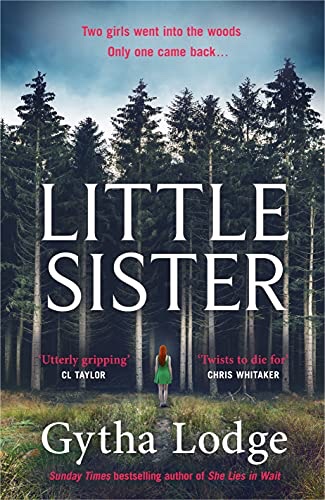
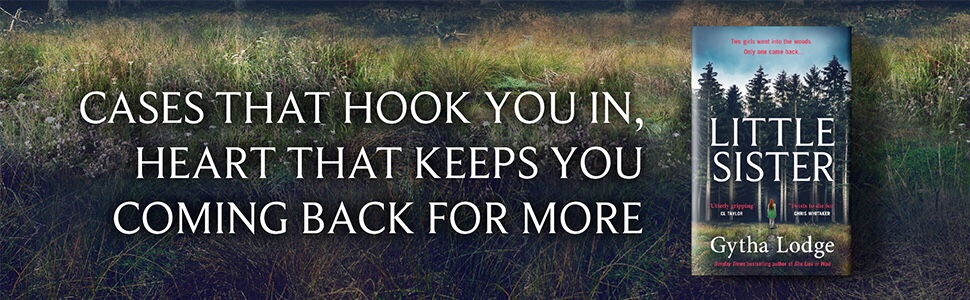
Little Sister by Gytha Lodge.

Two sisters went missing. Only one of them came back . . .
________

A teenage girl wanders out of the woods.

She’s striking, with flame-red hair and a pale complexion. She’s also covered in blood.

Detective Jonah Sheens quickly discovers that Keely and her sister, Nina, disappeared from a children’s home a week ago. Now, Keely is here – but Nina’s still missing.

Keely knows where her sister is – but before she tells, she wants Jonah’s full attention . . .

Is she killer, witness, or victim?

And will Jonah find out what Keely’s hiding, in time to save Nina?

Last year I was lucky enough to receive a prize from Gytha Lodge and now have three of her hardbacks, all individually signed. I haven’t had chance to read them and as I was granted access to this fourth novel in the series on NetGalley I decided to dive in and hope it would work as a standalone novel. I needn’t have worried at all. This was immediately accessible, yes there were aspects of Jonah’s life that I’m looking forward to finding out more about, but on the whole I could enjoy the mystery without feeling like I didn’t know my protagonist.

The opening scene is absolutely brilliant, vivid and shocking at the same time. Jonah sits in a warm beer garden with his baby in a pram at his side. He’s musing on life and his recent choice to return to a relationship with the mother of his child, leaving behind a burgeoning relationship with Jojo who he misses enormously. It takes a moment for him to notice the young woman who has come into the garden. She has red hair and her hands and chest are covered in blood. While others simply stare in shock, Jonah rings his partner Michelle to pick up the baby, then moves over to the girl and offers to get her a drink. They sit and her story starts to come out, but this is going to be a tricky interview and investigation. Jonah wants to take his time, go gently and not rush this young woman, who could be a victim, but could also be a suspect. Then she makes a revelation. Her name is Keeley and her sister is Nina, this could be Nina’s blood and of course they need to find her, but first Keeley wants to tell them a story.

Nina and Keeley have spent their entire childhood in care. Bouncing from children’s home to foster parent, they seem to have been magnets for predators at an early age. There are two foster homes where their placement failed. One was at the Murray-Watts, who live in a large house in the country with their son Callum and the right type of Range Rover. However, Keeley remembers a regime of cruelty and starvation, where their foster father was always pitting the children against each other and for punishment would lock them in a dark basement for days. His wife Sally might not be so cruel, but she never failed to do his bidding. From there to the Pinders, their home is a huge contrast situated on a council estate. There the girls made a complaint of sexual assault against their foster father who groomed them with trendy clothes, alcohol and watched Gossip Girl with them. This was all fine until he started to want things in return. The problem with these accusations is that nobody believed them, and even though they were removed from the homes in question, no one was prosecuted. Jonah and his excellent team have to tread a very fine line. Keeley comes across as cold and calculating one moment, but then like a broken little girl the next. Which is an act? Or are they both the same girl? Either way she won’t compromise; Jonah listens to her full story or she won’t tell them where Nina is. Time is ticking and if Nina is severely injured will she last to the end of the story?

I thought Keeley was a fascinating character, psychologically flawed and clearly traumatised by their past, however much of it is true. The girl’s social worker seems very sure that all the claims are false, just girls making up stories. However, it’s clear that some aspects of the girls accusations are true. So, if someone makes multiple accusations does it mean they’re all false? The book kept me guessing and there were times when I wondered whether I even trusted Keeley with her own sister. The chapters based around Jonah and the investigation are interspersed with Keeley’s first hand testimony. She shows all the traits of a psychopath; has she always been this way or has she been created by the treatment of those meant to care for her? If Nina has been subjected to the same treatment won’t she be afflicted psychologically too? I was also dying to know where these foster parents were. Pinder is giving the same story as the girl’s social worker, but the Murray-Watts have completely disappeared. Did the girls have help to weave a twisted treasure hunt for the police? I started to wonder if Keeley had known that Jonah was in the beer garden that day. She seems to be fascinated with his team so could one of them have come across the girls before?

There are some very dark stories here and they could be distressing for people who’ve gone through a similar experience, but it’s that darkness that keeps the reader wanting the truth and to see those responsible punished. If Keeley has planned how to elicit sympathy from the police, she certainly knows what she’s doing. As readers we are pulled along with Jonah from distress and empathy to disbelief and a sense that something is very, very wrong either with Keeley or the system. This is a great mystery, with huge twists in store and a police team I enjoyed getting to know. Now I’m looking forward to going back to the first novel in this series and filling in the gaps in my knowledge, while enjoying even more of this talented writer’s incredibly creative plots and dark, brooding atmosphere.

Meet The Author

Gytha Lodge is a multi-award-winning playwright, novelist and writer for video games and screen. She is also a single parent who blogs about the ridiculousness of bringing up a mega-nerd small boy. 

She has a profound addiction to tea, crosswords and awful puns. She studied English at Cambridge, where she became known quite quickly for her brand of twisty, dark yet entertaining drama. She later took the Creative Writing MA at UEA. 

Her debut crime novel, She Lies in Wait, has been published by Penguin Random House in the US and UK, and has also been translated into 12 other languages. It became an international bestseller in 2019, and was a Richard and Judy book club pick, as well as a Sunday Times and New York Times crime pick. 

Watching From the Dark, her second novel, was released in February 2020, with her third book lined up for spring of 2021. This fourth novel is published on 28th April 2022.

Posted in Netgalley

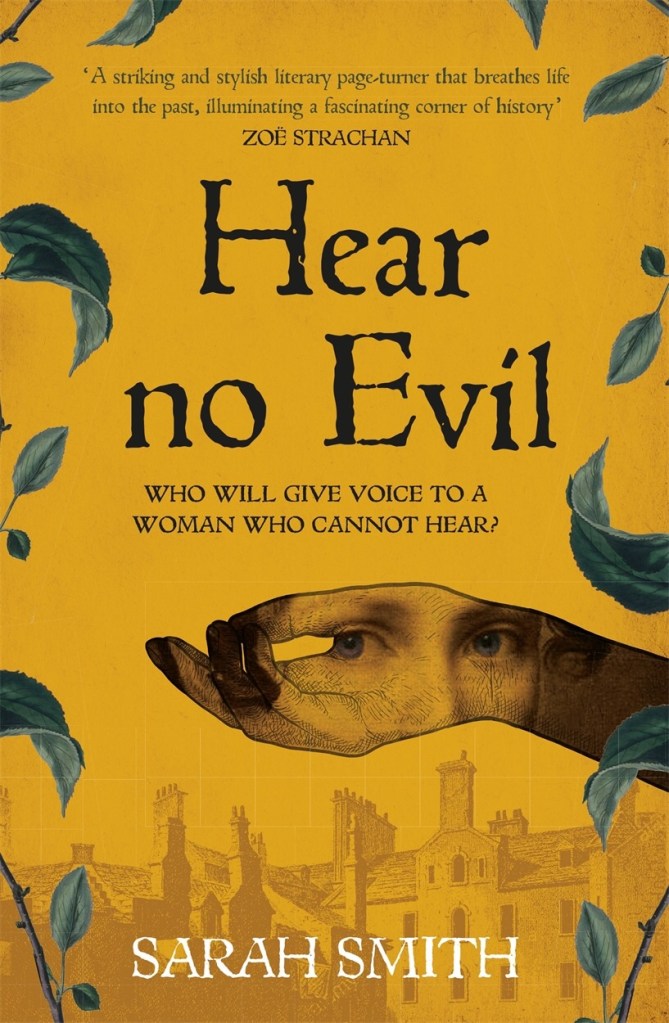
Hear No Evil by Sarah Smith.

It’s 1817 and a young woman is witnessed throwing a child into the River Clyde from the Old Bridge in Glasgow, the authorities are told. Based on a real case, this is a powerful piece of historical fiction from Sarah Smith and an interesting look into the 19th Century attitude to disability, and specifically deafness. The authorities are unable to communicate with their prisoner and as nothing is found at the river, Jean is taken to the Edinburgh Tolbooth in the hope of getting the truth. The High Court asks Robert Kinniburgh if he will communicate with their silent prisoner, to work out whether Jean is deaf or even fit for trial. Robert teaches at the Deaf & Dumb Institution and might be able to form a way of interpreting for the authorities. Jean only has two choices if a court finds her guilty, neither of which are desirable; death by hanging or imprisonment in an insane asylum. As Robert and Jean manage to construct a simple way of communicating, he starts to gains her trust, Jean starts to confides in her interpreter, imparting the truth. As Robert treads a fine line between interpreter and investigator, he becomes absolutely determined to clear her name before it is too late.

The novel’s basis in Scottish legal history means that Smith has researched her period deeply, wanting to tell her tale sensitively and with respect for these real-life characters. It is a perfect mix of fact, atmospheric setting, strong characters and an understanding of what life was like for someone with a disability in the early 19th Century. Kinniburgh has the difficult task of unravelling Jean’s story, immersing himself in the legal machinery of the Edinburgh court, and retracing Jean’s life up till that moment on the bridge. He is a teacher, not a lawyer, so he really has his work cut out. He is our eyes and ears in the story, following Jean’s life in the poverty stricken slums of Glasgow, experiencing her difficulties and finding out what happened in the final days before she came to be alone on the Old Bridge with her baby. He is a very humane main character, full of intelligence and compassion for others. Yet it us Jean Campbell who really made her way into my head and heart.

Obviously, the real Jean Campbell isn’t well known, but it felt like Smith really got under the skin of this girl. The details of her existence are brought vividly to life and Smith shows us that she was strong and full of dignity despite being so disenfranchised. Jean has gone through traumatic experiences, badly used by unscrupulous people only too happy to take advantage. Campbell’s deafness is central pillar of this book, it’s the reason for her poverty, the ordeals she has been subjected to and possibly the court case itself. How far were police officers influenced by her inability to speak. Just as there are now, there were prejudices and assumptions made about the Deaf community at the time, and we get some insight into how sign language evolved when it becomes the key by which Kinniburgh begins to earn Jean’s trust and unlock her story. I love that her story is reaching so many people through this novel.

I loved the settings, particularly the incredibly atmospheric opening which really set the scene for the rest of the novel. Smith’s period locations took me on a journey through time across two beautiful Scottish cities. The most vivid being Edinburgh’s dank and grimy Tolbooth prison which evoked claustrophobia for me. Equally vivid are Kinniburgh’s visits to the filthy poverty of Jean’s Glasgow home. I think that lovers of historical fiction will really enjoy this but I’d like to see it read by a wider audience, considering it’s message is sadly still relevant. We cannot judge fellow human beings until we have understood what has brought them to that point. We also need to make more effort to communicate with those who have a disability. It seems that we can revere them as Paralympians or military heroes, but many don’t pass the time of day with real people with disabilities in their daily life. Smith highlights this by taking us to this earlier time where, for those who were silenced, their disability could mean paying a very high price indeed. Jean could see this discrepancy and the way she was underestimated every day of her life:

‘She was aware of much more than people gave her credit for. Always had been…Not once did any hearing person treat her like she was the same as them.’

Published by Two Roads 3rd Feb 2022.

Posted in Random Things Tours

The Paris Apartment by Lucy Foley

Welcome to No 12 Rue des Amants

A beautiful old apartment block, far from the glittering lights of the Eiffel Tower and the bustling banks of the Seine.

Where nothing goes unseen, and everyone has a story to unlock.

The watchful concierge
The scorned lover
The prying journalist
The naïve student
The unwanted guest

There was a murder here last night.
A mystery lies behind the door of apartment three.

When things go wrong at home in London, Jess is ready for a fresh start. She’s broke, and she’s suddenly left her job. Maybe things would look better from somewhere else? Jess jumps on the train to Paris and makes a quick call to her brother Ben to say she’s on her way. Ben should be set with work and an apartment now, but he did seem unimpressed or distracted when she called. Or was there someone with him? Either way she’s here now and for some reason Ben isn’t answering her calls or messages. She’s also taken aback by the size and luxury of his apartment block, surely Ben can’t afford to live somewhere like this? So with no money and nowhere else to stay, she manages to pick the lock and get in. Next morning there’s still no word from him and the questions keep coming. Why is the cat bloodstained? Why are his neighbours so unfriendly and mysterious? Jess is sure that her brother has been harmed, but by who and why?

This was an enjoyable thriller and I liked the structure, that allowed us behind the other doors at apartment building No 12 and into the worlds of these strangely eclectic residents. We were also taken back in time to Ben’s arrival at the apartments so we could see how his relationship built with the other residents. Who did he get on with and why? It also showed up my own misconceptions about people: I expected Ben to have made a beeline for the beautiful Camille in her tiny bikini; that the grumpy man Jess sees at the beginning to be a relative of the concierge; that Mimi would be the kind, girl next door type. Nothing is what it seems with these residents. However, the residents were not the only ones with secrets. Ben had never told Jess what he was working on in Paris. As for Jess, we don’t know exactly what forced her to flee England or how she’s ended up alone and penniless. We do find that they are half-brother and sister, forced into care at an early age and very close to each other, because their experience of parents is that they can’t be trusted. It is very out of character for Ben to forget or ignore her in this way. Jess is very resourceful, soon finding people she can talk to about her brother, including the residents, although they were less than welcoming. She has good investigative skills that she’s possibly learned from her brother and meets with a friend of his who may be helpful. I couldn’t decide whether I liked her or not, but kept reminding myself that no one is above suspicion, even family.

The writer immerses us in the less salubrious side of Paris. No fairy lit boat rides on the Seine for Jess as she heads deeper into the city’s underbelly. This is not a pretty Paris, but it is compelling and different especially when compared to the apartment building. Although we don’t have to go into the streets, the difference in social class can be see in the courtyard garden where the concierge lives in what sounds like a shed. It’s a humble home and it seems Ben is the only resident who treats her like an equal. She’s shocked by his kindness and is the person who gives us the most snippets about what’s really going on with the residents of these luxury flats. She is invisible to these wealthy people, but she’s always watching, eager to catch those little indiscreet moments that happen when people think you’re invisible. I had a lot of empathy for her, because she’s stuck. She knows too much and has too little to move on in life. I didn’t really like or connect with any of the other characters and that makes it hard to care about what happens to them. However, I’m not sure we’re meant to like them. We’re obviously drawn to Jess because of the position she’s in and her tenacity (and sometimes recklessness) in pursuit of the truth. This book hangs on the mystery and it’s twists and turns. I did enjoy the revelations and the cliffhangers, because there were things I didn’t expect, especially Ben’s life in the building and interactions with other residents. This is a fast, addictive thriller where you’re never sure what will happen next, but when it does everything can be turned on it’s head.

Meet the Author

Lucy Foley is a No.1 Sunday Times bestselling author. Her contemporary murder mystery thrillers, The Hunting Party and The Guest List, have sold over a million copies worldwide and also hit the New York Times and Irish Times bestseller lists. The Guest List was a Waterstones Thriller of the Month selection, a Reese’s Book Club pick, it was chosen as one of The Times and Sunday Times Crime Books of the Year, and it won the Goodreads Choice Award for best mystery/thriller.
Lucy’s novels have been translated into multiple languages and her journalism has appeared in publications such as Sunday Times Style, Grazia, ES Magazine, Vogue US, Elle, Tatler and Marie Claire. Lucy lives in Brussels with her husband their baby.

Posted in Throwback Thursday

Throwback Thursday! Burial Rites by Hannah Kent.

In the wake of this talented writer’s new novel Devotion, for this week’s Throwback Thursday I decided to look at her debut novel Burial Rites. Set in Iceland in 1829 and based on a true story, we follow the final days of Agnes; a young woman accused of the murder of her former master. Housed at an isolated farm until her execution, Agnes is accompanied by Tóti, a priest she has mysteriously chosen as her spiritual guardian. The family are horrified to be housing a murderer, but as time goes on and her death looms closer, they start to listen to Agnes and hear a different side to the sensationalised story they’ve accepted as truth. How can Agnes cope with her impending death and the realisation that history will define her: as a murderess, a monster, a woman without mercy?

The first thing that comes to mind when I think about this book is the stark scenery and the way it’s linked to Agnes’s emotions. She reminded me of my favourite literary heroine Jane Eyre, in that she’s so passionate, with every emotion unfiltered, raw and open for the reader to see. Jane is condemned as too passionate when she’s a child, but even though she learns to rein her emotions in as an adult, there are glimpses of her true nature in her eerie paintings and her feelings for Rochester. Jane’s warning of what happens when a women’s passions are unbound, comes in the shape of Bertha Mason, Rochester’s wife and the madwoman in the attic. Bertha acts on her feelings immediately; her anger leads to the burning of Rochester’s bed and the wounding of her brother Richard. However, in his explanation after their abandoned wedding, Rochester tells Jane of mood swings and childlike behaviour, but also hints at an unladylike lust that’s unbecoming in a wife. This is certainly implied strongly in Jean Rhys’s impressive post-colonial prequel Wide Sargasso Sea, where his wife’s enthusiasm in the bedroom feels unchaste and his claims of being duped by her family might relate more to her virginal state than her potential for insanity. Agnes is similarly passionate about her lover:

“I cannot think of what it was not to love him. To look at him and realise I had found what I had not known I was hungering for. A hunger so deep, so capable of driving me into the night, that it terrified me.”

Just as Jane’s heartbreak and spiritual battle after her flight from Thornfield is characterised by the biting wind and lack of shelter of the bleak moorland, Agnes seems so deeply in tune with her Icelandic surroundings. The claustrophobic atmosphere of her final days is heightened by being sequestered in someone else’s space and marooned in the middle of an Icelandic winter. There is nothing soft here. The relentless freezing air and sparse vegetation echo the frozen glares of the women in the family, the barren and friendless days that count down slowly without joy or pleasure to make them bearable. Both the landscape, and Agnes herself, are haunting and have stayed with me way beyond the final pages.

I love how the author plays with the idea of self and it’s construction in fiction. She takes a real person, with a real criminal case against them and starts to give them thoughts and feelings. The Agnes Magnússdóttir she could read about in records and news reports is a distant, lifeless, individual. In fact any contemporary writing about her that gives more than the bare facts, is only one person’s idea of who she was and what her motivations might have been. It’s a false self and what Kent tries to do is breathe life into Agnes, to create a real person with thoughts and feelings, someone we can perhaps start to understand and empathise with. I love though how Agnes has an awareness of this and how even in Kent’s story, she isn’t real. She explains that people will think they have a sense of who she is through her perceived actions, but that isn’t her. She knows she will be labelled and for some people that will forever define her, but only she knows her true character and her true motivations. How can a woman hope to survive when her very life is dependent on the stories told about her by others, rather than her own word?

“They will see the whore, the madwoman, the murderess, the female dripping blood into the grass and laughing with her mouth choked with dirt. They will say “Agnes” and see the spider, the witch caught in the webbing of her own fateful weaving. They might see the lamb circled by ravens, bleating for a lost mother. But they will not see me. I will not be there.”

Paperback Published by Picador 27th Feb 2014

Meet The Author

Hannah Kent’s first novel, the international bestseller, BURIAL RITES, was translated into over 30 languages and won the ABIA Literary Fiction Book of the Year, the Indie Awards Debut Fiction Book of the Year, the Prix Critiqueslibres Découvrir Étranger, the Booktopia People’s Choice Award, the ABA Nielsen Bookdata Booksellers’ Choice Award and the Victorian Premier’s People’s Choice Award. It was shortlisted for the Women’s Prize for Fiction and the Guardian First Book Award, the Stella Prize and the International IMPAC Dublin Literary Award, amongst others. It is currently being adapted for film by Sony TriStar. 

Hannah’s second novel, THE GOOD PEOPLE, was translated into 10 languages and shortlisted for the Walter Scott Award for Historical Fiction, the Indie Books Award for Literary Fiction, the ABIA Literary Fiction Book of the Year and the Readings Prize for New Australian Fiction. It is currently being adapted for film by Aquarius Productions. 

DEVOTION, Hannah’s third novel, will be published in November 2021 (Australia) and February 2022 (UK & Ireland) by Picador.

Hannah’s original feature film, Run Rabbit Run, will be directed by Daina Reid (The Handmaid’s Tale) and produced by Carver and XYZ Films. It was launched at the Cannes 2020 virtual market where STX Entertainment took world rights. 

Hannah co-founded the Australian literary publication Kill Your Darlings. She has written for The New York Times, The Saturday Paper, The Guardian, the Age, the Sydney Morning Herald, Meanjin, Qantas Magazine and LitHub.

Hannah lives and works on Peramangk country near Adelaide, Australia.

Read More

https://www.panmacmillan.com/blogs/literary/burial-rites-iceland-photos-hannah-kent-setting

https://www.theguardian.com/film/2017/dec/13/jennifer-lawrence-to-star-in-film-adaptation-of-hannah-kents-burial-rites

Posted in Publisher Proof

The Lying Club by Annie Ward

If you love a juicy gossip about your fellow villagers or friends, or watching rich people’s lives implode, then this is definitely the book for you. Based around an elite Colorado private school, a tangled web connects three women. Brooke, the archetypal private school mum, fiercely protective and an filthy rich heiress with a creative approach to her wedding vows. Asha is a realtor, staging and selling houses while juggling children, hormones and an increasingly distant husband who she fears is having an affair. Then there’s Natalie, a lowly office assistant, watching the parents and children at the school taking for granted a life she could only dream about. Brooke has probably passed Natalie hundreds of times since she started working at the school, but probably doesn’t even know her name. Asha has noticed her, but only because Natalie has turned up at lots of her open house events. This is strange because there’s no way she could afford the types of properties Asha is selling. These women are bound by their relationships with the handsome, charming assistant athletic director Nicholas. Brooke wants him, in the way she wants any handsome man to notice her, but also because he has the contacts to get her daughter Sloane into one of the best colleges based on her talent at football. Asha uneeds him to get daughter Mia ready for the competitive world of college applications, because the best school won’t take two girls from the same school and Brooke seems several steps ahead. Natalie’s motives are the purist, she’s falling in llove with him and he’s making all the right noises, but is it just lip service? When two bodies are carried out of the school early one morning, it looks like the jealousy between mothers and daughters, or rival lovers, or the haves and have-nots has boiled over. The truth will shatter the surface of this isolated, affluent town, but whose version of the truth counts in a town where people will stop at nothing to get what they want?

I’ll be honest, it was hard to like anyone in this novel. Even the kids were awful; they were spoiled, entitled and self-centred. Asha’s daughter Mia, being the best of the bunch, is unsure what it will take to get into a good college until Brooke brings it to the family’s attention when she buys a state of the art camera to film Sloan’s soccer matches and create a reel for her application. Once Asha realises and approaches Coach Nick for help, Brooke becomes furious, worried that Mia’s Indian heritage will ensure her a place thanks to the positive discrimination built into the application process. Meanwhile, it’s clear there’s something brewing in the girl’s social circle of students who are particularly gifted at sport. I was shocked by just how sophisticated their sports programme was with gym work, massages, physiotherapy, and even anti-inflammatory injections happening on school premises. Are these kids simply rebelling over the level of control the coaches seem to have in their lives? I wondered whether they were plotting revenge against Coach Nick. Sloan’s boyfriend Reade, is fed up with Nick’s control over his athletes, hinting that he may want to get rid of Nick or at least have him reprimanded and he wants to recruit Mia to their plan.

Natalie is meant to be the most sympathetic character I think and on the morning she drives to the school to find it swarming with police she is in genuine shock. Then we go straight back to her reasons for being in Colorado; her brother had an accident and broke his leg so badly he couldn’t get around. So Natalie has been caring for him and took the job at the school when he started doing more for himself. She’s a painter by trade, with a shop on Etsy selling quirky pet portraits. She starts seeing Nick, almost accidentally, after a bit of flirtation at her desk when he’s been in to se the Headteacher. He invites her to his home and Natalie is blown away by how beautiful it is. Yet I was seeing red flags everywhere about their relationship going long term: Nick is a lot older and possibly wants different things; he’s previously been a womaniser; they never go anywhere but his place; he asks Natalie to keep their relationship secret. Yet Natalie seems to be falling in love and I had to admit he talked a good game. Is Nick just super careful because of his teaching role and what are these private sessions he seems to be conducting with elite kids?

The best thing about not really warming to anyone in the novel meant I could genuinely enjoy the tension and these people getting their comeuppance! The structure worked really well with an excerpt from a police interview, then going back to the events in question. The move back in time a few months illuminated the case going forward and the interview drew together many of the things I’d been concerned about. The drip feed of new information definitely kept me reading and gave me sudden changes of opinion on some characters. I was so invested in what the kids were up to and why Mia seemed to be under pressure from the others to join in. I kept wondering if they really had the measure of their opponent or was someone going to get hurt? I was also wondering if the mystery of the memorial Natalie had seen on her walk would be explained? Who was the crying woman and would new revelations shed light on this old story? With it’s luscious settings, opulent homes and beautiful people the best way to describe the book is to say this was like a particularly indulgent dessert. Strangely, even though the subject matter is dark, it’s delicious, decadent and rather thrilling.

Published by Quercus 3rd March 2022.

Posted in Random Things Tours

Faceless by Vanda Symon.

I devoured this fast paced novel set on the streets of Auckland and focused on a young street girl called Billy and a hardened homeless veteran called Max. Ever since Billy stumbled into the same doorway one cold night, she and Max have had a connection. He showed her how to use cardboard boxes to keep warm and where to find the best thrown out food. They have a pact to take care of each other and wherever they go in the day, they always make their way back to the same adjoining doorways at night. So, when Billy doesn’t appear one night, Max knows something is wrong. He needs to find her, but where to start in a city of this size and will anyone take him seriously?

Meanwhile, Billy has stumbled into the path of someone having a very bad day. Bradley is exhausted. Over-mortgaged, overworked and under appreciated, he is reaching the end of his tether. Having neglected his family all weekend to work, Bradley has been in the doghouse with his wife Angie. Yet it’s not enough for his boss who doesn’t seem to appreciate that five people used to do the same job Bradley is now doing alone. Bradley sees the prostitutes on their usual patch as he drives home, wondering idly what sort of man actually has the nerve to drive up and do it, to actually pay a woman to do what he wants. He wouldn’t have the nerve. Then he sees a young, tomboyish girl standing a little way from the others. She’s not a regular and he is less intimidated by her. So he picks her up and she directs him to an industrial area where no one will disturb them. He doesn’t know what impulse drives him to hit her, possibly the amusement in her eyes when he isn’t ready for her, but the feeling it gives him is better than anything he’s felt in a long time. There’s a rush of power and it’s intoxicating. So he takes her to an empty industrial unit he owns and using cable ties he makes sure she doesn’t escape. He might come back tomorrow.

Told from both Max, Billy and Bradley’s points of view in short chapters that prove rather addictive, the story unfolds of how both these people ended up on the streets and how an ordinary family man becomes a monster. I was constantly thinking ‘just one more chapter’ until I was half way through the story in my first sitting. I finished the book the next morning. The story is gritty. It doesn’t pull its punches when it comes to describing life living on the streets, or the realities of being kidnapped and left with nothing for your comfort. I could actually feel the cold, smell the mustiness of not showering for several weeks, and understand the shame of being left with no toilet facilities. It is vivid and because it’s a first person experience it’s very confronting in parts. I was so caught up in Max’s search for his friend, linked somehow to an old trauma and another young girl, and how desperate he becomes to have someone listen to him. So desperate that he has to overcome embarrassment and maybe even face whatever terrible experience has kept him running all this time. Billy is running too, but being alone and captive gives her ample time to explore what’s happened to her. Although it will take the police investigation to find out the full truth of Billy’s need to run. Through these two people we see just a couple of the reasons that people end up on the streets, but no matter why it’s a tough life that no one would choose unless they were desperate.

As for Bradley, he raises a lot of questions about the making of violent offenders, particularly those who commit crimes against women. Would anyone in Bradley’s position make the same choices he does? Or was there something latent in him, triggered by stress and what he saw as a girl from the streets looking down on him? He doesn’t fully understand the changes himself, all he knows is that the more he takes out his stresses and strains on Billy, the better he feels. He also seems to have regained his libido too, as he and Angie cavort like teenagers. He has just the right sort of happily married suburban man vibe to get away with what he’s done. I found myself rooting for Billy and whatever strength she could summon to survive just long enough for Max to find her. The visions of her grandmother are touching, providing context for Billy and an insight into her culture. Auckland is a strong presence in the novel too, from the rough, deserted areas where Billy creates her spray paint portraits of mythical women to the over-mortgaged suburbs where Bradley is lucky enough to live. We see the multi-cultural mix of kids hanging out in the park and the life of a suburban wife with their book club, exercise class lifestyle. It’s very clear that for most people in this life how you look and what you have defines you. Thankfully thats not the case for everyone and I loved Meredith, a snappy and intelligent detective who would rather wear heels than the regulation shoes. She looks beyond the surface and her investigative skills are the best, but she doesn’t have much to go on. Through her we get Max’s back story and her respect and trust in him doesn’t depend on his status – although she does insist on a shower. This book will keep you up at night to find out what happens to these characters. There isn’t a word wasted here and the pace is perfect. If you like your crime gritty, with great characterisation and empathy then this is for you. I loved it.

Meet The Author

Vanda Symon is a crime writer, TV presenter and radio host from Dunedin, New Zealand, and the chair of the Otago Southland branch of the New Zealand Society of Authors. The Sam Shephard series, which includes Overkill, The Ringmaster, Containment and Bound, hit number one on the New Zealand bestseller list, and has also been shortlisted for the Ngaio Marsh Award. Overkill was shortlisted for the CWA John Creasey (New Blood) Dagger.
Twitter @vandasymon, Instagram @vanda-symon, Facebook, @vandasymonauthor, http://www.vandasymon.com.

Posted in Personal Purchase

The Locked Room by Elly Griffiths

Ruth Galloway is one of my all-time favourite characters in fiction, because I love her perspective on life, her intelligence and the fact that she doesn’t give in to all those things women are pressured to worry about. So, as I read her latest exploits, imagine my shock when she is lured to a Lean Zone meeting! I was horrified. I can’t cope with a Ruth who avoids cake. Rest assured, our favourite forensic archaeologist isn’t about to become a calorie counter. I gave a huge sigh of relief. When chatting about her decision not to continue at Lean Zone, Ruth tells her neighbour she was only inspired to go because she’d seen a school friend who lost an enormous amount of weight. The neighbour asks ‘and you thought she looked better?’ Ruth considers for a moment and replies ‘no I thought she looked worse.’ This is just one of the reasons I love Ruth and have followed her through 14 novels. How long will it take for someone to turn this into a TV series? There’s so much material to work with and she’s such a relatable character. I’ve entered into debate on Twitter over who should play these characters I love, even with Elly Griffiths herself. I know Ruth Jones was discussed, but I favour Olivia Colman who’s actually from Norfolk. David Tennant was put forward as Cathbad and I’m sure he’d pull it off admirably, although for some reason Rhys Ifans floats into my mind. As for Ruth’s love interest, the slightly ravaged and wonderfully Northern, DI Harry Nelson I’m thinking of either David Morrissey or Phillip Glenister (a little bit worn, but still a certain something that’s attractive).

There are several mysteries in this latest book in Elly Griffith’s Ruth Galloway series, both professional and personal. Ruth is called in to excavate human remains discovered by a roadworks crew, in the evocatively named Tombland area of Norwich. This alerts her to Augustine Seward’s House, close to the cathedral and rumoured home of the Grey Lady – a young girl locked into the house during the plague with her sick parents in order to stop them spreading the virus. Plague sufferers were often barricaded into their homes, but rumours suggest that this young girl was alive long after her parents death and had tried to eat them when she was starving. Another grim discovery is the death of an older woman, found by her cleaner after taking an overdose in her bedroom. A prior case had already caught DI Nelson’s eye because he couldn’t understand why someone suicidal, would put their ready meal in the microwave first. This latest death adds to Nelson’s suspicions, because the cleaner is convinced she had to unlock the room, from the outside. There is also a personal mystery for Ruth, who is clearing out her mother’s things. Her widowed dad has remarried and after several years leaving things as they were, his new wife would like to redecorate their home. It falls to Ruth to sort her clothes and belongings. She finds a box of photographs and is shocked to find a picture of her own cottage – a place her mother never really warmed to. Written on the back is Dawn, 1963, a full four years before Ruth was born. Why would her mother have kept this and why did she never share that she’d been there?

The pandemic is woven so well into the story and Griffiths really captures the disbelief, mental struggles and frustrations of trying to live in this strange time. It was interesting to see characters who are so familiar to us, reacting to something we’ve all lived through. Nelson is sceptical at first, but a few weeks later as wife Michelle ends up locked down with her parents in Blackpool, will he cope with living alone? Ruth takes lockdown in her stride, trying to juggle home schooling, lectures via Zoom and supporting her students. Griffiths weaves in the story of those students who haven’t been able to go home and are isolated in halls of residence, including one young man who is very interested in Dr. Galloway. Judy is as practical as ever, but surely this is the sort of crisis her partner Cathbad is ready for? Druid, wizard and all round mystical being, Cathbad is teaching yoga in the morning and has a pantry ready for any crisis. I felt quite tense though, waiting to see how COVID would affect these characters I love and worrying for them. Nelson’s team are struggling to investigate their case with the restrictions in lockdown, but the case is still fascinating with a lot of red herrings to muddy the waters. I loved how this mystery really looks at mental health and how difficult life events can leave us vulnerable to those who would prey on us. All the possible victims are women, live alone and have faced difficulties in life such as the loss of a partner. It also seems that all have been to weight loss groups, but is that a clue or a sad indication of the modern pressures of being a woman?

The personal mystery of Ruth’s had me hooked even more than the crime this time around. Ruth’s mother had never understood why she wanted to live her life in such an isolated place and there are times during lockdown where Ruth has wondered this herself, especially for Kate who is now 11 and has been totally reliant on the Internet to talk to friends. Ruth’s dad is equally befuddled by the photo she’s found which predates even his relationship with his wife. Ruth keeps wondering why, when she found her cottage, her mother never mentioned seeing it before. Plus, if it wasn’t important, why keep the photo for all these years? Answers come, but they’re unexpected and even life changing. It’s the personal relationships that shine here and the unexpected places and people that bring us comfort. For Judy, used to the ethereal and spiritual Cathbad, it’s her straight talking old sidekick Cloughie who brings the solace she needs from a friend. Ruth is surprised to find she has spent most of her time feeling almost separate from the world. She feels the strangeness of her daily life changes: more time in bed, the different way of working, and the jarring first sight of shoppers queueing outside the supermarket in their masks. Most of her observations are practical changes though and she’s remarkably comfortable, just her, Kate and Flint the cat. In fact the upside has been the lack of other people, the beautiful scenery and wildlife on their doorstep. They even have a new neighbour, who Ruth enjoys getting to know with a socially distanced glass of wine each evening separated by the garden fence. They can walk together on the beach and do Cathbad’s daily yoga, making them feel a connection rather than isolation. Nelson however is completely alone with only his dog Bruno for company. Used to a house run by Michelle and the rough and tumble of young son George he’s strangely lost and finds himself drawn mentally to the cottage on the coast and his other family.

There are little observations that make Griffith’s world feel so real to me. Lured to a small school reunion while staying at her parent’s house in London, Ruth observed how everyone had aged. In fact her school boyfriend Daniel is bald and she observes she wouldn’t have recognised him a line-up. She then does the middle aged calculation that all of us over 45 do in these circumstances; she wonders if she’s looking as old as they are. Then as the pandemic hits, these people she’s not seen for decades, are sending her messages on social media prompted by the ‘strange times’ we’re living through. It’s something I observed over over the last two years, when daily life is put on pause we look for things to ground us or start to re-evaluate our lives. These touches are grounded in that incredible Norfolk setting, fully formed in my brain now I can immediately see inside Ruth’s cottage by the salt marsh. This mysterious and wild space is offset by the city of Norwich and in this case, the setting of Tombland around the cathedral. This spiritual and ghostly space felt unsettling, as friend Janet explains to Ruth about sitings of the Grey Lady who wanders the house with a lit candle, but also walks through the walls where there used to be doors. It’s no surprise that Cathbad has once seen her in this area and the ghost story adds to the confusion of those final chapters as the case builds to a climax. I really loved the theme of the outcast dead, whether they are the undiscovered plague pits that one of Ruth’s students becomes fascinated with or the graves of those who committed suicide. Historically, people who’ve committed suicide are placed outside the boundaries of the graveyard in unconsecrated ground. The idea of punishing someone in so much pain seems archaic now and I loved the idea of a yearly church service to acknowledge all these outcast people. There are interesting elements of coercive control in the investigation and our team have to ask questions about their preconceptions of who commits crime and what criminals look like, never mind how and if they can prosecute. However, my mind was also occupied with worrying over which of my beloved characters might catch COVID and how their loved ones might cope. I’d set aside two days to read this novel on publication and I only needed one, because I had to know all my characters were safe and when I reached it, I was immediately hooked into waiting for my next instalment.

Meet The Author

ELLY GRIFFITHS is the author of the Ruth Galloway and Brighton mystery series, as well as the standalone novel The Stranger Diaries, winner of the Edgar Award for Best Novel, and The Postscript Murders. She is the recipient of the CWA Dagger in the Library Award and the Mary Higgins Clark Award. She has published a children’s book, A Girl Called Justice. She has previously written books under her real name, Domenica de Rosa.

The Ruth books are set in Norfolk, a place she knows well from childhood. It was a chance remark of her husband’s that gave her the idea for the first in the series, The Crossing Places. They were crossing Titchwell Marsh in North Norfolk when he mentioned that prehistoric people thought that marshland was sacred ground. Because it’s neither land nor sea, but something in-between, they saw it as a bridge to the afterlife; neither land nor sea, neither life nor death. In that moment, she saw Dr Ruth Galloway walking towards her out of the mist…

She lives near Brighton with her husband Andy, an archaeologist. She has two grown-up children. She writes in the garden shed accompanied by her cat, Gus.

Posted in Publisher Proof

Unholy Murder by Lynda La Plante.

The great thing about having friends who are bloggers is that occasionally they have spare proofs lying around and are very generous in sharing them. I’m very lucky to be a member of the blogger’s group the Squad Pod Collective, they’re a great group of ladies and we all support each other so much. There are often spare, or unwanted, proofs trundling back and forth to each other through the post. However, this time I was lucky enough to receive a bundle of spares from a blogger more local to me and I’ve been sitting on them waiting for the New Year. I planned to take a lot less blog tours and read more by choice in 2022, because I’m back at university and didn’t want to become overwhelmed. Not that I’m finding it easy, especially when the siren song of blog tour organisers drifts into my inbox almost daily. I’m taking half the tours I did last year, which averages at about one a week. The bonus is that when I’m feeling frazzled with my uni reading I can read something really escapist or more gentle to offset the tension. Luckily for me, in my friend’s big box of books, was the latest crime novel featuring one of my all-time favourite fictional characters in books and television – Jane Tennison.

Starting with the eponymous Tennison back in 2015, Unholy Murder is the seventh novel in the Prime Suspect 1973 series. As prolific as ever, Lynda La Plante is delivering one of these novels per year and I’ve found it fascinating to watch the character we’re used to watching as a Detective Inspector, starting out in uniform and learning the ropes. This novel finds Jane as DS Tennison and embroiled in the case of a body found on a building society, in a coffin. The grounds where the developer is digging foundations used to belong to a convent that burned down a couple of decades earlier. The inhabitant of the strange metal coffin is dressed modestly, and her hands are entwined with both a crucifix and a rosary. So it would seem that the victim could be a nun. Who would kill a nun? The investigation will place Jane between developers keen to restart work and get the money rolling and a secretive Catholic diocese, desperate to sweep any evidence under the carpet. Not only is she concerned about finding the killer so many years later, but will she even be able to identify her?

I remember watching Prime Suspect as a very young teenager and I really admired Tennison. She was tough, clever and able to hold her own in a room full of men. I wanted to be a professional too, as good at my job as Tennison is. I even thought of being a police officer, but when it came to it I couldn’t meet the height restriction which was 5 feet and 5 inches back in the early 1990s. I loved her ability to read people, profile them psychologically and question them until they cracked. Of course if you asked my little brother why I used to love watching Prime Suspect he’d say because we were both bossy, but often bossy is a term used to silence ambitious women who are only giving orders. I was interested in the gender politics of the series, the way male officers would deride and try to undermine Tennison was shocking. The old boys network was working overtime, to wrong foot her and get her removed, especially if she had been made their superior. To me she was the first feminist character I’d really noticed in a lead role in a prime time tv series and i was inspired by that. She was also sexy, not afraid of asking for what she wanted in a partner. I couldn’t remember seeing a woman who was open and unapologetic in this way, even about one night stands. It was relationships she struggled with, finding that men wanted to be more important than the job. She was constantly apologising for not working regular hours, for not being available for family events and not being the little woman at home.

The great thing about these prequel novels is that we go back even further, to when a policewoman’s uniform included a matching handbag – useful for filling with stones and hitting criminals I guess. Jane is trying to make her mark, studying for her inspector’s exam and impressing the right people. The problem is that when she tries to impress she often goes off alone, takes unnecessary risks and leaves colleagues feeling that she’s holding out on them, to keep the best information to herself. Here she takes risks by befriending the parish priest and passing on a little more information than she should. She also keeps back something she’s seen because it doesn’t fit the way the investigation is heading, she wants to check it out for herself first. This puts her in considerable danger, as do her dating choices. The story of what has transpired in the old convent is harrowing, but believable and the author explores what happens when an institution cares more about it’s reputation than the truth. This should be scandalous, but seems very realistic, as is the reaction of Jane’s superior officer who has come up against the Catholic Church before. I am a Catholic and there was one detail that confused me. The nun in the coffin is Sister Melissa, but nuns would usually take saints names. I was taught by Sister Joan, Sister Anne and Sister Stephen (which at seven years old was incredibly funny). It’s a small thing, but these things jar in an otherwise well put together tale. I truly enjoyed the plot and spending time with a character I’ve known for a very long time. I would definitely recommend all of the Tennison series, for great storylines and the fascination of watching such a successful woman taking her first steps into the police force.

Meet The Author

Lynda’s latest book, Tennison, was published on 24th September 2015 and is the prequel the highly acclaimed Prime Suspect. The story charts Jane Tennison’s entry into the police force as a 22 year old Probationary Officer at Hackney Police Station in 1973.

Lynda La Plante is published in the UK by Simon & Schuster.

Lynda La Plante is published in the US by HarperCollins Publishers.

Please visit http://www.lyndalaplante.com for further information. You can also follow Lynda on Facebook and Twitter.

Posted in Throwback Thursday

The Jackson Brodie Series by Kate Atkinson.

‘An astonishingly complex and moving literary detective story that made me sob but also snort with laughter. It’s the sort of novel you have to start rereading the minute you’ve finished it’ Guardian

In Case Histories we’re in a Cambridge that’s sweltering, during an unusually hot summer. To Jackson Brodie, former police inspector turned private investigator, the world consists of one accounting sheet – Lost on the left, Found on the right – and the two never seem to balance. Surrounded by death, intrigue and misfortune, his own life haunted by a family tragedy, Jackson attempts to unravel three disparate case histories and begins to realise that in spite of apparent diversity, everything is connected…

The Jackson Brodie novels were the first Kate Atkinson books I bought, one at a time as they were published. I was in love straight away. From the first novel Case Histories to her long awaited fifth in the series Big Sky, we are let into the world of this slightly world weary PI. Each time he collects cases that seem so disparate, but eventually overlap and connect. Atkinson has a unique way of blending very dark subject matter – missing persons, sex trafficking, modern slavery – with a sarcastic sense of humour and love of literature. Of course the investigations are serious and their subject matter is treated with care and diligence. However, some of the scrapes Jackson gets into and his frustrations with the women in his life are funny, acting as light relief. Atkinson has a very clever way of ending her novels without all the loose ends tied up – an issue that mentioned in a negative light in a lot of her reviews. I prefer that. Life isn’t tied up all neatly with a bow on top and I would imagine it’s quite rare when investigating crime. Often what we want to know, and rarely do, is why someone carries out a crime.

It’s maybe in an attempt to answer this question, that the author takes us deeply into the lives of all the characters involved, including their inner worlds. There’s an empathy and humanity to the writing that isn’t always present in crime fiction, in fact it does remind me a little of J.K. Rowling writing as Robert Galbraith for the Cormoran Strike series. There are critics of this style, with reviews commenting that there’s a focus on character above plot. I like that. I want to be invested in a character, otherwise I’m unmoved when things start happening to them. Atkinson also delves into areas of life that I’m interested in. Jackson has a penchant for finding life’s underdogs and more often than not, trying to rescue them. He finds those struggling after divorce, or with massive changes in life, the homeless and the destitute. They’re inbetween people who need help. It could be Jackson’s training as a police officer or his just in his DNA, but he wants to help people.

So If I’m asked what it is that grabbed me at the first novel and still hasn’t let go all these years later? I’d have to say it’s Jackson himself – and that’s before Jason Isaacs was on board for the TV series. Jackson is one of those men that could have the house burning down around him and I’d still feel safe. There’s an honour code about him, almost like a charter of correct behaviour. Yet on the other hand, there are rules he’s willing to break. He almost always gets too close to the client or a witness, showing a dedication to them that might explain his divorced state when we first meet him. There are times when he struggles to let go too, ending up with a dog to mention just one incident. If there’s a rule, such as keeping work and home separate, Jackson will break it for clients. As a result he doesn’t protect his own space, time or even safety. It is that dedication that endears him to me. I understand it, because I’m not great with boundaries myself. I read the book imagining an abrupt manner with a gruff Yorkshire accent. There’s something a bit Sean Bean in his manner. He has an undefinable something, that draws women to him.

The settings are interesting too, with the second novel set during the Edinburgh Festival, the third in Devon and the fourth and fifth in his home county of Yorkshire. Jackson is settled in North Yorkshire in the final novel Big Sky, divorced again but in a routine seeing his teenage son Nathan and their shared Labrador when his ex-wife Julia allows. This is the most settled Jackson has ever been and it’s nice to see him grounded in life. We waited a long time for a continuation in the series and Atkinson didn’t disappoint. In her inimitable style she presents several, seemingly disconnected, characters with various different problems. Jackson meets a man on a cliff top that leads him to a sinister network. He gains a client who claims she’s being watched and followed, which Jackson is starting to think is a paranoid delusion, until he follows her and witnesses her children being abducted. Only Atkinson can bring these strands together, not in a tidy way, but like a rough tapestry overlapping strands to make a beautiful whole.

It was great to see returning characters, like the sparky protégée Reggie who is now a police officer investigating a paedophile ring. I was hoping for DI Louise Munro because I know she and Jackson have unfinished business and lots of chemistry. The whole tale is bookended by a personal mission; Jackson helping his daughter be a runaway bride. It’s good to see a slightly more responsible Jackson, forging relationships with both of his children and staying in one place. I would recommend this series to readers who enjoy a combination of dark secrets and crimes, a wonderfully sardonic sense of humour and characters that get under your skin. I don’t know if there will be another novel in the series, but I do love the existing stories and re-read them from time to time. Atkinson is an incredibly skilled writer and if you pick up her Jackson Brodie series you won’t be disappointed.

Meet the Author

Kate Atkinson is one of the world’s foremost novelists. She won the Costa Book of the Year prize with her first novel, Behind the Scenes at the Museum. Her three critically lauded and prizewinning novels set around World War II are Life After Life, A God in Ruins (both winners of the Costa Novel Award), and Transcription. She was appointed MBE for services to literature in 2011.

Her bestselling literary crime novels featuring former detective Jackson Brodie, Case Histories, One Good Turn, When Will There Be Good News? and Started Early, Took My Dog became a BBC television series starring Jason Isaacs. Jackson Brodie returns in her new novel Big Sky.

Posted in Back of the Shelf

Back of the Bookshelf! The Woman in the Window by A.J. Finn

I reached to the back of the shelf for this 2018 paperback copy of The Woman in the Window. There’s a strong Rear Window vibe to this thriller, as our lead character Anna Fox, is trapped within her house, only living through the lives of her neighbours, who she watches through her binoculars. Instead Rear Window’s physical disability, she is restricted by her mental health, which has suffered a response to extreme trauma. Some unknown traumatic incident has resulted in agoraphobia and she has spent ten months inside her large New York house, like a ghost. Before this, Anna was a successful psychologist and the fact that her affliction is a mental health issue really muddies the waters here. How far can we trust what she sees and experiences? Does her training mean we trust her more, or less?

No longer living with her own husband and daughter, she becomes obsessed with the Russell family across the road. A mother, father and teenage son. She is especially interested in the son, and his mother who she meets and names Jane Russell because of her likeness to the beautiful movie star. Her world is filtered through binoculars and her only interest seems to be the black and white movies she watches religiously most evenings. Then one night, as she surveys the neighbourhood, she sees something horrifying at the Russell’s. A scream rips through the evening air and alerts Anna to the Russell’s windows and all she can do is watch in horror. She can’t go out, so rings the police. What follows has everyone questioning Anna’s judgement, including herself. As she starts to suspect someone is getting into her house, her fears increase and she continually talks to her husband and daughter to assuage her anxiety. As she does we start to wonder, where exactly are her family? Why did they leave and will they ever return?

This is one of those thrillers that I can devour in one sitting. It has an elegance and old-fashioned feel that Hitchcock would have optioned on the spot. Incidentally, there is a Netflix series that I’m now dying to watch. Anna is intriguing. I wanted to trust her, but my head was constantly full of questions. I was instantly suspicious of her charming and handsome downstairs lodger too, as well as Mr. Russell. The depiction of Anna’s panic attacks was so realistic and had me holding my breath. The severity of her symptoms, on the few occasions she does try to go beyond the front door, had me fearing the revelations about her past. The pacing was perfect, the tension never let up and I found myself taking it everywhere so I could squeeze in a few more pages whenever I got the chance. I was so impressed when I found out this was a debut, because it feels like a classic. I also made the assumption it was written by a woman, which showed up my reading prejudice about men writing women characters. In all this was an enjoyable and enthralling tale, with a nod to film noir that was very satisfying for this black and white movie lover. I can’t believe that this has been at the back of my shelf until now and I’m glad I decided to give it a go.

Meet The Author

A.J.Finn

THE WOMAN IN THE WINDOW has been sold in 43 territories around the globe. The film adaptation, starring Amy Adams, Gary Oldman, and Julianne Moore, will be released worldwide in autumn 2019. The movie directed by Joe Wright, written by Tracy Letts, and produced by Scott Rudin.

I spent a decade working in publishing in both New York and London, with a particular emphasis on thrillers and mysteries. Now I write full-time, to the relief of my former colleagues. THE WOMAN IN THE WINDOW was inspired by a range of experiences: my lifelong love affair with suspense fiction, from the Sherlock Holmes stories I devoured as a kid to the work of Patricia Highsmith, whom I studied at the graduate level at Oxford; my passion for classic cinema, especially the films of Alfred Hitchcock; and my struggles with depression and mental health. The result, I hope, is a psychological thriller in the vein of Gillian Flynn, Tana French, and Kate Atkinson, among others.

Stuff I love: reading; swimming; cooking; dogs; ice cream; travel. (Note that third semicolon. It’s crucial. I do not love cooking dogs.) I collect first-edition books and enjoy spending time with my French bulldog, Ike.

From A.J. Finn’s Amazon Author Page 21/01/22